
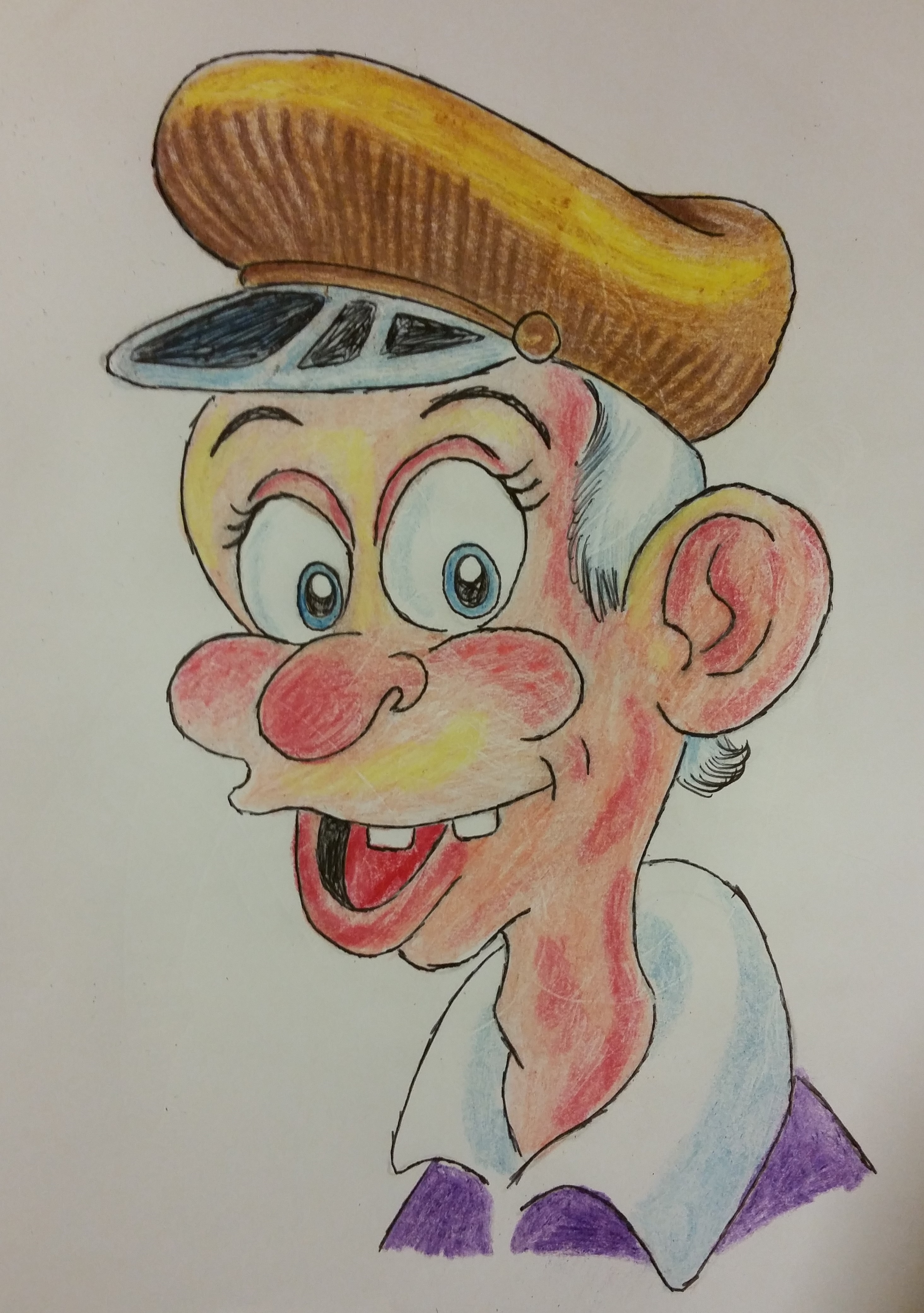
I was recently asked how I can live surrounded by conservatives when I am obviously liberal-minded. I hardly have to think about it to give an answer.
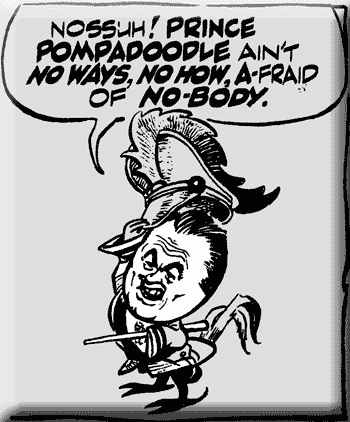
You have to realize that conservatives are people too. To begin with, I hope you didn’t look at the picture I started with and think, “He must think all conservatives are stupid and look like that.” The picture of Doofy Fuddbugg I used here is not about them. It is about me. This is the comedy face I wear when I am talking politics. You live a life filled with economic, physical, and emotional pain like I have, you have a tendency to wear a mask that makes you, at the very least, happy on the outside. People talk to me all the time, but not because I seek them out. In social situations, I am not a bee, I’m a flower. And because of my sense of humor, people feel comfortable seeking me out and telling me about their pain and anger and hurt to the point that they eventually reach the totally mistaken conclusion that I have wisdom to share.
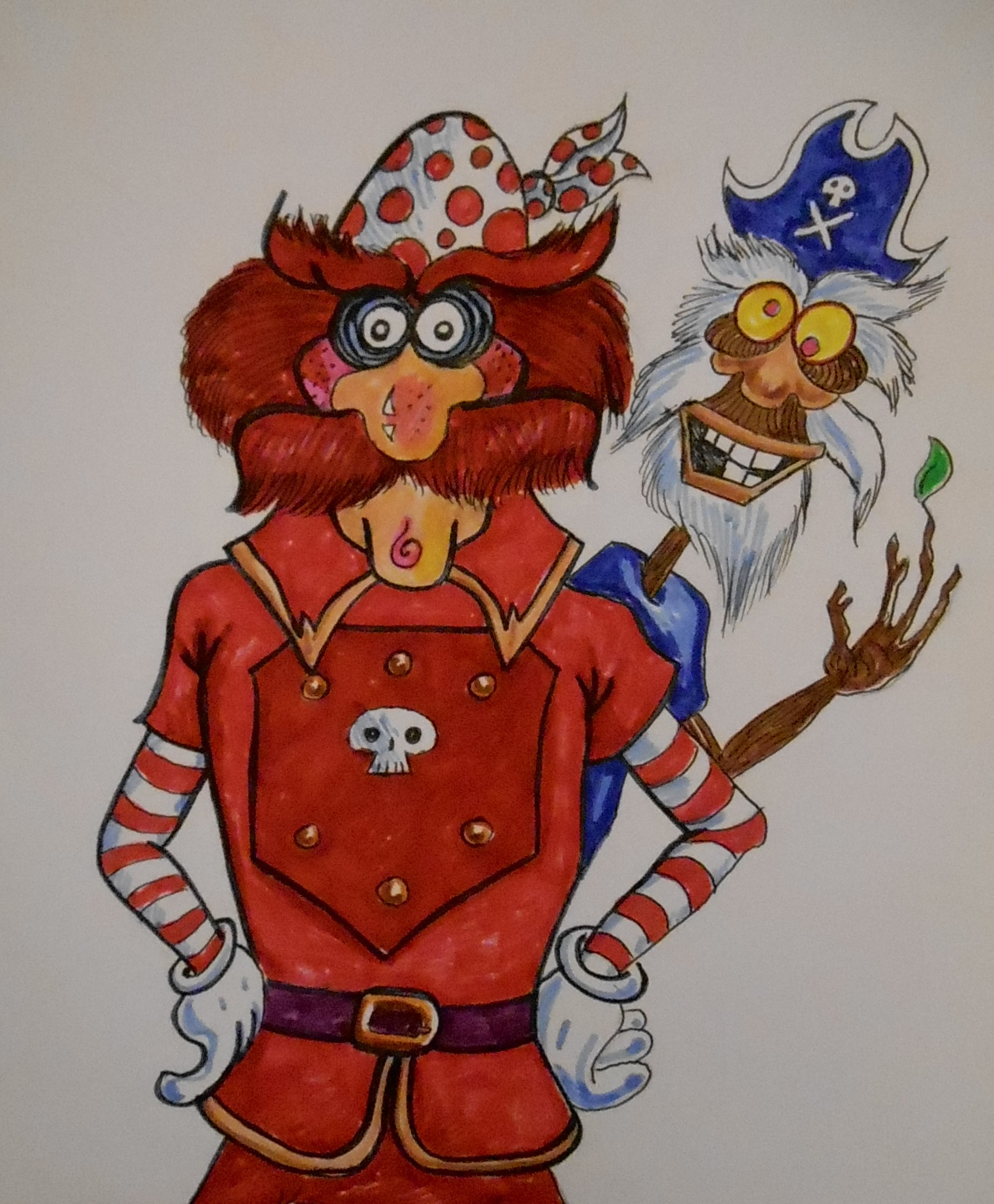
I do think that corporate bank CEO’s look like this, and I am not sure they count as people.
I hear lots of detailed complaints from my conservative friends in both Iowa and Texas. I know what they fear and what makes them angry. Here are a few of the key things;
- The world is no longer very much like the world I grew up in, and the changes make me afraid.
- I have worked hard all my life. I’m still working hard. For my father and mother that led to success and fulfillment. For me it leads to a debt burden that’s hard to manage, and I am having to work hard for the rest of my life because of it.
- I’m not getting what I deserve out of life, and someone is to blame for that. But who? Minorities and immigrants seem to be getting ahead and getting whatever they want more than they ever used to. It must be them.
- Liberals are all alike. They want to tax and spend. They don’t care about the consequences of trying out their high-fallutin’ ideas. And they want me to pay for it all while they laugh at me and call me stupid and call me a racist.
- I am angry now, as angry as I have ever been in my life. And someone has to hear me and feel my wrath. Who better than these danged liberals? And I can do that by voting in Trump. Sure, I know how miserable he is as a human being, but he will make them suffer and pay.
I have always understood these feelings because I began hearing them repeatedly since the 1980’s. They are like a fire-cracker with a very short fuse, these ideas conservatives live with. And certain words you say to them are like matches. They will set off, not just one, but all of the fireworks.
So, here is how I talk to conservatives.
- Never treat them as stupid people. Conservatives are sometimes just as smart as I am, if not smarter. I complement them on what they say that I think is a really good idea. I point out areas of agreement whenever possible, even if they are rare sometimes.
- I defend what I believe in, but I try to understand what they believe and why.
- I am open about the doubts and questioning I have about my own positions on things, encouraging them to do the same.
- I always try to remember that we really have more in common than we have differences. I try to point that out frequently too. This point in particular helps them to think of me as being smarter than I really am.
- And if I haven’t convinced them that I am right, which, admittedly is impossible, that doesn’t mean I have lost the argument. In fact, if I have made them feel good about actually listening calmly to a liberal point of view and then rejecting it as total liberal claptrap, I win, because I have been listened to.











 If you are going to entertain a completely absurd notion like, “Shakespeare wasn’t really written by Shakespeare”, then you have to have some knowledge of the times and the context within which such a profoundly counter-intuitive thing could possibly be true. And it also helps to understand more precisely what the “writing of Shakespeare” actually means. Now, I know it is not particularly fair to confuse you, dear reader, right before I try to dazzle you with my complicated and over-thunk lackwit conspiracy theory, but that is, after all, what obfuscation actually means.






Holiday Mixed Nuts
I know what this is. This is Grandma Aldrich’s holiday nut bowl with nut-cracker and silver walnut picks. It brings back fond memories of Thanksgiving Day and Christmas reunions that were filled with nuts. And, yes, I mean that figuratively as well as literally. I tend to really love nuts.
And one of the most insidious things about Facebook is the fact that it connects you to all the nuts from your checkered past, and memories like this can come back to haunt you any day or any month… not just at holiday family gatherings.
I probably don’t have to remind you that the incredible spray-tanned anti-intellectual-fartgas-container this country elected as its next leader is not, and will never be, my president. I reject him in his every detail. He is anathema to everything I stand for and believe in. And some of my lovely Iowegian Facebook friends are responsible for helping him win. I have not unfriended anybody as they may have done to me. I am still constantly amused by them and their families, even though their choice offends me. But I do get tired of being bombarded with Brazil nuts of “He won, get over it! We endured 4 years of your president!” I hate Brazil nuts. They are difficult to crack open, especially with the skinny, silver nutcracker you see in the picture above. And after you go to all that effort, they don’t taste very good. Brazil nuts are always the last nuts in the nut bowl because nobody actually likes them. And besides, I don’t remember Republicans in Congress accepting defeat under Biden gracefully. They kicked and spit and violently attacked the capitol in a hissy fit. What do they have against the government trying to save us from Covid and make life affordable for everyone, anyway? Still, I get those big, hard, oddly-shaped nuts in my Facebook feed constantly this time of year.
My sister posted the meme you see above on my Facebook wall. She says it is actually quite easy to become a complete master of doing what the meme suggests, by which she means me more so than her. I like walnuts. They are hard to crack, but not impossible like Brazil nuts. And once you have split them into two haves, two separate turtle shells, you still have to pick the walnut meat out of a hard, spiky labyrinth of dastardly convoluted walls of the interior shell. But you end up with something delicious if you put in the time to pick things apart. I fondly remember singing goofy Christmas carols with my two sisters and half-dozen cousins at Grandma and Grandpa Aldrich’s farm this time of year. Elaborate versions of “I’m dreaming of a pink-and-purple-polka-dotted Christmas…” and “Jingle bells, Batman smells…” My sister is often critical of me and doubts my sanity, as a good sister should, but in the long run, we have some sweet memories to share, good times, and incredibly goofy nonsense to look back upon.
But, of course, everybody’s favorite nut is the peanut. Those are the first to disappear from the nut bowl. Holiday gatherings are mainly about eating, but the most important second-place thing is everybody’s self-generated house apes… the next generation of little Beyers and Aldrich’s and Fimblegrubbers and Pumblechooks (yes, I know I am not actually related to Fimblegrubbers or Pumblechooks, but I like funny names, and I have to live with the funny-named people who attend our family gatherings). We all enjoy watching them play games of “infuriate your sister” or “chase Grampy’s dog till it bites you” because they are funny, adorable, and cute. Sometimes they even play with mutant toy Elmo-looking things like the one in the picture, though I didn’t draw this from a family member, and I added the mutant features to avoid questions of copyright infringement.
Anyway, holidays are notoriously full of nuts, both literal and figurative. And we really have to learn to appreciate them all.
Leave a comment
Filed under autobiography, commentary, family, goofiness, goofy thoughts, humor, kids, Paffooney, pen and ink, pen and ink paffoonies, strange and wonderful ideas about life
Tagged as Brazil nuts, family reunions, food, making people angry, nuts, Peanuts, politics, recipes, walnuts