Tag Archives: fiction

My Bookish Journey (Part IV)

Once I settled into a publishing plan where I was basically in control of the whole process, the center of my world became the execution of my overall plan to commit acts of actual literature. I had to decide what I wanted to write and the reasons why I was going to write it.

Surrealist Reasons for the Season.

I began the most serious part of my journey into authorship once I was fully retired from my last teaching job. And the darkest part of that truth is that if I weren’t ill enough to be forced to leave teaching, I would still be doing that. It is what God made me for, if there is a God. But since I am stuck in this retirement reality, I really have to use fiction for what fiction-writing is for.

And let me assure you, I know what writing fiction needs to mean for me. I need to rewrite the story of my life in the surreal reality of perceived truth. And what does that mean in simple words? I have to lie a lot. Because fiction is lying in order to reveal the truth.

Two of the most important books I wrote tell the same story for the same purpose.

The Two Stories are really One Story.

I had a childhood full of monsters. And who I became in adult life was not done in spite of what those monsters did to me, but because of it. I was sexually assaulted as a ten-year-old. What he did to me was not pleasurable in any way. He tortured me because causing pain turned him on. I was severely traumatized by the experience. So much so that I experienced PTSD-induced amnesia for a while. These two books are about my fear of monsters and evil, and the deeply embedded fear that when directly faced with evil, I would not know what it really was.

Things in the two novels are not exactly what they seem.

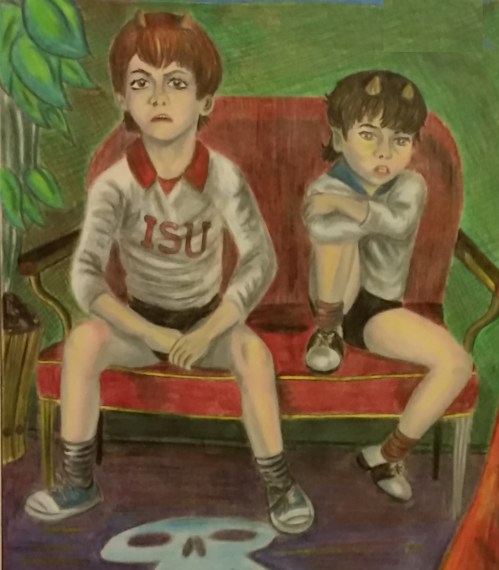
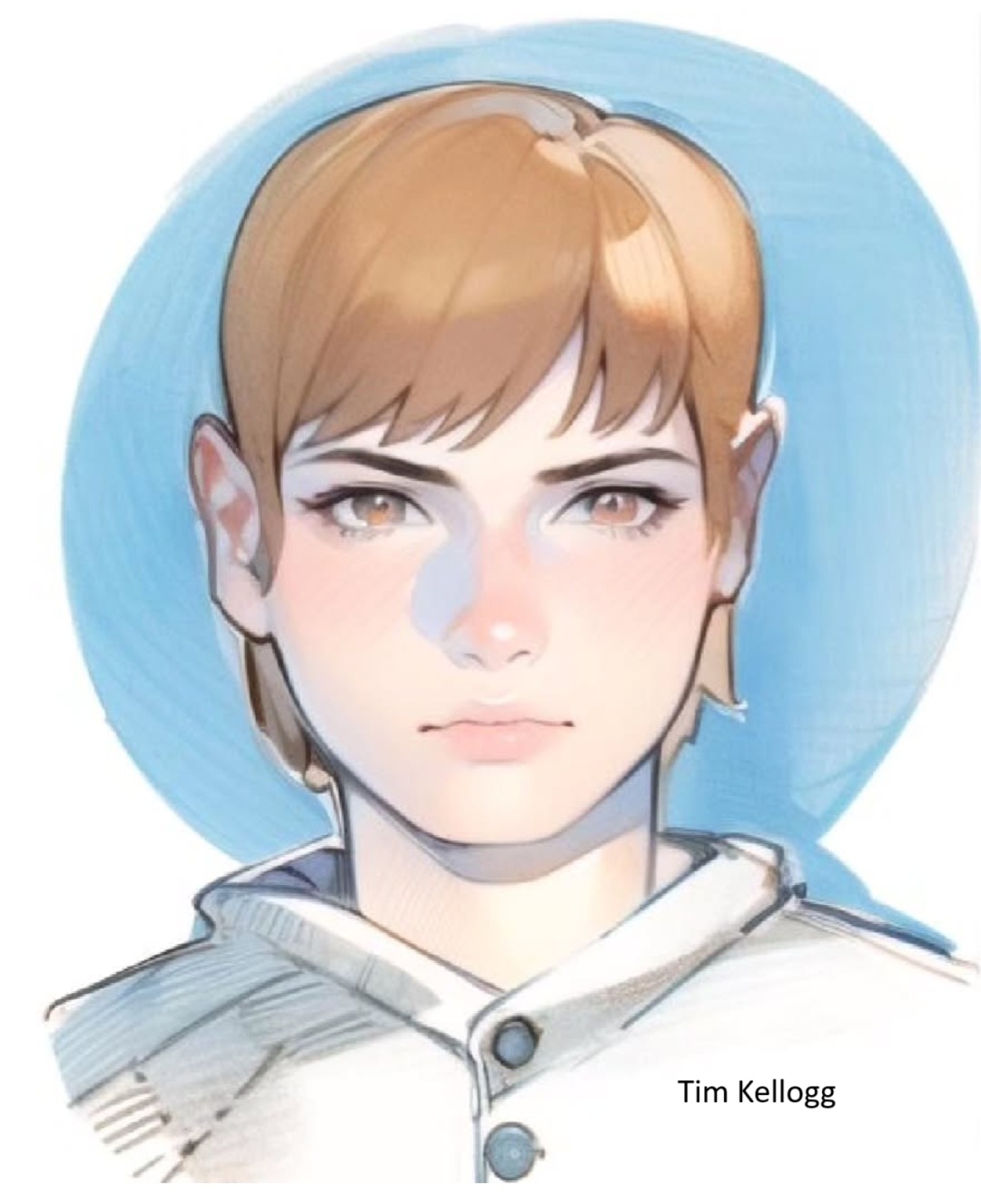
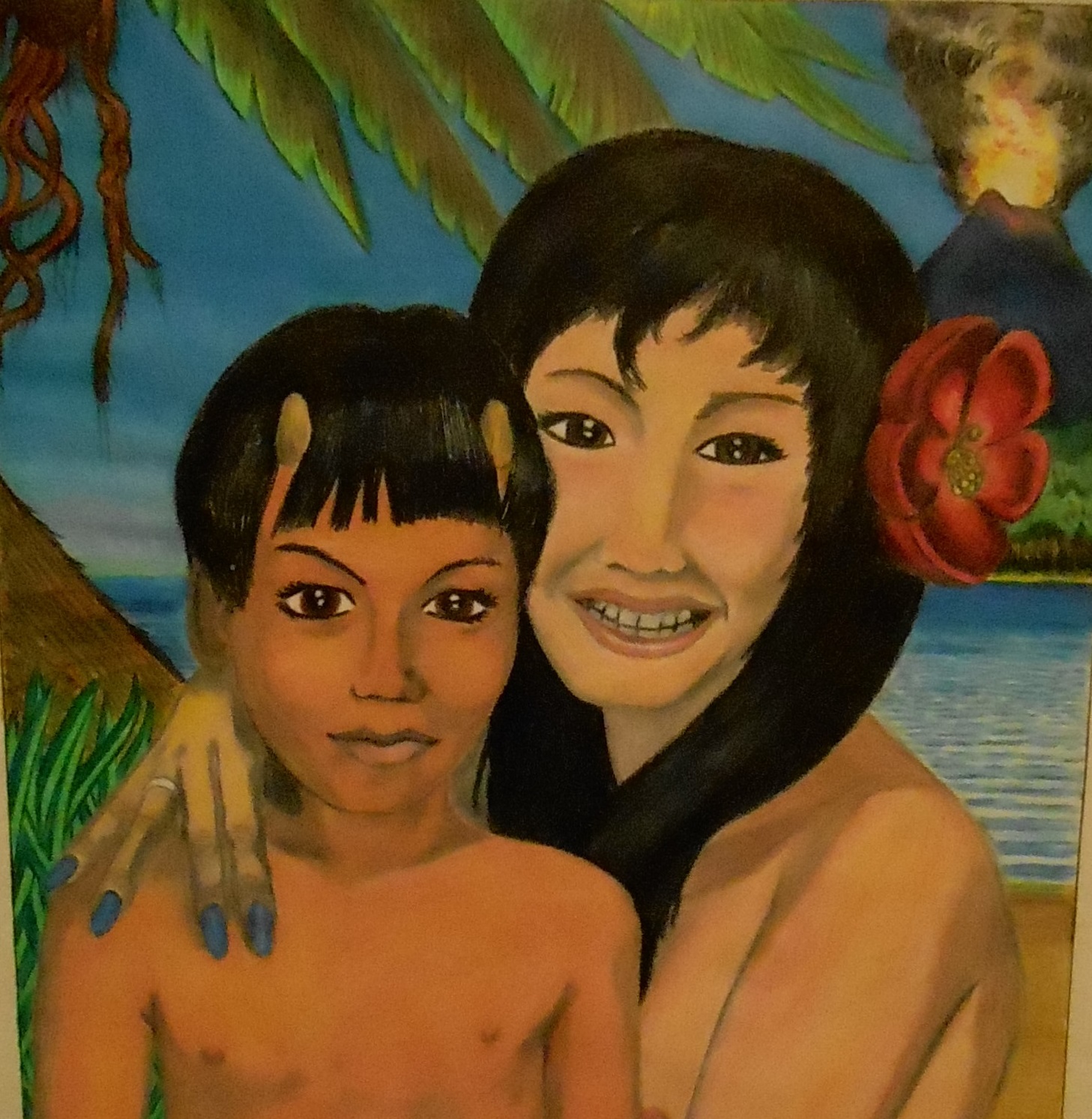
Torrie Brownfield, the Baby Werewolf, is not a monster. He is a boy who suffers from a genetic hair disorder called hypertrichosis, the same disorder that caused the star of Barnum’s freak show, Jojo the dog-faced boy, to have excessive hair growth.

He looks like a monster, but he is really the sweetest, most innocent character in the story.

..

..

..

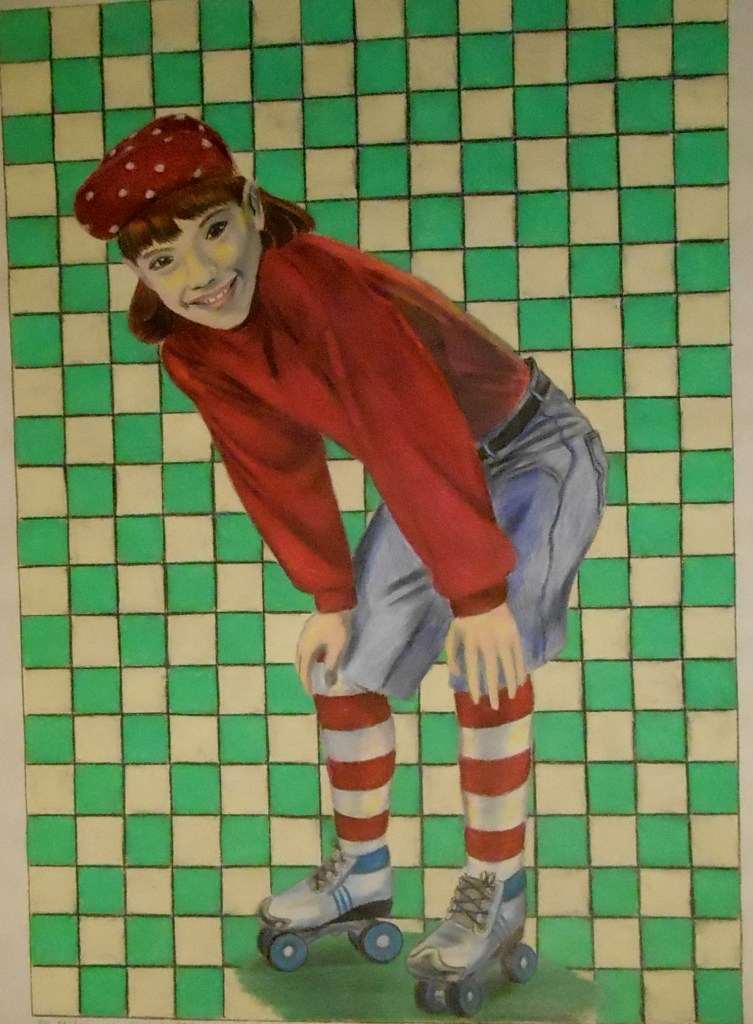
The Cobble Sisters, both Sherry and Shelly, are nudists. That is a detail that was both kinda true about the real twin girls that inspired the characters, and true enough about these characters in the story to make fans of my fiction from real nudists I befriended on Twitter.

The nudism, however, symbolizes innocence and truthfulness. Sherry labors in both books to get the other members of the Pirates’ Liars’ Club to accept nudism and try it for themselves. Sherry tells them repeatedly that nudists are more honest than other people because they don’t hide anything about themselves.

The ultimate villain of both novels is, ironically, one who hides everything and manipulates from the shadows.

Grandma Gretel is the main character of Recipes for Gingerbread Children. She is a story-teller that has to come to terms with her own monsters from the past. She is a survivor of the Holocaust during WWII. She lost her entire family to the monsters of the Third Reich.

Ironically, she is the one who, through stories and her own keen perceptions, reveals the ultimate villain and his evil. She also, through stories, is coming to terms with her own trauma and loss.

So, what I am saying about my bookish journey at this point is that I have to write the novels I am writing because they allow me to rewrite the world I live in and the facts of my past life in it. I am rewriting myself. I am becoming the me I need to be by writing.

Of course, I am not yet done talking about my bookish journey. Keep an eye out for Part V.

Leave a comment

Filed under book review, humor, novel writing, Paffooney, writing

My Bookish Journey (Part III)

As I indicated in Part II, I killed PDMI Publishing with my first contest novel, Snow Babies. Not because it was that bad of a novel. Rather, it was the endless compounding of my bad luck over time, caused by the Publishing Gods’ keen desires to keep my stories from being generally read and enjoyed. Fickle and cruel are the Publishing Gods.

I took some of the most memorable events in my time as a teacher, put them in a cook-pot and added a batter made of characters based on real teachers I have taught with, learned from, and copied their methods, mixed it with a wooden whisk made of fairy tales, and then baked it with the high heat of the love of teaching to make the next manuscript I would submit to the same YA Novel contest, the Rossetti Awards.

I thought it was an excellent novel. And, like Snow Babies before it, it made the final round of the judging. And there was a range of prizes for the best in about five categories of YA novel for which Magical Miss Morgan qualified for two of them. If it had taken any of those prizes, it would’ve gained me the attention of major publishers looking for new talent.

Alas, there were more novels in competition in that second contest, and I only won the placement in the final round of judging. The Publishing Gods are powerful and implacable.

I submitted it to another publisher that I meant to kill, and they promptly rejected it. They could not handle many novels, got an avalanche of mostly terrible novels, and rejected mine after the first page didn’t dazzle them enough. My consolation had to be that, even though they didn’t give me a contract, they did die shortly after, being closed the next time I checked on them.

Mike Murphy and Blueberry Bates, two of Miss Morgan’s students

So, I gritted my teeth and tried the pay-to-publish publishers one more time. I chose Page Publishing because they only cost a third of what I-Universe did. I could, at that time, barely still afford it with my partially-restored credit rating.

Unfortunately, as a Publisher, Page was worth only one one-hundredth of the value of I-Universe. They didn’t actually have editors. I basically edited the whole thing myself. Their “editor” only communicated to me once with a proof-read copy that I basically had to re-edit and change everything back to being correct English usage. The major editorial contribution? They tried to change every instance of my use of Miss Morgan to Ms. Morgan. Even in the title. The young bozo-editor didn’t understand that even married female teachers are addressed as “Miss.”

As hard as they tried to mess up the novel for me, almost as badly as Publish America did to AeroQuest, I was pleased with the final outcome and the ten copies they sent me. However, I had already vowed to myself that I would never again trust my work to fly-by-night small publishers. And, of course, no major publisher was accepting unsolicited manuscripts. So, I began my relationship with Amazon Kindle Direct Publishing.

That, then, will be the topic of Part IV.

Leave a comment

Filed under humor, novel writing, Paffooney, publishing

My Bookish Journey (Part II)

It is possible, I suppose, that after my unlooked-for hiatus from teaching, and the subsequent employment as an ESL teacher for the Garland, Texas School District in 2007. I might never have tried picking up the magic pencil again.

I loved teaching. And I was seriously considering doing it until the day I dropped dead.

But, God, of course, usually has other ideas for everybody. My last three years as a Texas public school teacher were my hardest health-wise. I had the H1N1 flu twice in one year. Both strains, one time each. I spent a week in the hospital with pneumonia. I reached a point where I was sick more days every semester than I had sick days to cover. My paychecks began to shrink. And it got harder to make it through the day standing in front of classrooms holding the big pencil of lesson delivery.

As I contemplated the inevitable dropping into deadness that happens even to English teachers, I began to realize that I couldn’t just let my stories disappear when I did. I needed to actually get serious about publishing them. I wrote another. I took an old manuscript called Nobody’s Babies and rewrote it as Snow Babies. I submitted it in manuscript form to a writing contest. I entered it into Chanticleer Book Reviews’ YA novel-writing contest called the Dante Rossetti Awards. https://www.chantireviews.com/contests/ I made it through to the final round of judging, one of twelve books. I didn’t win, and I couldn’t legally put on the eventual cover of the book that it was a finalist, but it was. So, it was time to find a new publisher. Preferably one that didn’t require my indentured servitude to Mastercard and Discover for the rest of my life.

I found a publisher that loved my book. PDMI Publishing was a business operated as an Indie publisher by a poet and his wife and supported by all the writers and editors and artists whose work he put into print. They were expanding when I signed a contract with them. I was given a brand new book editor who joined them shortly after I did. Jessie Cornwell was her name.

My book was humming along towards publication for two years. Then, rather suddenly, the business collapsed and they released me from my contract. Being the next book in line to be published, I believe it was my incredible luck as an author trying to get published and actually make money from writing that killed the publisher. I didn’t get the final draft of my novel back, so, now I give credit as Editor to Jessie, but the only changes she made to it are the ones I remembered and agreed with.

I would make one more stab at working with an actual publisher for the next book I wanted to publish, Magical Miss Morgan. But that debacle is the subject of Part Three.

But I would go on to self-publish Snow Babies on Amazon, and, to date, it is the book I consider to be the best thing I have ever written.

Leave a comment

Filed under novel writing, Paffooney, publishing, writing

My Bookish Journey

My journey as a writer actually began in grade school. I was writing Star Trek-like comics from the time I was in the fourth and fifth grade, ten and eleven years old. I called my comics Zebra Fleet, about the last fleet in the Star League on the distant, far reaches of the Milky Way Galaxy.

I started writing book-length stories in college, at Iowa State University. They weren’t all science fiction. They began to be more and more about the time and place where I grew up, Rowan, Iowa in the 1960s and 1970s They involved the people I knew there and then. My family, my friends, the people of Rowan, and random Iowegians. I based important characters on people I actually knew, mostly those I knew quite well. But I changed and swapped character details to hide their identities a little bit, and I gave them names that were mixed and matched and borrowed from the 1977 Ames, Iowa phone book. Dettbarn, Efram, Sumpter, Bircher, Clarke, MacMillan, White, and Murphy all came from there. Niland came from a famous alumni of the University of Iowa who played for the Dallas Cowboys.

In order to have food to eat and money to spend as an adult, I had to take my BA in English and add to it an MA in Education to get a job as a teacher. I took my closet full of nascent novels and moved to Texas where my dad’s job took my parents before I graduated college. There I added hundreds of characters who were perfect for Young Adult novels as I got to know real kids and learned about their real lives. I changed their names, details, and often cultures as I added them to my stories.

Other than a couple of shots in the dark as submissions of cartoons and manuscripts to publishers, I mostly kept my stories in the closet and focused more on teaching (which, to be fair, is also a form of story-telling.) I put my handful of rejection letters in the closet too.

But then, I got laid off for two years due to health and a wicked witch as a principal, and I spent my non-job-hunting time writing a novel about my science-fiction role-playing games with former students. It was called AeroQuest.

I managed to find a publisher for that book. But it was a bogus sort of experience. They paid me an advance of one dollar. Then they had me sign a seven-year contract in 2007. No editor or proofreader even worked for them. I basically had to edit and format the book myself. All they did is intentionally flub-up some titles and sections of text in the printed form. This was part of the master plan to get me to pay for an extensive fix to the mistakes they made. The only marketing they did was to send a notice for my over-priced paperback to the list of friends and relatives that they required me to make for them. Publish America is no longer in business. They were closed down by a class-action lawsuit from the authors they had tricked into paying them thousands of dollars for totally defective publishing services. Since I didn’t pay them any scam pennies, I didn’t get any of the money from the lawsuit. I only got my publishing rights back.

So, I went back to whole-heartedly teaching. Then, in 2012 I completed another manuscript that I thought was the best work that I had ever done. I submitted it to I-Universe publishers. They read it and loved it. As it turned out, they were in the process of being acquired by Penguin Books. They were the closest thing to a mainstream publisher that would entertain submissions by new and unproven authors like me.

They, of course, were offering a publishing package that included working with real editors and marketing personnel. But I had to go a bit into debt to swing the price. So, I was still paying someone to publish my book correctly. But, as a step in my author’s journey, it was invaluable. I got to work closely with an experienced editor who had previously worked for both MacMillan and Harcourt, two mainstream traditional publishers.

My book was given the stock cover you see here despite the cover requests I made and got approved. My original ask was apparently too expensive to print. There is no girl flying a kite in the story at all, let alone at night. It is a story about incompetent aliens trying to invade a small town in Iowa. I had requested a flying saucer with a kite flying behind it.

That first real publisher, though, made me into a real writer. The I-Universe marketeers got me listed as a winner of the Editor’s Choice Award. And they put that award and the Rising Star award on every paperback copy they printed. Everyone who read the book seemed to really like it. They set me up with this blog, space on their website for my book and bio, and they put me in touch with Barnes and Noble to talk about “meet the author” sessions to promote getting the book on their shelves. But a trip to the hospital with pneumonia and the end of the room on my Discover Card caused me to bring an end to my marketing campaign. I ended up with two five-star reviews and sixteen dollars-worth of royalties.

At this point in the story, temporarily stalled, I must start touting the part two of my essay for today. I should warn you, I have a lot more negative things to say about publishing next time.

4 Comments

Filed under autobiography, commentary, novel writing, Paffooney, publishing, writing

Word Magic

From the time I could first remember, I was always surrounded by stories. I had significantly gifted story-tellers in my life. My Grandpa Aldrich (Mom’s Dad) could spin a yarn about Dolly O’Rourke and her husband, Shorty the Dwarf, that would leave everybody in stitches. (Metaphorical, not Literal)

And my Grandma Beyer (Dad’s Mom) taught me about family history. She told me the story of how my Great Uncle, her brother, died in a Navy training accident during World War II. He was in gun turret aboard a destroyer when something went wrong, killing three in the explosion.

Words have power. They can connect you to people who died before you were ever born. They have the power to make you laugh, or make you cry.

Are you reading my words now? After you have read them, they will be “read.” Take away the “a” and they will change color. They will be “red.” Did you see that trick coming? Especially since I telegraphed it with the colored picture that, if you are a normal reader, you read the “red” right before I connected it to “reading.”

Comedy, the writing of things that can be (can bee, can dee, candee, candy) funny, is a magical sort of word wrangling that is neither fattening nor a threat to diabetes if you consume it. How many word tricks are in the previous sentence? I count 8. But that wholly depends on which “previous sentence” I meant. I didn’t say, “the sentence previous to this one.” There were thirteen sentences previous to that one (including the one in the picture) and “previous” simply means “coming before.” Of course, if it doesn’t simply mean that, remember, lying is also a word trick.

Here’s a magic word I created myself. It was a made-up word. But do a Google picture search on that word and see if you can avoid artwork by Mickey. And you should always pay attention to the small print.

So, now you see how it is. Words have magic. Real magic. If you know how to use them. And it is not always a matter of morphological prestidigitation like this post is full of. It can be the ordinary magic of a good sentence, or a well-crafted paragraph. But it is a wizardry because it takes practice, and reading, and more practice, and arcane theories spoken in the backs of old book shops, and more practice. But anyone can do it. At least… anyone literate. Because the magic doesn’t exist without a reader. So, thank you for being gullible enough for me to enchant you today.

Leave a comment

Filed under humor, Paffooney, strange and wonderful ideas about life, wizards, word games, wordplay, writing, writing humor, writing teacher

Exploring the Mind of Mickey

20160127_205542

One really weird thing that teachers do is think about thinking.  I mean, how can a person actually teach someone else how to think and how to learn if they don’t themselves understand the underlying processes?  Now that I have retired from teaching and spend all my time feeling sorry for myself, I thought I would try thinking about thinking one more time at least.  Hey, just because I am retired, it doesn’t mean I can’t still do some of the weird things I used to do as a teacher, right?

This time I made a map to aid me in my quest to follow the twists and turns of how Mickey thinks and how Mickey learns.  Don’t worry, though.  I didn’t actually cut Mickey’s head in half to be able to make this map.  I used the magical tool of imagination.  Some folks might call it story-telling… or bald-face lying.

Now, a brain surgeon would be concerned that my brain maps out in boxes.  He would identify it as a seriously deformed brain.  It is not supposed to be all rectangular spaces and stairs.  It probably indicates a severe medical need for corrective surgery… or possibly complete amputation.  But we are not going to concern ourselves with trying to save Mickey from himself right now.  That is far too complex a topic to tackle in a 500-word daily post.  We are just discussing the basics of operation.

You see the three little guys in the control room?  They are an indication that not only did I steal an idea from the Disney/Pixar Movie Inside Out, but I apparently have too few guys doing the job up there compared to the movie version.  (It probably makes sense though that a young girl like the one in the movie has a much more sensible configuration in her brain than someone who was a middle school teacher for 24 years.  Seriously, that job can do a bit of damage.)  The three little guys are not actually Moe, Curly, and Larry, though that wouldn’t be far from descriptive accuracy.  They are Impulsive Ignatz, currently in the driver’s seat (or else I wouldn’t be writing this), Proper Percy the Planner, and Pompositous Felixian Checkerbob, the fact-checker and perfectionist (also labeled the inner nerd… I am told not everyone has one of these).  They are the three little guys that run around in frantic circles in my head trying to deal with a constant flow of input and output, trying to make sense of everything, and routinely failing miserably.

I shouldn’t forget the other two little guys in my head, Sleepytime Tim in the Dream Center, and little Batty up in the attic.  I have no earthly idea how either of them function, or what in the heck they are supposed to do.  But there they are.  The other three run up and down stairs all day, locating magic mushrooms and random knowledge in the many file cabinets, record collections, book stacks, and odd greasy containers that are stored all around in the many nooks and crannies of Mickey’s mind.  They collect stuff through the eyes and ears, and it is also their responsibility to chuck things out through the stupidity broadcaster at various inopportune times.  It is also a good idea for them to avoid the lizard brain of the limbic system in the basement.  It is easily angered and might eat them.

So now you should be able to fully understand how Mickey thinks.  (Or not… a qualifier I was forced to put in by Checkerbob.)

2 Comments

Filed under humor, insight, mental health, Paffooney, Uncategorized

Practicing Swimming in Place

Miranda’s Selfie in Hawaii

I don’t begrudge Miranda for having her extended vacation in Hawaii. After all, she lost both of her parents in a plane crash. And even if she did inherit twenty million dollars, and the people who actually take care of her are still with her because she has always been raised by her nanny and the household staff, she is still dealing with a terrible loss that most teenagers don’t have to deal with. Also, there’s the fact that her life is entirely fictional. I need a vacation from my life too. I have dealt with the harm done me by Donald Trump, Covid, Bankruptcy, and ill health for eight years already. Now I have been given the gift of four more Trump years. What the heck? I voted against the Pumpkinhead. Why didn’t that work?

My writing time has become unsustainable. I am barely getting anything new done day by day.

But I have gone back and reread some of my own best writing. And as much as any good author always feels like his work, even his best work, is little more than a pile of crap, I have discovered that some of my crap-tastic creations are really pretty good.

Have you read this one, for instance?

So, when Miranda gets back from Hawaii, we’ll see what happens next. I want to finish some of what I already started. I also want to tell Miranda’s story and bring her to life as well. That’s only fair after I killed off her parents in my imagination. Such a devastating crash!

2 Comments

Filed under Uncategorized

The Art of Being Mickey

I have published my eighth novel in the last six years. (This is, of course, a re-post of an old essay.) Sure, it is through mostly self-publishing of novels that no one but me has ever read. Catch a Falling Star and Snow Babies both had a professional editor, one who had worked for Harcourt and one who worked for PDMI. Magical Miss Morgan has had a proofreader who made numerous stupid mistake errors that I had to change back to the original meticulously by hand. But all three of those novels won an award or were finalists in a young adult novel contest. I do have reason to believe I am a competent writer and better even than some who have achieved commercial success.

But what is the real reason that I am so intent on producing the maximum amount of creative work possible in this decade? Well, to be coldly objective, I am a diabetic who cannot currently afford insulin. I have been betrayed by the for-profit healthcare system that treats me as a source of unending profit. I am like a laying hen in the chicken house, giving my eggs of effort away to a farmer who means to eat my very children if time and circumstance allows. I am the victim of six incurable diseases and conditions that I got most likely as a result of exposure to toxic farm chemicals in the early 70’s. I am also a cancer survivor from a malignant melanoma in 1983, and for three years now I have not been able to get the preventative cancer tests I am supposed to be receiving every year for the rest of my life. My prostate could very well be cancerous as I write this. If that is so, it will kill me unawares, because I don’t even want to know about having a disease I can’t possibly afford to fight all over again.’

So, the basic reason I am going through the most productive and creative period of my entire life is because I have a great rage to create before I die and I could be dying as soon as tonight. All of the countless stories in my head clamoring to be written down before it is too late cry out to me desperately for my immediate attention.

I will, then, continue to write stories and draw cartoons and other Paffoonies for as long as I am still able, and possibly even afterward. I have, after all, threatened repeatedly to become a ghostwriter after I die. And, yes, I understand when you scream at my essay that that is not what a ghostwriter is. But if a woman can channel the ghost of Franz Schubert and finish his unfinished symphony…(https://en.wikipedia.org/wiki/Rosemary_Brown_(spiritualist))

—then I should also be able to tell my stories from beyond the grave. I have been percolating them in my head and writing and drawing them in whole or in part since 1974. I have too much time and too many daydreams wrapped up in them to let it all just evaporate into the ether. In summation, I am claiming stupidly that my novels, crack-brained and wacky as they are, are somehow destined to exist, either because of me or in spite of me. So just be happy that I write what I write, for there is an art to being Mickey, and I am the one artist and writer who is the best Mickey possible if truly there ever was a real Mickey.

Leave a comment

Filed under battling depression, commentary, goofy thoughts, humor, novel writing, Paffooney

Writing About Nothing and Nobody Being Nowhere

Charles Dickens, William Shakespeare, Walt Disney, and Edgar Allen Poe (the four clowns depicted above) all probably had times in their writing life when they didn’t really have anything to write about. Charles Dickens couldn’t think of anything but his time in the boot-black factory and the misery he felt as a child raised in poverty. So, what did he do? He created Wilkins Micawber as a stand-in for his ne’er-do-well father who always believed, “Something will presently turn up.” And he wrote the semi-autobiographical novel David Copperfield.

William Shakespeare didn’t actually write anything with his grade-school education and limited knowledge of the world. But when the Earl of Oxford who used his name as a nom de plume could think of nothing, he thought of ending it all, and the “To-be-or-not-to-be…” play, Hamlet, poured out of his quill pen onto paper.

And when Walt Disney rode the train in defeat, having lost his best comic character for cartoons, Oswald the Rabbit, to his old boss, he doodled a mouse and named him Mickey, even providing Mickey’s falsetto voice for decades on the silver screen. Oh, and claiming the rights to any further characters his studios produced… to this day.

Poe looked at the bust over his chamber door… and saw a raven. Instantly, NEVERMORE.

Now it’s Mickey’s turn to write about nothing, and try to live up to the nothing-masters’ artistic masterpieces of yore. For instance, the boy in the picture. I drew him from a nude model in a black-and-white photo. Nobody in class, not even the one who brought the picture, ever told me his name. And the class was forty-four years ago now. So, assuming the picture wasn’t old back then, the boy is now older than fifty-four, and possibly significantly older than that now. So it is a picture of a nude nobody in front of an abandoned house in the snow however-many years ago in a place that is probably nowhere now. And I won’t even mention the imaginary puzzle pieces floating through the air for nobody to put together. What’s that? I just mentioned them? What did I mention? They are really just nothing.

So, there is a time and a place for writing about everything. Even if that everything includes nothing… and that nothing is nowhere… and is about nobody.

Leave a comment

Filed under artwork, autobiography, clowns, humor, nudes, Paffooney

Prudes and Prejudices (Part 2)

Who is really qualified to judge people? The Bible says only God makes that judgment. But who tells us what God’s judgment actually is? Especially if Nietzsche is right about God being dead?

Prudes

Not long ago I posted a short-short story about me wanting to see girls get naked while we were kite flying, and then, by verbal tricks backfiring, I ended up being the only one flying the kite while naked. I look back on that story now with laughter about my own personal foibles. But if I am completely honest, the church ladies with gray hair, wagging fingers, and tongues that are even waggier… Well, I am glad that the ones I knew as a boy are all now dead and can’t possibly read that story and shame me all over again.

And I know that I draw an awful lot of pictures and write an awful lot of stories that involve naked children. As a survivor of a traumatic sexual assault when I was ten (a thing that happened after the kite story was already in the past) there is a level of discomfort over recognizing that trend in myself. Not because I became a sexual predator of children. I clearly did not. I still am determined to prevent such things from happening in any way I can, though in retirement I no longer have access to children to talk with to find out about bad things that may be happening in their lives.

Derfentwinkle and Anneliese are in my current work in progress, and they are fairies both.

I write stories in which some kid characters are naked at times. Sometimes because of curiosity and developing sexuality, sometimes because of growing up in a nudist household, sometimes in their dreams, taking baths, and many other normal functions where clothing is optional. In The Baby Werewolf novel, I included a character who was trying to exploit a young nudist girl to make child pornography. He was the kind of predator I have always resolved to be against, and the book is intended to make readers aware of that kind of dangerous person and recognize where the opportunities to avoid such people lie.

And some of the nude young characters I create like the two fairy girls depicted in the illustration from The Necromancer’s Apprentice merely represent the liberating feeling you can get from embracing your own nude self, a thing my attacker deprived me of during childhood through trauma and fear.

I, as an adult human being, fully accept readers’ rights to be critical of my work and make prudish judgements about my writing. I don’t like that one critic of The Baby Werewolf who said things about my work being creepy for the wrong reasons (it is a horror story after all) and suggesting that maybe I as the author am bad and villainous instead of feeling that way about the villain of the story. It was fiction, not my personal life story. The villain character is not me.

But prudes being prudish and judgmental can do more damage than just hurting an author’s feelings.

I have had two students that I know of who were transexual.

One was raised a boy because he was born with a penis, but in grade school was discovered to have a womb and ovaries. I didn’t know such a condition existed until I saw an episode of Marcus Welby MD in the 70’s about a young boy who had to transition because he was actually a girl. The child in my class was from a poor Hispanic family that didn’t understand the problem and couldn’t really afford to deal with it. The prudes, judgemental as always, were not kind. This he/she hermaphrodite was forced to grow up as a flamboyantly gay male even though he was capable of physically changing into a woman who could conceive a child. I followed his development for as long as I was able. I did spend one long and awkward evening talking to him/her about his/her crush on me. I could’ve gotten the prude finger-wag over that strange conference too, if anybody had bothered to care about that poor child. I certainly wasn’t going to kiss him, and I had to send him home at the end of that discussion because of what he/she wanted from me. I suspect there were other men who took advantage of him/her. But I wasn’t close enough to help him in any real way. And I lost touch soon after he/she left my class. Based on that bizarre discussion we had, I have no confidence at all that the poor child is still alive. Nobody seemed to care about this child That is the most tragic of things teachers sometimes have to deal with.

The other trans student I had in class for a year was a girl as far as she was concerned. It was not a question open for debate. She was quiet and a good student. She only had a couple of friends, but they were good friends and stood by her. At the time she was in my middle school class, she already had breasts thanks to hormone therapy. By now she has probably transitioned by surgical means. Her life was a lot easier than the boy with ovaries. But prudes in Texas abound and provide a lot of sour fruit.

I personally find it offensive that anyone would deny either of these two people the use of whatever restroom was comfortable for them.

What gives the typical prude the right to pass judgement on anyone else’s behavior? Prudes can cause repression of natural behaviors for the benefit for no one but themselves. I find prudishness to be reprehensible. But the rub is… being judgemental about that makes me a prude too.

I try never to be judgemental. I would much rather accept everyone for who they are, or who they think they are, than rely on what I think they are. And I do listen when others judge me. I have changed things in my books and drawings because of observations by others. And I take everything seriously… especially comedy.

Leave a comment

Filed under angry rant, commentary, nudes, Paffooney