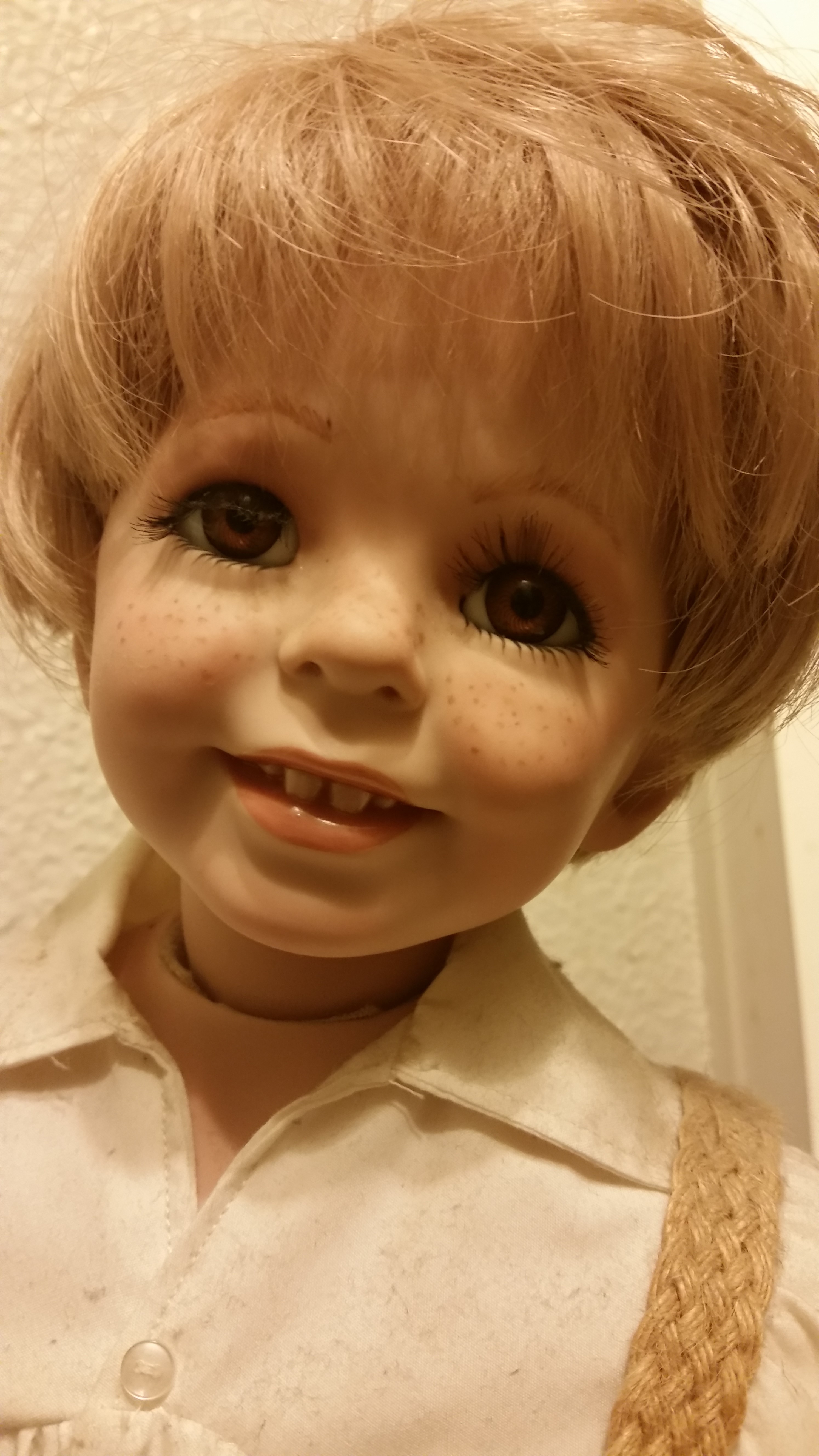
Tom Sawyer without the straw hat, as created by Lois Beyer
You may already know about my doll-collecting mania. You may have already called the mental health people to come take care of the problem, and they just haven’t arrived at my door yet with the white coat that has the extra long sleeves. But you may not know that my mother is a doll-maker and has something to do with my doll-collecting hoarding disorder.
In the early 1990’s my mother and I put our money together and bought a kiln while we were visiting my sister’s family out in California. It wasn’t the most expensive model, but it wasn’t the cheapest, either. We both had enough experience with ceramics that we didn’t want to buy a burning box that was merely going to blow our porcelain projects to kingdom come. Mother had doll-making friends in Texas who taught her about firing greenware and glazing and porcelain paint and all the other arcane stuff you have to know to make expensive hand-made dolls. Now, honestly, at the start we could’ve made some money at it selling to seriously ill doll collectors and other kooks, but we were not willing to part with our early art, and by the time we were ready to do more than just have an expensive hobby, everyone who would’ve paid money for the product was making their own. So dreams of commercial success were supplanted by the hobbyist’s mania that made more and more charming little things to occasionally display at the county fair.
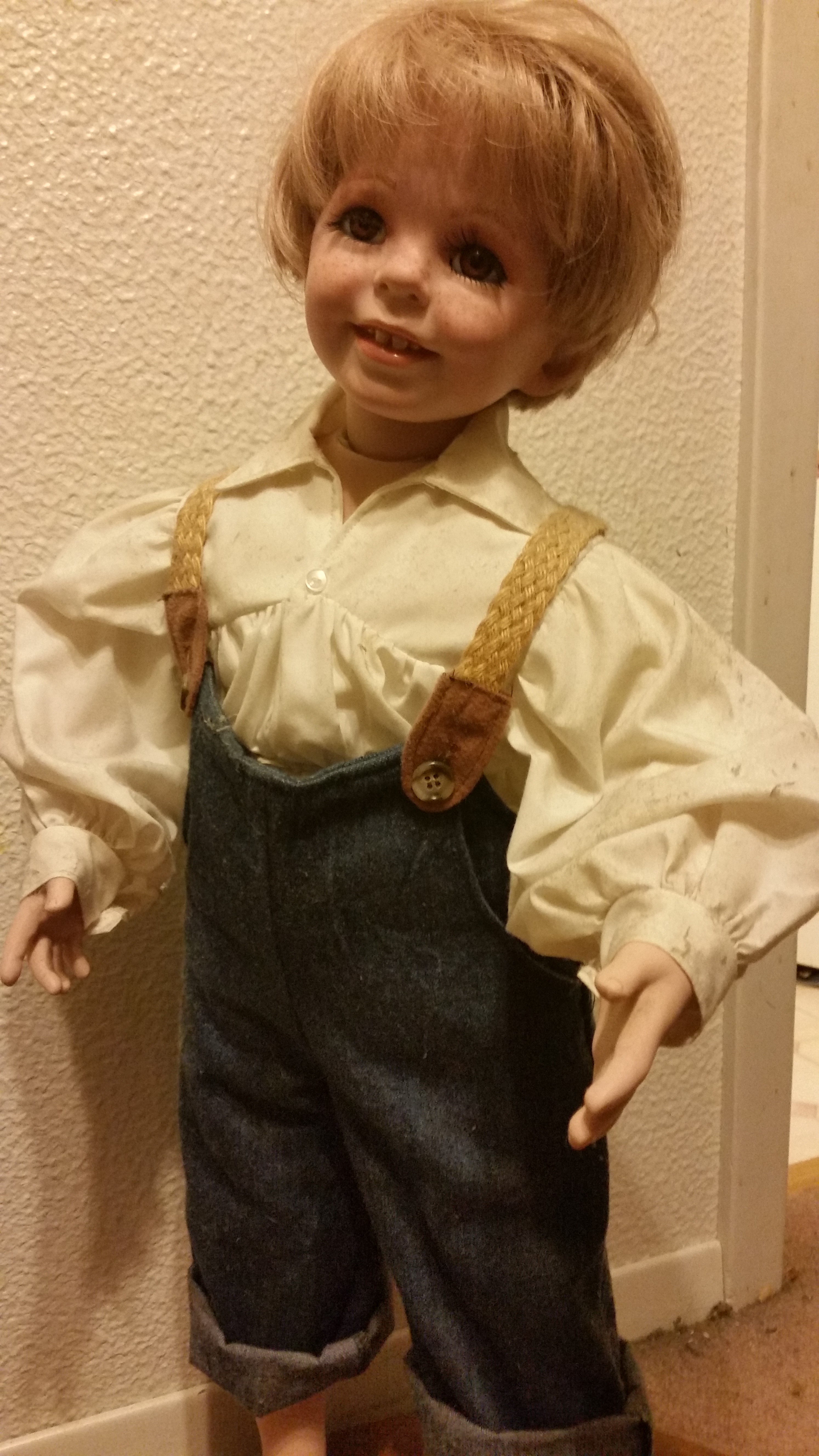
The two dolls I have left to share on my blog from that era were both crafted by my mother. She lovingly fired the porcelain body parts, painted the faces by hand, and created the wardrobe on her Singer sewing machine. I made some dolls too, but never with the wondrous craft and care that made my mother’s dolls beyond compare.
Tom Sawyer was originally a boy doll who was supposed to be able to hold a model train in his hands. My mother had the pattern for the little engineer’s uniform and hat that she would use on another doll instead. He is named after the Tom Sawyer clothing pattern that my mother bought and sewed together to dress him in. He has a cloth and stuffing body underneath his clothes together with porcelain head, hands, and bare feet.
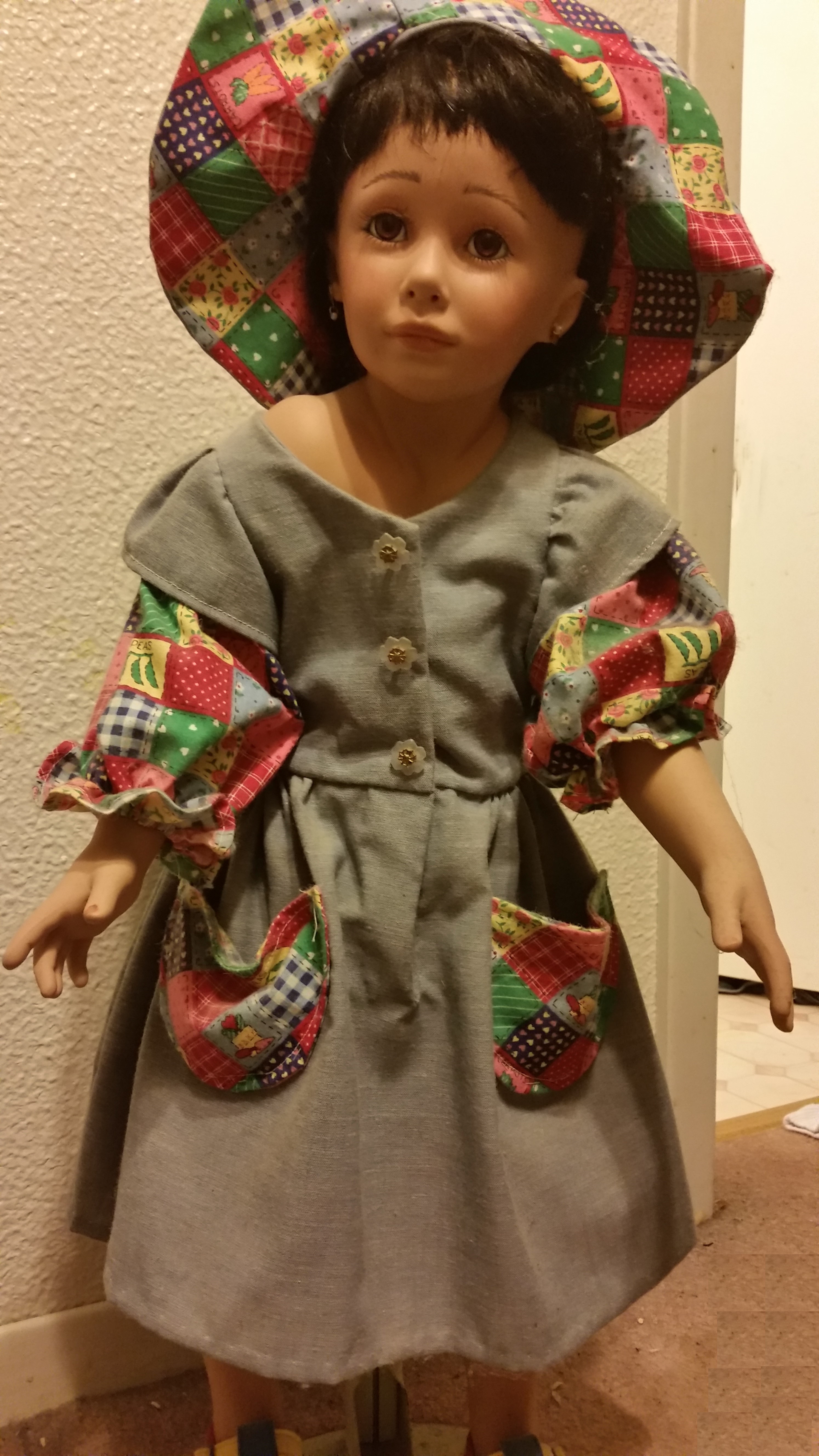
The other doll I have left to brag unctuously about is a doll named Nicole after the niece my wife and I have whom this doll bares a striking resemblance to. She displays a beautiful little girl’s sun dress with quilted accent colors that my mother sewed from scratch with the help of a pattern she was truly fond of and used more than once.
These dolls were gifts to my wife and I, presented shortly after my mother bought out my share of the kiln when she retired and moved back to the frosty land of the Iowegians. I haven’t kept them as thoroughly dusted and cobweb-free as they deserve because I have been a somewhat lazy and slovenly son… but I do love them almost as much as (and sometimes more depending on recent behavior) my own children. (After all, porcelain kids rarely make a mess, overspend allowances, or hog the television too much.)



 J
J