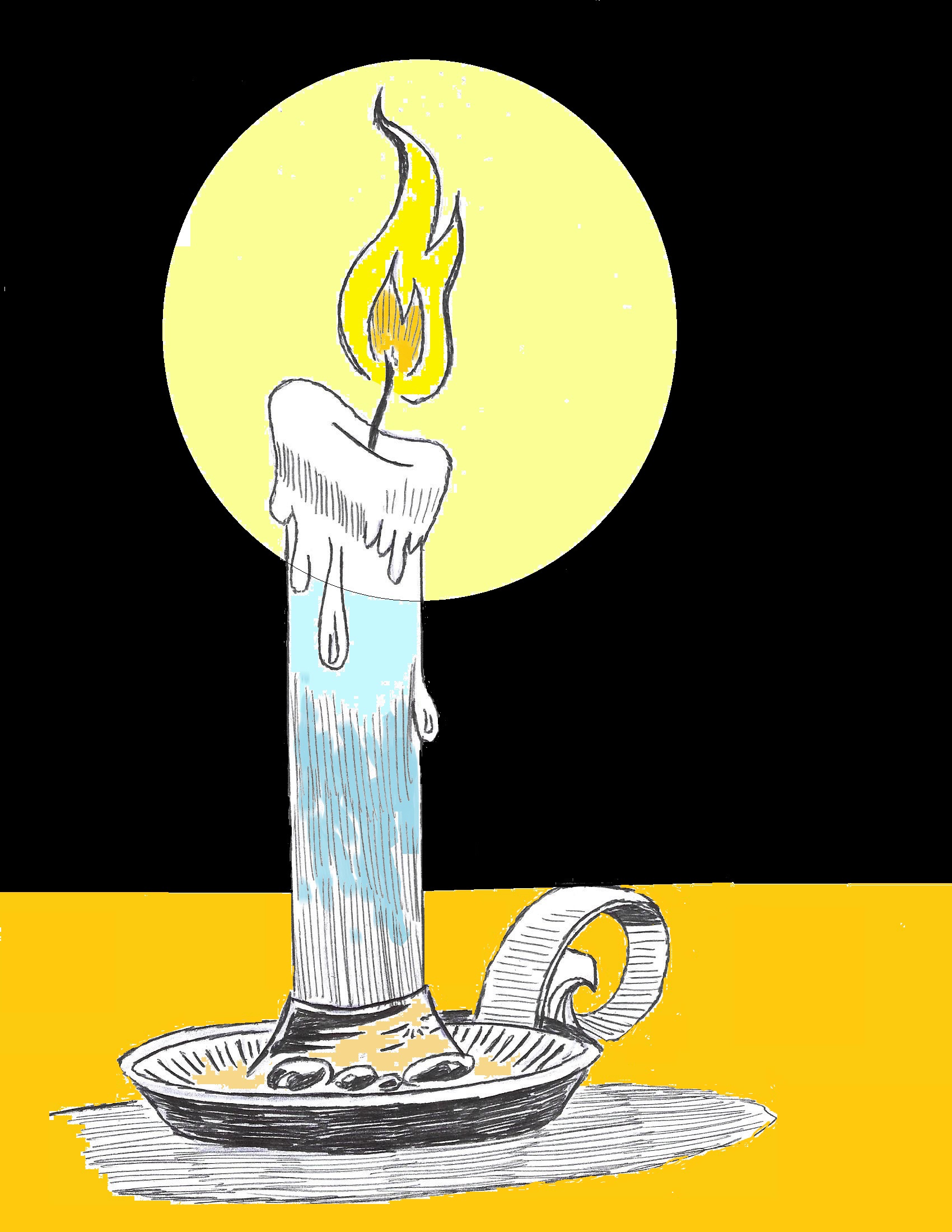
He was one of my all-time favorite students. I know I say that about an awful lot of kids. I can’t help it. Once you get to know them well enough to teach them anything, you tend to be hooked for life. They are your kid. You are their teacher. And that means almost as much as if they were born to you.
I first got to know Johnny on one frightful morning in September of 1984. He was a tiny, frail little seventh-grade boy sitting in the second seat of the second row. And as I was trying to get them to read a short story in the literature book, he kept nodding off, falling asleep. Sleeping is not an effective reading strategy. Three times I tried to wake him up and get him on task. He could have told me then, but he was painfully shy, and the only word I had heard from him was, “Here,” spoken during roll call. So, the fourth time I took him outside the classroom door to ask him what was wrong. He was deathly pale.
“What’s wrong? What do we need to do to make it better?”
He looked towards the boys’ restroom. “I gotta go…”
I told him to go, then followed him down to the restroom because I knew it was something serious. Serious enough to leave my class unattended. But they were deathly quiet, because unlike me, they knew what was wrong. I found him throwing up in the trash can. He told me he was sick in a barely audible voice.
Immediately I went to the office and told the secretary that he was ill.
“They have juice for him in the refrigerator in the ESL room,” Ms. Lawler said. “I’m sorry we haven’t gotten the nurse’s list out to teachers yet. He’s got juvenile diabetes.”
Whoa! I didn’t know much about diabetes then, but I did know it was too deadly of a thing to allow myself not to know everything I needed to know. At the time the school nurse had to take care of all four campuses in the school district, and she was only at the Junior High on Thursdays.
Thankfully, over time, not only did I learn more about handling that disease, but medical science did too. When I would later develop adult-onset diabetes in 2000, treatment for diabetics would become much more effective, rendering the disease far less destructive.
As for Johnny himself, he became a part of the small group of housing-project kids who would come to my apartment on Saturdays, and sometimes after school to hang out, use my computer, and play table-top role-playing games. I made a special effort to engage Johnny in conversations about a little of everything. He was a very bright boy when he felt well. I got to know his seriously diabetic mother too. And his older sister would later become a nurse at the local doctor’s office, so I got to know her as well. Johnny didn’t have a father at the time, which also applied to each of the other boys from the project, except for the Camacho brothers whose father was a seriously depressed Vietnam veteran. I suppose that’s why Johnny became like a son to me, one of five boys who at the time treated me like a second father. I taught him. I entertained him. And occasionally I cooked for him.
One of my two girlfriends at the time that I was mentoring Johnny liked to give him sugar-free candy. She got so accustomed to always having some available at her place that she actually got hooked on it herself.
In school Johnny opened up the way a cactus flower blooms when it gets a little rain. He began to talk to other kids a lot. He made himself into a group leader, and he even went out for high school football. Truthfully, I was amazed by him on the football field. He played defensive back. And he played like a star. I watched him intercept the ball about three times and run it back the other way. The coaches soon felt about him the same way I did. He was part of their family too.

And it turns out that being physically fit practically cures juvenile diabetes.
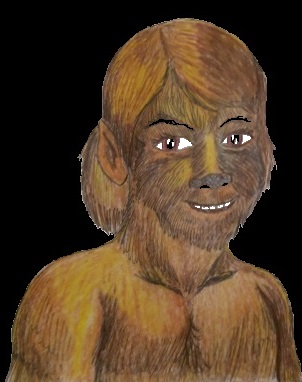
He got stronger and healthier with each season. He gave me the football portrait not because I had anything to do with his success, but because he loved me. I have hugged that boy three times in my lifetime, and each time is a cherished memory that I hope to carry with me to Xibalba, the Mayan Land of the Dead.
When I developed diabetes myself, Johnny’s older sister kept track of my wellness charts herself. Johnny’s family was experienced with handling diabetes, and they looked after me like a member of their family.
The last time I saw Johnny it was in the hallway at school. It was only a year before I left Cotulla for good. He had come especially to see me. I didn’t even recognize him at first because I hadn’t seen him for a decade. I wanted to talk to him and catch up. But I had to pick up my eldest son that day from second grade as he had been ill. I was not feeling well myself. So, I asked for a rain check. He still had that beautiful smile. And he didn’t tell me that that was the only chance he had to see me before leaving town again. It broke my heart when they told me that later.
But I see him again now as I tell you the story of Sugar-Free Johnny. He was probably the sweetest kid I ever taught. He will always be a part of my story. And apparently I am part of his story too.


Contradictions
You know what a contradiction is, don’t you? It is whatever comes out of your wife’s mouth whenever you make a statement asserting that whatever you said is factually true. She will promptly and always explain to you how wrong you are… loudly… and in great detail. No matter if you happen to be provably right or not.
What’s that, you say? I’m wrong about that too? Of course, I am, dear. I only deserve the catfood cookies.
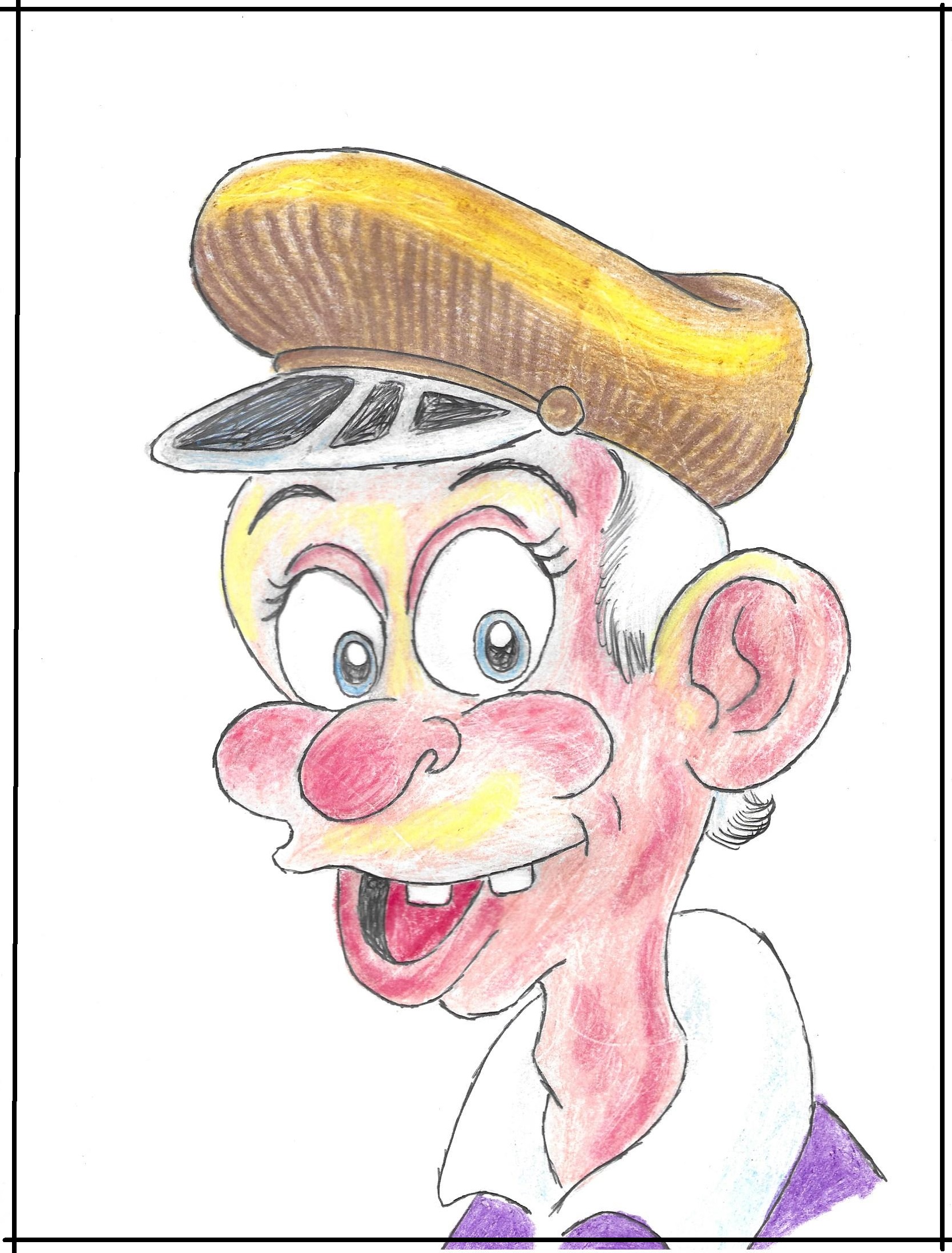
The fact is, if you raise your hand and give the teacher the correct answer often enough, you get a certain reputation amongst your classmates. Instead of continuing to call you, “dumbhead,” or “stupidhead,” or the simplified form of “caca-poo-poo-head” like they endearingly call everybody else, they begin calling you pejoratives like “Einstein,” or “Brainiac,” or “Supernerd, taah tah taaah!” And they begin pointing out in detail everything that is wrong about you. How you dress… how you talk… especially how you laugh. You have become the enemy. You must be contradicted.
“You are wrong, Mickey!”
“So, I get to be Dumbhead again?”
“No. you are still “Supernerd, taah tah taaah!” But you are wrong. We all think so, so that must be right.”
The truth is, Life itself is a contradiction. Considering the violence and hostility of the physical universe towards life, it is a miracle that anything at all is alive in the universe. The chaos of everything guarantees that if you are born into the miracle of life, then at some point, caused by a nearly infinite variety of possible aids to chaos, you will die. Order is whittled away into chaos. Civilizations fall eventually. Things die all the time.
But if all order must, by physical laws of the universe, be broken down into chaos, then, how is it that we have any order at all in the first place? Where does order come from? I’d give you a possible answer. But I would just be contradicted by the majority
Except for fundamentalist Christians who would say, “Let me think for a moment about why you are still wrong… and then I’ll tell you what I think the Bible says about why you are actually still wrong.”
One thing about being “only book-smart, but without common sense” that makes being contradicted all the time worth it, is that the more challenged the answers you come up with are, the more deeply you dig into them, and the more of a real-world understanding of why I am wrong about everything begins to make a bit more sense. Or not. Because I’m probably wrong in your estimation anyway.
Leave a comment
Filed under commentary, humor, inspiration, Paffooney, philosophy