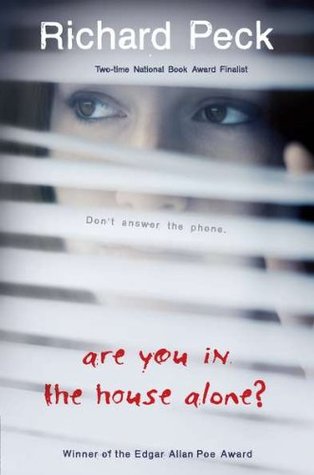
Yes, I read this book. Yes, it scared the poop out of me. Yes, it made me cry. This is a uniquely horrific horror story that is so realistic that you know that it has actually happened in real life somewhere, sometime. Only the names of the characters would be different.
I have a deep abiding respect for Richard Peck as a writer. He earned that with his books A Year Down Yonder and A Long Way from Chicago. Those books made me laugh so hard it blew chocolate milk out of my nose. And, yes, I was drinking chocolate milk at the time. They are so realistic because the people in those stories are real people. I know those people personally. Of course, they have different names in real life.
But Are You In the House Alone? is a very different book from those other two masterpieces. It tears your heart out and eats your liver because it is a first person narrative in the voice of a high school girl being stalked by a sexual predator. Everything that happens to Gail in the high school, at home, and at the house where she babysits is hyper-real with horror movie levels of attention to detail. I don’t wish to be a spoiler for this well-written book, but the narrator does not die in the book and it definitely does not have a happy ending. For anyone who has the amount of empathy I do, and in many ways becomes the narrator-character by reading, reading a book like this can physically hurt. A teacher like me has lived through horrible things like this happening to students before, it even happened to me as a boy, and it adds the slings and arrows of those things being re-lived as you read.
This is not the only book that has ever done this sort of damage to my heart strings. I remember the pain from the conclusion of Dickens’ The Old Curiosity Shop. You root for Little Nell and boo Daniel Quilp. But the bad guy wins. No happy ending can linger in the harp-strings of your memory-feeling song as long as a tragic outcome does. I was there with Scout in that ridiculous costume in the dark when Bob Ewell was attacking her brother Jem in Harper Lee’s To Kill a Mockingbird. That story was filled with wise and laughable things, but the stark horror of that climactic moment nearly wiped all the good feelings away, if not for the heroics of ghostly Boo Radley whose timely intervention brings it all back before the novel ends. It horrifies me to admit it, but I was there, too, in the moment when the boys all turn on Simon on the beach with their sharpened sticks in William Golding’s Lord of the Flies. They mistook him for the monster. I still haven’t fully recovered from that reading trauma.
The thing about books that hurt to read which makes it essential that I never try to avoid them, is that they can add more depth and resonance to your soul than any light and fluffy piece ever could. Life is much more like Lord of the Flies than it is Chitty Chitty Bang Bang. I am sadder but wiser for having read Are You In the House Alone? I am recommending it to other readers like me who don’t so much live to read as they read in order to live. Not because it is easy and good to read, but because it is hard and essential to read. It will hurt you. But it will leave you like it leaves its narrator, damaged, but both alive and purely resolved to carry on.
Where do I begin? There are just too many ideas in this one topic to enumerate them all here. I just got scammed again in my bank account. A fake Microsoft account tried to rob me through my debit card number, and I have no idea how they got the number. I had to close both my debit card and checking account, with direct bill payments about to go out. I have to pray that the account changes go smoothly enough to make all the payments I owe. I am suffering from how the world sees me. Scammers must see me as the easiest possible mark.
I don’t know what the doctor thinks anymore. I seem to be going to the ER every two weeks. That and a week in the hospital mean that even with Medicare, I owe a lot of money. And who knows what President Pumpkinhead will do to the world economy in the meantime? This world seems to see me as a potential homeless person in a short amount of time. No chance that any of those folks will let me define myself.
But suffering builds character. And, damn! I have a lot of character. Want some of the extra?
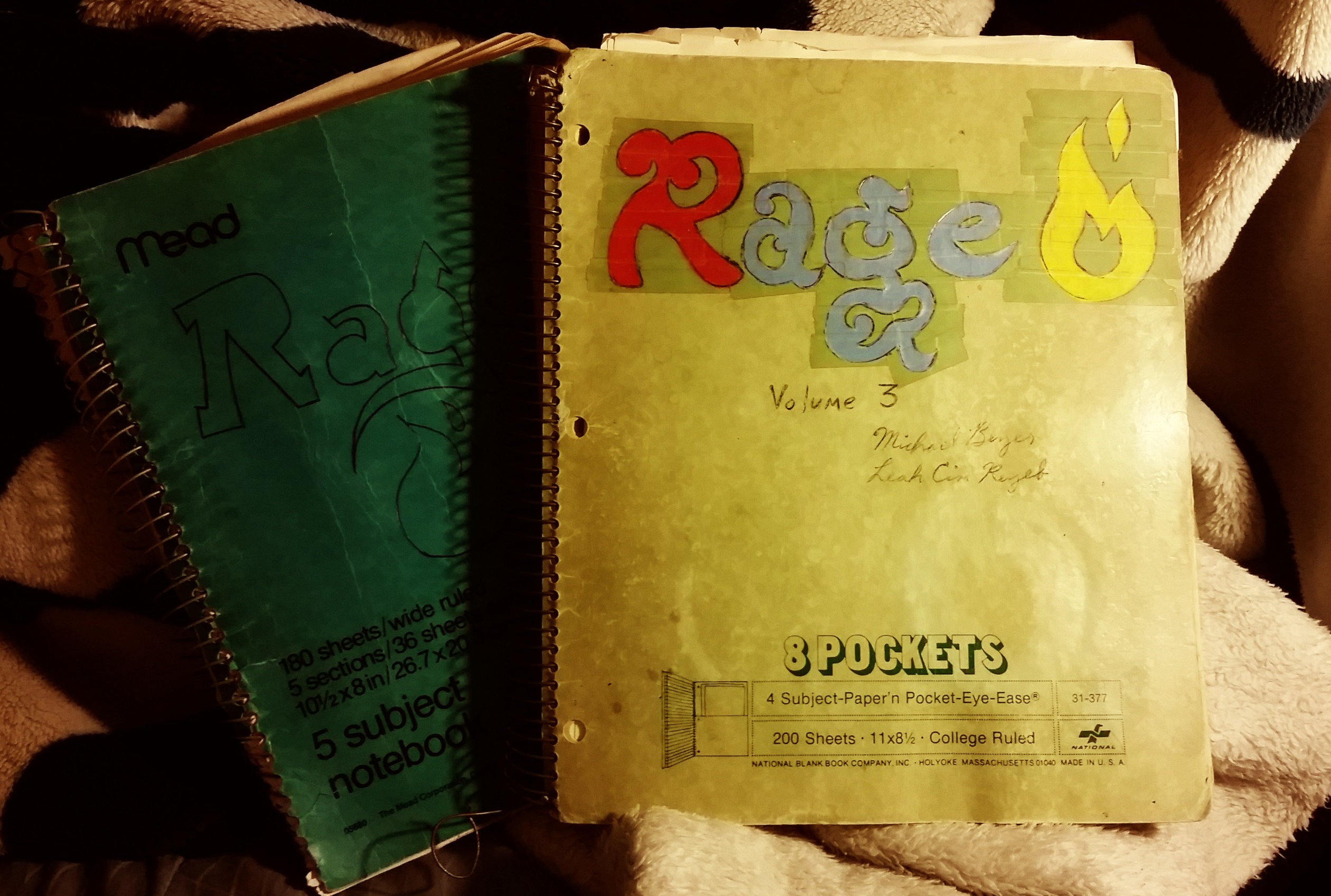
Life for me has always been pretty much a long march into the darkness. I try to bring power and light and goodness with me as I march, but I know there is a final end to the journey, and it will not go smoothly. It will not end well. But I don’t see things the way other men do. I continue to fight the good fight, even though I will ultimately lose the war. “Rage! Rage against the dying of the light!” says the poet Dylan Thomas. The fight is everything. And I simply can’t be troubled with thinking about what lies over the last hill in this march toward the final battle.
I think, ultimately, that the important thing isn’t winning or losing. It is about who or what we have become on the inside. I find solace in being able to laugh at life. A lot of depressing things have been happening lately. It can make the laughing harder to manage. But if life is not joy at its heart, then what is it? And what makes it worth living?
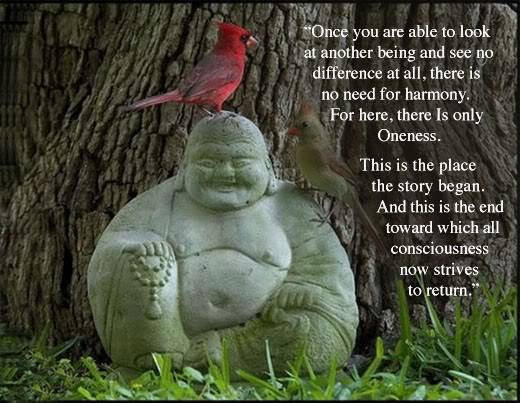
“Simplicity, patience, compassion. These three are your greatest treasures. Simple in actions and thoughts, you return to the source of being. Patient with both friends and enemies, you accord with the way things are. Compassionate toward yourself, you reconcile all beings in the world.” ― Lao Tzu
Thus it is… Lao Tzu is wise. The Tzu part of his name means “teacher”. So maybe I need to learn from him. There has to be a way forward, at least until the path ends.
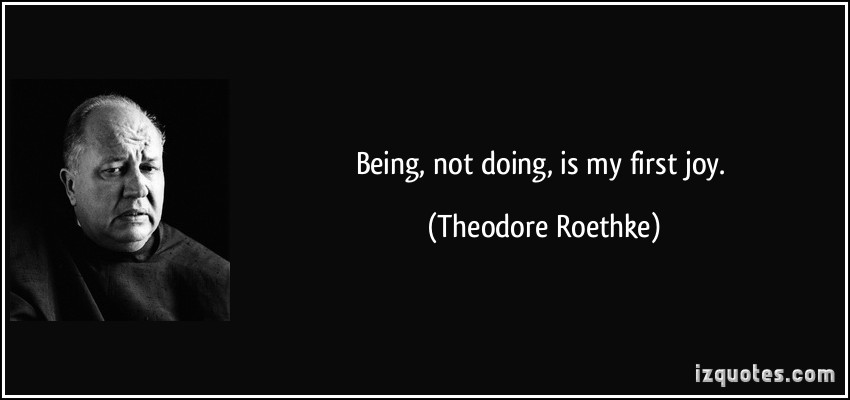
The classic line from the visionary poet Theodore Roethke;
**** This is a look back at an essay from 2017****
But the truth is, before you can BE you must first BECOME.
I know what you are probably thinking. “What is this idiot rambling on about now?”
Well, sometimes you simply have to spout a lot of love and hoo-haw and just pretend it means something. That is the core, I think, of what philosophy is all about.
But maybe a list of what I have already become will get the idea knitting itself together. You know, a list of the things I can already just BE.
I have already become college educated. I have a BA in English and an MAT in Education (Master of the Art of Teaching). Those letters my college years bestowed upon me are only an “N” short of being an anagram for BATMAN. So I have almost become BATMAN.
I have also finished becoming a teacher. In fact, I have spent 31 years becoming a teacher. I have gotten so teacherfied over the years that I am actually now becoming a retired teacher. I haven’t learned the art of retired teacher yet. It is still gonna take a bit of practice to start getting it right. But I can get a kid to sit down and shut up with just a look. I can read the mind of a glum-faced student and know we are about to have a bad day. And I always know when to tell a really awful joke so that the students know their only hope of keeping their lunch down and retaining their sanity is to ask me to please get back to today’s lesson. So I can BE that, at least in theory. I am still BECOMING retired.
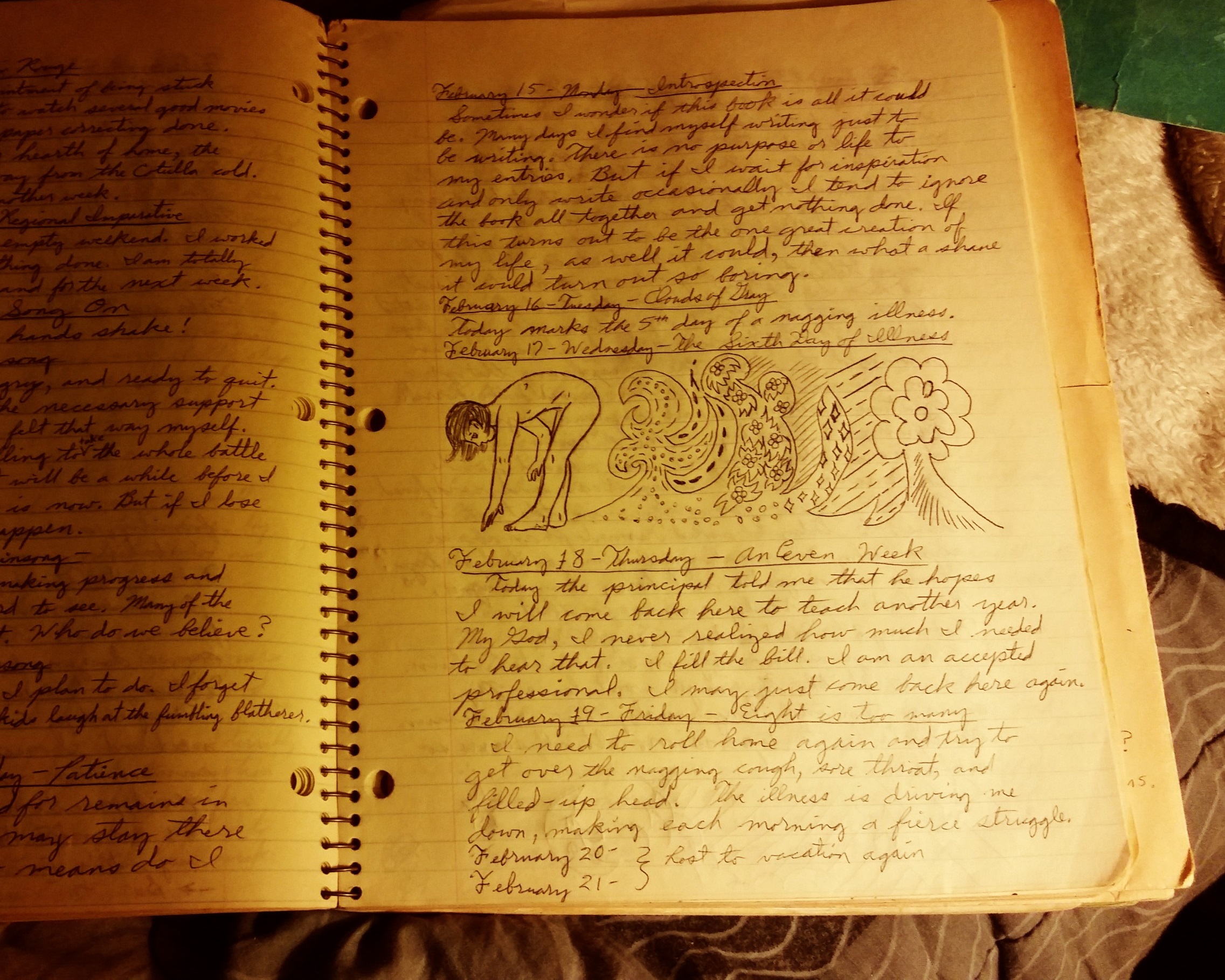
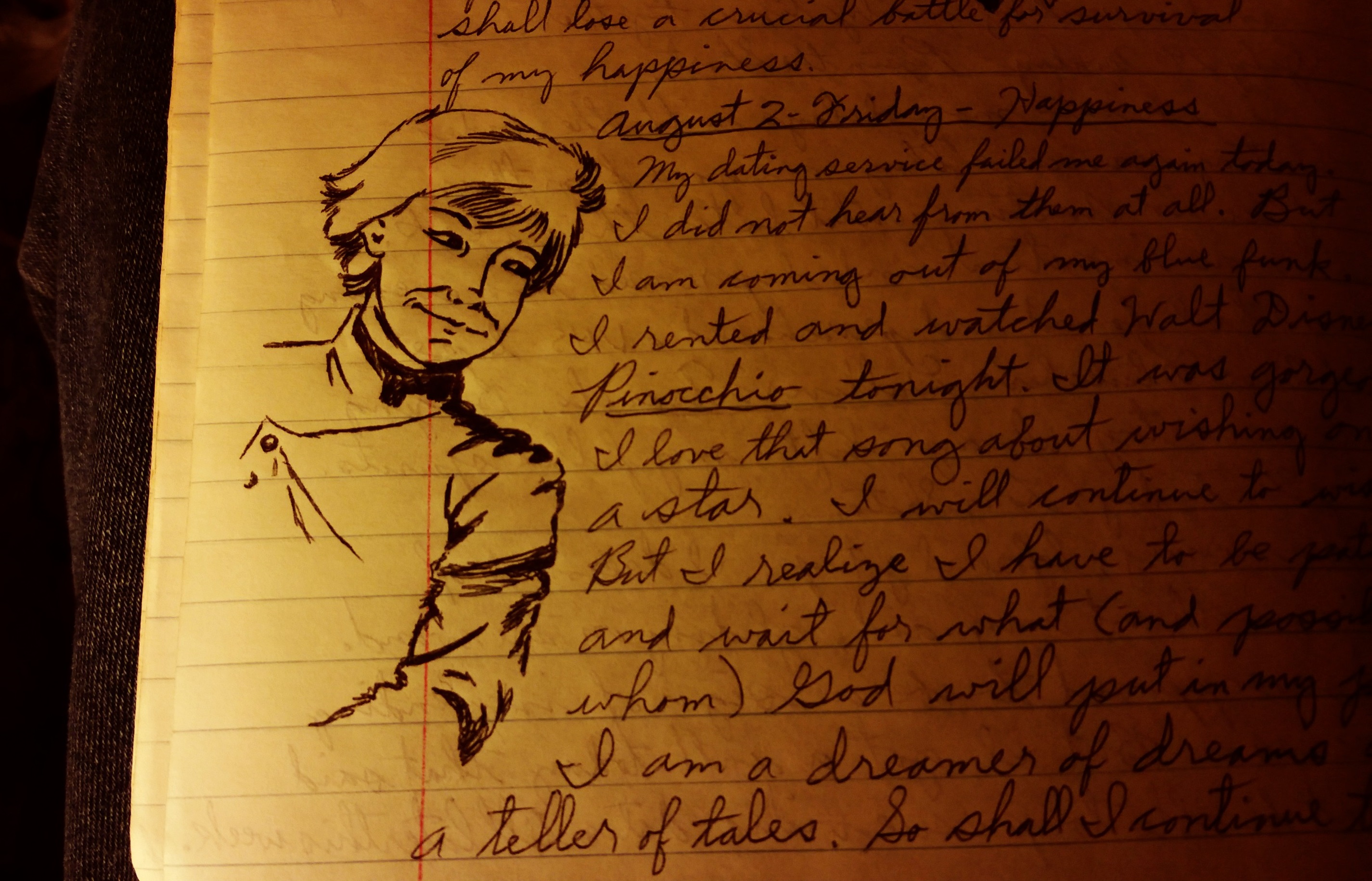
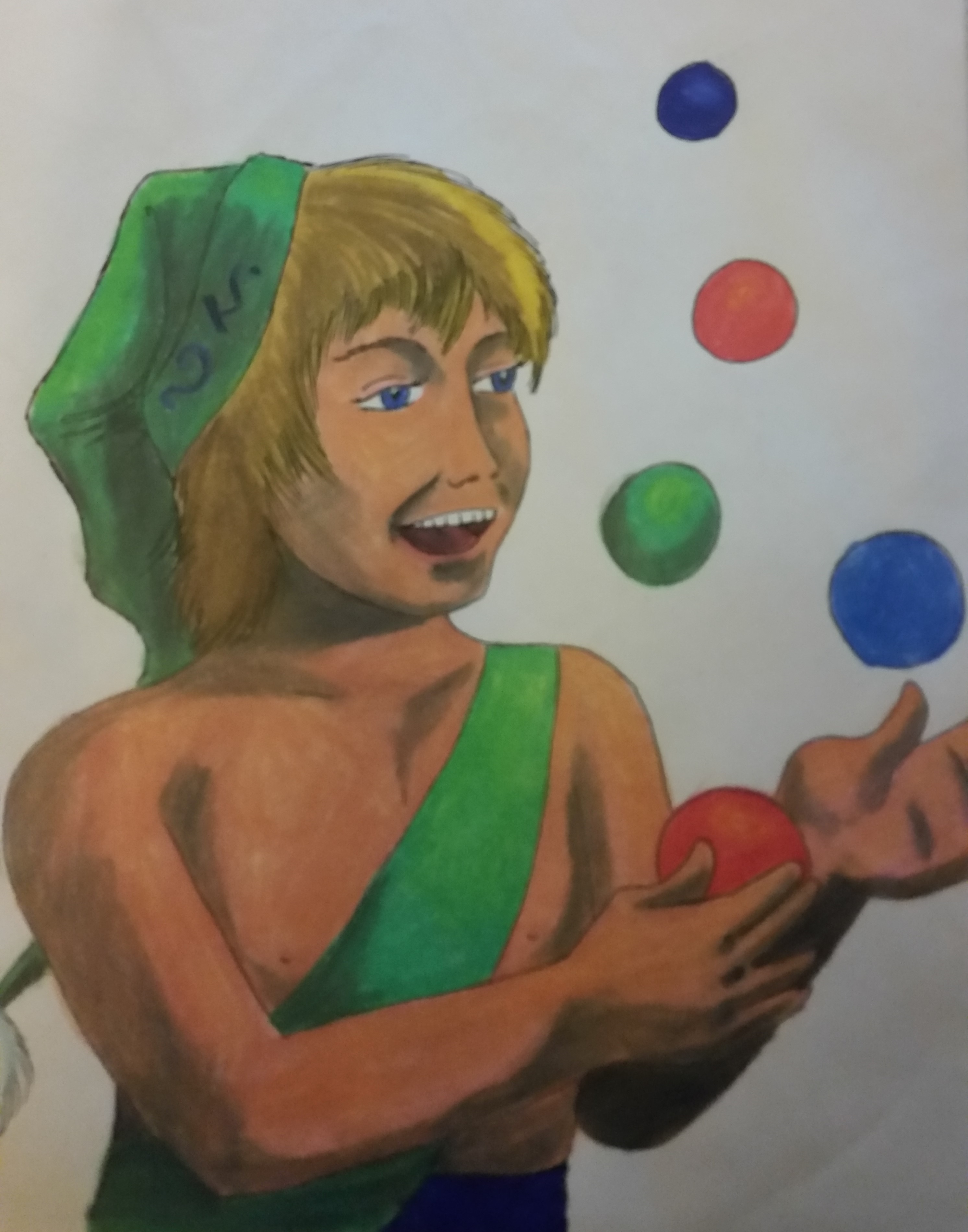
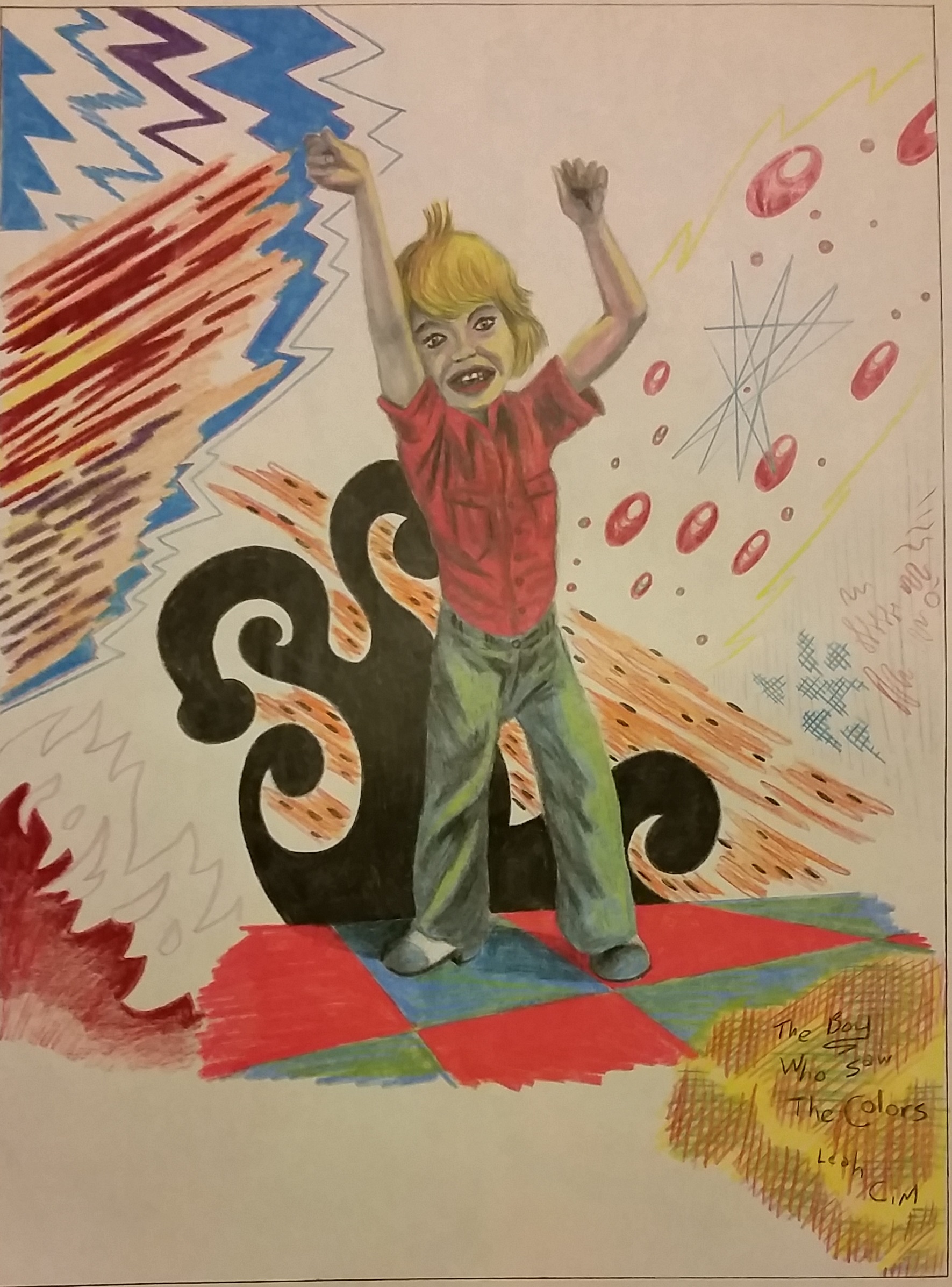
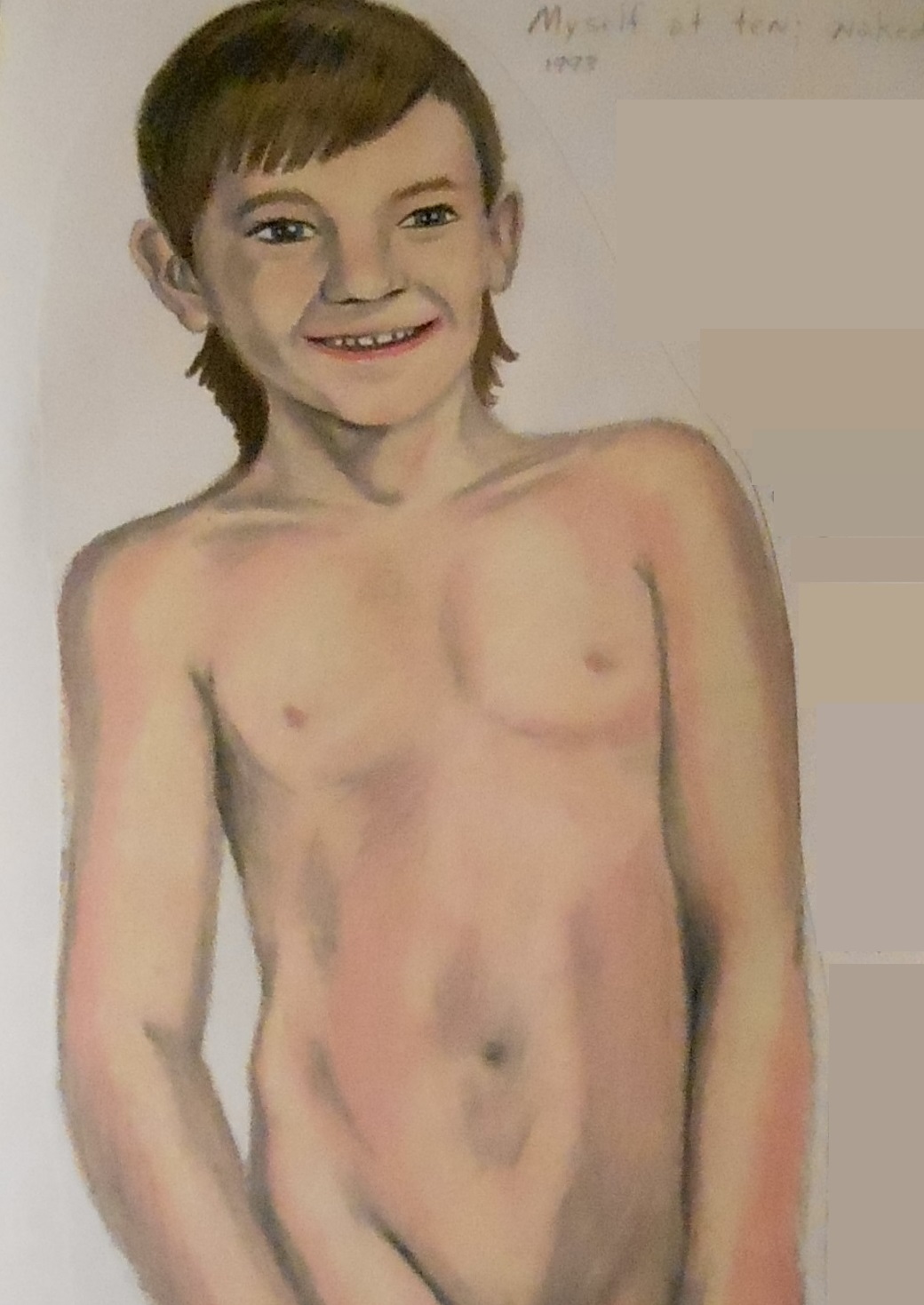
Why-ever would I draw myself as a naked boy? I have inexplicably weird urges sometimes.
I am a living, breathing human being. I have been that now for sixty years and eight months. I have practiced it enough that I can BE that without even thinking about it. Well, not now, just most of the time I don’t have to think about it.
But I did make a huge mistake fairly recently in applying for a chance to be a blogger for an AANR-affiliated website. Yes, that’s right, the American Association for Nude Recreation. I signed on to write about being a nudist.
I am asked to write a review of the nearest naturist park, the Bluebonnet Naturist Park in Alvord, Texas. I am hoping to find a day for a day-visit that won’t find a lot of people there. Ummm. How did I get roped into BECOMING a nudist? Is it too late to back out now? Or would that be UNBECOMING?
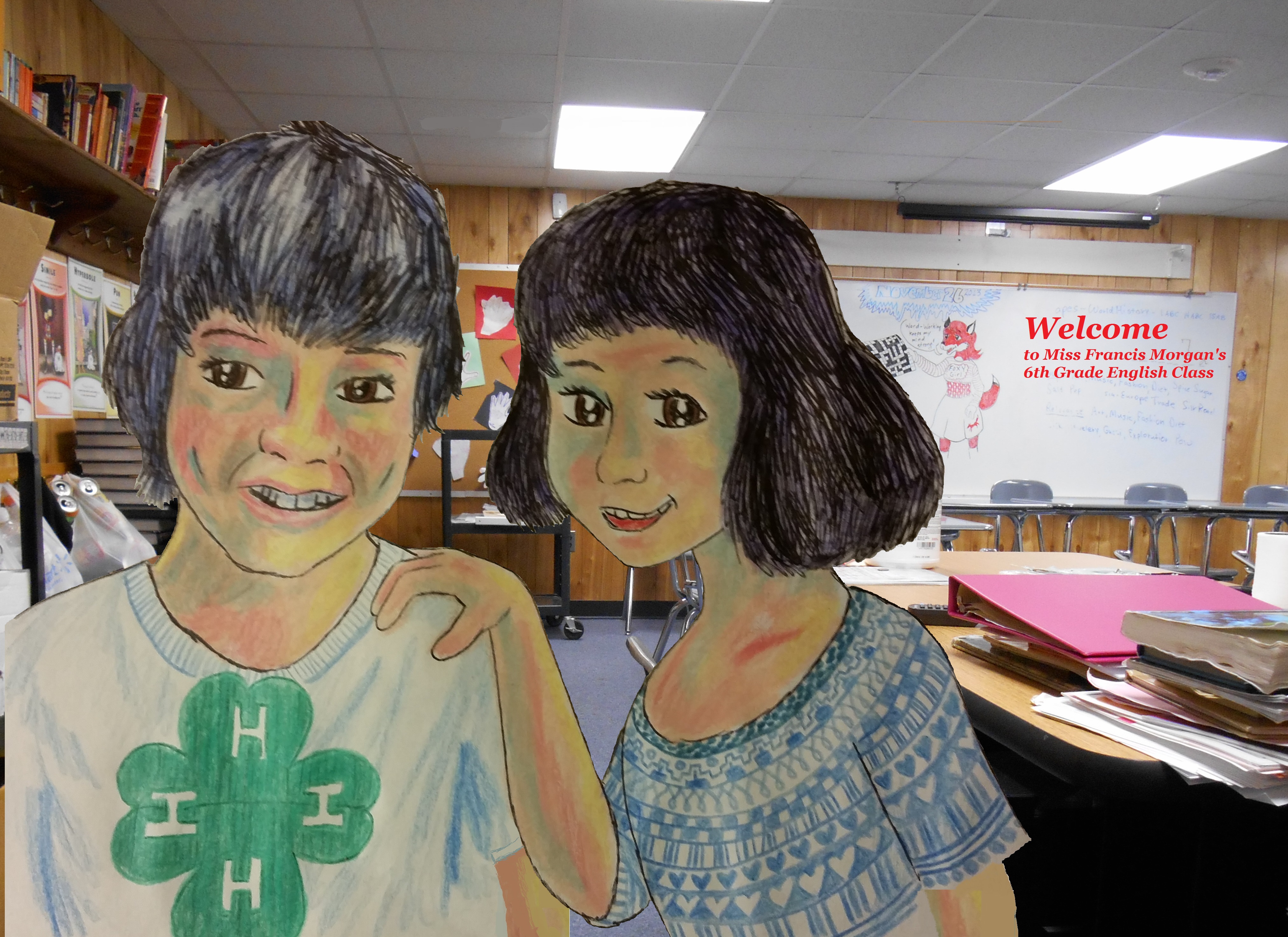
But most of all, I have labored long and hard at BECOMING a real writer. I have two books already published. Aeroquest and Catch a Falling Star. You can find them both on Amazon or Barnes and Noble. But don’t buy Aeroquest. Those cheap burgle-binkies don’t deserve to make any more money off of me. I have another book coming out soon from Page Publishing, Magical Miss Morgan. It is a book I am really proud of, though these foofy publishers have done nothing to help it and a lot to mess it up for me.
But, I must admit, I have just finished reading Mitch Albom’s masterpiece, The Magic Strings of Frankie Pesto. It is a miraculous, engaging read that made me laugh and made me cry and made me fall in love with the story. And it is so far beyond what I can do that I must write a review on it, maybe tomorrow, and gush praises all over it. I can only dream of BEING a writer like that. It proves to me that I have a lot more BECOMING to work on. Sorry, Ted, I am just not there yet.
When you know someone has an imaginary friend, something like Elwood’s six-foot invisible rabbit called Harvey, don’t you immediately think that person is crazy? I do. But I have imaginary people as friends. I think most writers do. So am I crazy? Probably. But hopefully it is a good kind of crazy.
It began with imaginary friends from books. The Cat in the Hat was my friend. Jim Hawkins was my friend, as was Mowgli and all the members of the Swiss Family Robinson. They entered my dreams and my daydreams. I told them my troubles the same way I listened to theirs through their stories.
I began to have imaginary friends that came from my own imagination too.
I used to tell my mere human friends about my friend Davalon from outer space. I told them that he was real and secretly visited me at night to talk about being able to learn about humans on earth by walking around invisibly and watching them. I got so involved with these stories that my sixth grade class began saying, “Michael is from Mars.”
When I was a teenager, I began having conversations with a faun. His name was Radasha. He was a creature from Greek Myth, a sensual Dionysian creature who, in his child body, was both younger than me and way older than me. I didn’t realize until much later in life that he was the result of my repressed memories of a childhood sexual assault that I was the victim of. I could talk to him about my fear of nakedness. I could tell him about my blossoming interests in naked girls and their bodies. I could talk to him about all the things I was somehow too terrified to talk to my male friends about, even though none of them had the same reluctance to discuss sex. Ra was imaginary. But he helped me heal.
Then the story-telling seriously began. I used Davalon as one of the main characters in my novel Catch a Falling Star. I created Torrie Brownfield, the baby werewolf to express the feelings I had as a boy about being a monster and secretly terrible and deformed. Torrie is a normal boy with a condition called hypertrichosis. I am working on The Baby Werewolfnow. And then there’s lovely Valerie Clarke. She is the main character of Snow Babies which is a finished novel, edited and proofread and ready to publish. It is I book I will have to find another way to publish since the recent death of PDMI Publishing. She is not a me-character, based on my own thoughts and feelings. She is based on former classmates and students who told me things that express the sadness and isolation of growing up female. So she is even more imaginary than my other characters.
They become real people to me. They have their own point of view. They talk to me and I learn things from them. But they are imaginary. So am I crazy? Yes… as a loon. And happy as Elwood P. Dowd to be that way.
No man is an island. John Donne the English poet stated that. And Ernest Hemingway quoted it… and wove it into his stories as a major theme… and proceeded to try to disprove it. We need other people. I married an island girl from the island of Luzon in the Philippines. She may have actually needed me too, though she will never admit it.
When I was a young junior high school teacher in the early eighties, they called me Mr. Gilligan. My classroom was known as Gilligan’s Island. This came about because a goofball student in the very first class on the very first day said, “You look like Gilligan’s Island!” By which he meant I reminded him of Bob Denver, the actor that played Gilligan. But as he said it, he was actually accusing me of being an island. And no man is an island. Thank you, Fabian, you were sorta dumb, but I loved you for it.
You see, being Gilligan on Gilligan’s Island was not a bad thing to be. It was who I was as a teacher. Nerdy, awkward, telling stories about when I was young, and my doofy friends like Skinny Mulligan. Being a teacher gave me an identity. And Gilligan was stranded on the Island with two beautiful single women, Mary Ann and Ginger. Not a bad thing to be. And I loved teaching and telling stories to kids who would later be the doofy students in new stories.
But we go through life searching for who we are and why we are here. Now that I am retired, and no longer a teacher… who am I now? We never really find the answer. Answers change over time. And so do I.
I have always had an inquiring mind. That is a curse instead of a plus if your main goal in life is to be happy and unbothered by anything. But it has proved to be of benefit to me as I have become an old coot who actually cares about what is true. Yes, I am willing to personally suffer to bring to light that which is actually true and that which must be disbelieved before it truly hurts us.
Don’t judge me yet based on this next question;
“Did you know that the Democratic party is funded by billionaires who want to use the “Deep State” to promote their Satanic rituals involving the murder and cannibalistic consumption of human children?”
I hope you know that I would never promote such a thing as being true. I am even careful of posting this pernicious lie in a question rather than a statement, because that’s one of the tactics the malign promoters of this religious belief use, not actually stating something that will be contradicted immediately, but taken merely as something to be considered and discussed simply because it is offered in question form.
So, how do you tackle such dangerous nonsense?
I prefer the scientific method which provides the structure for your thinking that will keep you on the most likely paths that lead you to what is true and what is not.
Facts should be confirmed by multiple verifiable sources.
We don’t talk much about cold fusion nowadays because when it was discovered in 1989 by a pair of electrochemists whose single experiment produced more heat than what should result from the energy put into the tabletop experiment, it quickly blossomed into the huge, major breakthrough story that it really would’ve been if only it had been verified. But, as is required by the entire scientific community, it couldn’t be reproduced in more repeats of the experiment than those that turned out negative. So, even though Pons and Fleischman did an experiment that answered the dreams of science-fiction nerds like me, they are mostly ignored by now. Cold fusion? Only one flawed source, studied in 1989 and proved still basically untrue in 2004 by a multitude of scientists who wanted it to be true.
Consider the source for Q-Anon conspiracies. One (or possibly more) anonymous government whistle-blowers whose credentials have never been presented or identities revealed, and mind-blowing statements appearing on places like 4-Chan, 8-Chan, and Parlor to be picked up and amplified on such reliable sources of scientifically proven knowledge as Twitter, Facebook, and Instagram. I hope you understand sarcasm after making that last statement.
Q-Anon is not the only conspiracy religion out there. My friend Giorgi (above) has a more benign, but no less ridiculous religion that chooses to replace God Jehovah, Zeus, Odin, Buddha, and other religious figures and deities with Ancient Aliens.
Here’s a second and third test offered by Carl Sagan to use against their ideas;
2. Encourage debate from knowledgeable people from all identifiable perspectives.
3. Do not accept arguments only from positions of authority.
Q-Anon arguments only have the authority of repetition because social media endlessly asks the same “questions” over and over. There is no debate from any recognizable “authority,” just a plethora of unsubstantiated statements and commandments.
In a way, the Ancient-Aliens crowd is guilty of the same thing. They never have skeptics and debunkers on their History-Channel show. You never see Michael Shermer, founder of the Skeptics Society, offering his opinions of their conclusions on that show. Neither do they allow Christian theologians or Buddhist scholars to offer their take on what probably really happened. They do employ physicists, engineers, and historians on their show, but never the ones that don’t agree with their radical theories and conclusions. Since there is no real debate on that show and no identifiable peer review, that show does not qualify as History, let alone Science.
4. Don’t get overly attached to your own ideas.
If you are going to investigate any conspiracy that holds thrall a number of “true believers,” approach everything with a truly open mind. I actually believe alien beings from “out there” have visited Earth. That is based on things, science, and testimony I haven’t even begun to go into here. But I reserve my right to be skeptical about everything, especially my own prejudices, theories, and beliefs. Otherwise I could too easily get trapped into believing in the truth of something that I otherwise would recognize as false. This is the factor that has pulled so many of my otherwise sensible Republican friends onto the flypaper of spurious Q-Anon claims.
5. Use numbers wherever possible. Math is quantifiable information that can “prove” the facts better than most ideas expressed in mere language. It is more precise, and reveals truth in verifiable ways that no poet ever could.
I am known to some in my family (here you could read wife and sisters) as the family conspiracy nut and generally crazy old coot.
But I am not so crazy that I don’t recognize the dangers inherent in some the ideas I am talking about here. As an English teacher I have learned some effective thinking skills that protect me and mine. I can honestly tell you that these thinking skills explained here will help you too. I learned them from a friend who pointed me to Carl Sagan as the source of these thinking skills.
And to any of my friends who might read this post and be offended, I apologize. But you were wrong about Pizzagate, and you are on the wrong side of this too. Aliens probably did NOT build the pyramids. But logic IS the primary structure of this essay.
If there is a Church of Sacred Landscapes then Bob Ross is its Jesus Christ. That is not a sacrilegious statement of bizarre cult-mindedness. Painting is a religion that has its tenets. And Bob Ross explained to us the will of God on his painting show on PBS. All the illustrations used in this post come from the Facebook page Joy of Painting with Bob Ross. All the wisdom comes from things the Master said on the show.
Bob Ross was the prophet of the paintbrush. He would present us with a lightly prepared canvas at the beginning of the show and then proceed on camera to take his brush and palette knife, and all his paints, and create a piece of the world before our very eyes. And he was not Picasso or Van Gogh or even Norman Rockwell. He was not a talented artist, but rather a very practiced one who knew all the tricks and shortcuts to sofa painting, the art of knocking out scene after scene after scene. He could make his little piece of the world in only half an hour, and he made it obvious how we could do the same. His work was not gallery quality… but his teachings were Jesus-worthy.
His work was natural, flowing, and realistic in the random complexity it presented. He took standard paintbrush strokes and pallet knife tricks and made them dance across the canvas to make happy little trees.
His painting methods presented us with a philosophy of life and a method of dealing with whatever mistakes we might make.
And of course, any good religion must take into account the existence of evil.
Bob Ross tells us that evil is necessary as a contrast to what is good and what is true. We need the dark. But we don’t have to embrace it. Bob’s paintings were never about the dark bits. He always gravitated towards the light.
Of course, sometimes you have to beat back the darkness. A good artist takes care of his tools.
Bob Ross admonishes us to look and to learn and love what we see. The man radiated a calm, gentle nature that makes him a natural leader. His simple, countrified wisdom resonates because we need calm and pastoral peace in our lives. It is one of the main reasons mankind needs religion.
So I definitely think we ought to consider building a Bob-Rossian Church of the Sacred Landscapes. We have our prophet. The man has passed away, yet he is risen to paint again endlessly on YouTube.
And if you are willing to try… Bob Ross will smile upon you.
Yes, I admit it. I am a Surrealist. I also hope that it is not too terrible a thing to be. Because I truly think that everyone who was raised by television, and lived through the revolution where computers took over human life, is one too.
a 20th-century art form in which an artist or writer combines unrelated images or events in a very strange and dreamlike way
Full Definition of surrealism;
the principles, ideals, or practice of producing fantastic or incongruous imagery or effects in art, literature, film, or theater by means of unnatural or irrational juxtapositions and combinations
There is a certain satisfaction to be had in knowing for certain how to define oneself. I learned about Surrealism in high school art class back in the early 70’s. I saw and admired the works of Salvador Dali, Rene Magritte, and Max Ernst. And I realized that everything I wanted to do in the Realm of Art, whether it was weird paintings, cartoons, comic book art, or bizarre puppet shows… fantasy, science fiction, or humor… it was ALL Surrealism. Surrealism saturates out culture and our very thinking. We are drawn to watch baseball by the antics of a giant pantomime chicken. Our food choices are influenced by a happy red, yellow, and white clown who battles a blobby purple monster and a hamburglar over shakes and French fries. It is only natural then, that I would want to draw bug-sized fairies who would saddle and ride a red rooster. I have embraced surrealism as a way of life.
I have no trouble writing a poem about the difficulties of life by writing about a game of bowling where you have to roll a moose down the alley into the pins.
Surrealism is all about creating things by lumping all kinds of disparate goodies into the same pot and cooking it up as a stew. It is important that the stew tastes good in the end, so the mixture has to have large doses of reality and realism in it. Dali painted melting watches and boneless soft-sculpture people with almost photographic realism. I am compelled to do that too.
And what is humor, after all, if not lumping strange things together into a reality sandwich that makes you laugh because it takes you by surprise? I don’t shy away from weirdness. I embrace it. It makes life all the funnier.
And why did I put bullet points on everything in this post? Because it allows me to mash bits of wit and wisdom together in a weird way that only seems to have no connection, one to the other, and only seems to make no sense.
Sometimes we just have to look at things sideways.
I was recently accused of being eclectic in my posting topics by one regular commentator. I could wear that word like a badge of honor.
This describes a combination of many different individual elements of styles, themes, mediums or inspirations pooled from many sources. It can refer to musical tastes, dress sense, interior design…many things.
She has an ecletic sense of style, today she wears biker boots, pink fishnet stockings, a pencil skirt, a military jacket, a baseball hat, a my little pony t-shirt and a dunlop bag covered in badges from all her favourite bands from ABBA to Kooks
Imaginary Friends
When you know someone has an imaginary friend, something like Elwood’s six-foot invisible rabbit called Harvey, don’t you immediately think that person is crazy? I do. But I have imaginary people as friends. I think most writers do. So am I crazy? Probably. But hopefully it is a good kind of crazy.
It began with imaginary friends from books. The Cat in the Hat was my friend. Jim Hawkins was my friend, as was Mowgli and all the members of the Swiss Family Robinson. They entered my dreams and my daydreams. I told them my troubles the same way I listened to theirs through their stories.
I began to have imaginary friends that came from my own imagination too.
I used to tell my mere human friends about my friend Davalon from outer space. I told them that he was real and secretly visited me at night to talk about being able to learn about humans on earth by walking around invisibly and watching them. I got so involved with these stories that my sixth grade class began saying, “Michael is from Mars.”
When I was a teenager, I began having conversations with a faun. His name was Radasha. He was a creature from Greek Myth, a sensual Dionysian creature who, in his child body, was both younger than me and way older than me. I didn’t realize until much later in life that he was the result of my repressed memories of a childhood sexual assault that I was the victim of. I could talk to him about my fear of nakedness. I could tell him about my blossoming interests in naked girls and their bodies. I could talk to him about all the things I was somehow too terrified to talk to my male friends about, even though none of them had the same reluctance to discuss sex. Ra was imaginary. But he helped me heal.
Then the story-telling seriously began. I used Davalon as one of the main characters in my novel Catch a Falling Star. I created Torrie Brownfield, the baby werewolf to express the feelings I had as a boy about being a monster and secretly terrible and deformed. Torrie is a normal boy with a condition called hypertrichosis. I am working on The Baby Werewolf now. And then there’s lovely Valerie Clarke. She is the main character of Snow Babies which is a finished novel, edited and proofread and ready to publish. It is I book I will have to find another way to publish since the recent death of PDMI Publishing. She is not a me-character, based on my own thoughts and feelings. She is based on former classmates and students who told me things that express the sadness and isolation of growing up female. So she is even more imaginary than my other characters.
They become real people to me. They have their own point of view. They talk to me and I learn things from them. But they are imaginary. So am I crazy? Yes… as a loon. And happy as Elwood P. Dowd to be that way.
Leave a comment
Filed under artwork, autobiography, being alone, characters, commentary, humor, imagination, insight, Paffooney, strange and wonderful ideas about life
Tagged as book review, book reviews, books, fiction, writing