I was originally planning to have AeroQuest 4 published by now and AeroQuest 5 well underway as my regular novel-writing segment on Tuesdays. The manuscript for 4 is written and formatted, awaiting only a final edit. And half of 5 is already written. It is only the expanded first part of this manuscript that has yet to be written.
But since finishing the manuscript for 4, all I have managed to do is work on other projects. I have added nothing to it since February.
My Fairy stories have taken over my writing time.
The Education of PoppenSparkle has taken over the Tuesday slot in my supposedly structured blogging week. I am enjoying writing it, yet, it is only happening on Mondays every week. The last-minute nature of that writing style is producing a lot of adrenalin and obsession with deadlines, but it is also draining the creativity out of writing time every other day of the week. I haven’t failed to post something for my daily blog, but even the writing I do get done lacks the luster of older posts.
I need to get back to writing on my main work-in-progress, He Rose on a Golden Wing. That book continues to grow and get more complicated as it marinates in the creative juice of my overly juicy mind.
So, there it is, me writing about something I was not supposed to write about on this Memorial Day. I am not suffering from writer’s block, for I am writing every day. But I am suffering from doldrums with the sailboat of progress not having any wind in my sails. How do I get the wind back? I will find a way.
This is the updated version of that last post. I have written more books. I have published more books. And I have gotten more people to read and like my work since 2018.
Here is a better idea how things currently stand;
And of course, I left out the book I was using to copy the list from, The Wizard in his Keep.
So, now I stand revealed as the published author, hard-working writer, and total fool that I am.
And here’s a link to the book I forgot. Only a dollar if you’re interested.
Maria found herself limited to riding along in her own naked body as she and Esperanza labored to run back to the hacienda where Imelda lived.
“Do we have to run all the way?” Maria asked in her head.
“We do. Time is short. Imelda and your Yesenia are in grave trouble. But your body is so much better than mine…”
“What do you mean?”
“In life I was a little bit of a gordita.”
“Gordita?”
“Little fat girl. Not athletic like you.”
“Oh.”
“You know some Spanish. I can see it in your mind.”
“My mom and my real dad are both Spanish speakers. But they got divorced when I was four. And we found my stepdad, Stanley. He only speaks English, so…”
“So, you got out of practice.”
Maria’s body was panting, wheezing, and gasping for air as it ran. But that didn’t affect either voice in her head.
“And you were out of practice at running. Let me control the breathing.”
“Okay. But that might be against the rules. Promise you won’t use it against me later?”
“We want the same thing,” she reminded Esperanza.
“We surely do.”
The body fell into the trained running style that Maria used in high school track and cross country. The breathing became regular and easier by far.
“You are definitely good at running,” Esperanza noted.
They pulled up at the gate to the hacienda.
“¿Por qué corres, Esperanza?” asked the guard at the gate. Maria knew instantly from Esperanza’s memory that the young man’s name was Juanito, even though he was a rust-colored skeleton dressed in gray ghost clothing that you could see through.
“¿Dónde está Imelda? Necesito hablarle.”
“Ella está en el segundo piso. En su dormitorio, creo.”
“Gracias, Juanito.”
They were instantly running again. The hacienda would’ve been gorgeous in an expensive and colorful way, Maria thought, if only she weren’t seeing it in black, white, and gray.
Esperanza found Imelda’s bedroom door and banged on it with both fists.
Then the door was opened from the inside.
“Yesenia!”
“Maria, you must not say things out loud using your actual voice! You must tell it to me and let me speak it!”
“You are breaking the rules!” said Imelda in Yesenia’s voice coming out of Yesenia’s tear-stained face.
Maria was hardly listening to the scolding. She was at once filled with joy at having found the girl she betrayed. But at the same time she was jealous of how beautiful Yesenia’s naked form would obviously look to Rogelio.
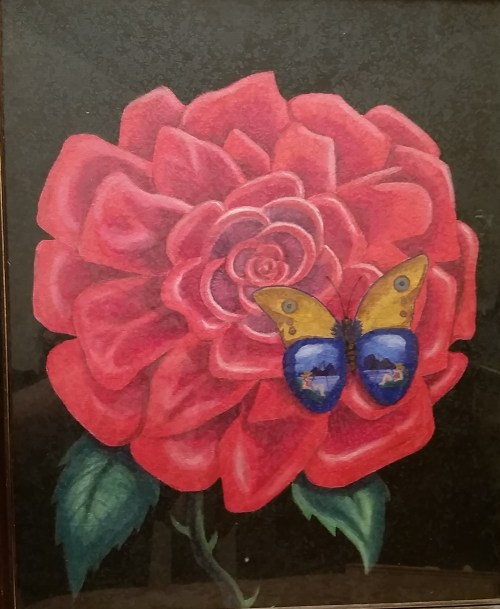
The three primary colors of paint are red, yellow, and blue. Together with the neutrals, white and black, these colors can be mixed to make any other shade, tone, or hue that exists on the color wheel and can be perceived by the human eye. When all three are present in a painting, it inherently has a feeling of completeness, wholeness, and balance.
Young Prinz Flute
How those primaries are mixed, allowed to dominate, or allowed to recede does a lot to determine the feeling the artwork projects into the viewer’s mind.
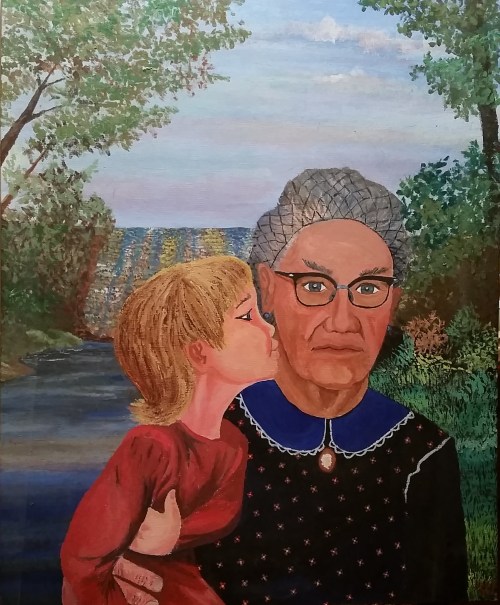
Great Grandma Hinckley as I most vividly remember her.
All of the artworks I am showing you today haven’t appeared in my blog for some time. But all of them are interpreted in primary colors. I won’t tell you how each picture is supposed to make you feel. I am just the artist. Only you can prevent forest fires, and only you can interpret a painting and tell someone else how it makes you feel.
The Wolf Girl and Dunderellathe Island GirlGilligan’s IslandAnnelise in Gingerbread TownChiron’s School for HeroesLong Ago It Might Have BeenThe Sea Witch
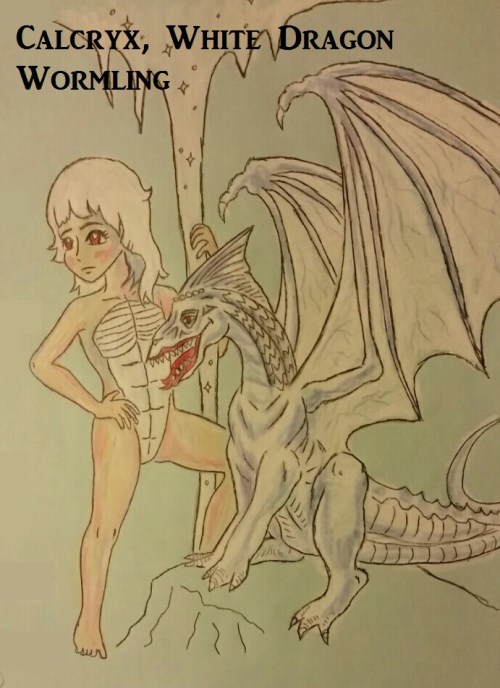
Forgive me for putting a picture of a bear-chested girl in this post.
It has been my intention for a while now to tell funny stories on Friday. Specifically, funny stories about being a teacher and dealing with kids, the thing I know best in life. But, with the things that have happened, the pandemic, the screwball gangster President and his Friday follies, ill health, and other things pressing on my mind, I have failed rather badly.
So, bear with me (pun intended) as I give it another try with a story about Hope and Beauty.
Going back to the last millennium, in the year 1996, I had one solitary class of sixth grade English while teaching mostly seventh graders in a school building that was being renovated while we were learning within it. Often to the sound of electric drills and hammering. (A new wing was being added as our junior high school of grades 7 and 8 was being magically transformed by a school grant, and the addition of 6th graders, to become a middle school.
Esperanza and Bonita were the leaders of that sixth grade class. Fourteen kids, 7 girls and 7 boys. Esperanza and Bonita were the leaders because they were the two biggest 6th graders in the whole school. Not biggest by weight, the fattest boy in 6th grade was also in that class. The most mature. Bonita was hoping to go out for boys’ football in seventh grade, because she had been told that girls had won the right in court to play football if they wished. And she loved to tackle boys. The midgets in that 6th grade class were all terrified of her. One of the midgets spent his 6th-grade days pining in the back row to sit next to her but was too afraid to ever tell her that.
You may already know that this is not Bonita. It is the character in my book The Bicycle-Wheel Genius that I turned her into.
Esperanza and Bonita were best friends, and they were also the two best students in my class. They sat side by side in the front row. They would answer every single question in class if I let them. Of course, I didn’t let them. I got as much of a laugh out of other students’ wrong answers as they did. They were merciless about every goof Sammy Sanchez made, but Sammy had a good sense of humor about it, and I swear, he made some mistakes on purpose just because he loved to hear Esperanza laughing. She was probably the prettiest girl in 6th grade and had an equally pretty laugh. (That is not, of course, Sammy’s real name. I protect students’ real names in my writing. But the double S’s in his name were paired with the word “Stupid” in real life.) I was fond of both girls. And most of the time they were fond of me too.
“You’re my favorite teacher,” Esperanza once told me. “It’s because we can really talk about stuff in your class. Not just book stuff. But real-life stuff.”
Most of the “stuff” she meant was in journal writing that they did at the beginning of class. That is where I learned that she was a virgin. And it was where I advised her that it was entirely up to her when she gave it up and to whom. I told her no boy had the right to pressure her into doing anything she didn’t want to do. I gave similar advice to the boy in question privately after school, and he was actually a bit relieved to get the advice. I know that I was overstepping boundaries to give such advice. But they both believed that nobody else would ever be told about it. I was the only one who read that journal entry, and they knew that. And I have never told it until now, a fact about which you still don’t know the real names to go with it.
That class wanted badly to have a “class party” after Spring Break when the year was winding down. I only agreed if they would turn it into a learning experience. So, Esperanza and Bonita took charge. They planned and executed the lesson; “How to make and appreciate different kinds of Mexican Food”. The two of them taught it. Bonita was in charge of discipline. Esperanza taught us about all the ingredients in her aunt’s prize-winning sopapillas. Sammy gave us a memorable and even remotely possible run-down on how Doritos were probably made. And Max, the white kid, shared his Grandma’s recipe for German chocolate cake. You can’t get better Mexican food than that. And a certain mournful midget got to sit next to Bonita while they ate cake.
Both girls were in my class for two more years after that. I had the honor of being their teacher in both the seventh and the eighth grade.
As an eighth grader, Bonita broke my heart with a story she wrote about forgiving her stepfather for beating her in the third grade. It was a beautiful story. But I was torn. Teachers, by law, have to report child abuse. But Bonita pointed out that the man no longer lived with her, and besides, the assignment was to write a fiction story. (I never told anybody but my wife about my being sexually assaulted at the age of ten at that point in my life, but it was the reason I could clearly see what was true and what was fiction.) That story made more than just me cry.
And in the end, Bonita never got a chance to play boys’ football in middle school… or high school either. The boys eventually got bigger, and she didn’t. But that was a good thing too. Bonita at linebacker… the boys would never have survived it.
I will end by letting you in on a secret. In Spanish, Esperanza means “Hope,” and Bonita means “Little Pretty One,” or even “Beauty.”
I remember when Scooby Doo, Where Are You? premiered on Saturday Morning Cartoons in 1969. I was thirteen and in the 7th grade. I had been six during the Cuban Missile Crisis of 1962, seven when Kennedy was assassinated in 1963, ten when I was sexually assaulted in 1966, and still twelve when Neil Armstrong walked on the Moon in the Summer of 1969. I was obsessed with monsters, horror comics, 20,000 Leagues Under the Sea, and the Pirates threatening Jim Hawkins in Treasure Island. I knew what fear was. And I was mad to find ways to combat the monsters I feared.
Don’t get me wrong. I was under no illusions that Fred, Daphne, Velma, Norville “Shaggy” Rogers and Scooby Doo were the answer to all my fears as viable heroes and heroines. They were goofballs, all of them, based on the characters I vaguely remembered from The Many Loves of Dobie Gillis. I was aware that Shaggy was just Maynard Krebs in cartoon form (the hippie character portrayed by Gilligan’s Island actor Bob Denver.)
One of the critical things about the show for me was the fact that there was a rational explanation for the monsters. They were men in masks, special effects and projector tricks, or remote-controlled mechanical things.
And the way you overcame them and saved the day was by having Shaggy and Scooby act as bait, cause the traps to get sprung at the wrong time, and then fall on the villains, trapping them under the butt of the talking dog.
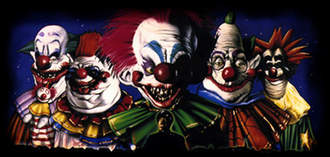
Villains and horror could be overcome by laughing at them. They were more likely to be clowns than carnivores. And even if they were carnivores, the teeth were not real.
There was a universal truth in that. Danger and horror and fear were easier to handle when you could laugh in spite of those things.
And to top it all off, those meddling kids and their stupid talking dog were with me my whole life. Those cartoons got remade and spun off so many times that my kids learned to love them as much as I did. And those four meddling kids and that talking dog are still making new stories even now.
My daughter forgot her pencil case in school over the weekend. Now, for normal students, this is no really big deal. But for the Princess, like it is for me as an amateur artist, the pencil case, with her colored pencils and pens in it, is one of the most necessary things for life.
Of course, we did not have an opportunity to go back to school for her pencils and pens. So, panicky, she texted her teacher whereupon the pencil case in question was found and put aside for her until early this morning. She then stole my pens and pencils for the weekend, depriving me and causing me to be the one with the anxiety disorder and heart palpitations.
Of course, pens and pencils were always a critical issue when I was a teacher for 31 years, plus two years as a substitute teacher. Unlike the Princess, students in an English classroom NEVER have a pen or a pencil to write with. I swear, I have seen them gnaw pencils to pieces like a hungry beaver or termite. And they chew on pens to the point that there is a sudden squishy noise in their mouth and they become members of the Black Teeth Club. (Or Blue Teeth Club for the more choosy sort of student.)
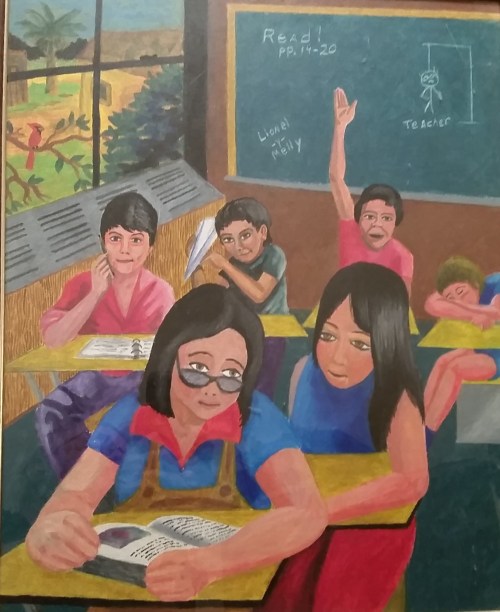
A piece of an actual classroom rules poster.
Having students in your class who actually have pencils and pens to learn with is a career-long battle. I tried providing pens for a quarter. I would by cheap bags of pens, ten for two dollars, and sell them to panicky writers and test takers with a quarter (and secretly free to some who really don’t have a quarter). I only used the pen money to buy more cheap pens. But that ran afoul of principals and school rules. A teacher can’t sell things in class without the district accountant giving approval and keeping sales tax records. Yes, the pencil pushers force teachers to give pens, pencils, and paper away for free. I finally settled -on a be-penning process of picking up leftover un-popped pens, half-eaten pencils, and the rare untouched writing instrument apparently lost the very instant the student sat down in his or her desk. These I would issue to moaning pencil-free students until the supply ran out (which it rarely ever did) at no cost to myself.
I also tried telling them repeatedly that they had to have a writing instrument, or they needed to beg, borrow, or steal one. And if they couldn’t do that, I’d tell them, “Well, you could always prick your finger and write in blood.” That was a joke I totally stopped using the instant a student did exactly what I said. A literalist, that one. And it turns out you can’t read an essay that a student writes in actual blood.
But, anyway… My daughter is safely in school now and no longer panicking because she has her precious pencil case back in her possession. And she probably will not ever make that same mistake again. (And she will probably not return my pens and pencils either.)
I start today with nothing in my head to write about. I guess I can say that with regularity most days of the writing week. Sundays in particular are filled with no useful ideas of any kind. But I have a certain talent for spinning. As Rumpelstiltskin had a talent for spinning straw into gold, I take the simple threads of ideas leaking out of my ears and spin them into yarns that become whole stories-full of something to say. And it is not something out of mere nothing. There is magic in spinning wheels. They take something ordinary and incomplete, and turn it into substantial threads useful for further weaving.
Of course the spinning wheel is just a metaphor here for the craft of writing. And it is a craft, requiring definable skills that go well beyond merely knowing some words and how to spell them.
My own original illustration.
The first skill is, of course, idea generation. You have to come up with the central notion to concoct the potion. In this case today, that is, of course, the metaphor of using the writing process as a spinning wheel for turning straw into gold. But once that is wound onto the spindle, you begin to spin yarn only if you follow the correct procedure. Structuring the essay or story is the next critical skill.
Since this is a didactic essay about the writing process I opened it with a strong lead that defined the purpose of the essay and explained the central metaphor. Then I proceeded to break down the basic skills for writing an essay with orderly explanations of them, laced with distracting images to keep you from dying of boredom while reading this, a very real danger that may actually have killed a large number of the students in my writing classes over the years (although they still appeared to be alive on the outside).
My mother’s spinning wheel, used to make threads for use in porcelain doll-making, and as a prop for displaying dolls.
As I proceed through the essay, I am stopping constantly to revise and edit, makeing sure to correct errors and grammar, as well as spending fifteen minutes searching for the picture of my mother’s spinning wheel used directly above. Notice, too, I deliberately left the spelling-error typo of “making” to emphasize the idea that revising and proof-reading are two different things that often occur at the same time, though they are very different skills.
And as I reach the conclusion, it may be obvious that my spinning wheel of thought today spun out some pure gold. Or, more likely, it may have spun out useless and boring drehk. Or boring average stuff. But I used the spinning wheel correctly regardless of your opinion of the sparkle of my gold.
Stan stumbled into the bedroom. He wasn’t sure how he was going to explain it all to Bonita. Especially since the Vodka was making it difficult to walk, let alone talk.
She was sprawled out on the top of the bedspread, it was still tucked in and made up with her usual attention to tight corners. She was still dressed. Her head, propped up against the pillows, was wide awake, and she had definitely been crying.
“Bone, honey, um…” He stood at the foot of the bed, swaying and shifting his weight from one leg to the other.
“Stan, you’ve been drinking.”
“It’s Maria… um, ah… it ain’t actually… um, going well…”
“But you’ve been trying harder than before… I’ve seen it. You two are working together instead of fighting.”
“Yeah, but, I have something to tell you…”
“Yeah… but, first… I have something I gotta tell you.”
“Oh, um… the doctor’s visit?”
“Yeah. The report came back.”
“Oh, no! You mean…?”
“Remission is over. The cancer is back.”
Stan pressed the palm of his hand against his forehead. How could he… now? Maria was…
“You gotta promise me about Maria. She’s gonna need you more than ever now.”
“You know I will…” The room was swirling a bit. He sank to catch himself on the corner of the foot of her bed. There was suddenly no way he could tell her now. “How long do you have?”
“Days, weeks, months… not years.”
“You know they told us that before. Then the chemo started doing its damn job.”
“Yeah, but not this time. It’s spreading faster than ever this time. Promise me you will love her like she’s your own daughter.”
“Don’t be so quick to give up. We both still need you.”
“We don’t have any more options. It’s still there in my lungs. We can’t afford more treatment, and Doc Jimenez says it wouldn’t help if we could.”
Stan started to cry. The alcohol… and the bad news… both sets of bad news. But mostly the alcohol…
“Promise me you’ll love her, and you’ll take care of her.”
There was nothing more to say. “You know I will.”
He gathered her limp and exhausted form up in his arms. Drunkenly. And they both wept together.
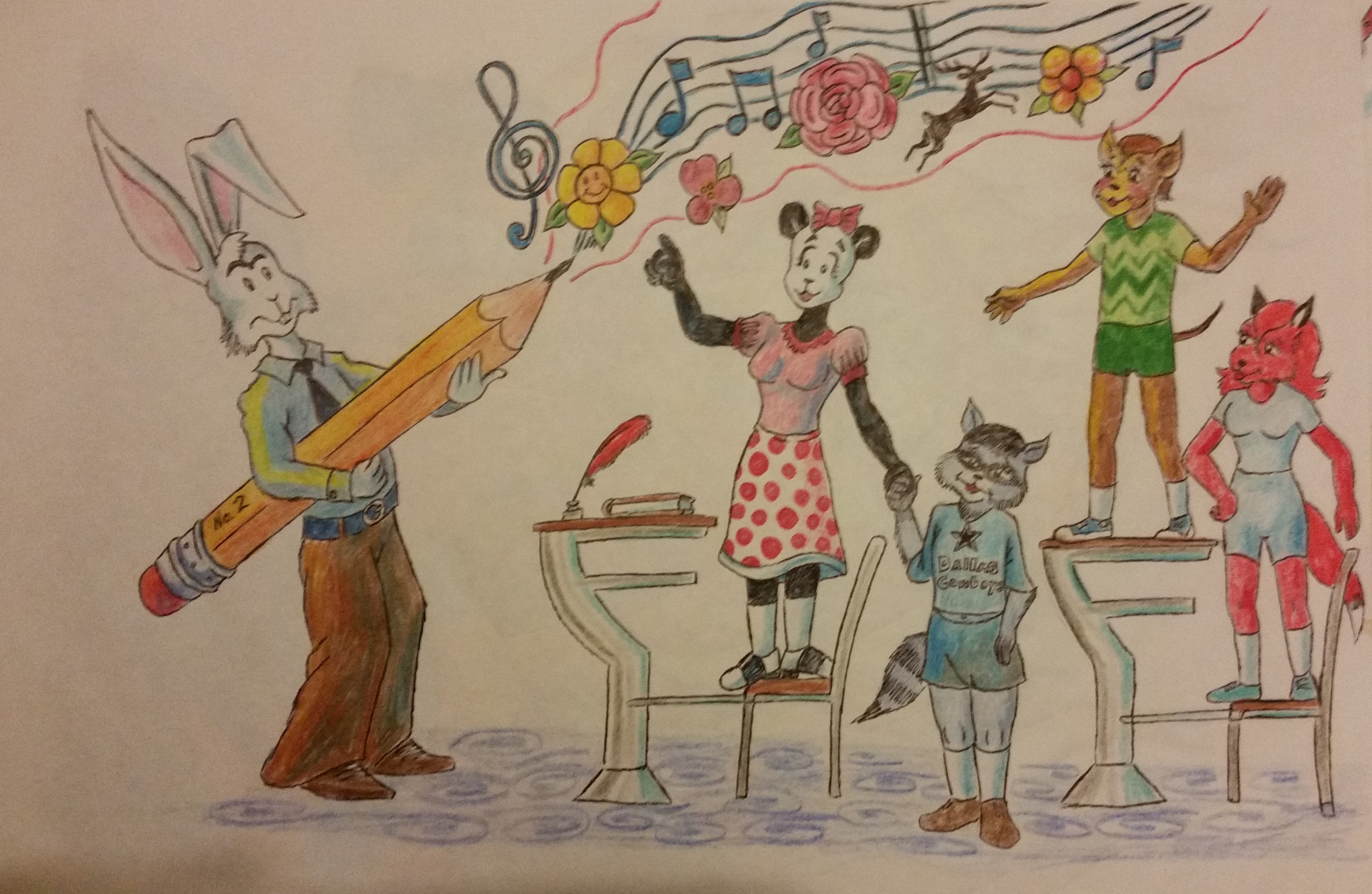
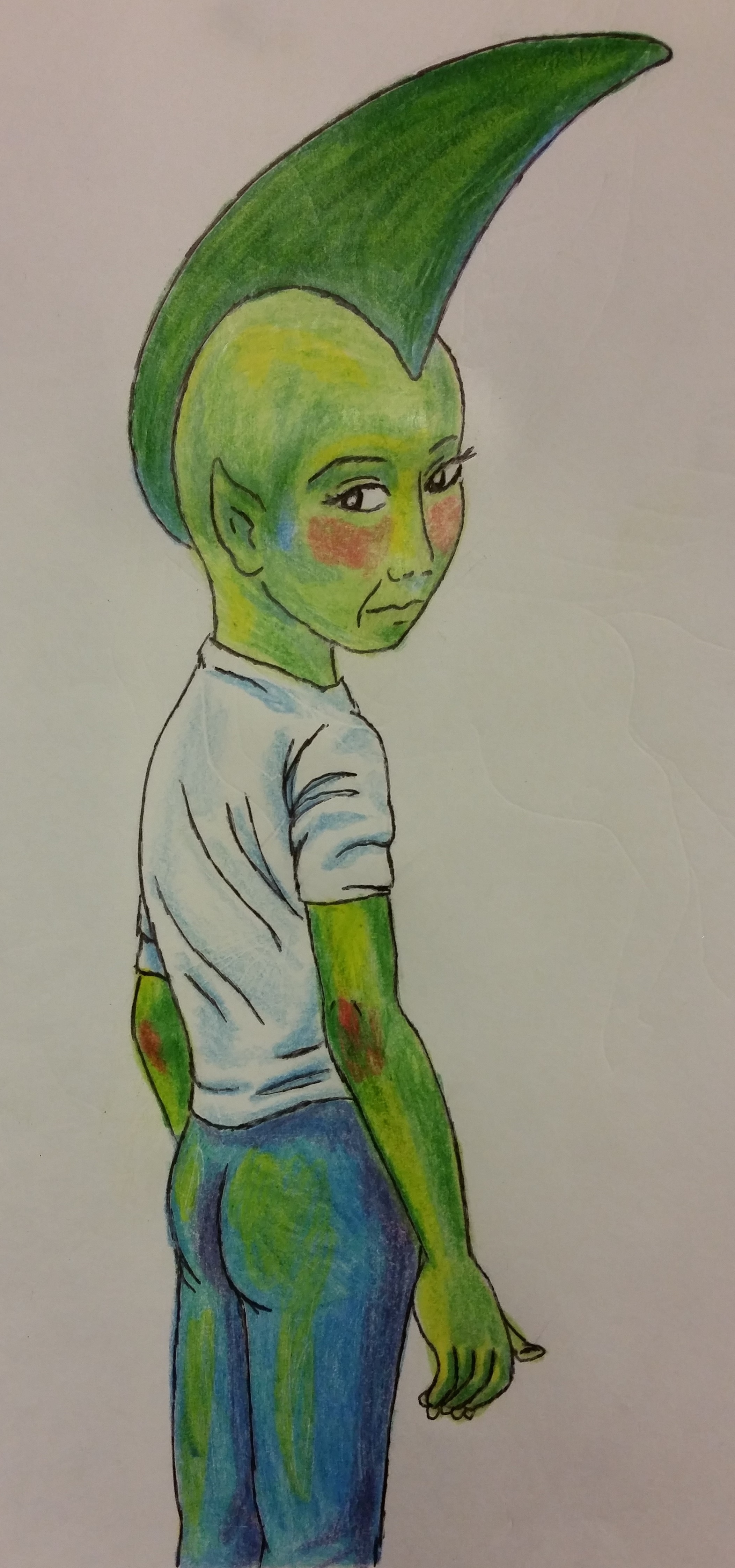
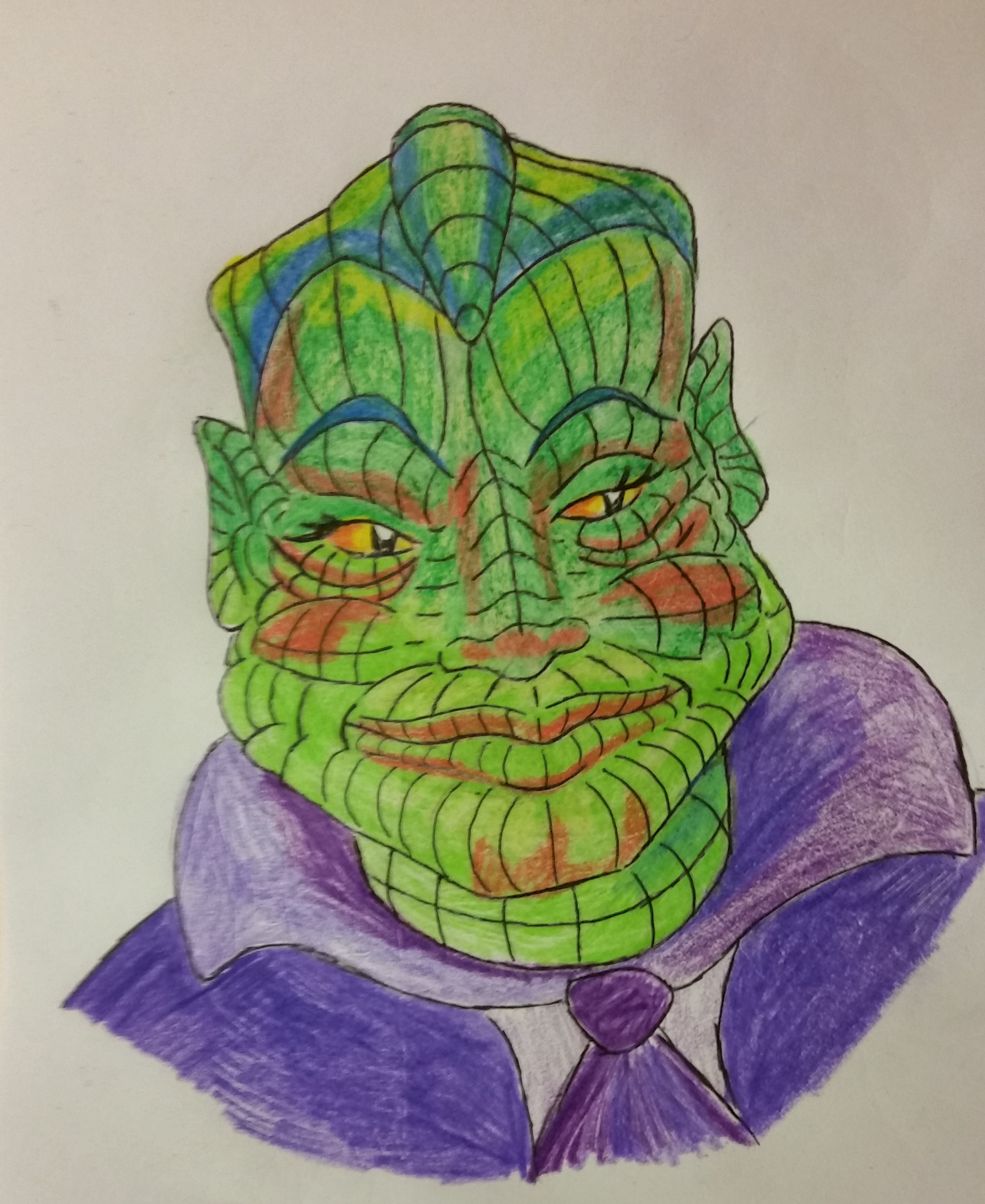
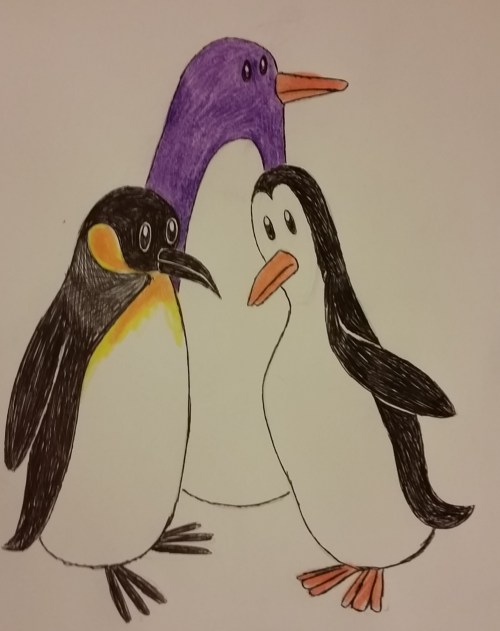
Most of my novel stories have lived in my head since the 1970’s. I began recording the ideas in a notebook that I called the libretto. I drew illustrations to solidify the characters and some of the plot elements in my mind. But the basic natures of the characters and the style of my artwork grew from these original artistical notations.
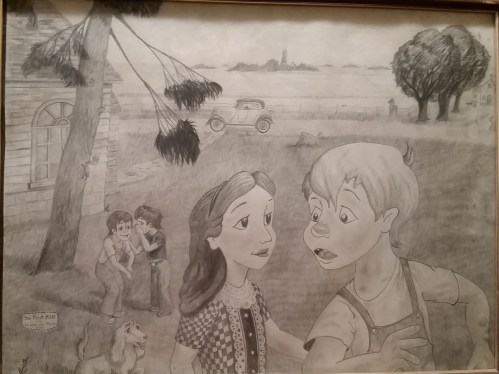
I got better at art over time. And the characters benefited from my teaching experience in that I was able to depict numerous characters with nuances and details gained from students and other people I hadn’t met yet when I drew these pictures. Dorin Dobbs, for instance, is based in large part on my eldest son, who wouldn’t be born for another 18 years when I drew these pictures (He’s the yellow-haired boy in both of the first two pictures.)
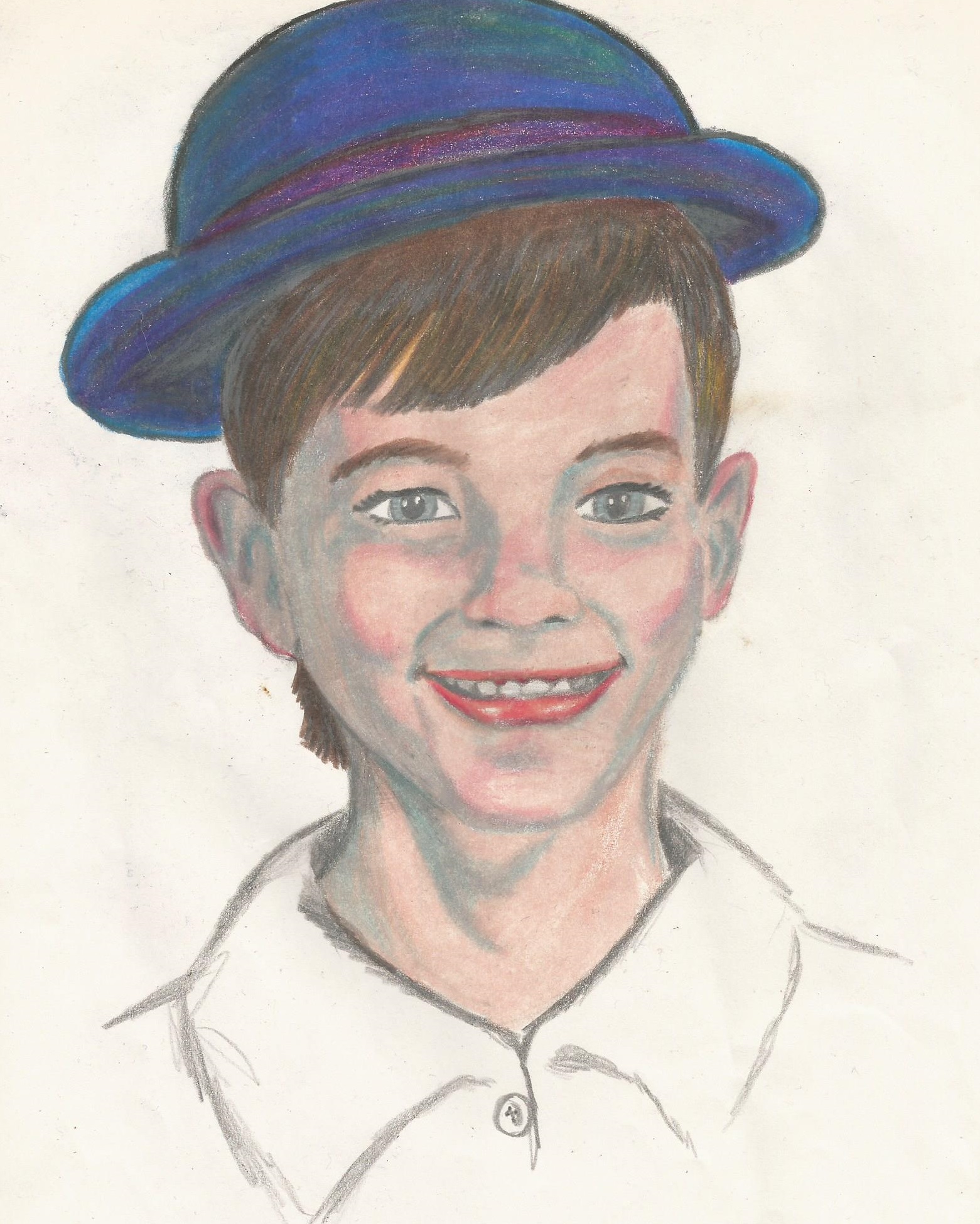
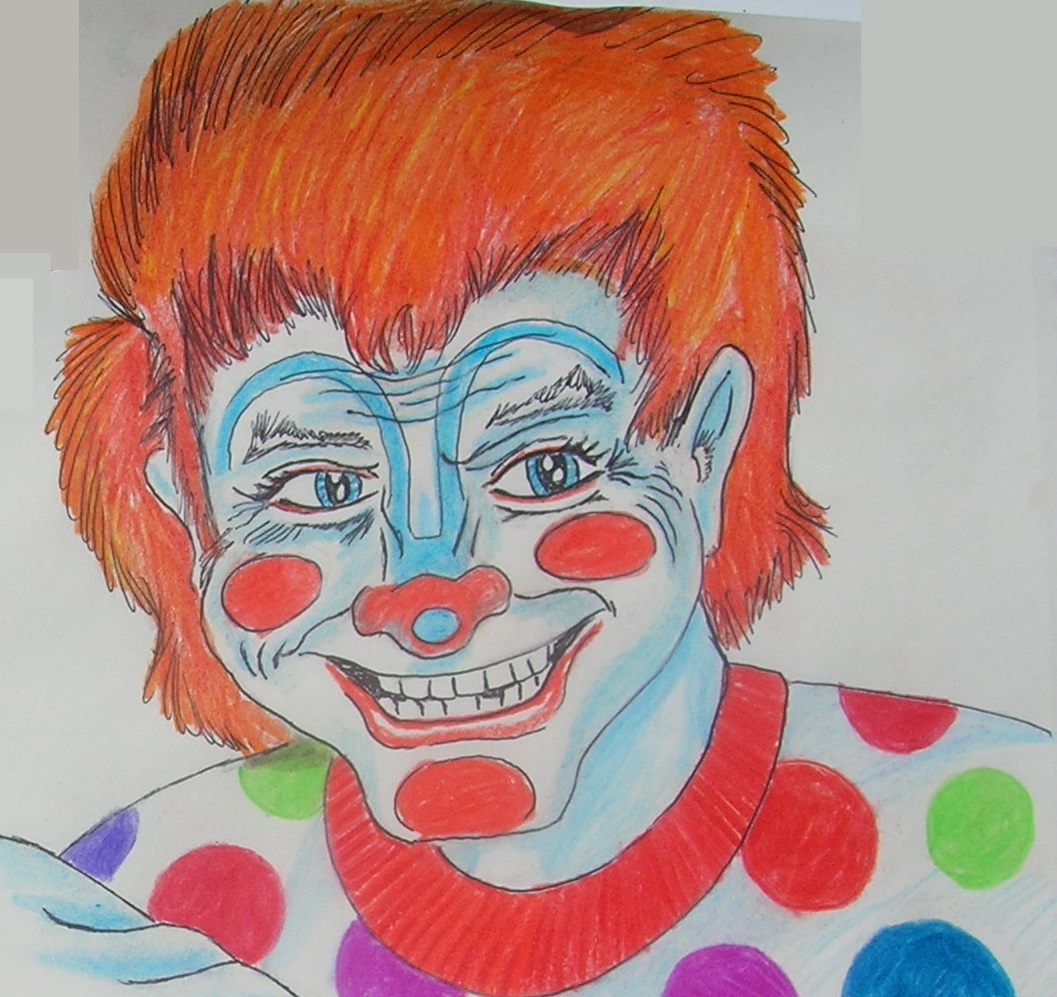
Francois, the singing sad clown from my book Sing Sad Songs, is based on a student from the 80’s who was actually Spanish speaking and of Mexican-American descent.
I drew this picture of him in 1976.
I taught the boy in 1983.
I wrote and published the book in 2018.
The inter-dimensional traveler, the Man-Cat, is an idea from a story I have not written yet, and probably never will.
Disney-Michael Stewart and his gang of Milk-Lovers is another story I haven’t written yet, and though more likely, is still probably a novel I will never get to.
Invisible Captain Dettbarn and Francois ended up in separate stories from this picture. The other three boys in the picture were babies or not yet born when their stories happen.
So, today was a chance to look at and re-evaluate the past. All of these drawings were done in the 1970’s. All I did was scan them with a good scanner and crop them a little to make them better compositions. And they allow me to keep track of where my mind has already been, that I might successfully chart the future of where it is going.
Why We Doo
I remember when Scooby Doo, Where Are You? premiered on Saturday Morning Cartoons in 1969. I was thirteen and in the 7th grade. I had been six during the Cuban Missile Crisis of 1962, seven when Kennedy was assassinated in 1963, ten when I was sexually assaulted in 1966, and still twelve when Neil Armstrong walked on the Moon in the Summer of 1969. I was obsessed with monsters, horror comics, 20,000 Leagues Under the Sea, and the Pirates threatening Jim Hawkins in Treasure Island. I knew what fear was. And I was mad to find ways to combat the monsters I feared.
Don’t get me wrong. I was under no illusions that Fred, Daphne, Velma, Norville “Shaggy” Rogers and Scooby Doo were the answer to all my fears as viable heroes and heroines. They were goofballs, all of them, based on the characters I vaguely remembered from The Many Loves of Dobie Gillis. I was aware that Shaggy was just Maynard Krebs in cartoon form (the hippie character portrayed by Gilligan’s Island actor Bob Denver.)
One of the critical things about the show for me was the fact that there was a rational explanation for the monsters. They were men in masks, special effects and projector tricks, or remote-controlled mechanical things.
And the way you overcame them and saved the day was by having Shaggy and Scooby act as bait, cause the traps to get sprung at the wrong time, and then fall on the villains, trapping them under the butt of the talking dog.
Villains and horror could be overcome by laughing at them. They were more likely to be clowns than carnivores. And even if they were carnivores, the teeth were not real.
There was a universal truth in that. Danger and horror and fear were easier to handle when you could laugh in spite of those things.
And to top it all off, those meddling kids and their stupid talking dog were with me my whole life. Those cartoons got remade and spun off so many times that my kids learned to love them as much as I did. And those four meddling kids and that talking dog are still making new stories even now.
And that is why we do the Doo!
Leave a comment
Filed under autobiography, cartoon review, cartoons, commentary, humor, monsters, Uncategorized
Tagged as Scooby Doo