Category Archives: book reports

David Mitchell is Genius!

Yes, David Mitchell is a very smart man… a very smart English man.  (That isn’t to say that his genius is any less genius than an American Genius.  Just that he is a genius who also happens to be English)

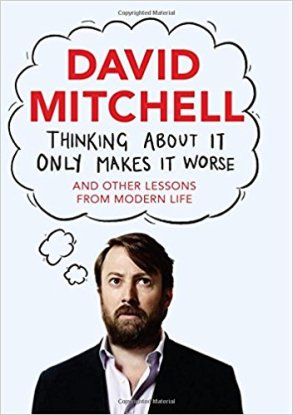
51zTXrZVMqL._SX350_BO1,204,203,200_

And I, of course, don’t mean this David Mitchell either, though this David Mitchell is also a genius and also from England.  I have to tell you, though I have always loved British humor, this particular tongue of silver fascinates me enough to make me binge on hoards of old episodes of “Would I Lie to You?” from the BBC on YouTube.  He’s a quick-wit, Brit-wit, smooth-talking  bit-wit who can make you laugh even when he’s playing a thick-wit… which he is certainly not.

Anyway, that is the wrong English genius David Mitchell.

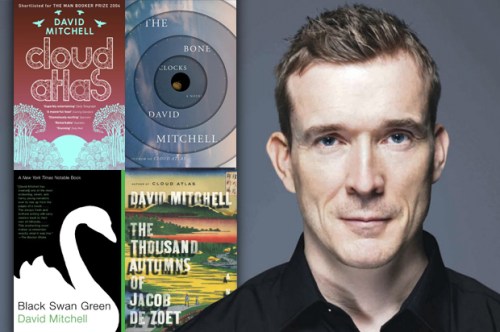
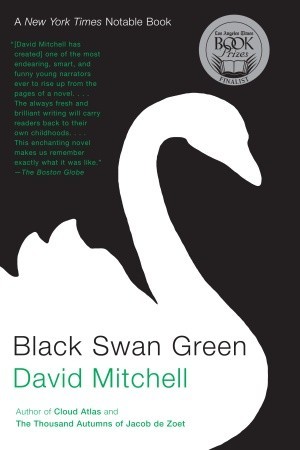
I mean the other English genius David Mitchell.  The one who wrote Cloud Atlas.  Also the one who wrote The Bone Clocks.  And, of course, the one whose book Black Swan Green which I just finished reading early this morning.

david_mitchell_books

Yes, I mean this David Mitchell.  The absolute genius writer who creates exactly the kind of books that I long to read.

14316

Now, this post should probably be more of a traditional book report than it is.  This book I just read is swimmingly, swannishly excellent in a David-Mitchell-is-GENIUS! sort of way.  It is about an English boy from Malvern, England undergoing the trials and tribulations of his thirteenth year of life.  The boy is a stutterer and secretly a poet.  The girl he pines for is the girlfriend of his greatest enemy, the boy who relentlessly bullies and taunts him.  One even suspects that this portrait of a Margaret Thatcher-era boyhood written in exquisitely horrible detail might be based on the author’s own boyhood somehow, so vivid is its detailing.

But this is already too cacked-up to be a proper book report just because of the two David-Mitchell-English-genius thing.  If you really want that sort of book review, read it elsewhere, or read the danged book yourself.  This report is more of a vow of fealty.  I must now turn my hoarding disorder sufferer’s exacting zeal on the matter of reading everything this living author writes.  I did the same thing to both Michael Crichton and Terry Pratchett because they are geniuses too.  But they are both now no longer living and writing new books, at least, not unless there is new meaning to the term ghost writing that I don’t know anything about.  So now it is David Mitchell’s turn to be the object of my intense fan-boy love of good writing.

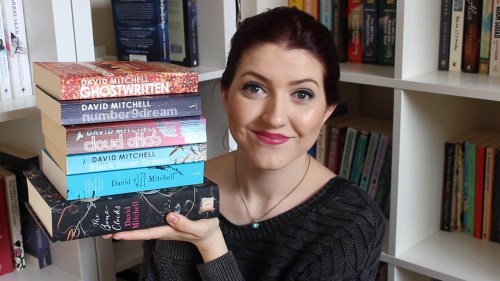
Here are some David Mitchell books that I now must stalk and make my own;

maxresdefault

And hopefully, there are many more yet to come.

3 Comments

Filed under artists I admire, book reports, book review, comedians, humor

Liars Run the Animal Farm

c360_2017-02-02-06-01-19-250

Napoleon the PIG.

Napoleon the Pig makes himself ruler of the Animal Farm in Orwell’s 1945 book by lying about Snowball, his rival Pig, and blaming the destructive acts of the former human Farmer Jones on poor Snowball.  He is driven away from the farm by the farm dogs whom Napoleon has taught to think since they were puppies. This, even though Snowball was actually the hero of the animal rebellion that drove the humans away.  Collusion?  Perhaps.  But definitely a lie.  And the PIG Napoleon, once in power begins to keep all improvements to living conditions for the PIGs.  Other animals, he says, are happier with a simpler, hard-working life.  The PIGs begin to dress like men and walk upright and wear long red ties.

Keith Olbermann in the video is very much like Benjamin the Donkey, who is cynical and skeptical about Napoleon’s methods.  He also reads as well as any Pig.  When Boxer the workhorse is wounded defending the farm against neighboring farmers who attack and destroy the windmill, he shrugs off the the wound and works at rebuilding the windmill until he collapses.  Then Napoleon declares Boxer will only get better if he’s taken to the vet’s animal hospital.  But he calls the Knacker (the man who renders dead horses into glue) to take Boxer away.  Benjamin calls him out.  He points out that it says “Knacker” on the van that takes Boxer away, not “veterinarian”.   He points out that Russian Facebook trolls used targeted troll-posts to help get Napoleon his position of power.  But Napoleon gets away with his lies.  Boxer apparently dies in the so-called animal hospital.

Now, I am not sure which tiny animal on the farm Robert Reich is like, but he is pointing out in this video that once the PIGS got themselves into power on the animal farm, they lie in order to get their agenda operating, enriching all PIGs (or is that GOPs?) and their political donors.  They are doing it all by LYING.  Pigs lie.  We should have learned that lesson by now.  They don’t care who dies and gets rendered into glue.

d771c283-6a1e-417b-ac0a-d262d1bb2463_400_0

In 1945 Orwell intended Napoleon to be a satire of Joseph Stalin in communist Russia.  But I truly believe, as we are living on the Animal Farm now as the hard-working farm animals, that he has a bad wig on his head with whippy straw-yellow hair, and a distinctly orange face, with the same little piggy eyes he always had.  And he is in power because he tells lies.  And what’s worse, he gets away with the lies.  As long as the PIGs are in power, controlling both houses of congress and the Supreme Court, he will not lose his lying grip on the farm.  We are all doomed to continue being hard-working animals who eventually get rendered into glue.

3 Comments

Filed under angry rant, book reports, commentary, farming, foolishness, humor, metaphor, Paffooney, pessimism, satire, sharing from YouTube, surrealism

Books That Make You Hurt

242757

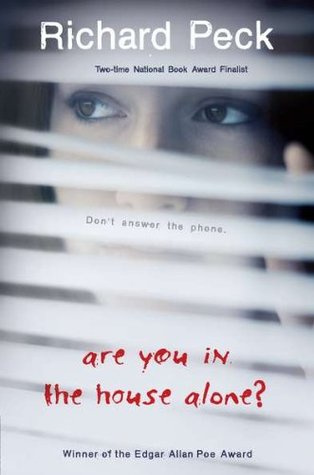
Yes, I read this book.  Yes, it scared the poop out of me.  Yes, it made me cry.  This is a uniquely horrific horror story that is so realistic that you know that it has actually happened in real life somewhere, sometime.  Only the names of the characters would be different.

I have a deep abiding respect for Richard Peck as a writer.  He earned that with his books A Year Down Yonder and A Long Way from Chicago.  Those books made me laugh so hard it blew chocolate milk out of my nose.  And, yes, I was drinking chocolate milk at the time.  They are so realistic because the people in those stories are real people.  I know those people personally.  Of course, they have different names in real life.

But Are You In the House Alone? is a very different book from those other two masterpieces.  It tears your heart out and eats your liver because it is a first person narrative in the voice of a high school girl being stalked by a sexual predator.  Everything that happens to Gail in the high school, at home, and at the house where she babysits is hyper-real with horror movie levels of attention to detail.  I don’t wish to be a spoiler for this well-written book, but the narrator does not die in the book and it definitely does not have a happy ending.  For anyone who has the amount of empathy I do, and in many ways becomes the narrator-character by reading, reading a book like this can physically hurt.  A teacher like me has lived through horrible things like this happening to students before, it even happened to me as a boy, and it adds the slings and arrows of those things being re-lived as you read.

This is not the only book that has ever done this sort of damage to my heart strings.  I remember the pain from the conclusion of Dickens’ The Old Curiosity Shop.  You root for Little Nell and boo Daniel Quilp.  But the bad guy wins.  No happy ending can linger in the harp-strings of your memory-feeling song as long as a tragic outcome does.  I was there with Scout in that ridiculous costume in the dark when Bob Ewell was attacking her brother Jem in Harper Lee’s To Kill a Mockingbird.  That story was filled with wise and laughable things, but the stark horror of that climactic moment nearly wiped all the good feelings away, if not for the heroics of ghostly Boo Radley whose timely intervention brings it all back before the novel ends.  It horrifies me to admit it, but I was there, too, in the moment when the boys all turn on Simon on the beach with their sharpened sticks in William Golding’s Lord of the Flies.  They mistook him for the monster.  I still haven’t fully recovered from that reading trauma.

The thing about books that hurt to read which makes it essential that I never try to avoid them, is that they can add more depth and resonance to your soul than any light and fluffy piece ever could.  Life is much more like Lord of the Flies than it is Chitty Chitty Bang Bang.  I am sadder but wiser for having read Are You In the House Alone?  I am recommending it to other readers like me who don’t so much live to read as they read in order to live.  Not because it is easy and good to read, but because it is hard and essential to read.  It will hurt you.  But it will leave you like it leaves its narrator, damaged, but both alive and purely resolved to carry on.

2 Comments

Filed under book reports, book review, horror writing, insight, inspiration, irony, old books, reading

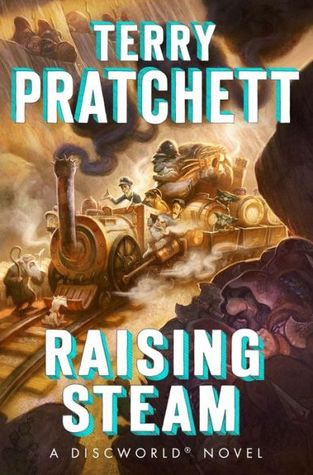
Raising Steam… a book by Terry Pratchett

18594777

Raising Steam 
by Terry Pratchett

5951153 *****

Michael Beyer‘s review

Jul 12, 2017  
Iwas amazing!


Terry Pratchett is always a good choice if you like laughs, thrills, and satire. Raising Steam does not disappoint. It uses familiar characters like Moist Von Lipwig from Going Postal and Commander Vimes of the Ankh-Morpork city watch along with new characters like the engineer Dick Simnel and the goblin Of The Twilight The Darkness (Yes, they like you to use the whole name).

The plot centers around the introduction of steam-powered railroads to the Discworld (the fantasy-world satire series that made Pratchett both a famous best-selling author, and a knight) and a schism between the dwarves who love the old ways of the deep, dark mines and the dwarves who love the new ways of living above ground in the light.

The usual mix of plot complications and themes of science versus magic are thrown about like fireballs to keep the story interesting, and one dark and foggy night aboard the train on a rickety bridge with the deposed king of the dwarves on board headed back to his kingdom sums up the sheer magic of Terry Pratchett’s gift for story-telling.

I recommend this book with six thumbs up… except I wasn’t supposed to reveal the existence of my extra arms.

Leave a comment

Filed under book reports, book review, humor, novel, strange and wonderful ideas about life

A $3.00 Treasure Trove

C360_2016-12-21-17-27-40-934.jpg

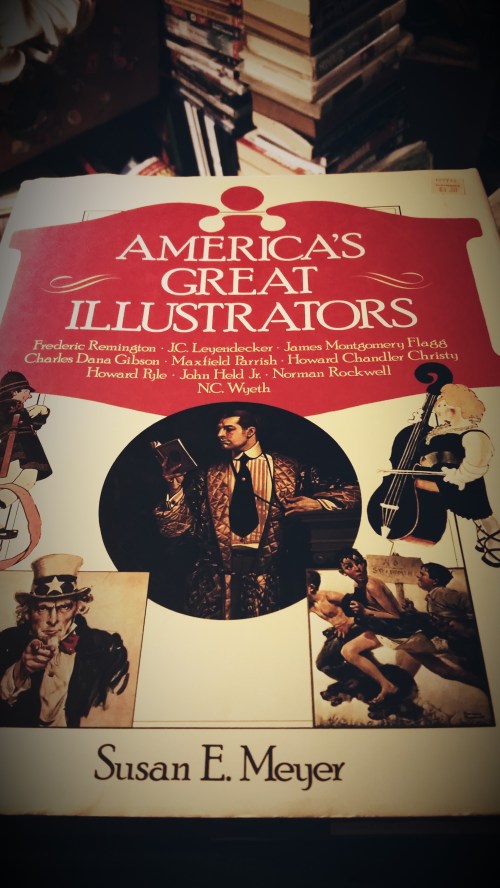
If you cruise the bargain sections in an old used book store like Half-Price Books, eventually you are going to find something priceless.  This book I am showing you is that very thing for me.

It was copyrighted in 1978.  The inscription inside the front cover says this was a Father’s Day gift on June 19th, 1988.  Someone named Gary gifted it to someone named Claude in Burleson, Texas.  It was probably a cherished book until someone passed away and the book changed hands in an estate sale.

c360_2016-12-21-17-26-52-638

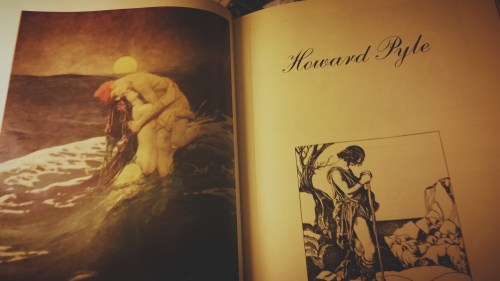
Howard Pyle

The book chronicles the height of the publishing era when being able to print books and reproduce artworks began entertaining the masses.  Always before painters and great artists worked for a patron for the purpose of decorating their home in a way that displayed their great wealth.  But from the 1880’s to the rise of cinema, magazines and books kept the masses entertained, helped more people to become literate than ever before, and created the stories that made our shared culture and life experiences grow stronger and ever more inventive.  The book focuses on the best of the best among a new breed of artist… the illustrators.

These are the ones the book details;

Howard Pyle, N.C. Wyeth, Frederick Remington, Maxfield Parrish, J.C. Leyendecker, Norman Rockwell, Charles Dana Gibson, Howard Chandler Christy, James Montgomery Flagg, and John Held Jr.

c360_2016-12-21-17-26-08-244

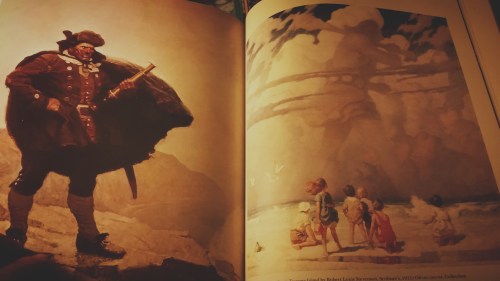
N.C. Wyeth

Wyeth was most famous as a book illustrator for Treasure Island, Kidnapped, other books by Robert Louis Stevenson, Mark Twain,  and a famous volume of tales about Robin Hood.

c360_2016-12-21-17-25-30-575

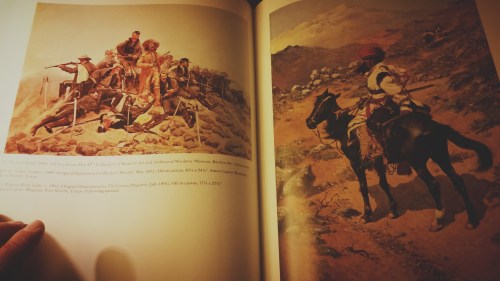
Frederick Remington

Remington is a name you probably know as a maker of Western art.  He was a famous painter of cowboys and Indians and the American frontier.

c360_2016-12-21-17-25-11-104

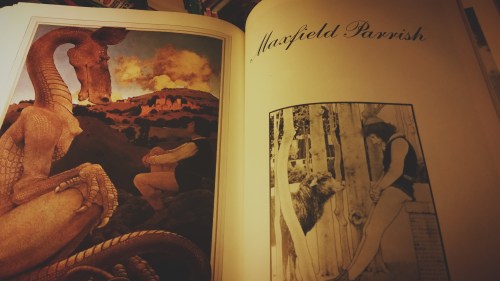
Maxfield Parrish

Maxfield Parrish is my all-time favorite painter.  His work is something I gushed about in previous posts because I own other books about his fanciful works painted in Maxfield Parrish blue.

c360_2016-12-21-17-24-36-579

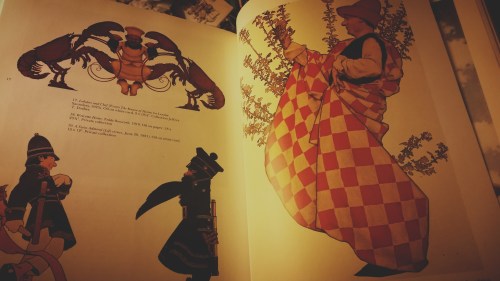
Also Maxfield Parrish


c360_2016-12-21-17-24-09-869

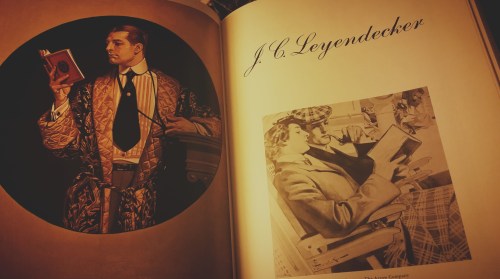
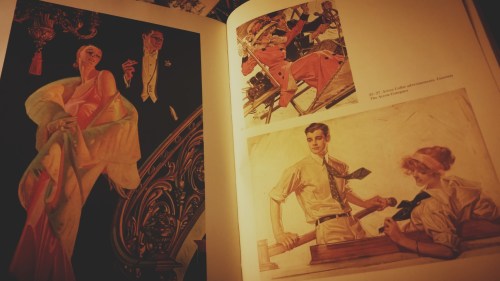
J.C. Leyendecker

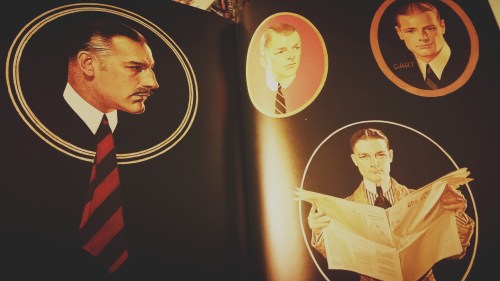
You will probably recognize Leyendecker’s work in magazine and advertising illustration as the standard of the Roaring 20’s.  His paintings set a style that swept American culture for more than a decade, and still affects how we dress to this very day.


c360_2016-12-21-17-23-44-163

More Leyendecker


c360_2016-12-21-17-23-26-011

Even more from Leyendecker


c360_2016-12-21-17-22-58-983

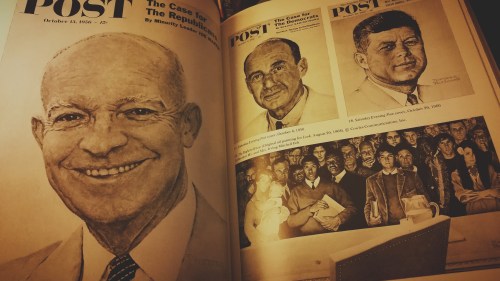
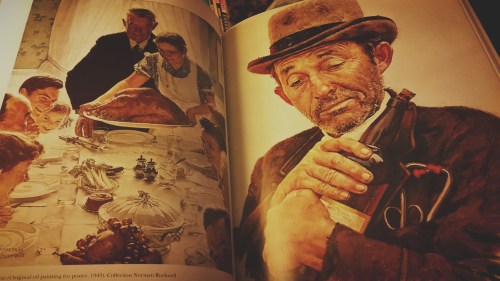
Norman Rockwell

Norman Rockwell and his work for The Saturday Evening Post is still familiar to practically everyone who reads and looks at the illustrations.  As you can see he was a master of folksy realism and could do a portrait better than practically anyone.


c360_2016-12-21-17-22-02-082

Also Rockwell

I have also written about Norman Rockwell before too.  I have half a dozen books that include his works.  My wife is from the Philippines and she knew about him before I ever said a word to her about him.

c360_2016-12-21-17-21-38-237

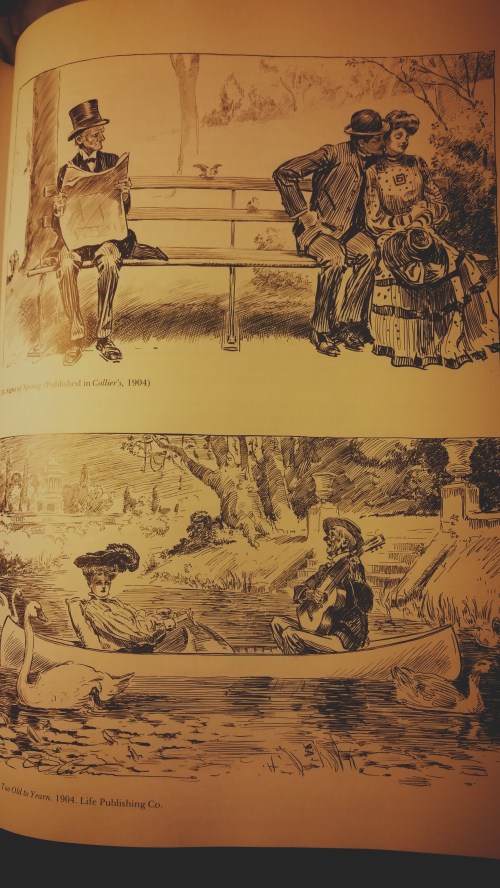
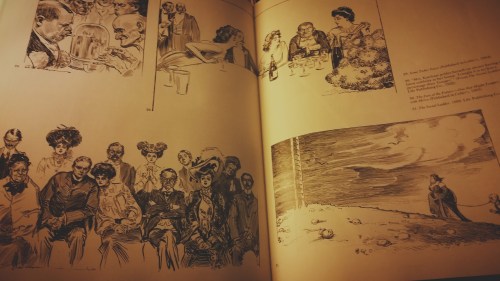
Charles Dana Gibson

As you can plainly see, Gibson was a master of pen and ink.  His work for Collier’s and other magazines thrills in simple black and white.  More cartoonists than just little ol’ me obsess about how he did what he did.

c360_2016-12-21-17-21-14-634

Also Gibson


c360_2016-12-21-17-20-49-992

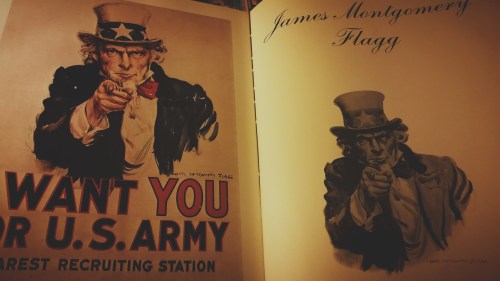
James Montgomery Flagg… with a name like that, who else could it be?


c360_2016-12-21-17-20-06-847

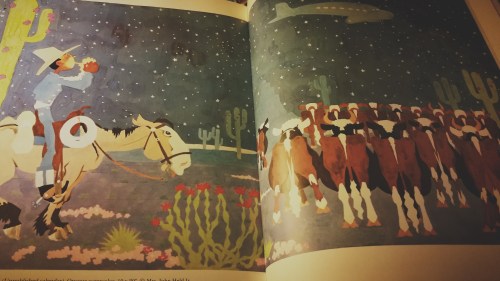
John Held Jr.

The work of Held is stylistically different than all the rest in easily noticeable ways.  He’s the guy that made all the big-headed Pinocchio-looking people in the 1920’s.  You may have seen his work before, though you probably never knew his name.

This bit of someone else’s treasure hoard will now become a part of my own dragon’s treasure, staying by my bedside for quite a while, while I continue to suck the marrow from each of its bones.  I love this book.  It is mine, and you can’t have it… unless you find your own copy in a used bookstore somewhere.

4 Comments

Filed under art criticism, art my Grandpa loved, book reports, book review, humor, illustrations, imagination, oil painting, old art, old books, pen and ink, Uncategorized

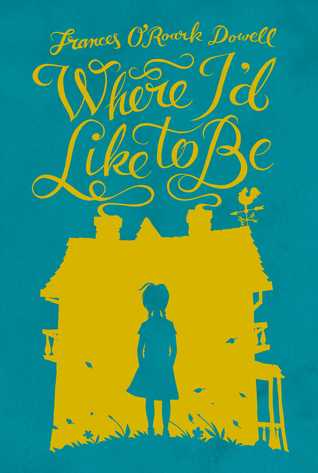
Where I’d Like to Be (a book by Frances O’Roark Dowell)

490978

This book made me cry. And that is not unusual, even though I am a 60-year-old man. A Tale of Two Cities by Charles Dickens made me cry. At the end, not during the funny parts. But this was a book about a lonely eleven-year-old girl trying to make friends. Why should that make me cry?
But it is also a bittersweet tale of memorable child characters who have nowhere left to turn but each other, and their imaginations. The poetic sting of it can make a grown man cry. You should read it. You will understand then.

Leave a comment

Filed under art criticism, book reports, book review, characters, compassion, empathy, good books, humor, strange and wonderful ideas about life

Holy Bagumba!

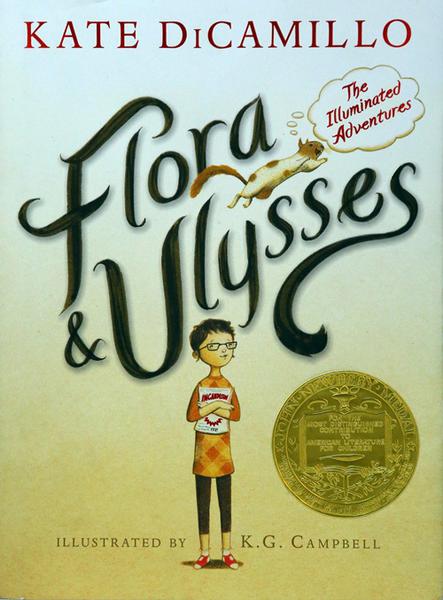
newbery2014

I have just finished reading a wonderful book.  It is a young adult novel bordering on being a children’s book.  It won the 2014 Newbery Medal for best work of children’s literature.  But it is a book of so many dimensions that it totally defies categories.  Librarians with butterfly nets who want to pin this book down on their library shelves will be pointlessly waving their nets at it like they believe it’s a butterfly, but it will soar away from them like an eagle.

c360_2016-11-06-09-59-56-962

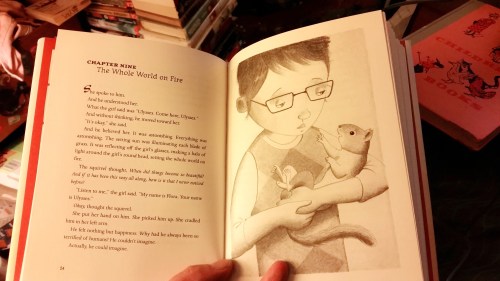
Flora & Ulysses (the Illuminated Adventures) is a combination book of many different things.  G. K. Cambell’s cartoony paffoonies add to and amplify the story to the point that sometimes it becomes a graphic novel.

Flora herself is a comic-book lover and follower of the adventures of a comic-book superhero named Incandesto.  Ulysses the squirrel is run over by a rogue vacuum cleaner and the accident graces him with super powers (the ability to fly and throw cats and write poetry).  And Flora rescues and befriends this newly minted superhero and sets him on a path that pits him against the only super-villain available, Flora’s own mother.

c360_2016-11-06-10-00-47-864

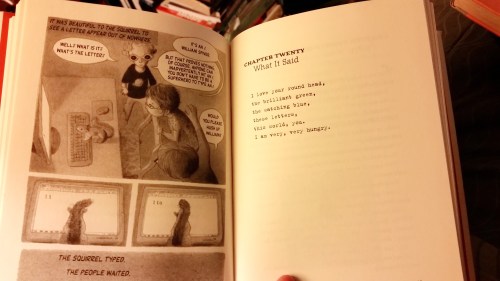
At certain points, through metaphor, elegance, and supreme focus, the story itself becomes poetry.  But, of course, when the poem ends with a line about the squirrel being hungry, it becomes humorous poetry, simply by the juxtaposition of the sublime with the ridiculous.

bk_all

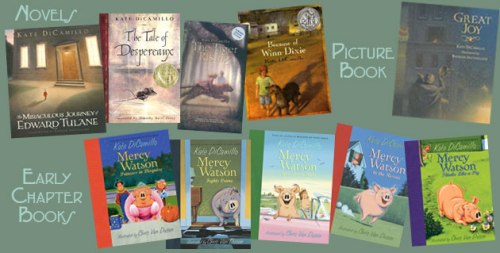
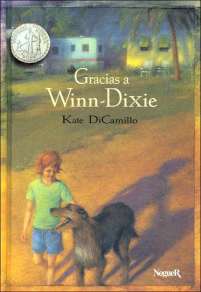
As a writer, Kate DiCamillo is a master of everything I want to be.  She is as much a masterful story-teller as Mark Twain, Ernest Hemingway, or William Faulkner.  But many people will be put off by the fact that she is a children’s author.  They will ignore her stories because how could a children’s author affect their lives in any way?  But if you are a reader who can think and feel about things in a book, she will make you laugh and make you cry and make you not afraid to die… for love of a good book.

Let me also suggest a few of her other wonderful, wonderful books;

winn-dixie

Leave a comment

Filed under book reports, book review, commentary, good books, humor, metaphor, poetry, reading

Tom Sawyer Abroad (Book Review)

20161017_162015

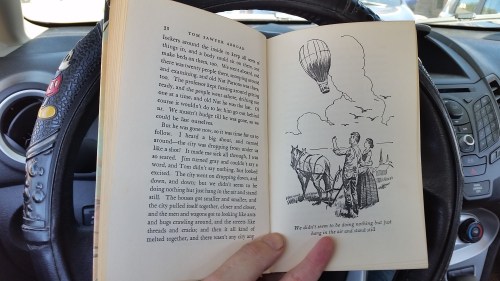
Yep, I read about being an “erronort” traveling in a balloon while sitting in a parking lot in my car.

Believe it or not, I read this entire 100+year-old book in my car while waiting for my daughter and my son in school parking lots.  What a perfectly ironic way to read a soaring imaginary adventure written by Mark Twain and mostly forgotten about by the American reading public.

c360_2016-10-30-10-26-22-635

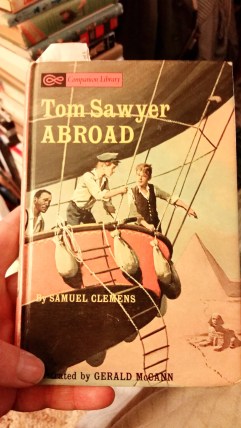
My copy of this old book is a 1965 edition published for school libraries of a book written in 1894.  It tells the story of how Tom and Huck and Jim steal a ride on a balloon at a town fair from a somewhat mentally unhinged professor of aeronautical science.  The balloon, which has space-age travel capabilities due to the professor’s insane genius, takes them on an accidental voyage to Africa.

Of course, the insane professor intends to kill them all, because that’s what insane geniuses do after they prove how genius-y they really are.  But as he tries to throw Tom into the Atlantic, he only manages to plunge himself through the sky and down to an unseen fate.  The result being a great adventure for the three friends in the sands of the Sahara.  They face man-eating lions, mummy-making sandstorms, and a chance to land on the head of the Sphinx.

The entire purpose of this book is to demonstrate Twain’s ability to be a satirical stretcher of the truth, telling jokes and lies through the unreliable narrator’s voice of Huck Finn.

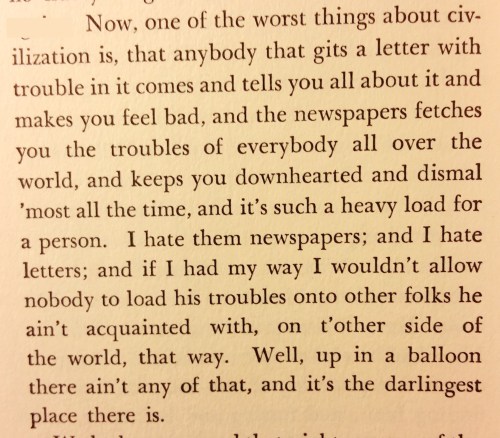
Here is a quoted passage from the book to fill up this review with words and maybe explain just a bit what Twain is really doing with this book;

c360_2016-10-30-10-48-45-630

Notice how I doubled my word count there without typing any of the words myself?  Isn’t the modern age wonderful?

But there you have it.  This book is about escaping every-day newspaper worries.  In a time of Presidential Candidate Donald Trump, global warming, and renewed threats of thermonuclear boo-boos with Russia, this proved to be the perfect book to float away with on an imaginary balloon to Africa.  And the book ends in a flash when Aunt Polly back in Hannibal wants Tom back in time for breakfast.  I really needed to read this book when I picked it up to read it.

2 Comments

Filed under book reports, book review, foolishness, good books, humor, imagination, Mark Twain, old books, strange and wonderful ideas about life

Reading Twain for a Lifetime

mark-twain

I wish to leave no doubt unturned like a stone that might have treasure hidden under it.  I love the works of Samuel L. Clemens, better known as Mark Twain.

I have read and studied his writing for a lifetime, starting with The Adventures of Tom Sawyer which I read for myself in the seventh grade, after seeing the musical movie Tom Sawyer starring Johnny Whittaker as Tom.  I caught a severe passion, more serious than a head-cold, for the wit and wisdom with which Twain crafted a story.  It took me a while to acquire and read more… but I most definitely did.  I took an American Literature course in college that featured Twain, and I read and analyzed The Adventures of Huckleberry Finn.  I also bought a copy of Pudd’nhead Wilson which I would later devour in the same thoroughly literate and pretentious manner as I had Huck Finn.  Copies of A Connecticut Yankee in King Arthur’s Court and The Mysterious Stranger were purchased at the same time, though I didn’t read them cover to cover until later during my years as a middle school English teacher.  I should point out, however, that I read and re-read both of those, Connecticut Yankee winning out by being read three times.  As a teacher, I taught Tom Sawyer as an in-class novel assignment in the time when other teachers thought I was more-or-less crazy for trying to teach a 100-year-old book to mostly Hispanic non-readers.  While the lunatic-inspired experiment was not a total success, it was not a total failure either.  Some kids actually liked having me read parts of it aloud to them, and some borrowed copies of the book to reread it for themselves after we finished as a class.

marktwaindvd2006During my middle-school teaching years I also bought and read copies of The Prince and the Pauper, Roughing It, and Life on the Mississippi.  I would later use a selection from Roughing It as part of a thematic unit on Mark Twain where I used Will Vinton’s glorious clay-mation movie, The Adventures of Mark Twain as a way to painlessly introduce my kids to the notion that Mark Twain was funny and complex and wise.

I have also read and used some of Twain’s most famous short fictions.  “The Celebrated Jumping Frog of Calaveras County” and “The Man Who Corrupted Hadleyburg” are both masterpieces of Twain’s keen insight into the human psyche and the goofy and comic corruptions he finds there.

And now, retired old me is reading Tom Sawyer Abroad.  And, though it is not one of his finest works, I still love it and am enthralled.  I will review it and share it with you when I am finished.  But I will never be through with Mark Twain.  Not only is there more of him to read, but he has truly been a life-long friend .

1 Comment

Filed under book reports, book review, goofy thoughts, happiness, heroes, old books, sharing, strange and wonderful ideas about life

Cheating at Reading

Three years ago I read 100 books during the school year.  I was a reading teacher.  I had piles of classroom books at all reading levels.  I wanted to record the feat on Goodreads, but I hadn’t figured out how to record things properly on the Goodreads website.  I have no record of those books to look back on.

So this year, 2016, I determined that I would read at least thirty books and record that reading on Goodreads.   Unfortunately I reached the beginning of September 17 books behind schedule.

So, I decided to cheat.  I gathered up a bunch of popcorn books… easy reads, books I set aside after reading half or more of the books, and books about drawing.

I also have a few books by comedians that are easy to buzz through because of the unique way that people like George Carlin and Lewis Black think… unfortunately rather close to the demented way I think.

I also read cartoon books and comic books quickly.

So, I have been cheating right along, finishing at least a book a day.  I am now at only 3 books behind schedule.  It probably is not a good thing for a former reading teacher to cheat at reading.  But I am filling up my reading shelf.  I enjoy the books.  And the way Donald Trump manages his businesses and does charity work, I don’t feel the least bit guilty.

Leave a comment

Filed under book reports, humor, reading, strange and wonderful ideas about life, Uncategorized