

Yesterday I wrote a post about religion that revealed my lack of connection to organized religion (I am still in recovery from fifteen years of trying to be a good Jehovah’s Witness) and my deep connections to God and the Universe and That Which Is Essential. I feel that it is good evidence for the theory that being too smart, too genius-level know-it-all goofy, is only a step away from sitting in the corner of the asylum with a smile and communicating constantly with Unknown Kadath in his lair in the Mountains of Madness (a literary allusion to H.P. Lovecraft’s world). And today I saw a list on Facebook pompously called “100 Books You Should Read If You’re Smart”. I disagree wholeheartedly with many of the books on that list, and I have actually read about 80 per cent of them. So it started me thinking… (never a good thing)… about what books I read that led to my current state of being happily mentally ill and beyond the reach of sanity.
 To Kill a Mockingbird, by Harper Lee is the first book on my list. The Facebook list had no reasons why to argue with, so here are my reasons why. This book is written from the innocent and intelligent perspective of a little girl, Scout Finch. It stars her hero father, Atticus Finch, a small-town southern lawyer who has to defend a black man from false charges of rape of a white woman. This book makes clear what is good in people, like faith and hope and practicality… love of flowers, love of secrets, and the search for meaning in life. It reveals the secrets of a secretive person like Boo Radley. It also makes clear what is bad in people, like racism, lying, mean-spirited manipulations, lust, and vengeance. And it shows how the bad can win the day, yet still lose the war. No intelligent reader who cares about what it means to be human can go without reading this book.

Cloud Atlas, by David Mitchell is the second book on my list. This is really not one book. It is a complex puzzle-box of very different stories nested one inside the next and twisted together with common themes and intensely heroic and fallible characters. Reading this book tears at the hinges between the self and others. It reveals how our existence ripples and resonates through time and other lives. It will do serious damage to your conviction that you know what’s what and how the world works. It liberates you from the time you live in at the moment.
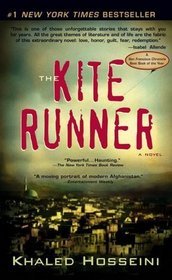
The Kite Runner, by Khaled Hosseini is the third book on the list. This will give you an idea of how fragile people truly are, and how devastating a single moment of selfishness can be in a life among the horrors of political change and human lust and greed. No amount of penance will ever be enough for the main character of this book to make up for what he did to his best and only friend… at least until he realizes that penance is not all there is… and that it is never too late to love.
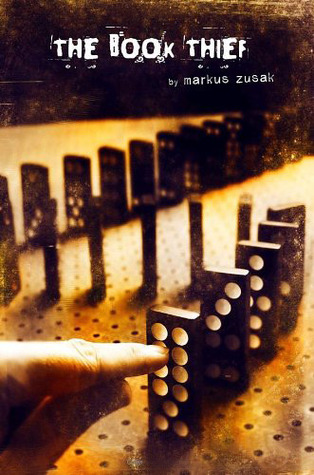
The Book Thief, by Markus Zusak is number four. This book is about an orphan girl, the daughter of an executed communist, living in Nazi Germany in the early 1940’s. It is a tear-jerker and an extremely hard book to read without learning to love to cry out loud. Leisel Meminger is haunted by Death in the story. In fact, Death loves her enough to be the narrator of the story. It is a book about loving foster parents, finding the perfect boy, and losing him, discovering what it means to face evil and survive… until you no longer can survive… and then what you do after you don’t survive. It is about how accordion music, being Jewish, and living among monsters can lead to a triumph of the spirit.
Of course, being as blissfully crazy as I am, I have more books on this list. But being a bit lazy and already well past 500 words… I have to save the rest for another day.












Ugly Christmas Sweaters and the Criticizing of Them
In the Midwest
where I spent my childhood and early youth, there is a great tradition of making fun of the exceptionally eye-bonking ski sweaters and Norwegian-middle-layer clothing that dads and grandads are given as presents less often than only neckties.
Yes, they are functional in the land of 100-degree-below-zero wind-chill. And they also work as defenders of your male virginity when you are in college in Iowa. But we make fun of them not out of derision, but of love. These are gifts, after all, that are given on winter birthdays and Christmas because the giver loves you. And the creative criticism of them is given only as a sign of appreciation for what they are truly for.
And if you tried to click on the X’s on this sweater of mine, and it did not immediately close on your screen, that’s because this one has special meaning. I didn’t get this as a Christmas gift. I inherited it from my father who died in November 2020. And it will keep my heart warm now until it falls apart, or until the time comes to pass it on to my own eldest son.
What…
this essay is actually about is the nature of good criticism.
The fact that this one is a red Christmas tree decorated with lawn flamingos is not the actual point. One has to look past the flaws and try to judge the effectiveness of how it achieves… or fails to achieve… its intended purpose… apparently to keep rats and small birds out of your yard… or from within a hundred yards of the thing.
And…
if I were to be offended by the revelation of Santa’s sexy black thong, then the thing to do as a proper critic is not to use my power to condemn it, but not to take up the critique of it at all. I mean, if you are actually offended by the thing, you would not want to offer an opinion that some would take as a challenge.
“What? You are telling me that I can’t like Santa’s sexy black thong? I will not only like it, I will love it! And I will buy one for myself.”
Following…
the philosophy of the uncritical critic, I would only review this green nightmare sweater of a Christmas mutant demon-dog if I really liked it. Of course, since you are seeing a review of it here, it means I am actually quite charmed by the sweater itself, and amused by whatever seventy-plus-year-old grandmama that has the kitsch-defiant attitude that allows her to proudly wear it… even if it was given to her as a gift by a relative she probably doesn’t really like but, never tells them so.
Doing book reviews one after another (as I have been doing for Pubby in order to get reviews on my own books in return) I have done a lot of the uncritical critic bit. Some of the people I have been reviewing the books of should never have tried to write a book in the first place. But do I tell them that? Of course not. If I have taken the trouble to read the whole book, even though it may be horrible, I am not going to pour cold water on their flame. I have done reviews with innumerable editorial suggestions of what would make it a better story, or a better non-fiction book, or children’s book, or poetry book, or self-help book… I have read terrible books of all of these kinds. And I know the authors did not rewrite the books as I suggested. But in my many years as a writing teacher, I have learned well that you must always point out the fledgling writers’ strengths and ask them to build on those. And some will. Besides the points I earn to spend on reviews of Mickian books, that is reward enough.
Leave a comment
Filed under book reports, book review, commentary, writing, writing teacher