Category Archives: artists I admire

Mennyms (A Book Review)

20160611_100605

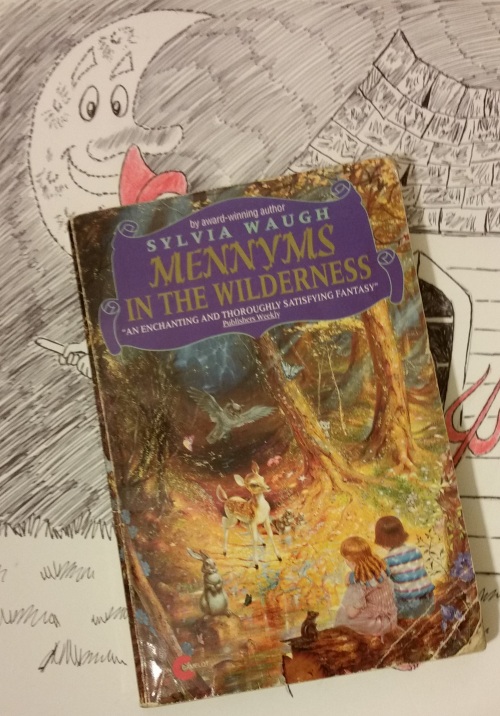
This is the book I have really read, though I intend to acquire the rest.

Sylvia Waugh is a British writer of children’s books who has a lot in common with me.  She spent her career as a teacher of grammar.  In her late fifties she became a published author.  Her book series of the Mennyma is a charming fantasy adventure about dolls so loved by their owner, they actually come to life… and survive her…. and then have to make their way in a world that would be horrified by them and might easily seek to destroy them.

20160609_155347

Hopefully none of my dolls come to life after I croak. After years of collecting, they nearly outnumber humanity.

But rest assured, the dolls in this sweet-natured children’s book series would never prove evil.  The books are more fantasy-comedy than horror story.  In fact, they are impossibly far away from horror.
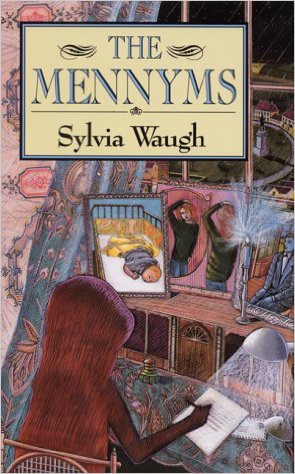
51QZSMA6EKL._SX293_BO1,204,203,200_

The original book.

Joshua Mennym is the head of a family of life-size rag dolls.  He pretends to be a middle-aged man.  He generally keeps his distance from the general public, because, up close, his basic rag-doll-ness would stand revealed.  Rag dolls are not supposed to walk and talk, let alone have families and live in a home of their own.   His wife is Vinetta Mennym, also a rag doll.  Together they are parents to the ten-year old twins, Poopie, the boy, and Wimpey, the girl.

The teenage twins are Pilbeam and Soobie.  Pilbeam is the girl and constant companion of the elder teenage sister, Appleby.  Soobie is the boy and  blue.  Why their former owner, Kate Penshaw, made him with a blue head and blue feet and blue hands is a mystery both to the Mennyyms and to me.   It causes him to be the one most likely to cause exposure of the family secret because even at a distance he does not look like a “real people” person.

Baby Googles is the smallest of the family, constantly cared for by the nanny, Miss Quigley, who is also considered a Mennym because she is also a doll.

Grandpa Magnus Mennym lives in the attic with Grandma and takes care of the household bills.  He writes scholarly works on the English Civil War and publishes them for a modest income which comes through the mail.  Granny Tulip is also relied upon for her wisdom and experience whenever a problem with keeping the family secret comes up.

Each book in the series contains a different adventure revolving around the realistic comedy generated by impossible people trying so hard to be real.  I absolutely love the adventures, even the ones I haven’t read yet.  And I know that the only way you could possibly love these books too is if you share my loony love of the fantastically impossible that turns out to be real.  After reading these books, I fully intend to keep a very close eye on my own doll collection.

Leave a comment

Filed under artists I admire, book review, doll collecting, good books, humor, imagination, old books

Philip K. Dick

18s42u32hlbmcjpg

There is a major drawback to being so smart that you can perceive the edges of infinity.  It makes you bedbug crazy.  I love the science fiction that populated the paperback shelves in the 50’s and 60’s when I was a boy.  I love the work of Philip K. Dick.  But it leads you to contemplate what is real… what is imaginary… and what is the nature of what will be.

image.related.articleLeadNarrow.300x0.201aa

the robot Philip K. Dick who appeared at Comic Con and answered questions

There are numerous ways to investigate life.  But it is in the nature of imaginary people to try to find ways to make themselves real.  When the replicants in Bladerunner try to make themselves into real people, they must try to create memories that didn’t exist.  They try to mirror human life to the extent that they can actually fool the bladerunner into letting them live.  Of course, it doesn’t work.  They are not real.  (Bladerunner is the movie name of Do Androids Dream of Electric Sheep).

blade-runner-dic

It is like that for me as well.  Being an imaginary person is difficult.  You have to constantly invent yourself and re-invent yourself.  By the time you finally get to know yourself, you have to change again so that the anti-android factions don’t destroy you.  Although, I think I may not actually be an android.

Does that sound a bit crazy?  Well Philip K. Dick’s life story may in fact have led him down the path to really crazy.  In 1971 he broke up with his wife, Nancy Hackett.  She moved out of his life, and an amphetamine-abuse bender moved in.  In 1972, ironically the year I began reading Dick’s work, he fell in love at the Vancouver Science Fiction Convention.  That was immediately followed by erratic behavior, a break-up, and an attempted suicide overdosing on the sedative potassium bromide.  This, of course, led directly to his 1977 novel A Scanner Darkly.

images (1)

The story is about a police detective who is corrupted by a dangerous addictive drug that takes him down the rabbit hole of paranoia, and being assaulted by the perception of multiple realities simultaneously.  His novel Ubik from 1969 is a story of psychics trying to battle groups of other psychics even after they are killed by a bomb.  The crazy seems to have been building for a while.

philip-k-dick-color

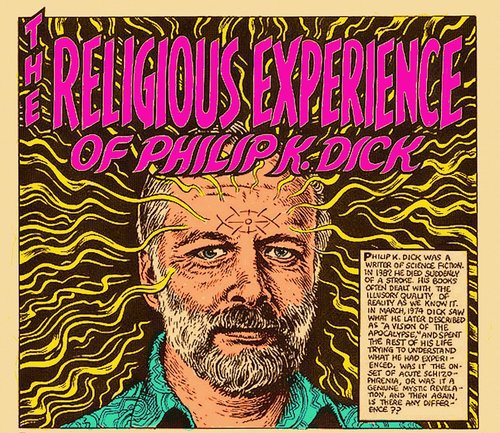
In 1974 he had a transcendental experience when a lady delivering medicine to his door wore a fish-shaped pendant which he said shot a pink beam into his head.   He came to believe the beam imparted wisdom and clairvoyance, and also believed it to be intelligent.  He would later admit to believing he had been reincarnated as the prophet Elijah.

la-réalité-cest-ce-qui-continue-dexister-lorsquon-a-cessé-dy-croire-1

Imagination has its dangers.  It is a powerful thing able to transform reality.  Science fiction writers often use their imagination to shape what the future will actually make come into being.  But it can also turn your mind inside out.  A great science fiction writer like Philip K. Dick can contemplate the nature of reality and turn his own reality inside out.  It is a lesson for me, a lesson for all of us.  Wait, is that a pink beam of light I see?  No, I just imagined it.


5 Comments

Filed under artists I admire, humor, imagination, science fiction, strange and wonderful ideas about life, surrealism

Wisdom From the Bob Ross Bible

If there is a Church of Sacred Landscapes then Bob Ross is its Jesus Christ.  That is not a sacrilegious statement of bizarre cult-mindedness.  Painting is a religion that has its tenets.  And Bob Ross explained to us the will of God on his painting show on PBS.  All the illustrations used in this post come from the Facebook page Joy of Painting with Bob Ross. All the wisdom comes from things the Master said on the show.

11248809_987552237958159_3831451558245640641_n

1456530_1013333522046697_52665931274922281_n

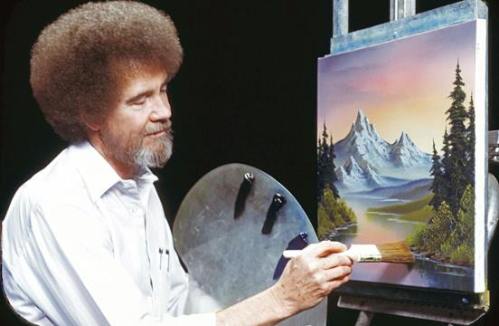
Bob Ross was the prophet of the paintbrush.  He would present us with a lightly prepared canvas at the beginning of the show and then proceed on camera to take his brush and palette knife, and all his paints, and create a piece of the world before our very eyes.  And he was not Picasso or Van Gogh or even Norman Rockwell.  He was not a talented artist, but rather a very practiced one who knew all the tricks and shortcuts to sofa painting, the art of knocking out scene after scene after scene.  He could make his little piece of the world in only half an hour, and he made it obvious how we could do the same.  His work was not gallery quality… but his teachings were Jesus-worthy.1918971_1025737477472968_4026443126606690255_n

His work was natural, flowing, and realistic in the random complexity it presented.  He took standard paintbrush strokes and pallet knife tricks and made them dance across the canvas to make happy little trees.

His painting methods presented us with a philosophy of life and a method of dealing with whatever mistakes we might make.

And of course, any good religion must take into account the existence of evil.

10584087_1017432258303490_1467733251578071673_n

Bob Ross tells us that evil is necessary as a contrast to what is good and what is true.  We need the dark.  But we don’t have to embrace it.  Bob’s paintings were never about the dark bits.  He always gravitated towards the light.

12791113_1051526088227440_5570911201164613149_n

Of course, sometimes you have to beat back the darkness.  A good artist takes care of his tools.

Bob Ross admonishes us to look and to learn and love what we see.  The man radiated a calm, gentle nature that makes him a natural leader.  His simple, countrified wisdom resonates because we need calm and pastoral peace in our lives.  It is one of the main reasons mankind needs religion.

So I definitely think we ought to consider building a Bob-Rossian Church of the Sacred Landscapes.  We have our prophet.  The man has passed away, yet he is risen to paint again endlessly on YouTube.

And if you are willing to try… Bob Ross will smile upon you.

12540822_1021984657848250_2154441702706339203_n

17 Comments

Filed under artists I admire, artwork, humor, insight, inspiration, religion, sharing from YouTube, strange and wonderful ideas about life

Mr. Bean

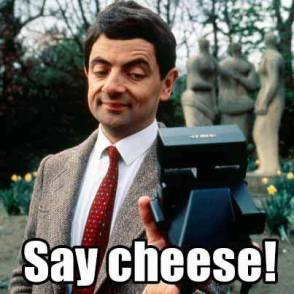
Rowan Atkinson is a genius comedian, and the character of Mr. Bean is the greatest work he has done, the best proof of his genius.  As someone who works at humor and tries to get it right, I have to analyze and carefully study the work of the master.  How does he do it?  What does it all mean?  And what can I learn from it?

a1b

Atkinson not only created the character, he co-wrote the entire television series and controls every aspect of the performance as the central character.  Mr. Bean is the bumbling every-man, going through horrific troubles because of the cascade effect of simple little errors.  We laugh at him because we have all been there.  Tasting the hot sauce leads to a meltdown that causes chaos and disaster for the entire store.  Overcoming fear of heights makes him the center of attention for the entire pool-house when can’t overcome the urge to use the diving board, and yet, can’t make himself jump off.  We have all lived the nightmare of being trapped naked in the hotel hallway, locked out of our room, just when the hallway becomes crowded.

There is a certain charm to Mr. Bean.  He is a childlike character, blissfully unaware of how much he doesn’t know about the complex society around him.  He has a teddy bear that sleeps with him and comforts him.  He lays out his supplies for the big exam, and he’s thought of practically everything he will possibly need, but basic physics fails him and makes the pencils keep rolling out of place.


Rowan Atkinson is a master of the art form because he has such tremendous control of his rubberized goofy face and manic body.  He can drive his goofy little yellow car from a sofa mounted on top.  He can change clothes while driving.  Just watching him shave with an electric razor is a total hoot.

1379883_546824888720851_2133355741_n

It is mostly physical comedy, almost slapstick, and yet it is not the broad unfeeling poke-in-the-eye you get with the Three Stooges.  Most of the real damage is done to himself, though pompous and deserving people are often near enough to get a helping of it smack in the face.  A lot of it is practically pantomime, with hardly any real dialogue.  Much of it, like the sword fight with the bumblebee using a butter knife, is simply silly.

a3b


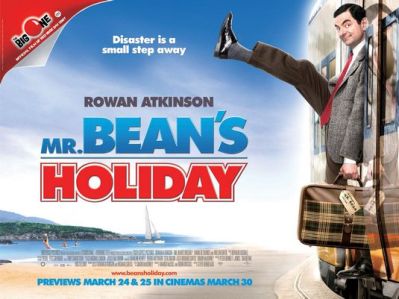
The movie, Mr. Bean’s Holiday, extends the character by making him actually interact with other characters, though in his own inimitable Mr. Bean way.  The limited dialogue thing is amplified by the fact that he is traveling in France and does not speak French.  Still, he interacts with the boy he accidentally kidnaps, the girl who wants to be a movie star whom he helps in her quest by an accident at the Cannes Film Festival, and the movie director whom he almost kills but ends up saving his career with a hit home movie.

Mr. Bean makes the ridiculous an art form by helping us to laugh at ourselves as we are beset by all the little troubles of life that Bean magically floats through.

So, now I have told you why I love Rowan Atkinson as a comedian.  He is a comedic genius.  Of course, you knew that already, right?


6 Comments

Filed under artists I admire, comedians, humor, review of television, sharing from YouTube

Big Eyes

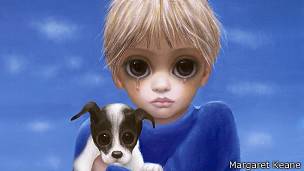
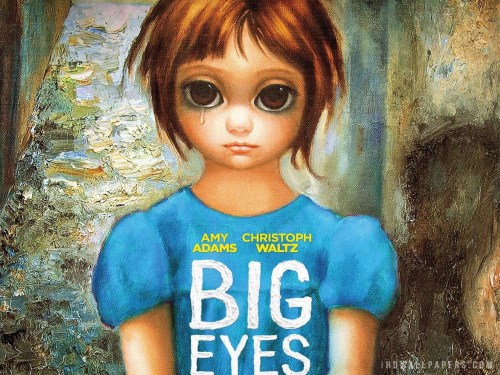
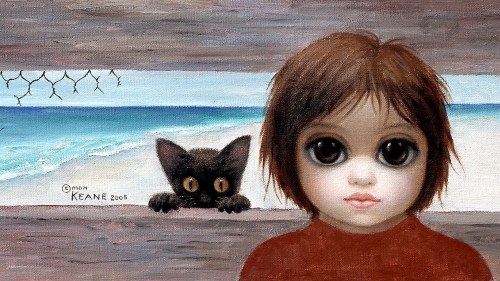
141202210752_margaret_keane_304x171_margaretkeaneYesterday, before the big game, I watched the DVD I bought of Tim Burton’s Golden Globe Award movie, Big Eyes.  It is the true-story bio-pic of an artist I loved as a kid, Margaret Keane… though I knew her as Walter Keane.

This movie is the bizarre real-life tale of an artist whose art was stolen from her by a man she loved, and supposedly loved her back.  I have to wonder how you deal with a thing like that as an artist?  I live in obscurity as an artist.  My art has been published in several venues, but I have never been paid a dime for it.  All I have ever gotten is publication in return for “exposure”, and limited exposure at that.  But my art always brought vigor, joy, and light to my career as a school teacher.  My art was always my own, and had either my own name on it, or the name Mickey on it.  I shared my drawing skill in ways that directly impacted the lives of other people.  It enriched my “teacher life”.

Mrs. Keane’s hauntingly beautiful big-eyed children appealed to the cartoonist in me.  They expressed such deeply-felt character and emotion, that I was obsessed with imitating them.  In fact, the “big-eye-ness” of them can still be detected in some of my work.  I remember wondering how these children, mostly girls, could be drawn by a grown man.  What was his obsession with little girls?  But the true story reveals that he was a man so desperate to have art talent and notoriety that he put his name on his wife’s work, made her paint in secret, and eventually convinced himself that it was actually his.  He had a real genius for marketing art, and he invented many of  the art-market ploys that would later inform the careers of homely artists like Paul Detlafsen and Thomas Kinkaid.  One wonders if Mrs. Keane could’ve ever become famous and popular without him.


The movie itself is a Tim Burton masterpiece that reveals the artist that lives within the filmmaker himself.  I love Burton’s movies for their visual mastery and artistic atmosphere.  They are all very different in look and feel.  Batman was very dark and Gothic, inventing an entirely new way of seeing Batman that differed remarkably from the 60’s TV series.  Edward Scissorhands was full of muted, pastel colors and gentle humor.  Alice in Wonderland was full of bright colors and oddly distorted fantasy characters.  Dark Shadows was Gothic melodrama in 70’s pop-art style.  This movie was true to the paintings that inspired it and visually saturate it.  It is beautiful and colorful, while also serious and somber.  It makes you contemplate the tears in the eyes of the big-eyed waifs in so many of the pictures.  It is a movie “I love with a love that is more than a love in this kingdom by the sea”… if I may get all obsessive like Edgar Allen Poe.

big_eyes_2014_movie-1280x960

maxresdefault

keane-movie-still-6

So, there you have it.  Not so much a movie review as an effusion of love and admiration for an artist’s entire life and work.  I am captivated… fascinated… addicted… all the things I always feel about works of great art.

6 Comments

Filed under art my Grandpa loved, artists I admire, artwork, movie review

Ralph Bakshi

I was a Disney kid.  I grew up with Sleeping Beauty, Pinocchio,  and Jungle Book.  But then I grew up and went to college and all my Disney dreams were dashed.  The world is not Disneyland.  The world holds many wicked wonders, some beautiful, some dangerous, some downright deadly.  In 1977 I saw a movie that changed my world   That movie was Ralph Bakshi’s Wizards.  I saw it in the college-town theater in Ames, Iowa.  I scraped up enough money to see it three times in the week that it played there.  It was the Fall Semester after having read the entire Lord of The Rings Trilogy a year ago that summer.  If you don’t know what I’m talking about, then here it is from YouTube.  You should take a look, if not watch it all;

Ralph Bakshi is the chief artist/animator behind some of the raunchiest, weirdest, and wildest cartoons of the 60’s, 70’s, and 80’s.   You may have seen some of his work.

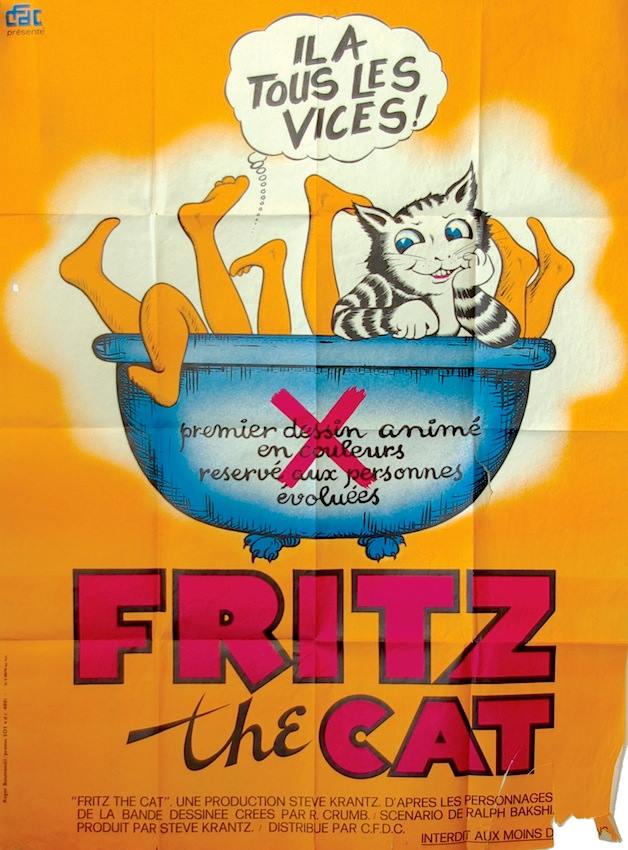
1425578_374356942699292_1586842201_n  Fritz the Cat was groundbreaking in that it was actually an X-rated cartoon, something that a Disney kid could never have imagined until he had his goofy little cartoon brain got corrupted by the colorful collage of experience you get as a farm-boy in college.  I never actually saw such a profane perversion of what a cartoon was supposed to be until they had a special free showing at the student union.  I went with a couple of guys from the dorm house and was flabberghasted that we could watch such a thing and not be in jail the following day.  I would’ve gone back a second time, but free student union movies only occurred one time a month and were never replayed again, ever.1397150_365752950226358_1015440499_o

1521285_400105020124484_381092382_n

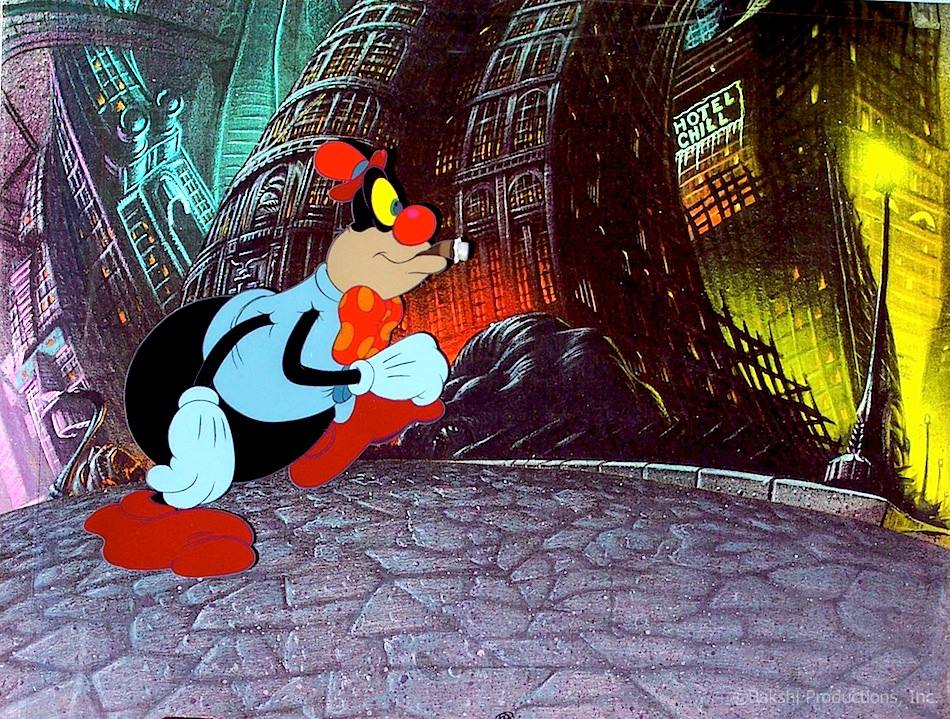
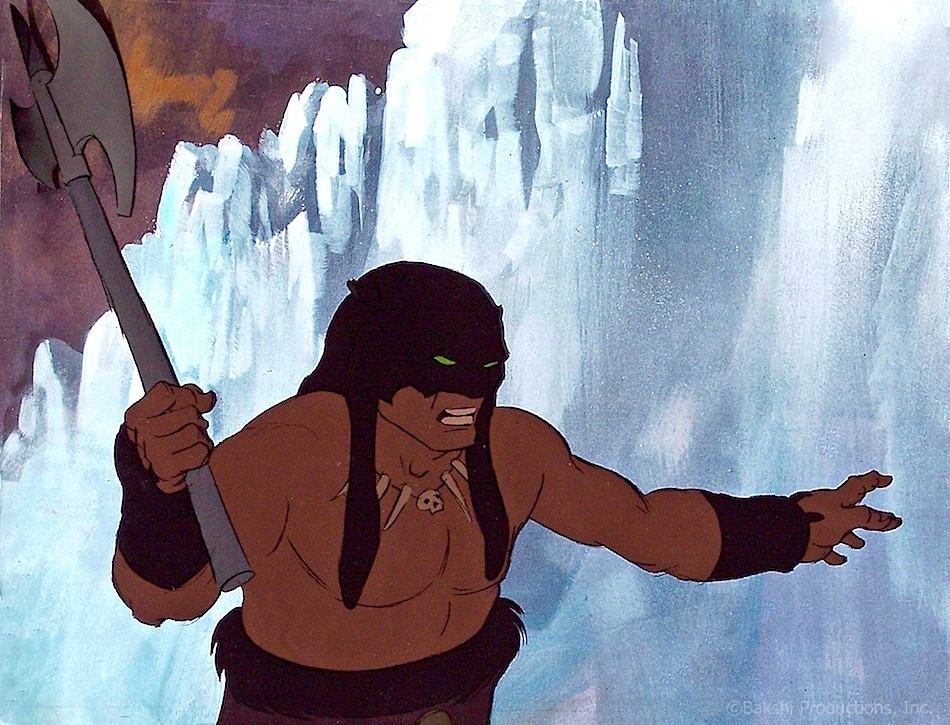
And then came The Lord of the Rings.  Bakshi was the first one to create a film version of the novels they said could never be filmed.  It appeared in the theaters in college town and I was forced to see it five times in the two weeks it stayed in the theater.  I never loved anything so much in animation before.  It was better even than Pinocchio.  I would in later years be devastated by the fact that the movie only covered one and a half of the three books.  The rest of the story never got made.

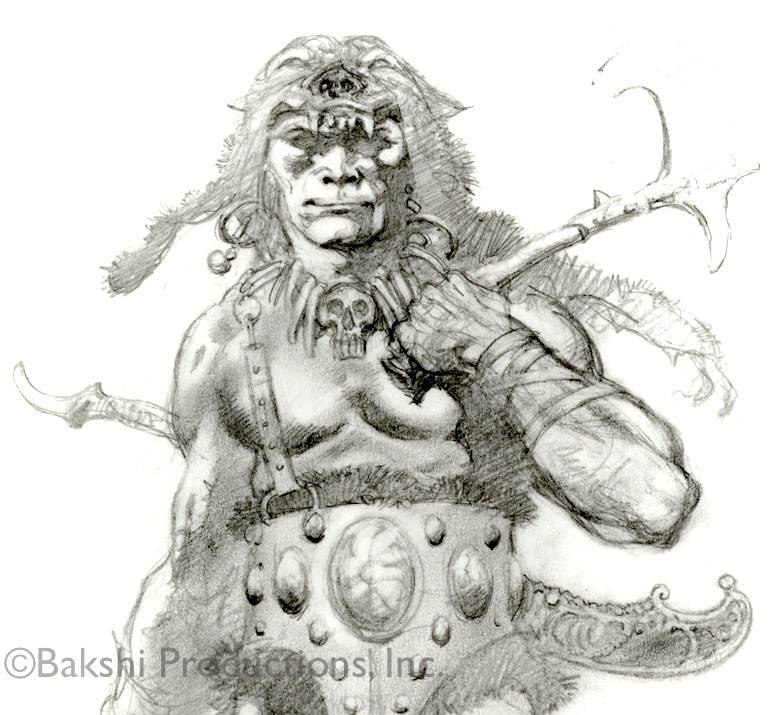
After college there were other black-magical Bakshi films.  I would later get to see Fire and Ice, American Pop, and Cool World.  Ralph Bakshi, and one of his lead cartoonists, Mike Ploog,  would rock my world until he finally stopped making animated films.  I have actually seen all of his films now, and have copies of most of them.

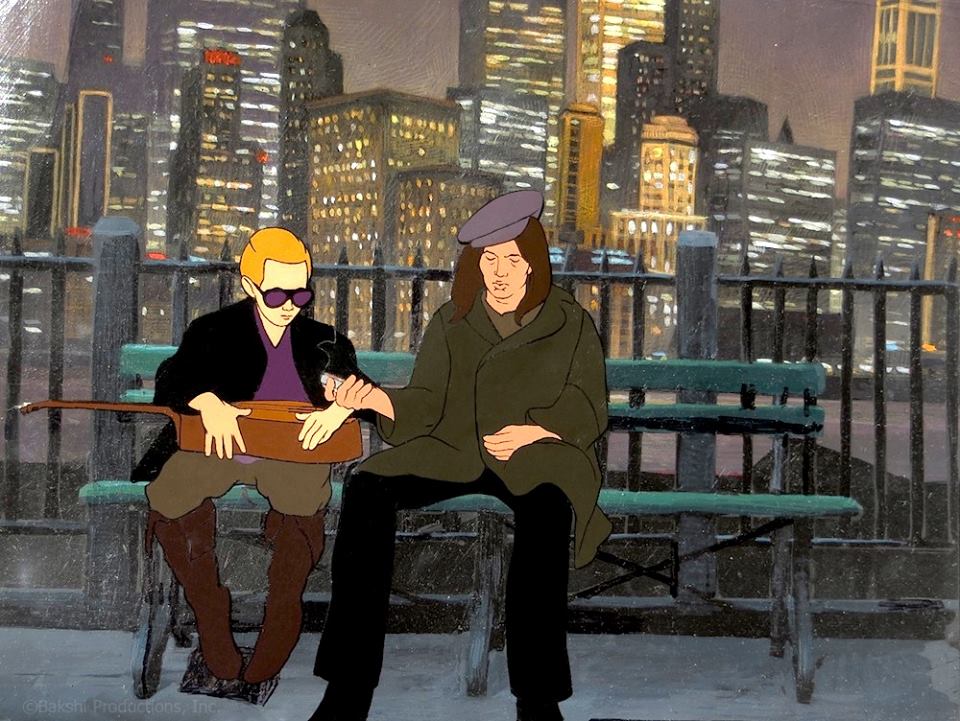
1381458_364600730341580_717903061_n This is a scene from the history of music cartoon, American Pop.

Here’s another scene from that movie.1376511_362962520505401_512024308_nHe called it a “moving painting in honor of American music.”

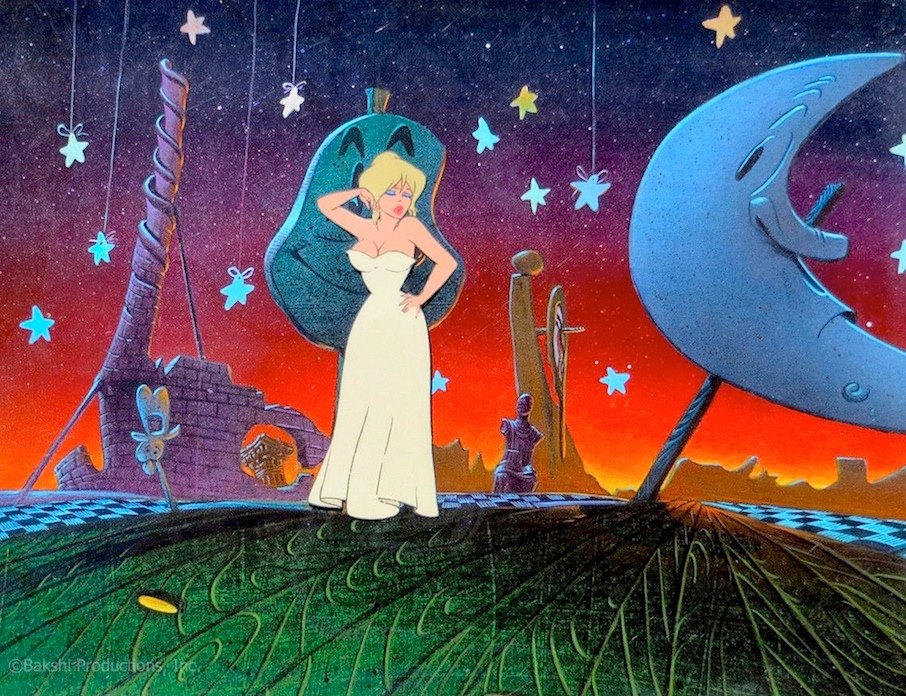
1426702_371578419643811_1630501743_nCool World was a combination of live action and cartoons that was loosely modeled on Who Framed Roger Rabbit?  It was a foofy story that made a half-decent excuse for wonderful artwork.
1469765_382828218518831_766468690_n

                                                                                                                                                                                                                                                                                                                                                                                                                                                                                                                                                                                                                                                                                                                                                                                                                                                                                                                                                                                                                                                                                                                                                                                                                                 Fire and Ice was Dungeons and Dragons and Boris Vellejo brought to life.

1471946_382638121871174_1368447753_n

Let me end with a couple of connections to Ralph and Mike that you should check out.  Their artistry has a profound effect.

http://www.facebook.com/RalphBakshi    http://www.facebook.com/pages/Mike-Ploog/103982309772668

1379226_370884019713251_884121795_n 1500996_392895167512136_2102574141_o

2 Comments

Filed under art criticism, artists I admire, humor

Krazy Kat

1138249

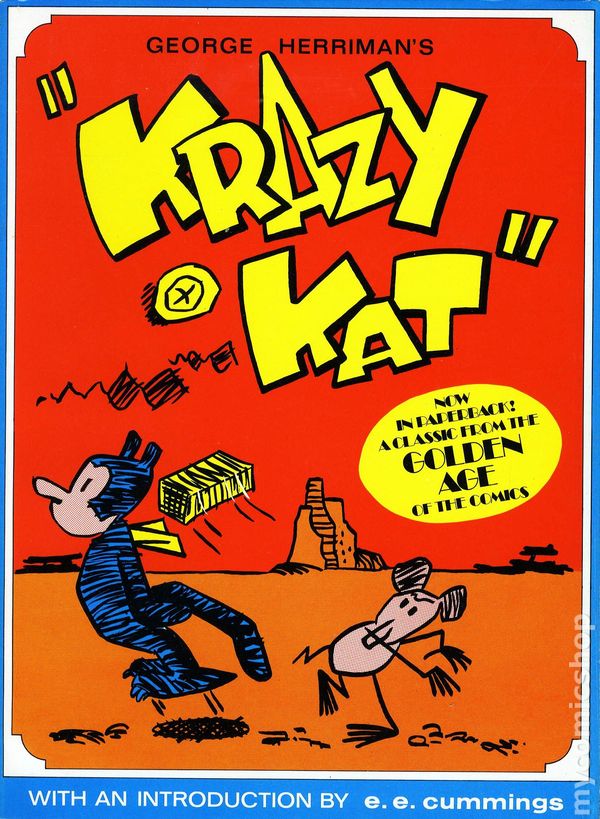
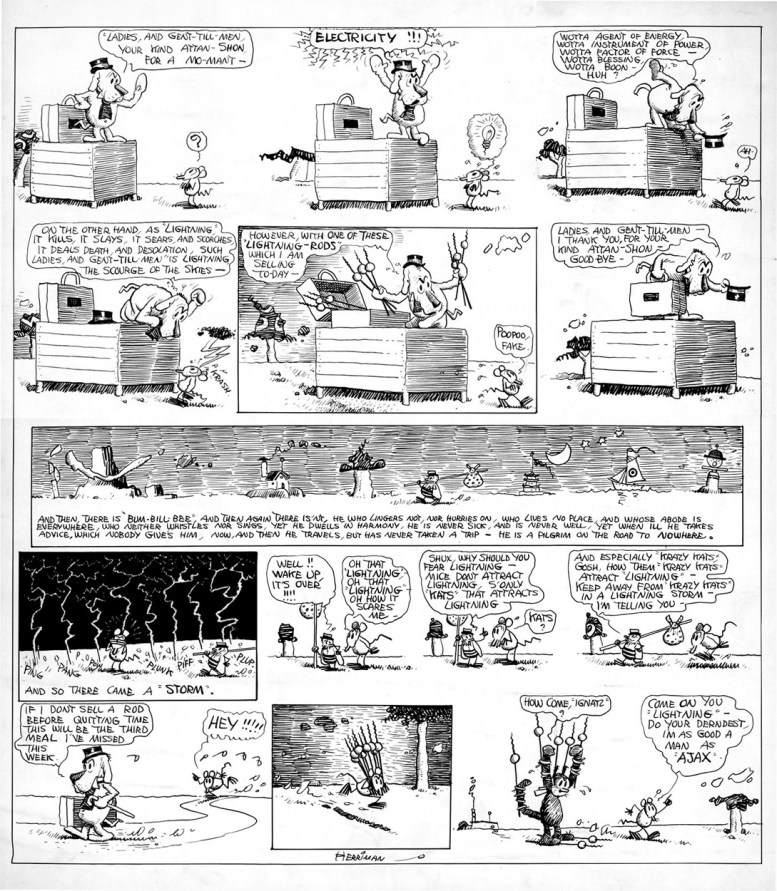
I told you before about a cartoonist from ancient ‘Toon Times named Fontaine Fox.  He was a master, and I acknowledge him as one of my greatest inspirations.  But he was not the original master mentor for my teenage ‘Toon Training.  That honor goes to the inestimable George Herriman.  He was the Krazy Kartoonist who died more than a decade before I was born, yet, through his Kreation, Krazy Kat, did more to warp my artistic bent into Krazy Kartooniana Mania than anybody else.  I discovered him first.  I found him through Komic books and the Kard Katalog at the local library.  I own a copy of the book I pictured first in this post.  It is the first Kartoon book I ever bought.  I couldn’t post a picture of my actual book here because I have read it so often in the past forty years that the Kover has Kome off.  It is now more of folder of loose pages than a book.

Herriman KK 1920-12-05 (2)

Krazy Kat is a newspaper Komic strip that ran all around the world from 1913 to 1944.  Comics Journal would rate Krazy Kat as the greatest work of Komic art of the 20th Century.  Art critics hailed it as serious art, and it fits snugly into the surrealist movement of Salvador Dali and others.  It has been cited as a major influence on the work of other artists such as Will Eisner, Charles M. Schulz, Robert Crumb, Art Spiegelman, Bill Watterson, and Chris Ware.

krazy

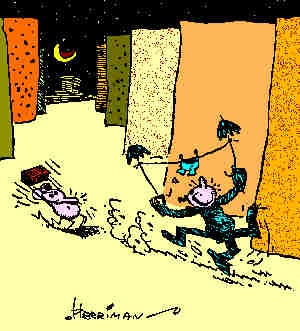
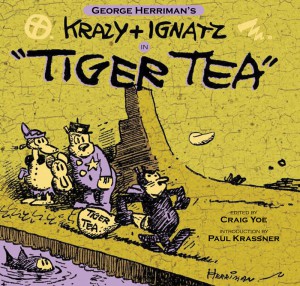
The centerpiece of the strip is a love triangle.  Krazy Kat the Kharacter is a feline who may be female or may be male but is definitely deeply in love with Ignatz Mouse.  The Krazed rodent hopped up on seriously stinky fromage (cheese to us non-French speakers), is Konstantly throwing bricks at Krazy’s head… obviously out of serious disdain, however, Krazy sees it as a confession of love.  Offisa Pup, the police watchdog, wants to jail the malevolent mouse for battery and protect the precious Kat, whom he obviously loves with an unrequited love.  Explanations are superfluous in the weird world of Krazy Kat.  How can I explain the charm, the humor, the good-natured violence of a strip such as this?  There are echoes of it in Tom and Jerry animated cartoons, but nothing like it really exists anywhere else.  Krazy has her own unique language, a language that you naturally learn to interpret as you read the strip.  Ignatz exhibits psychotic frustrations that he takes out on the world around him in our name, that we might experience hubris at his expense.  And what’s with that mysterious sack of “Tiger Tea” that Krazy carries about and keeps a Klosely guarded “sekrit”?

tigertea_coveronly-300x286

I honestly hope you will give Krazy Kat a thorough “look-see”.  Because if you like Kartoons at all… and it doesn’t have to be the Krazy Kooky love of a seriously overdosed addict like me… you will fall desperately in love with this one.   It is a world of its own, a superbly superfluous abstract anachronism.  It is a surrealist’s dream of fun with puns and tons of buns… or something like that.  Simply put… read it and don’t like it… I dare you!
2 Comments

Filed under art criticism, artists I admire, cartoons

Loish

I want to talk about a living artist for a change.  I know that the artists I have talked about on this goofy blog-that-doesn’t-seem-to-know-what-it-is-really-for, Norman Rockwell, William Bouguereau, Paul Detlafsen, Thomas Kinkade, Fontaine Fox, and Maxfield Parrish, are all quite dead.  But conversely that is a good thing because it means their art has stood the test of time.  But today I want to plug a working artist I find absolutely fascinating.  This is the first artist I ever seized upon as an example of a true master whose chosen medium is primarily digital art.
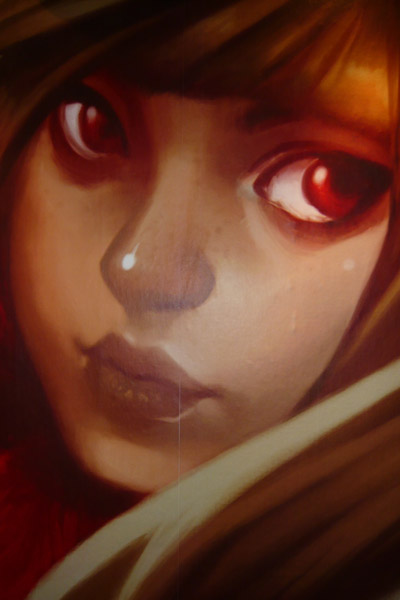
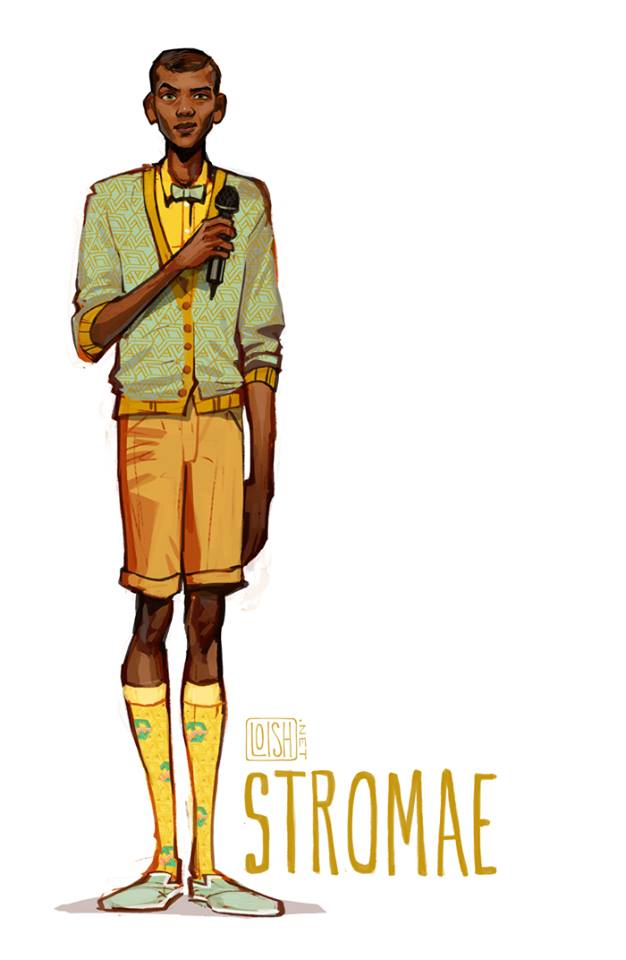
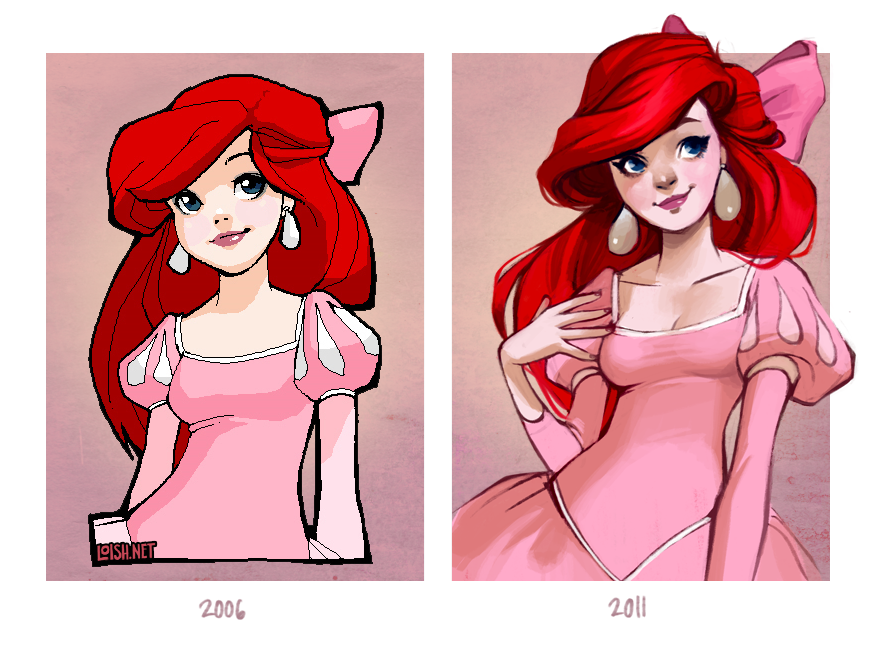
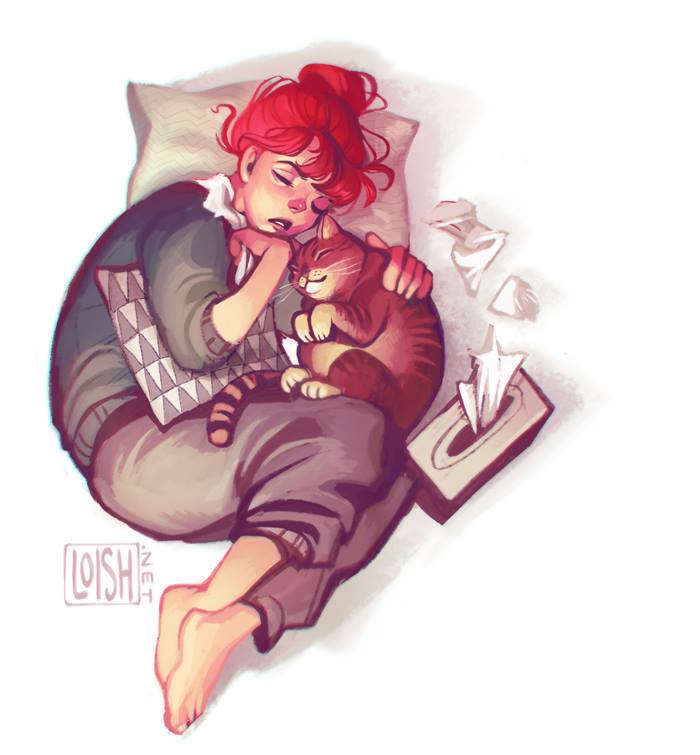
This is Loish.  You can find her at http://loish.net/ or http://http://loish.deviantart.com/.  Her name is Lois Van Baarle and she is a Dutch citizen by birth.  She has worked as both an animator and a commercial artist/illustrator.  She has lived all over the world in countries like France, Belgium, Germany, and the United States, but currently resides back in her home country, the Netherlands.c18296b715d6f4bb5326967c0aee012c-d7a6fao   What I find so absolutely engaging about her work is the way she can portray ordinary folk, particularly young people and female people, in luminous digital colors (almost as if she is painting with light… and in fact that is actually what she IS doing), and in such a big-eyed, cartooney way (the way you would expect someone who does animation to do it.)  Take a look at all these wondrous creations that I have borrowed from her websites or her Facebook page.

4d4873720b8bbe3a7cc06832a0e14c76-d7k01fh 20_000_by_loish-d5lpy47 31_sf-37 10690067_10154860584950048_1469364398832522904_n 1470000_10154862874670048_3578173885367471245_n 2006__meet_2011_by_loish-d4csf9b 1620908_10154860017350048_1381515276976528718_n 10660212_10154580885860048_7814970677337086502_n

Isn’t that some of the loveliest artwork you’ve ever seen?  I know some may not like it, preferring what is more realistic, gritty, hard-edged, or more cutting edge… but I love foofy art of all sorts… goofy foofy girly art… and this is among the best I have ever seen.

1 Comment

Filed under art criticism, artists I admire, artwork, Loish

Toonerville, a Place I Once Lived In

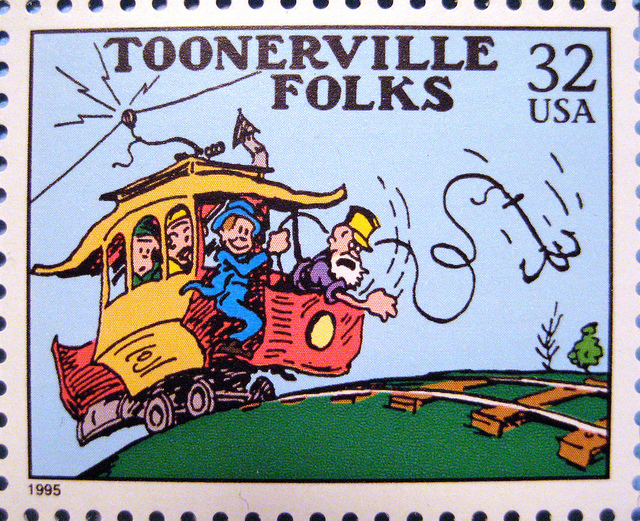
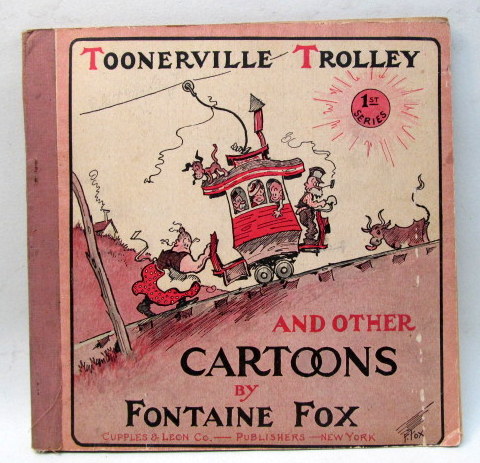
There is a place so like the place where my heart and mind were born that I feel as if I have always lived there.  That place is a cartoon panel that ran in newspapers throughout the country from 1913 to 1955 (a year before I was born in Mason City, Iowa).  It was called Toonerville Folks and was centered around the famous Toonerville Trolley.

4924968092_e6175d7bbb_z

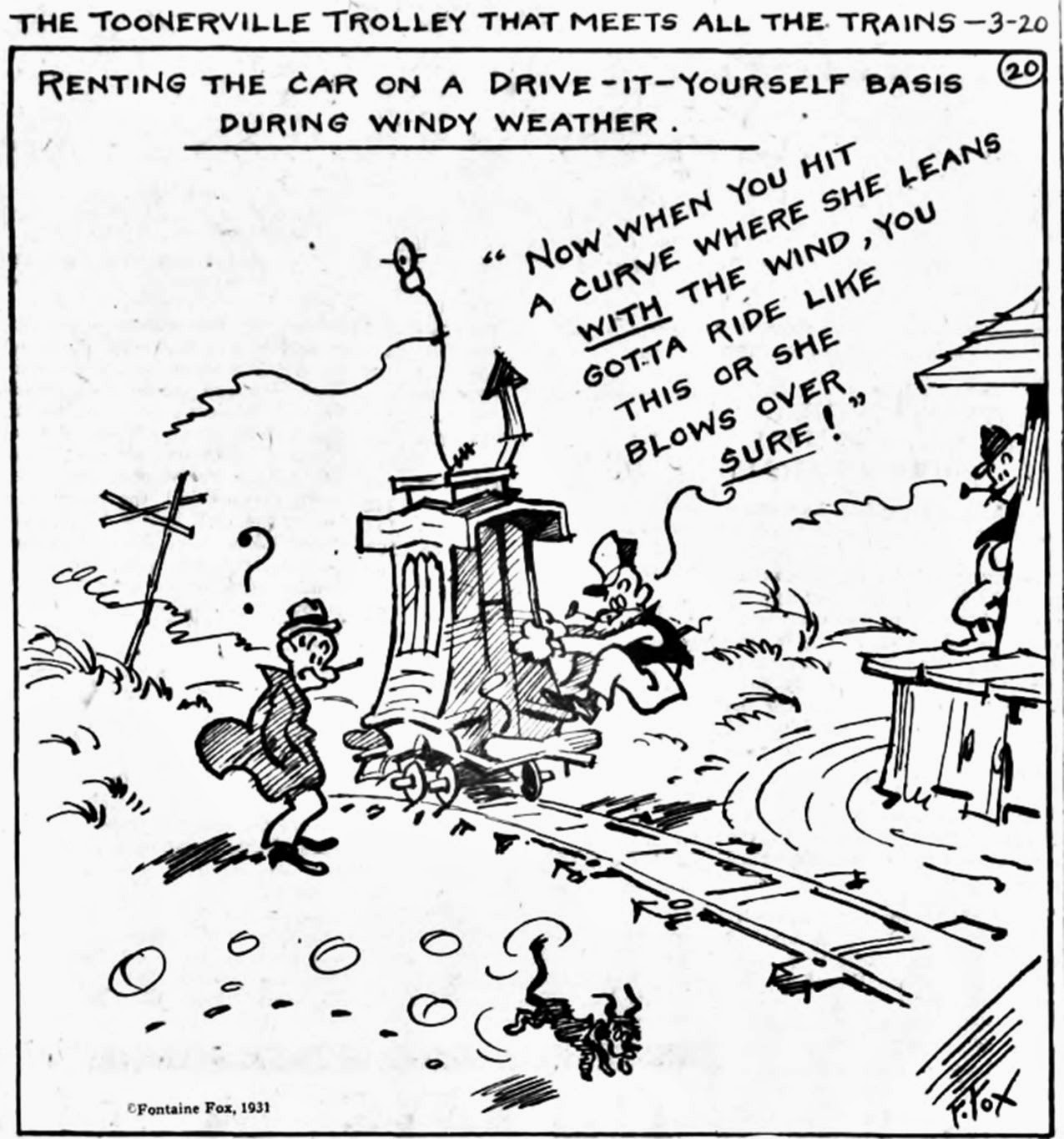
Fontaine Fox was born near Louisville Kentucky in 1884.  Louisville, of course is one of the two cities that claims to be the inspiration for Toonerville.  Apparently the old Brook Street Line Trolley in Louisville was always run-down, operating on balls of twine and bailing wire for repair parts.  The people of Pelham, New York, however, point to a trolley ride Fox took in 1909 on Pelham’s rickety little trolley car with a highly enterprising and gossip-dealing old reprobate for a conductor.  No matter which it was, Fox’s cartoon mastery took over and created Toonerville, where you find the famous trolley that “meets all trains”.

toonervilletrolly-cupplesleon toonerville-trolley

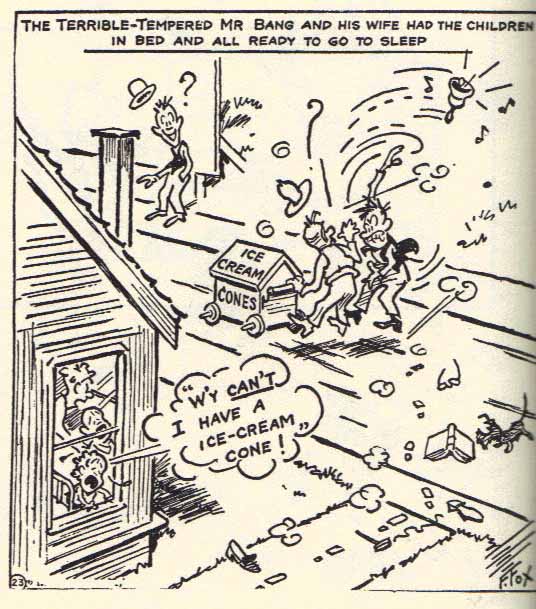
I didn’t learn of the comic strip’s existence until I was in college, but once I found it (yes, I am the type of idiot who researches old comics in university libraries), I couldn’t get enough of it.  Characters like the Conductor, the Powerful (physically) Katrinka, and the terrible-tempered Mr. Bang can charm the neck hair off of any Midwestern farm-town boy who is too stupid to regret being born in the boring old rural Midwest.

Toonerville 84

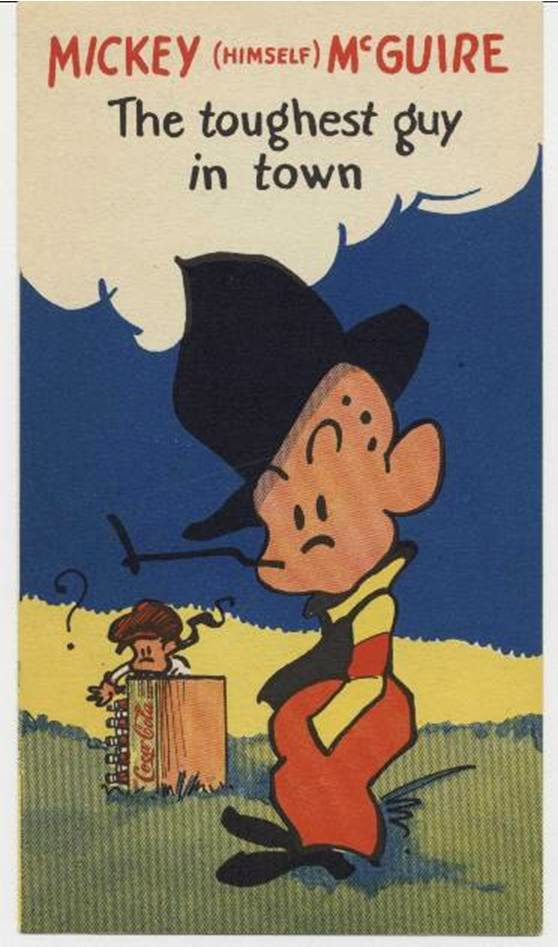
I fancied myself to be just like the infamous Mickey (himself) McGuire.  After all, we have the same first name… and I always lick any bully or boob who wants to put up a fight (at least in my daydreams).

MickeyMcGuire

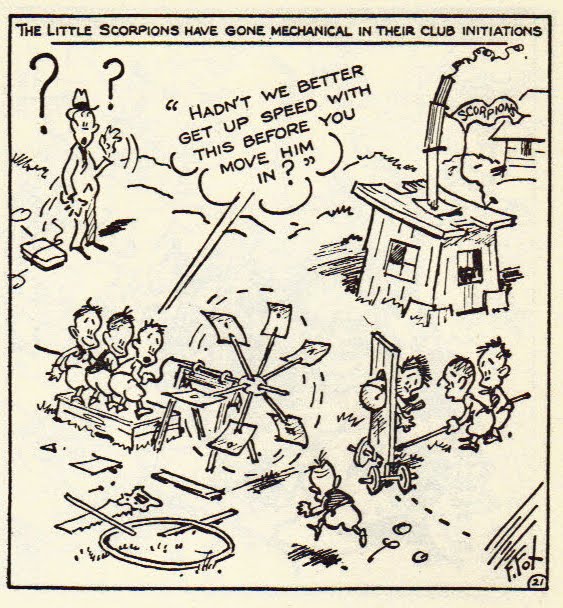
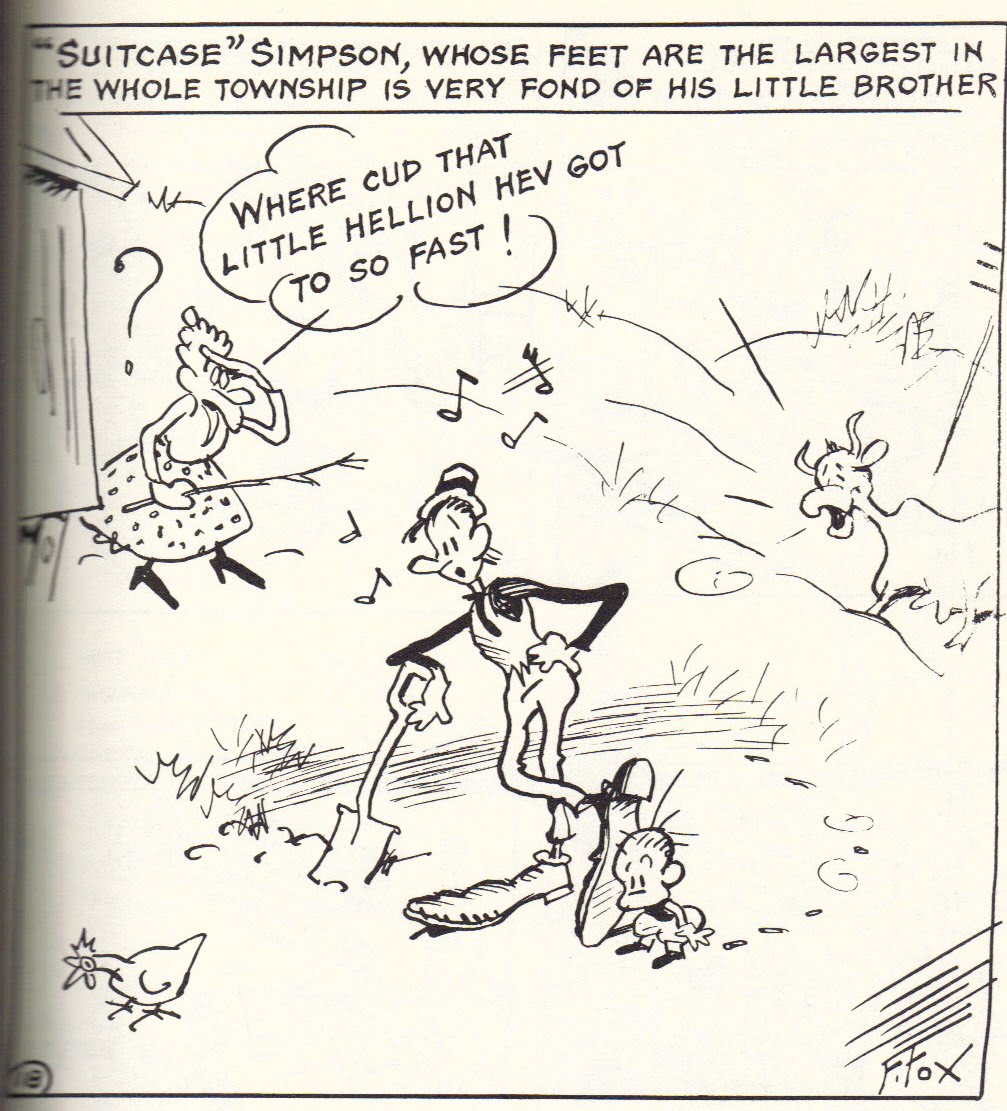
So, this is my tribute to the cartoonist who probably did more to warp my personality and make me funny (well, at least easy to laugh at! ) than any other influence.  All of the cartoons in this post can be credited to Fontaine Fox.  And all the people in them can be blamed on Toonerville, the town I used to live in, though I never really knew it until far too late.

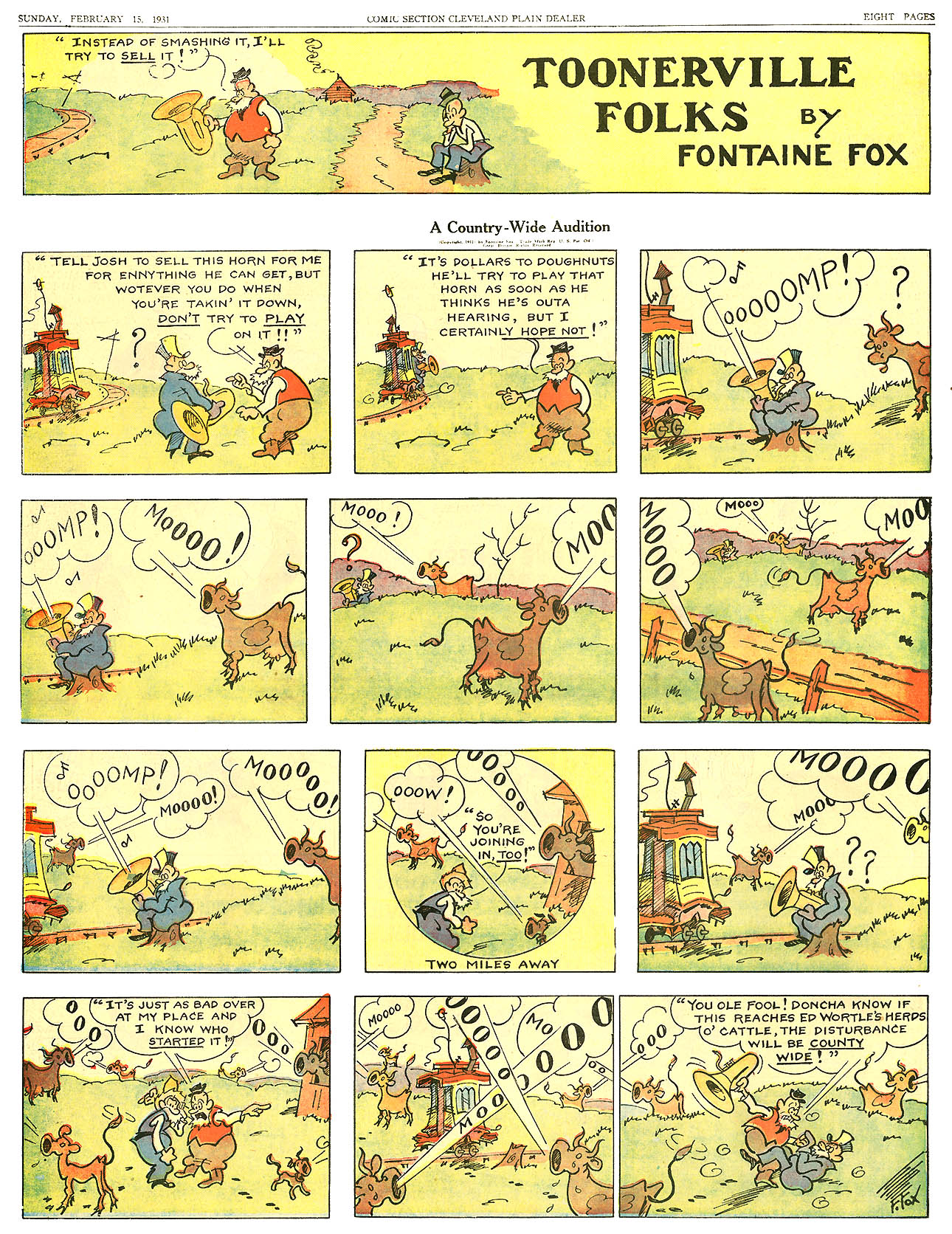
Toonerville 35 1931_12_18_Pelham_Sun_Section_2_Pg_1_Col_2_Toonerville_Comic 10-17-2010 07;49;35PMToonervillecolor021531

2 Comments

Filed under art my Grandpa loved, artists I admire, cartoons, Toonerville