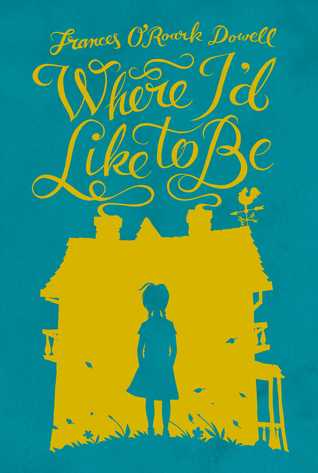
This book made me cry. And that is not unusual, even though I am a 60-year-old man. A Tale of Two Cities by Charles Dickens made me cry. At the end, not during the funny parts. But this was a book about a lonely eleven-year-old girl trying to make friends. Why should that make me cry?
But it is also a bittersweet tale of memorable child characters who have nowhere left to turn but each other, and their imaginations. The poetic sting of it can make a grown man cry. You should read it. You will understand then.
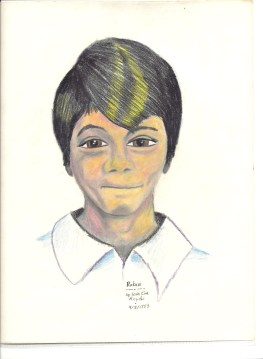
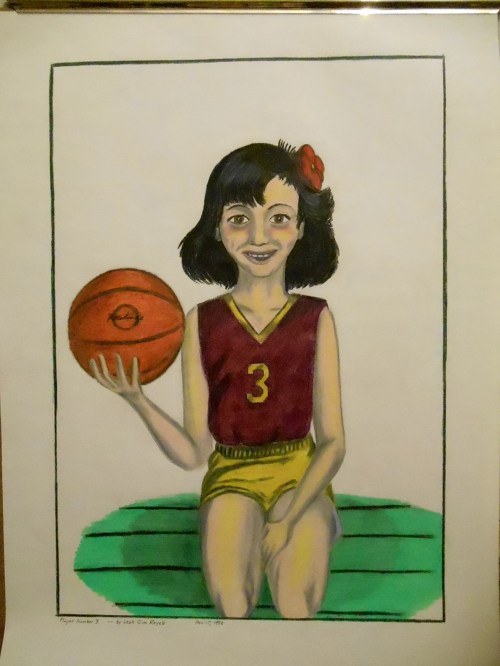
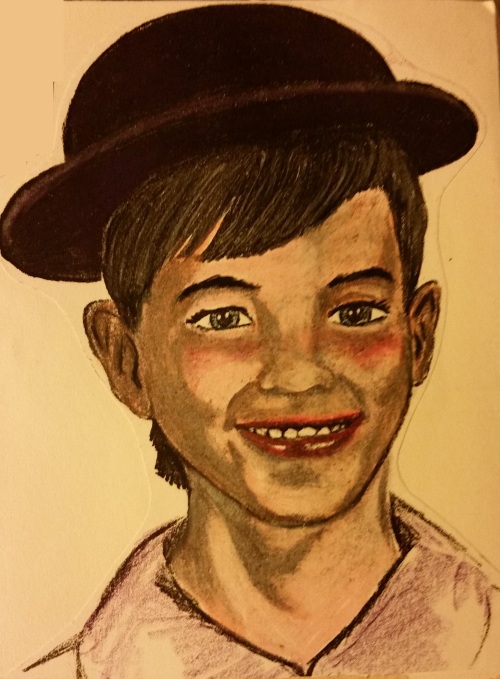
My biggest regret as a cartoonist and waster of art supplies is the fact that I am not the world’s best portrait artist. I can only rarely make a work of art look like a real person. Usually the subject has to to be a person I love or care deeply about. This 1983 picture of Ruben looks very like him to me, though he probably wouldn’t recognize himself here as the 8th grader who told me in the fall of 1981 that I was his favorite teacher. That admission on his part kept me from quitting and failing as a first year teacher overwhelmed by the challenges of a poor school district in deep South Texas.
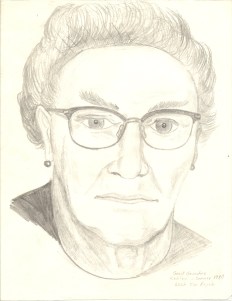
My Great Grandma Hinckley was really great.
My great grandmother on my mother’s side passed away as the 1970’s came to an end. I tried to immortalize her with a work of art. I drew the sketch above to make a painting of her. All my relatives were amazed at the picture. They loved it immensely. I gave the painting to my Grandma Aldrich, her second eldest daughter. And it got put away in a closet at the farmhouse. It made my grandma too sad to look at every day. So the actual painting is still in a closet in Iowa.
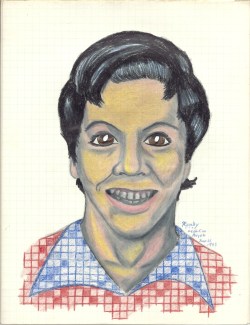
There were, of course, numerous students that made my life a living heck, especially during my early years as a teacher. But I was one of those unusual teachers (possibly insane teachers) who learned to love the bad kids. Love/hate relationships tend to endure in your memory almost as long as the loving ones. I was always able to pull the good out of certain kids… at least in portraits of them.
When kids pose for pictures, they are not usually patient enough to sit for a portrait artist. I learned early on to work from photographs, though it has the disadvantage of being only two-dimensional. Sometimes you have to cartoonify the subject to get the real essence of the person you are capturing in artiness.
But I can’t get to the point of this essay without acknowledging the fact that any artist who tries to make a portrait, is not a camera. The artist has to put down on paper or canvas what he sees in his own head. That means the work of art is filtered through the artist’s goofy brain and is transformed by all his quirks and abnormalities. Therefore any work of art, including a portrait that looks like its subject, is really a picture of the artist himself. So, I guess I owe you some self portraits to compare.
God didn’t really want me to write this post. How do I know this? Well, my computer is old and quirky (sorta like me) and it constantly spits up and farts when it is most inconvenient. I had half of this post already written when it decided to release some toxic venom. By its own volition it suddenly highlighted and erased the whole post except for the title and a random letter “r”. And WordPress automatically and supposedly helpfully did its little “save the changes immediately” thing. The whole post was gone in a flash.
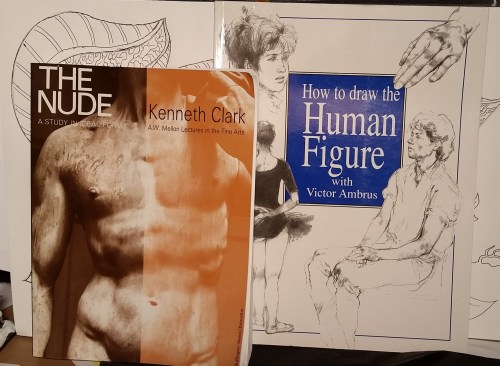
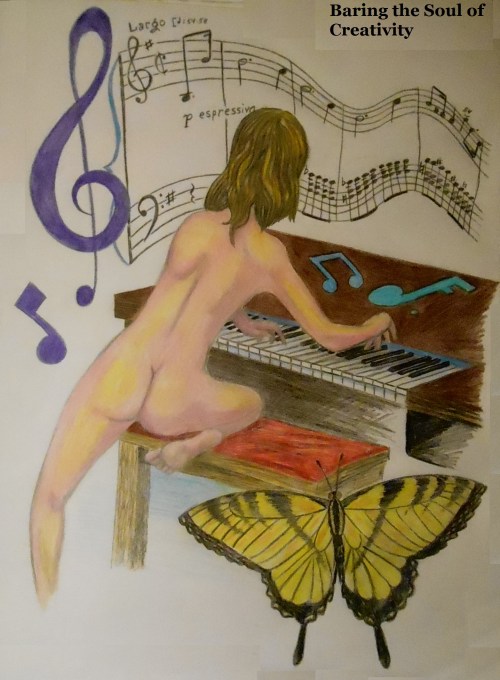
Why did God do this? Well, this isn’t really a “How to Draw Nude Figures” post as it may at first appear. It is, in fact another in a series of “Why I Am An Artist And Not A Pervert” posts that attempt to justify why a potential “dirty old man” like me spends so much time drawing pictures of naked girls.
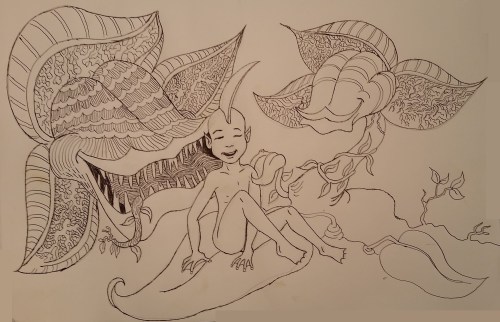
My latest art project is a picture of Brekka, the Telleron tadpole, completely nude.
I am currently drawing the illustration above for my novel Stardusters and Space Lizards. It shows the scene where Brekka, admittedly a female, although not a human female, has just been accidentally swallowed and then regurgitated by Lester, her friend who is a man-eating plant from an alien solar system. So excuse number one would have to be, “She’s naked because it fits the story.” I will stand by that one for matters of illustration. And you will note, there isn’t anything even remotely sexual about the situation… er, I think I would rather not be subjected to Freudian analysis on that one.
Here are three previously posted nude drawings that I used for previous attempts to corrupt the minds of readers and viewers. I got a lot of views for these posts, and may at least partially benefit from using the “naked” and “nude” tags on those posts. Illegitimate excuse number two, then is, “drawing and posting nudes increases the number of people who pay attention to my work.” My most popular blog post this year has been Be Naked More in which I rationalize my interest in naturism and walking around naked, even though I am certainly far from brave enough to do so in public.
And I further claim that it is not a sexual thing to draw someone naked. One of the fundamental truths about art is that every person I draw or paint or write about in a novel is really me. The only person who stands revealed by the work of art is me, and it is a portrait of what is inside my head. Of the five nudes in this post, only one of them was not drawn from a real life model. (And no, I am not counting the butterfly, or the Gryphon, or Lester as nudes… so stop thinking I’m just playing word games.) (Lester isn’t even a real thing… man-eating plants don’t exist… so stop it!) But none of the subjects were ever uncomfortable about posing for me. Of course now that I have suggested that lame excuse number three is, “All nudes are really me.” I probably have you thinking about the real meaning of the title of this post. I have psoriasis, I do tend to feel more comfortable with no clothes on, and do tend to write and draw when I am sitting on my sickbed naked. But I am wearing clothes at the moment. Considering the content of this post, anything else would just be creepy. So, stop trying to picture me all hairy, fat, scabby and nude. After all, you chose to look at and read this thing. Maybe I’m not the one who needs to explain why I am an artist and not a pervert.
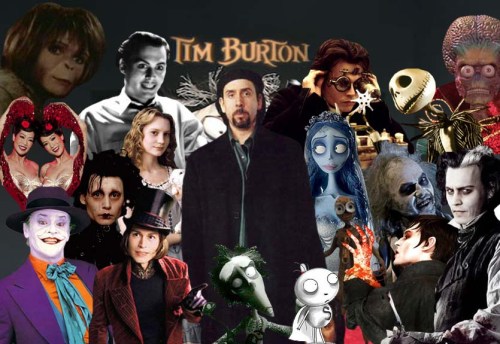
Last night the Princess and I went to see Alice, Through the Looking Glass, the latest Tim Burton movie. Of course we loved it. Burton is one of the most interesting story-tellers of our time. Did you know he is two years younger than me? And also, like me, he began as a cartoonist and is totally dedicated to the idea that every artist is a surrealist and must exaggerate, elucidate, equivocate, and numerous other things that start with the letter “e” and end with the suffix “ate” simply because that’s how surrealism starts. You notice a little bit of weirdness in real life and blow it all out of proportion with lies and coloring of meaning and relentless “what-iffing?” If you don’t see surrealism in those last two sentences of purple paisley prose… then maybe you can see it visually in Burton’s many masterpieces.
Tim Burton began his legacy as an apprentice Disney animator specializing in stop-motion animation. But he was just another creative nobody like me until the launch of his small-budget monster hit, Pee-Wee’s Big Adventure.
Of course, any time you can pull in huge profits for little investments, you will have Hollywood executives ramming the heads of their unpaid interns like battering rams against your door so they can get in and throw money at you.
Hence, Batman.
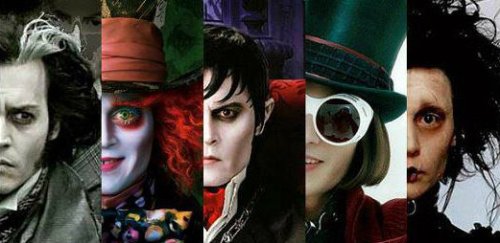
Batman was the first time I actually took notice of Tim. And not just as a director of a film… eventually two films. He was gifted at assembling a cast. And this would work to his advantage as several singular talents attached themselves to him and worked in his movie projects repeatedly.
And his repeated collaboration with Danny Elfman and his music was easily as great a master-stroke of genius as John Williams with Spielberg and Lucas.
He has repeatedly used his movies to describe and rewrite his own life story as a misunderstood genius flubbing horribly in the quest to fit in with a world full of “regular people”.
Poster for the film ‘Edward Scissorhands’ (directed by Tim Burton), 1990. (Photo by Buyenlarge/Getty Images)
His sense of humor, of course, is distinctly and colorfully bizarre.
DSTF-0046r JOHNNY DEPP as Barnabas Collins in Warner Bros. Pictures and Village Roadshow Pictures DARK SHADOWS, a Warner Bros. Pictures release.
Burton is, just like me, a child of the 70’s. He references things like the old gothic soap opera, Dark Shadows, that were a part of his impressionable youth just as they were mine. He picks stories about things he truly cares about, and that is also just like me.
So, in a rather bizarre coincidence that is entirely appropriate to surrealists, I love any Tim Burton movie simply because it is a Tim Burton movie. He is probably me in an alternate dimension. And as such, I already know I will love his next movie, whatever the heck it is.
One of the difficulties of being a humorist and trying to connect to people by being funny is that you have to compete for attention. Cartoonists have an advantage in that they can put something together with pictures and just a few words that you can get easily and quickly and then you laugh. So the internet is a nightmare maze of short-quick funnies with exceptional levels of weirdness. I keep track of the weirdness by keeping a weirdo file on my computer and copying things in it that make me go “Whaaaa?” and then laugh. Let me share a little of that with you.
The miracle that is Don Bluth.
So, therein lies the challenge I face daily. How do you compete with Muppet cupcakes?
I recently posted about being synesthetic and discovering how I am different from normal people. Here is the post if you are interested.. Then I discovered that Kanye West is also synesthetic as he gushed some southern-fried crappie-doo about how wonderful he is as an artist because he sees the colors of his music. Well, now I don’t want that mental affliction any more. I don’t wish to be anything like him. Of course, it has to be incurable, doesn’t it.
Now I am wasting today’s post on another metacognative thinking-about-thinking style of paragraph pile when I could be rhapsodizing about the humor of Dave Barry or the wisdom of Robert Fulghum, the author of
All I Really Need to Know I Learned in Kindergarten.
I could be shamelessly promoting the work of artists whose works I love instead of examining the random filing cabinets in the back rooms of my stupid old head. But I can’t because I now need to explain myself to myself again. Self doubt and self examination are features of being an artist. We reach a point where we have to think about how we do what we do, because if you don’t know where the magic comes from, you might not be able to call on it the next time you need it.
I am a self-taught artist. I have had art classes in high school and college, but never professional art training. I know how to manipulate the rule of thirds, directional composition, movement, perspective, and lots of other artsy-craftsy techniques, but it is all a matter of trial and error and an instinct for repeating what works. I have had a good deal more professional training as a writer. But I do that mostly by instinct as well. Trained instinct. I have reached a point where my art is very complex and detailed. And I don’t mean to suggest there are no flaws. In fact, I am capable enough to see huge, glaring mistakes that really skew my original intent and make me feel hopelessly incompetent. But others who see it and don’t know the inner workings of the process can look past those mistakes and not even see them. Given enough time to look at my own work with new eyes, I am able to see at least some of what they see.
Now that I have totally wasted 500-plus words on goofy talking-to-myself, what have I really accomplished beyond boring you to death? What’s that you say? You are not dead yet? Well, that’s probably only because you looked at the pictures and didn’t read any of my sugar-noodle brain-scrapings in loosely paragraph-like form. And if you did read this awful post by a colorblind artist who doubts his own abilities, you probably didn’t learn anything from it. But that’s not the point. The point is, I care about doing this, and I need to do it right. And I managed to learn something… how to ramble and meander and make something that is either a hot mess… or something that vaguely resembles self-reflective art.
Yes, I admit it. I am a Surrealist. I also hope that it is not too terrible a thing to be. Because I truly think that everyone who was raised by television, and lived through the revolution where computers took over human life, is one too.
a 20th-century art form in which an artist or writer combines unrelated images or events in a very strange and dreamlike way
Full Definition of surrealism;
the principles, ideals, or practice of producing fantastic or incongruous imagery or effects in art, literature, film, or theater by means of unnatural or irrational juxtapositions and combinations
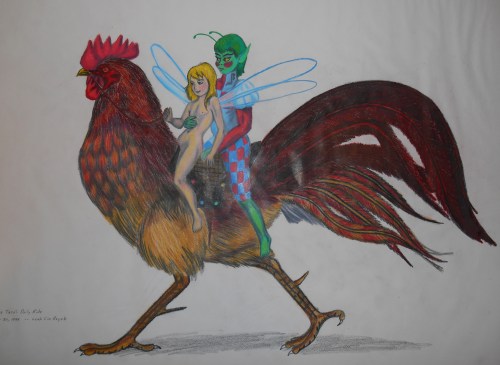
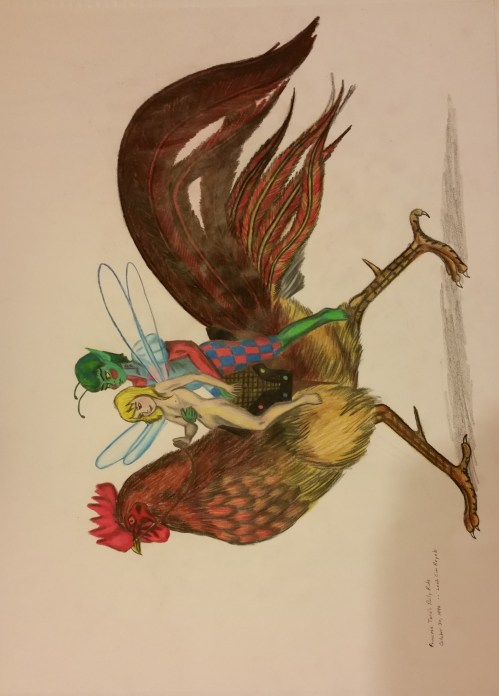
There is a certain satisfaction to be had in knowing for certain how to define oneself. I learned about Surrealism in high school art class back in the early 70’s. I saw and admired the works of Salvador Dali, Rene Magritte, and Max Ernst. And I realized that everything I wanted to do in the Realm of Art, whether it was weird paintings, cartoons, comic book art, or bizarre puppet shows… fantasy, science fiction, or humor… it was ALL Surrealism. Surrealism saturates out culture and our very thinking. We are drawn to watch baseball by the antics of a giant pantomime chicken. Our food choices are influenced by a happy red, yellow, and white clown who battles a blobby purple monster and a hamburglar over shakes and French fries. It is only natural then, that I would want to draw bug-sized fairies who would saddle and ride a red rooster. I have embraced surrealism as a way of life.
I have no trouble writing a poem about the difficulties of life by writing about a game of bowling where you have to roll a moose down the alley into the pins.
Surrealism is all about creating things by lumping all kinds of disparate goodies into the same pot and cooking it up as a stew. It is important that the stew tastes good in the end, so the mixture has to have large doses of reality and realism in it. Dali painted melting watches and boneless soft-sculpture people with almost photographic realism. I am compelled to do that too.
And what is humor, after all, if not lumping strange things together into a reality sandwich that makes you laugh because it takes you by surprise? I don’t shy away from weirdness. I embrace it. It makes life all the funnier.
And why did I put bullet points on everything in this post? Because it allows me to mash bits of wit and wisdom together in a weird way that only seems to have no connection, one to the other, and only seems to make no sense.
Sometimes we just have to look at things sideways.
I was recently accused of being eclectic in my posting topics by one regular commentator. I could wear that word like a badge of honor.
This describes a combination of many different individual elements of styles, themes, mediums or inspirations pooled from many sources. It can refer to musical tastes, dress sense, interior design…many things.
She has an ecletic sense of style, today she wears biker boots, pink fishnet stockings, a pencil skirt, a military jacket, a baseball hat, a my little pony t-shirt and a dunlop bag covered in badges from all her favourite bands from ABBA to Kooks
Last night my family and I went to the new Disney movie Jungle Book directed by John Favreau. It was the movie version I have been waiting for all my life.
The amazing thing about this movie is the way it took the book and layered its themes and central idea on top of the classic 60’s Disney cartoon. The music is still there and intact, though mostly moved to the end credits. The kid is still cute and mostly vulnerable, at least until the conclusion. And they have still given the Disneyesque comedic touch to the character of Baloo the bear, voiced by comedian Bill Murray in the this incarnation. But this is a live action movie and the kid-friendly Bowdlerization of the original story is a thing no longer.
A classic book illustration by E.J. Detmold
Fortunately for the young actor, Neel Sethi, they don’t require him to play the entire movie naked as would be required by a strictly by-the-book approach. They allow him the Disney-dignity of the cartoon red loin cover. But the sense of a human child facing the violence of the jungle naked, armed only with his creature-appropriate natural defenses, has been put back into the story. This version literally has teeth and claws. We see the boy’s body wounded and scarred during the course of his life in the jungle. And at a time of crucial confrontation, Mowgli takes the defense stolen from man village, a torch of the feared red flower, and throws it away into the water, facing the terrible tiger with only his wits and the abilities of his fangless, clawless human body. Thus, an essential theme I loved about the book when I was twelve is restored. Man has a place in the natural world even without the protections of civilization.
The story-telling is rich and nuanced, with multiple minor characters added. Gray Brother has been restored to Mowgli’s family. The fierce power of Mowgli’s wolf mother has been written back into the screenplay. And the character of Akela is given far more importance in the story than the cartoon could even contemplate. Although his role in aiding Mowgli to kill the tiger Shere Khan has been taken away from him, Akels’s death becomes the central motivation bringing Mowgli and Shere Khan together for the final inevitable confrontation. And this movie does not shy away from the reality of death as the cartoon did, resurrecting Baloo at the end and Kaa’s attempts to eat Mowgli being turned into a joke (though I would like to note if you have never read the book, Kaa is not supposed to be a villain. He was Mowgli’s wise and powerful friend in the book). Even the tiger survives in the cartoon version. This is no longer a cute cartoon story with a Disney sugared-up ending.
I will always treasure the 1960’s cartoon version. I saw it at the Cecil Theater in Mason City, Iowa when I was ten. I saw it with my mother and father and sisters and little brother. It was my favorite Disney movie of all time at that point in my life. I read and loved the book two years after that, a paperback copy that I bought with my own money from Scholastic book club back in 1968, in Mrs. Reitz’s sixth grade classroom. That copy is dog-eared, but still in my library. But this movie is the best thing that could possibly happen to bring all of that love of the story together and package it in a stunning visual experience.
Still being under the weather and filled with sinus head-pain, I decided to go back to a subject I love so much that the post will simply write itself. You know I love Norman Rockwell and his art, and I fervently believe that kind of mass media oil-painting does not put him in a lesser category than Rembrandt or Michelangelo or Raphael or any other painter with a ninja turtle namesake. He is a genius, and though he is not a realist in so many ways, his work is more truthful than practically any other kind of painting. If you are taken by surprise and didn’t know I had this passionate obsession, maybe you should go back and look at this post; Norman Rockwell
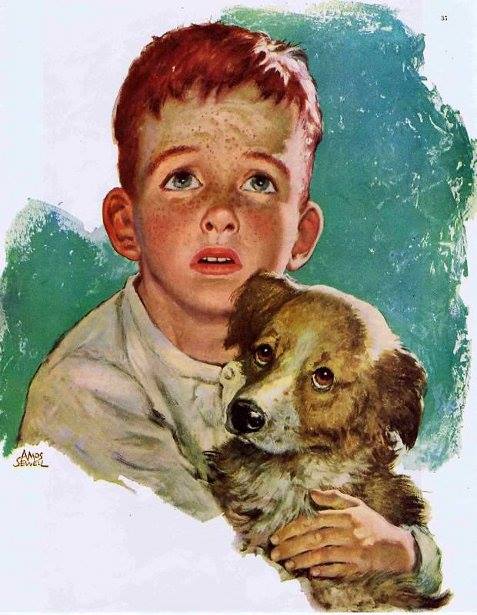
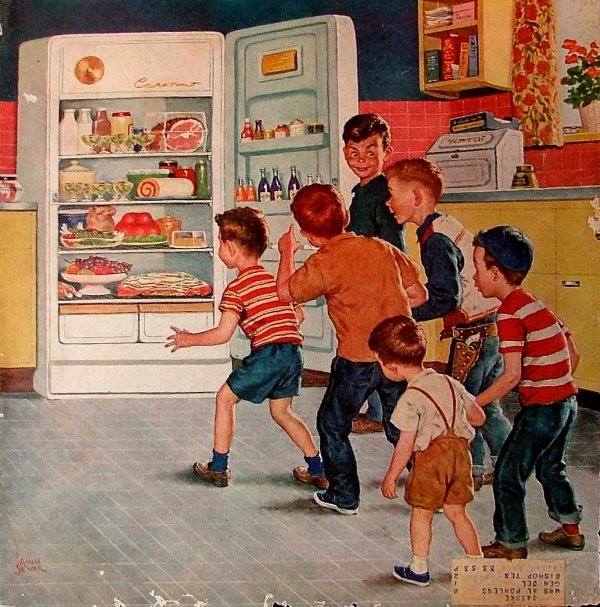
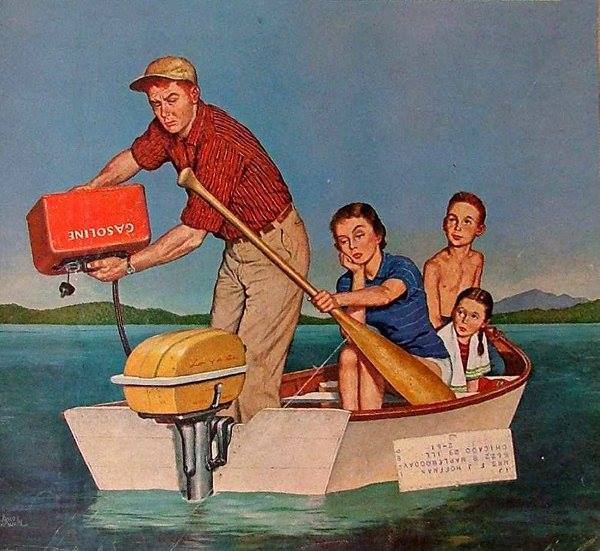
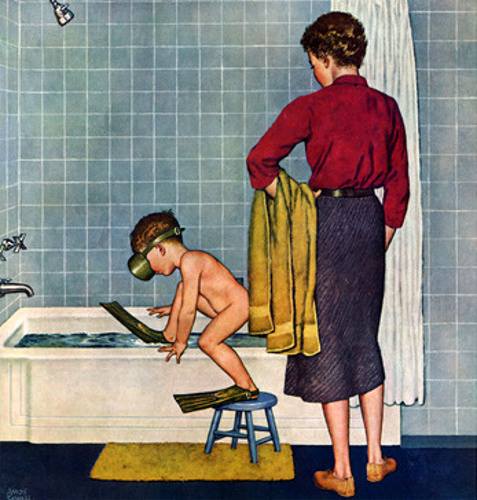
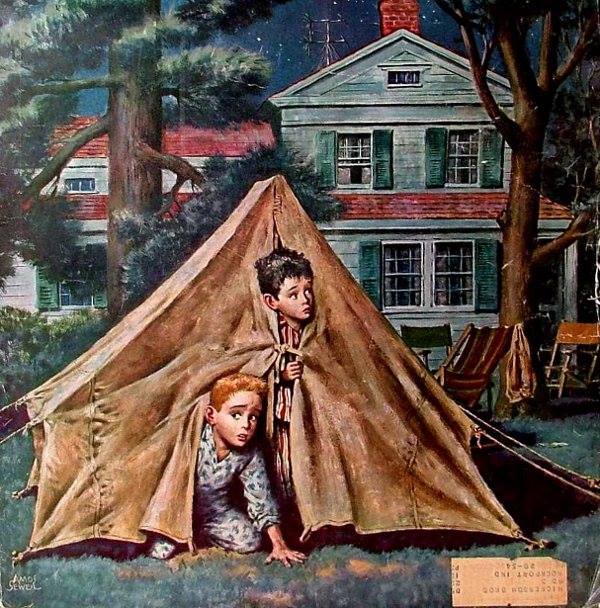
Now that I got that out of my system, here is another Saturday Evening Post artist that is often confused with Rockwell. His name is Amos Sewell.
Sewell was an amateur tennis player who was talented enough to win tournaments. He was an employee of Wells Fargo who was headed towards anything but an art career until he decided to make a leap of faith in 1930. He started as an illustrator for Street and Smith pulp fiction, and soon caught the notice of the big-time magazine markets for his art. He published art for Saturday Evening Post, Country Gentlemen Magazine, and Women’s Day.
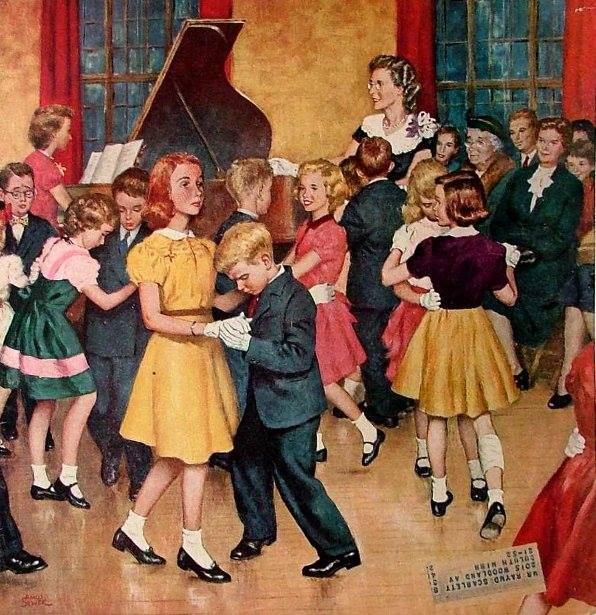
Like Rockwell, he was able to find the funny in everyday scenes, like the dance party to the right. That young man at center stage is trying so hard not to step on the feet of the red-headed girl, that you want to laugh, but can’t because it’s obvious how embarrassed he would be, and the charm of the picture leads you to shun the thought of interrupting. The scene is so real the boy would hear you laughing as you looked at the Post cover.
More expert on this kind of art than I am is the Facebook site that I first got turned on to Sewell by. Children in Art History
There is no doubt that Amos Sewell belongs in the same pantheon of artists as Norman Rockwell, Thomas Kinkade, or Paul Detlafsen. They are all artists who achieve in their work exactly what I have always striven for. I want to be able to hold the mirror up to our world the way they did. I want to capture both the fantasy and the reality in the subject of everyday family life. I also want to share this work with you because I cannot stand the idea that such artistic ambrosia could one day be forgotten in archives where no one ever looks at it and feels the message in their heart.
I was a Disney kid. I grew up with Sleeping Beauty, Pinocchio, and Jungle Book. But then I grew up and went to college and all my Disney dreams were dashed. The world is not Disneyland. The world holds many wicked wonders, some beautiful, some dangerous, some downright deadly. In 1977 I saw a movie that changed my world That movie was Ralph Bakshi’s Wizards. I saw it in the college-town theater in Ames, Iowa. I scraped up enough money to see it three times in the week that it played there. It was the Fall Semester after having read the entire Lord of The Rings Trilogy a year ago that summer. If you don’t know what I’m talking about, then here it is from YouTube. You should take a look, if not watch it all;
Ralph Bakshi is the chief artist/animator behind some of the raunchiest, weirdest, and wildest cartoons of the 60’s, 70’s, and 80’s. You may have seen some of his work.
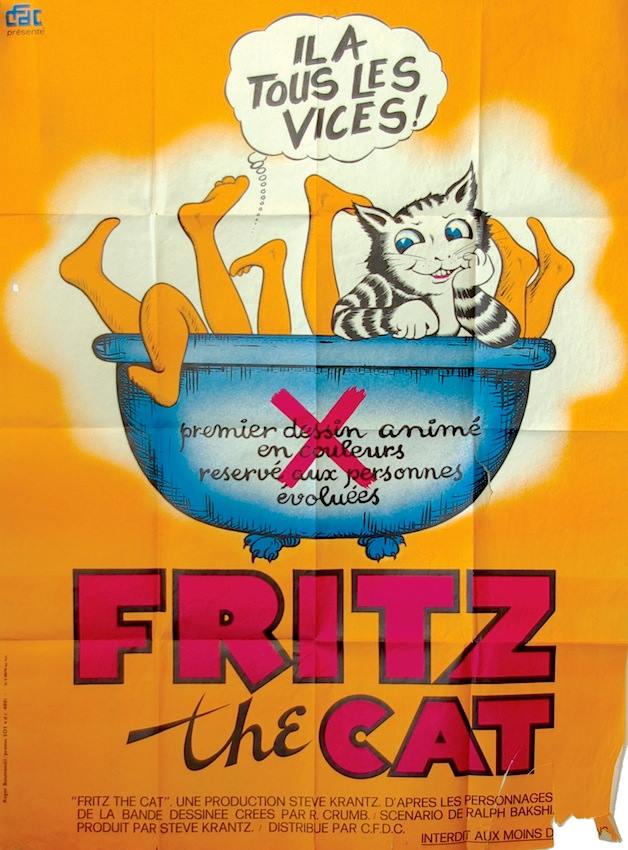
Fritz the Cat was groundbreaking in that it was actually an X-rated cartoon, something that a Disney kid could never have imagined until he had his goofy little cartoon brain got corrupted by the colorful collage of experience you get as a farm-boy in college. I never actually saw such a profane perversion of what a cartoon was supposed to be until they had a special free showing at the student union. I went with a couple of guys from the dorm house and was flabberghasted that we could watch such a thing and not be in jail the following day. I would’ve gone back a second time, but free student union movies only occurred one time a month and were never replayed again, ever.
And then came The Lord of the Rings. Bakshi was the first one to create a film version of the novels they said could never be filmed. It appeared in the theaters in college town and I was forced to see it five times in the two weeks it stayed in the theater. I never loved anything so much in animation before. It was better even than Pinocchio. I would in later years be devastated by the fact that the movie only covered one and a half of the three books. The rest of the story never got made.
After college there were other black-magical Bakshi films. I would later get to see Fire and Ice, American Pop, and Cool World. Ralph Bakshi, and one of his lead cartoonists, Mike Ploog, would rock my world until he finally stopped making animated films. I have actually seen all of his films now, and have copies of most of them.
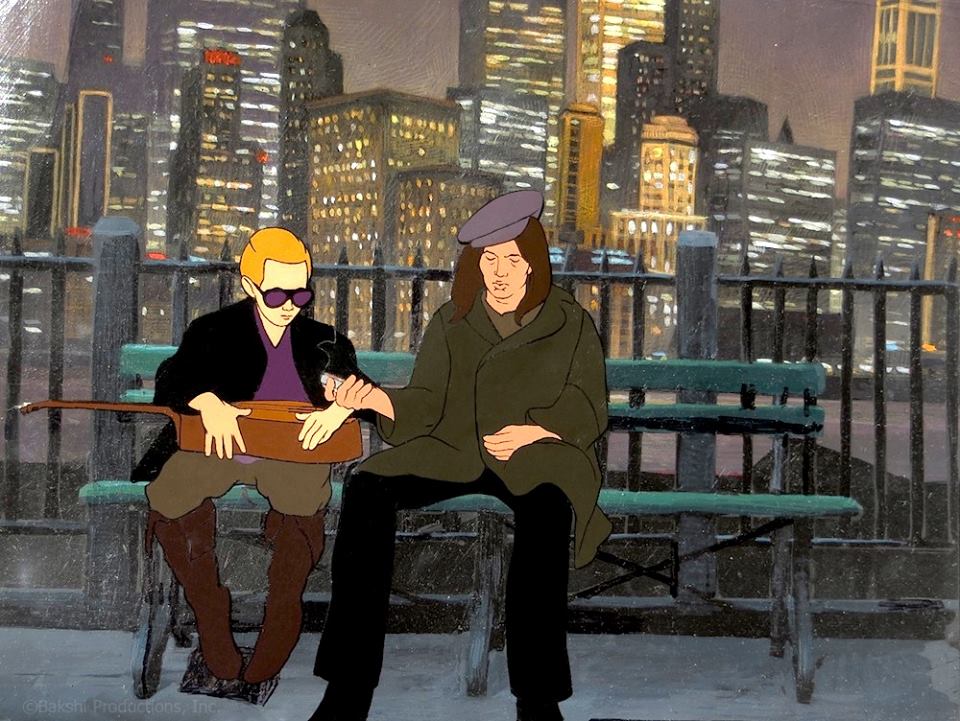
This is a scene from the history of music cartoon, American Pop.
Here’s another scene from that movie.He called it a “moving painting in honor of American music.”
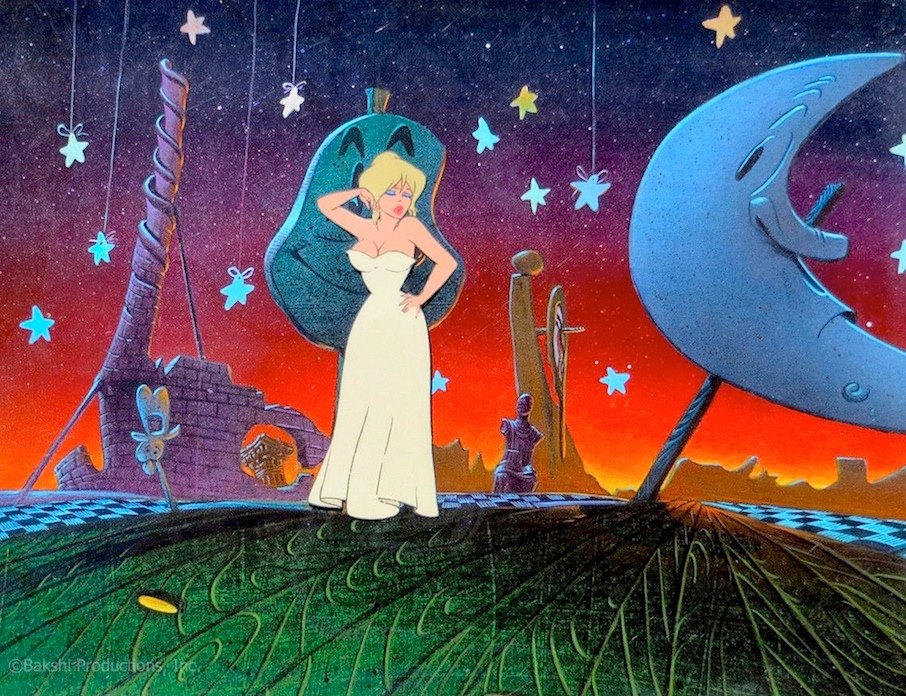
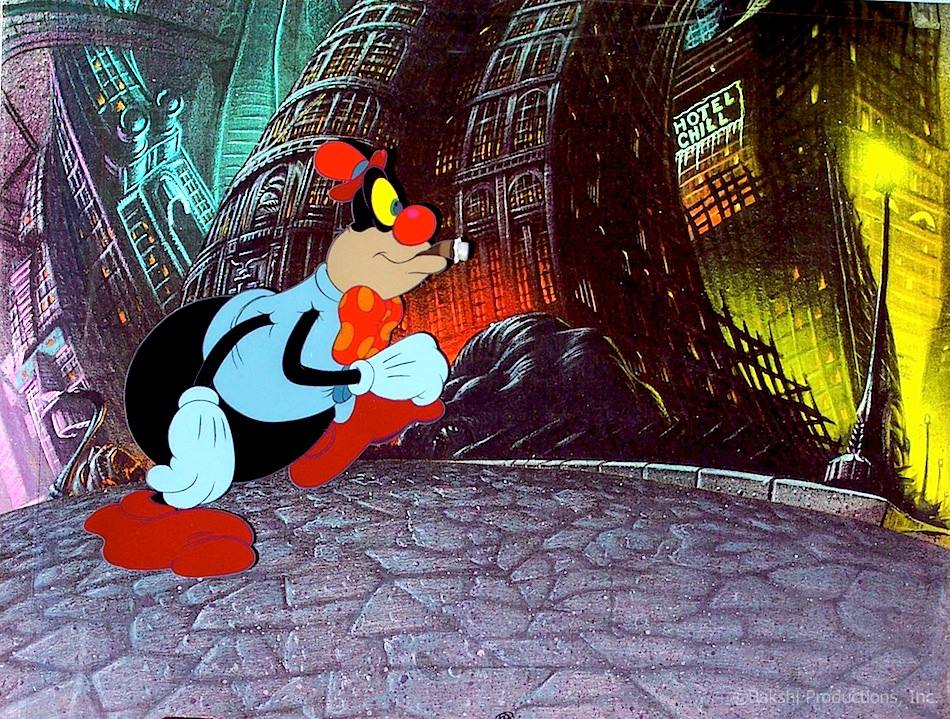
Cool World was a combination of live action and cartoons that was loosely modeled on Who Framed Roger Rabbit? It was a foofy story that made a half-decent excuse for wonderful artwork.
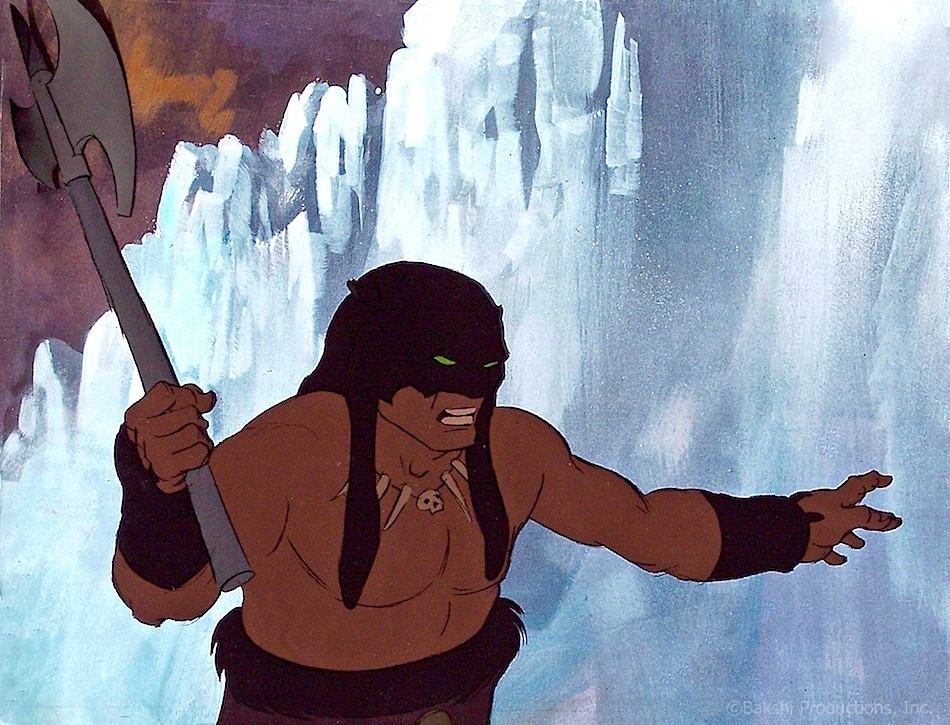
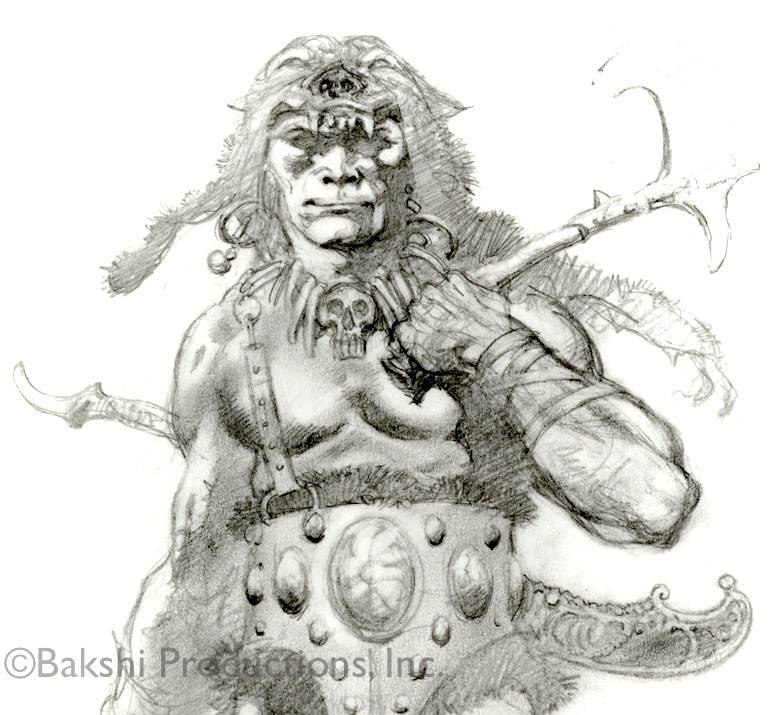
Fire and Ice was Dungeons and Dragons and Boris Vellejo brought to life.
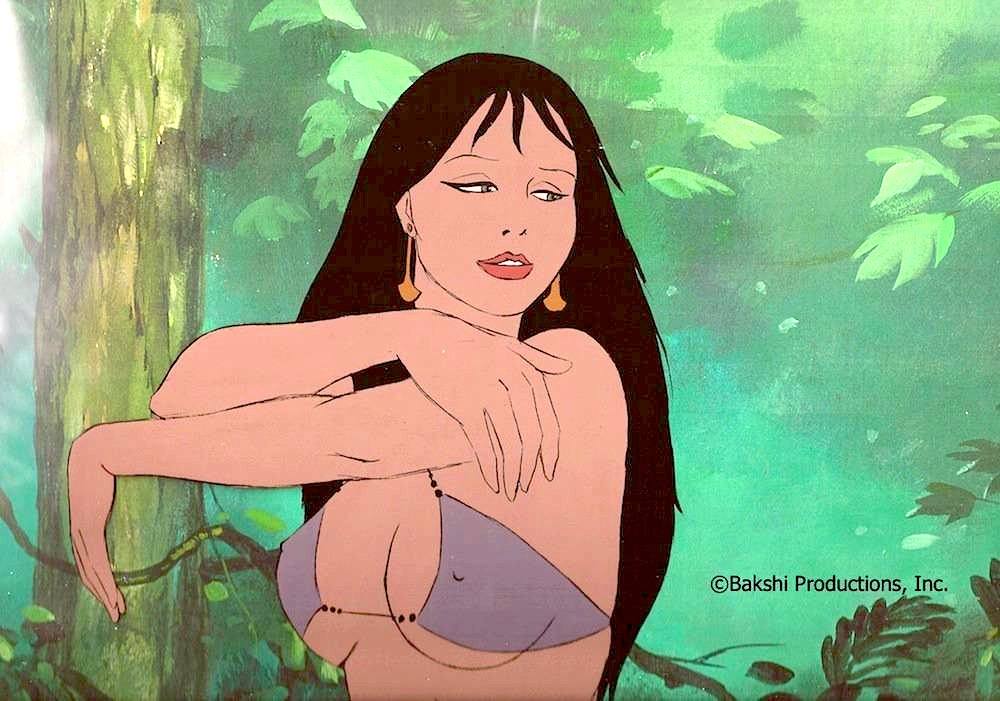
Let me end with a couple of connections to Ralph and Mike that you should check out. Their artistry has a profound effect.






















 Catch a Falling Star