Tag Archives: Shakespeare

A Poet Called William Shakespeare

Who was William Shakespeare?

If you’re sure you know, then let me shake your world.

We know who Mark Twain was. Sam Clemens never kept that a secret.

Shakesspere, Shakysper, Shaxpeer, Schakespeire, Shackper, Shexpere, Shaxkspere and Shakspeyre.

All of these refer to our boy WIlly in the records of the time.

Even those that he misspelled when he signed them himself.

If you believe he was the glovemaker’s son, the theater owner, and the character actor

Who lived in a house in Blackfriars, London, and grew up in Stratford on Avon,

I will not disrespect you for your beliefs.

But that man, if he was the greatest of all poets, owned no library of his own,

Nor had such a thing available,

Nor ever left the area of Southern England where his entire life was lived,

Nor evidenced any sort of formal schooling beyond the earliest schooling.

Reading English and Latin at the King’s School of Stratford,

Though nothing beyond the age of fourteen.

These things we are mostly sure of;

Ben Jonson knew the real William Shakespeare.

The real William Shakespeare knew Christopher Marlowe,

And the patron of his poem books, the Earl of Southhampton,

Probably knew the real Bill too.

What we know about the real William Shakespeare comes from his work.

This was perhaps the most literate man who ever lived.

Thirty-seven plays, 154 Sonnets, and two narrative poems

Demonstrate he knew the Italian countryside,

He knew the ways of European courts, especially the English court.

He understood points of English law.

He accurately portrayed emotions like depression, hatred, love, and madness.

He knew the stories of Hamlet, Prince of Denmark, Othello the Moor, and King Lear and his daughters,

Though he did not invent any of those stories collected from other lands.

So, who was William Shakespeare really?

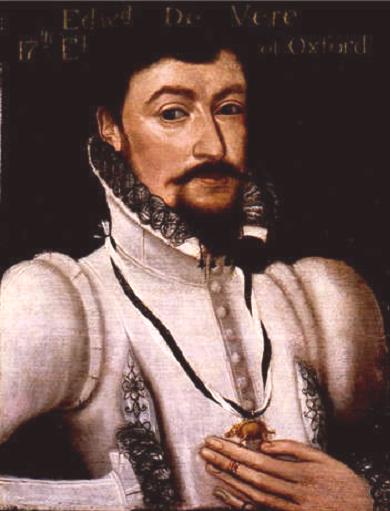
Francis Bacon? Kit Marlowe raised from the dead? Edward DeVere, the Earl of Oxford?

Or a combination of men coordinated by Sir Francis Bacon’s secret plan?

We will never know for certain. But we can ask him through his work.

The iambic pentameter of William Shakespeare still lives and reveals the mind of Shakespeare.

Though the true name behind the pen name will never be revealed.

Leave a comment

Filed under Uncategorized

Soliloquy

In college I took classes in oral reading and acting because I was nutty about drama and play-writing, even though I was much too terrified of being put on a public stage to ever try out for a part.  But in Oral Reading 101 I was given the gift of a professor who actually was the head of the ISU Drama Department.  One of the things he made us do was a soliloquy from a Shakespeare play.  I was assigned the opening soliloquy from Richard the Third.

Good God!  Is that man ever a villain and a monster!  He’s more sinister and evil than Snidely Whiplash or Dick Dastardly… and certainly no less cartoonish.  Here is the best I can still do to recreate my old college performance of “The Winter of Our Discontent” soliloquy.

To pull off this assignment (On which I received an A grade from a professor known for imperious F-giving) I had to do a lot of research on King Richard III to be able to walk around in his skin for three whole minutes.  I had to learn about him from books and articles and drama critiques.  I spent a couple of weeks in the library (There was no internet or Google in 1978).  I learned that he was a complex man involved in the deeply troubled time of the War of the Roses.  He was from the house of York, the House of the White Rose.  His elder brother, Edward, had been  victorious in both battle and royal intrigue, and, with Richard’s help had secured the throne of England that had been wrested from the hands of Richard II to begin the struggle between House Lancaster (the Red Rose) and House York… both of which had blood-relationship claims to the throne.  Once in the hands of Richard’s brother Edward IV, the crown did not really rest peacefully on Yorkish heads.  Edward became ill and died in 1483.  The crown was to then go to twelve-year-old Edward V who was placed under the care of Uncle Richard’s regency.  At the time of his coronation, the legitimacy of Edward IV’s marriage was declared null and void, making the boy no longer eligible to be king.  Richard seized the title.  Young Edward and his younger brother were taken to the Tower of London and they were never seen publicly again.  According to Shakespeare, Richard did, in fact, have them killed.  But, the crown did not stay on Richard’s head for longer than two years.  In 1485 Henry Tudor came back to England from France.  Richard was defeated at the Battle of Bosworth Field and died in battle there.

I do actually understand Richard in ways that are difficult to admit.  I know what it feels like to be convinced you are unworthy by factors beyond your control.  Richard was a hunchback, plagued with severe scoliosis of the spine.  He lived his life in pain and was ridiculed for his deformity in a time where it was believed such things were a punishment from God for sins of the parents, or even sins the child himself was born with.  I can relate.  I was always so far above the other kids in my class at school that I was treated like a Martian, unloved and unlovable because I could not speak a language they really understood.  And on top of that, I was secretly the victim of a sexual assault, a condition that I feared made me a monster.  I could so easily have become a monster.  I could’ve set my mind to it in the same way Richard did, because vengeance for his differences consumed him utterly.  Thankfully, I did not choose a path of evil.  Drawing and telling stories proved to be the pick and shovel I used to dig myself out of my own pit of despair.

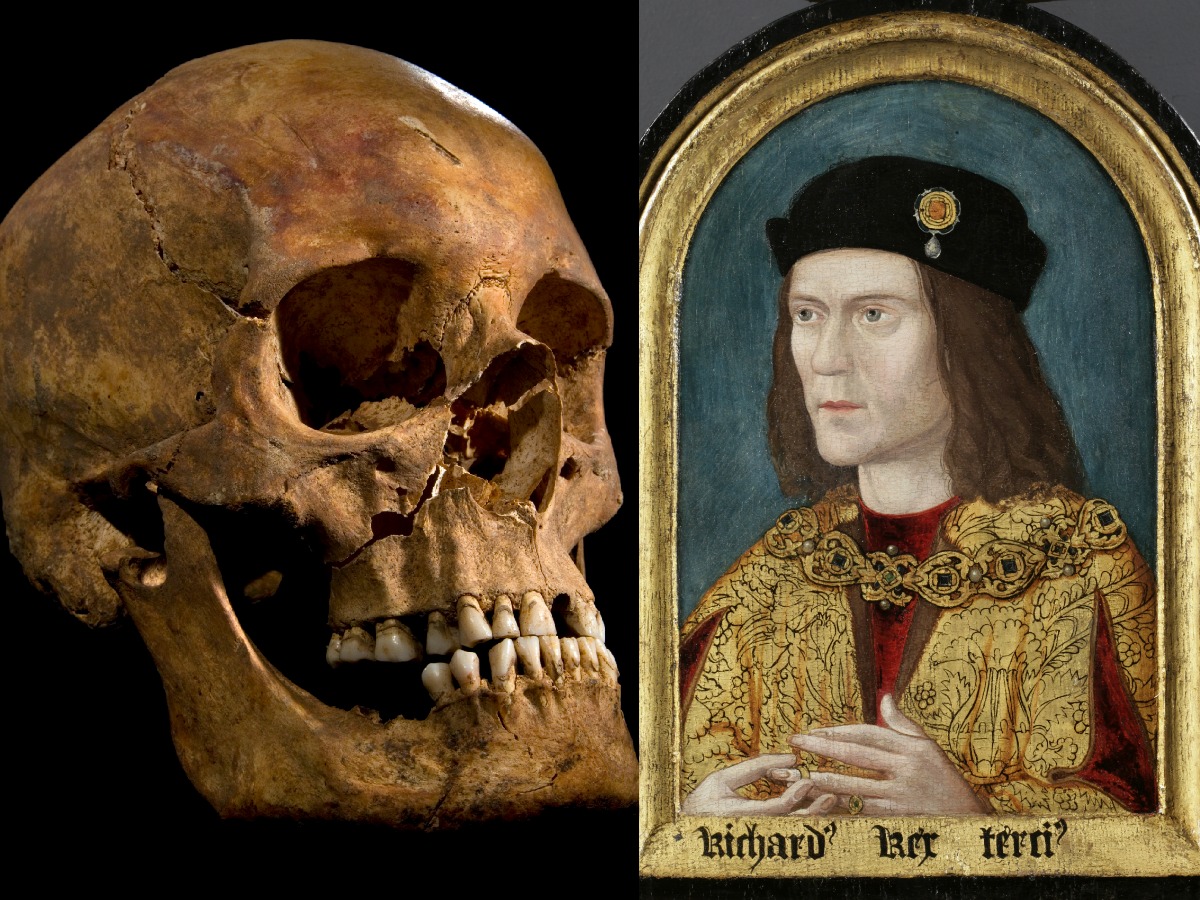
richard III DNA

Richard III’s long-forgotten grave was rediscovered in 2013, and a DNA match with relatives proved the skeleton with scoliosis was him in 2014.

The real Richard III may not have been the monster Shakespeare portrayed him as, either.  He was demonized after his defeat and death by the Tudors to strengthen their shaky claim to the throne.  There exists some evidence that he was a progressive king and a friend to his people, but horribly betrayed by some of his own followers, and certainly made the scapegoat by succeeding generations.

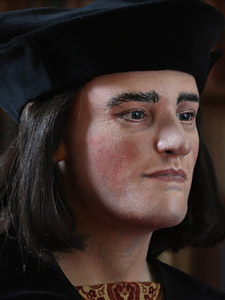
richardiii225

A recreation of what Richard III looked like based on the skull found and portraits from the time period.

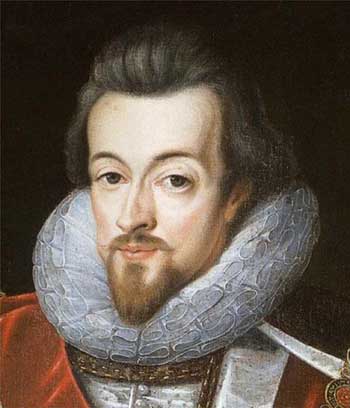
There is also some evidence that Shakespeare wrote the play as a political diatribe against the hunchback in the royal court of his day.  Sir Robert Cecil, 1st Earl of Salisbury was also a hunchback with scoliosis.   And by his sometimes sinister-seeming machinations, he rose to power as Secretary of State for both Elizabeth I, and after her, James I.  He had a part to play in making James the King after Elizabeth’s long reign, probably an instrumental part.  He also uncovered the Gunpowder Plot of Guy Fawkes and friends, and rumors persisted that he had more to do with it than merely revealing and foiling it.  Nothing was ever proven against him.  Though Elizabeth called him “my pygmy” and James referred to him as “my little beagle”, he held power throughout his lifetime and foiled the work of his many enemies against him.  In fact, it is the similarities between Shakespeare’s Richard III and Robert Cecil that first made me begin to believe that Shakespeare was actually someone other than the actor who owned the Globe Theater and never spelled his own name the same way twice.  Knowing about Cecil surely needed to be the act of an insider in the royal court.  I balked at first when it was suggested to me that Shakespeare’s plays were actually written by Francis Bacon… and I continued to doubt until I learned more about the Earl of Oxford, Edward deVere.

So what is the point of this soliloquy about the soliloquy of Richard III?  Well, the point is that at one time I had to be him for a short while.  I had to understand who he was (at least the character that Shakespeare created him to be) and think as he thought.  That is what a soliloquy truly is.  Sharing from the character’s mind to my mind… and back again if I am to perform him… or even write him in some future fiction.

Leave a comment

Filed under autobiography, soliloquy, William Shakespeare, writing

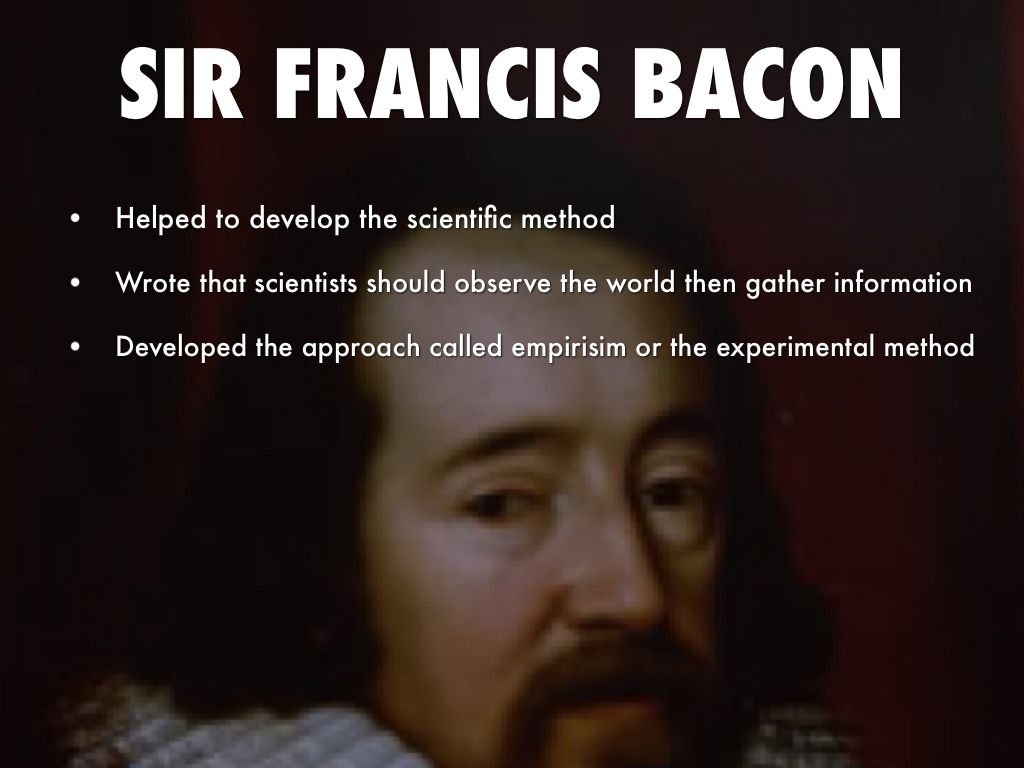
Shakespeare is NOT Bacon

3475b987-6c5d-4699-ba5d-e6008559028f

(The graphic above should say “Empiricism,” not “Empirism.”  Ir is a typo.

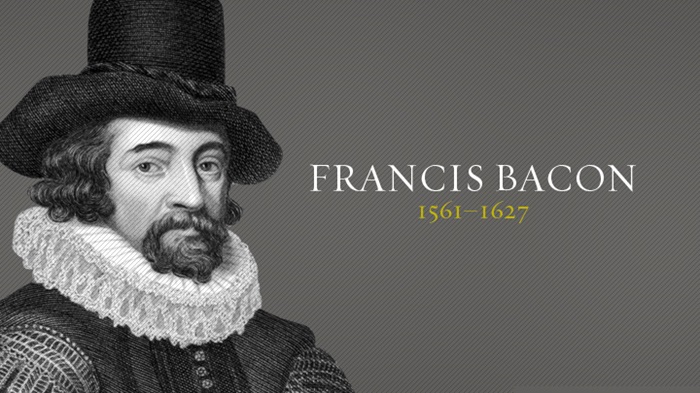
Yes, Sir Francis Bacon is at least as interesting and obscure as William Shakespeare.  But let me assure you, I can confidently state, “Shakespeare is NOT Bacon!”  He is not eggs either… or any other breakfast food.  Sir Francis Bacon was the breakfast, the first meal in the great Elizabethan banquet of literature, poetry, and culture.  And William Shakespeare is a more important main course, the royal dinner, as it were.  But it has to be acknowledged that Bacon was essential to the very existence of William Shakespeare.  Breakfast always comes before dinner.

t2ec16dhjgoffvtvhuebslhohksvg-60_35

In 1845 a female author by the name of Delia Bacon (nothing suspicious about that coincidence, by the way) put forward an idea that William Shakespeare’s plays were actually written by a group of men under the leadership of Sir Francis Bacon.  She thought the group intended to inculcate into English culture an advanced system of politics and philosophy which they themselves could not take credit for publicly.  She would later write a book in 1857 called The Philosophy of the Plays of Shakspere Unfolded which advanced the notion that the plays were written for Baconian purposes beyond mere theatrical entertainment.  Numerous people, including the American poet Ralph Waldo Emerson supported her in her quest to find proof, sending her to England to research the crazy conspiracy theories she founded by noting ciphers in the plays, and in the essays of Bacon, that led her to believe all she had to do was dig up the gravestone of Shaksper in the chapel at Stratford to find written proof in Bacon’s own hand that he was, in fact, the author or primary motivator of the plays of William Shakespeare.  She spent one cold and creepy night in the chapel, just her and her spade and her crow bar, along with the bones of the Stratford guy, trying to work up the courage to do a bit of grave-robbing… and failing.    It is a good story, but very poor archaeology.  She was denounced by the literary historians and establishment figures who supported the Stratford guy.  They said her scholarship was sloppy, her cipher analysis goofy and unfounded, and her conclusions more questionable than a pig in theatrical make-up.  (My words, not theirs.  English critic George Henry Townsend was entirely too stuffy and boring to simply be quoted here.)

francis-bacon-quotes-francis-bacon-quotes

Now, I, of course, strongly disagree with the Bacon lady.  As I said in the very title, “Shakespeare is NOT Bacon.”  But I do think there was merit in sniffing out old Frankie’s scent and fingerprints on the whole Shakespeare/Shaksper thing.  The Stratford guy was not Shakespeare either.  When he died in 1616 there was no public outcry at the loss of England’s most popular poet and playwright.  Even King James who was Shakespeare’s number one fan and constant audience member, didn’t mourn the passing of the actor/theater-owner/businessman from Stratford.

Francis Bacon, on the other hand, was a powerful intellect, educated in the ways of science, the law, and government in the Elizabethan age.  Bacon gathered other men of powerful intellect and accomplishment at Gray’s Inn to hold debates about things philosophical and things scientifical.  It is not unreasonable to imagine that the man who really wrote the plays attributed to Shakespeare sat at that table and participated in those debates.  And Sir Frankie had good reason to keep lots of this business a secret.  There exists evidence that though he was apparently happily married to a fourteen-year-old girl, he did a little bit of swaying toward the other gender too, a thing not too popular with the average Anglican Englishman.  He also dabbled a bit in the occult (think witches in Macbeth sort of thing).   And his essays indicate a strong correlation to the philosophies and ideals of the German Rosicrucian Movement.  In 1593 during a Roman Catholic plot against Queen Elizabeth, Frankie managed to take a position on the investigation that totally offended the old virgin queen.  He was on the outs with Liz for the rest of her difficult and anger-management-challenged life.  He did rise to prominence under her successor, James I, but never-the-less managed to die amidst total ruin and scandal.  There is a lot in Frankie’s life to indicate that he had a direct influence on the content of Shakespeare’s plays.  Some of the characters in the plays may actually be, at least in part, based on Frankie himself.  But  this guy never hung out with the Stratford guy that anyone knows of.

So, if Shakespeare is NOT Bacon, or eggs either… and the Stratford guy isn’t Shakespeare, then who is?  Come on!  You knew I had a lot more to say about this crazy conspiracy thing, right?

67489

Leave a comment

Filed under conspiracy theory, education, foolishness, goofy thoughts, humor, philosophy, strange and wonderful ideas about life, William Shakespeare

The Heart of Shakespeare

3a8307f6bb01311fc90478857d32e891

Despite my skepticism about the accepted wisdom in regard to the historical William Shakespeare, I do deeply love the body of work that is Shakespeare.  My most favorite play is The Tempest, the final play in the canon.  I also have read and loved As You Like It, Romeo and Juliet, Hamlet, A Midsummer Night’s Dream, The Merchant of Venice, Henry V, Richard III, Julius Caesar, Macbeth, Othello,  and King Lear.  I know that is not all of the plays, but that is probably more than most people have read.  And of course, as an English major in college, and later as a teacher, I have actually analyzed, compared, studied, and taught some of these plays.  So, the Shakespeare I know is the Shakespeare of the writer’s own mind, his communicated wit and wisdom, imagination and intellect.

shakespeare

And I do not have any disdain or disrespect to give the Stratford guy.  To say that, in the Elizabethan world, the actor son of a tradesman with only a grammar school education could not have been the mind behind the literary masterworks is foolish.  The Stratford guy owned and operated the Globe theater at a time when “the play was the thing”.  All of London society, rich and poor, gloried in the theater, and Shakespeare did for Elizabethan plays what Babe Ruth did for baseball.  He was a good enough business man to make himself a decent fortune.  Although, apparently, this world-shaking author didn’t spend any of his money on owning books, which in my experience is extremely rare among writers.  His life, bound up in an urban existence that never traveled outside of the country also somehow produced great works that were set in places in Europe, especially Italy, that described those settings in accurate detail.  As a working actor, he also apparently had the time to study law and somehow learn the inner workings of the royal courts of more than one country.  And the plots were not original.  He took existing stories that already were a part of European literature and lore and wove them into rich tapestries of human striving, laughable foibles, and a deep understanding of basic human character.  But I do have doubts that the businessman and actor from Stratford was the real writer of the plays.

I have already told you that I don’t believe Sir Francis Bacon was secretly Shakespeare.  Christopher Marlowe wasn’t either.  And I have unsuccessfully made a case against Shakspere, the Stratford guy.  So who could possibly be the real William Shakespeare?  Well, I am not going to be able to make a decent case for him in the 100 words that I have left to end this essay with.  So there has to be more to come.  (And stop screaming obscenities at the computer screen.  I am going to reveal the name before the end of this essay.  And I promise not to make my case for him in coming days too boring and horrible.)  I have to show why I believe that the true heart of Shakespeare could only have beaten within the body of Edward deVere, the Earl of Oxford.

Leave a comment

Filed under conspiracy theory, goofy thoughts, humor, strange and wonderful ideas about life, William Shakespeare

Shakespeare Knows Fools

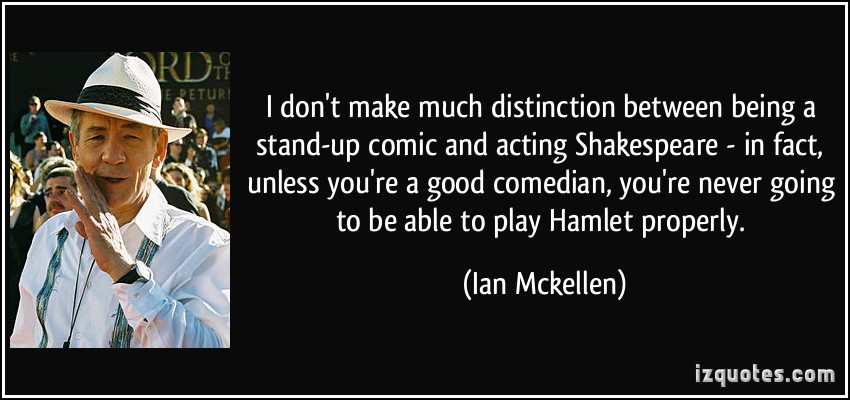
quote-i-don-t-make-much-distinction-between-being-a-stand-up-comic-and-acting-shakespeare-in-fact-ian-mckellen-124331

The fact that Shakespeare was a master of the art of creating and mocking fools does not really help decide the question of who Shakespeare really was.  A stage actor who owned a theater in Elizabethan times and apparently focused on being the bit player, the butler, the second man on the castle wall in the great plays, would certainly know enough of flim-flam, being a con man, or artfully throwing turds at kings and queens in ways that get rewarded rather than beheaded.  But a nobleman who has unpopular and unwelcome-but-probably-wise insights into the back-stabbing-goings-on of the royal court of England would equally be capable of putting the most memorable of critiques of humanity into the mouth of the fool or the clown in the great stage-play of life.  Even the most depressing and violent of Shakespearean tragedies is enhanced and made pointed by the presence of the fool and the comic relief.  In some ways, everything that Shakespeare wrote was a comedy.

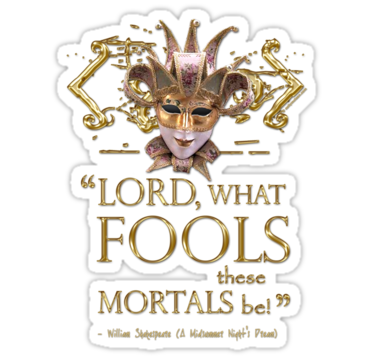
sticker375x360-u2

Whoever Shakespeare was, he shared Mark Twain’s overall assessment of “That damned human race” and often declared all men fools in the eyes of the playwright.  Puck’s observation on humanity is delivered about not only Bottom and the other poor players who carry on their vain attempts at performing Pyramus and Thisbe while Bottom magically wears the head of an ass, but also the easily fooled lovers who mistake their true loves for one another, and even the clueless mortal King Theseus of Athens.

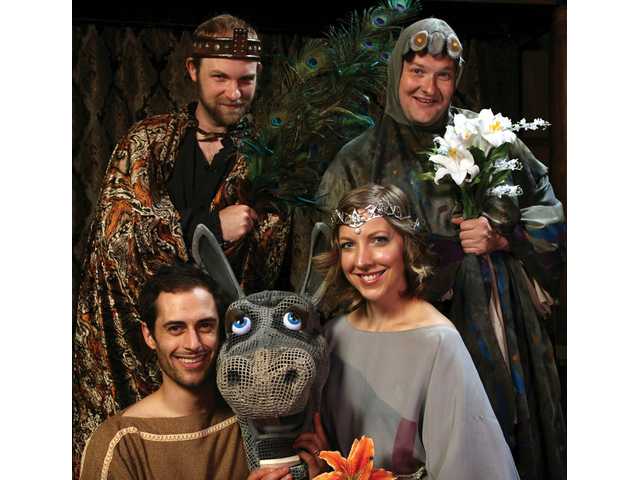
0716-go-midsummer-dream_

In the play within a play, Nick Bottom wants to be not only his own role, Pyramus the romantic lead, but argues that he should be Thisbe, the lion, and Pyramus all at once, making a satire of human nature and its overreaching ways that we could only pray Donald Trump will one day watch and magically understand.  In fact, Shakespeare’s entire body of work is an extended investigation of foolishness versus wisdom, and with Shakespeare, the verdict always goes to the fool.

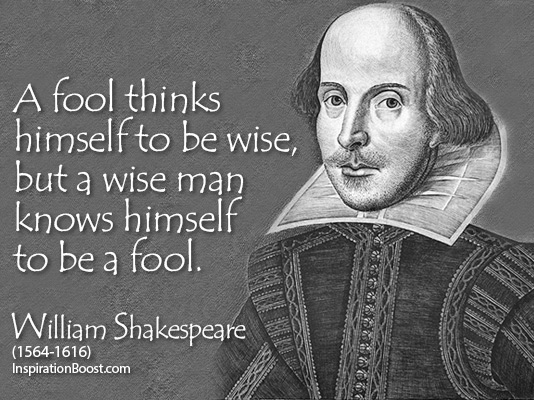
a-fool-thinks-himself-to-be-wise-but-a-wise-man-know-himself-to-be-a-fool-william-shakespeare

The plays of William Shakespeare are filled with fools doing foolish things… and fools being accidentally wise. (Think Jacques in As You Like It giving his famous “All the world’s a stage” soliloquy in which he elucidates the seven ages of man.)  There are fools too who prove to be wise.  (Think of the ironic advice given by the jester Touchstone in As You Like It, or the pithy commentary of King Lear’s fool).  The fools in Shakespeare’s work are not merely the comedy relief, but the main point that Shakespeare makes about humanity.

207a65d14f2a61bd4a4ef178e88609bb

Whoever the man was who wrote the plays of Shakespeare, he was someone who had a deep understanding of the basic irony underlying all of human life.  And someone with that vital sense of the bittersweet, a philosophy of life that encompasses the highest heights and lowest depths that a soul can reach, is someone who has suffered as well as known great joy, someone who has experienced loss as often as profit, and has known real love as well as real hatred.  It is the fool that Shakespeare shakes us by the neck with to make us recognize the fool in all of us which makes the plays resonate so deeply within us.  It is watching the path of the fool unfolding that makes us shake our head and say to ourselves, “Yes, that is what life is really like.”

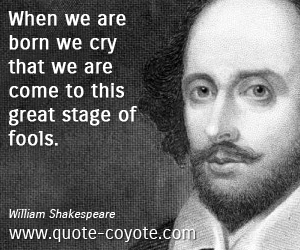
when-we-are-born-we-cry-that-we-are-come-to-this-great-stage-of-fools-william-shakespeare

Leave a comment

Filed under clowns, comedians, conspiracy theory, foolishness, goofy thoughts, inspiration, philosophy, strange and wonderful ideas about life, William Shakespeare

Soliloquy

In college I took classes in oral reading and acting because I was nutty about drama and play-writing, even though I was much too terrified of being put on a public stage to ever try out for a part.  But in Oral Reading 101 I was given the gift of a professor who actually was the head of the ISU Drama Department.  One of the things he made us do was a soliloquy from a Shakespeare play.  I was assigned the opening soliloquy from Richard the Third.

Good God!  Is that man ever a villain and a monster!  He’s more sinister and evil than Snidely Whiplash or Dick Dastardly… and certainly no less cartoonish.  Here is the best I can still do to recreate my old college performance of “The Winter of Our Discontent” soliloquy.

To pull off this assignment (On which I received an A grade from a professor known for imperious F-giving) I had to do a lot of research on King Richard III to be able to walk around in his skin for three whole minutes.  I had to learn about him from books and articles and drama critiques.  I spent a couple of weeks in the library (There was no internet or Google in 1978).  I learned that he was a complex man involved in the deeply troubled time of the War of the Roses.  He was from the house of York, the House of the White Rose.  His elder brother, Edward, had been  victorious in both battle and royal intrigue, and, with Richard’s help had secured the throne of England that had been wrested from the hands of Richard II to begin the struggle between House Lancaster (the Red Rose) and House York… both of which had blood-relationship claims to the throne.  Once in the hands of Richard’s brother Edward IV, the crown did not really rest peacefully on Yorkish heads.  Edward became ill and died in 1483.  The crown was to then go to twelve-year-old Edward V who was placed under the care of Uncle Richard’s regency.  At the time of his coronation, the legitimacy of Edward IV’s marriage was declared null and void, making the boy no longer eligible to be king.  Richard seized the title.  Young Edward and his younger brother were taken to the Tower of London and they were never seen publicly again.  According to Shakespeare, Richard did, in fact, have them killed.  But, the crown did not stay on Richard’s head for longer than two years.  In 1485 Henry Tudor came back to England from France.  Richard was defeated at the Battle of Bosworth Field and died in battle there.

I do actually understand Richard in ways that are difficult to admit.  I know what it feels like to be convinced you are unworthy by factors beyond your control.  Richard was a hunchback, plagued with severe scoliosis of the spine.  He lived his life in pain and was ridiculed for his deformity in a time where it was believed such things were a punishment from God for sins of the parents, or even sins the child himself was born with.  I can relate.  I was always so far above the other kids in my class at school that I was treated like a Martian, unloved and unlovable because I could not speak a language they really understood.  And on top of that, I was secretly the victim of a sexual assault, a condition that I feared made me a monster.  I could so easily have become a monster.  I could’ve set my mind to it in the same way Richard did, because vengeance for his differences consumed him utterly.  Thankfully, I did not choose a path of evil.  Drawing and telling stories proved to be the pick and shovel I used to dig myself out of my own pit of despair.

richard III DNA

Richard III’s long-forgotten grave was rediscovered in 2013, and a DNA match with relatives proved the skeleton with scoliosis was him in 2014.

The real Richard III may not have been the monster Shakespeare portrayed him as, either.  He was demonized after his defeat and death by the Tudors to strengthen their shaky claim to the throne.  There exists some evidence that he was a progressive king and a friend to his people, but horribly betrayed by some of his own followers, and certainly made the scapegoat by succeeding generations.

richardiii225

A recreation of what Richard III looked like based on the skull found and portraits from the time period.

There is also some evidence that Shakespeare wrote the play as a political diatribe against the hunchback in the royal court of his day.  Sir Robert Cecil, 1st Earl of Salisbury was also a hunchback with scoliosis.   And by his sometimes sinister-seeming machinations, he rose to power as Secretary of State for both Elizabeth I, and after her, James I.  He had a part to play in making James the King after Elizabeth’s long reign, probably an instrumental part.  He also uncovered the Gunpowder Plot of Guy Fawkes and friends, and rumors persisted that he had more to do with it than merely revealing and foiling it.  Nothing was ever proven against him.  Though Elizabeth called him “my pygmy” and James referred to him as “my little beagle”, he held power throughout his lifetime and foiled the work of his many enemies against him.  In fact, it is the similarities between Shakespeare’s Richard III and Robert Cecil that first made me begin to believe that Shakespeare was actually someone other than the actor who owned the Globe Theater and never spelled his own name the same way twice.  Knowing about Cecil surely needed to be the act of an insider in the royal court.  I balked at first when it was suggested to me that Shakespeare’s plays were actually written by Francis Bacon… and I continued to doubt until I learned more about the Earl of Oxford, Edward deVere.

So what is the point of this soliloquy about the soliloquy of Richard III?  Well, the point is that at one time I had to be him for a short while.  I had to understand who he was (at least the character that Shakespeare created him to be) and think as he thought.  That is what a soliloquy truly is.  Sharing from the character’s mind to my mind… and back again if I am to perform him… or even write him in some future fiction.

2 Comments

Filed under autobiography, soliloquy, William Shakespeare, writing

The Truth About the Bard – Part Two

Image


William Shakespeare was not William Shakespeare.  An odd truth to speak, I know, but true never-the-less.  I didn’t really believe it until the second time I read my favorite play, The Tempest.  He says it himself in the Epilogue;

Prospero.
Now my charms are all overthrown, 
And what strength I have’s mine own, 
Which is most faint: now, ’tis true, 
I must be here confined by you, 
Or sent to Naples. Let me not, 
Since I have my dukedom got 
And pardon’d the deceiver, dwell 
In this bare island by your spell; 
But release me from my bands (10)
With the help of your good hands: 
Gentle breath of yours my sails 
Must fill, or else my project fails, 
Which was to please. Now I want 
Spirits to enforce, art to enchant, 
And my ending is despair, 
Unless I be relieved by prayer, 
Which pierces so that it assaults 
Mercy itself and frees all faults. 
As you from crimes would pardon’d be, (20)
Let your indulgence set me free.

William Shakespeare. W. G. Clark. W. Aldis Wright. The Globe Shakespeare. New York. Nelson Doubleday, Inc.


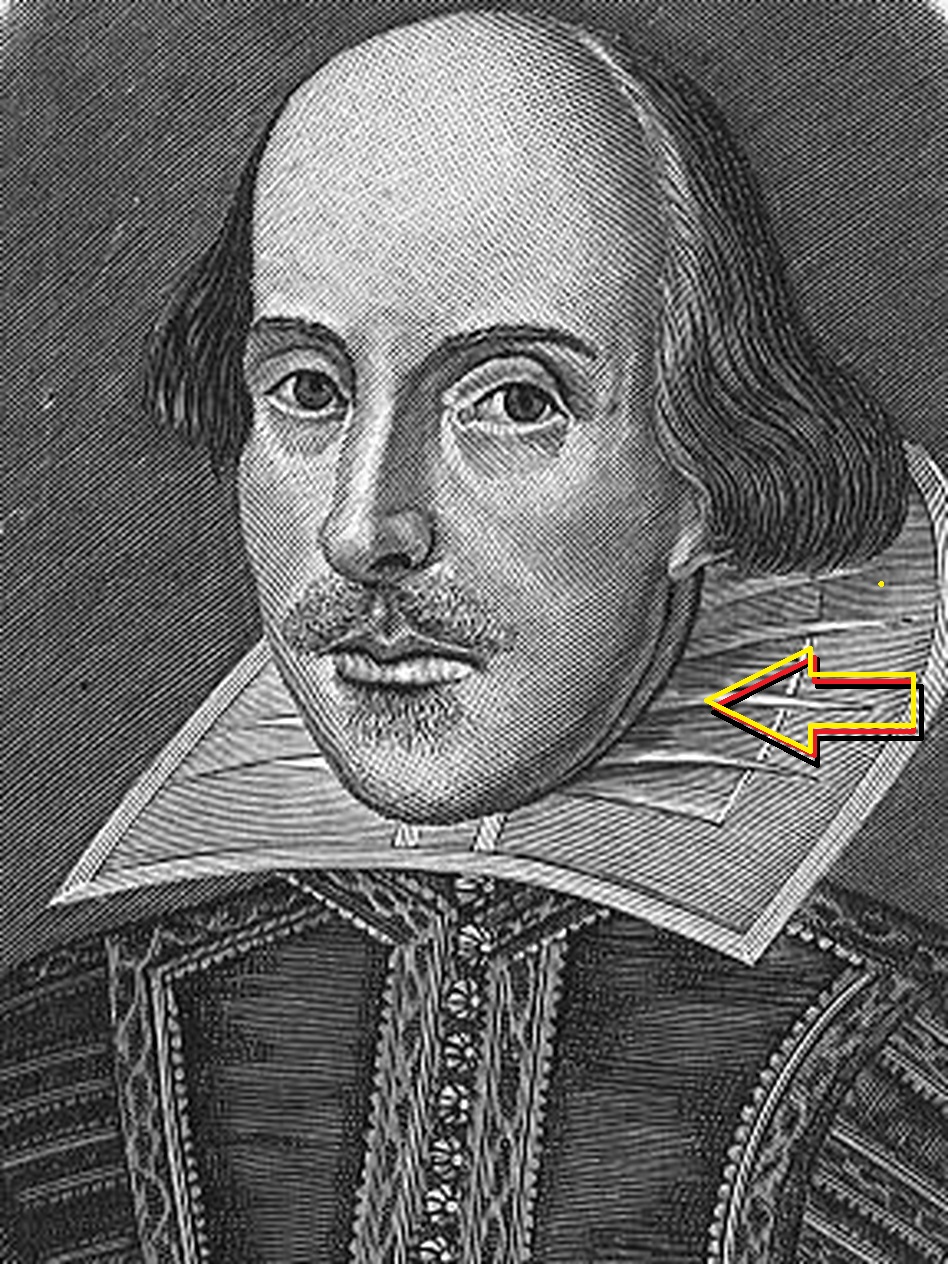
First of all, the entire plot of the play involves Prospero trying to win back his rightful Dukedom from the usurper, his brother.  His rightful Dukedom?  His body of work?  The usurper, his brother?  The man who signed his name to the writer’s plays, and also a man of the theater.  The Bard has, at the end  of his career, come to terms with that usurper, “pardon’d the deceiver”, forgiven the man whose fame and fortune depended on stealing the work of the Bard himself.  If his project is to succeed, it depends no longer on his magical arts and charms.  It depends on “the help of your good hands”, the applause and approbation of the audience.  It is up to us as readers to fill this project or make it fail, because his true identity is not to be revealed.  His reward is in the mere satisfaction that his brilliant works have fulfilled his purpose, entertained us, and filled us with a sense of that tremendous and overwhelming truth that fills his every fiction.  The Tempest is the last play.  The man we know as Shakespeare falls silent afterward.  He feels the need to be forgiven his faults and be freed by our willing suspension of disbelief, because in no other way will his pride in authorship ever be satisfied.  I have to say, the clever conclusion to this play is the evidence that convinced me that Edward DeVere is the true Prospero, not the weaselly little bald man pictured only twice that we have come to know as William Shakespeare of Stratford-on-Avon.

2 Comments

Filed under Uncategorized

The Truth About the Bard – Part One

Image


I came to believe that William Shakespeare was a made-up character pretty much by the same means as the world first noticed the inconsistencies.    In 1848, a young religious scholar named Samuel Mosheim Schmucker, put forward a parody of arguments against the physical existence of a historical Jesus Christ.  The fact that no written works by Jesus own hand had ever been seen or discussed in historical documents was used to claim that Jesus was very possibly a made up character created by the Apostles Paul, Peter, and John.  No physical evidence of his existence remained that wasn’t tainted by the fervor for relics, even fabricated ones, that ruled the Middle Ages.  He posited, as a joke, that in the same way Shakespeare hadn’t written his own plays.   After all, here was an unlikely person, an actor who had never been far from the city of his birth who became famous for writing stories from other lands, stories that had the ring of truth, as if the bard had walked the streets of Venice and Verona himself, as if he had spent time in royal courts among courtiers whom he portrayed with unfailing accuracy, and as if he had a deep personal knowledge of literature, including literature that had never been translated into English.  Wait a minnit!  Why does this comic parody sound so logical and profoundly obvious?

I didn’t believe at first.  How could that story I had always heard about the greatest writer who ever lived be anything less than gospel truth?

Yet, inconsistencies were glaring in front of my eyes.  The physically real William Shakespeare was a mere actor, not even a lead actor, a bit player who specialized in old men and jesters.  His father was illiterate.  The man apparently couldn’t even spell his own name correctly.  He had spelt it at least three different ways in places that, with difficulty, could be verified as coming from his own hand.  The likelihood that this little, insignificant man was the worldly author with a wisdom for the ages grew further and further away from the obvious truth.

Even Mark Twain, whom I revere as a role model and one of the greatest writers I have ever read, doubted that Shakespeare wrote plays.  In his essay, “Is Shakespeare Dead?” Twain wrote, “So far as anybody actually knows and can prove, Shakespeare of Stratford on Avon never wrote a play in his life.”

Do I actually believe that someone else wrote Shakespeare’s plays?  I was not willing to even consider it until the right candidate came along.  Francis Bacon?  No.  Christopher Marlowe?  Marlowe would’ve had to write some of the best plays after he was dead.  No way!  So did the right candidate appear?  Most assuredly, thou addle-pated reader.  Hold your breath and wait for the reveal in part two.  Er, maybe you shouldn’t literally hold your breath.

Image

4 Comments

Filed under Uncategorized

The Truth About the Bard

The Truth About the Bard

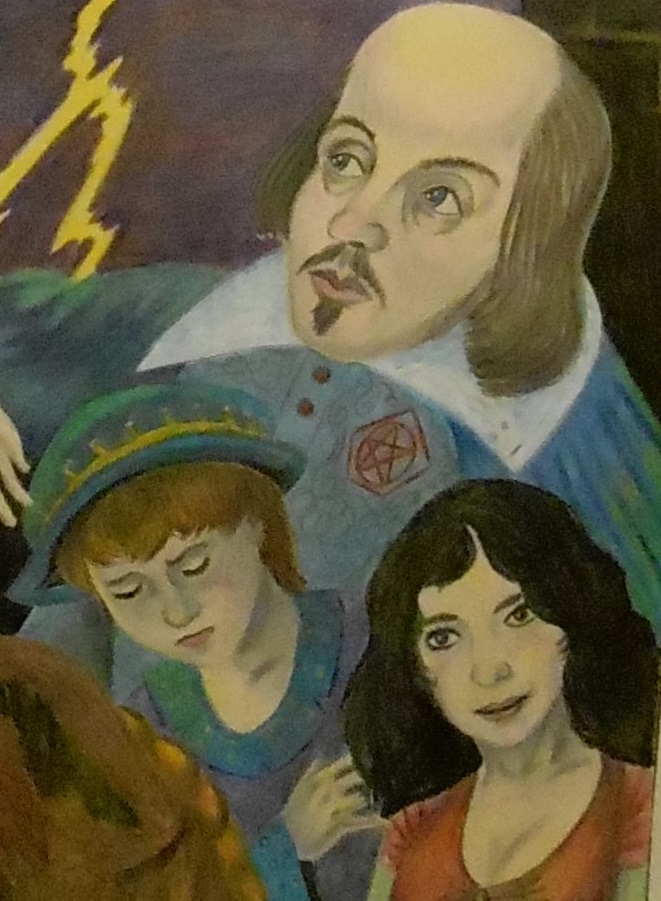
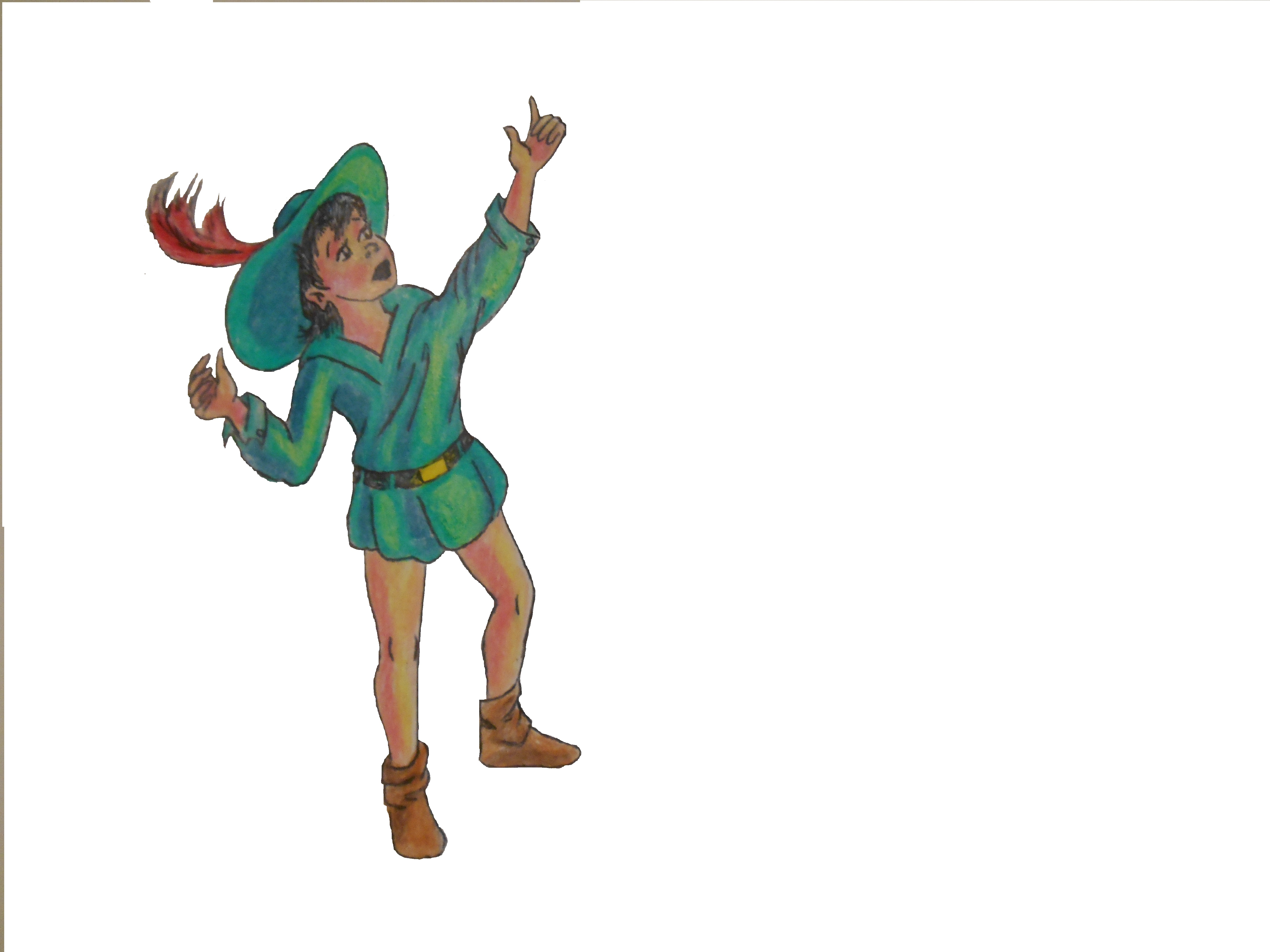
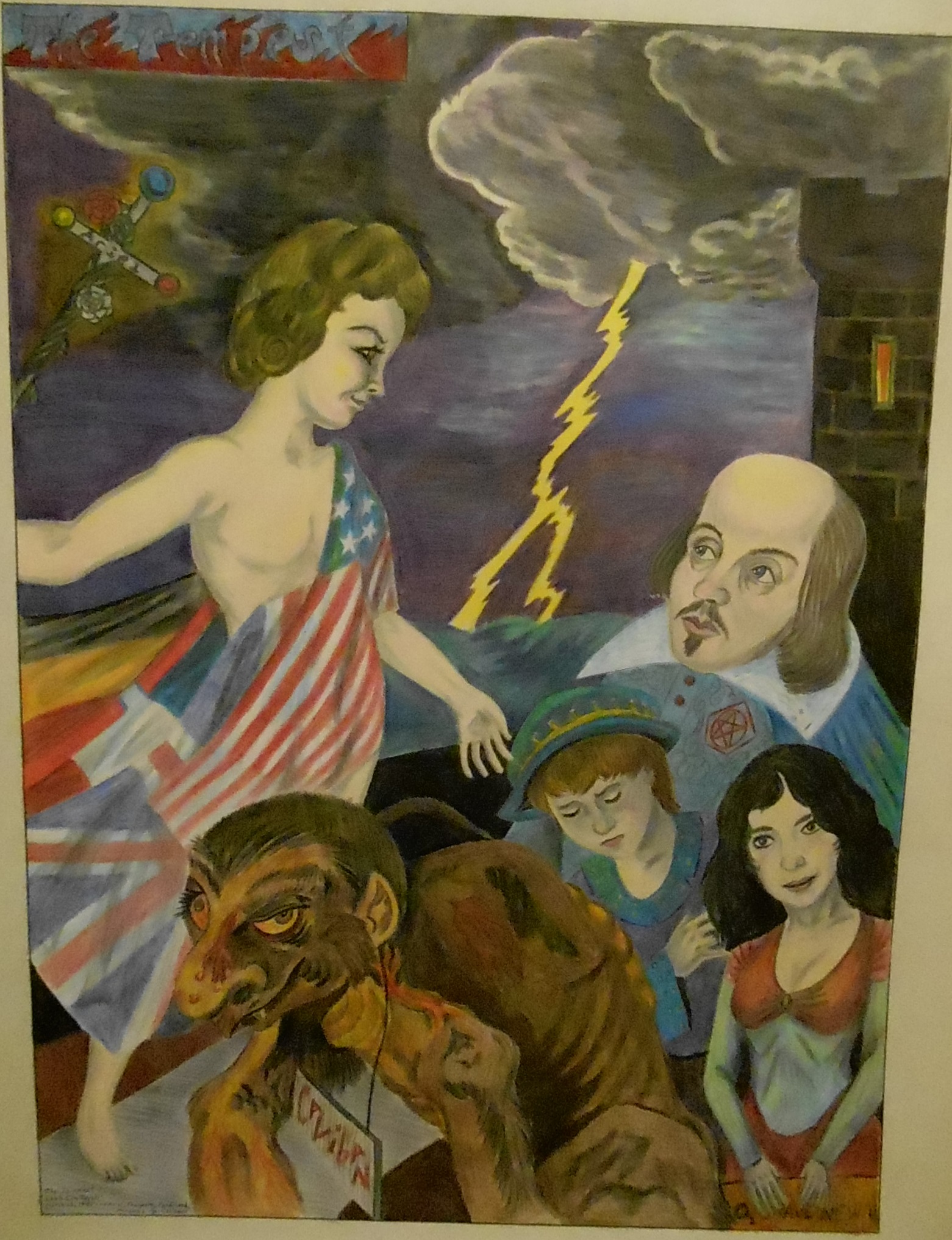
I drew this Paffooney back in 1980 after my favorite Shakespeare play, the Tempest. The truth is, by rereading that particular play, the Bard’s last, I have come to the conclusion that the actor known as Will Shakespeare did not write the plays that bear his name. It was in fact, in all likelihood, Edward DeVere, the Earl of Oxford who did. I will write about this further in the future. It is the magic of conspiracy theory that draws me like a sprite to the theatre.

Leave a comment

February 9, 2014 · 11:06 pm