Tag Archives: role-playing games

Demons and Devils

20160530_144236

Playing Dungeons and Dragons in Texas during the ’80’s and ’90’s was basically a subversive act.  The reason?  Fundamentalist Christians actively stepped in and persecuted you for it.  It was their sincere belief that a thing that had demons, devils, and dragons in it had to be from Satan.  Satan, they reasoned, used a game like that to poison the imaginations of innocent children and turn them to the Dark Side of the Force.  Or, rather, the Devil’s side of religion.  They were terrified of subtle corruption of the mind, believing that certain patterns of words and ideas could turn goodness into evil.  In other words, their religion advocated living in a bubble of non-association with certain words and ideas in order to superstitiously inoculate themselves against badness.  They were, of course, not entirely wrong.
20160530_144251

Kids playing the game will often develop the desire to play the Dark Side, to be an evil character, to commit evil acts and murder without the hindrance of conscience.  That is the reason I wouldn’t let my own kids even consider playing Grand Theft Auto or similar murder, rape, and pillage sort of video games.   It is, in fact, possible to desensitize yourself to violence and immoral behavior, and I have serious philosophical doubts whenever anyone tries to tell me that that can be a good thing.  My Dungeons and Dragons games always contained a rarely spoken understanding that if you chose to play an evil character you were going to lose everything, because any adventure is solved and overcome by combating evil and siding with the forces of goodness.  Paladins with their magical swords of ultimate sugary goodness are always stronger than evil wizards with their wimpy bat familiars and potions in the end.
20160530_144246

But leaving out demons and devils was never truly an option. If you never face decisions between good and evil during playtime, what hope do you have of avoiding a life-altering mistake later in life when faced with evil for real.  If you are going to make an evil choice, say for instance, committing an act of murder, isn’t it better to learn the consequences of such an act when the murder was killing an imaginary rival wizard for a magic staff you coveted than if you committed that murder in a fit of passion in real life?  The fact that the rival wizard’s spirit takes up residence in the staff and finds a way to punish you every time you use it for the remainder of your adventuring life in the game may teach you something you can use when faced with the opportunity to steal for profit and get away with it to make a better decision about what to do.

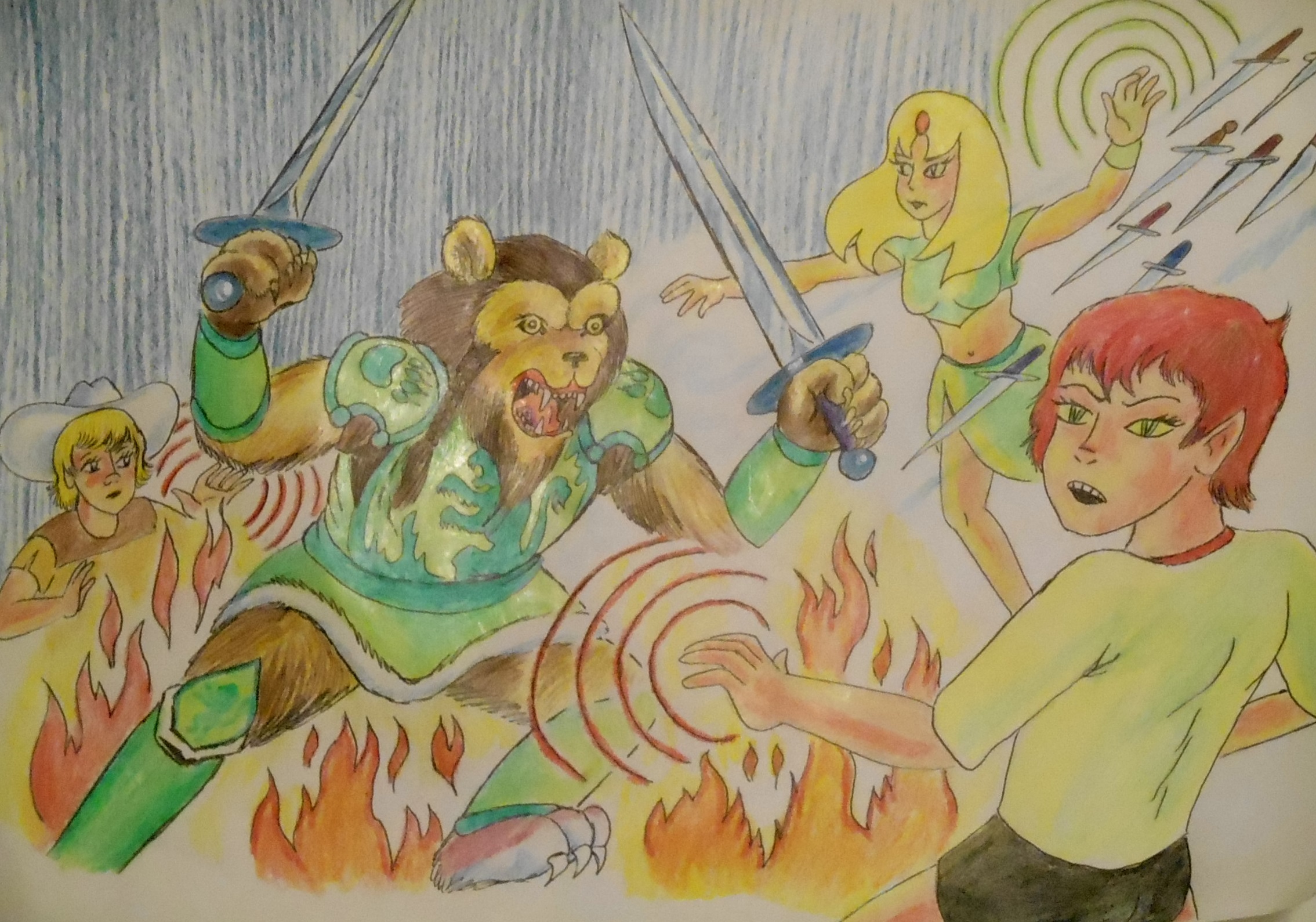
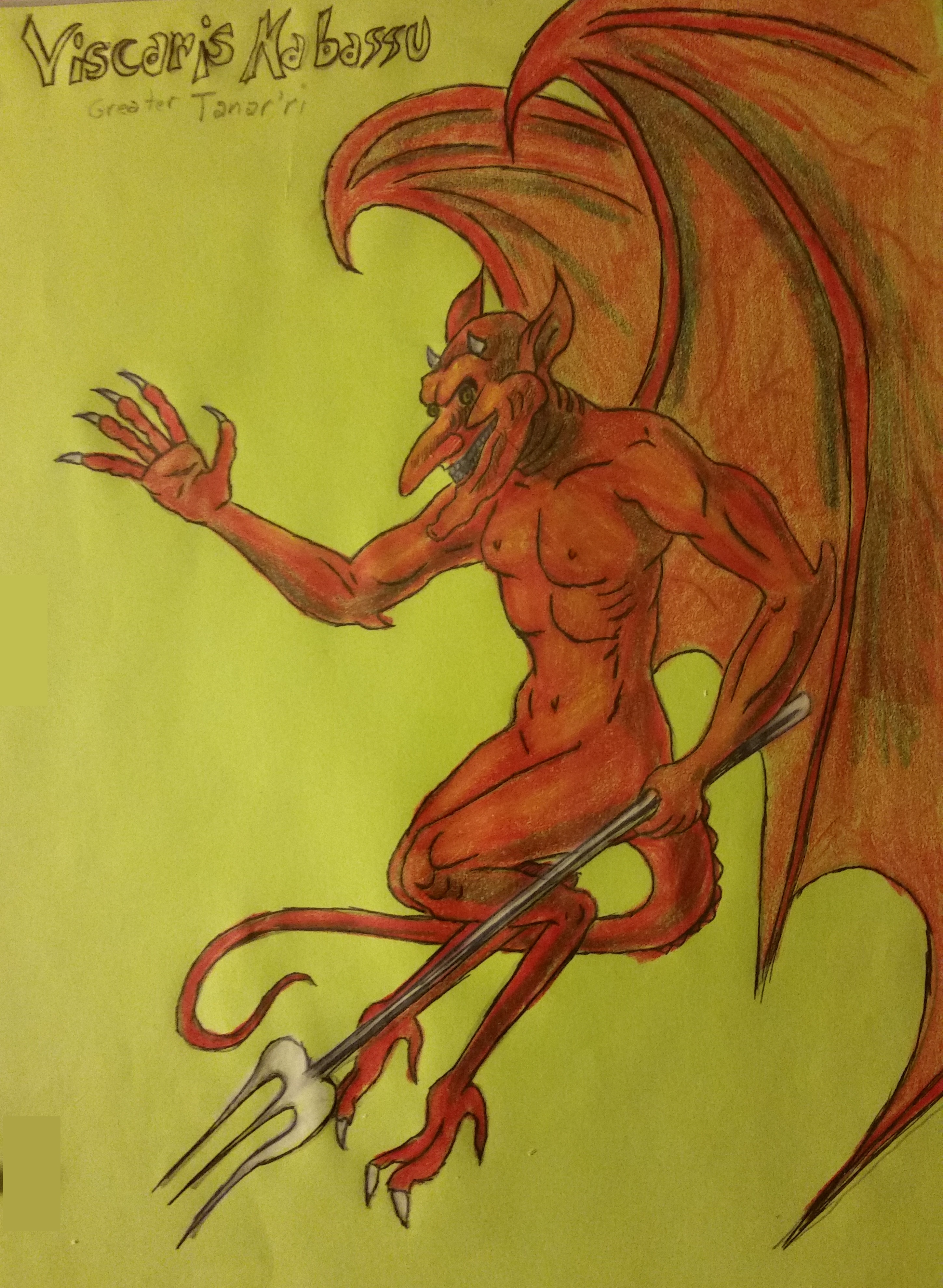
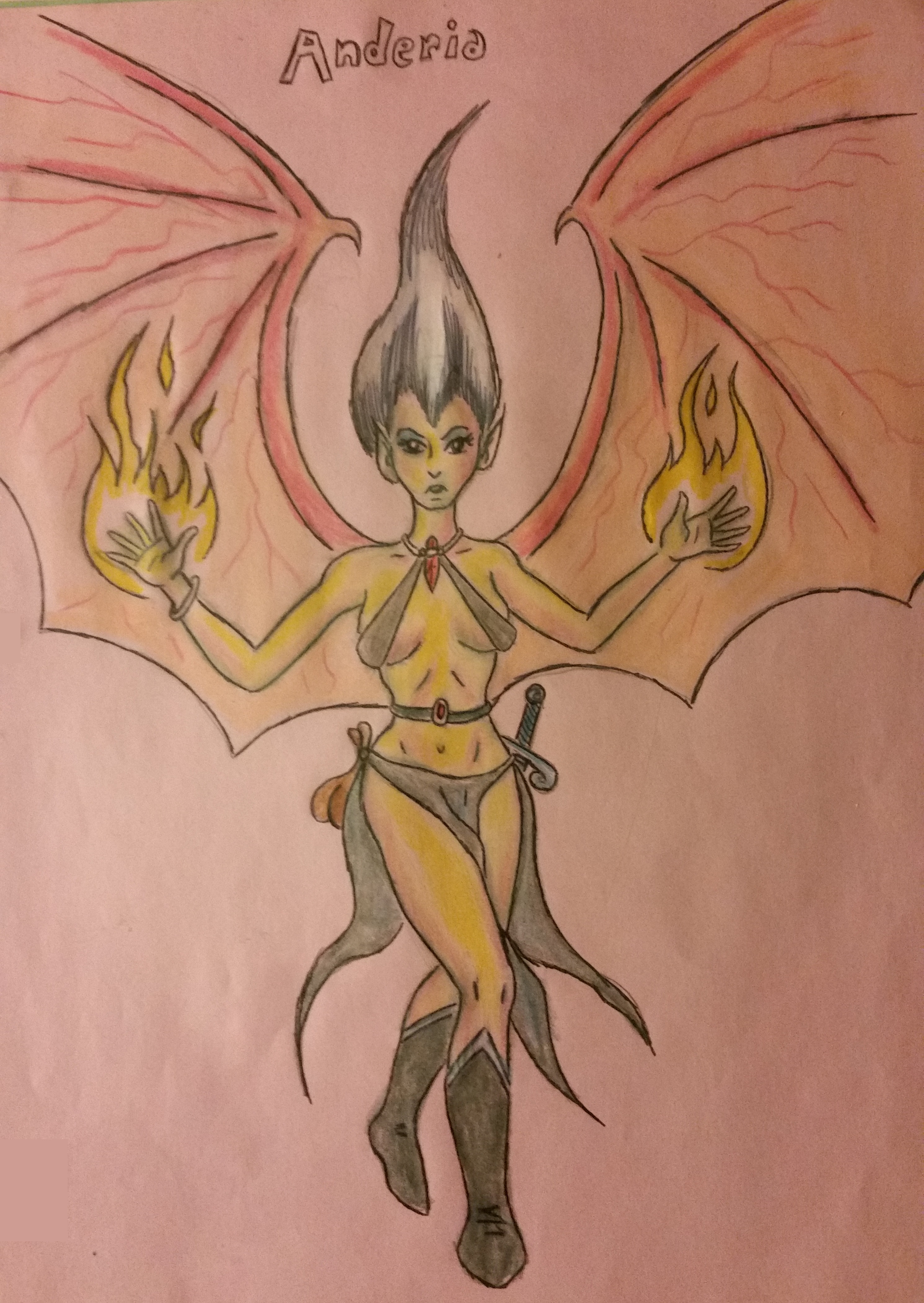
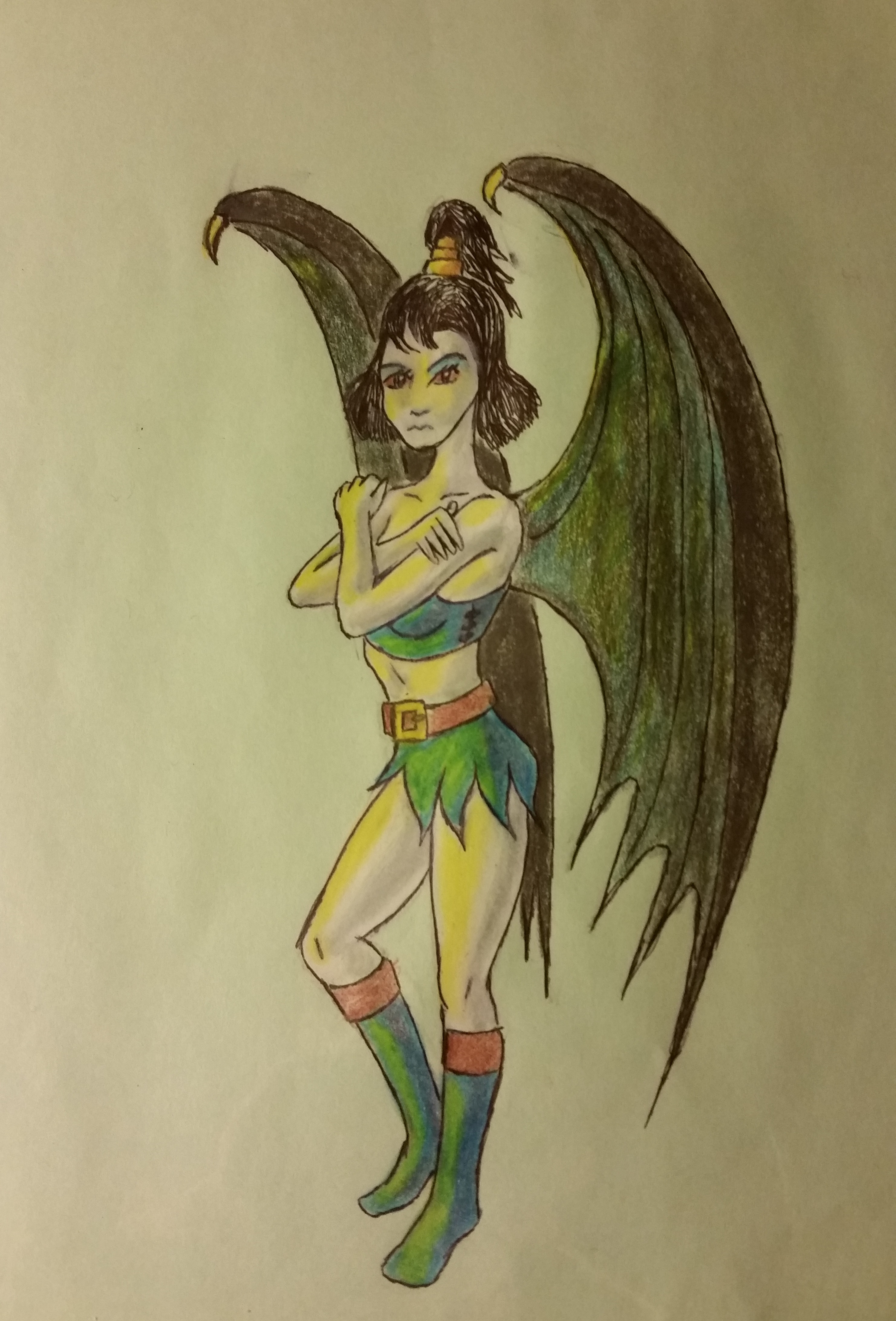
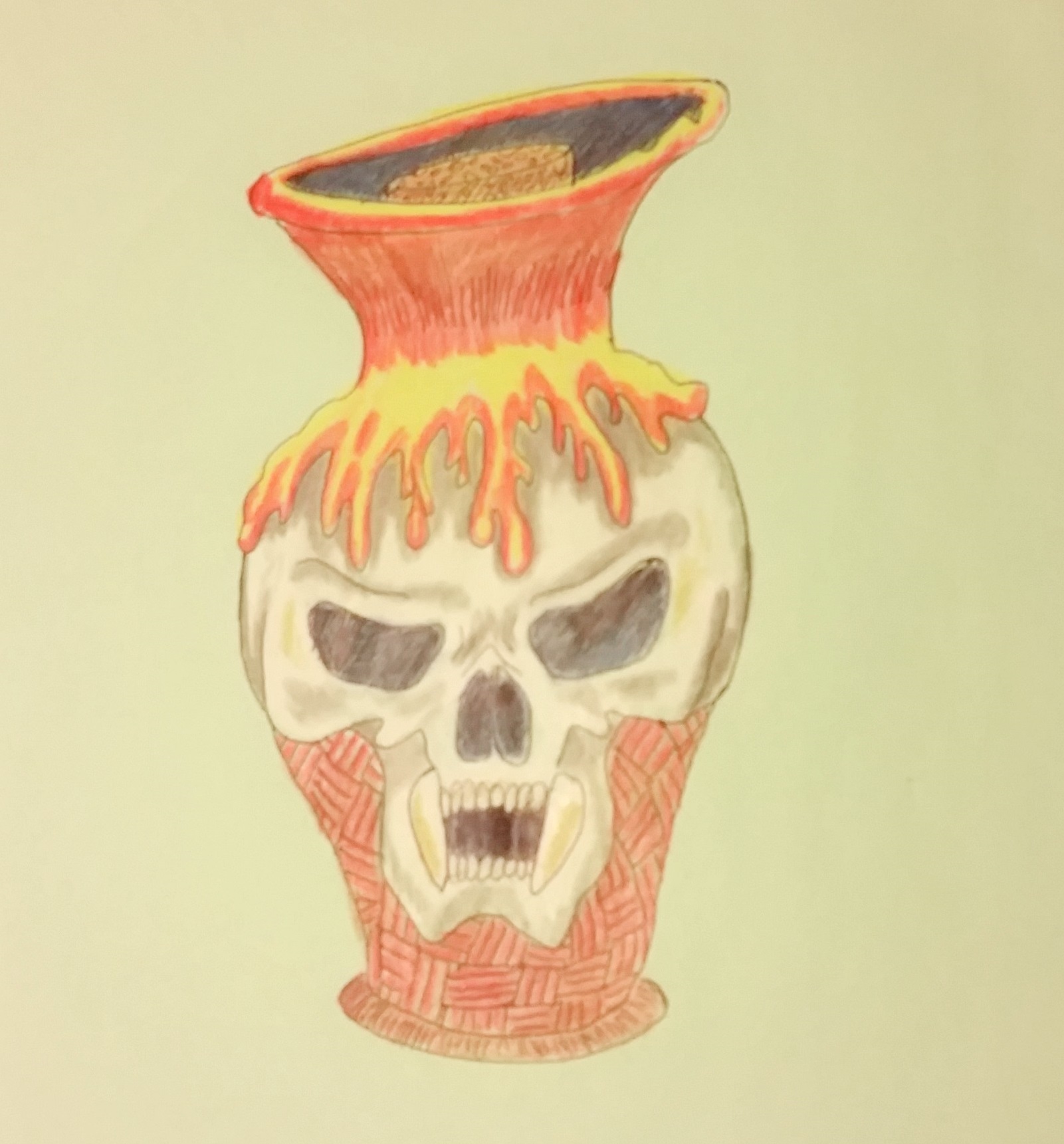
In the Tomb of Death adventure that the three demons illustrated in this post came from, the only solution was to find the weakness in the demon team.  Estellia had been ill treated by the other two and deeply resented it.  She resented it enough to tell the adventurers’ thief about the brass demon bottle that could be used to magically imprison the demons and then force them to do the bottle owner’s bidding.  Viscarus had been using it to control the other two, so only his soul truly needed to be captured.  The demon-hearts of the other two were already inside.  That story taught several lessons.  Manipulative evil can bite you in the neck even if you are the one wielding it.  (If only Trump and his cronies had learned that about their own brass demon bottle.)
C360_2017-09-30-11-16-48-614

Evil people don’t see themselves as evil.  Often they only see themselves as victims.  And it is true in real life that there is goodness in even the most heartlessly evil people.  You can find it, appeal to it, and possibly even reach the goodness in their hearts necessary to change them for the better.

I truly believe that those kids who over the years played my story-telling games were better, stronger, and more inherently good because they played my games and learned my lessons.  I believe it is true even though there may have occasionally been demons and devils in the stories.  And if I believe it strongly enough, it must be true.  Isn’t that how faith is supposed to work?
Leave a comment

Filed under Dungeons and Dragons, heroes, humor, Paffooney, strange and wonderful ideas about life, villains

D & D Sidekicks

Why did Batman have Robin the Boy Wonder?  Not only that, but why Bucky and Captain America?  Green Arrow and Speedy?  Aquaman and Aqualad?  Superman and Krypto the Super Dog?  Fredric Wertham, the Seduction of the Innocents and the Comics Code guy, would have you believe that they were there to make young boys turn gay and violent.  But that was nonsense, wasn’t it?  Better change Krypto for photographer Jimmy Olsen just in case.

But if that was merely nonsense, why was it such a part of the formula?

20160424_180344

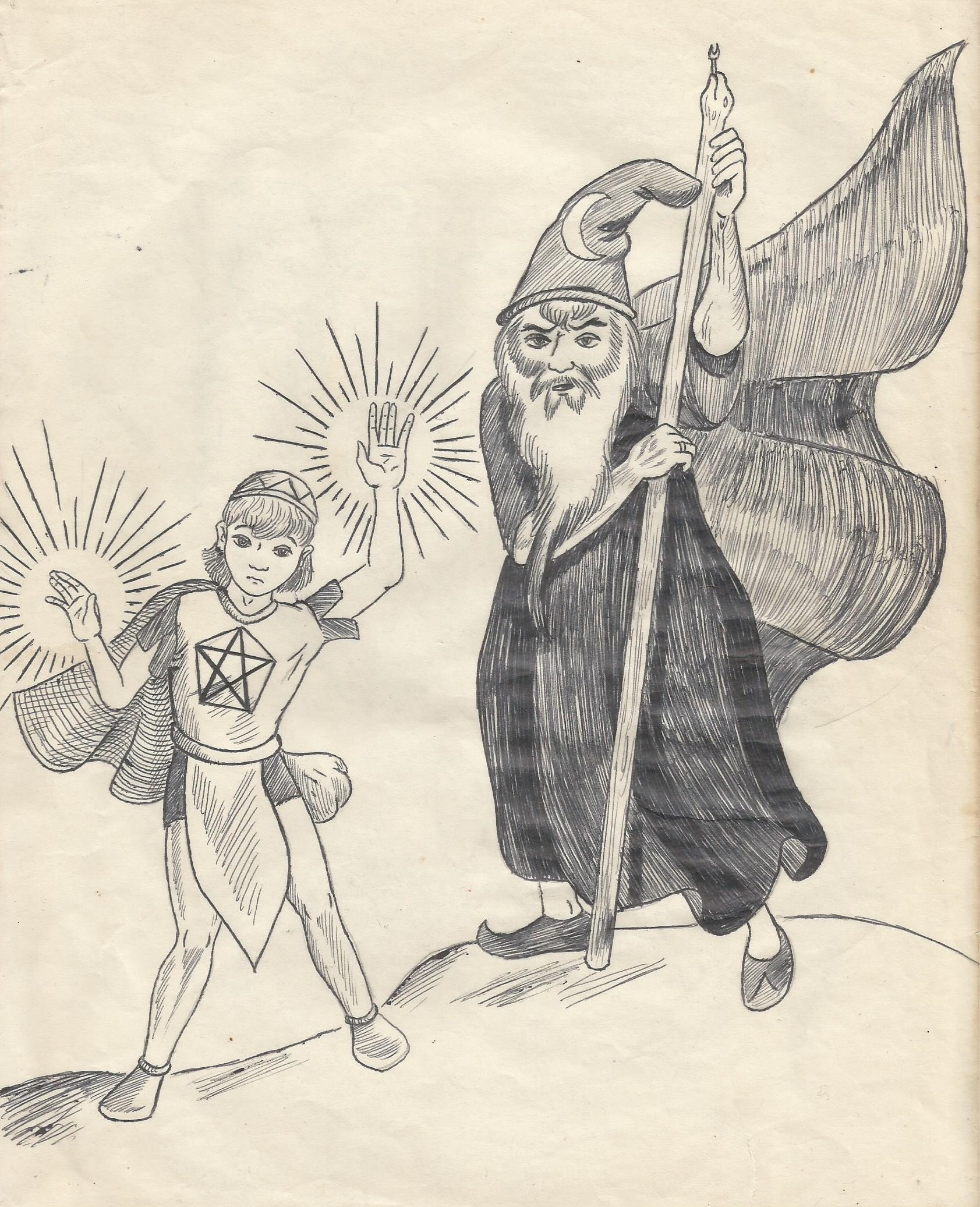
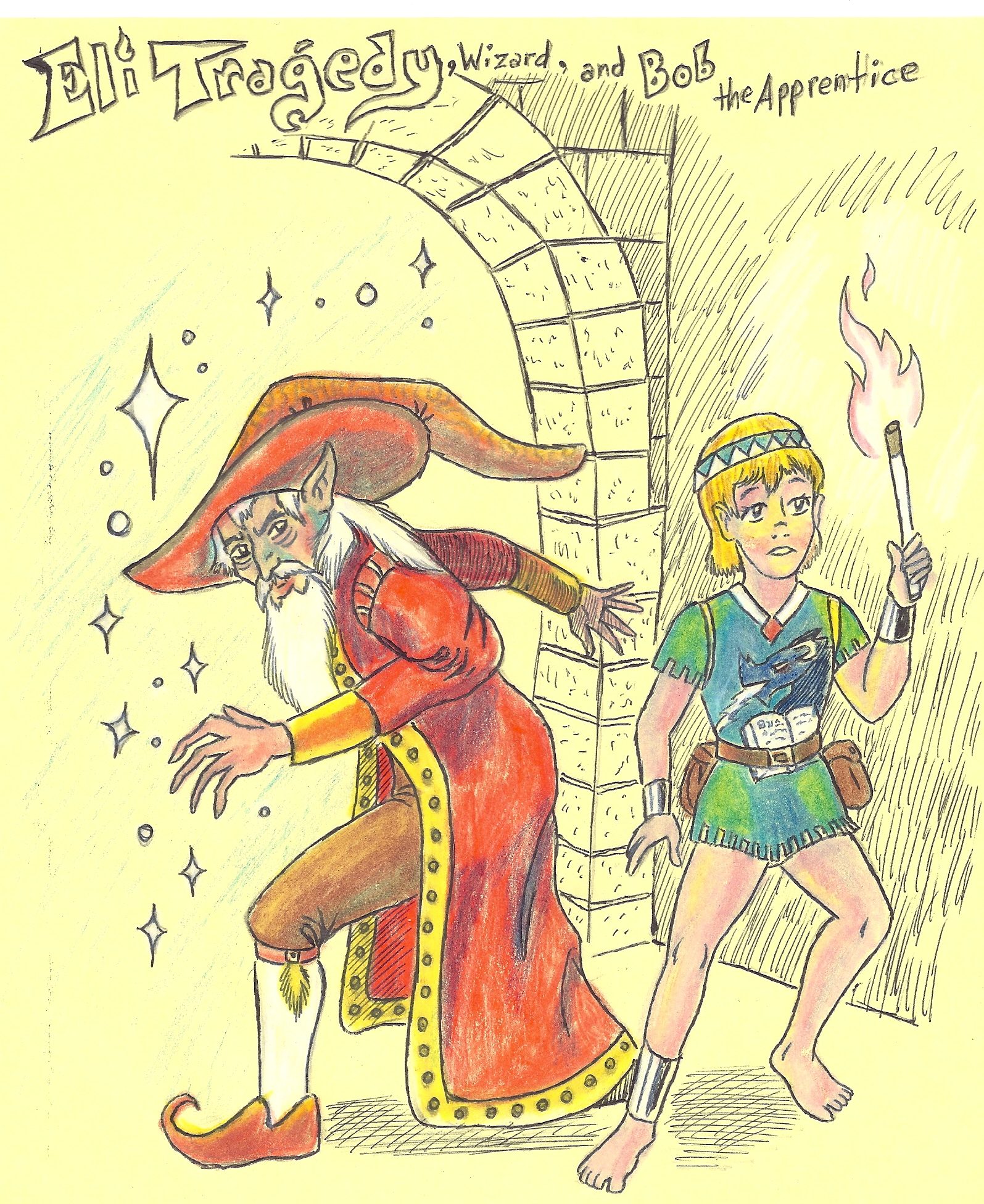
As a D & D dungeon master, I have my own theory about sidekicks and their function in story-telling.

Young sidekicks were an important part of the stories I told as a game master because the players in my games were mostly adolescent boys themselves.  It was the same as the primary readers of Batman comics in the 1950’s of Wertham’s Comics Code.  The young hero or adventurer character, most often in the form of a non-player character, was someone they could relate to because of age.  They had more in common with the sidekick than the lead hero.  It helped to draw them into the story and make it relevant.

merlini

As a story-telling device, you often find the young apprentice character in novels written for younger audiences.  Think of David Eddings’ Belgariad, or Lloyd Alexander’s  Chronicles of Prydain, or Treasure Island by Robert Louis Stevenson.  The characters of Garion the youngster in the Belgariad,  Taran the young protagonist of Prydain, and certainly Jim Hawkins of Treasure Island.  

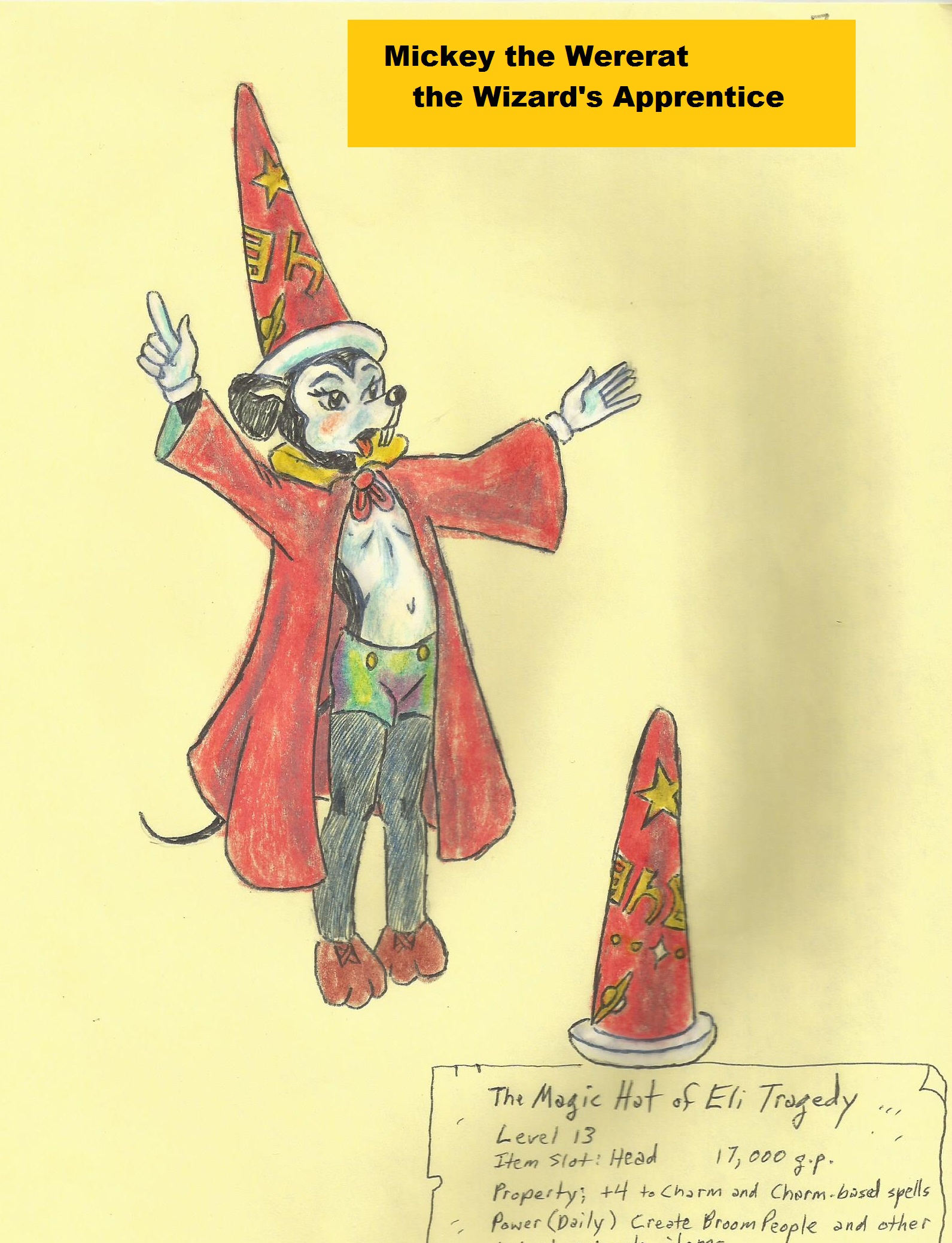
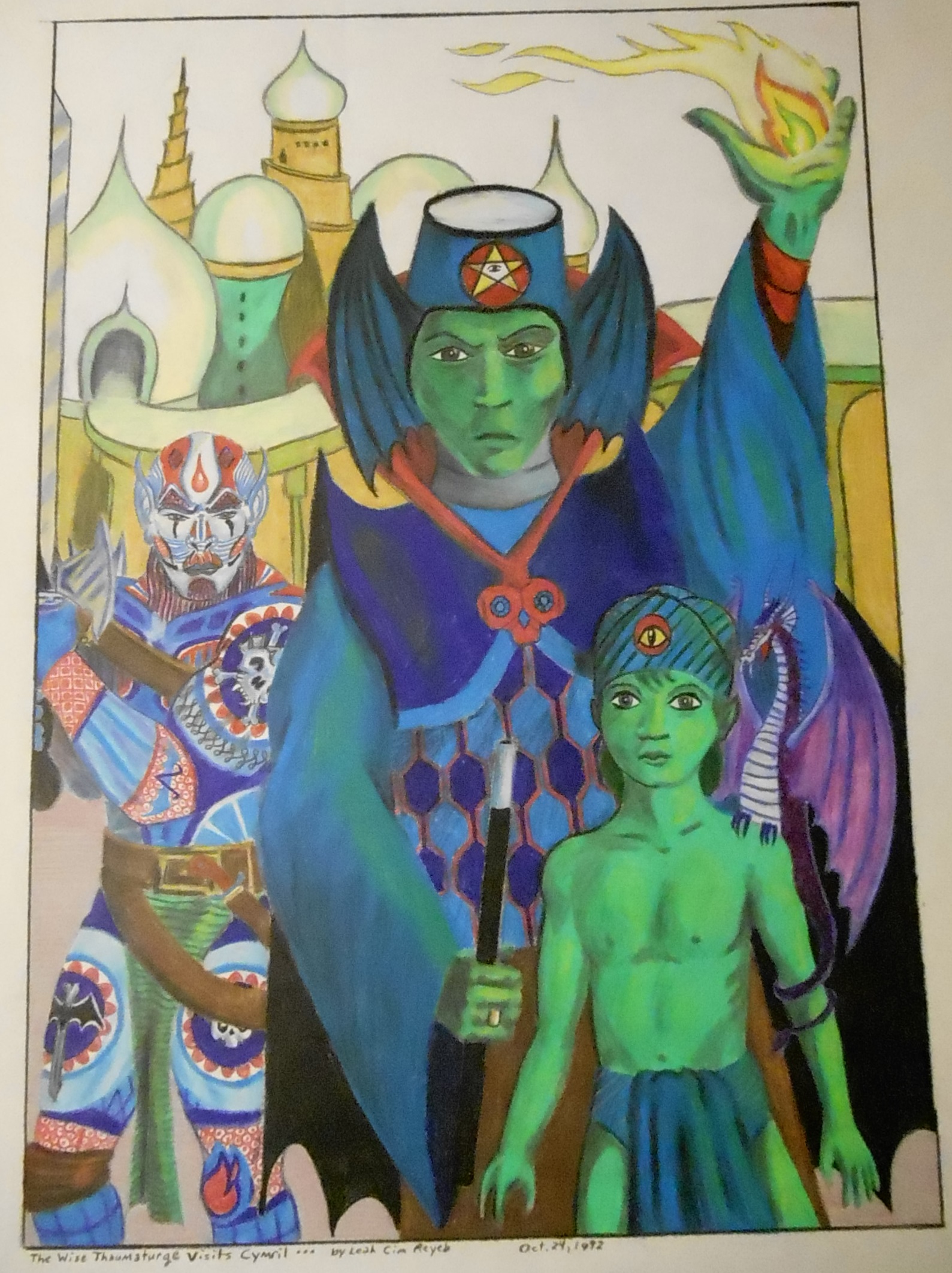
So, with that realization, I incorporated youthful characters, both boys and girls, as apprentices and student-adventurers.

Eli Tragedy

Initially it proved to be a hard thing.   Wizards and sorcerers, according to D & D rules, can take an apprentice once they reach level three.  But first level characters as apprentices are vulnerable because damage done by third level monsters wipes out the meager hit point reserves of a beginner character.  After several traumatic deaths of beloved sidekicks, the player characters begin to take steps to protect them better in combat, or quickly learn where to find priests with resurrection spells who work really cheap.

Scannabcdegf

Of course, these characters are useful for more than just creating combat complications.  They are really useful for comic relief.  The missteps, mistakes, and total botch-jobs that these inexperienced younger characters create can make us laugh, make us sweat a little to correct it, and move the plot forward in interesting ways that I, as the game master, wouldn’t have otherwise planned.

Thaumaturge

So, hopefully, Mr. Wertham’s ghost isn’t hovering over my D & D game thinking it is all a plot to create a generation of violent, gay youths.  Hopefully he can see that it is all a part of a well-established story-telling literary device that actually helps to educate and deepen the understanding of youths.  But it is swiftly becoming irrelevant what Wertham’s ghost thinks anyway.  I haven’t played D & D for a while now.  My sons and daughter now have their own groups of friends, playing under different dungeon masters with different dice.  But hopefully, the need for youthful sidekicks will remain.

Leave a comment

Filed under Dungeons and Dragons, heroes, humor, Paffooney, strange and wonderful ideas about life

Dragons

16750_102844496407849_100000468961606_71389_2659019_n

Dragons in the Dungeons and Dragons role-playing games are the central monsters of the story.  In our Eberron campaign they not only rule an entire mysterious continent, but they are credited with the very creation of the world and everything.  Not only monsters, but also gods, is a pretty big order for a   character to fill.

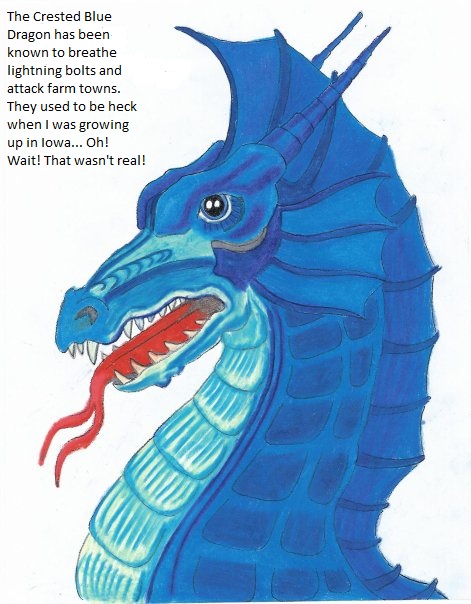
Skye, the Blue Dragon to the left above is a dragon who believes that human people are the most important part of fulfilling the Dragon Prophecy.  Therefore the characters can rely on him as an ally, and sometimes even a patron.  He is a blue chromatic dragon with lightning breath, and the Blue Dragon Aureon, his great great grandfather,  is an important leader of the god-dragons worshiped as the Sovereign Host.

20160424_181130

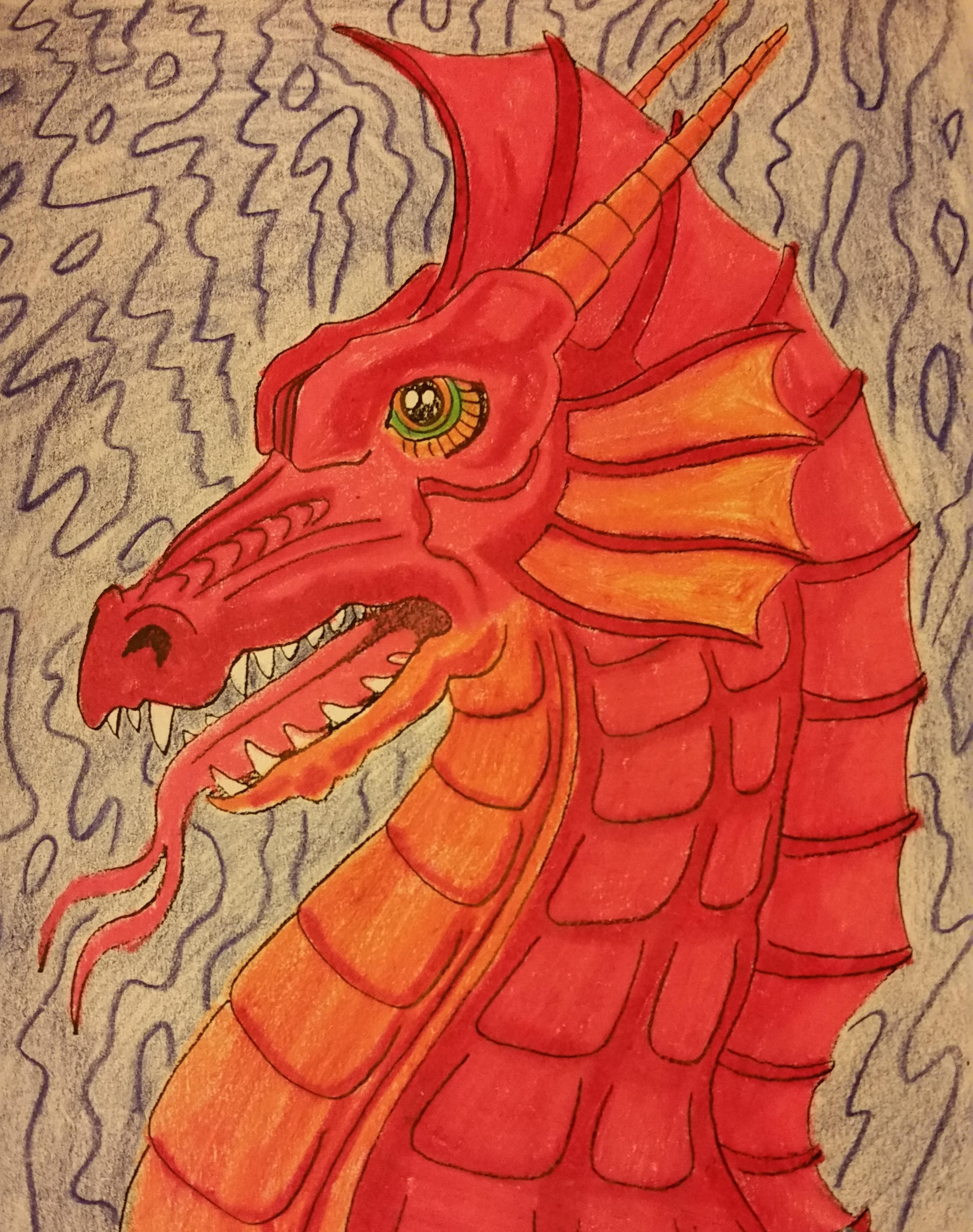
Phaeros, the great crested red dragon, is a servant of chaos who actively opposes all that is good.  He works with orcish dictators and priests of the Dark Six to accomplish vast swaths of damage, destruction, and war.

He is a big bad villain that has to come at the end of a campaign, because dragons are not only powerful fire-breathers with monstrous monster-damage capability, they also know far more magic than even the wisest of wizards.  My players have not crossed him yet, but if they start finding the missing dragon eggs, that will happen soon.

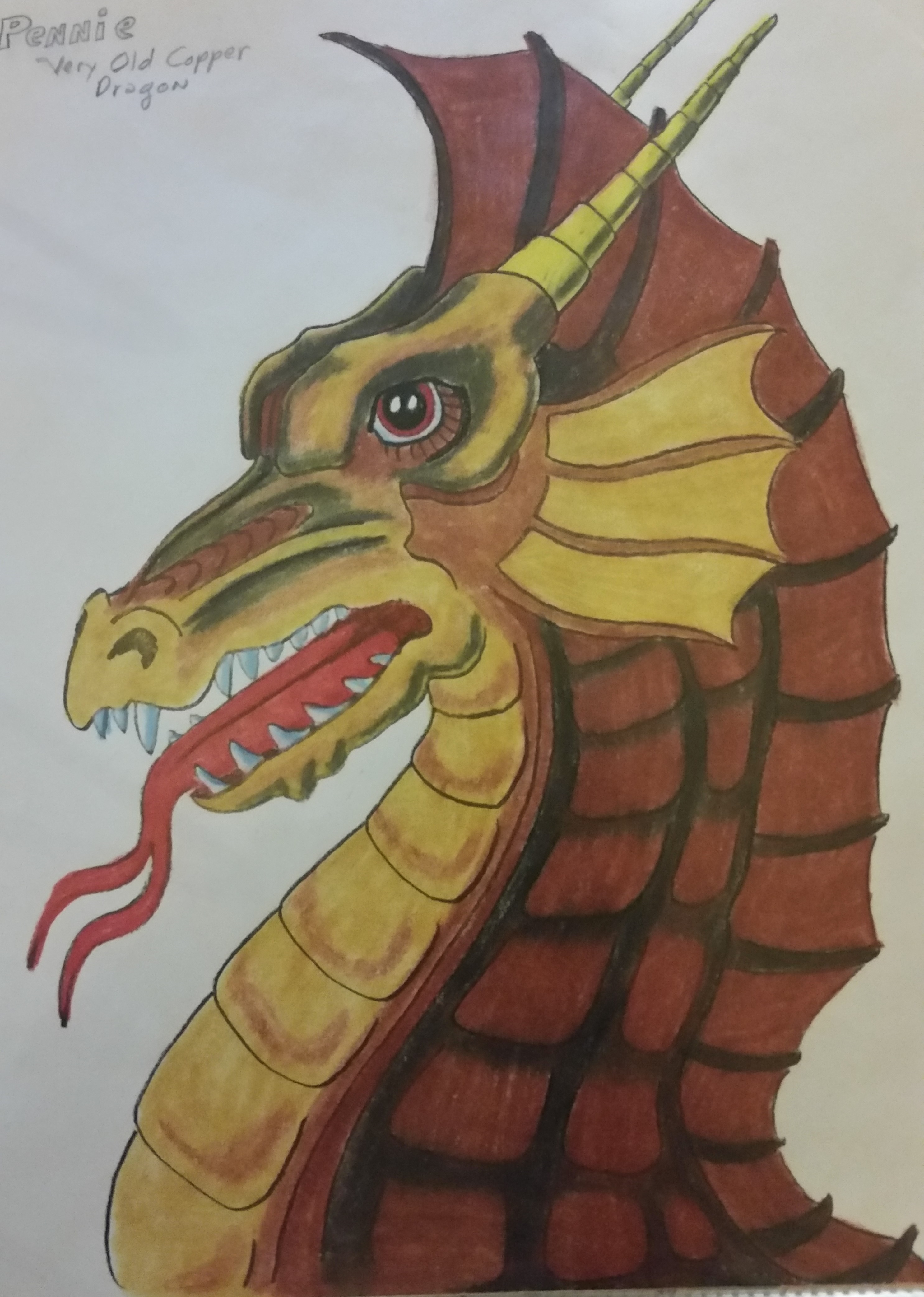
You may notice that my dragon pictures are mostly coloring-book pictures repeated with different colors, but in many ways dragons are like that.  They all have the cookie-cutter qualities of a dragon, but with different-colored personalities and powers and ideas of good and evil.

Penny Dragon

Pennie is a copper dragon with divided loyalties and the soul of a clown.  She never takes the adventure at hand too seriously.  But if she decides to help the player characters find the missing dragon eggs, no ally will prove stronger and more helpful than her.  And she knows things that the players need to learn from her to find the missing eggs.

So dragons come in many forms and personalities.

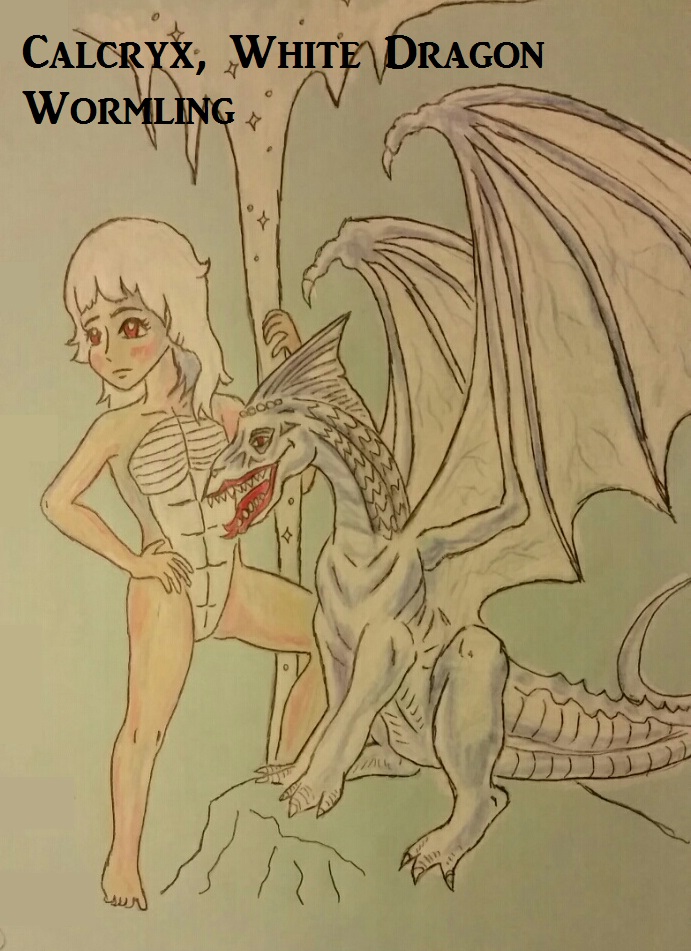
In fact, the search for the missing dragon eggs will be critically affected by the fact that the eggs have all five hatched and dragons instinctively protect themselves when young by using their polymorph self magic to become some other creature.  And someone has implanted the idea of using human form as the default even though the wormlings have never actually seen a human being in real life.

C360_2017-07-29-10-13-38-827

This is a double portrait of Calcryx, both as a white dragon wormling and a young girl.

So, playing games with dragons is fun and archetypal story-telling, and I will continue to do it, even if it means getting burned now and again.

Leave a comment

Filed under Dungeons and Dragons, humor, Paffooney

Representing Star Wars RPG People

20180113_084825

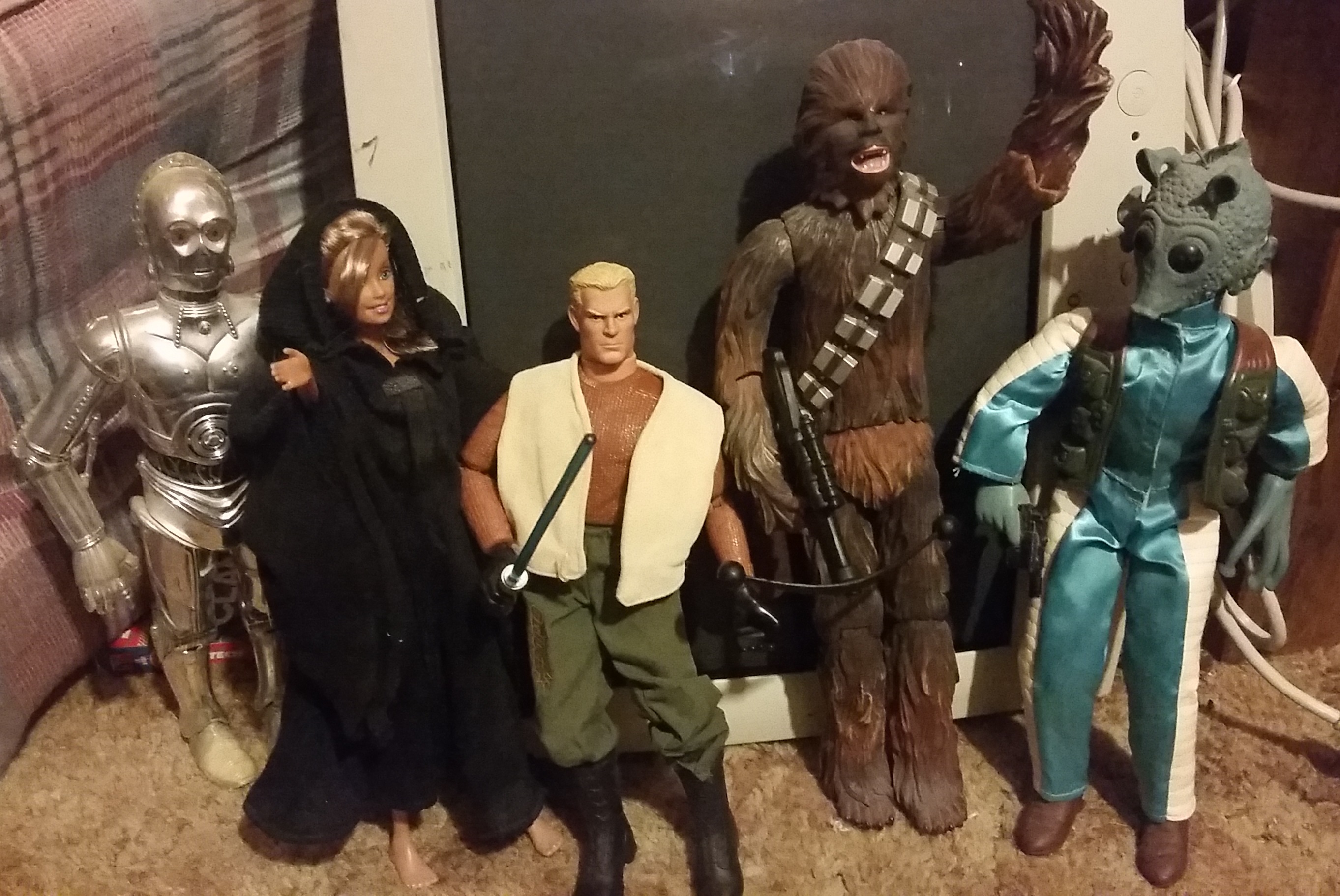
Traditionally, D&D-type role playing games are played with miniature figures to represent characters and npc’s on the battlefield.  But when the kids were small and we started playing Star Wars RPG I didn’t have the proper figures.  So. to visualize characters, we used what I did have plenty of, dolls… err, action figures.

I told you who the player characters were a couple of Saturdays ago, but let me remind you.

20180113_085022

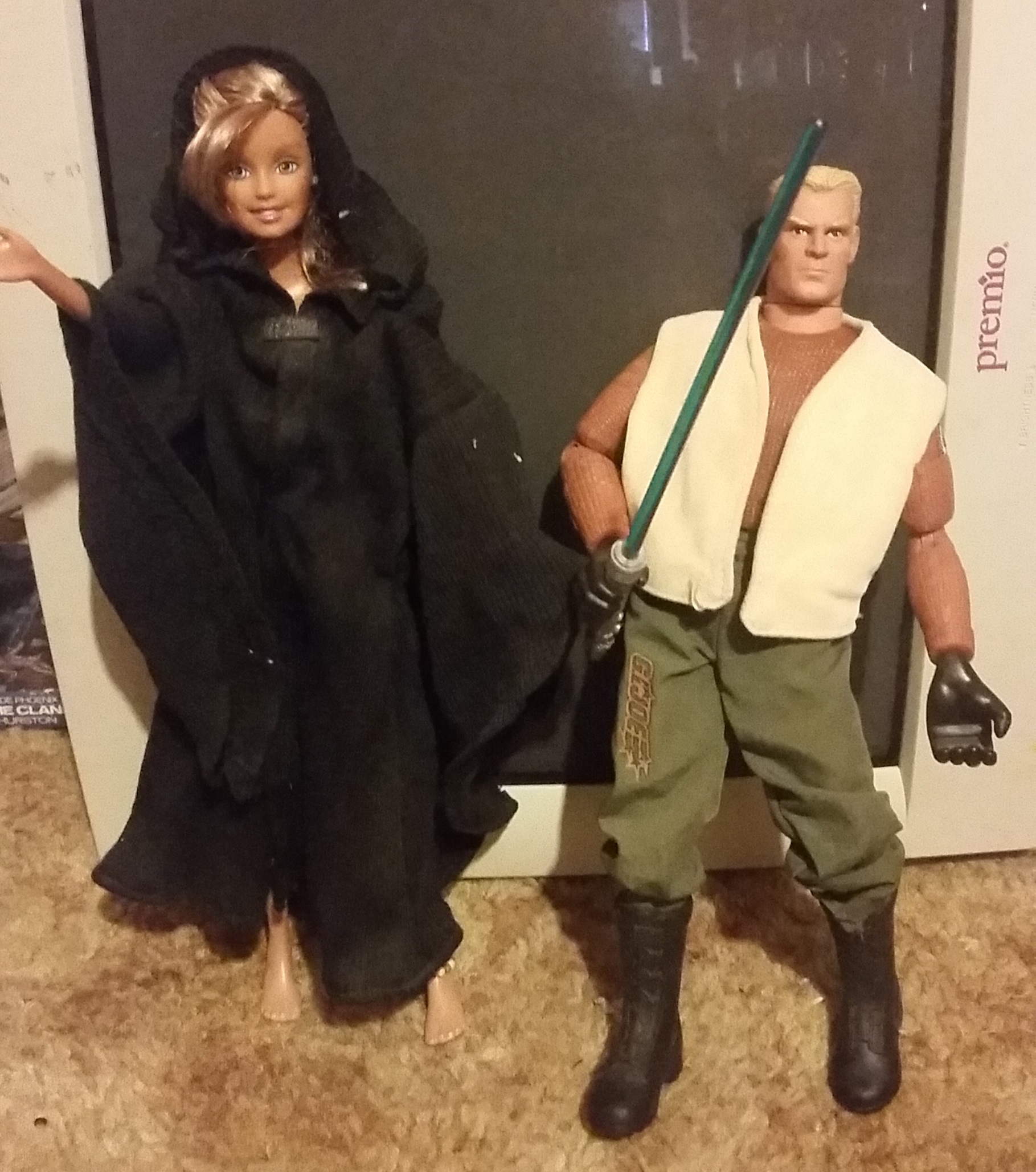
Princess Moreno, represented by the Barbie dressed in Emperor Palpatine’s robe was the leader of the adventuring group, and the player character of my niece, who was available back then because they lived in the Dallas area too.

Juba Jubajai, Jedi Guardian, was the muscle-brained power of the group.  He was my oldest son’s player character.


20180113_084936

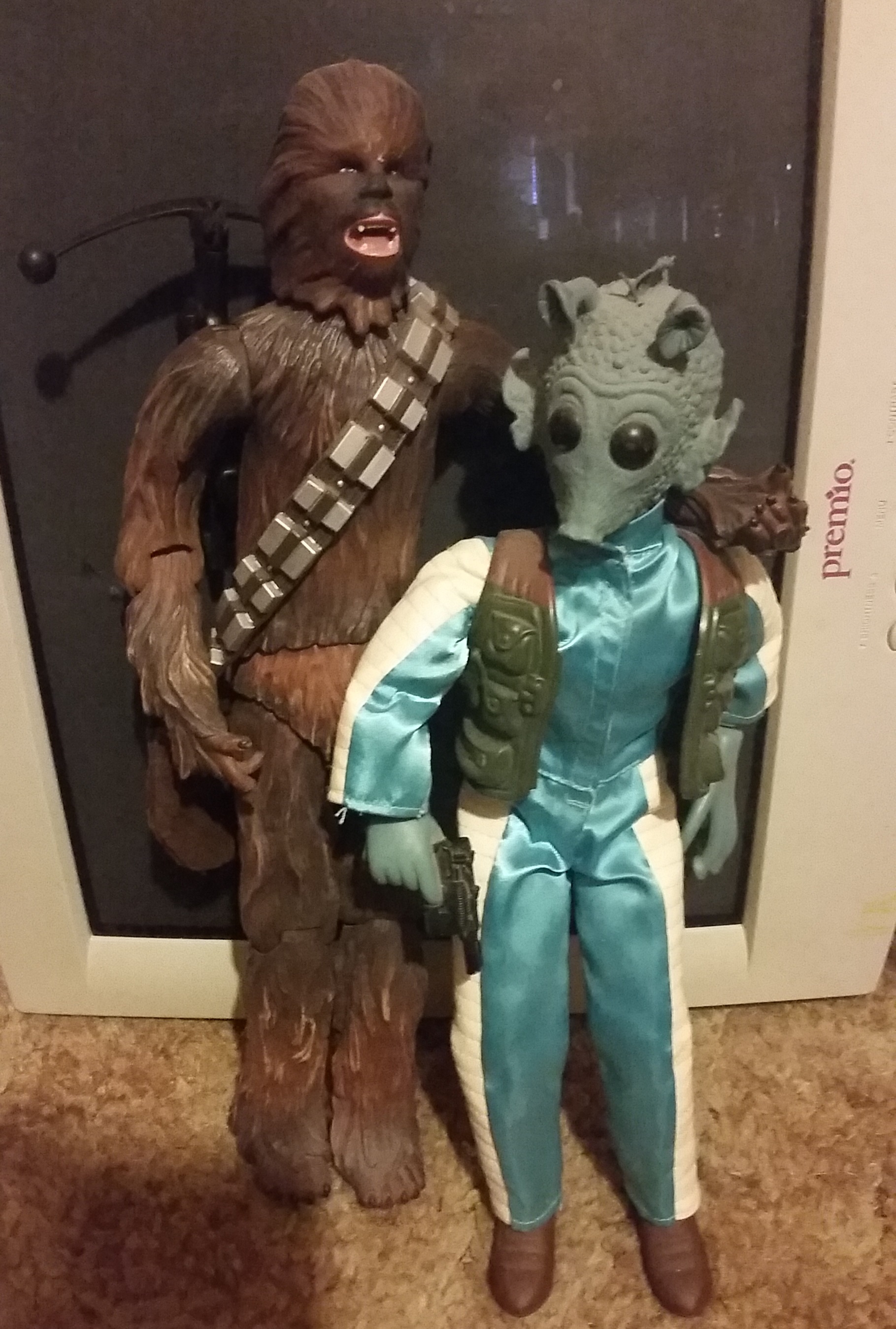
The sidekicks and NPC’s that rounded out the group were Hrowwuhrr, the Princess’s loyal Wookie companion, and Keebo Kloohorn, the Rodian minstrel, quick of wit and poor at shooting.


20180113_085219

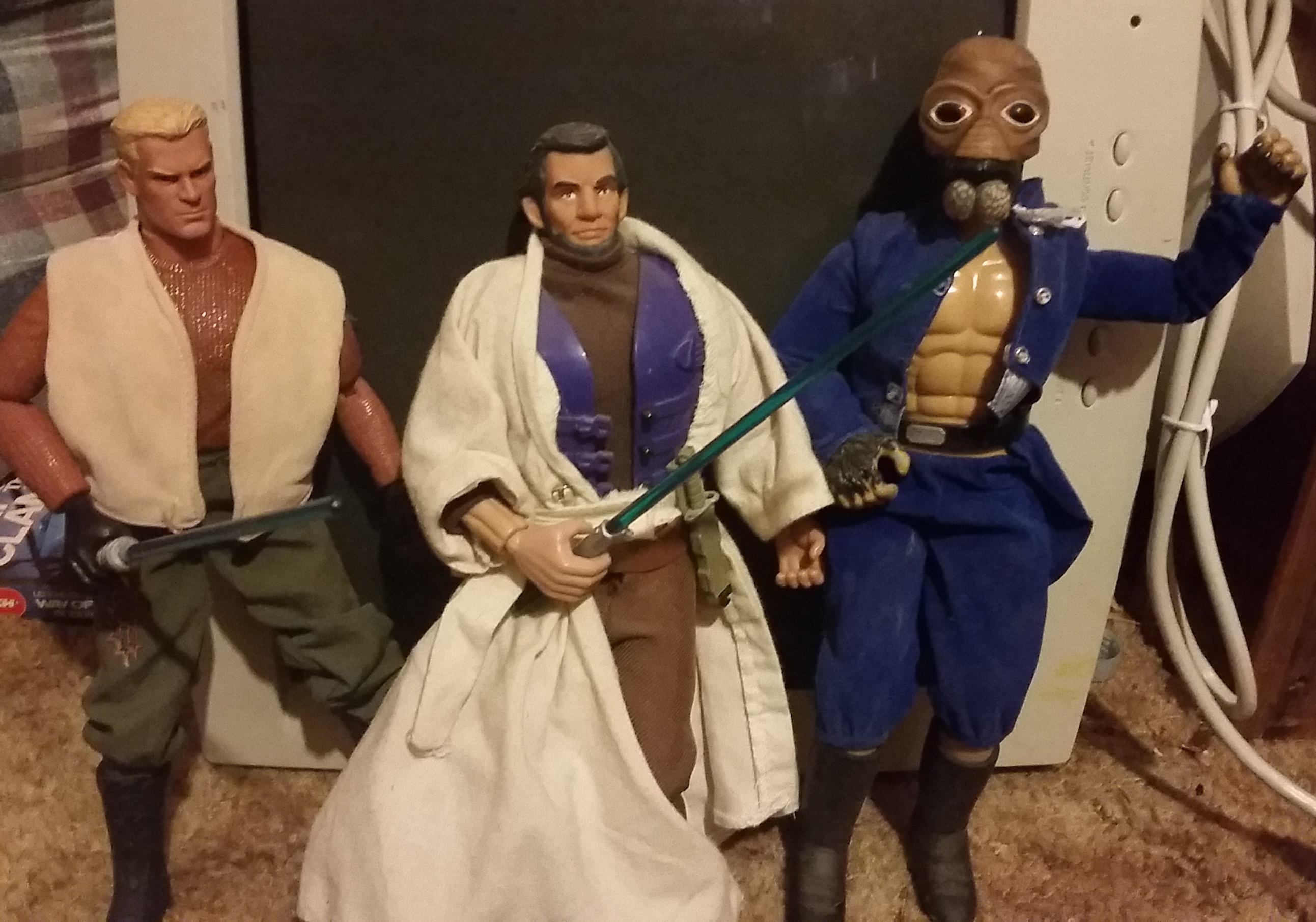
Of course, there were numerous other people you run into in an adventure, like Jedi-trainer Master Link Conn (played by an Abraham Lincoln Presidential action figure) and Barrabas the space pirate.  I customized some.  Luke Skywalker and Han Solo played a lot of them.  And others were only present in our imaginations.  For a brief little while, it was a quaint and happy gaming experience to play Star Wars with dolls and dice.


Leave a comment

Filed under doll collecting, Dungeons and Dragons, heroes, Star Wars, strange and wonderful ideas about life

Dragons

16750_102844496407849_100000468961606_71389_2659019_n

Dragons in the Dungeons and Dragons role-playing games are the central monsters of the story.  In our Eberron campaign they not only rule an entire mysterious continent, but they are credited with the very creation of the world and everything.  Not only monsters, but also gods, is a pretty big order for a   character to fill.

Skye, the Blue Dragon to the left above is a dragon who believes that human people are the most important part of fulfilling the Dragon Prophecy.  Therefore the characters can rely on him as an ally, and sometimes even a patron.  He is a blue chromatic dragon with lightning breath, and the Blue Dragon Aureon, his great great grandfather,  is an important leader of the god-dragons worshiped as the Sovereign Host.

20160424_181130

Phaeros, the great crested red dragon, is a servant of chaos who actively opposes all that is good.  He works with orcish dictators and priests of the Dark Six to accomplish vast swaths of damage, destruction, and war.

He is a big bad villain that has to come at the end of a campaign, because dragons are not only powerful fire-breathers with monstrous monster-damage capability, they also know far more magic than even the wisest of wizards.  My players have not crossed him yet, but if they start finding the missing dragon eggs, that will happen soon.

You may notice that my dragon pictures are mostly coloring-book pictures repeated with different colors, but in many ways dragons are like that.  They all have the cookie-cutter qualities of a dragon, but with different-colored personalities and powers and ideas of good and evil.

Penny Dragon

Pennie is a copper dragon with divided loyalties and the soul of a clown.  She never takes the adventure at hand too seriously.  But if she decides to help the player characters find the missing dragon eggs, no ally will prove stronger and more helpful than her.  And she knows things that the players need to learn from her to find the missing eggs.

So dragons come in many forms and personalities.

In fact, the search for the missing dragon eggs will be critically affected by the fact that the eggs have all five hatched and dragons instinctively protect themselves when young by using their polymorph self magic to become some other creature.  And someone has implanted the idea of using human form as the default even though the wormlings have never actually seen a human being in real life.

C360_2017-07-29-10-13-38-827

This is a double portrait of Calcryx, both as a white dragon wormling and a young girl.

So, playing games with dragons is fun and archetypal story-telling, and I will continue to do it, even if it means getting burned now and again.

Leave a comment

Filed under Dungeons and Dragons, humor, Paffooney

Dragons

16750_102844496407849_100000468961606_71389_2659019_n

Dragons in the Dungeons and Dragons role-playing games are the central monsters of the story.  In our Eberron campaign they not only rule an entire mysterious continent, but they are credited with the very creation of the world and everything.  Not only monsters, but also gods, is a pretty big order for a   character to fill.

Skye, the Blue Dragon to the left above is a dragon who believes that human people are the most important part of fulfilling the Dragon Prophecy.  Therefore the characters can rely on him as an ally, and sometimes even a patron.  He is a blue chromatic dragon with lightning breath, and the Blue Dragon Aureon, his great great grandfather,  is an important leader of the god-dragons worshiped as the Sovereign Host.

20160424_181130

Phaeros, the great crested red dragon, is a servant of chaos who actively opposes all that is good.  He works with orcish dictators and priests of the Dark Six to accomplish vast swaths of damage, destruction, and war.

He is a big bad villain that has to come at the end of a campaign, because dragons are not only powerful fire-breathers with monstrous monster-damage capability, they also know far more magic than even the wisest of wizards.  My players have not crossed him yet, but if they start finding the missing dragon eggs, that will happen soon.

You may notice that my dragon pictures are mostly coloring-book pictures repeated with different colors, but in many ways dragons are like that.  They all have the cookie-cutter qualities of a dragon, but with different-colored personalities and powers and ideas of good and evil.

Penny Dragon

Pennie is a copper dragon with divided loyalties and the soul of a clown.  She never takes the adventure at hand too seriously.  But if she decides to help the player characters find the missing dragon eggs, no ally will prove stronger and more helpful than her.  And she knows things that the players need to learn from her to find the missing eggs.

So dragons come in many forms and personalities.

In fact, the search for the missing dragon eggs will be critically affected by the fact that the eggs have all five hatched and dragons instinctively protect themselves when young by using their polymorph self magic to become some other creature.  And someone has implanted the idea of using human form as the default even though the wormlings have never actually seen a human being in real life.

C360_2017-07-29-10-13-38-827

This is a double portrait of Calcryx, both as a white dragon wormling and a young girl.

So, playing games with dragons is fun and archetypal story-telling, and I will continue to do it, even if it means getting burned now and again.

Leave a comment

Filed under Dungeons and Dragons, humor, Paffooney

Spacey Stories

Buster 3

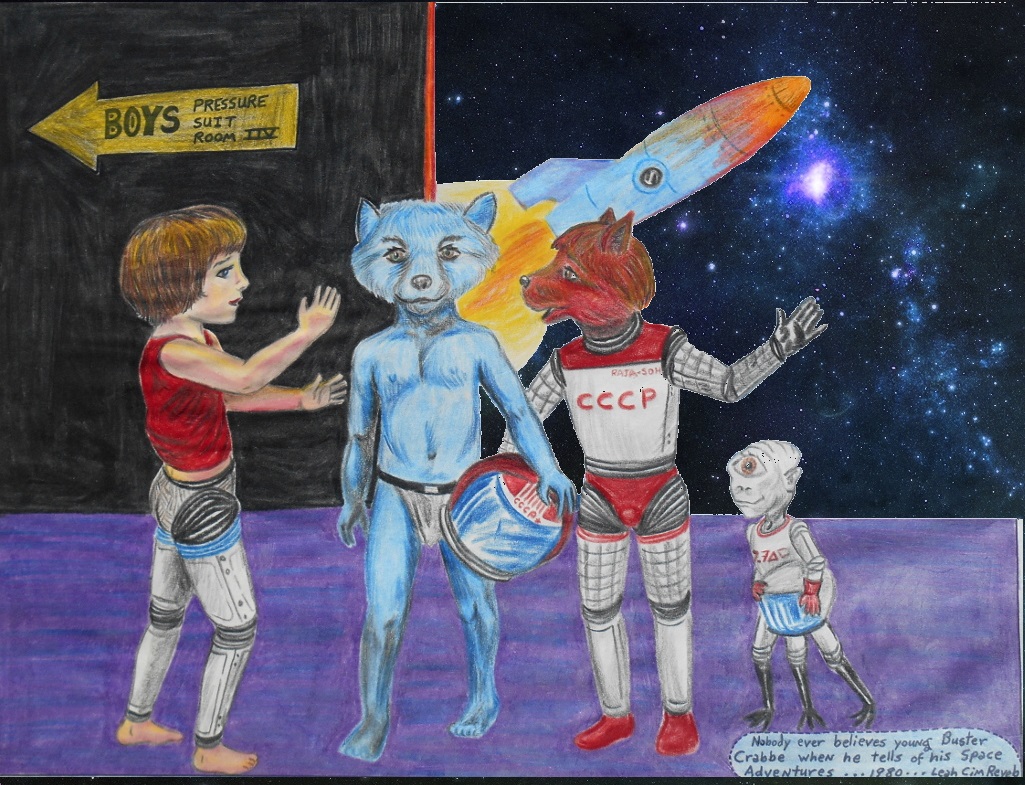
I am usually considered a Sci-fi and Fantasy author when anybody tries to categorize me.  I learned to write during the 70’s when Tolkien and Michael Moorcock and Frank Herbert were growing bigger, and Robert Heinlein, Ray Bradbury, and Isaac Asimov were gods.  Of course, I also have the YA-thing hanging around my neck like a bell.  I learned to tell stories being a dungeon master for middle-school and high-school boys back in the eighties.  And because it was Texas with a deeply-held and violently-enforced religious fear of anything with demons in it, I was forced to change my role-playing games from sword and sorcery to science-fiction.  I played endless Saturday-afternoon Traveller games that could span parsecs and light-years in a single afternoon.  And I was one of those game-masters who used humor to build a campaign and keep the players engaged and interested.  We had epic space battles and conquered large swaths of the Orion Spur of the Milky Way Galaxy.  When I began turning my Traveller games into fiction, I used the personalities of the boys who played the game with me for characters in the stories.  I often used the same plots (applying considerable polish to portions of plot where… well, you know… teenage boys, not remarkably G-rated.)  I created things that made me and some of the players laugh, and even feel sad… with deep, cathartic effects, as if we had experienced those things in real life.  (The deaths of favorite characters and tragic failures of galaxy-saving plans come quickly to mind.)

DSCN4409

I enjoy practically everything Sci-Fi, from Flash Gordon, to Buck Rodgers,  to Star Trek and Star Wars…  I loved Mechwarrior books and comic-book Sci-Fi like Adam Strange, Hawkworld, and Guardians of the Galaxy (the old ones that came before Groot and Rocket Raccoon).  I let it warp and weave my imagination and the imaginary worlds that blossomed from it.
A
nd the ideas continued to morph and change and become stories that I really had to tell.

Phoenix1My first published novel, Aeroquest is a compilation of old Traveller adventures.  I published it well before it was ready for market and used a cheap-o publisher that wasn’t worth the free price-tag,  They gave me no editorial help and apparently didn’t even read the novel.  I will not defame them by name here, but if they sound to you like Publish America… well, there might be a reason.

I love stories about time travel and sci-fi gadgets…  trans-mats and starships and meson cannons and sentient plants… oh, my!

And now that I have revealed that I have such a massive nerd-head that I really ought to own Comicon by now, I hope you will not suddenly turn me off and read my blog no more.  I can’t help it.  I was born that way… and any child doomed to be born in the 50’s and a child in the space-race 60’s was bound to have George-Lucas levels of Sci-Fi nerdism.

4th Dimension BizzyandHarmony DSCN4725

Leave a comment

Filed under humor, Paffooney, science fiction

H. P. Lovecraft Gaming

call_of_cthulhu_gw

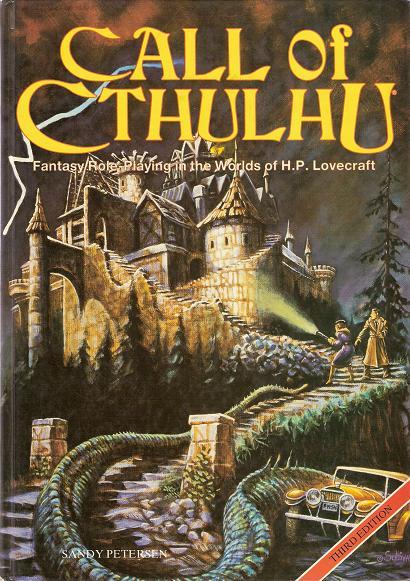
Back in the early 1990’s my little group of game players turned the full power of nerd obsession on the fantasy role-playing game Call of Cthulhu.  It is a totally weird little game based on the novels and short stories of H. P. Lovecraft.   It is a game about solving mysteries that, if successfully solved, will lead you to confrontations with all-powerful ancient evils that you cannot win against.  And you keep playing until your character absorbs so many insanity points that they go completely insane.  Your character then becomes a minion of demonic and irresistible evil that the next player character you roll up will have to hunt and defeat.  It is not a game you ever win.  You merely have to learn to survive and stay sane, things at which the game is set up to make you fail.

In 1991 the television gods took an old vampire soap opera that I had loved in the 60’s and remade it.  Dark Shadows came back to life starring Ben Cross as Barnabas Collins (the Chariots of Fire guy playing the vampire role that would later have a part in the downfall of Johnny Depp.)  The lead player in our group, a kid who was such a nerd that he would go one to be in the intelligence division of the Marine Corps, decided his character would have to be the vampire Barnabas Collins.  He reasoned that the only way to fight big evils was to fight back with evil that had been converted back to goodness.

And his instincts were good.  Barnabas and his lady love, Victoria Winters, were the only player characters not eaten by the minions of Nyarlathotep in the first adventure.  And Victoria had to be raised from the dead by having Barnabas turn her into a Vampire.

20180512_104247

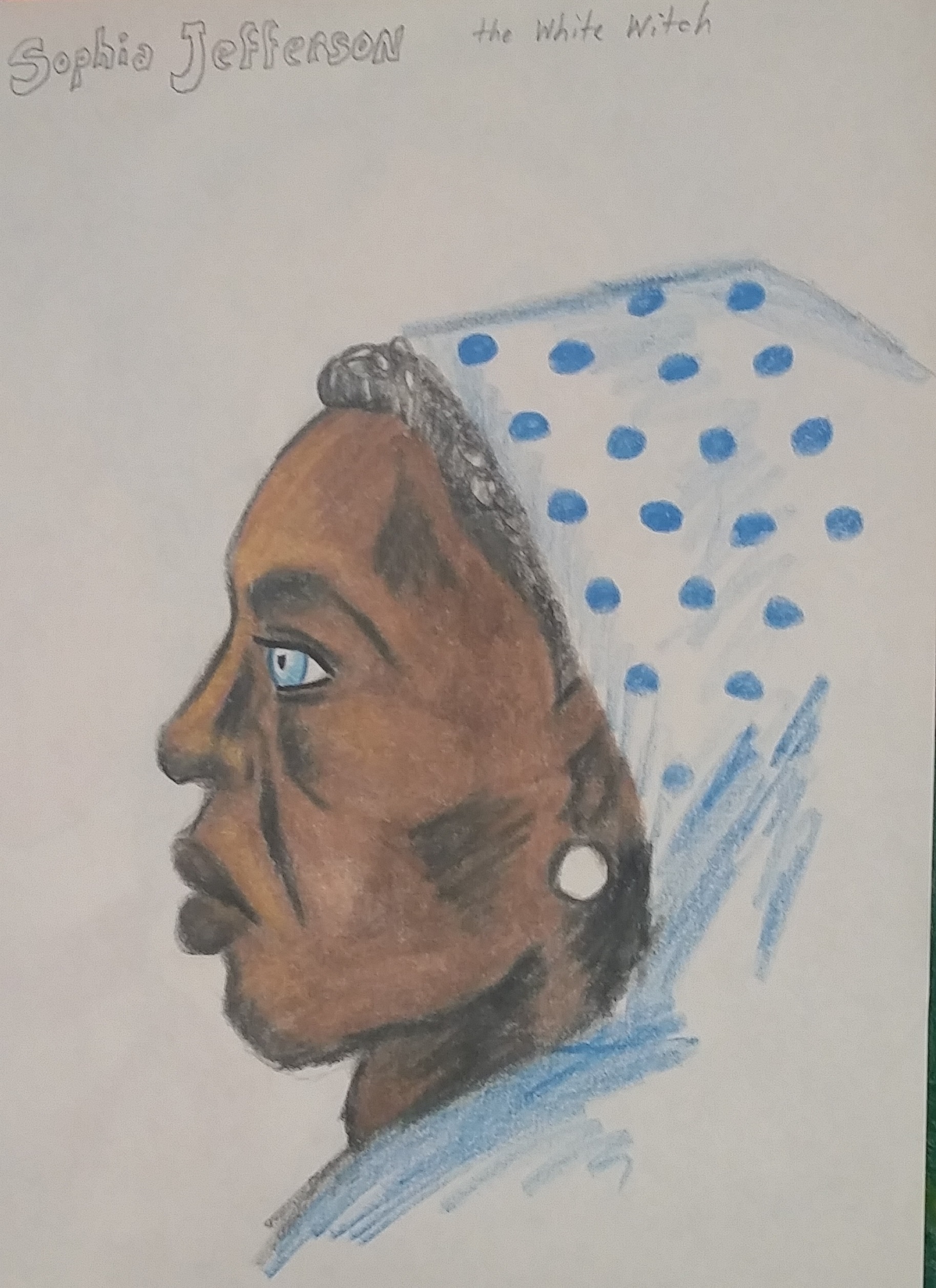
Of course, the very next challenge would be from a white witch voodoo priestess from New Orleans, the Vampire hunter Sofia Jefferson.  (She was an NPC, not Sofie’s player character).  And she had a special potion that, given to a vampire, would restore it to normal human life.

This was a problem for Barnabas, because he really depended on his powers as a vampire and was not willing to go on without those powers.  So the vampire hunter had to be avoided without killing her and putting an end to her good work fighting evil.  If you can’t tell from the picture, Sofia was blind, yet could see with uncanny vision through sightless eyes.

20180512_103425

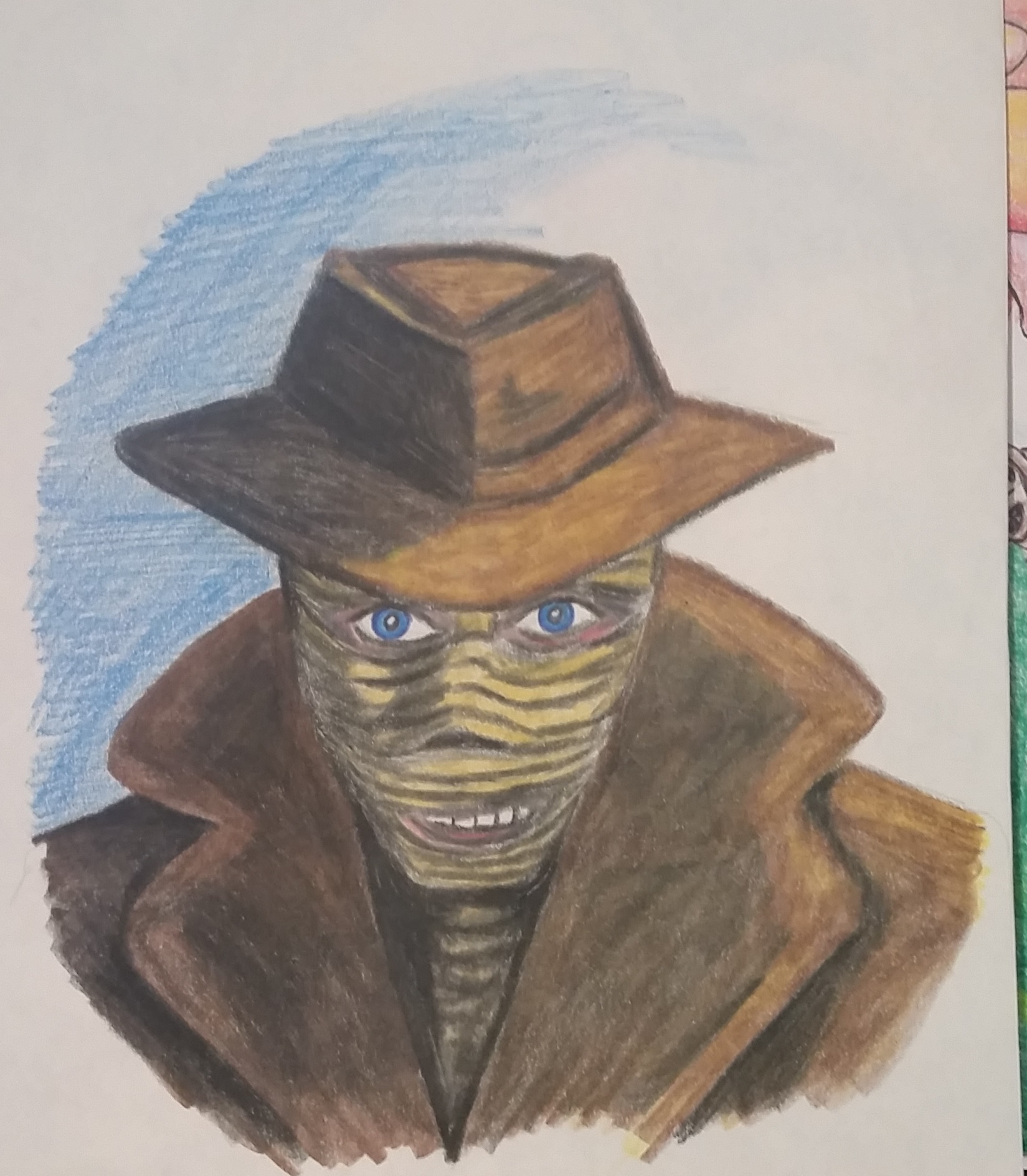
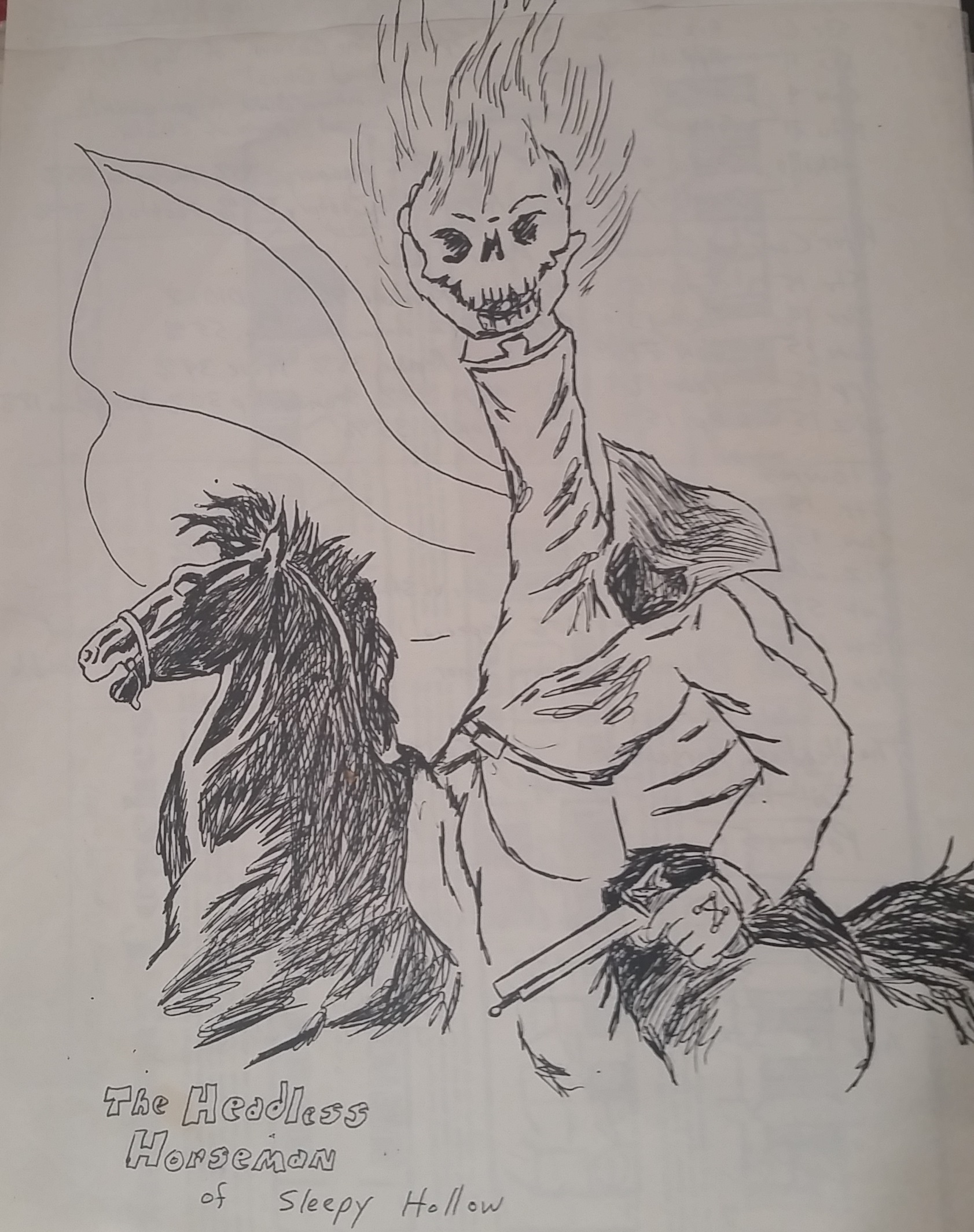
The next player character added to survive more than one adventure borrowed Luis’s vampire idea by making his character from the movie Darkman, a Liam Neeson movie about a doctor who had burned his face off, but could become other people by wearing their cloned skin.  He was the lead investigator to help solve the werewolf problem in the bayou , and took on the dark circus adventure where the foolish sideshow people were trying to make money exhibiting the captured Headless Horseman of Sleepy Hollow.

20180512_104746

There was a lot of death and horrible murders in those game sessions, but not committed by the player characters.  They had to keep good notes and draw conclusions and manage their characters’ powers and assets.  Notes like these;

And so, while the game never ended to my satisfaction, the players did get the feel of acting in a horror movie and fighting on the side of goodness against evil.  It was weird, but definitely worth doing.

Leave a comment

Filed under autobiography, Dungeons and Dragons, horror movie, horror writing, humor, Paffooney

H. P. Lovecraft Gaming

call_of_cthulhu_gw

Back in the early 1990’s my little group of game players turned the full power of nerd obsession on the fantasy role-playing game Call of Cthulhu.  It is a totally weird little game based on the novels and short stories of H. P. Lovecraft.   It is a game about solving mysteries that, if successfully solved, will lead you to confrontations with all-powerful ancient evils that you cannot win against.  And you keep playing until your character absorbs so many insanity points that they go completely insane.  Your character then becomes a minion of demonic and irresistible evil that the next player character you roll up will have to hunt and defeat.  It is not a game you ever win.  You merely have to learn to survive and stay sane, things at which the game is set up to make you fail.

In 1991 the television gods took an old vampire soap opera that I had loved in the 60’s and remade it.  Dark Shadows came back to life starring Ben Cross as Barnabas Collins (the Chariots of Fire guy playing the vampire role that would later have a part in the downfall of Johnny Depp.)  The lead player in our group, a kid who was such a nerd that he would go one to be in the intelligence division of the Marine Corps, decided his character would have to be the vampire Barnabas Collins.  He reasoned that the only way to fight big evils was to fight back with evil that had been converted back to goodness.

And his instincts were good.  Barnabas and his lady love, Victoria Winters, were the only player characters not eaten by the minions of Nyarlathotep in the first adventure.  And Victoria had to be raised from the dead by having Barnabas turn her into a Vampire.

20180512_104247

Of course, the very next challenge would be from a white witch voodoo priestess from New Orleans, the Vampire hunter Sofia Jefferson.  (She was an NPC, not Sofie’s player character).  And she had a special potion that, given to a vampire, would restore it to normal human life.

This was a problem for Barnabas, because he really depended on his powers as a vampire and was not willing to go on without those powers.  So the vampire hunter had to be avoided without killing her and putting an end to her good work fighting evil.  If you can’t tell from the picture, Sofia was blind, yet could see with uncanny vision through sightless eyes.

20180512_103425

The next player character added to survive more than one adventure borrowed Luis’s vampire idea by making his character from the movie Darkman, a Liam Neeson movie about a doctor who had burned his face off, but could become other people by wearing their cloned skin.  He was the lead investigator to help solve the werewolf problem in the bayou , and took on the dark circus adventure where the foolish sideshow people were trying to make money exhibiting the captured Headless Horseman of Sleepy Hollow.

20180512_104746

There was a lot of death and horrible murders in those game sessions, but not committed by the player characters.  They had to keep good notes and draw conclusions and manage their characters’ powers and assets.  Notes like these;

And so, while the game never ended to my satisfaction, the players did get the feel of acting in a horror movie and fighting on the side of goodness against evil.  It was weird, but definitely worth doing.

Leave a comment

Filed under autobiography, Dungeons and Dragons, horror movie, horror writing, humor, Paffooney

Book Nutty

20180317_093627

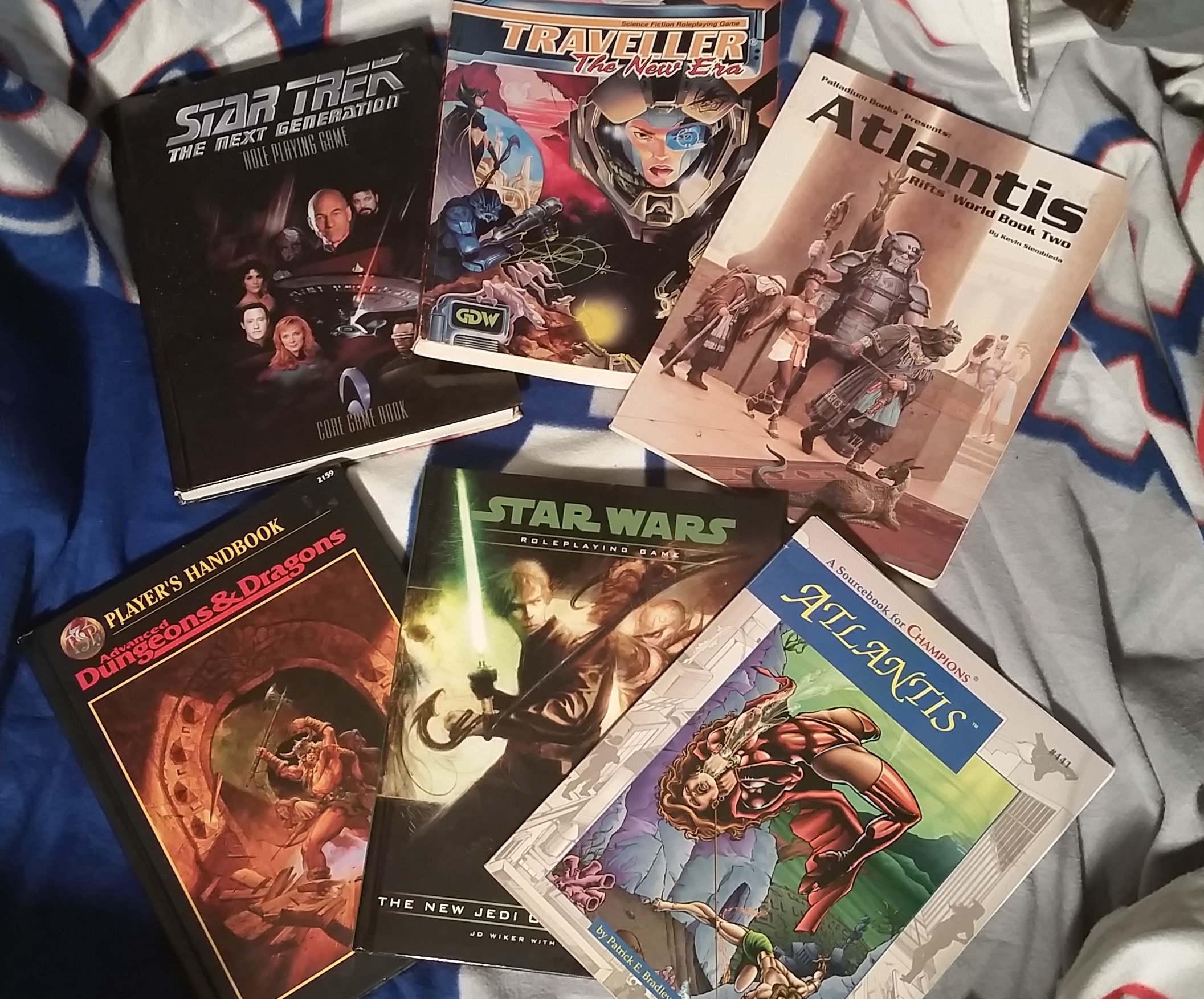
Being a role-playing-game dungeon master, you have to be familiar with how to absorb and implement the many, many game-playing books that are published to help you keep the adventure humming along towards epic goals.  I have to admit to being a book addict.  That is true for all books, but particularly game books.  I collect them obsessively.  I still troll Half Price Books looking for old and out-of-print D&D books and other game books.

Every role-playing game has certain necessary basic books.  There is a book full of advice for the game master.  It will tell you how to run an adventure and how to plan or map-out your events.  There is a guide book for players that advises them on how to create a character, develop that character over time, and how to use the rules to create success.  There is also usually some kind of enemies compendium, a monster book, filled with the characters you will have to defeat, slay, or outwit during the course of the adventure.  Then there are game supplements that provide detailed settings, often complete with maps.  They can give you non-player characters, adventure seeds, extra statistics, and sometimes additional useful tables.  Equipment books are a thing as well.

I have a huge collection of Dungeons & Dragons books going back to TSR and continuing through their current publisher, Wizards of the Coast.  I have practically every Call of Cthulhu book, a game system to turn H.P. Lovecraft’s horror fiction into RPG adventures.  I have almost all of the Talislanta books, a D&D-like game with no elves, dwarves, or humans in their game.   I have practically everything put out by Game Designers’ Workshop for Traveller.  I have a few books from the Rifts RPG, a time-and-dimension bending science fiction game.  I have practically all of the Star Wars RPG books.  I have a lot of Star Trek books.  I have some G.U.R.P.S.  books (Generic Universal Role Playing System), some d20 RPG books, and many other odd books, including a boxed set of Rocky and Bullwinkle’s RPG, complete with hand puppets.

So, please don’t file paperwork on me with the authorities who put insane people in white jackets with extra long sleeves.  I am a collector who suffers from hoarding disorder.  And I love books.  I just can’t help it.

Leave a comment

Filed under collecting, Dungeons and Dragons, humor, monsters, old books, wizards