Tag Archives: humor

Chicken Soup Time (a twelve-line poem of recovery)

There comes a time when life really stinks,

A day when the life force grows green-brown and sinks,

Yes, I am ill and my every breath kinks,

And I cough and I burp and the end of the nose pinks,

So, I gather together under the covers,

The rotten parts of me over which the fly hovers,

And cook them in heat of the dreams of old lovers,

And fantasy dreams, whose richness discovers…

The stories that make the sum of my life,

And memories of people who’ve hurt me with strife,

And good things and great things and details all mixed,

And stew while I’m sleeping til things are all fixed.

Blue birdsxxx

2 Comments

Filed under humor, illness, Paffooney, poem

Exploring the Mind of Mickey

20160127_205542

One really weird thing that teachers do is think about thinking.  I mean, how can a person actually teach someone else how to think and how to learn if they don’t themselves understand the underlying processes?  Now that I have retired from teaching and spend all my time feeling sorry for myself, I thought I would try thinking about thinking one more time at least.  Hey, just because I am retired, it doesn’t mean I can’t still do some of the weird things I used to do as a teacher, right?

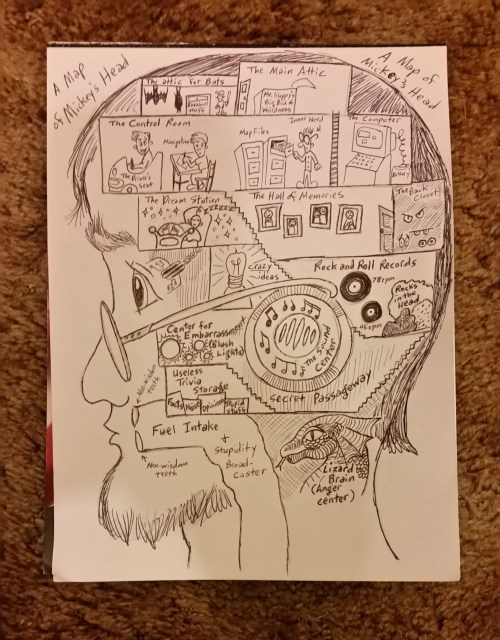
This time I made a map to aid me in my quest to follow the twists and turns of how Mickey thinks and how Mickey learns.  Don’t worry, though.  I didn’t actually cut Mickey’s head in half to be able to make this map.  I used the magical tool of imagination.  Some folks might call it story-telling… or bald-face lying.

Now, a brain surgeon would be concerned that my brain maps out in boxes.  He would identify it as a seriously deformed brain.  It is not supposed to be all rectangular spaces and stairs.  It probably indicates a severe medical need for corrective surgery… or possibly complete amputation.  But we are not going to concern ourselves with trying to save Mickey from himself right now.  That is far too complex a topic to tackle in a 500-word daily post.  We are just discussing the basics of operation.

You see the three little guys in the control room?  They are an indication that not only did I steal an idea from the Disney/Pixar Movie Inside Out, but I apparently have too few guys doing the job up there compared to the movie version.  (It probably makes sense though that a young girl like the one in the movie has a much more sensible configuration in her brain than someone who was a middle school teacher for 24 years.  Seriously, that job can do a bit of damage.)  The three little guys are not actually Moe, Curly, and Larry, though that wouldn’t be far from descriptive accuracy.  They are Impulsive Ignatz, currently in the driver’s seat (or else I wouldn’t be writing this), Proper Percy the Planner, and Pompositous Felixian Checkerbob, the fact-checker and perfectionist (also labeled the inner nerd… I am told not everyone has one of these).  They are the three little guys that run around in frantic circles in my head trying to deal with a constant flow of input and output, trying to make sense of everything, and routinely failing miserably.

I shouldn’t forget the other two little guys in my head, Sleepytime Tim in the Dream Center, and little Batty up in the attic.  I have no earthly idea how either of them function, or what in the heck they are supposed to do.  But there they are.  The other three run up and down stairs all day, locating magic mushrooms and random knowledge in the many file cabinets, record collections, book stacks, and odd greasy containers that are stored all around in the many nooks and crannies of Mickey’s mind.  They collect stuff through the eyes and ears, and it is also their responsibility to chuck things out through the stupidity broadcaster at various inopportune times.  It is also a good idea for them to avoid the lizard brain of the limbic system in the basement.  It is easily angered and might eat them.

So now you should be able to fully understand how Mickey thinks.  (Or not… a qualifier I was forced to put in by Checkerbob.)

Leave a comment

Filed under humor, insight, mental health, Paffooney, Uncategorized

Time For Wasting

wonderful teaching

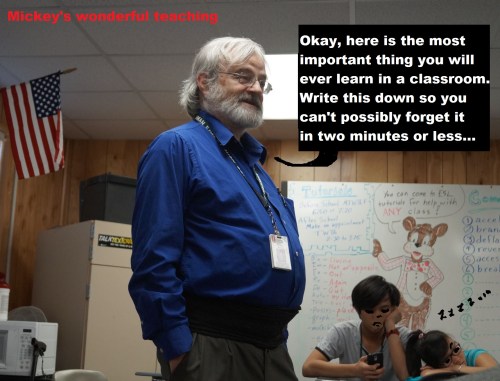
When I was still alive and still teaching, maximizing and managing time was an incredibly important part of the day.    You had to activate learners with an attention step, a lesson focus that grabbed them.  Usually that had to follow a warm-up, something you got them to do as soon as you had smiled at them at the doorway, offered to shake their hand, and then pulled them into the classroom to do some work for you.  fifteen minutes at the start of the class to rev up mental engines and get the gears turning… shake out the rust and the cobwebs that accumulate the instant the final bell rang in the previous class. I timed that part of class down to the second with my pocket watch… or phone in later years.  Then, once the engines started, the focus is in place, you introduce the learning objective.  Never more than ten minutes… timed to the second… you give the explanation, the road map of the day ahead, the instruction.  Then for the next ten to fifteen minutes you let them discover stuff.  In groups, with a partner, teacher to class, student to class, or (rarely) individually, they must apply what you pointed out and figure something out.  It could be complicated, but probably it was simple.  All answers are welcome and accepted… because all answers will be evaluated and you learn more from wrong answers than you do from correct guesses.  Evaluation comes in the five to ten minutes at the end when you evaluate.  “What have I learned today?”  You try your hardest to pin something new to the mental note-board hanging on the brain walls of each and every student.  Depending on how much or how few minutes you are given before the final bell kills the lesson for the day, you have to put the big pink ribbon on it.  That tightly-wound lesson cycle goes on all day, repeated as many times as you have classes.  In that time you have to be teacher, policeman, friend, devil’s advocate, entertainer, counselor, psychotherapist, chief explainer, and sometimes God.  And you time it to the second by your pocket watch.

Teacher

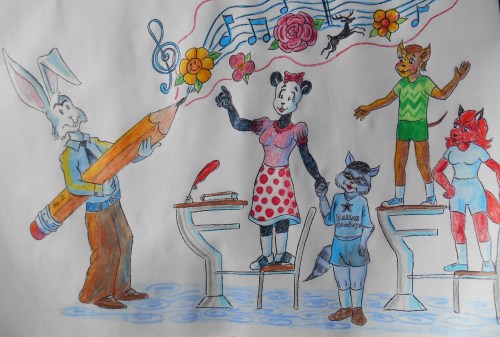
I miss being the rabbit holding the BIG PENCIL.  Now that I am retired, I am no longer on the clock… no longer subject to careful time management.  My pocket watch is broken and lying in a box somewhere in my library.  I live now in non-consecutive time periods of sleep and illness and writing and playing with dolls.  I have entered a second childhood now.  Not really a simple one because of diabetes and arthritis and COPD and psoriasis and all the other wonderful things that old age makes possible.  But a childhood free of school politics and mandates from the school board and from the State.  A childhood where I can once again dream and imagine and create and play.  That’s what this post is if you haven’t already figured it out.  I am playing with words and ideas.  They are my toys.  Toys like this one;

turtleboy

This, of course, is Tim, the turtleboy of irony, holding his magic flatiron that he uses for ironing out irony.  He is flattening it out now with a cartoony Paffooney and wickedly waggled words.  Ironically, I have often taught students to write just like this, making connections between words and pictures and ideas through free association and fast-writing.  Have you learned anything from today’s retired-teacher post?  If you did, it is ironic, because you were never meant to from the start.

Leave a comment

Filed under humor, irony, Paffooney, teaching, Uncategorized

The Uncritical Critic Watches Another Quirky Movie

MoonriseKingdom

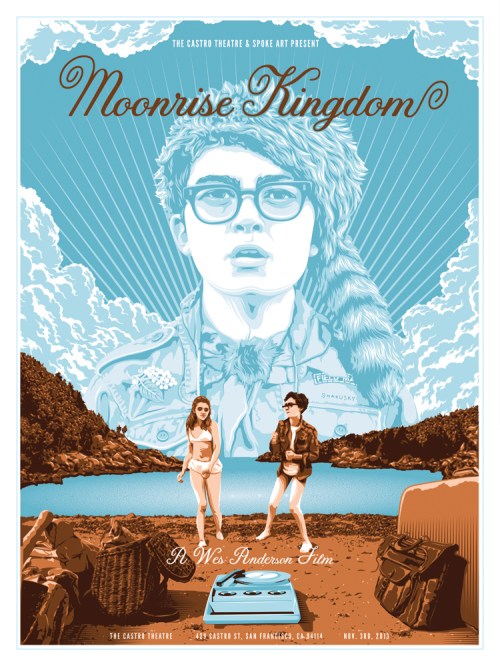
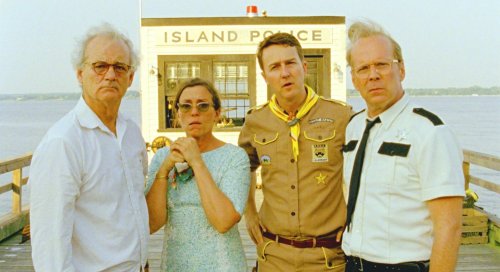
Yesterday was a weird day.  If you looked carefully at the mental map I made of Mickey’s head the other day, you realize that Uncle Slappy’s Big Box of Weirdness occupies a key position in the top center.  I had a traffic accident in the parking lot of Long Middle School yesterday morning, banging bumpers with a lady named Vilma.  The sun was in my eyes, and she started to go, then suddenly stopped for no reason I could see.  No damage was done to anything but my pride.  My wife put her parents, Tatang and Inang, on an airplane yesterday bound for the Philippine Islands, going home for a visit.  Afterwards, my wife was feeling mortal, betting me that she was going to die before me even though I have the head start of six incurable diseases and surviving cancer once already.  There are no symptoms for her impending heart attack, so I will probably win that bet.  But the point is, it was a weird time yesterday to stumble weirdly over a weird and wacky movie on Netflix called Moonrise Kingdom.  It is a Romeo and Juliet sort of story about two twelve-year-olds who fall in love at first sight, and though their families try to keep them apart, they end up together.  Thankfully it is not a Shakespearian Tragedy where everybody dies at the end, though Sam is struck by lightning and the big storm nearly drowns all the boy scouts.  It is more like a Shakespearian Comedy where everybody gets married at the end, though the twelve-year-olds don’t get married at the end… rather, they are married by the middle.

9cd430de

Wes Anderson is the genius director behind movies like;

tumblr_m66zbuiAG41r9a2pz

None of which I have seen, but now have to watch ALL of them sooner or later.  Kinda like the mad quest to see every Tim Burton movie ever made.  I am one of the few idiots out there who think Dark Shadows was a truly wonderful movie, and along with Edward Scissor-hands, one of the finest things Johnny Depp has ever done.

In Moonrise Kingdom Anderson uses tracking shots at the beginning that shift quickly from one room to the next in a way that invokes an old-time slide show.  The story is set in 1965 in Maine, and is filled with all kinds of iconic references to things we 60’s kids all vividly recall.

The movie also tells the love story of Sam and Suzy with a painter’s sense of iconic pictures that focus you on important plot points and themes.

c7482fc480a1bef169ba43932b279cb8

moonrise_kingdom_beach

And there are numerous quotable bits that make the movie what we teachers refer to as a text-rich environment, complete with phony kids’ books and maps and notes.

81Jn7yQSuAL._SL1500_

The all-star cast is pretty good, too.

ce6e360efec533bec4bf766dff5c85c3

This is now one of my new favorite movies.  It is a happy-ending-type fairy tale with no fairies in it.  It is full of ineffectual and incompetent adults who have rules of behavior like grown-ups and motivations like goofy kids… just like real life.  The plot is driven by the notion that anything you do in life is a mistake, and mistakes have consequences, but you have to do them anyway because, well… that’s life.

Am I telling you that you should watch this movie too?  Well, you should… but, no.  I am simply gushing about this quirky movie because I like it, and yesterday was a very weird day.

6 Comments

Filed under goofiness, humor, movie review, strange and wonderful ideas about life, surrealism

Poor Ol’ Wooden Head

“Kaw-Liga”
KAW-LIGA, was a wooden Indian standing by the door
He fell in love with an Indian maid over in the antique store
KAW-LIGA – A, just stood there and never let it show
So she could never answer “YES” or “NO”.

He always wore his Sunday feathers and held a tomahawk
The maiden wore her beads and braids and hoped someday he’d talk
KAW-LIGA – A, too stubborn to ever show a sign
Because his heart was made of knotty pine.

[Chorus:]
Poor ol’ KAW-LIGA, he never got a kiss
Poor ol’ KAW-LIGA, he don’t know what he missed
Is it any wonder that his face is red
KAW-LIGA, that poor ol’ wooden head.

KAW-LIGA, was a lonely Indian never went nowhere
His heart was set on the Indian maiden with the coal black hair
KAW-LIGA – A, just stood there and never let it show
So she could never answer “YES” or “NO”.

Then one day a wealthy customer bought the Indian maid
And took her, oh, so far away, but ol’ KAW-LIGA stayed
KAW-LIGA – A, just stands there as lonely as can be
And wishes he was still an old pine tree.

“The Complete Hank Williams” (1998)

Magicman 3

The quirky movie I reviewed, Moonrise Kingdom, reconnected me with a song I loved as a child.  It was on an old 45 record that belonged to my mother’s best friend from high school.  When the Retleffs sold their farm and tore down their house and barn, they had a huge estate sale.  My mother bought the old record player and all the collected records that Aunt Jenny still had.  They were the same ones my mother and her friend Edna had listened to over and over.  There were two records of singles about Indian love.  Running Bear was about an Indian boy who fell in love with little White Dove.  They lived on opposite sides of a river.  Overcome with love, they both jump into the river, swim to the middle, lock lips, and both drown.  Together forever.  That song, it turns out, was written by the Big Bopper, and given to Johnny Preston to sing, and released the year after the Big Bopper died in a plane crash along with Buddy Holly and Richie Valens.

Kaw-liga, by Hank Williams, was a wooden Indian sitting in front of a cigar store.  His love story is even worse.  As you can see from the lyrics above, he never even gets the girl.  Dang, Indian love must be heck!

But I have come to realize that these aren’t merely racist songs from a bygone era.  They hold within them a plea for something essential.  They are a reminder that we need love to be alive.

When I was young and deeply depressed… though also insufferably creative and unable to control the powers of my danged big brain, I knew that I wanted love.  There was one girl who went to school with me, lovely Alicia Stewart (I am not brave enough to use her real name), that filled my dreams.  We were classmates, and alphabetical seating charts routinely put us near each other.  She had a hypnotic sparkle in her eyes whenever she laughed at my jokes.  She was so sweet to me… sweet to everyone… that she probably caused my diabetes.  I longed to carry her books or hold her hand.  I cherished every time she spoke to me, and collected the memories like stamps in a stamp album.  But like the stupid cigar store Indian, I never spoke up for myself.  I never told her how I felt.  I was endlessly like Charlie Brown with the Little Red-Haired Girl.  Sometimes you have to screw up your courage and leap into the river, even if it means your undoing.  Because love is worth it.  Love is necessary.  And it comes to everybody in one way or another over time.  I look at pictures of her grandchildren posted on Facebook now, and wonder what might have been, if only… if only I had jumped in that stupid river.  I did find love.  And I probably would’ve drowned had I done it back then.  Life has a way of working things out eventually.  But there has to be some reason that in the 50’s, when I was born, they just kept singing about Indian love.

Leave a comment

Filed under autobiography, finding love, humor, Paffooney

The Oxford Obfuscation

queen-elizabeth-iIf you are going to entertain a completely absurd notion like, “Shakespeare wasn’t really written by Shakespeare”, then you have to have some knowledge of the times and the context within which such a profoundly counter-intuitive thing could possibly be true.  And it also helps to understand more precisely what the “writing of Shakespeare” actually means.  Now, I know it is not particularly fair to confuse you, dear reader, right before I try to dazzle you with my complicated and over-thunk lackwit conspiracy theory, but that is, after all, what obfuscation actually means.

The plays, sonnets, and other poetry of William Shakespeare reveal the mind of a genius.  Whoever wrote the works has to be a complicated man living a complicated life.  He has to be a sensitive, empathetic, highly intelligent, observant, and troubled man.  You don’t write the dark and deeply troubled suicidal tragedy of Hamlet without ever having thought of taking your own life.  You cannot portray the madness of King Lear without ever having experienced the turmoil of the mind that threatens to tear your soul apart.  And you don’t write about the complexities of love found in As You Like It or Romeo and Juliet without ever having experienced the massive thunderstorms of the mind that go along with falling in love.  And we are talking true love, not necessarily the domestic love you have for the wife you are stuck with.   You see what I did just there?  I put you into the head of the writer, and started you thinking like you yourself are Shakespeare.  As goofy a mental gymnastic exercise as that is, bear with me and keep thinking it.

At the time of Shakespeare’s ascendancy as the Bard Laureate of English Literature, England was not a safe place to be either a noble or a playwright.  Queen Elizabeth’s mother had her head cut off for bad politics even though she was married to the King of England at the time.  Lady Jane Gray, one of Elizabeth’s predecessors, lost her head when she was no more than a sixteen-year-old girl.  During Elizabeth’s reign, one of her court favorites, Robert Devereaux, Earl of Essex, attempted to seize the queen herself after a riot fomented by a performance of Shakespeare’s play, Richard II, at which eleven of Essex’s noble supporters were said to be present stirring up the emotions of the crowd.  It was a near thing for the writer of the play (about the life of a king whose reign ended in controversy about succession and which led eventually to the War of the Roses) to escape without also being caught up in the rebellion’s failure and round of executions that separated Essex from his head.  Elizabeth banned numbers of plays with religious or political content, bans that never seemed to touch the writer of Shakespeare’s plays, even when they touched on political themes.  You didn’t have to rebel against the Queen to lose your head either.  Elizabeth was trying to reinstate Anglican Protestantism against the critical tides of Catholic Europe.  You could be banished, put to death, or impressed  by force into the English Navy for being suspected of ideas that were too Catholic.  And witchcraft, or consulting with witches, as Macbeth depicts, earned you a nice warm fire in the public square to cleanse your immortal soul.

edwarddevereattribmarcusgheeraerts

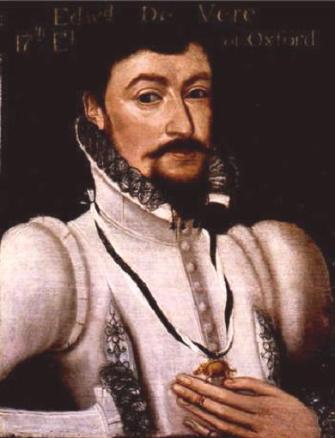
Edward de Vere, 17th Earl of Oxford

So, if one were to be both a playwright and a nobleman, known to and beloved by Queen Elizabeth, might there not be good reason to write under a pseudonym?  And numerous people who write about Edward de Vere mention the fact that he wrote poetry and plays, and the plays were very popular.  Some scraps of poetry by the Earl of Oxford still exist, but whatever happened to the manuscripts of his plays?  It is a conspiracy theory so delicious, that I have to take at least one more bite.  (You understand, I try to stick to a 500-word target for these posts, and even this 600+ is really too long.  So that means there has to be an Earl of Oxford Part II at least.)

Leave a comment

Filed under conspiracy theory, foolishness, humor, politics, William Shakespeare

The Heart of Shakespeare

3a8307f6bb01311fc90478857d32e891

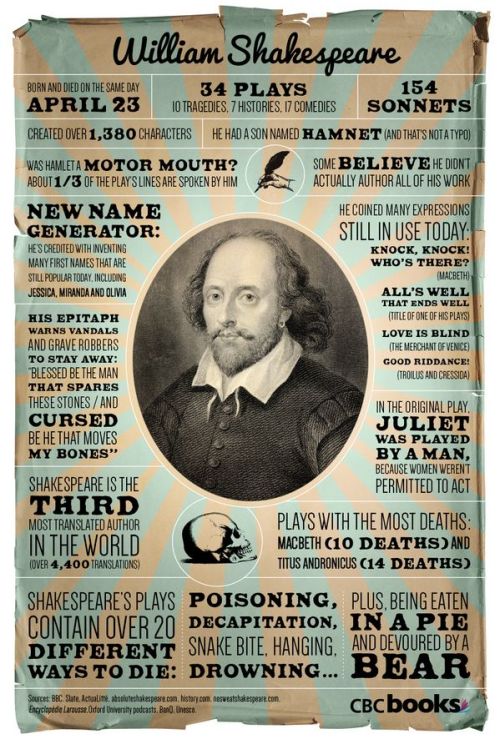
Despite my skepticism about the accepted wisdom in regard to the historical William Shakespeare, I do deeply love the body of work that is Shakespeare.  My most favorite play is The Tempest, the final play in the canon.  I also have read and loved As You Like It, Romeo and Juliet, Hamlet, A Midsummer Night’s Dream, The Merchant of Venice, Henry V, Richard III, Julius Caesar, Macbeth, Othello,  and King Lear.  I know that is not all of the plays, but that is probably more than most people have read.  And of course, as an English major in college, and later as a teacher, I have actually analyzed, compared, studied, and taught some of these plays.  So, the Shakespeare I know is the Shakespeare of the writer’s own mind, his communicated wit and wisdom, imagination and intellect.

shakespeare

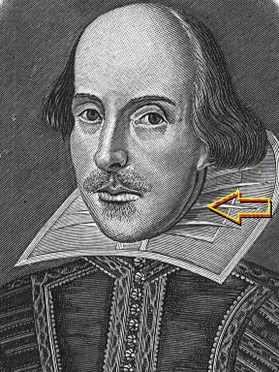
And I do not have any disdain or disrespect to give the Stratford guy.  To say that, in the Elizabethan world, the actor son of a tradesman with only a grammar school education could not have been the mind behind the literary masterworks is foolish.  The Stratford guy owned and operated the Globe theater at a time when “the play was the thing”.  All of London society, rich and poor, gloried in the theater, and Shakespeare did for Elizabethan plays what Babe Ruth did for baseball.  He was a good enough business man to make himself a decent fortune.  Although, apparently, this world-shaking author didn’t spend any of his money on owning books, which in my experience is extremely rare among writers.  His life, bound up in an urban existence that never traveled outside of the country also somehow produced great works that were set in places in Europe, especially Italy, that described those settings in accurate detail.  As a working actor, he also apparently had the time to study law and somehow learn the inner workings of the royal courts of more than one country.  And the plots were not original.  He took existing stories that already were a part of European literature and lore and wove them into rich tapestries of human striving, laughable foibles, and a deep understanding of basic human character.  But I do have doubts that the businessman and actor from Stratford was the real writer of the plays.

I have already told you that I don’t believe Sir Francis Bacon was secretly Shakespeare.  Christopher Marlowe wasn’t either.  And I have unsuccessfully made a case against Shakspere, the Stratford guy.  So who could possibly be the real William Shakespeare?  Well, I am not going to be able to make a decent case for him in the 100 words that I have left to end this essay with.  So there has to be more to come.  (And stop screaming obscenities at the computer screen.  I am going to reveal the name before the end of this essay.  And I promise not to make my case for him in coming days too boring and horrible.)  I have to show why I believe that the true heart of Shakespeare could only have beaten within the body of Edward deVere, the Earl of Oxford.

Leave a comment

Filed under conspiracy theory, goofy thoughts, humor, strange and wonderful ideas about life, William Shakespeare

Kit Marlowe, Secret Agent

christopher_marlowe

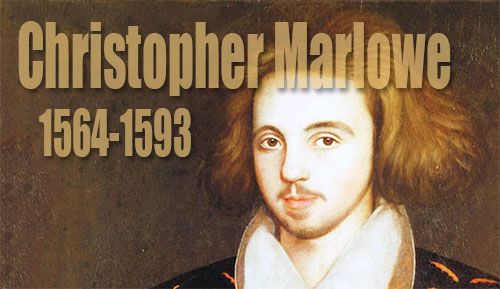
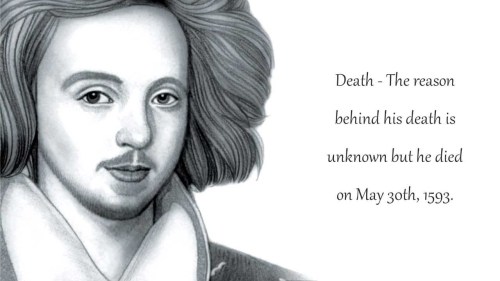
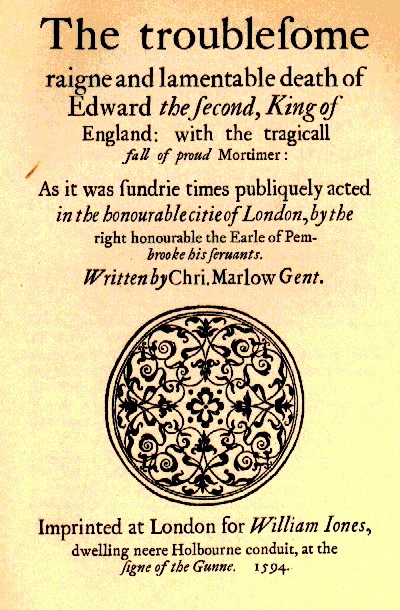
Christopher Marlowe is often sited as the real Shakespeare, a problematic assertion given that he would’ve been forced to write a number of plays after he was dead, giving new meaning to the term “ghost writer”.  But I would like to add to the assertion that “Marlowe is NOT Shakespeare!” that I also believe he did not die as they claim that he did.  Marlowe is a fascinating character of debauchery and misbehavior, intrigue and mystery, and undeniable genius.  As a writer, he was a maverick and risk-taker, having begun the ascendance of the theatrical play as one of the heights of Elizabethan literature with his play Tamburlaine the Great, about the historical figure who rose from shepherd boy to monarch.  This play, and its sequel, Tamburlaine the Great Part II, were among the very first English plays to be written in blank verse, meaning there is a very definite connection between the style of writing established by Marlowe and the later work of Shakespeare.  It is probable that for a few years, Kit Marlowe was a member of the Gray’s Inn group along with Sir Francis Bacon and several other suspicious literary luminaries like Sir Walter Raleigh and possibly Ben Jonson.  (I have to admit at this point that if I am wrong about the Stratford guy and he did write the plays, then he was a member of this group as well, because it was not closed to commoners, only to stupid people.  The Stratford guy was in no way stupid or a villain, no matter what you may believe about the authorship question.)  But here is where the link to Shakespeare’s plays and poetry both begins and ends.  Yes, Kit Marlowe was a capable enough author to have written such sublime plays.  He has all the individual skills to make up the whole.  But if you read his masterwork, The Tragicall History of the Life and Death of Doctor Faustus, you will see that the voice, the unique literary style of the work is simply not by the same author.  Although Shakespeare revisits some of the same themes that Marlowe used in his plays, his manner of development, handling of character, style of humor, and underlying conviction in the existence of God are all different and opposed to Marlowe’s.  Marlowe is NOT Shakespeare.  Shakespeare’s works have more in common with Bacon’s than Marlowe’s.  And I have already said that, “Shakespeare is NOT Bacon… or eggs either.”  And if I said it, it must be so.  (Don’t throw eggs and tomatoes at your computer screen when you read this.  Just call me stupid and vain in the comments like everybody else does.)
maxresdefault

And an even more compelling reason to those of you who don’t obsess over reading Shakespeare and Marlowe and Ben Jonson is that, at the time Shakespeare’s plays were probably written, Kit Marlowe was busy either being stone cold dead, or, having faked his death, was busy being a secret agent for Queen Elizabeth.

And why would a goofball like me think that Christopher Marlowe cunningly faked his own death and went into his own thrilling quest to be like James Bond more than 300 years before Ian Fleming?  Well, because I know how to read and am not generally bright enough not to believe what others have written about him and his connections to the world of spying in Elizabethan times.

These authors have brought out the fact that Marlowe’s frequent absences from college and later public obligations coincide with things like the mysterious tutor called “Morley” who tutored Arbella, niece of Mary Queen of Scots, and a potential successor to Queen Elizabeth, in 1589.  He was also arrested in the Netherlands for allegedly counterfeiting coins related to the activities of seditious Catholics.  He was brought back to England to be dealt with by Lord Treasurer Burghley, the closest adviser to Queen Elizabeth, and was then not so much punished as let off the hook and even rewarded monetarily.  Still think he was not a spy?  Well, his demise probably came about through his relationship with Lord Francis Walsingham and his friendship with Walsingham’s son.  You see, Walsingham was Elizabeth’s “M”, leader of her spies and intelligence units.  After Walsingham died, there was deep concern that no one was still able to protect Marlowe from possible consequences of being both a homosexual and an atheist.  (Being gay was obviously not as serious a sin as atheism for which torture and death penalties lay in wait.)  It was possible that rival spies and nefarious forces could kidnap Marlowe and get information out of him that the Queen needed to be kept secret.

So, when Lord Burghley tortured Marlowe’s friend and sometime roommate, Thomas Kyd, into naming Marlowe a heretic and sending men out with a warrant to arrest Marlowe, Kit’s other friend, Thomas Walsingham probably warned Marlowe.  The bar fight that supposedly ended Marlowe’s life was witnessed by two friends of his, Nicholas Skeres and Robert Poley, both provably con men and professional liars.  The knife that stabbed him in the forehead above his right eye was wielded by Ingram Fizer, another of Marlowe’s disreputable friends, allegedly over an unpaid debt.  Fizer, of course, though he freely admitted killing Marlowe, was acquitted of the murder.  And the coroner’s report is suspect.  Rules of investigation were not followed, and the body was never independently identified by someone other than the three friends at the scene of the crime.  And the body was hastily buried before anyone else could get a close look at it.
edward2a

I am not only telling you that I believe Christopher “Kit” Marlowe was NOT Shakespeare… or eggs either (though that joke doesn’t really work here), but I believe he didn’t die the way it has been reported to us by history.  And why do I believe these things?  Because I think the story of Christopher Marlowe is a really great story, and it exists as a story whether it is historically true or not.

5 Comments

Filed under angry rant, artists I admire, conspiracy theory, goofy thoughts, humor, poetry, satire, telling lies, William Shakespeare

Shakespeare is NOT Bacon

3475b987-6c5d-4699-ba5d-e6008559028f

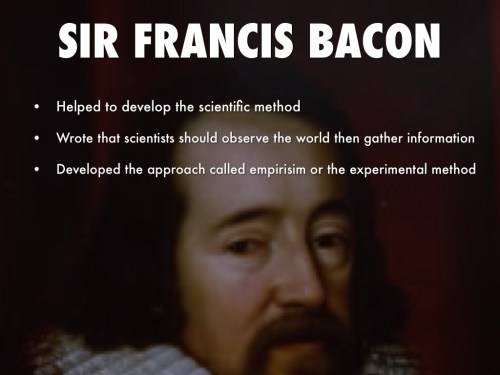
(The graphic above should say “Empiricism,” not “Empirism.”  Ir is a typo.

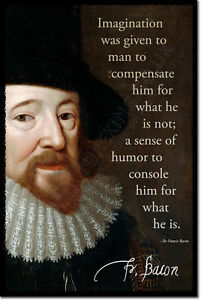
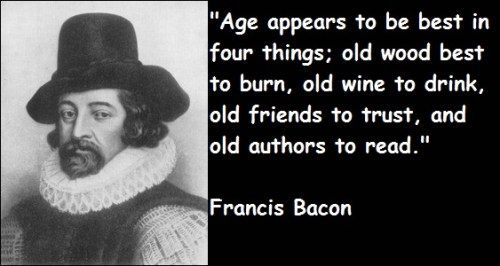
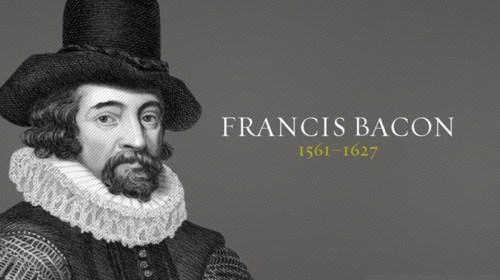
Yes, Sir Francis Bacon is at least as interesting and obscure as William Shakespeare.  But let me assure you, I can confidently state, “Shakespeare is NOT Bacon!”  He is not eggs either… or any other breakfast food.  Sir Francis Bacon was the breakfast, the first meal in the great Elizabethan banquet of literature, poetry, and culture.  And William Shakespeare is a more important main course, the royal dinner, as it were.  But it has to be acknowledged that Bacon was essential to the very existence of William Shakespeare.  Breakfast always comes before dinner.

t2ec16dhjgoffvtvhuebslhohksvg-60_35

In 1845 a female author by the name of Delia Bacon (nothing suspicious about that coincidence, by the way) put forward an idea that William Shakespeare’s plays were actually written by a group of men under the leadership of Sir Francis Bacon.  She thought the group intended to inculcate into English culture an advanced system of politics and philosophy which they themselves could not take credit for publicly.  She would later write a book in 1857 called The Philosophy of the Plays of Shakspere Unfolded which advanced the notion that the plays were written for Baconian purposes beyond mere theatrical entertainment.  Numerous people, including the American poet Ralph Waldo Emerson supported her in her quest to find proof, sending her to England to research the crazy conspiracy theories she founded by noting ciphers in the plays, and in the essays of Bacon, that led her to believe all she had to do was dig up the gravestone of Shaksper in the chapel at Stratford to find written proof in Bacon’s own hand that he was, in fact, the author or primary motivator of the plays of William Shakespeare.  She spent one cold and creepy night in the chapel, just her and her spade and her crow bar, along with the bones of the Stratford guy, trying to work up the courage to do a bit of grave-robbing… and failing.    It is a good story, but very poor archaeology.  She was denounced by the literary historians and establishment figures who supported the Stratford guy.  They said her scholarship was sloppy, her cipher analysis goofy and unfounded, and her conclusions more questionable than a pig in theatrical make-up.  (My words, not theirs.  English critic George Henry Townsend was entirely too stuffy and boring to simply be quoted here.)

francis-bacon-quotes-francis-bacon-quotes

Now, I, of course, strongly disagree with the Bacon lady.  As I said in the very title, “Shakespeare is NOT Bacon.”  But I do think there was merit in sniffing out old Frankie’s scent and fingerprints on the whole Shakespeare/Shaksper thing.  The Stratford guy was not Shakespeare either.  When he died in 1616 there was no public outcry at the loss of England’s most popular poet and playwright.  Even King James who was Shakespeare’s number one fan and constant audience member, didn’t mourn the passing of the actor/theater-owner/businessman from Stratford.

Francis Bacon, on the other hand, was a powerful intellect, educated in the ways of science, the law, and government in the Elizabethan age.  Bacon gathered other men of powerful intellect and accomplishment at Gray’s Inn to hold debates about things philosophical and things scientifical.  It is not unreasonable to imagine that the man who really wrote the plays attributed to Shakespeare sat at that table and participated in those debates.  And Sir Frankie had good reason to keep lots of this business a secret.  There exists evidence that though he was apparently happily married to a fourteen-year-old girl, he did a little bit of swaying toward the other gender too, a thing not too popular with the average Anglican Englishman.  He also dabbled a bit in the occult (think witches in Macbeth sort of thing).   And his essays indicate a strong correlation to the philosophies and ideals of the German Rosicrucian Movement.  In 1593 during a Roman Catholic plot against Queen Elizabeth, Frankie managed to take a position on the investigation that totally offended the old virgin queen.  He was on the outs with Liz for the rest of her difficult and anger-management-challenged life.  He did rise to prominence under her successor, James I, but never-the-less managed to die amidst total ruin and scandal.  There is a lot in Frankie’s life to indicate that he had a direct influence on the content of Shakespeare’s plays.  Some of the characters in the plays may actually be, at least in part, based on Frankie himself.  But  this guy never hung out with the Stratford guy that anyone knows of.

So, if Shakespeare is NOT Bacon, or eggs either… and the Stratford guy isn’t Shakespeare, then who is?  Come on!  You knew I had a lot more to say about this crazy conspiracy thing, right?

67489

Leave a comment

Filed under conspiracy theory, education, foolishness, goofy thoughts, humor, philosophy, strange and wonderful ideas about life, William Shakespeare

Picture Tricks

dorin 001 dorin 002 dorin 003

I have discovered things about being an artist by blogging.  I have discovered things by learning from other artists.  I have also discovered things by trial and error.  I have also discovered things by random acts of God.  So let me share some of the ill-gotten picture secrets that I have added to my vast bag of useless incunabula-juice squeezed out with my arcane-secret juicer and internet blogger good luck.

#1.  Save everything arty… as you see above, I have three different pictures of my Catch a Falling Star character Dorin Dobbs, all made from the same pen and ink line drawing.  All the color is digital paint from my computer’s own paint program.  Simple and cheap to do.  Save functions multiply the pretty.

#2.  Splice stuff together and make new stuff…  I have the cheapest possible photo-shop program, but using its entire $7 value every time I paste with it, I am able to create new art out of old.

DSCN4422

New art out of old;

Val at the barn Val B2 tree time banner

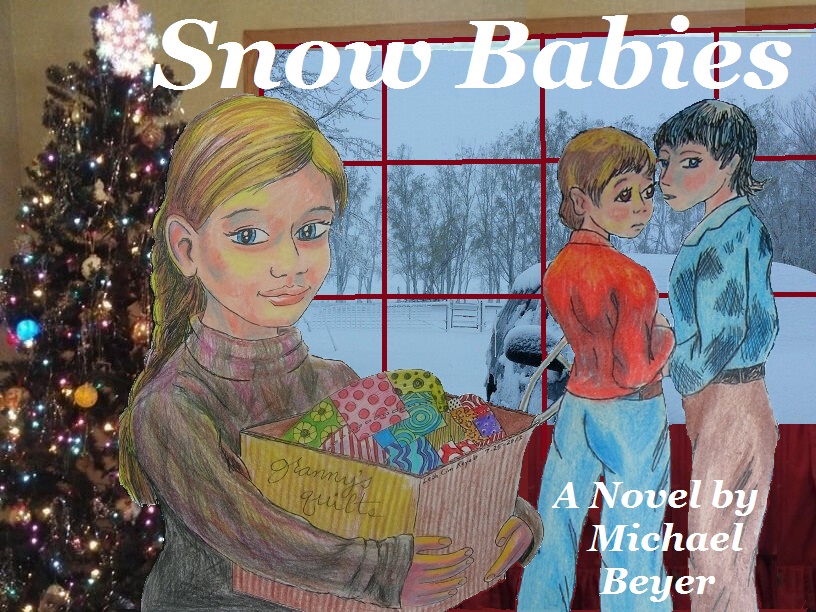
#3.  Weave things together to create unity…  My art is not for its own sake.  I am not Picasso or Van Gogh.  My art is very much tied to the stories I tell as a writer of Young Adult novels.  (Snow Babies is awaiting its turn with the editors of PDMI LLC Publishers.)

#4.  Promote the art and writing of others…  I have spent a ridiculous amount of internet time stalking artists like Loish and sharing their work on my blog.  Writers too.  I do my little book reports in order to connect the reading and the literary influences I have completed (or stolen from) and show where much of my own style and je nais se quois comes from.  If the artist or writer is still living and notices what I have done, they will often return the favor (hopefully, if they don’t find my work to be an offense against the gods of art).  If they can’t return the favor (because they are quite dead or thoroughly disgusted by me), I have at least associated my work with theirs in the minds of my readers,

c18296b715d6f4bb5326967c0aee012c-d7a6fao

#5.  It’s all about digital photography…  In order to share my colored-pencil menagerie of live Paffoonies on the internet, I have to get better at photography.  I have taken far more photos of drawings in the last two years than I have drawn drawings.  That has not been a life-long way of things.  I love color, and poor photography skills turn out various shades of gray.  Sunlight?  Incandescent?  Fluorescent?   I haven’t discovered that secret yet, but it will never be uncovered if I don;t keep trying.

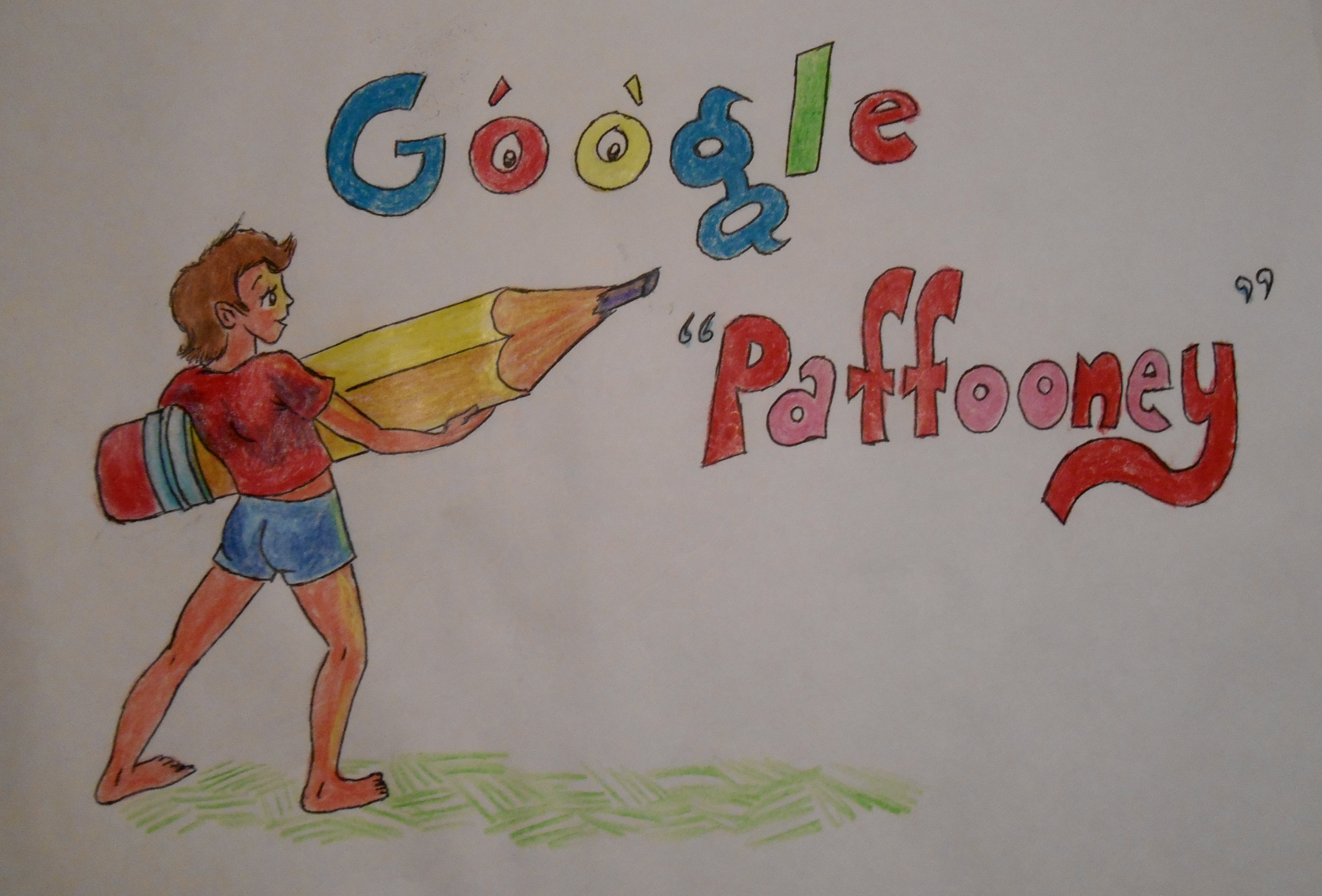
#5. Find connections that help pull your work together in one big, messy bundle…  Facebook, WordPress, and Deviant-Art are all better forums if you can connect them.  I did this by labeling everything Mickey with a meaningless made-up word that no one else in their right mind would use.   The word is Paffooney.

goopafoo

A picture search on Google using the words “Beyer Paffooney” gives you an almost complete gallery of my artwork and nonsense.  Googling the word itself yields a link to a plethora of my old blogs.  Do you not know what plethora means?  Try it and you will learn that very good word.

Leave a comment

Filed under artwork, humor, Paffooney