I need a quick and cold post for today, so I will turn to the ice wizards of Talislanta.
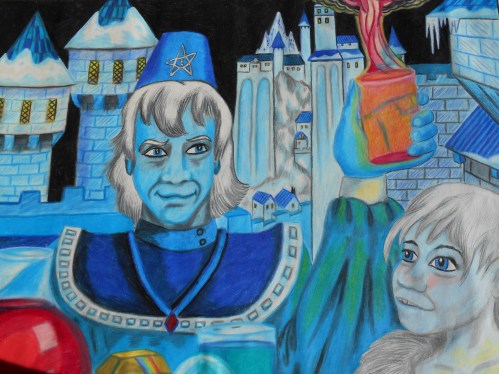
Viktor, the ice-alchemist, and his son Zoran-viktor are Mirin, a sort of ice-elves who live in the frozen ice-world of the far north. Viktor’s people are cold-resistant enough to wear bikinis in freezing weather (but smart enough not to). So Viktor managed to become the Mirins’ most powerful user of the magic of chemistry by developing hot stuff. In the picture he is brewing a bit of the really, really hot explodie stuff that melts a Mirin bad guy.
Juan Ruy, the Mirin prince, built many ice castles out of his magical substance known as iron-ice. It was far harder to pierce than steel and impossible to melt with fires less hot than dragon’s breath. With it he built frozen castles vertically to the highest heights. And they still stand, primarily because I haven’t played that particular D & D game for more than two decades.
But this is what I love most about the Dungeons and Dragons game. It is a never-ending game played in worlds of shared imagination where every person at the table adds something to the story. It is interactive, and it retains the unique twists and turns created by the players. I created the scenario. The player behind the character Juan Ruy created the idea of iron-ice that completely changed the story.
In Dungeons and Dragons games you are trying to bring characters to imaginary life by getting into their deformed, powerful, or magic-filled heads and walking around in a very dangerous imaginary world. You have to be them. You have to think like them and talk like them. You have to love what they love, decide what they do, and live and die for them. They become real people to you. Well… as real as imaginary people can ever become.
But there are actually two distinct types of characters.
These, remember, are the Player Characters. My two sons and my daughter provide them with their persona, personality, and personhood. They are the primary actors in the stage play in the theater of the mind which is D & D.
But there are other characters too. In fact, a whole complex magical world full of other characters. And as the Dungeon Master, I am the one who steps into their weird and wacky imaginary skins to walk around and be them at least until the Player Characters decide to fireball them, abandon them to hungry trolls, or bonk them on the top of their little horned heads. I get to inhabit an entire zoo of strange and wonderful creatures and people.
Besides the fact that these Non-Player Characters can easily lead you to develop multiple personality disorder, they are useful in telling the story in many different ways. Some are friendly characters that may even become trusted travel companions for the Player Characters.
D & D has a battle system based on controlling the outcomes of the roll of the dice with complex math and gained experience. In simpler terms, there is a lot of bloody whacking with swords and axes that has to take place. You need characters like that both to help you whack your enemies and to be the enemies you get to whack. There is a certain joy to solving your problems with mindless whacking with a sword. And yet, the story is helped when the sword-whackers begin to develop personalities.
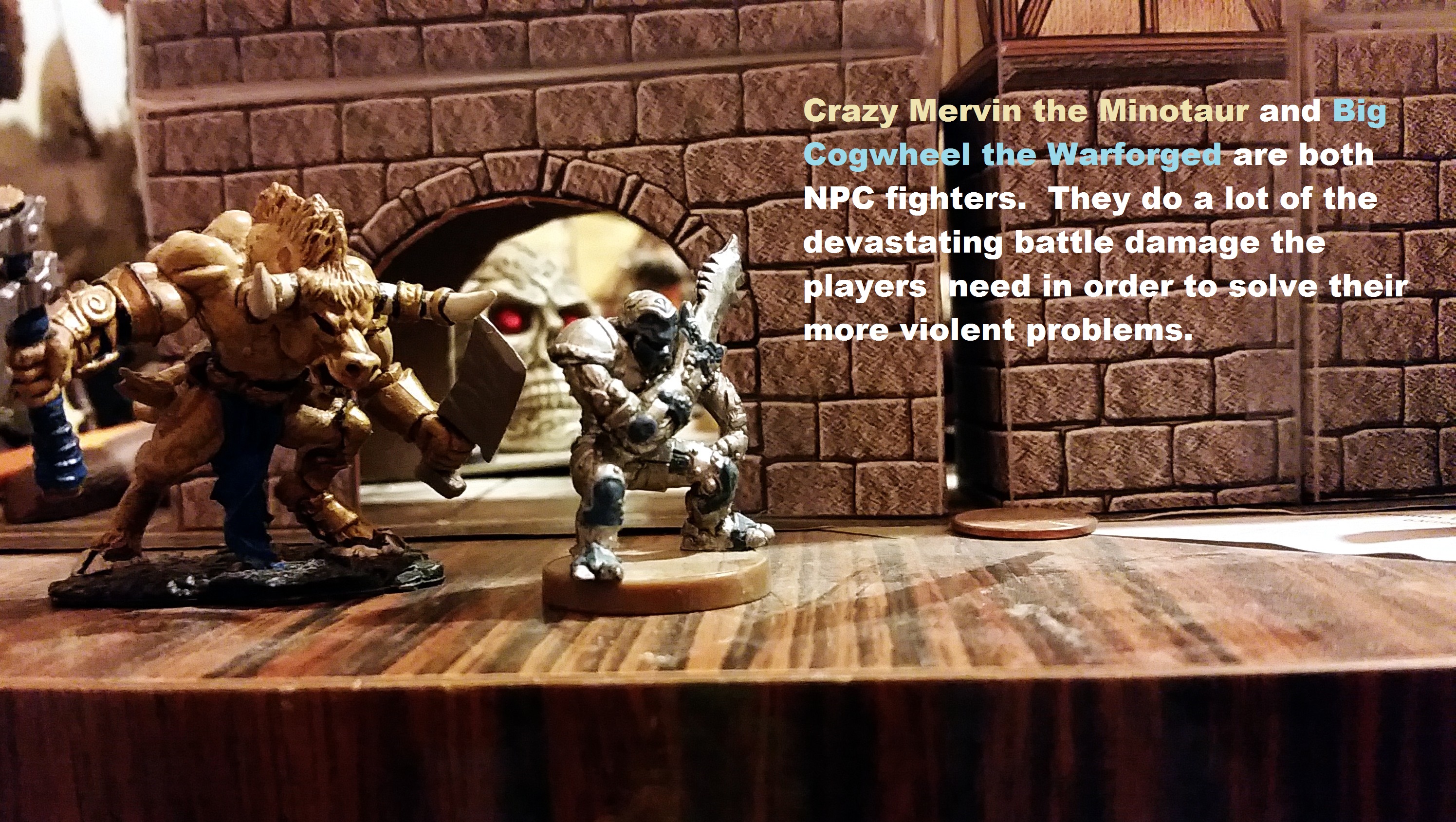
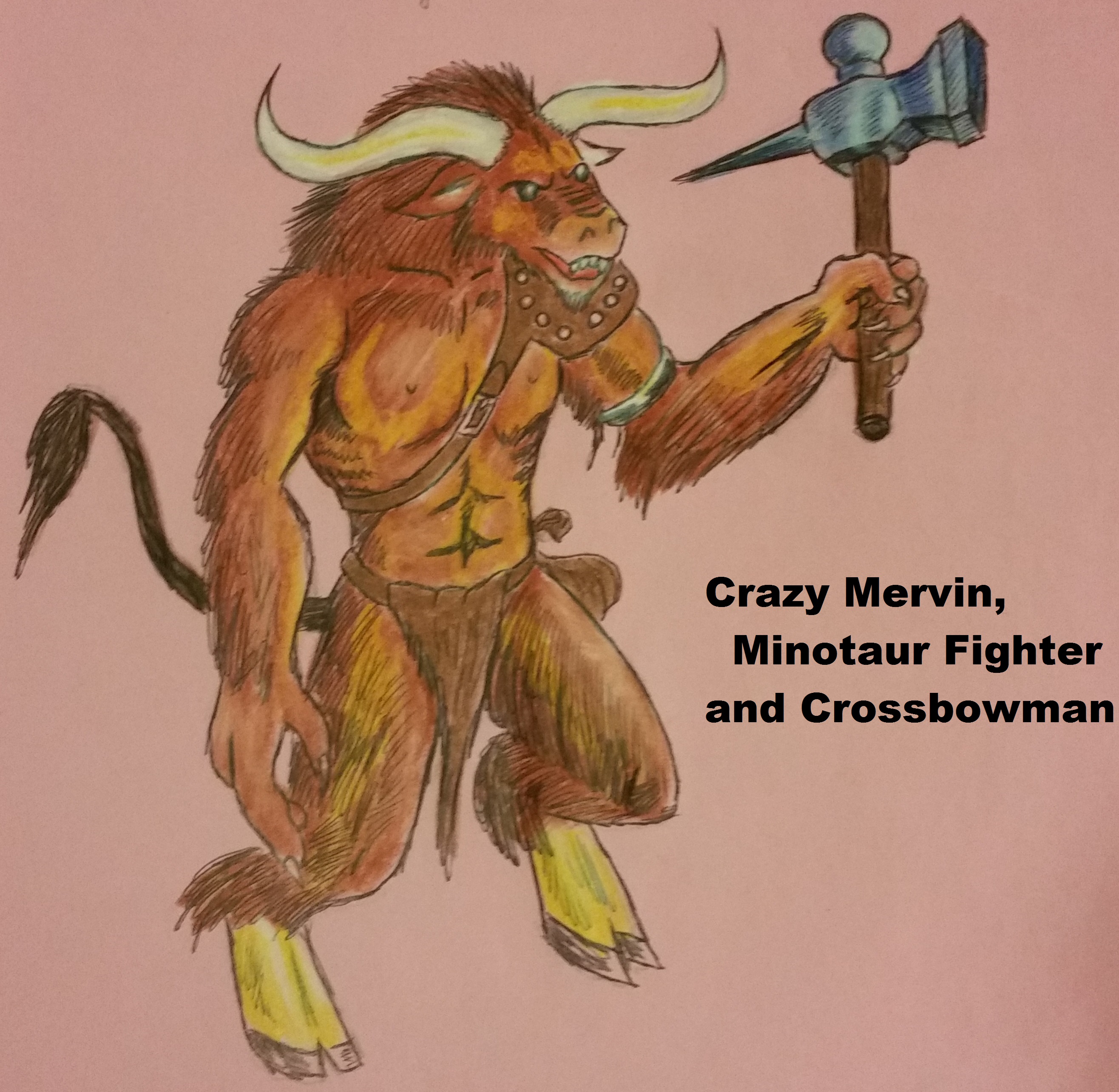
Crazy Mervin, for example, began life as a whackable monster that could easily have been murdered by the Player Characters in passing while they were battling the evil shape-changing Emerald Claw leader, Brother Garrow.
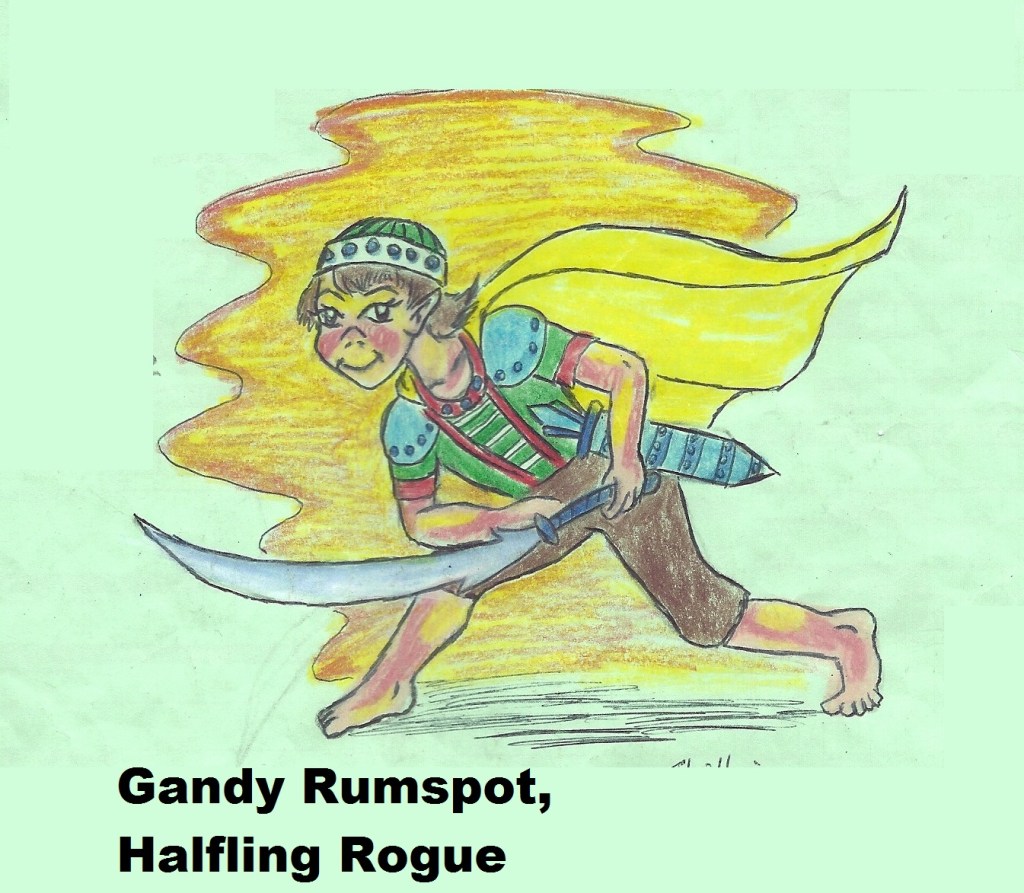
But Gandy befriended him and turned him from the evil side by feeding him and sparing him when it really counted. He became a massively powerful ax-whacker for good because Gandy got on his good side. And stupid creatures like Mervin possess simple loyalties. He helped the players escape the Dark Continent of Xendrick with their lives and is now relied upon heavily to help with combat. He was one of the leaders of the charge on the gate when the Players conquered the enthralled Castle Evernight.
Not every NPC is a whackable monster, however. In the early stages of the campaign the Players needed a magic-user who could read magic writing, use detection spells and shielding spells and magic missiles, and eventually lob fireballs on the bigger problems… like dragons.
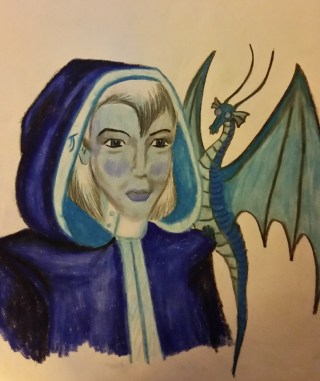
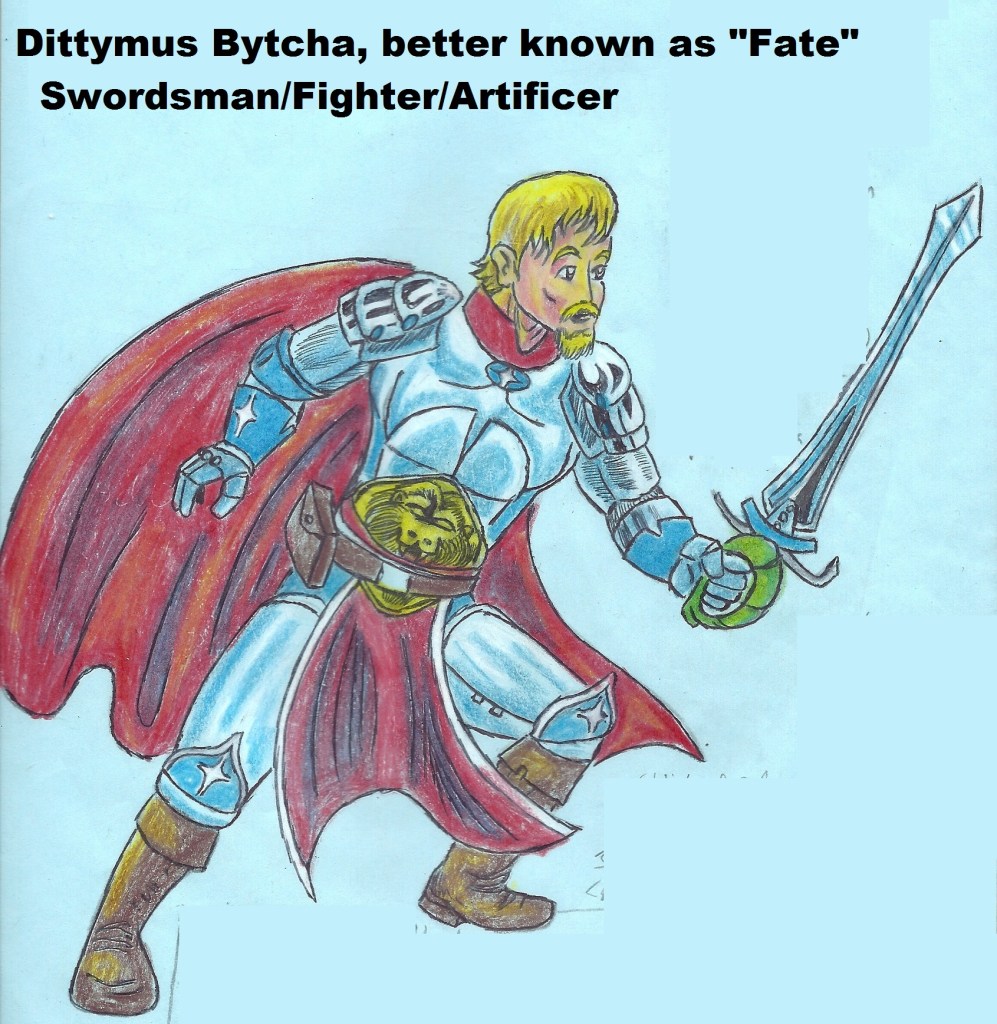
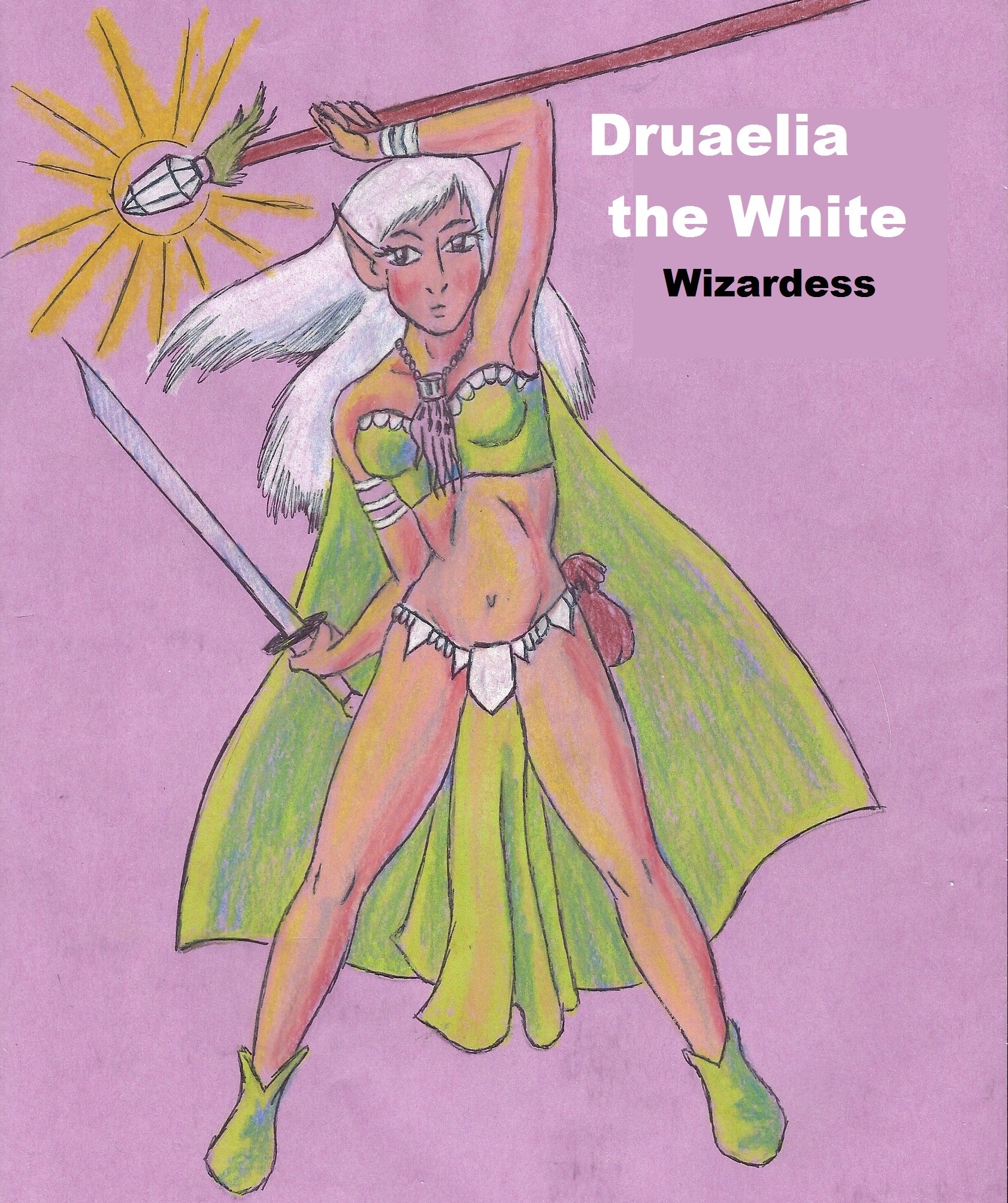
Druaelia was the wizard I chose to give the group of heroes to fulfill these magical tasks. Every D & D campaign requires wizarding somewhere along the way. And Dru was a complex character from the start. Her fire spells often went awry. When Fate used a magic flaming crossbow bolt to sink a ship he was defending, killing the good guys right along with the bad guys, it was with a magic crossbow bolt crafted by Druaelia. Her fire spells went nuclear-bad more than once. She had to learn along the way that her magical abilities tended more towards ice and snow than fire. She learned to become a powerful wielder of cold powers. And while she was comfortable in a bikini-like dress that drove the boys wild because she grew to love the cold, she didn’t particularly like the attentions of men and male creatures that went along with that. More than one random bandit or bad guy learned the hard way not leer at Dru. There are just certain parts of the anatomy you really don’t want frozen.
The Player Characters will need all sorts of help along the way, through travels and adventures and dangerous situations. They will meet and need to make use of many different people and creatures. And as Dungeon Master I try hard to make the stories lean more towards solving the problems of the story with means other than mere whacking with swords. Sometimes that need for help from others can even lead you into more trouble.
But as I am now nearing the 800 word mark on a 500 word essay, I will have to draw it all to a close. There is a lot more to say about NPC’s from our game. They are all me and probably are proof of impending insanity. But maybe I will tell you about that the next time we sit down together at the D & D table.
Every good Dungeons & Dragons game needs a quaint little magic shop to provide the appropriate magical boom-boom solution that isn’t obviously needed, but will prove essential to the adventure later.
For our game, where we had a choice of a number of screwy little magic shops that didn’t manage to blow themselves up, the main place of choice was Failin’s Arcanum Magickum Shoppe in Sharn. (Why “shop” has to be spelled “shoppe”, I’m really not certain. You have to spell things wrong to cast spells apparently.)
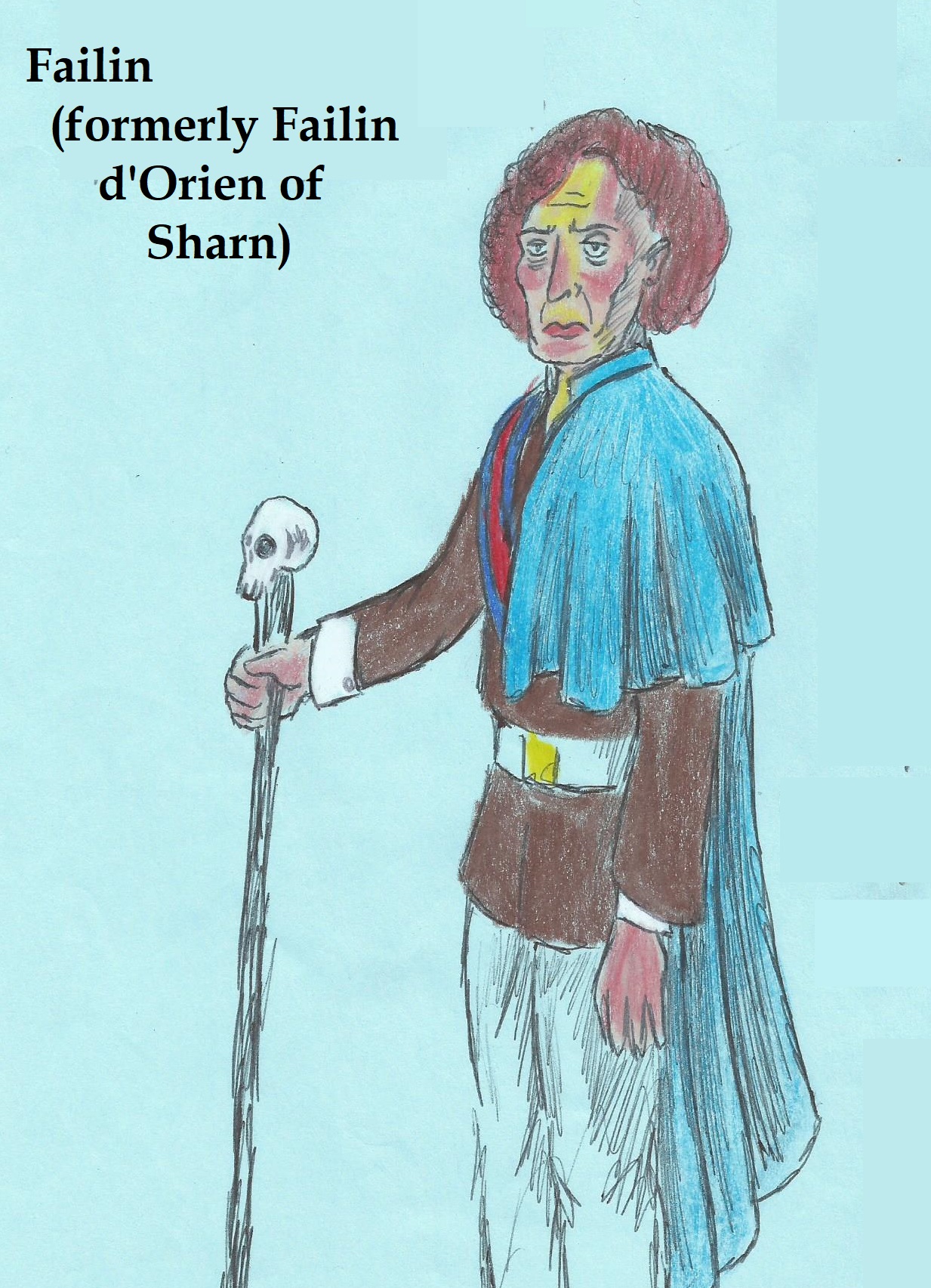
The shoppe is located in the Precarious District of Sharn, City of Towers. Visitors have been known to be crushed by falling parapet stones from above that may or may not have been wedged loose by a hobgoblin street gang. Failin himself is a rather morose individual with red hair and a connection to the Dragonmarked House Orien, the house whose magical dragonmarks allow the members of the house to do transportation magic. Failin was himself a talented geomancer, able to create items with bound earth elementals used for power and propulsion. He also collects items of great value from adventurers and commands impossibly high prices for them.
So, if you want to buy a Wand of Blinding Colors, a Bag of Holding, a Flaming Elf Skull of Timely Warnings, or a Deadly Drum of Druid Doom, he’s definitely your man and will only take twice the amount of everything you own in payment. If you want something more powerful or more arcane, you better be ready to slay a dragon for it and bring back the entire hoard as payment. Failin is rich in several different ways.
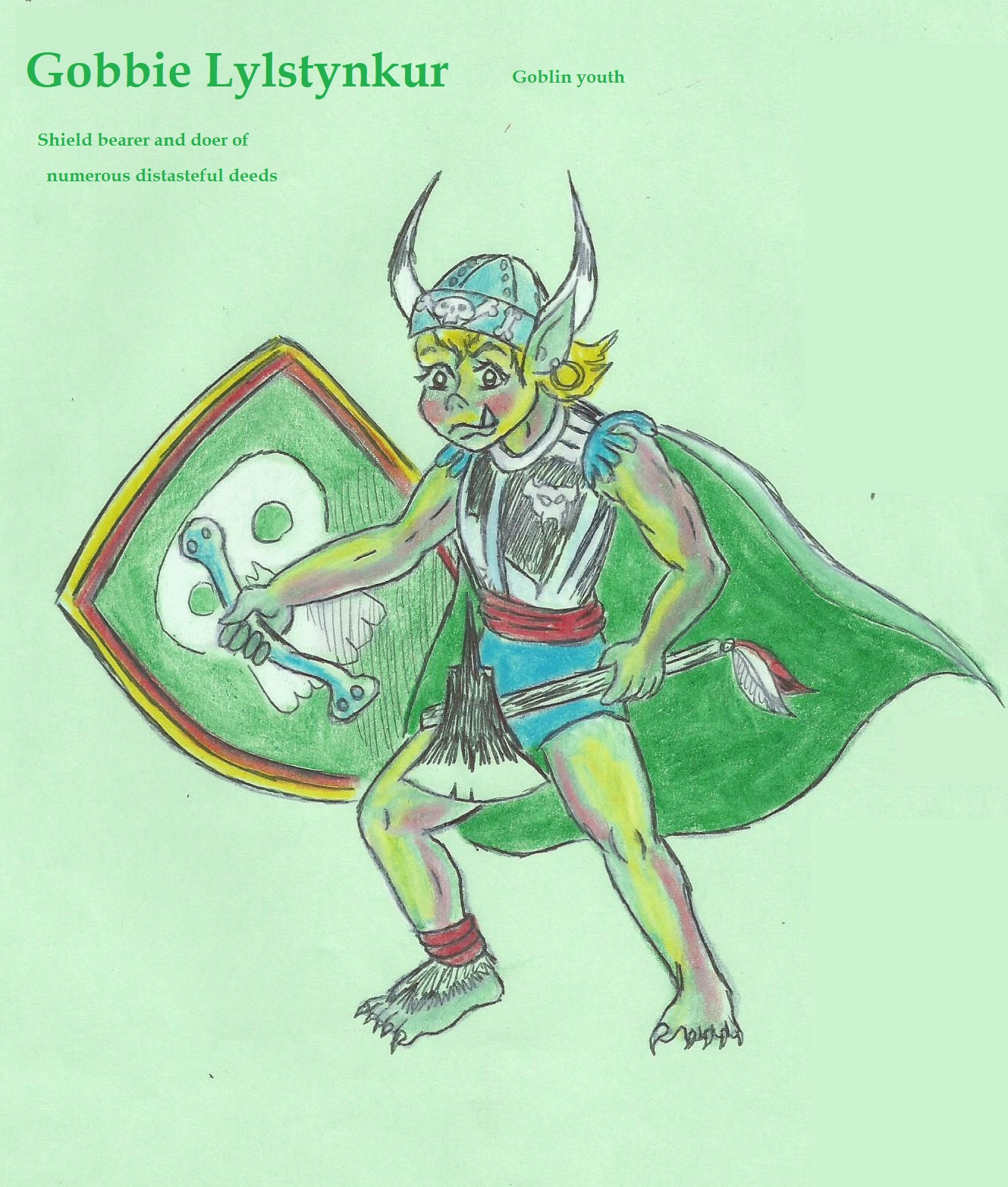
Working for Failin is his one and only servant, Gobbie. Gobbie is also a rare thing, a goblin you can trust. He was raised by dragonmarked humans and treated slightly better than the average goblin (who tend to be killed on sight by heroes).
Gobbie is also trained as a shield bearer, and carries a shield that is immune to dragon fire and most magical fire and ice. Failin rents Gobbie to adventurers for a high price, and Gobbie usually serves them just as faithfully as he serves his red-haired master.
And Failin’s shoppe is a place where you can find any number of magic users, wizards, warlocks, sorcerers, illusionists, thaumaturges, and other magicians. If you don’t mind risking a meeting with horrifying necromancers, you can find and talk to some of the most powerful people in all Eberron.
As a family, we play Dungeons and Dragons. Well, all of us, that is, except Mom. It’s basically against her religion and means the Jehovah’s Witness version of Hell for us. (Which is a spiritual condition where God refuses to talk to you, and play checkers with you, and then you die.) But let’s not discuss that here. I don’t need her to start thinking about reasons to divorce me. She accepts that it is a thing we do and like and keep mostly to ourselves. (I just rolled a 15 on a twenty-sided dice to succeed in that charm-enemy spell and avert disaster.)
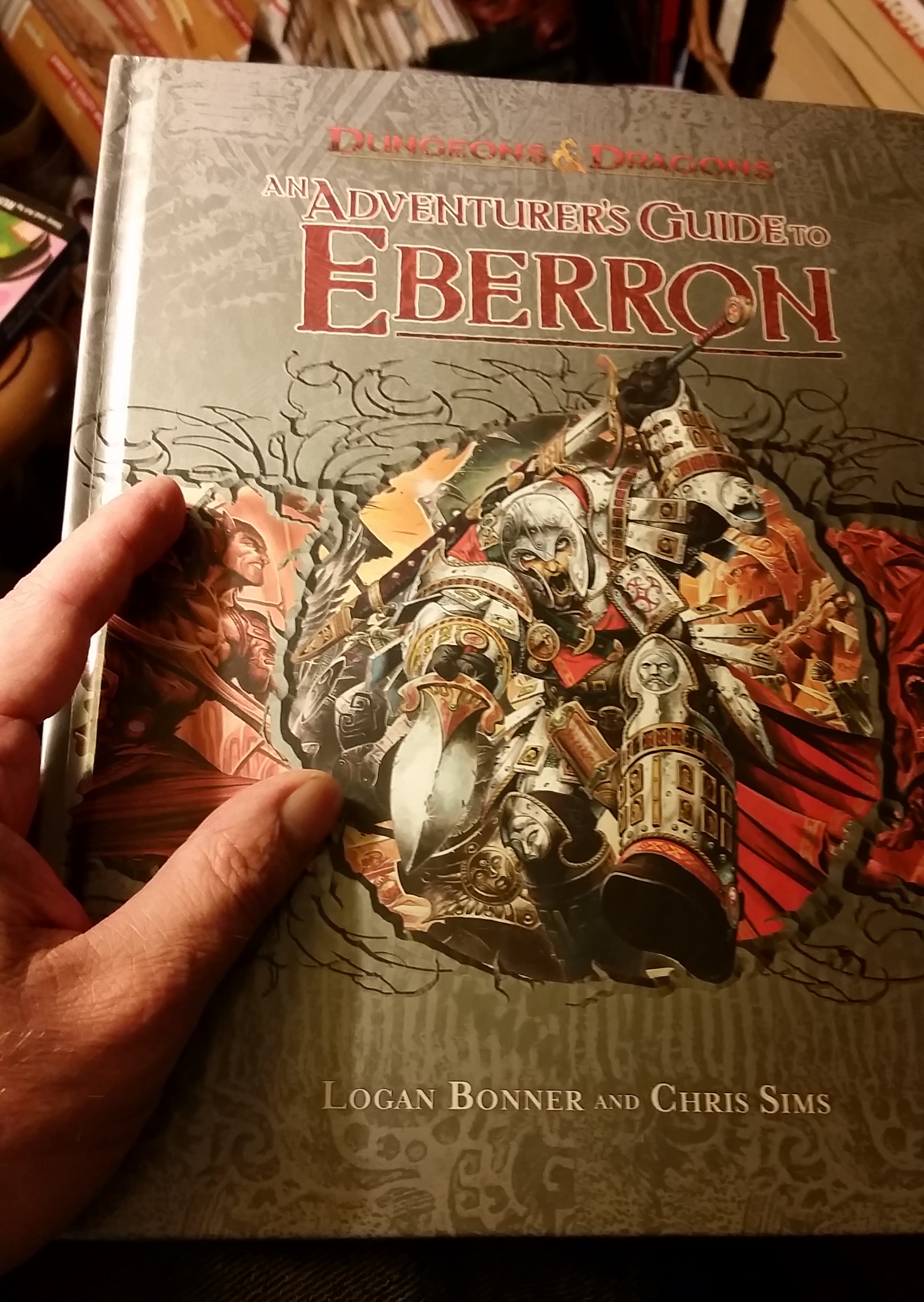
As a family we have chosen to use the Eberron campaign available from Wizards of the Coast, the company that now publishes all official D&D stuff. It is a medieval/Renaissance sort of setting where magic is every-day common and takes the place of science in the real world.
I get to be game master and creator of the basic plots and stories. My three kids, Dorin, Henry, and the Princess are the player characters who interact with the world and determine the outcomes of the adventures through the rolling of Dungeon Dice.
I want to assure you at this point that my eldest son does not actually have a watermelon for a head. Maybe metaphorically, but he is easily the smartest and most likely to be a leader of my three kids. His character routinely pursues ideas like replacing his arms with magical metal arms, or grafting additional arms on his body. He has chosen the phoenix to be the symbol on his personal flag and coat of arms, but his artifice roll to create the magical ship’s flag turned out to make it look more like a pigeon that someone set on fire. (You have to watch out for those rolls of “1” on a 20-sided dice.)
Henry, my middle child, likes to play a halfling. The little hobbit-like character is the one called upon to disarm all the tiger traps and poison-arrow traps that line the dungeon tunnels ahead. He is a problem-solver in real life. And he wants to be an architect. In D&D games, he is often the first one to run up to danger and look it in the blood-shot eye.
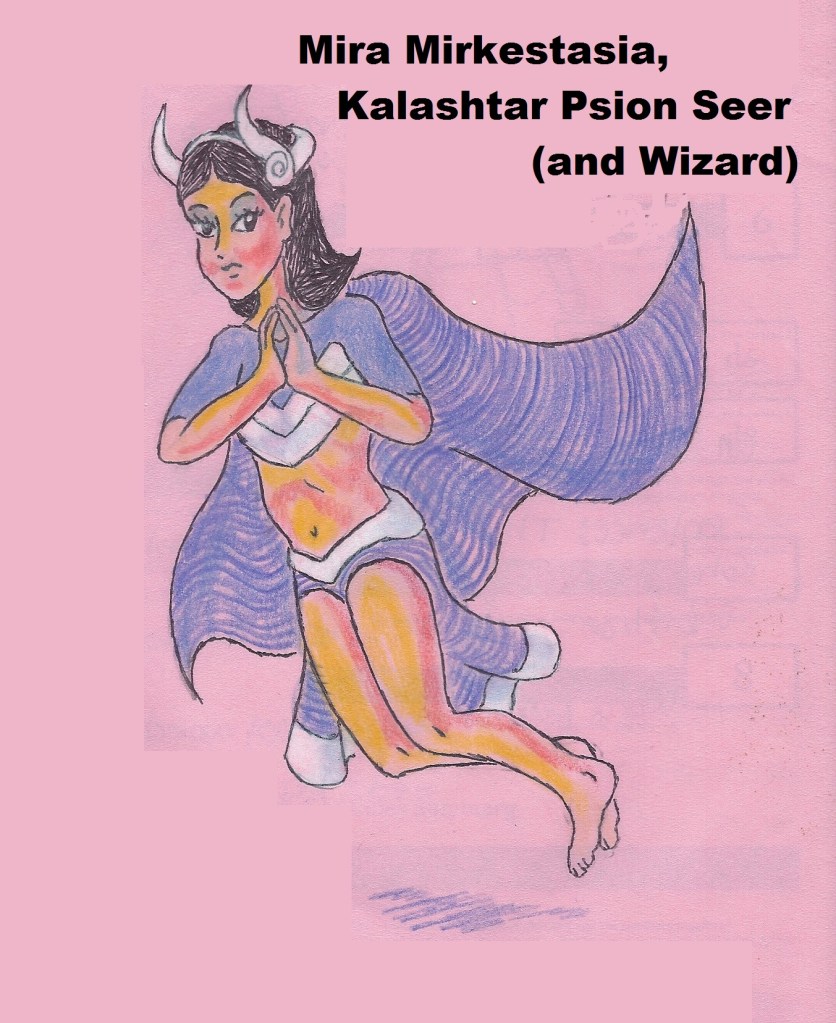
Every D&D group needs a wizard or some other magic-user. Ours has Mira, the Kalashtar mind- wizard. My daughter’s character can use mind powers to float in the air, pick up and throw things with her mind alone, and figure out ways to do things using as little physical effort as possible. Oh, and she loves to eat chocolate. (The character, I mean… or is it actually the daughter? I don’t know. It is sometimes hard to tell them apart.)
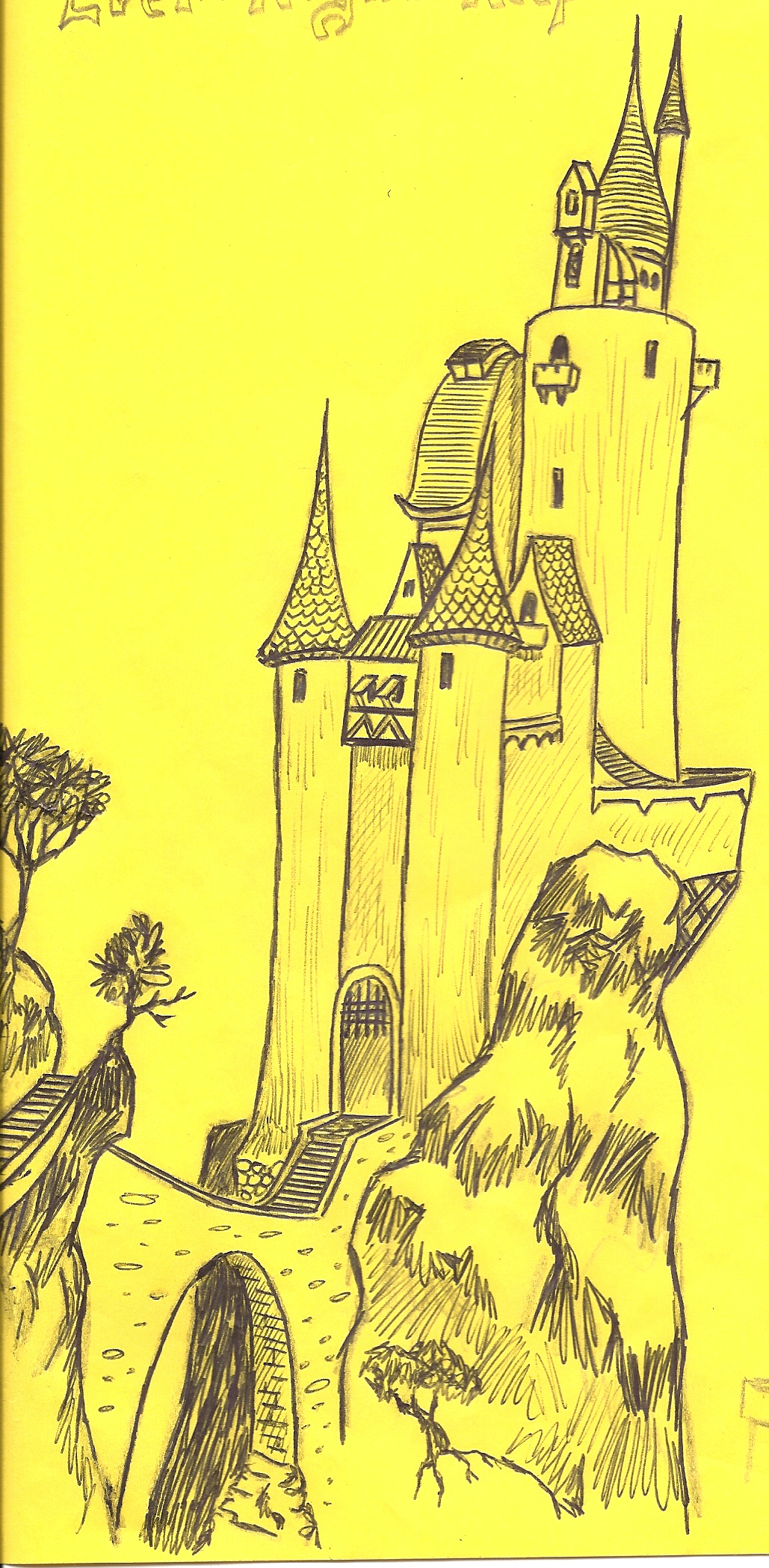
In our last adventure, we went to investigate the evil doings going in Evernight Keep, a castle in the country of Aundair. We were able to not only defeat the evil mind-flayer, Dr. Zorgo, who had turned everyone into golems in the castle, but also to win the castle and the title of the Duke of Passage. Now that they own a castle, my little band of adventurers will have to defend it, and I know of one old game master who will definitely throw all kinds of evil challenges at them.
Yesterday I forgot that it was Saturday. But that doesn’t matter much in a D & D campaign. You may not play at regular times… or at all, like this week. But you do what you can when you can. Just like in real life. So let me share a character gallery, in order to give me my weekly dose of fantasy sword and sorcery nonsense.
These illustrations all come out of my D & D notebook. They are done in colored pencil on colored paper. Many are copied from models in catalogs, action movie stills, comic books, and illustrated Dungeons and Dragons products, but always interpreted in my own style and costumes.
Dragons in the Dungeons and Dragons role-playing games are the central monsters of the story. In our Eberron campaign they not only rule an entire mysterious continent, but they are credited with the very creation of the world and everything. Not only monsters, but also gods, is a pretty big order for a character to fill.
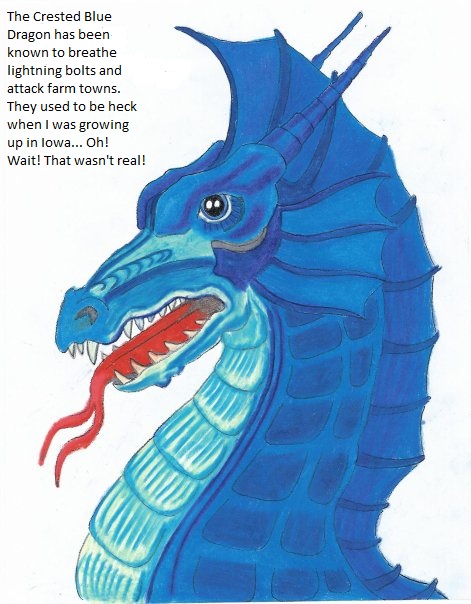
Skye, the Blue Dragon to the left above is a dragon who believes that human people are the most important part of fulfilling the Dragon Prophecy. Therefore the characters can rely on him as an ally, and sometimes even a patron. He is a blue chromatic dragon with lightning breath, and the Blue Dragon Aureon, his great great grandfather, is an important leader of the god-dragons worshiped as the Sovereign Host.
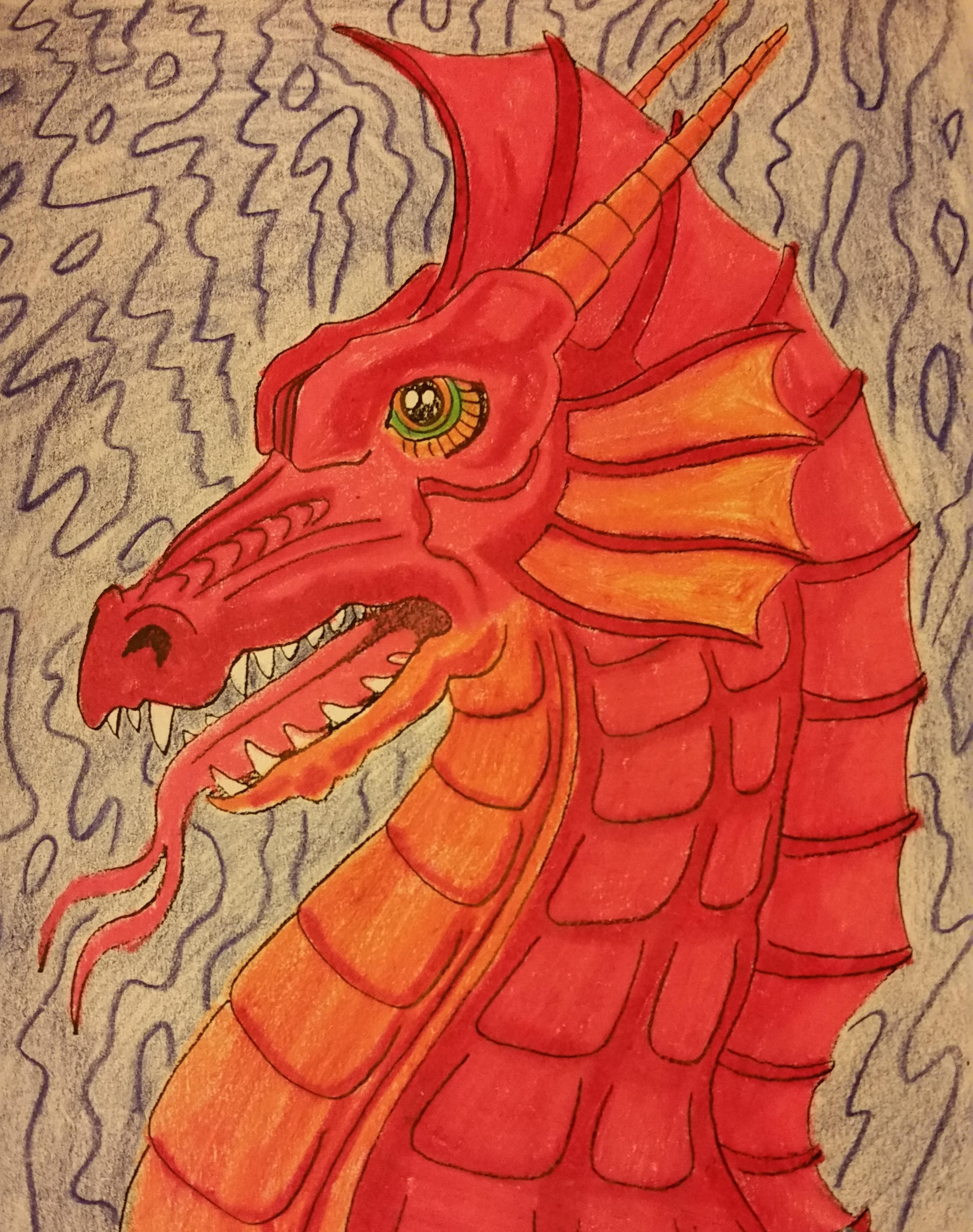
Phaeros, the great crested red dragon, is a servant of chaos who actively opposes all that is good. He works with orcish dictators and priests of the Dark Six to accomplish vast swaths of damage, destruction, and war.
He is a big bad villain that has to come at the end of a campaign, because dragons are not only powerful fire-breathers with monstrous monster-damage capability, they also know far more magic than even the wisest of wizards. My players have not crossed him yet, but if they start finding the missing dragon eggs, that will happen soon.
You may notice that my dragon pictures are mostly coloring-book pictures repeated with different colors, but in many ways dragons are like that. They all have the cookie-cutter qualities of a dragon, but with different-colored personalities and powers and ideas of good and evil.
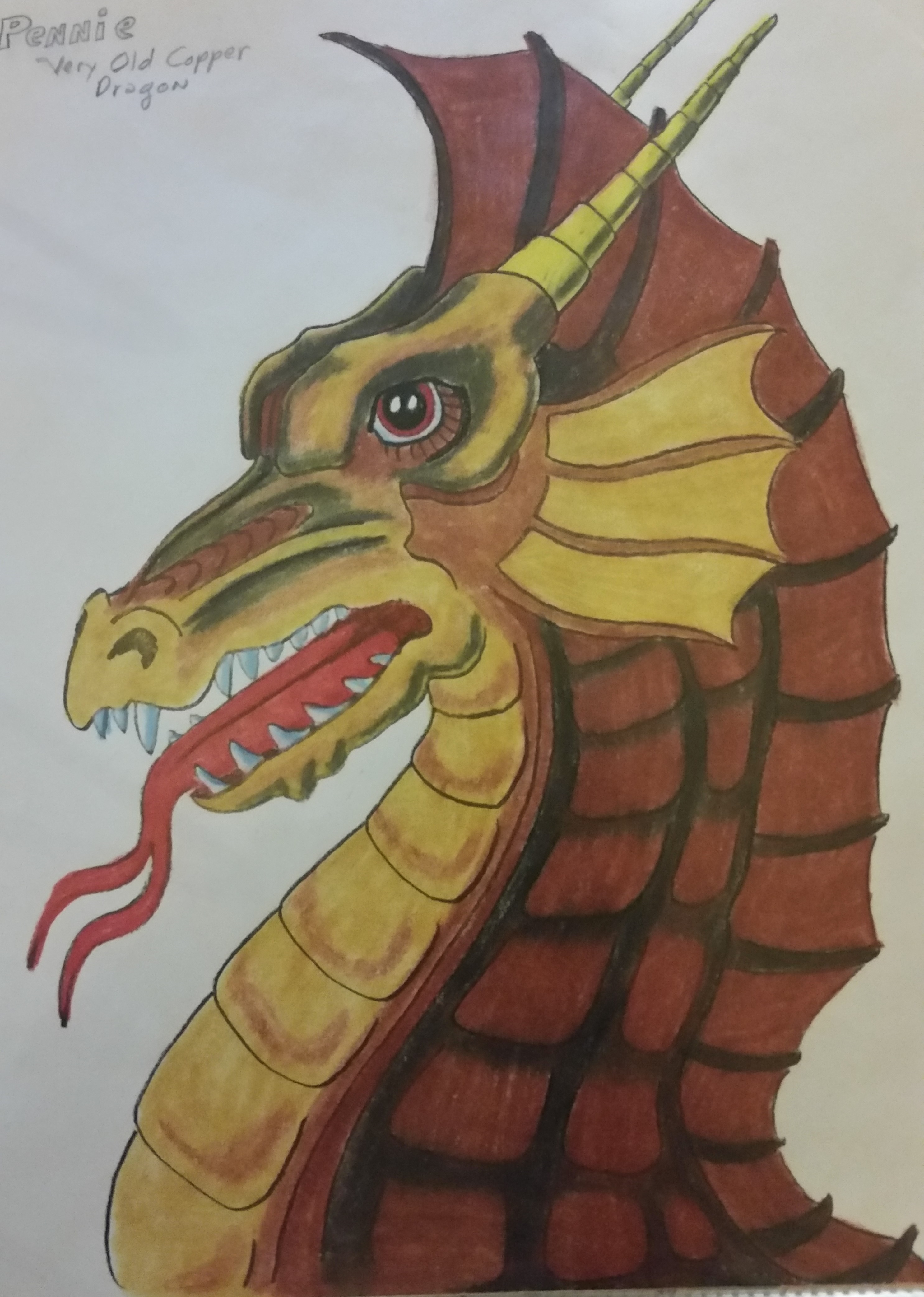
Pennie is a copper dragon with divided loyalties and the soul of a clown. She never takes the adventure at hand too seriously. But if she decides to help the player characters find the missing dragon eggs, no ally will prove stronger and more helpful than her. And she knows things that the players need to learn from her to find the missing eggs.
So dragons come in many forms and personalities.
In fact, the search for the missing dragon eggs will be critically affected by the fact that the eggs have all five hatched and dragons instinctively protect themselves when young by using their polymorph self magic to become some other creature. And someone has implanted the idea of using human form as the default even though the wormlings have never actually seen a human being in real life.
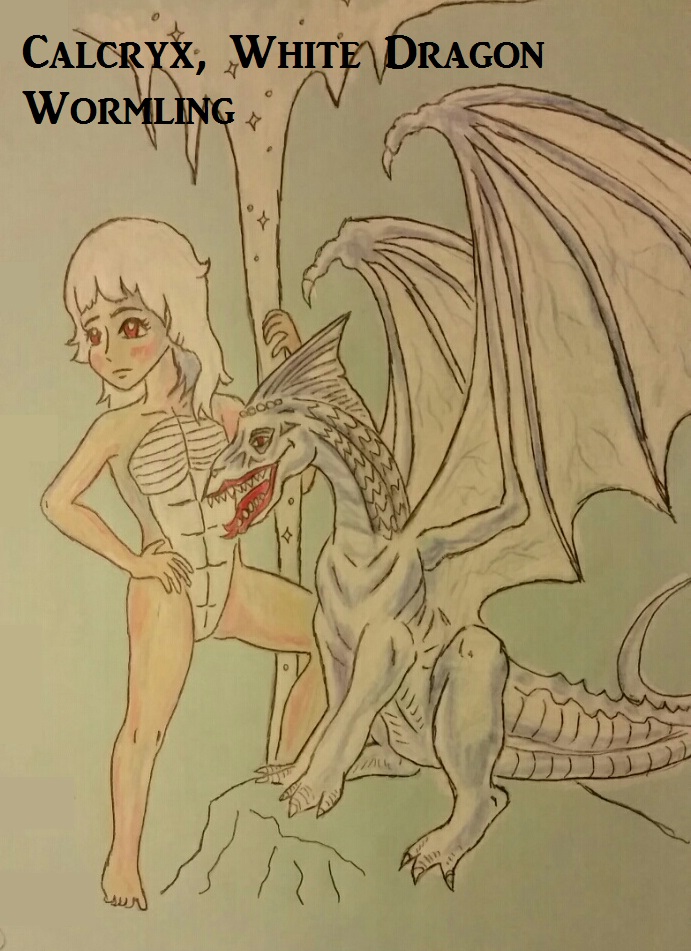
This is a double portrait of Calcryx, both as a white dragon wormling and a young girl.
So, playing games with dragons is fun and archetypal story-telling, and I will continue to do it, even if it means getting burned now and again.
You cannot cleave a ghost in twain with a cast-iron fireplace poker. Throwing snowballs at vampires will not keep your blood from being drained. And bugbears don’t really have an aversion to little girls in pink dresses (except for little Tessie Trueheart of the Green Dale; that little booger has a temper as large as her love for the color pink).
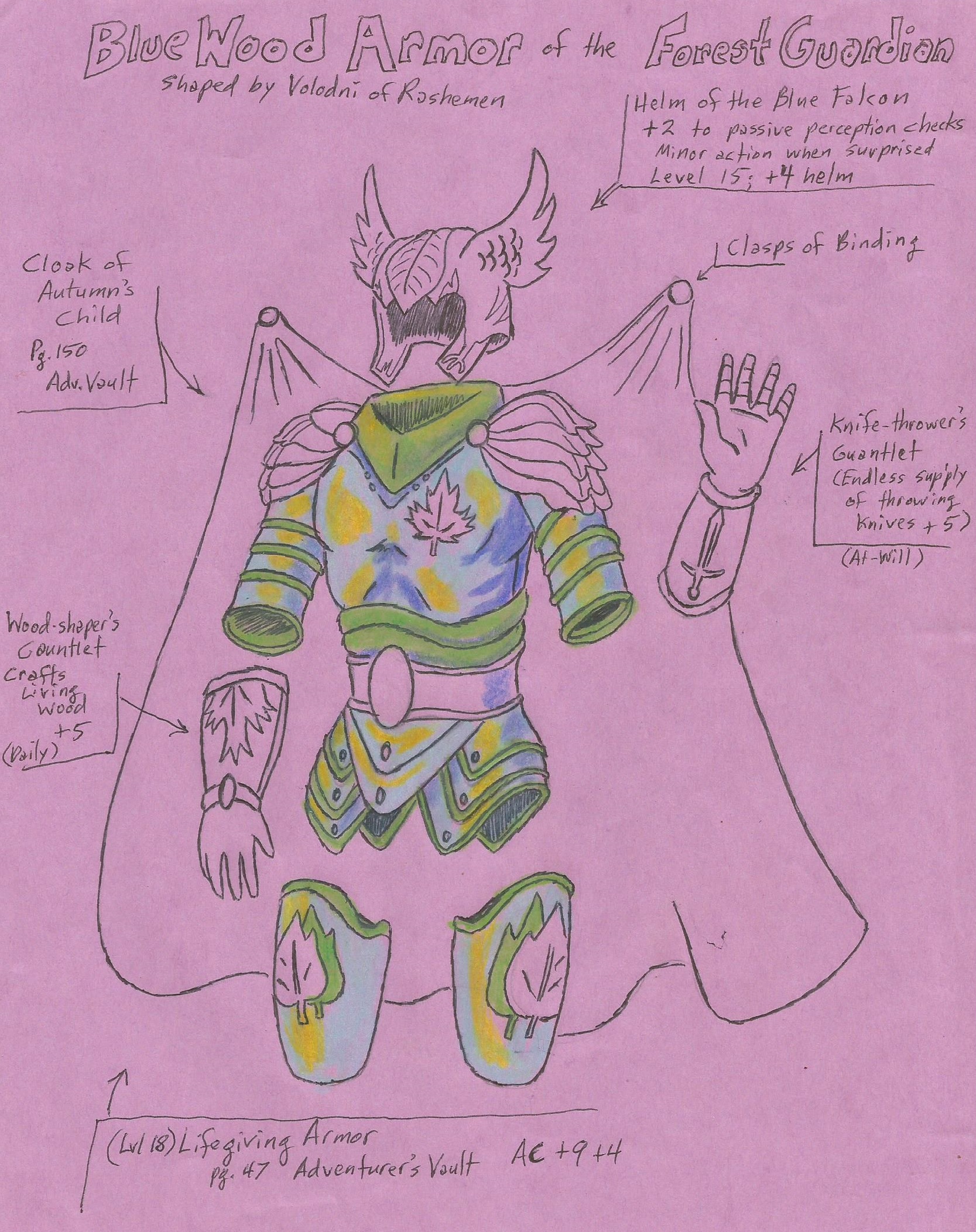
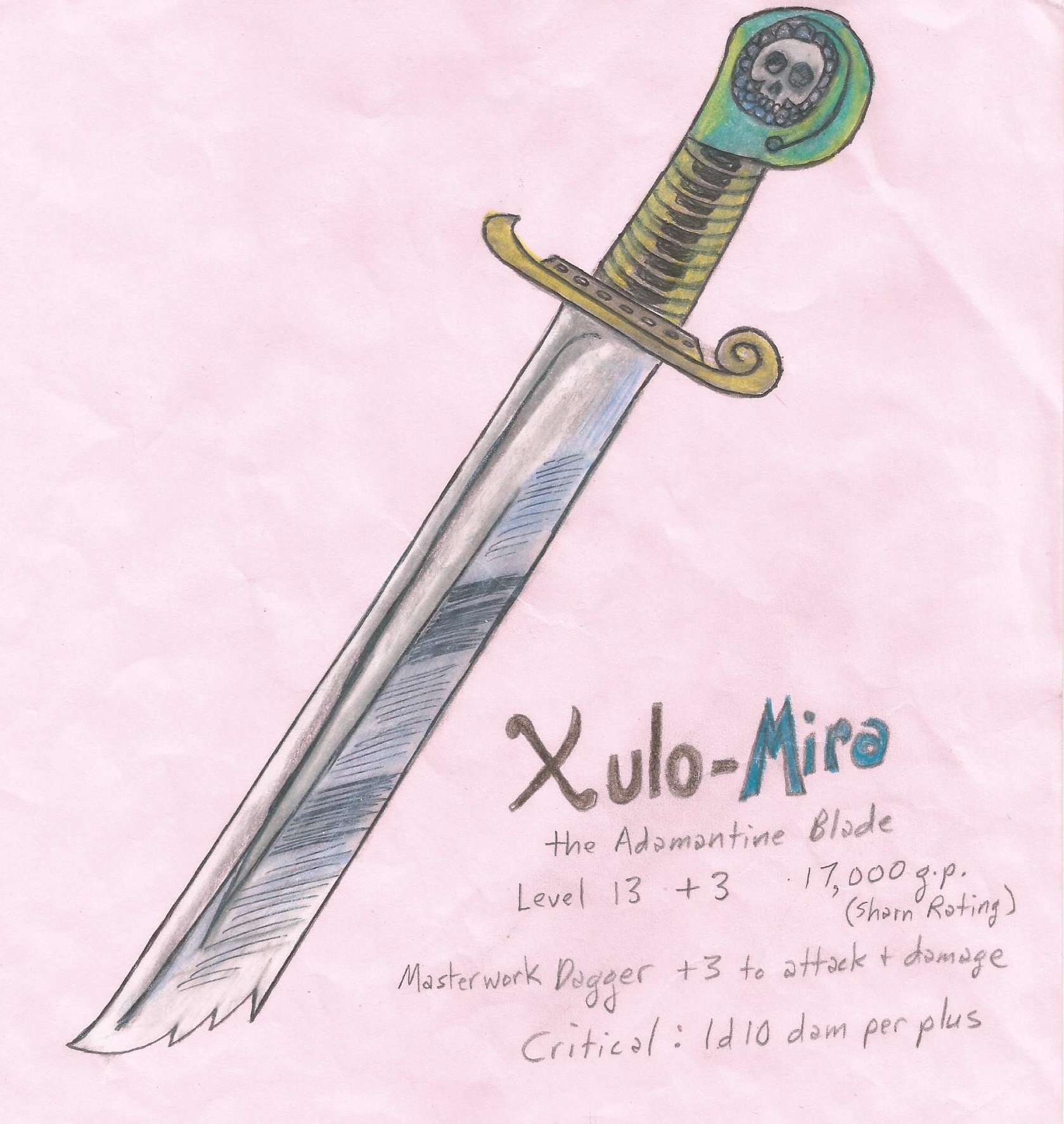
To go adventuring in Mickey the Dungeonmaster’s dungeons, you need the right equipment. Of course, whole books full of weapons and armor and adventuring doodads have been published. Some of the stuff we use in the family games comes from the game books, as exemplified by the items pictured above. The Blue Wood Armor of the Forest Guardian is a collection of items put together from the books published for D&D by Wizards of the Coast Publishing.
My daughter’s favorite weapon is a sentient throwing knife that always flies back to its current master after being thrown. It also never misses, adjusting its own flight to always strike the target for the greatest possible damage. It has a mind and intelligence of its own. It became sentient and alive in the middle of an epic combat with a magical giant golem who hit it with a spell that went disastrously wrong for the caster. This item was created on the spur of the moment in the midst of a published adventure, based on a disasterously low roll of the dice for the monster side of the combat.
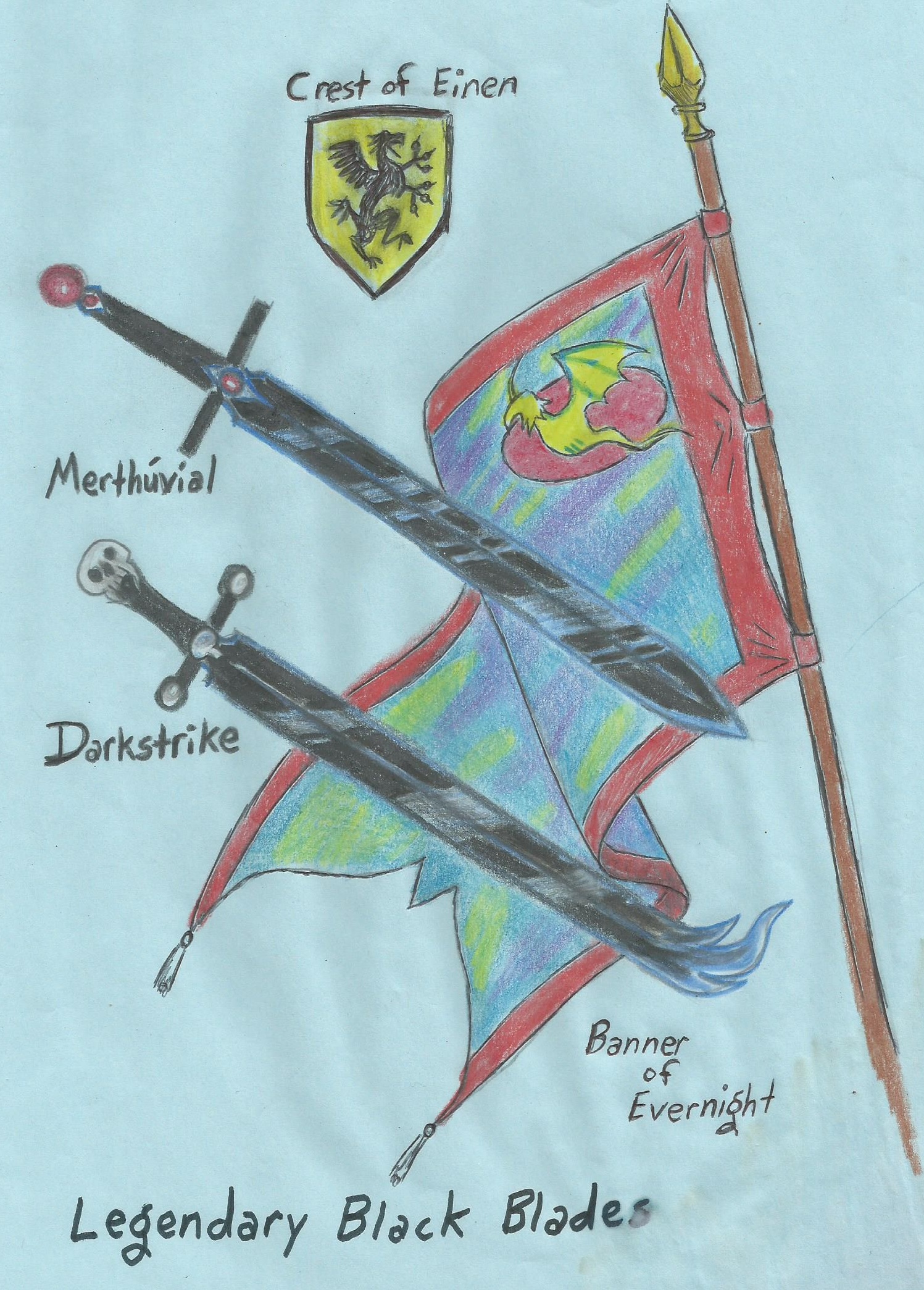
Some items in the game are actually treasures from the published adventure scenarios I like to use. Instead of simply selling off items when they are discovered in the cold, dead hands of defeated evil druids whose dreams of conquest and tyrannical rule you have thwarted, you can take them for your own personal use. I have a tendency to embellish what is described in the pages of the adventure with both really good powers and effects, and really insidious concealed curses. The Legendary Black Blades are both demon-laced and deadly. And both, though fatal to your enemies, will eventually darken your own heart and possibly shorten your adventuring life the hard way.
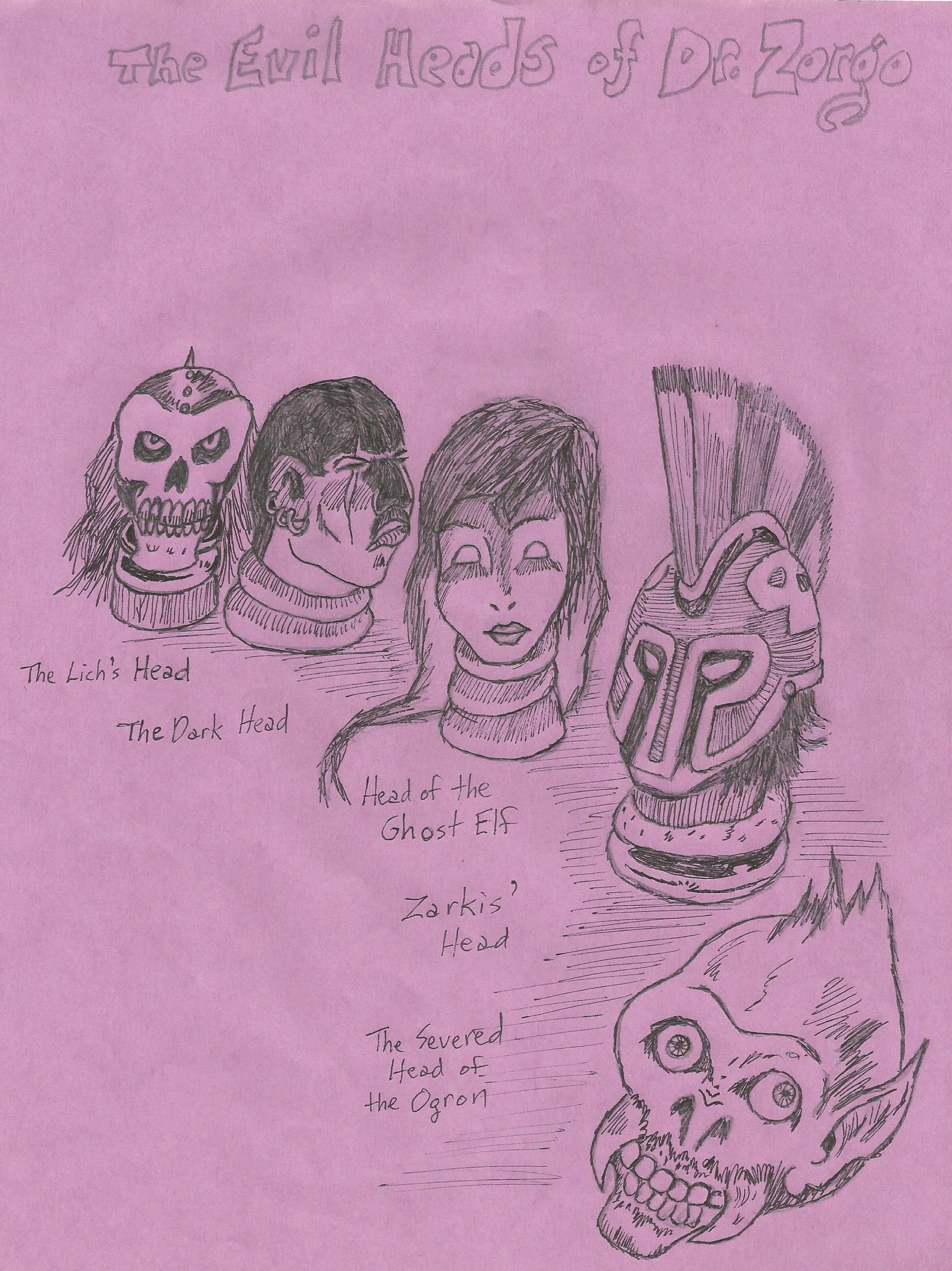
Not all equipment is made of swords and armor. The Evil Heads of Dr. Zorgo are a collection of living zombie heads that can impart wisdom and information (allowing characters to add skills) and can also direct you to places of adventure and great treasure. Of course, they are evil. There is always that little factor to consider. But come on, how can you not be tempted by treasures talked about by the Ghost Elf’s head when you tried to ask her for the time of day in her native land?
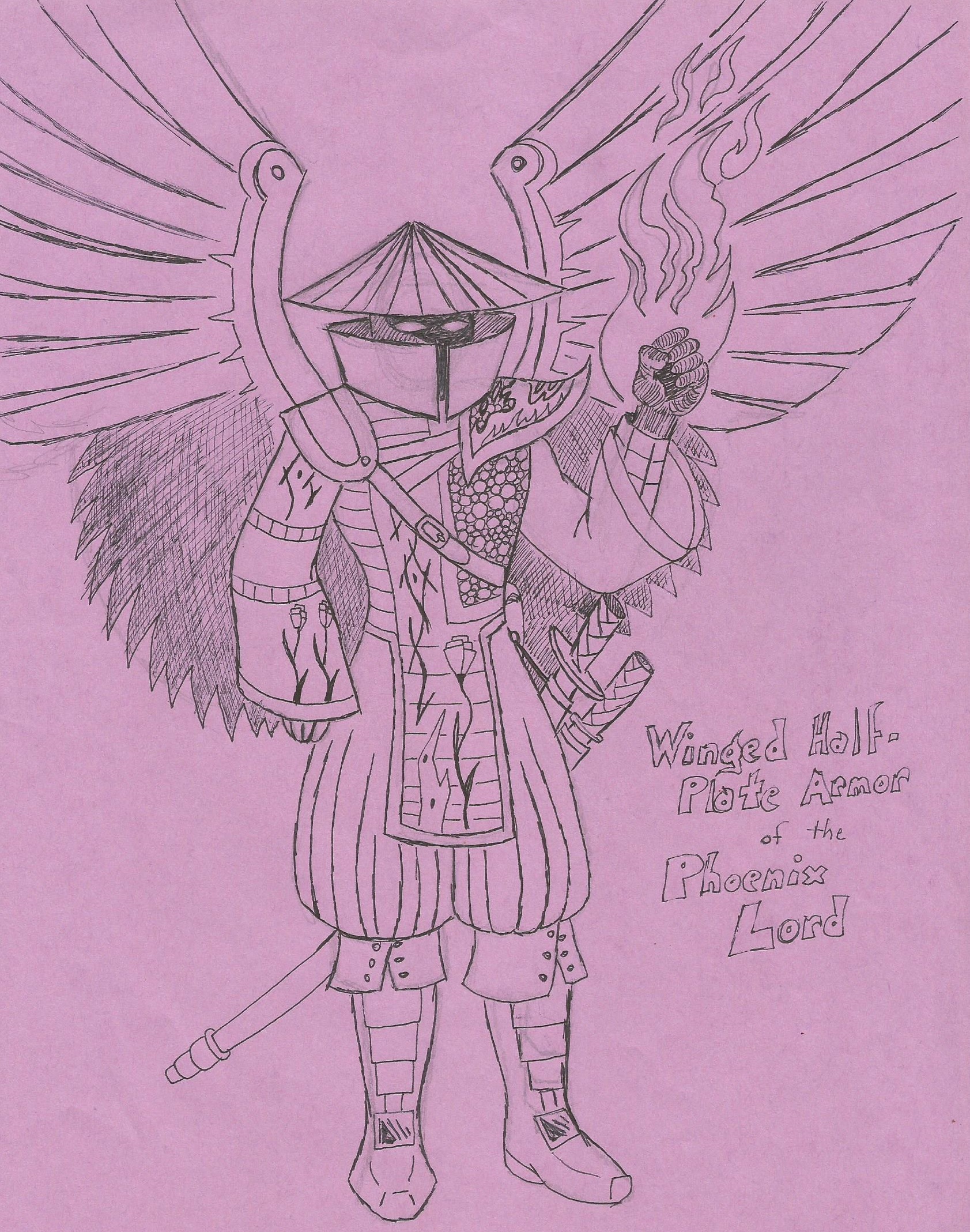
So the point of this post is that I am really proud of my drawings of D&D equipment and wanted to show them off. This post is merely an excuse for doing that. I have one more to show you, though I must confess, while I drew this one, it was designed by number one son to be used for his character, though as soon as he got it made, he sold it for lots of gold to use on the next project.
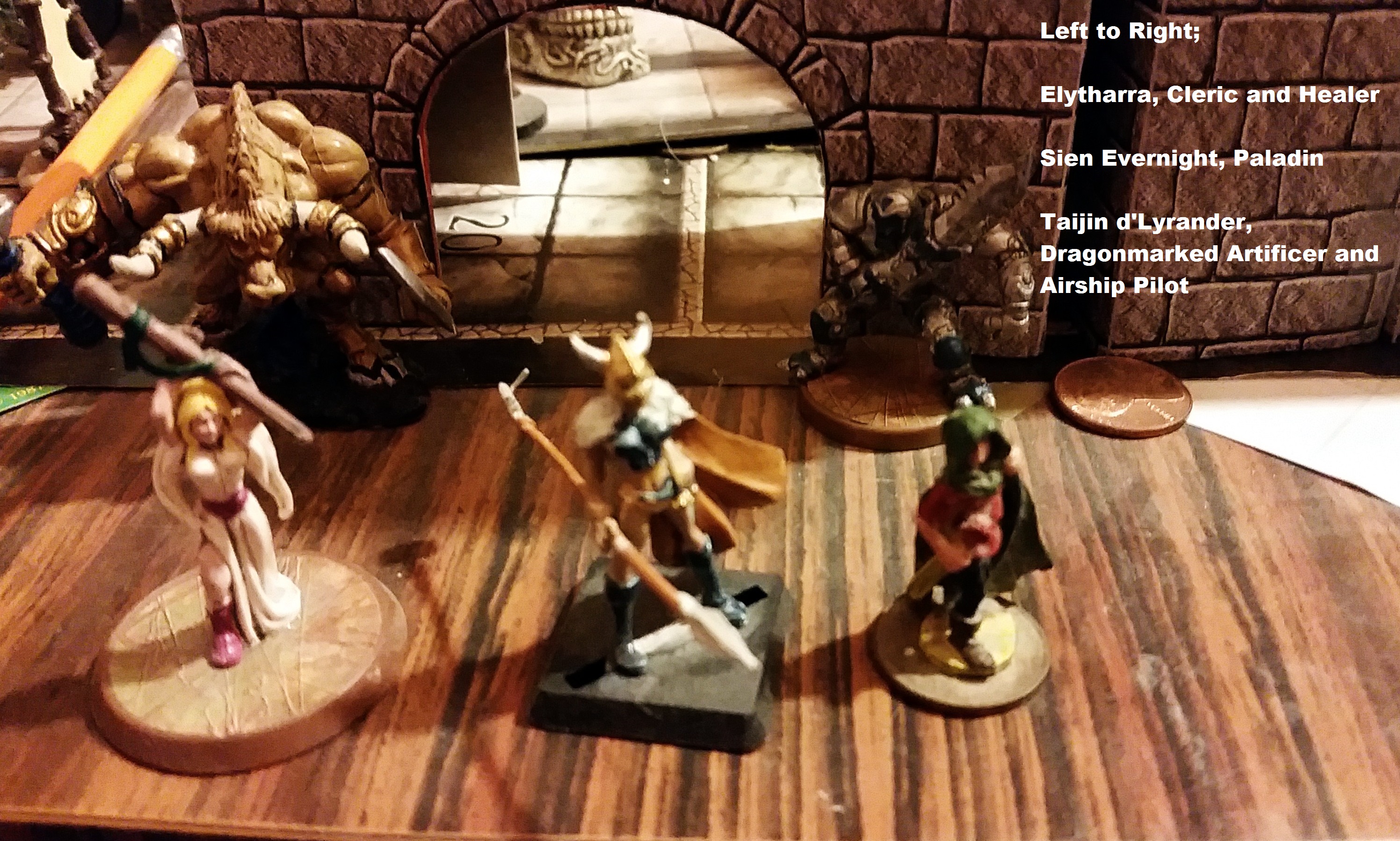
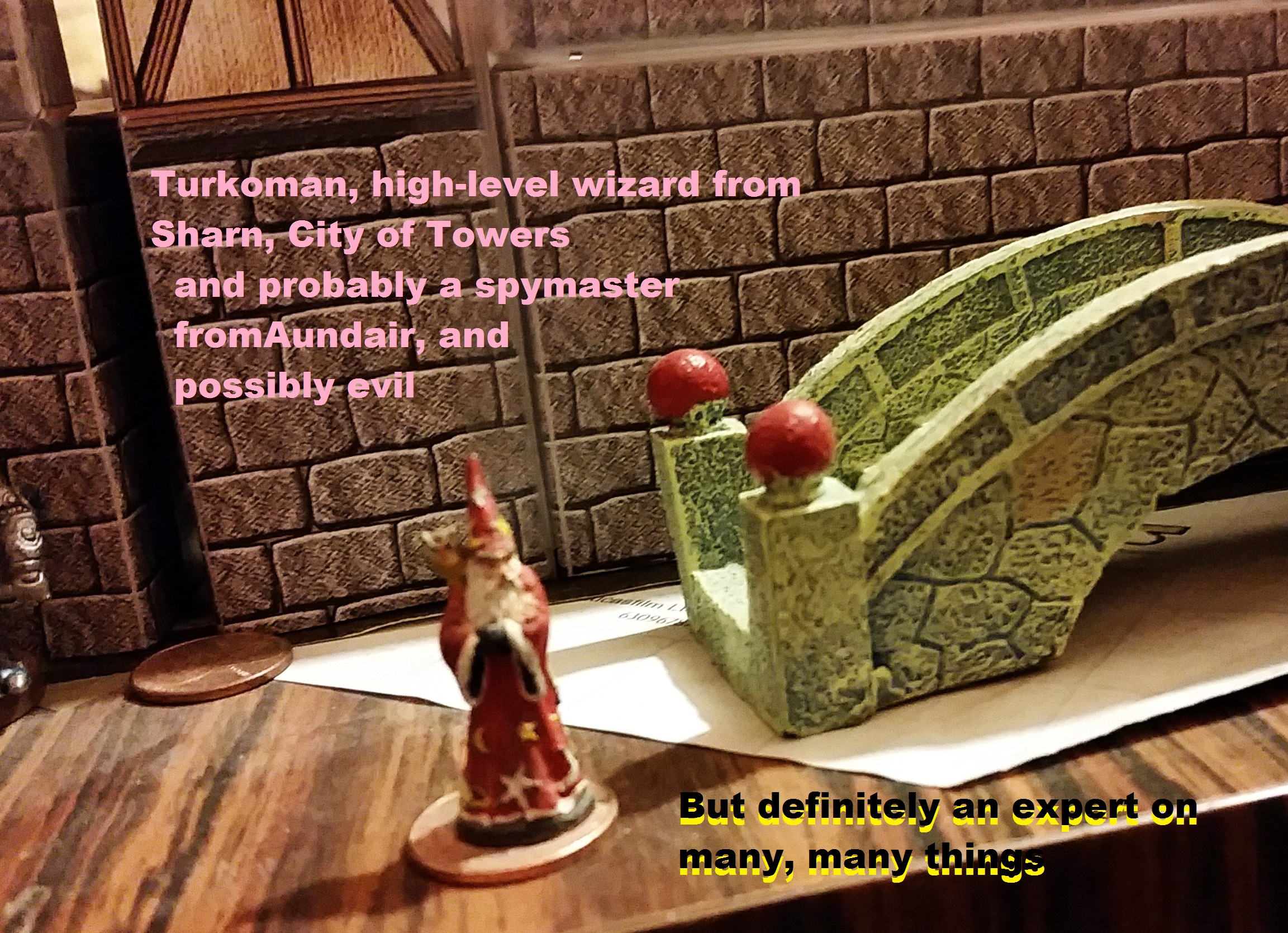
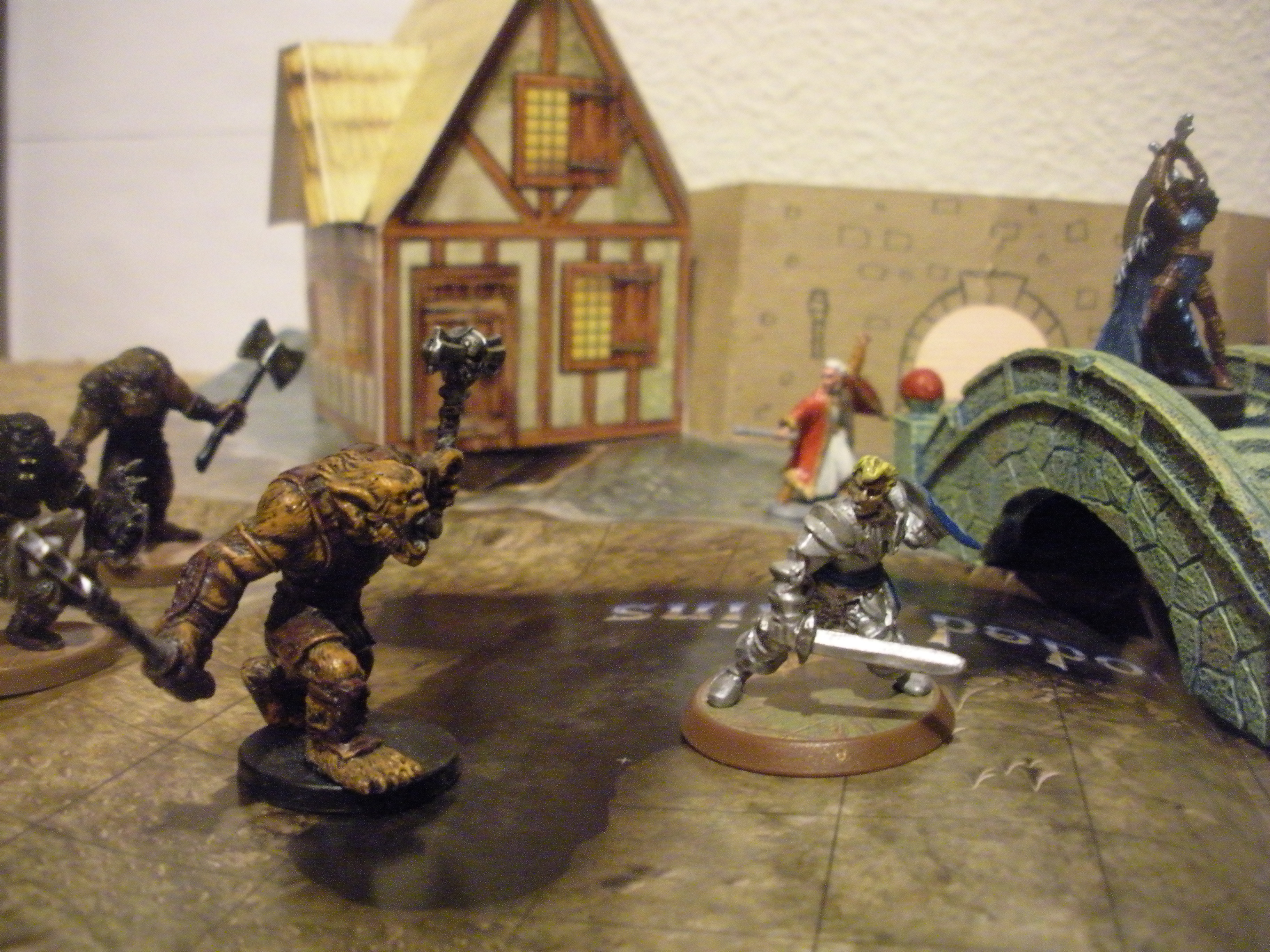
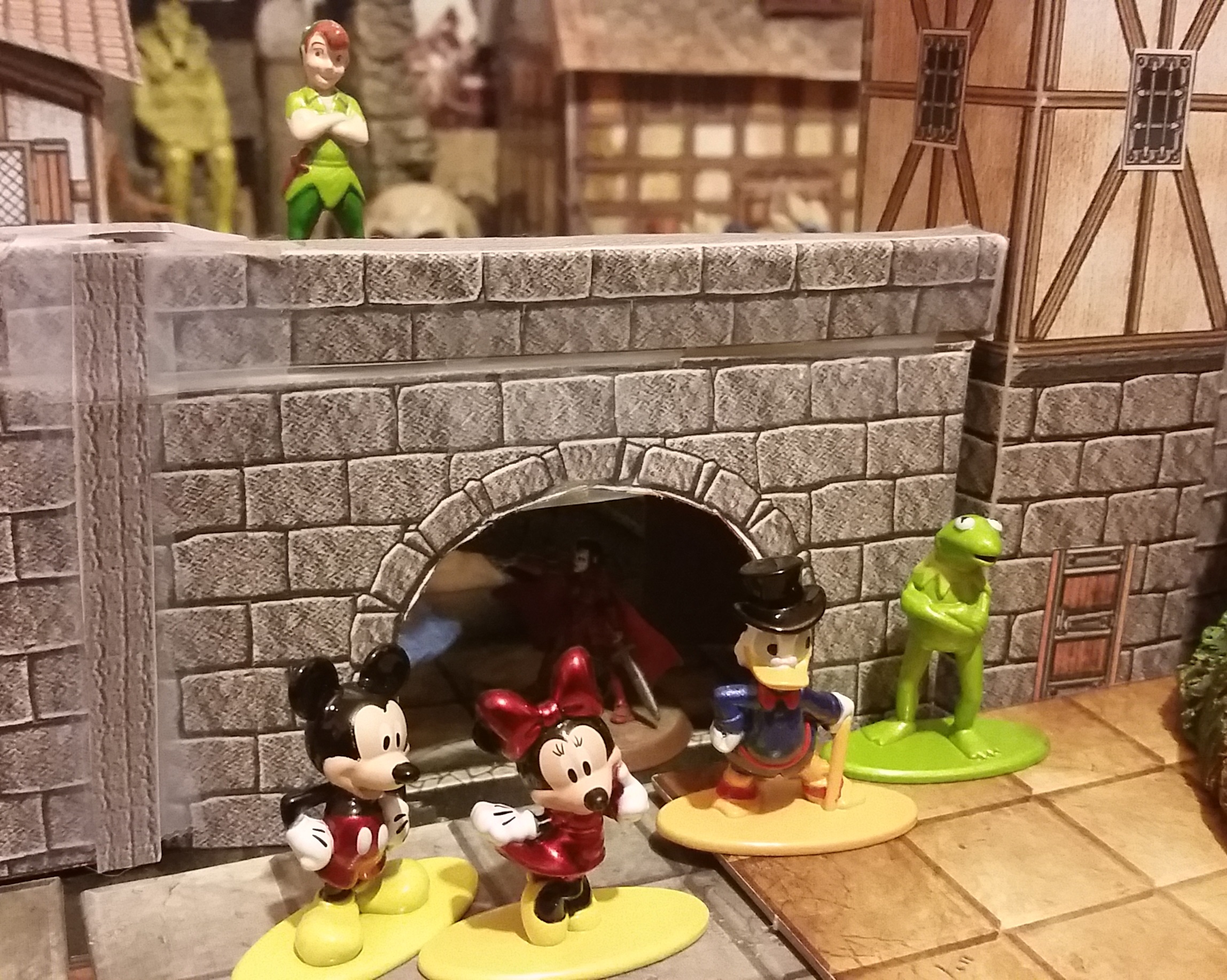
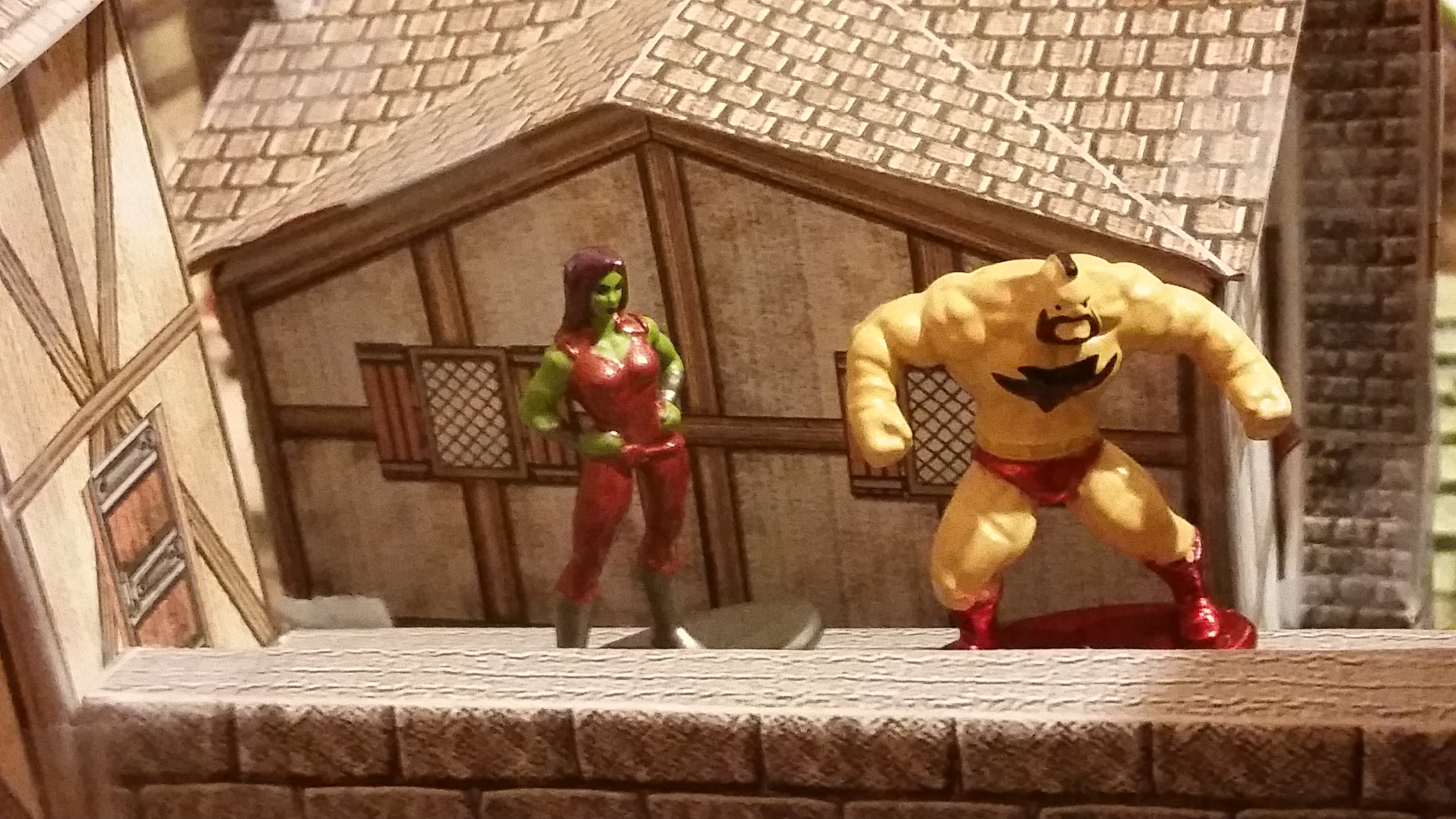
As a rabid Dungeons and Dragons player, I have labored for years to build up my collection of miniature figures. Now, like the action figures and the dolls, the collection is growing so fast it may eat the house. So, in order to play with them and get some use out of them, I built a cardboard castle, complete with grid for playing D & D. It is a scene that can be used to play the game, but it is also a place to display my collection.
Toy companies have recently started putting out collectible miniatures in an almost D & D scale. They only cost about a dollar apiece. That makes them cheaper than candy bars. And I am diabetic, so I can’t buy candy bars.
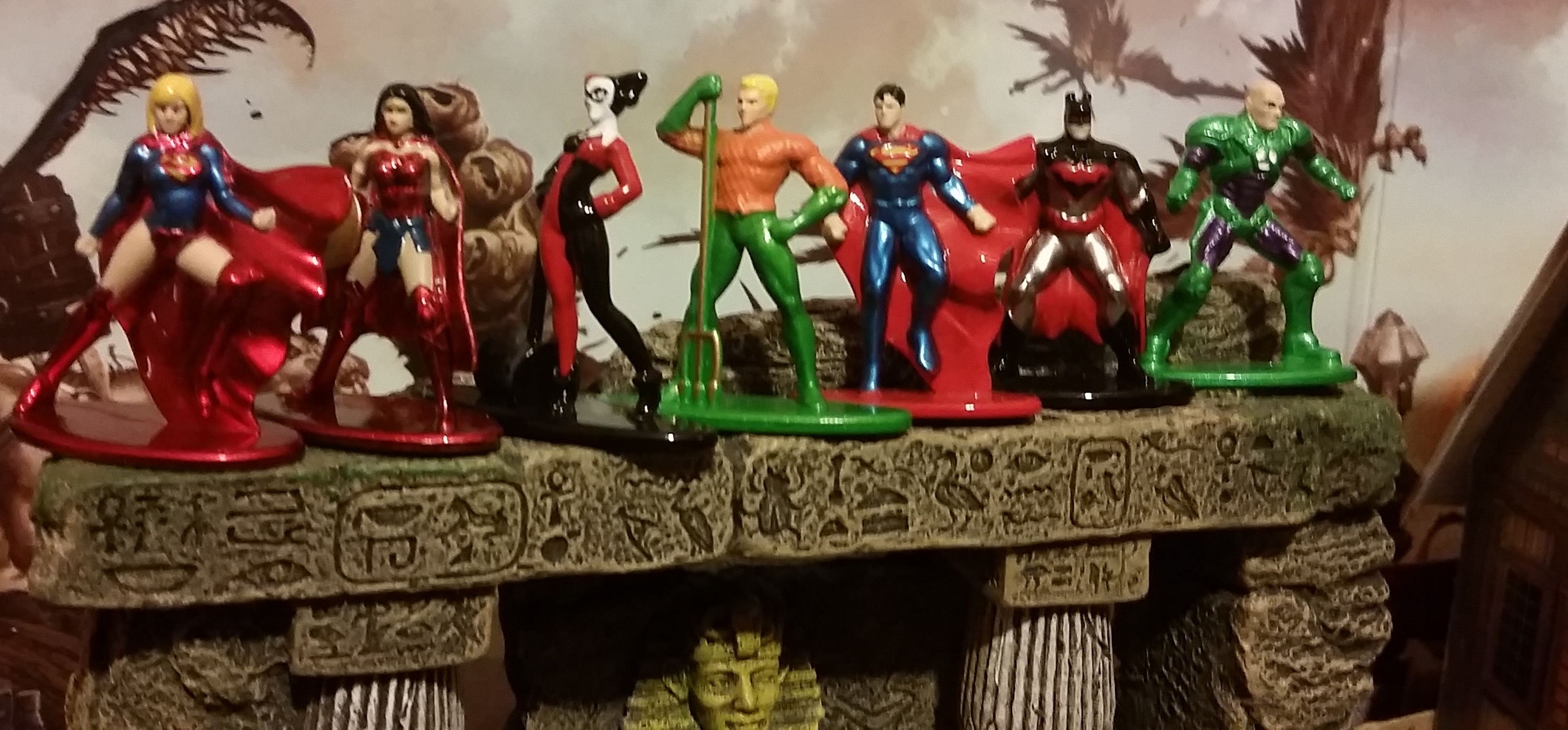
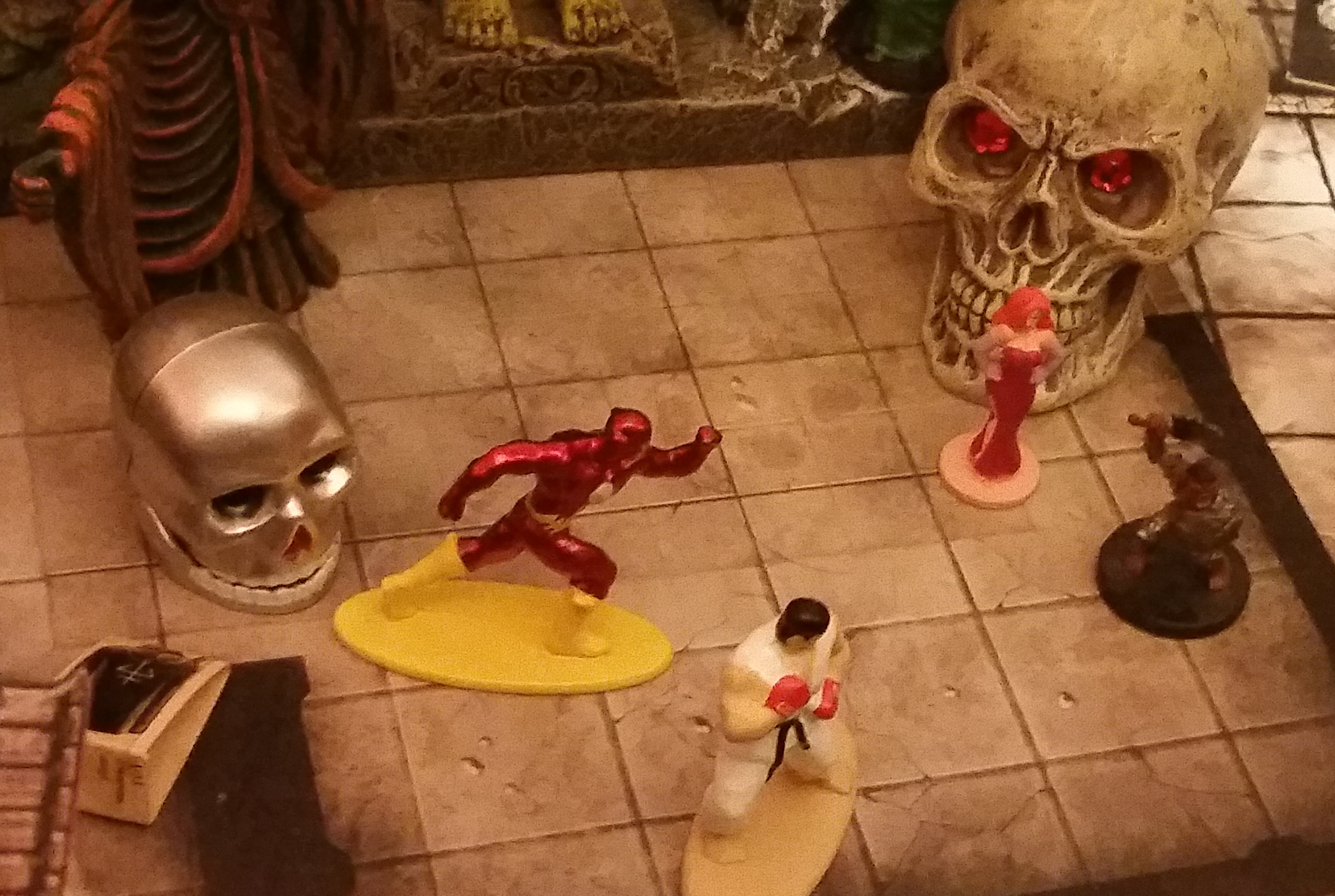
I like to position them in my D & D background and take pictures of them, even though DC Superheroes are not D & D figures. I can work them into the story of the next RPG sessions. Batman is a paladin. Aquaman is a sea-based druid. Wonder Woman is an Amazon.
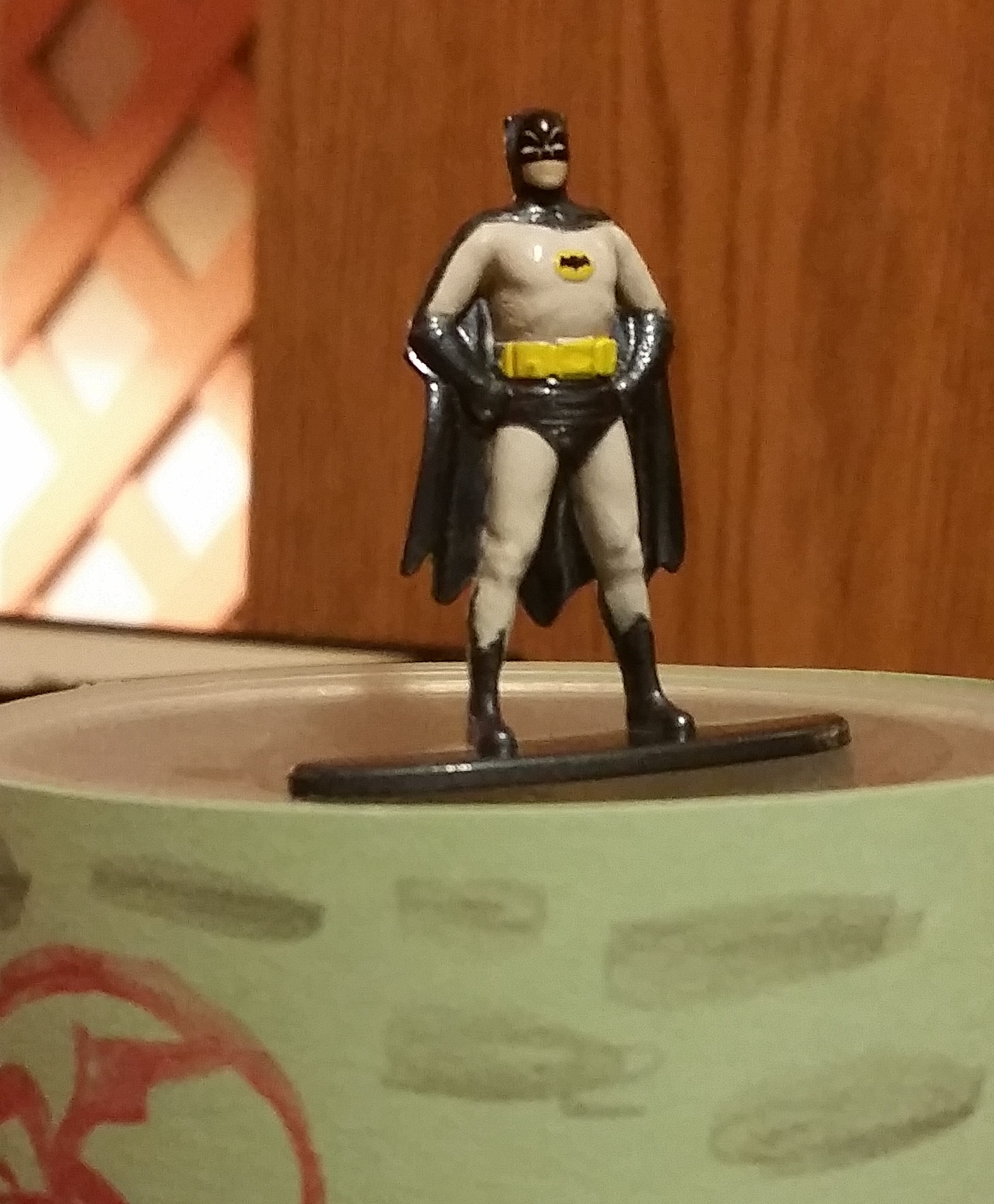
Adam West Batman is really, really cool. Wham! Pow! Sock!
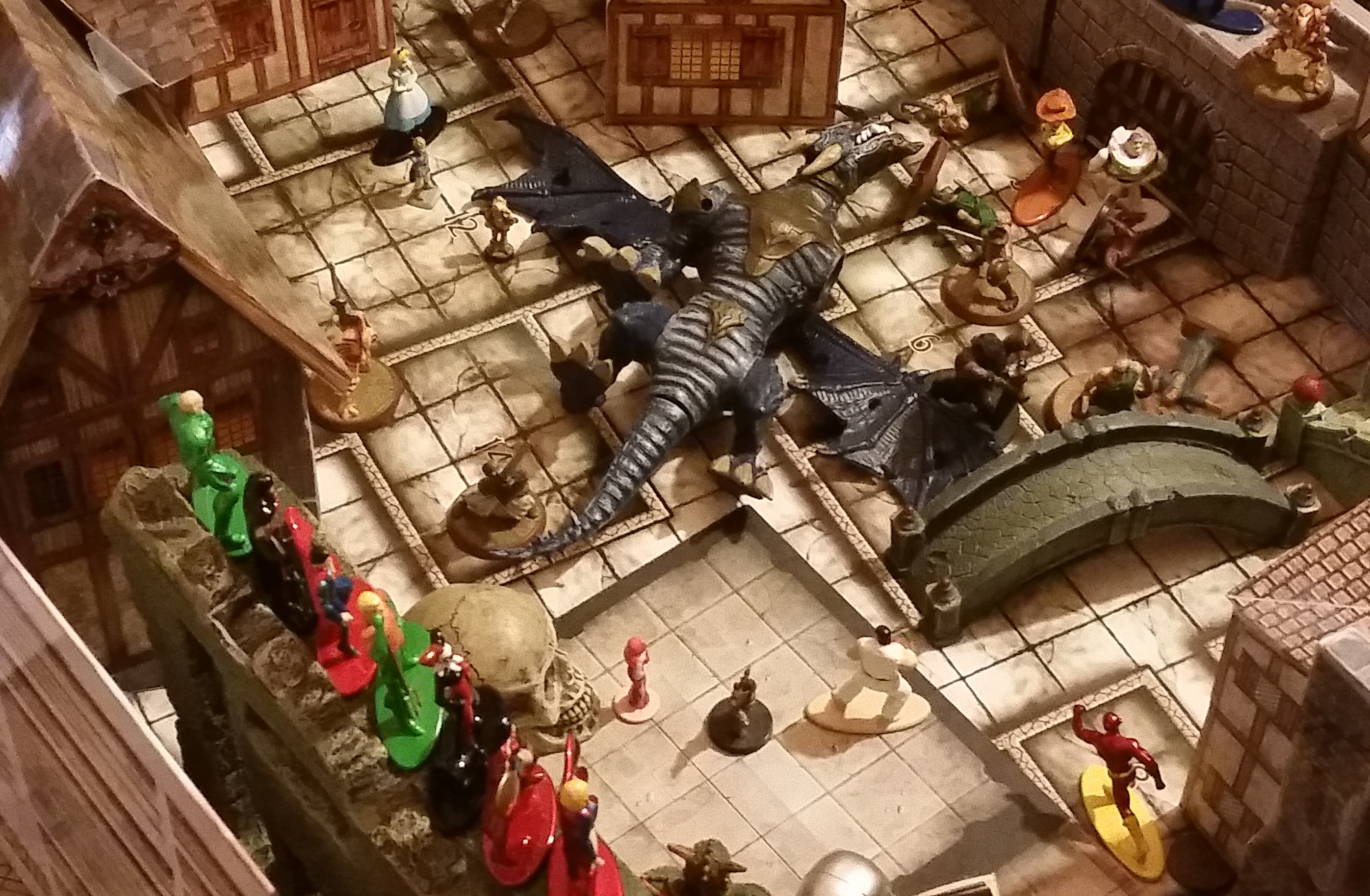
Killing a dragon is a big event in a D & D campaign. And I can do that now with miniatures.
The Flash can rescue Jessica Rabbit from a mad goblin in the Skull Plaza.
So, I reached a point in setting the scene for the game that it has become almost cinematic. And I like taking pictures of it as I continue to play with all of it. Forgive me. I will forever be twelve years old in my head.
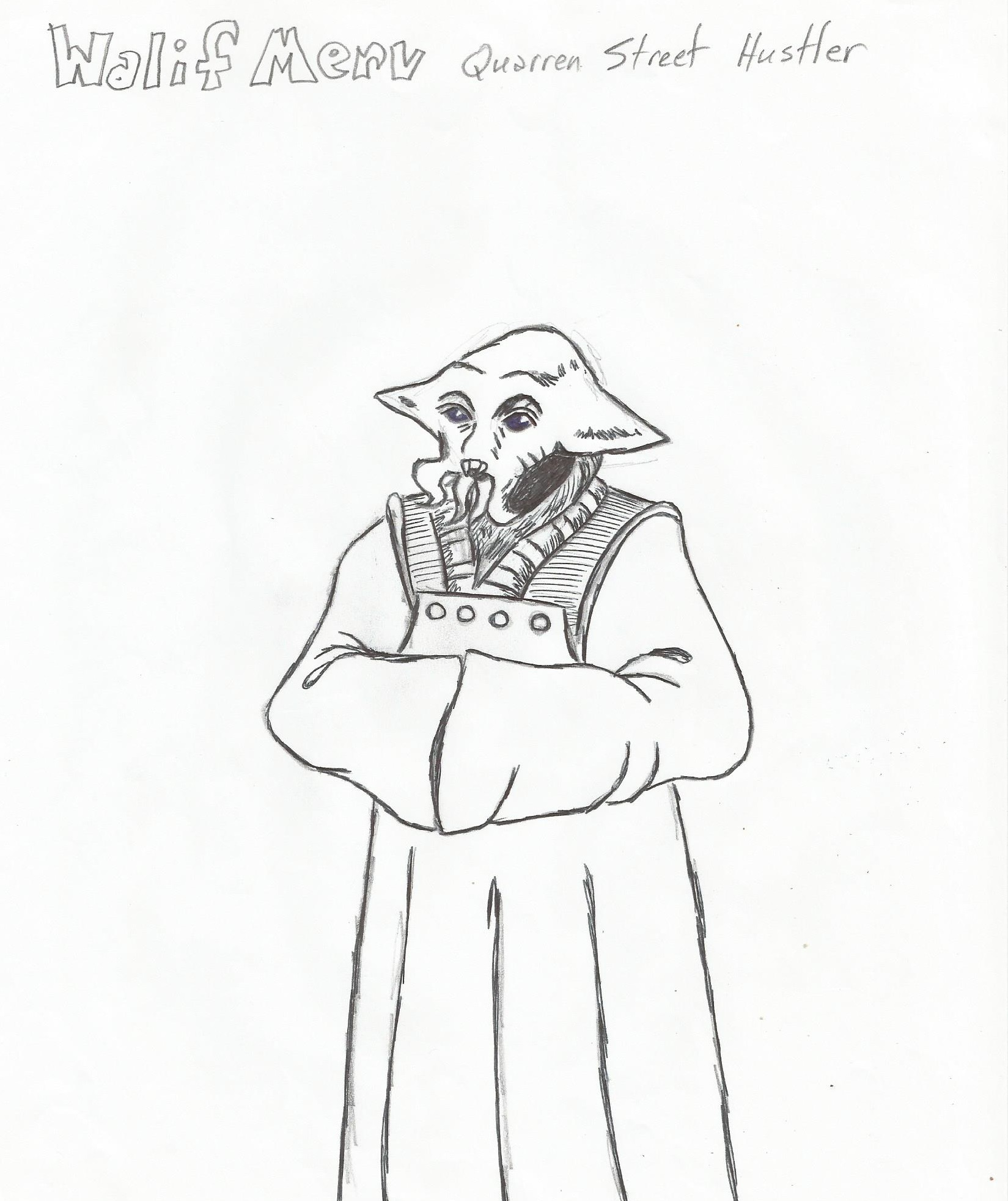
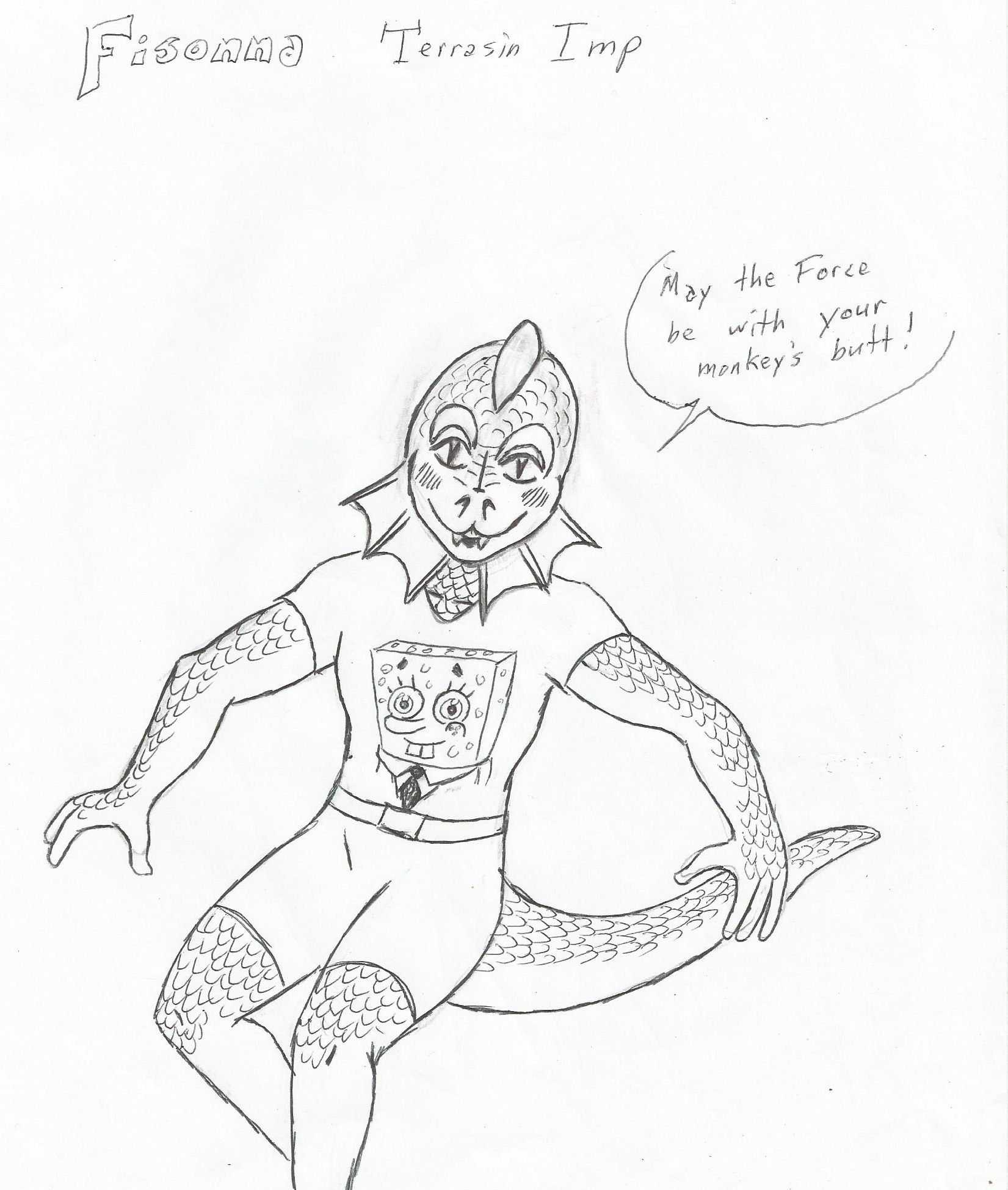
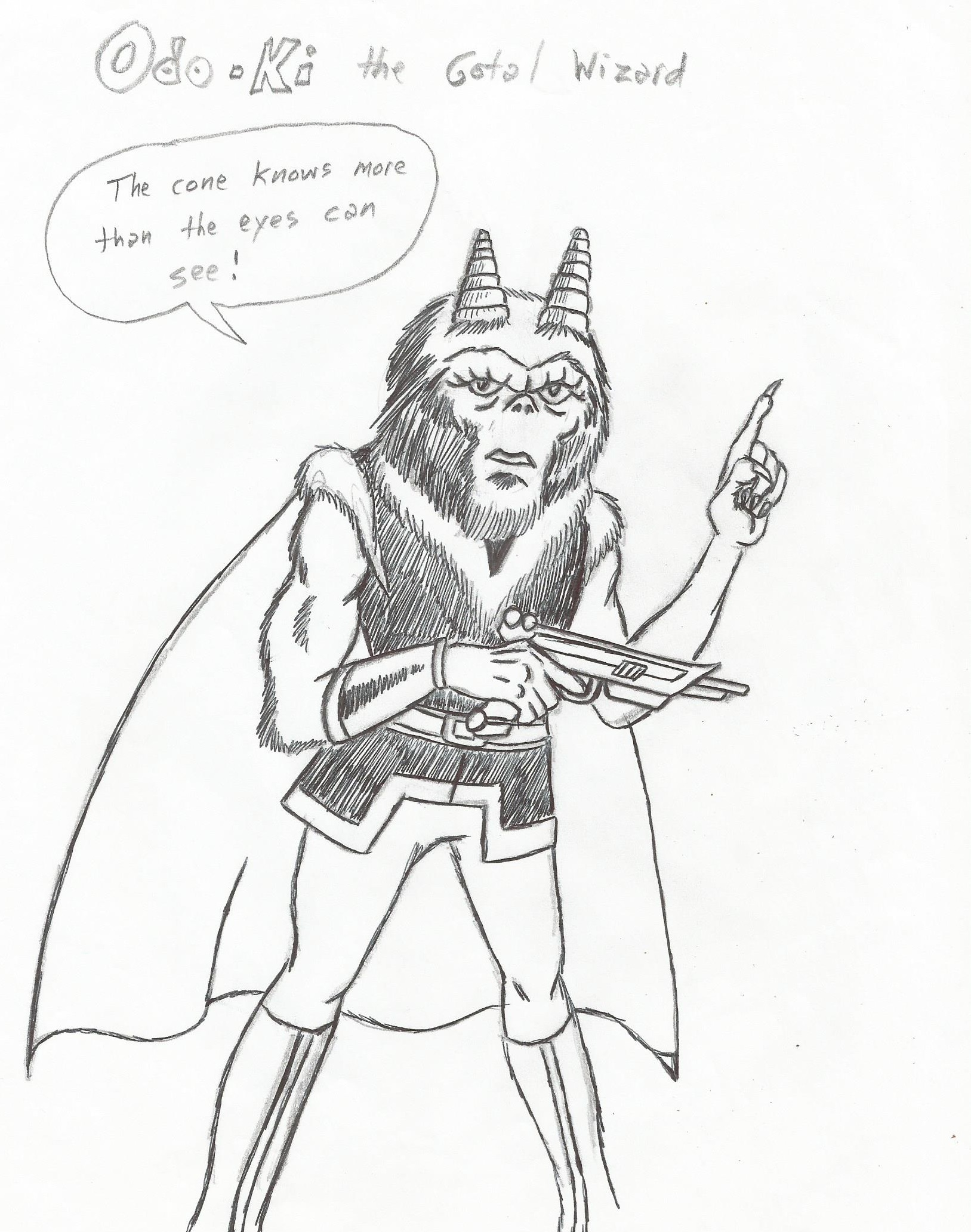
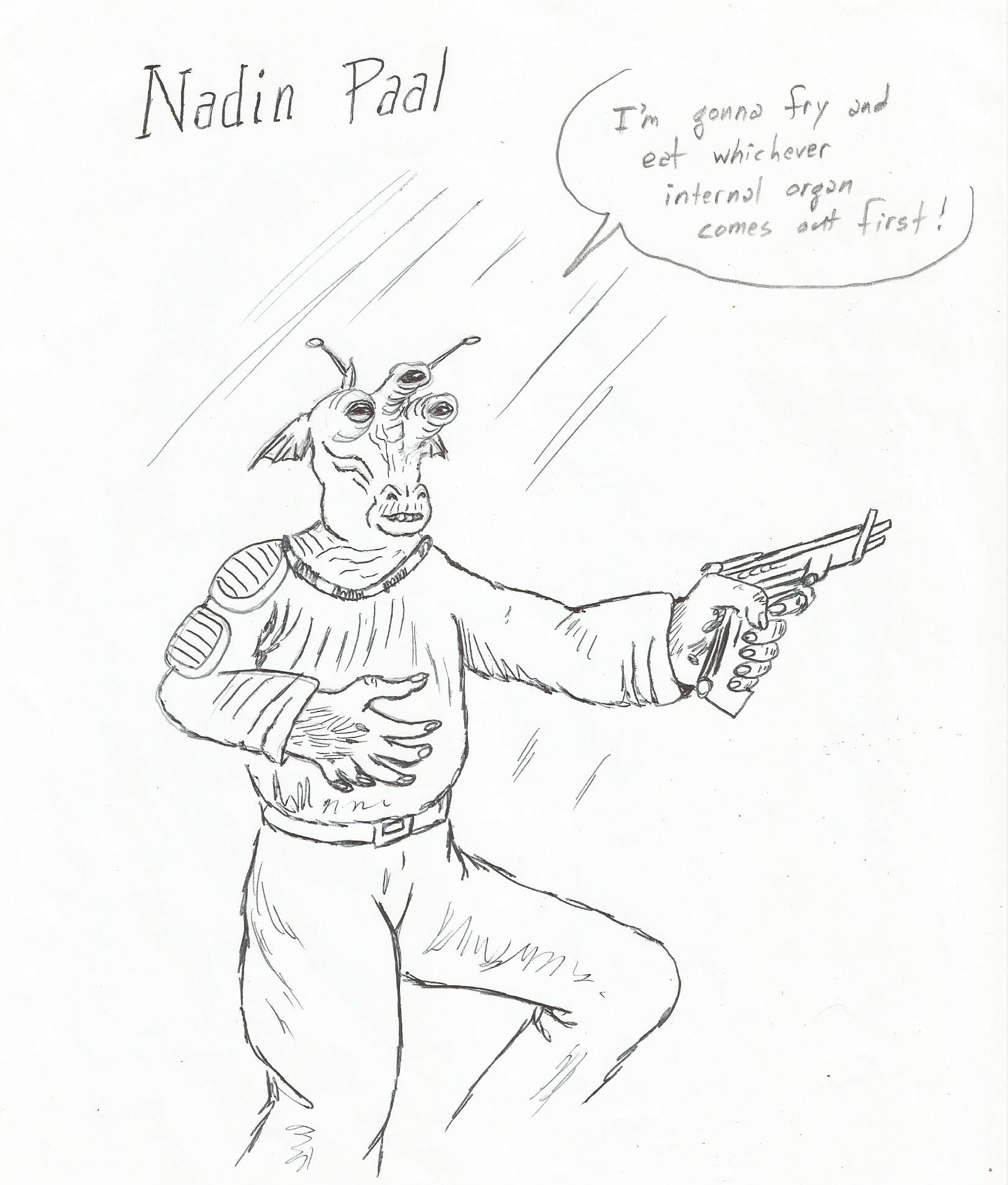
I spent a good deal of my time as a game master for the Star Wars role-playing game in creating alien characters that fit the movies, the books I read in the Star Wars series, and the game materials. In this post, I will give you a mini-gallery of the aliens I drew for the game.
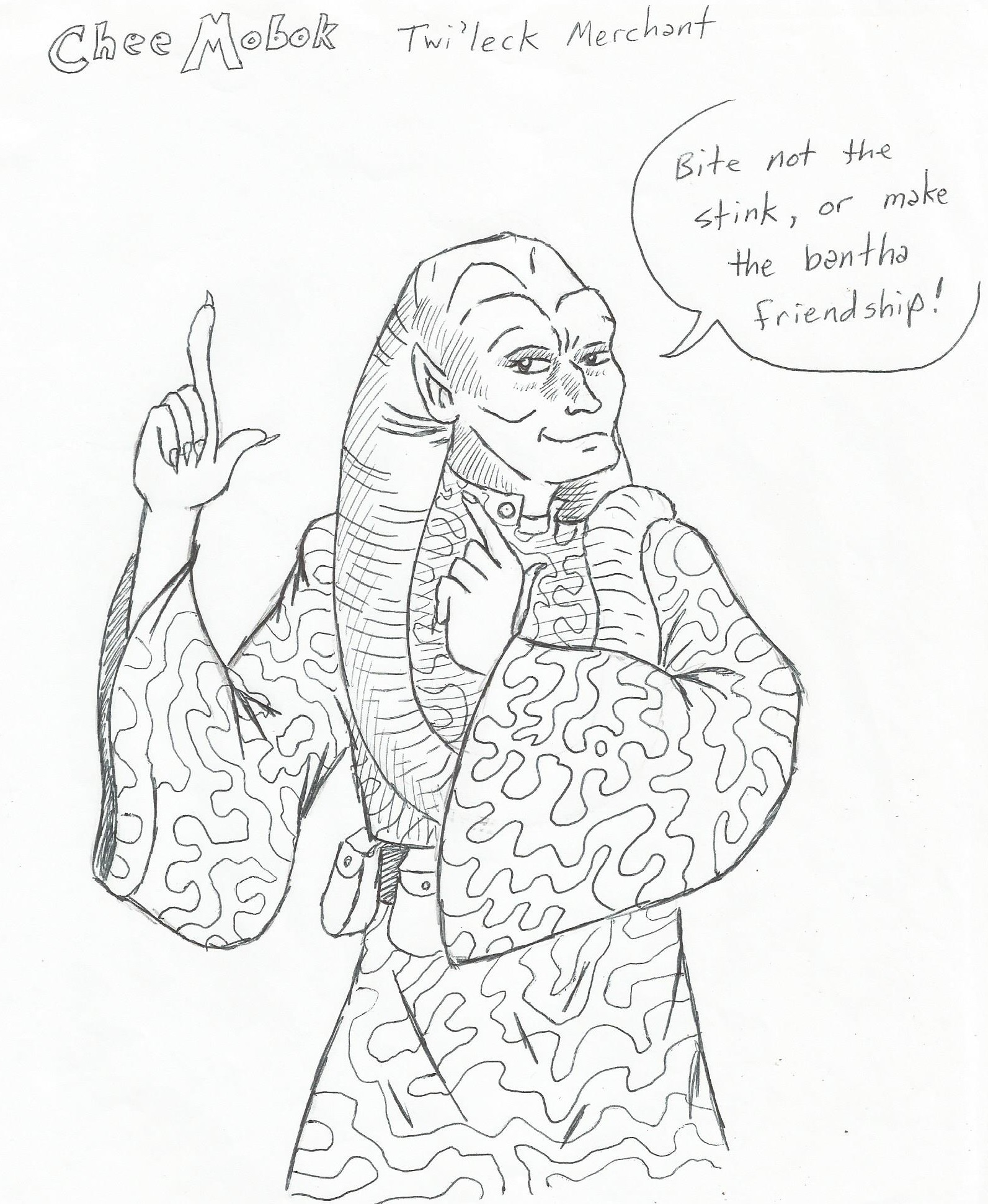
Chee Mobok was a space trader who had a problem with his own ego. He believed that he was a genius at language and could speak any language he had heard a handful of words from.
The Galactic Common speakers were always laughing at the things he said.
Huttese speakers like Jabba the Hutt were always trying to kill him for say precisely the wrong thing.
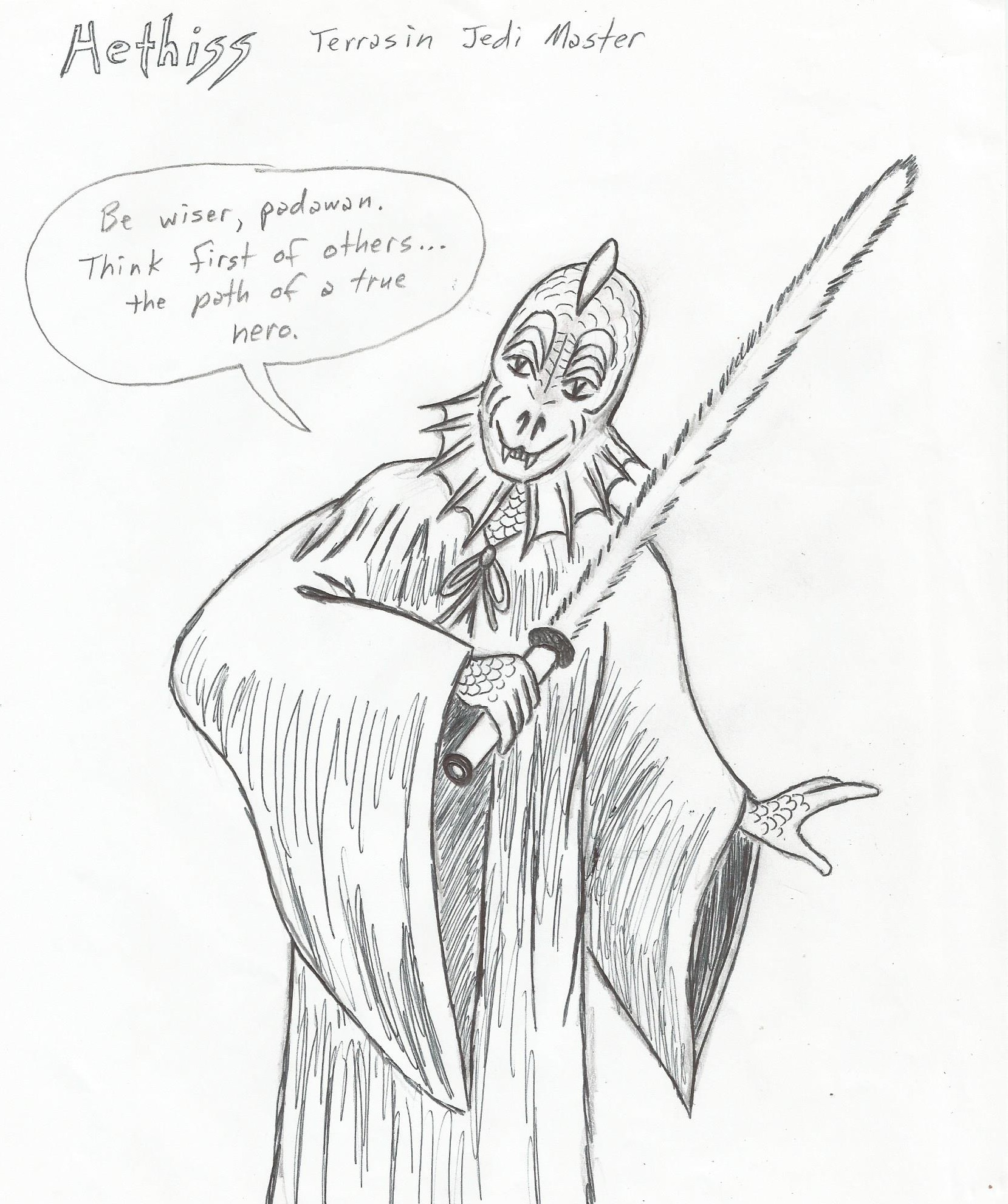
Hethiss was the Jedi Master when my son’s Jedi character was still a padawan learner.
He was wise, but unable to keep his student from doing things in violent ways when a diplomatic solution was called for.
Merv was a potential terrorist and a suspect in a series of murders on a water planet. He was, however, the good badguy character. You know, the villain who has a heart of gold and whose actions redeem him in the end… As opposed to a bad goodguy who seems to be a hero and ends up betraying everyone.
Fisonna was a street kid from the same planet and same race as Hethiss the Jedi master. He had the potential to become a padawan learner. But he also used his Force skills to pull pranks on serious adults.
Odo-Ki was a Gotal with the ultra-sensitive cones on his head. He had a limited ability to see behind walls and predict the near future.
Nadin Paal was an actual pirate and terrorist with no redeeming qualities at all. The best thing about him was, that when the time came, he blew up really nicely. A colorful fireball.
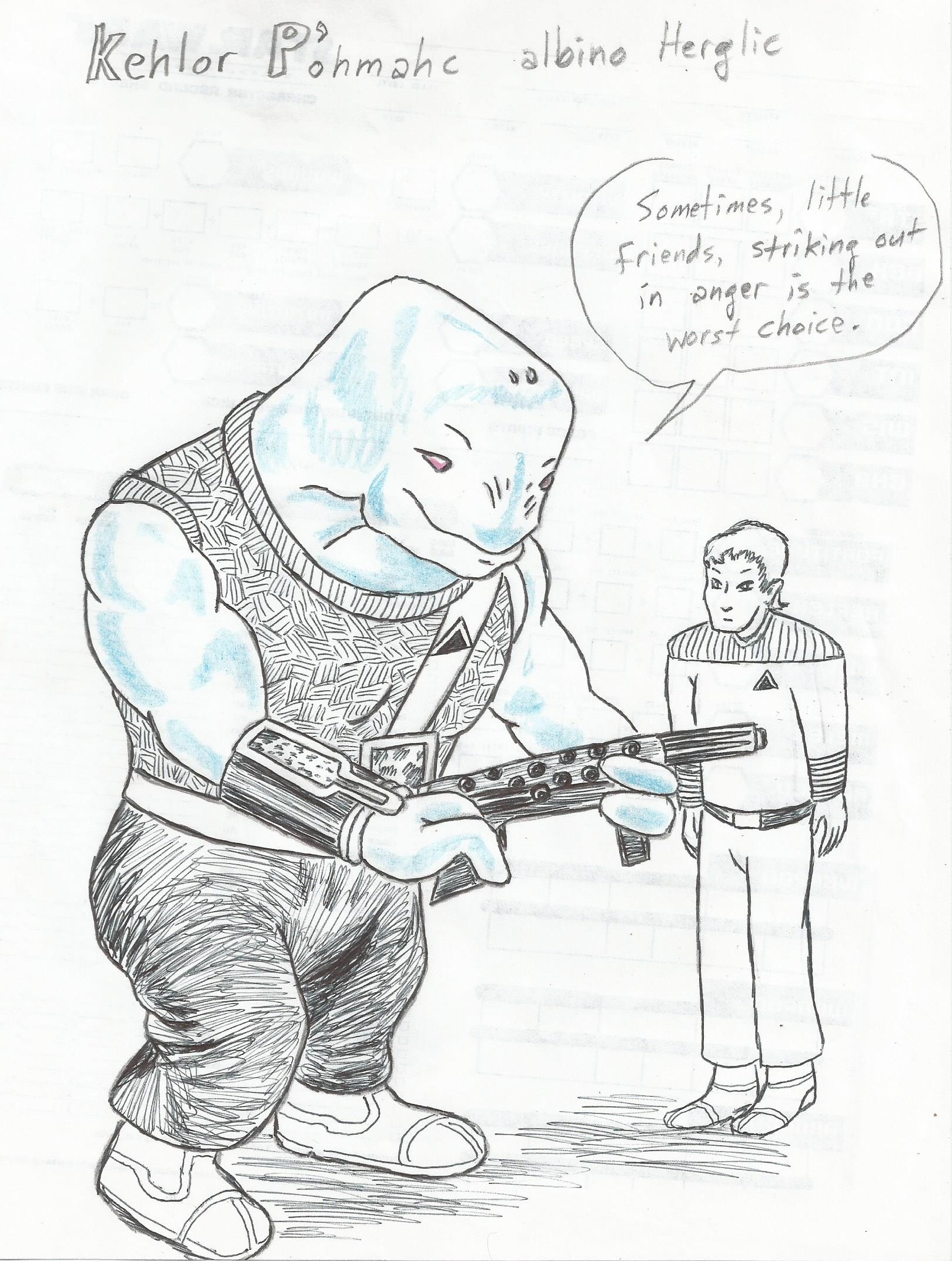
Kehlor was a Herglic, one of the whale people who required specially built extra-large space ships and accommodations. He was also a gifted pilot. You can see that he wears the uniform of the Trade Authority.
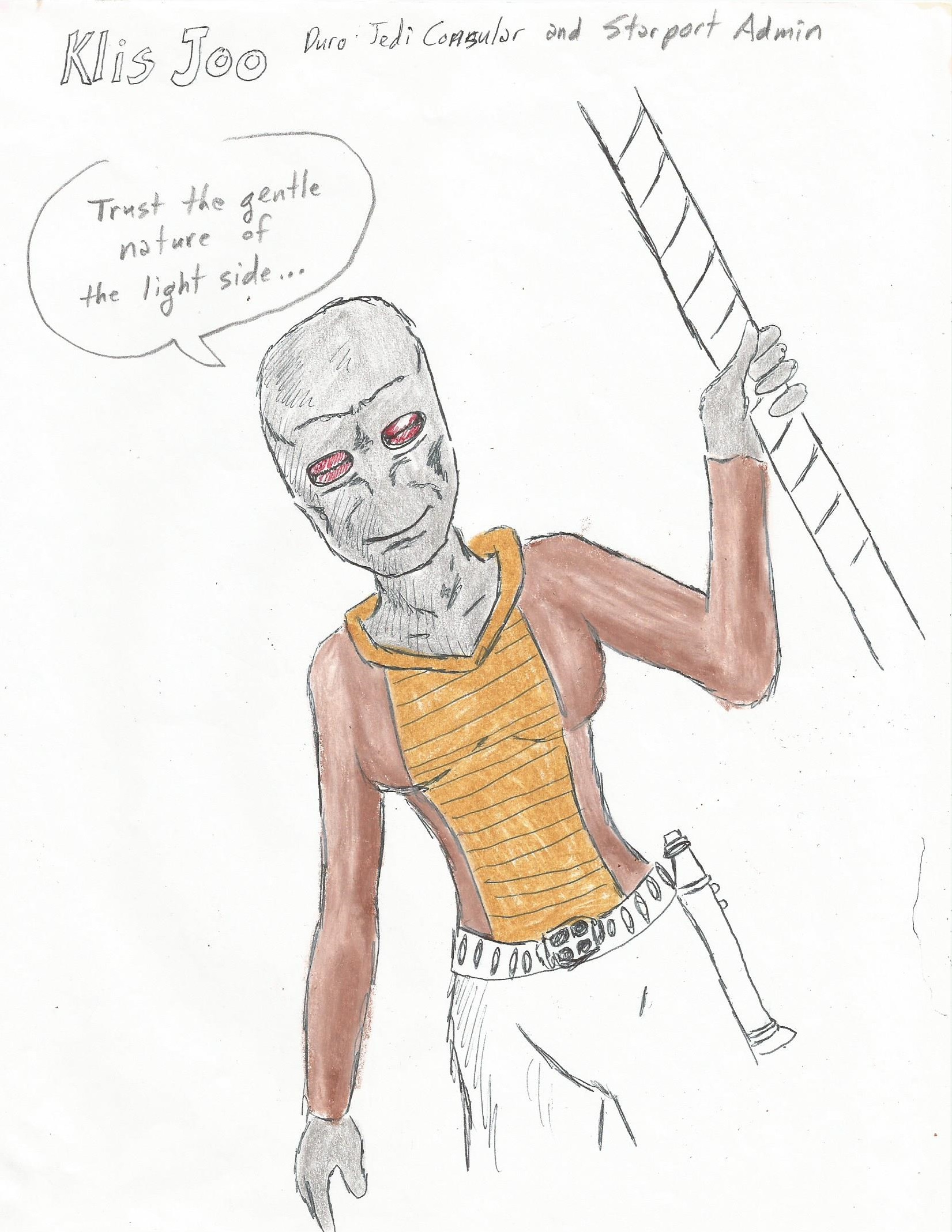
And finally, Klis Joo was a Duro and a Jedi, a gray alien with considerable Force powers.
There were many more drawings like this as well. But these are some of the best ones.
In honor of all the years I spent playing dungeon master on Saturday afternoons, I am posting pictures to keep the posting of D&D stuff on Saturdays as a tradition. I really am a bit too achy and ill to post any old orc and ogre stories today.









 Catch a Falling Star