The homeless man wandered onto center stage just as the spotlight went on. He shaded his old eyes against the brightness and looked outward into the dark theater. It was probably some kind of mistake.
“Oh, so now it’s my turn to talk, eh?”
There was no response.
“Well, if you’re expecting something funny to come out of my mouth, good luck with that. More than half of what I say that makes people laugh is the result of depression, ill health, and just plain ignorant stupidity. And the other half of it is not meant to be funny, but is because I don’t always understand what I am saying.”
There was an embarrassed chuckle somewhere in the darkness.
“I mean, you can’t expect too much from me. I’m a bum. I have no money. I have no job. Not having any work to be bothered with is kinda good. But the other thing kinda sucks.
And all the great comedians that used to stand on this stage and try to save the world through humor are dead now. It’s true. Robin Williams died recently. George Carlin, Bill Hicks, Richard Pryor, and Bill Cosby are all long gone.”
There was some nervous laughter in the theater.
“Oh, I know, Cosby only thinks he’s dead. But he kinda killed the character delivering the wisdom in the form of observational comedy, didn’t he.”
“But most of them old boys tried to come up here and tell you the truth. And the truth was so absolutely unexpectedly wacky and way out of bounds that you just had to laugh. And the more wicked the humor, the more you just laughed. You didn’t do anything about the problems they talked about. But you sure did laugh.”
“It seems like the more they told you the truth and the more you just laughed about it, the more old and bitter they got. Sardonic? You know that word? Not sardines, fools, but sardonic. Bitterly humorous and sadly funny. Seems like a lot of them old boys got more and more bitter, more and more depressed up to the end. More and more sardonic.”
“I mean, Carlin was calling you stupid right to your face at the end. And you just laughed it off.”
The theater had grown eerily silent.
“But it ain’t all bad, is it? I mean, at least you all can still laugh. Only smart people get the jokes. The ones Carlin moaned about were laughing because everybody else was laughing. Those weren’t the ones we were talking to. There’s still life out there somewhere. Maybe intelligent life. Maybe aliens ain’t located any intelligent life on Earth yet, but they’re still trying, ain’t they?”
“You shoulda listened more carefully to what they were saying. Life and love and laughter were bound up in their words.”
“So I guess what I’m really saying is… just because I happened to get a rare chance to say it to you all… learn to listen better. The voices are quiet now. But the words are still there. And laughing at them is still a good thing. But remember, you need to hear them too.”
The theater suddenly filled with the roar of a standing ovation. The old man bowed. And this was ironic because… the theater had always been empty. No one at all was there now.
Part of being a dungeon master is the responsibility for creating the dungeon. Now I do intend to fully explain the events of the siege of Castle Evernight in a future Saturday D&D post, but today I want to show you my dungeon setting, the Keep of the Duke of Passage, Dane Evernight. This is me thinking like an insane architect to build a tall, spindly castle that no real-life king or duke would ever try to live in. But insane as it was, it had to be drawn to scale and the inner workings had to be mapped out on grid paper where every little square represented a space of 5 feet by 5 feet.
Level one shows the areas you would enter coming in through the front gate. Colored-in areas represent the solid stone from which this castle is built as well as the rock spire it was precariously perched upon. The usual dungeon-master map symbols apply. The little empty rectangle thingy blocking passageways and interrupting walls is to be interpreted as a door. You can also see that to visit on horseback requires your trusty steed to be able to climb stairs. So, unless you have a verily dexterous and unusual horse, you should probably ride in griffin-back or dragon-back.
Moving to Level 2 brings you to where the Duke’s Great Hall would receive you as a visitor. There are also places you would like to get to, especially if you are a teenage boy, like the harem and the bathing pool attached to the harem, and maybe the Magic Lab, but you will most likely not be allowed into those places. But you see the dark spots in the walls? Those are the garderobes. You probably will be allowed access there, because, when you gotta go, you gotta go, and that is the proper place to go. Medieval castles have primitive plumbing.
Level 3 is the level I would most want to see if I were touring this place myself. Not only is it the place that has the library in it, but it houses the limner’s studio, and the limner is the resident painter, picture-maker, and white-washer of fences and garderobes.
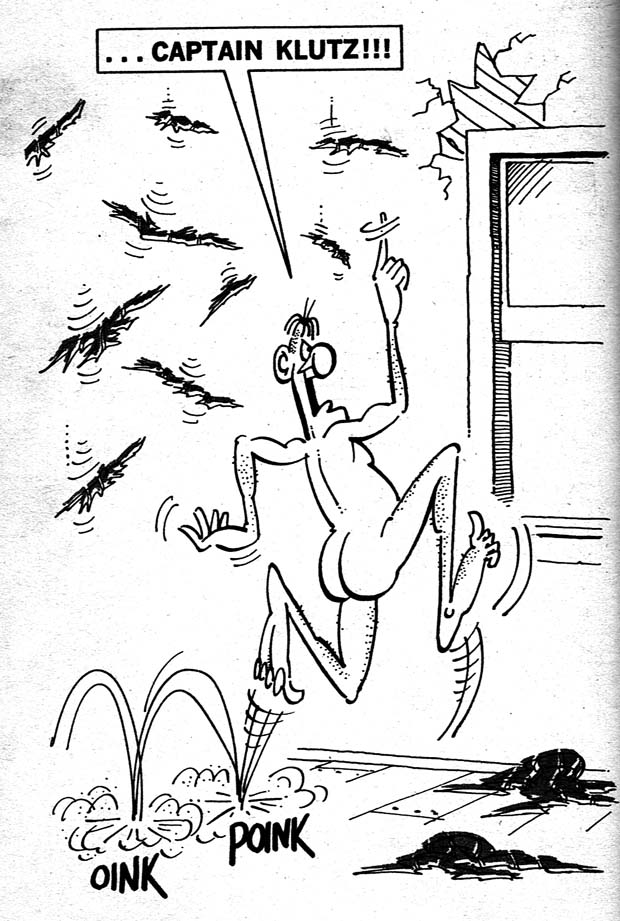
Level 4 contains the “Party Central” places that every highly social and only mildly psychotic nobleman seeks to spend his schmooze time. There’s a ballroom for dancing, a solarium for getting sunburn when you drink too much wizard’s ale and dance naked in the sunshine for too long, and a hall of mirrors for admiring the way the sunburn makes your behind glow bright red.
Level 5 is getting up to the top of the towers. In a vertical dungeon like this one, this should be nearing the adventure climax. That was not how it happened, however. I will tell you more about that in another post. This is where the belfry bats and the Duke’s treasures are stored.
By the time you reach the Summit of the Keep, you are beginning to think that something is seriously and morbidly wrong with this Castle. This is where you will find the Evil Doctor Zorgo and the animated remains of Duke Dane Evernight. And golem labs next to sarcophagus rooms? Something has gone terribly wrong here. But don’t have nightmares about it, or anything. Rest assured that Gandy Rumspot and Mira the Kalashtar have already solved this problem or I wouldn’t be telling you about it. Dungeon masters, at least the good ones, never reveal a secret before the dice are rolled.
I miss being a teacher. But even if I was suddenly healthy enough again to return to the classroom, I would have to think twice… or three times… or twelve times about it. I know excellent teachers who are being driven out of the education field by the demands of the job in the current educational whirlpool of death and depression. My own children are very bright and capable, but they face State of Texas mandated tests this next couple of weeks because that’s what we do in Texas, test kids and test kids and test them some more. If we don’t stress them out and make them fail on the first round of testing, there will be at least two more to get the job done. And believe me, the real reason for all the testing is to make kids fail. It sounds harsh, and like one of my loony conspiracy theories, but the Republican legislature of this State has discussed in earnest how test results prove our schools are failing, and how we must certainly need to fund more private schools and schools for profit, and stop teaching kids on the taxpayer’s dime (although they don’t really care about my dimes, only the dimes of millionaires and billionaires which we have more of in Texas than we have ever had before). Of course, these private schools they speak of will be for the children of well-to-do families, particularly white Anglo-Saxon protestant families. Public schools will be okay for everyone else, preferably built next to for-profit prisons where the public-school kids will move after graduation.
Arts and humanities-type class offerings are becoming increasingly rare. We don’t teach them to be creative any more. We have to focus on core subjects, Reading, Writing, History, Science, and Math. And not the high-level stuff in any of those areas, either. We test them on the minimum competency stuff. But we make it harder every year. Back in the 80’s it started when Governor Mark White let H. Ross Perot spearhead a school-reform drive that began with idiot-tests for teachers. The Mad Dwarf of Dallas was convinced that the biggest problem with Texas Education was incompetent teachers. But we didn’t test them on classroom management skills, or skill at motivating young learners. We took basic English tests where the teachers weeded out were mostly black and Hispanic. I helped one very gifted Science teacher pass the test which she nearly failed three times (the limit before contract non-renewal) since she was taking her teacher test in her second language, not her first. When they finally got it through their heads they were only weeding out the good teachers with test anxiety, they changed the tests to make them harder. They stopped giving life-time teaching certificates and made you prove that you were not an idiot every five years.
It was Governor George W. Bush (a Forest Gump clone with DNA mixed in from Bullwinkle the Moose and Elmer Fudd) who decided that teachers needed to be weeded by demanding that their students perform to a certain level on standardized State tests. If you watched the John Oliver video, you have a clear idea already of the value of that. We worked hard for a number of years to do better on the alphabet tests. The TAAS test became passable by most of the State, including the poorer districts, and so they replaced it with the TAKS test, a criterion-referenced test that they could provide all new and harder questions for every single year. I sat on a test review board for two years as the representative of the Cotulla District in South Texas. I got to see some of the horrendously difficult question before they were asked. There were very real cultural discriminations among those questions. Why should a Hispanic child in South Texas be required to know what “galoshes” are? And when teachers began teaching to the tests well enough to get a majority of students passing, Emperor Rick Perry, the permanent Governor of Texas after Bush, decreed we needed STAAR Tests that students had to pass in order to graduate to the next grade level. And, of course, we had to make them harder.
When I started teaching exclusively ESL kids in high school (English as a Second Language) that special population was mostly exempt from taking the alphabet tests. After all, it takes at least five years to gain proficiency in a second language even for the brightest among us, and all of those students had less than five years of practice speaking English or they weren’t qualified for the program. But scores on the TAKS and then STAAR tests were generally too high. So ESL and Special Education Students were required to take them too. And, although the passing standards were lower for ESL students than they were for regular students, the passing standards were ratcheted up every single year. And we eventually did worse than the expectation. Our ESL Department got a lot of the blame for Naaman Forest High School in Garland, Texas losing its perennial recognized school status. (We got the blame even though our scores were high enough to be rated exemplary on the sliding scale… it was actually the low socio-economic students in Math that lost us our yearly recognition… just so you know.) The paperwork nightmares I had to fill out for our ESL Department were one of the reasons my health got so bad I had to retire. Healthy teachers can’t take it any more either. We are looking at a crisis in Education in Texas. Teacher shortages in Math and Science are already apocalyptic. We are intentionally doing away with Art, Band, Chorus, and other artsy-craftsy things… things that are good for the brain and the self-esteem and the creative problem-solving abilities of students. Teaching has become a nightmare.
I hope you will take me seriously over my conspiracy-theories and lunatic teacher complaints. I have been told too often that you can’t solve education’s problems by throwing money at it (though I do not remember the time they speak of when money was actually flying through the air). I have been told too often that teaching isn’t a real job. You just sit around all day and talk to kids and you have the summers off. How hard can that be? And I have been told too many times that Johnny can’t read, and it is apparently my fault as a Reading teacher… it can’t be anything politicians have done, right? It certainly isn’t anything that politicians have done right!
God help me, in spite of all that, I really miss being a teacher.
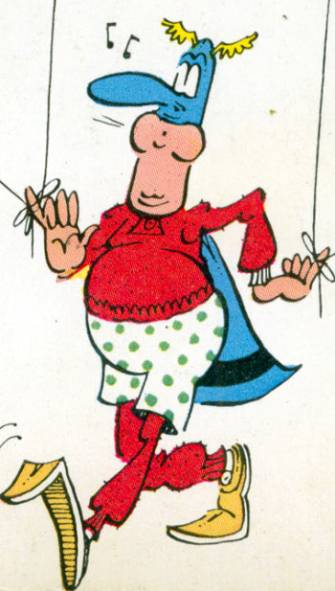
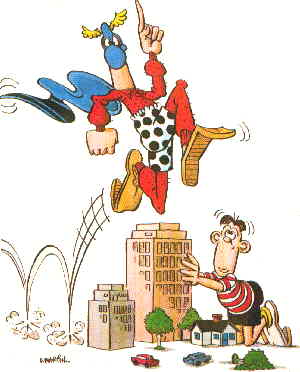
I have been drawing these mock-Star-Wars science-fiction-heroes for thirty years. Some of these are that old. Some of them are new this year. All of them illustrate the adventures that started as a science-fiction-role-playing game and became the series of novels called AeroQuest.
One of my most valuable books of magic is Uncle Scrooge by Piero Zanotto (with a forward by Carl Barks).
This book is filled with some of the best cartoons from Duckburg written and drawn by Carl Barks. Scrooge McDuck was first created by Carl Barks in 1947. Barks had inherited the Donald Duck comic book franchise from Al Taliaferro in the 1940’s. He used his animation training to create an artfully sequenced series of stories that transformed Donald from an enraged character screaming at life into a responsible Uncle with three nephews, Huey, Dewey, and Louie, as well as relatives like his unfailingly lucky cousin Gladstone Gander, crazy inventor Gyro Gearloose, villain Magica DeSpell, and the richest duck in the world, Uncle Scrooge McDuck. His run of amazing adventure comics created through the 50’s, 60’s, and 70’s fueled much of my art training and story-telling training as a boy through comics like the following;
I read these comics to pieces. I studied every panel in great detail. Carl Barks means more to me than most of the teachers I had in school… all but three or four of them. And I hope this little post of praise will inspire you to look into the man and his ducks, and find there the beauty, the wisdom, the adventure, and the humor that completely captivated me.
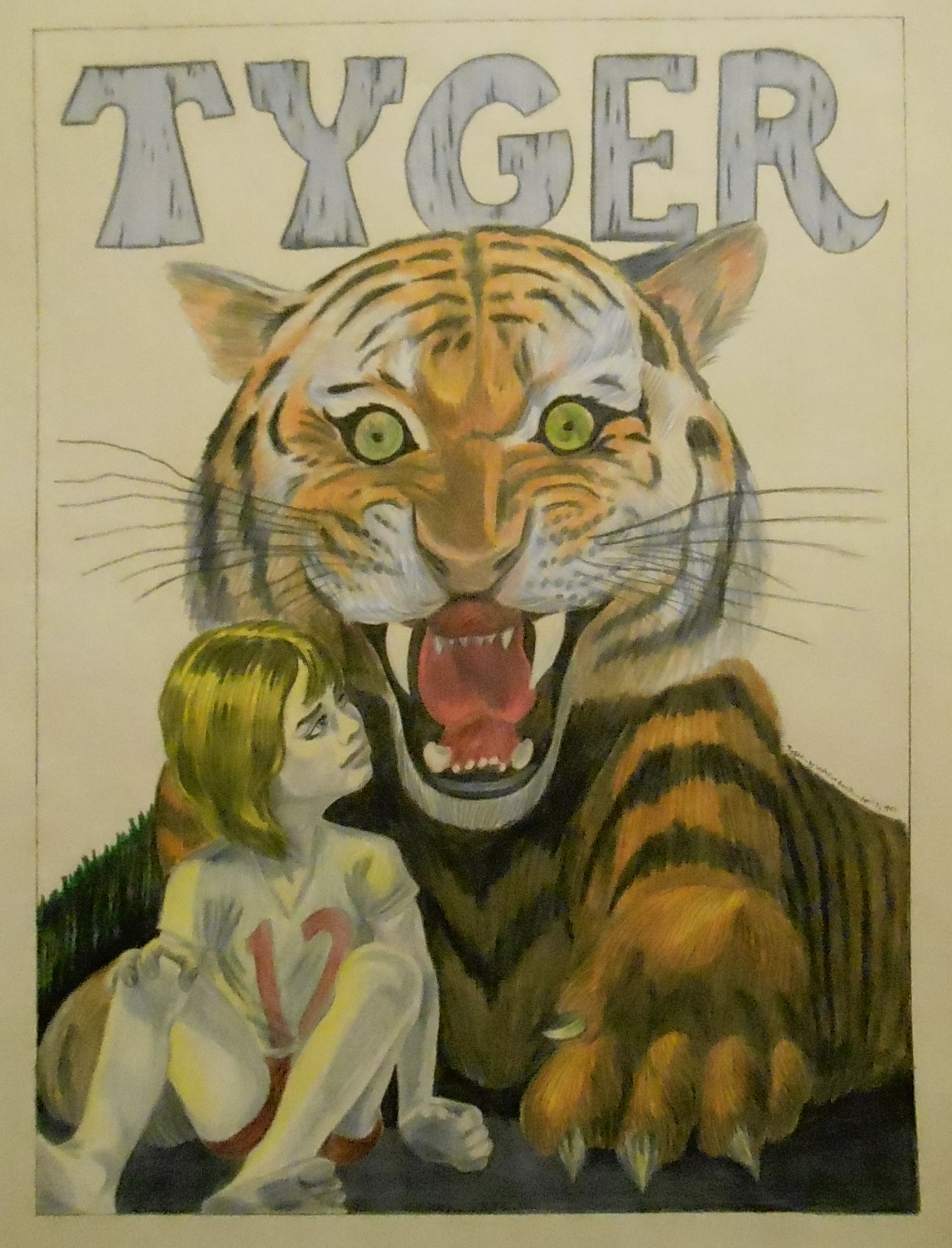
This is Baby Tiger. My daughter named her shortly after learning to talk.
I have a certain mania about hoarding old toys. My toys. My children’s toys. Other toys like abandoned toys from Goodwill and ReSale stores and liquidation toys from the bargain bins in Walmart and Toys-R-Us.
You see, the dependence on the importance in my life of people who are not real began with my own perceptions when the lights first went on in my little attic. Yes, my parents and my grandparents were real people. And I sometimes admitted, when forced, that my little sister was too. But so was Tagger, my own stuffed toy tiger.
This is not Tagger. This is a rare Stieff collectible. Tagger was loved to pieces.
I definitely treated him as my best friend and greatest confidant. I told him my troubles, and he protected me from monsters in bed at night. He often was included when I played with my sisters and their dolls. He was wise and brave and caring, and he talked with a voice that sounded very much like mine. In fact, I often think he was such a part of me that, when I no longer needed him in bed with me to help me sleep, I internalized him and he became a part of me. He did not meet his physical end until my parents had to leave Iowa and move to Texas while I was in grad school. What my sister did with his physical form, I really never wanted her to tell me. The house had to be cleaned out, and stuffed toys from the attic did not fair well.
Baby Tiger came into our lives in October of 1995.
I had almost given up ever being married and having a family when, at the age of 37, I finally fell in love, and then had a family, first of two, and then of three by the end of 1995. On the day my oldest son was born, as the doctor had told me to go home and get some sleep, I went to Walmart and bought a toy tiger. He was not orange like my Tagger, but white. He was about the same size as Tagger, and significantly larger than my infant son. Truthfully, neither number one son or number two son actually played with him. They slept with him and used him as a pillow, but they never even gave him a name. It was my daughter, my youngest child, who took him over and made him into a her. She named her Baby Tiger, loved her, talked to her, carried her around everywhere, and miraculously never loved her to pieces to the point that we don’t still have her 24 years later. The photos of her prove the miracle.
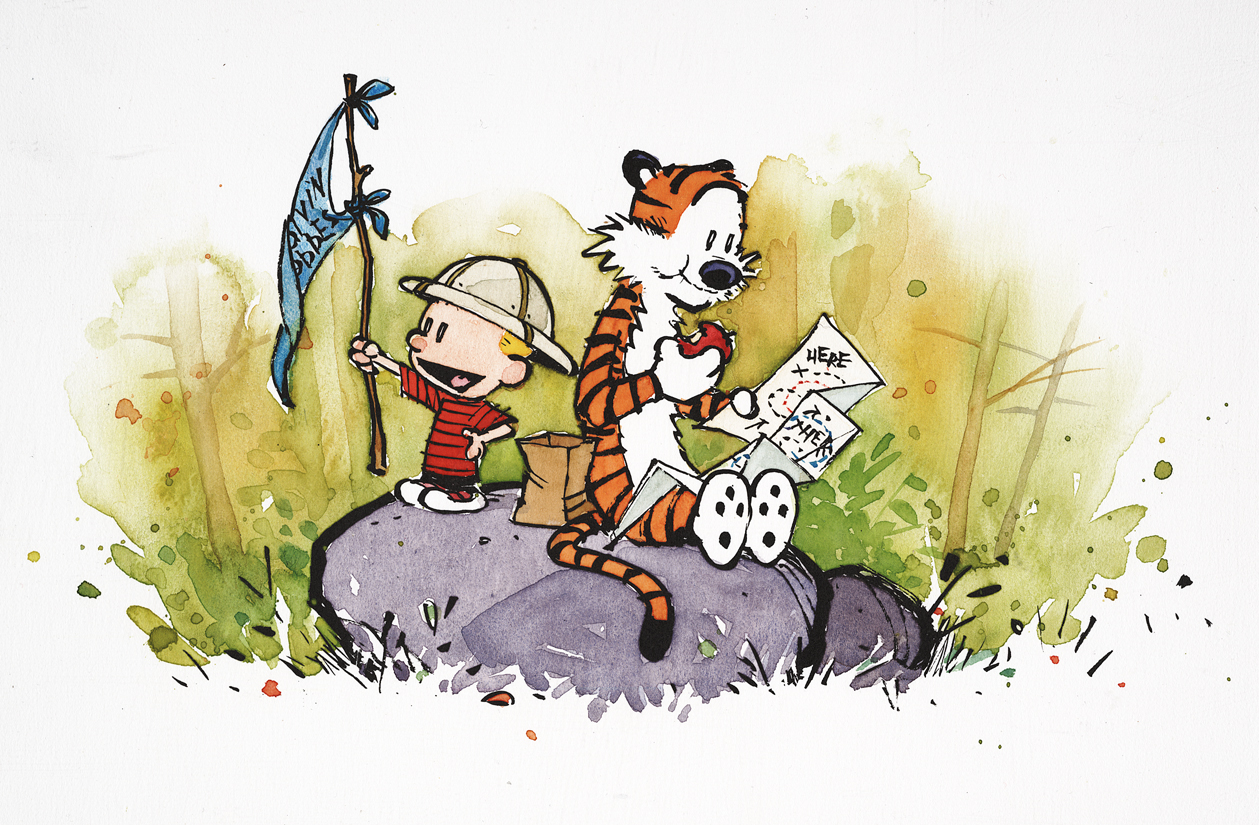
I am not Calvin of Calvin and Hobbes fame. But I do understand the importance of toy tigers. They help to make you who you are. And while they are technically not real people, technically, you could argue, “Yes, they are too real!” and argue it very loudly. Of course, people will think you are a crazy fool if you do. But I doubt that changes anybody’s mind about Mickey.
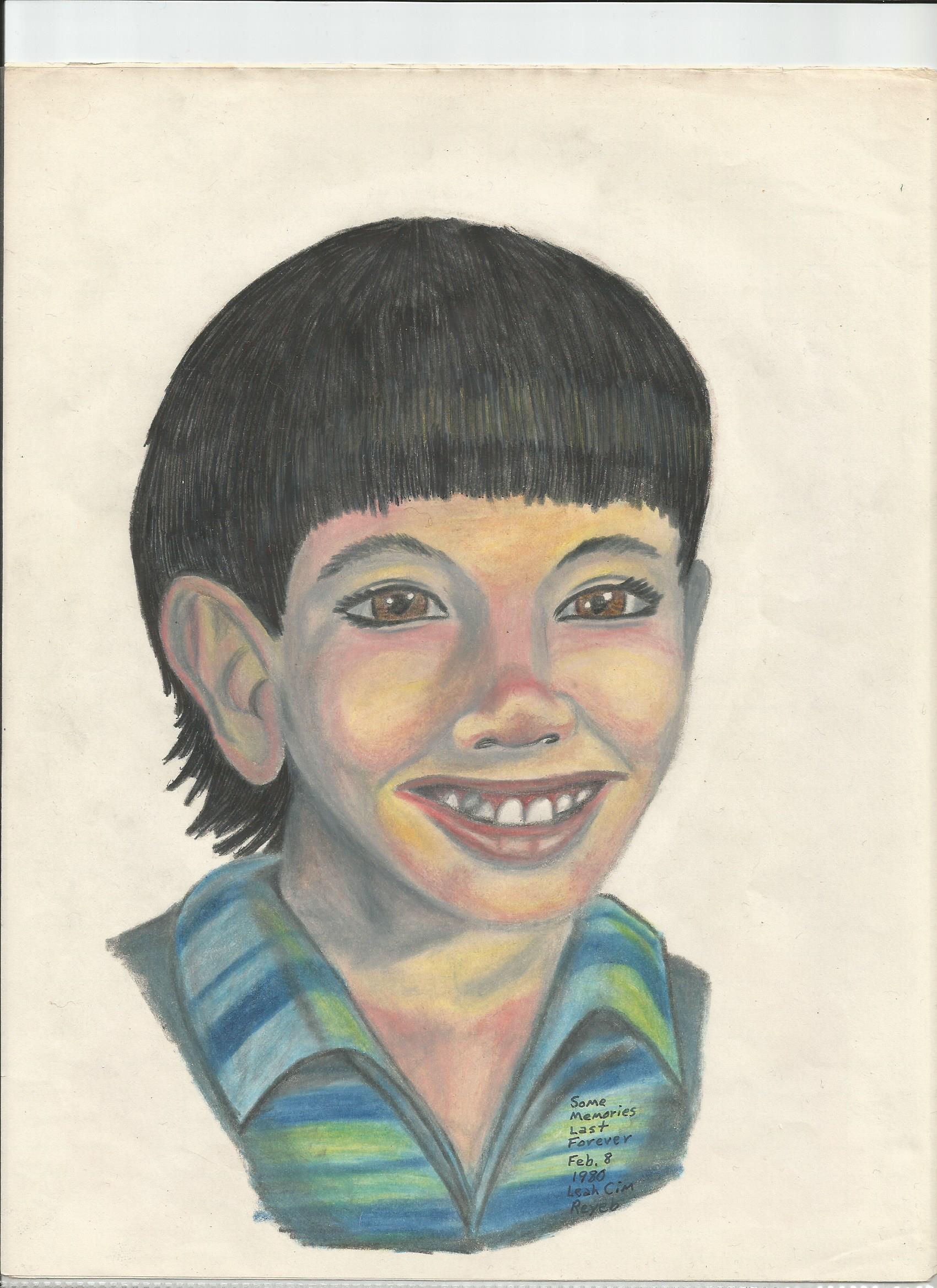
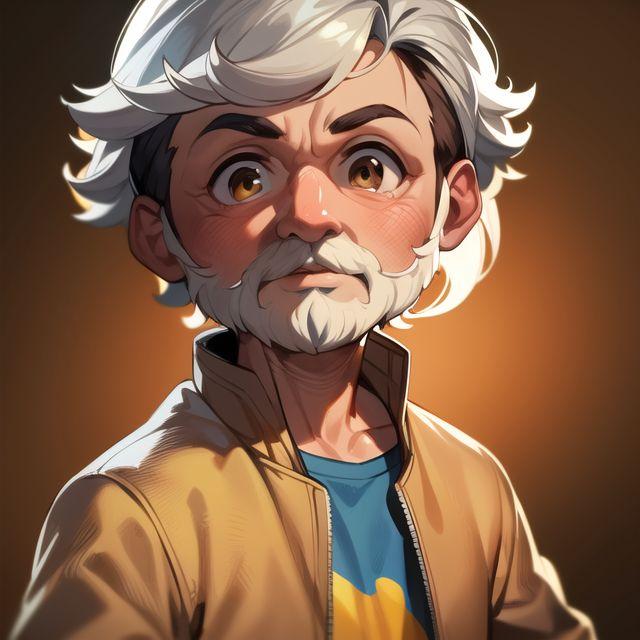
In order to understand this story, you have to have a little bit of background first… a solid sense of context, in order to avoid anyone feeling that I might be ridiculing someone in an unfair or unloving way. So here’s a bit of context. I was a teacher for 31 years. I was considered a good teacher, in fact, a master teacher by something like 28 different principals and assistant principals, while only 3 felt like I was an incompetent mess, and two of those were eventually fired themselves. I only got fired once. So it can be safely assumed I know what incompetence in teaching is and can reliably identify it in others. Further, incompetence in teaching does not make you a bad person. Far too many people who believe they could be a good teacher have traits that would torpedo their own boat if they actually set sail on the sea of education. So, even though Grandma Frozenfield was a horrible teacher, she was actually a very nice and caring person, and makes a wonderful character for stories that lovingly make fun of bad teaching. And I should remind you, I don’t use real names when talking about people from my past so that their privacy is not violated by whatever my artist’s eye might reveal about them. The portrait I added to this post does not even look like her.
Grandma Frozenfield was a mid-year emergency hire who filled the position of 8th grade math teacher during my first year of teaching. She was already sixty-eight years old when she came to Cotulla, Texas, and she had five years of previous teaching experience in schools up north. How she survived five years in schools more competently run than Texas schools in the 80’s, I will never be able to figure out. She was able to hang on in our school for several years only because we were desperately strapped for warm bodies to teach Math classes in Texas junior high schools. Only idiots and coaches ever took on the job willingly.
Grandma Frozenfield had seventeen dogs and ninety-nine cats at home. That right there tells you something about which stereotype she easily fits into. But she was also a woman of great mystery. Her father had been a famous college professor in Minnesota. She had inherited a number of very valuable books from him, and kept them in random boxes stacked in dusty corners of the old run-down house she bought in town. She was actually quite bright, and though she would have spells of foggy thinking and confusion, she could capably discuss mathematics and physics and other sciences with me. She had a daughter who showed up during her third year of teaching at our school, and the daughter had a cute little son of about seven years old. Neither she nor her daughter had ever been married. In fact, rumor had it the daughter was telling people she was adopted. And her daughter and grandson disappeared from her life about four years after they started living with Grandma.
But the old lady was a spectacularly bad teacher. As bright as she was, she could never talk to kids or relate to kids in ways that kids could understand. She seemed to sincerely hate kids, calling them bad names in the classroom and telling them in detail how they would one day die in prison (a prediction that unfortunately came true for a couple of them). She would come into the teacher’s workroom after class plastered with spitballs on her back and in her hair.
A couple of the sweeter and more pro-active girls in her classes tried to protect her a bit from vandals and explained lessons to others in class to mitigate the chaos a bit.
She did not engage with students. Other than a few of the sweeter girls, she did not talk to them about anything but math. They didn’t understand her, and so they didn’t like her. She did not know how to monitor a classroom, so the infidels were on a rampage all the time in her room. It would definitely have felt like being in Hell to be her, teaching in that classroom. Why she ever wanted to be a teacher, she never said. I know it was in her family history. I know she was a caring, lovely individual. But when she died of throat cancer at 77 it was a lonely and sad thing. She had been forced to teach until two years before the end because of medical bills. She was never happy as a teacher that I observed. But she never missed a day without good reason, either. Good people don’t necessarily make good teachers. But she taught me things far beyond the 8th grade math she tried and failed to teach to students. I don’t think of her often. But I do think of her. She and her 17 dogs and 99 cats are all gone now. But not forgotten.