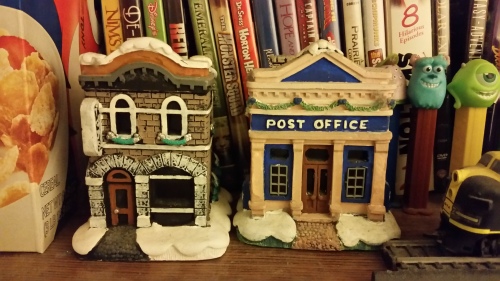
The Toonerville Post Office and Bert Buchanan’s Toy Store.
Toonerville is not only a wonderful cartoon place created by Fontaine Fox in the 1930’s, but the name of the town that inhabited my HO Train Layout when I lived in South Texas and had the Trolley actually running nearly on time. The train layout has not been restored to working condition for over a decade now. The buildings which I mostly built from kits or bought as plaster or ceramic sculptures and repainted have been sitting on bookshelves in all that time. I still have delusions of rebuilding the train set in the garage, but it is becoming increasingly less and less likely as time goes on and my working parts continue to stiffen up and stop working. So, what will I do with Toonerville?
Wilma Wortle waits on the station platform for her train at the Toonerville Train station. I built this kit in the 1970’s, hence the accumulations of dust bunnies.
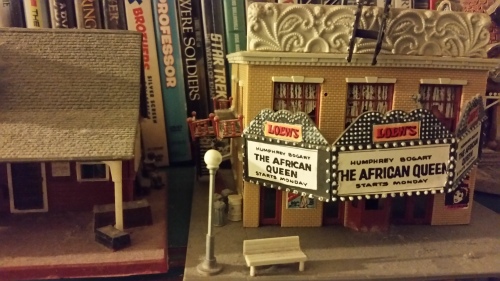
Loew’s Theater has been awaiting the start of The African Queen for more than twenty years.
Main Street Toonerville at 2:25 in the afternoon. Or is it three? The courthouse clock is often slow.
Grandma Wortle who controls all the money in the family likes to park her car near the eggplant house when she visit’s Al’s General Store.
But I may yet have found a way to put Toonerville back together through computer-assisted artsy craftsy endeavors.
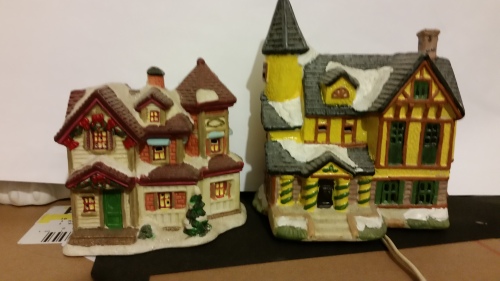
A two-shot of Bill Freen’s house and Slappy Coogan’s place on the photo set to start production.
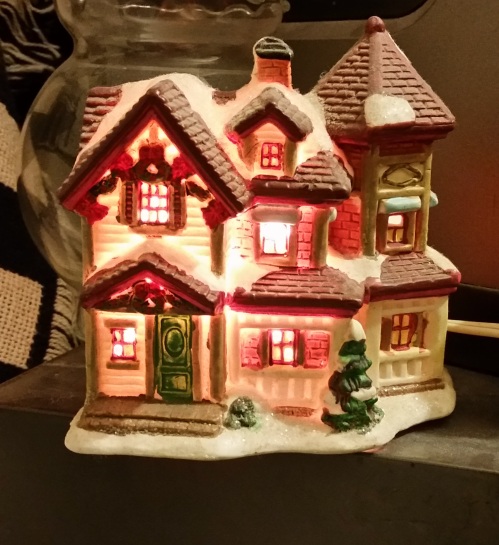
Bill Freen’s house lit up with newfangled electricical. (and I do believe that is the way Bill spells it all good and proper.)
Bill Freen’s house cut out in the paint program.
So I can make composite pictures of Toonerville with realistic photo-shopped backgrounds. Now, I know only goofy old artsy fartsy geeks like me get excited about doofy little things like this, but my flabber is completely gasted with the possibilities.
Bill Freen’s house at sunset… (but I don’t get why there’s snow on the roof when the grass is so green?)
I suppose it is my own fault. This is the second straight spring and summer where my views and traffic on this blog site have plummeted to depths not reached since 2015.
Before the pandemic, my daily views never dropped below 50. The number of likes averaged about 12 per post.
Now I have only topped 50 three times in the last 3 weeks.
My two posts yesterday averaged 7.5 views apiece. Each one garnered only 3 likes.
Ah, if I only had a brain…
My favorite hockey team won their first-round playoff series. But then they lost in the next series… though the team that beat them looks like they are going to sweep into the Stanley Cup and maybe win it. I am still celebrating the St. Louis Blues’ 2019 Stanley Cup victory. Perhaps it is enough to be happy with that.
Come to think of it, last year my views ballooned in late July and August through October after going through a very similar dearth of attention last spring and early summer.
Hmm… If I only had a brain!
So, maybe the Spring Doldrums are something that I have to get used to now. I have been posting two blogs a day, an old classic post with a new one. I know from past experience that that can both spark more interest and dampen interest. Maybe patience is the only thing I need to apply. What other tools are there for gaining readers’ interest? More nudes and maybe porn? No… I don’t think that’s reader interest worth pursuing. Nobody is reading and reviewing my book on Pubby either. And I am not changing anything about my fiction style in a weak and waffling attempt to improve my ratings.
So, I am well aware of my own weirdness enough to realize that not everybody wants what I have to tell. Don’t listen or read if that’s what your heart tells you. I can live with that. But, if I do die from it, it’s not me that has to live with the guilt. That’s entirely on you. (Unless you DID read this far. Then, hurray for you! Leave a like to prove how wonderful you are, and I will try to stop complaining so much.)
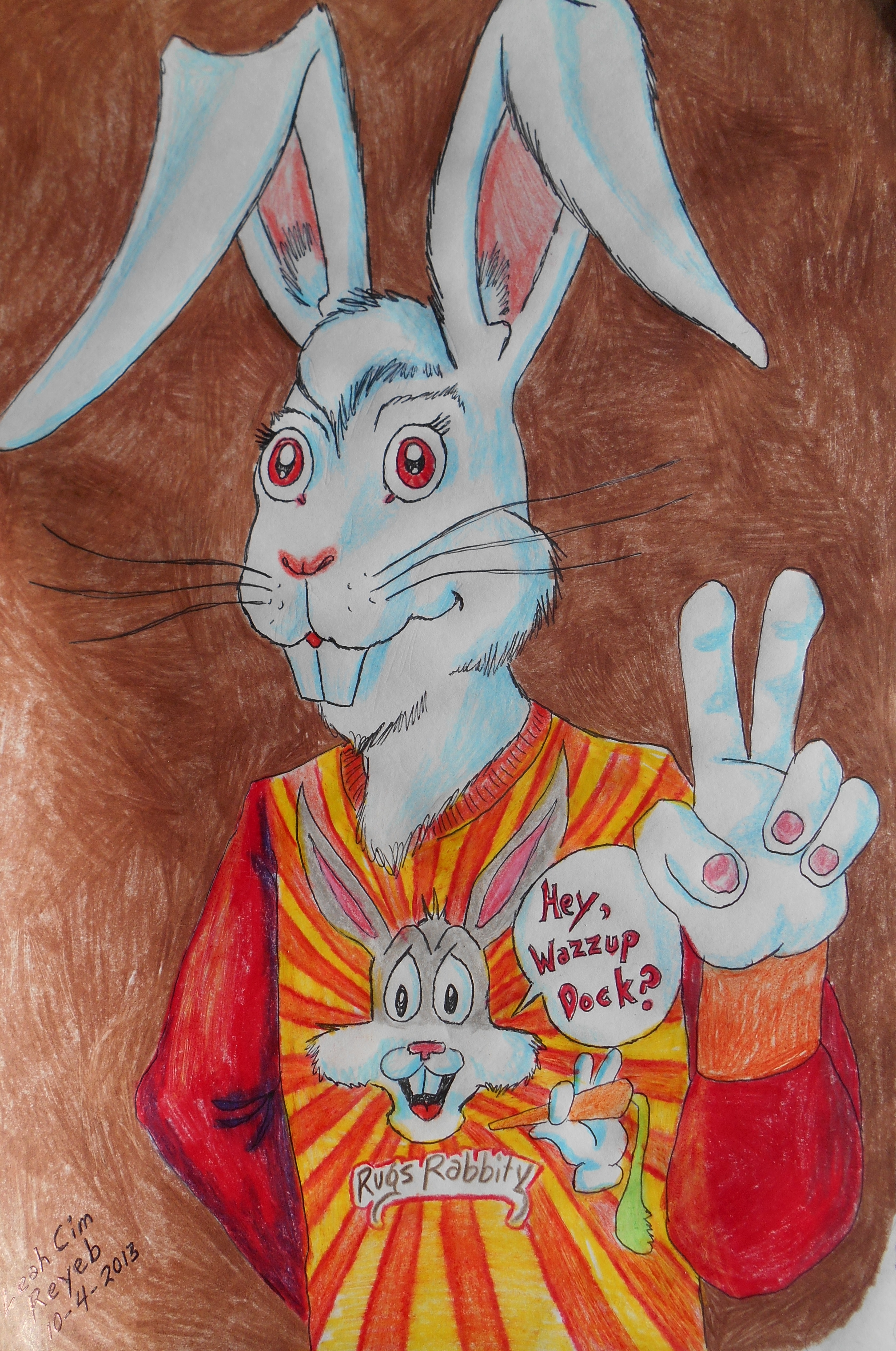
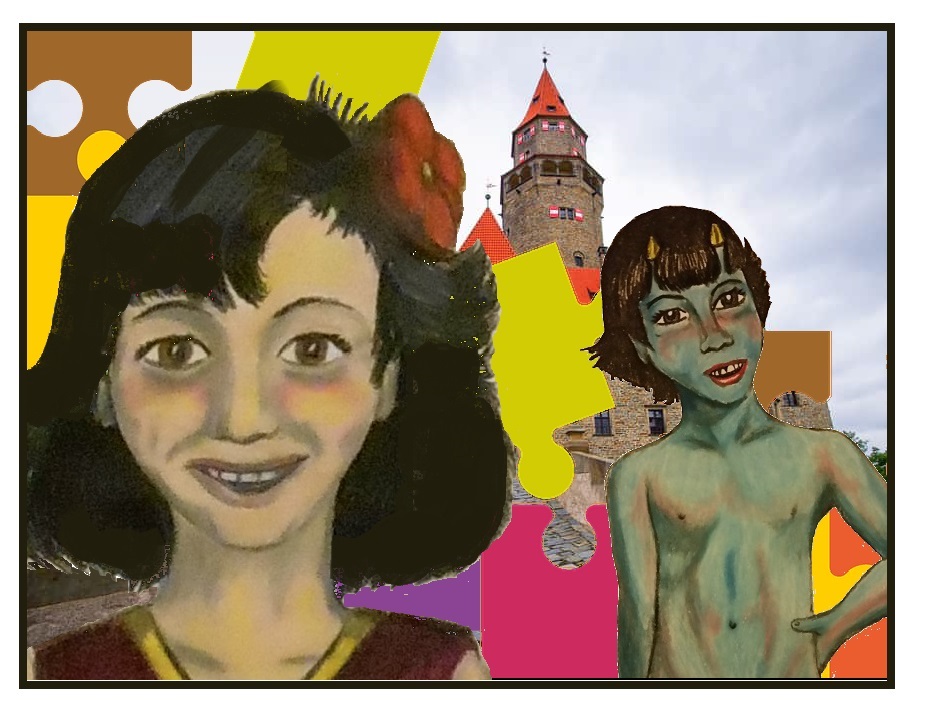
It pretty much goes without saying that, since I am an author of fiction, determined to be a storyteller, I spend most of my time talking to people who exist only inside my goofy old head. Sure, most of the imaginary people I create to keep me company are at least loosely based on real people that I either once knew, or still know. You can tell that about Millis, the rabbit-man, pictured here on the right, can’t you? Sure. I had a New Zealand White pet rabbit that I raised as a 4-H project. His name was Ember-eyes… because, well, yeah… red eyes. It just happens that my goofy old memory transformed him into an evolution-enhanced science experiment in my unpublished novel, The Bicycle-Wheel Genius. But he was a real person once… ’cause rabbits are people too, right?
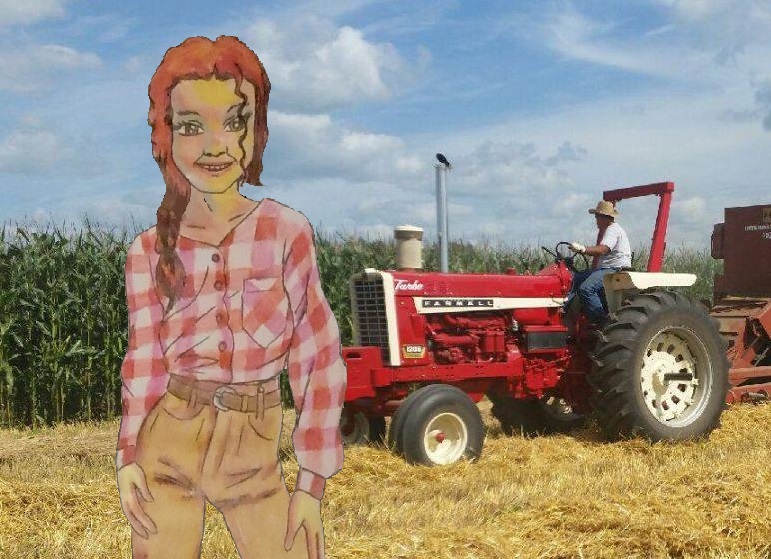
Anita Jones, a character from my unpublished novel, Superchicken, is based on a real person too. I admit, there was a girl in my class from grades K through 6 that I secretly adored and would’ve done anything to be near, though every significant event I remember from my life that involved an encounter with her, involved red-faced embarrassment for me. That’s why I remember her as having auburn-colored hair. Charley Brown’s Little Red-Haired Girl… duh! I would’ve died sooner than tell her how I really felt, even now, but by making her into one of a multitude of imaginary people who inhabit my life, I can be so close to her that sometimes I am actually inside her mind. There’s a sort of creepy voyeurism-squared sort of thing.
Dorin Dobbs, the main human character of my published novel, Catch a Falling Star, is an imaginary character based mostly on my eldest son, though, in fact, I started writing that novel five years before he was born. Like most of the imaginary people in my life, I talk to Dorin repeatedly even when the real Dorin is half a world away in the Marine Corps. And even though the Dorin I am talking to is not the real Dorin, he is still constantly using language that is extra-salty far beyond his years, and is often defiant of my fatherly wisdom, and always argues for the exact opposite of any opinion I express. That’s just how it is to be the father of an imaginary son.
Realistically, I have to admit that even the flesh-and-blood people in my life are imaginary. No one ever actually inhabits another person’s head except through the magic of imagination. Even though I am talking to you at this moment, you are only an imaginary person to me. I don’t even know your name as I write this. And I am the same to you. You may have read my writing enough to think you know something about me… but you really only know the Mickey in your mind that I have worked at putting there with my words. And I really have no idea what that imaginary Mickey you have in your head is like. He is probably really the opposite of who I think I am.
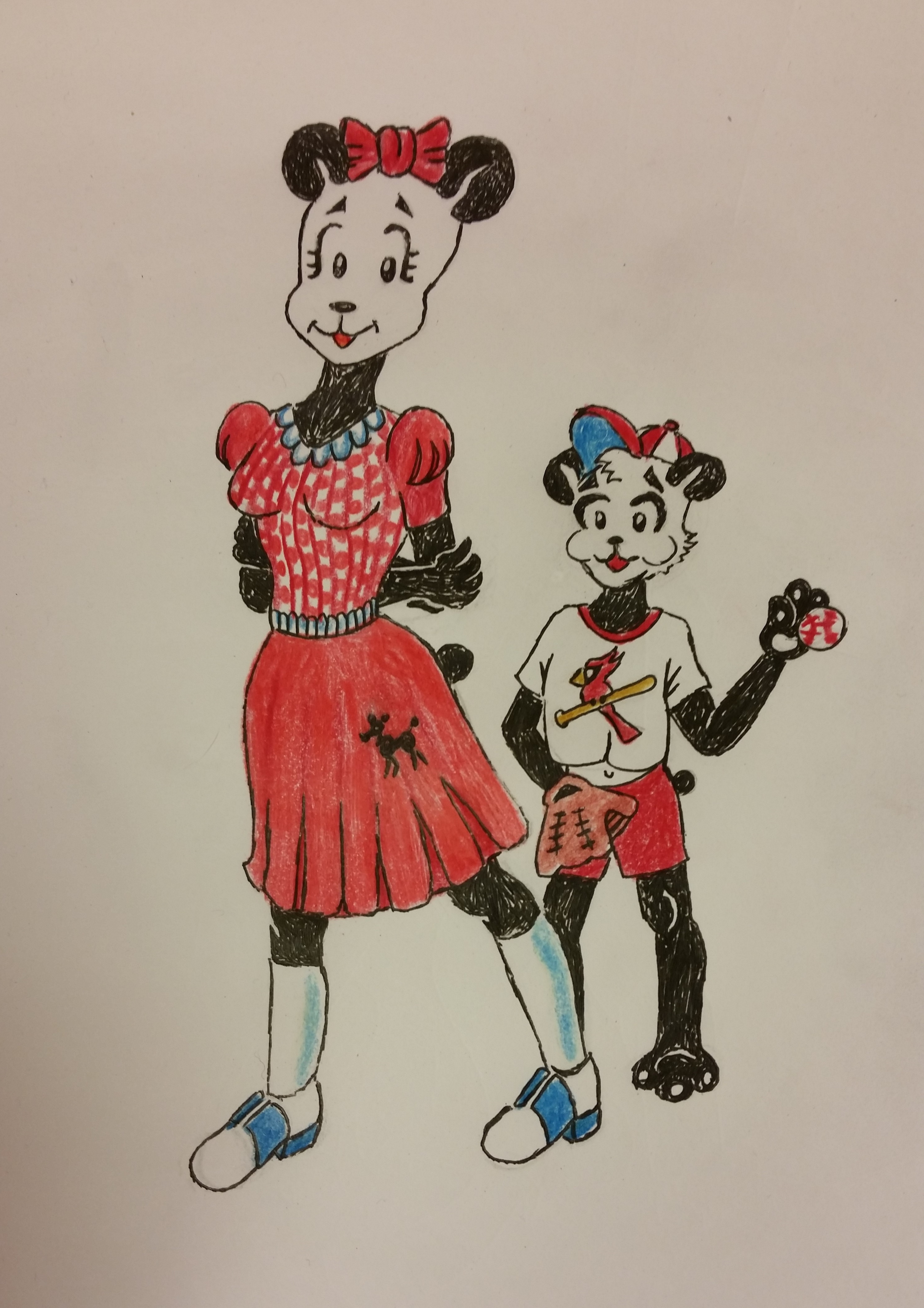
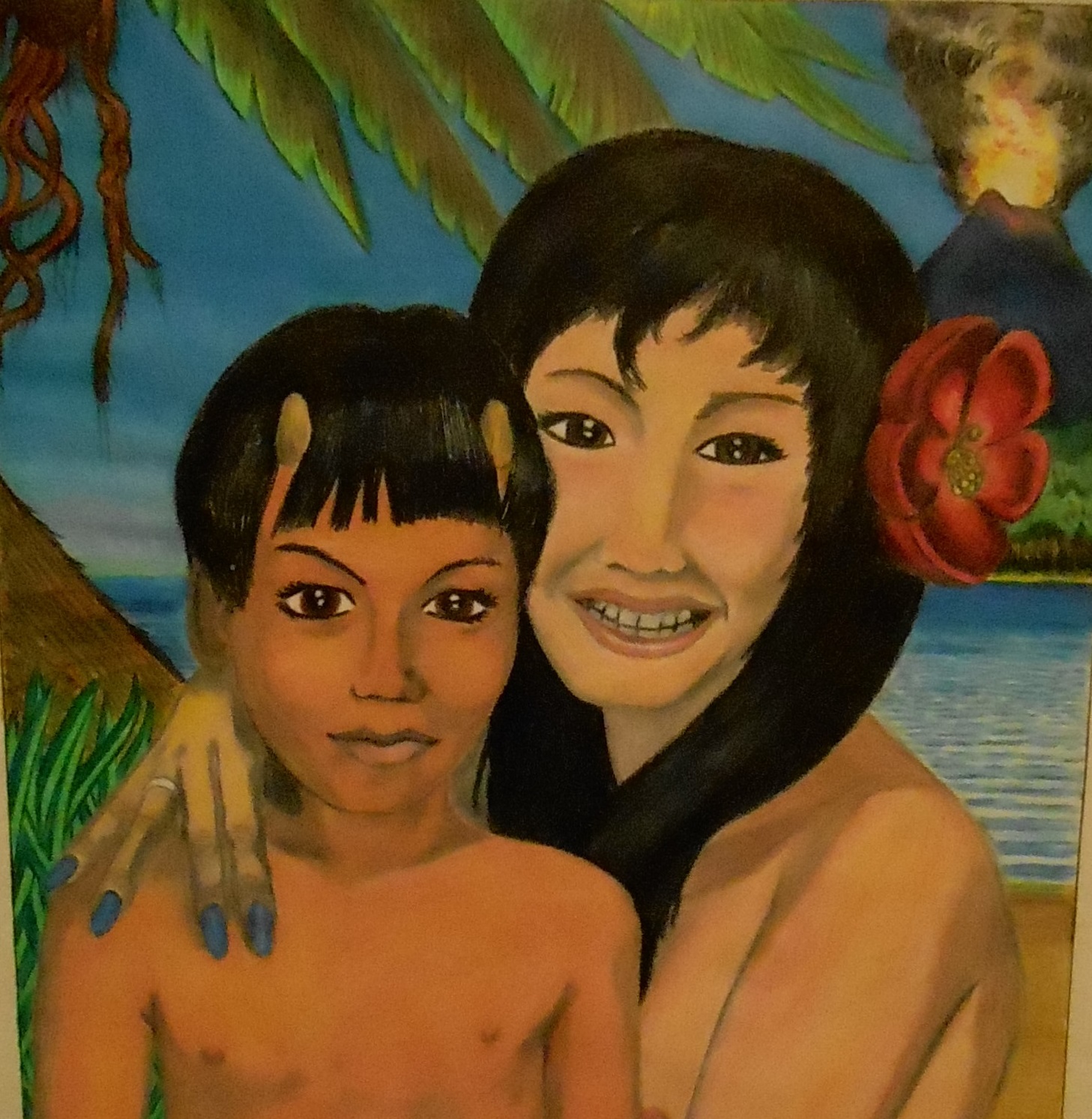
I am, after all, married to this girl panda, Mandy Panda from the Pandalore Islands, and my three children are all Halfasian part-panda-people. Yes, this is the imaginary person who is my real-life wife. The secret is, we only ever know the imaginary people we have in our goofy little heads. We don’t know the real person behind anyone in our lives, because it is simply not possible to really know how anybody else thinks or feels, even if they write out their lengthy treatise about how all people are imaginary people. That stuff is just too goofy-dippy to be real.
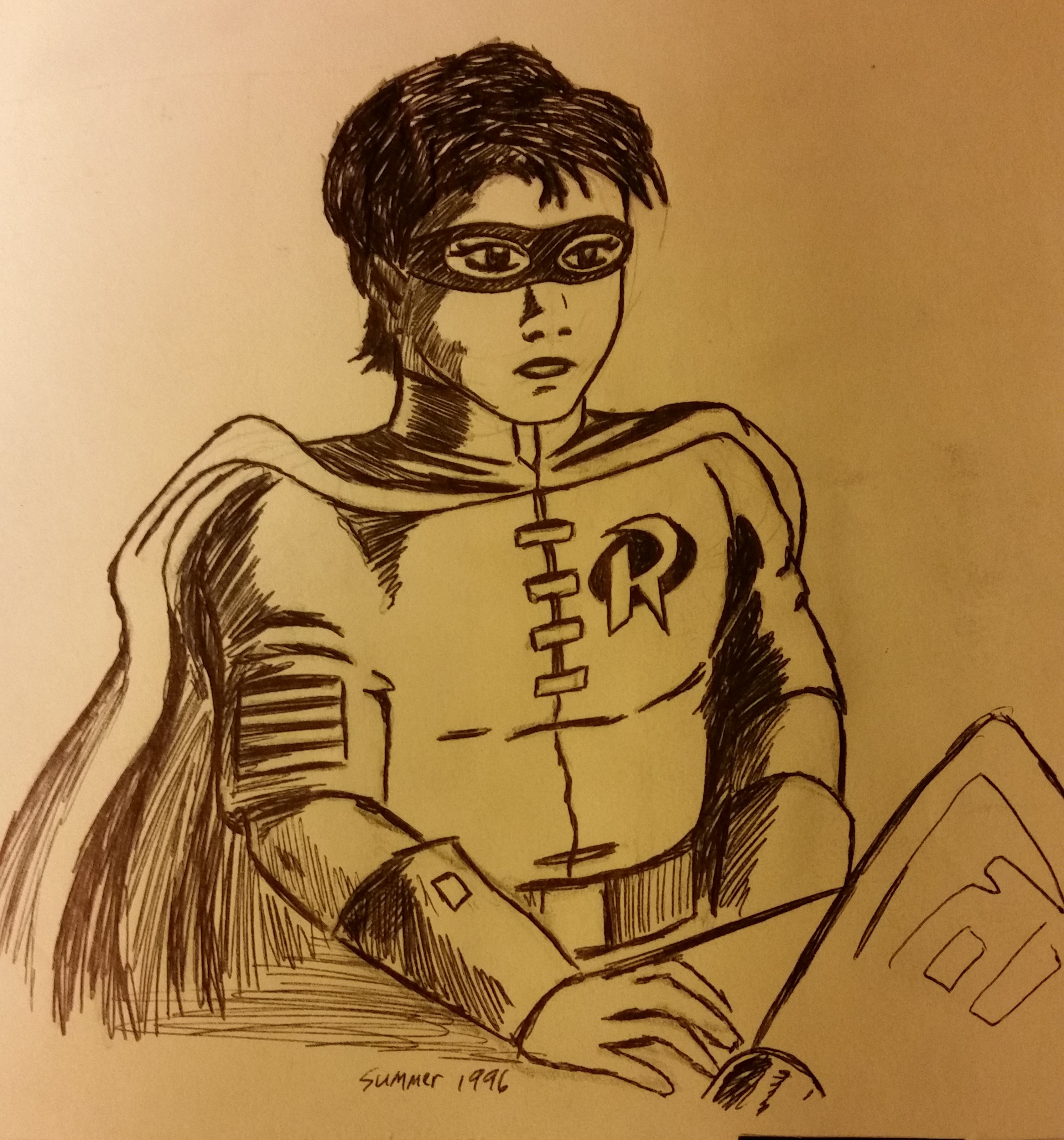
Simple, clean lines and basic, well-defined shapes go together in black and white. They are in the basic nature of being a cartoonist. You translate what you see into line drawings where a few simple lines become a complex and meaningful image.
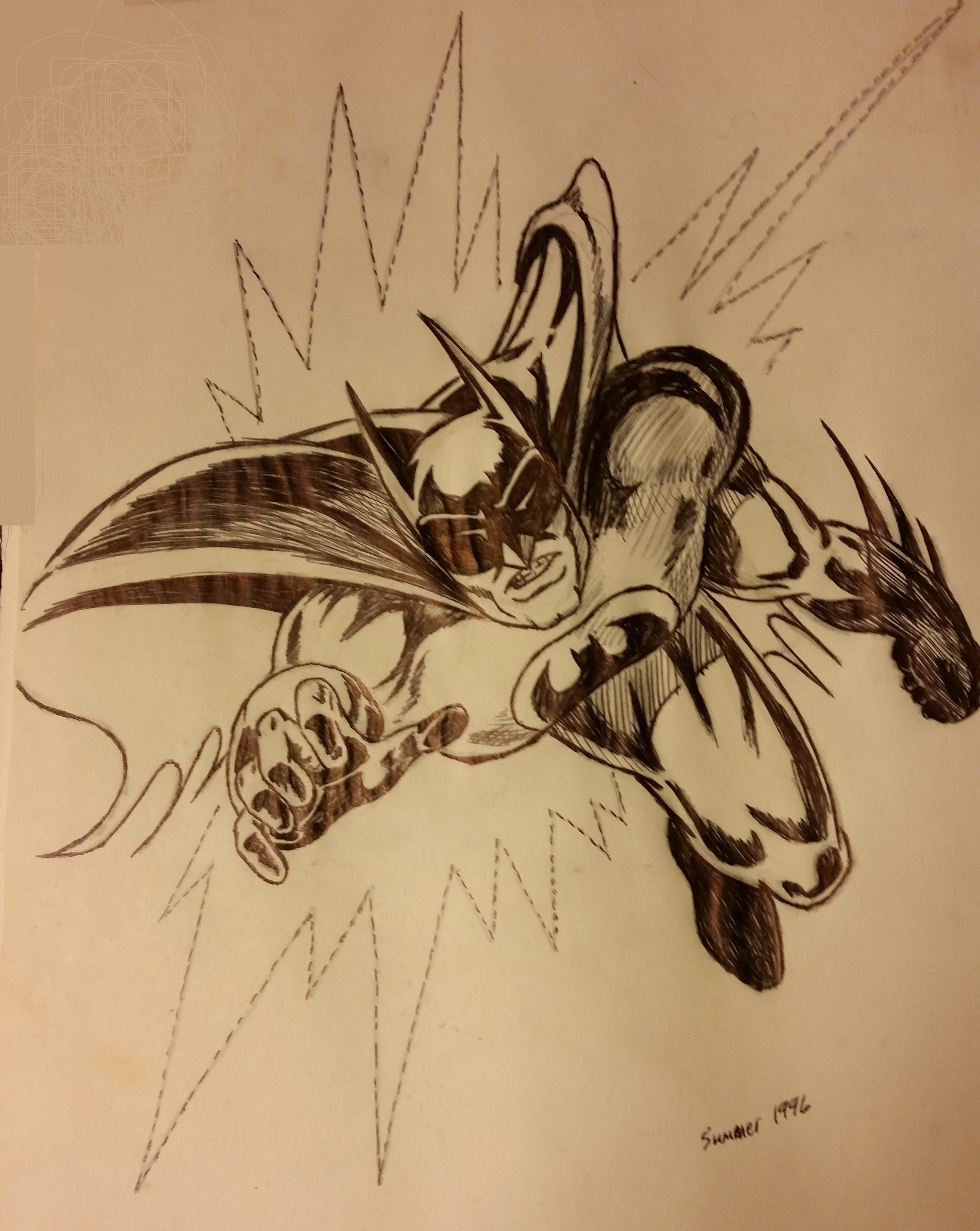
My one-legged Batman is an exercise in foreshortening and trying to burst through the two-dimensional confines of the page to grab the viewer. I learned this trick from comic book artist Jim Lee.
His sidekick is rendered as a static portrait where the computer monitor in front of him lights up Robin’s intense and thoughtful face.
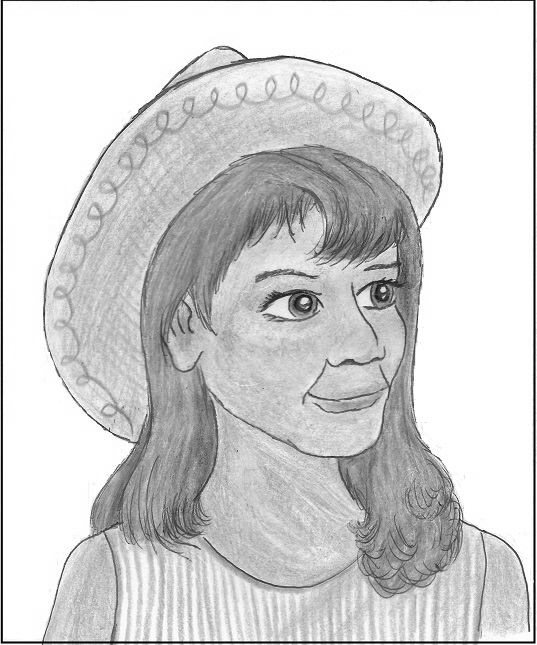
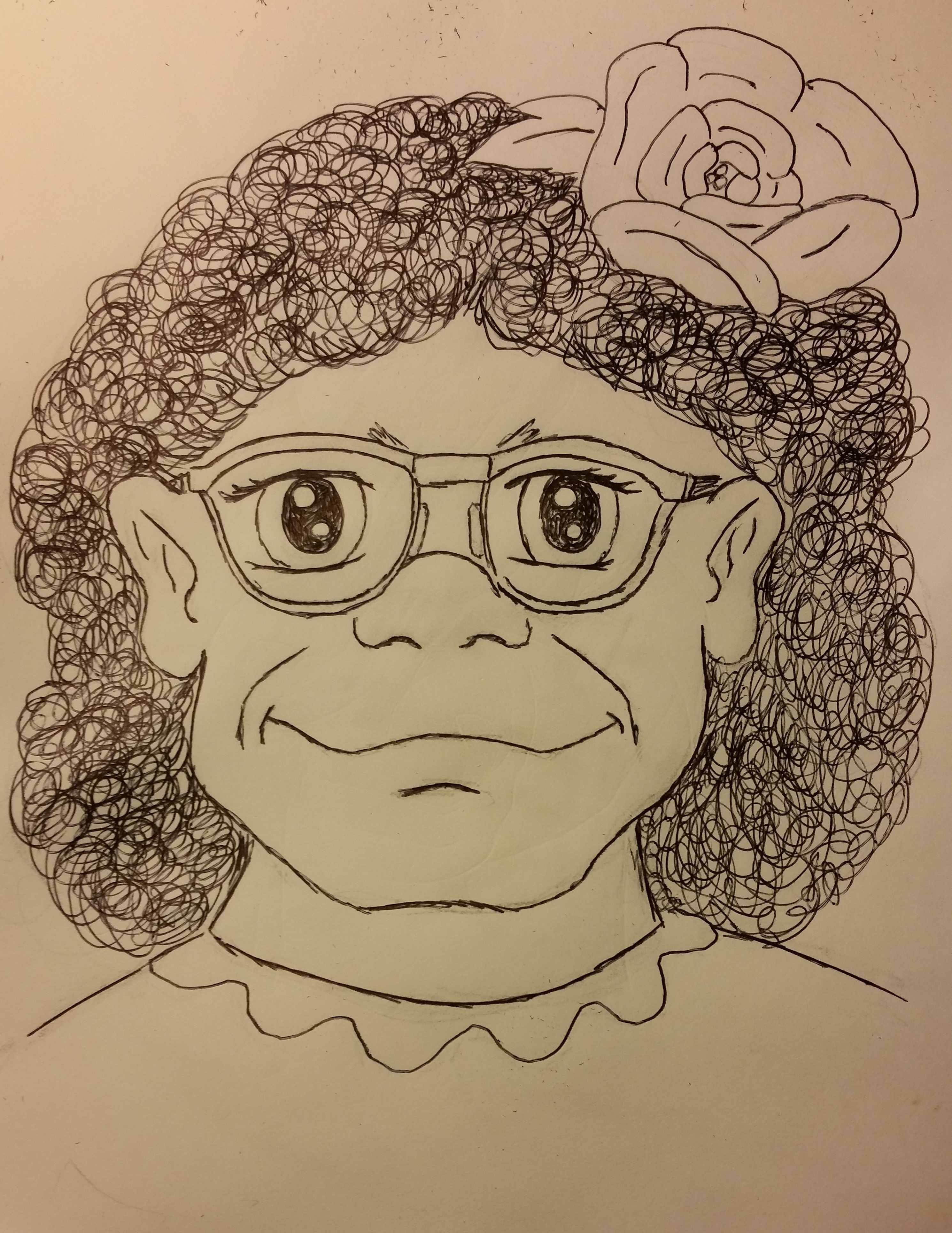
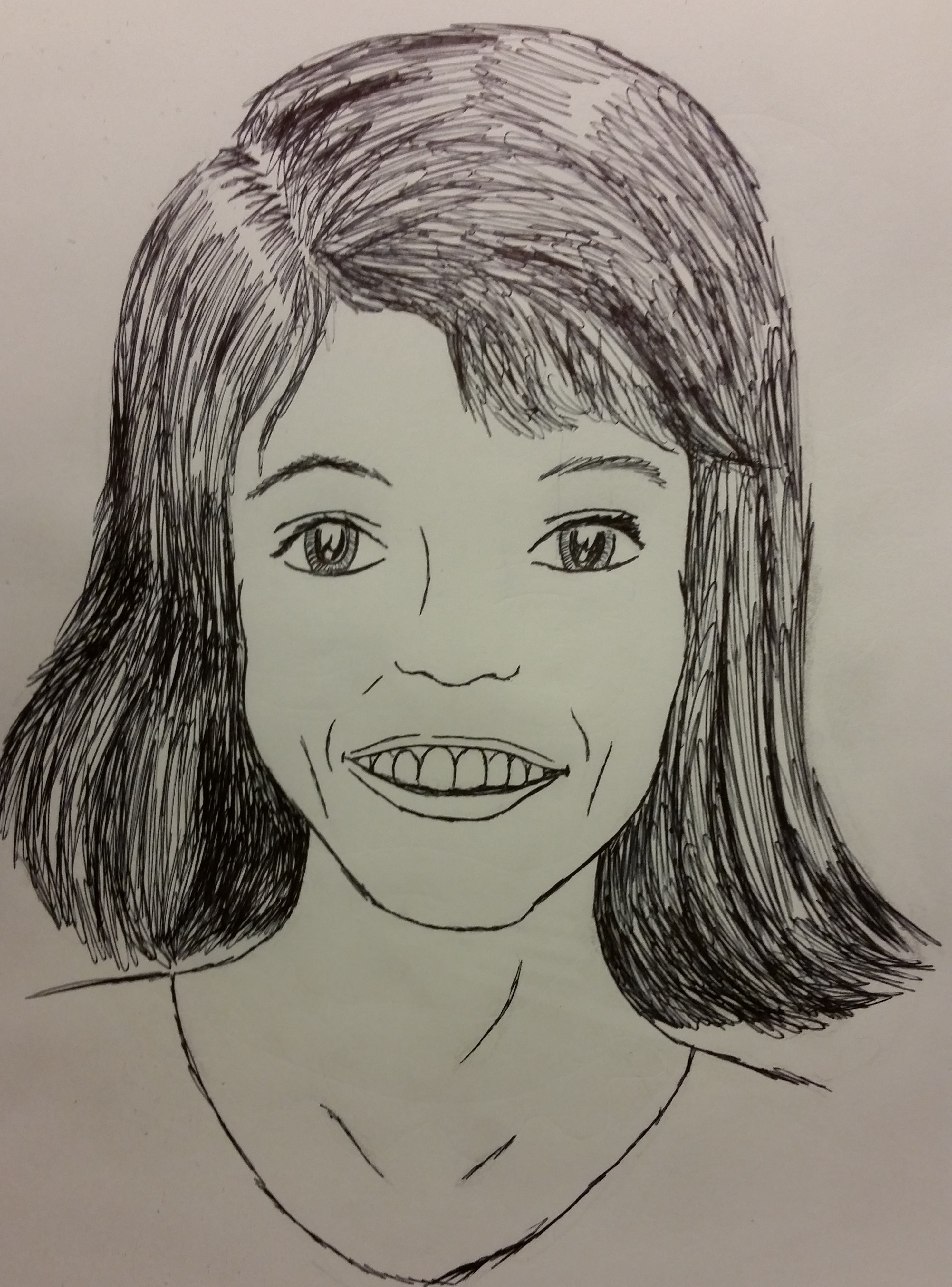
She was an excellent teacher and former nun… she was a mentor to me, taught me a lot about life and love and great beauty. How do you adequately portray the wisdom and the patience in those highly magnified eyes? I drew from memory only. She never considered herself beautiful. But she was. And it hurts not to be able to capture it correctly.
Not every portrait is literal. Sometimes you exaggerate facial characteristics and behavioral quirks are emphasized to create humor in the portrait.
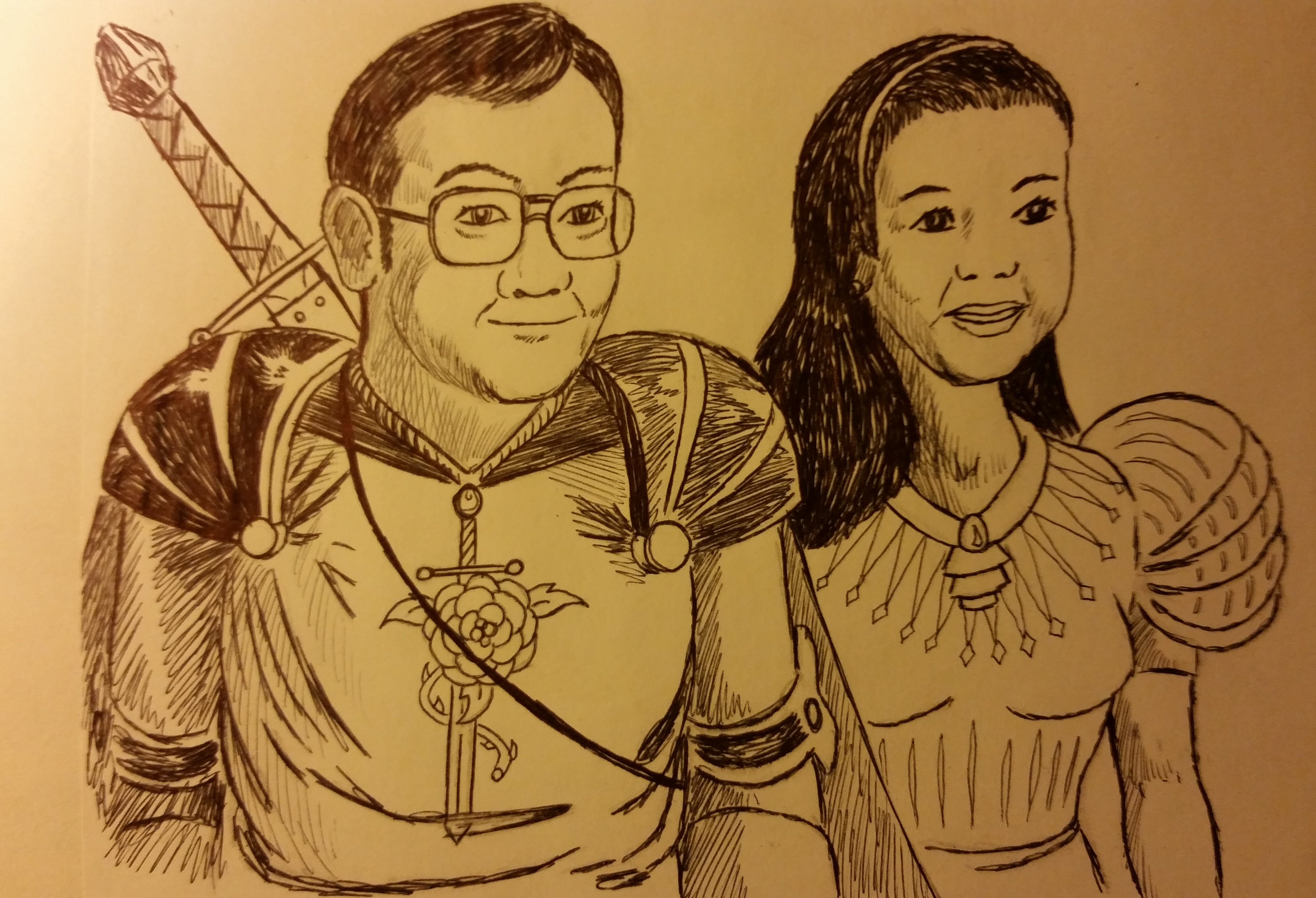
When I was first married I did a double portrait of us as a knight and his lady fair. I know, I know… it is so sickeningly sweet that it punches me right in the diabetes. But, hey, it doesn’t really look like me anyway. It is more of a portrait of Porky Pig in glasses and hair.
There is an art to pen and ink that cuts right to the heart of who you are and who you want to be. Simple lines in black and white… there is no more incisive tool for putting my goofy old mind down on paper.
1. understood by few; mysterious or secret:”modern math and its arcane notation”
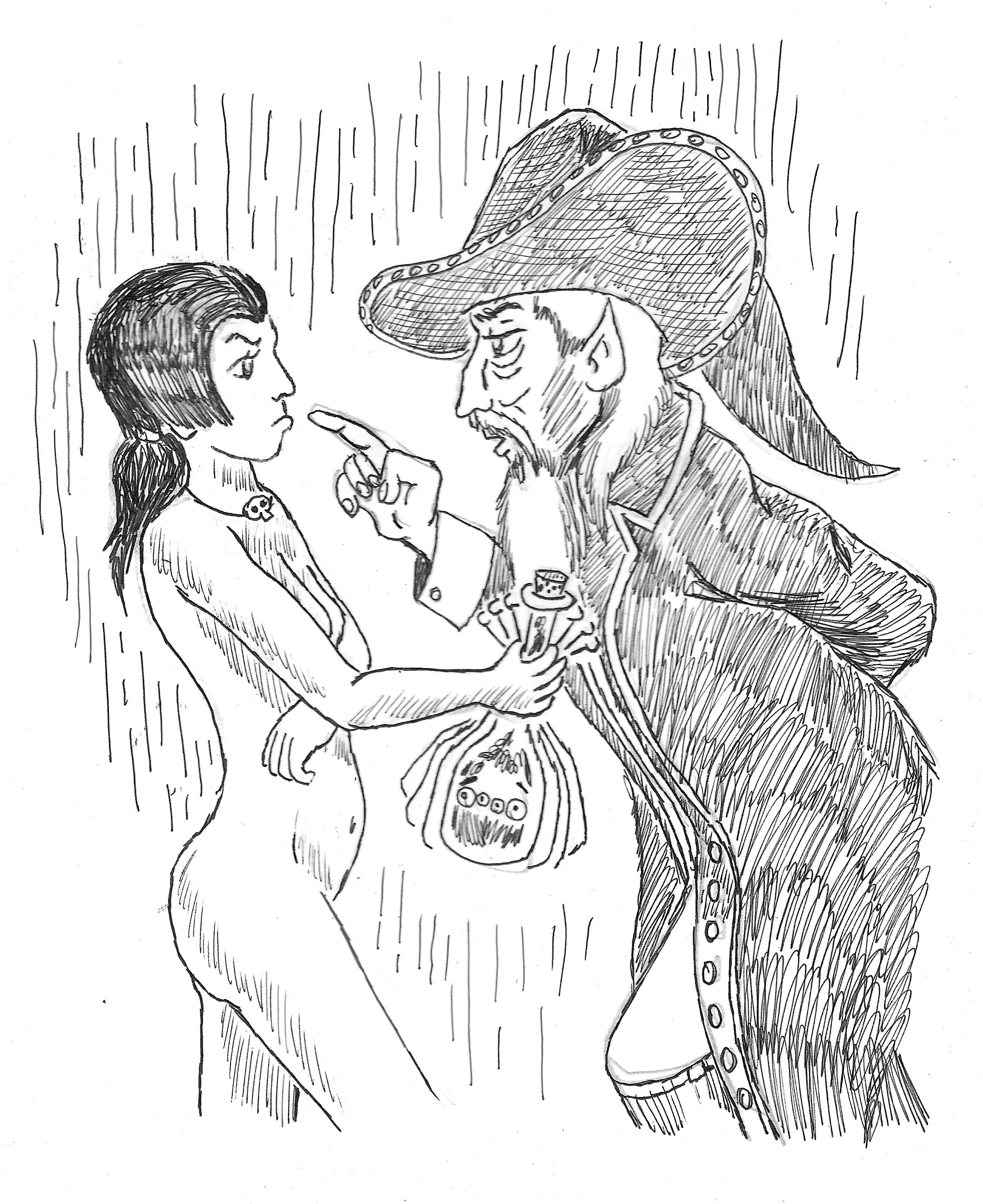
Yes, “Arcane” is one of those vocabulary words that a former teacher like me needs you to learn in order to appreciate the meaning of this goofy little post Arcane knowledge is something not known to most, and possibly not even understood by science in general. The things I will relate to you in this post were learned the hard way, by capturing, threatening, torturing, and finally bribing with cookies a grumpy, disagreeable, and very, very old Elf Sorcerer named Eli Tragedy. Difficult as he was to talk to until you break out the ginger snaps and macaroons, the old grizzle-grump did have a lot to say about Fairies.
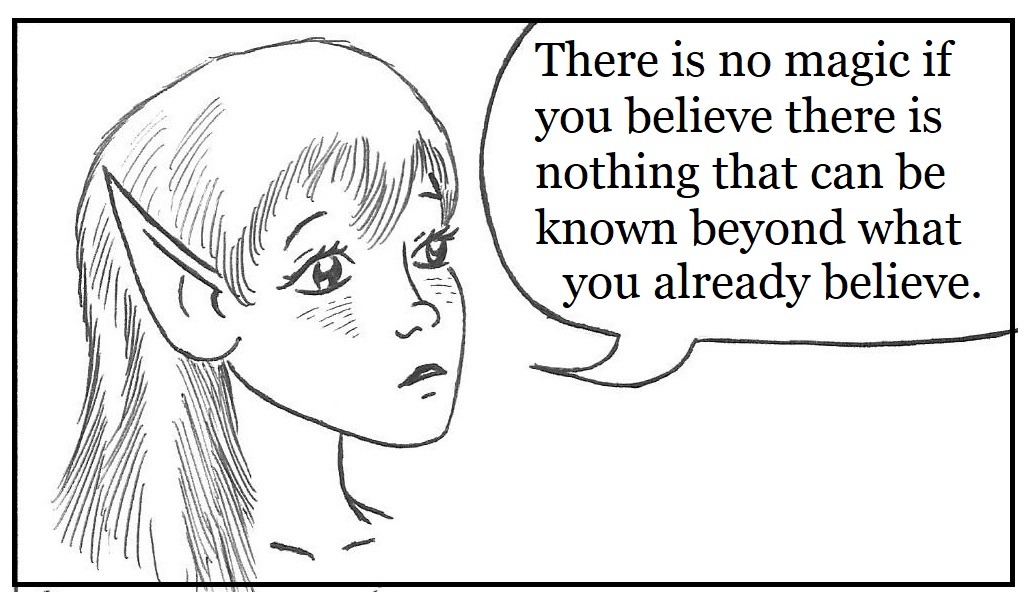
The spell words are…
“I can tell the story from here if you don’t mind. Mickey, you are a gigantic Slow-One nimnul with the thinking capacity of a block of ice in July weather!”
“I would be happy to let you take over the writing, Master Eli. But explain things like what a Slow One is, or a nimnull.”
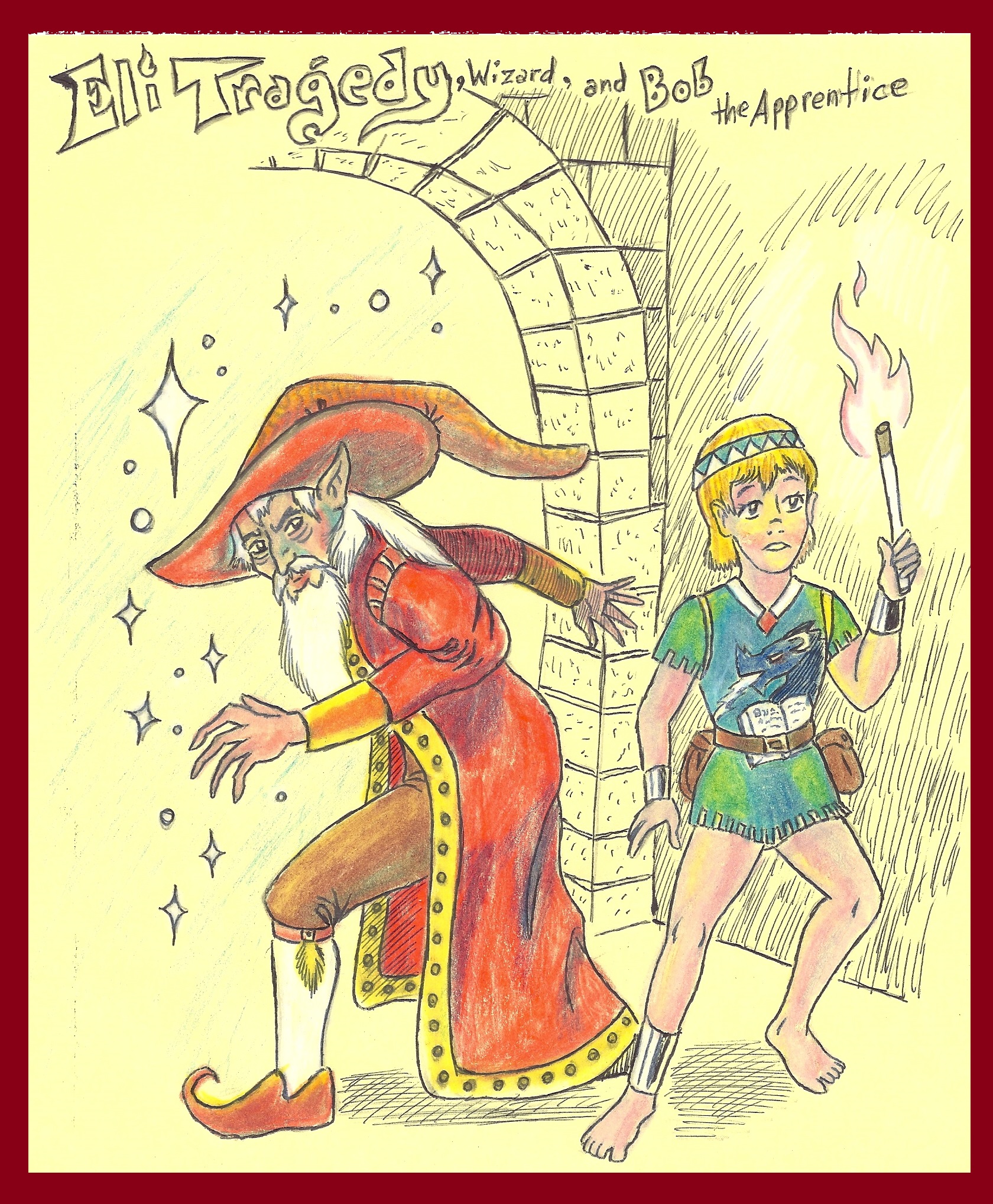
“I can do that, but I will have to cast certain spells that cause Slow Ones, especially big, dumb nimnul ones like you to have to laugh at what I say in order not to completely forget it. I just now said the secret words aloud to cast the spell, but whoever is reading this won’t be able to remember them being in this paragraph because you didn’t laugh and the spell is working. Don’t believe me? Look at the picture of stupid Bob and brilliant me and read them under our picture. They don’t appear there, do they? See! the spell is working.”
This picture is the perfect encyclopedia illustration of both what a nimnul is, and what a Slow One is.
Nimnul
– Insult, implying that the one being insulted has low intelligence, roughly akin to “dummy” or “idiot”. (from the Orkan Dictionary as composed by Mork from Ork)
Slow One
-Mild insult- What Fairies call anyone larger than three inches tall and not as quick of mind as the Fey Children (Also known as Fairies, Elves, Sylphs, Butterfly Children, Fauns, Satyrs, Brownies, Knockers, Gnomes, and Whisps- though some Whisps are also almost as dense as a Slow One.)
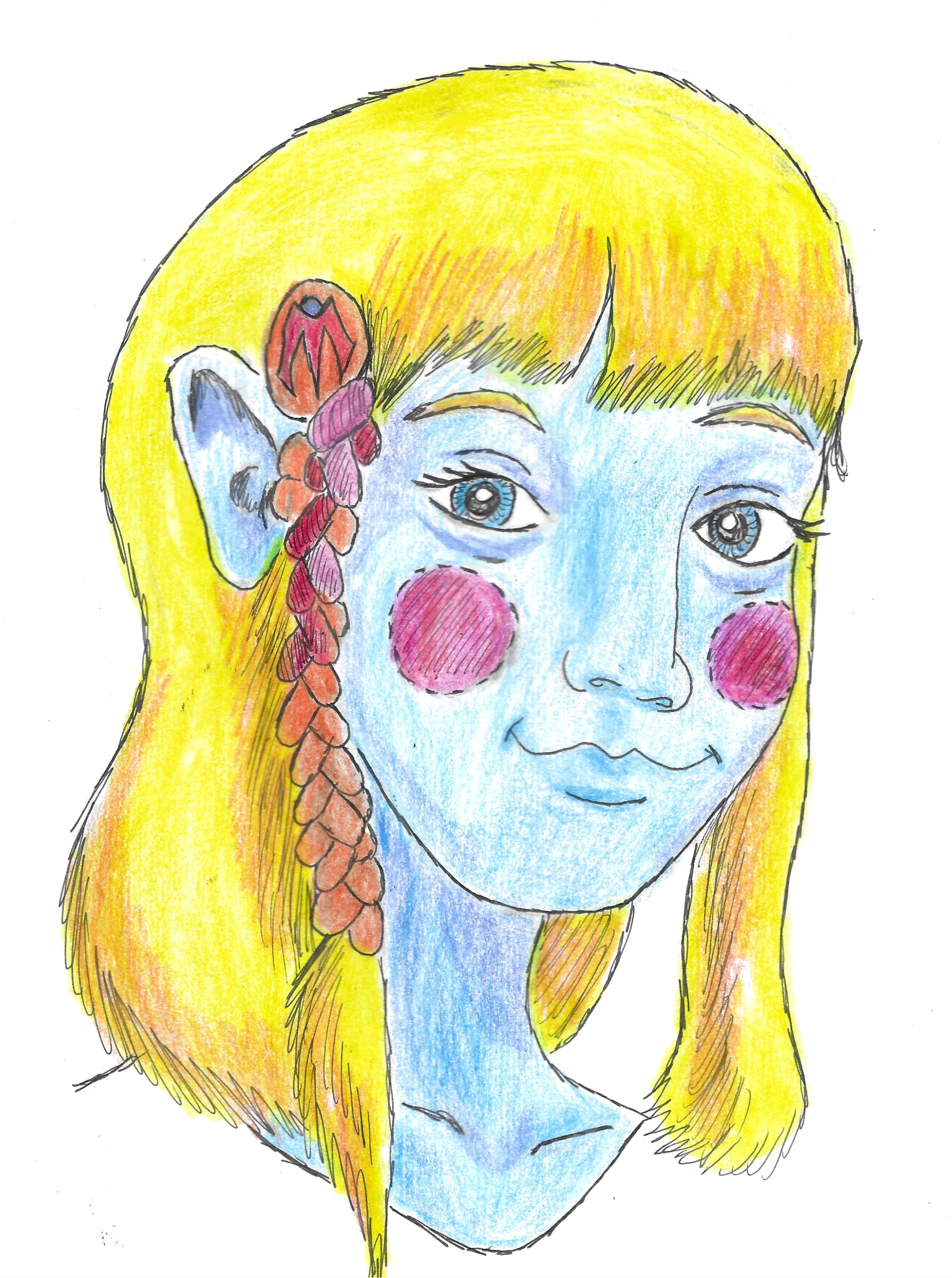
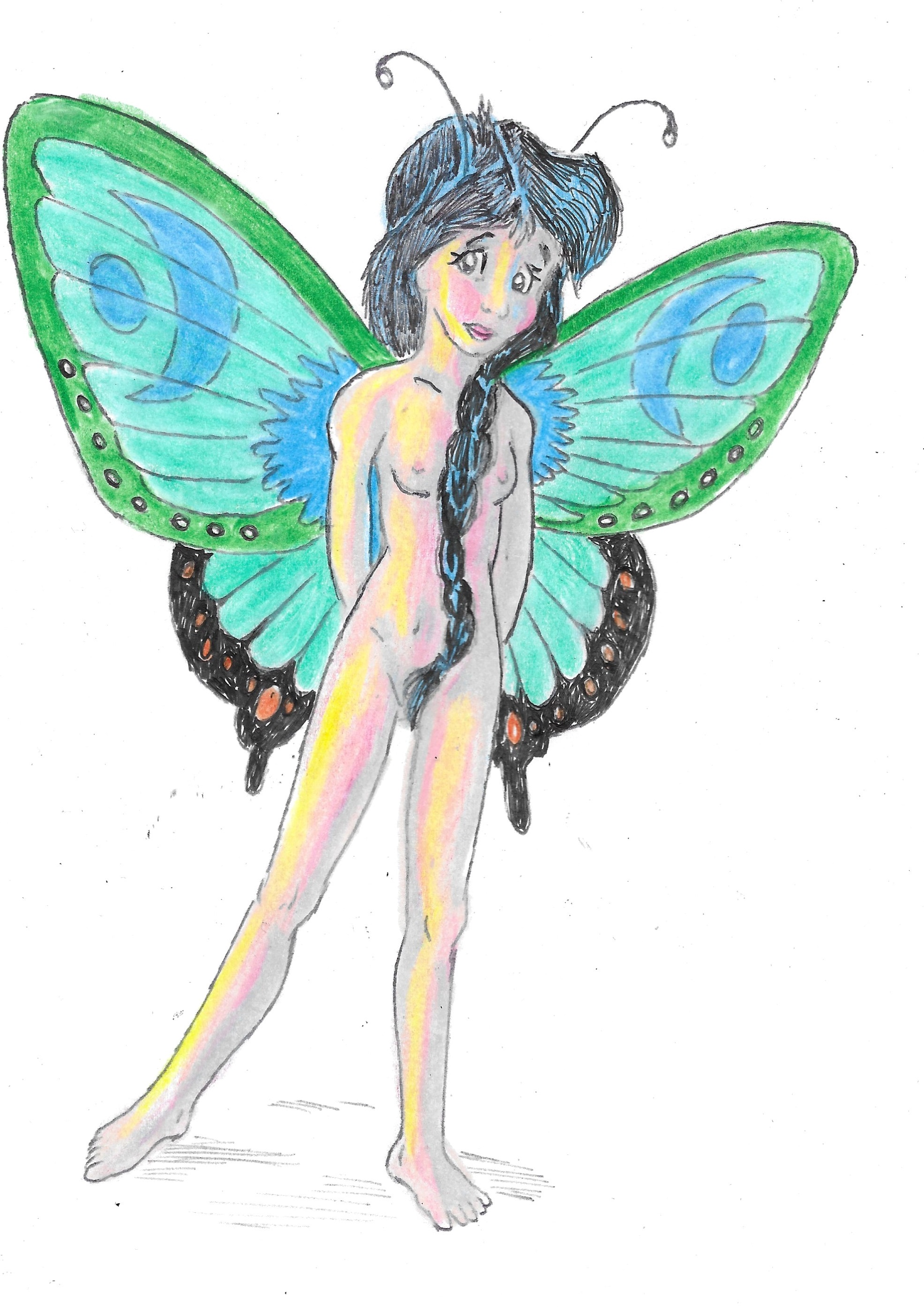
Dollinglammer, a typical Butterfly Child maiden wearing nothing but her wings and a hair braid.
“Now, if you don’t mind me saying so, the best way to get to the heart of the matter about how Fairies see the world is to call in an actual Fairy to testify. I, of course, am an Elf, and technically one of the Fey Children too. But I know more magic than any of your Slow Ones’ heads can possibly hold. So, I will leave the froofroo and unimportant stuff to this shamelessly and inexplicably naked fairy, Dollinglammer, to explain. (She is my student… far dumber than me… but way smarter than you.”)
“Master Eli, they might like to know how you came by knowledge of their scientific term, “nimnul,” which I cannot tell them, because that was long before I was born.”
“Okay, Dolly. I got that danged Orkan word by watching a TV show in the late 70’s and early 80’s called “Mork and Mindy.” It was a documentary about an alien from the planet Ork who was stranded on this planet that we Fairies call “Middle Earth” and foolishly fell in love with a Slow One female named Mindy. She covered up her entire body with sweaters and coveralls and blue jeans to the point that I have no idea if she was pretty or not, or if so many sweaters made her sweat too much. You can never tell such things by looking at a Slow One’s TV set. The blamed things have no odor-vision function whatsoever.”
“It is a shame that Slow Ones are addicted to wearing clothes and don’t know the joy of flitting about through nature completely and naturally nude.”
“Shut up, Dolly. You do things the opposite way far beyond reason. But, as I was saying… We Fair Folk get to watch TV for free in Slow-One homes. People who are only three inches tall and disguised by magical glammers can seat an entire audience under the legs of Slow-One easy chairs. The only part where we have to pay for the exhibition is the fact that the stupid Slow One always gets to pick what documentaries appear on the screen. That’s how we end up watching goobers like Sean Hannity and that orange-faced guy so much. “
Fairies are much more disciplined than Slow One children are. We have never seen a Slow One child beheaded for talking back to their elders.
“Oh, and tell them about the magical people the little Slow Ones watch on a thing called Cartoon Neckwork!”
“Dolly, you were supposed to be telling them about the whole Fairy point of view thing! And the documentary channel is called Cartoon Network. Though you never see those creatures in the wild. You tell them all about it.”
“Well, you see, on the tellubishion thingy there are magically animated people made from drawings that come to life, with some of them being ducks and rabbits who insult each other, and ducks who wear sailor suits, and Flintstones… whatever they are…”
“Okay, okay… That’s enough of that drabble. I can safely say there are many kinds of magics and miracles that Slow Ones use that we can’t replicate. And we do find cartoons mesmerizing. But that’s all immaterial now. I am not saying one thing more until stupid, Slow-One Mickey finishes making those sugar cookies he promised me.”
If you would like to learn more about it without continuing to make cookies, there is a book about all of this…
No man is an island. John Donne the English poet stated that. And Ernest Hemingway quoted it… and wove it into his stories as a major theme… and proceeded to try to disprove it. We need other people. I married an island girl from the island of Luzon in the Philippines. She may have actually needed me too, though she will never admit it.
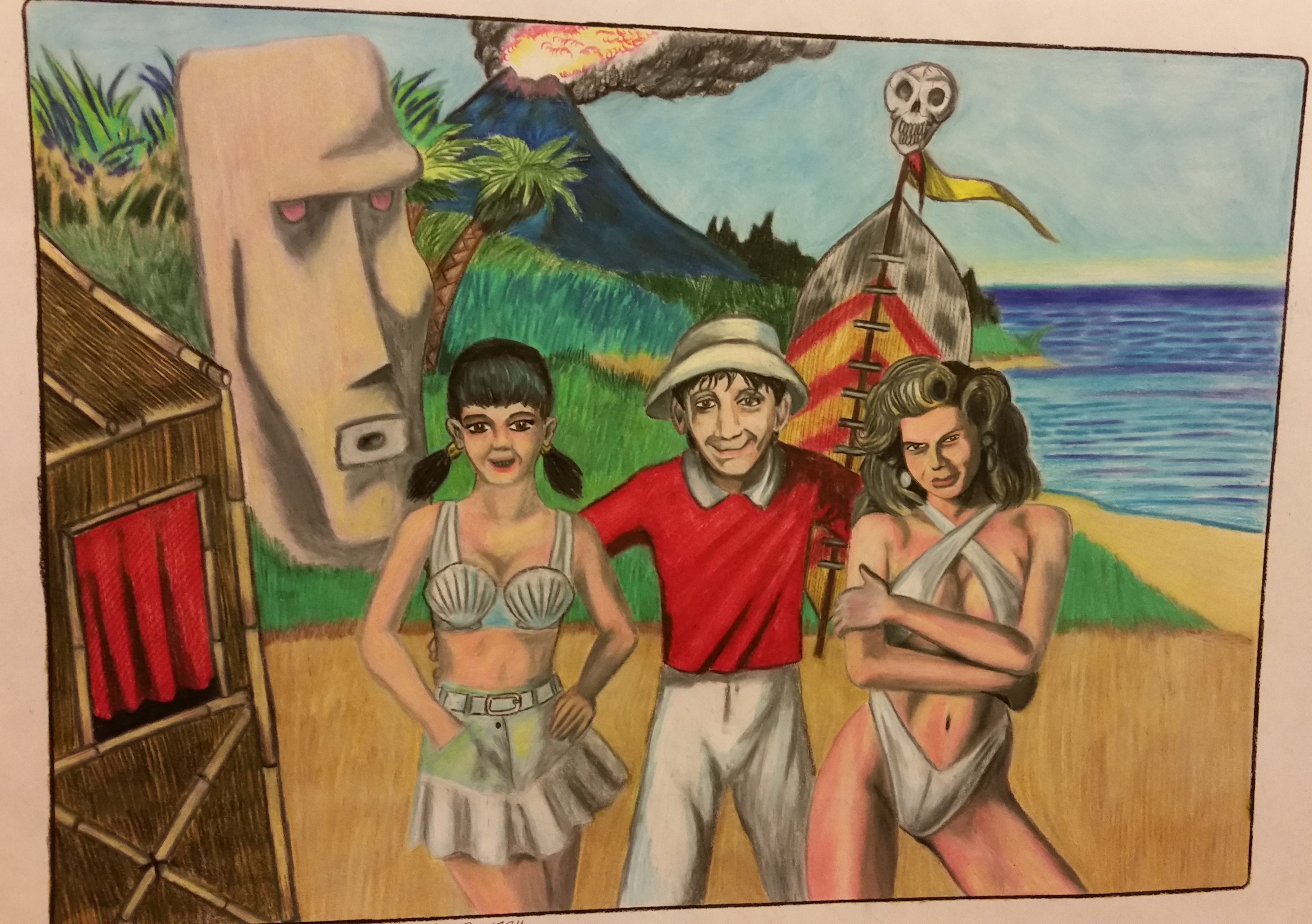
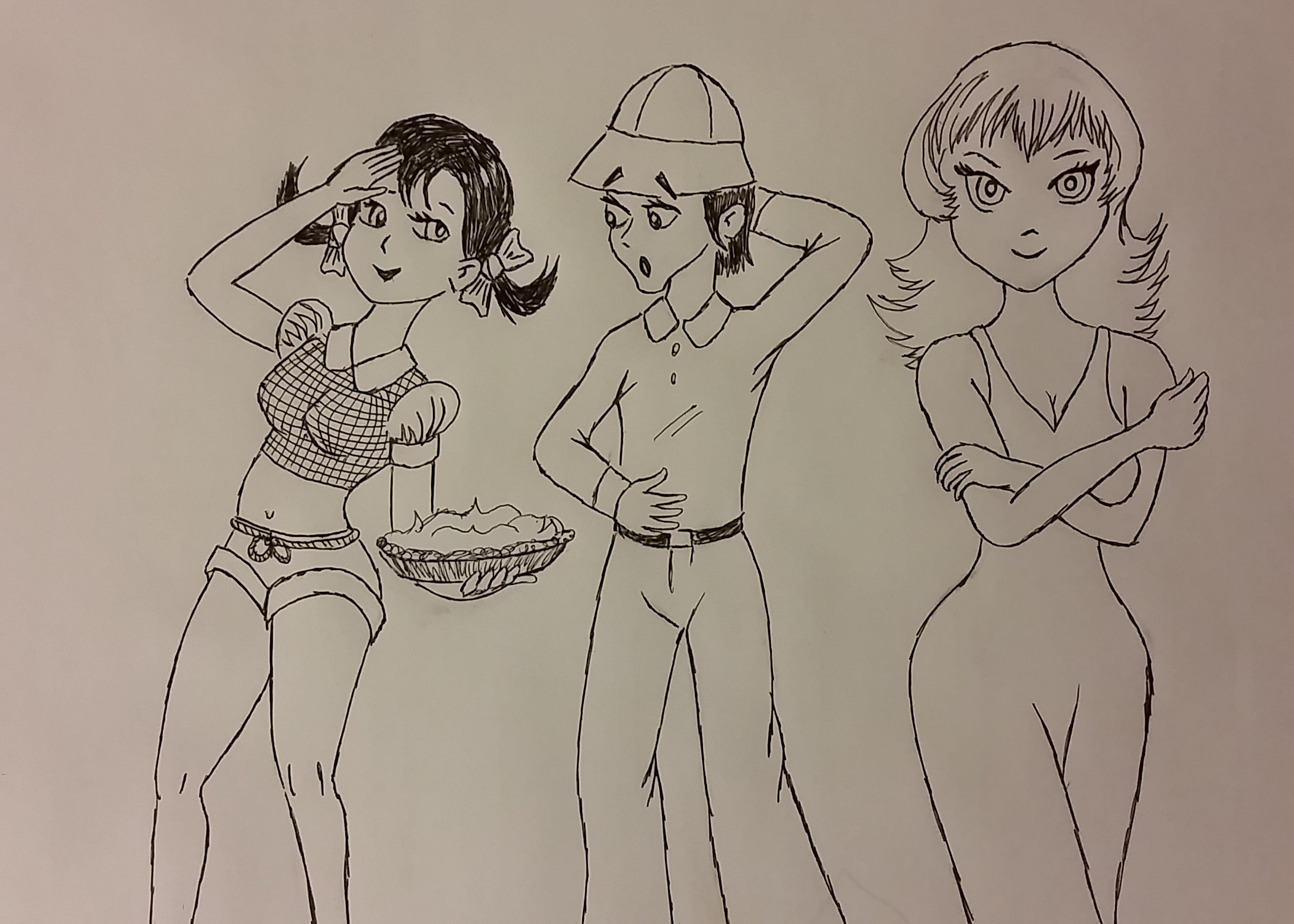
When I was a young junior high school teacher in the early eighties, they called me Mr. Gilligan. My classroom was known as Gilligan’s Island. This came about because a goofball student in the very first class on the very first day said, “You look like Gilligan’s Island!” By which he meant I reminded him of Bob Denver, the actor that played Gilligan. But as he said it, he was actually accusing me of being an island. And no man is an island. Thank you, Fabian, you were sorta dumb, but I loved you for it.
You see, being Gilligan on Gilligan’s Island was not a bad thing to be. It was who I was as a teacher. Nerdy, awkward, telling stories about when I was young, and my doofy friends like Skinny Mulligan. Being a teacher gave me an identity. And Gilligan was stranded on the Island with two beautiful single women, Mary Ann and Ginger. Not a bad thing to be. And I loved teaching and telling stories to kids who would later be the doofy students in new stories.
But we go through life searching for who we are and why we are here. Now that I am retired, and no longer a teacher… who am I now? We never really find the answer. Answers change over time. And so do I.
The field on which I have printed these supposedly poetic words is part of the farm that I and my two sisters have inherited. The land belonged first to my great grandfather, Friend Aldrich. His son, Raymond Aldrich, was my grandfather, the father of my mother. Now that my parents are both gone, one-third of this farm is now mine. But I don’t own the land. The land owns me.
I have endured with my roots in this land for more than 65 years. The old cottonwood tree on the corner has been there longer than that. You see the cottonwood in both of the pictures so far used in this post. They say that the total root system of this old tree is just as large and spread out as the part of it you see above ground.
Ironically, my roots are here where the ancestors who came before me planted them in the 1800s. Ironic because my life now blooms in the Dallas, Texas suburbs, almost 750 miles away from my roots. That is a deeper and larger root-connection than the cottonwood has.
I don’t farm the land myself. Another local farm-owner rents the land and farms it for us, increasing his yield and profits in order to keep his own farm producing food for the world. My own crop consists not of corn or soybeans, but rather words, memories, statements, stories, and meanings distilled from more than 65 years of brewing them from the things that formed me, the things that came from farm and family, and resulted in the poetry that is my life.
Yes, it is poetry written by a fool and a notable terrible poet. But it makes people laugh and sometimes cry and reaches out from the center of my soul to communicate the wisdom of a life that has been lived and is now almost done. How is that not poetry? A poem written by a fool.
I first heard this song as a freshman in college. It struck me that it was hauntingly beautiful… but maybe I wasn’t entirely sure what it meant.
The song is about losing body parts and being okay with that.
That can actually be kinda creepy, right?
It is probably a song about gradually dying.
But that’s not really what it’s about.
I am there now. Peeling, cracking, drying out… my life has reached the downhill run toward the finish line. But I am not worried and not afraid. Life is so much more than hands and eyes and legs and feet. I can lose those things and have no regrets. I am so much more than merely the sum of those physical things.
My spirit soars. And my life is bound up in words and meanings that are now written down, and are at least as imperishable as paper. And may, in fact, be written on a few human hearts here and there.
There isn’t a great deal of actual meaning in this title. It is kinda nonsense.
Looking at it through a magnifying glass, I can see a really big capital “R” and a really large, small “eco.” The rest of it looks ordinary, but I am probably looking at it with the other eye. See what I mean about nonsense?
It’s like a Republican telling you the election was stolen and Biden has ruined the economy. The truth is… the Pumpkinhead President failed to steal it, though he tried. And the Republicans ruined the economy by botching the pandemic response, and Biden has been slowly trying to fix it even though the Republicans and Joe Manchin have been throwing monkey wrenches into the efforts.
It doesn’t help anything to start shouting at Republicans and other sheep-like Fox News viewers, coloring the inside of my mind with a fiery red anger color. That color, if kept hot and intense enough, can cause scar tissue on the inside of my thought processes.
It is better by far to realize you cannot move stupid people to let go of tightly held beliefs. Maintain, rather a cool blue, but factual, color in the quiet part of your mind.
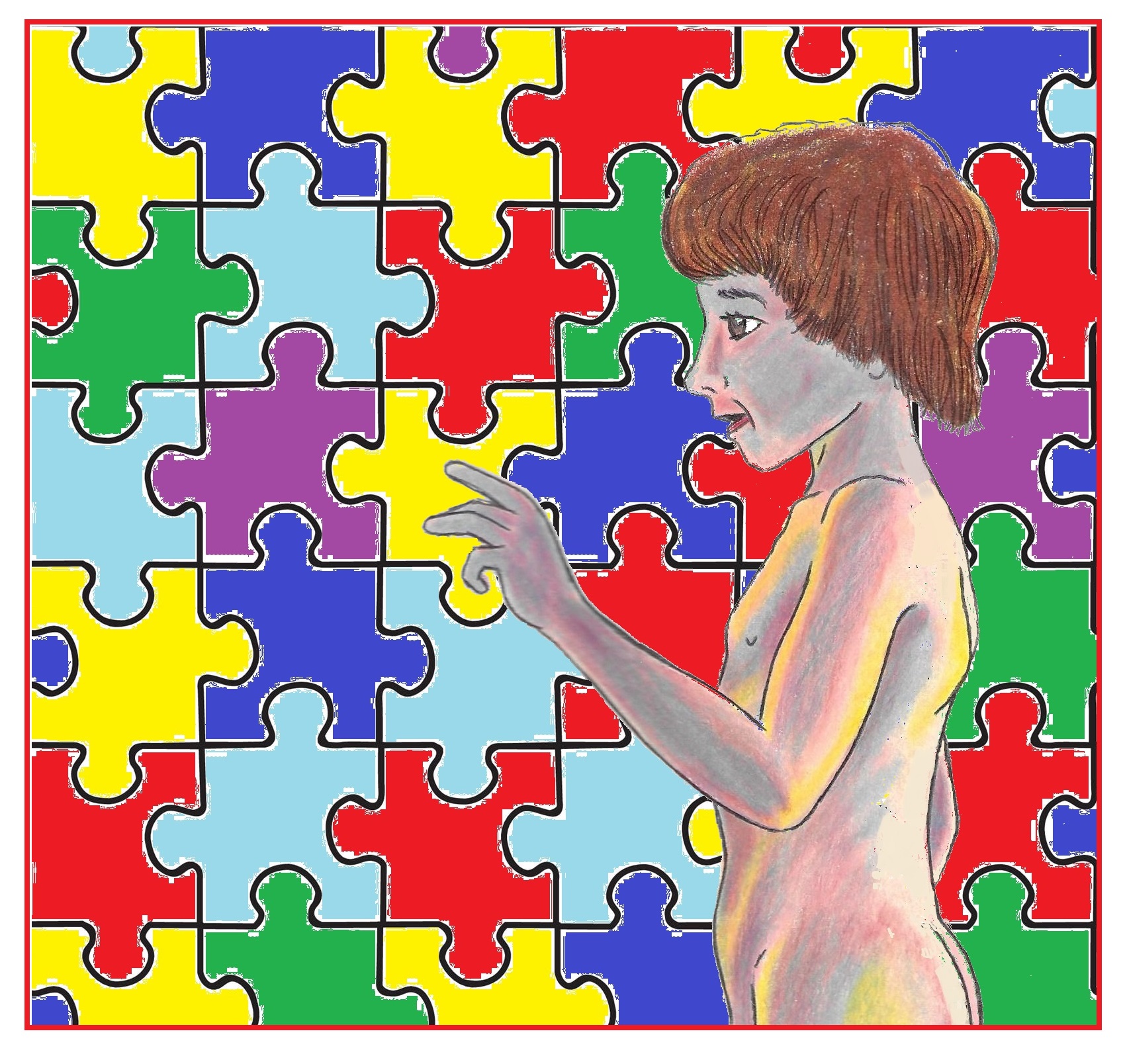
If you are going to effectively regather your energy for the next fight over solving the world’s problems, you need to think in many colors and puzzle them together in a way in which no single color dominates overmuch. Being a liberal means being open to new ideas, but only accepting them if they are actually workable and useful. Leaving it to the conservatives to throw monkey poo and accusations of being a pedophile into the process means liberals don’t get their hands dirty, and, hopefully, there will be enough non-stupid people coming along to recognize which side of the argument stinks.
So, I am actually advocating you deal with the Evil Empire the way Obi-Wan did, by laying low, going by another name, and eventually helping Luke Skywalker to rid the galaxy of the evil old Spider Emperor while helping blow up the Death Star.









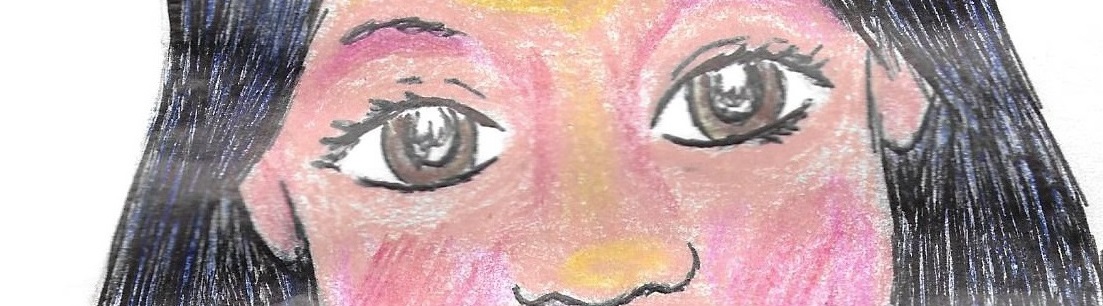
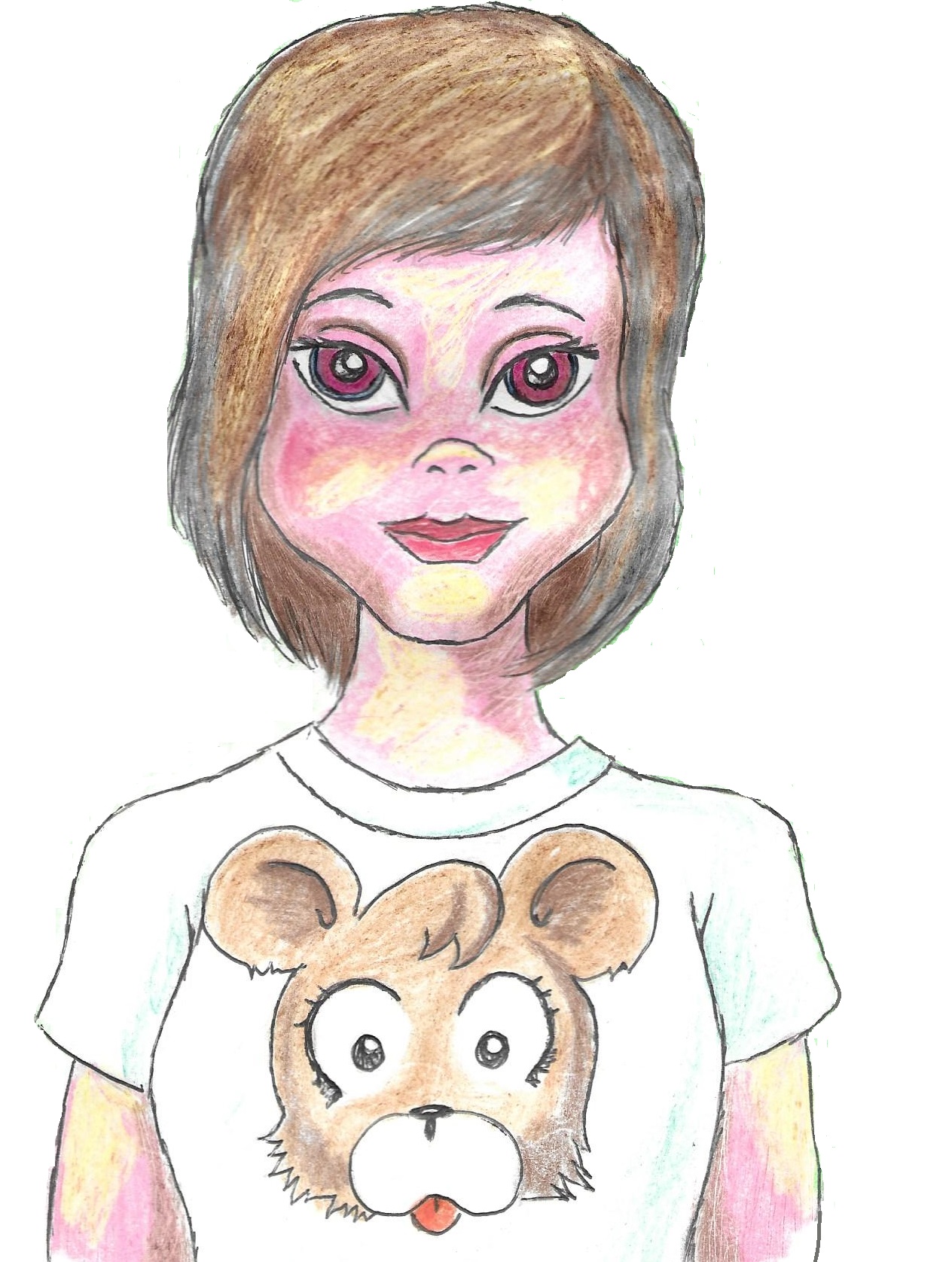
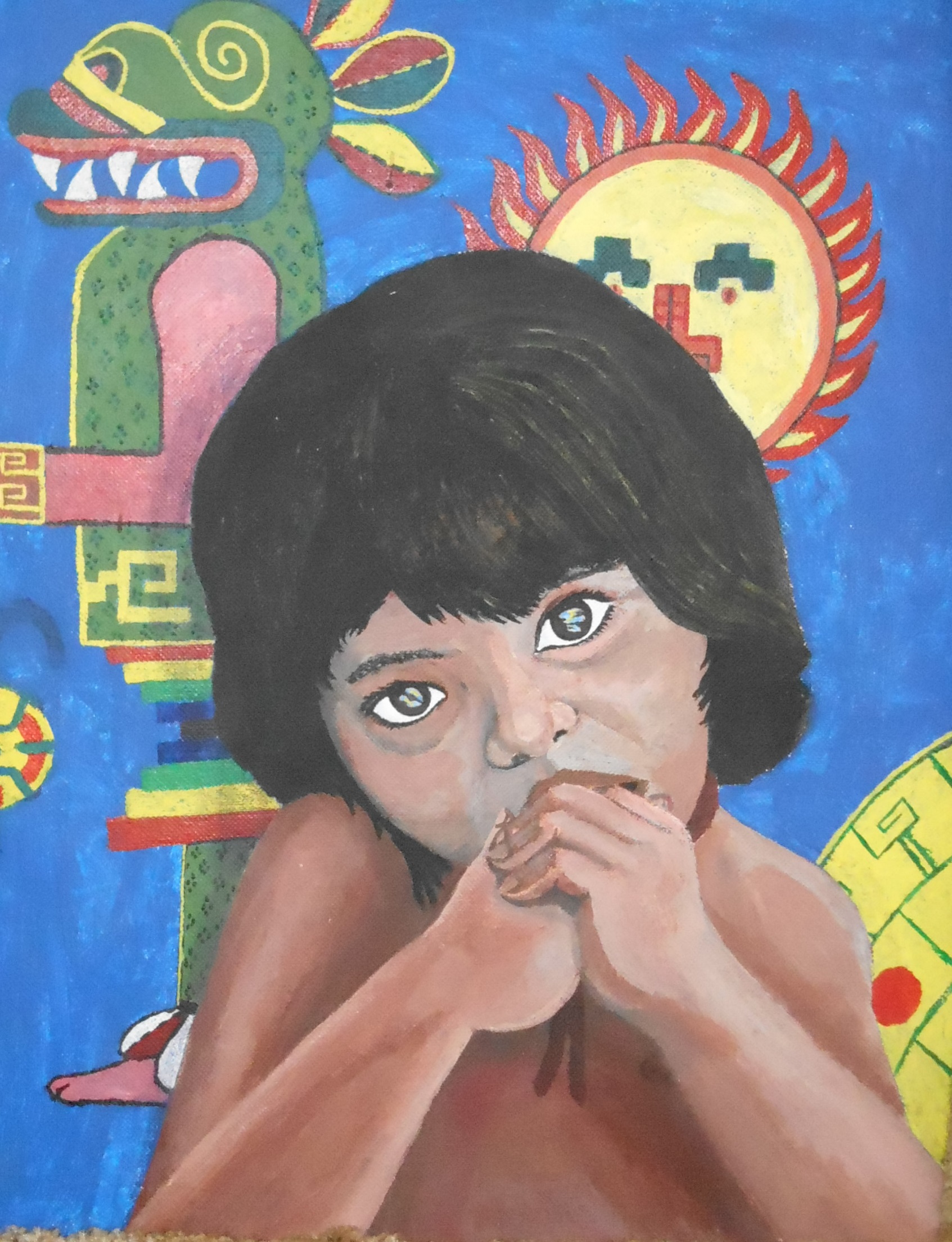
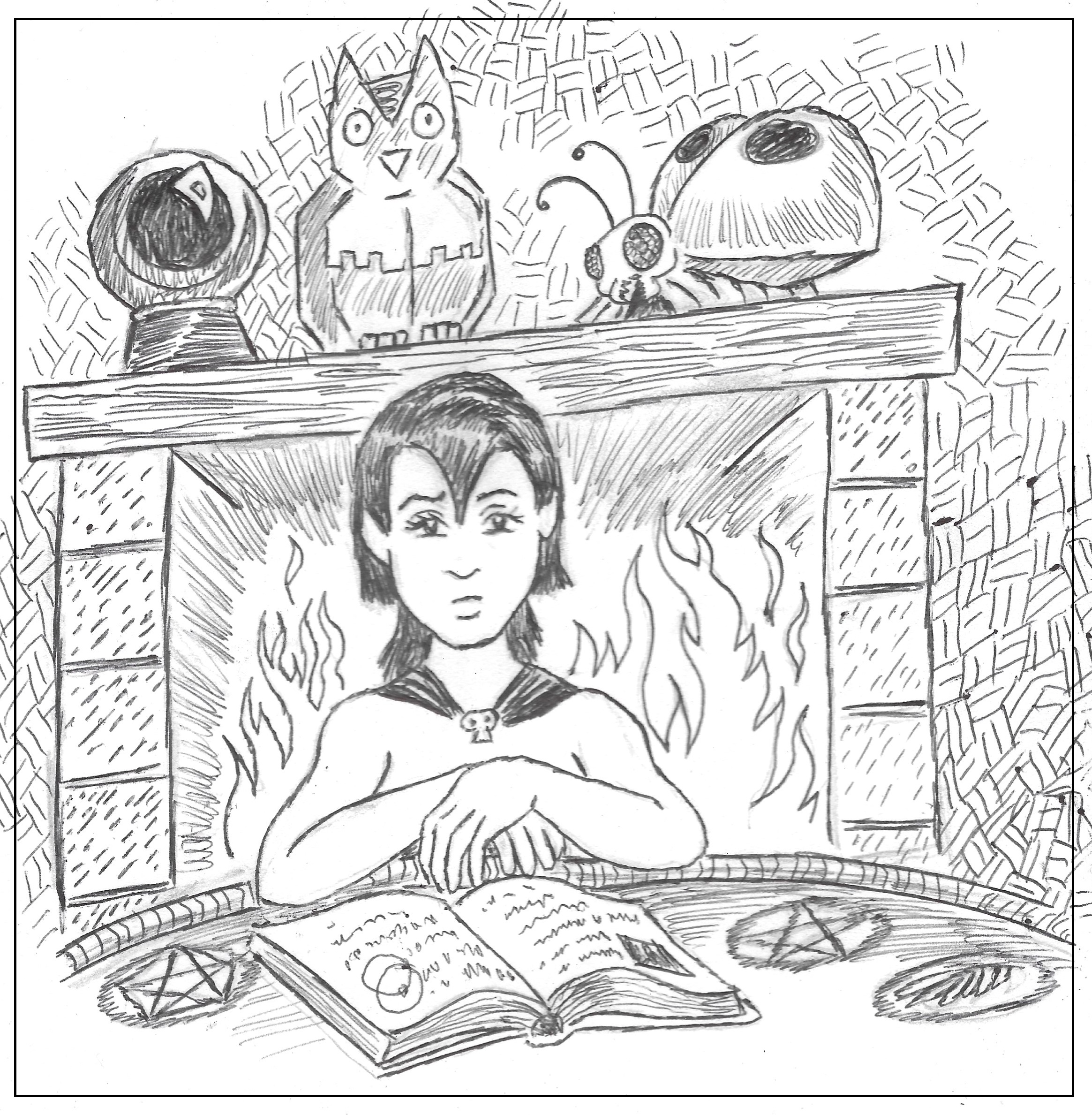


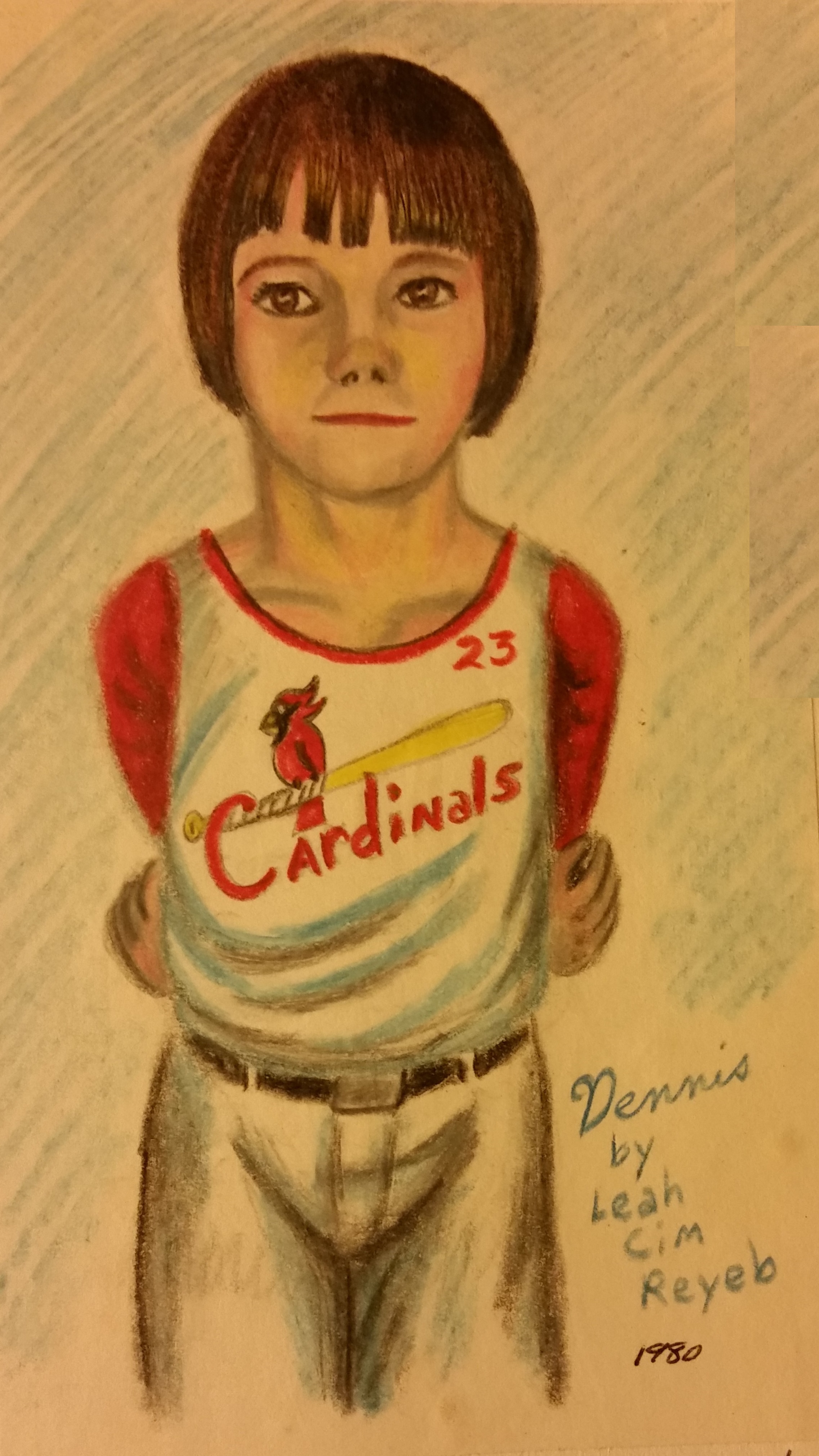 ege. It struck me that it was hauntingly beautiful… but maybe I wasn’t entirely sure what it meant.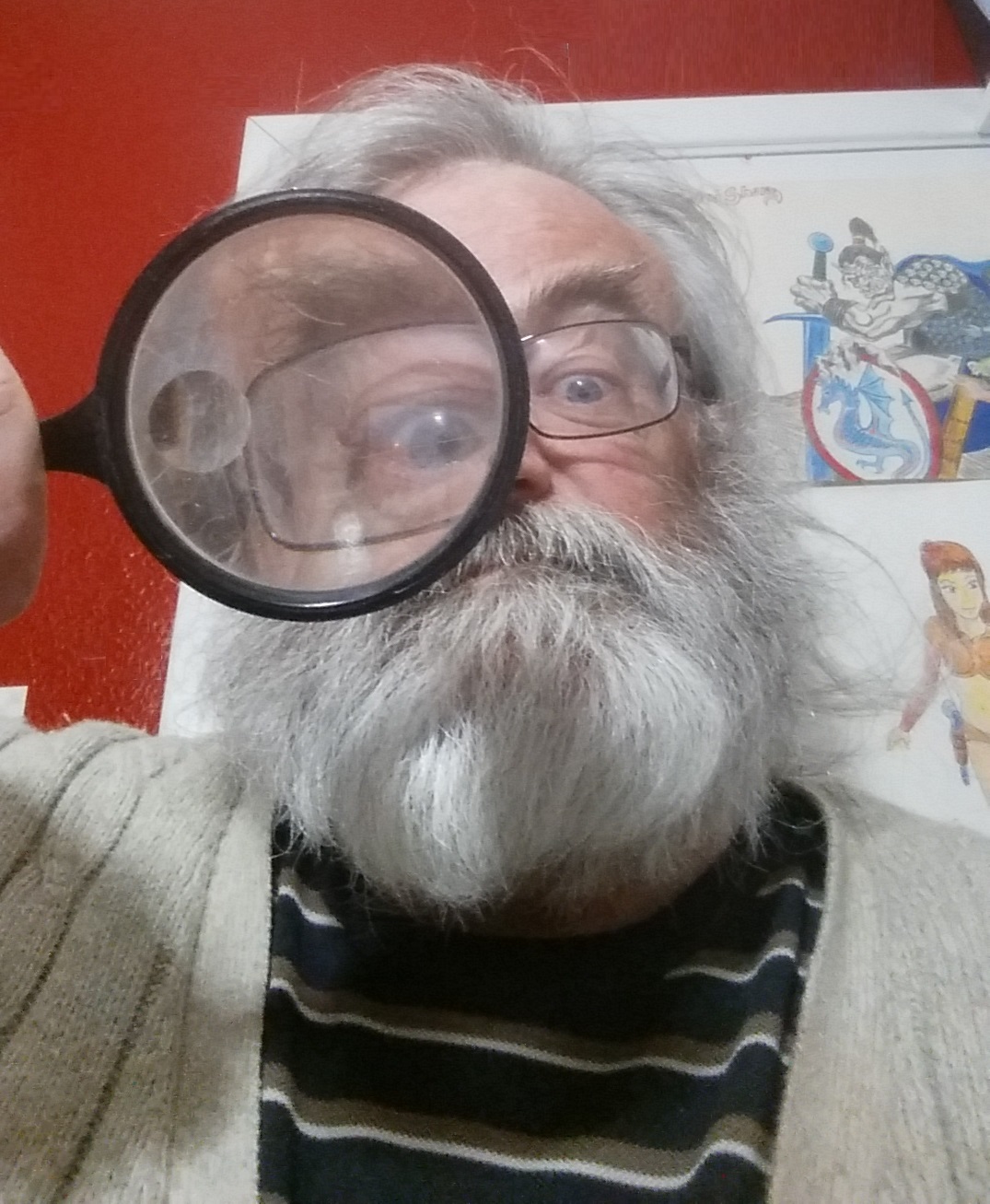


 Catch a Falling Star
Living Life as a Poem Written by a Fool
The field on which I have printed these supposedly poetic words is part of the farm that I and my two sisters have inherited. The land belonged first to my great grandfather, Friend Aldrich. His son, Raymond Aldrich, was my grandfather, the father of my mother. Now that my parents are both gone, one-third of this farm is now mine. But I don’t own the land. The land owns me.
I have endured with my roots in this land for more than 65 years. The old cottonwood tree on the corner has been there longer than that. You see the cottonwood in both of the pictures so far used in this post. They say that the total root system of this old tree is just as large and spread out as the part of it you see above ground.
Ironically, my roots are here where the ancestors who came before me planted them in the 1800s. Ironic because my life now blooms in the Dallas, Texas suburbs, almost 750 miles away from my roots. That is a deeper and larger root-connection than the cottonwood has.
I don’t farm the land myself. Another local farm-owner rents the land and farms it for us, increasing his yield and profits in order to keep his own farm producing food for the world. My own crop consists not of corn or soybeans, but rather words, memories, statements, stories, and meanings distilled from more than 65 years of brewing them from the things that formed me, the things that came from farm and family, and resulted in the poetry that is my life.
Yes, it is poetry written by a fool and a notable terrible poet. But it makes people laugh and sometimes cry and reaches out from the center of my soul to communicate the wisdom of a life that has been lived and is now almost done. How is that not poetry? A poem written by a fool.
Leave a comment
Filed under autobiography, commentary, humor, irony, Paffooney, photo paffoonies, poem, poetry