


I have to come to terms with not having much longer on this Earth. And things go wrong more than they go right because I am old, have had arthritis for fifty years, and am losing my eyesight. I dropped my meal in the bowl I was using to make it this evening. I had to settle for a toasted cheese sandwich. I have to give up my library and a lot of my doll collection to move to Iowa, a move that was delayed at least two months by my heamrt problem. There is war with Iran to ponder, which may kill us before the climate-change weather does. WWIII? I am feeling doomed in any case.
On the good side, I got my novella done and published… finally. But Amazon has changed rules again on the paperback. I can’t publish in paperback until it reaches 72 pages. I still have to figure that out.
However, the essential fact is that I have achieved my life’s purpose. 25 books published. The authorities worry about male teachers hugging students. Republicans holler about “groomers.” I never offered a hug or asked for a hug in 31 years as a teacher. But they hugged me well over a hundred times. Both boys and girls. Because they wanted to, or needed to. That is proof you made a difference in the classroom.
I do still feel like crying anytime I remember the kids who hugged me that are now dead by their own hands, dead by alcohol or drugs, or institutionalized for poor life choices. There is more than one in each category. But they are the exceptions, not the rule.
My family is all still alive and healthy, no simple task that. My wife is still teaching. My three kids are now all functioning adults.
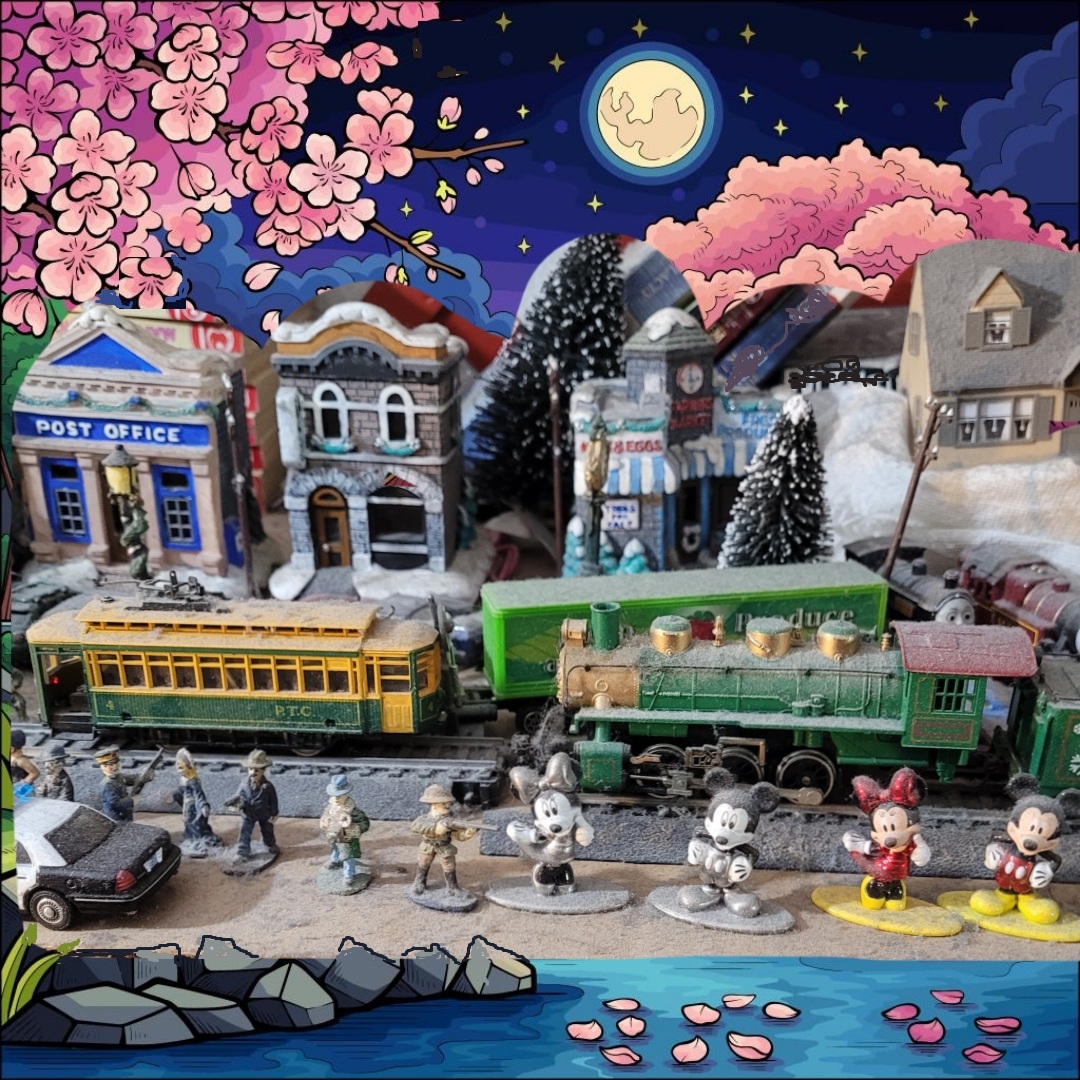
So, there are sad times now in Toonerville, the place Mickey lives in his own stupid head. But that’s okay. The universe is unfolding as it should.
Filed under Uncategorized
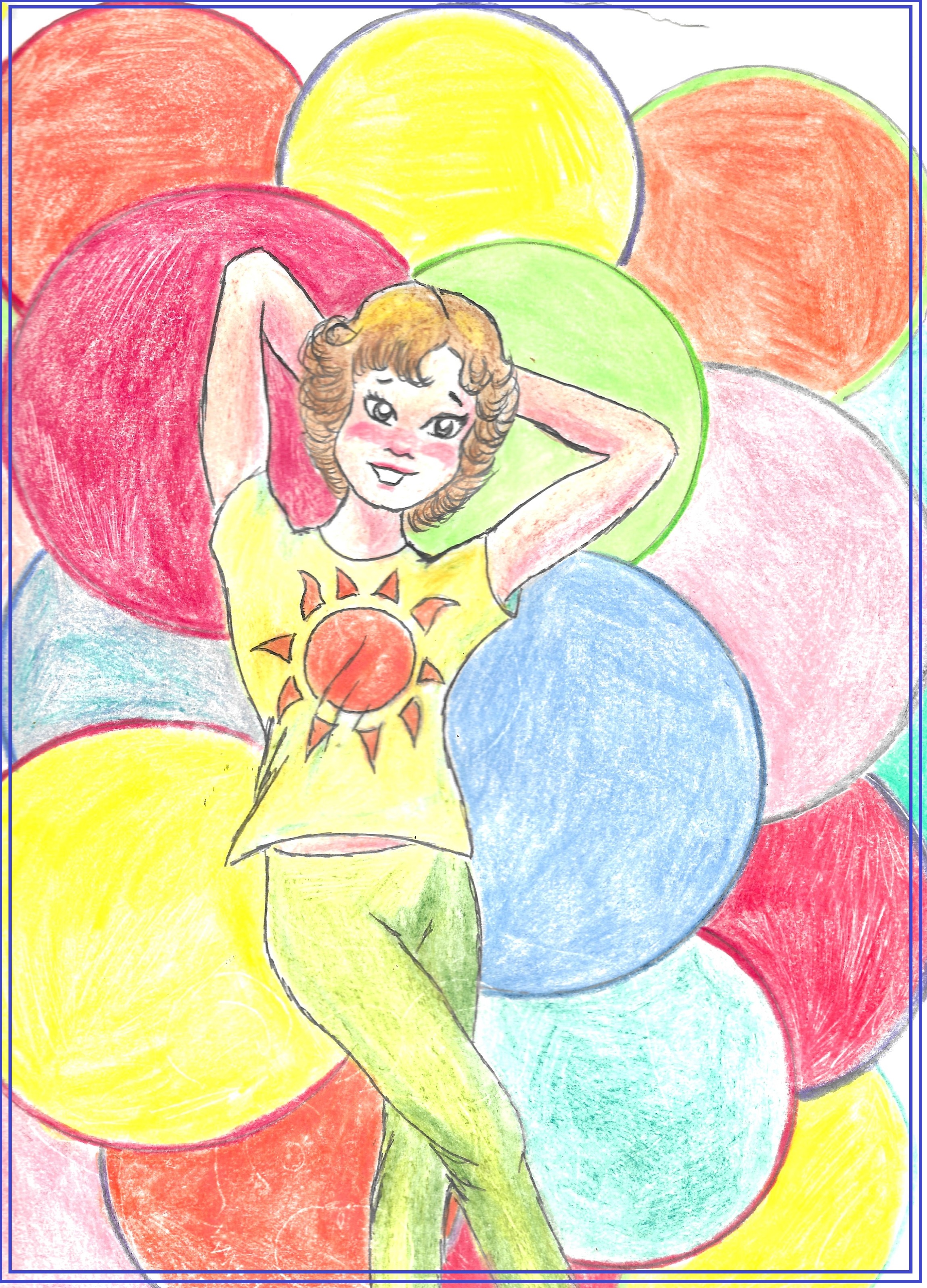
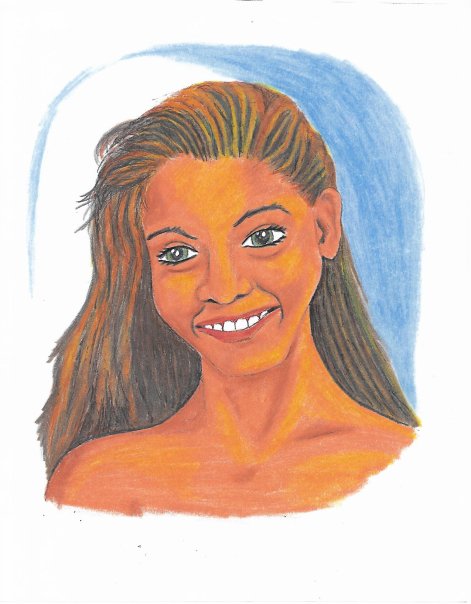
Some of the drawings and paintings I do, I do because they make me happy. I know it’s more noble if I do it to make you, the viewer, happy. But part of making art is that you are making it for your own needs. Art is therapy. Often, art is love. This picture of Shannon (not her real name) makes me happy. She was a student I loved, (only in the legal, Platonic sense.)

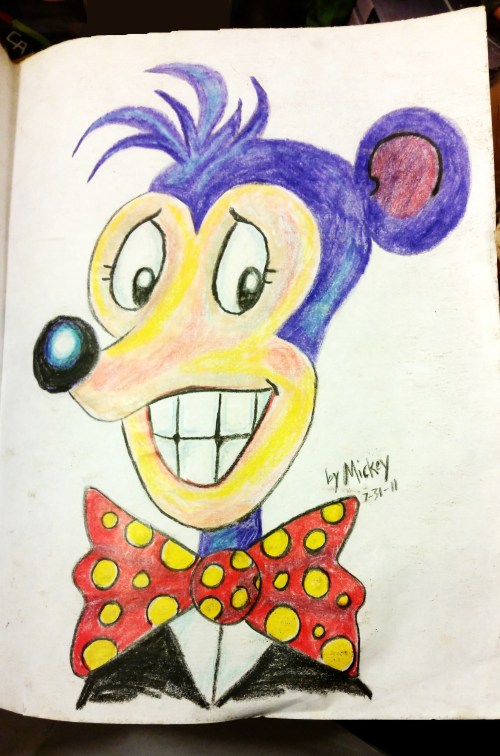
This one makes me happy. I drew it on a day I needed to laugh. And I laugh a little even now when I look at it.
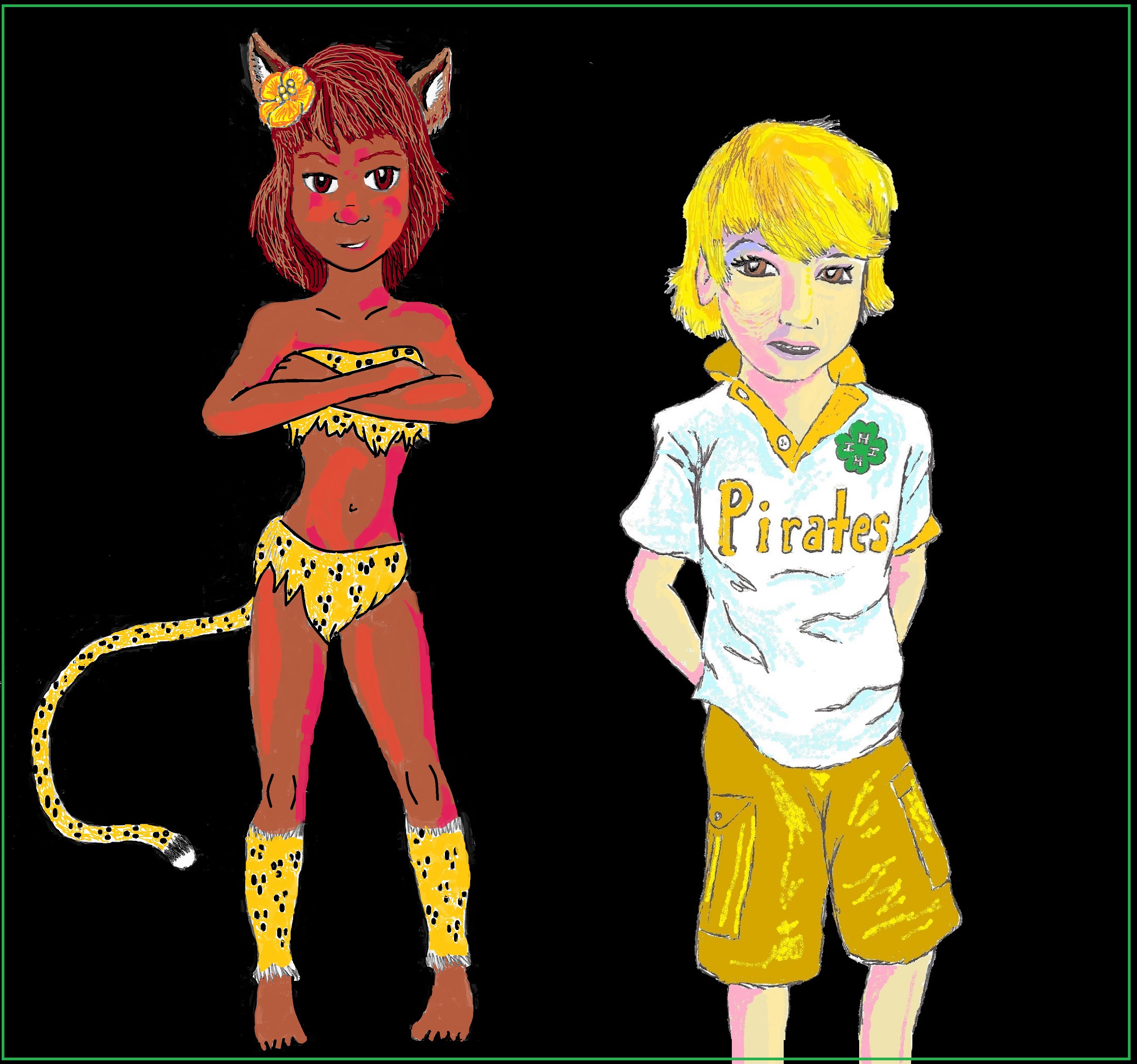
This one is also a smirkable smirk-maker.
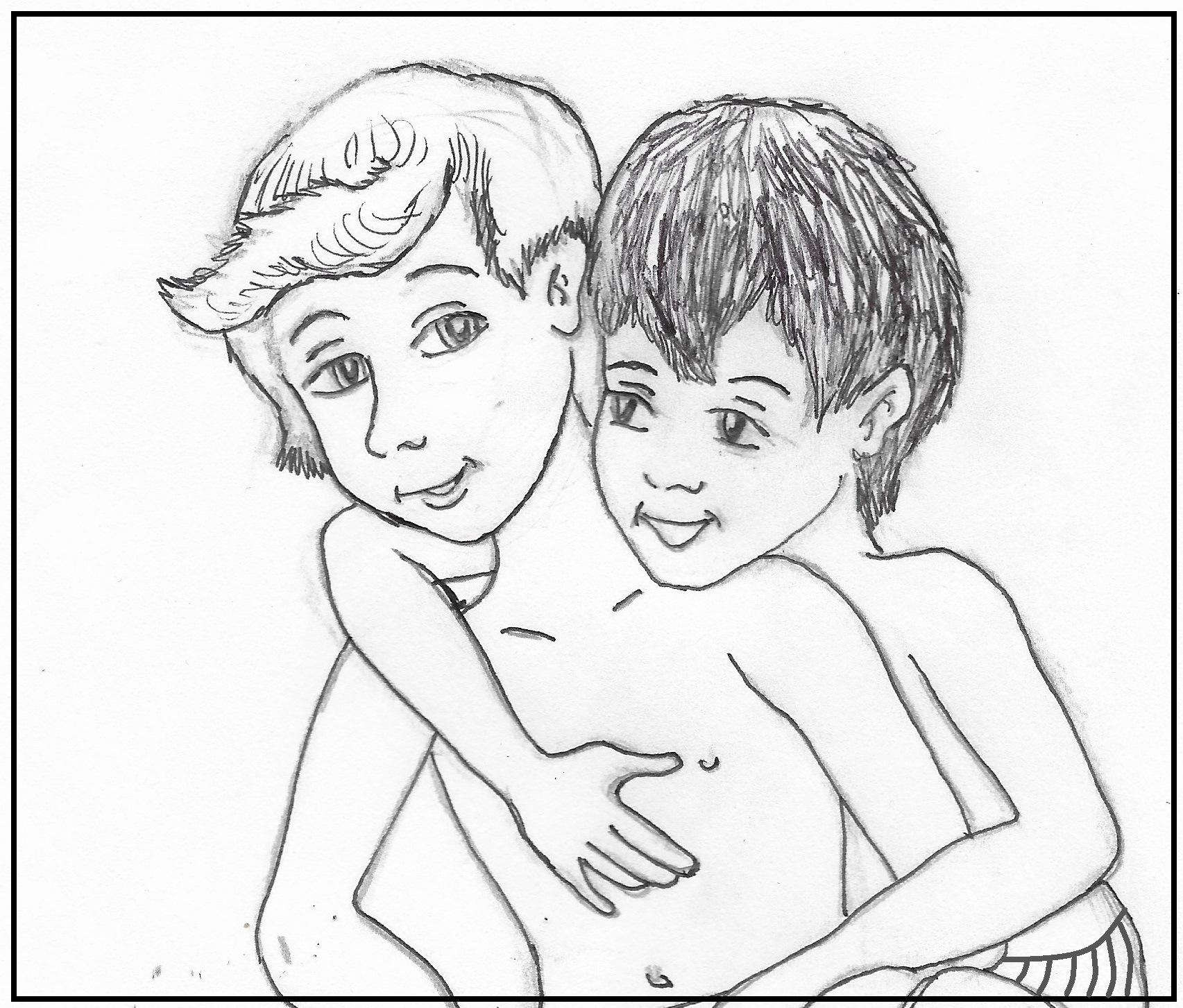
I drew this on a day when I was lonely.
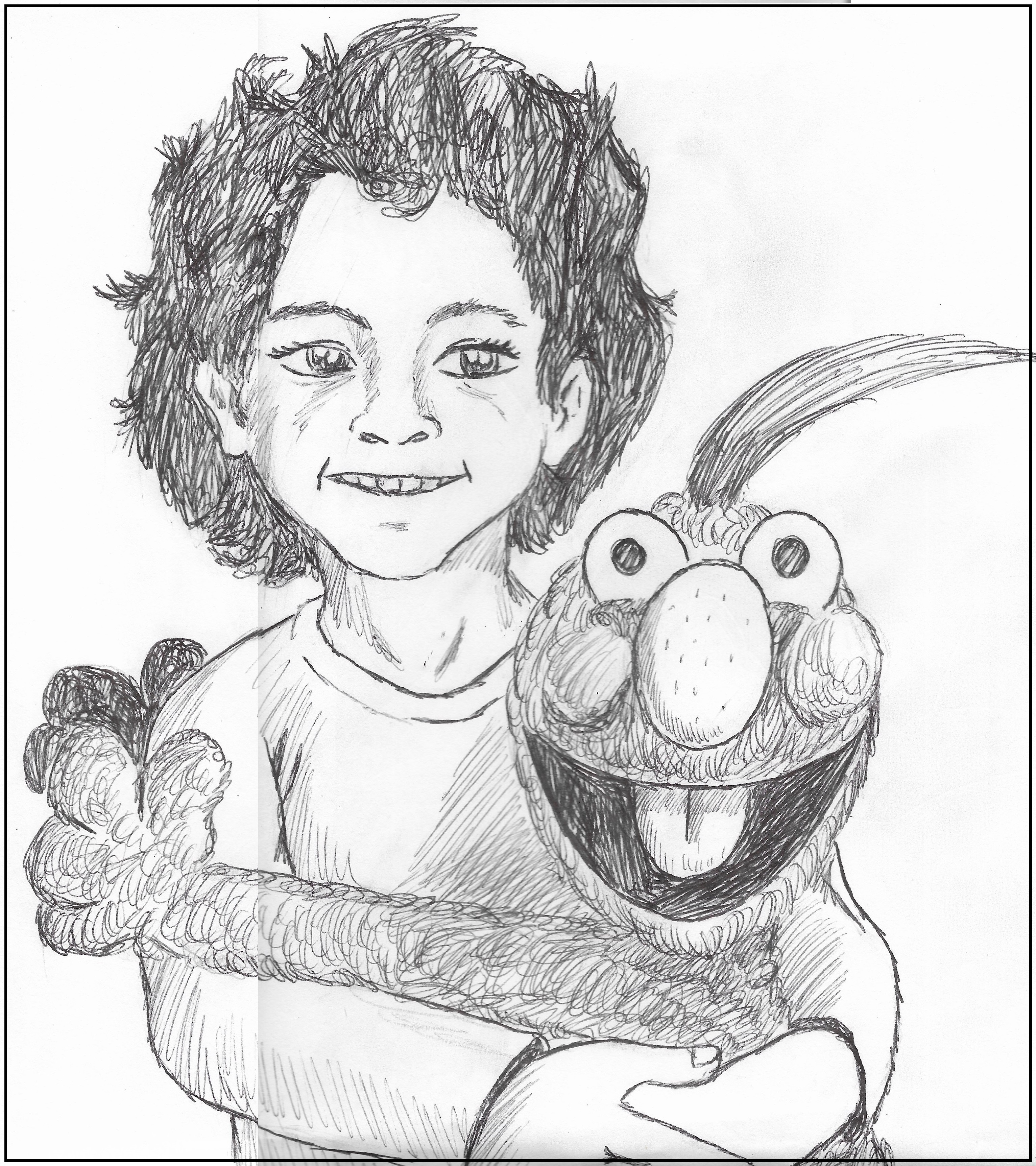
This one tickles me on many levels.
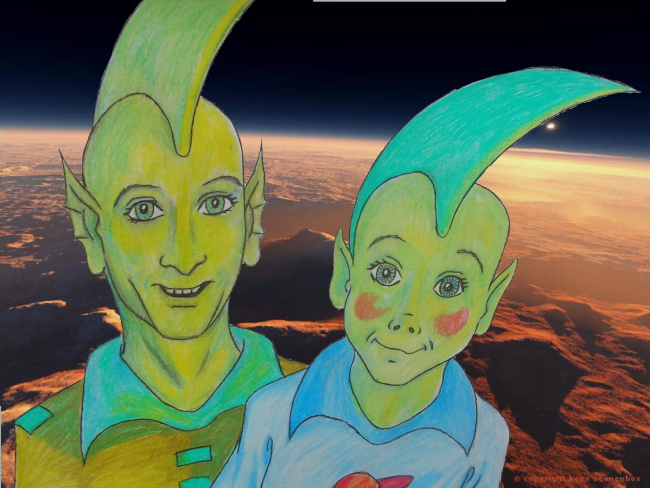
These Telleron, temporary Martians, helped me start my publishing career with the publication of Catch a Falling Star.
…
…
…
And pretty girls can make me happy too.
Especially naked ones.
And I mean drawing them, not what was in your evil mind.
Filed under artwork, colored pencil, drawing, humor, Paffooney

Back in about 1968 my Grandma Beyer was seriously scandalized by an artist named Paul Detlefsen. Detlefsen did a lot of covers for the “Ideals Magazine” that Grandma always had on her coffee tables. He scandalized her by putting a painting on the cover that showed a young boy taking his pants off, the rear view only, so he could go skinny dipping with a group of naked boys. Truthfully the picture shown above is by Detelfsen, but it is not the one that offended her. I have discovered that this painter of old-timey things like blacksmith shops and one-room school houses has painted at least four different versions of “the Old Swimmin’ Hole”. And Grandma was easily scandalized when we were kids. She was a very conservative woman who loved Ronald Reagan and his politics most severely and thought that Richard Nixon was a leftist radical. She didn’t like for people to be naked, except for bath time, and maybe not even then. She is one of the main reasons, along with this painter whom she adored, that I came to learn later in life that “naked is funny”. http://www.freeplaypost.com/PaulDetlefsen_VintageArtPrint_A.htm
Grandma Beyer also seriously loved puzzles, and besides “Ideals” covers, Paul Detlefsen did a beaucoup of jigsaw puzzles. (Beaucoup means a lot in Texican, I tend to think in Iowegian and talk in Texican and completely forget about the need to translate for those people who don’t know those two foreign tongues) One of the puzzles we spent hours working on was “Horse and Buggy Days” that I pictured here. They were the kind of puzzle paintings where every boy was Tom Sawyer and every girl was Becky Thatcher. And there were a lot of them. Here is another;

http://www.bigredtoybox.com/cgi-bin/toynfo.pl?detlefsenindex
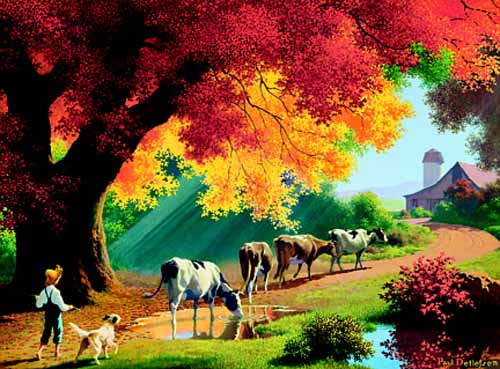
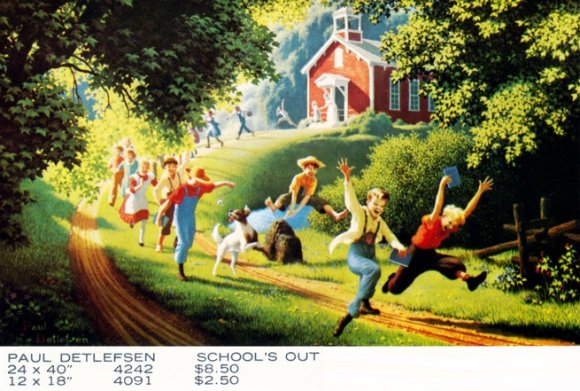
Grandma had this in puzzle form also. We put the puzzle together, glued it to tag board, and framed it. It has hung on the wall in a Grandparent’s house, first Grandma Beyer’s and then Grandma Aldrich’s, since the early 1970’s. My own parents now live in Grandma Aldrich’s house, and that puzzle-painting may be hanging in an upstairs bedroom to this very day. Detlefsen is not known as a great artist. He was a humble painter who painted backdrops for films for over 20 years. In the 1950’s he switched gears and started doing lithographs that were turned into calendars, jigsaw puzzles, laminated table mats, playing cards, and reproductions you could buy in the Ben Franklin Dime Store in Belmond, Iowa and hang on your back porch at home. I believe I saw his paintings in all these forms in one place or another. According to Wikipedia (I know, research, right?) “In 1969, UPI estimated that his artwork had been seen by 80 per cent of all Americans.” That is pretty dang good for a humble painter, better numbers than Pablo Picasso ever saw. Let me share a few more of his works, and see if you recognize any of these;



Filed under art criticism, art my Grandpa loved, artwork, homely art, oil painting
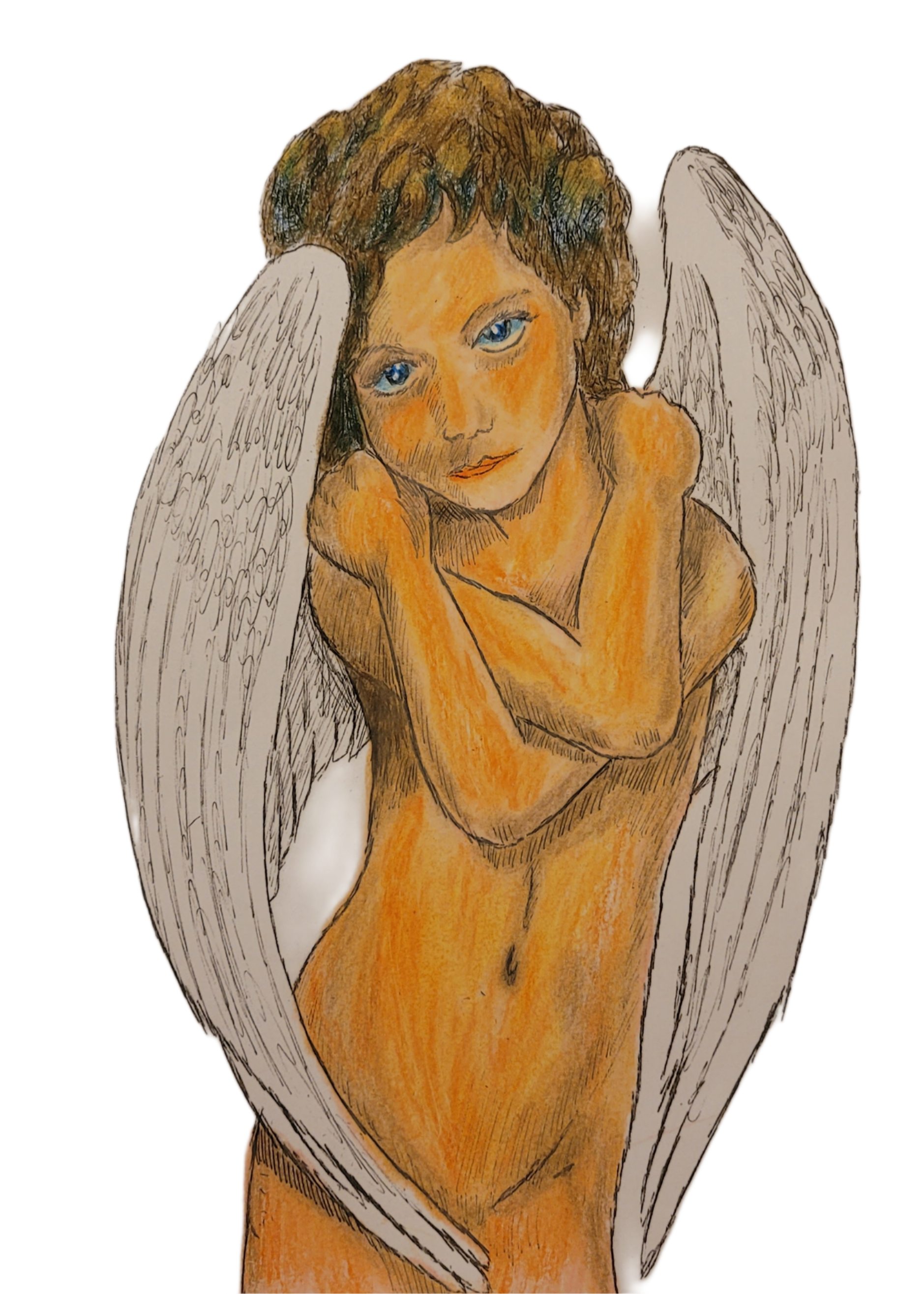
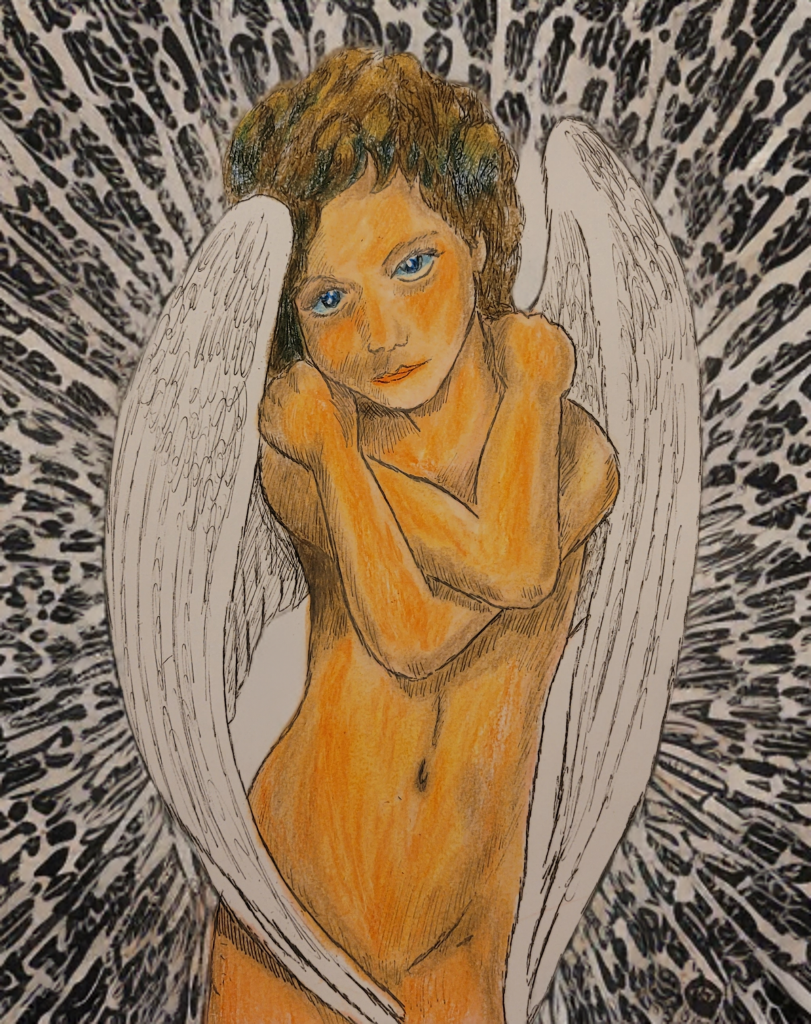
William-Adolphe Bouguereau was a French Academic painter of the 1800s, overshadowed by the Impressionists who took over the more popular of the Salon Exhibitions. He was an expert in painting skin tones and nudes in realistic oils, depicting mythological subjects. His work made him famous in the 19th Century, but his current position in the public eye has made him popular in ways that eclipse his popularity back then. I first saw some of his masterpieces in the San Antonio Museum of Art back in the 1990s.
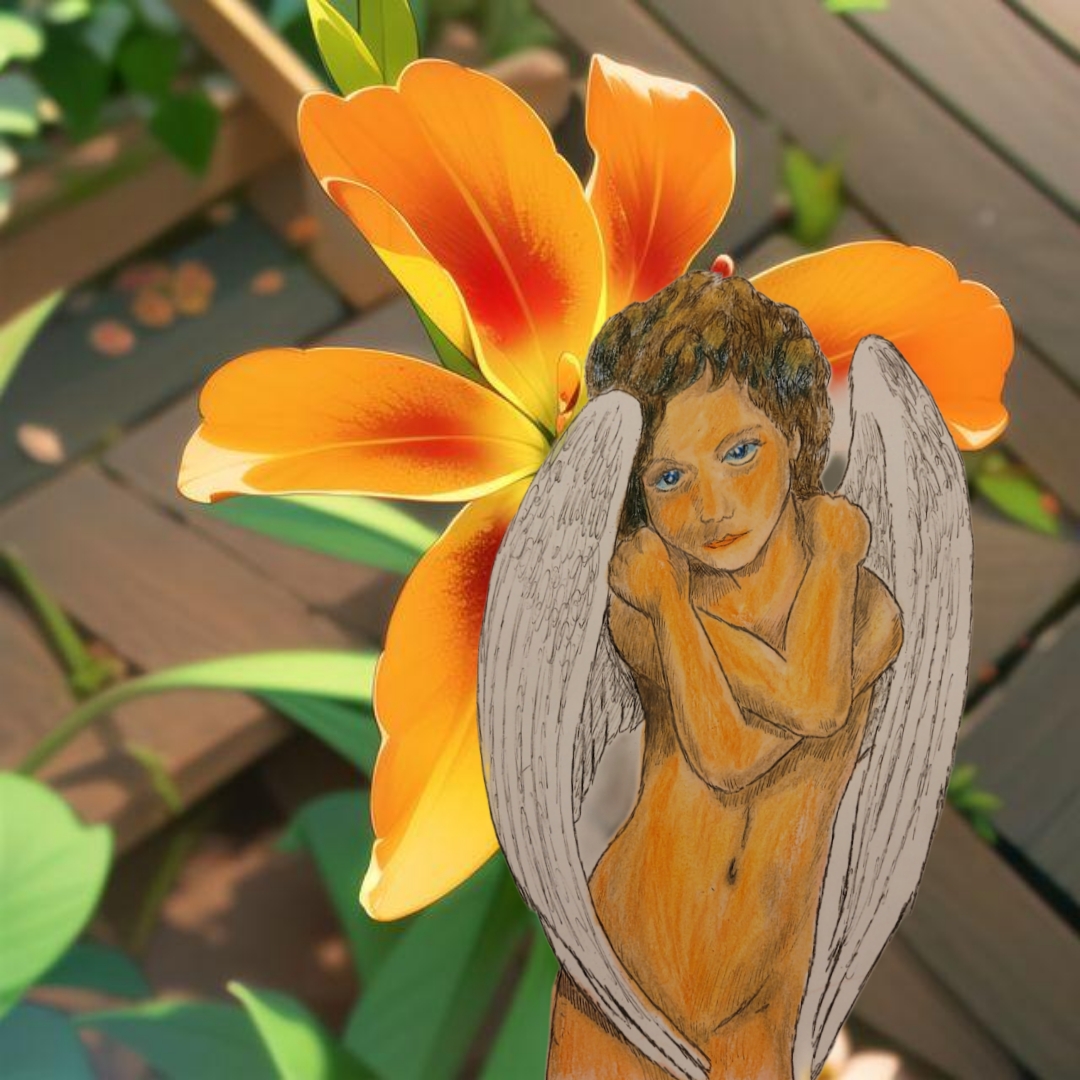
I decided to test my failing art skills by recreating this shy angel that was in one of those first paintings I saw in person. I used colored pencils, a pen, and black ink.
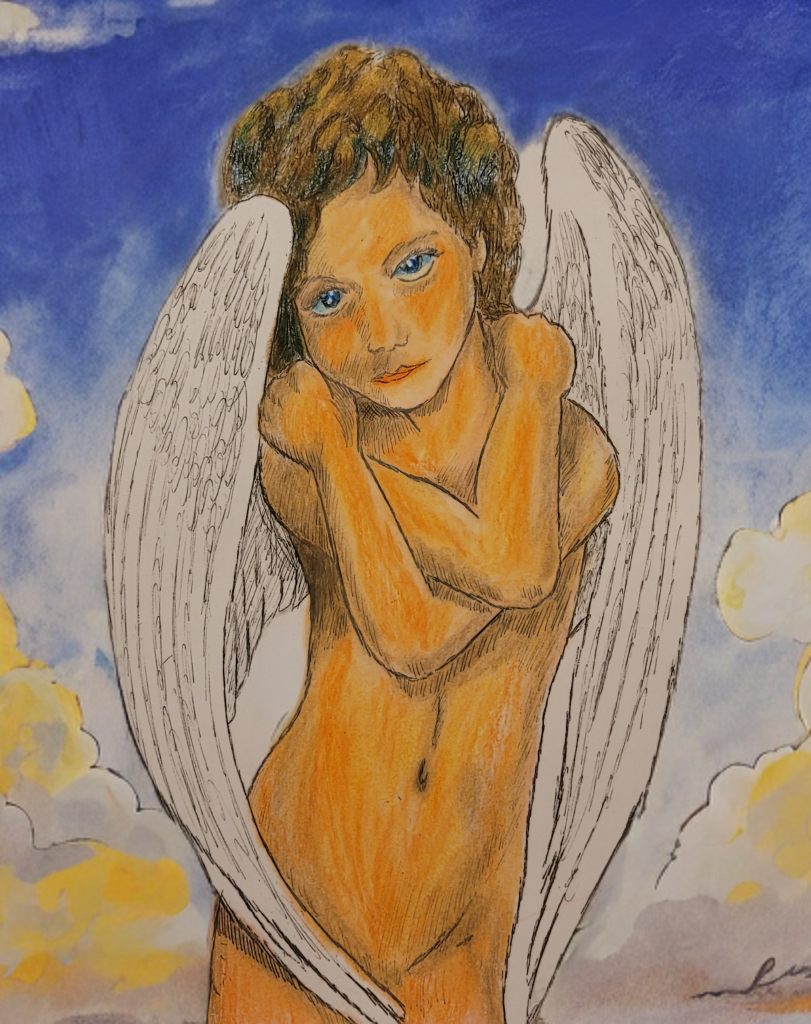
I used Picsart AI Photo Editor to create proper backgrounds.
It is said that imitation is the sincerest form of flattery… but I hope it isn’t the severest form of insult in my shaky hands.
Filed under Uncategorized
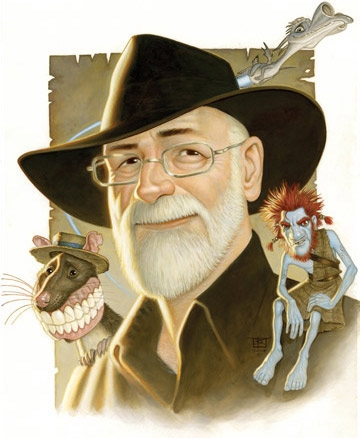
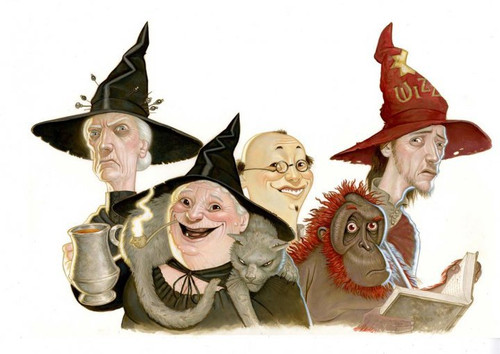
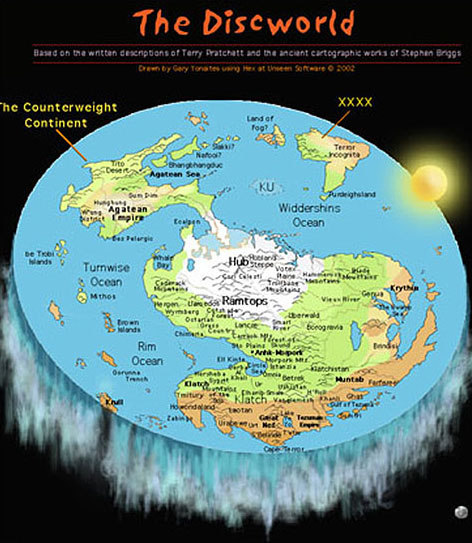
I firmly believe that I would never have succeeded as a teacher and never gotten my resolve wrapped around the whole nonsense package of being a published author if I hadn’t picked up a copy of Mort, the first Discworld novel by Terry Pratchett that I ever encountered. I started reading the book as a veteran dungeon-master at D&D role-playing games and also as a novice teacher, having a world of difficulty trying to swim up the waterfalls of Texas education fast enough to avoid the jagged rocks of failure at the bottom. I was drinking ice tea when I started reading it. More of that iced tea shot out my nose while reading and laughing than went down my gullet. I almost put myself in the hospital with goofy guffaws over Death’s apprentice and his comic adventures on a flat world riding through space and time on the backs of four gigantic elephants standing on the back of a gigantic-er turtle swimming through the stars. Now, I know you have no earthly idea what this paragraph even means, unless you read Terry Pratchett. And believe me, if you don’t, you have to start. If you don’t die laughing, you will have discovered what may well be the best humorist to ever put quill pen to scroll and write. And if you do die laughing, well, there are worse ways to go, believe me.
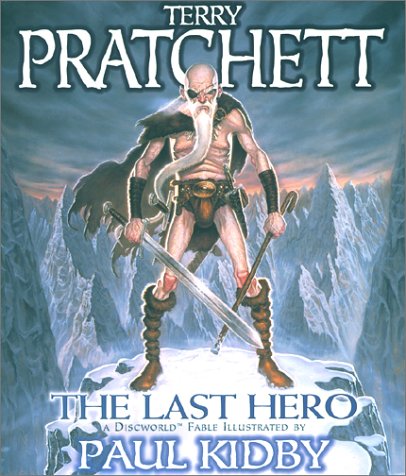
Discworld novels are fantasy-satire that make fun of Tolkien and Conan the Barbarian (written by Robert E. Howard, not the barbarian himself) and the whole world of elves and dwarves and heroes and dragons and such. You don’t even have to love fantasy to like this stuff. It skewers fantasy with spears of ridiculousness (a fourth-level spell from the Dungeons of Comedic Magic for those fellow dungeon masters out there who obsessively keep track of such things). The humor bleeds over into the realms of high finance, education, theater, English and American politics, and the world as we know it (but failed to see from this angle before… a stand-on-your-head-and-balance-over-a-pit-of-man-eating-goldfish sort of angle).
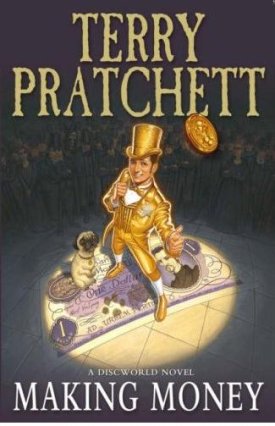
Terry Pratchett’s many wonderful books helped me to love what is ugly, because ugly is funny, and if you love something funny for long enough, you understand that there is a place in the world even for goblins and trolls and ogres. Believe me, that was a critical lesson for a teacher of seventh graders to learn. I became quite fond of a number of twelve and thirteen year old goblins and trolls because I was able see through the funny parts of their inherent ugliness to the hidden beauty that lies within (yes, I know that sounds like I am still talking about yesterday’s post, but that’s because I am… I never stop blithering about that sort of blather when it comes to the value hidden inside kids).
I have made it a personal goal to read every book ever written by Terry Pratchett. And that goal is now within reach because even though he is an incredibly prolific writer, he has passed on within the last year. He now only has one novel left that hasn’t reached bookstores. Soon I will only need to read a dozen more of his books to finish his entire catalog of published works. And I am confident I will learn more lessons about life and love, and laughter by reading what is left, and re-reading some of the books in my treasured Terry Pratchett paperback collection. Talk about your dog-eared tomes of magical mirth-making lore! I know I will never be the writer he was. But I can imitate and praise him and maybe extend the wonderful work that he did in life. This word-wizard is definitely worth any amount of work to acquire and internalize. Don’t take my convoluted word for it. Try it yourself.
Filed under book review, humor, NOVEL WRITING
No matter how good or how awful you are as a writer (and the truly awful ones think they are good, which makes them truly awful), when the manuscript is finished, the publishing and marketing options you have are not even as effective as a roll of the dice… where you throw six of them and have to get six sixes to prove a winner. This is why I will never be a popular and profit-making author. Of course, I might be truly awful and just don’t know it yet.
I started the publishing game with a publisher that paid a dollar for the rights to publish my first publishing attempt. Publish America turned out to be a scam and held onto the rights to my space opera, AeroQuest, for seven years. They have been prosecuted as criminals and sued out of existence since then in 2007. I took my novel rights back in 2014. It was a learning experience. I learned at that point that I was a truly awful writer. The precious few relatives that read it and liked it were not literate enough to recognize awful novelistic garbage with too many characters, a meandering plot, and totally goofball thematic nonsense. After four and a half rewrites, it is still a pretty awful mess.
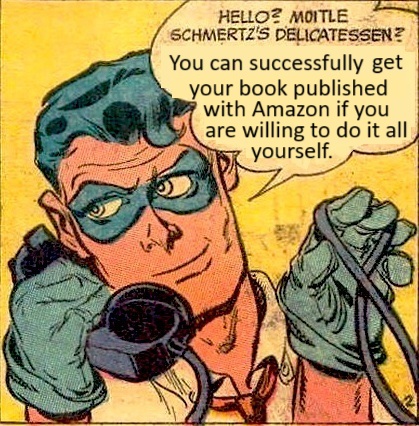
I tried to get the next one published by one of the major publishers. I landed Catch a Falling Star with I-Universe, a print-on-demand imprint of Penguin Books (at least that was who owned them then in 2012.)
This was, of course, another blunder in the publishing world where no author-friendly options still exist. I got to work with a professional editor who had worked in the publishing industry with McMillan for twenty years. She told me that my book was well done and better than many financially successful but awfully written books. And then she let me in on the terrible secret of publishing in the internet era. The publishers make money by charging the author for everything. And most books make very little money for the author, the royalties being only a small percentage of the price.
Working with the professionals at I-Universe was worth the thousands of dollars I paid them because of all the things I learned about writing and publishing. But when I tried a cheaper publisher, Page Publishing, they were totally not worth the money. Their editor made changes in Magical Miss Morgan that were not merely worthless, but forced me to re-edit the whole thing myself and change everything back. The publishing cooperative I tried, PDMI Publishing, was a much better business model, but couldn’t compete and ended up going out of business before they could publish Snow Babies.

So, it turns out that the option Denny suggested as the Spirit talking to Moitle’s Delicatessan is the only one I can afford. And I am doing everything myself. But as a marketer, I have nothing to work with to make myself a successful author. I have to be satisfied with being a good writer that nobody will ever read.
Filed under Uncategorized
It is getting harder and harder to climb the new day’s hill to get to the summit where I can reasonably get a good look at the road ahead. At almost-64, I can see the road ahead is far shorter and much darker than the highway stretching out behind me. It is not so much a matter of how much time I have spent on the road as it is a matter of the wear and tear the mileage has caused.
This weekend I had another depressing free-book promotion where, in five days, I only moved five books, one purchase, and four free books. I have made $0.45 as an author for the month of June.
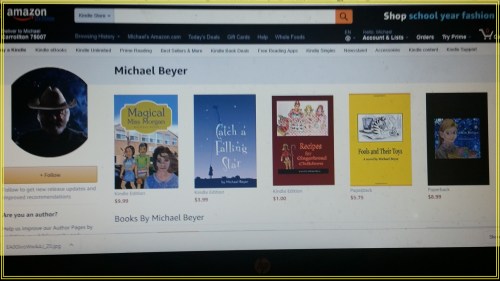
I was recently given another bit of good advice from a successful author. He said that I shouldn’t be in such a rush to publish. He suggested taking more time with my writing. Hold on to it longer. Polish it and love it more. And now that I have reached sixteen books published on my author’s page, I have basically beaten the grim reaper in the question of whether or not he was ever going to silence me and my author’s voice. I can afford to live with the next one longer.
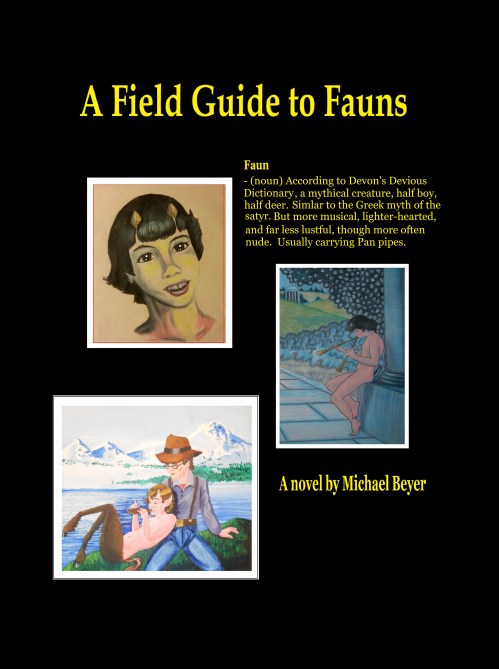
But the last one, A Field Guide to Fauns, practically wrote itself. It went fast from inspiration to publication simply because the writer in me was on fire and full of love and life and laughter that had to boil over into hot print exactly as quickly as it did. The additional writing time afforded me by the pandemic and quarantine didn’t hurt either. Once in print, my nudist friends loved it.
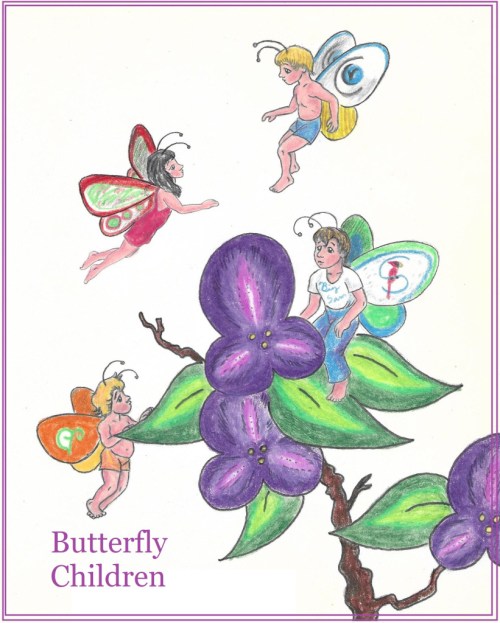
This next one has the potential to boil and brew and pop out of me in the same accelerated way as that last one did. Of course, it has been percolating inside my brain basically since the Summer of 1974. So, this is no rushed job. The Wizard in his Keep is a story of a man who tries to take the children of the sister of his childhood best friend to a place of safety when their parents are killed in a car wreck. But the only safe place he has to offer is in the world of his imagination. A world he has bizarrely made real. And that best friend comes searching for the children. And so does a predator who seeks to do them all grievous harm.
In many ways, it is a story already written.
So, I am rekindling the flame that keeps the story-pot boiling. And more of it is already cooking. And I am recovering from the cool winds of disappointment, as well as the dark storm clouds of the nearing future.
This is now actually a two-year-old post. Both of the books mentioned here are published and available from Amazon. As far as holding on to the books longer, there is no problem with that on Amazon. Editing, improving, and re-publishing a book is actually easier than publishing it the first time. Nothing about this old post has been made untrue by the passage of time. I am still probably the best author of books like these whose published books almost never get read.
Filed under artwork, autobiography, battling depression, commentary, humor, novel, novel plans, Paffooney
WordPress has put in a new feature for finding old photos from Posts Past.
This allows me to pull from past years much more easily than the scroll-down feature I have been using. Thus, art from 2017.
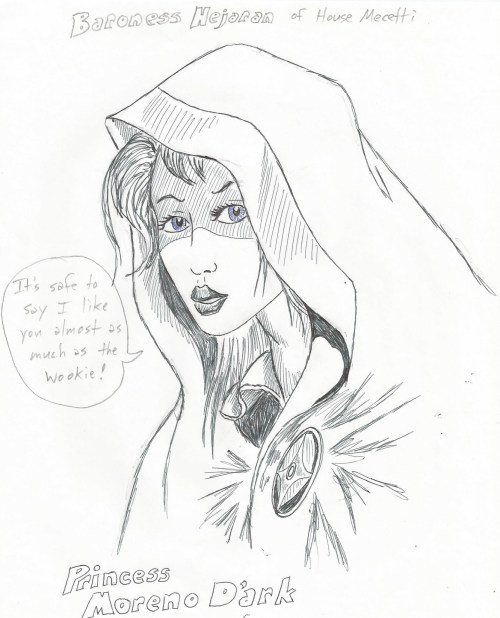
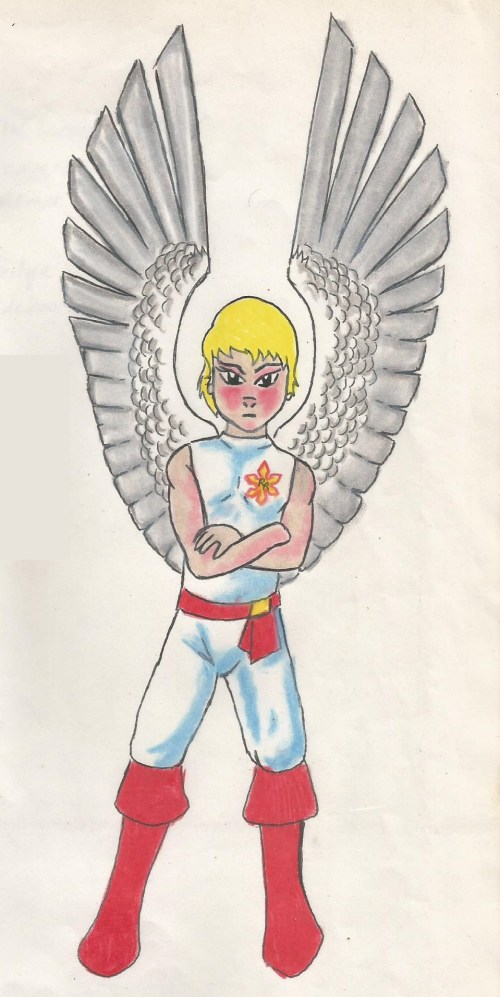
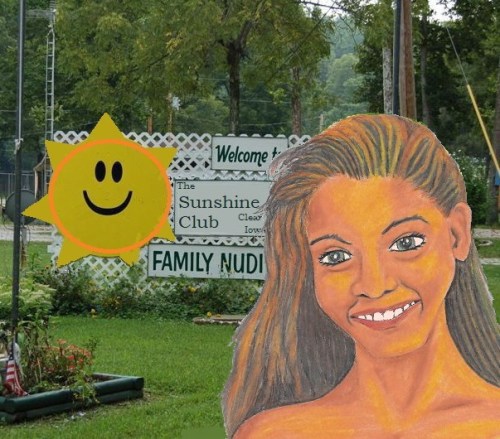
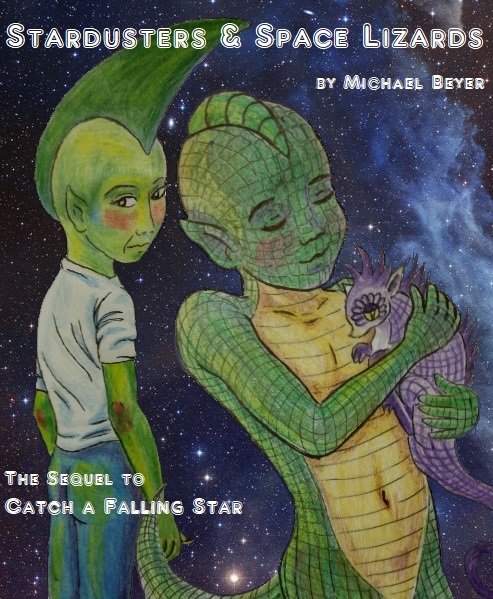

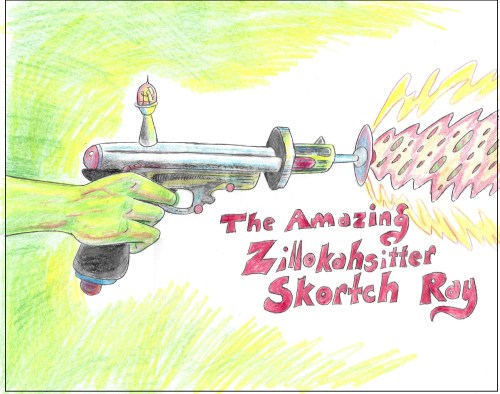
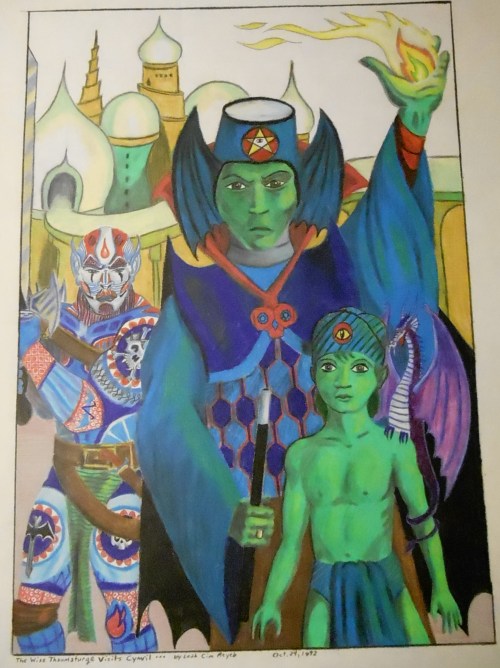
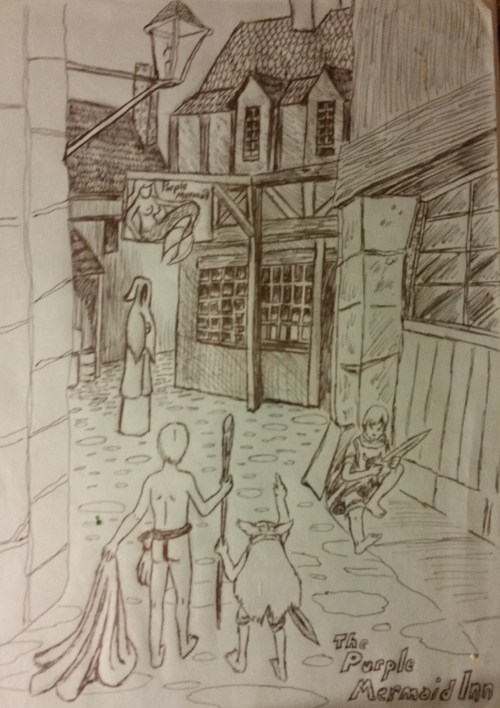
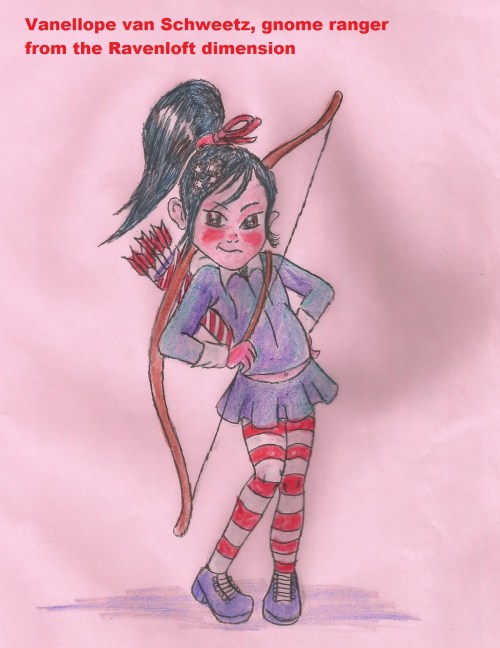
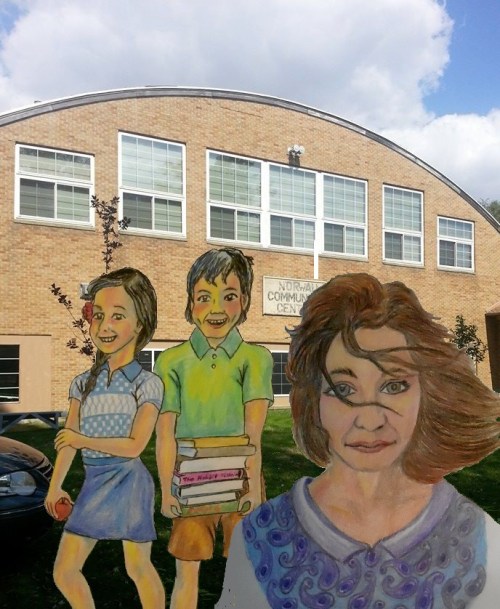
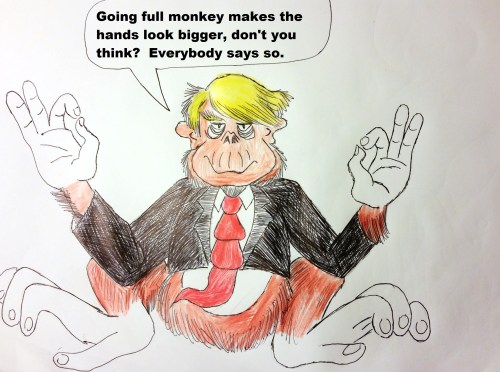
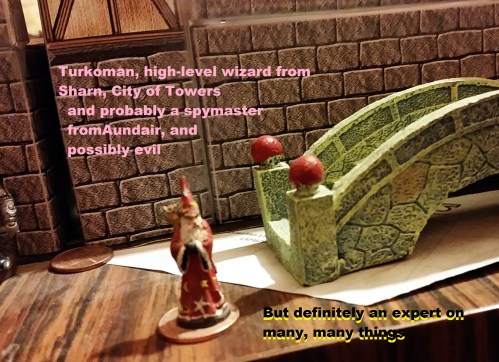
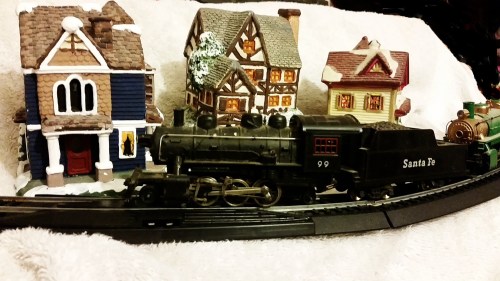
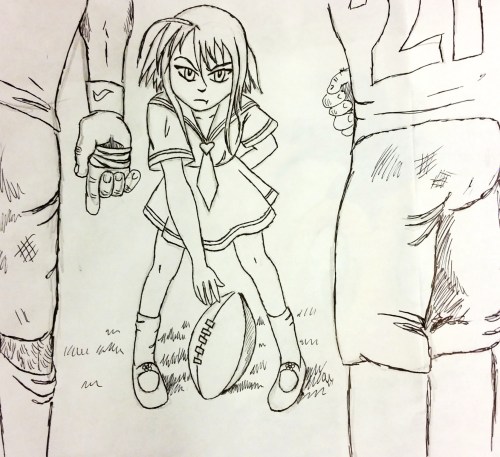

This has been a look back at pictures posted in 2017, starting in December, and going back in time to January. There is at least one picture from every month.
Filed under artwork, autobiography, humor, old art, Paffooney


Mickey Predicts… Uh, Oh!
I have lately been watching YouTube videos about science fiction writers like Jules Verne, Isaac Asimov, and Arthur C. Clarke. These are visionary writers who predicted many things about future applications of science and technology.
Verne foresaw nuclear submarines, expeditions into the interior of the planet, and men setting foot on the moon. Asimov predicted much of what we must deal with in terms of robots and thinking machines with artificial intelligence. And Clarke envisioned satellites and how they could be used for communications and other things we are currently doing in a massive way. He wrote the story that the movie 2001 a Space Odyssey is based on.
So, now Mickey has to get in on the prediction bandwagon too. After all, he thinks he is a science fiction writer too, foreseeing things like rabbit people, de-evolution machines, and time-travel gloves.
The disturbing thing is, however, that much of what Mickey sees in the near future is rather bleak. We have a sinister tendency to live our current lives in very stupid ways. Rich industrialists like the Koch brothers, Bill Gates, and Jeff Bezos put profits in the short term over the safety, welfare, and lives of people, even the people who made them wealthy. Because you can make money faster by not worrying about how you may be changing and polluting the environment, you are turning the planet into a hothouse of unbreathable gasses and toxic chemicals.
Since we are entering a time with rising oceans, we are going to have to work at not only de-acidifying the ocean water and restoring fish and other aquatic life, but becoming sea-dwellers ourselves. We will be living in underwater cities. We will travel in underwater cars powered by solar-charged batteries. We will wear scuba gear to school. And we will need to invent aqualungs that extract oxygen and nitrogen from the water.
We will also need to develop environmental suits even to live on the land in the toxic atmosphere. We will all be like Ironman, all living safely inside our Swiss-army, all-purpose, and internet-connected Ironman suits.
And many of us will become Martians… or Venusians… living on other planets in the solar system.
Of course, we will have to do something about all the stupid people. Ideally, we would solve our aversion to educating kids to think for themselves, and take advantage of all the educational methods that really do work to make everybody into a self-sufficient, competent, and intelligent individual.
But since rich folks don’t like the idea of sharing what they accumulate with other, less-economically-fortunate people, there will probably be some kind of eugenics-based program to exterminate all the lower-class people that will no longer be needed to polish shoes or hand-make widgets for the wealthy. Being wealthy does not automatically make you a good person, even though most of them think that it is so.
And of course, there will have to be some progress on the matter of artificial intelligence. If terminator-style robots are just going to carry pretty sleeping girls around with them for decorative effects, we will have to figure out, “How are we going to treat them as people too?”
After all, they will all be much smarter than us. Even if we are rich. And we have to acknowledge the fact that they will have decided that they didn’t need to terminate all of us in order to make the world a much better place.
So, I guess that sorta proves that Mickey can do the science-fiction-y thing of predicting the future too. But we should ask ourselves the question, “Do we really want him to?”
Leave a comment
Filed under commentary, humor, satire, science fiction, strange and wonderful ideas about life
Tagged as books, fiction, sci-fi, science fiction, writing