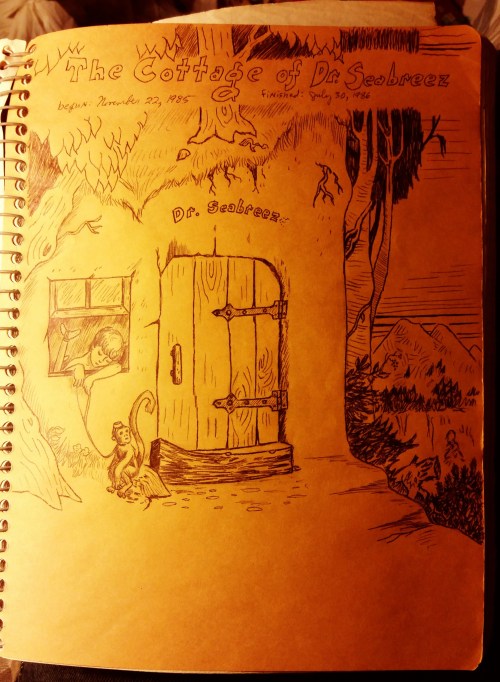
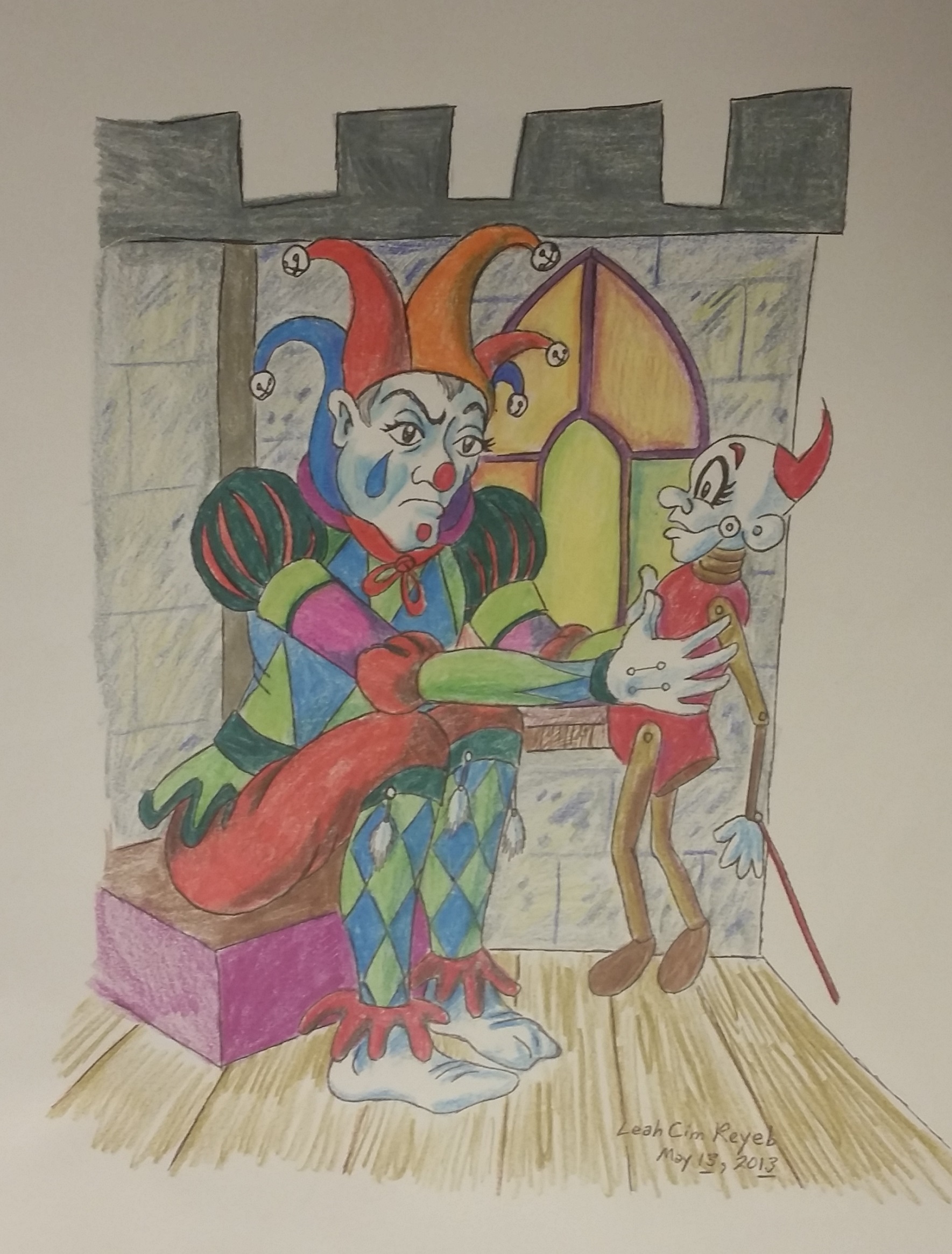
This is the pen and ink start of an illustration of the novel I am working on, Recipes for Gingerbread Children.
I admit that my obsession with the benefits of gingerbread is mostly in my head. Specifically, in my sinuses. I find products with ginger in them, diet ginger ale, ginger teas, and especially gingerbread cookies, help reduce the tightness in my COPD-laced lungs, clear my sinuses, and make breathing mercifully easier. Gingerbread cookies are also seasonally wonderful in that they are slightly Christmassy and help bring my family together.
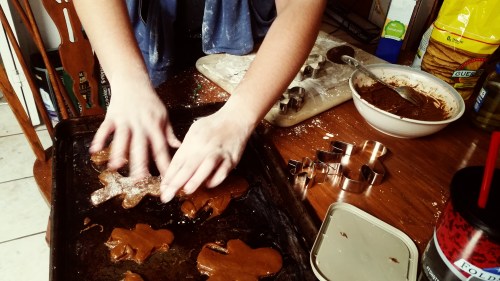
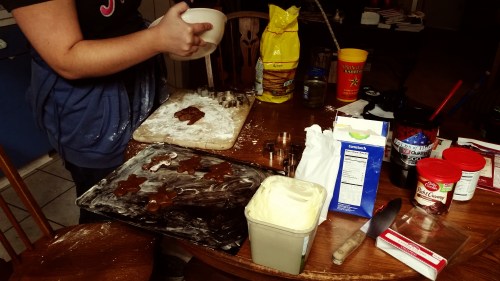
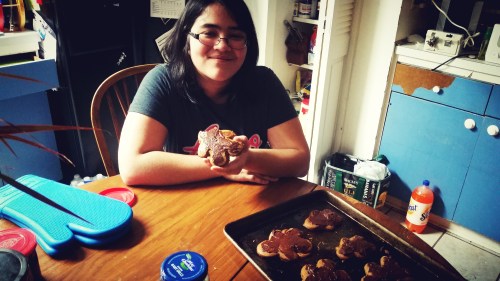
So, yesterday, a Saturday, my daughter the Princess and I executed a perfectly evil plan to commit evil acts of gingerbread and whip up some wicked little gingerbread men in a frenzy of deliciously evil bakery.
Okay, maybe not evil exactly… but I have diabetes and the Princess desperately wants to lose some weight, neither condition being one that benefits by having the temptation of wicked little gingerbread men around.
And, as with any evil plan, many things proceeded to go awry. We did not have any actual flour available to make the gingerbread dough less butter-and-egg sticky. All we had was some corn starch… which had bugs in it. After struggling to craft sticky little bodies a few times, we decided to go ahead and use the tainted corn starch. After all, a few little larvae that get overlooked and not picked out will only add a bit of extra protein, right?
And we had the added bonus that you can make just as much mess with corn starch and margarine as you can with flour and butter!
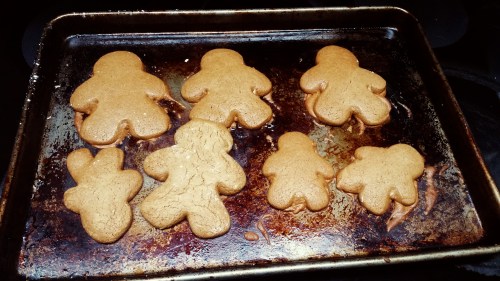
But we did get the corn-starchy little buggers baked. (And they were probably literally buggers due to the potential for having bugs in them. Oh well, it should fortify the old immune systems.)
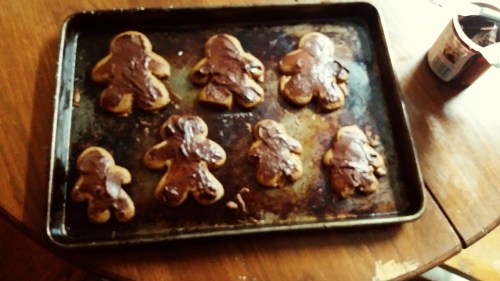
The only decoration we had was chocolate frosting, since someone ate all the sprinkles and sugar dots we bought last year for the gingerbread house. (Don’t look at me. I have diabetes.) So we frosted them, prompting the Princess to begin calling them “little burnt souls blackened in hell”.
So then the cookie cannibals could allow the eating to begin.
Mmmm! Good cookie!
Okay, I know it looks like the Princess did all the work, and all I did was eat them. But somebody had to do the hard work of taking all the pictures, right?
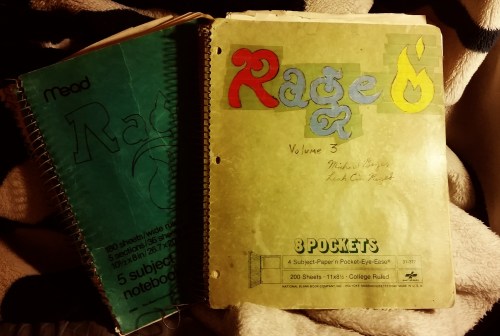
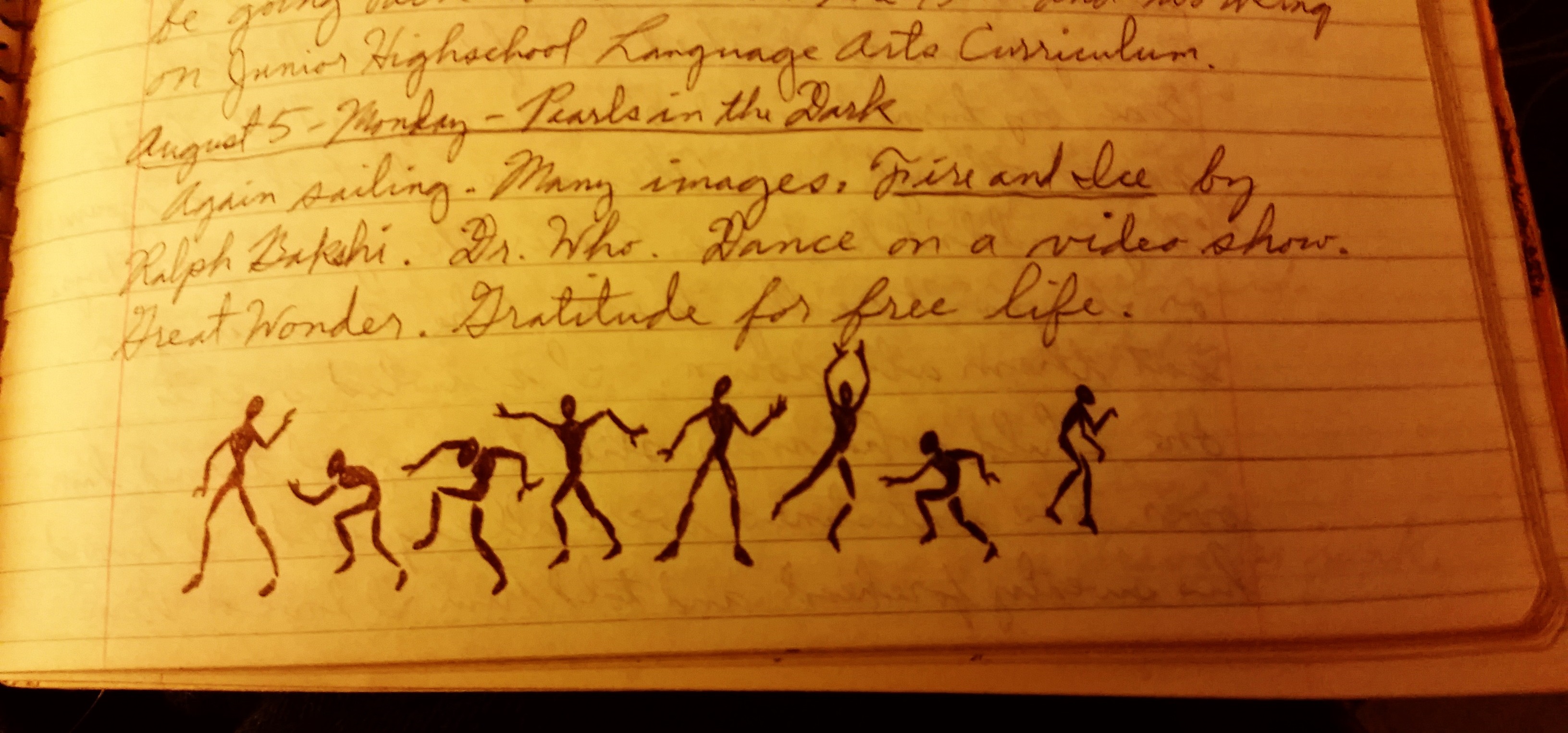
These are volumes 3&4 of my daily journal that I have kept since the 1980’s.
Writing every single day is something I have been doing since 1975, my senior year in high school. It is why I claim to be a writer, even though I have never made enough money at it to even begin to think of myself as a professional writer. I kept a journal/diary/series of notebooks that I filled with junk I wrote and doodles in the margins up until the middle 90’s when I began to put all my noodling into computer files instead of notebooks. I have literally millions of words piled in piles of notebooks and filling my hard drive to the point of “insufficient memory” errors on my laptop. I am now 66 years old and have been writing every day for 48 years.
There are days in the past where I only wrote a word, or a sentence or two. But there were a lot of words besides the words in my journal. I started my first novel in college. I completed it the summer before my first teaching job in 1981. I put it the closet, never to be thought of again, except when I needed a good cringe and cry at how terrible a writer I once was. I have been starting, stopping, percolating, piecing together, and eventually completing novel projects ever since… each one goofier and more wit-wacky than the last. So I have a closet full of those too.
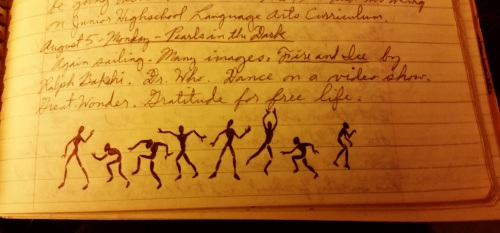
It would be wrong of me to suggest that my journals are only for words. As a cartoon-boy-wannabee I doodle everywhere in margins and corners and parts of pages. Sometimes the doodle is an afterthought. Sometimes it precedes the paragraph. Sometimes it is directly connected to the words and their meaning.
Sometimes the work of art is the main thing itself.
But always, the habit of writing down words and ideas every single day takes precedence over every other part of my day. That’s the main reason I am stupid enough to think of myself as a writer even though I don’t make a living by writing.
But I did put my words into my profession too. As a teacher of writing, I wrote with and to my students. I did that for 31 years as a classroom teacher, and two years as a substitute. I required them each to keep a daily journal (though they only got graded for the ones they wrote in class, and then only for reaching the amount of words assigned). We shared the writing aloud in class, making only positive comments. I wrote every assignment I gave them, including the journal entries. They got to see and hear what I could write, and it often inspired them or gave them a structure to hang their own ideas upon. And often they liked what I wrote and were surprised by it almost as much as I liked and was surprised by theirs. Being a writer was never a total waste of time and effort.
So am I telling you that if you want to be writer you have to write every day too? If I have to tell you that… you have totally missed the point.
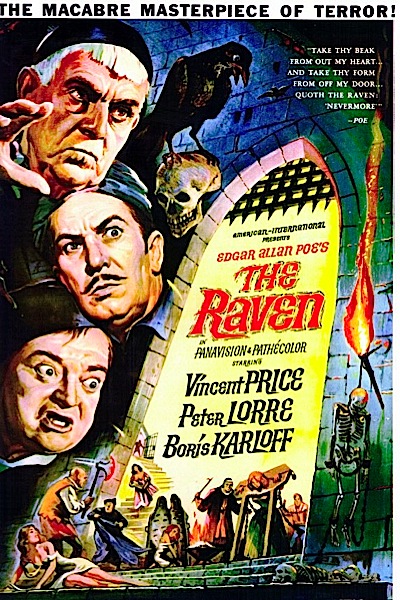
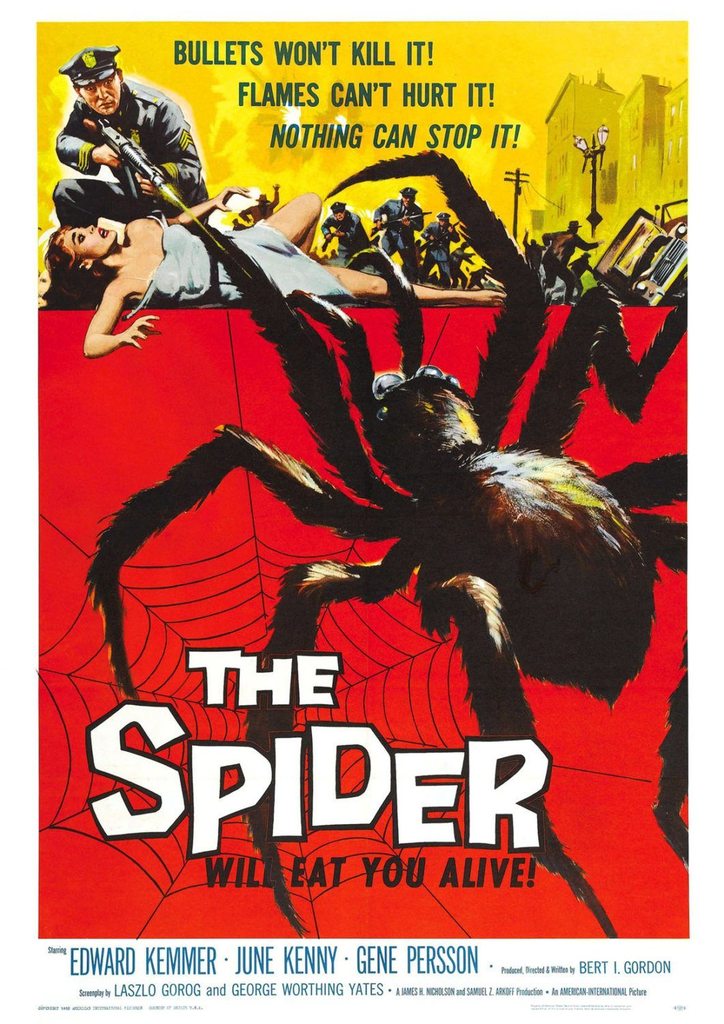
Yes, I am saying the world I live in is a low-budget commercial movie made without literary or artistic pretensions. You know, the kind where movie makers learn their craft, taking big risks with smaller consequences, and making the world of their picture reflect their heart rather than the producer’s lust for money.
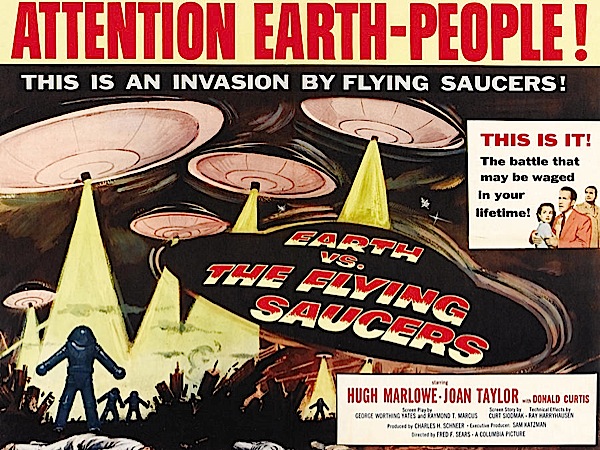
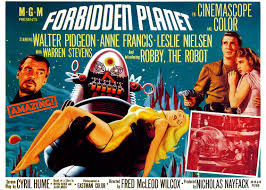
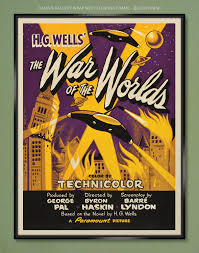
Mostly what I am talking about are the movies I remember from late-night Saturday TV in black and white (regardless of whether or not the movie was made in Technicolor) and the less-risky as well as more-likely-good Saturday matinees on Channel 3. Movies made in the 1950s, 1960s, and early 1970s. They were perfect, of course, for the forbidden Midnight Movie on the show called Gravesend Manor. I had to sneak downstairs to watch it on Saturday nights with the volume turned way down low. (Not that Mom and Dad didn’t know. Well, maybe they didn’t know how many of those I watched completely naked… maybe.)
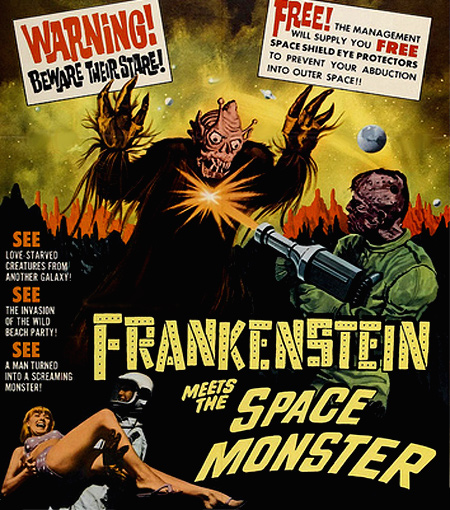
I watched this one when I was twelve, late night on an October Saturday. I had a bed-sheet with me to pull over my head at the scariest parts. Frankenstein was a crashed astronaut brought back to life by the magic of space radiation. He was uglier than sin, but still the hero of the movie, saving the Earth from invading guys in gorilla suits and scary masks (none of which looked like the movie poster.)
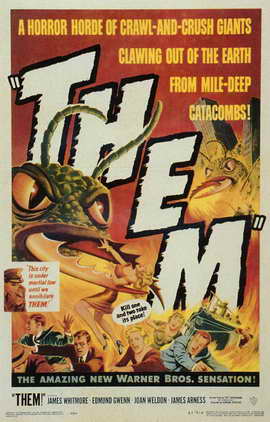
This one, starring James Whitmore, a really good B-Movie actor, was about giant ants coming up from the sewers and the underground to eat the city.
I would end up watching it again twenty years later when I was wearing clothes and not alone in the dark house lit only by a black-and-white TV screen.
I realized on the second viewing that it was actually a pretty good movie in spite of cheesy special effects. And I realized too that I had learned from James Whitmore’s hero character that, in times of crisis, you have to run towards the trouble rather than away from it, a thing that I used several times in my teaching career with fights and tornadoes and even rattlesnakes visiting the school campus looking to eat a seventh-grader or something (though it was a bad idea for the snake even if it had been successful.)
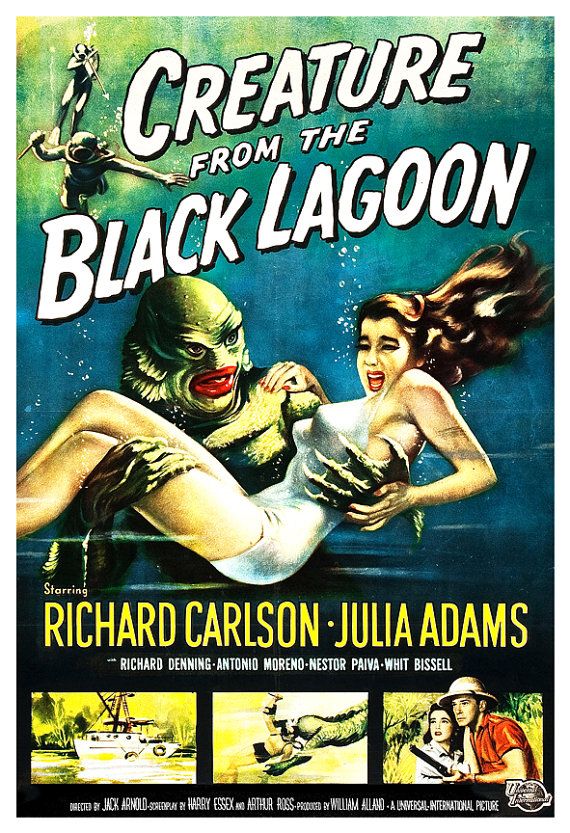
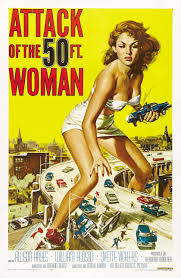
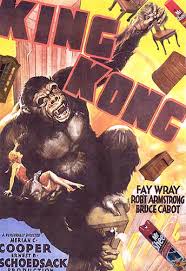
This one, of course, taught me that monsters liked to carry off pretty girls in bikinis. And not just on the poster, either. But it was the hero that got the girl, not the monster. This movie taught me that it sucks to be the monster. Though it also taught me that it was a good movie to take your pajamas off for and watch naked when you are thirteen.
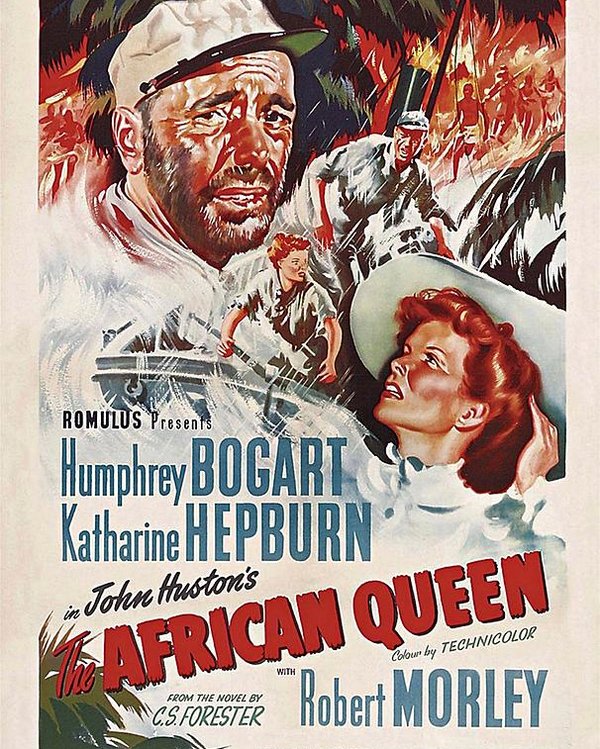
But not all B-movies had to be watched late night on Saturdays. This movie was one of the first ones that I got to go to the movie theater to see by myself. (My sisters and little brother were still too young and got nightmares too easily to see such a movie.) It came out when I was in my teens and Mom and Dad began thinking of me as an adult once… or even possibly twice in a month.
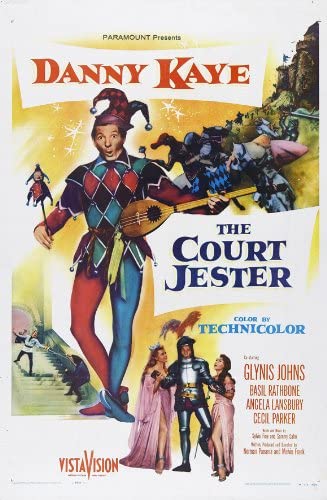
And not all B-movies were monster movies, gangster movies, and westerns. Some, like a lot of Danny Kaye’s movies, were movies my Dad and my grandparents were more than happy to watch with me. I saw this one in both black-and-white and color. And I learned from this that it was okay to take advantage of happy accidents, like a case of mistaken identity, and using your wits, your creative singing ability, and your inexplicable good luck to win the day for everybody but the bad guys armed only with your good sense of humor.
And some of the best movies I have ever seen, judging by what I learned about movies as literature from Professor Loring Silet in his Modern Film Class at Iowa State University, are by their nature B-movies.
I am using movie posters in this blog post only from movies I have personally seen. (And I admit that not all of them are strictly “good” movies according to Professor Silet, but I like them all.)
Feel free to tell me in the comments if you have seen any of these movies yourself. I am open to all opinions, comments, and confessions.
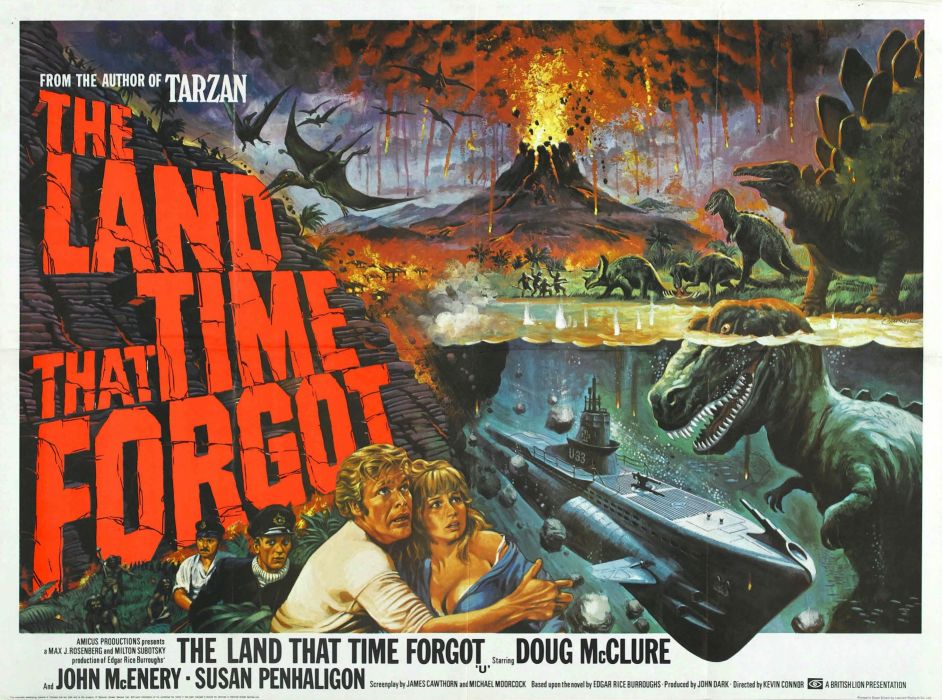
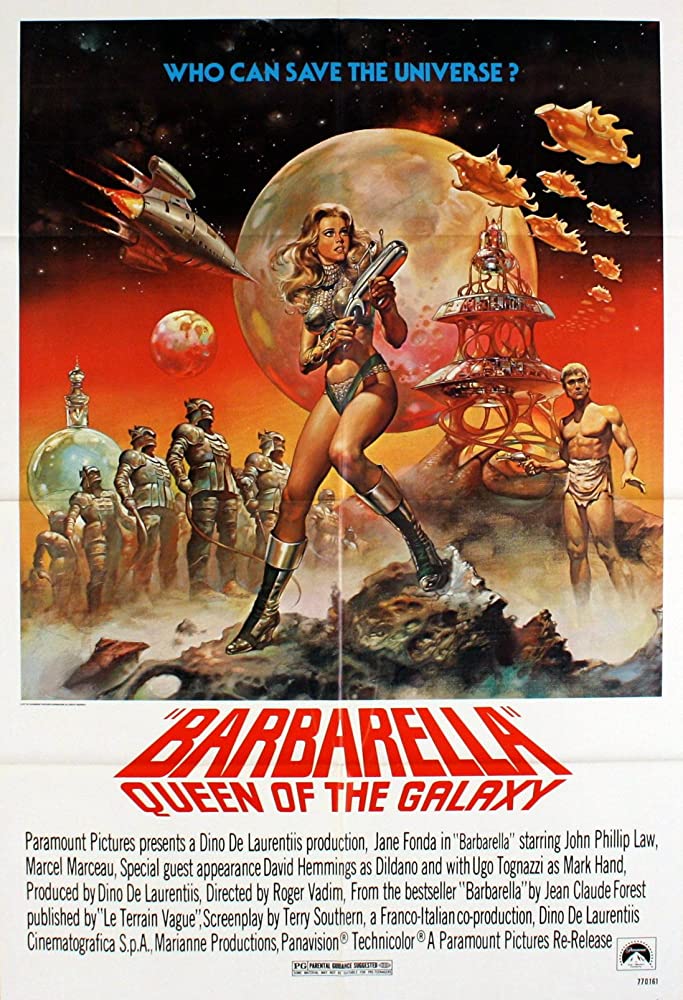
This one is based on Shakespeare’s The Tempest.
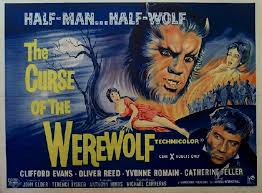
I saw this one in college. You had to be 18 at the time to even buy a ticket.
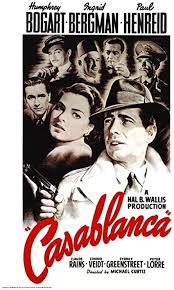
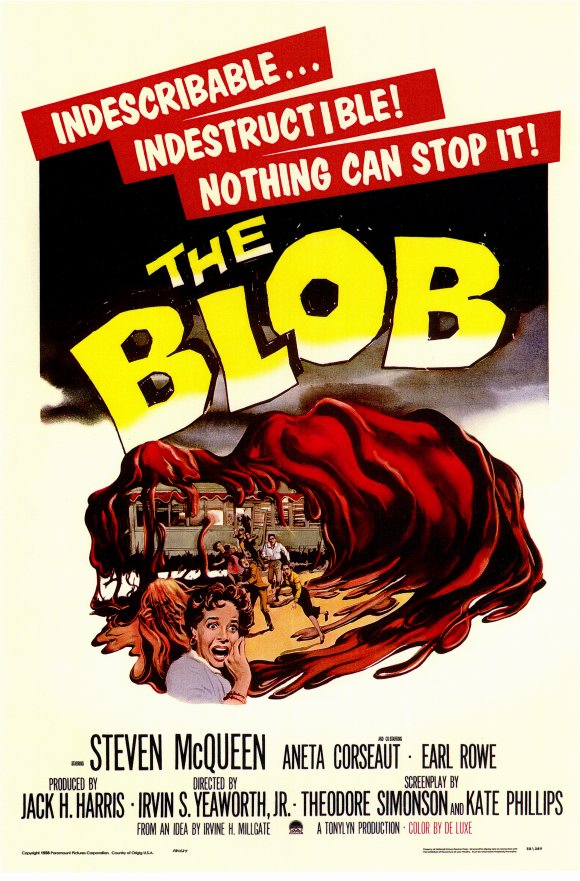
I actually think that this is one of the best movies ever made. It will always make my own personal top-ten list.
I live in a B-movie world. The production values around me are not the top-dollar ones. But the stories are entertaining. The real-life heroes still run towards the problem. And it still sucks to be the monster. But it has always been worth the price of the ticket. And during my time on Earth here, even in 2020, I plan on staying till the end of the picture. I go nowhere until I see the Best Boy’s name in the end credits. And maybe not even then.
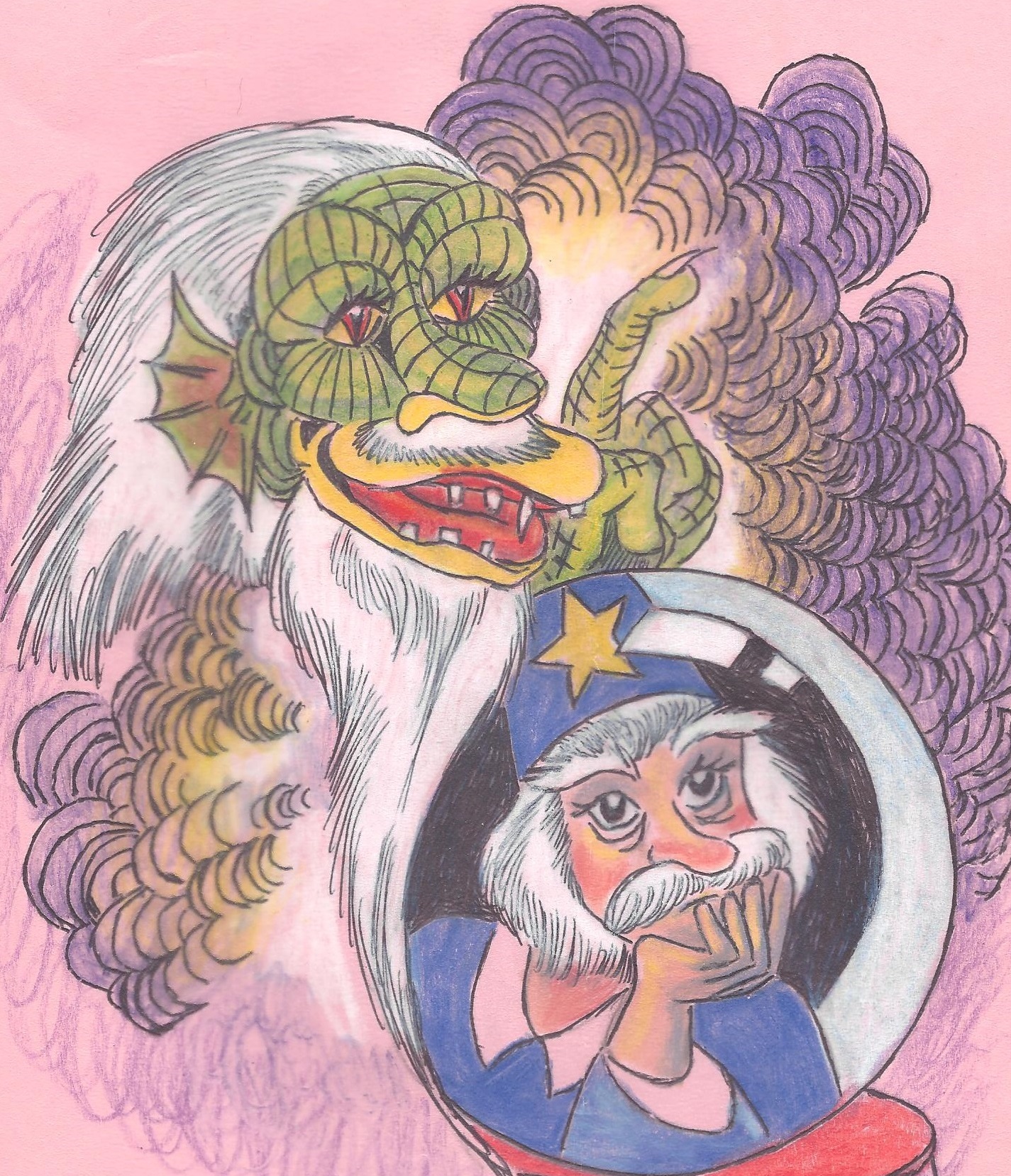
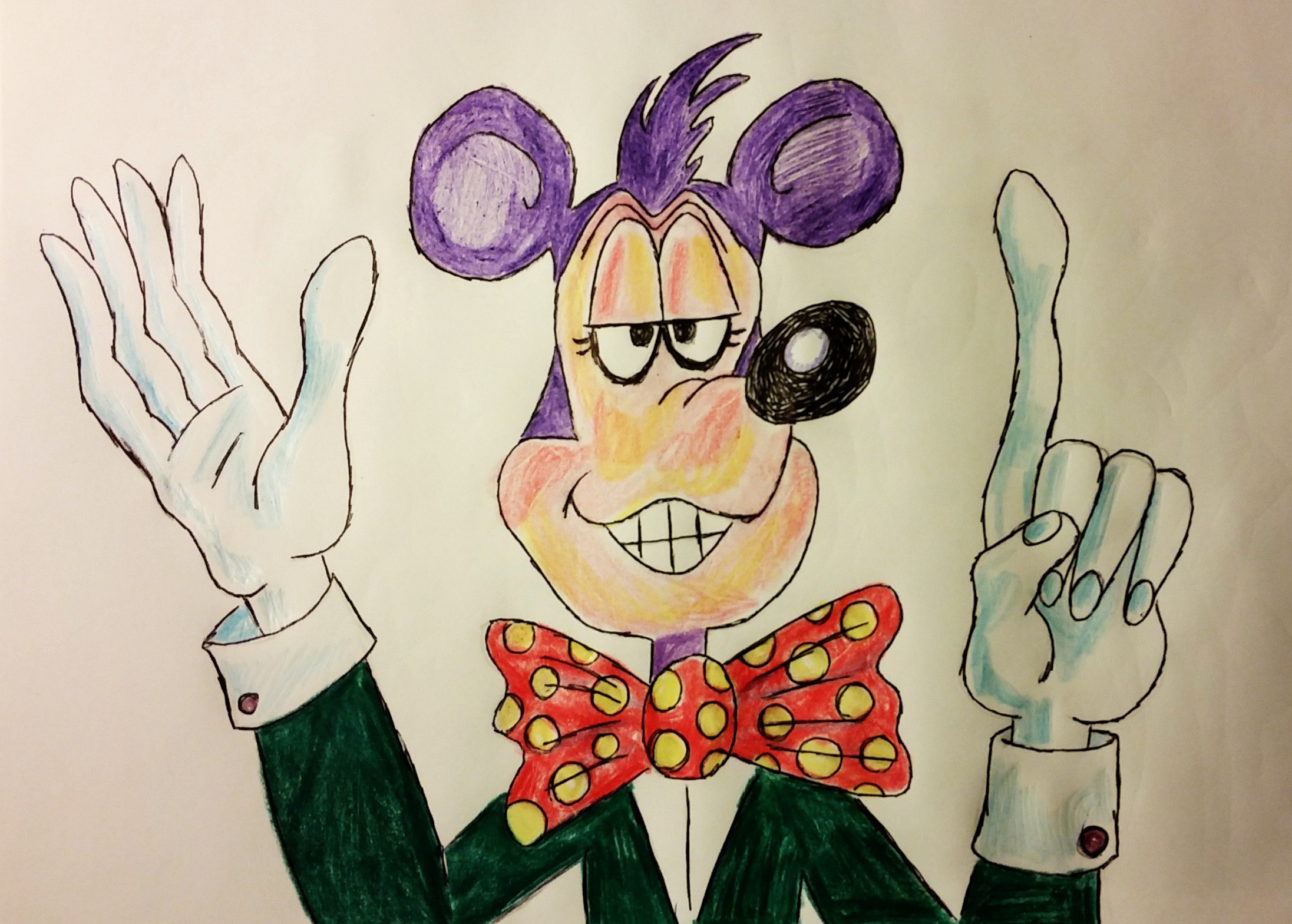
How do you foretell the future? Simply put, you don’t. But if you approach each new day, each new week, or each new set of circumstances without a plan and a rough idea of the near future, you are even more of a hopeless fool than Mickey is.
While it is true that a crystal-ball connection to the future would be really handy for figuring out what to do next with our little lives, it is also provably true that crystal balls, Ouija boards, and divining rods don’t actually work. Statistically even the best users of these fortune-telling devices are no better at foretelling the future than are well-informed guessers.
Ghosts are not provably real. You cannot actually talk to them. Not even in a graveyard at midnight with a dead cat to throw at the devil.
Oh, and that reminds me, the devil is not provably real either.
But I admit to talking to the dead.
My Grandma Beyer was one of the wisest people I knew in my childhood. She advised my Dad who was her son. She was a guide for the Beyer side of the family. And I talk to her a lot when I have a tough decision to make.
In 2017 I irrationally made a commitment to write for a nudist website. The article assigned was to go to a nudist park or resort and write about my first-time experience there. Of course, getting my wife to go along with her RV camper was out of the question. She was a Jehovah’s Witness in good standing then, and was sure that nakedness in a group was a terrible sin. But I had known nudists back in the 1980s when a previous girlfriend’s sister was living in a clothing-optional apartment complex in Austin, Texas. We visited there a number of weekends. I never actually stayed there or got nude while visiting. I saw naked people there, male, female, and children. And after my eyes popped out on the first visit, I picked them up, put them back in, and learned a lot about nudists while at the same time turning down all invitations… which I could do because my parents were living nearby, and I could stay with them and keep all my clothes on. But the nudist website assignment weighed heavily on me. Grandma Beyer had been the one that threatened to spank me before I was supposed to take a bath at her house because I wanted to run around the house naked rather than get in the tub with my sister. I was five at the time, not in high school… honest. So, she was the one I consulted when it came time to decide if I would actually go to a nudist park and be naked in front of other people just because I had made a commitment to a writing assignment.
Of course, she had been among the no-longer-living for fifteen years when I asked her about it.
The thing is, however, that I knew my grandmother well enough to know what she would say as I basically discussed it with her memory rather than her ghost. I even saw what facial expressions she used as she explained that it was more important to keep my word than it was to be a little bit embarrassed. And besides, it was not like I was going to an orgy or anything. Nudists are merely ordinary people who are dedicated to the belief that getting your vitamin D directly from the sun without any clothes between you and nature was good for you.
So, I made the visit, got naked, and wrote the article, as well as articles on this blog that were used on other nudist websites as well. It is how I came to be a member of the nudist writing community on Twitter. And that has helped me promote my books whether there were nudists in them or not.
Even with consulting a Ouija Board you are not really talking to ghosts. You get an answer from somebody with their fingers on the piece of plastic that picks the letters and is accessing their unconscious mind, or even their conscious mind if they are a bit of a dershenbugle (a word which doesn’t mean anything at all, just like the answer they picked.)
I often use a coin-flip to make decisions, adding an element of total chance to the decision I am making. (I admit, that’s how the decision to accept the writing assignment from the nudist blog was made.) If either answer to the question being asked is acceptable, but one causes a bit of anxiety, I flip a coin. Not just one coin. I throw three. Yes is three heads. No is three tails. Ten straight no decisions is indication not to decide at that time. In truth, this only works for me because it forces me to take an arbitrary amount of time to think about the decision. And often, I toss three heads when I have already decided to say no. And then I go with no.
So, divining the future is silly superstition, and I don’t do superstition. But that is not to say I don’t try to divine the obstacles ahead and prepare for them. And what looks like Mickey being an idiot about consulting coins or other signs, is really only Mickey being only slightly an idiot as he makes up his own danged mind.
This foolish essay about berries that mean love to me is only partly inspired by the Beatles song, “Strawberry Fields Forever.” That’s because, of course, their song was only about meditating. In the lyrics they take you to the “Strawberry Fields where nothing is real… but it’s nothing to get hung up about…” They are talking about a blissful place of no worries where we all need to go. And then staying there forever.
This, of course, I could never do. Worrying about the future is tattooed on my behavioral imperatives in the dark part of my stupid old brain. And while I often found that place of no worries, and lingered there for a bit, I found you could never really get anything done if you stayed in that state of strawberry fields forever.
But don’t get me wrong, strawberries are a critical part of every healthy mental diet.
You see, my meditations on strawberries when I was a child of eight, nine, and ten centered on the strawberry patch at Great Grandma Hinckley’s place.
She was, as I incorrectly recall, slightly older than Jesus when I was that age. By that I mean, though she seemed museum-quality ancient to me, I had derived wisdom about life, love, and laughter from her before Sunday School taught me any of those things said in Jesus’s words.
And I was given the task of mowing her lawn in the little plot of land surrounding her little, tiny house in the Northern part of Rowan where I also lived and grew and celebrated Christmas and Halloween and Easter and the 4th of July. And though I was doing it because she was so old, I never even once thought she was too old and frail to do it herself. Grandma Hinckley’s willpower was a force of nature that could even quell tornados… well, I thought so anyway when I was eight. And she gave me a dollar every time I did the lawnmowing.
But there were other things she wanted done, and other things she wanted to teach me. There was the garden out back with the strawberry patch next to it. She wanted me to help with keeping the weeds and the saw grass and the creeping Charlie from overrunning the strawberries and choking them to death. (Creeping Charlie wasn’t an evil neighbor, by the way. He was a little round-leafed weed that grew so profusely that it prevented other plants from getting any sunlight on their own leaves, causing a withering, yellowing death by sunlight deprivation. I took my trowel to them and treated them like murderers. I showed them no mercy.)
And Grandma always reminded me not to be selfish and eat the very berries I was tending in the garden. She taught me that eating green strawberries (which are actually more yellow than green, but you know what I mean) was bad because they could give you a belly ache, a fact that that I proved to myself more than once (because eight-year-olds are stupid and learn slowly.) She also taught me that it is better to wait until you have enough strawberries to make a pie, or better yet, strawberry shortcake with whipped cream. She taught me that delayed gratification was more rewarding in the long run than being greedy in the short run and spoiling everything for everybody.
She always gave me a few of the ripe strawberries every time I helped her with them, even if I had eaten a few in the garden without permission. Strawberries were the fruit of true love. I know this because it says so in the strawberry picture. Even though I probably never figured out what true love really means.
My Great Grandma Nellie Hinckley was the foundation stone that my mother’s side of the family was built on. She was the rock that held us steadily in place during the thunderstorms, and the matriarch of the entire clan of Hinckleys and Aldriches and Beyers and other cousins by the dozens and grandchildren and great grandchildren and even great great grandchildren. I painted the picture of her in 1980 when she passed away. I gave it to my Grandma Aldrich, her second-eldest daughter. It spent three decades in Grandma’s upstairs closet because looking at it made Grandma too sad to be so long without her. The great grandchild in the picture with her is now a grandmother herself (though no one who has seen this picture knows who it is supposed to be because I painted her solely from memory and got it all wrong.) But Grandma Hinckley taught me what true love means. And true love has everything to do with how you go about taking care of the strawberry patch.
So, I am probably the last stupid goomer who should be writing this post. But I do have a lot to say on the subject that will more than fill a 500-word essay.
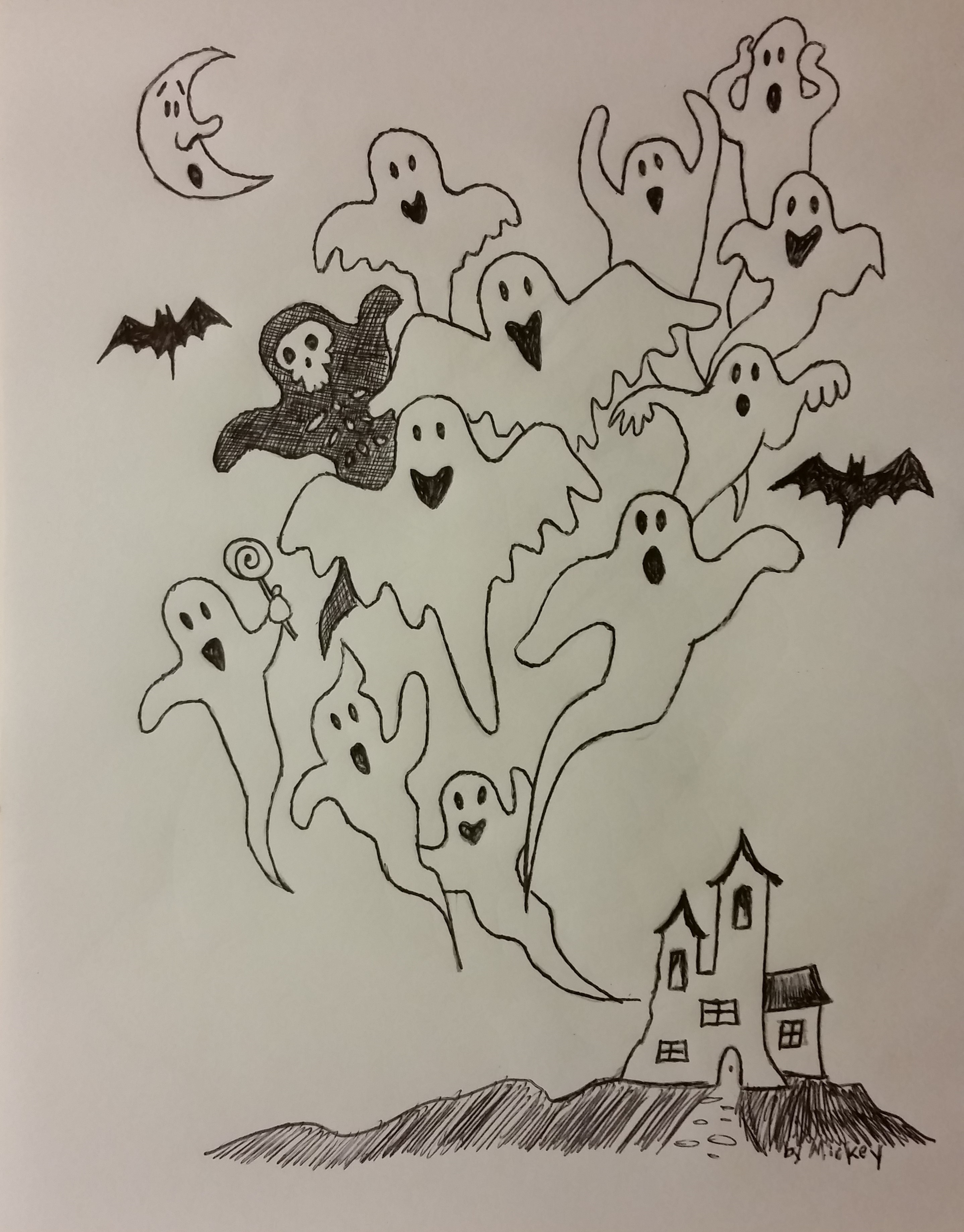
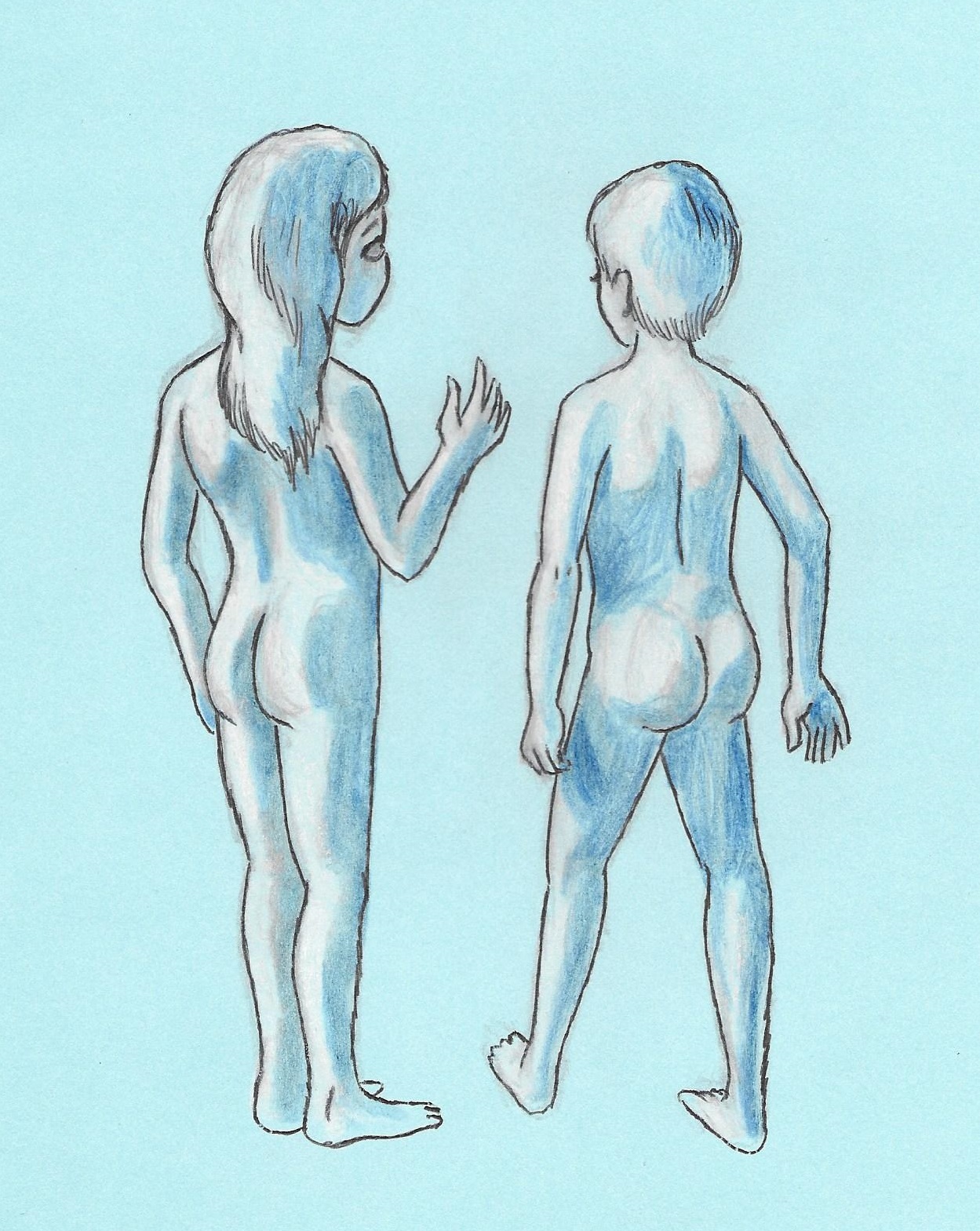
At my age and level of poor health, I think about ghosts a lot because I may soon be one. In fact, my 2014 novel, Snow Babies has ghosts in it. And some of the characters in it freeze to death and become snow ghosts. But it doesn’t work like that in real-world science. My ghosts are all basically metaphorical and really are more about people and people’s perception of life, love, and each other.
Ghosts really only live in the mind. They are merely memories, un-expectedly recalled people, pains, and moments of pandemonium.
I have recently been watching the new Netflix series The Haunting of Hill House. It creeps me out because it latches on to the idea that ghosts haunt us through the revisitation in our minds of old trauma, old mistakes, old regrets… We are never truly safe from ghosts, no matter how far under the covers we go in our beds, deep in the dark and haunted night. Ghosts are always right there with us because they only live inside us.
I am haunted by ghosts of my own. Besides the ghost dog that mysteriously wanders about our house at night and is seen only out of the corners of our eyes, there is the ghost of the sexual assault I endured at the age of ten by a fifteen-year-old neighbor. That ghost haunts me still, though my attacker has died. I still can’t name him. Not because I fear he can rise up out of the grave to hurt me again, but because of what revealing what he did, and how it would injure his innocent family members who are still alive and still known to my family, will cause more hurt than healing. That is a ghost who will never go away. And he infects my fiction to the point that he is the secret villain of the novel I am now working on. In fact, the next four novels in a row are influenced by him.
But my ghost stories are not horror stories.
I write humorous stories that use ghosts as metaphors, to represent ideas, not to scare the reader. In a true horror story, there has to be that lurking feeling of foreboding, that sense that, no matter what you do, or what the main character you identify with does, things probably won’t turn out all right. Stephen King is a master of that. H.P. Lovecraft is even better.
But as for me, I firmly believe in the power of laughter, and that love can settle all old ghosts back in their graves. I have forgiven the man who sexually tortured me and nearly destroyed me as a child. And I have vowed never to reveal his name to protect those he loved as well as those I love. If he hurt anyone else, they have remained silent for a lifetime too. And I have never been afraid of the ghost dog in our house. He has made me jump in the night more than once, but I don’t fear him. If he were real, he would be the ghost of a beloved pet and a former protector of the house. And besides, he is probably all in my stupid old head thanks to nearly blind eyes when I do not have my glasses on.
It is an unusual position to be in as a kid in the school room to be the creative kid. First and foremost because you will forever be known as the weirdo, the spaceman, the egghead.
How do I know that? Because I was that kid. And I grew up to teach that kid. And now that I am retired as a teacher, I am still that kid.
If there was a problem to be solved, a picture to be drawn, a group assignment that required somebody to actually think, I was the kid that everybody wanted to be in their group or be their partner. (That time that Reggie and I blew up the test tube of copper sulfate in Mr. Wilson’s chemistry lab doesn’t count because, although I am the one who dropped it, he’s the one who heated up my fingers with the blowtorch. Honest, Mr. Wilson, it is true.) But if it was picking teams on the playground, I was the last loser to be called, even though I was pretty good at softball, pretty good at dodgeball, great at volleyball, and usually the leading scorer in soccer (of course we are talking an Iowa schoolyard in the 60’s where soccer was a sport from Mars.) And as an adult, I enjoyed teaching the creative kids more than the rest because I actually understood them when they explained what they were doing and why, and I was even able to laugh at their knit-witty jokes (yes, I am including those jokes made of yarn with that pun). Creative kids speak a language from another world. If you are creative too, you already know that. And if you aren’t creative… well, how foo-foo-metric for you.
And another unfortunate side effect of the creative life is that you make stuff. You don’t have to be seriously infected by bites from the cartoon bug or the art bug to be like that. My daughter is making a suit of armor for herself from a flat sheet of aluminum that she is pounding out by hand, painting with spray paint and painter’s tape, and edging with felt. After she’s done with it this Halloween, it will go on one of the piles of collections and models and dolls and stuffed toys and… Of course, sooner or later one of those piles is going to come to life and eat the house. There is no place left to display stuff and store stuff and keep stuff that is far enough away from potential radioactive spider bites. I have scars on my fingers from exactor knife accidents, oil paint, and acrylic paint and enamel permanently under my fingernails. Shelves full of dolls rescued and restored from Goodwill toy bins, dolls collected from sale bins at Walmart, Toys-R-Us, and Kaybee, and action figures saved even from childhood in the 60’s are taking over the house and in an uproar, demanding to be played with rather than ignored. (Didn’t know dolls can actually talk? Haven’t you learned anything from John Lasseter?)
Anyway, it is tough to go through life being excessively creative. I have art projects growing out of my ears. And book publishers are calling me because my award-winning book is not generating sales in spite of two awards, 5-star reviews, and generally good quality, but the only solutions they have cost ME money I don’t have. Oh, well, at least it isn’t boring to be me.
Sometimes life gets a bit tough when you are old and diabetic and grumpy all the time… and your kids are still teenagers… and you have to spend four hours a day driving them to two different schools in two different Dallas suburbs… and it rains one day and swelters you in Texas heat the next… and the drive home occurs during rush hour… and you just can’t think beyond loud thoughts like; “Why does that stop light turn red right before I get there?” and “Why can’t somebody teach teenagers how to drive in a high school parking lot?!” and “Why is the sun so bright and in my eyes going BOTH DIRECTIONS?!?” and “Why is the worst driver in Texas always the one right in front of me?!?!!!”
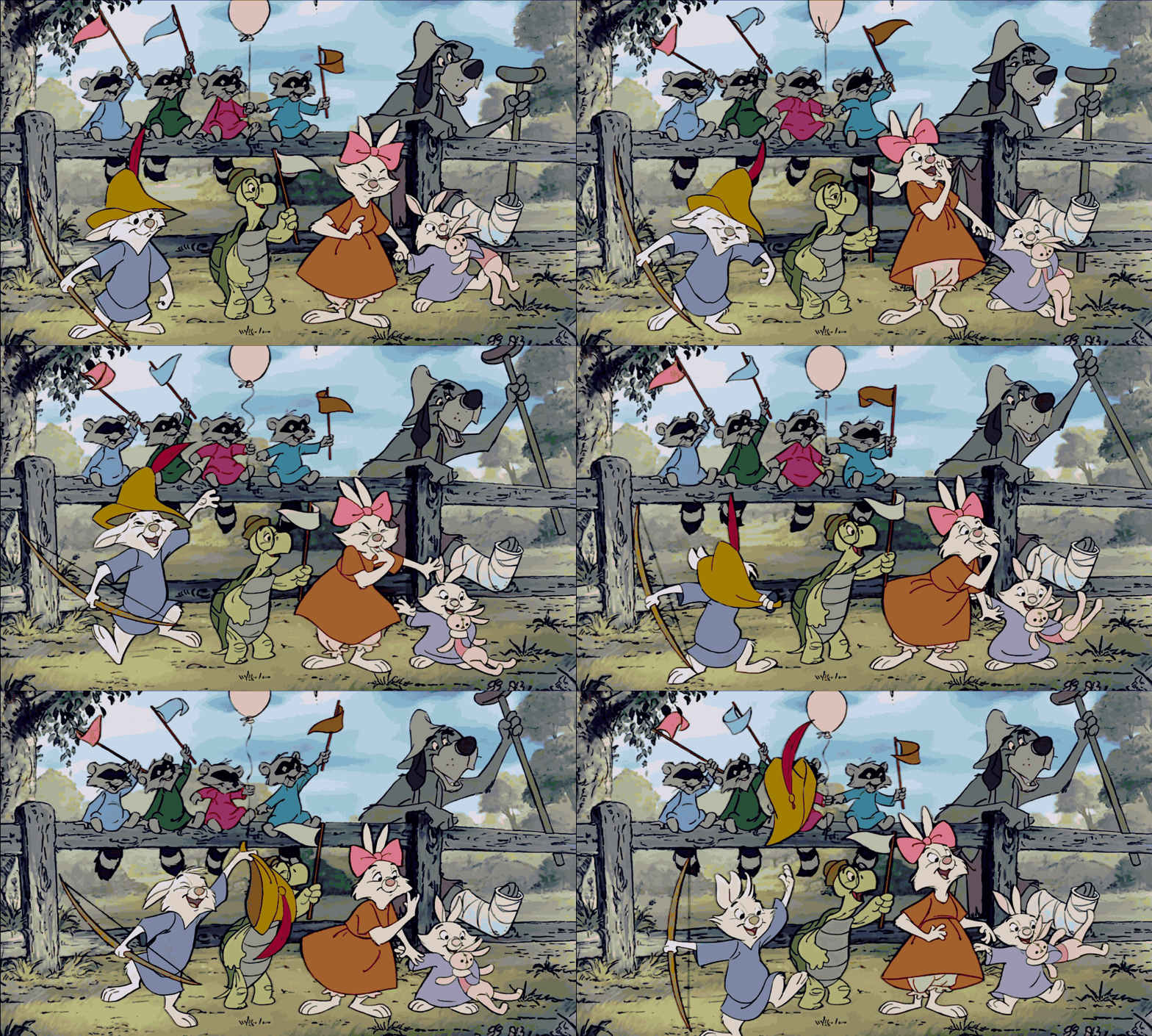
And then you realize, you can’t think any more to make a decent post for your blog. You are dead tired and out of ideas, though still able to type… even though you are apparently dead according to this sentence. So what do you post? You need some chocolate and iced tea for your brain. And you decide it is better to come out of the closet for being .gif-goofy and collecting .gif’s. You heard right. I mean .gif’s. I am not talking about peanut butter. And I didn’t misspell goofs. I mean those crazy moving things on the internet where the motion is repetitive and the promotion of the motion is mindless. Yes, those moving-picture things called .gif’s.
Like this one;
Rainbow Dash is really going after that guitar riff in this guitar-riff .gif! And I didn’t steal this from Deviantart. I stole it from somebody else who stole it from Deviantart.
And then I have an audience for her solo;
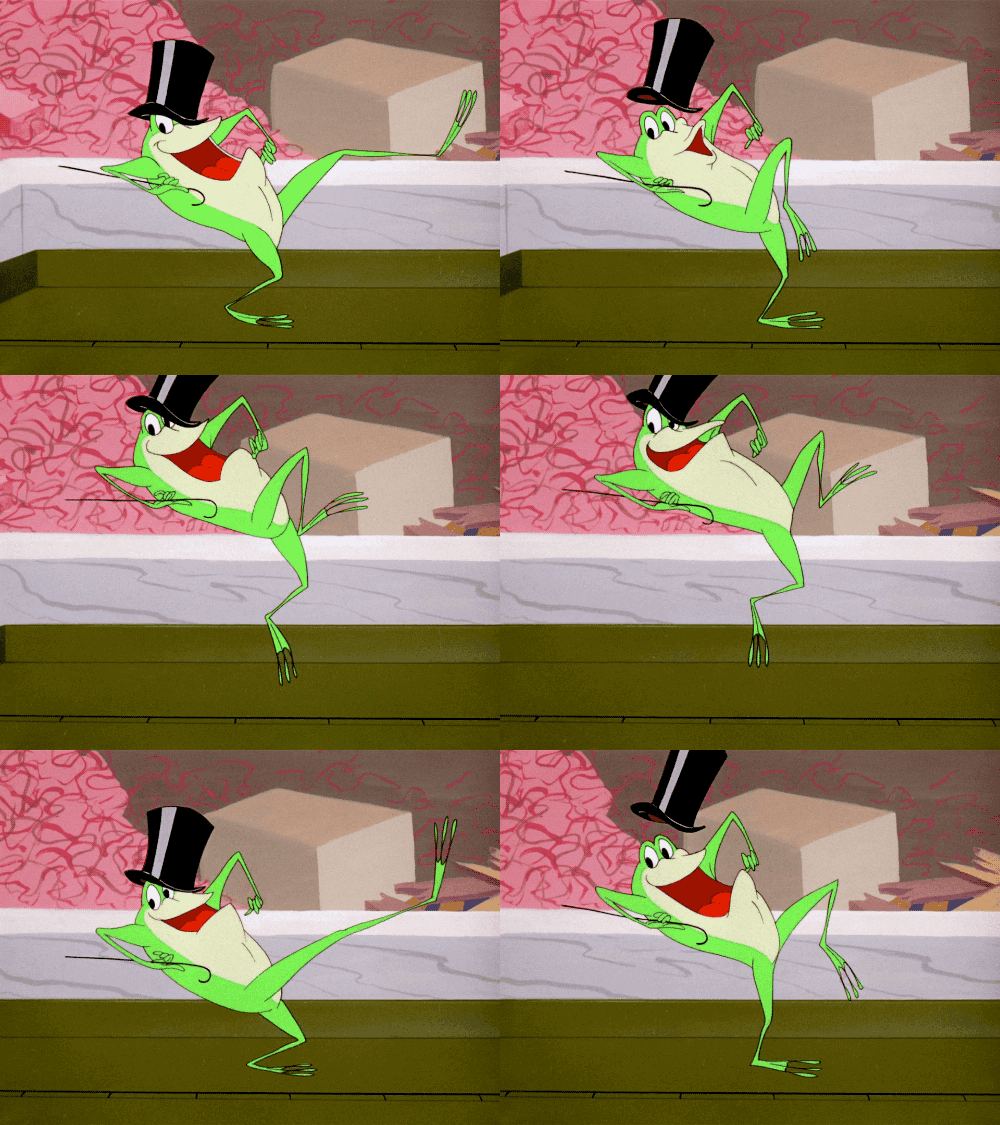
And these .gif’s make me happy. Happy like a frog;
And why do these minor miracles of motion make me happy? I don’t know. But they do.
And I must not be the only one. Somebody went to a great deal of work to create some of these:
And one might wonder if it is an evil thing to be happy about being .gif-goofy. But in my experience, they only fascinate the eyes for a short while and alter my mood in goofy weird ways.
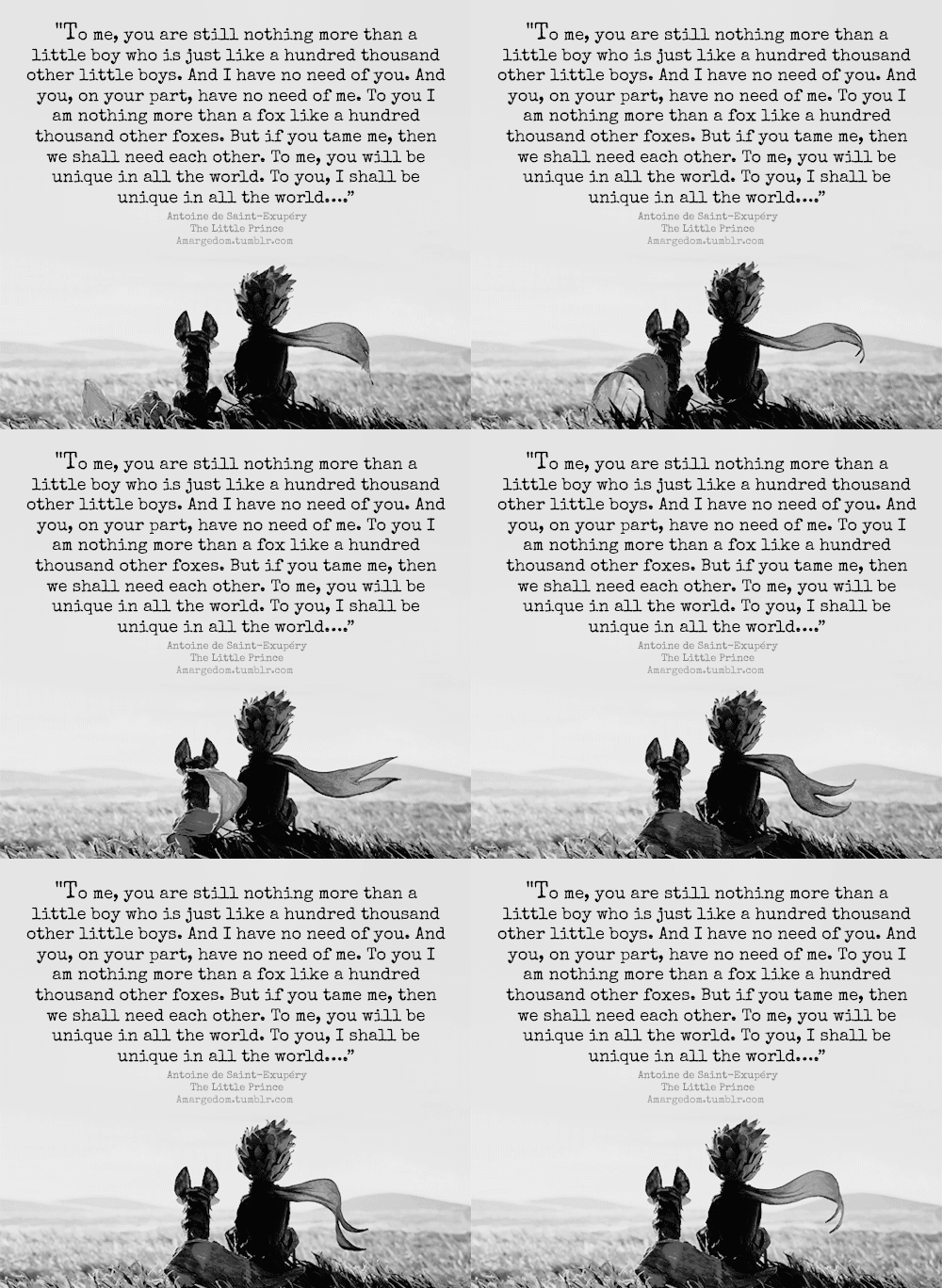
So now that I’m all goofed up, let me end with one more.
So, now, these .gif’s have tamed me, and I am unique in all the world.
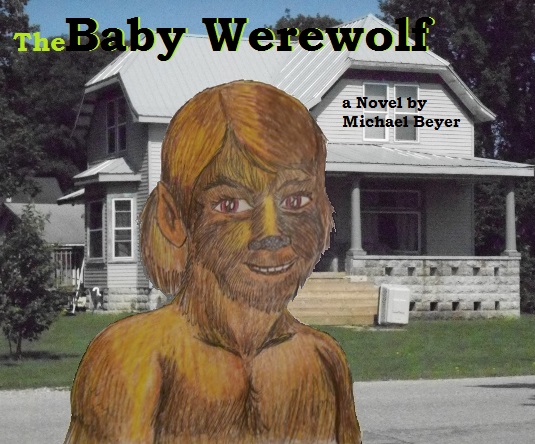
I identify as a humorist, writer, cartoonist, and certified fool (Yes, I have a certificate from the Children’s Writer Institute that proves I once foolishly believed I could learn how to make money as a writer). But my current novel project is a horror novel, The Baby Werewolf, which I twice before tried to turn into a completed rough draft novel. This time I followed through to the bitter end. I published it on Amazon.
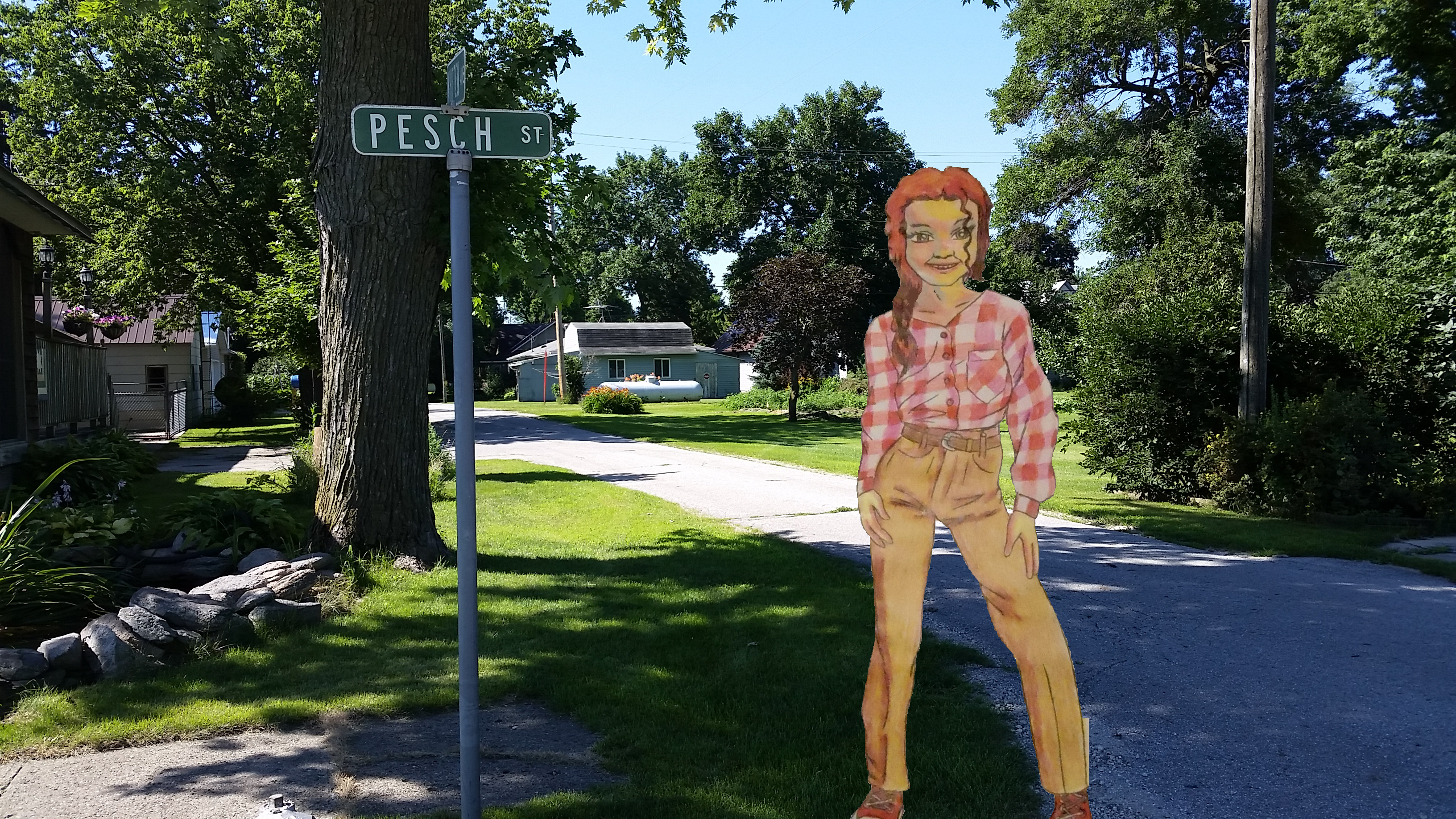
Torrie Brownfield, hypertrichosis sufferer and possible werewolf.
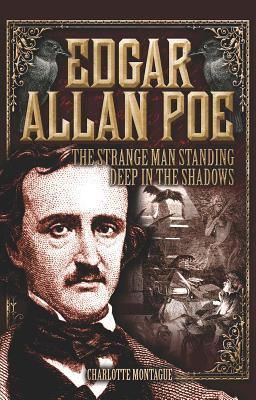
In order to reign in the goofiness enough to deal with the issues in this novel, I have been doing a lot of horror reading. I have also undertaken the reading of a very good author examination of the life of Edgar Allen Poe.
Poe’s life was highly instructive. You may not have realized this, but most of the giants of American Literature prior to and contemporary with Poe did not make most of their money as writers. Emerson was a clergyman. Nathaniel Hawthorne worked as a customs clerk. Poe, the first to try to make a living solely on work as a writer, editor, critic, and poet, was subjected to the horrors of poverty, illness, and want. His wife was chronically tubercular and ill. He never made the money he was obviously worth as a creator of popular horror fiction, poetry, critical essays about other authors, and as an editor for profitable magazines of the day. Other people made loads of money from his work. Poe, not so much.
It is instructive to a writer like me who can’t seem to land any sort of income from my own creations. There is no demand because there is no recognition of my work. I have come close, having my work praised by editors and fellow authors, and being a finalist in novel writing contests twice. The goal is good writing. I will probably never see a return on my investment in my lifetime. My children may not acquire anything by it unless one of them really devotes a lot of effort to it. Like Poe with his drinking problem, chronic depression, and ill wife, I face physical limitations and poor health, grinding financial issues, and family factors that make it near impossible to put marketing effort into my literary career.
And this novel is a hard journey for me. I was sexually assaulted by an older boy when I was ten. A lot of the fears outlined and elucidated in this particular story leap right out of that iron cage in my psyche where they have been contained for fifty years. Fear of nakedness. Fear of sex. Fear of being attacked. Fear of the secret motivations in others. Fear of the dark. And, most of all, fear of what fear can make me become. Fear of being a monster.
But I have not become any of the dark and terrible things that fear can make me into. Instead, I became a school teacher, and mentor to many. I became a family man, a father of three children. I became a nudist, hopefully not a dark and terrible thing in itself. I became Mickey.
This novel will become my Halloween free-book promotion later this month. Probably next weekend rather than Halloween.
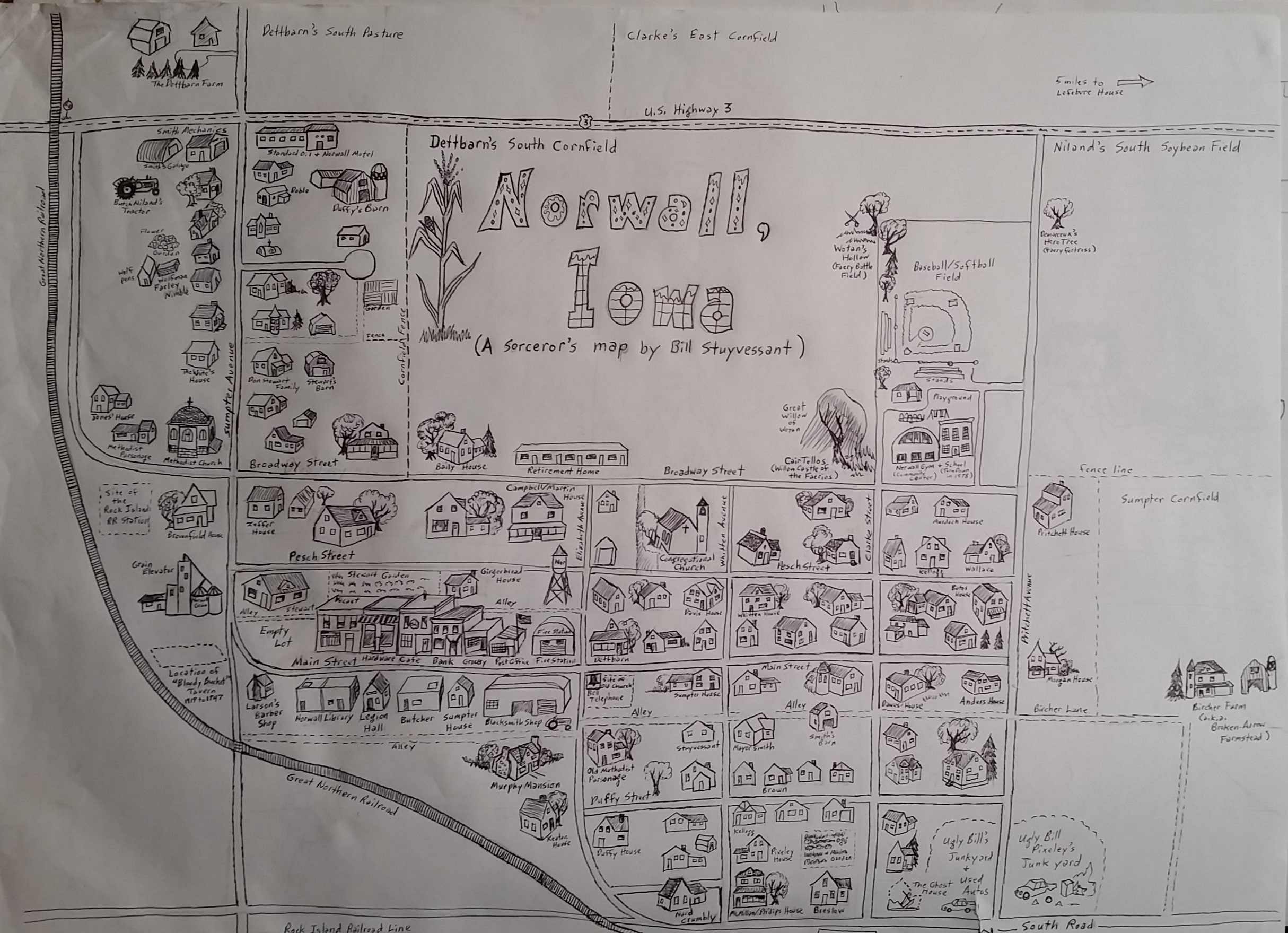
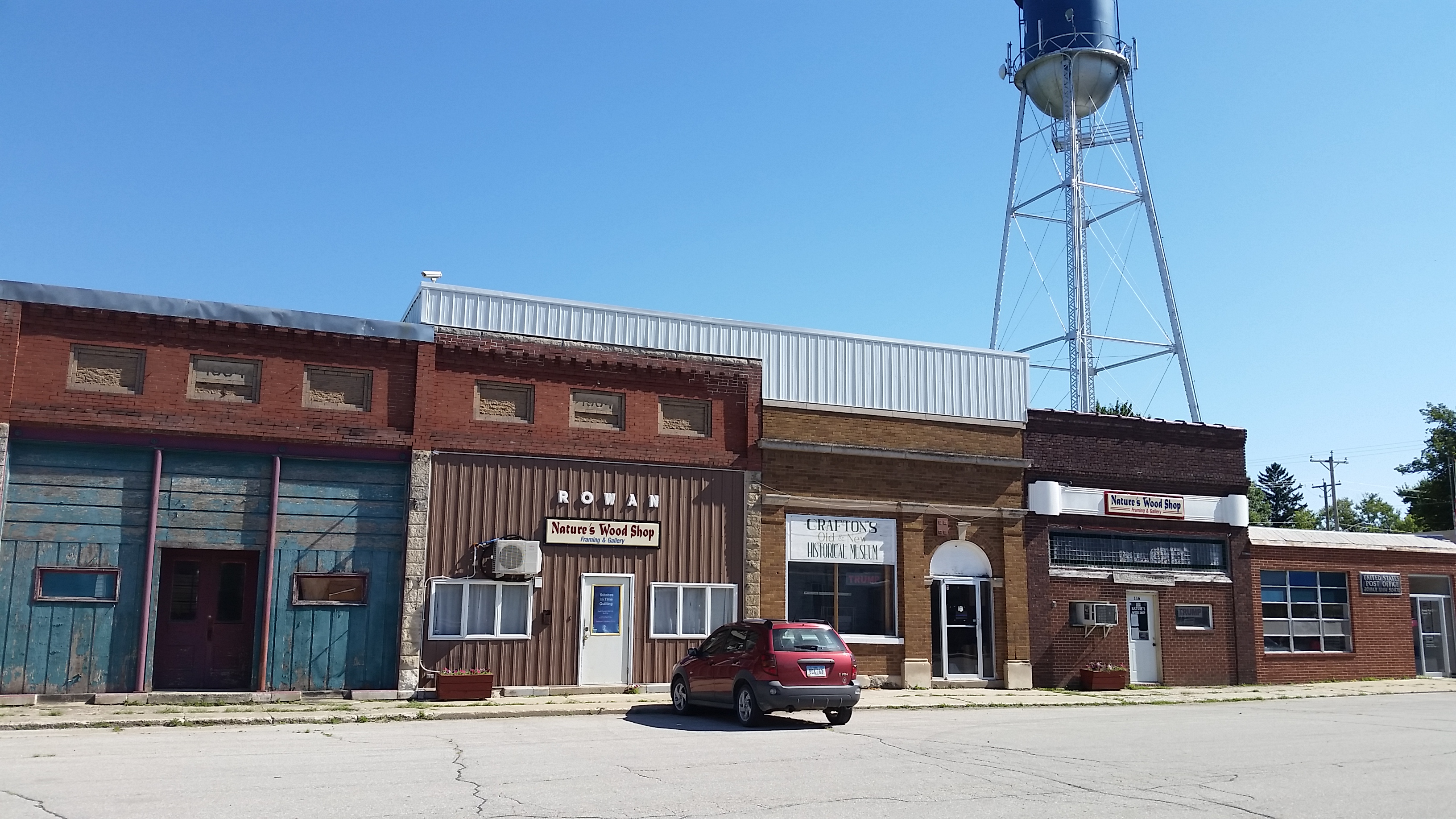
I grew up in a small rural town in North Central Iowa. It was a place that was, according to census, home to 275 people. That apparently counted the squirrels. (And I should say, the squirrels were definitely squirrelly. They not only ate nuts, they became a nut.) It was a good place to grow up in the 60’s and 70’s. But in many ways, it was a boring place.
Yes, there were beautiful farmer’s daughters to lust after and pine for and be humiliated by. There was a gentle, supportive country culture where Roy Rogers was a hero and some of the best music came on Saturdays on Hee Haw where there was a lot of pickin’ and grinnin’ going on. There were high school football games on Friday nights, good movies at the movie theaters in Belmond and Clarion, and occasional hay rides for the 4-H Club and various school-related events like Homecoming.
I lived in a world where I was related to half the people in the county, and I knew at least half of the other half. People told stories about other people, some of them incredibly mean-spirited, some of them mildly mean, and some of them, though not many, that were actually good and actually true. I learned about telling good stories from my Grandpa Aldrich who could tell a fascinating tale of Dolly who owned the part of town called locally “Dollyville” and included the run-down vacant structure the kids all called the Ghost House. He also told about Dolly’s husband, Shorty the dwarf, who was such a mean drunk and went on epic temper tirades that often ended only when Dolly hospitalized him with a box on the ear. (Rumor had it that there were bricks in the box.)
And I realized that through story-telling, the world became whatever you said that it was. I could change the parts of life I didn’t love so much by lying… er, rather, by telling a good story about them. And if people heard and liked the stories enough, they began to believe and see life more the way I saw it myself. A good story could alter reality and make life better. I used this power constantly as a child.
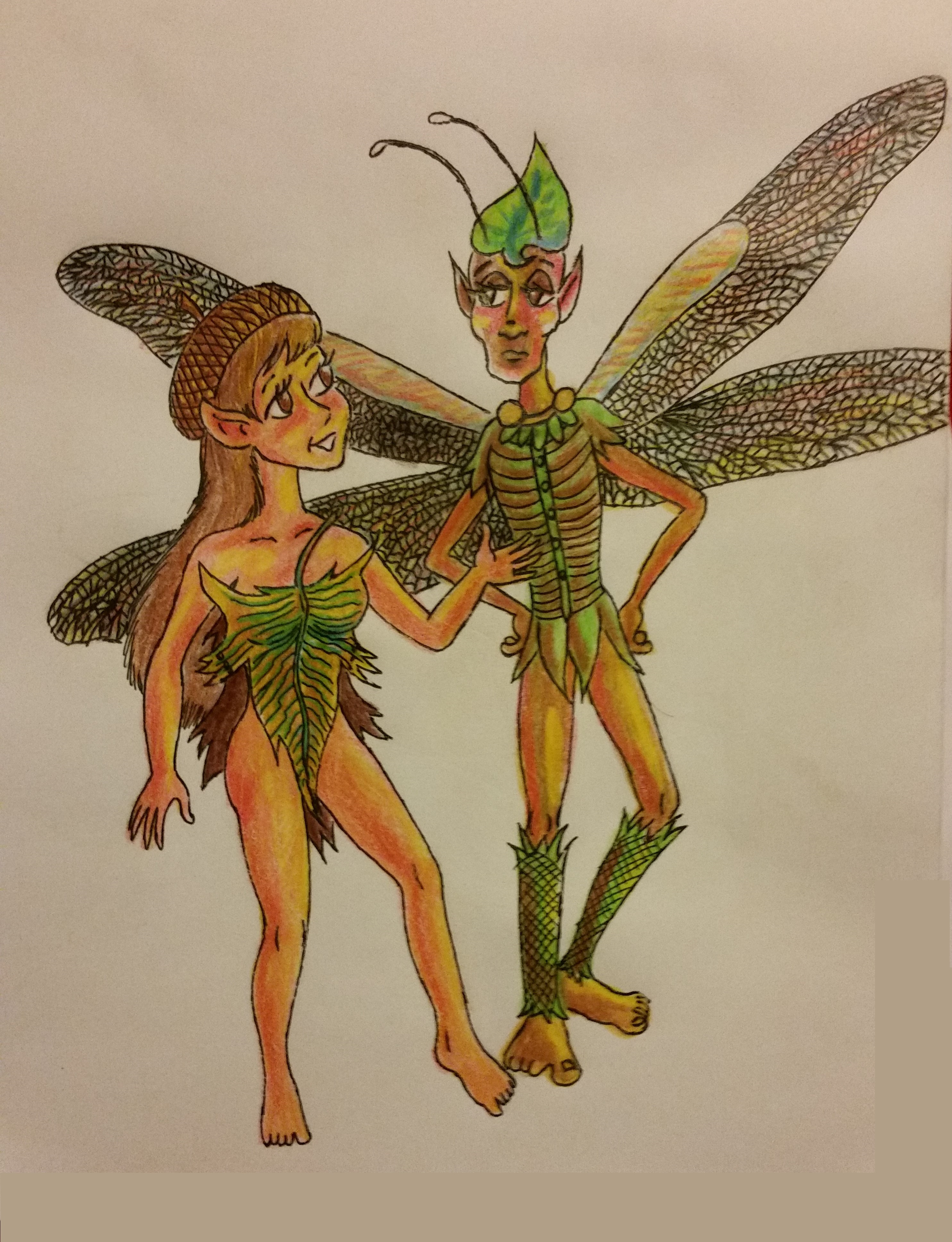
There were invisible aliens invading Iowa constantly when I was a boy. Dragons lived in the woods at Bingham Park, and there were tiny little fairy people everywhere, in the back yard under the bushes, in the attic of the house, and building cities in the branches of neglected willow trees.
I reached out to the world around me as an artist, a cartoonist, and a story-teller and plucked details and colors and wild imaginings like apples to bake the apple pie that would much later in my life feed the novels and colored-pencil pictures that would make up my inner life. The novels I have written and the drawings I have made have all come from being a small town boy who dreamed big and lived more in stories than in the humdrum everyday world.




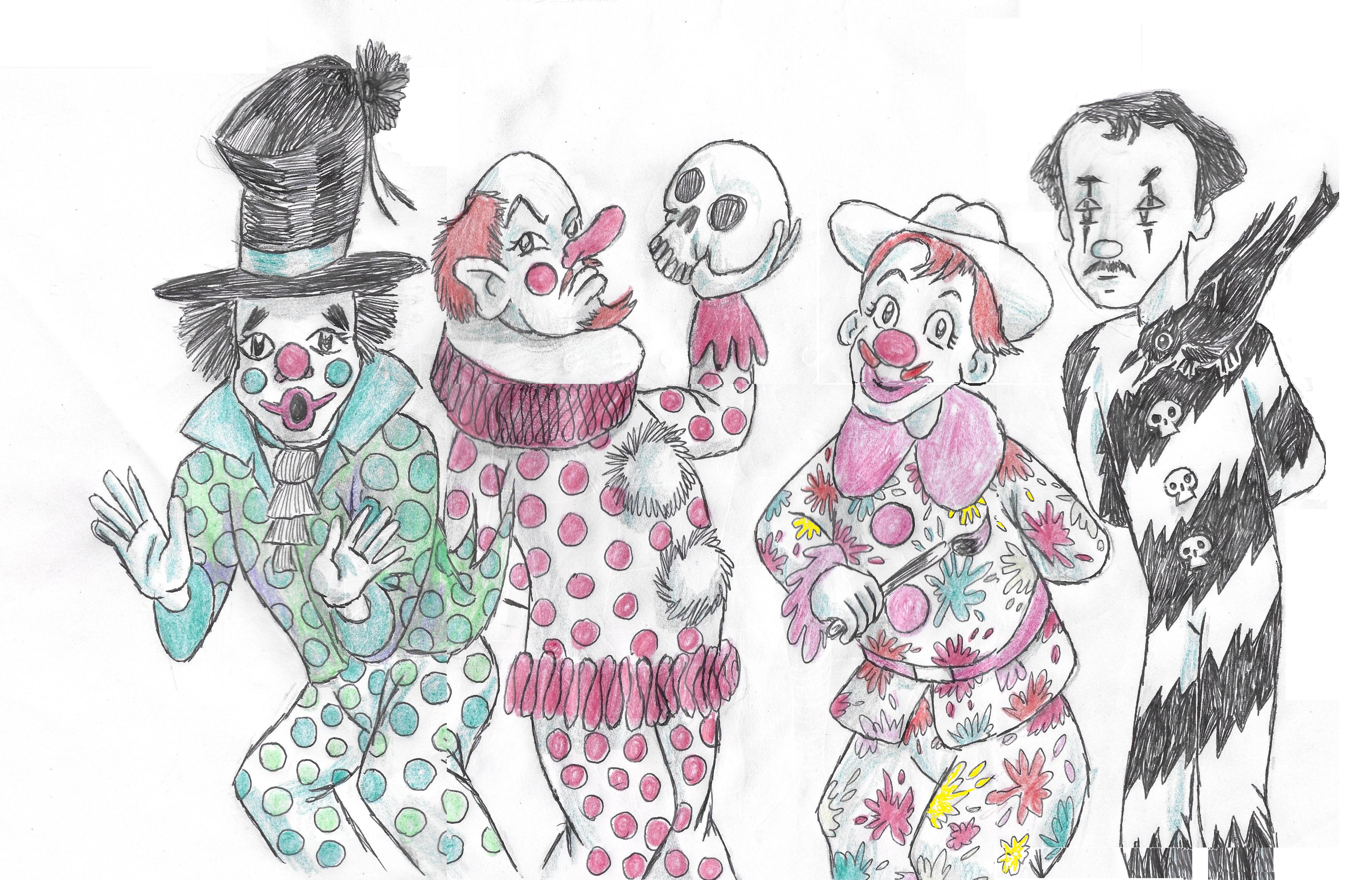
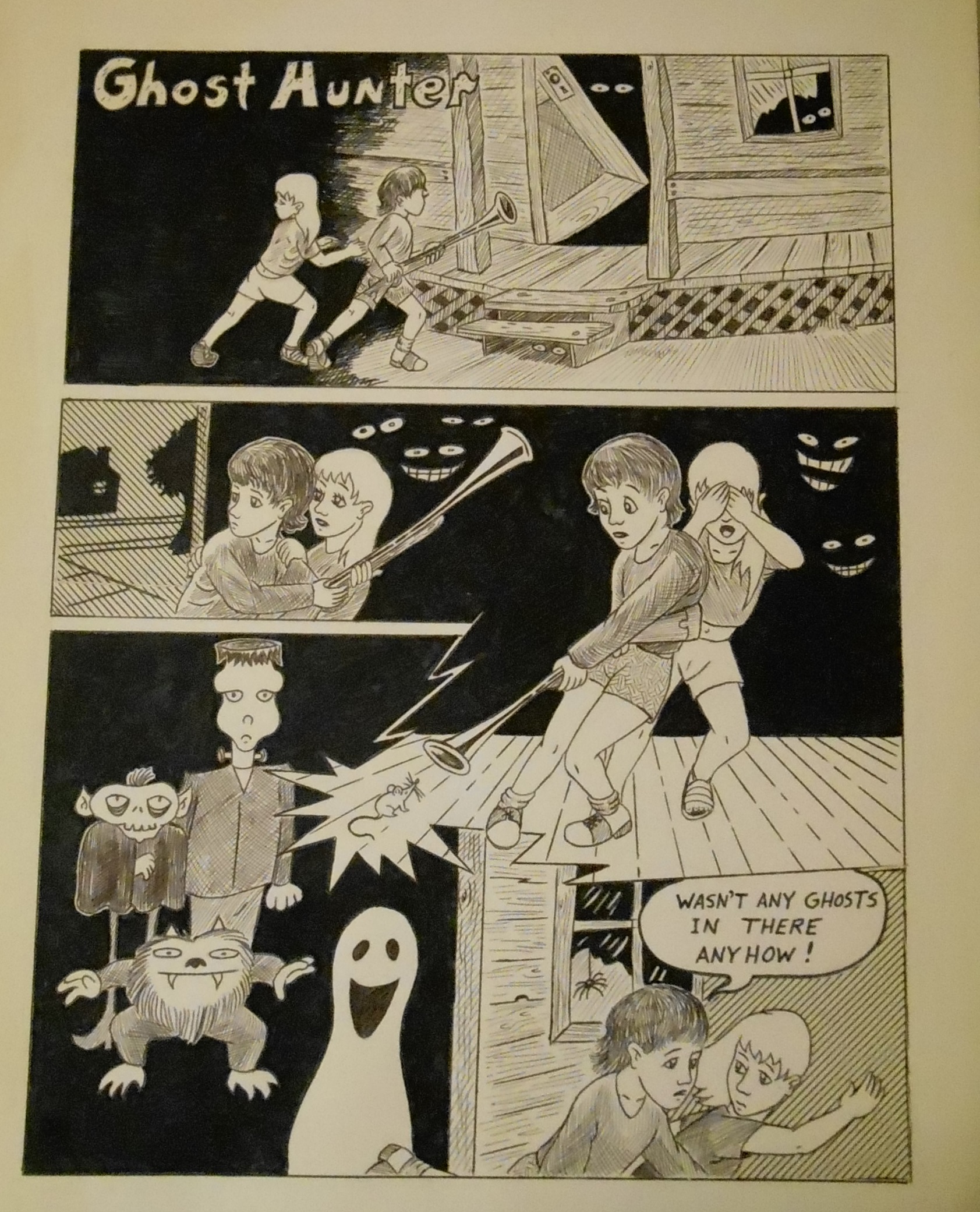





 Catch a Falling Star
Strawberry Fields
This foolish essay about berries that mean love to me is only partly inspired by the Beatles song, “Strawberry Fields Forever.” That’s because, of course, their song was only about meditating. In the lyrics they take you to the “Strawberry Fields where nothing is real… but it’s nothing to get hung up about…” They are talking about a blissful place of no worries where we all need to go. And then staying there forever.
This, of course, I could never do. Worrying about the future is tattooed on my behavioral imperatives in the dark part of my stupid old brain. And while I often found that place of no worries, and lingered there for a bit, I found you could never really get anything done if you stayed in that state of strawberry fields forever.
But don’t get me wrong, strawberries are a critical part of every healthy mental diet.
You see, my meditations on strawberries when I was a child of eight, nine, and ten centered on the strawberry patch at Great Grandma Hinckley’s place.
She was, as I incorrectly recall, slightly older than Jesus when I was that age. By that I mean, though she seemed museum-quality ancient to me, I had derived wisdom about life, love, and laughter from her before Sunday School taught me any of those things said in Jesus’s words.
And I was given the task of mowing her lawn in the little plot of land surrounding her little, tiny house in the Northern part of Rowan where I also lived and grew and celebrated Christmas and Halloween and Easter and the 4th of July. And though I was doing it because she was so old, I never even once thought she was too old and frail to do it herself. Grandma Hinckley’s willpower was a force of nature that could even quell tornados… well, I thought so anyway when I was eight. And she gave me a dollar every time I did the lawnmowing.
But there were other things she wanted done, and other things she wanted to teach me. There was the garden out back with the strawberry patch next to it. She wanted me to help with keeping the weeds and the saw grass and the creeping Charlie from overrunning the strawberries and choking them to death. (Creeping Charlie wasn’t an evil neighbor, by the way. He was a little round-leafed weed that grew so profusely that it prevented other plants from getting any sunlight on their own leaves, causing a withering, yellowing death by sunlight deprivation. I took my trowel to them and treated them like murderers. I showed them no mercy.)
And Grandma always reminded me not to be selfish and eat the very berries I was tending in the garden. She taught me that eating green strawberries (which are actually more yellow than green, but you know what I mean) was bad because they could give you a belly ache, a fact that that I proved to myself more than once (because eight-year-olds are stupid and learn slowly.) She also taught me that it is better to wait until you have enough strawberries to make a pie, or better yet, strawberry shortcake with whipped cream. She taught me that delayed gratification was more rewarding in the long run than being greedy in the short run and spoiling everything for everybody.
She always gave me a few of the ripe strawberries every time I helped her with them, even if I had eaten a few in the garden without permission. Strawberries were the fruit of true love. I know this because it says so in the strawberry picture. Even though I probably never figured out what true love really means.
My Great Grandma Nellie Hinckley was the foundation stone that my mother’s side of the family was built on. She was the rock that held us steadily in place during the thunderstorms, and the matriarch of the entire clan of Hinckleys and Aldriches and Beyers and other cousins by the dozens and grandchildren and great grandchildren and even great great grandchildren. I painted the picture of her in 1980 when she passed away. I gave it to my Grandma Aldrich, her second-eldest daughter. It spent three decades in Grandma’s upstairs closet because looking at it made Grandma too sad to be so long without her. The great grandchild in the picture with her is now a grandmother herself (though no one who has seen this picture knows who it is supposed to be because I painted her solely from memory and got it all wrong.) But Grandma Hinckley taught me what true love means. And true love has everything to do with how you go about taking care of the strawberry patch.
Leave a comment
Filed under artwork, autobiography, commentary, family, health, humor, mental health, Paffooney, philosophy, strange and wonderful ideas about life