Yes, there is very definitely a possibility that there is more than one me.
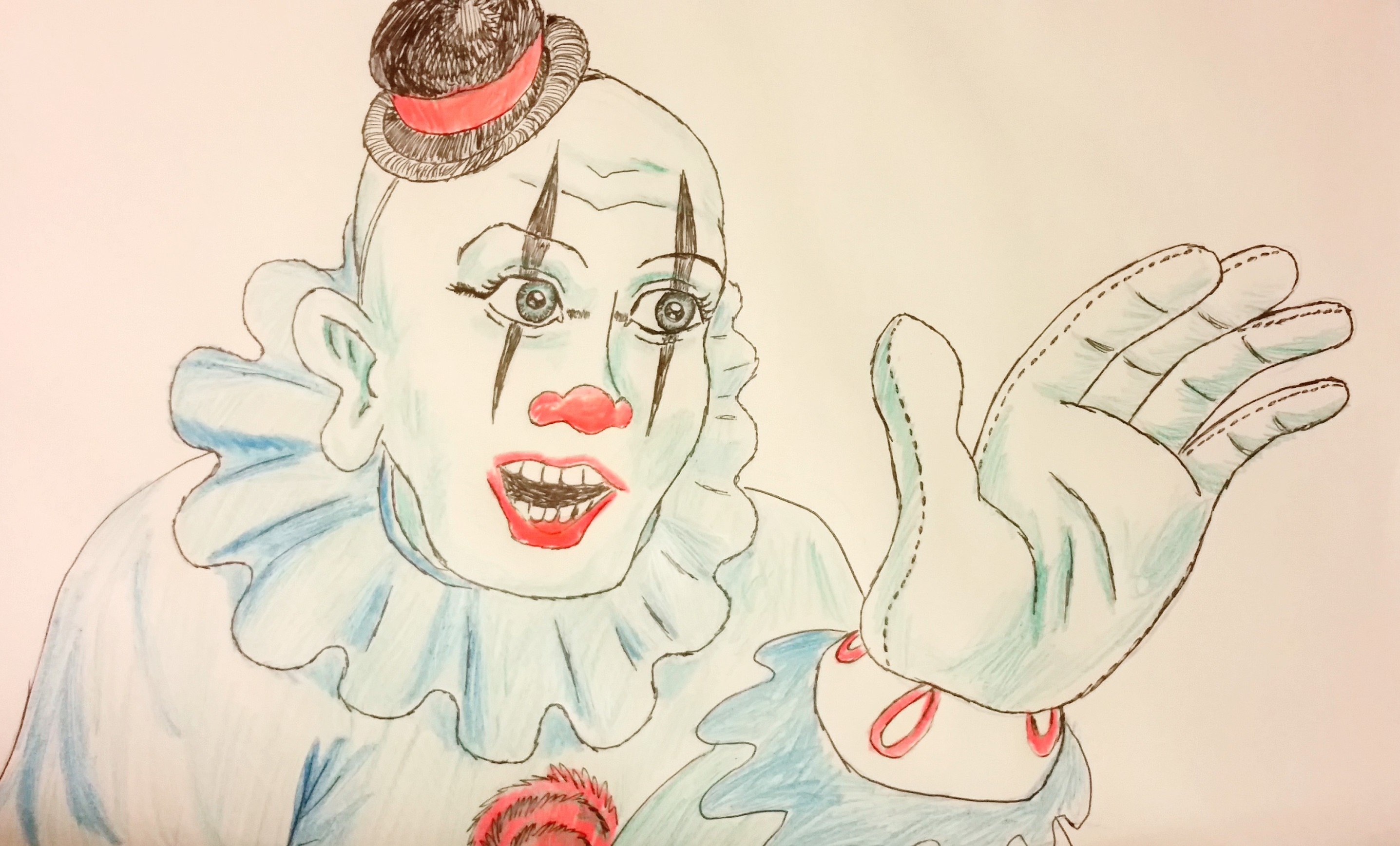
If you look carefully at the colored pencil drawing above, you will see that it is titled “The Wizard of Edo” and signed by someone called Leah Cim Reyeb. A sinister sounding Asian name, you think? I told college friends that my research uncovered the fact that he was an Etruscan artist who started his art career more than two thousand years ago in a cave in France. But, of course, if you are clever enough to read the name backward, you get, “beyeR miC haeL”. So, that stupid Etruscan cave artist is actually me.
It turns out that it is a conceit about signing my name as an artist that I stole from an old episode of The Dick Van Dyke Show and have used for well over two decades through college and my teaching career.
And of course, the cartoonist me is Mickey. Mickey also writes this blog. Mickey is the humorist identity that I use to write all my published novels and blog posts since I published the novel Catch a Falling Star.
Michael Beyer is the truest form of my secret identity. That was my teacher name. It was often simplified by students to simply “Mr. B”. I was known by that secret identity for 31 years.
Even more sinister are my various fictional identities occurring in my art and my fiction. You see one of them in this Paffooney. The name Dr. Seabreez appears in Catch a Falling Star as the Engineer who makes a steam engine train fly into space in the 1890’s with alien technology. He appears again in The Bicycle-Wheel Genius as a time-traveler.
The young writer in the novel Superchicken, Branch Macmillan, is also me. As is the English teacher Lawrance “Rance” Kellogg used in multiple novels.
So, disturbing as it may be to realize, there is more than one name and identity that signifies me. But if you are a writer of fiction, a cartoonist, an artist, or a poet, you will probably understand this idea better. And you may even have more than one you too.
It is daunting when bad fortune comes in waves, drowning us in debt, suffering, disabling illness, financial reversals, and so many more things I have been through this last year personally, so that we want to lie down and never get up.
But, I am not dead yet… and there is poetry to be lived.
I say that as one of the world’s fifty worst poets who ever lived. (In my defense, I am a humorist, and I write bad poetry on purpose.) My inspiration for the living of poetry comes from reading and living good poetry. I live because there is poetry by Walt Whitman. Of course, also Shakespeare… whoever he really was. And I understand that much of what I have learned in my brief and stupidly-lived 61 years comes from the poetry of the visionary poet I pictured above. Do you know him? If you have never read his poetry, you haven’t truly lived the poetry you need to live.
This poet taught me that “Being, not doing, is my first love.” Of course, if I am satisfied with just sitting on my bed and “being” through most of my day, I will starve to death and not “be” anymore. But he has taught me that what is essential is already within me. There is wisdom and power in Uncle Ted’s poetry. (Yes, I know I am not really related to him, but that’s only physical and overlooks the spiritual.) I must partake of it to live.
If you are bored by poetry about plants in a greenhouse under bright lights, or you can never understand what the poet means when he says, “My father was a fish”, then you need to practice reading poetry more. You don’t truly understand what poetry is, and what it is for… yet.
And I am sure you have probably concluded from all of this that I am a fool and a bad poet and I have no right to try to tell you who and what a truly great poet is. But, fool that I am, I know it when I see it. It is there in the verse, the hideous and horrible… the beautiful and the true. And if I know anything at all worth telling about the subject, it is this; Ted Roethke is a great American poet. And he writes poetry that you need to read… and not only read but live.
When learning to write, you have to learn the rules. And then you start writing, and you learn that you have to break all the rules to do it well. But what do I know? You have to be pretty desperate to get your writing advice from a Mickey. After all, it’s not like Mickey was a writing teacher for over thirty years… oh, wait a minute… yes, he was.
Okay, so I decided to write today about the K.I.S.S. rule of writing. That’s right, Keep It Simple, Stupid. Other writing teachers tell me it should be, Keep It Simple, Sweetie, because you can’t say “stupid” to a kid. Okay, that’s mostly true. But I use “stupid” when I use the rule myself. I’m talking to Mickey after all.
So, I better stop “bird-walking” in the middle of this essay, because “bird-walking”, drifting off topic for no purpose, is the opposite of keeping it simple.
I try to write posts of no more than 500 words. I write an introduction that says something stupid or inane that speaks to the theme I want to talk about. Then I pile in a few sentences that talk more about the theme and do a good job of irritating the reader to the point that they can’t wait to get to the conclusion. Finally I finish up with a really pithy and wonderful bit of wisdom to tie a knot in the bow of my essay. I save that bit for the end as a sort of revenge for all the readers who don’t read all the way to the end, even on a short post like this one. Of course, I could be wrong about how wonderful and pithy it is. What does “pithy” even mean? It can be like the soup in the bottom of the chili pot, thicker and spicier than what came before… or possibly overcooked with burned beans.
That was another bit of “bird-walking”, wasn’t it? See, you have to break the rules to make it work better.
So, in order to keep it simple, I guess I need to end here for today. Simple can be the same thing as short, but more often you are trying to achieve “simple and elegant” and pack a lot of meaning and resonance into a few lines. And I, of course, am totally incapable of doing that with my purple paisley prose. And there’s the knot in that bow.
One of the side “benefits” of having diabetes is that it often comes with an extra helping of diabetic depression. I had the blues really bad this week. I am not the only member of my family suffering.
So, what do you do about it?
Or, rather, what does a goofy idiot like me do about it?
Especially on a windy day when the air is saturated with pollen and other lovely things that I am absolutely, toxically allergic to?
Well, for one thing, I used the word toxically in this post because it is a funny-sounding adverb that I love to use even though the spell-checker hates it, no matter how I spell or misspell it.
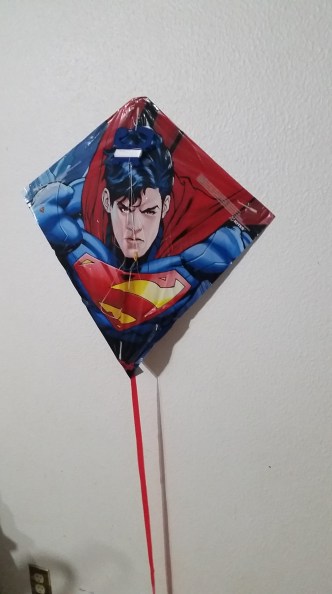
And I bought a kite.
Yes, it is a cheap Walmart kite that has a picture of Superman on it that looks more like Superboy after taking too much kryptonite-based cough syrup for his own super allergies.
But I used to buy or make paper diamond kites just like this one when I was a boy in Iowa to battle the blues in windy spring weather. One time I got one so high in the sky at my uncle’s east pasture that it was nothing more than a speck in the sky using two spools of string and one borrowed ball of yarn from my mother’s knitting basket. It is a way of battling blue meanies.
And I bought more chocolate-covered peanuts. The chocolate brings you up, and the peanut protein keeps you from crashing your blood sugar. I have weathered more than one Blue Meanie attack with m&m’s peanuts.
And I used the 1957 Pink and White Mercury of Imagination to bring my novel, The Baby Werewolf,home. I wrote the last chapter Monday night in the grip of dark depression, and writing something, and writing it well, makes me a little bit happier.
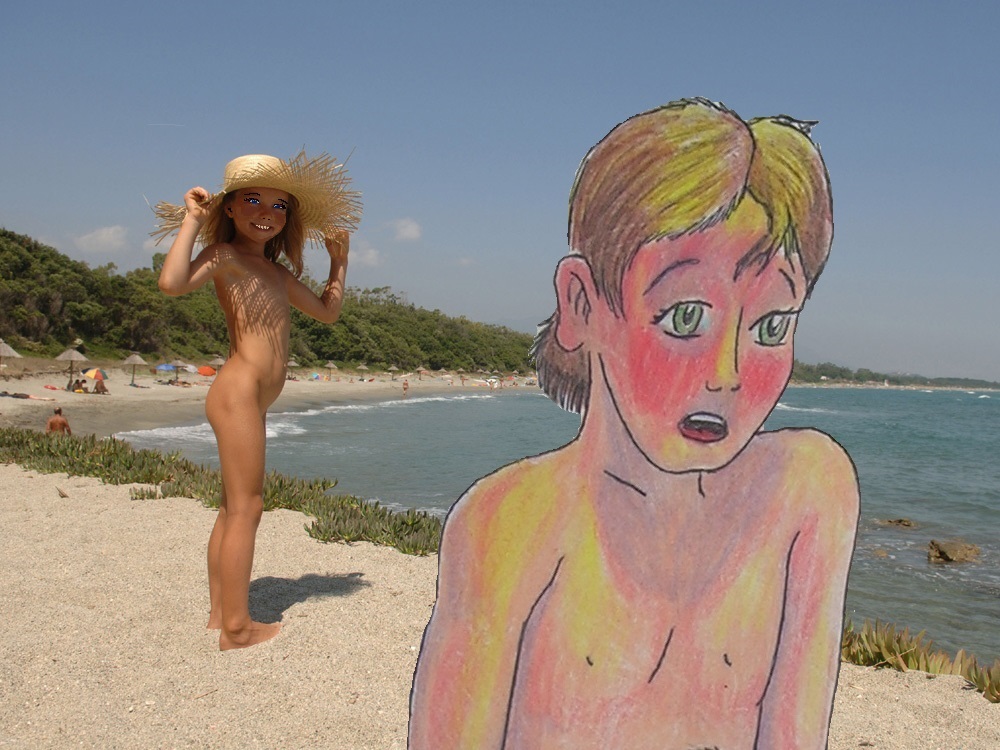
And I have collected a lot of naked pictures of nudists off Twitter. Who knew that you could find and communicate with such a large number of naked-in-the-sunshine nuts on social media? It is nice to find other nude-minded naturists in a place that I thought only had naked porn until I started blogging on naturist social media. Being naked in mind and body makes me happier than I ever thought it would.
And besides being bare, I also like butterflies and books and baseball and birds, (the Cardinals have started baseball season remember) and the end of winter. “I just remember of few of my favorite things, and then I don’t feel so bad!” Oh, and I like musical movies like The Sound of Music too.
The monsters of deep, dark depression are being defeated as we speak.
It is a difficult thing to be an atheist who believes in God. Sometimes it takes an oxymoron to find the Truth. And you often have to go heavily on the “moron” portion of the word.
The thing I find most distressing about faith is the fact that those who have it are absolutely convinced that if you don’t agree with them and whatever book of fairy tales they believe in and interpret for you, then you are not a True Believer and you do not have real Faith.
I remember being told by a Mormon girl in one of my classes that I was her all-time favorite teacher, but she was deeply distressed that, because of my religion (I professed to be a Jehovah’s Witness at the time) I was doomed to burn in Hell forever.
Hey, I was raised in Iowa. I have experienced minus 100 degree Fahrenheit windchill. I am among those who think a nice warm afterlife wouldn’t necessarily be a bad thing.
But I am no longer actually a Jehovah’s Witness. So I guess that helps with the whole Hell-burning thing. The Witnesses are a religion that claims to understand the Bible is full of metaphorical truth, and yet insist that it is literally true. They don’t believe in Hell, which, honestly, is not actually mentioned or explained in the Bible as we have it now. But they do believe your prospects for eternal life on a paradise Earth are totally contingent on knocking on doors and telling other people that they must believe what you believe or experience eternal destruction. I have stopped being an active Witness and knocking on doors because I got old and sick, and all the caring brothers and sisters in the congregation stopped coming around to visit because number one son joined the Marines, and the military is somehow evil hoodoo that cancels out any good you have done in the past. Being a Jehovah’s Witness was really hard work with all the meetings (5 per week), Bible reading (I have read the entire Bible two and a half times), door-knocking, and praying, and you apparently can lose it all for saying, thinking, or doing one wrong thing.
According to the Baptist preachers, Jehovah’s Witness elders, religious zealots, and other opinionated religious people I have known and dealt with in my life, if I do not believe what they believe and agree with them in every detail, then I do not know God and am therefore an atheist. So, okay, I guess I am. If I have to be an atheist to believe whole-heartedly that everyone is entitled to sincerely believe whatever the hell they want to believe, then I’ll wear that label.
On a personal note, my favorite verse of the Bible has always been 1 John 4:8, “He that does not love has not come to know God, because God is love.” That is why I claim to be an atheist who believes in God. I know love. I love all men, women, children, animals, sunrises, artwork, paintings of angels by Bouguereau… everything that is. And I even love you if you exercise your freedom to tell me, “Your ideas are totally wrong, and you are going to burn in Hell, Mickey, you bad guy, you!” Mark Twain always said, “I would choose Heaven for climate, but I would prefer Hell for company.” I am not going to worry about it. I will be in good company. Some things are just bigger than me. And trying to control things like that is nonsense. Sorta like this post.
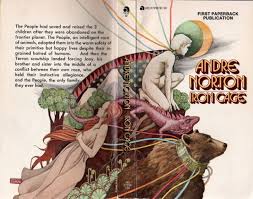
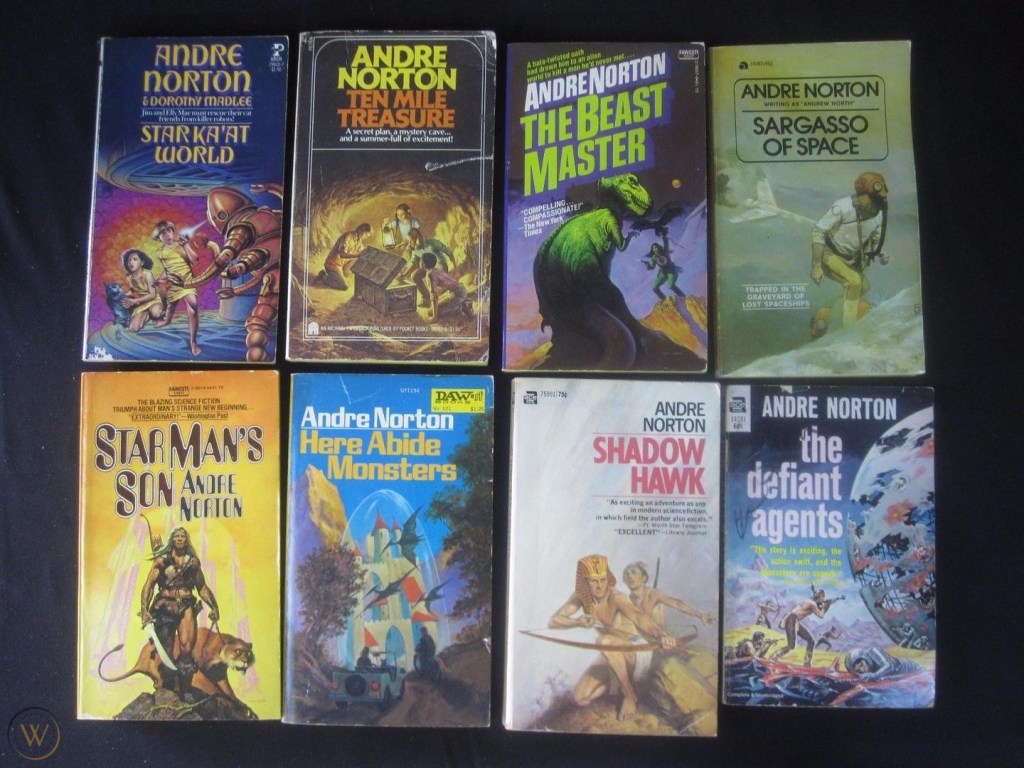
It began for me in 1977 with this wrap-around cover illustration. I knew there were a lot of this guy’s books on the shelves of the college bookstore along with works by Robert E. Howard, Roger Zelazney, and Theodore Sturgeon. And I knew this guy had also written paperback books under the name “Andrew North”, a name I had seen on the twenty-five cent novels in the drugstore where you could buy the really good pulp fiction novels only slightly used.
I had never before bought one of his books. And the book money I had for the fall quarter at Iowa State was supposed to all go towards the book-list given to me as a Junior-level English major. But the naked kid on the cover had a wired-up collar around his neck. And I had only recently recovered long-suppressed memories of being a victim of a sexual assault. I had to have it. I had to know what that illustration had to do with the story inside.
So, I bought a book that I judged by its cover.
And it was not the wrong thing to do.
The main character was a boy named Jony, the naked boy on the cover of the book. He is taken by alien beings as a study specimen along with his mother, the pregnant woman on the back of the wrap-around illustration. The story starts with Jony in a cage, treated like an animal. His mother, also a study specimen has been mated to a Neanderthal-like humanoid specimen who cannot speak, and she has given birth to twins, a boy, and a girl. They are kept in separate cages by their inhuman captors.
Jony manages a mass escape, taking his mother and his younger siblings with him, and releasing as many of the other study specimens as he can. Luckily they escape onto a very earth-like planet. But unluckily, the mother is in very poor health and dies soon after escaping. Jony is then responsible for his little brother and sister in a wilderness that is not empty of others. Luckily, the others they first run afoul of are the bear-like ursine aliens who share their need to not be recaptured by the zoo-keeper aliens.
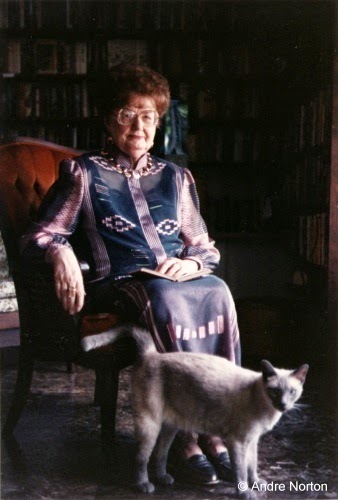
It was a perfect novel for me. I identified strongly with the main character, who had been violated in a very personal way by monsters. And then had to build a new life in a world full of potential other-monsters. Andre Norton shared my pain and helped me overcome it.
But she also fooled me big-time. She was not a he.
She was a librarian and editor of pulp fiction who wrote enough sci-fi and fantasy in the 50’s, 60’s, and 70’s to finally become a full-time author.
She was already on book number 29 when she retired from being a librarian to write full time.
And I would go on to own and read several of her other books, which were good, but never quite lived up to that first one I read. Of course, that may have been because of the timing and circumstance that led me to a book that I actually needed to read. That book set me on the road to recovery from my personal darkness. And it may have sparked in me the need to eventually become a nudist. And more important than that, it may have led me to a lifelong need to teach reading.
Andre Norton was a real writer. And she made me one too. Though I never knew who she really was until after I bought that book because of the picture on the cover. And I never got around to properly thanking her for all of that… Until this very moment.
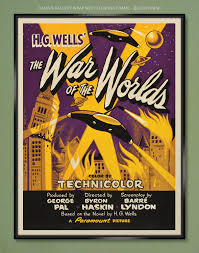
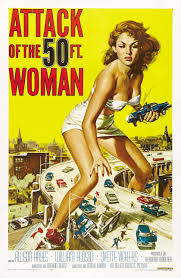
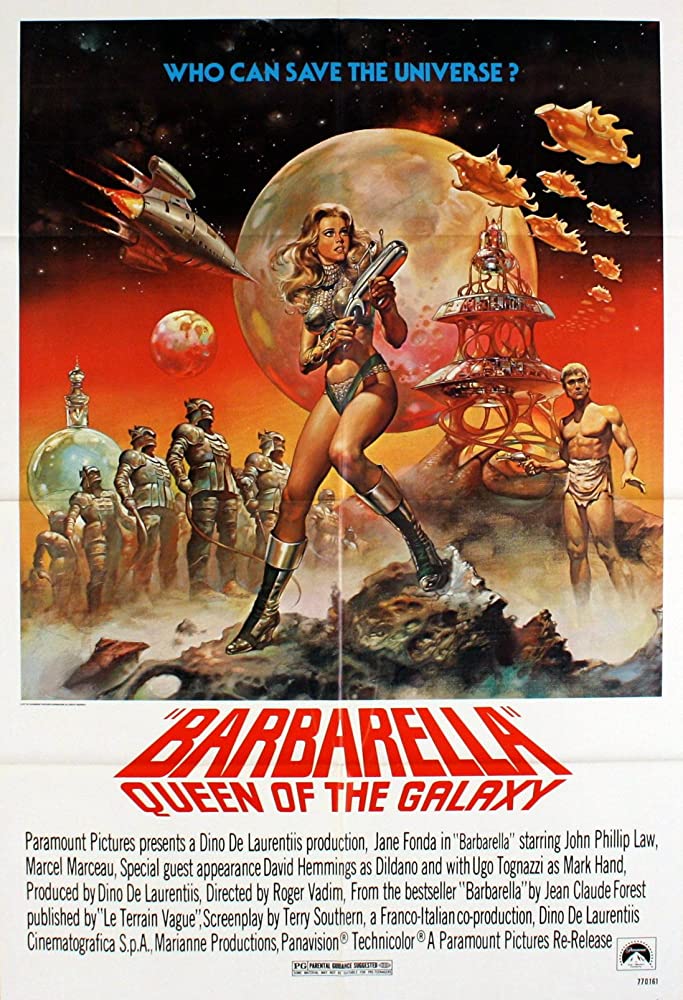
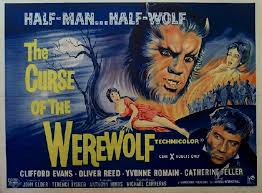
Yes, I am saying the world I live in is a low-budget commercial movie made without literary or artistic pretensions. You know, the kind where movie makers learn their craft, taking big risks with smaller consequences, and making the world of their picture reflect their heart rather than the producer’s lust for money.
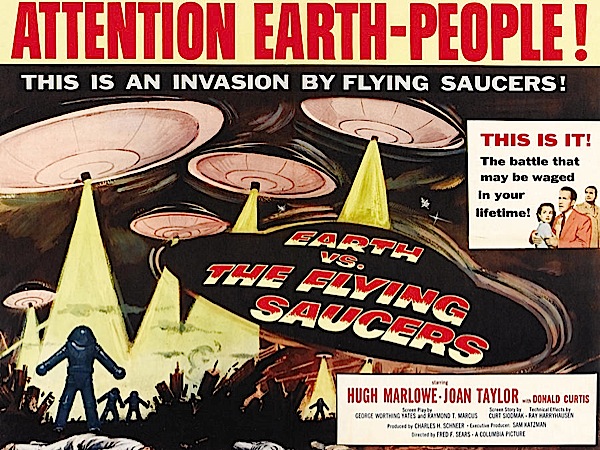
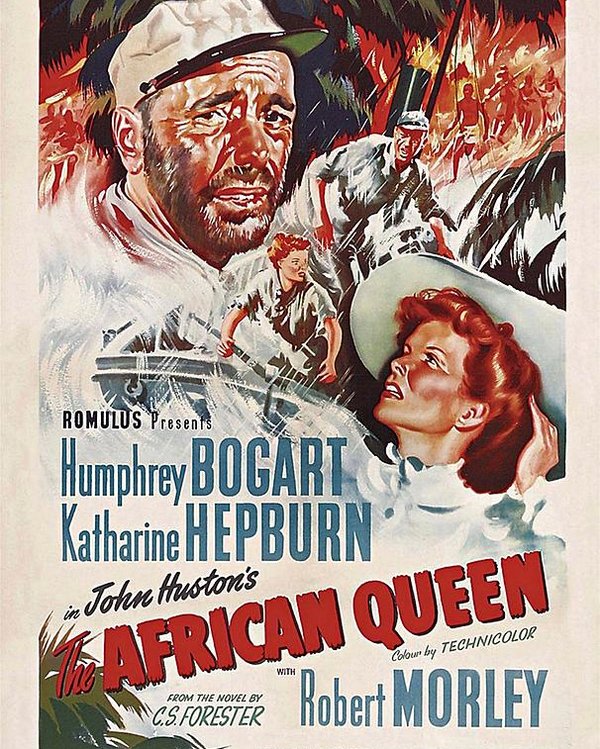
Mostly what I am talking about are the movies I remember from late-night Saturday TV in black and white (regardless of whether or not the movie was made in Technicolor) and the less-risky as well as more-likely-good Saturday matinees on Channel 3. Movies made in the 1950s, 1960s, and early 1970s. They were perfect, of course, for the forbidden Midnight Movie on the show called Gravesend Manor. I had to sneak downstairs to watch it on Saturday nights with the volume turned way down low. (Not that Mom and Dad didn’t know. Well, maybe they didn’t know how many of those I watched completely naked… maybe.)
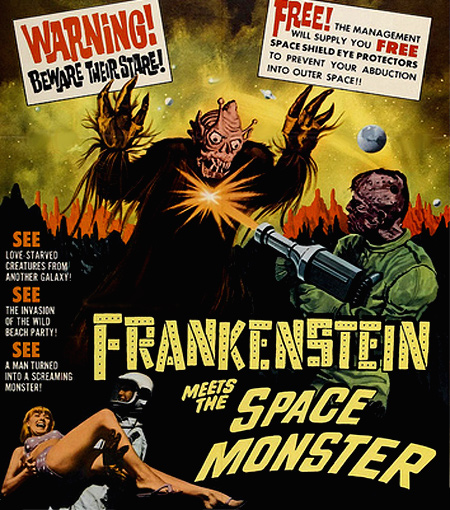
I watched this one when I was twelve, late night on an October Saturday. I had a bed-sheet with me to pull over my head at the scariest parts. Frankenstein was a crashed astronaut brought back to life by the magic of space radiation. He was uglier than sin, but still the hero of the movie, saving the Earth from invading guys in gorilla suits and scary masks (none of which looked like the movie poster.)
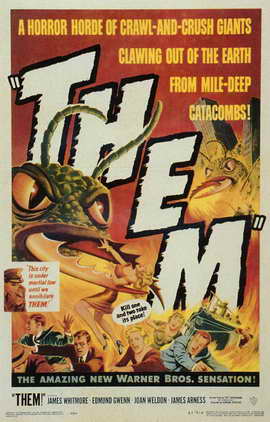
This one, starring James Whitmore, a really good B-Movie actor, was about giant ants coming up from the sewers and the underground to eat the city.
I would end up watching it again twenty years later when I was wearing clothes and not alone in the dark house lit only by a black-and-white TV screen.
I realized on the second viewing that it was actually a pretty good movie in spite of cheesy special effects. And I realized too that I had learned from James Whitmore’s hero character that, in times of crisis, you have to run towards the trouble rather than away from it, a thing that I used several times in my teaching career with fights and tornadoes and even rattlesnakes visiting the school campus looking to eat a seventh-grader or something (though it was a bad idea for the snake even if it had been successful.)
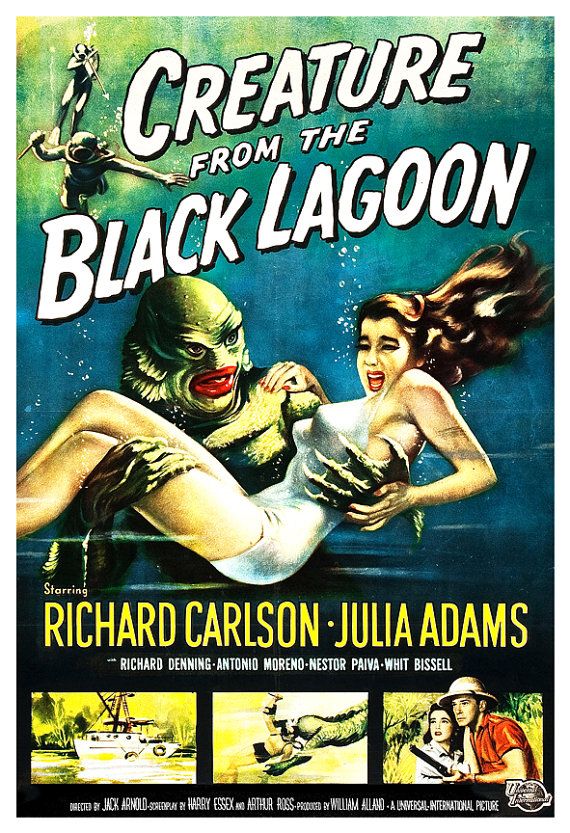
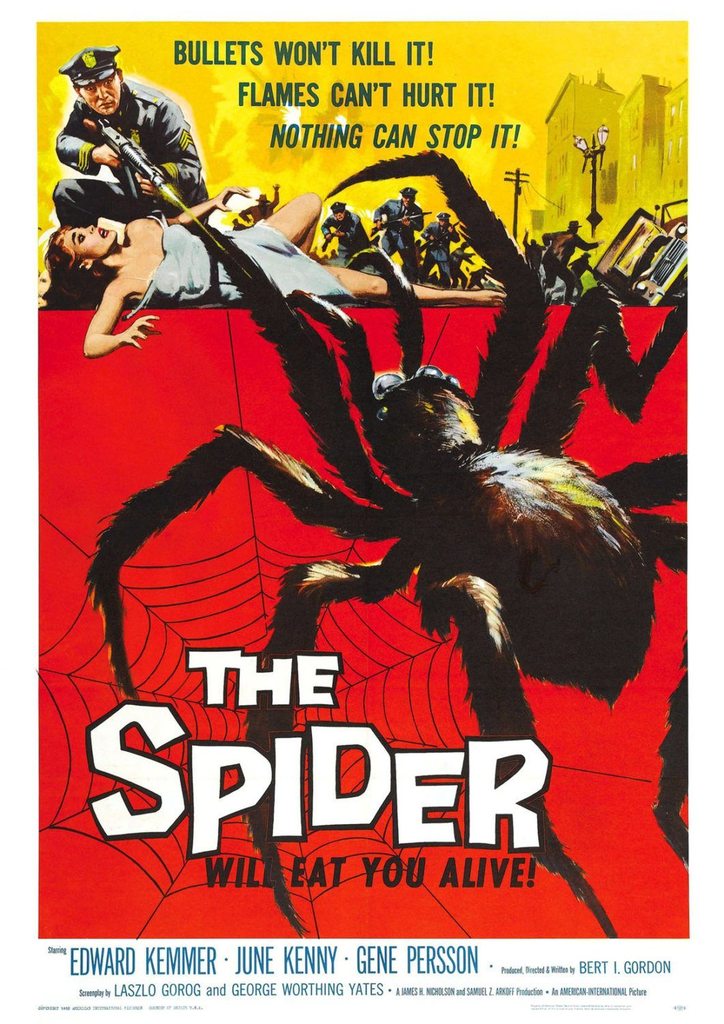
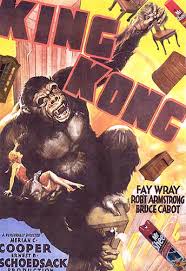
This one, of course, taught me that monsters liked to carry off pretty girls in bikinis. And not just on the poster, either. But it was the hero that got the girl, not the monster. This movie taught me that it sucks to be the monster. Though it also taught me that it was a good movie to take your pajamas off for and watch naked when you are thirteen.
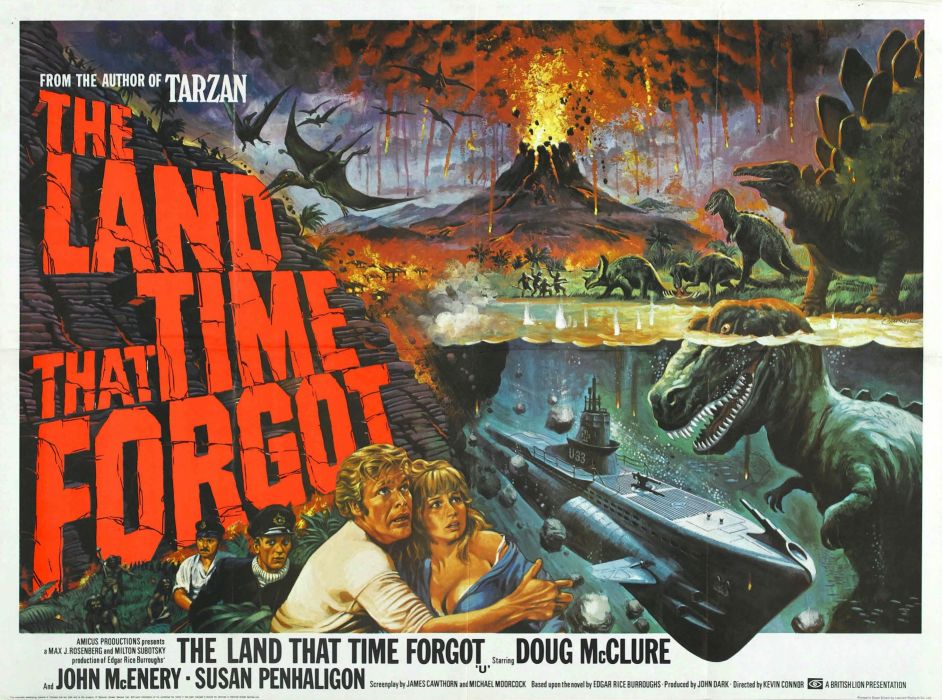
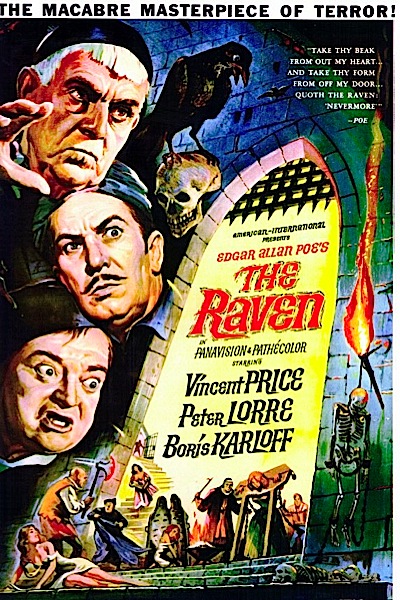
But not all B-movies had to be watched late night on Saturdays. This movie was one of the first ones that I got to go to the movie theater to see by myself. (My sisters and little brother were still too young and got nightmares too easily to see such a movie.) It came out when I was in my teens and Mom and Dad began thinking of me as an adult once… or even possibly twice in a month.
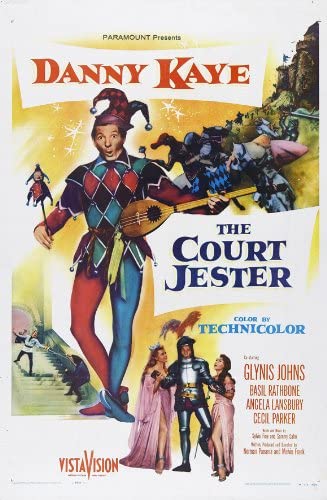
And not all B-movies were monster movies, gangster movies, and westerns. Some, like a lot of Danny Kaye’s movies, were movies my Dad and my grandparents were more than happy to watch with me. I saw this one in both black-and-white and color. And I learned from this that it was okay to take advantage of happy accidents, like a case of mistaken identity, and using your wits, your creative singing ability, and your inexplicable good luck to win the day for everybody but the bad guys armed only with your good sense of humor.
And some of the best movies I have ever seen, judging by what I learned about movies as literature from Professor Loring Silet in his Modern Film Class at Iowa State University, are by their nature B-movies.
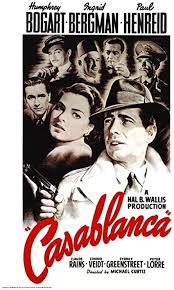
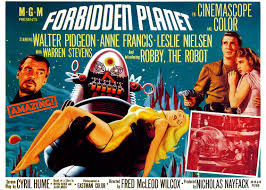
I am using movie posters in this blog post only from movies I have personally seen. (And I admit that not all of them are strictly “good” movies according to Professor Silet, but I like them all.)
Feel free to tell me in the comments if you have seen any of these movies yourself. I am open to all opinions, comments, and confessions.
This one is based on Shakespeare’s The Tempest.
I saw this one in college. You had to be 18 at the time to even buy a ticket.
I actually think that this is one of the best movies ever made. It will always make my own personal top-ten list.
I live in a B-movie world. The production values around me are not the top-dollar ones. But the stories are entertaining. The real-life heroes still run towards the problem. And it still sucks to be the monster. But it has always been worth the price of the ticket. And during my time on Earth here, even in 2020, I plan on staying till the end of the picture. I go nowhere until I see the Best Boy’s name in the end credits. And maybe not even then.
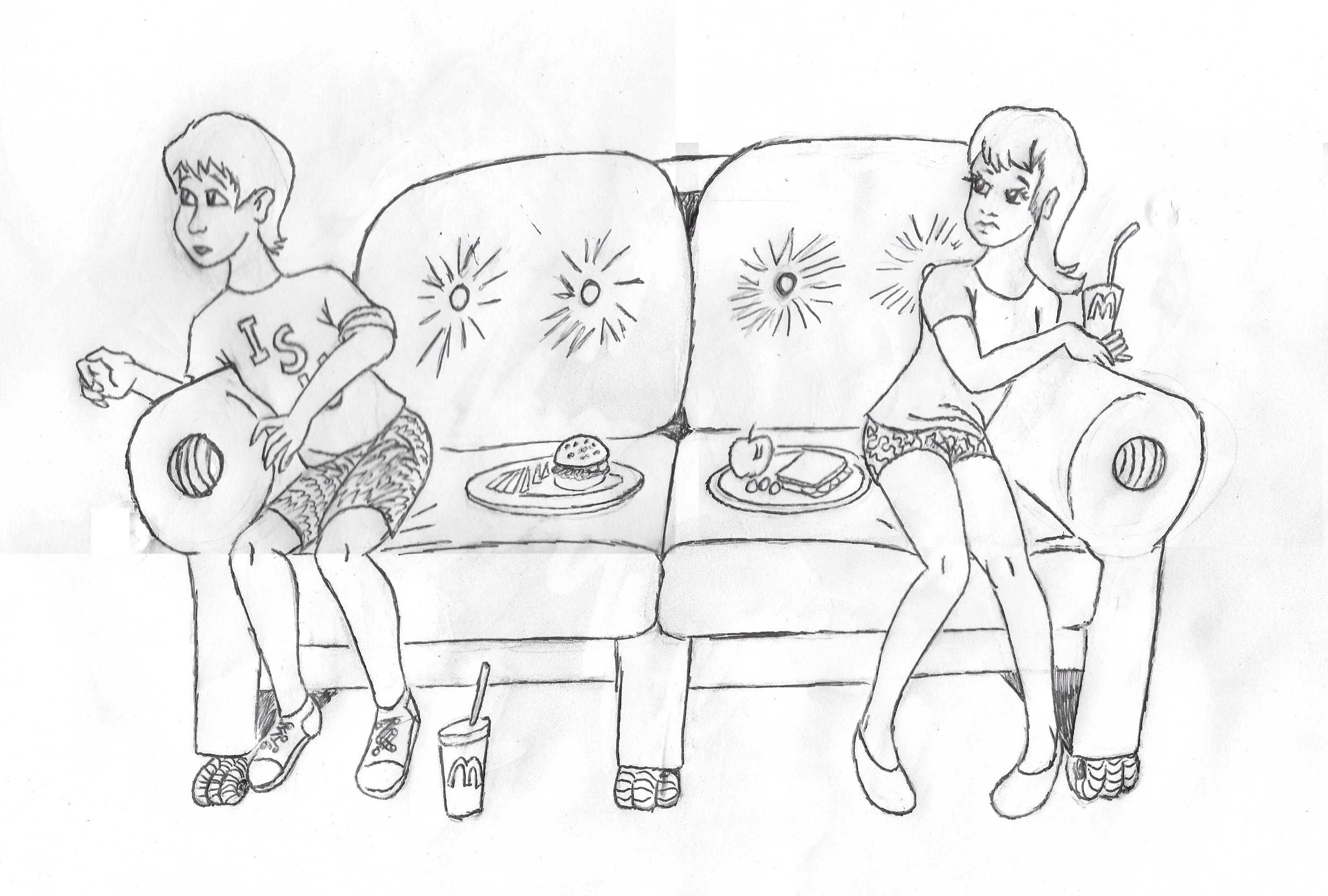
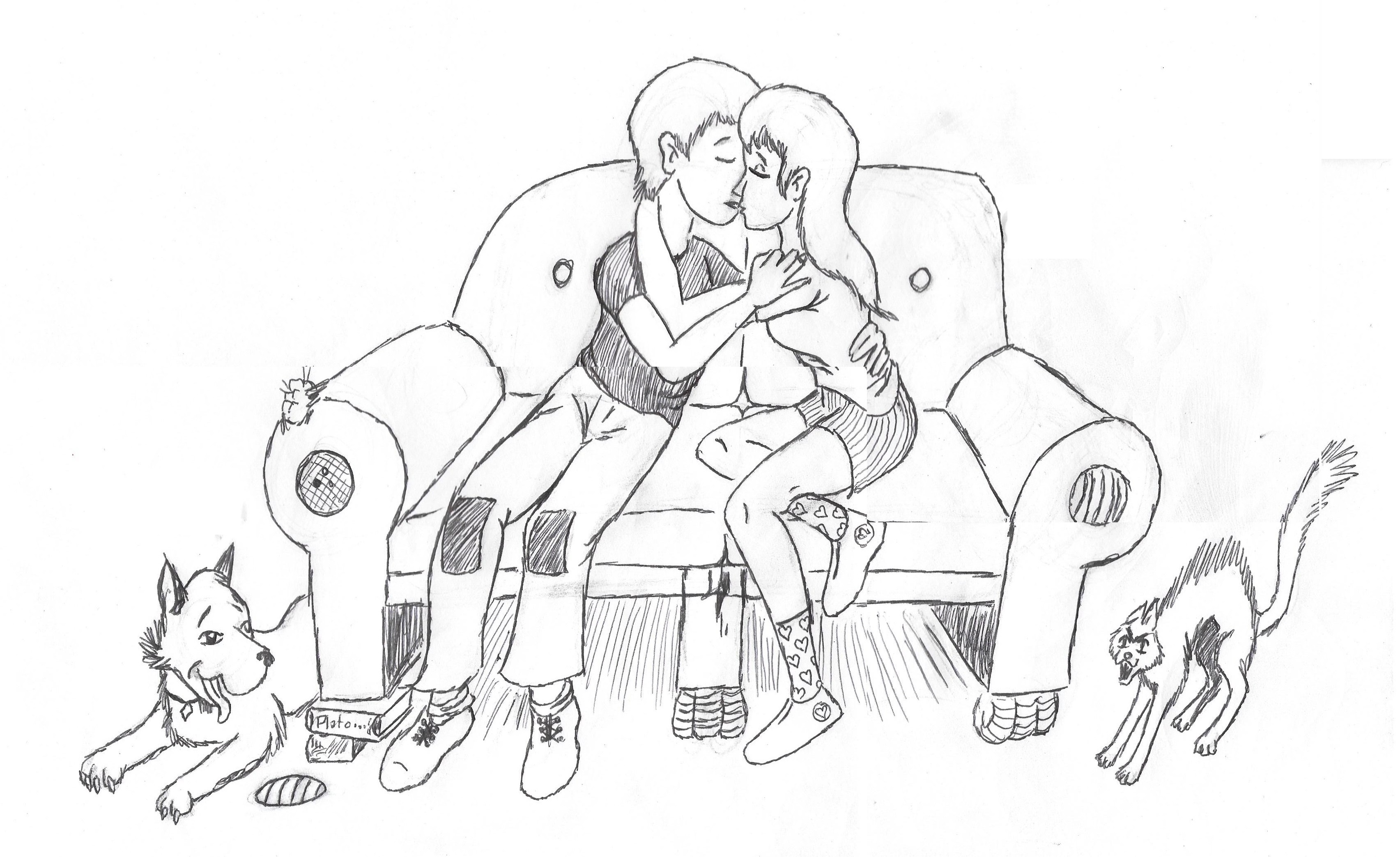
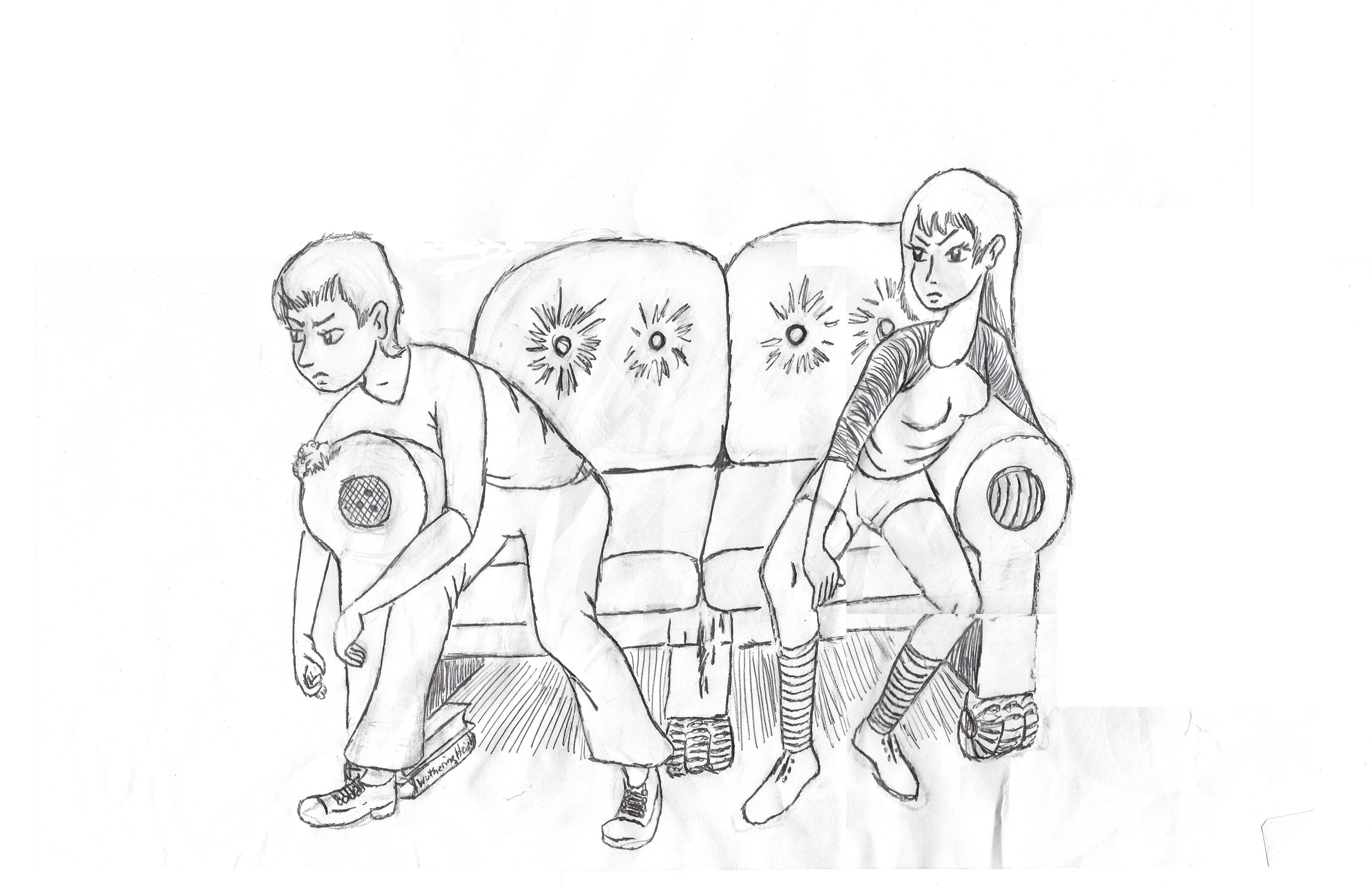
This is a story about an innocuous piece of furniture in Great Aunt Minnie Efram’s house. It was a little brown loveseat with carved wooden monster feet.
As the story begins, the little loveseat was sitting in the parlor in front of the small black and white television. During the monthly Efram family card party, the love seat was the only place for the two of them to spend the evening. But he was ten and he hated girls. He had a reputation with the guys at school as a girl hater, and he couldn’t have it known that he was sitting on a loveseat with Uncle Henry’s stepdaughter, the one the guys all said they had seen eating her own boogers.
She was also ten, and in his class at school. She liked to watch him more than any of the other boys. But she didn’t know why. She liked unicorns and the color pink, but she also kinda liked the way boys looked at her when she wore shorts. And she liked seeing him in PE class at school, wearing shorts. He was athletic and often won games in PE.
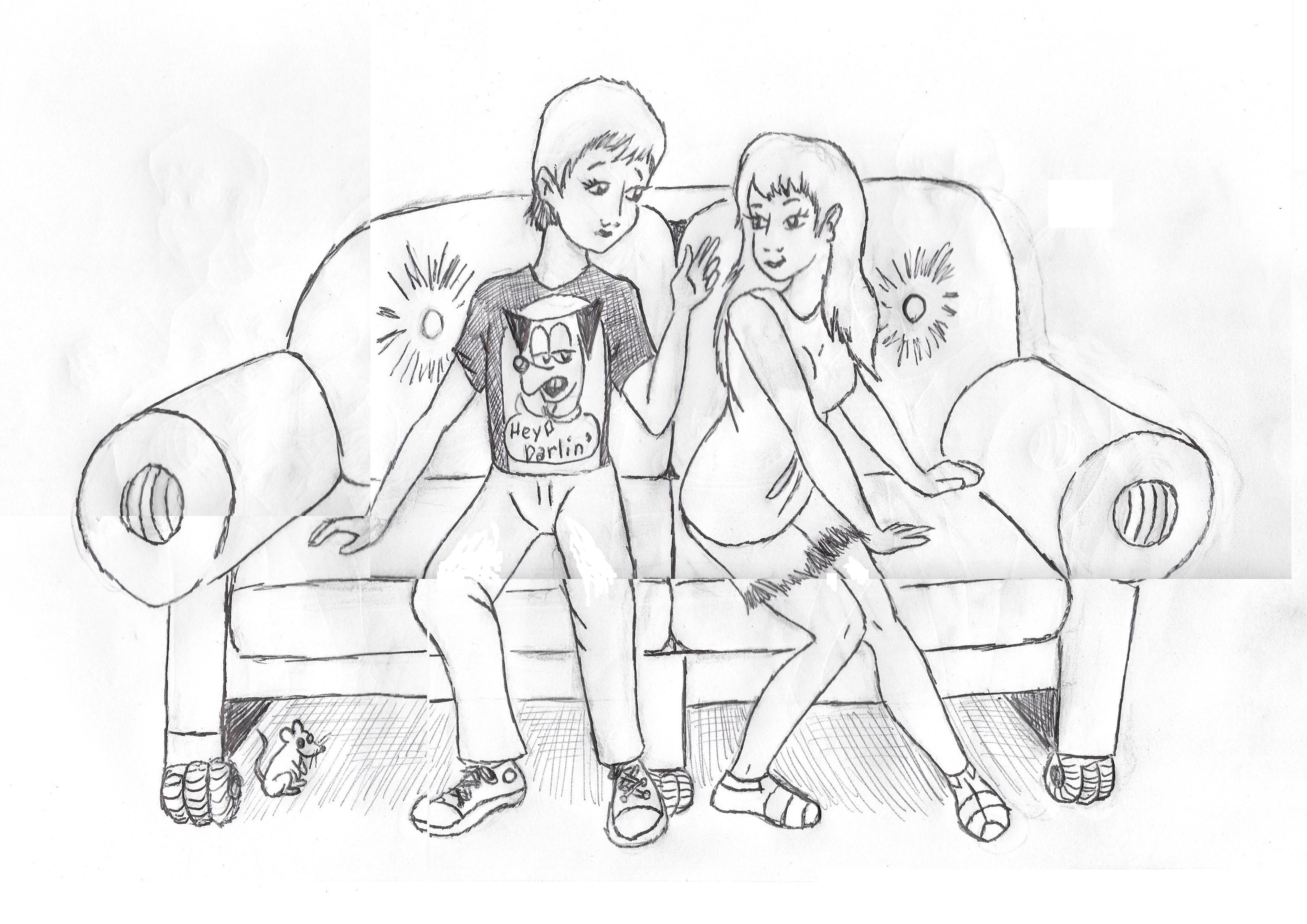
After two years of monthly card parties happening during at least three different months every year at Aunt Minnie’s place, he had discovered that girls didn’t actually smell bad, and this one actually listened when he talked about playing football, and how it made him feel when he scored the seventy-five-yard touchdown. In fact, the more he talked about football, and the closer they sat to each other, the better she seemed to smell. He liked that smell.
She liked that he didn’t only pay attention to her at the card parties anymore. He actually said, “Hi” in public. And she liked his smile, even when he got braces. He let her pick the shows they watched on the old black and white television while seated on the loveseat. She actually worked up the nerve to tell him that she had told Jane at school to ask him if he liked her, and stupid Jane had completely forgotten to ask him, or maybe Jane was just too chicken to ask him and used the excuse that she forgot.
He said that if she liked him, he liked her. But if she didn’t, he didn’t either. “Like” her, he meant. Which he did because she did.
After two more years and six more card parties worth of scootching behinds closer together on the old loveseat, something different had happened. And it was about time too. Aunt Minnie had bought a puppy, and that not only was a bad thing for the seven cats that lived with old Minnie, but it was hard on the loveseat too. One of the little couch’s monster feet was lost, and the numerous instances of terrified cat claws digging in were beginning to have an effect on the upholstery. And that danged dog wizzled everywhere. The loveseat had one purpose in life, and it didn’t want to give in to wear and tear before achieving that purpose.
But the very next year brought disaster. He apparently told the members of the freshman football team that something had happened on that old love seat that really hadn’t happened. The football team was impressed because they all thought she was pretty hot stuff, and he was generally thought of as a lame-o dweeb. She heard about it from Jane who heard about it from Nanette’s boyfriend who was on the team. And she got mad. How dare he say something like that when it wasn’t true?
In January of that year, Aunt Minnie passed away in her sleep. The loveseat was sold at auction to a farmer who liked to do re-upholstery as a hobby. It got re-done in red velvet and leather with wheels replacing the wooden monster feet and sold to a car dealer in Des Moines who placed it in the lobby show-room for customers to sit on.
But the story has a happy ending. She would later make his locker room lie into the truth on Prom Night (fortunately with protection) and then went on to marry him when they both were sophomores in college. Of course, it wasn’t always, “They lived happily ever after,” because they didn’t. They got divorced once and got re-married shortly after… to each other. They had three kids. And the loveseat didn’t ever learn any of that. Because it was a loveseat. You didn’t really think loveseats could know anything, did you?
Teachers are not supposed to fall in love with students. Of course, when the school district tells you that, at the beginning of the year, they are talking mostly about high school students, and they are talking exclusively about romantic love. I have never had a real problem with that rule. Romantically, little half-brained and totally immature middle school students are downright icky. Especially the walking, talking, and sometimes farting middle school boys.
But schools, even though they can’t really say it, and some administrators don’t believe they want it to be so, they want teachers to have “teacher love” for students. That means, in a vaguely defined way in administrative brains compatible with the real meaning of “fully funded,”that they want teachers to become surrogate mothers and fathers to students, the kind of love you have for an orphan you have adopted because you can plainly see they need someone… anyone… to love them and care for them… no matter how ugly they might be on the outside.
“To be a good teacher, you gotta learn to love ugly,” Head Principal Watkins said to us all for the two years he managed to love our faculty. And he meant it. I was not the only teacher I heard him tell, “You are a wonderful teacher because you care about kids.” And he meant it. Not like most principals.
But when you see a picture of David, the way he was back then, you can see he was not ugly. Just his situation was ugly.
He was one of six kids that lived with his single mother in the housing project for low-income families. His mother had, at the time the principal called me into his office, been cited by authorities twice for neglect of her children.
“Mike, I know you have mentored and helped several kids outside of school. And we have a boy coming into your seventh grade class that we would like for you to help out however you can. We know you went through the whole social-services and foster-parent training from San Antonio. And David Gutierrez could really use a bit of a boost from you,” the Head Principal told me behind closed doors.
Boy, was that ever an understatement. I was spending considerable time hanging out with the pretty blond reading teacher. The first time I cooked for her, fried hamburgers and instant mashed potatoes, David had a plate already at the tiny table in my little apartment. And, skinny little thing that he was, he ate three quarters of all the food I had badly cooked. Annabel didn’t mind. And not because the burgers were burnt and the potatoes were runny… I am still not a great cook. She would become David’s second mom for those next three years. She gave him as much if not more “teacher love” than I did.
He was not a good student in any of his classes. But he was an adequate reader, and he actually improved noticeably in the time he was hanging out with us.
But he gave us a turn during that first fall when he got sick. He had the seventh grade History teacher first period every morning. And one day in October he reported to class all listless and red-eyed, And Mrs. Finch was a sharp and capable teacher, knowing what drug problems looked like, and what they didn’t look like. She sent him to the nurse. It was a fever of one-hundred-and-three degrees. The parent was called, but the parent didn’t answer. So, immediately after school Annabel and I took him directly from the nurse’s office to the doctor. And after it was determined he had a bad sinus infection, we took him to my place and put him in the spare bedroom (all apartments on North Stewart Street were two-bedroom, but there was only one of me.) Annabel stayed with him while I filled the prescription for antibiotics. We got him dosed and rested at least before his mother returned from her cleaning job in Laredo, sixty miles south. We told her everything that happened. And she took him home. His two older sisters took over nursing duty.
But when the school contacted the doctor, it was explained that the infection was severe mainly because David was malnourished and dangerously anemic. Of course, that was evidence of neglect and had to be reported.
In order to avoid having to give up custody to the State his mother moved him to Laredo, closer to her work. Both of the older sisters, Bunny and Bea had advised their Mom to give him to Annabel and me. But, of course, we were not married and in no position to become his actual parents.
So, David spent two months in Laredo, calling me every night from a pay phone. His grades in school tanked. He was miserable and lonely.
The problem was worked out in David’s family. His older brother sent money every month to his two older sisters. And Bunny had a job and kept the apartment in Cotulla for herself. So, as a compromise, since Bea was already living there with Bunny to attend high school, David came back to live with them, along with his younger sister. They returned to the school where all their friends were.
Through the rest of David’s seventh grade until the end of high school he was like a son to me. He was constantly at my place, playing computer games, watching VHS movies, and charming my girlfriend. (Annabel had the apartment next door for three of the next four years.) I played games with him. I fought with him about getting his homework done. I basically did the Dad-thing for him, something no other man had ever been bothered to do. In later years he would work as a substitute teacher for me. He would introduce me to new girlfriends. And the last time I saw him, in Uncle Moe’s Mexican Restaurant, he introduced his pregnant wife to me and my wife.
In Hebrew, the name David means, “Beloved.” Hence, that’s the only part of his name in this essay that is real.













Get Up and Do!
It is daunting when bad fortune comes in waves, drowning us in debt, suffering, disabling illness, financial reversals, and so many more things I have been through this last year personally, so that we want to lie down and never get up.
But, I am not dead yet… and there is poetry to be lived.
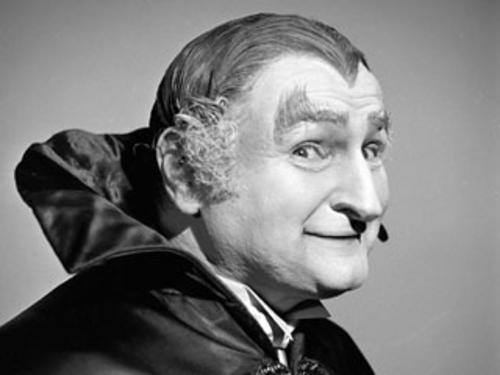
I say that as one of the world’s fifty worst poets who ever lived. (In my defense, I am a humorist, and I write bad poetry on purpose.) My inspiration for the living of poetry comes from reading and living good poetry. I live because there is poetry by Walt Whitman. Of course, also Shakespeare… whoever he really was. And I understand that much of what I have learned in my brief and stupidly-lived 61 years comes from the poetry of the visionary poet I pictured above. Do you know him? If you have never read his poetry, you haven’t truly lived the poetry you need to live.
This poet taught me that “Being, not doing, is my first love.” Of course, if I am satisfied with just sitting on my bed and “being” through most of my day, I will starve to death and not “be” anymore. But he has taught me that what is essential is already within me. There is wisdom and power in Uncle Ted’s poetry. (Yes, I know I am not really related to him, but that’s only physical and overlooks the spiritual.) I must partake of it to live.
If you are bored by poetry about plants in a greenhouse under bright lights, or you can never understand what the poet means when he says, “My father was a fish”, then you need to practice reading poetry more. You don’t truly understand what poetry is, and what it is for… yet.
And I am sure you have probably concluded from all of this that I am a fool and a bad poet and I have no right to try to tell you who and what a truly great poet is. But, fool that I am, I know it when I see it. It is there in the verse, the hideous and horrible… the beautiful and the true. And if I know anything at all worth telling about the subject, it is this; Ted Roethke is a great American poet. And he writes poetry that you need to read… and not only read but live.
Leave a comment
Filed under artists I admire, commentary, insight, inspiration, poetry, strange and wonderful ideas about life
Tagged as living poetry, poetry, Theodore Roethke