
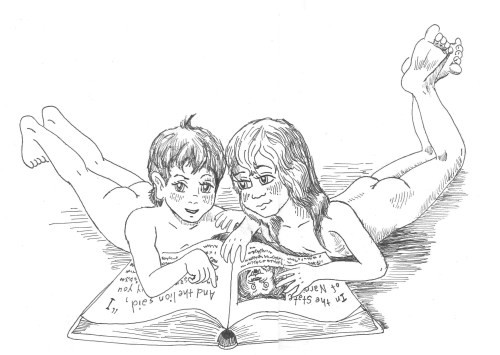
I was a middle school English teacher. And part of that job is to build reading skills. But that is a challenging thing. Especially if you work for a poor rural school district with limited budgets and very little ability to buy computers and the necessary software. After all, being a reading teacher in the upper grade levels of public schools is HARD. Can you figure out a child’s reading level with teacher-made Cloze tests? Do you know how to tell a book’s reading level just by sampling the concept density, vocabulary load, and sentence lengths in the beginning, middle, and end of a book? Do you know where to find the readability information in the student’s History and Science textbooks? And did you know there is no formula anywhere to cover how you match up kids to books they will actually read and like without becoming a mind-reading trusted friend of every kid in your class?
Seriously. Even if you are a teacher certified to teach reading, they do not teach you these things below the doctorate level in teacher-training schools. I had to teach myself before I could effectively teach them.
The fact is, life-long readers are made by book-reading parents who read to their children a lot before they ever come to school. Those kids get to school and top the lists of readers no matter what reading or literacy test you give them. They benefit from a reading teacher they can talk to about books, but they don’t need them. They know how to teach themselves. And kids who don’t catch fire in their reading ability thanks to an enthusiastic and gifted kindergarten, first, or second-grade teacher are never going to learn to read for fun, or probably ever read anything not assigned by their boss with job-loss consequences ever again after leaving school. Some kids burdened with dyslexia, ADD, or even mental illness of some sort are never going to read at all… without intervention.
And high-stakes State tests that have been all the rage with Republican governments who want to prove teachers make too much money, don’t even measure reading skills and compare results to see how much kids have gained every single year. They don’t want to give teachers credit if they take it upon themselves to actually teach students to read better. That is not what capitalist economies want to measure. They prefer to see how well students conform to norms and standards… to make an obedient working class that doesn’t cost too much because they think for themselves.
But a good teacher teaches kids to read or read better. They do it in spite of the huge challenge. There are ways to do it.
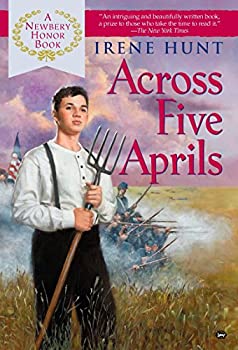
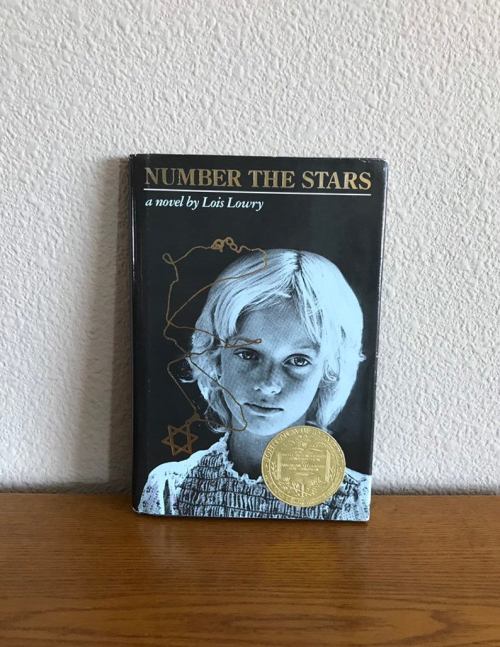
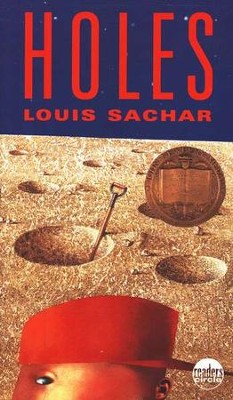
Pictured in this post are four books that I have read aloud to my classes. And walked them through the stories with word banks, guided-reading worksheets, focused discussions about theme-setting-character and whatnot. I tricked them into caring about what happens to the main characters because you learn to care about them as people (meaning both the characters and the student readers who invest themselves in those characters.)
I have used these books to make students laugh, as when Mr. Sir is shooting at yellow-spotted lizards in Holes. And I have made them cry, as when the family learns how Tom was killed in the Battle of Shiloh in the book Across Five Aprils. And I have horrified them when it is revealed what happens to old people and defective babies in The Giver. You can literally make students love good books if you are willing to share them hard enough.
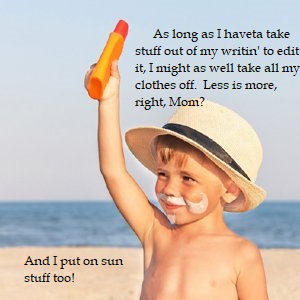
I have never tried to get students to read books literally naked as my Paffooney might be suggesting. I don’t think the school boards I have worked for would’ve liked that very much. But it is a triumph of teaching when you can get them to figuratively immerse themselves in books to that degree.
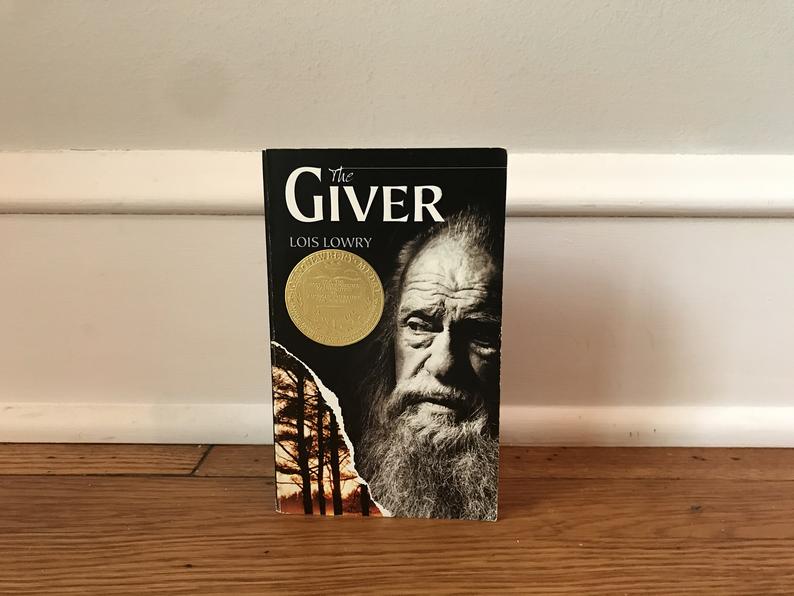
But teaching reading is something all schools need to be doing. And I have to tell you, they are not doing nearly enough anywhere in Texas. And maybe not in the rest of the United States either.. Now that I can teach no more… I am left despairing. But not because of lack of belief in kids and good books.
This book of mine is in a free-book promotion this weekend.
Click on the link, get a copy for free.
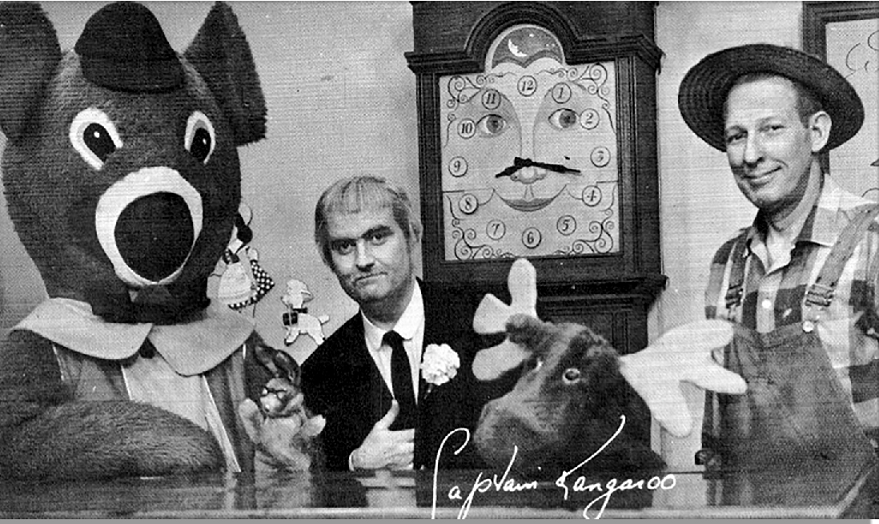
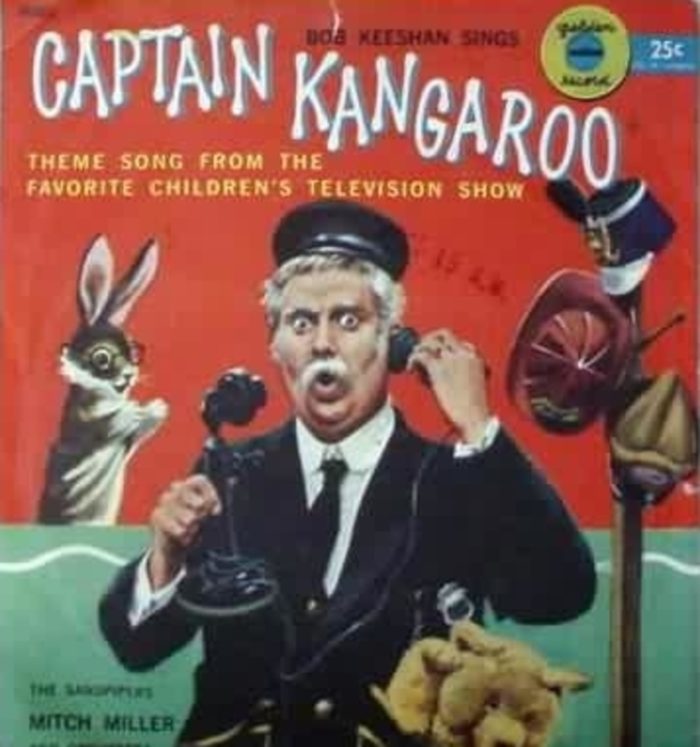
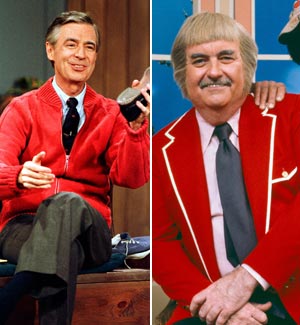 But Bob Keeshan, though a TV personality, was much more of a teacher than anything else. His show went on air before I was born, and I don’t remember a moment in my childhood that he wasn’t a part of it. He was like Mr. Rogers, but came into our lives even before Fred Rogers appeared on the scene. I watched the show in the mornings before school started, at a time when I walked all the way across our little Iowa farm town to get to school. He taught me important early lessons in life that were just as impactful as the math and language and social skills I was getting later in the day. Of course, I had to leave home for school before the show ended at 8:00 a,m. But just like school, watching and participating in any part of it was capable of teaching you something good.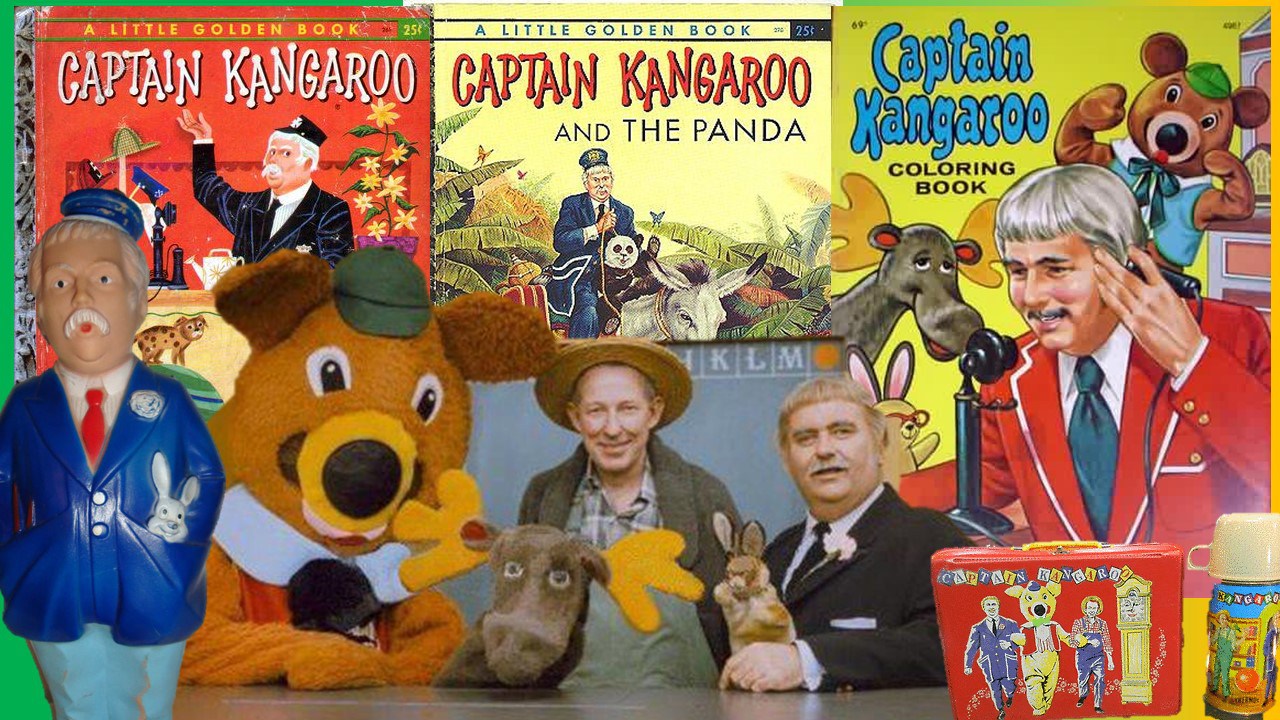


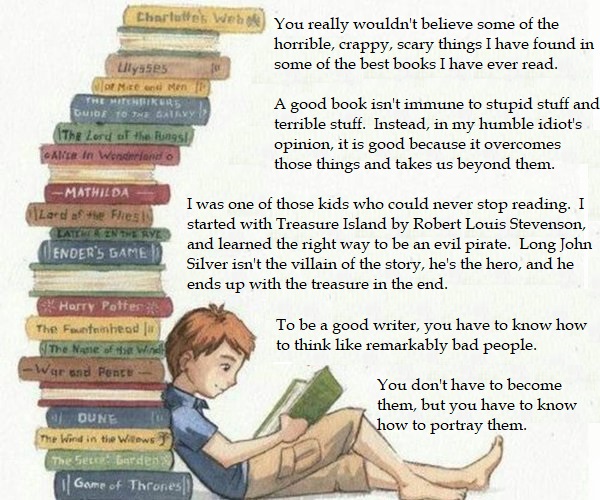


 Of course, there is the opposite problem too. Some writers are not hard to understand at all. They only use simple sentences. They only use ideas that lots of other people have used before. You don’t have to think about what they write. You only need to react. They are the reasons that words like “trite”, “hackneyed”, “boring”, and “cliche” exist in English. But simple, boring writing isn’t written by stupid people. Hemingway is like that. Pared down to the basics. No frills. Yet able to yield complex thoughts, insights, and relationships.





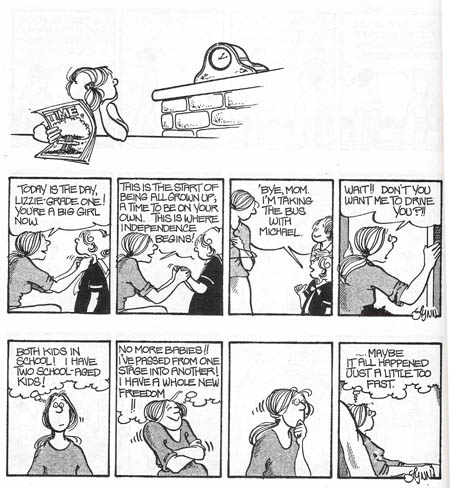 Lynn Johnston’s For Better or Worse is also an old friend. I used to read it in the newspaper practically every day. I watched those kids grow up and have adventures almost as if they were members of my own family. So the mashed potatoes part of the meal is easy to digest too.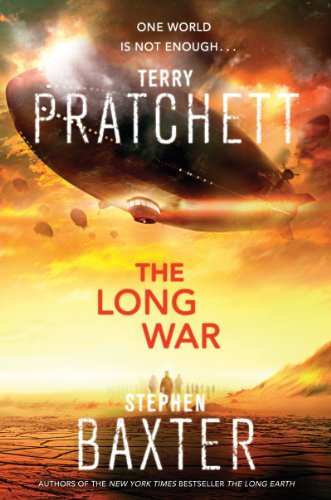


Vonnegut
My experience of the works of Kurt Vonnegut is limited to the reading of three books; Cat’s Cradle, Breakfast of Champions, and Slaughterhouse Five. But it was enough to make me love him and use him as a shaper of my soul.
I deeply apologize for the fact that even though he only wrote 14 books and a bunch of short stories, I have not read everything I could get my hands on by Kurt. Three novels and one short story (Harrison Bergeron) is not really enough to compare to the many, many things that I have read by Mark Twain, Terry Pratchett, Louis L’Amour, and Michael Crichton. I can’t begin to count how many books of each of those four I have read and reread. But it is enough that I read those three novels and have a lifelong regret of never buying and reading Slapstick when I had the chance. Vonnegut writes black humor. The ideas are painful, and burn away flesh from your personal body of being. And at the same time, you cannot help but laugh at the pure, clean, horrifying truths his ridiculous stories reveal.
If, in the course of telling a story, you can put the sublime, the ridiculous, and the horrendous side by side, and make the reader see how they actually fit together, then you can write like Vonnegut.
Let me give you three quick and dirty book reports of the Vonnegut I have read in the order I have read them;
I read Cat’s Cradle in college. I was young and idealistic at the time, foolishly convinced I could be a great writer and cartoonist who could use my work to change mankind for the better.
In the book, Dr. Felix Hoenikker (a fictionalized co-creator of the atomic bomb) is obsessively re-stacking cannonballs in the town square in pursuit of a new way to align water molecules that will yield ice that does not melt at room temperature. Much as he did with the A-bomb, Hoenikker invents a world-ending science-thing without any thought for the possible consequences. The narrator of the novel is trying to write a humanizing biography of the scientist, and comes to observe the inevitable destruction of the whole world when the oceans freeze into Ice-9, the un-meltable ice crystal. Before the world ends, the narrator spends time on the fictional Carribean island of San Lorenzo where he learns the fictional religion known as Bokononism, and learns to make love to a beautiful woman by pressing bare feet together sole to sole. It is a nihilistic picture of what humans are really like more savagely bleak than any portrayal Monte Python’s Flying Circus ever did on TV.
Needless to say, my ideals were eventually shattered and my faith in the world shaken.
I read Breakfast of Champions after I had been teaching long enough to buy my own house, be newly married, and a father to one son. It was probably the worst time of life to be reading a book so cynical, yet true.
In this story, the author Kilgore Trout, much published but mostly unknown, is headed to Midland City to deliver a keynote address at an arts festival. Dwayne Hoover is a wealthy business man who owns a lot of Midland City real-estate. Trout gives Hoover a book (supposedly a message from the creator of the universe) to read that suggests that all people (except for the reader of the book… meaning Hoover) are machines with no free will. Hoover takes the message to heart and tries to set the machines free by breaking them, beating up his son, his lover, and nine other people before being taken into custody.
The book contains devastating themes of suicide, free will, and social and economic cruelty. It makes you sincerely reflect on your own cog-in-the-machine reality.
Slaughterhouse Five is a book I bought and read when I missed my chance to buy Slapstick and needed something to take home from HalfPrice Books to make me feel better about what I missed. (Of the five books I had intended to buy that day, none were still on the shelves in spite of the fact that they had been there the week before.) It was fortuitous. This proved to be the best novel I had ever read by Vonnegut.
Like most of his work, the story of Billy Pilgrim is a fractured mosaic of small story pieces not presented in chronological order. It details Billy’s safe, ordinary marriage to a wife who gives him two children, but it is ironically cluttered with death, accidents, being stalked by an assassin, and being kidnapped by aliens. It also details his experiences in World War II where he is captured by the Germans, held prisoner in Dresden, kept in an underground slaughterhouse, and ironically survives the fire-bombing of Dresden by the Allies. Further, it details his time as a zoo exhibit on the alien planet of Tralfamadore.
It explores the themes of depression, post-traumatic-stress disorder, and anti-war sentiment. Vonnegut himself was a prisoner of war in Dresden during the fire-bombing, so real-life experiences fill the book with gravitas that it might not otherwise possess. Whether the author was ever kidnapped by aliens or not, I cannot say.
But Kurt Vonnegut’s desire to be a writer and portray himself as a writer in the character of Kilgore Trout, and even as himself in his work, has an awful lot to do with my desire to be a writer myself. Dark, pithy wisdom is his thing. But that wisdom, having been wrung from the darkness is all the more brightly lit because of that wringing. It is hard to read, but not hard to love.
6 Comments
Filed under aliens, book reports, commentary, humor, reading, writing humor
Tagged as Kurt Vonnegut