Category Archives: poetry

How to be a Truly Terrible Poet

I can’t tell you how to write a good poem.

As a poet, I am pretty terrible myself.

So, I can’t really tell you how to do it.

I am, however, an expert on how NOT to write a good poem.

A truly terrible poem might begin with an over-extended metaphor.

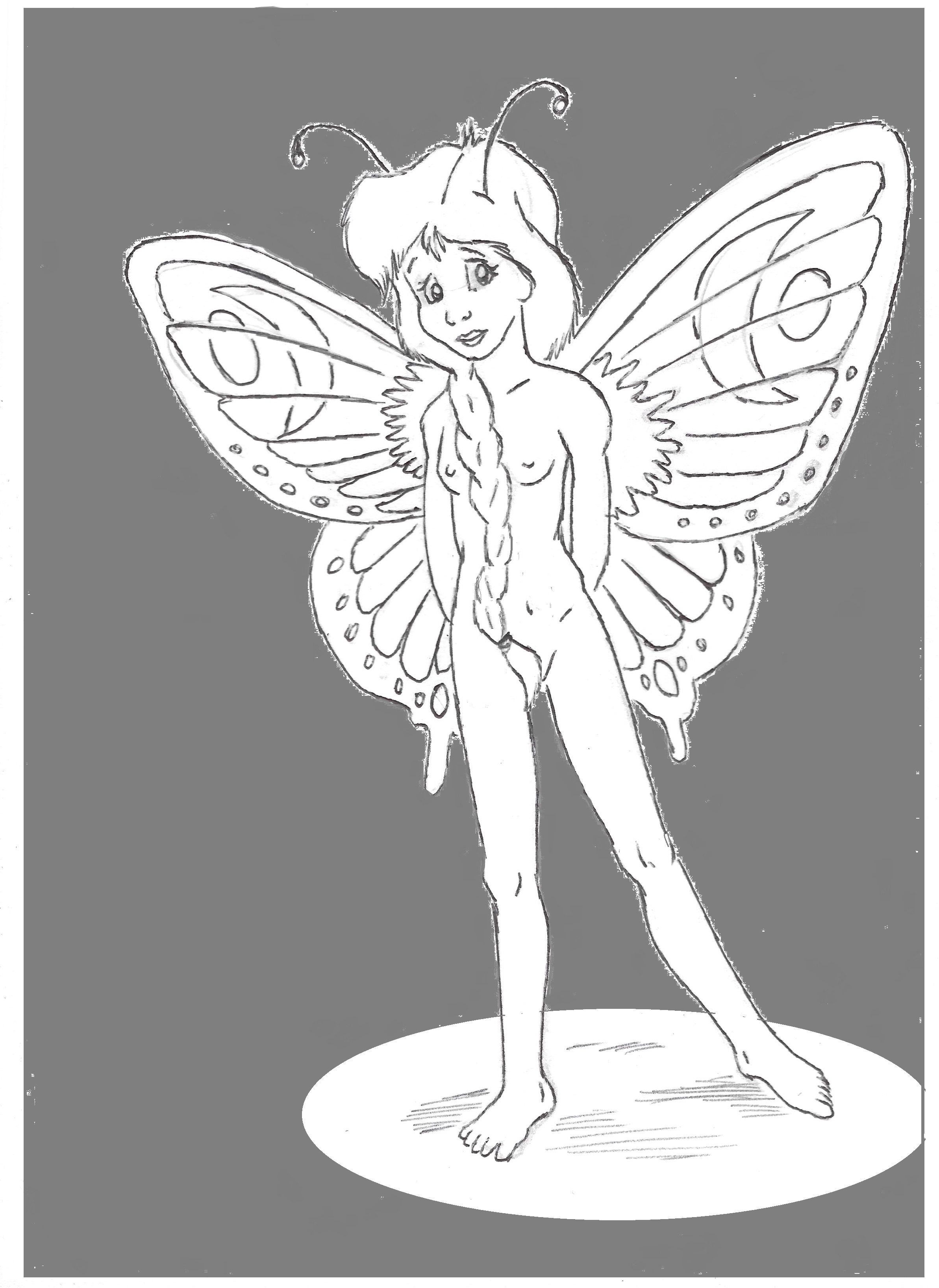
It might begin by saying, “A poem is like a fairy tale, filmed in black and white on 35 mm film stock, with Orson Wells as the director.”

And for the meat of the poem, you use details about the fairy acrobats having an accident on the trapeze, and the circus train derails and has a terrible accident, and the clown never takes his makeup off because he’s on the run from the police… and you totally forget that the movie “The Greatest Show on Earth” was directed by Cecil B. DeMille and filmed in color.

And you have a tendency to “squinch” the rhymes, rhyming “good” with “food” and “dud” with “odd,” and at the same time you put trochaic warts all over the iambic pentameter because as a poet you are not William Shakespeare, and you are not even Buddy Rich because the rhythm sounds more like banging trashcan lids than drumbeats.

In the middle of the poem somewhere it suddenly becomes free verse without a rhyme scheme or reason for the change. And the theme circles back on itself and does a pretzel twist with no logic to salt it with.

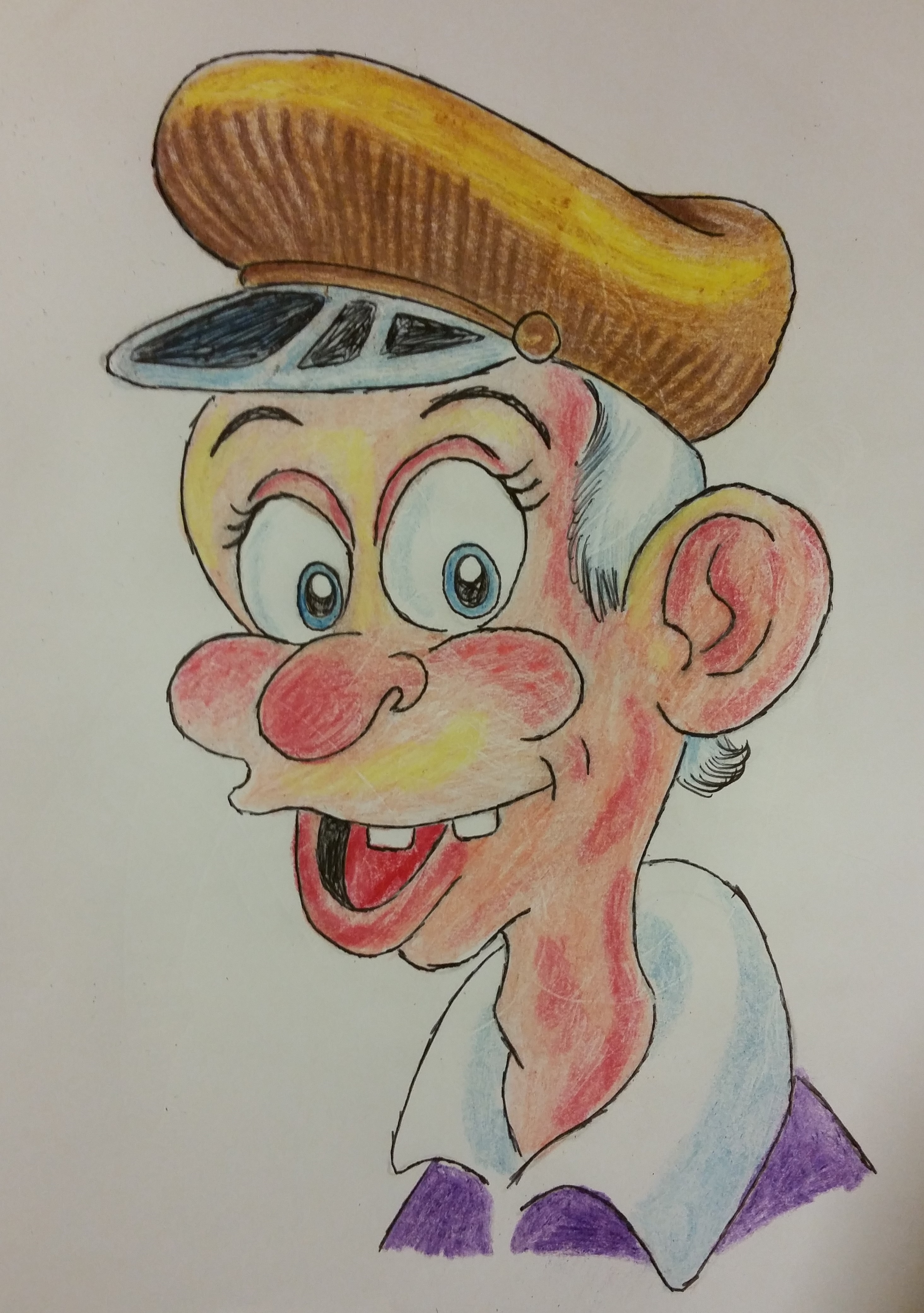
And you are a terrible poet like Mickey because, when you write a poem you don’t realize;

the gemstone at the center of your poem must go from your mind, to pen, to paper, to eye of the reader, to mind… and finally to heart…

And the blaze of its beauty must be strong enough to resonate…

and be able to SHAKE THE BONES OF THE UNIVERSE.

And you can’t do it because you don’t even get the irony of that rule.

Leave a comment

Filed under fairies, humor, irony, Paffooney, poetry

The Philosophy of Bad Poetry

I do write poetry. But I must admit, I am not a serious poet.  I am a humorist at heart, so I tend to write only goofy non-serious poems like this one;

rBVaI1l96JSATTHgAB44A7RQi8s488

So here is a poem that rhymes but has too much “but-but-but” in it.  A poem about pants should not have too many “buts” in it.  One butt per pair, please.  So this is an example of spectacularly bad poetry.  Why do we need bad poetry?  Because it’s funny.  And it serves as a contrast to the best that poetry has to offer.

As a teacher I remember requiring students to memorize and recite Robert Frost’s poem, “The Road Not Taken”.  Now this sort of assignment is a rich source of humorous stories for another day.  Kids struggle to memorize things.  Kids hate to get up in front of the class and speak with everybody looking at them.  You get a sort of ant-under-a- magnifying-glass-in-the-sun sort of effect.  But in order to truly get the assignment right and get the A+,  you have to make that poem your own.  You have to live it, understand it, and when you reach that fork in the road in your own personal yellow wood, you have to understand what Frost was saying in that moment.  That is the life experience poetry has a responsibility to give you.

roads-diverging

Hopefully I gave that experience to at least a few of my students.

Bad poetry makes you more willing to twirl your fingers of understanding in the fine strands of good poetry’s hair.  (Please excuse that horrible metaphor.  I do write bad poetry, after all.)

But all poetry is the same thing.  Poetry is “the shortest, clearest, best way to see and touch the honest bones of the universe through the use of words.”  And I know that definition is really bad.  But it wasn’t written on this planet.  (Danged old Space Goons!)  Still, knowing that poetry comes from such a fundamental place in your heart, you realize that even bad poetry has value.  So, I will continue writing seriously bad poetry in the funniest way possible.  And all of you real poets who happen to read this, take heart, I am making your poetry look better by comparison.

Leave a comment

Filed under humor, insight, irony, philosophy, poem, poetry, Uncategorized

Edwin Arlington Robinson, the Sardonic Poet

Born in Maine a boy, when his parents wanted a girl,

They took a full six months before they gave his name a whirl,

And they drew Edwin from a hat drawn by a man from Arlington Maine

And the remainder of his life, “Edwin Arlington Robinson,” gave the poor boy a pain.

And as he grew into a man of letters, he wrote some fine poems at school,

But the woman he most loved in life married his brother, a fool.

And so, he showed a pessimist, in poetry ever mocking and darkly cruel.

And Pulitzers he won three times, the man could write a jewel.

To write such poems as Robinson’s, you must learn what “sardonic” means,

And suffer a lot in crisply-writ verse that tastes mostly like baked beans.

……………………………..

Okay, I know this evil Mickey poem does not do E.A. Robinson justice. He was a fine master of verse-craft. It has been said (by an Iowa State American Literature professor, so I know it must be true) that Robinson, when asked what he did one day, said, “I studied my poem all day, and then added a comma.”

Surprised by the answer, the questioner then asked what he did the next day. ”I studied the poem all day again, and took the comma out.”

Recently I read his book of poetry called The Children of the Night. It is a fine book of sardonic poems (here meaning; poems that are mocking, pessimistic, and cynical… in case you didn’t look up “sardonic.”) He often writes in this book poems about Thomas Hardy and the poems written by Matthew Arnold and other dusty old writers of the late and early 20th centuries. So, I have given old E.A. the same honor in Mickey’s book of poems as he gave them.

Leave a comment

Filed under poem, poetry, reading, wordplay, writing

Happy Hoppy Poppy

Dumb Luck

This is Poppy

Poppy is happy

But Poppy is also sloppy

So he is a sloppy happy Poppy

And being sloppy can make him droppy

So he is a sloppy droppy happy Poppy

And Poppy calls his baseball bat a boppy

And he dropped the boppy on his foot

So sloppy droppy happy Poppy became hoppy

He was a sloppy droppy happy but hoppy Poppy because of the boppy.

And his hat is becoming floppy… er, what’s that disgusted look on your face?

Okay, maybe I better stoppy.

1 Comment

Filed under humor, Paffooney, poetry

Short and Sweet

No, I am not talking about a midget girlfriend today.

I am talking about brevity.

Some of the best writing gets directly to the point.

You have to know how to say exactly what you want to say.

Then say it.

Like, “Tootie is a Cutie.”

And once said, the point made is…

Sheer poetry.

Leave a comment

Filed under commentary, goofiness, humor, poetry

The Reds and the Blues

Lord, grant me peace

In times of great violence

Grant me wisdom

As everything around me burns in ignorance

Let the cold blues

Be tempered with warm reds

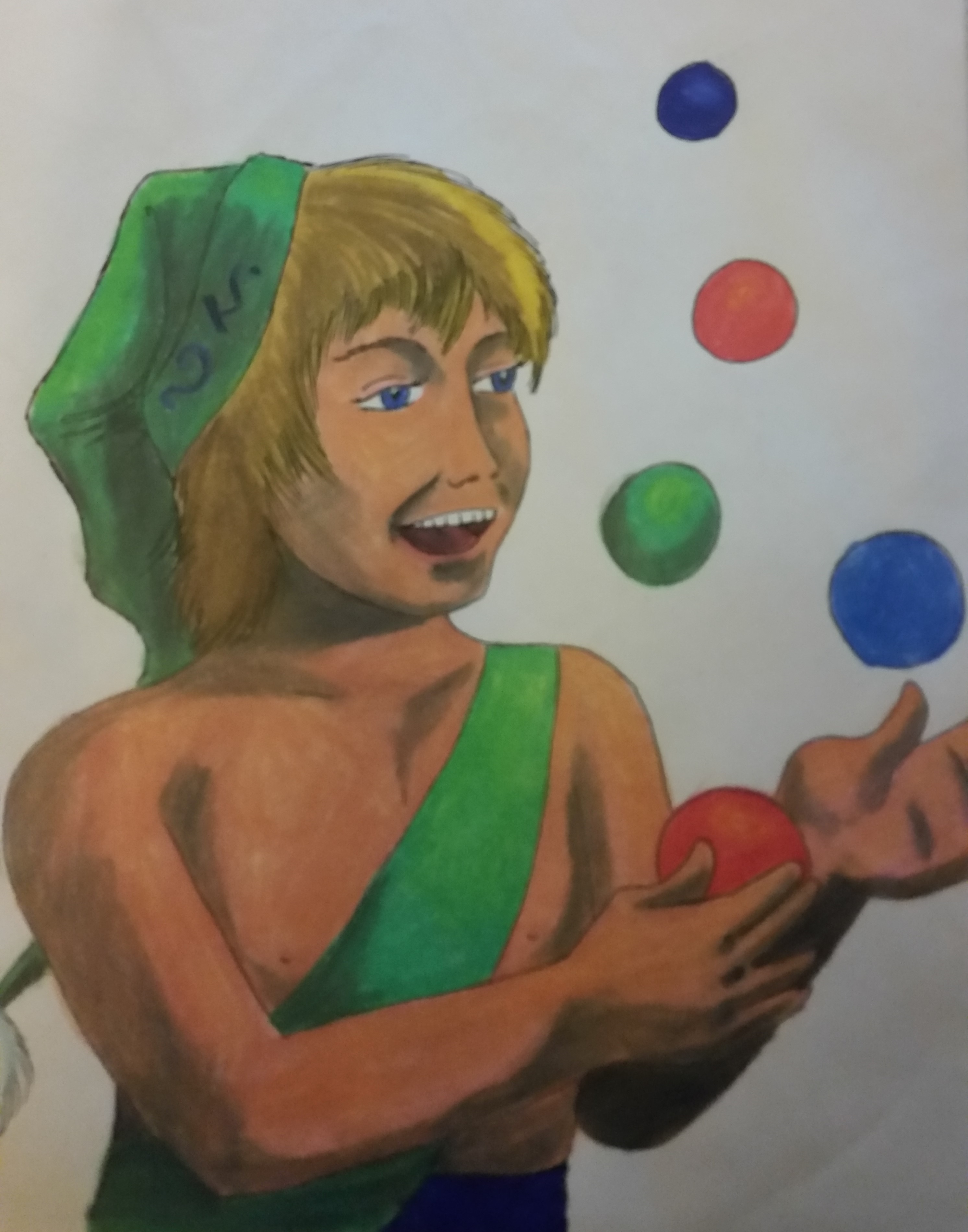
Let me juggle life’s fortunes and misfortunes alike

Red balls over blue balls

Yellow, purple, and green

Over and under

The spiraling path

I’ll keep written records

In journals with pictures

And share my discoveries

With any who’ll listen

And I’ll always keep close in my heart

The people and places and memories

That mattered and shattered

The whole color wheel

Because Shakespeare once showed us the whole color wheel

Is necessary for magic to form on the page

And though yellow is also a primary too

It’s the reds that warm life as the color of blood

And the blues let us chill as the deeper color of ice

But let there no period be

To stop the color progression

Of this warm/cold blank verse

Nor rhythm or rhyme sully

The Reds and the Blues

Leave a comment

Filed under artwork, Paffooney, poem, poetry

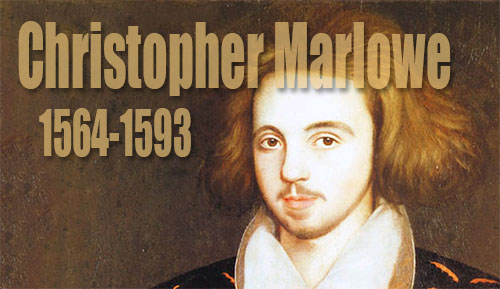
Kit Marlowe, Secret Agent

christopher_marlowe

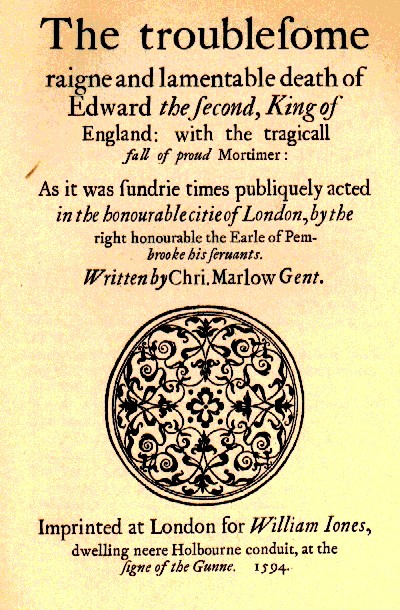
Christopher Marlowe is often sited as the real Shakespeare, a problematic assertion given that he would’ve been forced to write a number of plays after he was dead, giving new meaning to the term “ghost writer”.  But I would like to add to the assertion that “Marlowe is NOT Shakespeare!” that I also believe he did not die as they claim that he did.  Marlowe is a fascinating character of debauchery and misbehavior, intrigue and mystery, and undeniable genius.  As a writer, he was a maverick and risk-taker, having begun the ascendance of the theatrical play as one of the heights of Elizabethan literature with his play Tamburlaine the Great, about the historical figure who rose from shepherd boy to monarch.  This play, and its sequel, Tamburlaine the Great Part II, were among the very first English plays to be written in blank verse, meaning there is a very definite connection between the style of writing established by Marlowe and the later work of Shakespeare.  It is probable that for a few years, Kit Marlowe was a member of the Gray’s Inn group along with Sir Francis Bacon and several other suspicious literary luminaries like Sir Walter Raleigh and possibly Ben Jonson.  (I have to admit at this point that if I am wrong about the Stratford guy and he did write the plays, then he was a member of this group as well, because it was not closed to commoners, only to stupid people.  The Stratford guy was in no way stupid or a villain, no matter what you may believe about the authorship question.)  But here is where the link to Shakespeare’s plays and poetry both begins and ends.  Yes, Kit Marlowe was a capable enough author to have written such sublime plays.  He has all the individual skills to make up the whole.  But if you read his masterwork, The Tragicall History of the Life and Death of Doctor Faustus, you will see that the voice, the unique literary style of the work is simply not by the same author.  Although Shakespeare revisits some of the same themes that Marlowe used in his plays, his manner of development, handling of character, style of humor, and underlying conviction in the existence of God are all different and opposed to Marlowe’s.  Marlowe is NOT Shakespeare.  Shakespeare’s works have more in common with Bacon’s than Marlowe’s.  And I have already said that, “Shakespeare is NOT Bacon… or eggs either.”  And if I said it, it must be so.  (Don’t throw eggs and tomatoes at your computer screen when you read this.  Just call me stupid and vain in the comments like everybody else does.)
maxresdefault

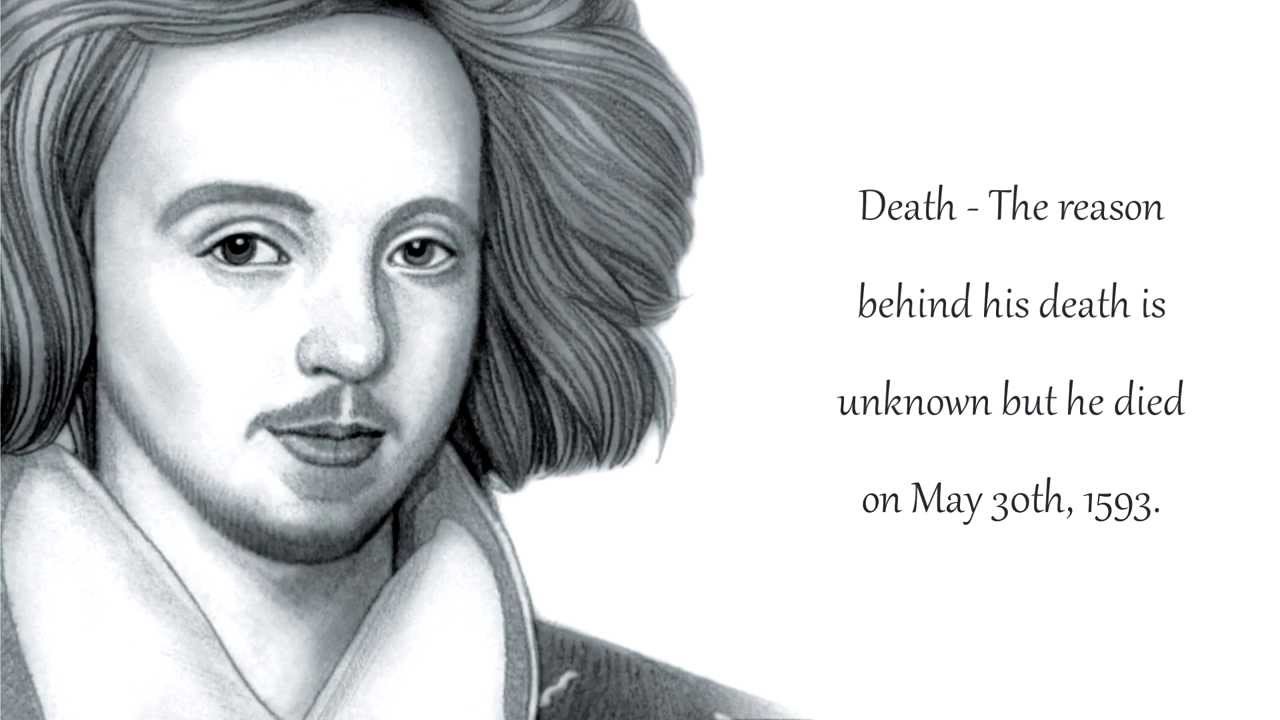
And an even more compelling reason to those of you who don’t obsess over reading Shakespeare and Marlowe and Ben Jonson is that, at the time Shakespeare’s plays were probably written, Kit Marlowe was busy either being stone cold dead, or, having faked his death, was busy being a secret agent for Queen Elizabeth.

And why would a goofball like me think that Christopher Marlowe cunningly faked his own death and went into his own thrilling quest to be like James Bond more than 300 years before Ian Fleming?  Well, because I know how to read and am not generally bright enough not to believe what others have written about him and his connections to the world of spying in Elizabethan times.

These authors have brought out the fact that Marlowe’s frequent absences from college and later public obligations coincide with things like the mysterious tutor called “Morley” who tutored Arbella, niece of Mary Queen of Scots, and a potential successor to Queen Elizabeth, in 1589.  He was also arrested in the Netherlands for allegedly counterfeiting coins related to the activities of seditious Catholics.  He was brought back to England to be dealt with by Lord Treasurer Burghley, the closest adviser to Queen Elizabeth, and was then not so much punished as let off the hook and even rewarded monetarily.  Still think he was not a spy?  Well, his demise probably came about through his relationship with Lord Francis Walsingham and his friendship with Walsingham’s son.  You see, Walsingham was Elizabeth’s “M”, leader of her spies and intelligence units.  After Walsingham died, there was deep concern that no one was still able to protect Marlowe from possible consequences of being both a homosexual and an atheist.  (Being gay was obviously not as serious a sin as atheism for which torture and death penalties lay in wait.)  It was possible that rival spies and nefarious forces could kidnap Marlowe and get information out of him that the Queen needed to be kept secret.

So, when Lord Burghley tortured Marlowe’s friend and sometime roommate, Thomas Kyd, into naming Marlowe a heretic and sending men out with a warrant to arrest Marlowe, Kit’s other friend, Thomas Walsingham probably warned Marlowe.  The bar fight that supposedly ended Marlowe’s life was witnessed by two friends of his, Nicholas Skeres and Robert Poley, both provably con men and professional liars.  The knife that stabbed him in the forehead above his right eye was wielded by Ingram Fizer, another of Marlowe’s disreputable friends, allegedly over an unpaid debt.  Fizer, of course, though he freely admitted killing Marlowe, was acquitted of the murder.  And the coroner’s report is suspect.  Rules of investigation were not followed, and the body was never independently identified by someone other than the three friends at the scene of the crime.  And the body was hastily buried before anyone else could get a close look at it.
edward2a

I am not only telling you that I believe Christopher “Kit” Marlowe was NOT Shakespeare… or eggs either (though that joke doesn’t really work here), but I believe he didn’t die the way it has been reported to us by history.  And why do I believe these things?  Because I think the story of Christopher Marlowe is a really great story, and it exists as a story whether it is historically true or not.

Leave a comment

Filed under angry rant, artists I admire, conspiracy theory, goofy thoughts, humor, poetry, satire, telling lies, William Shakespeare

Holy Bagumba!

newbery2014

I have just finished reading a wonderful book.  It is a young adult novel bordering on being a children’s book.  It won the 2014 Newbery Medal for best work of children’s literature.  But it is a book of so many dimensions that it totally defies categories.  Librarians with butterfly nets who want to pin this book down on their library shelves will be pointlessly waving their nets at it like they believe it’s a butterfly, but it will soar away from them like an eagle.

c360_2016-11-06-09-59-56-962

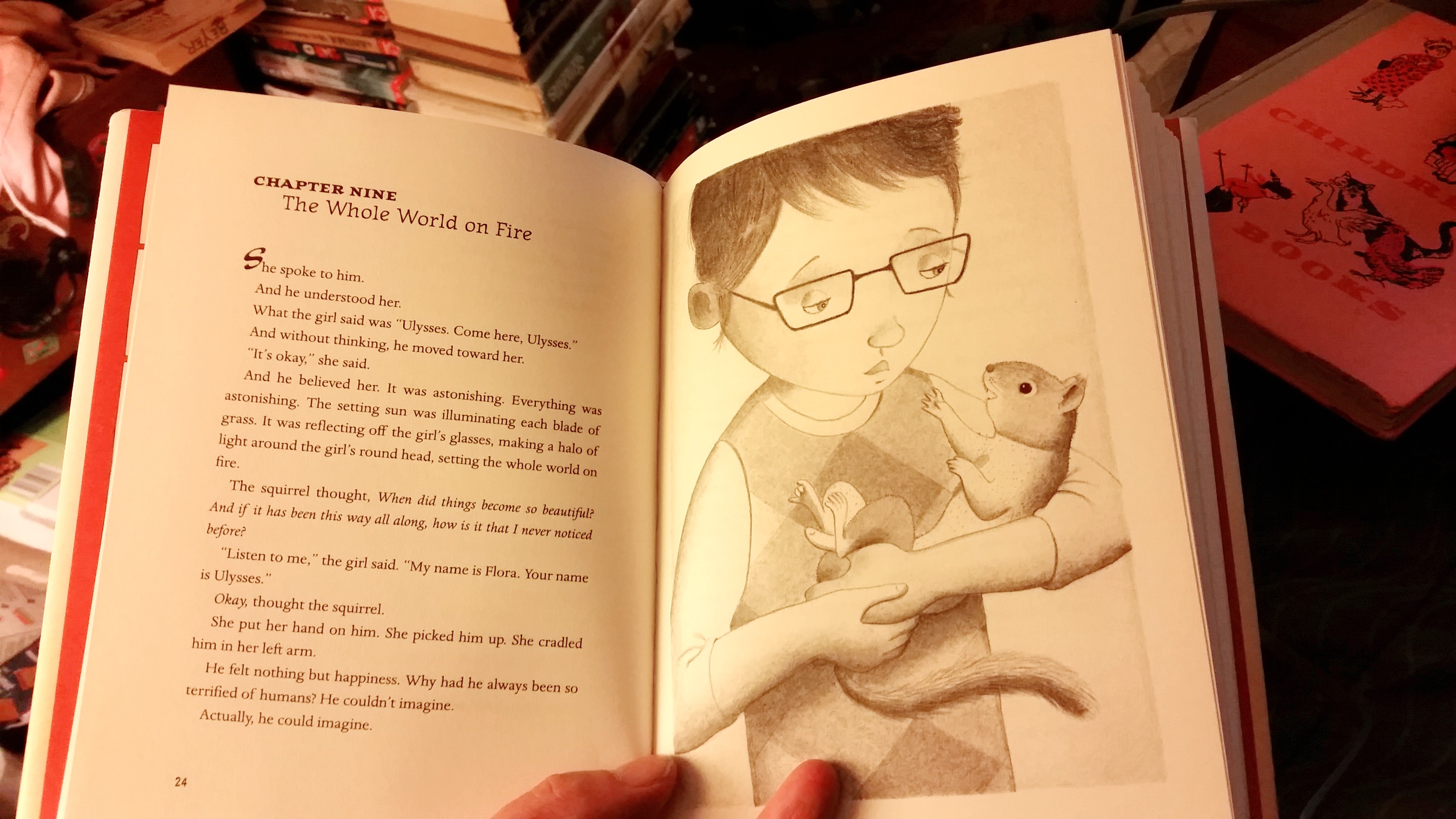
Flora & Ulysses (the Illuminated Adventures) is a combination book of many different things.  G. K. Cambell’s cartoony paffoonies add to and amplify the story to the point that sometimes it becomes a graphic novel.

Flora herself is a comic-book lover and follower of the adventures of a comic-book superhero named Incandesto.  Ulysses the squirrel is run over by a rogue vacuum cleaner and the accident graces him with super powers (the ability to fly and throw cats and write poetry).  And Flora rescues and befriends this newly minted superhero and sets him on a path that pits him against the only super-villain available, Flora’s own mother.

c360_2016-11-06-10-00-47-864

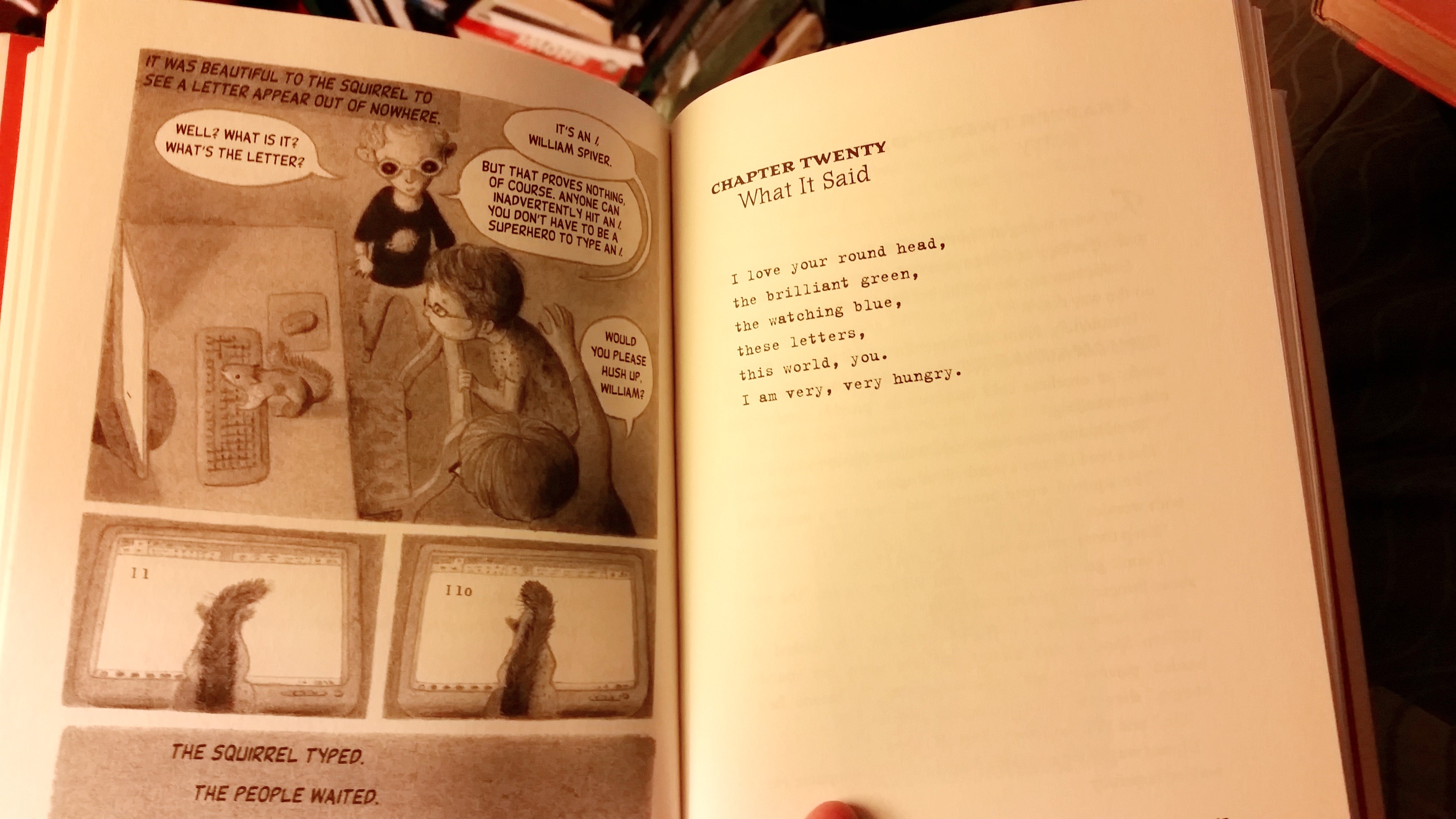
At certain points, through metaphor, elegance, and supreme focus, the story itself becomes poetry.  But, of course, when the poem ends with a line about the squirrel being hungry, it becomes humorous poetry, simply by the juxtaposition of the sublime with the ridiculous.

bk_all

As a writer, Kate DiCamillo is a master of everything I want to be.  She is as much a masterful story-teller as Mark Twain, Ernest Hemingway, or William Faulkner.  But many people will be put off by the fact that she is a children’s author.  They will ignore her stories because how could a children’s author affect their lives in any way?  But if you are a reader who can think and feel about things in a book, she will make you laugh and make you cry and make you not afraid to die… for love of a good book.

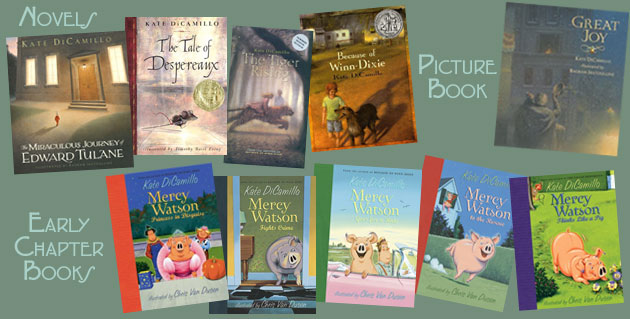
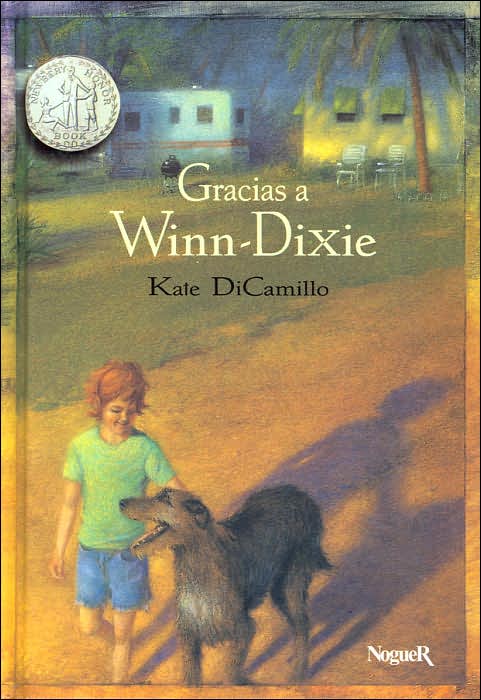
Let me also suggest a few of her other wonderful, wonderful books;

winn-dixie

2 Comments

Filed under book reports, book review, commentary, good books, humor, metaphor, poetry, reading

Who Am I?

space cowboy23

“Who am I?” the Walrus said,

“I have to know before I’m dead.

And if the Cosmos will not say,

I’ll ask again another day.”

“You are a simple Disney clone,”

Said Cosmos when we were alone.

“You draw and color with your brain,

And tell some stories despite the strain.”

class Miss Mcover

“You taught a while in the Monkey House,

And learned that students like to grouse,

But in the end will love your class

And will give you medals made of brass.”

Alandiel

“And your poems are filled with Angel words,

Both quite profound and yet absurd,

Because your mind soars far away

On winds of wild romantic play.”

“I guess that I can live with that,”

Said Walrus as he grew quite fat.

“And Mickey is the name I write

To sign my pictures in the light.

And that is all I have to say

To write myself in the crazy way.”

Leave a comment

Filed under humor, Paffooney, poetry, Uncategorized

Ta-Da-Ra!

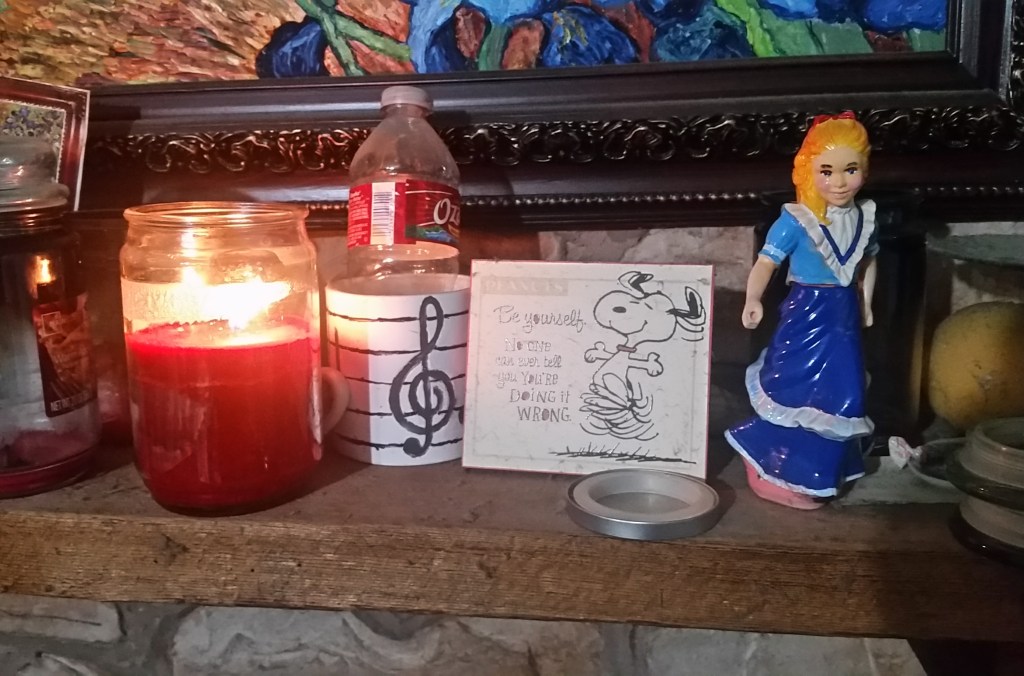
On the mantel

Of our home hearth

Sit the objects

That give life worth

A candle lighting

The dark of earth

A cup once painted

With paint and mirth

A Snoopy plaque

Announcing birth

And ceramic doll

Smiling o’er the hearth.

Leave a comment

Filed under artwork, Paffooney, poem, poetry