I admit it. Even though I collect pictures of sunrises to glory in the fact that I still have another day of life in this world, I rarely snap a picture of the cloudless sunrise. It is very possible that this has something to do with what ultimately gives life value and makes it worthwhile to live one more day.
If there is no pattern, no color-changes, no contrast, no variation… then why bother? And this doesn’t only apply to living your life. It applies to taking pictures of the sky too. Solid blue or solid yellow are about as interesting as a minimalist painting. (Have you ever seen the big beige squares and red squares that fill entire walls of the Dallas Art Museum? Like a picture of a polar bear in a fierce blizzard or an extreme close-up of the side of a tomato.)
Yes, sunshine and happiness are all well and good… but you don’t get a satisfactory skyscape without some clouds in it. In fact, rain clouds provide the most fascinating patterns and colors. What would the picture be without a little drama splashed here and there to make a center of interest or a counterpoint to the happy ending? They say that variety is the spice of life. And when they say that they probably mean cayenne pepper rather than parsley or oregano. If that’s not what they mean, then why the hell did we bring food into the discussion?
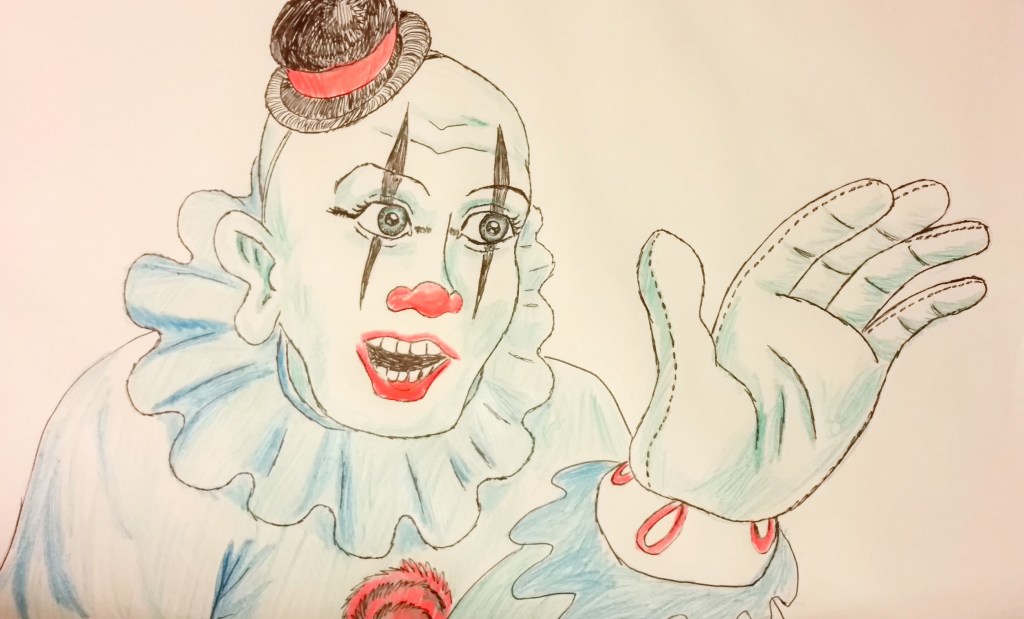
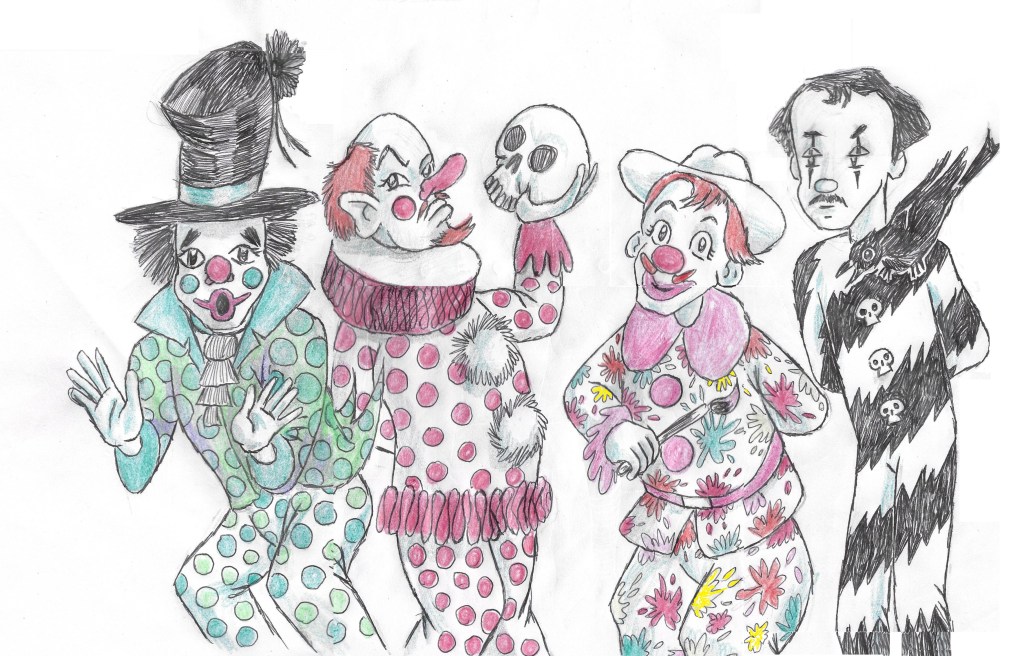
So, I am thinking, there have to be clouds. (Notice, I said “clouds”, not “clowns”, because… according to the song, there “oughtto be clowns”, not “have to be clowns”.)
It is true that clouds can mean sadness… that the rain is coming, that your vision is obscured, that something has come between you and God’s eye. But without clouds, the sky would be plain and boring. Better to burn bright and explode in a short amount of time than to linger over a plain pale blue.
It is a difficult thing to be an atheist who believes in God. Sometimes it takes an oxymoron to find the Truth. And you often have to go heavily on the “moron” portion of the word.
The thing I find most distressing about faith is the fact that those who have it are absolutely convinced that if you don’t agree with them and whatever book of fairy tales they believe in and interpret for you, then you are not a True Believer and you do not have real Faith.
I remember being told by a Mormon girl in one of my classes that I was her all-time favorite teacher, but she was deeply distressed that, because of my religion (I professed to be a Jehovah’s Witness at the time) I was doomed to burn in Hell forever.
Hey, I was raised in Iowa. I have experienced minus 100 degree Fahrenheit windchill. I am among those who think a nice warm afterlife wouldn’t necessarily be a bad thing.
But I am no longer actually a Jehovah’s Witness. So I guess that helps with the whole Hell-burning thing. The Witnesses are a religion that claims to understand the Bible is full of metaphorical truth, and yet insist that it is literally true. They don’t believe in Hell, which, honestly, is not actually mentioned or explained in the Bible as we have it now. But they do believe your prospects for eternal life on a paradise Earth are totally contingent on knocking on doors and telling other people that they must believe what you believe or experience eternal destruction. I have stopped being an active Witness and knocking on doors because I got old and sick, and all the caring brothers and sisters in the congregation stopped coming around to visit because number one son joined the Marines, and the military is somehow evil hoodoo that cancels out any good you have done in the past. Being a Jehovah’s Witness was really hard work with all the meetings (5 per week), Bible reading (I have read the entire Bible two and a half times), door-knocking, and praying, and you apparently can lose it all for saying, thinking, or doing one wrong thing.
According to the Baptist preachers, Jehovah’s Witness elders, religious zealots, and other opinionated religious people I have known and dealt with in my life, if I do not believe what they believe and agree with them in every detail, then I do not know God and am therefore an atheist. So, okay, I guess I am. If I have to be an atheist to believe whole-heartedly that everyone is entitled to sincerely believe whatever the hell they want to believe, then I’ll wear that label.
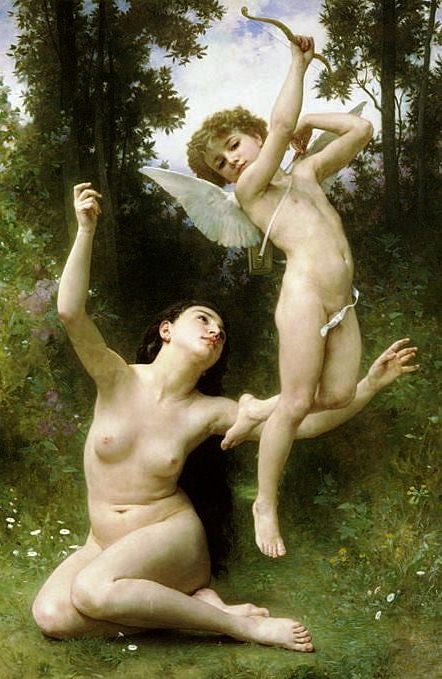
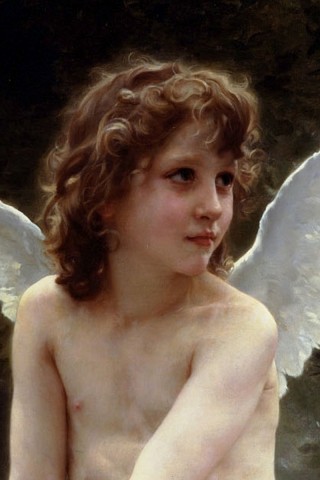
On a personal note, my favorite verse of the Bible has always been 1 John 4:8, “He that does not love has not come to know God, because God is love.” That is why I claim to be an atheist who believes in God. I know love. I love all men, women, children, animals, sunrises, artwork, paintings of angels by Bouguereau… everything that is. And I even love you if you exercise your freedom to tell me, “Your ideas are totally wrong, and you are going to burn in Hell, Mickey, you bad guy, you!” Mark Twain always said, “I would choose Heaven for climate, but I would prefer Hell for company.” I am not going to worry about it. I will be in good company. Some things are just bigger than me. And trying to control things like that is nonsense. Sorta like this post.
(This is a post from 2017, before the swimming pool had to be removed, before it caused my heart trouble, and before I had to declare Chapter 13 Bankruptcy.)
Being retired for health reasons and unable to work, I would be dead already without my writing and art endeavors to fill my time and keep me sane. I can do some work, as proven by my attempts to patch and repair the swimming pool this summer. But my limitations drive me crazy, as proven by the fact that I did about half of the work on the pool wearing only sunscreen and a hat. My kids are not married yet, and two of them are still in high school, but they are not much interested in toys any more. And I don’t yet have grandkids to spoil. So when I go the Resale Store or Goodwill to shop for old toys, I am basically buying them for myself.
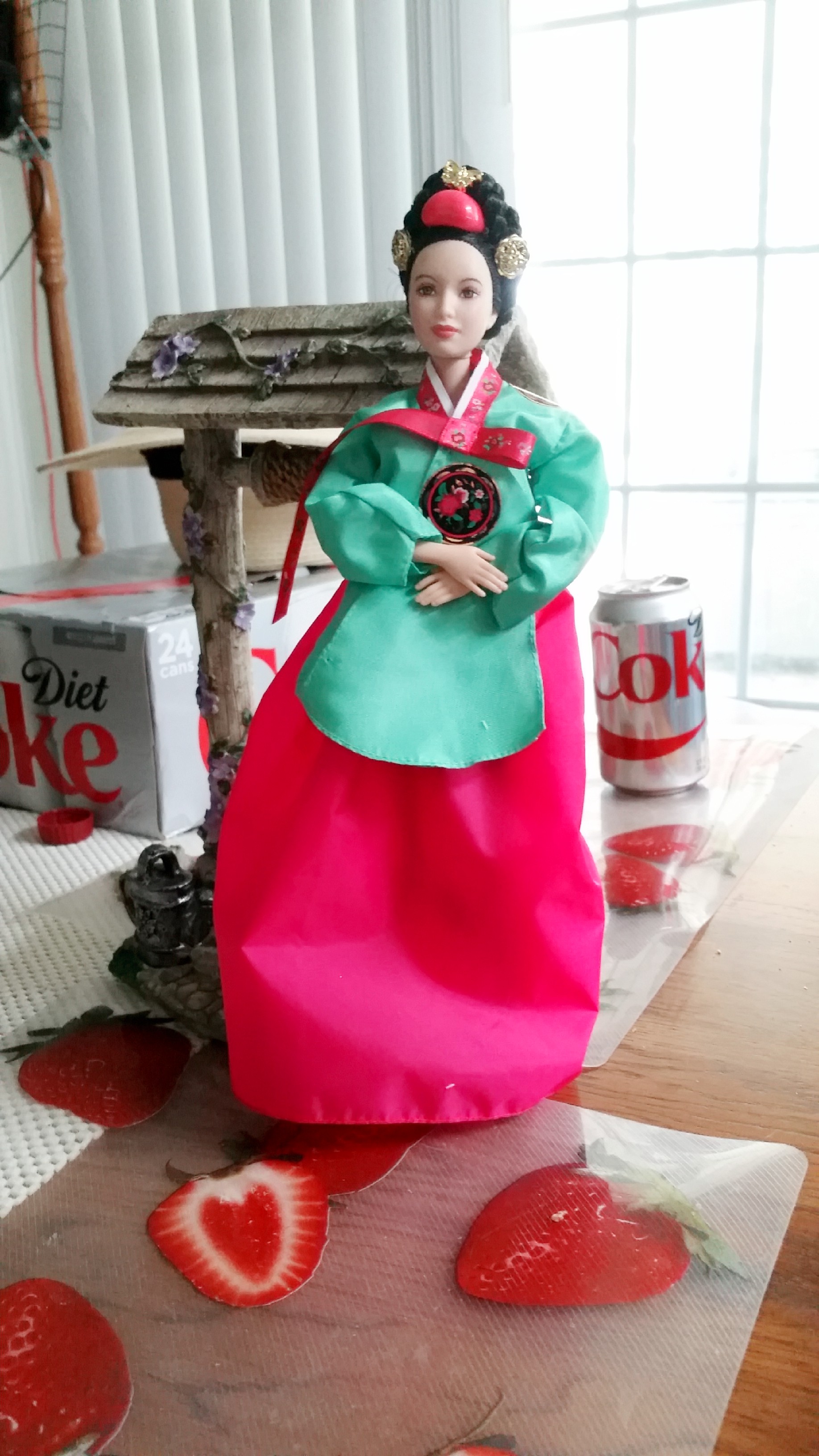
The Princess of the Korean Court Barbie was lying on the bargain shelf for $3.49. I bought the ceramic wishing well behind her for $5.00. So the bargain-hunting gene I inherited from Scotch ancestors was duly satisfied. But I had to do more with things like these than merely own them. Toys are for playing. And what does a 60-year-old man do with dolls when he is playing? Besides being a bit creepy, I mean? Well, this photo is the answer. I use my toys to create pictures and artwork.
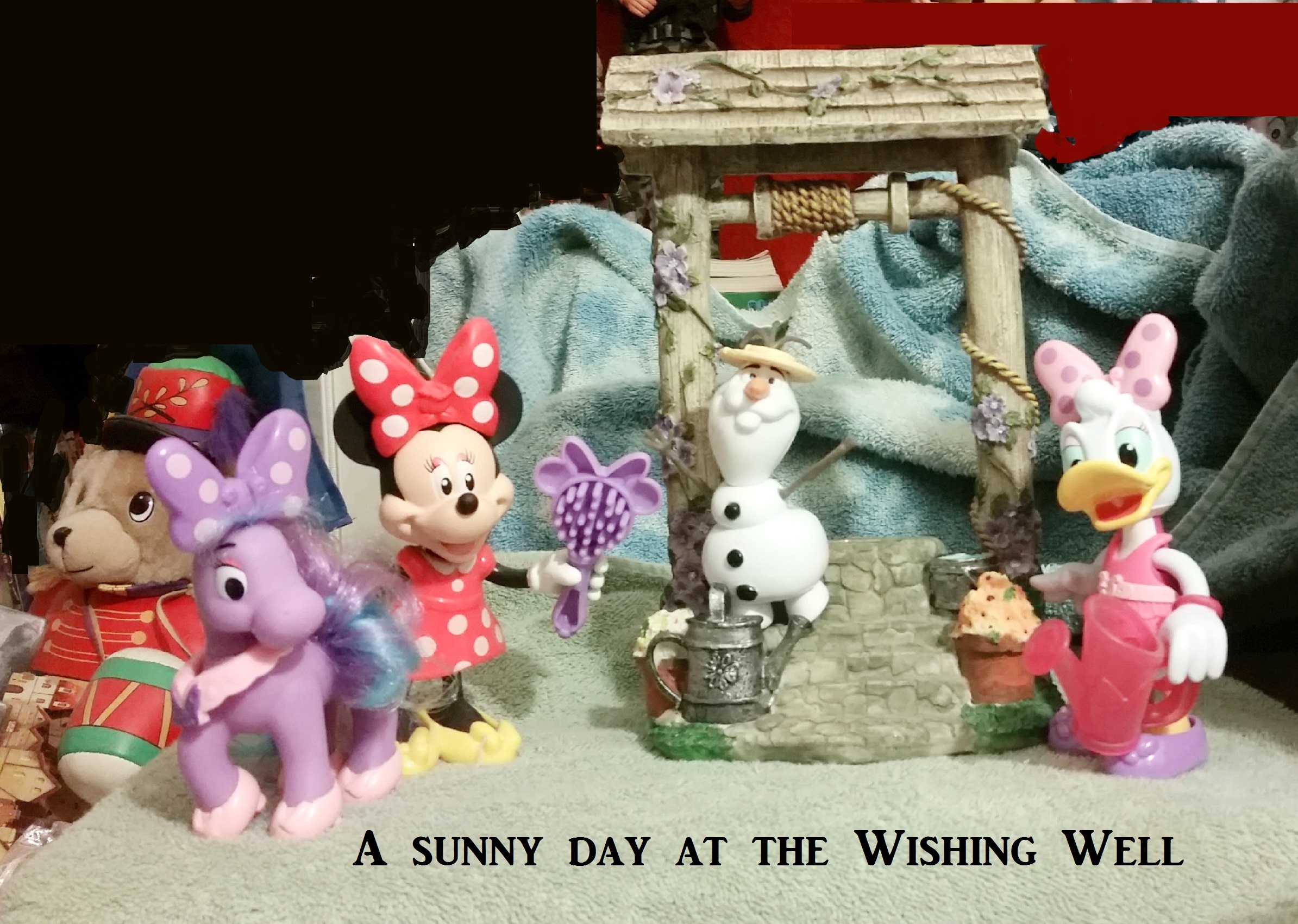
Here’s a creation using the ceramic wishing well again. It is apparently, on closer inspection, actually a candle holder. But it serves to make my Walmart Clearance Sale Disney toys happy. Here you see the pony-brushing party held by Minnie Mouse with Daisy Duck and the gay snowman from Frozen.
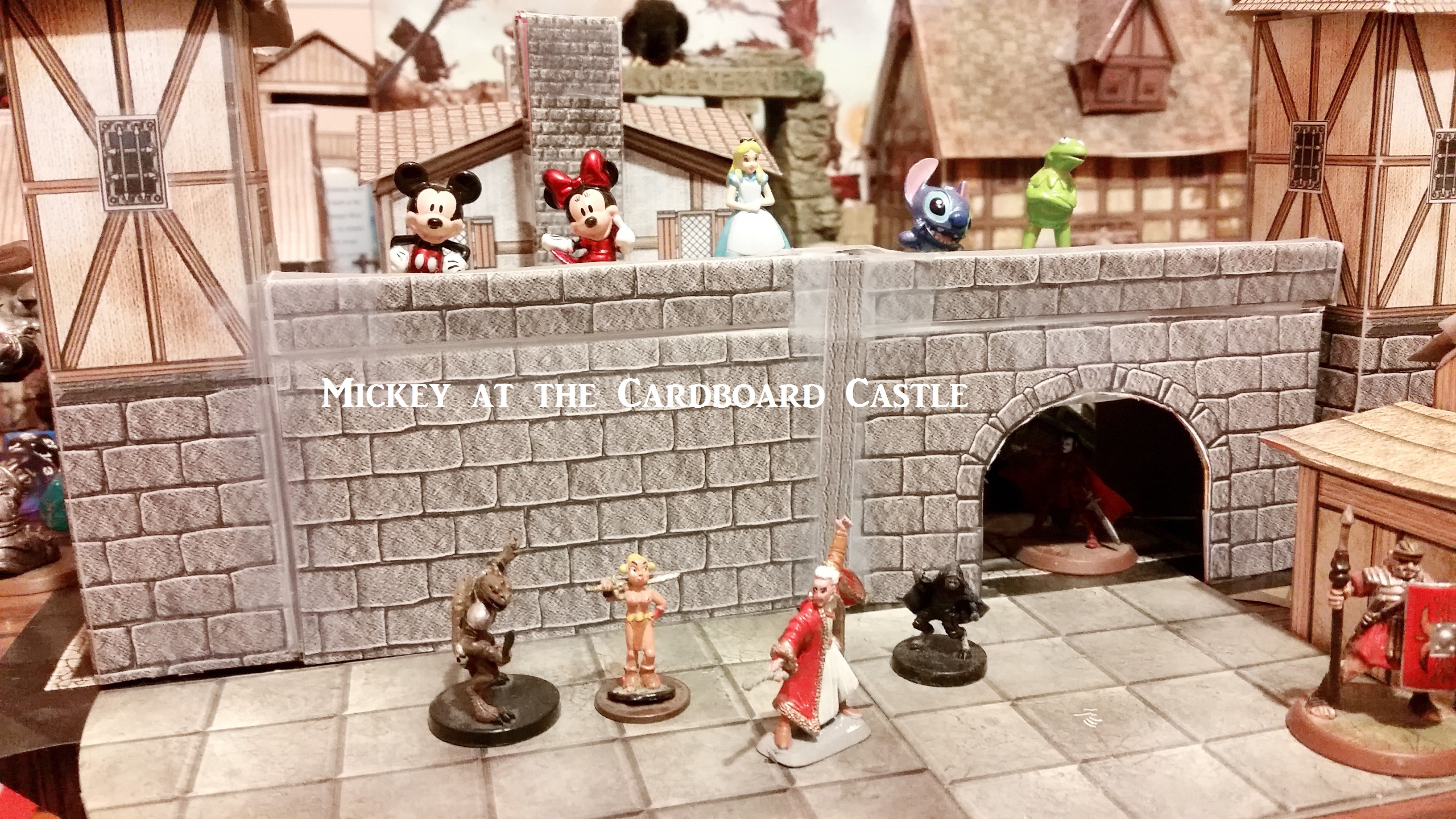
Here you see the metal miniatures I got in a pack from Walmart as they visit the cardboard castle. Two of the lead figures on the ground are hand painted by me in days long ago. The entire cardboard castle was printed and glued on cardboard, cut out and put together entirely by me. Mickey, Minnie, Alice, Stitch, and Kermit are the metal miniatures not painted by me.
So, my days have not been overwhelmed by boredom and frustration and problems with city pool inspectors (he doesn’t even know about doing the repair work in the nude, so he can’t give me a ticket for that.) I have been filling my time with toys and creative play. I have been mostly a good boy… err… old man.
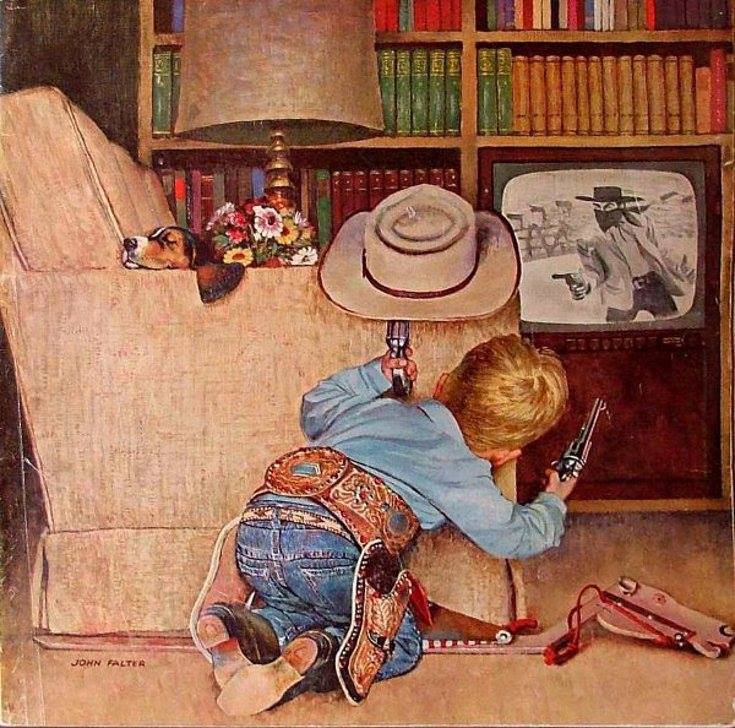
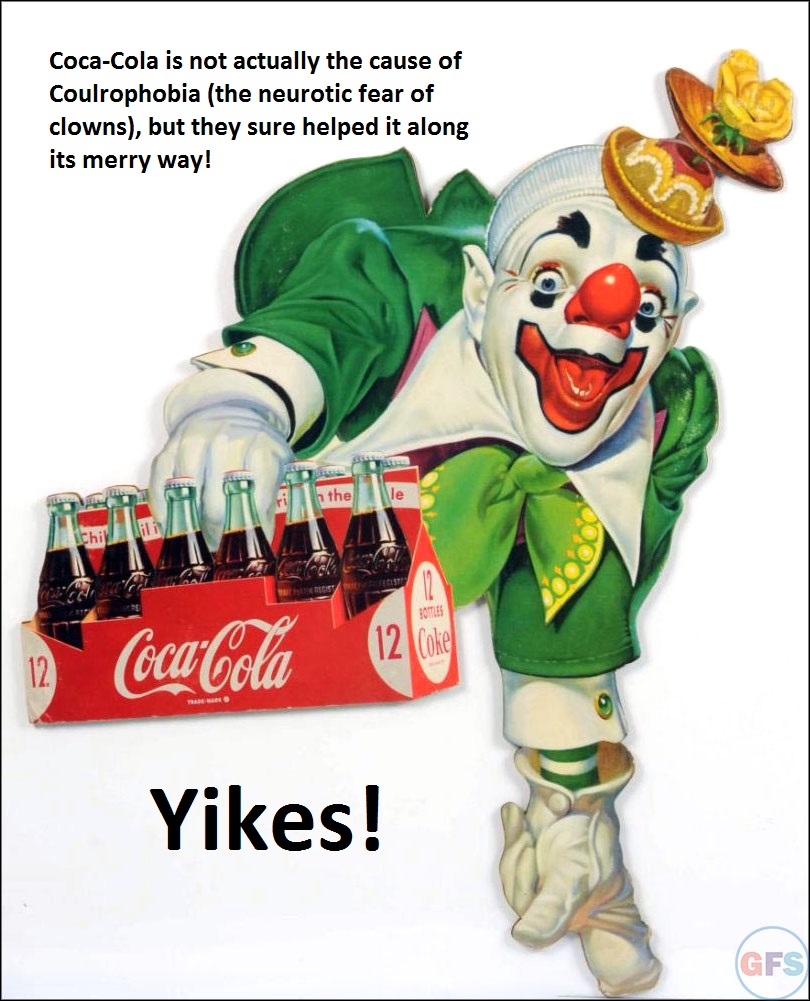
If you’ve read very much of my goofy little blog, you’ve probably run across the fact that I am something of a conspiracy theorist and strange-twist believer… sometimes referred to as a tinfoil-hat-wearer, or that old uncle you don’t want your kids sitting next to at the Thanksgiving dinner table. And I’ve got another one for you. I discovered while obsessing about nostalgia and old ads in the Saturday Evening Post, that the Coca-Cola company is probably responsible for warping my mind as a child.
My plan in revealing this hideous conspiracy is to take a look at ads and illustrations that I saw as a kid addicted to reading Saturday Evening Post every week at Grandpa and Grandma Aldrich’s farm. I will scour them for hidden meanings and try to reveal to you the insidious plot underlying these mind-altering illustrations. Keep in mind that you should probably take everything I say in this article with a grain of salt. No, really, salt can protect you from subtle mind-control messages.
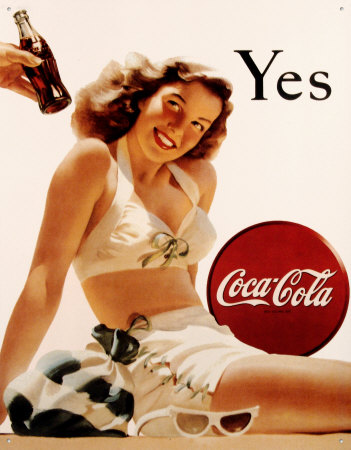
And, yes, I realize that not all the messages are that subtle. Sometimes they shout at you, “Drink Coke and you will have more sex!” And you have to remember we are trying to avoid that kind of mind control. We have to fight every instance of ad companies trying to take control over us by exploiting our baser animal urges.
So, let me take a momentary interlude, a break if you will. I have this big glass of Diet Coke I just bought at QT, and…
Well, that was good!
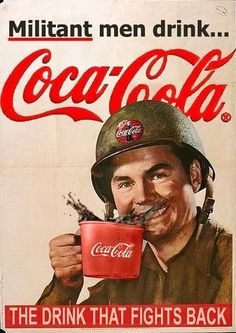
Coca-Cola has been at this for a while. This ad from the 1940’s is apparently attempting to win World War II through choice of soft drinks. Look at this feisty brew the soldier is about to quaff. It is actually struggling in the cup to get out and go bite some German soldier’s face off. Any American soldier who can choke this stuff down is tough enough to take on the Axis powers, Napoleon after Hitler dug him up and used Frankenstein’s scientific breakthroughs to re-animate him, and even several countries we weren’t actually at war with. Even Rush Limbaugh and his weird lesbian-farmer-subsidies theory can’t compete with Coke on this level of propaganda wars.
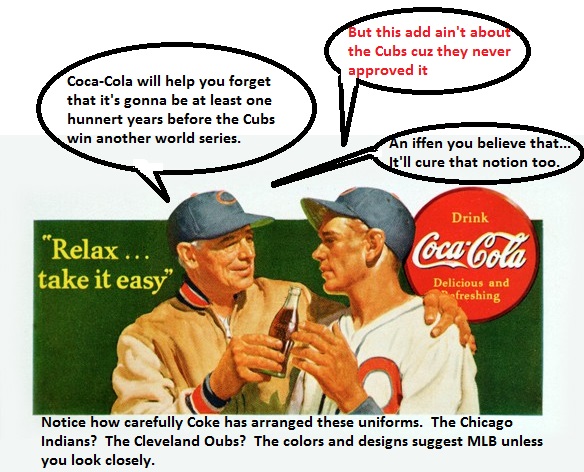
I also think Coca-Cola ads may have something to do with why I became a Cardinals fan when I lived in a place full of Cubs and Twins fans. I admit, I added the dialogue and the commentary, but I used to do the same thing in my head when I was eight and the Cardinals went to the World Series… and the Cubs could not win it all even with Ernie Banks on their team. The Cardinals beat the Yankees in 7 games!
I blame Coca-Cola. Especially their ad department. Cause the generic manager is telling the generic Oubs player to “Relax… take it easy.” But the Cardinals won because Bob Gibson had that laser-intensity stare that bored holes through Mickey Mantle’s bat! (It is Oubs, not Cubs, by the way. Look at the big “O” on his jersey.)
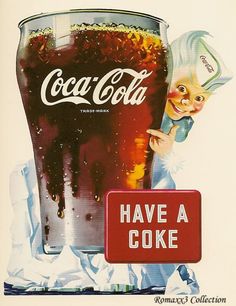
And you can’t tell me that the Coca-Cola ad seen here, the one with the white-haired goblin child casting a spell on you with his crazy eyes and pointing at your dark, delicious master isn’t seriously trying to mess with children’s minds. There used to be a big five-foot-tall metal sign with this very picture on it in the one and only alley in Meservey, Iowa. The one time I went to the barber there to get my hair cut I had to sit in that barber chair and stare at this evil thing staring back at me from the alley across the street. It warped me. For one thing, I never went back to that barber shop again… at least until I was in college and the sign was gone.
So, I seriously believe Coca-Cola was messing with my mind as a child. They did it through subversive ad illustrations in Saturday Evening Post Magazine. And if I’m completely crazy now, I blame them. You don’t see that kind of thing going on today, do you? Well, I mean, we should be very worried. Because it probably means they have gotten better at it.
The criminal was led into the courtroom in chains and forced to sit in a box made of metal bars so his influence would not reach out and harm anyone by drawing their sympathy in.
“Mr. Prosecutor,” said the learned judge, “what terrible crime has the perpetrator been charged with?”
“The alleged perpetrator!” objected the defense attorney, a mousy old man who looked like a cross between Santa Clause and Robert E.Lee because of his white beard, stern face, and a twinkle in his eye.
“Shut up please, Mr. Badweather. You will have your turn to speak.” The judge banged his gavel smartly to emphasize the shut-up-ness of his overruling.
“Your honor,” said the prosecutor, “Mister Pennysnatcher Goodlaughs stands accused of being a clown.”
“The people of the State of Texas, home of the free, land of the brave, and place where cowboys can hang their hat on the antlers of a moose they shot in Canada, will prove that Mr. Goodlaughs did willfully, and with malice of forethought, commit acts of supposed humor in order to make people laugh. And we will further prove that in a time of very serious things, he intentionally made light of very serious matters and the very serious men who try to turn those serious things to their exclusive… err, sorry, I mean… everyone’s benefit.”
“Your honor,” said the defense attorney, looking like a cross between Mark Twain and Colonel Sanders, “I would like to request a new venue for this trial. My client will not get a fair trial here.”
“Sir, your stupid request is rejected on the grounds that Mr. Goodlaughs cannot get a fair trial anywhere. We are all conservatives, and are therefore incapable of having a sense of humor. Continue, Mr. Prosecutor.”
“We will show numerous instances of Mr. Goodlaughs putting paint on his face to hide his true features or assume the identity of a character not his own. He has repeatedly used false noses, large shoes, and floppy hats to exaggerate his flaws and scare young children. He repeatedly wears polka-dotted clothing to simulate terrible taste and ridiculous lack of fashion-sense. He employs pratfalls and slapstick humor in his performances, things that, if any school-age child would imitate the behavior, might lead to serious injury or even death. And he has even dared to make fun of our glorious leaders, implying that they make mistakes and may even have hurt people. That they act without thinking about anything but their own pocketbooks. In other words, this clown has knowingly made jokes in order to get people to not take things seriously.”
“Your honor, I object to this jury. I object to the fact that it is made up of fifty percent rednecks and fifty percent kangaroos! My client demands a new, more impartial jury!” cried the defense attorney, looking like a cross between Captain Kangaroo and Ronald Reagan.
“Has anybody noticed?” asked the judge, “that this attorney looks like he could influence this jury unfairly? He looks like two people who could lead the two halves of this jury to the wrong conclusion. Bailiff! Take the defense attorney out back and execute him by firing squad.”
After the entire courtroom heard the gunshots go off, the judge then turned to the prisoner.
“It seems, Mr. Goodlaughs, that the defense’s opening statement is now entirely up to you. Do you have anything to say in your own defense?
“I do, your honor. Ladies and gentlemen, kangaroos and Reagan Republicans of the jury, I submit to you that I have never actually been a circus clown, or wore face paint. Not that I wouldn’t if the opportunity presented itself. I merely claim the right to laugh at anything I think is funny… or can be made funny. Whether I am being what you call a clown, a humorist, a cartoonist, a comedian, a fool, a village idiot, or a witty fellow, I believe I have the right to make light of anything. Life is always better when you can laugh. Especially if you can laugh at yourself.”
“I’ve heard enough,” said the judge. “What say you, jury?”
“Guilty!”
“Yes. And I preemptively waive the prisoner’s right to appeal. Sir, you are guilty, and you shall be executed immediately.”
Everyone in the courtroom breathed a long-awaited sigh of relief.
Rowan, Iowa… Not the place I was born, but the place where I got to be a stupid kid, and have the lessons of the good and god-fearing life hammered into my head hard enough to make a dent and make it stay with me for more than half a century. I got to go to grade school there. I learned to read there, especially in Miss Mennenga’s third and fourth grade class. Especially in that old copy of Treasure Island with the N.C, Wyeth illustrations in it, the one Grandma Aldrich kept in the upstairs closet in their farm house. I got to see my first naked girl there. I learned a lot of things about sex from my friends there, and none of them were true. I played 4-H softball there, and made a game-saving catch in center field… in the same game where my cousin Bob hit the game-winning home run. But those were things kids did everywhere. It didn’t make me special. There was no real magic in it.
Being a farm-kid’s kid taught me the importance of doing your chores, every day and on time. If you didn’t do them, animals could get sick, animals could die, crops could be spoiled, the chickens could get angry and petulant and peck your hands when you tried to get the eggs. Cows could get grumpy and kick the milk bucket. Cats could vow revenge if you didn’t direct a spray or two at their little faces as they lined up to watch you milk the cows. And you never knew for sure what a vengeful cat might do to you later, as cats were evil. They might jump on the keyboard during your piano recital. They might knock the turkey stuffing bowl off the top of the dryer when Mom and Grandma and several aunts were cooking Thanksgiving Dinner. And I know old black Midnight did that on purpose because he got to snatch some off the floor before it could be reached by angry aunts with brooms and dustpans. And all of it was your fault if it all led back to not doing your chores, and not doing them exactly right.
But, even though we learned responsibility and work ethic from our chores, that was not the real home-town magic either. I wasn’t technically a real farm kid. Sure, I picked up the eggs in the chicken house at Grandpa and Grandma Aldrich’s farm more than once. And I did, in fact, help with milking machines and even milking cows by hand and squirting cats in the faces at Uncle Donny’s farm. I walked beans, going up and down the rows to pull and chop weeds out of the bean fields at Uncle Larry’s farm. I drove a tractor at Great Uncle Alvin’s farm. But I didn’t have to do any of those things every single day. My mother and my father both grew up on farms. But we lived in town. So, my work ethic was probably worth only a quarter of what the work ethic of any of my friends in school was truly worth. I was a bum kid by comparison. Gary G. and Kevin K, both real farm kids and older than me, explained this to me one day behind the gymnasium with specific examples and fists.
Being a farm kid helped to forge my character. But that was really all about working hard, and nothing really to do with magic.
I truly believe the real magic to be found in Rowan, Iowa, my home town, was the fact that it was boring. It was a sleepy little town, that never had any real event… well, except maybe for a couple of monster blizzards in the 60’s and 70’s, and the Bicentennial parade and tractor pull on Main Street in 1976, and a couple of costume contests in the 1960’s held in the Fire Station where I had really worked hard on the costumes, a scarecrow one year, and an ogre the next, where I almost won a prize. But nothing that changed history or made Rowan the center of everything.
And therein lies the magic. I had to look at everything closely to find the things and strategies that would take me to the great things and places where I wanted to end up. I learned to wish upon a star from Disney movies. I learned about beauty of body and soul from the girls that I grew up with, most of them related. And I invented fantastical stories with the vivid imagination I discovered lurking in my own stupid head. I embarrassed Alicia Stewart by telling everyone that I could prove she was a Martian princess, kidnapped and brought to Earth by space pirates that only I knew how to defeat. And I learned to say funny things and make people laugh… but in ways that didn’t get me sent to the principal’s office in school. Yes, it was the magic of my own imagination. And boring Iowa farm towns made more people with magic in them than just me. John Wayne was one. Johnny Carson was one also. And have you heard of Elijah Wood? Or the painter Grant Wood? Or the actress Cloris Leachman?
Yep. We were such stuff as dreams were made on in small towns in Iowa. And that is real magic.
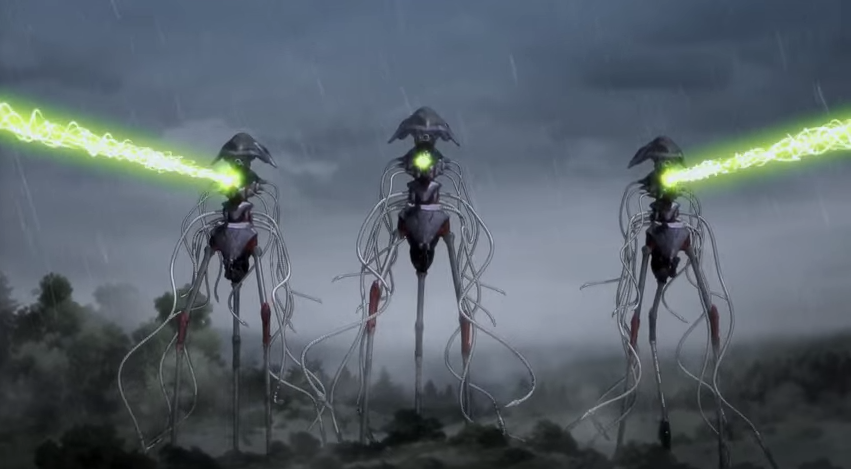
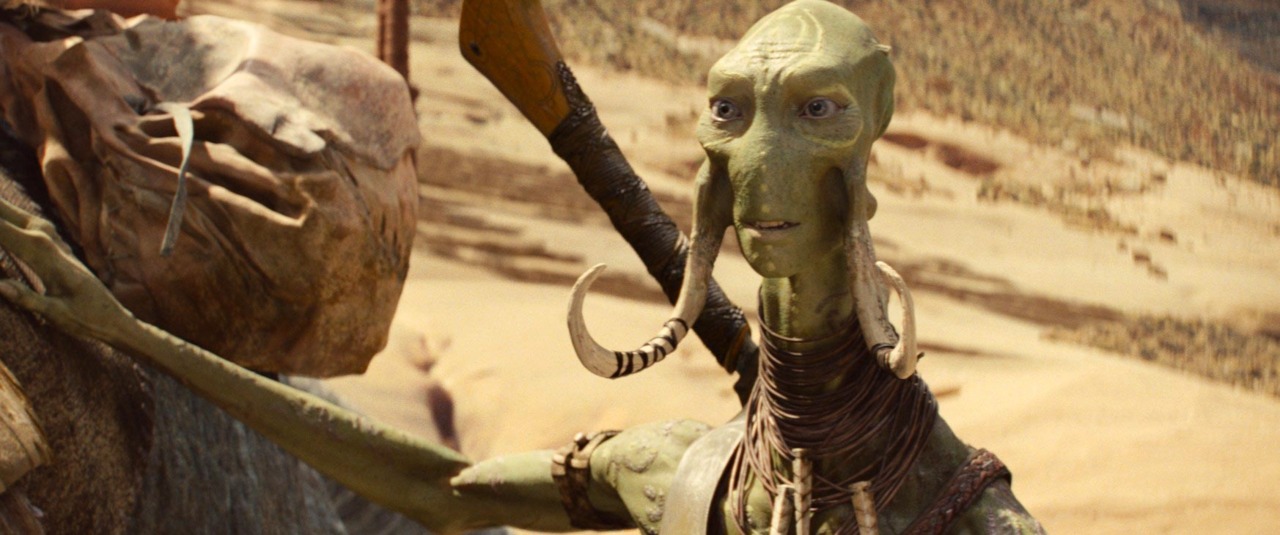
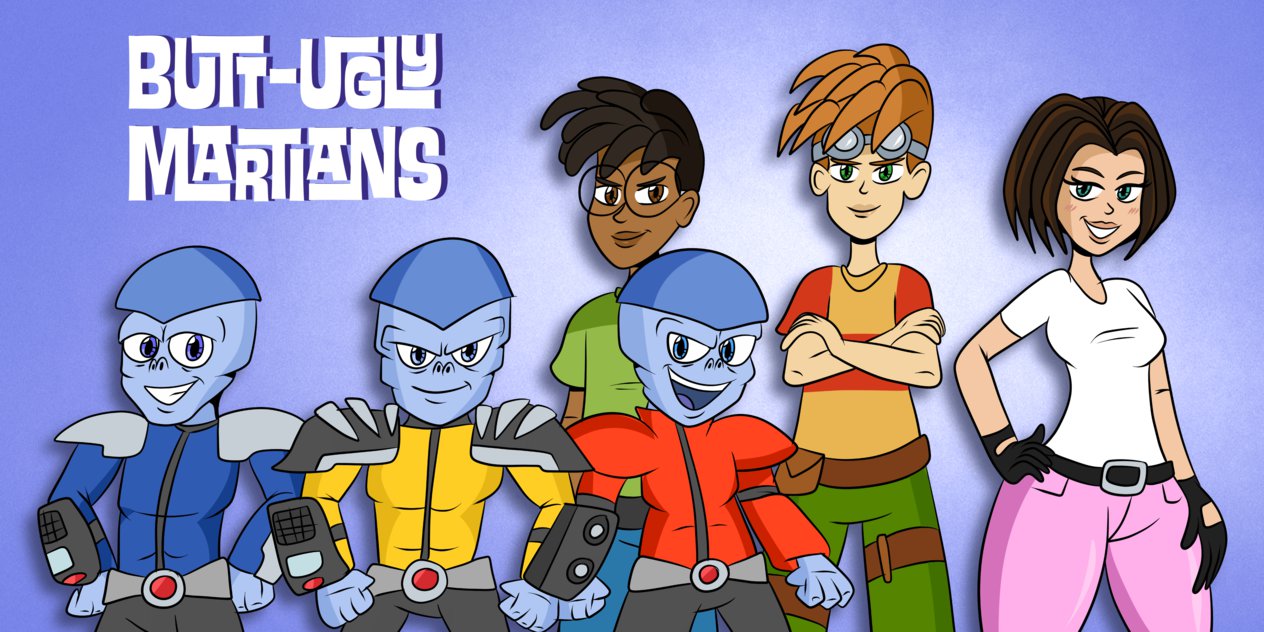
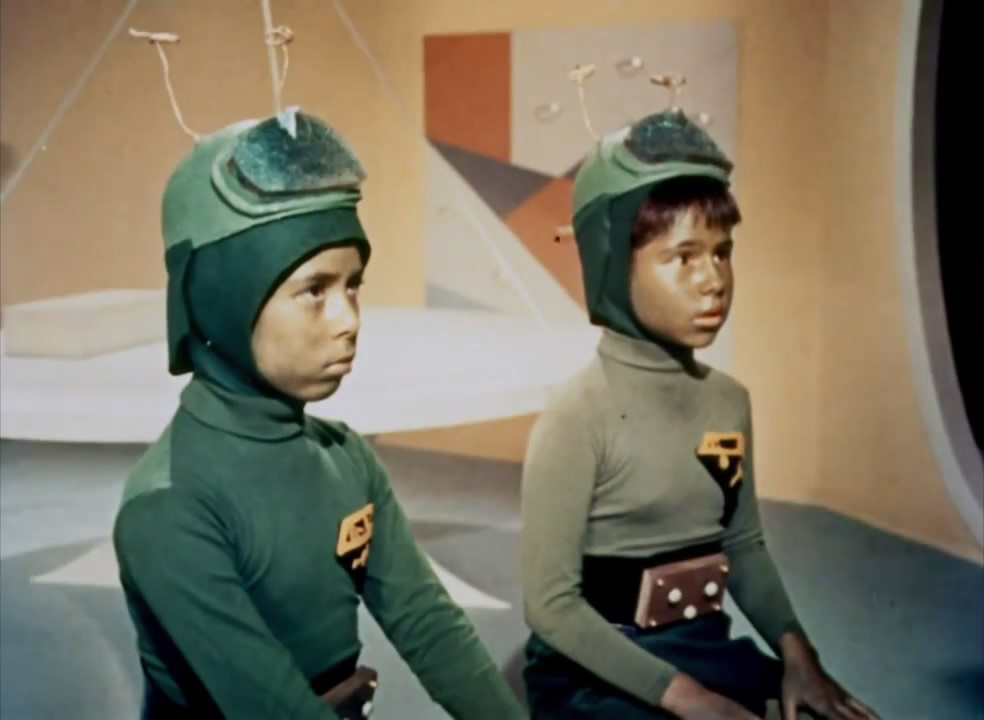
As Catch a Falling Star was a science-fictiony sort of comedy, one of the questions that I have pursued in internet research is the one I have presented here in the title of this picture-and-Paffooney-filled post. Seriously, the image search of Google’s answer to that question is enough to make you snort milk through the old nostrils as you sort through them while stupidly drinking a glass of milk. The milky nose-snorts are the reason I have not sited picture sources on this post. Cleaning the computer screen took too long. I have merely randomly snatched and pirated pictures. The only picture of a Martian presented here created by me are these two;
I admit to being surprised by my actual research into the whole question of whether or not we have ever been visited by intelligent life from the stars beyond the sky. While I have not found proof that aliens exist, I have discovered there is actual proof that the government, and NASA in particular, have covered something up. And it goes beyond Area 51 defense research. But now that I have got the attention of the NSA and the Men in Black, this post is only filled with a collage of the unreal, made-up, and mostly silly.
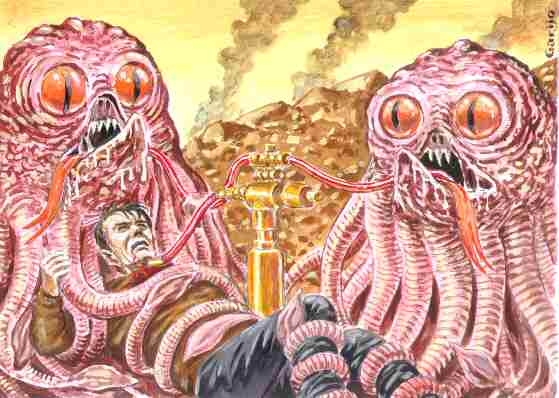
Malevolent Martians;
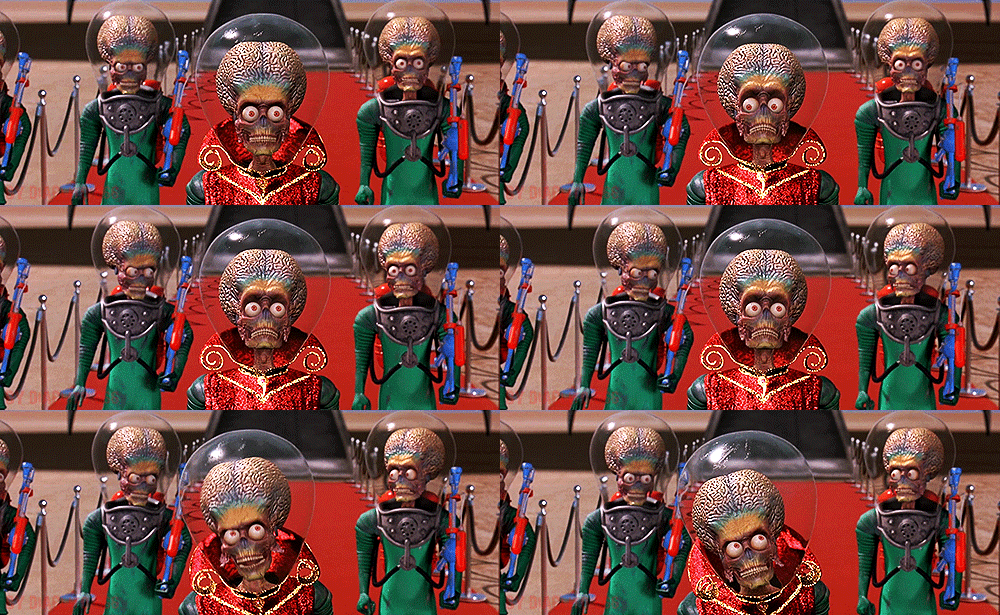
Martians Who Make the Mistake of Liking Us;
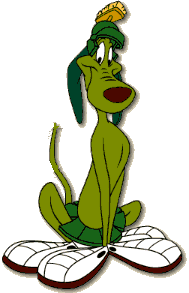
Inexplicably Goofy Martians;
Cartoon alien rendered on white background. 3D model licensed from DAZ3D.
Yesterday I forgot that it was Saturday. But that doesn’t matter much in a D & D campaign. You may not play at regular times… or at all, like this week. But you do what you can when you can. Just like in real life. So let me share a character gallery, in order to give me my weekly dose of fantasy sword and sorcery nonsense.
These illustrations all come out of my D & D notebook. They are done in colored pencil on colored paper. Many are copied from models in catalogs, action movie stills, comic books, and illustrated Dungeons and Dragons products, but always interpreted in my own style and costumes.
I need a quick and cold post for today, so I will turn to the ice wizards of Talislanta.
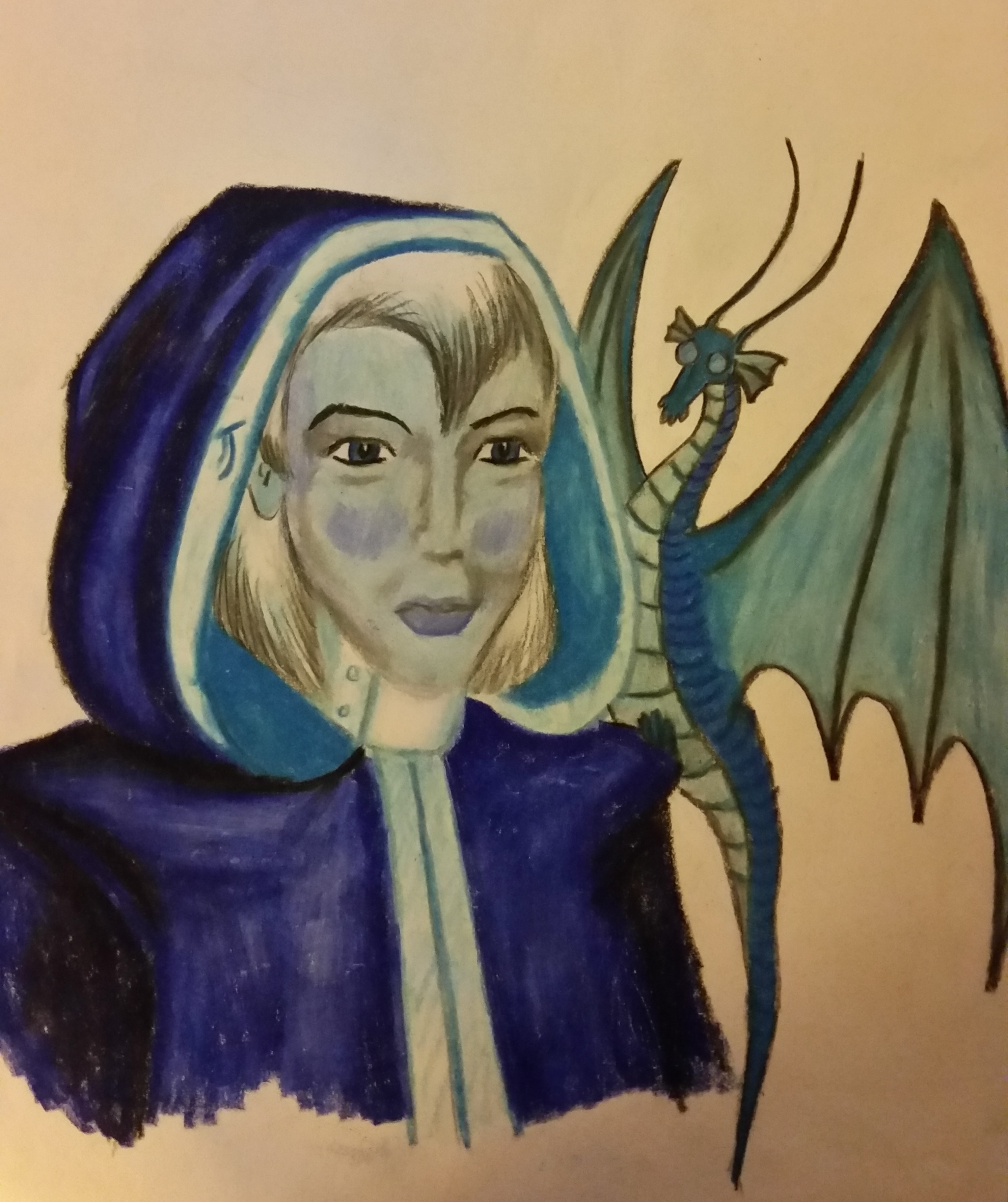
Viktor, the ice-alchemist, and his son Zoran-viktor are Mirin, a sort of ice-elves who live in the frozen ice-world of the far north. Viktor’s people are cold-resistant enough to wear bikinis in freezing weather (but smart enough not to). So Viktor managed to become the Mirins’ most powerful user of the magic of chemistry by developing hot stuff. In the picture he is brewing a bit of the really, really hot explodie stuff that melts a Mirin bad guy.
Juan Ruy, the Mirin prince, built many ice castles out of his magical substance known as iron-ice. It was far harder to pierce than steel and impossible to melt with fires less hot than dragon’s breath. With it he built frozen castles vertically to the highest heights. And they still stand, primarily because I haven’t played that particular D & D game for more than two decades.
But this is what I love most about the Dungeons and Dragons game. It is a never-ending game played in worlds of shared imagination where every person at the table adds something to the story. It is interactive, and it retains the unique twists and turns created by the players. I created the scenario. The player behind the character Juan Ruy created the idea of iron-ice that completely changed the story.

















Skyscapes of the Cloudy Mind
I admit it. Even though I collect pictures of sunrises to glory in the fact that I still have another day of life in this world, I rarely snap a picture of the cloudless sunrise. It is very possible that this has something to do with what ultimately gives life value and makes it worthwhile to live one more day.
If there is no pattern, no color-changes, no contrast, no variation… then why bother? And this doesn’t only apply to living your life. It applies to taking pictures of the sky too. Solid blue or solid yellow are about as interesting as a minimalist painting. (Have you ever seen the big beige squares and red squares that fill entire walls of the Dallas Art Museum? Like a picture of a polar bear in a fierce blizzard or an extreme close-up of the side of a tomato.)
Yes, sunshine and happiness are all well and good… but you don’t get a satisfactory skyscape without some clouds in it. In fact, rain clouds provide the most fascinating patterns and colors. What would the picture be without a little drama splashed here and there to make a center of interest or a counterpoint to the happy ending? They say that variety is the spice of life. And when they say that they probably mean cayenne pepper rather than parsley or oregano. If that’s not what they mean, then why the hell did we bring food into the discussion?
So, I am thinking, there have to be clouds. (Notice, I said “clouds”, not “clowns”, because… according to the song, there “ought to be clowns”, not “have to be clowns”.)
It is true that clouds can mean sadness… that the rain is coming, that your vision is obscured, that something has come between you and God’s eye. But without clouds, the sky would be plain and boring. Better to burn bright and explode in a short amount of time than to linger over a plain pale blue.
1 Comment
Filed under clowns, commentary, foolishness, humor, photo paffoonies
Tagged as clouds, humor, metaphor, sunrises