where I spent my childhood and early youth, there is a great tradition of making fun of the exceptionally eye-bonking ski sweaters and Norwegian-middle-layer clothing that dads and grandads are given as presents less often than only neckties.
Yes, they are functional in the land of 100-degree-below-zero wind-chill. And they also work as defenders of your male virginity when you are in college in Iowa. But we make fun of them not out of derision, but of love. These are gifts, after all, that are given on winter birthdays and Christmas because the giver loves you. And the creative criticism of them is given only as a sign of appreciation for what they are truly for.
And if you tried to click on the X’s on this sweater of mine, and it did not immediately close on your screen, that’s because this one has special meaning. I didn’t get this as a Christmas gift. I inherited it from my father who died in November 2020. And it will keep my heart warm now until it falls apart, or until the time comes to pass it on to my own eldest son.
What…
this essay is actually about is the nature of good criticism.
The fact that this one is a red Christmas tree decorated with lawn flamingos is not the actual point. One has to look past the flaws and try to judge the effectiveness of how it achieves… or fails to achieve… its intended purpose… apparently to keep rats and small birds out of your yard… or from within a hundred yards of the thing.
And…
if I were to be offended by the revelation of Santa’s sexy black thong, then the thing to do as a proper critic is not to use my power to condemn it, but not to take up the critique of it at all. I mean, if you are actually offended by the thing, you would not want to offer an opinion that some would take as a challenge.
“What? You are telling me that I can’t like Santa’s sexy black thong? I will not only like it, I will love it! And I will buy one for myself.”
Following…
the philosophy of the uncritical critic, I would only review this green nightmare sweater of a Christmas mutant demon-dog if I really liked it. Of course, since you are seeing a review of it here, it means I am actually quite charmed by the sweater itself, and amused by whatever seventy-plus-year-old grandmama that has the kitsch-defiant attitude that allows her to proudly wear it… even if it was given to her as a gift by a relative she probably doesn’t really like but, never tells them so.
Doing book reviews one after another (as I have been doing for Pubby in order to get reviews on my own books in return) I have done a lot of the uncritical critic bit. Some of the people I have been reviewing the books of should never have tried to write a book in the first place. But do I tell them that? Of course not. If I have taken the trouble to read the whole book, even though it may be horrible, I am not going to pour cold water on their flame. I have done reviews with innumerable editorial suggestions of what would make it a better story, or a better non-fiction book, or children’s book, or poetry book, or self-help book… I have read terrible books of all of these kinds. And I know the authors did not rewrite the books as I suggested. But in my many years as a writing teacher, I have learned well that you must always point out the fledgling writers’ strengths and ask them to build on those. And some will. Besides the points I earn to spend on reviews of Mickian books, that is reward enough.
Ugly Christmas sweaters and the criticizing of them is how American culture works. Being good at negotiating that fact is a critical skill, especially in the Midwest. But nothing compared to having talent in the wearing of them.
I threatened to write a post about Dave Barry and the writing gods apparently thought that was a very very bad idea. They have tried to prevent me from carrying out this idle threat by attacking my computer with gremlins. Now my WordPress page is shrinking practically out of sight. I can barely see what I am typing. You don’t believe me? Here’s what it looks like at the moment;
They obviously tricked me into pressing the secret shrink button on my computer, and I have no idea where to find the un-shrink features. Not only that, but my Facebook page is automatically translating everything it can into French. They really don’t want me to tell you about Dave Barry. And why do you suppose that is?
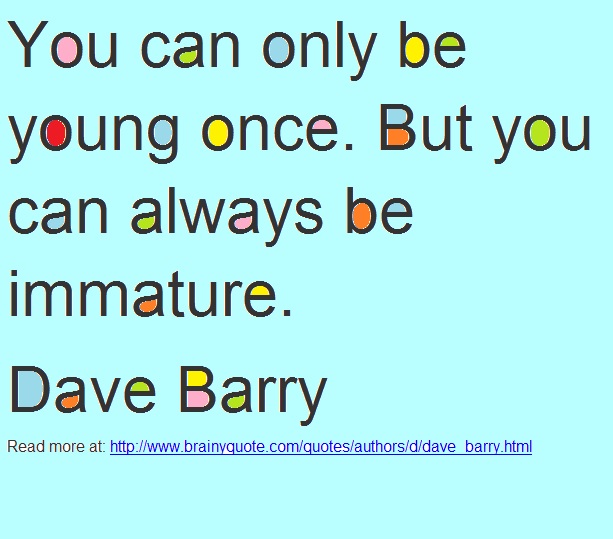
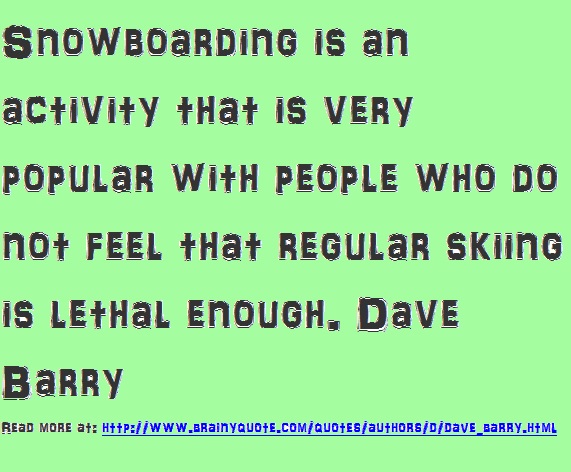
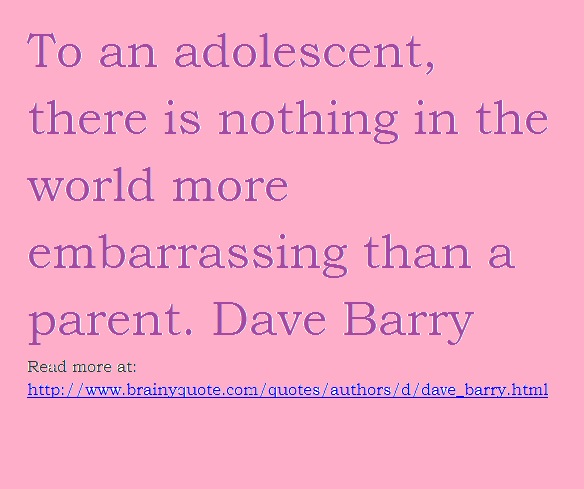
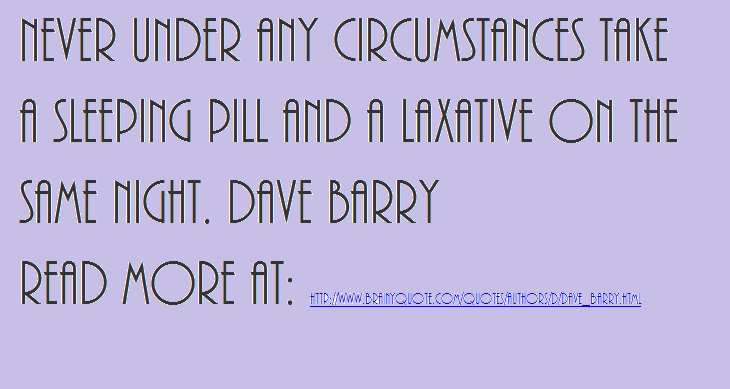
Well, Dave Barry may actually be me from a parallel dimension. He started writing for The Miami Herald in the early 80’s, at about the same time I started teaching. He retired from that in 2004 after winning a Pulitzer Prize and started writing humorous novels…. the same thing I started doing when I left the job I loved and was good at. Okay, so I am stretching the analogy to the point that all the buttons are popping off its shirt… but the point is, we are alike in some ways and I admire his work and I steal things from it whenever I possibly can. Like this post. I deeply admire the way he can say witty and pithy things. Like some of these quotes;
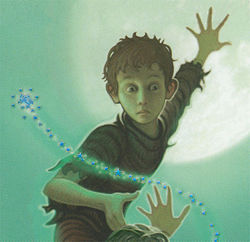
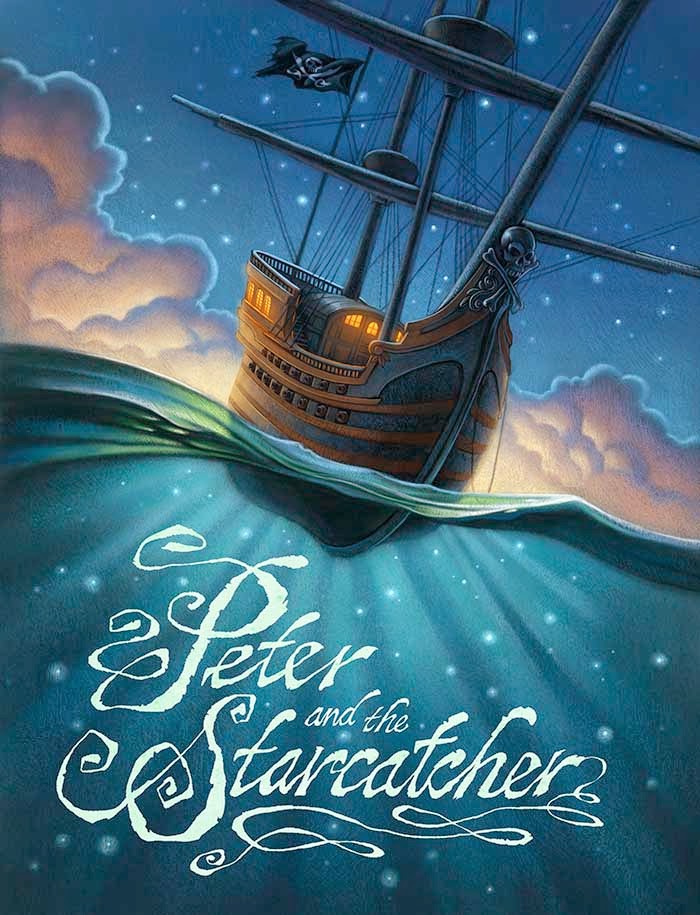
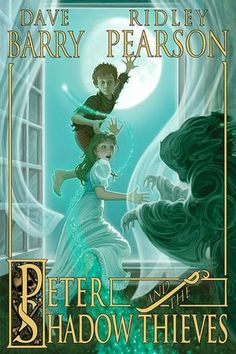
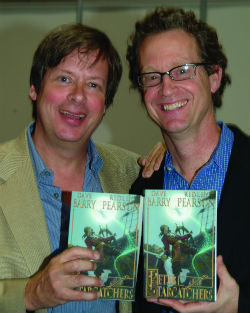
So, you see, he is very good at doing what I want to be good at. He is a humor columnist and all-around imitation Mark Twain. And I have read and loved his novels. Especially the Peter Pan things he writes with a partner.
Dave Barry and Ridley Pearson
So, I will leave this post here even though I could talk for hours about how Dave Barry makes me laugh. I have to stop. the words on the screen keep getting smaller and smaller, and my old eyes are about to fall out of my head.
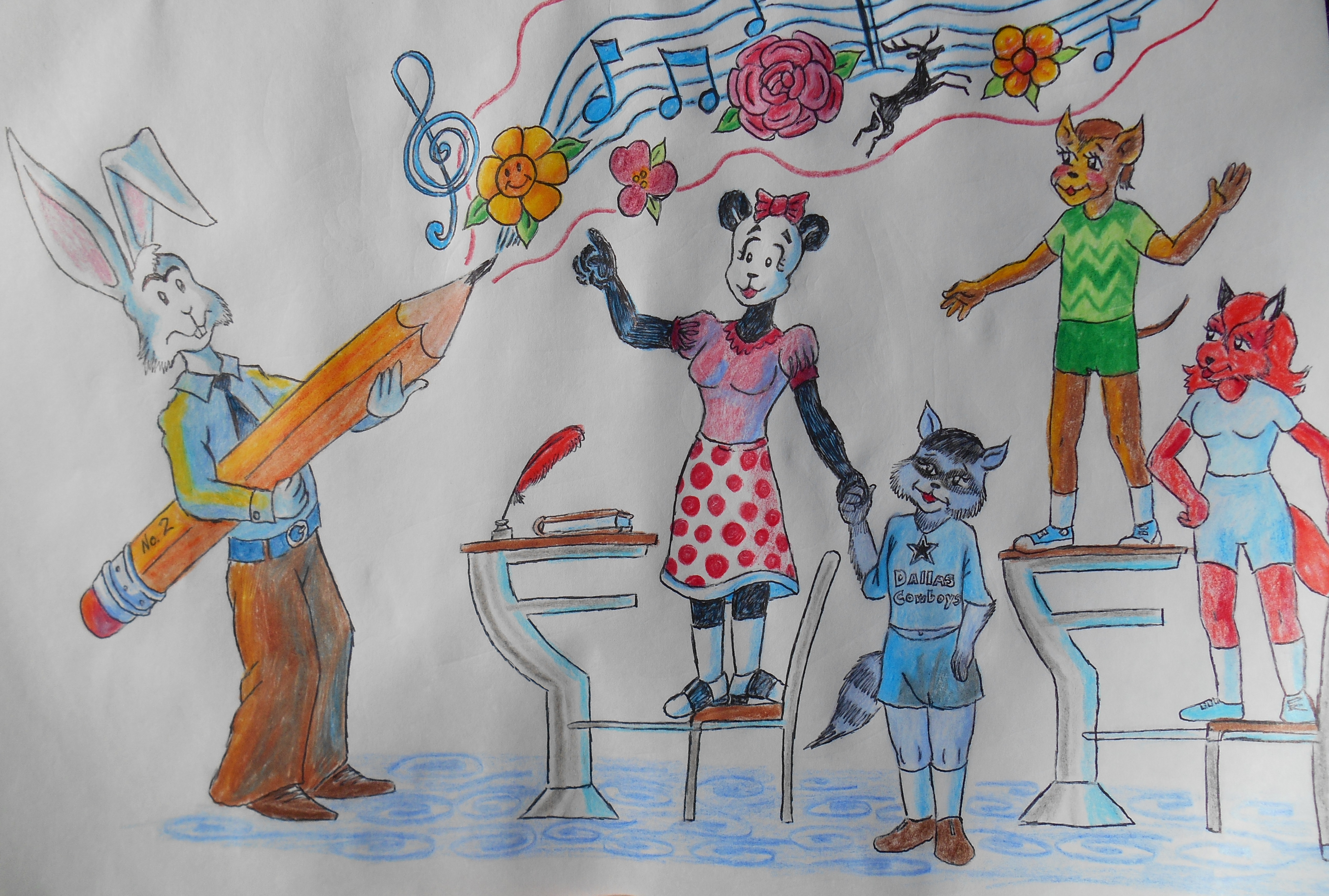
When you walk to the front of the classroom and take up the big pencil in front of a group of young teens and twelve-year-olds, there is a strong pressure to learn how to sing and dance. That, of course, is a metaphor. I was always too arthritic and clunky in my movements to literally dance. But I looked out over a sea of bored and malevolence-filled eyes, slack and sometimes drooling mouths attached to hormone-fueled and creatively evil minds. And I was being paid to put ideas in their heads. Specifically boring and difficult ideas that none of them really wanted in their own personal heads. So I felt the need to learn to dance, to teach in ways that were engaging like good dance tunes, and entertaining in ways that made them want to take action, to metaphorically get up and dance along with me.
I wanted them to enjoy learning the way I did.
But the music of the teacher is not always compatible with the dance style of the individual learner. The secret behind that is, there is absolutely no way to prompt them to dance along with you until you learn about the music already playing in their stupid little heads. (And you can’t, of course ever use the word “stupid” out loud, no matter how funny or true the word is,) You have to get to know a kid before you can teach them anything.
The discordant melodies and bizarre tunes you encounter when you talk to them is like dancing in a minefield blindfolded. Some don’t have enough to eat at home and have to survive off of the nutrition-less food they get in the school cafeteria’s free-and-reduced lunch program. Some of them have never heard a single positive thing from the adults at home, enduring only endless criticism, insults, and sometimes fists. Some of them fall in love you. Some due to hormones. Some due to the fact that you treat them like a real human being. Some because they just stupidly assume that everyone dances to the same tunes they hear in their own personal head.
Some of them automatically hate you because they know that if you hear their own secret music in their own self-loathing heads, you will never accept it. They hate you because you are a teacher and teachers always hate them. Some of them, deep down, are as loathsome as they think they are.
But, if you find the right music, you can get any of them, even all of them, to dance. It might be hard to find. It might be a nearly impossible task to learn to play that music once you find it. But it can be done.
And if you get them to dance to your music, to dance along with you, I can’t think of anything more rewarding, anything more life-fulfilling. Have you ever tried it for yourself? If you are not a teacher, how about with your own children or the children related to you? Everybody should learn to dance this dance I am talking about in metaphors. At least once in your life. It is addictive. You will want to dance more. So the next time the music starts and you get the chance… I hope you’ll dance!
I have published my eighth novel in the last six years. Sure, it is through mostly self-publishing of novels that no one but me has ever read. Catch a Falling Star and Snow Babies both had a professional editor, one who had worked for Harcourt and one who worked for PDMI. Magical Miss Morgan has had a proofreader who made numerous stupid-mistake errors that I had to change back to the original meticulously by hand. But all three of those novels won an award or were finalists in a young adult novel contest. I do have reason to believe I am a competent writer and better even then some who have achieved commercial success.
But what is the real reason that I am so intent on producing the maximum amount of creative work possible in this decade? Well, to be coldly objective, I am a diabetic who cannot currently afford insulin. I have been betrayed by the for-profit healthcare system that treats me as a source of unending profit. I am like a laying hen in the chicken house, giving my eggs of effort away to a farmer who means to eat my very children if time and circumstance allows. I am the victim of six incurable diseases and conditions that I got most likely as a result of exposure to toxic farm chemicals in the early 70’s. I am also a cancer survivor from a malignant melanoma in 1983, and for three years now I have not been able to get the preventative cancer tests I am supposed to be receiving every year for the rest of my life. My prostate could very well be cancerous as I write this. If that is so, it will kill me unawares, because I don’t even want to know about having a disease I can’t possibly afford to fight all over again.’
So, the basic reason I am going through the most productive and creative period of my entire life is because I have a great rage to create before I die and I could be dying as soon as tonight. All of the countless stories in my head clamoring to be written down before it is too late cry out to me desperately for my immediate attention.
I will, then, continue to write stories and draw cartoons and other Paffoonies for as long as I am still able, and possibly even afterward. I have, after all, threatened repeatedly to become a ghostwriter after I die. And, yes, I understand when you scream at my essay that that is not what a ghostwriter is. But if a woman can channel the ghost of Franz Schubert and finish his unfinished symphony…(https://en.wikipedia.org/wiki/Rosemary_Brown_(spiritualist))
—then I should also be able to tell my stories from beyond the grave. I have been percolating them in my head and writing and drawing them in whole or in part since 1974. I have too much time and too many daydreams wrapped up in them to let it all just evaporate into the ether. In summation, I am claiming stupidly that my novels, crack-brained and wacky as they are, are somehow destined to exist, either because of me or in spite of me. So just be happy that I write what I write, for there is an art to being Mickey, and I am the one artist and writer who is the best Mickey possible if truly there ever was a real Mickey.
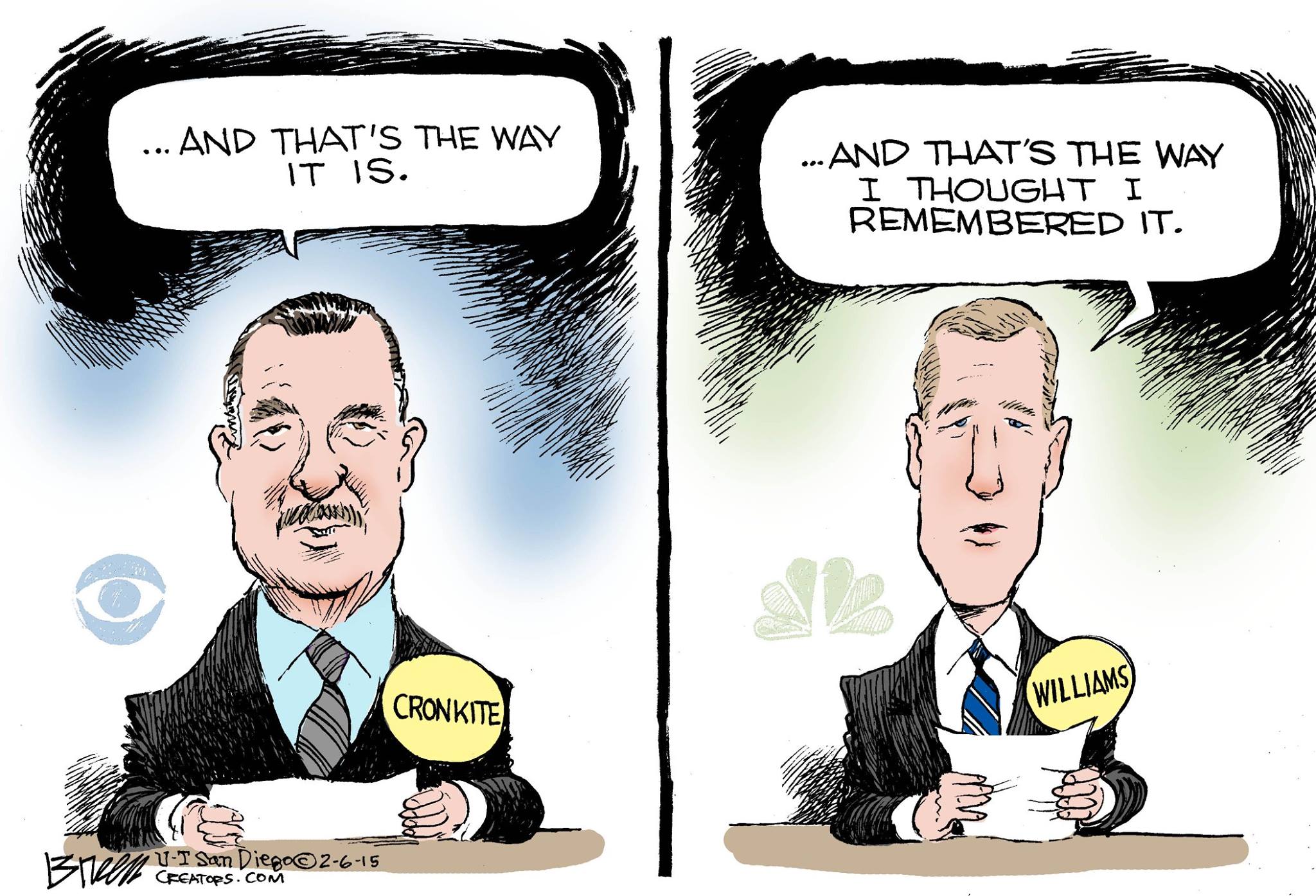
There was a time when you could turn on the TV news and listen to what you were fairly confident was actually news. Walter Cronkite on CBS always seemed to really “Tell it like it is.” He never seemed to put a spin on anything. No one doubted anything he said when he reported space missions from NASA or the assassination of JFK. You never had to wonder, “What is Cronkite’s real agenda?” His agenda was always to tell me the news of the day.
The question of politics and ideas was always one of, “Which flavor tastes best in my own personal opinion?” Because I was weirdly and excessively smart as a kid, I often listened to some of the smartest people accessible to a black-and-white RCA television set.
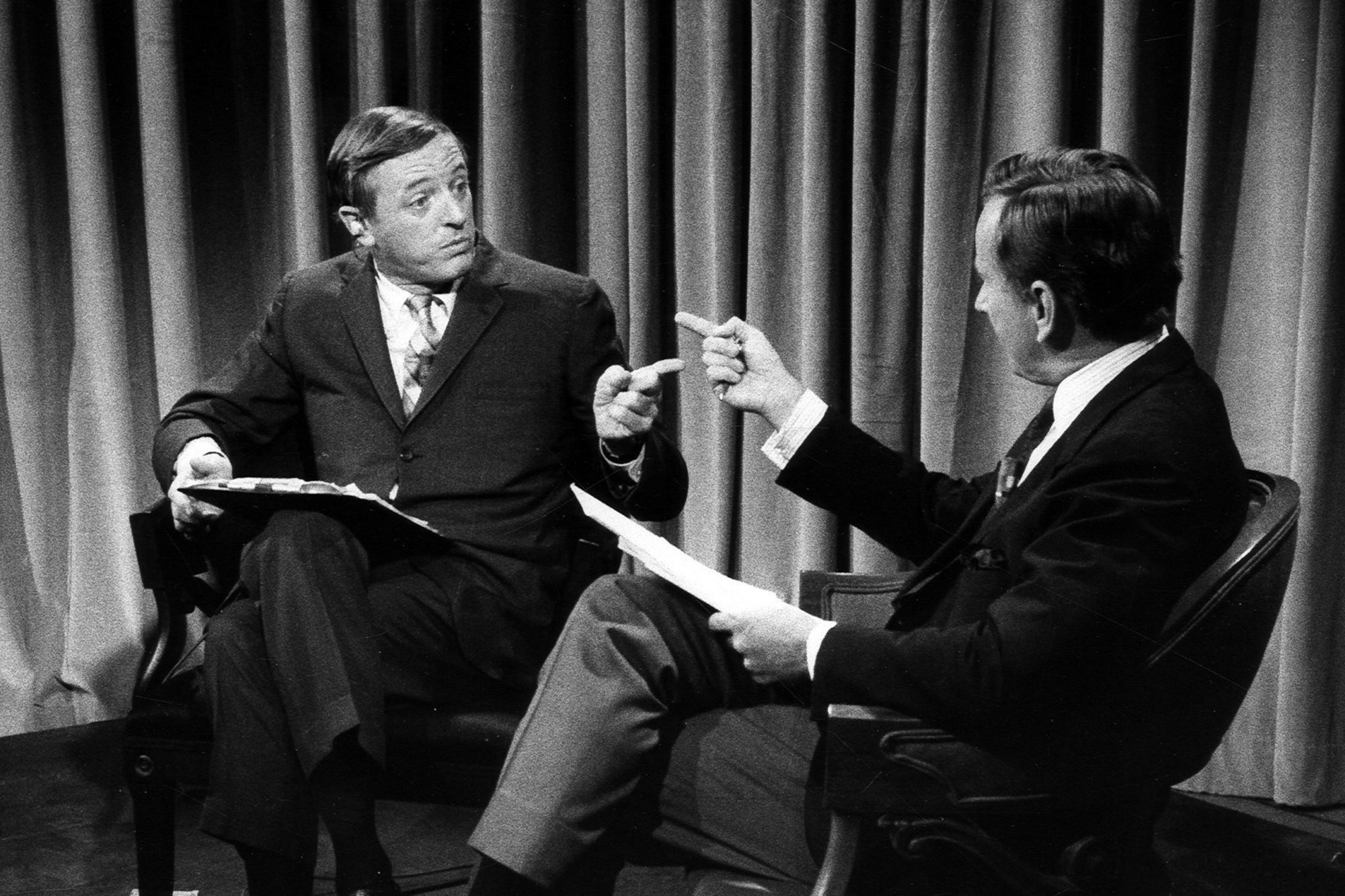
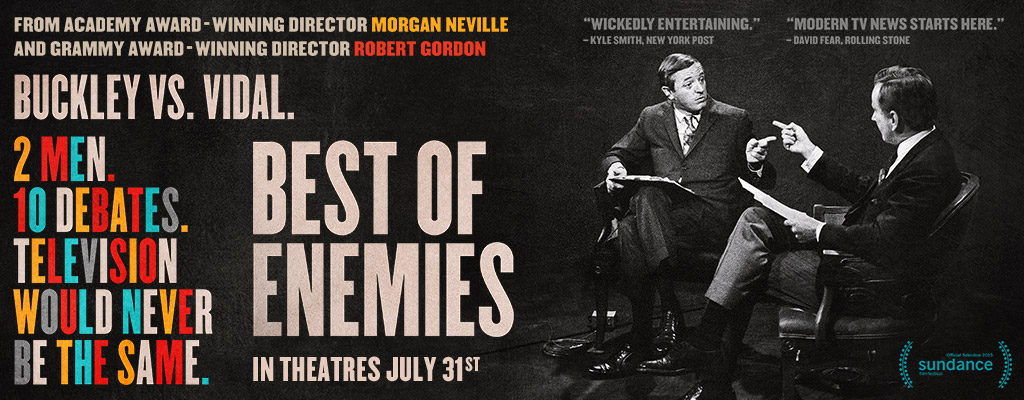
William F. Buckley Jr. and Gore Vidal were both identifiably smarter than me. I loved to listen to them argue. They were equally matched. They respected each other’s intellect, but they hated each other with a passion. Buckley was a Fascist-leaning conservative ball of hatred with a giant ego. Vidal was a self-contradictory Commie-pinko bastard child of liberal chaos with an equally giant ego. I never agreed with either of them on anything, but their debates taught me so much about life and politics that I became a dyed-in-the-wool moderate because of them. They were the key evidence backing up the theory that you needed two sides in the political argument to hammer out good ideas of solid worth. And, though I didn’t trust either side of the argument fully, I always trusted that both were basing their ideas on facts.
When I was young I identified as a Republican like my father, and thought George Will was a reasonable opinion-leader. After all, a man who loves baseball can’t be a bad guy.
Then along came Richard Nixon and the faith-shaking lies of Watergate. The media began to be cast as the villain as they continued to show the violence and horrors of Vietnam on TV and tell us about campus unrest and the terrible outcomes of things like the Kent State Massacre. The President suggested routinely that the media was not using facts as much as it was using opinions to turn people away from the Nixon administration’s answer to the problems of life in the USA. I tried to continue believing in the Republican president right up until he resigned and flew away in that helicopter with his metaphorical tail between his legs (I am trying to suggest he was a cowardly dog, not that I want to make a lewd joke about poor Dick Nixon… or is that Little Dick Nixon, the man who let me down?)
And then along comes Ronald Reagan, the man acting as a “Great President” because he was a veteran actor and knew how to play the part. And with him came Fox News.
Roger Ailes, a former adviser to Nixon, got together with media mogul Rupert Murdoch, a man who would commit any crime necessary to sell more newspapers, and created a news channel that would pump out conservative-leaning propaganda that would leave Joseph Goebbels envious. I make it a rule to only listen to them and their views on anything when I feel the need to get one-foot-hopping, fire-spitting mad about something. So, since, I am a relatively happy person in spite of a long, hard life, you can understand why I almost never watch Fox News. They are truly skilled at making me mad and unhappy. And I suspect they do the same for everyone. They deal in outrage more than well-thought-out ideas.
News media came under a cloud that obscured the border between facts and partisan opinions. And conservatives seemed to have a monopoly on the shouty-pouty angry news. So, I began to wonder where to turn for a well-reasoned and possibly more liberal discussion of what was politically and ethically real. I found it in the most surprising of places.
I turned to the “Excuse me, this is the news” crews on Comedy Central where Jon Stewart and Stephen Colbert were busy remaking news reporting as a form of comedy entertainment. It is hard work to take real news and turn it into go-for-the-chuckles statements of fact that make you go, “Hmm, that’s right, isn’t it?” Stewart and Colbert consistently examine how other news organizations hurl, vomit forth, and spin the news, and by so doing, they help you examine the sources, get at the truth, and find the dissonance in the songs everyone else is singing. And these are very smart men. As I said, the intellectual work they do is very difficult, harder than merely telling it like it is. I know because I have tried to do the same myself. And is it really “fake news”? It seems to me like it is carefully filtered news, with the poisons of propaganda either surgically removed, or neutralized with antidotes of reason and understanding.
So, Mickey listens to comedians to get his news. Is that where you expected this article to end up? If not, where do you get your news?
Life seems to be getting harder and harder. And I realize that a big part of that perception is the fact that my health is deteriorating quickly. This is a humor blog, but it has been getting more and more serious and more and more grim as the grim reaper becomes more and more a central character in my own personal story.
My perception of reality, however, is best explained by a passage in a novel that spoke to me in college. It comes from the novel, the Bildungsroman by Thomas Mann called Der Zauberberg, in English, The Magic Mountain. In the scene, Hans Castorp is possibly freezing to death, and he hallucinates a pastoral mountainside scene where children are happily playing in the sunshine. Possibly Heaven? But maybe not. As he goes into a stone building and finds a passage down into the ground, he sees wrinkled, ugly, horrible hags gathered around a child’s corpse, eating it. And this vision explains the duality at the center of the meaning of life.
For every good thing, there is an equal and opposite bad thing that balances it out. There is no understanding what perfection and goodness mean without knowing profanity and evil. Just as you can’t understand hot without cold nor light without darkness. And you don’t get to overturn the way it is. You try your hardest to stay on the heads side of the coin knowing that half the time life falls to tails.
So, what good does it do me to think about and write about things like this? Well, it makes for me a sort of philosophical gyroscope that spins and dances and helps me keep my balance in the stormy sea of daily life. I deal with hard things with humor and a sense of literary irony. I make complex metaphors that help me throw a rope around the things that hurt me.
We are living now in the Spider Kingdom. Hard times are here again. The corrupt and corpulent corporate spiders are spinning the many webs we are trapped in. As metaphorical as it is, we wouldn’t have the government we currently have and be suffering the way we are if that weren’t true.
But no bad thing nor no good thing lasts forever. The wheel goes round and round. The top of the wheel reaches the bottom just as often as the bottom returns to the top. So, it will all pass if we can only hold out long enough.
Yes, I am trying to answer that old question that old girlfriends used to ask me back when they were young and I was young and too stupid to answer honestly. You know, the question always asked right before they tell you, “Why don’t we just be friends and leave it at that.”
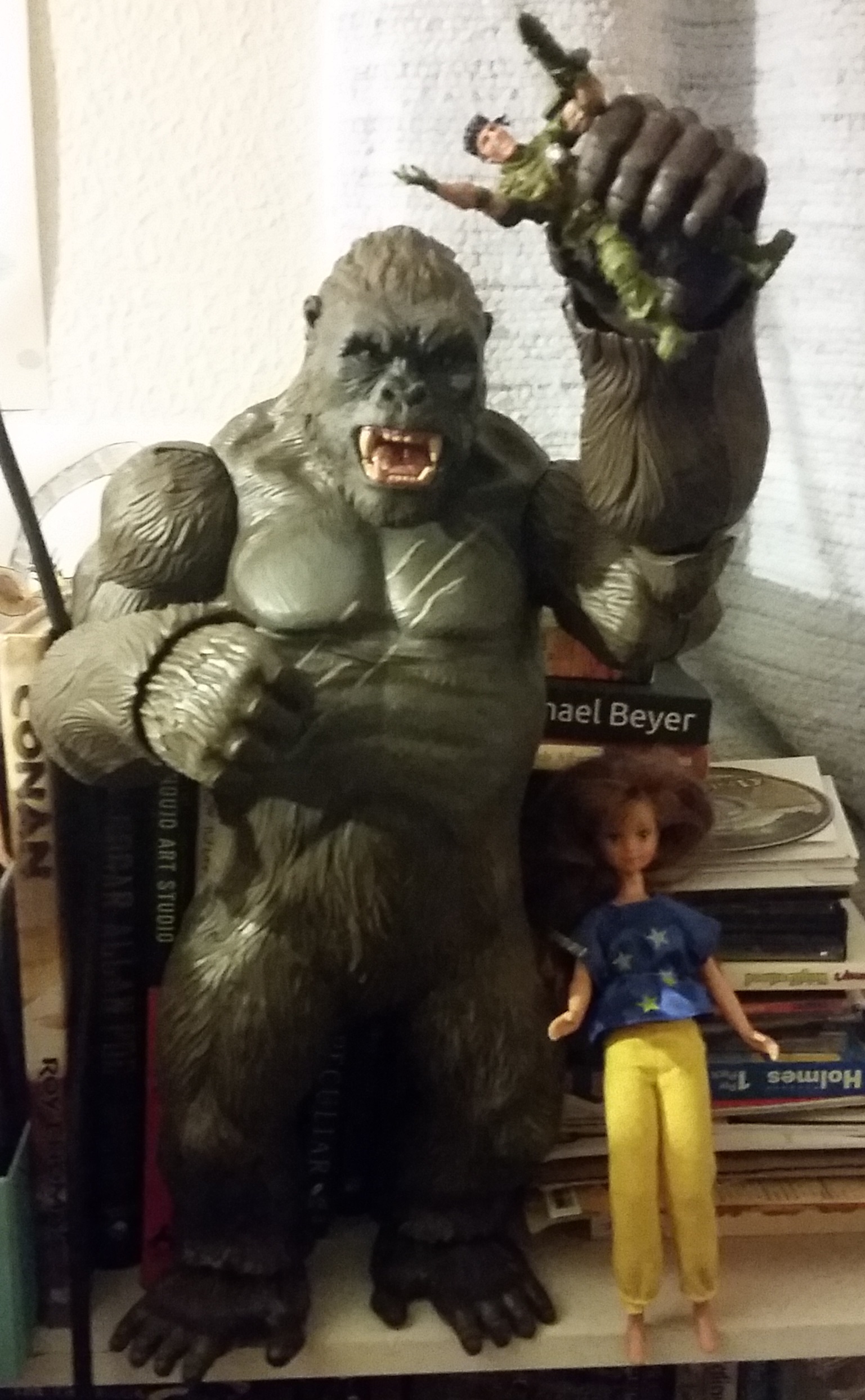
After having spent my Christmas money from Mom on an 18-inch giant gorilla action figure of Kong on Skull Island to terrorize all the dolls on the Barbie Shelf after midnight when all the dolls secretly come to life, I feel more prepared than ever before to answer that particular question.
I am not in my second childhood. I am still in my first one. Yes, I reached the ripe old age of 12 and then Peter Pan Syndrome set in bigtime. On the inside, I will always be 12 years old. I still, at 61, play games and play with toys. I never really grew up.
I am not a Brony, but I am still buying My Little Pony dolls, and can name all six of the main characters. From left to right, Fluttershy, Rarity, Pinkie Pie, Apple Jack, Rainbow Dash, and Twilight Sparkle. And yes, I have watched the cartoon show and like it, but am still not a Brony, okay? There are a lot of things wrong with me, but I am not that bad! My kids, however, are embarrassed to be seen with me when I am shopping for toys at Walmart, Toys-R-Us, or Goodwill.
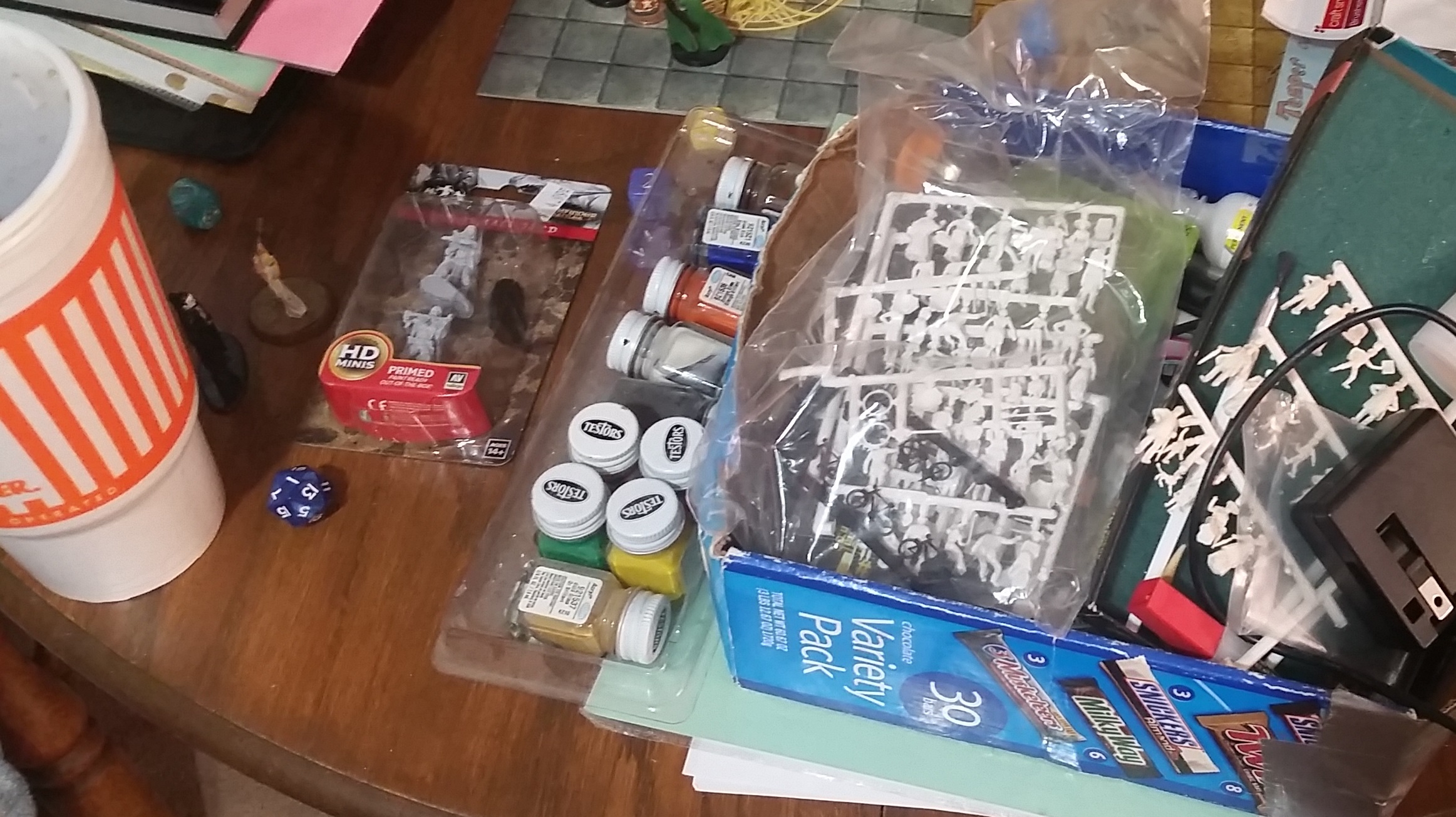
I still play with the HO scale model trains that I have owned and collected since the first year I was actually twelve. I would love to get them running again. The Snowflake Special and the Toonerville Trolley seen in the picture both still ran the last time I tested them four years ago. I still love to paint buildings and HO scale people to live in my little train town. I am still working on a set of townspeople that I bought back in 1994. German villagers circa 1880.
I have always been fascinated by imaginary places and the people who live in them. Especially imaginary places in the fiction of the past. Places like the castle of Minas Tirith in the realm of Gondor in Middle Earth, and like Pellucidar that David Innes and Abner Perry discovered at the Earth’s Core in their boring machine called “the Prospector”as part of the Pellucidar series created by Edgar Rice Burroughs, author of the Tarzan novels. So, another thing wrong with me is that I live mostly in the past and entirely in the worlds of my imagination. I have very little to do with the so-called “real world”.
So, to sum up, the things wrong with Mickey are; A. He’s a goofy old child. B. He still plays with toys. C. He likes girly stuff. D. He confuses fantasy with reality. No wonder the girls used to run away screaming. And I haven’t even added the part about Mickey thinking he is a nudist now and walking around the house naked when no one else is home and forced to see the full horror of it.
But maybe you should think on it for a moment more. What if the things that are wrong with Mickey are actually good things? What if he’s found the secret to long life and happiness in spite of a world full of troubles and illnesses and blechy stuff? It could be true…
Who is really qualified to judge people? The Bible says only God makes that judgement. But who tells us what God’s judgement actually is? Especially if Nietzsche is right about God being dead?
Prudes
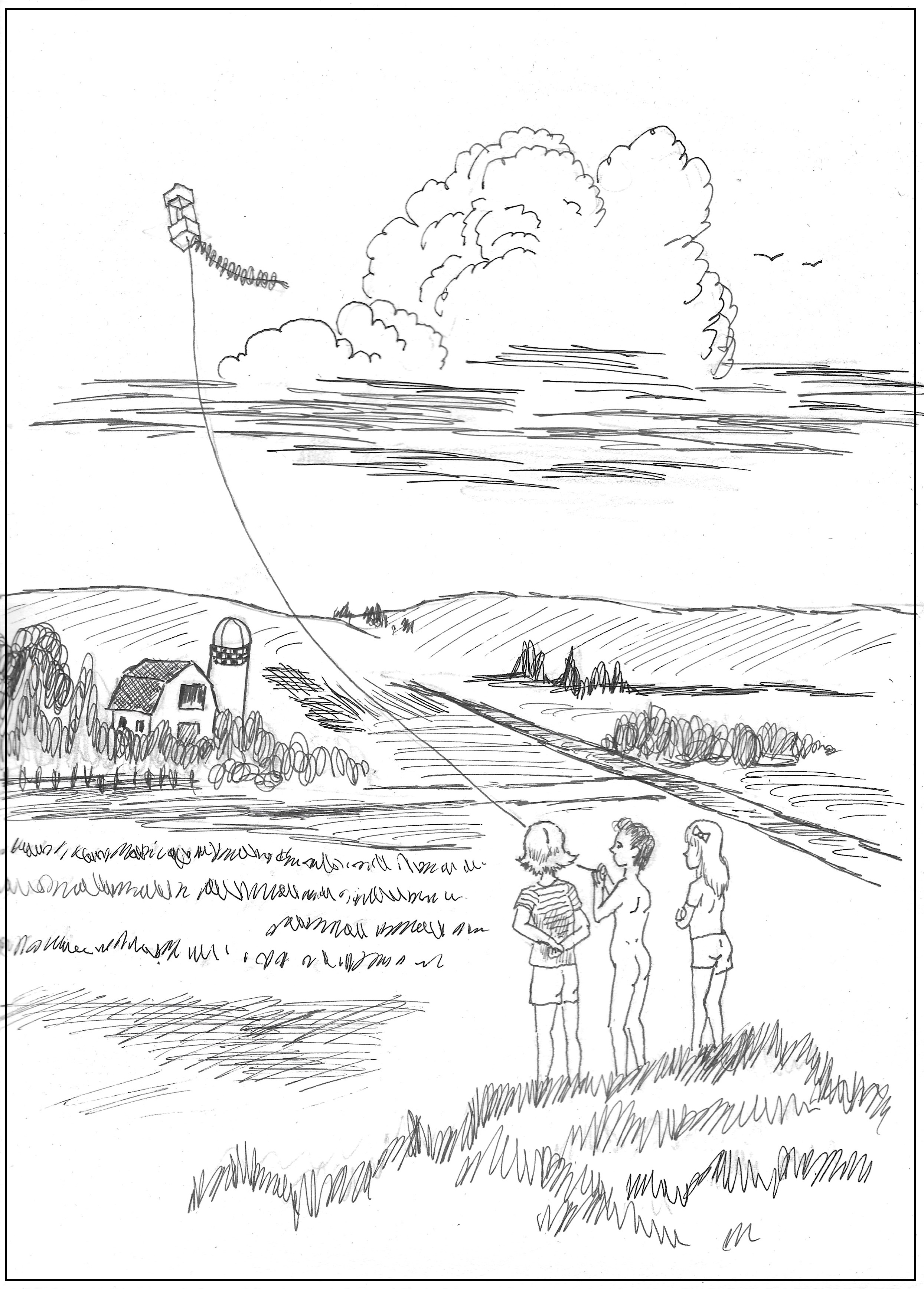
Not long ago I posted a short-short story about me wanting to see girls get naked while we were kite flying, and then, by verbal tricks backfiring, I ended up being the only one flying the kite while naked. I look back on that story now with laughter about my own personal foibles. But if I am completely honest, the church ladies with gray hair, wagging fingers, and tongues that are even waggier… Well, I am glad that the ones I knew as a boy are all now dead and can’t possibly read that story and shame me all over again.
And I know that I draw an awful lot of pictures and write an awful lot of stories that involve naked children. As a survivor of a traumatic sexual assault when I was ten (a thing that happened after the kite story was already in the past) there is a level of discomfort over recognizing that trend in myself. Not because I became a sexual predator of children. I clearly did not. I still am determined to prevent such things from happening in any way I can, though in retirement I no longer have access to children to talk with to find out about bad things that may be happening in their lives.
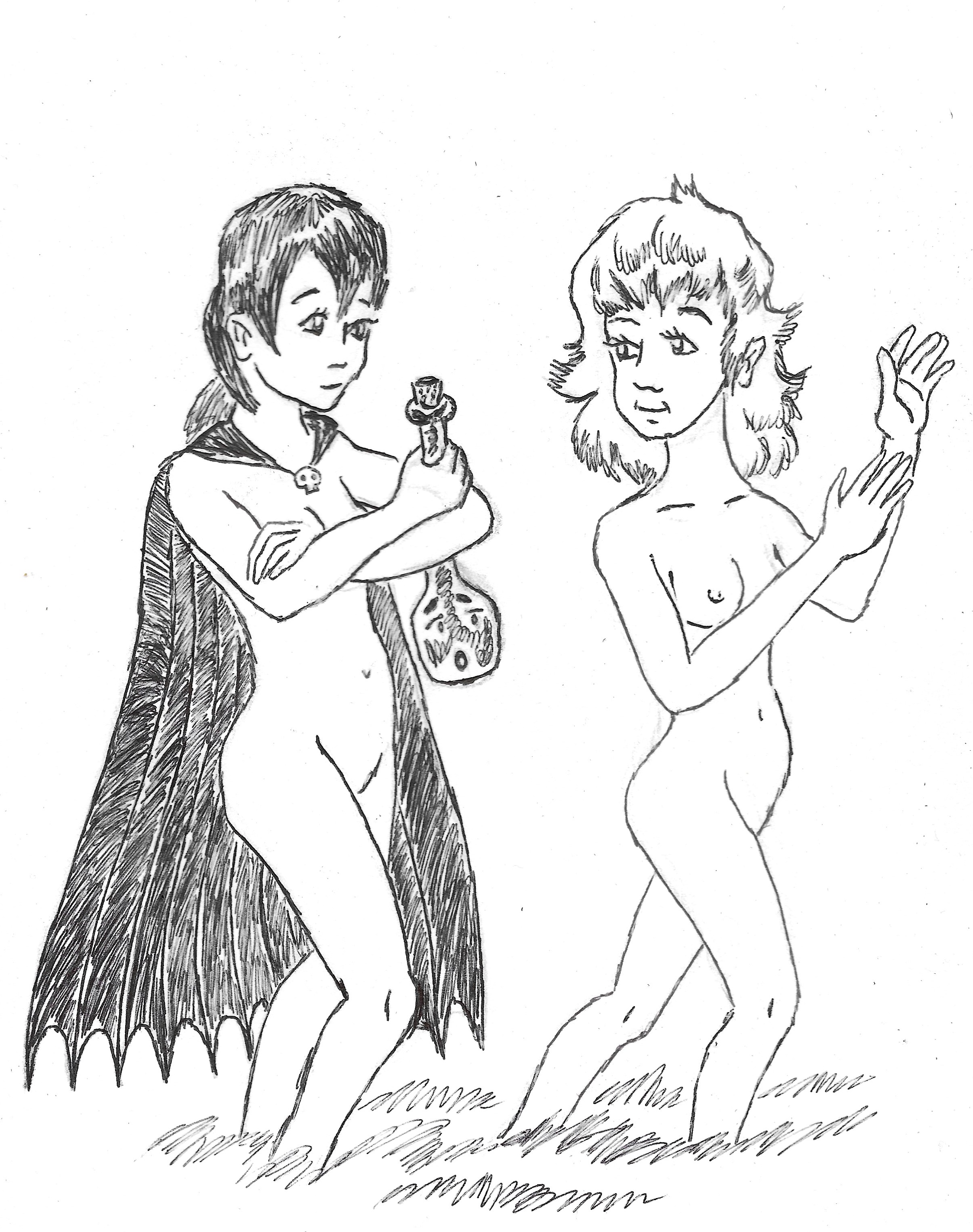
Derfentwinkle and Anneliese in my current work in progress, fairies both.
I write stories in which there are kid characters who are naked at times. Sometimes because of curiosity and developing sexuality, sometimes because of growing up in a nudist household, sometimes in their dreams, taking baths, and many other normal functions where clothing is optional. In The Baby Werewolf novel, I included a character who was trying to exploit a young nudist girl to make child pornography. He was the kind of predator I have always resolved to be against, and the book is intended to make readers aware of that kind of dangerous person and recognize where the opportunities to avoid such people lie.
And some of the nude young characters I create like the two fairy girls depicted in the illustration from The Necromancer’s Apprentice merely represent the liberating feeling you can get from embracing your own nude self, a thing my attacker deprived me of during childhood through trauma and fear.
I, as an adult human being, fully accept readers’ rights to be critical of my work and make prudish judgements about my writing. I don’t like that one critic of The Baby Werewolf who said things about my work being creepy for the wrong reasons (it is a horror story after all) and suggesting that maybe I as the author am bad and villainous instead of feeling that way about the villain of the story. It was fiction, not my personal life story. The villain character is not me.
But prudes being prudish and judgmental can do more damage than just hurting an author’s feelings.
I have had two students that I know of who were transexual.
One was raised a boy because he was born with a penis, but in grade school was discovered to have a womb and ovaries. I didn’t know such a condition existed until I saw an episode of Marcus Welby MD in the 70’s about a young boy who had to transition because he was actually a girl. The child in my class was from a poor Hispanic family that didn’t understand the problem and couldn’t really afford to deal with it. The prudes, judgemental as always, were not kind. This he/she hermaphrodite was forced to grow up as a flamboyantly gay male even though he was capable of physically changing into a woman who could conceive a child. I followed his development for as long as I was able. I did spend one long and awkward evening talking to him/her about his/her crush on me. I could’ve gotten the prude finger-wag over that strange conference too, if anybody had bothered to care about that poor child. I certainly wasn’t going to kiss him, and I had to send him home at the end of that discussion because of what he/she wanted from me. I suspect there were other men who took advantage of him/her. But I wasn’t close enough to help him in any real way. And I lost touch soon after he/she left my class. Based on that bizarre discussion we had, I have no confidence at all that the poor child is still alive. Nobody seemed to care about this child That is the most tragic of things teachers sometimes have to deal with.
The other trans student I had in class for a year was a girl as far as she was concerned. It was not a question open for debate. She was quiet and a good student. She only had a couple of friends, but they were good friends and stood by her. At the time she was in my middle school class, she already had breasts thanks to hormone therapy. By now she has probably transitioned by surgical means. Her life was a lot easier than the boy with ovaries. But prudes in Texas abound and provide a lot of sour fruit.
I personally find it offensive that anyone would deny either of these two people the use of whatever restroom was comfortable for them.
What gives the typical prude the right to pass judgement on anyone else’s behavior? Prudes can cause repression of natural behaviors for the benefit for no one but themselves. I find prudishness to be reprehensible. But the rub is… being judgemental about that makes me a prude too.
I try never to be judgemental. I would much rather accept everyone for who they are, or who they think they are, than rely on what I think they are. And I do listen when others judge me. I have changed things in my books and drawings because of observations by others. And I take everything seriously… especially comedy.
This is actually a 2019 post from before the pandemic. The creepy poetry, however, still applies.
I am not, at this writing, feeling very spry anymore. I substituted for an ESL teacher in Irving yesterday. I enjoyed it. But the frosty cold weather took its toll on me, as did the misbehavior of clownish 11th graders. I am left exhausted and thoroughly convinced that huge high school classes averaging thirty kids in them are not something I am well enough to deal with anymore. I probably need to decide against taking any future high school sub jobs. They make me deathly tired and inspire creepy poetry about mortality in me. Anyway, it caused me to do some picture-making, and some silly poetical complaining.

















 Catch a Falling Star
Ugly Christmas Sweaters and the Criticizing of Them
In the Midwest
where I spent my childhood and early youth, there is a great tradition of making fun of the exceptionally eye-bonking ski sweaters and Norwegian-middle-layer clothing that dads and grandads are given as presents less often than only neckties.
Yes, they are functional in the land of 100-degree-below-zero wind-chill. And they also work as defenders of your male virginity when you are in college in Iowa. But we make fun of them not out of derision, but of love. These are gifts, after all, that are given on winter birthdays and Christmas because the giver loves you. And the creative criticism of them is given only as a sign of appreciation for what they are truly for.
And if you tried to click on the X’s on this sweater of mine, and it did not immediately close on your screen, that’s because this one has special meaning. I didn’t get this as a Christmas gift. I inherited it from my father who died in November 2020. And it will keep my heart warm now until it falls apart, or until the time comes to pass it on to my own eldest son.
What…
this essay is actually about is the nature of good criticism.
The fact that this one is a red Christmas tree decorated with lawn flamingos is not the actual point. One has to look past the flaws and try to judge the effectiveness of how it achieves… or fails to achieve… its intended purpose… apparently to keep rats and small birds out of your yard… or from within a hundred yards of the thing.
And…
if I were to be offended by the revelation of Santa’s sexy black thong, then the thing to do as a proper critic is not to use my power to condemn it, but not to take up the critique of it at all. I mean, if you are actually offended by the thing, you would not want to offer an opinion that some would take as a challenge.
“What? You are telling me that I can’t like Santa’s sexy black thong? I will not only like it, I will love it! And I will buy one for myself.”
Following…
the philosophy of the uncritical critic, I would only review this green nightmare sweater of a Christmas mutant demon-dog if I really liked it. Of course, since you are seeing a review of it here, it means I am actually quite charmed by the sweater itself, and amused by whatever seventy-plus-year-old grandmama that has the kitsch-defiant attitude that allows her to proudly wear it… even if it was given to her as a gift by a relative she probably doesn’t really like but, never tells them so.
Doing book reviews one after another (as I have been doing for Pubby in order to get reviews on my own books in return) I have done a lot of the uncritical critic bit. Some of the people I have been reviewing the books of should never have tried to write a book in the first place. But do I tell them that? Of course not. If I have taken the trouble to read the whole book, even though it may be horrible, I am not going to pour cold water on their flame. I have done reviews with innumerable editorial suggestions of what would make it a better story, or a better non-fiction book, or children’s book, or poetry book, or self-help book… I have read terrible books of all of these kinds. And I know the authors did not rewrite the books as I suggested. But in my many years as a writing teacher, I have learned well that you must always point out the fledgling writers’ strengths and ask them to build on those. And some will. Besides the points I earn to spend on reviews of Mickian books, that is reward enough.
Ugly Christmas sweaters and the criticizing of them is how American culture works. Being good at negotiating that fact is a critical skill, especially in the Midwest. But nothing compared to having talent in the wearing of them.
Leave a comment
Filed under book reports, book review, commentary, writing, writing teacher
Tagged as book review, book reviews, books, Christmas, romance