
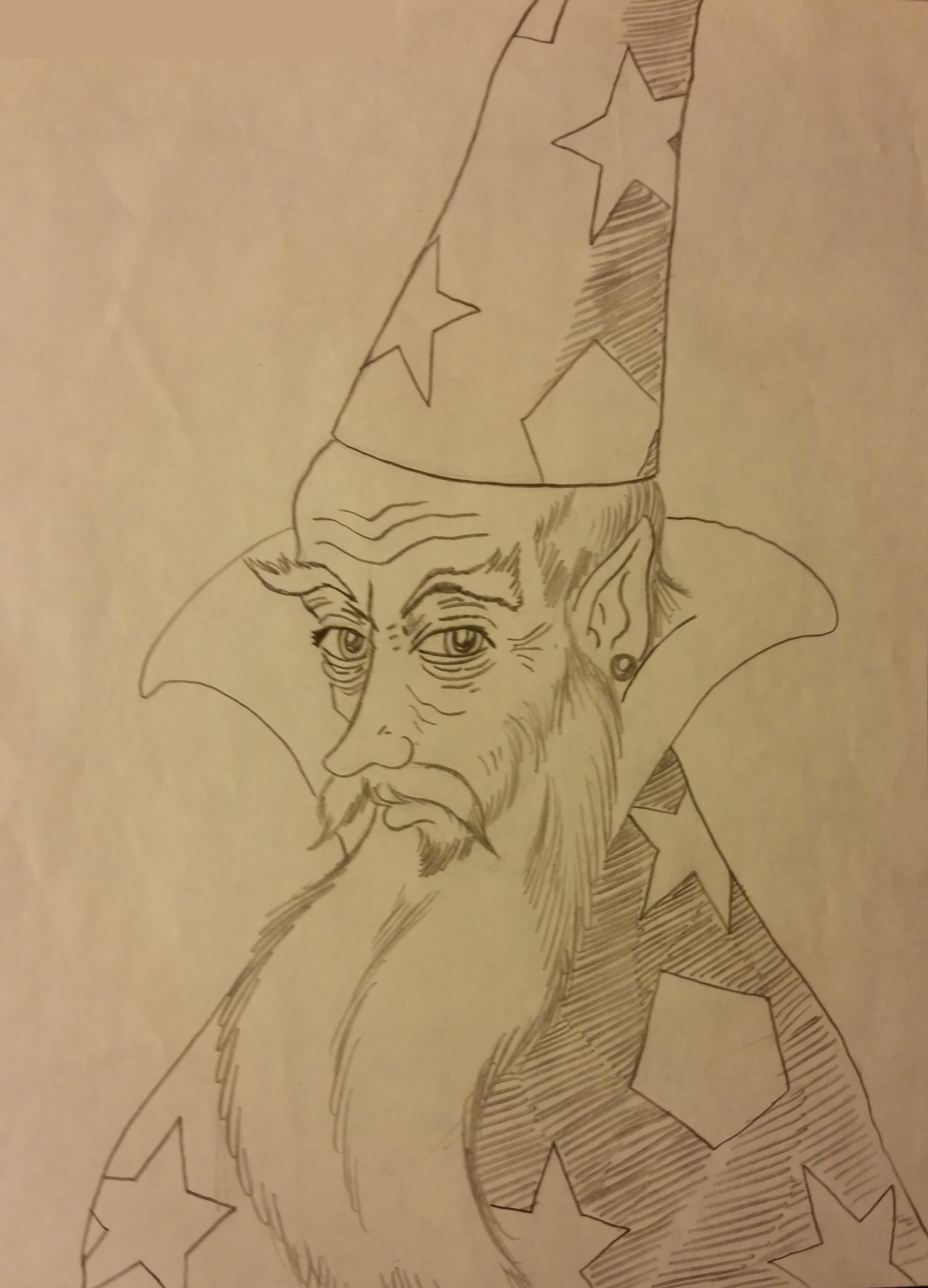
There is so much left to be said before my time runs out. Wisdom, whether hard won or acquired entirely through wit, bears a certain responsibility in the possession of it. We are duty-bound as wizards, the masters of wisdom, to pass it on.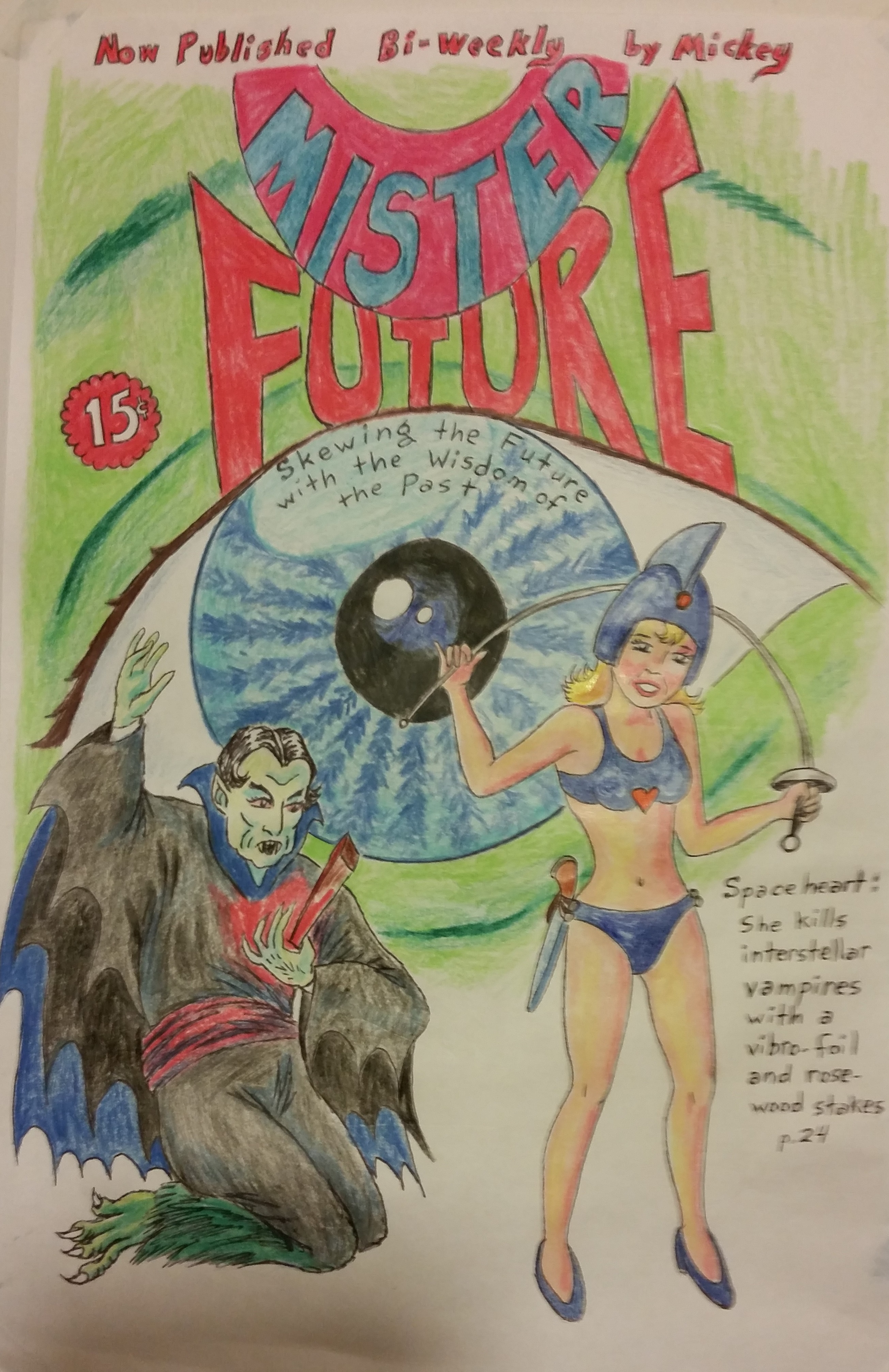
Now, you certainly have every right to protest that I am not wise and I have no wisdom. You are certainly right to point out that I am a doddering old fool that sits around the house all day in the midst of his poor-health-enforced retirement doing little beyond writing silly stories and drawing pictures of mostly naked cartoon girls. I get that. But the beginning of wisdom is the realization of how big everything is and how little I really know about anything.
Take for instance the question of where we came from and what our purpose is? (And the question of why I put a question mark on that when it really wasn’t a question.)
I originally believed in the God of the Christians and in the promises of Jesus… everlasting life and an eternity of sitting on a cloud with a harp and… Okay, it didn’t take me long to see the logical holes in that line of reasoning. So much of that is fear of death and the need to believe that I am the center of all things, the most important person in existence. The truth is I am only a tiny part of a nearly-infinitely-large universe. And the universe is conscious… self aware. How do I know this? Because I am conscious and self-aware. I am an infinitely tiny piece of the whole… but there are untold trillions of others just like me.  And when I die… when this body ceases to function, as it already has a great deal of trouble doing, the parts that make up the individual creature and thought patterns I identify as me will be scattered to the far corners of everywhere to be gathered up once again and be something new. All of mankind passes away. Human beings and the planet Earth will one day be no more. But that is not what matters. There is so much more beyond the boundaries of what my limited eyesight can behold, and what my limited mind can comprehend. I am made of star-stuff (just ask Neal DeGrasse Tyson or Carl Sagan), and I am a part of the universe as a whole. I am in no hurry to die. Life is worth fighting through the pain for… but I do not fear death. Like birth, it is only a stop along the way in a journey that, as far as I can tell, never ends.










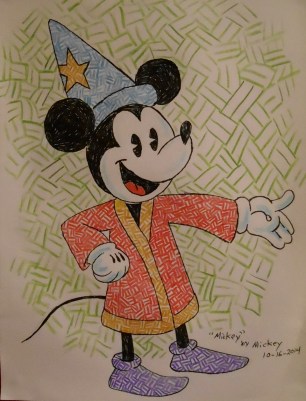 One must end the year on a note that is either upbeat or regretful. A heartfelt, “Meh,” just won’t cut it.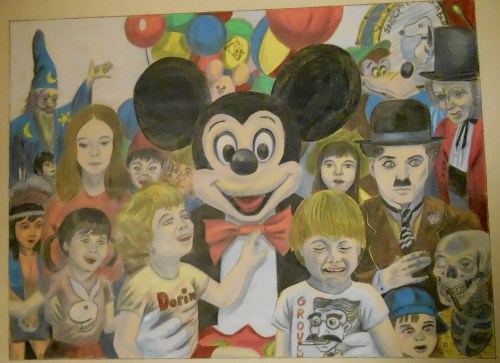


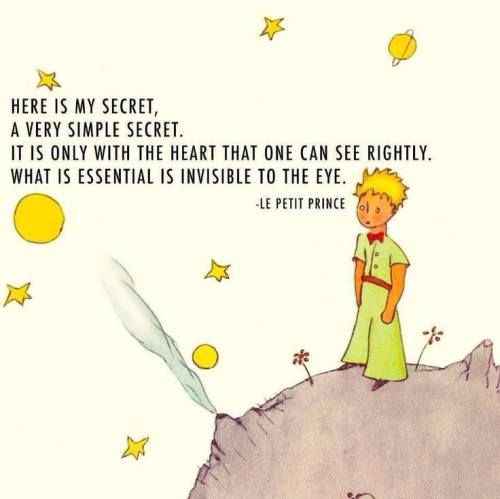

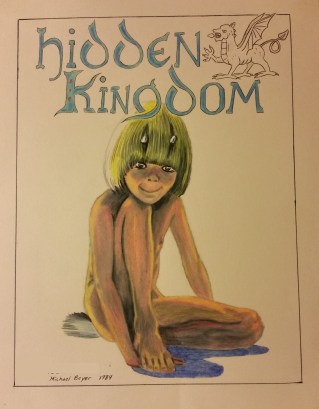




Do Not Crush the Butterfly…
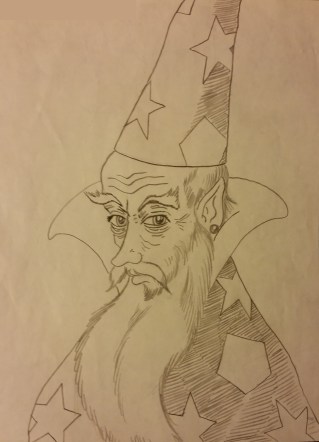
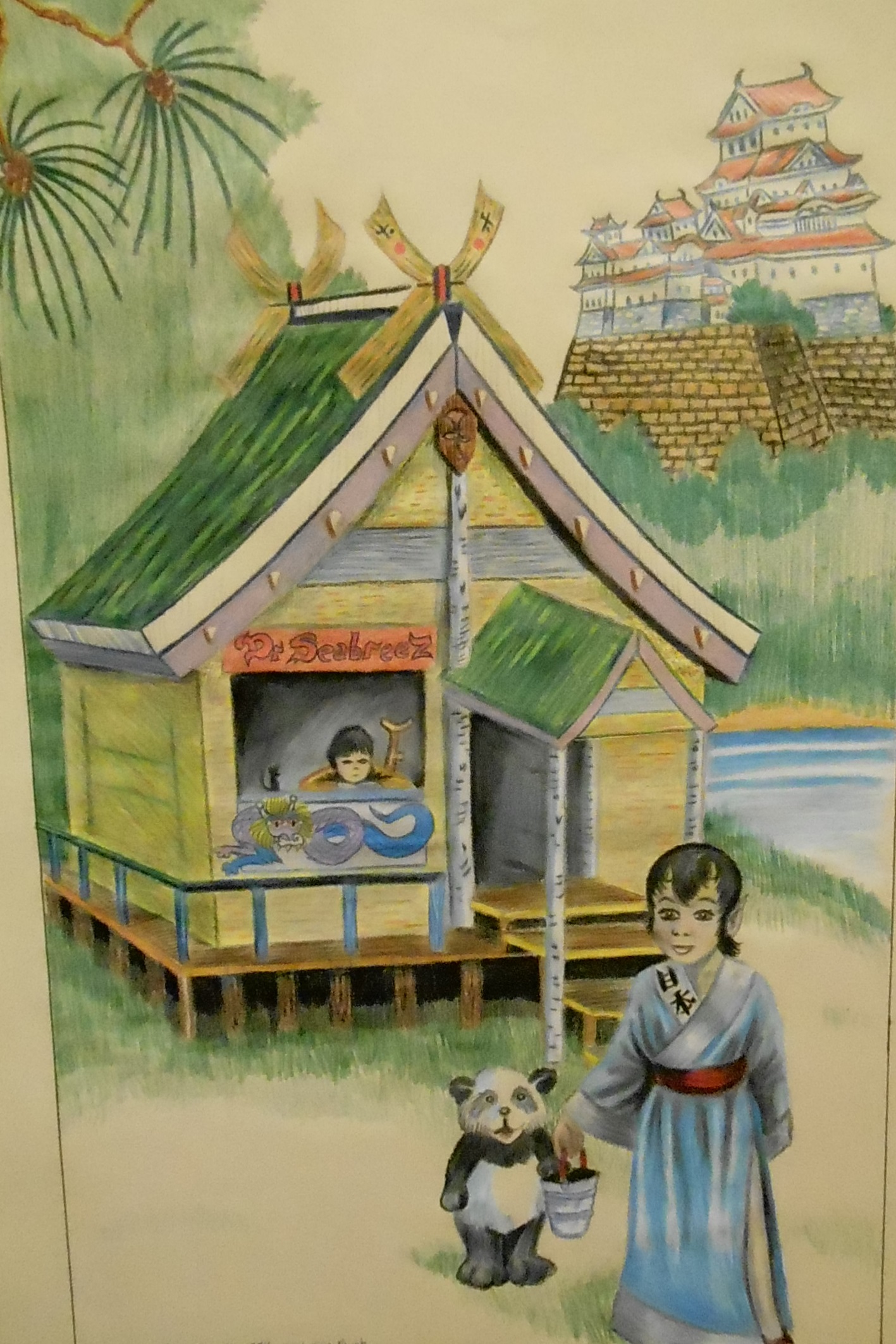
Art on the bedroom wall, with Christmas lights being used as a night light.
Talking to a school administrator the other day about the challenges my children and I have been facing in the last year, I had one of those experiences where you get a look at your own life through someone else’s eyes. “Wow, you have really been on a difficult journey,” he said. I just nodded in response. Financial difficulties, health problems, dealing with depression… life has been tough. But you get through things like that by being centered. Meditation tricks. Things you can do to smooth out the wrinkles and keep moving forward.
I always return in the theater of my mind to a moment in childhood where I learned a critical lesson. My life has been one of learning how to build rather than destroy. It has been about creating, not criticizing.
Electric lights have come to Toonerville, helping to light the darkness.
When I was a boy, I was a serious butterfly hunter. It started when Uncle Don gave me a dead cecropia moth that he had found in the Rowan grain elevator. It was big and beautiful and perfectly preserved. Shortly thereafter, I located another cecropia in the garage behind the house, a building that had once been a wagon shed complete with horse stalls and a hay loft. I tried to catch it with my bare hands. And by the time I had hold of it, the powder on its wings was mostly gone. The wings were broken in a couple of places, and the poor bug was ruined in terms of starting a butterfly collection.
A cecropia moth
Undeterred by tragedy, I got books about butterfly collecting at the Rowan Public Library and began teaching myself how to bug hunt. I learned where to find them, and how to net them, and how to kill and mount them.
I discovered that my grandfather’s horse pasture had thistle patches which were natural feeding grounds for red admiral butterflies (pictured top left) and painted lady butterflies (top right). But if you wanted to catch the rarer mourning cloak butterfly (bottom picture), you had to stake out apple trees, particularly at apple blossom time, though I caught one on the ripening apples too.
The tiger swallowtail was the butterfly that completed my collection, and it was finished when one of my cousins caught one and gave it to me because she knew I collected them.
But then, one day, while I was sitting on a blanket under a maple tree in the back yard with my notebooks open, writing something that I no longer even recall what I wrote, the backyard tiger swallowtail visited me again. In fact, he landed on the back of my hand. I dropped the pencil I was writing with, and slowly, carefully, I turned my hand over underneath him so that he was sitting on my palm.
I could’ve easily closed my hand upon him and captured him. But I learned the lesson long before from the cecropia that catching a butterfly by hand would destroy its delicate beauty. I would knock all the yellow and black powder off his exquisite wings. I could not catch him. But I could close my hand and crush him. I would be victorious after a summer-long losing battle.
But that moment brought an end to my butterfly hunting. I let him flutter away with the August breeze. I did not crush the butterfly. It was then that I realized what beauty there was in the world, and how fragile that beauty could be. I could not keep it alive forever. But it lasted a little big longer because I chose to let it.
So, here is the lesson that keeps me whole. Even though I had the power, I did not crush the butterfly.
2 Comments
Filed under commentary, compassion, feeling sorry for myself, healing, humor, insight, inspiration, wisdom
Tagged as bug hunting, butterflies, wisdom