Tag Archives: history

The Boogendorfer


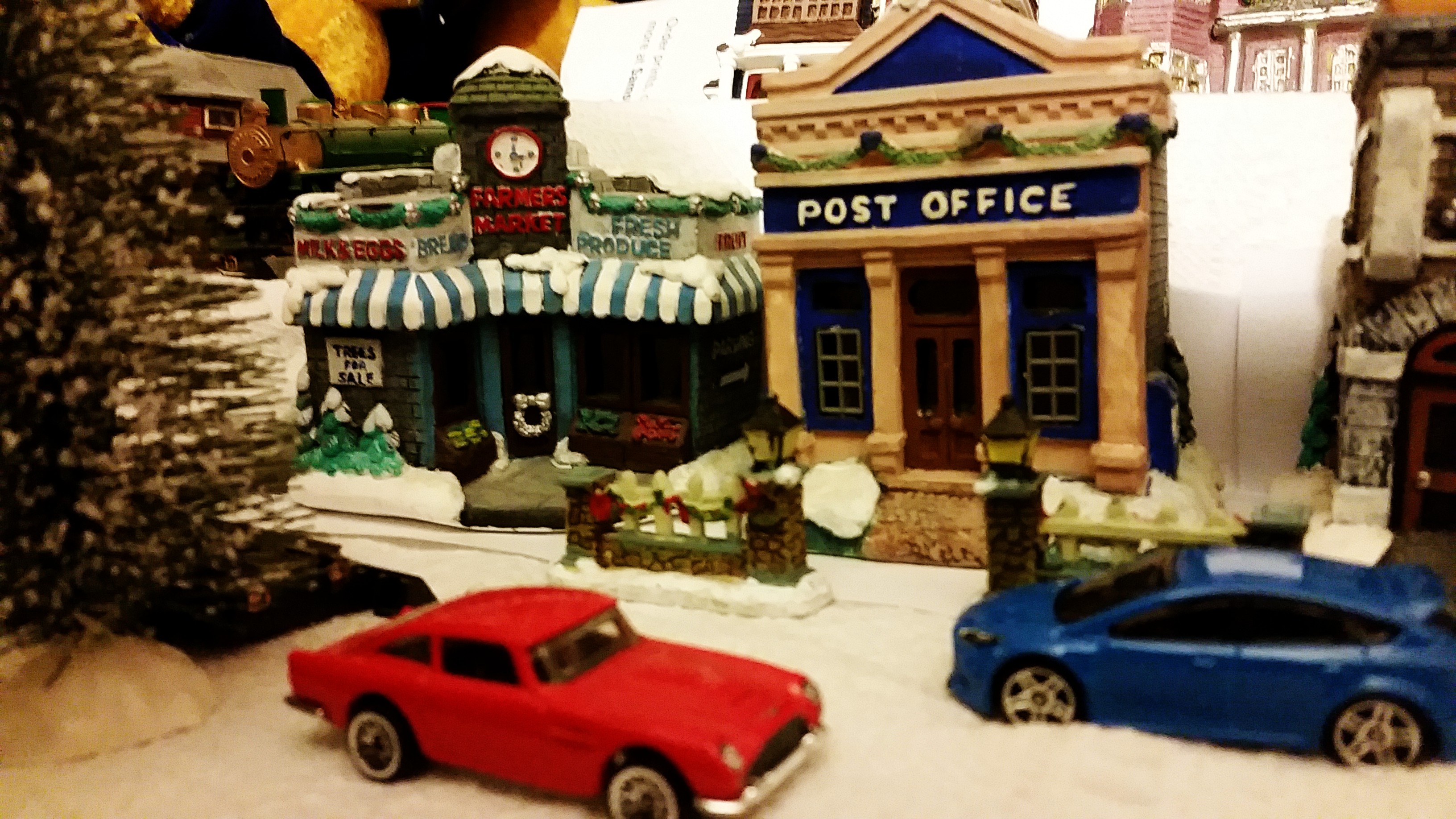
c360_2017-01-16-09-12-30-851

This is not actually a picture of Boogendorf, this is Toonerville where the clocks are wrong and a giant Mickey Mouse lurks in the foothills beyond.

Today I mean to justify my existence before God and everybody.  Apparently in the modern world you have to be certain things in your basic foundation to justify getting travel visas, citizenship, and a basic right to continue to exist unmolested.  We apparently elected a new leader, the Mad King of Boogendorf, to make sure all Boogendorfers are suitably qualified to live in Boogendorf.  So this is a brief photo essay to justify my case for why Boogendorf should accept me as a citizen and not execute me outright.

c360_2017-01-09-08-51-00-299

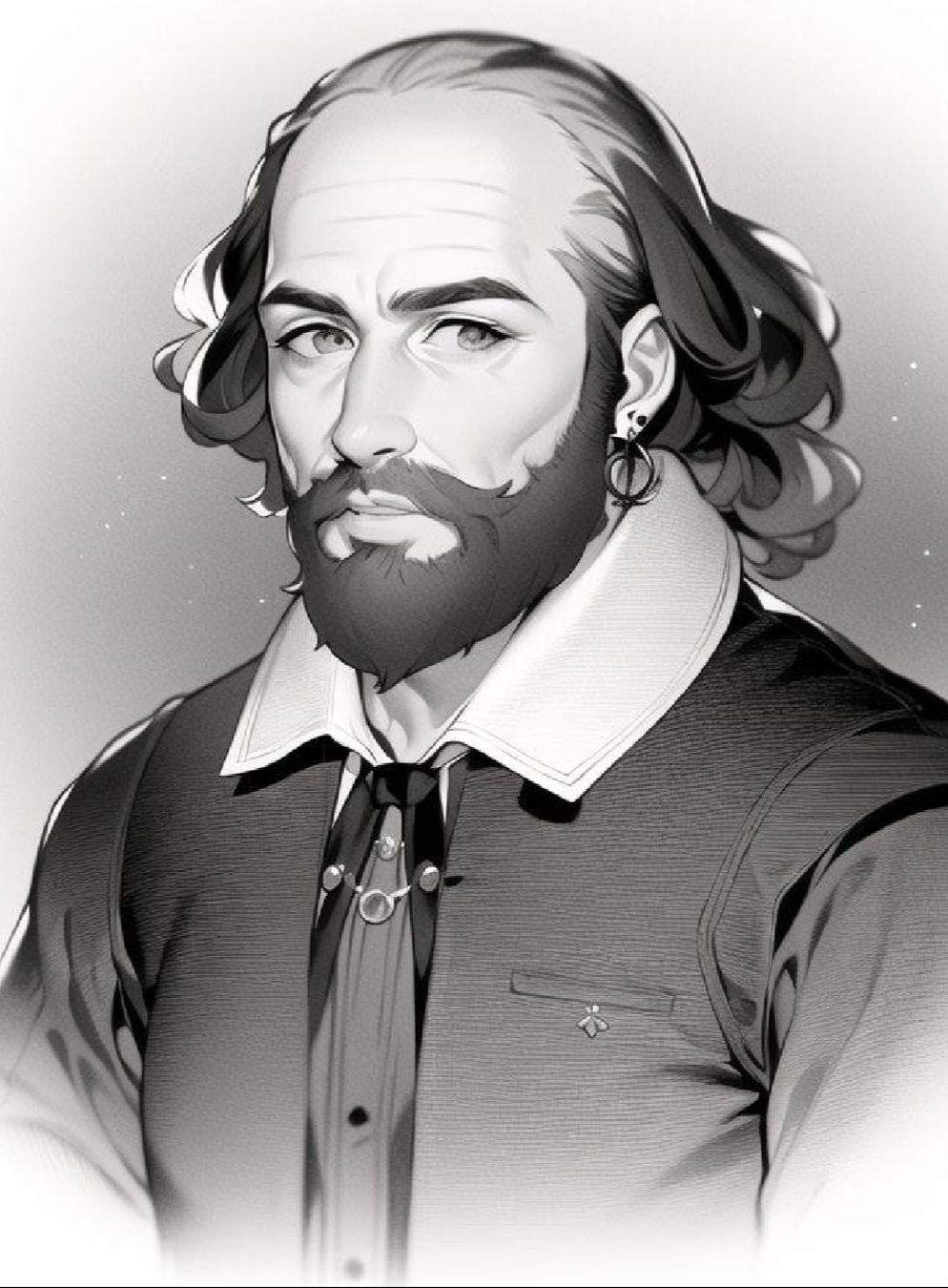
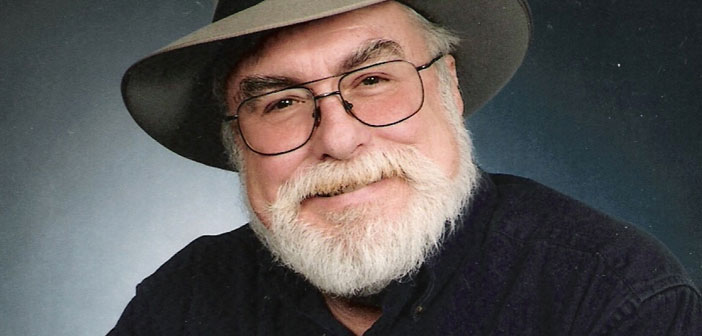
First of all, I am not one hundred per cent crazy.  You can tell from this photo, can’t you?

This kooky dorfleflop can’t be any more than 65% crazy because his pin head is not large enough to harbor more than 65 out of every 100 truly derfy and sanity-stealing notions.  (What is a dorfleflop, you say?  Well, dorf is a German word for town, and dorfleflops flop in a dorf and think they belong like everybody else who has flopped there before.)

But using the Mad King of Boogendorf as a measuring stick (an orange measuring stick with an extra-long tie), that is clearly not crazy enough by half.

c360_2017-01-16-09-12-59-721

What’s the deal with the clocks always being wrong in Boogendorf?

I have always heard it said, “It takes a village to raise a child”.  And I think that saying I heard is probably true.  I was raised by the village of Rowan, Iowa in the 60’s and 70’s.  I learned to draw there.  And I can draw real cartoon human beings.

Of course, one must be careful to note that if you could actually draw real cartoon human beings they would be alive after that, and that would make you like God, able to create life from nothing more than pencil, pen, and paper.  And in Boogendorf there is only room for one God.  That, of course, is the Mad King of Boogendorf.  So I guess that is a disqualifying quality too.

And that saying about a child raised by a village is a saying somehow connected to Hillary Clinton, and Hillary Clinton was defeated (I have also heard disgraced, demoralized, and denounced) in the last election by getting more votes than the Mad King of Boogendorf.  So I am judged lacking by my upbringing too.

c360_2016-10-05-10-40-09-695

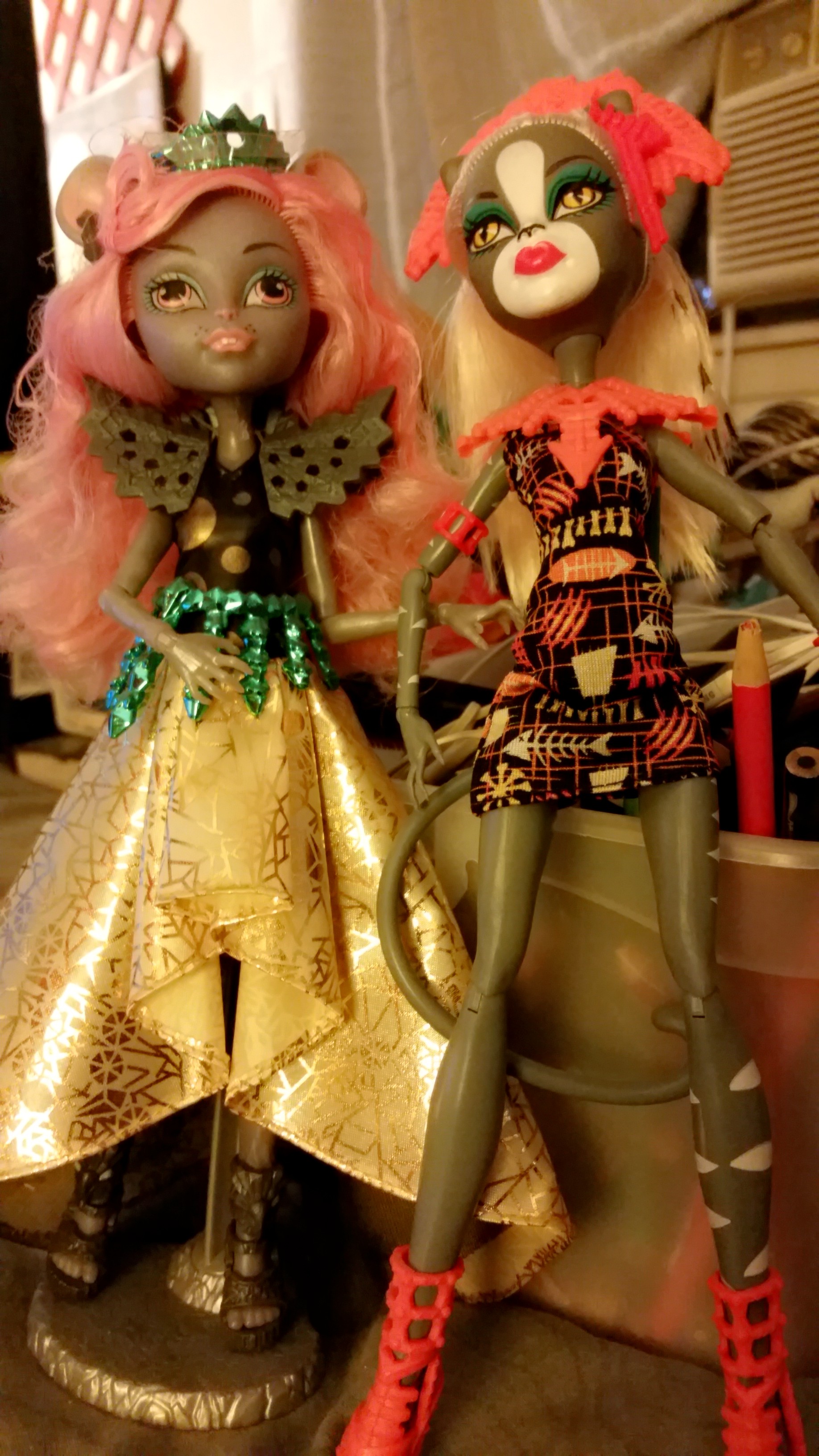
I am also undeniably guilty of playing with dolls.  I mean, I collect them, I comb their hair, dress them in different clothes, take them apart and repair them, and pose them for pictures.  That can’t be normal.  But is it abnormal enough to make me qualified to be a Boogendorfer from the village of Boogendorf?  Maybe if I plated them in gold or something, or had enough money to go to “golden shower” extremes?  I guess I don’t understand how to be Boogendorfy enough to live in Boogendorf.  The “Boo” in Boogendorf proves that you have to be pathologically afraid of things more, just like other Boogendorfers are.   I am sure the average Boogendorfer is afraid of people who play with dolls.  Especially if those weird people don’t own any guns and don’t like to kill stuff.  That just ain’t natural.  You even need to give guns to little girls to make them safe against those evil anti-Boogendorfers.

So, I guess I am doomed to live a life outside of the walls of Boogendorf (and they are really great walls, too).  I should be grateful that the citizens of Boogendorf have only rejected me and not used their sacred second-amendment rights to execute me.  For now, I am simply not a Boogendorfer.


Leave a comment

Filed under angry rant, cartoons, humor, mental health, politics, satire

Benjamin Franklin (a book review)

43363

I admit to loving dry old history books that most of my contemporaries would wrinkle their noses at and loudly proclaim, “It’s BORING!!!”  But I don’t think the fact that I really really loved this book automatically means that you will detest it.  So bear with me and let me tell you about a book about a historically important and thoroughly fascinating man.

Edmund Morgan is a scholar who believes in using primary source material, and Franklin, as a printer, writer, statesman, scientist, and very sociable letter-writing man left a vast wealth of primary source materials behind to help us understand what was in his mind as he performed some of the most essential services ever given to a country as the United States was being formed.

The book makes us very aware that if history had followed Franklin’s every desire for specific outcomes, we would still be part of the British Empire.  But Franklin was unique among the founding fathers.  He did not serve his own ambitions the way John Adams did.  He did not serve strictly ideological goals like Thomas Jefferson often did.  But his input and pragmatism were essential to helping those two men  create the Declaration of Independence.

He believed in public service as a higher goal.  He carried out not his own will, but the will of the people evident in the debates about where the country needed to go when the government of the British King and Parliament became increasingly unresponsive to the needs and issues of the American colonies.

This was akin to the way he approached science.  He was able to discover enough scientific facts through careful and clever experiments to create practical and life-saving inventions like the Franklin stove and lightning rods.  He led the field for a time in the investigation and understanding of electricity, and the old story of flying a kite in a thunderstorm is not a myth.  It was an actual experiment using what Franklin had discovered about electrical conductivity and insulation to prove that lightning was made up of electrical energy.  Edison and Tesla might never have started if Franklin had not come first.  He never defended, argued, or explained his scientific theories.  He believed in letting experimental evidence speak for itself.  Basically, he became a world-famous scientist by not seeking fame.

Franklin loved to be with people of all kinds, especially intelligent people and female people.  He was a good friend to many, and even maintained respectful friendships with some who chose to be on the other side of the American independence question.  His work on the Pennsylvania constitution, being ambassador to France, and his part in the peace treaty negotiations with England made him as essential to the American experiment as any of the founding fathers who would later take a turn at being president.
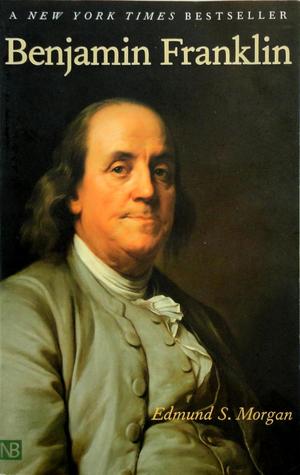
All I can really say about this excellent book is that it helps you get to know the man who was Ben Franklin.  And this is a man that most people are bound to love, and every man should know.

Leave a comment

Filed under book review, humor, philosophy

The Boy With the Bugle

The Boy With the Bugle

In many ways all my fiction is actually historical fiction. I am very careful about settings, times, and histories of my characters, since many of them are real people. I can only conceal who they are by changing their histories in the slightest of ways. The way of life I am trying to depict is always the real one I experienced, even when I dip back into the past beyond the reach of my memory. I can call upon the testimony and witness of others. I have relatives that tell stories about what life was like on the farm before there was electricity, before there was TV, before there was such a thing as a horseless carriage. I know what my little town was like a hundred years ago. I know who the important were. I know how things functioned all the way back to 1855. These are things that not only make my writing have purpose, but make it vibrate the very roots of my being by resonating with the stories of my ancestors and those who came before.

Leave a comment

April 5, 2014 · 9:20 pm

To be Real or Not to be Real? Science Fiction Vs. Reality

BookCover

Is the line between science fiction a bit blurry?

I think reality is the one thing that is most critical to science fiction.  If you don’t have something real in the story, then you are missing the science part.  But the key to that particular treasure chest is in how you mix the reality, also known to some as the truth, with the story, also known to some as the pack of lies.  So let me tell you a lie–er–a story about how I tried to build some reality into my little work of science fiction.

1990 was not the year I had the inspiration for the story.  That actually came much earlier, in my misspent youth back In the 1970’s.  Now, I won’t try to tell you that I had any close encounters of the third kind back then other than in a movie theater, because after all, some lies are too big and hairy for even me to believe.  The movie theater had a huge influence on my imagination, as did the Saturday matinees on the television, but the only true parts of that whole mess is how people think and feel in reaction to certain situations.

I could claim a kinship with Davalon and the fact that he was accidentally left behind on Earth because I was accidentally separated from my family at the Mason City Air Show.  I know the Mason City Airport isn’t a very big one to get lost in, but there were lots of people there, and I was a dumb kid at the time.   I could draw on that wonderful mix of panic, fear, and exhilaration at being completely on my own to help me plot out how a lost alien child would think and act in a small Iowa town.  Naturally he would immediately get himself run over on the highway.  That’s how it works, isn’t it?  Oh, wait, I didn’t actually get run over at the Mason City Airport.  That’s one of the big white lies I am trying to separate from truth here.

1990 is significant enough to use as the first word in a paragraph twice because that was the year of both Voyager 2 flying out into the outer darkness after having encountered and photographed  the huge gas planets Uranus and Neptune, and the year that a real invasion occurred when Iraq decided to invade Kuwait.  Both of those events get an obscure reference in my story because real events, even events that most people try to ignore, can make a pack of lies, er, story seem real.

old-teacher

Everyone has a Ms. Rubelmacher–inspirational by default

1990 is also the year I sat down at my electric typewriter and began pecking away at my first draft of the story itself.  1990 is also the year that happened 101 years after the events in 1889, when Theofrastus Wallace and Thornapple Seabreez flew a passenger train with Pullman coaches all the way to Mars.  Of course, that last bit is totally irrelevant because it didn’t actually happen.  It is just another pack of lies–er—story that I chose to tell as a screwy plot device to mix up the lies further and make the whole project murky at best.

So… Oops, wasn’t this paragraph supposed to start with 1990 also?  I guess not, because it’s all about how you have to use some real science to get your sticky little hands on a label of science fiction for your story.  Here you have to make use of all those glorious little facts and details you learned in science class when you were supposed to be paying better attention to what Ms. Rubelmacher was teaching.  Here I could place the notion that amphibians absorbed moisture and nutrients through their skin into my story about amphibianoid aliens.  I could also use the notion that fusion engines could be fueled by the water droplets in steam, and the imaginary anti-gravity engines were able to make a train fly.  I could use my knowledge of Martian Geography to help set part of the story on Mars, again thanks to the fact that Ms. Rubelmacher’s teaching was so boring, er, exciting that I actually had to read ahead in the textbook rather than listen.

So here we have a restatement of my thesis and a summation about all the idiocy, er, wisdom that I have to impart about how you mix what is real with what is a bald-faced lie, er, fictional story.  It boils down to this… Any good liar, er, con man, er, story-teller… yes, I mean story-teller, mixes just enough factual and verifiable stuff into the mix to make the lie, er, story believable.

Leave a comment

Filed under Uncategorized