
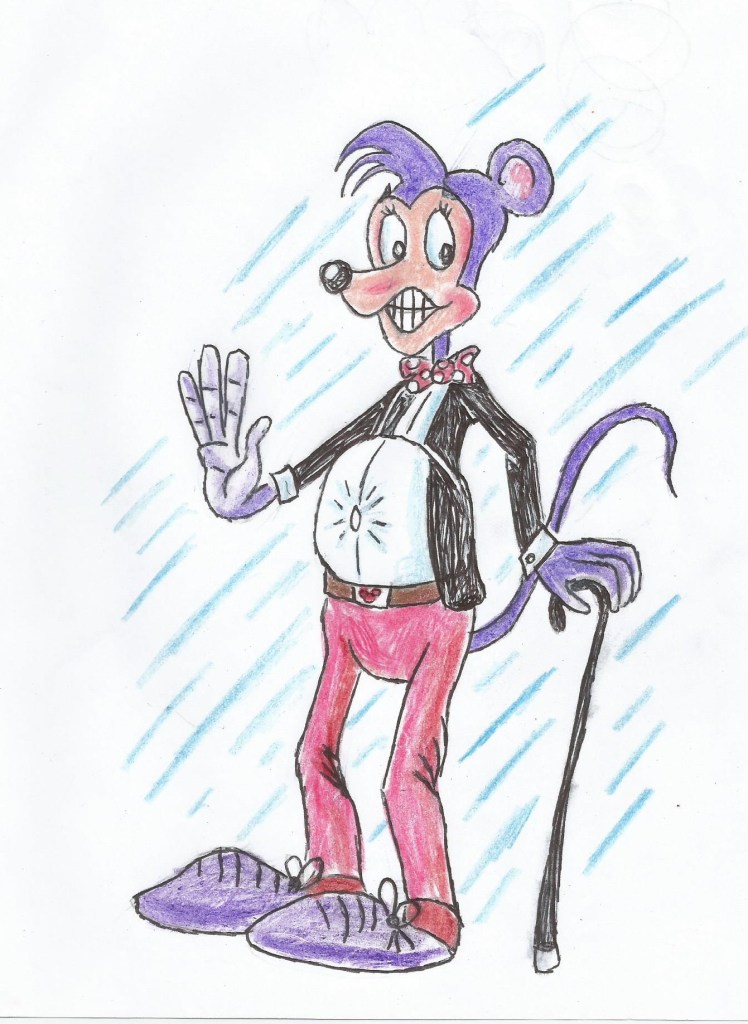
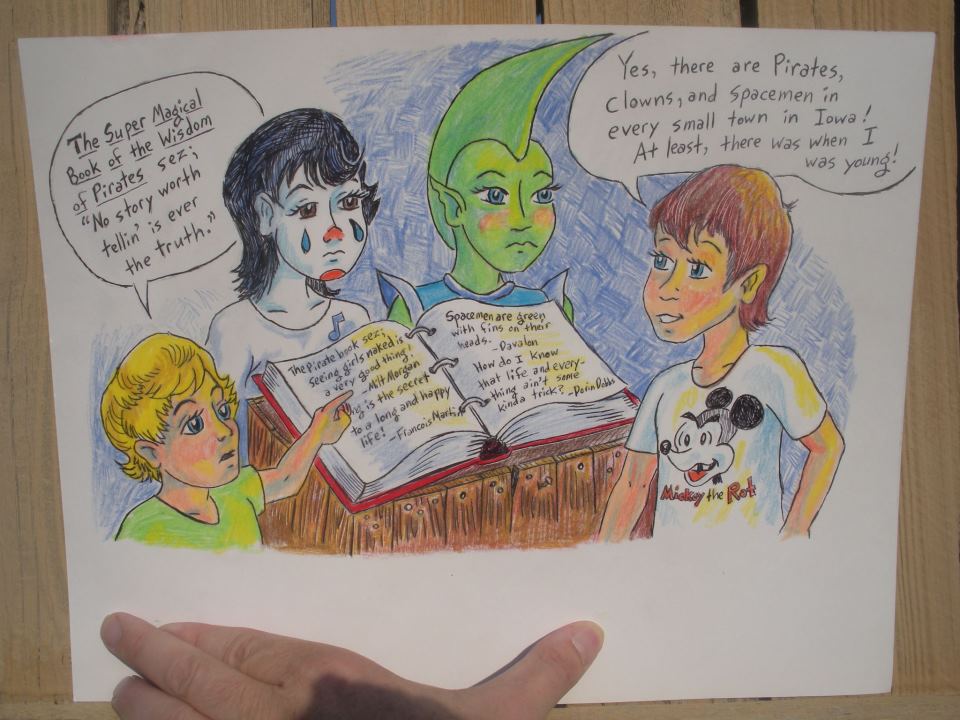
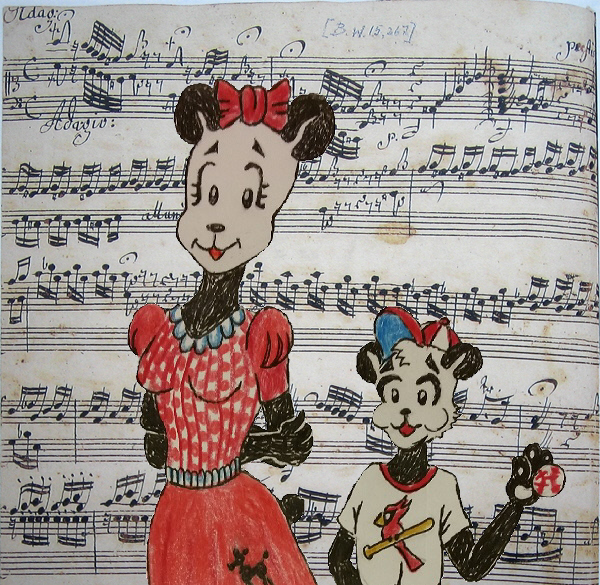
“Yeah, not exactly superhero-like, I know. My only super powers are teaching Middle-School kids and writing Indie YA novels. And those are powers that are easily ignored by the truly evil ones,” said Mickey, as if there were actual wisdom in his stupid, purple Mouse-Head.
“Well, you did write a pretty good novel in that last teacher story you wrote. It might make a difference if a few of the right people read it and understand what you are trying to say about education.”
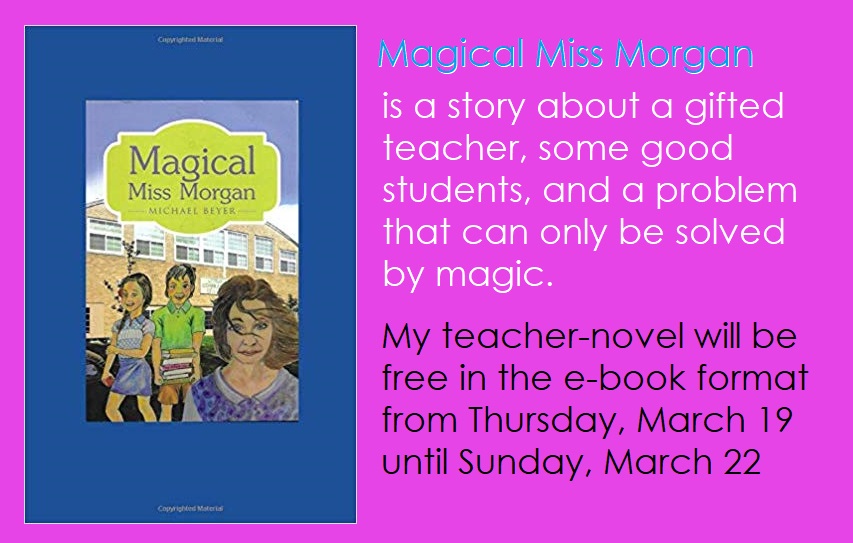
“You’d have a pretty good point there if anybody ever read the danged thing. I have given away paperback copies, and now it’s free this weekend while so many people are stuck at home with lots of reading time and no reason not to click on the link to get it free for their Kindle or free Amazon cloud reader. Of course, it hasn’t even been reviewed one time. Not even by Page Publishing who supposedly edited and printed it before I moved it to Amazon.” Mickey had an ironic twinkle in his eye as he said it.
“Mickey, you are not very good at promoting your books. It is day two of the free book promotion, and you have only given away four copies.”
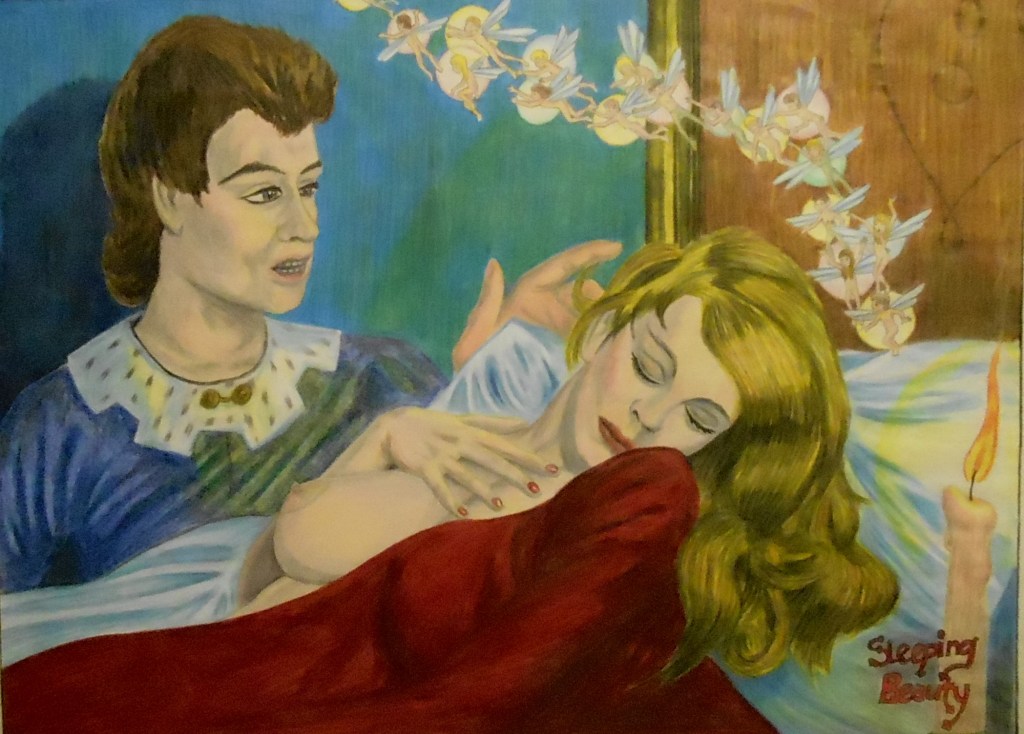
“I know, I know…” he said with a sigh. “But it is a pretty good story. The title character teaches English to sixth graders. And she is not only tasked with teaching some unique and somewhat challenging kids in the classroom, but she has to deal with difficult parents, an even-more difficult principal, and the fact that her little brother grew up to be a wizard and told the local invisible fairy kingdom that she was the key to helping them defeat the chaotic forces of evil from the fairy realm. You know, the same problems almost every teacher has.”
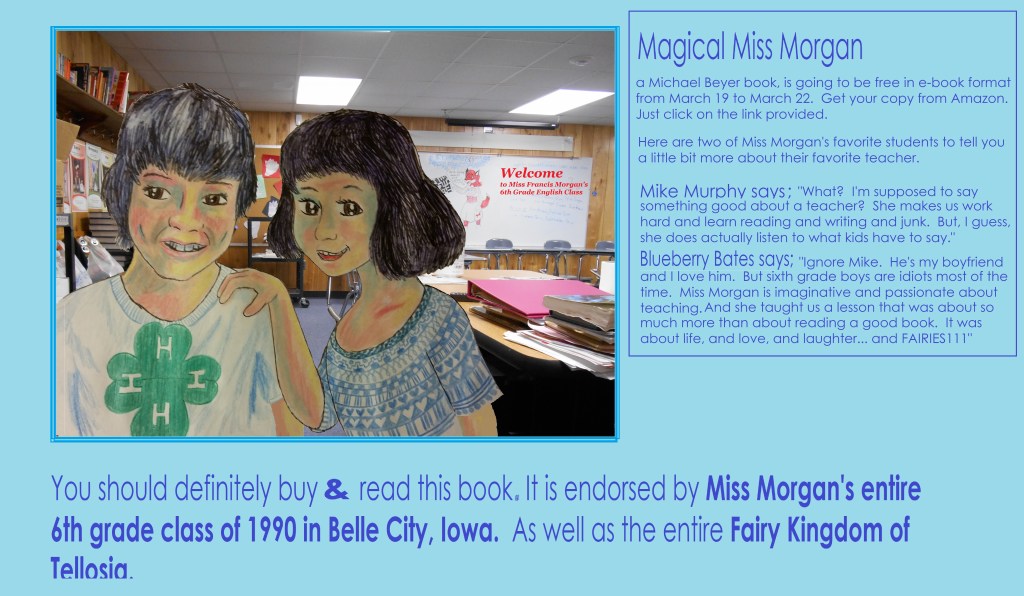
“It sounds like a book worth reading. And I should know. I have read the danged thing completely from beginning to ending about seven times. Of course, five of those times was because I wrote the previously-danged thing and needed to proofread it more than twice.”
“So, I am now trying to exert the full might of the Mickey and his miraculous super powers on you, the wonderful few who will actually read this dumb blog this far, but still haven’t clicked on the link. It is free, after all. What do you really have to lose?” Mickey shouted into the air of the internet.
Crickets were all we heard on this end.


 Catch a Falling Star
Sunday with Salvador
Today I am waxing on about the wonderful, mad, mad, mad genius of surrealist art, Salvador Dali. He was born in 1904 and died in 1989. And that’s really about all that I want to tell you about the physical parameters of his boundlessly creative life. He was alive in this world until I was already thirty-three. So, I got to see him on television and watch video biographies of him and his incredible artwork. Ones that included interviews. And if I get into his public persona, that will eat up the rest of his essay. Instead, I need to talk about his art, and how it modifies and magnifies what I am meant to be.
His most famous painting is the one that most clearly burned the image of melting clocks into our collective memory. He claimed, and others pretend to see it too, that it is a reaction to Einstein’s Theory of Relativity. But when I look at it with the melting mask of Dali himself in the center, I see the artist’s perception of time in the spaces within which creativity moves. Time melts and has no meaning when you are painting and writing from an endless roiling flow of new ideas and notions. Time becomes as irrelevant in that context as the ants on the pocket-watch or the dead tree from which one deflated clock-skin hangs, There is no past or future, only the creative now.
And in that creative now, the artist sees himself. But if you look too closely, the self vanishes into the picture, the currently considered, fascinating work of art.
You see the boy with the hoop and wearing a sailor suit? That symbol, he always claimed, was his lost brother, the one who died before he was born. The one whose death made his parents decide to have another child. Without that brother, Salvador would probably never have been existing at all.
And do you see the disappearing bust of Voltaire? Or when you look closely at the slave market in the background, is it simply no longer there? Things that disappear… things that become other things… tricks of perception, the fooling of the viewer’s eye… These are what the artist actually wants you to see. Not the well-portrayed physical reality, but the ghost of the shadow of an idea that’s hard to define.
And then there is the idea of war. Two world wars that took place in the prime-time of his painterly life.
Life does crazy things to the sensitive, suffering artist, and it shows in his work if not in his public personality.
And consider the artist’s notion of birth and life and death. Narcissus suffers for the sin of love of himself. He becomes petrified with age, a narcissus flower growing from his head, now an egg, the symbol of birth and rebirth.
And here is an exploded portrait of his beloved wife Gala.
All the elements float eternally in the air.
And you can see inside each thing.
Inside the home is the wife and mother.
Inside the mother is the child.
Inside the child is the loaf of bread that keeps him alive.
Does the bread, then, stand in for God himself?
Dali and his work is not simple. It is deeply, incongruously complex. But that is surrealism. That is how it works. Without getting into other complex symbols and such Dali-esque puzzles like burning giraffes, eggs, and Venus De Milo with bureau drawers in her torso, that is how Salvador spends his Sunday with me. An artist beyond time and space, long dead, but still speaking to me. And teaching me beautiful, untold things and stories of things.
3 Comments
Filed under art criticism, artists I admire, artwork, autobiography, commentary, surrealism
Tagged as Salvador Dali