Wizard Wits and Tolerable Tricks

Once in a while, though not often, it pays to be a wizard. It is easy to become a wizard. Socrates tells us that the key to wisdom is knowing that you don’t know anything at all. Most of us can handle that realization with ease. I myself question everything constantly. You know… because I don’t know anything.

Being a parent is a lot like that. Any idiot can make a baby. You don’t have to take any classes or get any kind of license. Heck, you have to have a license to go fishing in Texas and Fishing Police are very real.

Many babies happen totally by accident. And this is unfortunate because it is sorta like accidentally becoming a bomb squad technician. It is a very important job that could blow up in your face in many different ways and bring an end to everything important.

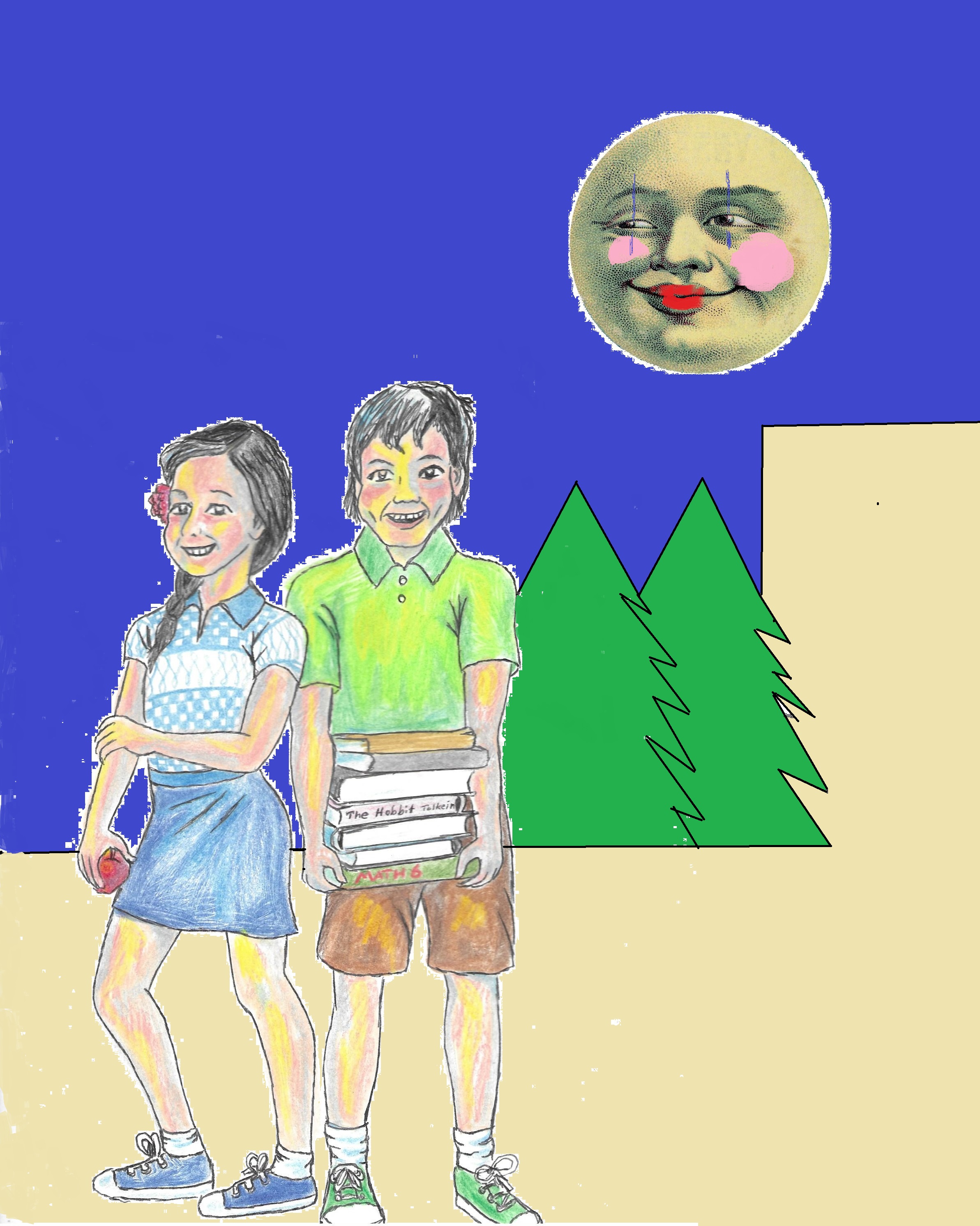
But I do remember one time when my oldest was a toddler and I was stuck taking care of him during an after-school teachers’ meeting. It is hard when the principal is talking about things you have to hear and the baby is colicky at the same moment. Fortunately, the Counselor’s daughter and her best friend were still hanging around the school cafeteria where the meeting was held. Wizard that I am, all I had to do was look pathetic and overwhelmed. My son was also cute enough that, once he got their attention, they actually volunteered to take over as temporary parents with the baby safely entertained in a sound-proof classroom nearby. And they didn’t charge me. And I was smart enough not to ask them to pay me for the privilege, because they enjoyed it so much they volunteered to do it again for any future meetings where I was in charge of him. That happened about three more times that year.

And I was able to use my wizardly powers to make my life as a substitute teacher easier the last time I did it during December. Students who had never seen me before took one look and started acting extremely polite, cooperative and helpful.

Of course, like a true wizard I had no idea at all why they were so keen on discussing new kinds of cell-phones with me, or whoever the heck Tommy Hilfiger was and why a gray t-shirt with his name on it was so much more valuable than an ordinary gray t-shirt.

And, like a wizard, I told a joke like this in more than one class;

“I overheard my Russian friend Rudolf arguing with his wife. It was snowing outside.”

Rudolf’s wife said, “It’s snowing outside, dear Rudolf.”

“No, you are wrong. That is rain outside, dearest,So” said Rudolf.

“No, it isn’t. It is actually snow, dear informationally-challenged Rudolph.”

“Yes, it is rain. Rudolf the Red knows rain, dear!”

After they all groaned and sniggered, they all went immediately back to talking to me about Christmas shopping, but only while acting very, very good.

What was all of that about? I wondered. But the wizard in me kept thinking about buying lumps of coal.

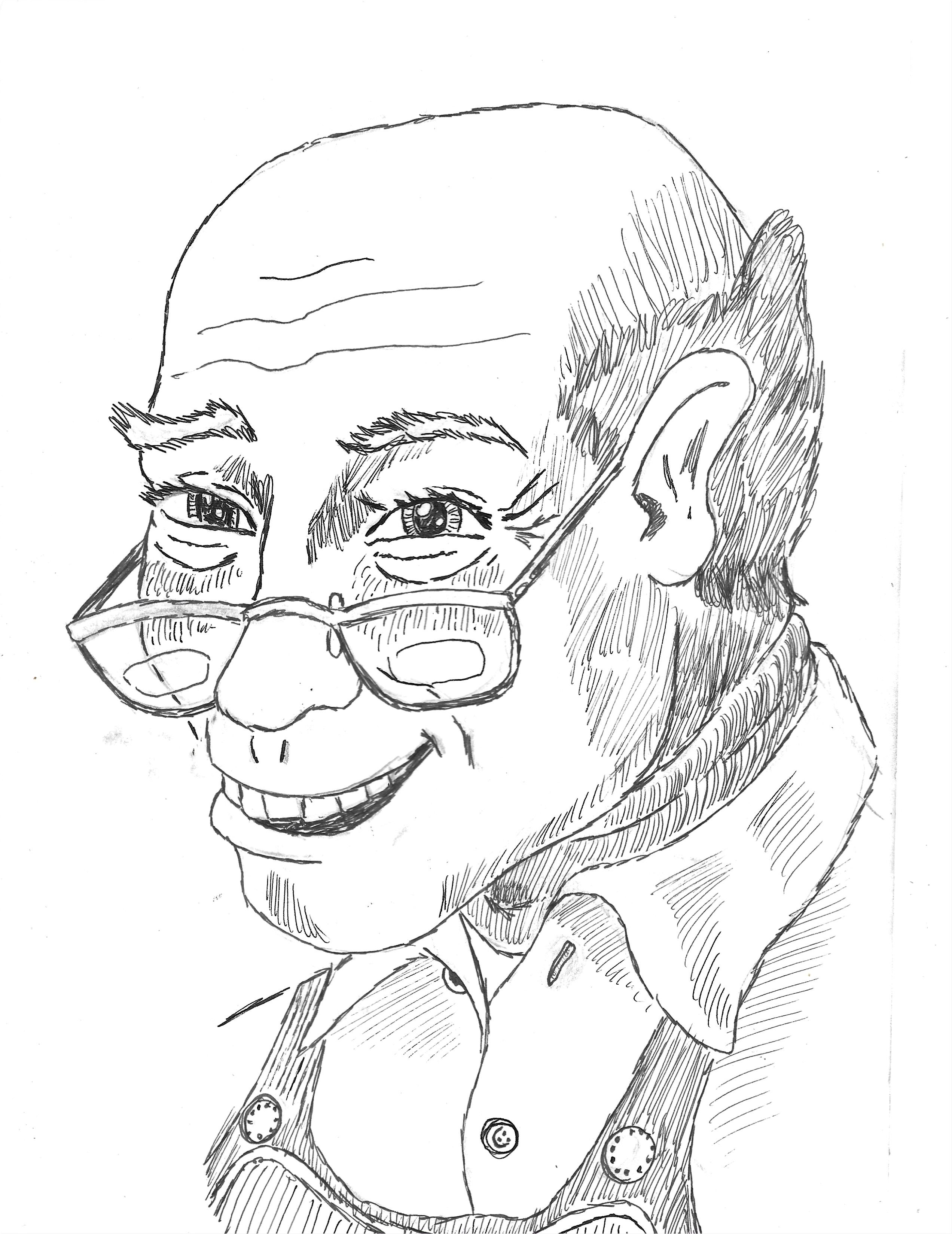
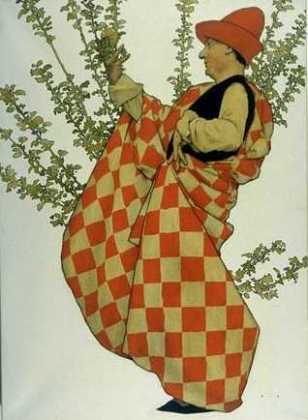
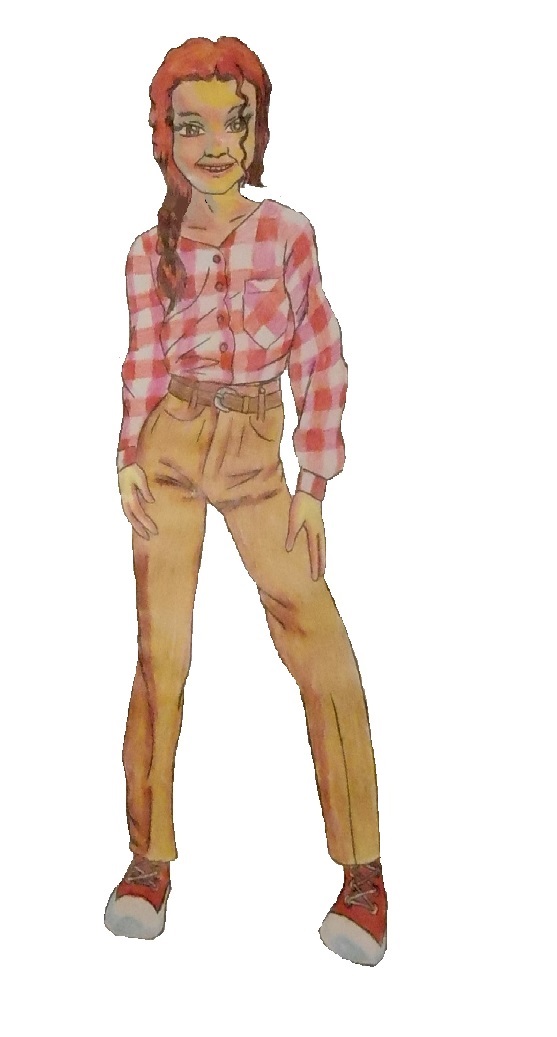
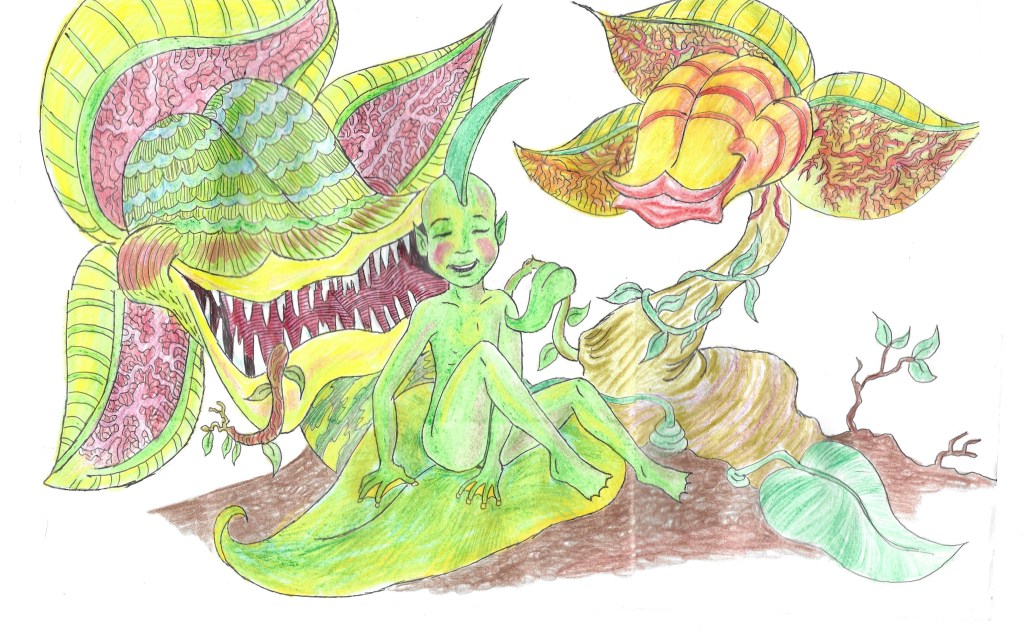
So, those are some of my best wizard tricks. Like the wizard in that first illustration. Fistandantalas Crane, the wizard, learned how to switch places with his avatar inside the crystal ball. This was a wizard move because in the crystal-ball world, Crane was immortal. But he didn’t invent a way to switch back with his avatar. And he found life in crystal-ball world very boring.

In light of Mark Zuckerberg’s recent innovations on Facebook, I sincerely hope he doesn’t read this post and get any ideas. I can imagine myself stuck in Facebook world, even more boring than the inside of a crystal ball. And even though my avatar is better looking than I am, I have to worry that everybody calls Mark Zuckerberg a wizard too. And I could be tempted by immortality.

Leave a comment

Filed under commentary, humor, Paffooney, wizards

The Uncritical Critic Watches Another Quirky Movie

MoonriseKingdom

Yesterday was a weird day.  If you looked carefully at the mental map I made of Mickey’s head the other day, you realize that Uncle Slappy’s Big Box of Weirdness occupies a key position in the top center.  I had a traffic accident in the parking lot of Long Middle School yesterday morning, banging bumpers with a lady named Vilma.  The sun was in my eyes, and she started to go, then suddenly stopped for no reason I could see.  No damage was done to anything but my pride.  My wife put her parents, Tatang and Inang, on an airplane yesterday bound for the Philippine Islands, going home for a visit.  Afterwards, my wife was feeling mortal, betting me that she was going to die before me even though I have the head start of six incurable diseases and surviving cancer once already.  There are no symptoms for her impending heart attack, so I will probably win that bet.  But the point is, it was a weird time yesterday to stumble weirdly over a weird and wacky movie on Netflix called Moonrise Kingdom.  It is a Romeo and Juliet sort of story about two twelve-year-olds who fall in love at first sight, and though their families try to keep them apart, they end up together.  Thankfully it is not a Shakespearian Tragedy where everybody dies at the end, though Sam is struck by lightning and the big storm nearly drowns all the boy scouts.  It is more like a Shakespearian Comedy where everybody gets married at the end, though the twelve-year-olds don’t get married at the end… rather, they are married by the middle.

9cd430de

Wes Anderson is the genius director behind movies like;

tumblr_m66zbuiAG41r9a2pz

None of which I have seen, but now have to watch ALL of them sooner or later.  Kinda like the mad quest to see every Tim Burton movie ever made.  I am one of the few idiots out there who think Dark Shadows was a truly wonderful movie, and along with Edward Scissor-hands, one of the finest things Johnny Depp has ever done.

In Moonrise Kingdom Anderson uses tracking shots at the beginning that shift quickly from one room to the next in a way that invokes an old-time slide show.  The story is set in 1965 in Maine, and is filled with all kinds of iconic references to things we 60’s kids all vividly recall.

The movie also tells the love story of Sam and Suzy with a painter’s sense of iconic pictures that focus you on important plot points and themes.

c7482fc480a1bef169ba43932b279cb8

moonrise_kingdom_beach

And there are numerous quotable bits that make the movie what we teachers refer to as a text-rich environment, complete with phony kids’ books and maps and notes.

81Jn7yQSuAL._SL1500_

The all-star cast is pretty good, too.

ce6e360efec533bec4bf766dff5c85c3

This is now one of my new favorite movies.  It is a happy-ending-type fairy tale with no fairies in it.  It is full of ineffectual and incompetent adults who have rules of behavior like grown-ups and motivations like goofy kids… just like real life.  The plot is driven by the notion that anything you do in life is a mistake, and mistakes have consequences, but you have to do them anyway because, well… that’s life.

Am I telling you that you should watch this movie too?  Well, you should… but, no.  I am simply gushing about this quirky movie because I like it, and yesterday was a very weird day.

6 Comments

Filed under goofiness, humor, movie review, strange and wonderful ideas about life, surrealism

The Necromancer’s Apprentice… Canto 15

The Bat-winged Cape

As we walked out of Master Tragedy’s Sorcerer’s tower toward the crafting district of Cair Tellos, I was carrying the huge jar of midnight shadows that Master Eli had given us to have a cape made from for Derfentwinkle.  She was carrying the bottle imp, Kackenfurchtbar, in case I needed to test the truthfulness of what Derfie was telling us.  But once on the stair to the Stitch-Witches’ Fabric and Sewing Shoppe, I turned to Derfie and set the jar down on a wooden step for a moment.

“Um, ah… Derfentwinkle?”

“Yes, Bob?”

“Can I… um… give you… ahem… I mean… would it be okay if I… gave you a…”  I opened my arms before I said the actual words’

“A hug, Bob?”

I nodded silently, and she grabbed me with both arms and pressed my face against her bare bosom.  I felt awkward, but I didn’t pull back.  I put both of my arms around her and squeezed her just as hard.

“Because the Erlking’s Wizard nearly cut our heads off before we ever got a chance to…”

“Hug each other like this?” she finished my sentence.  She used her empty hand to stroke the back of my head.

“Yeah…”

We held each other tightly for a few long minutes.  Then, suddenly, Anneliese was there.

“Ah, Derfentwinkle, I see you’ve discovered how huggable the nicest Sylvan boy in all of Cair Tellos really is.”

“Are you jealous?”

“Of the hug, maybe.  But I can surely share my best boy.”

“Best boy?  Not, boyfriend?” Derfie asked.

“Anne is a Storybook and much older than me,” I said, reluctantly releasing my hold on the necromancer’s apprentice.

“Oh, right.  Old enough to be your mother, I suppose?”

“Or his grandmother,” said Anneliese with a wrinkling of her nose above a puckish grin.  “If you like my almost grandson, then that pleases me.””

“Did you come seeking us?” I asked her.

“Yes, I did.  Master Eli told me where to find you two.  A pretty little Butterfly Child named Dollinglammer has been asking about you in the residential towers.  She seems intent on finding you.  Especially you, Bob,”

“We have to go to the stitch-witches to get a cape made for Derfie.  But if you come with us, you can take us to her afterwards,” I suggested.

“That would be lovely,” Anne said.  “I have been interested to get to know this new Sylph friend of yours, Bob.”

Anneliese, nude as always, was absolutely beautiful.  She had longish blond hair which curled wildly, and she never combed it.  She was shaped like the fourteen-year-old  human girl she was when the Nazis put her to death at Auschwitz.  She was now an immortal Storybook thanks to a story her mother told about her, so her beauty would never fade or change.

She put an arm around my neck as I picked up the jar of shadows, and she put her other arm around Derfie, drawing us both close to her.

“Derfentwinkle, my powers as a Storybook are openness and honesty.  If you ever need to talk to about the shadows that are inside of you, I’m your friend.  I will talk about it with you as honestly as anyone can.  And I say this as a guarantee, I can help you.”

Derfie looked down at the ground as we continued into the shop of the stitch-witches.

Bibby-Joon, the elder stitch-witch met us there.  She was a Pixie with the upper torso of a youthful woman and the abdomen and spider legs of a large spider.

“We will have the cape done for you in a matter of minutes,” Bibby said.  “It will be a very special Batwing Cape just as Master Eli ordered.  It will not only protect you from mind control and influence spells, but it will turn into bat wings on command so you can fly.  And if you wrap it all the way around you while standing in shadow, you will disappear and remain invisible as long as you do not move.”

We came out of the shop with Derfentwinkle wearing her new protective magic cape.

“It looks very becoming on you,” Anneliese told her.

“Kack?  Is the necromancer’s mind control working on Derfie in any way?” I asked the bottle imp just as Master Eli had instructed me.

“No, Bob.  Any evil she does now will be entirely her own doing.”

I think that answer made me frown or something.  Anneliese put a comforting hand on the back of my neck and said, “Don’t worry, Bob.  Everything is as it should be.” Derfie was smiling at the ground.  And I couldn’t help feeling how beautiful she was… to me, at least.  And worrying about how much control that gave her over me.

Leave a comment

Filed under fairies, humor, novel, NOVEL WRITING, Paffooney

Poor Ol’ Wooden Head

“Kaw-Liga”
KAW-LIGA, was a wooden Indian standing by the door
He fell in love with an Indian maid over in the antique store
KAW-LIGA – A, just stood there and never let it show
So she could never answer “YES” or “NO”.

He always wore his Sunday feathers and held a tomahawk
The maiden wore her beads and braids and hoped someday he’d talk
KAW-LIGA – A, too stubborn to ever show a sign
Because his heart was made of knotty pine.

[Chorus:]
Poor ol’ KAW-LIGA, he never got a kiss
Poor ol’ KAW-LIGA, he don’t know what he missed
Is it any wonder that his face is red
KAW-LIGA, that poor ol’ wooden head.

KAW-LIGA, was a lonely Indian never went nowhere
His heart was set on the Indian maiden with the coal black hair
KAW-LIGA – A, just stood there and never let it show
So she could never answer “YES” or “NO”.

Then one day a wealthy customer bought the Indian maid
And took her, oh, so far away, but ol’ KAW-LIGA stayed
KAW-LIGA – A, just stands there as lonely as can be
And wishes he was still an old pine tree.

“The Complete Hank Williams” (1998)

Magicman 3

The quirky movie I reviewed, Moonrise Kingdom, reconnected me with a song I loved as a child.  It was on an old 45 record that belonged to my mother’s best friend from high school.  When the Retleffs sold their farm and tore down their house and barn, they had a huge estate sale.  My mother bought the old record player and all the collected records that Aunt Jenny still had.  They were the same ones my mother and her friend Edna had listened to over and over.  There were two records of singles about Indian love.  Running Bear was about an Indian boy who fell in love with little White Dove.  They lived on opposite sides of a river.  Overcome with love, they both jump into the river, swim to the middle, lock lips, and both drown.  Together forever.  That song, it turns out, was written by the Big Bopper, and given to Johnny Preston to sing, and released the year after the Big Bopper died in a plane crash along with Buddy Holly and Richie Valens.

Kaw-liga, by Hank Williams, was a wooden Indian sitting in front of a cigar store.  His love story is even worse.  As you can see from the lyrics above, he never even gets the girl.  Dang, Indian love must be heck!

But I have come to realize that these aren’t merely racist songs from a bygone era.  They hold within them a plea for something essential.  They are a reminder that we need love to be alive.

When I was young and deeply depressed… though also insufferably creative and unable to control the powers of my danged big brain, I knew that I wanted love.  There was one girl who went to school with me, lovely Alicia Stewart (I am not brave enough to use her real name), that filled my dreams.  We were classmates, and alphabetical seating charts routinely put us near each other.  She had a hypnotic sparkle in her eyes whenever she laughed at my jokes.  She was so sweet to me… sweet to everyone… that she probably caused my diabetes.  I longed to carry her books or hold her hand.  I cherished every time she spoke to me, and collected the memories like stamps in a stamp album.  But like the stupid cigar store Indian, I never spoke up for myself.  I never told her how I felt.  I was endlessly like Charlie Brown with the Little Red-Haired Girl.  Sometimes you have to screw up your courage and leap into the river, even if it means your undoing.  Because love is worth it.  Love is necessary.  And it comes to everybody in one way or another over time.  I look at pictures of her grandchildren posted on Facebook now, and wonder what might have been, if only… if only I had jumped in that stupid river.  I did find love.  And I probably would’ve drowned had I done it back then.  Life has a way of working things out eventually.  But there has to be some reason that in the 50’s, when I was born, they just kept singing about Indian love.

Leave a comment

Filed under autobiography, finding love, humor, Paffooney

326 and Counting

Twice before I have gone through a year posting something on this blog every single day of the year. And not just by scheduling the publication wisely to cover every day, but by writing something and publishing something every single day. At this point, I have now written something and posted it for 326 days in a row, and being past the holidays and funeral for my mother, I am probably going to make 365 again for the third time.

This is Ernest Hemingway for those of you who have only heard his name before now.

This is a man who also wrote something every single day. He was a former journalist who worked as an ambulance driver during World War I, for the Italian Army, where he was wounded and won a medal for his service to the Italian government.

He developed a writing style with no author commentary, sparse but crucial details, and a reliance on the reader’s intelligence to figure out the themes of his writing.

His best work is the Novel, The Sun Also Rises.

I hold that opinion because I have not only read it, but I have also read and compared it to For Whom the Bell Tolls, The Old Man and the Sea, A Farewell to Arms, and several of his short stories. His writing is fiction, but highly autobiographical which makes his stories so realistic and accessible to all readers.

This is Charles Dickens, whom you have probably seen somewhere before when you really weren’t paying close attention.

This is also a man who wrote every single day. He started out writing for newspapers, but starting with his first major success as a fiction storyteller, The Pickwick Papers, he began writing mostly comic stories for monthly magazines.

He is noted for long paragraphs of vivid and plentiful details, and especially relatable and memorable characters.

His best work is the novel, A Tale of Two Cities.

I make that judgement after reading it three times, and also reading Oliver Twist, Nicholas Nickleby, A Christmas Carol, Great Expectations, David Copperfield, and The Old Curiosity Shop. There are also autobiographical features in the Boz’s works but he was a wonderfully astute people-watcher, and that dominates his narratives far more than his own personal story does.

I don’t have to tell you that this is Mark Twain… because it isn’t. It is Samuel Clemens
.

This writer is known particularly for his sense of humor. It should be mentioned, however, that his fiction is not only filled with humor, but was very keenly realistic. His use of author commentary probably makes him the opposite of Hemingway, but he still carries that journalistic quality of writing it exactly how he sees it… full of irony and irrationally-arrived-at truth.

I don’t know for a fact that he wrote every single day. But he probably did. He always said, “The writing of the literary greats is like fine wine, while my books are like water. WIne is good for those that can afford it, but everybody drinks water.” You can’t have writing that is as plentiful as water without writing fairly often.

His best book is The Adventures of Huckleberry Finn. I am not the only one who thinks so. Hemingway wrote, “All American Literature began with one book, Huckleberry Finn.”

I have also read, Tom Sawyer, Pudd’nhead Wilson, The Prince and the Pauper, A Connecticut Yankee in King Arthur’s Court, Roughing It, and The Autobiography of Mark Twain.

So, what’s the point of all this literary foo-foo? Hemingway would expect you to figure that out for yourself. But I’m addicted to topic sentences, even if I wait til the end to reveal it. If you want to be a writer, you need to read a lot of really good writing. And even more important, you need to write every day.

3 Comments

Filed under artists I admire, commentary, Mark Twain, novel writing, strange and wonderful ideas about life, writing, writing humor, writing teacher

Native Americans Invade My Artwork

I don’t know if you’ve seen enough of my colored-pencil Paffooneys to tell this, but for an old white guy, I draw a lot of Native Americans and am rather deeply in love with American Indian images.  You may have seen this dream painting I posted before.

Magicman

The girl in the painting is a combination of this warrior’s daughter and myself.  I was naked in the dream and a female, facing this huge ghost-stag.  The dream came while I was reading Hanta Yo by Ruth Beebe Hill.  Maybe that book was the beginning of my Native American obsession.  Who knows?  I am a crazy dreamer.  But that wonderful book turned me on to the rich spiritual life that the Dakota people lived.  I identified with it so completely that I dreamed myself into their culture.  I was also struck by the manner in which a Native American culture handles education.  The grandfather is in charge of the boy’s learning.  He teaches by story-telling.  Here you see the grandfather in Sky Lodge teaching his grandson.  The girls would learn very different things from their mothers and grandmothers.

Skye lodge

I am also entranced by the life of the people expressed in dance and ritual.  Dance has deeper meaning than we white guys normally assign to it.  Dances could be magical.  Of course, the notion of a “rain dance” is the result of too much simplification in movie scripts and ignorant popular white culture.  Dance could connect you to the Earth, the Sky, and the Spirit World.  That’s what this most recent Paffooney shows.

Pueblo Bonito

So, you can see, I don’t really understand the concept of moderation when it comes to my obsessions in the world of colored pencil art.  Hanta Yo!  Clear the Way!  In a sacred manner I come!

child of fire

Leave a comment

Filed under Uncategorized

Black Obsidian Thoughts

It is quite normal to fear the future. Ironically, one of the things necessary to having a good future is to foresee the worst things that could happen, especially the bad things that are likely to happen, and prepare to do whatever is necessary to survive them. Science fiction that pictures a dark and dystopian future have been popular in recent years. And we are wise to believe they are popular for very good reasons. People with guns in Texas fantasize about a coming Civil War in which they can purge the places they call home of the people they believe they hate because all of their troubles are repeatedly blamed upon those people by propaganda engines like FOX News. Of course, those people being blamed are people of color, immigrants like my wife, and intellectuals like… well, me. So, if our current society were to collapse suddenly, I would be obliged to apply those preparations I have made to try to save my own life. Of course, I am not a prepper, so those preparations don’t actually exist at this time. My plan for that sort of apocalypse is to be one of the first to die.

Among the Native American Dakota and Lakota peoples the magic-men, the Shamans, were self-identified by their dreams. If they dreamed of lightning, they were the ones tasked with ceremonial magic, the maintenance of the village’s spirituality. If they dreamed of the white bison, they were to be a great hunter/warrior, bringing home much venison, hides, and buffalo meat. But if they were a Stone Dreamer, that made them the prophet, the diviner of the possible and probable futures.

So, that’s what I think this essay is for. Stone Dreaming about the blackest of obsidian days to come.

Of course, the first thing to think about with black obsidian thoughts is the Covid pandemic. We already know that it has now evolved into an endemic viral problem. We may be obliged to get vaccinated once or twice or three times a year for the rest of our lives.

And the virus has mutated several times already. Thanks mostly to the fact that it is a world-wide epidemic that has visited high-population countries like China and India and Brazil where not nearly enough vaccinations are administered, especially to poor people. And in this country, there is a strong anti-vax sentiment that makes people express their patriotism and sense of freedom by refusing to get vaccinated and catching a lethal dose of Covid as a consequence of their chosen political values. The consequence could very well be that the human population of Earth is decimated by at least 80% when a Covid variant becomes both more deadly and more vaccine-defeating than it is now. That is a rough stone dream to swallow.

Another potential black obsidian stone dream is the looming threat of climate change and global warming. It is man-made despite what corporations choose to believe. And defeating it depends on those same corporations to stop adding more greenhouse gasses to the atmosphere, and then invent a time machine to take that resolve back in time fifty years. The Western United States is on fire now every Summer. And the oceans have begun to rise. Miami and Houston have already had over-large flooding problems from salt water. Coastal cities throughout the world will be completely underwater soon. Underwater domed cities, fish and seaweed farming, and travel by submersible need to already become reality rather than science fiction. This is the thing that we have to fear the most.

And how do we deal with these dreams of stone-cold reality? There are limits to what the ordinary citizen can do. We can try to live more simply. We can work to recycle more and reduce the amount of trash we generate. Picking up plastics, especially plastic bags to keep the oceans freer of micro-plastic shards will help. Wasting less clean fresh water will help. But unless we are directly related to Jeff Bezos or Elon Musk, we can’t do anything major individually. We must band together and care for the environment as stewards of the land more like the Native Americans once were.

We have to stop being corporate slaves, shopping to buy more stuff like we see on TV, and working harder and harder just to earn money to shop with.

And if we decide not to pay attention to these alarming stone dreams, we must be prepared like the Dakota warriors once were, ready to stake ourselves out on the plain and declare with no weapons in our hands, “Today is a good day to die!”

I am not personally ready for that. Are you?

Leave a comment

Filed under angry rant, artwork, feeling sorry for myself, Paffooney, science fiction, strange and wonderful ideas about life

Oxfordian Rationalizations

Yes, I am, perhaps, a bit of a fool for believing Edward de Vere, the 17th Earl of Oxford, is the writer behind the works of William Shakespeare.  How do you prove something is true when it is so obvious that someone worked really hard to keep it a secret for all this time?  Is it a betrayal of the man to go against his apparent wishes and try to out him for his incredible secret?  It is hard for me to judge.  After all, I know I am a fool.

But even if he is not Shakespeare, and just sits at the apex of a mountain of coincidences, I am fascinated by the historical character of Edward de Vere.

the_keep_at_castle_hedingham_-_geograph-org-uk_-_30510

The keep at Hedingham Castle, the de Vere family seat in Essex (photo by David Phillips)

He was born the only son of John de Vere, the 16th Earl of Oxford, and heir to the second oldest title among English nobility.  His father stood by Elizabeth when she was under house arrest under the reign of Bloody Mary, and went with her as a court favorite to the throne of England when she survived the ordeal.  So naturally Edward was a favorite of Elizabeth’s since childhood.  Later stories would suggest he became the Queen’s secret lover, but the rumors of the Virgin Queen’s harlotry were most likely the invention of Philip of Spain and other nobility in Catholic Europe who plotted endlessly against her because she chose to adopt her father’s protestant Anglican religion instead of returning England to Catholicism like her half-sister Mary before her.  Elizabeth’s personal integrity may not have been perfect, but the love she bore for young Edward was probably not the improper kind that the movie Anonymous by Roland Emmerich suggested.

But even though de Vere was born lucky, I would not say he was particularly lucky in life.  He was only twelve when his father (though having completed his will) died.  The result being that he was made ward to Queen Elizabeth herself.  She was not exactly the foster-mother type, however.  She sent the boy to be raised in the home of her Secretary of State and chief adviser, William Cecil (later made Lord Baron Burghley).  Meanwhile Elizabeth took possession of some of his estates in payment for the wardship and bestowed them on Robert Dudley (her childhood friend and probable one true love, though he was married to someone else).  Young Edward was a difficult student.  His tutor, the famous scholar Laurence Nowell, resigned in frustration, probably because the boy was too bright and far-reaching for the antiquarian scholar to deal with, possibly himself being a bit dumber than advertised.   Edward quickly developed a reputation for love poetry at Elizabeth’s royal court.  He was a gifted, though somewhat conflicted, prodigy.

cecilwilliam1bburghley04

William Cecil, 1st Baron Burghley

And here is what I find most fascinating about his life story.  As you reread it, keeping the works of Shakespeare in mind, you begin to see Shakespeare’s source material coming to life.  Edward would end up marrying Cecil’s young daughter Anne, so that Lord Burghley was not only a man who raised him, but also his father-in-law.  But marrying off your offspring to nobility was an accepted manner of social climbing, and Cecil wasn’t entirely sure he couldn’t do better for his daughter.  And the meddlesome, lecturing, and self-righteous nature of the man comes out in Shakespearean characters like Polonius in Hamlet who spies upon the suicidal prince because he fears the effect Hamlet’s love for his daughter Ophelia might have on her reputation, causing him to spout all manner of cliches and stuffy, self-important advice.

cecil

Robert Cecil, Lord Salisbury

Cecil’s son Robert, the hunchbacked boy who grows up to take over his father’s office as adviser to both Elizabeth and James I, is a crafty statesman and plotter who is the undoing of the Earl of Essex in a real-life plot against the throne of Elizabeth.  It is hard not to read about his real-life exploits without seeing the connections to Iago in Othello and the conniving hunchback Richard III.

So, once again I have overshot my target length in this essay because I get so wound up in the details of my discoveries.  There are numerous things written and published about the connections between de Vere and the Bard himself.  I have only begun to scratch the surface in this telling of it.  But I am just a fool with a humor blog.  If it interests you at all, I encourage you to go to as many of the available sources as you can possibly google.  I haven’t yet finished doing that myself.  And I do hope I haven’t told anything here that makes Shakespeare turn over in his grave (if, indeed, a grave could ever really hold him.)

Leave a comment

Filed under artists I admire, conspiracy theory, foolishness, humor, strange and wonderful ideas about life, William Shakespeare

Saturday Memories and Long-Past Longings

This oil painting is Highway 3 in North Central Iowa. The little town of Rowan is dead ahead on the South side of the road. The year is probably about 1984.

Brent Clarke is a fictional character in several of my novels. He is pictured here with the actual water tower of Rowan, used to portray the fictional water tower of Norwall, Iowa from my novels. In 1984 Brent would have been about 22 or 23 years old. The people the character is based on would have been 28 or 30 in 1984 depending on which one you think he is more like. I will not, of course, tell you who… because you could argue there is no one answer to that question. He is arguably me at some point in every story he is in.

Valerie Clarke is as close as I can come to declaring I have a main fictional character in my novels. She was 11 in 1984, the year that the book Snow Babies is set. The real girls she is based on would have been 28 in 1984 (my former classmate) and 3 years old (my former student.)

Milt Morgan is a fictional me-character, although I can argue he is almost equally based on the “Other Mike” that I grew up with. He was a year older than me and one grade ahead of me in school. In 1984 the character would have been 23. I was 28 and the Other Mike was 29. This portrait was made from a school picture of me. But somehow it also looks a lot like the Other Mike.

This is Anneliese Stein. She is a fictional character based on stories I was told. She was thirteen years old in 1945 when she died at Auschwitz. Her mother brought her back to life as a gingerbread girl in 1975 using fairy magic. Well, possibly through the magic of her mother, Gretel Stein, as a storyteller. And, according to the story that was told, she became a Storybook Fairy when her mother died and became a fairy too.

This is Bobby Niland, a fictional character from several of my novels. He is based entirely on a student from one of my classes in the 90s. The fictional Bobby was only six in 1984. The real Bobby probably seven in 1984. In the story Horatio T. Dogg, Bobby was fourteen and a half.

You can easily see that, because of living a long life with an extra-vivid imagination, not all of my real memories are of real things. There is more to it than meets the eye. This is an imaginary portrait of Valerie again, this time at the age of seventeen. It is one more imaginary thing hopelessly intertwined with all the real things I remember.

Leave a comment

Filed under artwork, humor, insight, Paffooney

Shakespeare Knows Fools

quote-i-don-t-make-much-distinction-between-being-a-stand-up-comic-and-acting-shakespeare-in-fact-ian-mckellen-124331

The fact that Shakespeare was a master of the art of creating and mocking fools does not really help decide the question of who Shakespeare really was.  A stage actor who owned a theater in Elizabethan times and apparently focused on being the bit player, the butler, the second man on the castle wall in the great plays, would certainly know enough of flim-flam, being a con man, or artfully throwing turds at kings and queens in ways that get rewarded rather than beheaded.  But a nobleman who has unpopular and unwelcome-but-probably-wise insights into the back-stabbing-goings-on of the royal court of England would equally be capable of putting the most memorable of critiques of humanity into the mouth of the fool or the clown in the great stage-play of life.  Even the most depressing and violent of the Shakespearean tragedies is enhanced and made pointed by the presence of the fool and the comic relief.  In some ways everything that Shakespeare wrote was a comedy.

sticker375x360-u2

Whoever Shakespeare was, he shared Mark Twain’s overall assessment of “That damned human race” and often declared all men fools in the eyes of the playwright.  Puck’s observation on humanity is delivered about not only Bottom and the other poor players who carry on their vain attempts at performing Pyramus and Thisbe while Bottom magically wears the head of an ass, but also the easily fooled lovers who mistake their true loves for one another, and even the clueless mortal King Theseus of Athens.

0716-go-midsummer-dream_

In the play within a play, Nick Bottom wants to be not only his own role, Pyramus the romantic lead, but argues that he should be Thisbe, the lion, and Pyramus all at once, making a satire of human nature and its overreaching ways that we could only pray Donald Trump will one day watch and magically understand.  In fact, Shakespeare’s entire body of work is an extended investigation of foolishness versus wisdom, and with Shakespeare, the verdict always goes to the fool.

a-fool-thinks-himself-to-be-wise-but-a-wise-man-know-himself-to-be-a-fool-william-shakespeare

The plays of William Shakespeare are filled with fools doing foolish things… and fools being accidentally wise. (Think Jacques in As You Like It giving his famous “All the world’s a stage” soliloquy in which he elucidates the seven ages of man.)  There are fools too who prove to be wise.  (Think of the ironic advice given by the jester Touchstone in As You Like It, or the pithy commentary of King Lear’s fool).  The fools in Shakespeare’s work are not merely the comedy relief, but the main point that Shakespeare makes about humanity.

207a65d14f2a61bd4a4ef178e88609bb

Whoever the man was who wrote the plays of Shakespeare, he was someone who had a deep understanding of the basic irony underlying all of human life.  And someone with that vital sense of the bittersweet, a philosophy of life that encompasses the highest heights and lowest depths that a soul can reach, is someone who has suffered as well as known great joy, someone who has experienced loss as often as profit, and has known real love as well as real hatred.  It is the fool that Shakespeare shakes us by the neck with to make us recognize the fool in all of us which makes the plays resonate so deeply within us.  It is watching the path of the fool unfolding that makes us shake our head and say to ourselves, “Yes, that is what life is really like.”

when-we-are-born-we-cry-that-we-are-come-to-this-great-stage-of-fools-william-shakespeare

2 Comments

Filed under clowns, comedians, conspiracy theory, foolishness, goofy thoughts, inspiration, philosophy, strange and wonderful ideas about life, William Shakespeare