
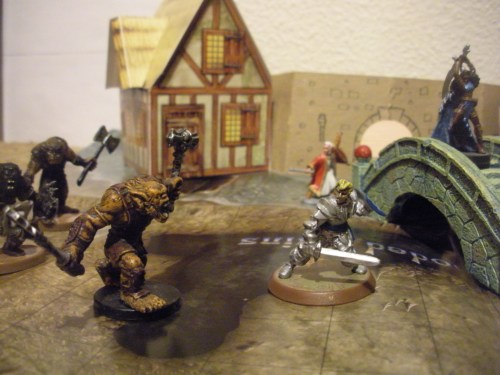
As a family, we play Dungeons and Dragons. Well, all of us, that is, except Mom. It’s basically against her religion and means the Jehovah’s Witness version of Hell for us. (Which is a spiritual condition where God refuses to talk to you, and play checkers with you, and then you die.) But let’s not discuss that here. I don’t need her to start thinking about reasons to divorce me. She accepts that it is a thing we do and like and keep mostly to ourselves. (I just rolled a 15 on a twenty-sided dice to succeed in that charm-enemy spell and avert disaster.)

As a family we have chosen to use the Eberron campaign available from Wizards of the Coast, the company that now publishes all official D&D stuff. It is a medieval/Renaissance sort of setting where magic is every-day common and takes the place of science in the real world.
I get to be game master and creator of the basic plots and stories. My three kids, Dorin, Henry, and the Princess are the player characters who interact with the world and determine the outcomes of the adventures through the rolling of Dungeon Dice.


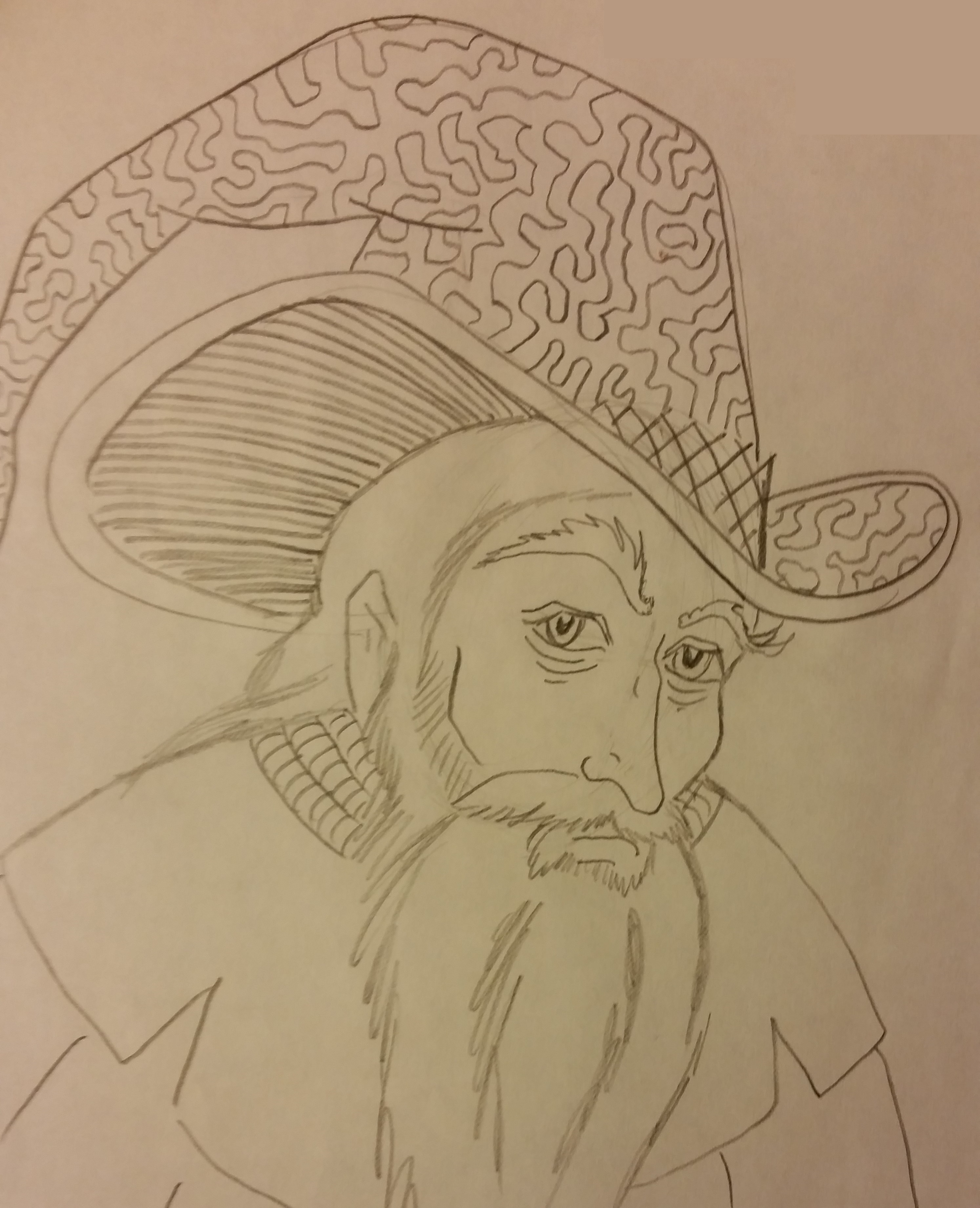
I want to assure you at this point that my eldest son does not actually have a watermelon for a head. Maybe metaphorically, but he is easily the smartest and most likely to be a leader of my three kids. His character routinely pursues ideas like replacing his arms with magical metal arms, or grafting additional arms on his body. He has chosen the phoenix to be the symbol on his personal flag and coat of arms, but his artifice roll to create the magical ship’s flag turned out to make it look more like a pigeon that someone set on fire. (You have to watch out for those rolls of “1” on a 20-sided dice.)


Henry, my middle child, likes to play a halfling. The little hobbit-like character is the one called upon to disarm all the tiger traps and poison-arrow traps that line the dungeon tunnels ahead. He is a problem-solver in real life. And he wants to be an architect. In D&D games, he is often the first one to run up to danger and look it in the blood-shot eye.


Every D&D group needs a wizard or some other magic-user. Ours has Mira, the Kalashtar mind- wizard. My daughter’s character can use mind powers to float in the air, pick up and throw things with her mind alone, and figure out ways to do things using as little physical effort as possible. Oh, and she loves to eat chocolate. (The character, I mean… or is it actually the daughter? I don’t know. It is sometimes hard to tell them apart.)

In our last adventure, we went to investigate the evil doings going in Evernight Keep, a castle in the country of Aundair. We were able to not only defeat the evil mind-flayer, Dr. Zorgo, who had turned everyone into golems in the castle, but also to win the castle and the title of the Duke of Passage. Now that they own a castle, my little band of adventurers will have to defend it, and I know of one old game master who will definitely throw all kinds of evil challenges at them.


































 Catch a Falling Star
Why School Should Be Cool
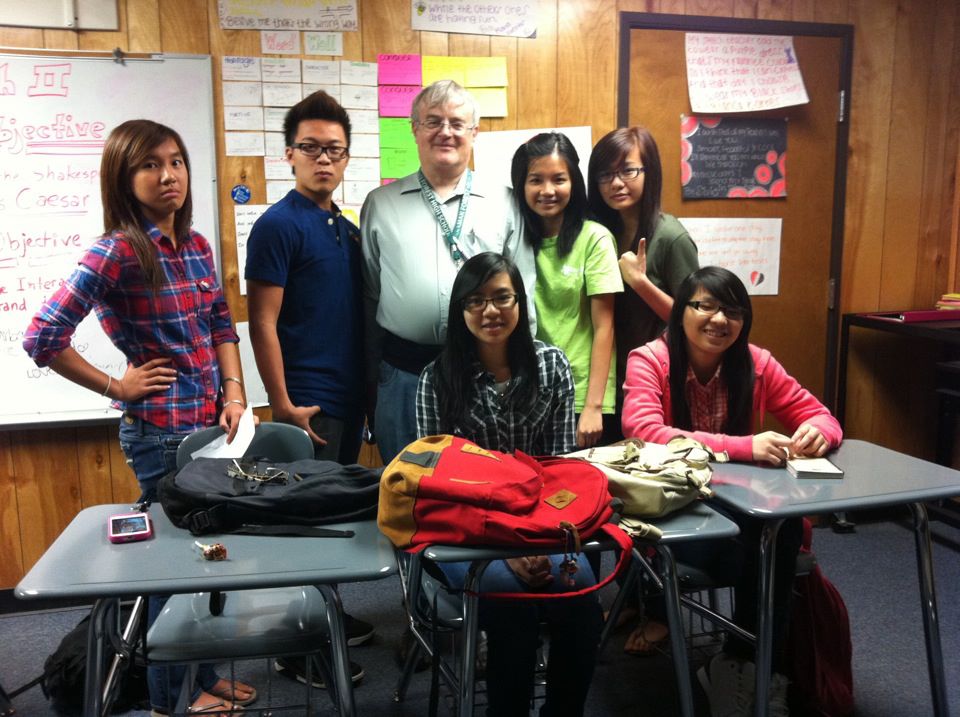
I was a school teacher for thirty-one years, and in spite of the immense amount of brain damage that builds up over time, especially as a middle-school teacher, I think I know what we’ve been doing wrong.
We need to take a look at an education system where things are working better than they are here.
Now, I know you probably didn’t click on the boring video about school. Heck, you probably aren’t even reading this sentence. But I can summarize it and put it in easy-to-understand words. Finland does not have to educate as many poor and disadvantaged kids as this country does. The video gives five ways that Finland does it better, but all of them boil down to the basic notion that the country is more homogeneous and uniformly middle-class than ours is. Still, we can learn things from them.
The first of the five ways that Finland does it better is a difference in government. While U.S. governmental safety-net programs blame people who need food stamps for being lazy (even though some of them work 40-hour work weeks in minimum-wage jobs), Finland gives a huge package to parents of everything they might need as soon as their child is born. As long as the child is in school, the government does many things to support the family’s efforts to educate them. Imagine what we could accomplish here if we invested some of the vast fortune we give to corporations in subsidies into educating poor black and Hispanic children instead. Children have a hard time learning in school when they come to school hungry. If we could only feed them better, the way the Fins do, we would revolutionize our classrooms.
The second point the video makes is the biggest suds-maker every time I get on my teacher’s soap box. They don’t give kids homework and they only give them one standardized test when they leave high school. I have recently covered this topic more thoroughly in a post in which I was able to ridicule Florida governor Rick “Skeletor” Scott. (Boy, did I enjoy doing that.) But I won’t go into all of that again here.
The third thing is respecting teachers. In Finland they treat teachers with the kind of respect that they give to doctors and lawyers. How cool is that? In Texas, calling someone a teacher is an epithet. If a teacher is liked or even loved by their students, administrators are encouraged to keep a closer eye on them to figure out what’s wrong. Students are supposed to hate their teachers and sit all day filling out mind-numbing test-preparation worksheets. Imagine what it could be like if teachers weren’t the scum of the earth. They might actually have students convinced that learning goes on in their classrooms.
The fourth point is that Finland does not try to cram more and more memorized details into young brains so they can spit it all back out on a test. They take students thoroughly into the subject of study, and at a slower, easier pace. They dive deep into the river of learning instead of wade through the wide and shallow parts. All questions get answered. And by that, I mean, student questions, not teacher questions. The learning is student-centered.
Finally, the video states that Finland simply has fewer social ills in their country to get in the way of good quality education. But even though the work is harder in this country, the potential is really there to go far beyond what Finland is capable of. We have a natural resource that is totally untapped in this nation. We don’t develop the minds of a majority of our children in any meaningful way. And I can tell you from having done it, you can teach a poor or disadvantaged child to think. You can give them the tools for academic, economic, and personal success. You can make them into valuable human beings. But you should never forget, they are already precious beyond measure. We just ignore and trash that inherent value. So, the information is out there about how to do a better job of educating our children. We need to follow through.
Here endeth the lesson.
Leave a comment
Filed under angry rant, commentary, education, humor, insight, teaching
Tagged as education, Finland's education system, humor, lessons learned, teaching, teaching better