

In Texas you hear that schools have been in the thrall of “woke” liberals who are trying to make all white kids feel shame and guilt because being white means you are a racist. This shaming curriculum is apparently called “Critical Race Theory.” And individuals’ basic freedoms are under attack by things like vaccine mandates and mask mandates. How could they? Don’t they realize your right to choose to get Covid Delta Variant and die in an ICU somewhere is guaranteed in the Constitution?
Where in Texas is this terrible teaching going on?
In 31 years teaching in Texas public schools, I never saw any such teaching going on. And I never met even one single radical-teaching commissar that would advocate such communist claptrap teaching.
Good teachers do not have political agendas. Good teachers don’t teach their own opinions. When opinions are involved, good teachers show both sides. But only if neither side is entirely, provably correct.

So, what is Critical Race Theory?
“critical race theory (CRT), intellectual and social movement and loosely organized framework of legal analysis based on the premise that race is not a natural, biologically grounded feature of physically distinct subgroups of human beings but a socially constructed (culturally invented) category that is used to oppress and exploit people of colour. Critical race theorists hold that racism is inherent in the law and legal institutions of the United States insofar as they function to create and maintain social, economic, and political inequalities between whites and nonwhites, especially African Americans.” -The New York Times
Do you understand that definition? And if you do, how would you teach it to third graders? Or to eighth grade History classes? Or even high school AP Civics classes?
You wouldn’t. It isn’t factual. It is a “loosely organized framework of legal analysis,” That makes it a complex study of legal questions and possible sociological inequities. That makes it a law school debate topic, not something to be taught in public schools (with the possible exception of AP Debate class.)
I find myself actually agreeing with the fascist propagandists on Fox News, like Tucker Carlson, who suggest any public school teacher trying to teach this in public schools should be fired. We should not be letting such clueless idiots be teachers. And most competent teaching schools would weed them out before they ever qualified for a teaching certificate. Only intellectually competent individuals should be given teaching certificates that they have earned through their own rigorously tested education. An education that exists for teachers. Unfortunately it doesn’t exist for Texas Governor, or Texas Lieutenant Governor, or Texas Attorney General. All you need for those positions is a soul evil enough to rig the appropriate election.
Not that my rage is cooling to the melted-iron level of heat, I need to remind you that these are my opinions. And opinions are onions divided by Pi. If you don’t enjoy that onion flavor, then let it lie and avoid it on your steak and potatoes.






How To Write A Mickian Essay
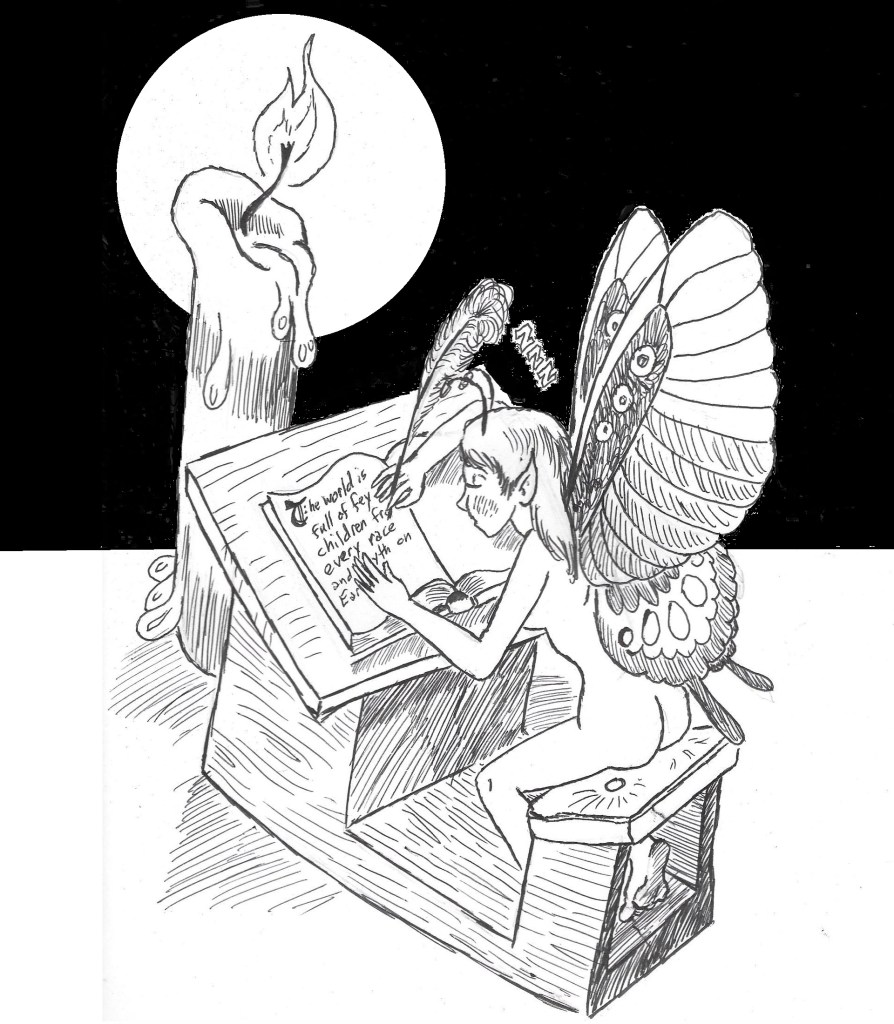
I know the last thing you would ever consider doing is to take up writing essays like these. What kind of a moronic bingo-boingo clown wants to take everything he or she knows, put it in a high-speed blender and turn it all into idea milkshakes?
But I was a writing teacher for many years. And now, being retired and having no students to yell at when my blood pressure gets high, the urge to teach it again is overwhelming.
So, here goes…
Once you have picked the silly, pointless, or semi-obnoxious idea you want to shape the essay around, you have to write a lead. A lead is the attention-grabbing device or booby-trap for readers that will draw them into your essay. In a Mickian essay, whose purpose is to entertain, or possibly bore you in a mildly amusing manner, or cause you enough brain damage to make you want to send me money (this last possibility never seems to work, but I thought I’d throw it in there just in case), the lead is usually a “surpriser”, something so amazingly dumb or off-the-wall crazy that you just have to read, at least a little bit, to find out if this writer is really that insane or what. The rest of the intro paragraph that is not part of the lead may be used to draw things together to suggest the essay is not simply a chaotic mass of silly words in random order. It can point the reader down the jungle path that he or she can take to come out of the other end of the essay alive.
Once started on this insane quest to build an essay that will strangle the senses and mix up the mind of the reader, you have to carry out the plan in three or four body paragraphs. This is where you have to use those bricks of brainiac bull-puckie that you have saved up to be the concrete details in the framework of the main rooms of the little idea-house you are constructing. If you were to number or label these main rooms, this one you are reading now would, for example, be Room #2, or B, or “the second body paragraph”. And as you read this paragraph, you should be thinking in the voice of your favorite English teacher of all time. The three main rooms in this example idea house are beginning, middle, and end. You could also call them introduction, body, and conclusion. These are the rooms of your idea house that the reader will live in during his or her brief stay (assuming they don’t run out of the house screaming after seeing the clutter in the entryway).
The last thing you have to do is the concluding paragraph. (Of course, you have to realize that we are not actually there yet in this essay. This is Room C in the smelly chickenhouse of this essay, the third body paragraph.) The escape hatch on the essay that may potentially explode into fireworks of thoughts, daydreams, or plans for something better to do with your life than a read an essay written by an insane former middle school English teacher at any moment, is a necessary part of the whole process. This is where you have to remind them of what the essay is basically about, and leave them with the thought that you want to haunt them in their nightmares later. The last thing that you say in the essay is the thing they are the most likely to remember. So you need to save the best for last.
So, here, finally, is the exit door to this masterfully mixed-up Mickian Essay. It is a simple, and straightforward structure. The introduction containing the lead is followed by three or four body paragraphs that develop the idea and end in a conclusion that summarizes or simply restates the overall main idea. And now you know why all of my former students either know how to construct an essay, or have several years left in therapy sessions with a psychiatrist.
Leave a comment
Filed under commentary, education, humor, Paffooney, teaching, writing, writing teacher
Tagged as foolish ideas, How to write an essay, humor, Mickian essays, teaching writing, teaching writing with humor