So, I am probably the last stupid goomer who should be writing this post. But I do have a lot to say on the subject that will more than fill a 500-word essay.
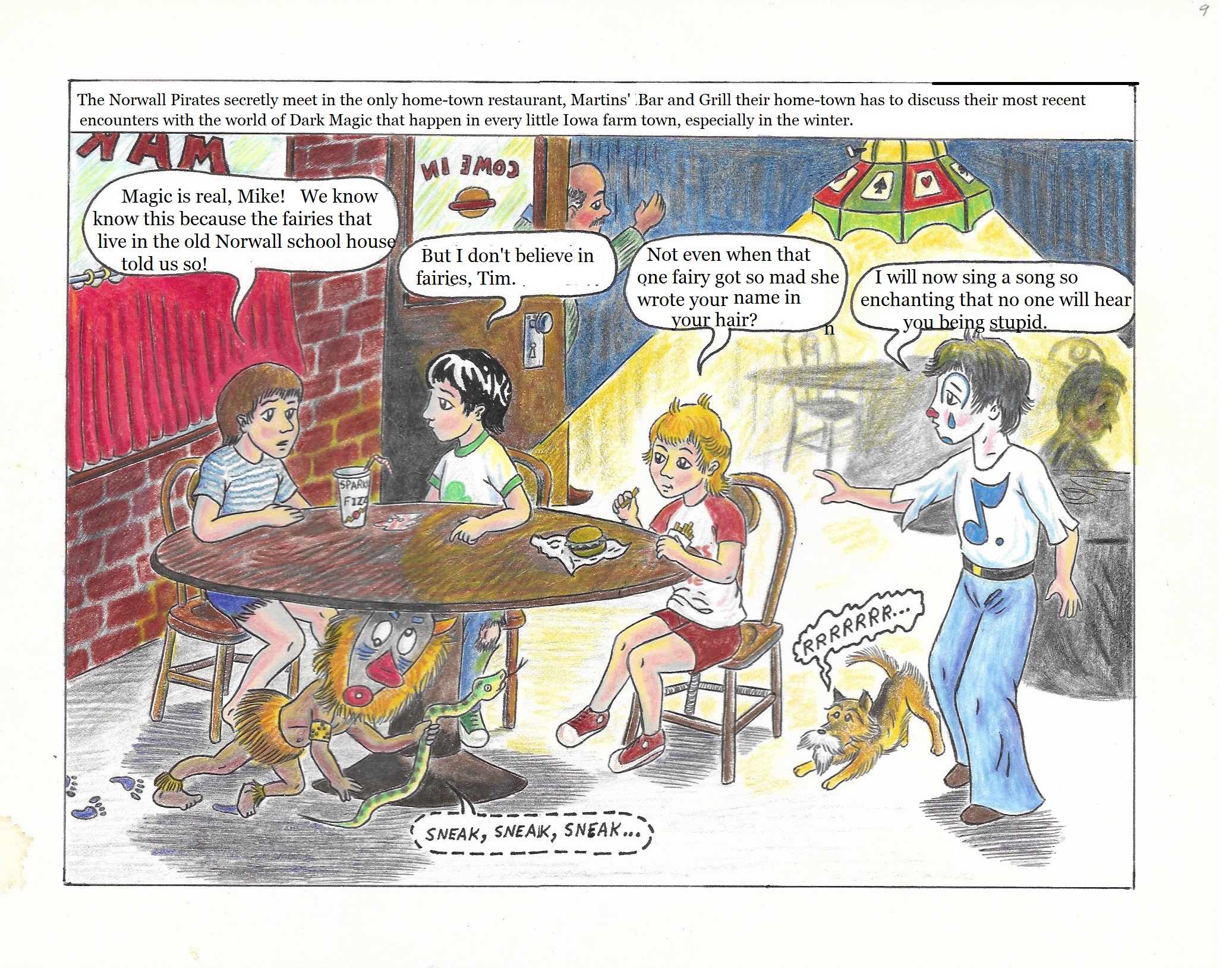
At my age and level of poor health, I think about ghosts a lot because I may soon be one. In fact, my 2014 novel, Snow Babies has ghosts in it. And some of the characters in it freeze to death and become snow ghosts. But it doesn’t work like that in real-world science. My ghosts are all basically metaphorical and really are more about people and people’s perception of life, love, and each other.
Ghosts really only live in the mind. They are merely memories, un-expectedly recalled people, pains, and moments of pandemonium.
I have recently been watching the new Netflix series The Haunting of Hill House. It creeps me out because it latches on to the idea that ghosts haunt us through the revisitation in our minds of old trauma, old mistakes, old regrets… We are never truly safe from ghosts, no matter how far under the covers we go in our beds, deep in the dark and haunted night. Ghosts are always right there with us because they only live inside us.
I am haunted by ghosts of my own. Besides the ghost dog that mysteriously wanders about our house at night and is seen only out of the corners of our eyes, there is the ghost of the sexual assault I endured at the age of ten by a fifteen-year-old neighbor. That ghost haunts me still, though my attacker has died. I still can’t name him. Not because I fear he can rise up out of the grave to hurt me again, but because of what revealing what he did, and how it would injure his innocent family members who are still alive and still known to my family, will cause more hurt than healing. That is a ghost who will never go away. And he infects my fiction to the point that he is the secret villain of the novel I am now working on. In fact, the next four novels in a row are influenced by him.
But my ghost stories are not horror stories.
I write humorous stories that use ghosts as metaphors, to represent ideas, not to scare the reader. In a true horror story, there has to be that lurking feeling of foreboding, that sense that, no matter what you do, or what the main character you identify with does, things probably won’t turn out all right. Stephen King is a master of that. H.P. Lovecraft is even better.
But as for me, I firmly believe in the power of laughter, and that love can settle all old ghosts back in their graves. I have forgiven the man who sexually tortured me and nearly destroyed me as a child. And I have vowed never to reveal his name to protect those he loved as well as those I love. If he hurt anyone else, they have remained silent for a lifetime too. And I have never been afraid of the ghost dog in our house. He has made me jump in the night more than once, but I don’t fear him. If he were real, he would be the ghost of a beloved pet and a former protector of the house. And besides, he is probably all in my stupid old head thanks to nearly blind eyes when I do not have my glasses on.
One of the things that I repeatedly need to do is to reaffirm fundamental beliefs. My son and I were talking this morning about things that might be worth getting fired for because there are lines we won’t cross, not even if someone is trying to push us across.
All People Count as People
Our family is made up of Caucasian, mostly-German-American white guys on one side (my side) and Filipino Hispanic-Polynesian folks on the other side (my wife’s side.) We believe that all kinds of people are equally valuable. As a school teacher I had to learn to love Hispanic and Spanish-speaking kids, loud and mostly happy black kids, Asian kids with tiger moms, and, of course, white kids of a thousand varieties. It upsets me that a former president tried to deport Dreamers who’ve never known any other country than the US. It upsets me that the Texas legislature is trying to cut down on the right to vote for black, Hispanic, and Asian people, as well as any other group who might vote for Democratic candidates. I am directly opposed to any Fox-News comments about any group of people that makes it seem like they are worth less than rich white Americans. Grant us all our human dignity.
Children Deserve to be Protected
I think one of the most important reasons for me to become a teacher was that I was myself sexually assaulted as a ten-year-old. I made a secret pact with myself to do everything in my power to prevent such a thing happening to any other child.
Maybe I never got the chance to confront a sexual predator myself, but I did take steps to help in situations of neglect, suicidal depression, drug problems, and I mentored several fatherless boys.
If you do it right, you can nurture a child into becoming an excellent human being.
Making People Laugh in Tough Times is a Good Thing
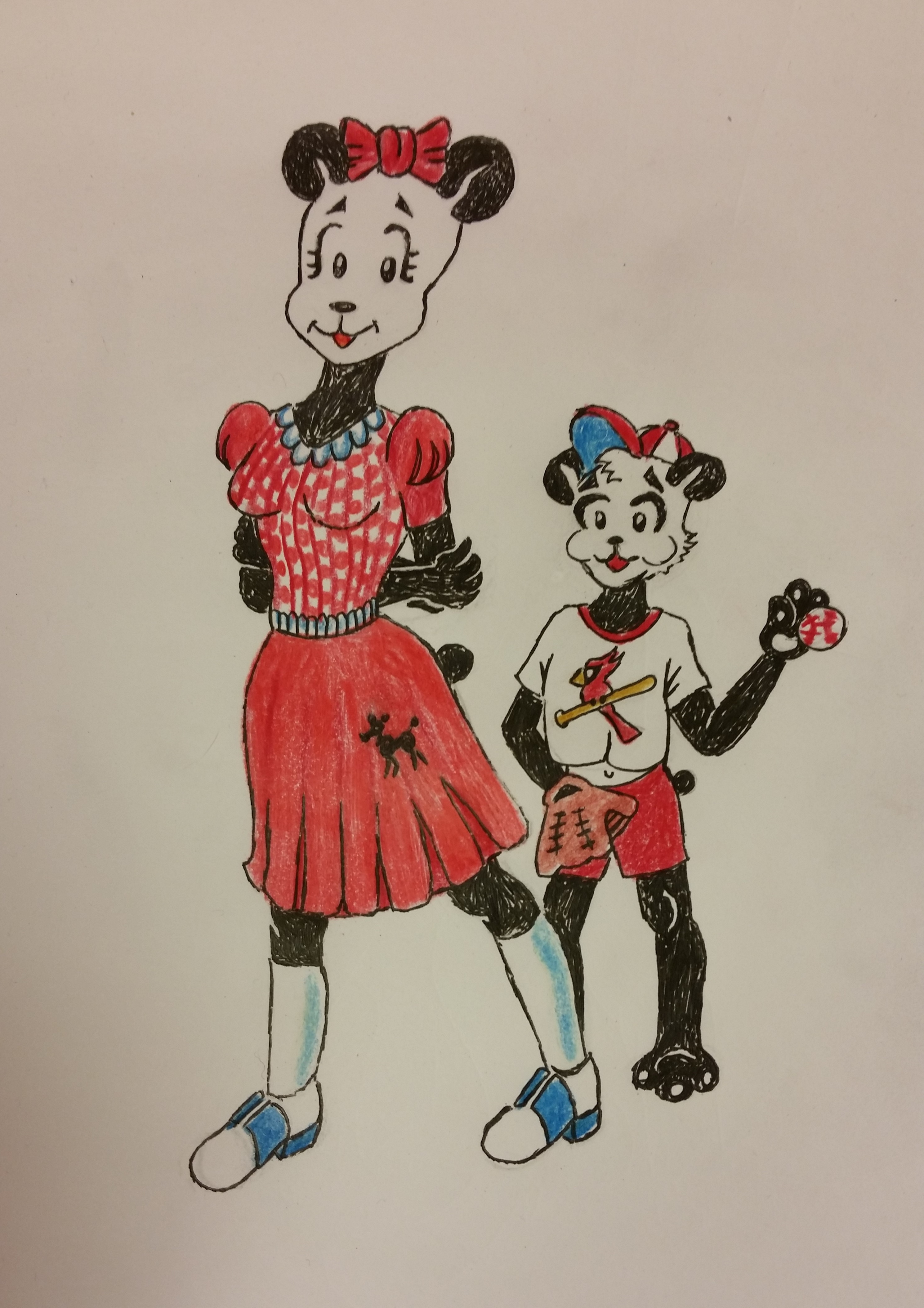
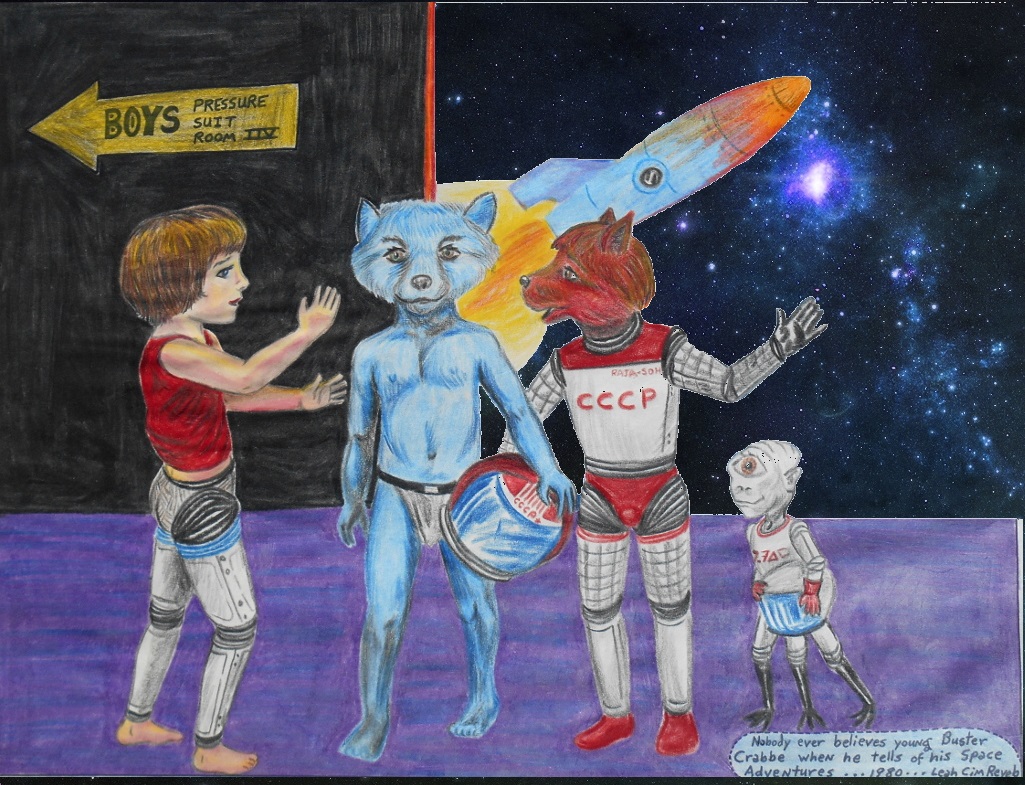
I am devoted to the idea that humor is a solution to many problems in this modern world. Of course, my wife (pictured to the left as a Panda from the Pandalore Islands) disagrees with this notion. That is because I am the husband, and husbands are always wrong. It is one of those unwritten rules followed by wives everywhere.
But because of my weird sense of humor I can laugh at anything even if it is actually hurting me. Against the healing power of laughter, nothing truly terrible can stand.
And so, today’s incoherent tirade now comes to an end. Not because I am actually done talking about my myriads of essential beliefs, but because three main points makes a good, teachable essay. And I can’t think of a number four right now because my brain shuts down after three just like everyone else’s. In fact, just like yours.
I discovered a new artist today. I was reading posts in the Facebook writer’s group, 1000 Voices for Compassion. And there in a post by Corinne Rodrigues was a YouTube video by Andrew Peterson. And it was a miracle. I clicked on the video and he sang my soul. Here is the original blog post. And here is the video.
Yesterday I posted a self-reflected goopy bit of nonsense about how I write and draw. Today, I realized I haven’t explained whyI write and draw.
You can capture it in words. You can capture it in pictures. Like Andrew Peterson did, you can capture it in music. It is deep and profound and eternal… and you can’t really explain it, but it is the singularity… the right word… the way to caress the very face of God.
This music from Andrew Peterson is musical poetry that expresses love in terms of romance and religion. Love of the significant other is equal to and intertwined with the love of God. There is a truth in that, and a fundamental reason why despite how religion has let me down, I will never be an atheist again. Through the right words I have come to know God. I speak to him daily. I spent twenty years as a Jehovah’s Witness, even to the point of knocking on doors and sharing the little pamphlets that are supposed to contain the capital “T” Truth. I can’t do that any more, though. The thing is, they believe the chosen of God, the only people who can reach paradise, are the people who all say and do and believe the very same thing, the very same words. Anyone else is left to destruction. No paradise. No life after death. And they clearly tell you what the words are, and you must repeat them like a magic spell. Peterson’s music is forbidden. JW’s don’t want you to listen to anyone’s words but their own. So, since this is Christian music, but not JW Christianity, it is the work of the devil, trying to lead you to destruction. What kind of selfishness is this? And yes, I have repeatedly been shown the words in the Bible that say that this is so. But I have stopped believing that all words in the Bible are the right words. When the Bible speaks of love… those are the right words. When the Bible speaks about what you must hate and who is condemned… those are not.
You may have noticed that I have obsessively searched out and shared this Andrew Peterson music. I do that when I find the right words… good words… I obsessively want to find more and more. I did that once with butterflies. When I was a boy, I chased them down with nets and collected them. But you have to put butterflies in killing jars and then mount them on pins and Styrofoam boards to collect them. I realized too late that this was not the right way to treat them. You have to let them flutter in the sunshine and float on the breeze. You have to let them live. And so must you do with the right words when you find them. You must use them and share them and let them live.
Yes, the reason I write is because my life has been lived and it is coming to an end. But it is a good life. A life filled with wisdom and love and the very best of those words I have collected in butterfly nets over time. And I must share those very right words… and let them live because they are beautiful and true… and it is simply who I have to be.
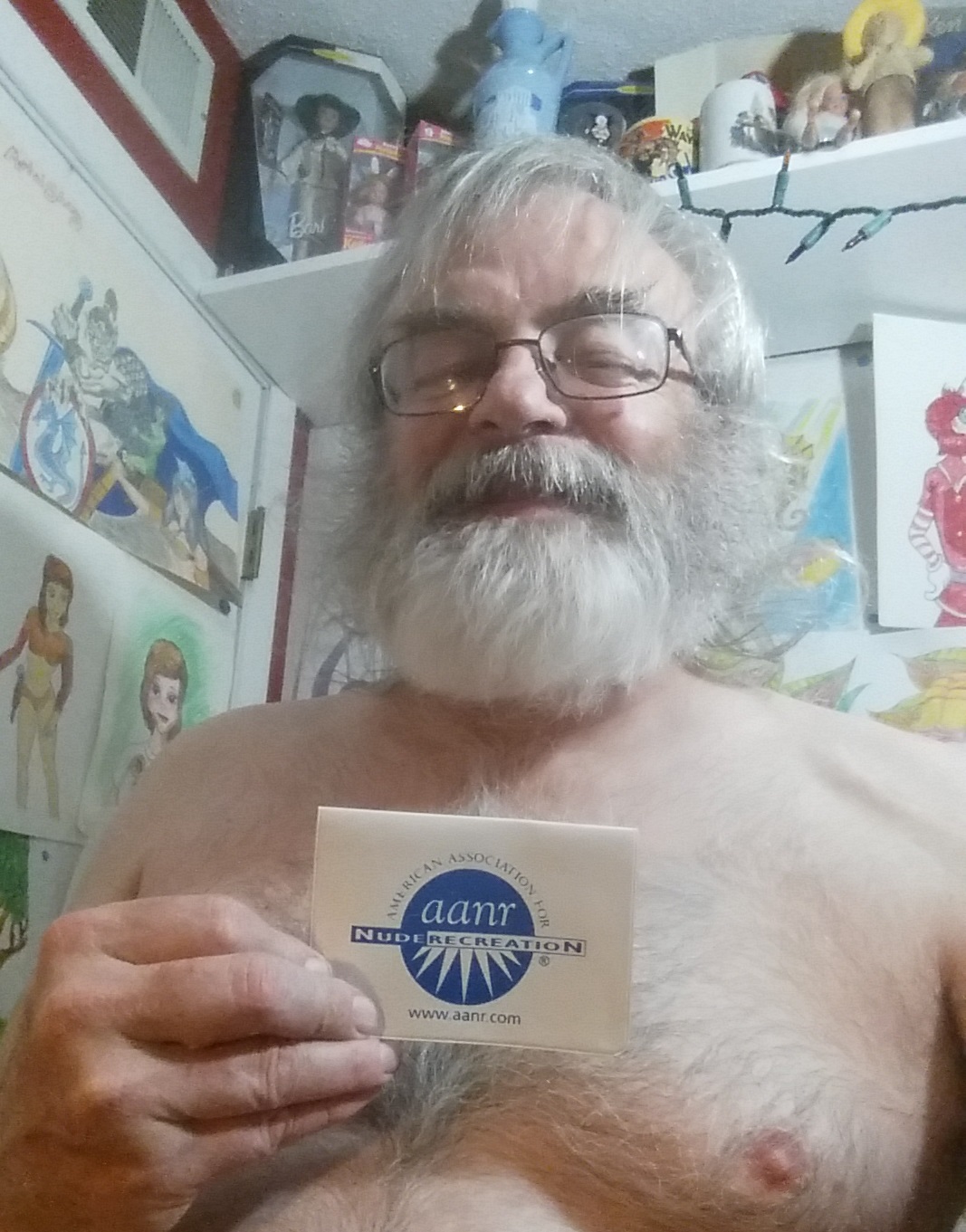
The actual card is inside this plastic case. I thought it might be a bad idea to show my membership number and everything.
Yes, my membership card for the AANR arrived in the mail yesterday afternoon. AANR is the American Association for Nude Recreation. My membership is for two years in the South West Region.
But before you immediately unfollow me for my blazing stupidity, let me explain a bit why this nonsense is actually a good thing.
You see, I have had a very long road of avoiding becoming a real nudist. A former girlfriend introduced me to the whole idea of nudism back in the 1980’s. But, I was terrified of being naked in front of other people, mostly because as a victim of a sexual assault as a child, I had traumatic memories about nakedness, but also because my parents and grandparents had taught me to be ashamed of showing off my nakedness to anyone outside the family. And also because I was a middle-school teacher at the time and parents doubt your abilities to keep their children safe if they know you like to prance around outdoors naked.
But I find I have a certain need for nakedness in my life. It is not a sexual thing. Rather it is a sensual thing. And surprisingly, God made us to be chemically dependent on being naked at least for a portion of our lives. Going without sunlight deprives you of enough vitamin D to cause serious depression, self hatred, and even thoughts of self harm. And oxytocin is generated in the pituitary gland in response to being naked among like-minded others. It’s the chemical that makes Scotsmen more fertile than other men if they don’t wear underwear under their kilts. Now, with diabetes, arthritis, and psoriasis plaguing my old flesh, I find that being nude helps immensely. Naked under the sun dries and cools the skin to fight psoriasis plaques, balances my blood sugar quicker, and warms my aching joints.
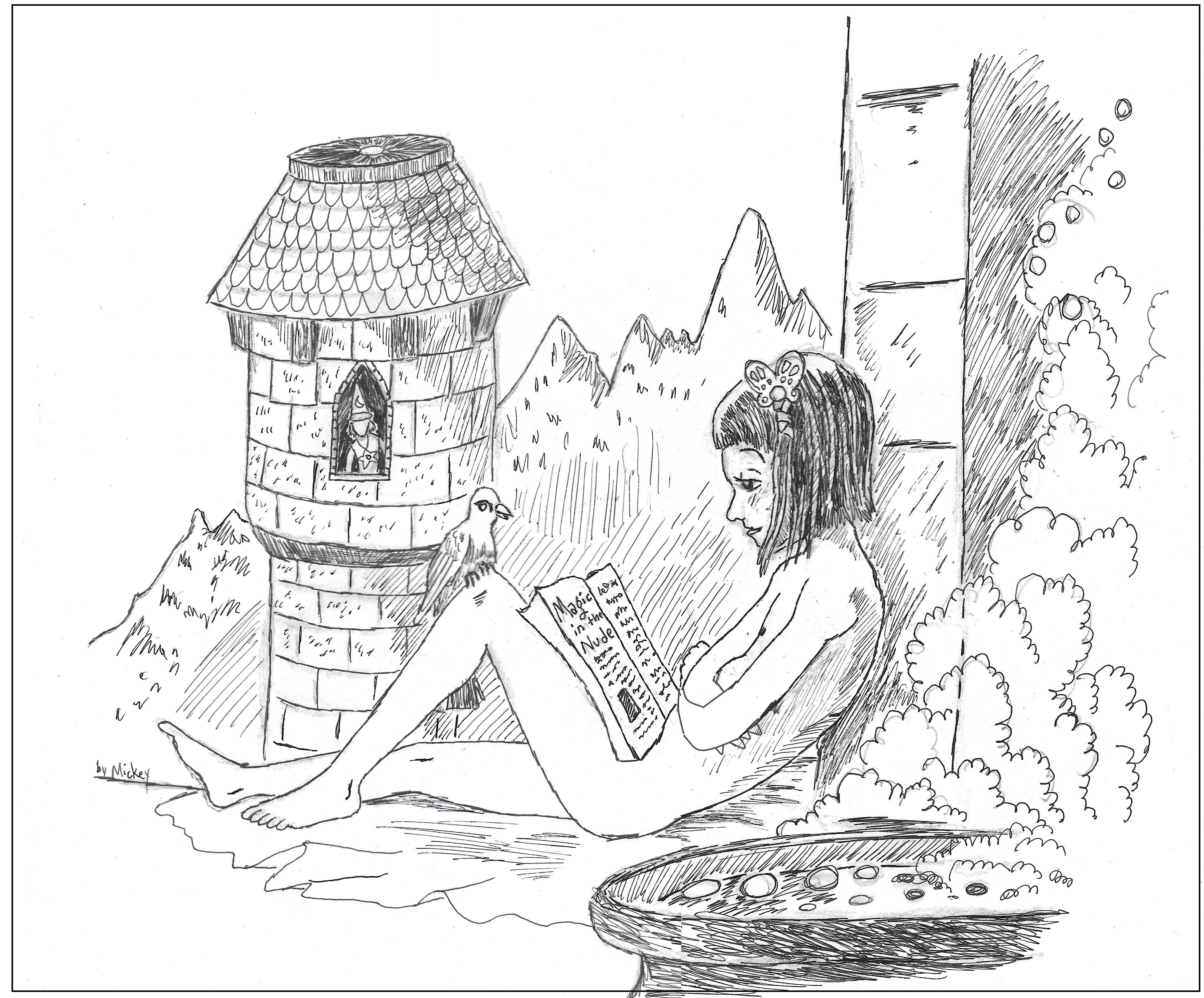
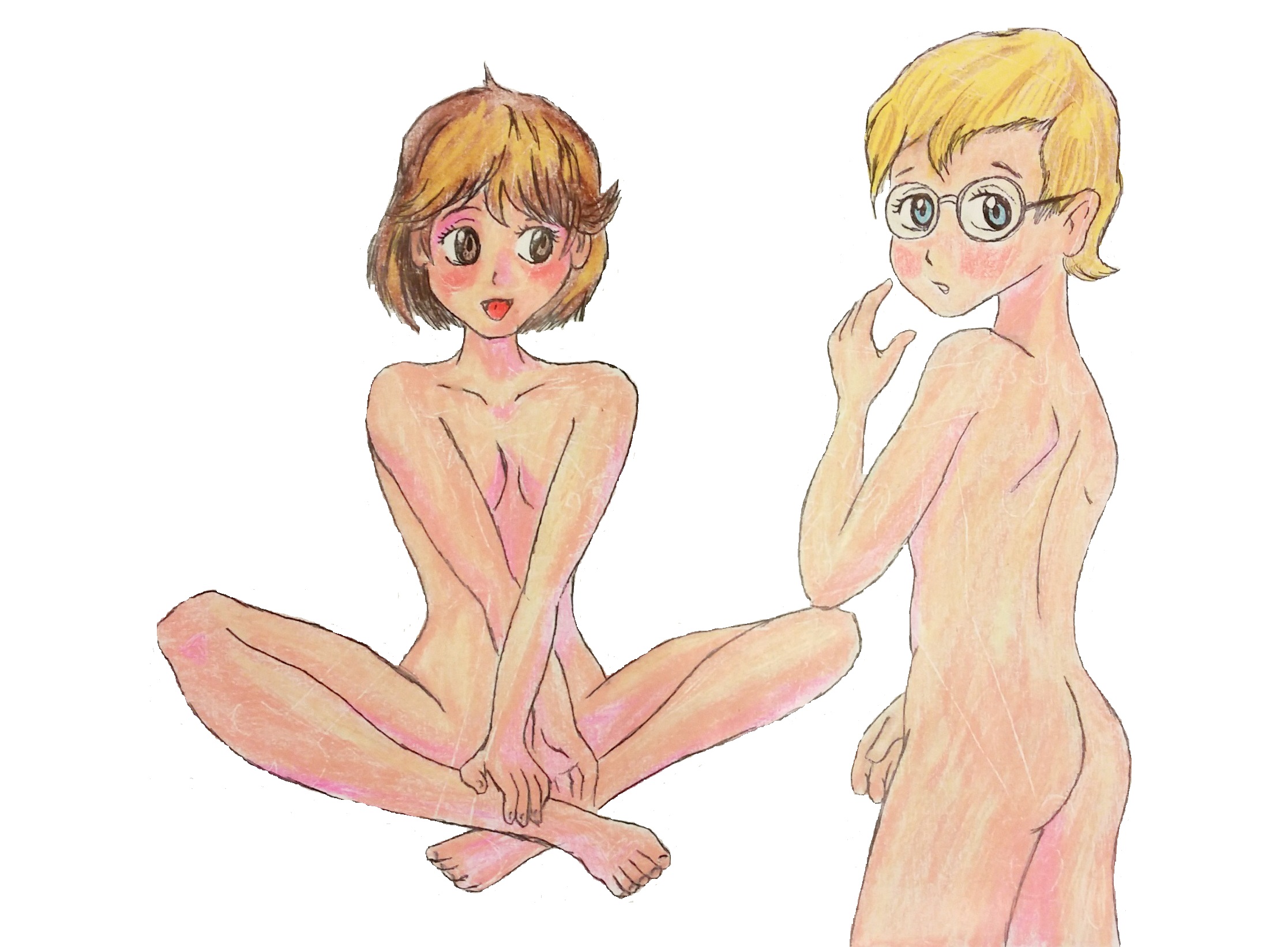
And I think most people from childhood onwards experience a longing for the innocent freedom of being without the restraints of clothing. I admit to being more than a little obsessed with childish nudity as displayed in many of my artworks. But that does not in itself make me a pervert or a pederast. It is not a sexualized obsession. To be honest, naked children are sexually kinda icky. They don’t engender feelings of arousal, but rather an urge to parentally protect and watch over them, keeping them safe from the demons that ruined my own childhood.
You actually gain confidence and self-control by practicing social nudity with other nudists. This is something I had long suspected was true, but didn’t actually learn until I went for a day to the Bluebonnet Nudist Park North of Dallas.
And it may well be that having the membership card and using that to legitimize the stories I write about nudists and nudism is the only benefit I will get from the membership. I have a desire to go camping in a tent with other nudists, or participate in a nude bike ride in California or New Orleans. But my health keeps me from doing those things totally on my own. And my family members think I am crazy and want nothing to do with going along to help with those plans.
So, I am left being a nudist mostly by myself, and mostly for reasons of writing humorous stories about it.
But now that I finally have an official membership card, I can truthfully say, “I have now lost my long-running battle to not become nudist. Mickey now officially is one. On paper at least.
People accused of doing magical thinking are basically being accused of doing something awful. Like Republicans telling us that if we cut taxes for millionaires and billionaires, working class and middle class citizens will prosper because of it. Of course, they actually know better. So, it isn’t really magical thinking. It is really evil magical thinking.
But when I am actually guilty of magical thinking, it is more along the lines of me pinning my hopes on an intuition brought about by calculations in my overcrowded imagination that are probably horribly miscalculated but that I need to turn out to be accurate and miraculously pull me out of my current difficulty. And then, because I intuit really, really hard… it turns out all right.
Magic is after all, merely what we call science and situations where something amazing is created, but we have no idea at all how and why.
Our movies nowadays are really quite chock full of magical thinking. Wish-fulfillment, fantasy, and violence-laden revenge stories are what fill the cinema with seekers of escapism and relaxation. That is magical thinking of an epic sort. Go see the Black Panther movie and “Wakanda forever” solves racism.
So, what is the point of this little essay? What am I actually thinking about the subject of magical thinking? Well, I needed a topic today to keep my every-day-in-April posting goal alive. And magically…
I think I know what you’re thinking. He’s just going to retell a bunch of Eddy Murphy, Richard Pryor, and Flip Wilson jokes from the 1970’s which his fuzzy old-coot memory will get wrong in slightly amusing ways. Or he’s got dementia now and has turned totally racist. Or both.
Well, maybe. I am old after all.
But, no. I am writing about that kind of humor where you laugh when someone in the story dies a horrible death in an unusually humorous way. Or most dead-baby jokes. Or the part of “The Producers” where “Springtime with Hitler” turns out to be a Broadway hit musical even though the two con men in charge were gambling on it being a failure.
Bad things can be funny, you know.
At least if you have a brain-damaged sense of humor like mine.
Kurt Vonnegut was a master of very dark black humor. In his novel, Cat’s Cradle, (Spoiler alert!) the world ends at the end of the novel because the mad scientist commits suicide by swallowing his invention, Ice Nine, freezing solid in a way that couldn’t be melted at room temperature or above, and then falling into the ocean, thus permanently freezing the entire planet Earth. Golly, what a laugh fest!
Black humor is, of course, highly dependent on dramatic irony and the fact that people smart enough to read and enjoy Vonnegut, usually are smart enough to realize if you read too much ironic humor you are not in danger of actually rusting from the brain outward.
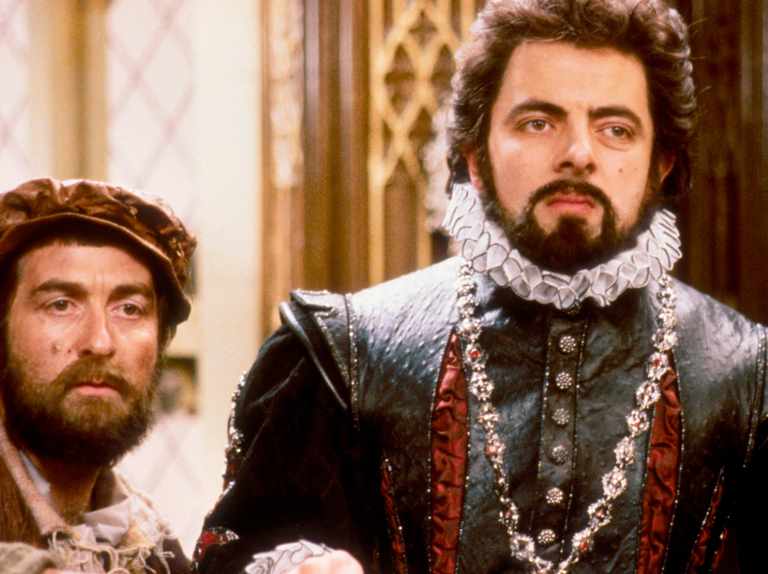
I, of course, am a black humor aficionado of sorts. I thoroughly enjoyed all the torture, death, and deadly mistakes of Rowan Atkinson’s Blackadder. Of course, I had a ridiculously hard time gaining access to the show which originally aired on the BBC and didn’t appear on American TV channels until our household gave up television to save money due to ever-rising cable costs.
Fortunately, during the yearlong imprisonment of the Covid pandemic, I discovered the entire series available on Hulu which is cheap enough to stream on my laptop. Only in excess of 500,000 people had to die for me to get the chance to binge on all the historical reiterations of this amazingly dark show full of humorous English demise and occasional accidental murder.
So, that is what black humor is to me. As defined by Professor Wilson at Iowa State when I was assigned to read a novel by Saul Bellow and ended up reading three, Henderson the Rain King, Herzog, and The Adventures of Augie March. Of course, I am not sure which novel was the assignment. They were all deadly hilarious. And I am, after all, old enough to probably be demented and a closet racist. Is Saul Bellow Jewish? I ask because I am also forgetful.
You may have looked at the name of my website here on WordPress and wondered, “Why in the heck has that fool Mickey called this thing he writes Catch a Falling Star?”
The answer is, he named it after the first good published novel he wrote at the insistence of the I-Universe Publishing’s marketing adviser. Very poor reason for doing anything, that.
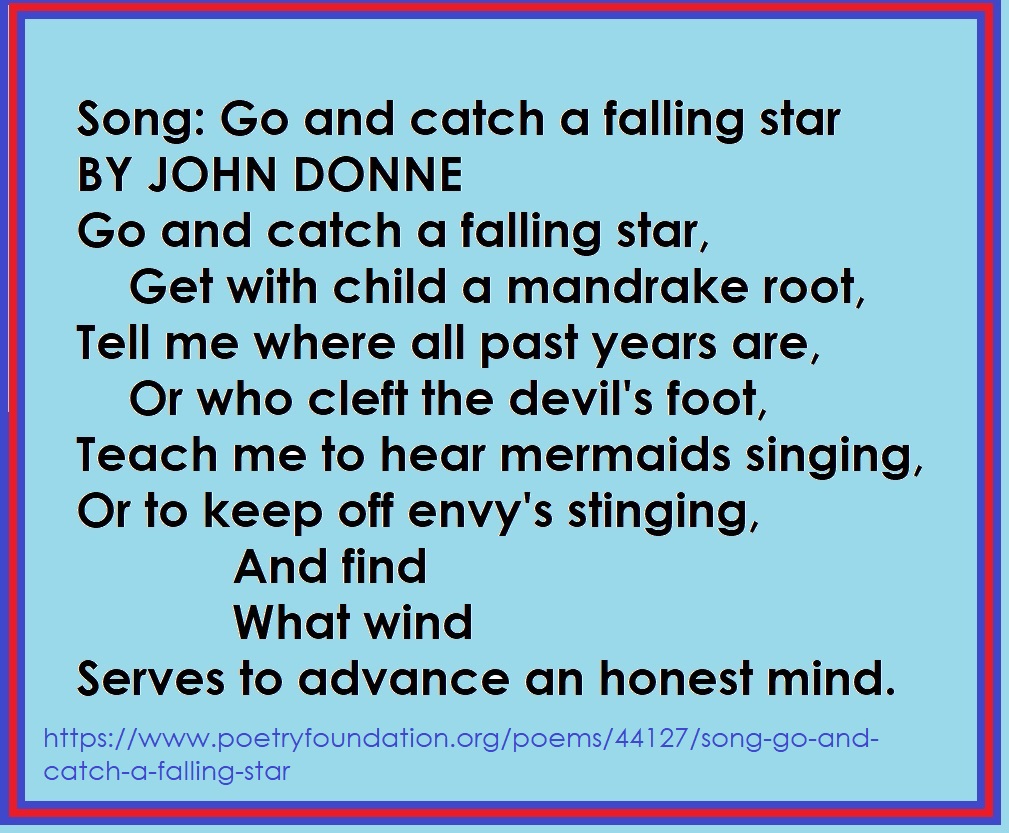
But, the secondary reason is because of where that title came from. Look at the first stanza of this poem by John Donne.
So, now, you are justified in asking, “What nonsense is this? That doesn’t have any coherent meaning, does it?”
And you would be right. These are impossible things that I am being ordered to do by a very religious cleric in the Anglican Church who was originally a Catholic, but, in the time of Henry VIII Catholicism was made illegal, and he wrote this poem about not being able to find an honest woman in his drunken, wasted youth anyway. He is ordering me here to not only “catch a falling star” (and catching a meteorite with your bare hands has rather hot consequences), but also to have sex with a semi-poisonous plant, explain why we can’t go backwards in time, determine whether and why God might’ve given Satan goat feet, listen to probably-nonexistent humanoid creatures singing, find a way to avoid anybody ever looking at me with envy and then doing something to me because of it, and, most importantly, find a place where the wind blows in a way that fills your head with facts that actually makes you smarter.
Challenge accepted!
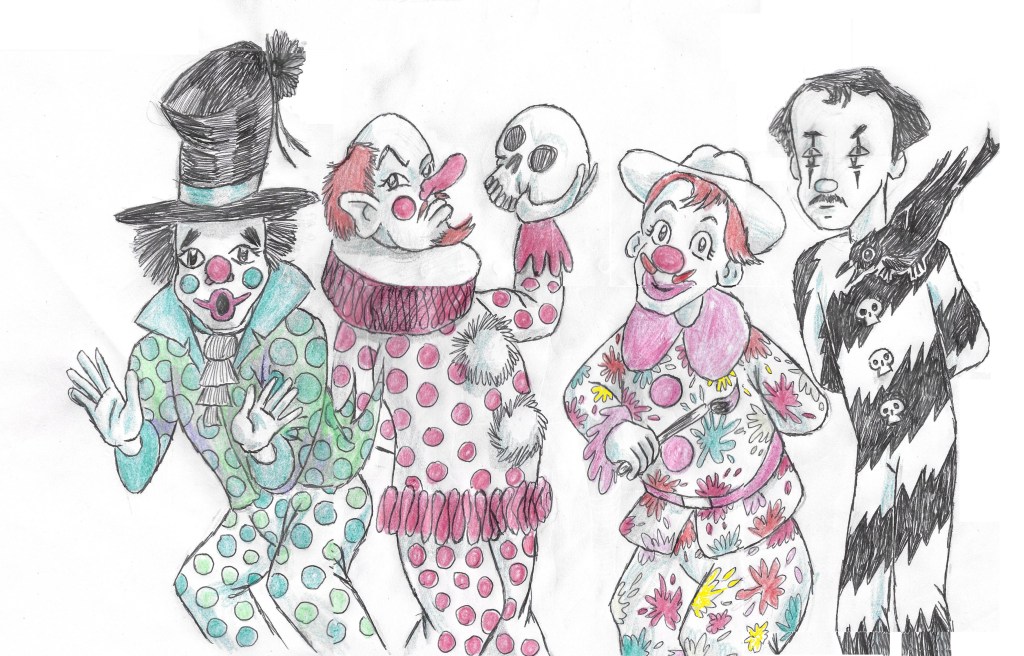
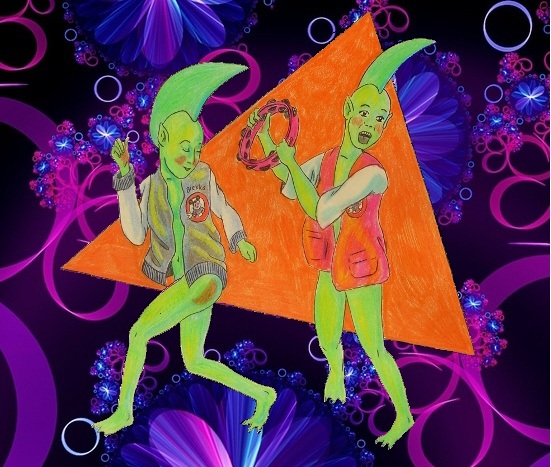
It is exactly what I wanted to write about. Impossible things actually being accomplished. Finding the meaning behind alien beings from outer space developing an intense love of I Love Lucy television broadcasts and Mickey Mouse Club music. Discovering why intensely shy people need to embrace social nudity. Defining who is actually a werewolf and who is not, uncovering who and what real monsters are. Singing songs so sad that it magically makes people fall in love with you. Talking to clowns in your dreams and getting real answers to the meaning of life, love, and laughter.
Catching falling stars is the stupid idea that this wacky, idiotic little blog is about. It is what I write about constantly. You have to kill me to get me to stop. So, there is your fair warning. Read on at your own peril.
Yes, it is very possible that my imagination was galvanized in childhood by TV.
It seems to me that NBC had even more power over me than the other two networks. We could get CBS and ABC on our black-and-white TV. But the only NBC affiliate in Iowa was not able to be received in our little town. We had to go to Grandma’s house in Mason City where Grandma had a color TV.
Wow! Color!
Of course, it used to be referred to as the “Boob Tube” because psychologists and people who mattered kept saying that TV makes you stupid. Which, naturally, has a grain of truth to it because you don’t watch TV actively. You sit there and passively let the stories, commercials, and propaganda about sugary breakfast cereals flow in one ear, poison your brain, and then flow out the other ear leaving only water-logged thinking-muscles behind them.
The Saturday Matinees on CBS provided my youthful imagination with science fiction, fantasy, and heroes of all kinds.
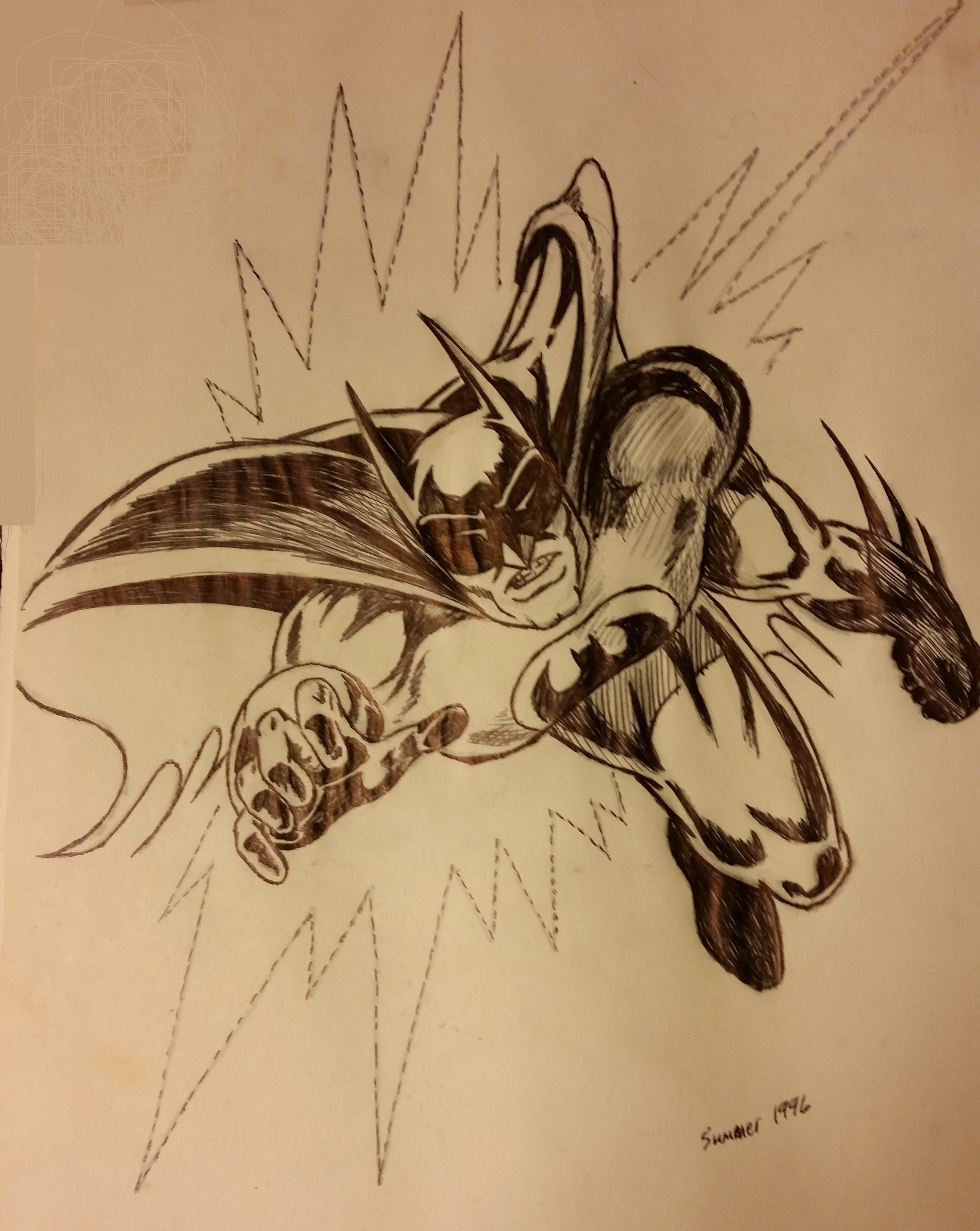
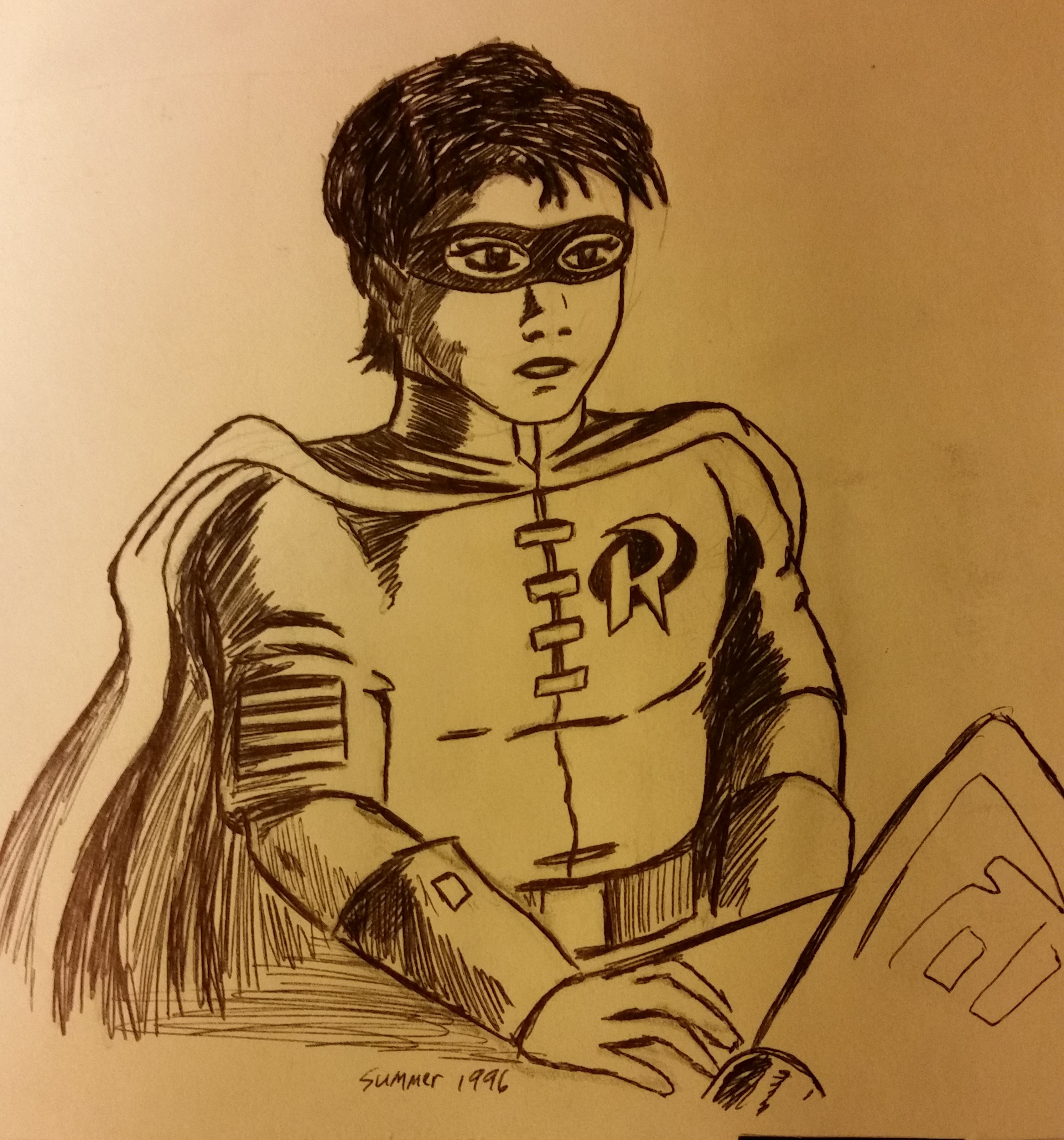
I taught myself to draw cartoon characters based on the animated shows I watched on TV. I not only copied Mickey, for obvious reasons, but also Donald and Daffy Ducks, Space Ghost, Jonny Quest, Yogi Bear, and the Herculoids.
And Batman! With Adam West and Burt Ward and Cesar Romero as the Joker. Bam! Boff! Sock! Pow! Bright colors, goofy Riddler plots, and really bad jokes that were so bad they made you laugh.
And I loved monster movies. Not horror movies really. I never loved Freddy Krueger or Jason. But the Wolfman? Frankenstein’s Monster? Bela Lugosi’s Dracula? The Creature from the Black Lagoon? My inspirations!
And, of course, Disney on Sunday nights. The Wonderful World of Disney in living color.
It is almost impossible to accurately draw from the future. One of the tests of good science fiction is how much of it finds its way into reality over time.
Computers and communicators and scanners and material printers are doing things daily now that were predicted as fantastical possibilities in the Star Trek episodes of the 1960’s.
Jules Verne’s novels predicted men walking on the moon and the existence of nuclear submarines patrolling the depths of the sea.
George Orwell predicted even worse things when it comes to government electronic surveillance and governmental control of everything they can take control of.
But it has never really been the future that my writing, as a fantasist/surrealist, has been about.
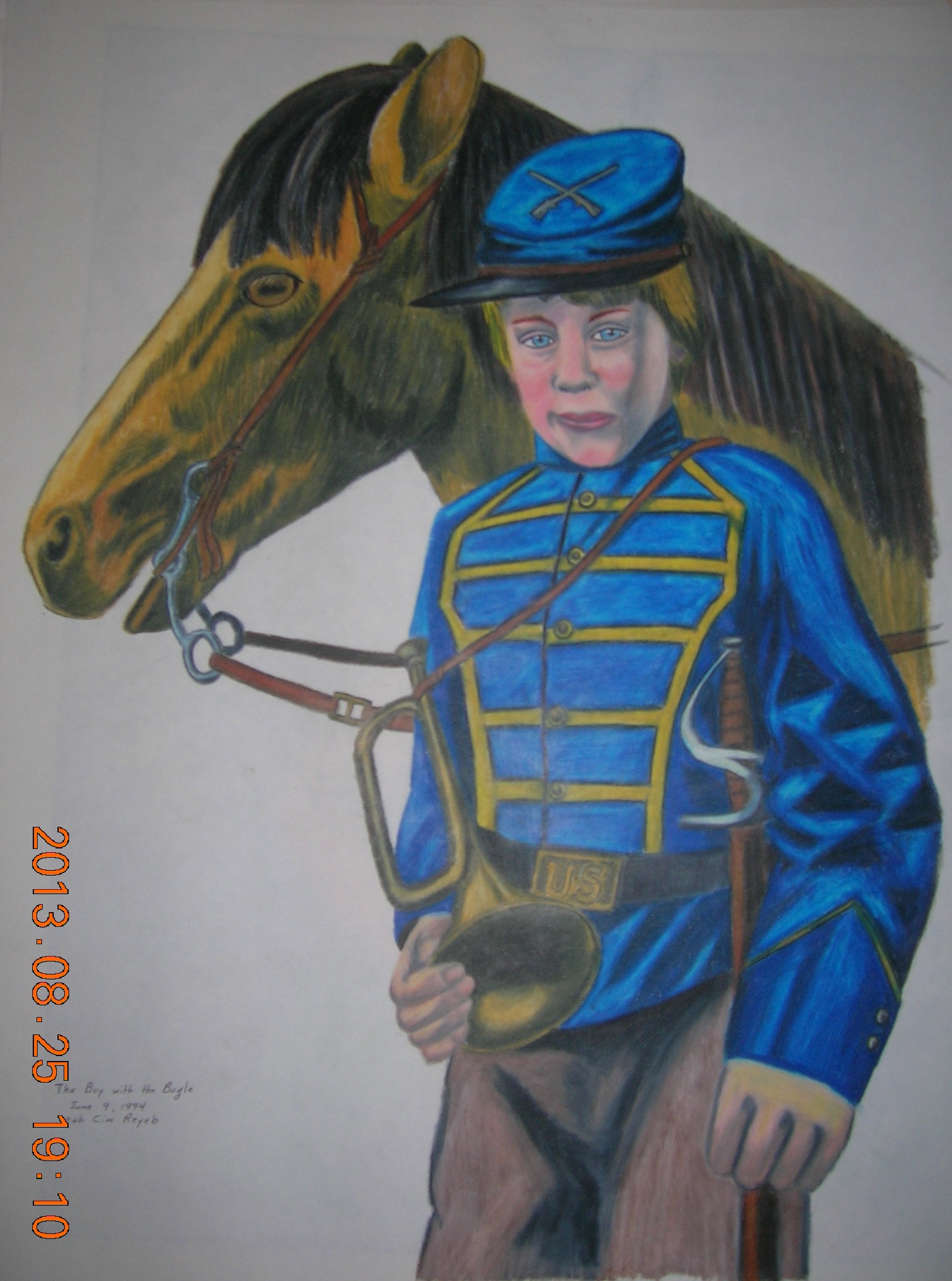
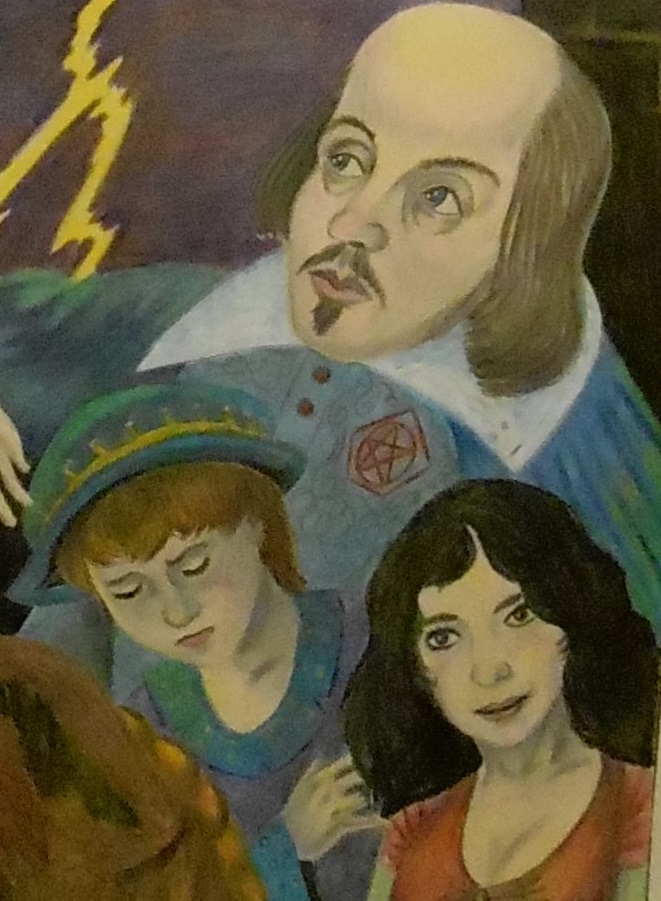
All of my writing is set either before the year 2000, or 3000 years in the future in the 51st Century and beyond. And all of the science fiction involved is really more about the past than it is even about the present. These drawings of the Civil War bugle boy and the Shakespearian portrait of Prospero, Ferdinand, and Miranda, were all drawn from either photos or paintings or woodcut prints from the distant past.
In my writing I don’t try to predict the future. I write about people who are basically the same now as they were in the 16th Century. In truth, only the costumes, props, and stage technology change over time. The actors in the great performance always play the same basic characters.
I have always had an inquiring mind. That is a curse instead of a plus if your main goal in life is to be happy and unbothered by anything. But it has proved to be of benefit to me as I have become an old coot who actually cares about what is true. Yes, I am willing to personally suffer to bring to light that which is actually true and that which must be disbelieved before it truly hurts us.
Don’t judge me yet based on this next question;
“Did you know that the Democratic party is funded by billionaires who want to use the “Deep State” to promote their Satanic rituals involving the murder and cannibalistic consumption of human children?”
I hope you know that I would never promote such a thing as being true. I am even careful of posting this pernicious lie in a question rather than a statement, because that’s one of the tactics the malign promoters of this religious belief use, not actually stating something that will be contradicted immediately, but taken merely as something to be considered and discussed simply because it is offered in question form.
So, how do you tackle such dangerous nonsense?
I prefer the scientific method which provides the structure for your thinking that will keep you on the most likely paths that lead you to what is true and what is not.
Facts should be confirmed by multiple verifiable sources.
We don’t talk much about cold fusion nowadays because when it was discovered in 1989 by a pair of electrochemists whose single experiment produced more heat than what should result from the energy put into the tabletop experiment. But, as is required by the entire scientific community, it couldn’t be reproduced in more repeats of the experiment than those that turned out negative. So, even though Pons and Fleischman did an experiment that answered the dreams of science-fiction nerds like me, they are mostly ignored by now. Cold fusion? Only one flawed source, studied in 1989 and proved still basically untrue in 2004 by a multitude of scientists who wanted it to be true.
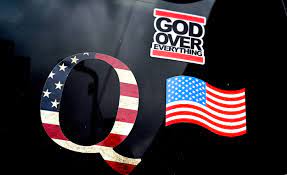
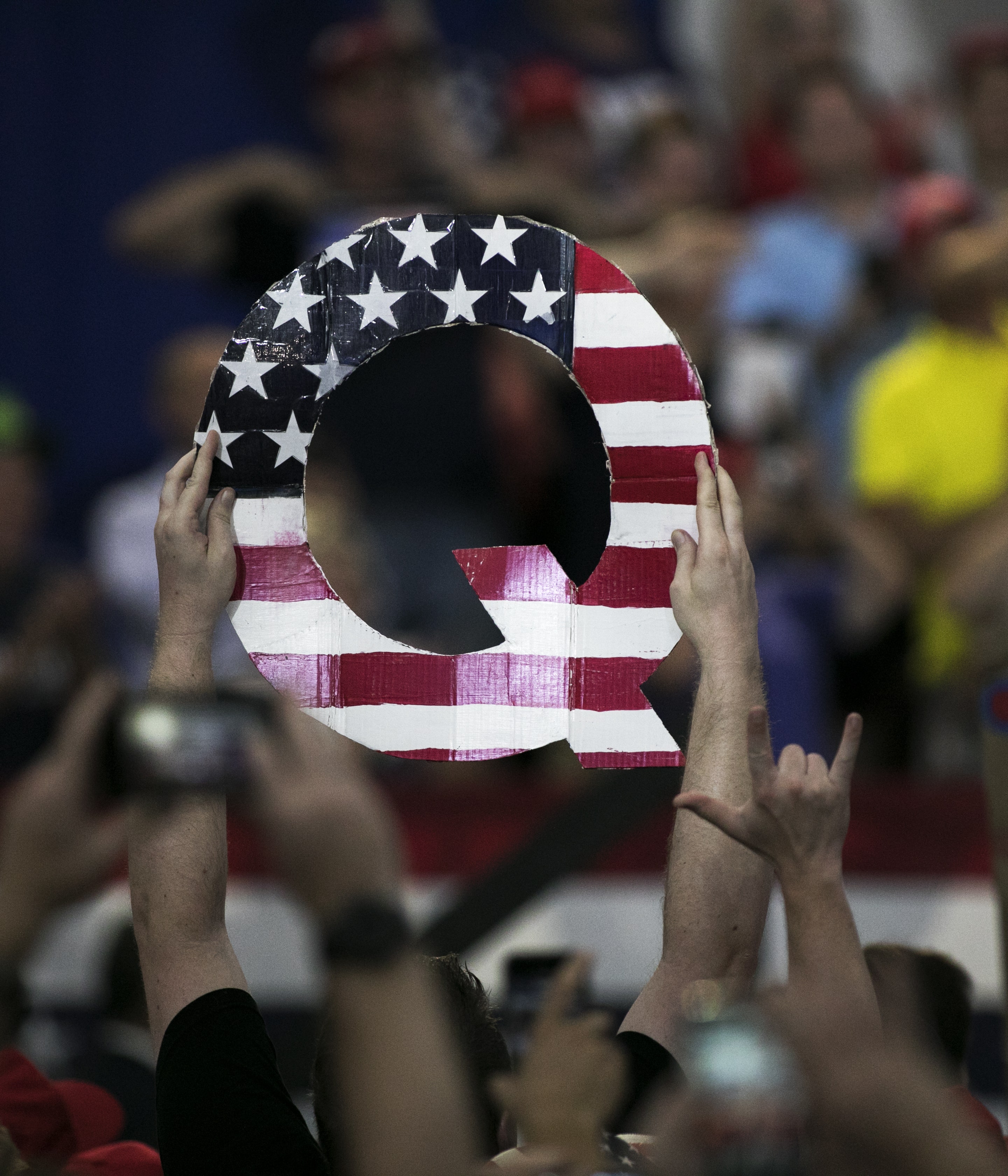
Consider the source for Q-Anon conspiracies. One (or possibly more) anonymous government whistle-blowers whose credentials have never been presented or identities revealed, and mind-blowing statements appearing on places like 4-Chan, 8-Chan, and Parlor to be picked up and amplified on such reliable sources of scientifically proven knowledge as Twitter, Facebook, and Instagram.
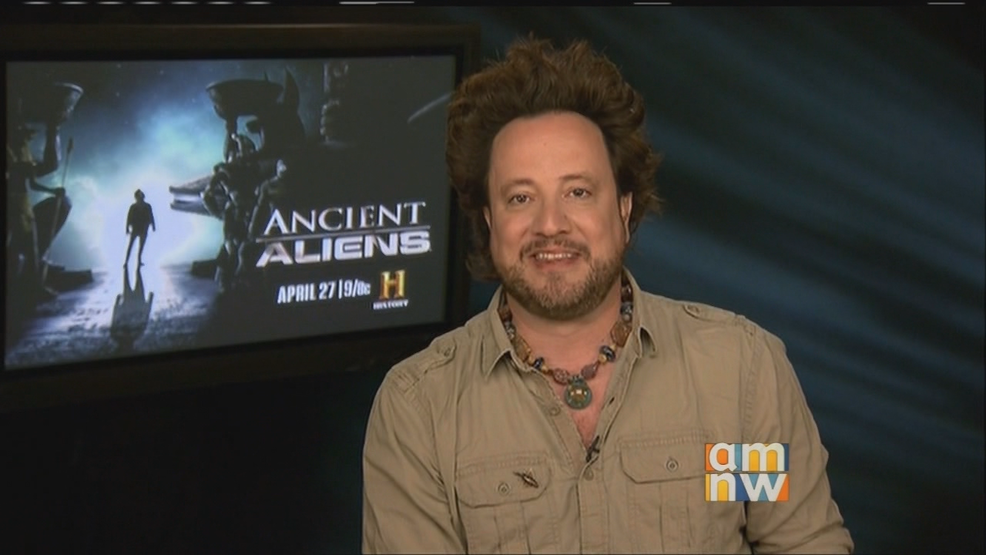
Q-Anon is not the only conspiracy religion out there. My friend Giorgi above has a more benign, but no less ridiculous religion that chooses to replace God Jehovah, Zeus, Odin, Buddha, and other religious figures and deities with Ancient Aliens.
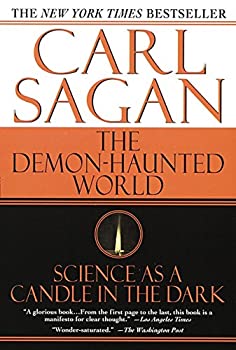
Here’s a second and third test offered by Carl Sagan to use against their ideas;
2. Encourage debate from knowledgeable people from all identifiable perspectives.
3. Do not accept arguments only from positions of authority.
Q-Anon arguments only have the authority of repetition because social media endlessly asks the same “questions” over and over. There is no debate from any recognizable “authority,” just a plethora of unsubstantiated statements and commandments.
In a way, the Ancient-Aliens crowd is guilty of the same thing. They never have skeptics and debunkers on their History-Channel show. You never see Michael Shermer, founder of the Skeptics Society, offering his opinions of their conclusions on that show. Neither do they allow Christian theologians or Buddhist scholars to offer their take on what probably really happened. They do employ physicists, engineers, and historians on their show, but never the ones that don’t agree with their radical theories and conclusions. Since there is no real debate on that show and no identifiable peer review, that show does not qualify as History, let alone Science.
4. Don’t get overly attached to your own ideas.
If you are going to investigate any conspiracy that holds thrall a number of “true believers,” approach everything with a truly open mind. I actually believe alien beings from “out there” have visited Earth. That is based on things, science, and testimony I haven’t even begun to go into here. But I reserve my right to be skeptical about everything, especially my own prejudices, theories, and beliefs. Otherwise I could too easily get trapped into believing in the truth of something that I otherwise would recognize as false. This is the factor that has pulled so many of my otherwise sensible Republican friends onto the flypaper of spurious Q-Anon claims.
5. Use numbers wherever possible. Math is quantifiable information that can “prove” the facts better than most ideas expressed in mere language. It is more precise, and reveals truth in verifiable ways that no poet ever could.
I am known to some in my family (here you could read wife and sisters) as the family conspiracy nut and generally crazy old coot.
But I am not so crazy that I don’t recognize the dangers inherent in some the ideas I am talking about here. As an English teacher I have learned some effective thinking skills that protect me and mine. I can honestly tell you that these thinking skills explained here will help you too. I learned them from a friend who pointed me to Carl Sagan as the source of these thinking skills.
And to any of my friends who might read this post and be offended, I apologize. But you were wrong about Pizzagate, and you are on the wrong side of this too. Aliens probably did NOT build the pyramids.







Ghostly Reflections
So, I am probably the last stupid goomer who should be writing this post. But I do have a lot to say on the subject that will more than fill a 500-word essay.
At my age and level of poor health, I think about ghosts a lot because I may soon be one. In fact, my 2014 novel, Snow Babies has ghosts in it. And some of the characters in it freeze to death and become snow ghosts. But it doesn’t work like that in real-world science. My ghosts are all basically metaphorical and really are more about people and people’s perception of life, love, and each other.
Ghosts really only live in the mind. They are merely memories, un-expectedly recalled people, pains, and moments of pandemonium.
I have recently been watching the new Netflix series The Haunting of Hill House. It creeps me out because it latches on to the idea that ghosts haunt us through the revisitation in our minds of old trauma, old mistakes, old regrets… We are never truly safe from ghosts, no matter how far under the covers we go in our beds, deep in the dark and haunted night. Ghosts are always right there with us because they only live inside us.
I am haunted by ghosts of my own. Besides the ghost dog that mysteriously wanders about our house at night and is seen only out of the corners of our eyes, there is the ghost of the sexual assault I endured at the age of ten by a fifteen-year-old neighbor. That ghost haunts me still, though my attacker has died. I still can’t name him. Not because I fear he can rise up out of the grave to hurt me again, but because of what revealing what he did, and how it would injure his innocent family members who are still alive and still known to my family, will cause more hurt than healing. That is a ghost who will never go away. And he infects my fiction to the point that he is the secret villain of the novel I am now working on. In fact, the next four novels in a row are influenced by him.
But my ghost stories are not horror stories.
I write humorous stories that use ghosts as metaphors, to represent ideas, not to scare the reader. In a true horror story, there has to be that lurking feeling of foreboding, that sense that, no matter what you do, or what the main character you identify with does, things probably won’t turn out all right. Stephen King is a master of that. H.P. Lovecraft is even better.
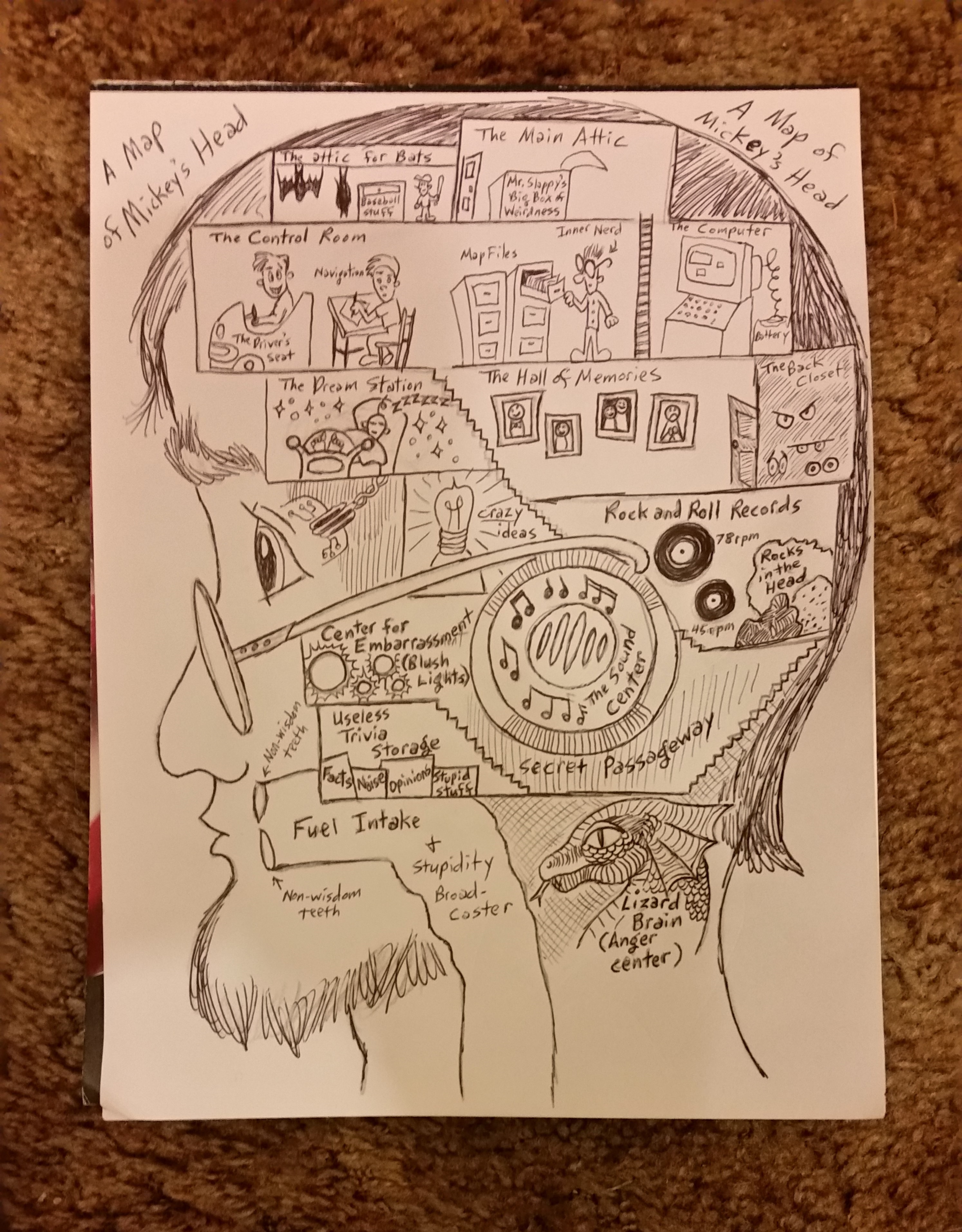
But as for me, I firmly believe in the power of laughter, and that love can settle all old ghosts back in their graves. I have forgiven the man who sexually tortured me and nearly destroyed me as a child. And I have vowed never to reveal his name to protect those he loved as well as those I love. If he hurt anyone else, they have remained silent for a lifetime too. And I have never been afraid of the ghost dog in our house. He has made me jump in the night more than once, but I don’t fear him. If he were real, he would be the ghost of a beloved pet and a former protector of the house. And besides, he is probably all in my stupid old head thanks to nearly blind eyes when I do not have my glasses on.
I don’t believe in ghosts.
2 Comments
Filed under cartoons, commentary, ghost stories, goofy thoughts, humor, Paffooney, strange and wonderful ideas about life
Tagged as ghosts