Category Archives: strange and wonderful ideas about life

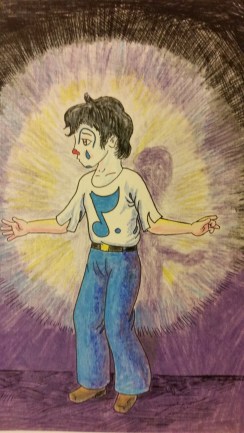
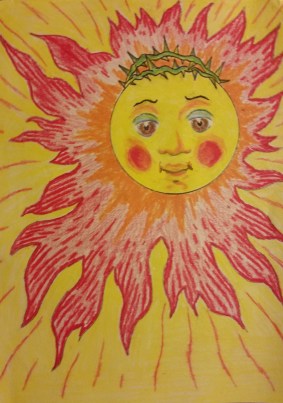
Mickey Being Mickey

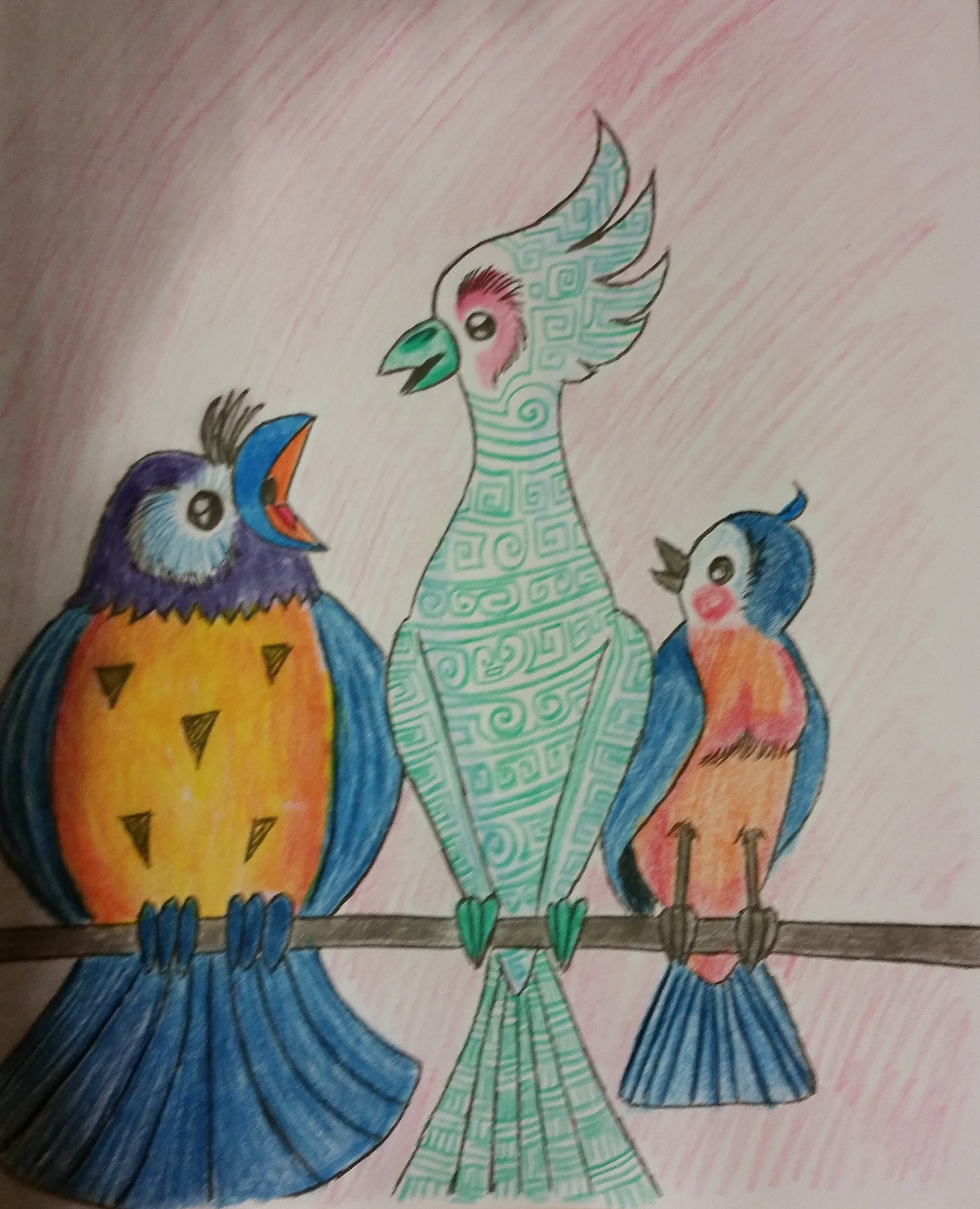
20170905_074639

A new day dawns.  It leaves me wondering.  Who am I today?  Who will I be tomorrow?

The opportunity to have any sort of control over who and what I am is coming to a close.  I don’t really know how much longer I have before pain and illness dissolve me into nothingness.  But death is not the end of existence. I may be forgotten totally by the day after next Thursday, but my existence will still have become a permanent fact.  Yes, I am one of those dopey-derfy-think-too-much types known as an existentialist.

I am feeling ill again.  Any time that happens may be the last time.  But that doesn’t worry me.


The important thing is that the dance continues.  It doesn’t matter who the dancers are, or who supplies the music.

We can be clowns if we choose to be.

We can safely be fools if we really can’t help it.

An awful lot of awful things go into who and what we are.  Those things make us full of awe.  They make us awesome.  Aw, shucks.  What an awful thing to say.


But what is all this stuff and nonsense really about today?

It’s just Mickey being Mickey… Mickey for another day.

It’s not really poetry.  It certainly isn’t wisdom.  It’s a little bit funny, and only mildly depressing… for a change.

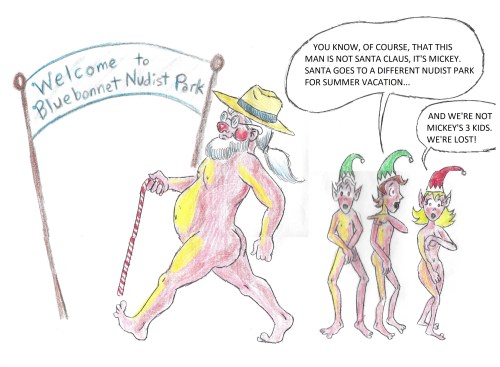
It’s just Mickey being Mickey.  And a partially Paffooney gallery.

…To fill some space today.

And wonder about tomorrow.

And just be Mickey a little bit more.

Leave a comment

Filed under artwork, autobiography, cartoony Paffooney, commentary, goofy thoughts, humor, illness, Paffooney, self portrait, strange and wonderful ideas about life

Ending the Story

The first chapter of the story of my life does not open with my birth. It begins with my first memories around the age of three or four, when I first really became aware and my mind began seriously pulling itself together. Similarly, it will not ultimately end the final chapter when the lights go out and I pass away. I myself will not be able to write that particular sentence because, as I die, I probably won’t be in the act of writing about it.

This topic comes up because I have been thinking long and hard about how my AeroQuest series is going to end.

The original story in my terrible first-published novel has been divided into five different parts. Admittedly they are not as stand-alone in nature as I had originally intended.

Of course, since it all evolved from an on-going role-playing game, it was never really supposed to have an end point. And if I manage to finish this number-five novel, I already have a story to fill the number-six novel. It will be called Galactic Fire and the story is already tied to the other five.

At the same time, I am rewriting and updating Stardusters and Space Lizards. This too is an ongoing story. As a sequel to Catch a Falling Star, it takes up the tale of the aliens who tried and failed to invade a small town in Iowa. It takes them to a dying planet where the population of meat-eating lizard people are determined to make themselves extinct.

So, naturally, this book has the problem of the need to kill characters who are not the villain. Characters I have come to love. One of the characters shown on this new cover was supposed to tragically die during the climactic battle of the book. It began my awareness of how I can’t seem to end a novel without killing characters.

Of my fifteen existing novels, only Superchicken and A Field Guide to Fauns make it to the end of the story without killing a character.

I am lucky society doesn’t charge authors with murder for killing off characters in their books. After all, we fiction writers are a murderous lot. And characters are real people, at least to the author.

But, life as a story, is like that. Nobody that we have photographs of makes it out alive. And all the exceptions to the general rule may be highly metaphorical in actual reality.

The character in my initial Paffooney, Orben Wallace from The Bicycle-Wheel Genius, is a good example of the ongoing nature of life’s story. I call that book a prequel-equal-sequel because it tells a story that begins before Catch a Falling Star, includes some of the same story as that book, and ends with a story that occurs well after the other story departs for outer space.

I fully expect my own life to end its story like that one did. There is a story that comes both before and after. Birth-to-death stories are always part of something larger. And it is all connected.

Leave a comment

Filed under aliens, characters, commentary, humor, novel plans, novel writing, Paffooney, strange and wonderful ideas about life, writing, writing humor

Word Magic

From the time I could first remember, I was always surrounded by stories. I had significantly gifted story-tellers in my life. My Grandpa Aldrich (Mom’s Dad) could spin a yarn about Dolly O’Rourke and her husband, Shorty the Dwarf, that would leave everybody in stitches. (Metaphorical, not Literal)

And my Grandma Beyer (Dad’s Mom) taught me about family history. She told me the story of how my Great Uncle, her brother, died in a Navy training accident during World War II. He was in gun turret aboard a destroyer when something went wrong, killing three in the explosion.

Words have power. They can connect you to people who died before you were ever born. They have the power to make you laugh, or make you cry.

Are you reading my words now? After you have read them, they will be “read.” Take away the “a” and they will change color. They will be “red.” Did you see that trick coming? Especially since I telegraphed it with the colored picture that, if you are a normal reader, you read the “red” right before I connected it to “reading.”

Comedy, the writing of things that can be (can bee, can dee, candee, candy) funny, is a magical sort of word wrangling that is neither fattening nor a threat to diabetes if you consume it. How many word tricks are in the previous sentence? I count 8. But that wholly depends on which “previous sentence” I meant. I didn’t say, “the sentence previous to this one.” There were thirteen sentences previous to that one (including the one in the picture) and “previous” simply means “coming before.” Of course, if it doesn’t simply mean that, remember, lying is also a word trick.

Here’s a magic word I created myself. It was a made-up word. But do a Google picture search on that word and see if you can avoid artwork by Mickey. And you should always pay attention to the small print.

So, now you see how it is. Words have magic. Real magic. If you know how to use them. And it is not always a matter of morphological prestidigitation like this post is full of. It can be the ordinary magic of a good sentence, or a well-crafted paragraph. But it is a wizardry because it takes practice, and reading, and more practice, and arcane theories spoken in the backs of old book shops, and more practice. But anyone can do it. At least… anyone literate. Because the magic doesn’t exist without a reader. So, thank you for being gullible enough for me to enchant you today.

Leave a comment

Filed under humor, Paffooney, strange and wonderful ideas about life, wizards, word games, wordplay, writing, writing humor, writing teacher

Magic Flowers

There are magical flowers in Mrs. Pennywhistle’s garden.

And what do I mean by that?

She grows snapdragons, pansies, and nasturtiums like any good granny-gardener would.

But amongst the children of our little town, the rumor is that she’s actually a witch.

A good witch.

Not a bad witch.

Her spells only fascinate, never glammer, never take over your little-boy or little-girl mind.

This is the magical blossom she got from old Dr. Mirabilis. He’s a wizard from Peru that she found in the nursing home in Belle City. He gave it to her as a gift when his arthritic hands could no longer keep it alive on the hospital window sill. She cares for it like it was her own baby.

It’s magical power is as an aid to contemplation. It’s gentle purplish-pink color is calming when you stare at it. Its odor is mesmerizing. She uses it to talk to the doctor now that he is gone, and she can no longer visit him to talk about her flower garden.

These pretty posies are planted all around the edges of the garden.

Especially around the carrots and cabbage.

Do not stick your little noses between the pink and white petals.

They have an awful smell.

But their magic is keeping the rabbits out.

Especially from the cabbages and carrots.

And the pansies are the clowns and punchinellos of the flower bed.

See their angry eyes under bushy-black eyebrows? And their too-serious little broomlike moustaches?

How can you do anything but laugh?

And the White Rose…

That’s the avatar of Mrs. Pennywhistle herself.

When she can no longer keep that one growing, it means the gardener has gone.

And the garden will soon be gone for good as well.

And then where will the children go?

For magic flowers?

3 Comments

Filed under flowers, foolishness, humor, Paffooney, pen and ink paffoonies, poetry, strange and wonderful ideas about life

My Bookish Journey (Finale)

by Maxfield Parrish

Like every real, honest-to-God writer, I am on a journey. Like all the good ones and the great ones, I am compelled to find it…

“What is it?” you ask.

“I don’t know,” I answer. “But I’ll know it when I see it.”

“The answer?” you ask. “The secret to everything? Life, the universe, and everything? The equation that unifies all the theories that physicists instinctively know are all one thing? The treasure that pays for everything?”

Yes. That. The subject of the next book. The next idea. Life after death. The most important answer.

And I honestly believe that once found, then you die. Life is over. You have your meaning and purpose. You are fulfilled. Basically, I am writing and thinking and philosophizing to find the justification I need to accept the end of everything.

Leah Cim Reyeb is me, Michael Beyer written backwards.

And you know what? The scariest thing about this post is that I never intended to write these particular words when I started typing. I was going to complain about the book-review process. It makes me think that, perhaps, I will type one more sentence and then drop dead. But maybe not. I don’t think I’ve found it yet.

The thing I am looking for, however, is not an evil thing. It is merely the end of the story. The need no longer to tell another tale.

When a book closes, it doesn’t cease to exist. My life is like that. It will end. Heck, the entire universe may come to an end, though not in our time. And it will still exist beyond that time. The story will just be over. And other stories that were being told will continue. And new ones by new authors will begin. That is how infinity happens.

I think, though, that the ultimate end of the Bookish Journey lies with the one that receives the tale, the listener, the reader, or the mind that is also pursuing the goal and thinks that what I have to say about it might prove useful to his or her own quest.

I was going to complain about the book reviewer I hired for Catch a Falling Star who wrote a book review for a book by that name that was written by a lady author who was not even remotely me. And I didn’t get my money back on that one. Instead I got a hastily re-done review composed from details on the book jacket so the reviewer didn’t have to actually read my book to make up for his mistake. I was also going to complain about Pubby who only give reviewers four days to read a book, no matter how long or short it is, and how some reviewers don’t actually read the book. They only look at the other reviews on Amazon and compose something from there. Or the review I just got today, where the reviewer didn’t bother to read or buy the book as he was contracted to do, and then gave me a tepid review on a book with no other reviews to go by, and the Amazon sales report proves no one bought a book. So, it is definitely a middling review on a book that the reviewer didn’t read. Those are things I had intended to talk about today.

But, in the course of this essay, I have discovered that I don’t need to talk about those tedious and unimportant things. What matters really depends on what you, Dear Reader, got from this post. The ultimate McGuffin is in your hands. Be careful what you do with it. I believe neither of us is really ready to drop dead.

Leave a comment

Filed under book review, commentary, humor, illustrations, novel writing, Paffooney, publishing, reading, strange and wonderful ideas about life, writing

My Bookish Journey (Part V)

Creating myself as an author meant making some conscious choices at the beginning. I made some very clear ones. First of all, I intended to write as much about my real life as I possibly could. Accepting, of course, the fact that my real life was infested with imaginary people and events. There was the faun that slept in my bed with me every night in the form of a large, black pillow my sister made for me as a 4-H project. There were the three-inch-tall fairies that had a complete underground empire that surfaced at the roots of the old willow tree by the Rowan school building and community center. There was the gryphon that circled the skies looking constantly to swoop down and eat me at any opportunity. So, it wasn’t as much about realism as it was surrealism. It was necessary to protect my traumatized psyche from the damage I sustained as a ten-year-old.

Of course, I had literary heroes and inspirations to go by. I read some key books as a college student that deeply influenced how I wanted to write.

Winesburg, Ohio is the first major influence that affected the stories I began writing in my college years. Sherwood Anderson was writing about his own hometown in this short-story cycle, basing Winesburg on his home town of Clyde, Ohio in the very early 1900s.

Arguably he wrote stories about real people from his renamed home town. Thus, I renamed Rowan, my home town, Norwall, mixing up the letters from Rowan and adding two letter “L’s.” His stories were all themed about the loneliness and longings of a small Midwestern town. I would make mine about breaking out of the cages loneliness builds with the people who surround you.

I also determined that like Mark Twain, I would give my characters a sense of realism by basing them on real people from Rowan, Belmond (where I went to high school), and Cotulla, Texas (where I would teach for 23 years.) And I would change some basically minor physical details to hide their true identities behind names I found in the Ames, Iowa phone book from 1978. But I always tried to give them their authentic voices, though that often meant translating Texican and Hispanish into Iowegian.

And like Twain vowed to write stories only about the 19th Century, I decided to only set my stories in the last half of the 20th Century.

Of course, imagination is not easily limited, so I had to also accept that some of my stories of the science-fiction persuasion would be set in the 56th Century in the Orion Spur of the Sagittarius Spiral Arm of the Milky Way Galaxy.

And even before I discovered the genius of David Mitchell through his spectacular novel, Cloud Atlas, I had begun to explore how stories could be expanded and connected and revisited through shared characters, shared histories, and shared places, all of which develop, grow, or deteriorate over time. All things are connected, after all. Anita Jones from that first picture, and Brent Clarke in the last picture were both in the first novel, Superchicken, set in 1974, and Anita appears as an adult in Sing Sad Songs set in 1985, while Brent appears in the last novel in my timeline, The Wizard in his Keep, set in 1999.

Leave a comment

Filed under humor, novel writing, Paffooney, publishing, strange and wonderful ideas about life, surrealism, writing

The Lovely Lennon Sisters

Grandpa and Grandma Aldrich lived on the family farm outside of town, a little more than two miles from the tiny farm town of Rowan, Iowa.  I walked it more than once.  It was faster to walk the railroad tracks between the two places.  About a mile and three quarters as the crow flies… three hours as the boy investigates the critters in the weeds, throws rocks at dragonflies, and listens to the birdsong along the way.  But the point is, my maternal grandparents lived close enough to have a profound influence on my young life.  Much of what they loved became what I love.  And every Saturday night, they loved to watch the Lawrence Welk Show.  And that show had highlights that we longed to see again and again… on a show that never really went into reruns.  We lived to see Jo Ann Castle play the old rinky-tink piano, Bobby and Cissy doing a dance routine, and most of all… the lovely Lennon Sisters.

I always wanted to be the things they wished me to be in the song “May You Always”.  I wanted to “walk in sunshine” and “live with laughter”.  They presented a world of possibilities all clean and good and wholesome.  As a young boy who hated girls, I had a secret crush on Janet Lennon who was the youngest, though a decade older than me, and on Peggy Lennon, the one with the exotic Asian eyes.  They sang to me and spoke directly to my heart.

You have to believe in something when you are young.  The world can present you with so many dark and hurtful experiences, that you simply have to have something to hang onto and keep you from being blighted and crippled by the pain.  For me, it often came in the form of a lovely and simple lyric sung by the lovely Lennon Sisters.  When you are faced with hard choices… especially in those dark moments when you think about ending it all because it is all just too much to bear, the things stored in those special pockets of your heart are the only things that can save you.  For me, one of those things will always be the music of the Lennon Sisters… especially when watched on the old black and white TV in the farmhouse where my grandparents lived, and helped to raise me, every Saturday night in the 1960’s.

2 Comments

Filed under art my Grandpa loved, battling depression, Celebration, humor, inspiration, nostalgia, strange and wonderful ideas about life, TV review

To Laugh… or Cry

I have claimed that I am a humorist and all my novels are comic novels, to some degree at least. But it is often pointed out to me that I write about things that make people cry. And I freely admit that I most certainly do.

But if you think about it carefully, analytically, or even emotionally, you have to admit, even a book like Mark Twain’s The Adventures of Huckleberry Finn has some weep-worthy moments in it. I have read the book more than once myself, and I never get past the scene where Huck looks down at the body of his young friend Buck Grangerford, killed in the Shepherdson/Grangerford feud about something nobody living even remembers, without shedding gushers and gushers of heart-busting tears.

And in Charles Dickens’ David Copperfield, as much as I laugh and guffaw at the antics of quiet Mr. Dick and his kite, or the much deserved downfall of villainous Uriah Heep, it is the drowning of Little Emily on the boat with David’s school friend and idol Steerforth that leaves me surrounded by puddles… nay, lakes… that I have wept.

And I think that I may justify the sad parts in so many of my weary works with the fact that I am merely providing the necessary counterpoints to my merry-making and mirth.

Francois is a character from Sing Sad Songs.

There has to be that necessary balance, that well-rounded-ness, to a story that makes it feel truly complete. And, of course, we know that even in a horror novel by Stephen King, you find humor used as a balance point to lighten the moments just before the monster delivers its liver-shaking, earth-tilting scare.

My novel, Snow Babies, is still free just for clicking on it at Amazon books https://www.amazon.com/gp/product/B077PMQ4YF/ref=dbs_a_def_rwt_bibl_vppi_i7

Snow Babies, among my published books, is a good example. It is a story that celebrates how a small Iowa town comes together to survive a deadly December blizzard. And while it tells funny stories of kooky characters battling the elements, and both surviving the blizzard and ’84 Reagan/Mondale political debates, as well as putting up Christmas trees, it is still also about death and loss of loved ones, finding and losing love, and just what sort of self-sacrifice or other accidental happening truly makes someone a hero. Or a bus driver… this book has more than one bus driver in it.

So, I think, in the end, that I have made a cogent case for the notion that in order to be a humorist, you have to manipulate many emotions, not just mirth, but sadness also. As well as fear, bitter irony, and pain. And that may well also be the underlying reason that comedy is harder to write than tragedy.

Leave a comment

Filed under artwork, Paffooney, strange and wonderful ideas about life, surrealism, writing, writing humor

Merry Christmas… (maybe)

This holiday is going to be different. Different from the holiday I grew up with. Different than the celebrationless non-holiday I lived with for twenty years. And different from the new traditions we established, my kids and I, as we pulled away from my wife’s religion. The pandemic affects everything.

I was born into a family of Iowa Methodists living in North Central Iowa in a tiny farm town called Rowan.

I remember Christmas being the most magical time of year. I believed in Santa Claus. I felt like the Christmas magic that we saw in seasonal specials on TV in black and white were so real… the realest reality there could be…even if Andy Williams wasn’t the host of the program. Candy canes and Christmas trees and sitting on Santa’s lap being terrified of getting it wrong… and making him think I was asking for a talking Chatty Kathy doll even though I was a boy… FOR MY SISTER, SANTA! FOR MY SISTER… Oh, gawd, that really went wrong. And we had family gatherings where we ate pot-luck family meals with Swedish meatballs and turkey and mashed potatoes with brown gravy and casseroles of fifteen different kinds and nuts and candy…eating ourselves into a semi-stupor as we also did only three and a half weeks before at Thanksgiving.

And presents. Everybody gave presents. And Christmas Carols in Church.

But time goes on. You grow out of believing in Santa Claus. You even grow out of believing in Andy Williams. Perry Como was better. And it was getting so commercial. And Christmas shows we loved as kids seemed so simple and lame when watched again as young adults.

And then I married a Jehovah’s Witness. If you are not aware of it, Christmas originated as a pagan holiday, the Roman Saturnalia. It was a night of feasts and orgies and excess. And Jehovah’s Witnesses believe their beliefs are the only true beliefs, and celebrating Christmas is of Satan. I celebrated Christmas for the last time in 1994. I married in 1995.

For the next twenty years I did not celebrate Christmas. At least, not out loud where Brothers and Sisters in the Truth could hear. And the season became very austere and sanitized for me by the religious integrity of those around me in the faith.

But there were friends in the faith that lost their faith and left the congregation permanently. And the people around me changed. And I was beset by illnesses, mine and my family’s. And Jehovah’s Witnesses are very good at helping the sick. But, apparently only for others, not me and mine. They began turning away.

I am probably disfellowshipped now. They have turned away from me, and I am now isolated from all those who used to be friends and acquaintances. My wife is still a member of the congregation. And this is good because she desperately needs to believe. It is a good life for her and keeps her relatively well. But I know they disfellowshipped me, even though nobody told me so like they always do in such cases. My wife barely talks to me now. And this is probably because members of the congregation are supposed to shun the disfellowshipped, even if they are family.

But I bare no one ill will. That may be part of the problem. The Bible directive is to “Hate what is bad.” And blood transfusions and psychiatry are both bad things according to the Witnesses’ understanding of Bible commands.

I didn’t need any transfusions, and though I have significant stress and diabetic depression, I was never hospitalized for that. But I did kinda fake some disfellowshippable offenses so that I would be the one, and my wife would still be able to be a Witness. She needs it more than I do.

And, to be quite honest, I need to feel a little bit of Christmas now in my old age and infirmity. After all, it is a holiday all about making sacrifices in order to give gifts to others. I know that this post will make Jehovah’s Witnesses cringe. But now that they are shunning me, I guess they won’t be seeing this anyway. And I wish them a Merry Christmas in spite of it all.

2 Comments

Filed under feeling sorry for myself, humor, irony, magic, strange and wonderful ideas about life

Islands of Identity

Island Girl2z

Who am I?

Why do I do the things that I do?

No man is an island.  John Donne the English poet stated that.  And Ernest Hemingway quoted it… and wove it into his stories as a major theme… and proceeded to try to disprove it.  We need other people.  I married an island girl from the island of Luzon in the Philippines.  She may have actually needed me too, though she will never admit it.

Gilligans Island

When I was a young junior high school teacher in the early eighties, they called me Mr. Gilligan.  My classroom was known as Gilligan’s Island.  This came about because a goofball student in the very first class on the very first day said, “You look like Gilligan’s Island!”  By which he meant I reminded him of Bob Denver, the actor that played Gilligan.  But as he said it, he was actually accusing me of being an island.  And no man is an island.  Thank you, Fabian, you were sorta dumb, but I loved you for it.

20160730_061115

You see, being Gilligan on Gilligan’s Island was not a bad thing to be.  It was who I was as a teacher.  Nerdy, awkward, telling stories about when I was young, and my doofy friends like Skinny Mulligan.  Being a teacher gave me an identity.  And Gilligan was stranded on the Island with two beautiful single women, Mary Ann and Ginger.  Not a bad thing to be.  And I loved teaching and telling stories to kids who would later be the doofy students in new stories.

But we go through life searching for who we are and why we are here.  Now that I am retired, and no longer a teacher… who am I now?  We never really find the answer.  Answers change over time.  And so do I.

Leave a comment

Filed under artwork, being alone, feeling sorry for myself, finding love, humor, insight, Paffooney, strange and wonderful ideas about life