
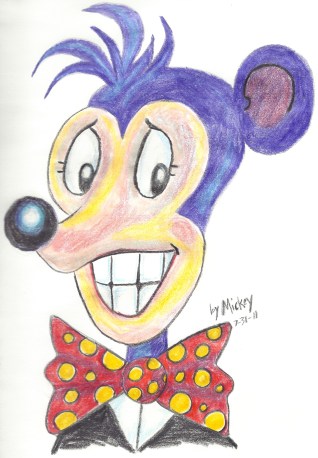
I like to think that I am different than other readers, that the quirky, insane way I practice reading makes me somehow unique and individual. But if you have read very much of my goofy little blog, you probably realize already that I am a deeply deluded idiot most of the time. So let me explain a little about how I go about reading.
- I am basically guilty of reading anything and everything I can get my hands on. And the stupid internet puts an infinite variety in your hands. Some of it is toxic and probably will kill me… or land me in jail. (Does the NSA really care about what Mickey is reading?)
- Here is an example of my internet reading this morning; Diane Ravitch’s Education Blog , An Article from British Naturism, Rachel Poli’s Article about Fantasy Writing, and Naked Carly Art’s post about creating a painting. My browser history portrays me at times as some kind of communist brainiac pornography-loving terrorist painter or something. I hope the NSA is using telepaths to investigate me, because the reasons I look at a lot of this stuff is important. It is a good thing I don’t write mystery novels so they would be upset down in the NSA break room about my searching out creative ways to kill people.
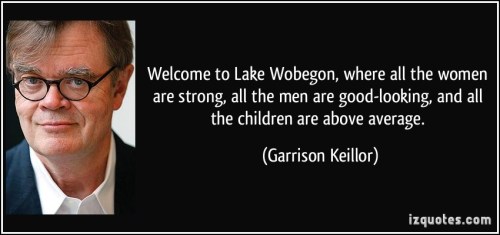
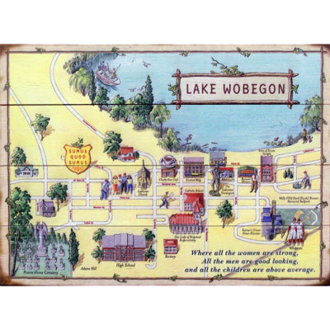
- Besides being Eclectic with a capital “E”, I am also obsessive. My daily reading project now is Garrison Keillor’s novel, Lake Wobegon Days.


I only spend about an hour a day reading this novel, but I am totally immersed in it. I am living inside that book, remembering the characters as real people and talking to them like old friends. I tried to read that book before and couldn’t make progress because I like so much to listen to Keillor tell stories on A Prairie Home Companion on the radio and it just wasn’t the same entirely in print. When he tells a story, he pauses a lot. In fact, that moment when he stops to let you reflect on what he just said is critical to the humor because you have to stop and savor the delicious irony of the scene. His pauses are funnier than the words. Man, if he just stood there and didn’t talk at all, you would probably die laughing from it. So, in order to get into the book, I had to read it with Garrison’s voice in my head, pausing frequently the way he does. Now the stories of Clarence Bunsen and Pastor Inqvist break me up all over again. I will soon acquire and read everything he has ever written. I truly love Garrison Keillor.
So there is a description of how strange a practicing reader I am. Think about how you read. Is the NSA watching you too? Do you ever read two books at the same time? Do you read everything and anything in front of you? If you are self-reflective at all, even if you are not pathological about it the way Mickey is, you may well decide that as strange as my reading habits are, they are probably normal compared to yours.
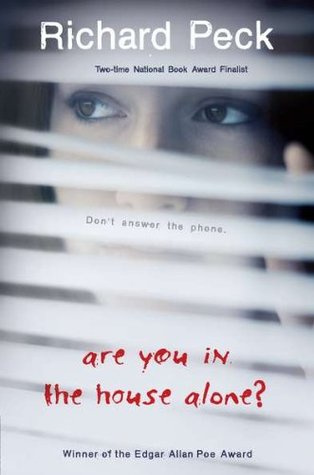


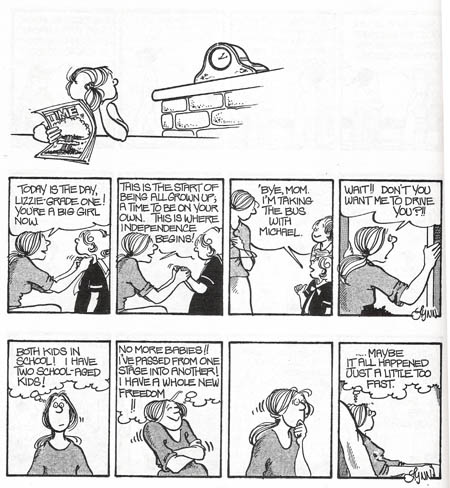 Lynn Johnston’s For Better or Worse is also an old friend. I used to read it in the newspaper practically every day. I watched those kids grow up and have adventures almost as if they were members of my own family. So the mashed potatoes part of the meal is easy to digest too.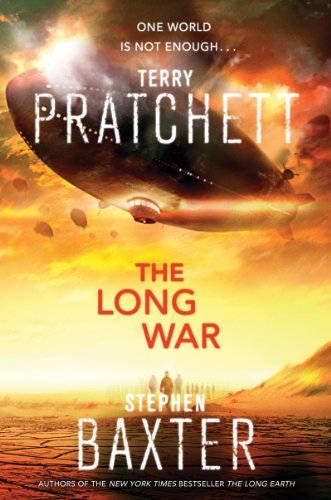







Reading Other Writers
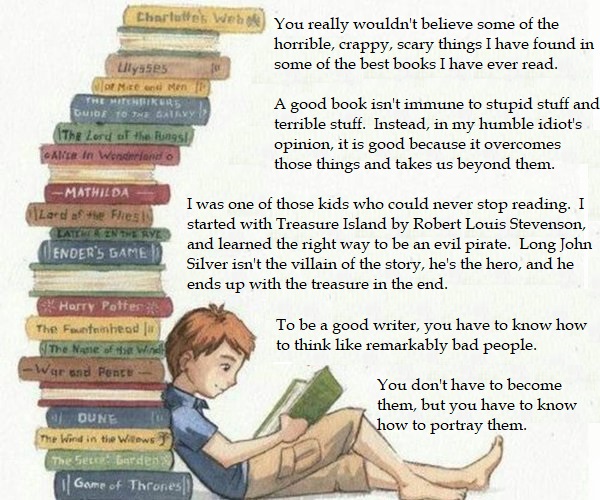
Nobody who wants to be a writer gets by with just writing and never reading anything by anybody else. It is too easy to devolve into some kind of human mushroom that way, thinking only thoughts a mushroom could think, all fungus-like and having no chlorophyll of their own. You never learn to decode other people and other people’s thinking if you don’t read other people’s thoughts crystallized in writing.
And not every other writer is Robert Frost. Or even Jack Frost who thinks he’s Gene Kelly. There has to be some interpretation, some digging for understanding. What did that writer mean when she said political correctness was like a tongue disease? And what does it mean when a commenting troll calls me a nekkid poofter? Is that how he spells “exceptional genius”? I think it is. Trolls are not smart.
I know people have to make an effort to understand me. When I write, I am writing under the delusion that I can produce literary quality off the top of my head. In fact, I can barely produce hair off the top of my head, and it is gray when I do it. See what I did there? It is the kind of joke a surrealist makes, pretending the idiomatic expression you use is to be taken literally when it doesn’t literally make sense. That kind of nonsense is what my readers have to put up with, and probably also the reason why most of them just look at the pictures. If you have to think too hard when you read, your brain could over-heat and your hair could catch fire. I like that kind of purple paisley prose that folds back in on itself and makes you think in curlicues. But most people don’t. Most people don’t have fire-proof hair like I do.
Sometimes, it doesn’t even take a word to make the point. For instance, why, in the picture, is Fluttershy trying to drink out of the toilet in the dollhouse bathroom? For that matter, why does a doll house even need a bathroom? Applejack doesn’t even fit in that yellow bathtub. I know. I tried to stuff her in there for this picture. And, as you read this, doesn’t this paragraph tell you a lot about me that you probably didn’t even want to know?
When I am reading the writing of others, I am looking for a cornucopia of things. I want to not only understand their ideas, I want to detect the limping footprints across the murder scene of their paragraphs and come to know the deeper things about them as well. I spent years decoding and trying to understand the writing of preliterate kids in my middle school English classes in order to be able to teach them to write better. And I learned that no writer is a bad writer as long as they are using readable words. I also learned that very few writers are James Joyce or Marcel Proust. Thank God for that! And given enough time I can read anything by anybody and learn something from it. I read a lot. And it may not always make me a better writer to read it, but it always has value. It is always worth doing.
1 Comment
Filed under commentary, education, goofy thoughts, humor, irony, photo paffoonies, photos, reading, strange and wonderful ideas about life, surrealism, teaching, wordplay, writing, writing teacher
Tagged as creative-writing, reading for writing, writing, writing advice, writing-community, writing-tips