
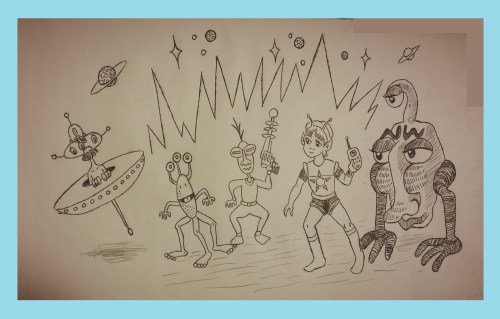
The Ixcanixian Cultural Ambassador from the Squeelix Sector of the Planet Ixcanix sent me an e-mail about his planet’s newest idea for a cultural exchange. He calls it the “Ixcanixian Spleegle Gorn Vorpaloop” which translates to the “Ixcanixian Interstellar Bad Poetry Challenge”. At least, it does if I am conjugating the verb “Vorpaloop” correctly. It is difficult because you have to drop the silent “y” before adding the “aloop” without causing it to explode. I know it is probably a very bad idea to present it here on this planet, but he talked me into it by promising to promote my novel Catch a Falling Star on his homeworld and at least two other planets in the Bugeye Federation.
Here are the rules for the alien poetry contest;
- Entries can only come from planets in the Orion Spur of the Sagittarius Spiral Arm of the Milky Way Galaxy. (So, for you non-astronomers out there, we on Earth do qualify.)
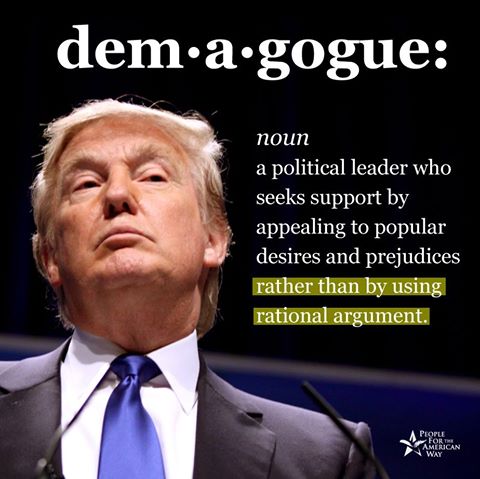
- All poets must be less intelligent than the Mud-Eaters of Paralaxos IV as they will be employed as judges of what poetry is truly bad. (Again, Earth qualifies as we have recently elected Trump and also allow Nigel Farage of Great Britain to continue to exist.)
- Entries must not be so long that the total weight of letters exceed critical mass and form black holes in the intergalactic servers when uploaded.
- Vogons need not apply. Their poetry is so bad, they would automatically win, causing the death of trillions of bad poetry readers in the galaxy.
- Entries must not cause thermonuclear reactions with cesium.
- Please refrain from confusing good poetry with bad poetry. The Vornloos of Talos XII are looking for poetry they can weaponize, and no one wants a poetry contest winner to suddenly create World Peace on Talos XII. That would be bad for the galaxy as a whole in ways that are very difficult to explain.
A sample of interstellar bad poetry is included here to inspire the kind of poetry we seek.
Ratzen Bargle’s Bisketoon (a love poem by Touperary Kloob, Poet Laureate of Antares VI)
Ratzen Bargle was a Doofus,
From the planet Rufus-Ploofiss,
And he had a lovely bride,
With a head not tall, but twice as wide.
She had three eyes and two were green.
She had the loveliest fleen you’ve ever seen.
And as they sat ‘neath a wayward moon,
He kissed his lovely bisketoon.
Immediately before naught was said,
She bit off his tiny three-eyed head.
And then she ate him bones and all
With sauce that really becomes the fall.
And so it is on Rufus-Ploofiss,
That males all die with one last roof-kiss.
Because they sit under wayward moons
With their lovely, hungry bisketoons.
Should you have the unfortunate urge to participate in this senseless and probably suicidal poetry contest, you are welcome to offer four-line poems in the comment section, or email longer poems to Mickey at mbeyer51@gmail.com. I will attempt to transmit the worst offers to the Ixcanixians as soon as I get my interstellar flooglebeeder transmitting again. I will also post winners in a future alien poetry blog.
I have been warned that prizes range from instant execution by the Lizard Lords of Galtorr Prime to a beat up copy of Mickey’s 2012 novel Catch a Falling Star. So, good luck with the bad poetry.


 .
.






 Catch a Falling Star
Holy Bagumba!
I have just finished reading a wonderful book. It is a young adult novel bordering on being a children’s book. It won the 2014 Newbery Medal for best work of children’s literature. But it is a book of so many dimensions that it totally defies categories. Librarians with butterfly nets who want to pin this book down on their library shelves will be pointlessly waving their nets at it like they believe it’s a butterfly, but it will soar away from them like an eagle.
Flora & Ulysses (the Illuminated Adventures) is a combination book of many different things. G. K. Cambell’s cartoony paffoonies add to and amplify the story to the point that sometimes it becomes a graphic novel.
Flora herself is a comic-book lover and follower of the adventures of a comic-book superhero named Incandesto. Ulysses the squirrel is run over by a rogue vacuum cleaner and the accident graces him with super powers (the ability to fly and throw cats and write poetry). And Flora rescues and befriends this newly minted superhero and sets him on a path that pits him against the only super-villain available, Flora’s own mother.
At certain points, through metaphor, elegance, and supreme focus, the story itself becomes poetry. But, of course, when the poem ends with a line about the squirrel being hungry, it becomes humorous poetry, simply by the juxtaposition of the sublime with the ridiculous.
As a writer, Kate DiCamillo is a master of everything I want to be. She is as much a masterful story-teller as Mark Twain, Ernest Hemingway, or William Faulkner. But many people will be put off by the fact that she is a children’s author. They will ignore her stories because how could a children’s author affect their lives in any way? But if you are a reader who can think and feel about things in a book, she will make you laugh and make you cry and make you not afraid to die… for love of a good book.
Let me also suggest a few of her other wonderful, wonderful books;
Leave a comment
Filed under book reports, book review, commentary, good books, humor, metaphor, poetry, reading
Tagged as book review, Flora & Ulysses, Kate DiCamillo