
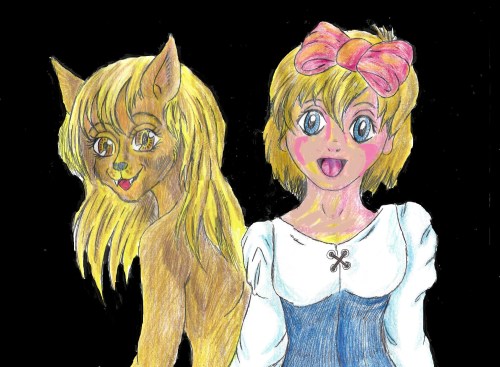
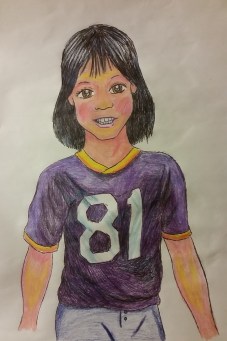
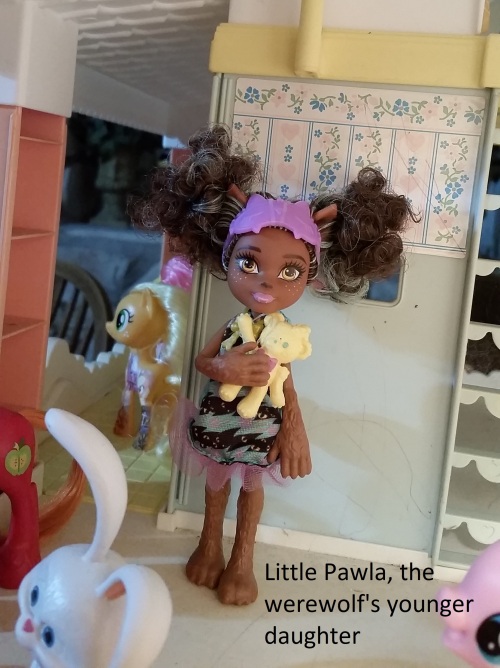
Rosemary Hood was a bright, blond seventh grader who entered my seventh-grade Gifted English class in September of 1998. She introduced herself to me before the first bell of her first day.
“I am definitely on your class list because my Mom says I belong in gifted classes.”
“Your name is Rosemary, right?”
“Definitely. Rosemary Bell Hood, related to the Civil War general John Bell Hood.”
“Um, I don’t see your name on my list.”
“Well, I’m supposed to be there, so check with the attendance secretary. And I will be making A’s all year because I’m a werewolf and I could eat you during the full moon if you make me mad at you.”
I laughed, thinking that she had a bizarre sense of humor. I let her enter my class and issued her copies of the books we were reading. Later I called the office to ask about her enrollment.
“Well, Mr. Beyer,” said the secretary nervously, “the principal is out right now with an animal bite that got infected. But I can assure you that we must change her schedule and put her in your gifted class. The principal would really like you to give her A’s too.”
So, I had a good chuckle about that. I never gave students A’s. Grades had to be earned. And one of the first rules of being a good teacher is, “Ignore what the principal says you should do in every situation.”
But I did give her A’s because she was a very bright and creative student (also very blond, but that has nothing to do with being a good student). She had a good work ethic and a marvelous sense of humor.
She developed a crush on Jose Tannenbaum who sat in the seat across from her in the next row. He was a football player, as well as an A student. And by October she was telling him daily, “You need to take to me to the Harvest Festival Dance because I am a werewolf, and if you don’t, I will eat you at the next full moon.”
All the members of the class got a good chuckle out of it. And it was assumed that he would. of course, take her to the dance because she was the prettiest blond girl in class and he obviously kinda liked her. But the week of the dance we did find out, to our surprise, that he asked Natasha Garcia to the dance instead.
I didn’t think anything more about it until, the day after the next full moon, Jose didn’t show up for class. I called the attendance secretary and asked about it.
“Jose is missing, Mr. Beyer,” the attendance secretary said. “The Sherrif’s office has search parties out looking for him.” That concerned me because he had a writing project due that day, and I thought he might’ve skipped school because he somehow failed to finish it. When I saw Rosemary in class, though, I asked her if, by any chance, she knew why Jose wasn’t in class.
“Of course I do,” she said simply. “I ate him last night.”
“Oh. Bones and all?”
“Bone marrow is the best-tasting part.”
So, that turned out to be one rough school year. Silver bullets are extremely expensive for a teacher’s salary. And I did lose a part of my left ear before the year ended. But it also taught me valuable lessons about being a teacher. Truthfully, you can’t be a good teacher if you can’t accept and teach anyone who comes through your door, no matter what kind of unique qualities they bring with them into your classroom.
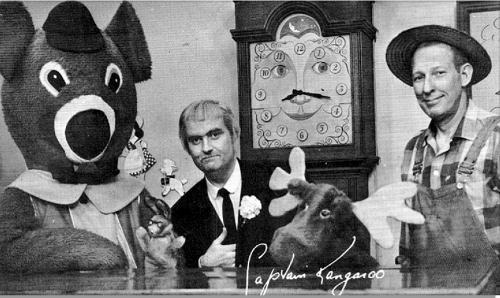
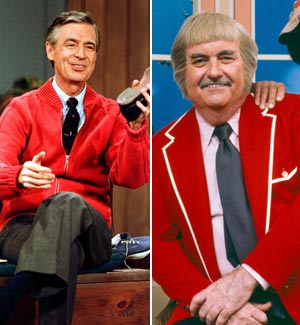 But Bob Keeshan, though a TV personality, was much more of a teacher than anything else. His show went on air before I was born, and I don’t remember a moment in my childhood that he wasn’t a part of it. He was like Mr. Rogers, but came into our lives even before Fred Rogers appeared on the scene. I watched the show in the mornings before school started, at a time when I walked all the way across our little Iowa farm town to get to school. He taught me important early lessons in life that were just as impactful as the math and language and social skills I was getting later in the day. Of course, I had to leave home for school before the show ended at 8:00 a,m. But just like school, watching and participating in any part of it was capable of teaching you something good.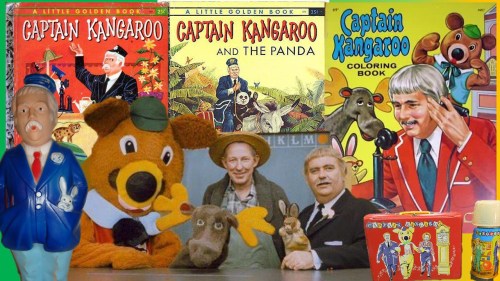







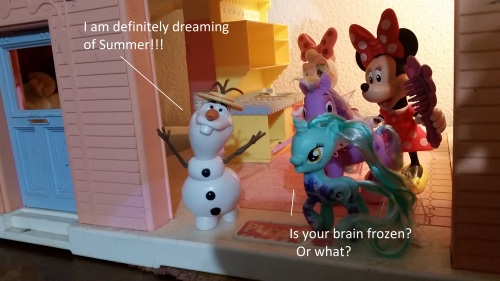 Of course, there is the opposite problem too. Some writers are not hard to understand at all. They only use simple sentences. They only use ideas that lots of other people have used before. You don’t have to think about what they write. You only need to react. They are the reasons that words like “trite”, “hackneyed”, “boring”, and “cliche” exist in English. But simple, boring writing isn’t written by stupid people. Hemingway is like that. Pared down to the basics. No frills. Yet able to yield complex thoughts, insights, and relationships.


Telling Teacher Stories
Here’s a secret that is only a secret if you are one of the well-over-six-billion people that don’t know I exist; I loved being a public school teacher. I taught for 31 years. 24 years of that was in middle school. I taught more than 1000 different seventh graders. And I loved it.
Please don’t reveal this secret to any mental health professionals. I like my freedom. And I am really not dangerous even after teaching that many seventh graders. I promise.
But it has left me with a compulsion. I confess it is the reason I write humorous young adult novels and why I continue to write this blog. I have to tell teacher stories or I will surely explode.
I have to tell you not only about the normal kids I taught, but the super-brainy mega-nerds I taught, the relatively stupid kids I taught, the honor students, the autistic kids, the kids who loved to sleep in class, the classroom clowns that tried to keep them awake, the kids who loved my class, the kids who hated my class, the times I was a really stupid teacher, the times I achieved some real milestones for some wonderful kids, the kids I still love to this day, the kids I tried really hard to love, but…. (well, some kids not even a mother could love), the drug dealers I had to protect my class from, the kids who talked to me about suicide and abuse and horrible things that still make me cry, the kids I lost along the way, and, well, the list goes on and on but this is an epic run-on sentence and the English teacher inside me is screaming at the moment.
You get the idea. Like most writers… real writers, not hacks and wannabees, I write because I have to. I don’t have a choice. No matter what it costs me. And what do I have to talk about in writing except being a school teacher and the almost infinite lessons that experience taught me?
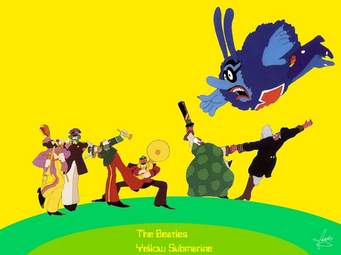
I loved being the rabbit holding the big pencil in the front of the classroom. And that metaphor means, as crazy as it sounds, I loved being a teacher.
1 Comment
Filed under autobiography, commentary, education, humor, kids, Paffooney, teaching