Category Archives: Dungeons and Dragons

Playing with Metal Miniatures

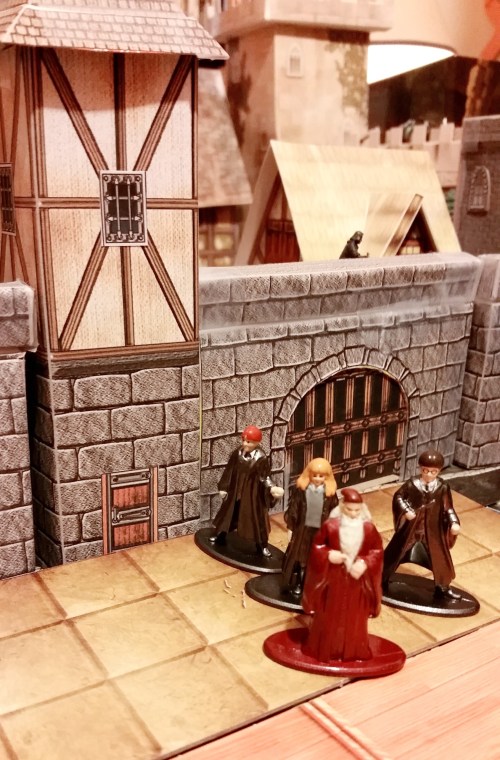
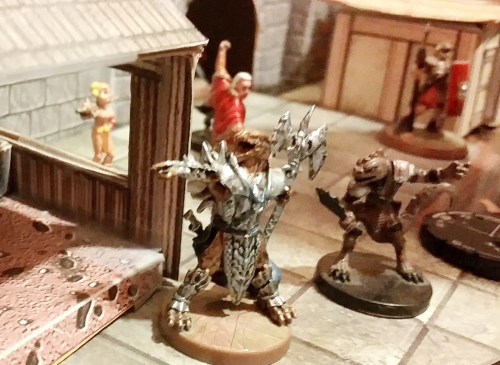
My family Dungeons and Dragons game has always been enhanced by my vast collection of miniature figures that I have collected and even painted over the course of almost forty years.  But I am always ready to collect more.  I even still have a large number of unpainted minis to finish.  But Walmart recently started selling collectible metal minis in box sets for $5 apiece.   So, that has brought Harry Potter to the Cardboard Castle.

C360_2017-09-09-08-58-41-799

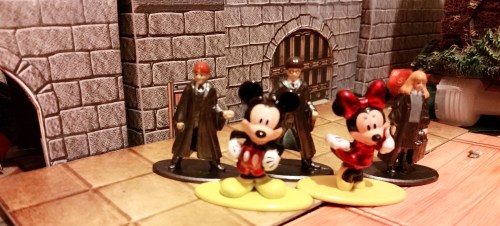
Here you see Dumbledore leading Harry, Hermoine, and Ron to the front castle gate.

These metal miniatures are a little larger than the usual scale, so Ron doesn’t quite fit through the tower door on his right.  And I don’t have character game statistics on these particular wizards, but that won’t take me long.

C360_2017-09-09-09-01-50-119

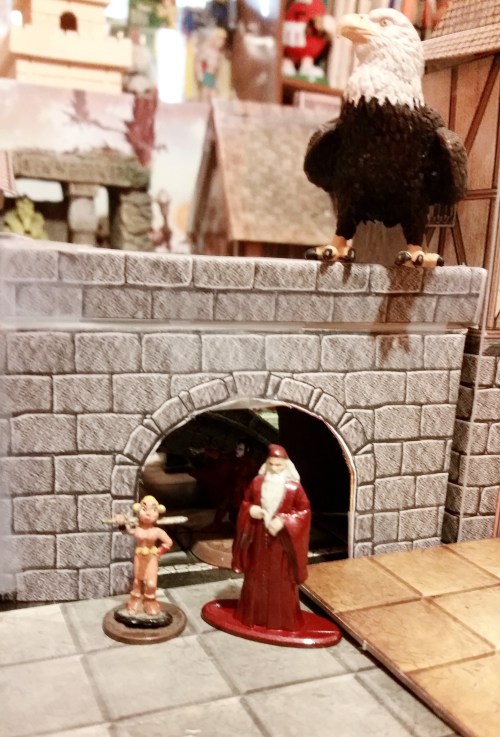
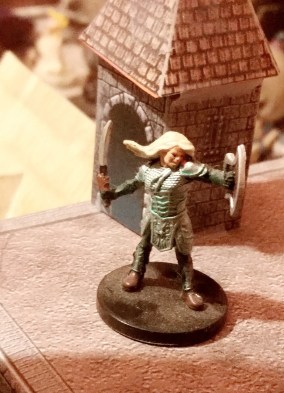
Dumbledore meets a swordgirl I painted over a quarter of a century ago.

C360_2017-09-09-08-59-42-476

Harry and friends meet a couple of happy wererats that arrived at the castle before them.

C360_2017-09-09-09-03-25-810

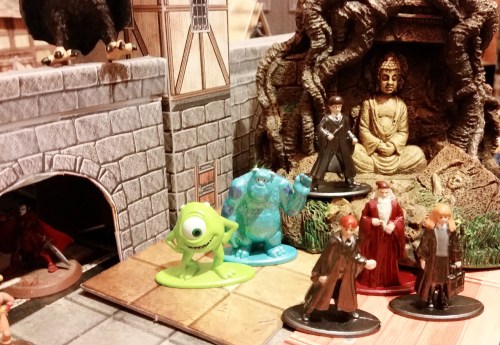
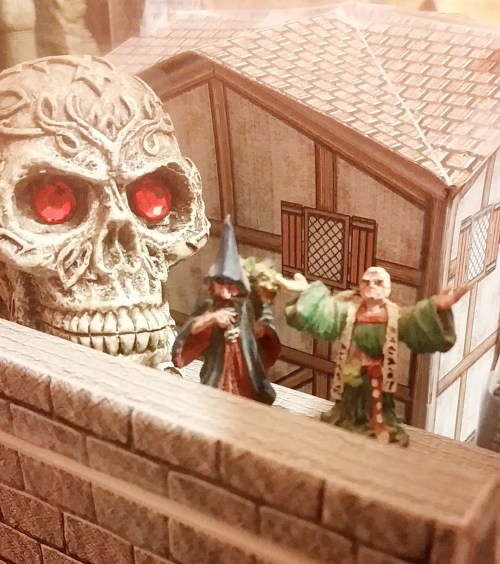
The gang gets to check out some of the unique scenery and meet some of the resident monsters.

C360_2017-09-09-08-56-21-326

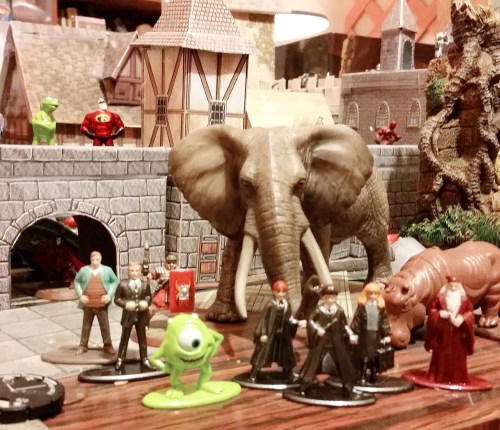
Big Jumbo the elephant has volunteered to guard the castle gate if everyone goes inside for a big feast.

C360_2017-09-09-09-04-15-205

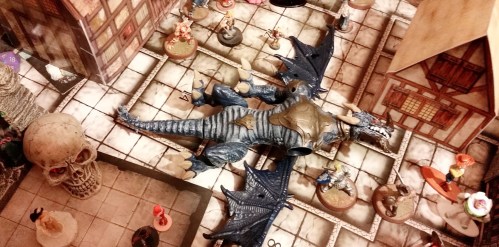
Ditty and the Gladiator kill a dragon to make dragon burgers for the feast.

So this week’s D & D post is about metal miniatures.  It shows you how bad this old man has gotten when it comes to playing with his toys.

Leave a comment

Filed under Dungeons and Dragons, goofiness, humor, photo paffoonies, playing with toys

Evil Wizards

C360_2017-09-01-19-18-14-600

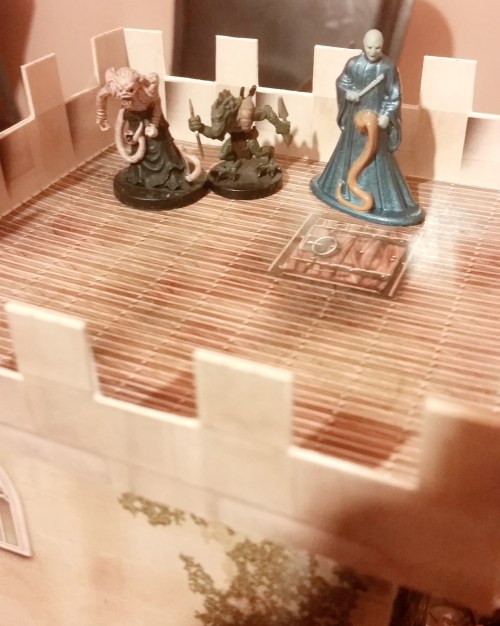
Evil Voldemort has now appeared atop the highest tower of Cardboard Castle.  Please ignore the snake who appears to be doing something really creepy and x-rated.

In the Dungeons and Dragons game, just like in good fantasy fiction, it is the villain of the episode who makes or breaks the story.  Good villains in D & D often means an evil wizard.  After all, what would the Harry Potter saga be without Voldemort… (sorry, I mean “He who must not be named.”

Like H.W.M.N.B.N., a good villain must have a truly evil goal in mind, something for the heroes to thwart or fail to thwart until the world is on the edge of ultimate doom.  Brother Garrow, the shape-changer masquerading as a vampire cleric of the Blood of Vol religion, wanted to find an ancient mechanical evil in an earth-rending robot, and bring it back to life.  He was fully thwarted and died a horrible death, but the robot would later be given life and unleashed anyway.  Malekith the Pyromancer wanted to subvert the entire college of magic at Cymril University and set them on a path to a new age of necromancers and undead evil.  Unfortunately, the heroes got side-tracked with looting the Peppermint Wizard’s Candy Store and Alchemy Shop, so he is still out there subverting successfully.

C360_2017-09-01-19-20-05-078

Morgoth the Mad and the High Lama of Krakatos

Some wizards, like Morgoth the Mad are based on published game characters, and some are entirely my own creation like the High Lama.  Both of these wizards are not only lead figurines that I painted myself, but they both lend an oxymoronic meaning to the idea of “Good Villains”.  Morgoth was certainly evil when he tried to sack the city of Gansdorf.  But his son, Kath, was adopted by the heroes and raised to be a hero himself (though one that bore endless suspicion because who ever heard of a hero with bat wings?)  The High Lama did only evil magic spells, but he also raised an orphanage full of adolescent were-rats.  Any mentor and teacher, no matter how evil, cannot be all bad in my book.

C360_2017-09-01-19-16-56-234

Lucan Stellos was not actually a wizard himself.  He was an agent of the Kingdom of Breland who should’ve been a great hero, but got turned into a vampire by the evil vampire queen of Sharn.

His sister, Grilsha Stellos, however, was a level 6 sorceress who used her magic to help her brother carry out the will of his evil mistress.  She loved her brother and fought for him courageously, but in the end she fell in combat with the player characters.  It was her death that shook Lucan free of the power of his mistress, and so he let himself be captured, expecting to be destroyed.

Instead, the heroes set him on a path to redemption as a good vampire, killing other vampires in the name of a forgiving god and vengeance for his lost sister.

C360_2017-09-01-19-21-40-594

And let me end this silly list of evil wizards with the Lizard Wizard.  Old Lizzie is dragon-born, half man, half dragon.  And he uses his evil dragon magic to loot and plunder for the pleasure of himself and his lizard-man minions like Kato who follows him here. In the picture, you can see old Eli Tragedy trying to drive the Lizard Wizard out of the Cardboard Castle with his magic wand of really painful cold sores.

And that is not the end of my list of evil wizards.  They are immensely fun to play with, so naturally I have a lot more.  But I will not inflict them upon you here and now. Too much evil in one essay is never a good idea.

Leave a comment

Filed under Dungeons and Dragons, heroes, humor, making cardboard castles, monsters, photo paffoonies, villains

D & D Action Pictures

C360_2017-08-23-21-30-52-143

I finished my fantasy battle scene started over a week ago.  In many ways it was just like a D & D battle fought on the table top with miniatures, a battlefield grid, and dice.  It had to happen in steps.

C360_2017-08-11-17-46-22-053

Remember this step?  The pen and ink step?  That isn’t even the first step.  But pencil drawings don’t photograph and reproduce as well as pen and ink.

C360_2017-08-19-09-03-15-446

And then the colored pencil work had to proceed a section at a time.

C360_2017-08-20-07-51-47-169

I basically went character by character, starting with the good guys.

C360_2017-08-23-21-30-52-143

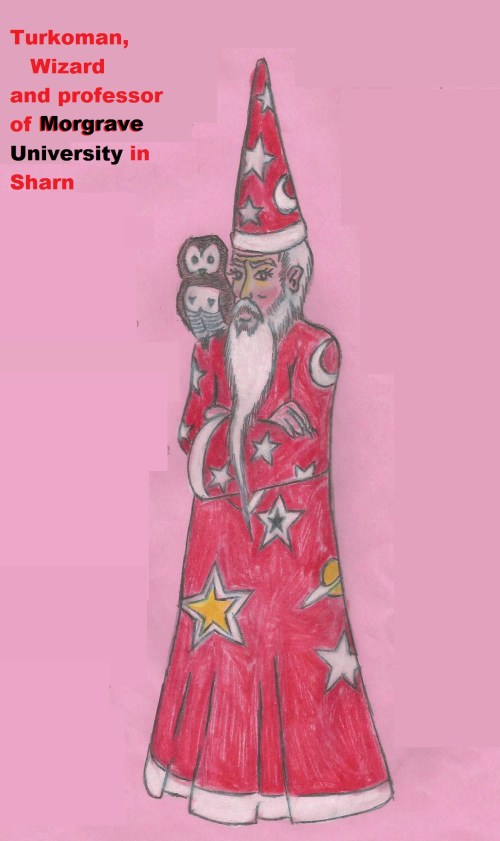
And that is the same way the combat occurs.  Shandra the Unicorn Maiden rolled an 18 for initiative on the twenty-sided dice.  So she attacked first.  She only got a 15 on the attack roll, however, so her wand of silver-fire only did five points of damage, depriving the kobold of one claw arm.  The shadow archer (not pictured because he was invisible at the time) had a 16 on initiative and an 18 on attack, so he wounded Sammy the Satyr with a two-point damage from his crossbow bolt to Sammy’s left arm, preventing the young satyr from attacking during the round.  Turkoman the Wizard was next, using his wand of fire-bolts to attack the skeleton-ghost, igniting its death shroud and making it drop its magic +2 long sword.  You can see both Greebo the Half-orc and the evil beast-thing have not yet taken their turns in the combat.  Seriously, a three-round combat seems to take forever in the D & D game.

So. there you have it.  My Dungeons and Dragons post for this week is simply an excuse to show off the newest silly drawing I did, brag a little bit, and play silly word-games even more.  I hope I didn’t stretch your patience to the breaking point yet again.

Leave a comment

Filed under artwork, Dungeons and Dragons, goofiness, humor, Paffooney

Dragon Paffoonies

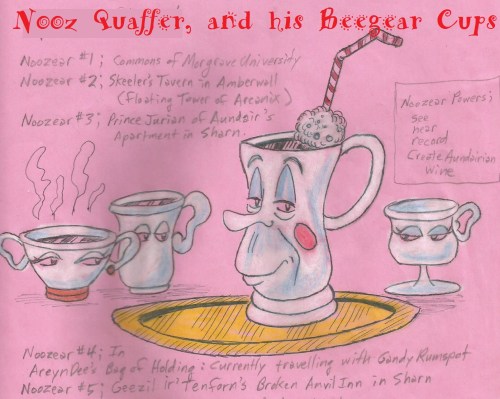
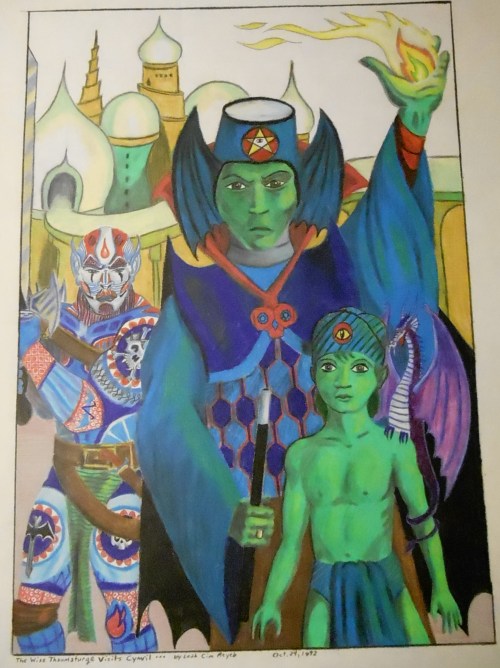
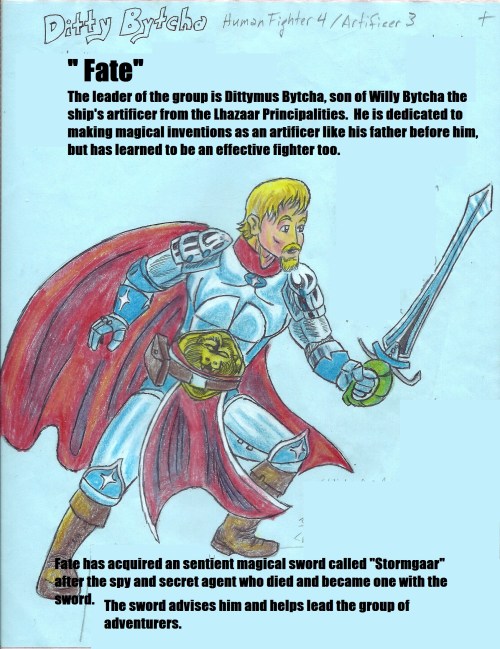
Part of the joy I find in the family Dungeons and Dragons game is in making Paffoonies, the story-based pictures that illustrate and elucidate the characters and other things that enter spontaneously into the game.
anvil 2

I don’t invent every part of the image and concept myself.  Some inspiration comes from the game books and published adventures, while others come directly from the players and the way their imaginations shape characters and events.

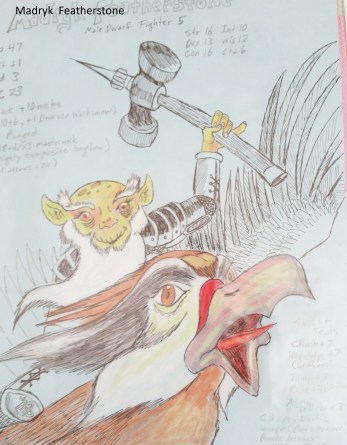
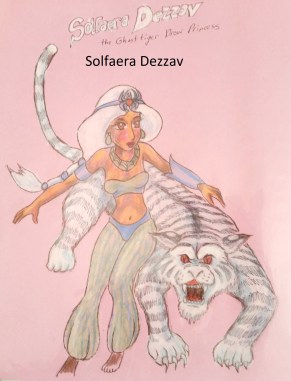
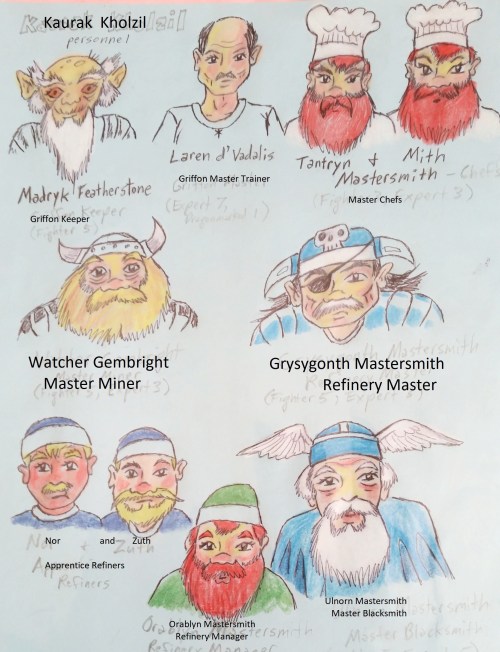
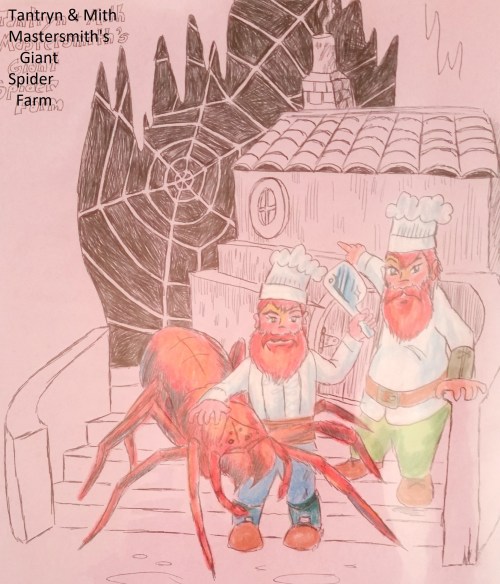
Many of the Dungeons and Dragons Paffoonies began life as character sheets.  That’s why there are numbers, strength numbers, intelligence numbers, character levels, dexterity, skill sets, and magic items listed all around the character image. They more or less morphed over time into illustrations done in colored pencil on colored paper.

I enjoy drawing wizards and apprentices, warriors in action, castles, and dragons.  I have used the game as an extended excuse to draw vast quantities of them.  And now I have a resource to mine for Paffoonies to lace my blog with.  They provide a sort of sugary spice that I love the taste of, and I will continue to share them until the end, even if they disagree with you and give you reading indigestion.

C360_2017-08-11-17-46-22-053

I am working on a new piece that is D & D Paffooney- related. I will keep you apprised of the the progress here until it is finished or until you get fed up with it.  Whichever comes first.

C360_2017-08-19-09-03-15-446

Paffoonies are my own thing… pictures and stories melted together… loony, cartoony, balloony, pink baboon buffoons brewed together in a big pot.  And I will continue to use them for acts of Dungeons and Dragons nonsense.

Leave a comment

Filed under artwork, Dungeons and Dragons, humor, Paffooney

Fantasy Combat

C360_2017-08-11-17-46-22-053

Dungeons and Dragons is a role-playing game.  That means it is about pretending to be a fantastic character and, with your group of players, collaborate on living in story that takes place on the table top, but mostly in the imagination.
But it is also a game about battling and winning or losing.  And the combat system is based on a role of the dice.

C360_2017-08-12-08-45-53-618

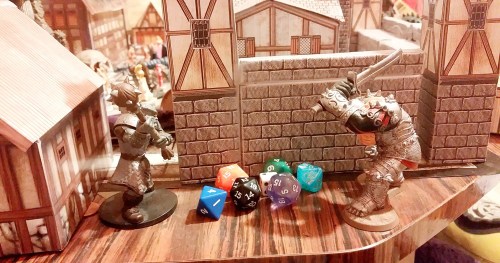
Cyrus the Cyclops faces off against a fire giant on the table’s edge.

Of course the dice thing is nerdishly complex.  There is a standard six-sided dice, but also an 8-sided, a 4-sided, a 10-sided, a 12-sided, and most importantly, the 20-sided dice.  The outcome of an attack depends on how high or how low is the number you roll on the 20-sided dice.  Rolling a 1 is a total disaster, making your attack wound an ally, or making your fireball burn you naked, weaponless, and hairless in the middle of the angry orc horde.  Rolling a natural 20 will automatically slay the fire-breathing red dragon.  Of course the numbers in between make all the difference.  If success is rolling a 15, but you only roll an 8, you will fail unless you have enough pluses in skills, weapon mastery, and magically enhanced weapons to make at least a plus 7.  That’s crystal clear and easy to understand, right?

Adventure1

In order to protect yourself from enemies who have big nasty weapons, there are armor bonuses that subtract from the enemy’s attack roll.  Ditty’s magical plate armor adds a minus 7 to whatever the zombie leader’s attack roll lands on.  And if the zombie leader’s ogre friend throws a magical bomb at Ditty, Ditty can make a saving throw to avoid the fiery death he would otherwise be entitled to.

Scan61

So, over time, the character has to build up the pluses and minuses that protect him and make him a more potent part of combat experiences.  It makes the players carefully build up and enhance their numbers.  And kids learn a lot about numbers and math by playing D & D.

Here, then, is the reason for all this wonkish nerdism.  It is the way the game works and the necessary process of making the game seem like any outcome is possible, even though the object is to complete the story and succeed in having an adventure.

Leave a comment

Filed under Dungeons and Dragons, humor, imagination, Paffooney

D & D Sidekicks

Why did Batman have Robin the Boy Wonder?  Not only that, but why Bucky and Captain America?  Green Arrow and Speedy?  Aquaman and Aqualad?  Superman and Krypto the Super Dog?  Fredric Wertham, the Seduction of the Innocents and the Comics Code guy, would have you believe that they were there to make young boys turn gay and violent.  But that was nonsense, wasn’t it?  Better change Krypto for photographer Jimmy Olsen just in case.

But if that was merely nonsense, why was it such a part of the formula?

20160424_180344

As a D & D dungeon master, I have my own theory about sidekicks and their function in story-telling.

Young sidekicks were an important part of the stories I told as a game master because the players in my games were mostly adolescent boys themselves.  It was the same as the primary readers of Batman comics in the 1950’s of Wertham’s Comics Code.  The young hero or adventurer character, most often in the form of a non-player character, was someone they could relate to because of age.  They had more in common with the sidekick than the lead hero.  It helped to draw them into the story and make it relevant.

merlini

As a story-telling device, you often find the young apprentice character in novels written for younger audiences.  Think of David Eddings’ Belgariad, or Lloyd Alexander’s  Chronicles of Prydain, or Treasure Island by Robert Louis Stevenson.  The characters of Garion the youngster in the Belgariad,  Taran the young protagonist of Prydain, and certainly Jim Hawkins of Treasure Island.  

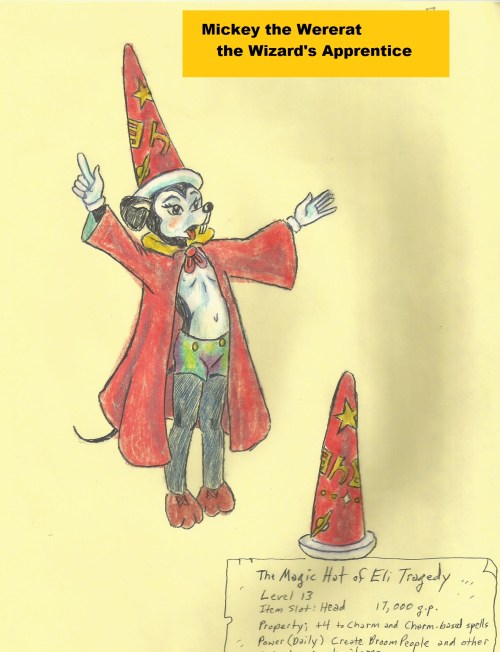
So, with that realization, I incorporated youthful characters, both boys and girls, as apprentices and student-adventurers.

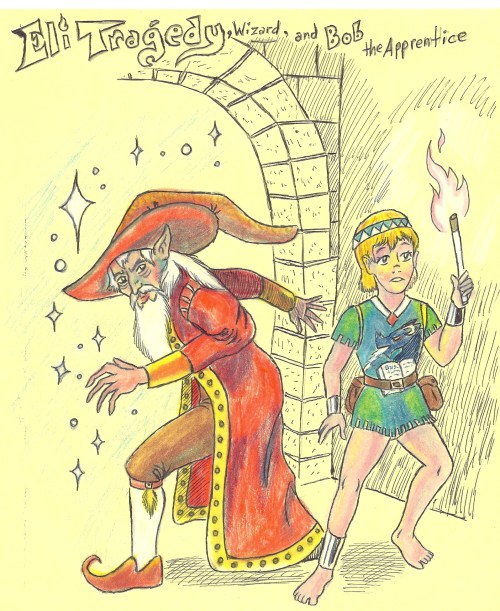
Eli Tragedy

Initially it proved to be a hard thing.   Wizards and sorcerers, according to D & D rules, can take an apprentice once they reach level three.  But first level characters as apprentices are vulnerable because damage done by third level monsters wipes out the meager hit point reserves of a beginner character.  After several traumatic deaths of beloved sidekicks, the player characters begin to take steps to protect them better in combat, or quickly learn where to find priests with resurrection spells who work really cheap.

Scannabcdegf

Of course, these characters are useful for more than just creating combat complications.  They are really useful for comic relief.  The missteps, mistakes, and total botch-jobs that these inexperienced younger characters create can make us laugh, make us sweat a little to correct it, and move the plot forward in interesting ways that I, as the game master, wouldn’t have otherwise planned.

Thaumaturge

So, hopefully, Mr. Wertham’s ghost isn’t hovering over my D & D game thinking it is all a plot to create a generation of violent, gay youths.  Hopefully he can see that it is all a part of a well-established story-telling literary device that actually helps to educate and deepen the understanding of youths.  But it is swiftly becoming irrelevant what Wertham’s ghost thinks anyway.  I haven’t played D & D for a while now.  My sons and daughter now have their own groups of friends, playing under different dungeon masters with different dice.  But hopefully, the need for youthful sidekicks will remain.

Leave a comment

Filed under Dungeons and Dragons, heroes, humor, Paffooney, strange and wonderful ideas about life

Dragons

16750_102844496407849_100000468961606_71389_2659019_n

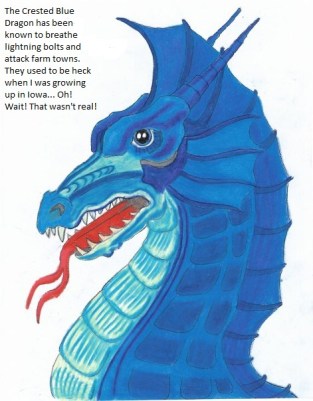
Dragons in the Dungeons and Dragons role-playing games are the central monsters of the story.  In our Eberron campaign they not only rule an entire mysterious continent, but they are credited with the very creation of the world and everything.  Not only monsters, but also gods, is a pretty big order for a   character to fill.

Skye, the Blue Dragon to the left above is a dragon who believes that human people are the most important part of fulfilling the Dragon Prophecy.  Therefore the characters can rely on him as an ally, and sometimes even a patron.  He is a blue chromatic dragon with lightning breath, and the Blue Dragon Aureon, his great great grandfather,  is an important leader of the god-dragons worshiped as the Sovereign Host.

20160424_181130

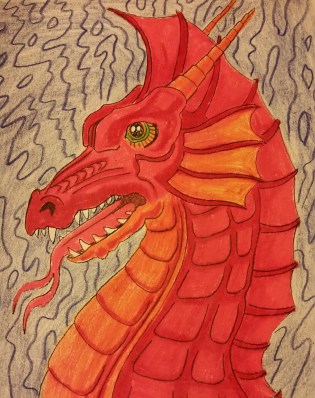
Phaeros, the great crested red dragon, is a servant of chaos who actively opposes all that is good.  He works with orcish dictators and priests of the Dark Six to accomplish vast swaths of damage, destruction, and war.

He is a big bad villain that has to come at the end of a campaign, because dragons are not only powerful fire-breathers with monstrous monster-damage capability, they also know far more magic than even the wisest of wizards.  My players have not crossed him yet, but if they start finding the missing dragon eggs, that will happen soon.

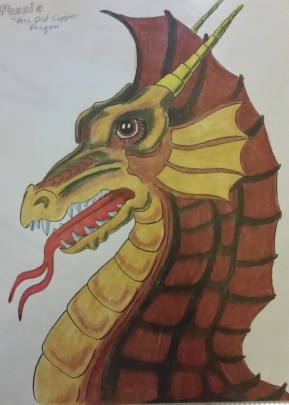
You may notice that my dragon pictures are mostly coloring-book pictures repeated with different colors, but in many ways dragons are like that.  They all have the cookie-cutter qualities of a dragon, but with different-colored personalities and powers and ideas of good and evil.

Penny Dragon

Pennie is a copper dragon with divided loyalties and the soul of a clown.  She never takes the adventure at hand too seriously.  But if she decides to help the player characters find the missing dragon eggs, no ally will prove stronger and more helpful than her.  And she knows things that the players need to learn from her to find the missing eggs.

So dragons come in many forms and personalities.

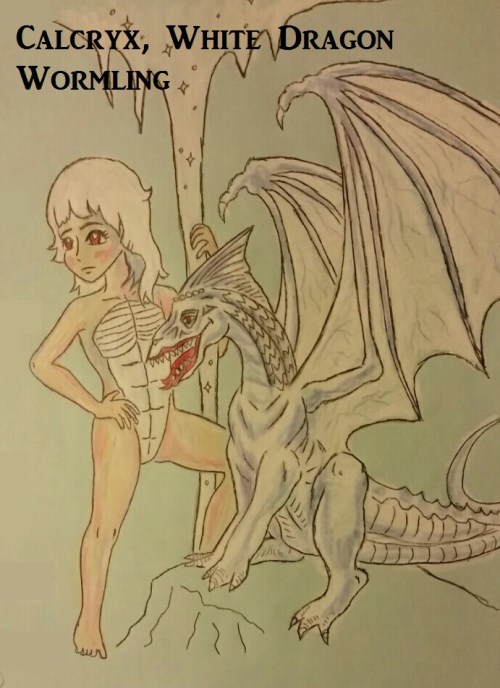
In fact, the search for the missing dragon eggs will be critically affected by the fact that the eggs have all five hatched and dragons instinctively protect themselves when young by using their polymorph self magic to become some other creature.  And someone has implanted the idea of using human form as the default even though the wormlings have never actually seen a human being in real life.

C360_2017-07-29-10-13-38-827

This is a double portrait of Calcryx, both as a white dragon wormling and a young girl.

So, playing games with dragons is fun and archetypal story-telling, and I will continue to do it, even if it means getting burned now and again.

Leave a comment

Filed under Dungeons and Dragons, humor, Paffooney

Recurring Villains, Part Two

20160530_144803

Calderus, Vampire Queen of UnderSharn

In Dungeons and Dragons, the role-playing game, there is always a special villain that has to stay alive to the very end of the campaign.  His or her demise may be the ultimate goal of the entire game and, when achieved, may actually bring an end to that adventuring group as they all retire with super-high-level characters and powers to wipe out cities with a snap of the fingers.  This is the ultimate villain, the big bad, the controller who has operated behind the scenes until the very last dungeon door, the very last encounter.

Deep in the bowels of the City of Towers, Sharn, is the lair of Calderus.  She controls the doings of the undead in the entire city, in fact, in the entire southern half of the continent of Khorvaire.  The players have never yet defeated her directly. She is the one who turned the Dark Lantern agent, Lucan Stellos, into a vampire, forcing the adventurers to track him down, capture him, and return him to his Dark Lantern masters.  She is also the one who leaked false information to the Royal Eyes of Aundair, the rival spy agency of the Dark Lanterns, to make Turkoman the wizard believe the player characters are evil double agents, causing him to begin tracking their every movement and learning their every plan.  Of course, my players don’t know about that yet, so please don’t tell them.

Scan61

Big bad villains are very useful to the story-teller known as the Dungeon Master.  They allow the DM to start events moving that make no logical sense until the players begin to figure out that there is someone manipulating events behind the scenes and they must find that BBV out and track them to their castle or lair.

But adventures are not satisfying when the players attempt to cut straight to final scene and murder the big bad to bring about victory.  That kind of meta-gaming strategy has to have severe consequences.  Often that means that the villain must be at such an astronomically high level of ability that the player characters will all be turned into hop-toads after the first round of combat.  Interesting adventure, that.  The group of enchanted hop-toads have to avoid becoming part of the sauce in Calderus’ hop-toad soup, avoid the all the animated cutlery in the vampire’s kitchen, and escape to find Turkoman and get turned back into humans, halflings, minotaurs, and elves so that they can fight again another day and learn from their mistake.

anvil 2

Of course, it doesn’t hurt a bit that the wizard was watching by magical means when the players stumbled upon the big bad villain.  He helped in their rescue because he realized that somebody had told him something untrue about the adventurers, and they really were useful to him and his spy schemes after all.

So, the big bad villain is an important kind of recurring villain to be met and pursued and met again, always driving the game forward to bigger and bigger doings and greater and greater rewards.

Leave a comment

Filed under characters, Dungeons and Dragons, heroes, humor, Paffooney, writing

Recurring Villains

Magic Carpet Ride 5

Now, this is a Saturday D & D post, but for the record, recurring villains are a lot more than just a part of a story-telling game.  Toxic people who have it in for you occur in real life almost as often  as they do in fantasy story-telling with villains who are often orcs.
But unlike insurance adjusters, city pool inspectors, and bank representatives, the villains in a D & D game are severely challenged to survive a single adventure.  Yes, the player characters are constantly on the lookout to slay the dungeon master’s recurring villains so they can’t recur without being raised from the dead.  No matter how much you hate that unfair insurance guy, you are not allowed to slay him with a sword.

Mallora

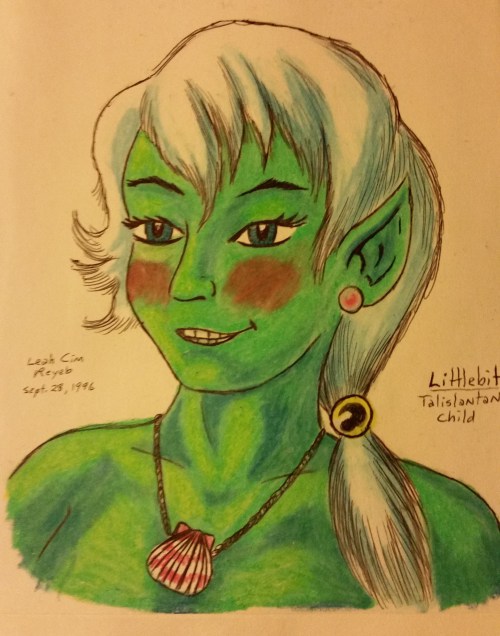
Mallora is not a sexy female villain… more like vile.

Mallora was a lucky witch woman.  She was one of three agents of Karnak, the Vampire Kingdom, who were trying to thwart the player characters as they sought lost technology in the wastelands of Cyre.  She was a second level sorceress at the time, capable of only a couple of basic-level necromantic spells.  She was a part of the evil organization known as the Emerald Claw, a sort of religious cult built around worshiping the undead, and had an evil dwarf fighter and an evil archer to help her trap and kill the heroes, along with about six animated skeletons who, at second level, are one-chop minions that go down in the first round of battle usually.

The green haired witch successfully trapped the heroes in the mists of Cyre and the dwarf and the archer were taking their toll when Gandy rolled a twenty and not only nailed the archer in the eye with a crossbow bolt, but made the archer’s shot go awry and hit the dwarf in the back of his bald head, shortly after Fate had knocked his helmet off.  So Mallora cast another concealing fog spell and ran like a little green rat directly away.  She survived to haunt them another day.

LucanThis she did as a member of Brother Garrow’s Emerald Claw crew in the next adventure where the heroes had to track down a friendly agent of Breland who had been turned into a vampire.  She was eighth level at that point, just like the adventurers themselves, and a much more dangerous adversary.  She didn’t prevent the characters from capturing the rogue vampire, and she did some damage, but managed to slink off unharmed once again.


She would enter the player characters’ lives one more time in the jungles of Xendrick as the mini-campaign was reaching its climax.  She and Brother Garrow pursued the heroes through the jungle to the giant ruins where the monster construct Xulo would finally be brought to powerful and evil life in a necromantic ritual.  Brother Garrow definitely met his end in a spectacular fashion, being sucked into another dimension through a keyhole trap set by giant mages a millennia before.  It was gruesome.
garrow

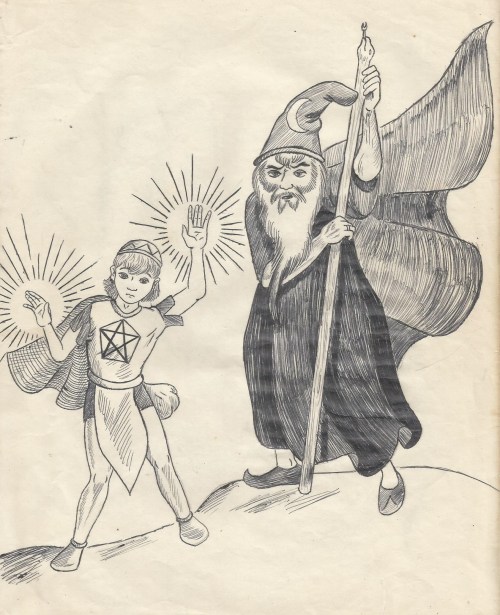
Garrow before his transformation into a toothpaste-like substance

Mallora was aboard the Emerald Claw’s flying skiff as it chased the airship the heroes were themselves aboard.  A well-placed fireball by Druealia the Wizardess took the skiff down to crash into the jungle below with a fiery explosion that should’ve killed all aboard, including Mallora.  But is she actually dead this time?  They didn’t see her die.  So only the dungeon master knows for sure.   After all, what good is a recurring villain if they don’t recur?
 

Leave a comment

Filed under Dungeons and Dragons, heroes, humor, Paffooney, witches, wizards

Another Little Inn

Last week in the family D & D adventure I told you about the closest thing our campaign has to a home base.  That was the Broken Anvil Inn in Sharn.

But there are other places like that which also serve as the starting point for quests.

Let me tell you about the Purple Mermaid.

20160530_143831

On a lonely waterfront in Aundair there exists a sad little ale house and inn that is losing business.  Everyone is apparently apprehensive about going to a place where so many sailors who were regular customers have simply disappeared.

20160530_143845

The proprietor is a festive and portly dwarf named Osric who is desperate for your business.  It has gotten to the point of offering free beer to anyone willing to rent a room.  Veteran sailors and adventurers, it seems, have paid for a room, went to bed that evening… or early morning, and were never seen or heard from again.

A storyteller sits in the bar, telling tales of a long ago voyage of discovery in which the crew of an ill-fated ship, the Lavender Leaf, happened on an undersea discovery shown to them by desperate mer-people and sea elves.  It seems a great evil had taken over an undersea temple that housed a very powerful sacred relic.  Great treasures were promised for aid in liberating the temple from an unnamed evil.

20160530_144838

So, it is an interesting inn, with a promise of adventure.  But there are obvious consequences to choosing to stay there.  In the corner of the tavern room sits a sea wizard with an ominous look about him.  Why is he waiting there?  Are there connections between his presence and the disappearances?  Do you really want to find out?

Zoric

As always the quest must wait for the next turn at the D & D table.

Leave a comment

Filed under Dungeons and Dragons, family, heroes, humor, Paffooney