Rowan, Iowa… Not the place I was born, but the place where I got to be a stupid kid, and have the lessons of the good and god-fearing life hammered into my head hard enough to make a dent and make it stay with me for more than half a century. I got to go to grade school there. I learned to read there, especially in Miss Mennenga’s third and fourth grade class. Especially in that old copy of Treasure Island with the N.C, Wyeth illustrations in it, the one Grandma Aldrich kept in the upstairs closet in their farm house. I got to see my first naked girl there. I learned a lot of things about sex from my friends there, and none of them were true. I played 4-H softball there, and made a game-saving catch in center field… in the same game where my cousin Bob hit the game-winning home run. But those were things kids did everywhere. It didn’t make me special. There was no real magic in it.
Being a farm-kid’s kid taught me the importance of doing your chores, every day and on time. If you didn’t do them, animals could get sick, animals could die, crops could be spoiled, the chickens could get angry and petulant and peck your hands when you tried to get the eggs. Cows could get grumpy and kick the milk bucket. Cats could vow revenge if you didn’t direct a spray or two at their little faces as they lined up to watch you milk the cows. And you never knew for sure what a vengeful cat might do to you later, as cats were evil. They might jump on the keyboard during your piano recital. They might knock the turkey stuffing bowl off the top of the dryer when Mom and Grandma and several aunts were cooking Thanksgiving Dinner. And I know old black Midnight did that on purpose because he got to snatch some off the floor before it could be reached by angry aunts with brooms and dustpans. And all of it was your fault if it all led back to not doing your chores, and not doing them exactly right.
But, even though we learned responsibility and work ethic from our chores, that was not the real home-town magic either. I wasn’t technically a real farm kid. Sure, I picked up the eggs in the chicken house at Grandpa and Grandma Aldrich’s farm more than once. And I did, in fact, help with milking machines and even milking cows by hand and squirting cats in the faces at Uncle Donny’s farm. I walked beans, going up and down the rows to pull and chop weeds out of the bean fields at Uncle Larry’s farm. I drove a tractor at Great Uncle Alvin’s farm. But I didn’t have to do any of those things every single day. My mother and my father both grew up on farms. But we lived in town. So, my work ethic was probably worth only a quarter of what the work ethic of any of my friends in school was truly worth. I was a bum kid by comparison. Gary G. and Kevin K, both real farm kids and older than me, explained this to me one day behind the gymnasium with specific examples and fists.
Being a farm kid helped to forge my character. But that was really all about working hard, and nothing really to do with magic.
I truly believe the real magic to be found in Rowan, Iowa, my home town, was the fact that it was boring. It was a sleepy little town, that never had any real event… well, except maybe for a couple of monster blizzards in the 60’s and 70’s, and the Bicentennial parade and tractor pull on Main Street in 1976, and a couple of costume contests in the 1960’s held in the Fire Station where I had really worked hard on the costumes, a scarecrow one year, and an ogre the next, where I almost won a prize. But nothing that changed history or made Rowan the center of everything.
And therein lies the magic. I had to look at everything closely to find the things and strategies that would take me to the great things and places where I wanted to end up. I learned to wish upon a star from Disney movies. I learned about beauty of body and soul from the girls that I grew up with, most of them related. And I invented fantastical stories with the vivid imagination I discovered lurking in my own stupid head. I embarrassed Alicia Stewart by telling everyone that I could prove she was a Martian princess, kidnapped and brought to Earth by space pirates that only I knew how to defeat. And I learned to say funny things and make people laugh… but in ways that didn’t get me sent to the principal’s office in school. Yes, it was the magic of my own imagination. And boring Iowa farm towns made more people with magic in them than just me. John Wayne was one. Johnny Carson was one also. And have you heard of Elijah Wood? Or the painter Grant Wood? Or the actress Cloris Leachman?
Yep. We were such stuff as dreams were made on in small towns in Iowa. And that is real magic.
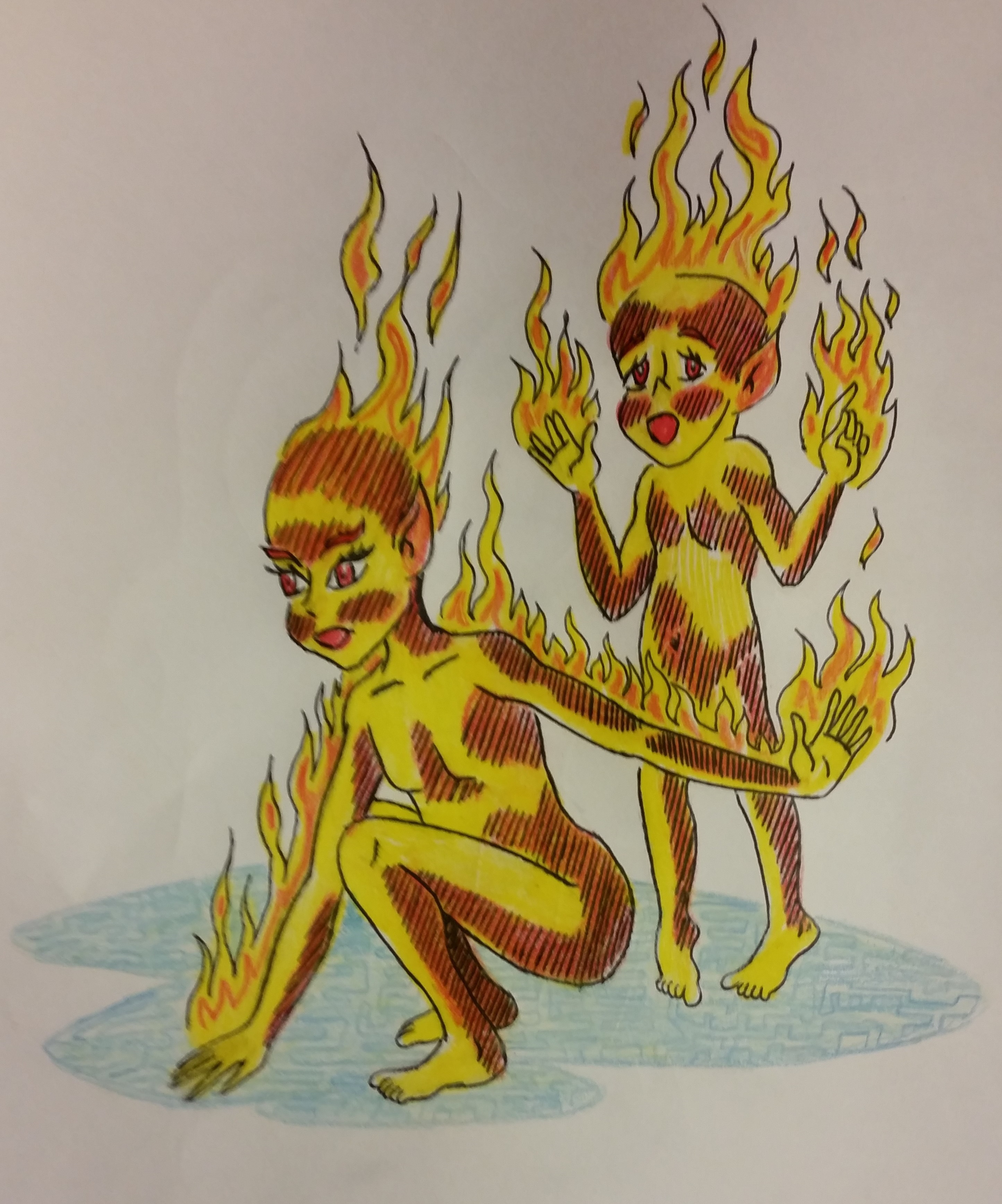
The old saying goes, “If you play with fire, sooner or later you will get burned.”
But I am not playing. I am writing. With fire.
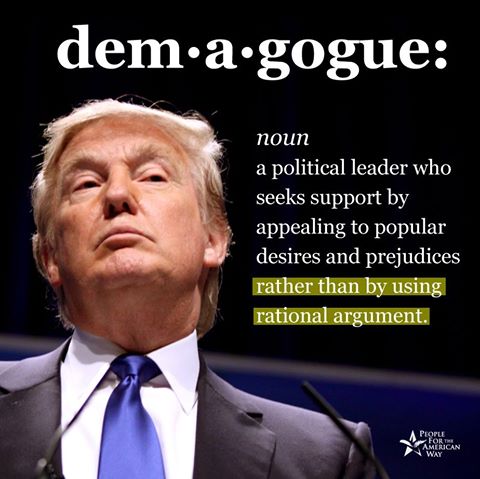
The criminal we elected president knows what I am talking about. He speaks at rallies with fire. Currently he is trying to demonize Representative Ilhan Omar and the Squad, the four freshman Congresswomen of color whom he said were unpatriotic, enemies of our democracy, and should go home to their countries filled with crime, poverty, and communism. Of course, the Congresswomen are all American Citizens. Three of them were born here. This is actually the country they are from. So, this is an example of the kind of verbal fire that needs to be put out with cold water. Preferably before some enraged Trumpist actually assassinates a member of the Squad. The fire he spews is destructive and evil.
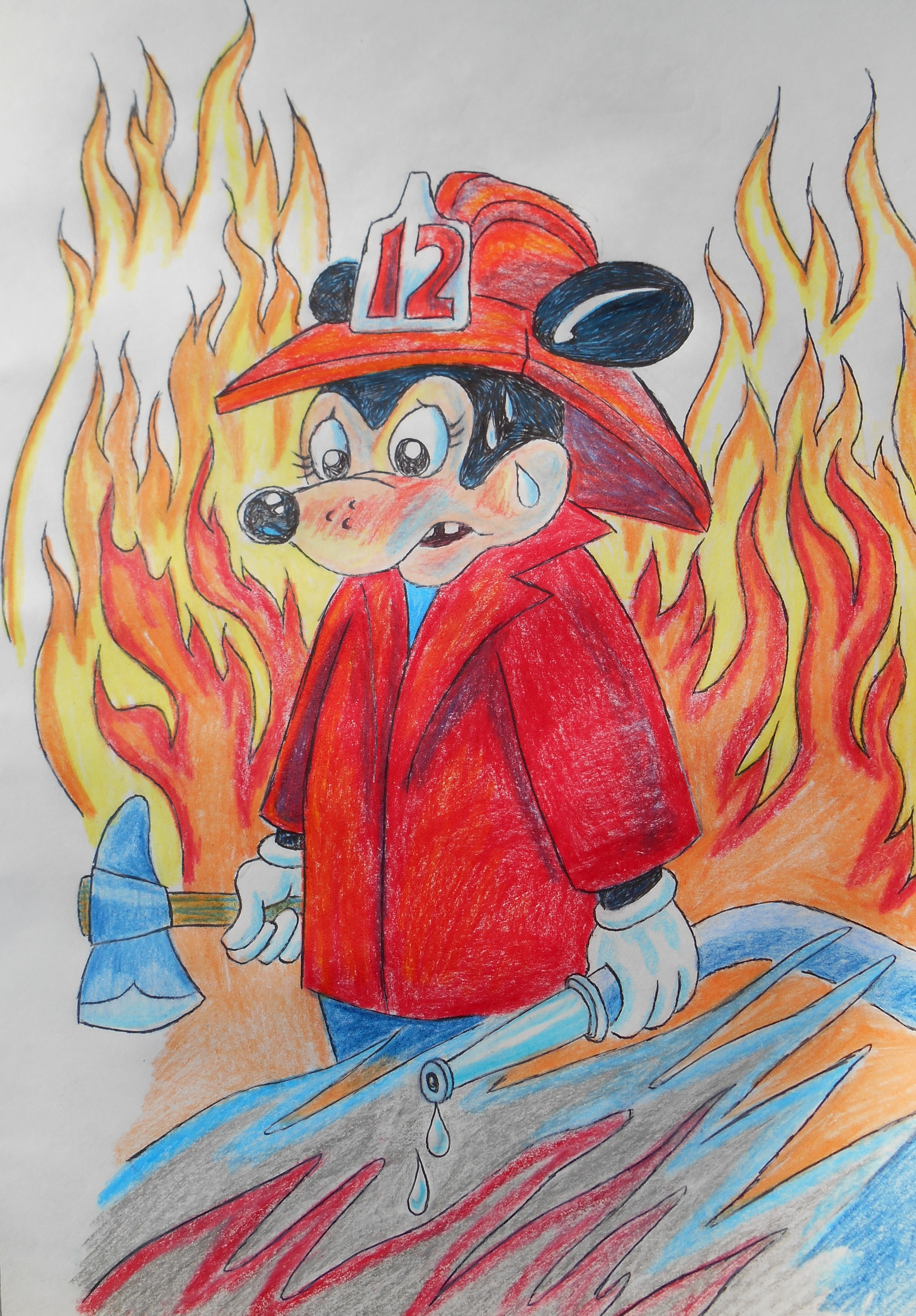
But, truly, the way to fight fire is with fire. Firemen use a fire-break to interrupt the path of the fire. You can bulldoze or chop the wood in the way of the fire. Or you can burn it in the opposite direction. Many forest fires are ended in this way.
And I have been writing my fiction with fire. Controversial issues taken head on and given a clarity that burns brightly enough to leave burn marks on the psyche and write messages in ash on the heart of the reader. This is why beloved characters die in fictional stories and bad things happen to good people… to make a lasting scar or burn on the idea-collections in the readers’ brains.
I have in the past few novels written about sexual assault, attempted rape, murder, greed, brutality, excessive anger, and the current work-in-progress tackles suicide. And I battle these raging fires with positive fires set from empathy, community and familial love, preserverance, determination, and simple faith. I am trying to fight fire with a better fire, destructive fire replaced by zeal.
Okay. So, I’m an idiot, expressing foolish ideas with loopy metaphors. But I can make you think. And thinking is electrical fire in the brain. And I have been steadily pouring gas on that word-fire.
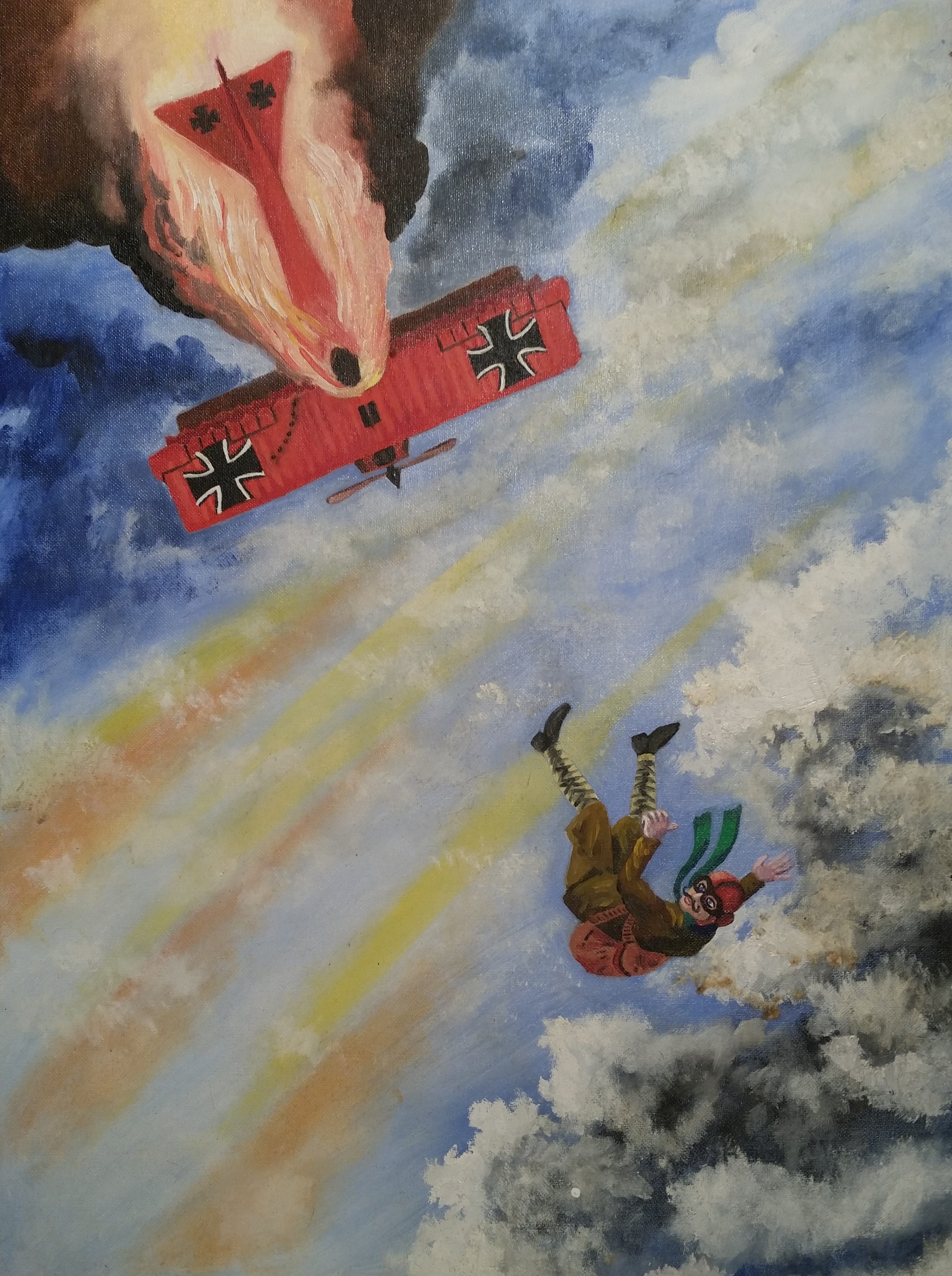
Sometimes you have to fly in big circles waiting for terrible things to pass. If you don’t wait… if you rush in unprepared… then you go down in flames.
The problem is that the pirates from Bank of America finally came through with their offer to settle my debt. (This is a repost from 2017) Sixty percent of $T13,000 in four payments over the next four months. I have an appointment tomorrow to talk with my lawyer about bankruptcy. It is expensive in this country to become poor. And if you are poor, you have no other option. At least, if I can manage three more bankruptcies by the time I’m 70, I will be qualified to run for president.
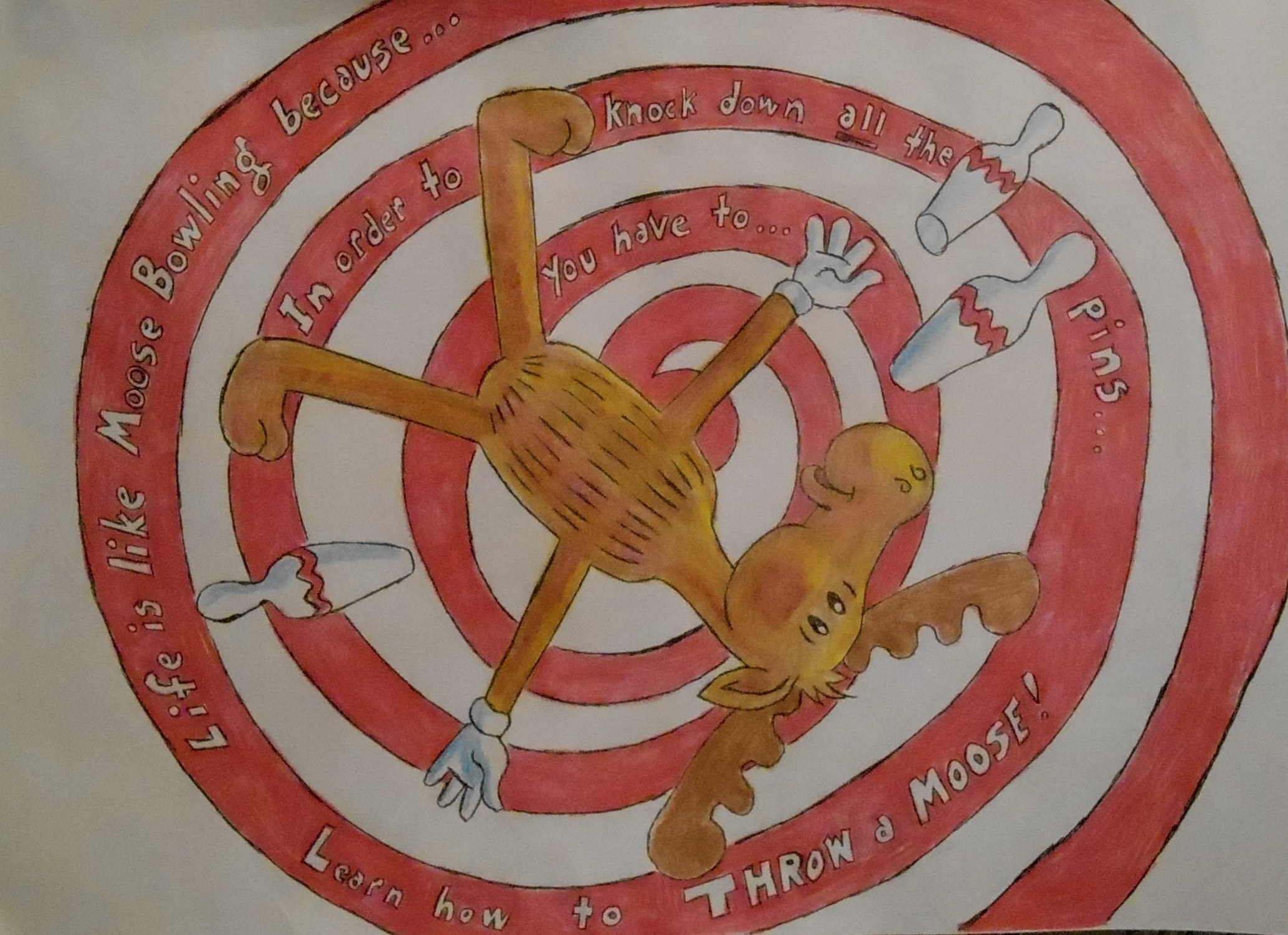
Life is definitely a lot like Moose Bowling. It is a simple game. In order to win, you only have to knock down all ten pins in one throw. The hard part is that you have to throw a moose to knock the pins down. Did you know that the average weight of an adult moose is 1800 pounds, or 820 kilograms? That’s a lot of moose meat to fling with my arthritic 60-year-old moose-throwing muscles. My flabber is totally gasted by that.
So, as I swiftly rise from prosperity to poverty, the ultimate fate of most old school teachers, it is probably a good thing that I have decided to become a nudist. At least I will save money on buying clothes.
This post is a reprint of the time I set out to become a nudist since I was retired and no longer had to fear what it would do to my career as a teacher.
This is not a tribute to Winston Groom and his famous creation, Forrest Gump. This is an admission that when I have had very little sleep and lots of worry lines on my brow, I often do remarkably stupid things.
And sometimes, doing something monumentally stupid makes me feel better. You know, more a part of the stupid, meaningless, and goofy world around me. So, what stupid thing did I do? I joined a nudist organization’s website. Me, who freaks out when members of my own family happen to see me naked. And, you see, there is more to joining this organization than just signing up for some random thing on the internet where you get a lot of random emails. I had to submit nude photos of myself to be posted in community forums. And I may be able to write a blog for this website, which will mean taking some camping gear and actually going to the naturist club site near Dallas to experience the things I will be writing about… and probably making jokes about. But don’t be afraid of being subjected to the hideous torture of having to see me naked. In order to see any of that, you would have to join the organization yourself, and you are probably not as stupid as me. (But I am not telling you the name of the website anyway.)
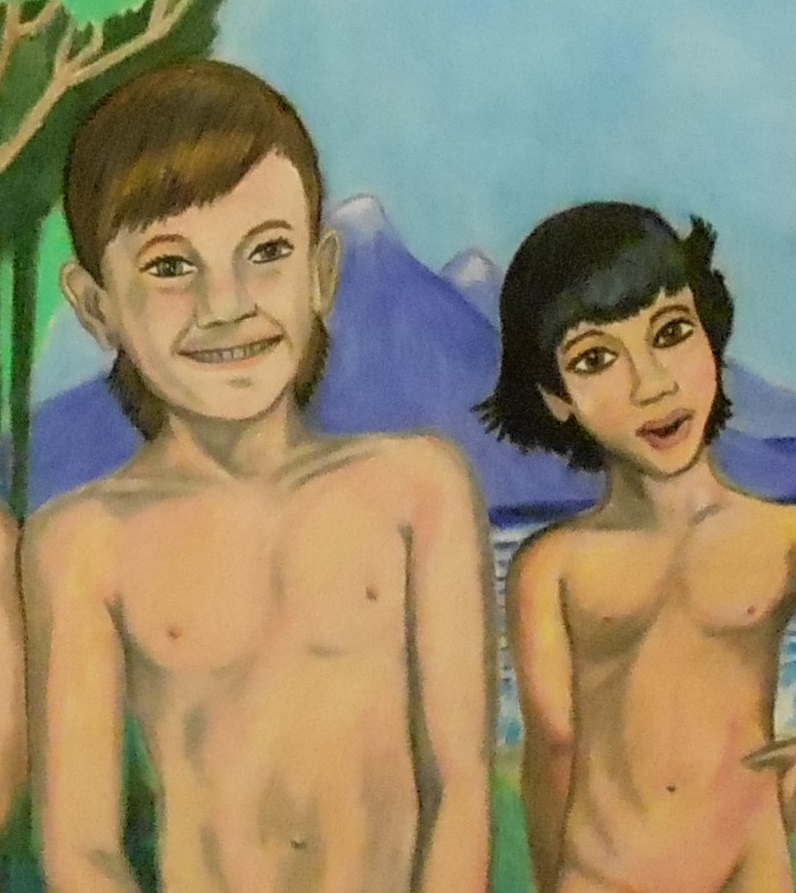
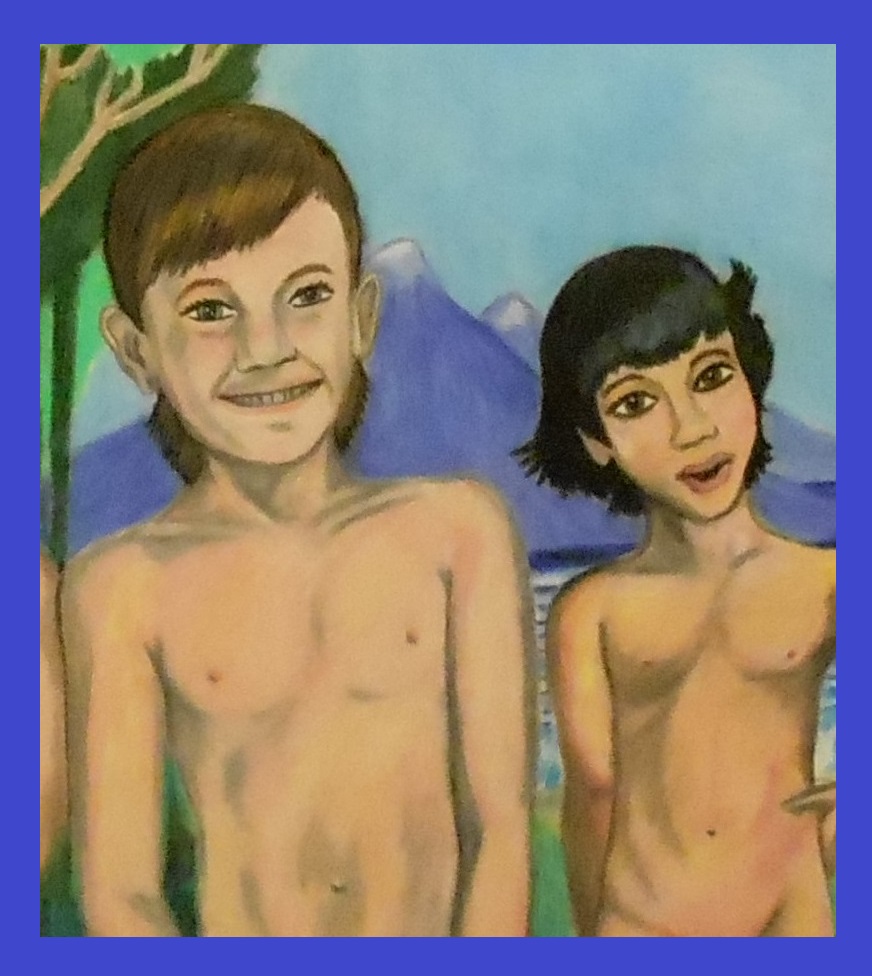
This is a detail from an illustration based on Golding’s Lord of the Flies. But it is also a picture of me and a childhood friend from back in the skinny-dipping days, based on an old black-and-white photo.
You see, I have some real life experiences with nudists before this happened. I had a roommate in grad school who liked to go au naturel, and even was comfortable with me being in the room when his girlfriend was visiting. He was nude in the kitchen one time when my grandparents came to visit. It is a good thing my grandfather entered that room ahead of my grandmother. I also had a girlfriend in the eighties who had a sister living in the clothing-optional apartment complex in Austin, Texas. Every time we visited Austin, the city nearest where my parents lived, she would stay with her sister there and I would have to go in to fetch her whenever we had plans. Sometimes I was there just to visit. But always, since clothing was optional, I took that option. I did get used to being around naked people, though. I actually have nudist friends.
So, though I am not a nudist, I guess I already know a lot about how to be one. It is how I managed to stumble into this awkward arrangement.
I know I will never be able to get my wife to go along on this harrowing adventure. She refuses to even consider going nude in the house. She has to wear clothes to bed even though studies say that sleeping nude is good for you. I will be facing this basically naked and alone. And possible paid writing work will never make this worth it by itself.
But my photos are already posted and approved. My membership is a real thing. And I am not ready to shoot myself for this stupid decision. In fact, I will probably be less naked there than I have been here in this very blog where my every secret is laid bare and made fun of on a daily basis.
Mother Nature’s sister is one of those rich relatives you don’t really like, but have to endure. She tends to take charge of everything and ruin all your plans. Yes, we do not throw a party when Aunt Entropy comes to visit. Well, at least not the happy kind of party where everybody has fun. Aunt Entropy has come to stay for a while and take things apart.
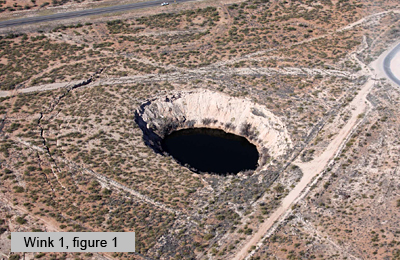
One thing Aunt Entropy likes about Texas is its utter dedication to fracking and oil money. High profit motives have continued to force oil companies to pump toxic liquids into the underground to break apart shale and push out the oil. We have fracking to thank for lower gas prices and Fox News talking points about no longer being dependent on evil ookie-icky foreign oil. We also have it to thank for the current condition of the foundation of my little house. Alternating years of flooding and drought have expanded and contracted the small hill the house sits on so much that the front end of the house has all but cracked off. The frequent Dallas area earthquakes have no doubt helped this process. Auntie Entropy clucks her tongue at it. “Insurance doesn’t have to pay for this because you should have invested in foundation repair long ago. It isn’t earthquake damage, it is neglect!” Of course, my healthcare costs over the last decade have completely prevented any notion of paying out for foundation repair. No one would loan a deadbeat former teacher money for household repairs just because he is old and broke and decrepit. Lovely caring woman, that Aunt Entropy.
The fracking related sinkhole under Wink, Texas… those lines around it are roads and highways.
The Grandbury, Texas parking lot sinkhole which formed after heavy rain and a long history of fracking.
Aunt Entropy is, after all the personification of the 2nd Law of Thermodynamics in the science of physics. To put it simply, Entropy is a process by which matter and energy progress from a beginning state all the way to a final state. In the case of our universe, the process goes from the Big Bang of creation to the final star winking out at the end of the universe as we now know it. Entropy means the progress we are making towards the ultimate ends of death and decay. Every action we take leads to a consequence and a further action until we are dead. Not just me. Not even just you and me. But all of us, everywhere in the universe. This is why the little things where our lives break down make Auntie Entropy smile when nothing else will.
Here are some things that make Auntie Entropy smile;
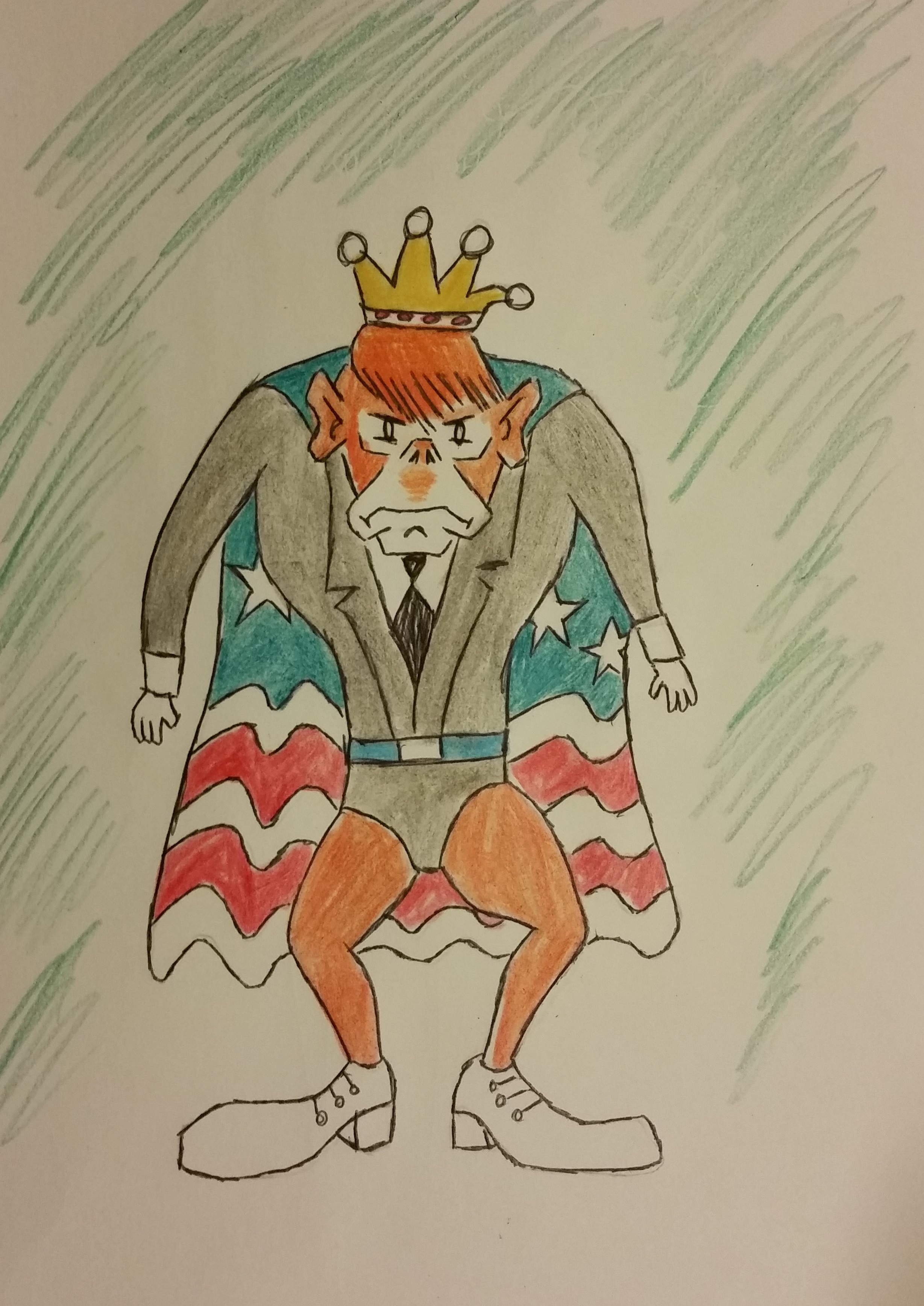
The Orange King with golden crown and tiny hands may be our next president.
The hatred and self-aggrandizement that he campaigns on have taken root in the fertile soil of fear and hatred that Fox News and conservative leaders have tilled and toiled over for so long. They are beginning to bud with flowers… if you can call weeds flowers. And they are bound to produce poisonous fruits.
Mickey’s car is breaking down again because of heat. After paying over a thousand dollars to get pot-hole damage to the front tire and rim repaired, the coolant pump gave out and had to be replaced. Now the overheating warning light comes on daily and we are forecast to have dangerous levels of heat in Texas weather for the next few days. I am going to have to decide whether to spring for more car repair, or go see the doctor about the pain in my extremities. I won’t be able to afford both. Oh, my aching bank account!
My wife is overseas in the Philippines spending a month with her family after the death of her father. But she left her green card here. I had to express mail it to her for a large amount of postage cost and risk losing it along the way in the mail. She might never be able to return to this country. Well, I do see that as a bad thing, after all.
So while Aunt Entropy is visiting… or rather living here permanently, and feeding us her bad-luck salad made with equal parts misery, misfortune, and mayonnaise, we must learn to endure her wicked sense of humor and micro-managing ways.
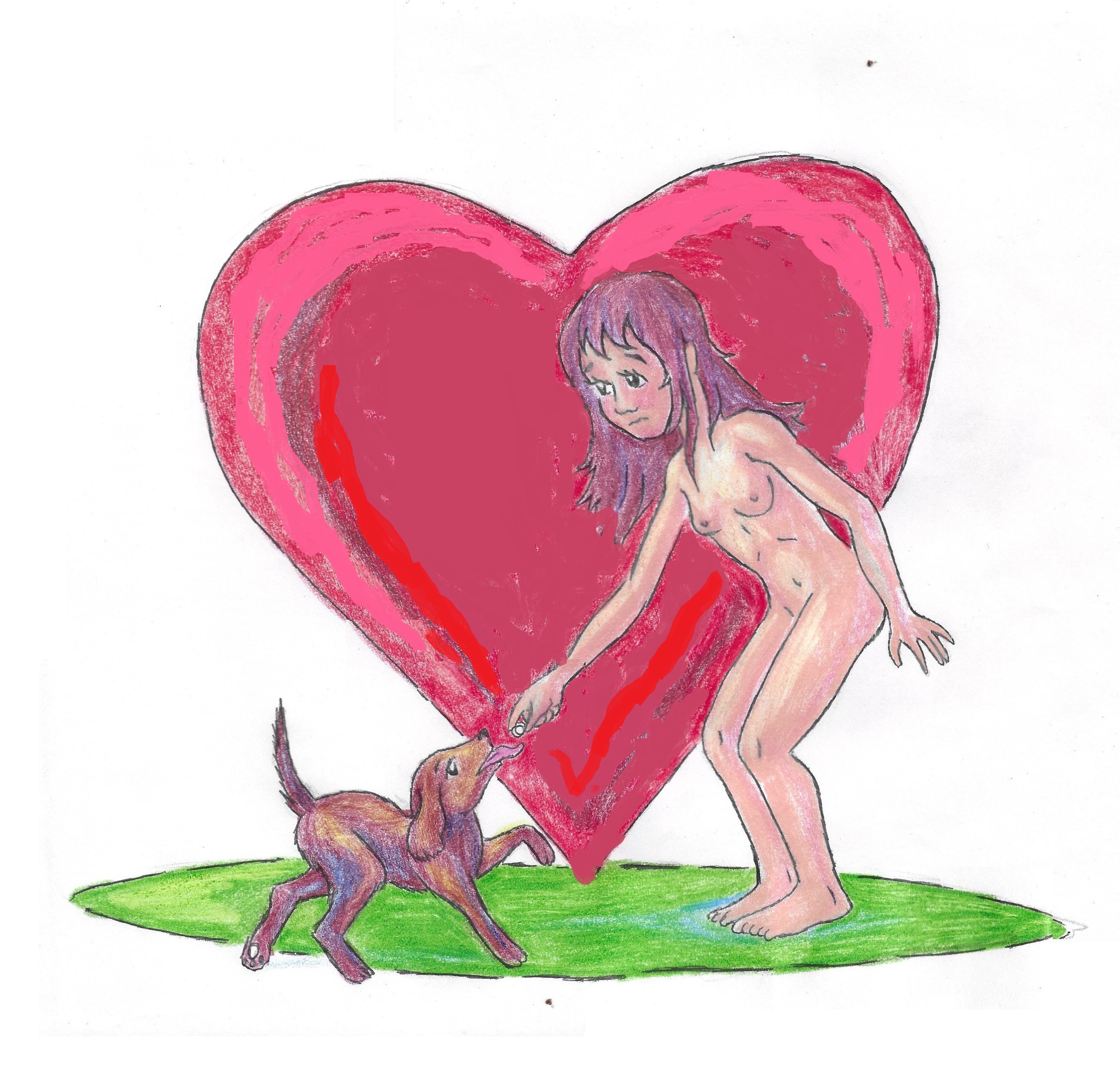
I managed to finally return to Bluebonnet Nudist Park on Saturday. It was a Memorial Day weekend crowd, so I got to meet a lot of naked people. Of course, I only saw one kid the whole time I was there, and he looked to be high-school-aged. So, don’t let the first picture in this post fool you. Most nudists at the park were closer to my age than the girls in the picture.
But it was freeing of spirit to actually gather around a swimming pool and have an all-you-can-eat hot-dog lunch with 50-plus other naked people. I can’t explain why that strange alchemy can work. But it does.
Having been around nudists at different times for the majority of my life, I can honestly say I have observed nudists to be happier people than the rest of us. Of course, that is a generalization, and not true of every individual nudist. But they are comfortable in their own skin and connected to the natural world the way most of us are not. I found that most of these people knew they were nudists since childhood. Like me, if their families did not already embrace being nudists, they sneaked off to the woods when they could to get naked in nature.
Am I alone in thinking that this is not a mental aberration, but rather, a natural instinct that was trained out of us (or in my case, almost trained out of us,) in childhood?
I don’t have any pictures from the nudist park to post, so I use the usual collection of innocent-seeming illustrations and pictures to add a sense of beauty and youthfulness to the idea of going to a nudist park for recreation. You know its not really the way the pictures show it. I am not the exhibitionist-sort of nudist whose whole desire is to be seen by the world naked. I, for the most part, am a solitary nudist. Not too proud of my lumpy, wrinkled, and sore-covered carcass so that I am obsessed with others seeing me, but also not ashamed of my corporeal self to the point of not allowing myself to be seen nude by other like-minded nude people. Most of my nudism occurs when I am alone in private places where only peeping Toms and computer-camera hackers can see me. I am, however, proud that I have now been to Bluebonnet twice and have a membership in AANR (American Association for Nude Recreation.)
While I was there, a journalist who writes books on American culture used in sociology research at the college level, was there taking pictures and interviewing folks. He spoke to us, confessing that it was the first time speaking to a group of naked people, and also his first time speaking to a group while naked. He explained that he was recording and documenting interesting and important social organizations in an area only 100 miles wide, but stretching from the Mexican border to the Canadian border through the middle of the US. He felt that there were important things to learn about American life from the Bluebonnet Nudist Park just as there were to learn from the Dallas Police Department which he had scheduled for the upcoming week (and he specified he would be wearing clothes for that next part.) Even though I was there for his research, I did not get asked to sign any consent forms for photographs or interviews, so I will not be in that book of his in any way.
I am definitely more confident now in identifying myself as a nudist. I never embraced the idea of actually being one while I was a school teacher in Texas. Texans are suspicious of even letting a Democrat be a public school teacher, let alone someone who purposely goes to a public place with no pants on. I know I have lost Twitter followers and Facebook friends who found out I was actually a nudist. And I feel like I may have lost some of my WordPress followers over it as well. They can’t take seriously someone who walks around with no clothes on.
But my answer to that is… Who in the heck takes Mickey seriously anyway? Get real!
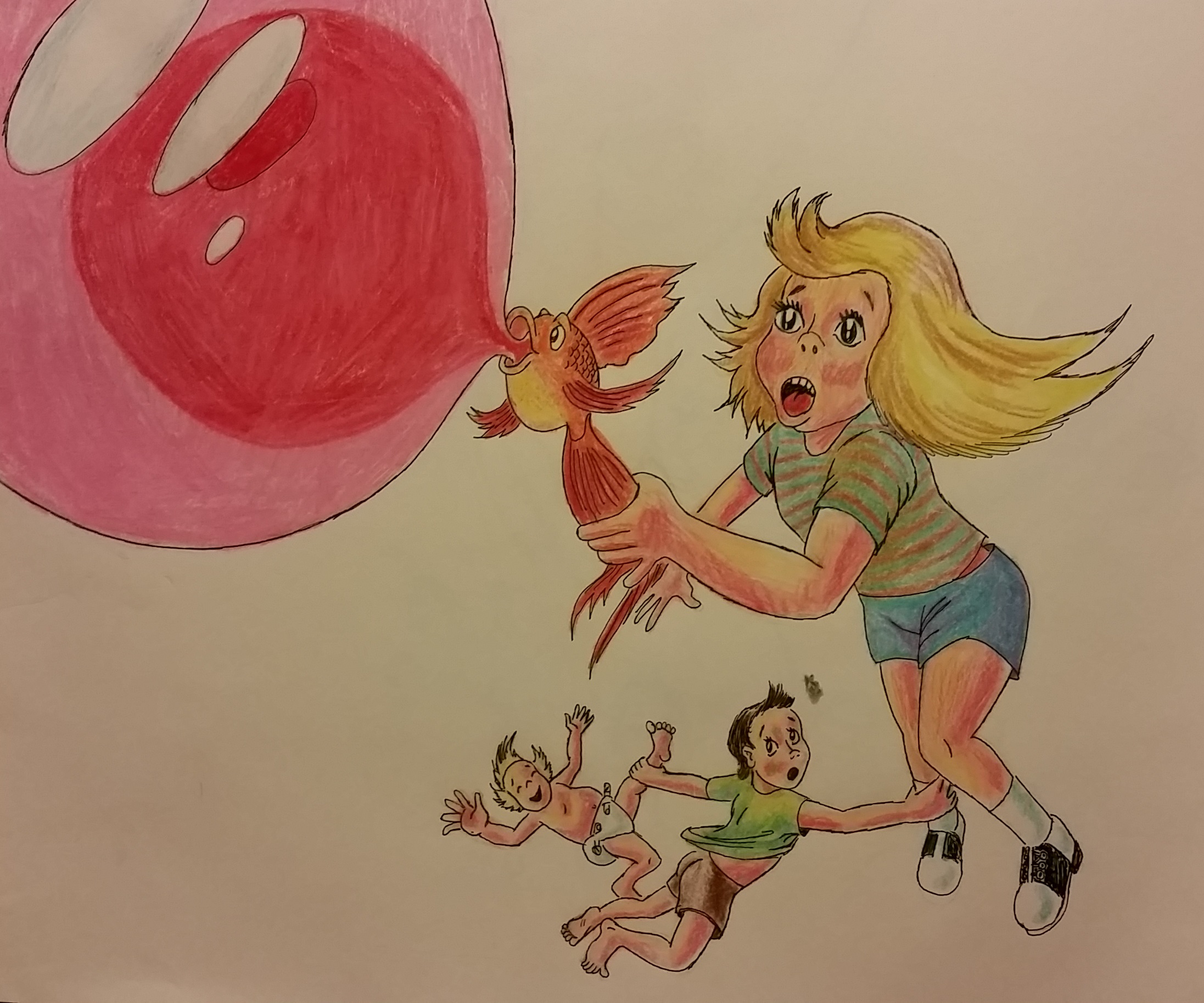
There are many ways to fly. Airplanes, bird wings, hot air balloons, bubble-gum-blowing goldfish… well, maybe I am really talking about flying by imagination. The more my six incurable diseases and old age limit my movement, my ability to get out of bed and do things, the more I rely on reading, writing, and the movie in my head to go places I want to be.
Sometimes the wings I use to fly come from other writers. I get the flight feathers I need not only from books, but also from YouTube videos, movies, and television shows.
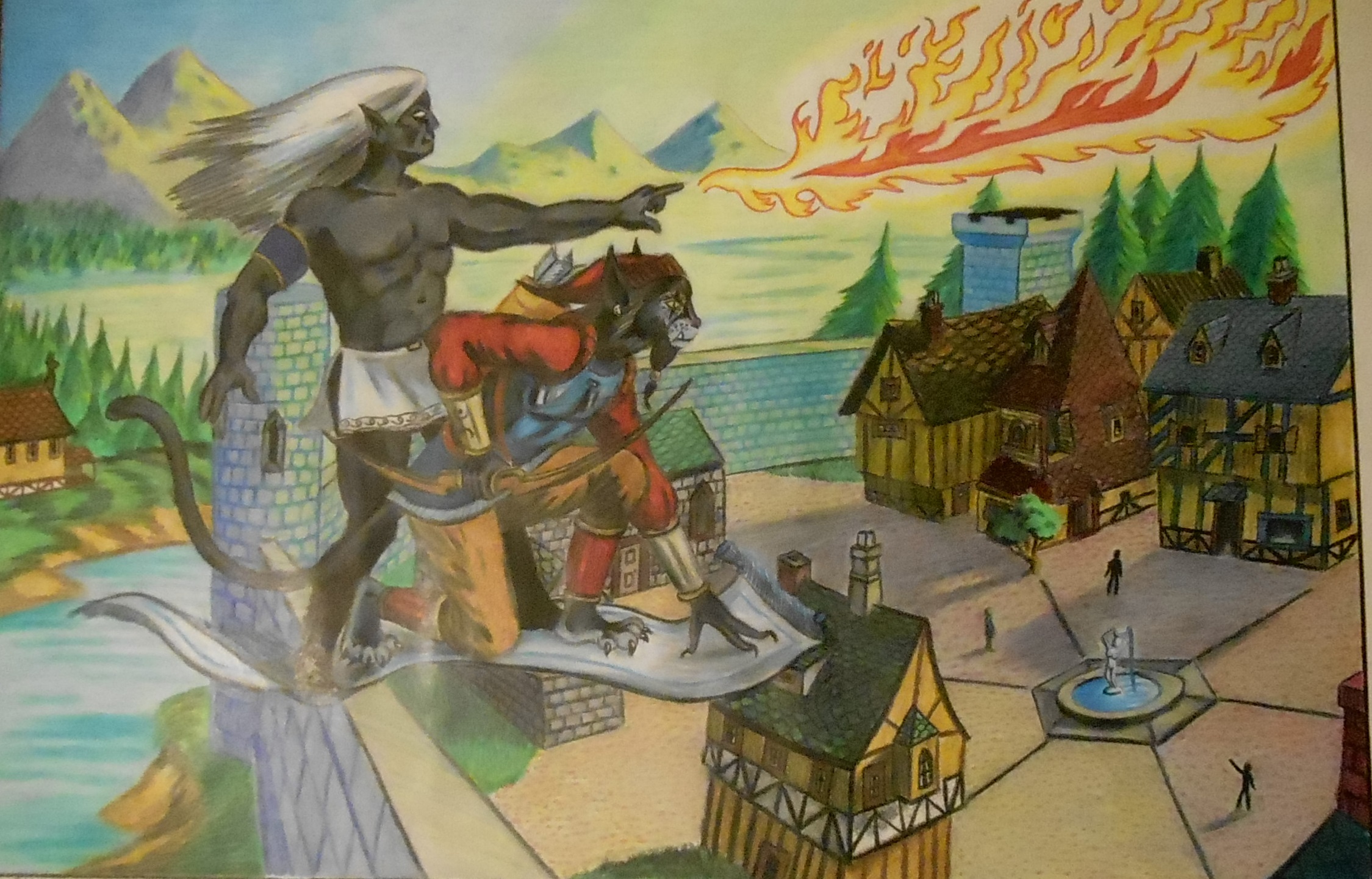
This magic carpet ride in video form is by the thoughtful creative thinker Will Schoder. In it he carefully explains how Mister Rogers used the persuasion techniques of Logos, Ethos, and Pathos to talk to elephants and convinced a congressman intent on cutting the budget to actually give Public Television more money for educational programming. This is a video full of warmth and grace and lovingly crafted magic flight feathers that anybody can use to soar across new skies and blue skies and higher skies than before. I hope you will watch it more than once like I did, to see how beautifully the central explanation spreads its wings and gives us ideas that can keep us aloft in the realm of ideas.
It is important to stay in the air of fresh ideas and new thinking. The magic carpet ride that takes you there is the product of vivid imagination, cogent thinking, and the accurate connection of idea to better idea. So instead of falling from the sunlit sky into the darkness that so easily consumes us on the ground, keep imagining, keep dreaming, and keep flying. You won’t regret having learned to fly.
If you’ve read any of the crap that Mickey wrote about before in this goofy blog, you probably already suspect that Mickey’s mind does not work like a normal mind. The road map above is just one indicator of the weirdness of the wiring that propels Mickey on the yellow brick road to Oz and back. He just isn’t a normal thinker.
But having a few bats in the old belfry doesn’t prevent the man from having a plan. If you read all of Mickey’s hometown novels, you will discover he hasn’t written them in time order. Main characters in my 2016 novel weren’t even born yet in my 2017 books. If you look at them in chronological order rather than the order written, you will see characters growing and changing over time. A shy kid in one novel grows into a werewolf hunter in the next. A girl who loses her father to suicide in a novel not yet completed, learns how to love again in another novel.
Multiple Mickian stories are totally infected with fairies. The magic little buggers are harder to get rid of than mosquitoes and are far and away more dangerous. And there are disturbing levels of science-fiction-ness radiating through all of the stories. How dare he think like that? In undulating spirals instead of straight lines! He doesn’t even use complete sentences all the time. And they used to let that odd bird teach English to middle school kids.
But there is a method to his utter madness. He started with the simpler stories of growing up and learning about the terrors of kissing girls when you are only twelve. And then he moved on into the darker realms of dealing with death and loss of love, the tragedy of finding true love and losing it again almost as soon as you recognize its reality. Simple moves on to complex. Order is restored with imagination, only to be broken down again and then restored yet again,.
And, of course, we always listen to Mr. Gaiman. He is a powerful wizard after all. The Sandman and creator of good dreams. So Mickey will completely ignore the fact that nobody reads his books no matter what he does or says. And he will write another story.
It is called Sing Sad Songs, and it is the most complex and difficult story that Mickey has ever written. And it will be glorious. It also rips Mickey’s heart out. And I will put that ripped-out heart back in place and make Mickey keep writing it, no matter how many times I have to wash, rinse, and repeat. The continued work is called Fools and Their Toys. It solves the murder mystery begun in Sing Sad Songs. This re-post of an updated statement of goals is the very spell that will make that magic happen. So, weird little head-map in hand, here we go on the writer’s journey once again and further along the trail.
In a world filled with interesting and engaging ideas, I get frustrated with the constant barrage of word salad on social media tossed at me by conservative friends. As Trump seems to be coming closer and closer to ending his administration with his own chaotic behavior, those who supported him are tossing more and more flavorless lettuce and rotted vegetables in the mix. I have to resist the urge to throw the same thing back at them. I do not resist such salad-making well. Witness my attempts to alter this stupid meme from a friend;
I admit, I kinda barfed half-digested word salad all over this one. I get tired of debating the issues only to be insulted like this and then accused of only insulting Trump and avoiding what they call the “Real Issues”, like Hillary giving a gazillion per cent of our uranium wealth to the Russians and Obama being the one guilty of colluding with Russians.
But, enough of that. It is time to make something healthier out of words and ideas. I have a lot of things on my mind, and I want to get a lot of them said before I die. So let me make some idea casserole, cooking a whole lot of very different ideas into one multivitamin dish.
Trump, for all the damage he’s done, will end up being good for us if we can just survive his administration to the end. Scar tissue is always tougher than the surrounding flesh when the wound heals. Repairing the damage he has done will leave us stronger, wiser, and more able to cope with the root causes of the Trump phenomenon.
My friends and family who supported the whole Trump mess primarily to hurt people whom they feel are smarter than them and so more stuck-up and self-important than them, will eventually get back to leading more productive lives than they did before. And they will continue not to credit the ones who actually made that happen the way they didn’t credit Obama for healing the blunders of Bush.
I will get back to writing gentler, non-political-type humor novels.
I have my novel Superchicken half-way through the final edit to publish it on Amazon Kindle. You can see I have been playing with cover ideas. I plan to write Sing Sad Songs next. Also I have two more novel ideas that I will add to this casserole as separate ingredients. And I have The Bicycle Wheel Genius, Recipes for Gingerbread Children, and The Baby Werewolffinished and ready to edit as well.
Here’s new idea number one; The Boy Who Lived Forever is a fantasy novel about Icarus Jones coming to stay with the Jones family of Norwall. He has survived a house fire that killed his parents and now must evade the dragon that pursues him while trying to figure out what is wrong with him health-wise. Could he be dying? Or did he survive the fire because he somehow can’t die?
Here’s new idea number two; Kingdoms Under the Earth is a fantasy novel about Blueberry Bates, a troubled young girl, falling seriously ill, and the measures her boyfriend, Mike Murphy, and her friends have to take in a realm made of magic and fever dreams to save her.
The truth is I really can’t do anything about politics and government beyond expressing my beliefs and voting my conscience. I need to concentrate on telling stories. It is the one thing that still gives my life meaning through the pain, illness, and suffering. I am not dead yet. And, not being dead, I need to be writing.
Things are not what they seem. Life throws curve balls across the plate ninety percent of the time. Fastballs are rare. And fastballs you can hit are even rarer. But if Life is pitching, who is the batter? Does it change the metaphor and who you are rooting for if the batter is Death?
If you think this means that I am planning on dying because of the Coronavirus pandemic, well, you would be right. Of course, I am always planning for death with every dark thing that bounces down the hopscotch squares of the immediate future. That’s what it means to be a pessimist. No matter what bad thing we are talking about, it will not take ME by surprise. And if I think everything is going to kill me, sooner or later I have to be right… though, hopefully, much later.
I keep seeing things that aren’t there. Childlike faces keep looking at me from the top of the stairs, but when I focus my attention there, they disappear. And I know there are no children in the house anymore since my youngest is now legally an adult. And the chimpanzee that peeked at me from behind the couch in the family room was definitely not there. I swear, it looked exactly like Roddy McDowell from the Planet of the Apes movies, whom I know for a fact to be deceased. So, obviously, it has to be Roddy McDowell’s monkey-ghost. I believe I may have mentioned before that there is a ghost dog in our house. I often catch glimpses of its tail rounding the corner ahead of me when my own dog is definitely behind me. And I am sure I shared the facts before that Parkinson’s sufferers often see partial visions of people and faces (and apparently dogs) that aren’t really there, and that my father suffers from Parkinson’s Disease. So, obviously it is my father and not me that is seeing these things… He’s just using my eyeballs to do it with.
But… and this is absolutely true even if it starts with a butt… the best way to deal with scary possibilities is to laugh at them. Jokes, satire, mockery, and ludicrous hilarity expressed in big words are the proper things to use against the fearful things you cannot change. So, this essay is nothing but a can of mixed nutz. Nutzy nuts. And fortunately, peanut allergies are one incurable and possibly fatal disease I don’t have. One of the few.














The Real Magic in that Old Home Town
Rowan, Iowa… Not the place I was born, but the place where I got to be a stupid kid, and have the lessons of the good and god-fearing life hammered into my head hard enough to make a dent and make it stay with me for more than half a century. I got to go to grade school there. I learned to read there, especially in Miss Mennenga’s third and fourth grade class. Especially in that old copy of Treasure Island with the N.C, Wyeth illustrations in it, the one Grandma Aldrich kept in the upstairs closet in their farm house. I got to see my first naked girl there. I learned a lot of things about sex from my friends there, and none of them were true. I played 4-H softball there, and made a game-saving catch in center field… in the same game where my cousin Bob hit the game-winning home run. But those were things kids did everywhere. It didn’t make me special. There was no real magic in it.
Being a farm-kid’s kid taught me the importance of doing your chores, every day and on time. If you didn’t do them, animals could get sick, animals could die, crops could be spoiled, the chickens could get angry and petulant and peck your hands when you tried to get the eggs. Cows could get grumpy and kick the milk bucket. Cats could vow revenge if you didn’t direct a spray or two at their little faces as they lined up to watch you milk the cows. And you never knew for sure what a vengeful cat might do to you later, as cats were evil. They might jump on the keyboard during your piano recital. They might knock the turkey stuffing bowl off the top of the dryer when Mom and Grandma and several aunts were cooking Thanksgiving Dinner. And I know old black Midnight did that on purpose because he got to snatch some off the floor before it could be reached by angry aunts with brooms and dustpans. And all of it was your fault if it all led back to not doing your chores, and not doing them exactly right.
But, even though we learned responsibility and work ethic from our chores, that was not the real home-town magic either. I wasn’t technically a real farm kid. Sure, I picked up the eggs in the chicken house at Grandpa and Grandma Aldrich’s farm more than once. And I did, in fact, help with milking machines and even milking cows by hand and squirting cats in the faces at Uncle Donny’s farm. I walked beans, going up and down the rows to pull and chop weeds out of the bean fields at Uncle Larry’s farm. I drove a tractor at Great Uncle Alvin’s farm. But I didn’t have to do any of those things every single day. My mother and my father both grew up on farms. But we lived in town. So, my work ethic was probably worth only a quarter of what the work ethic of any of my friends in school was truly worth. I was a bum kid by comparison. Gary G. and Kevin K, both real farm kids and older than me, explained this to me one day behind the gymnasium with specific examples and fists.
Being a farm kid helped to forge my character. But that was really all about working hard, and nothing really to do with magic.
I truly believe the real magic to be found in Rowan, Iowa, my home town, was the fact that it was boring. It was a sleepy little town, that never had any real event… well, except maybe for a couple of monster blizzards in the 60’s and 70’s, and the Bicentennial parade and tractor pull on Main Street in 1976, and a couple of costume contests in the 1960’s held in the Fire Station where I had really worked hard on the costumes, a scarecrow one year, and an ogre the next, where I almost won a prize. But nothing that changed history or made Rowan the center of everything.
And therein lies the magic. I had to look at everything closely to find the things and strategies that would take me to the great things and places where I wanted to end up. I learned to wish upon a star from Disney movies. I learned about beauty of body and soul from the girls that I grew up with, most of them related. And I invented fantastical stories with the vivid imagination I discovered lurking in my own stupid head. I embarrassed Alicia Stewart by telling everyone that I could prove she was a Martian princess, kidnapped and brought to Earth by space pirates that only I knew how to defeat. And I learned to say funny things and make people laugh… but in ways that didn’t get me sent to the principal’s office in school. Yes, it was the magic of my own imagination. And boring Iowa farm towns made more people with magic in them than just me. John Wayne was one. Johnny Carson was one also. And have you heard of Elijah Wood? Or the painter Grant Wood? Or the actress Cloris Leachman?
Yep. We were such stuff as dreams were made on in small towns in Iowa. And that is real magic.
Leave a comment
Filed under autobiography, commentary, dreaming, farm boy, farming, foolishness, goofy thoughts, humor, magic, Paffooney
Tagged as animals, family, farm, farming, life