
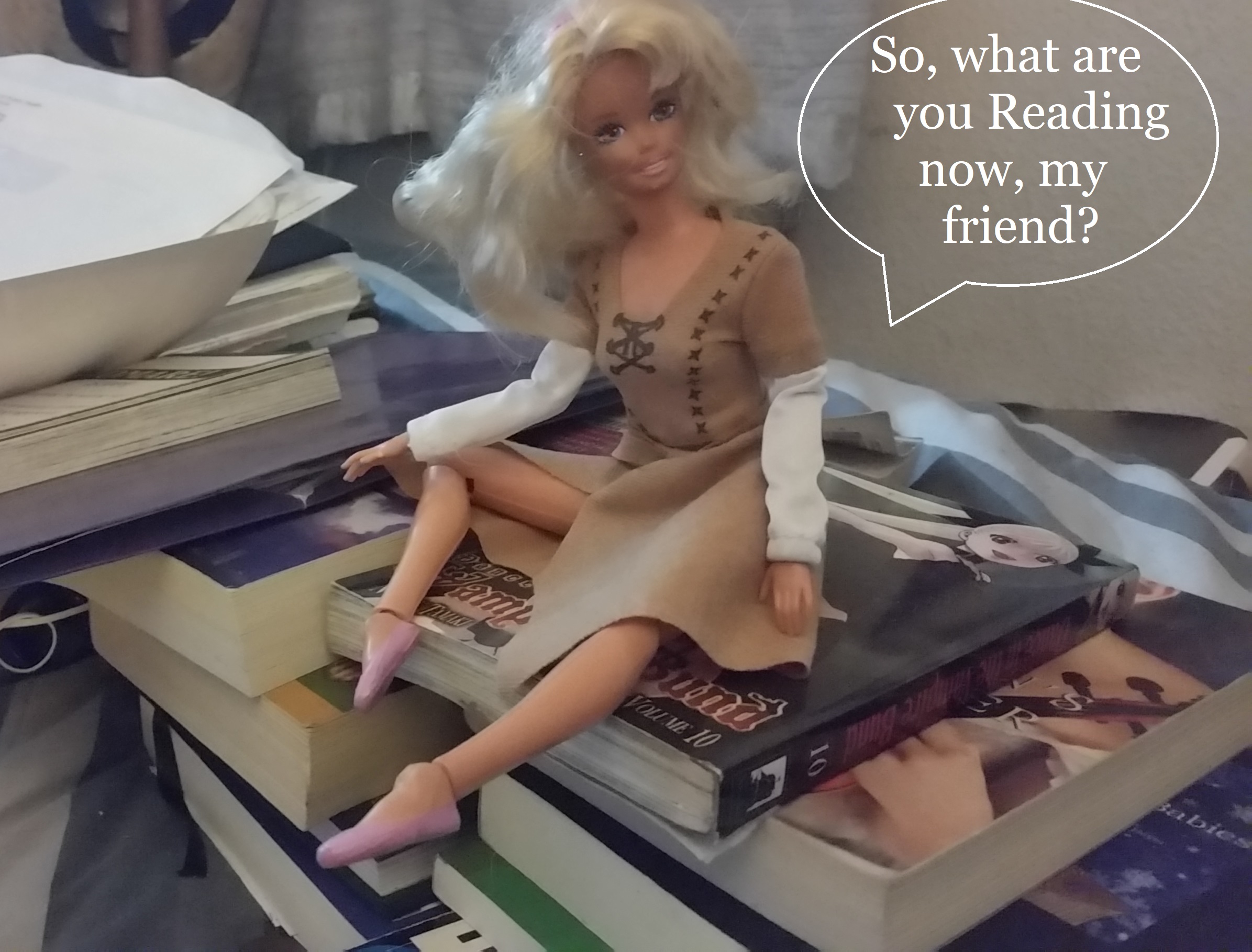
Well, I have a thing for collecting old books. This one is 100 years old. It is a modern edition, though, re-published in 2003.
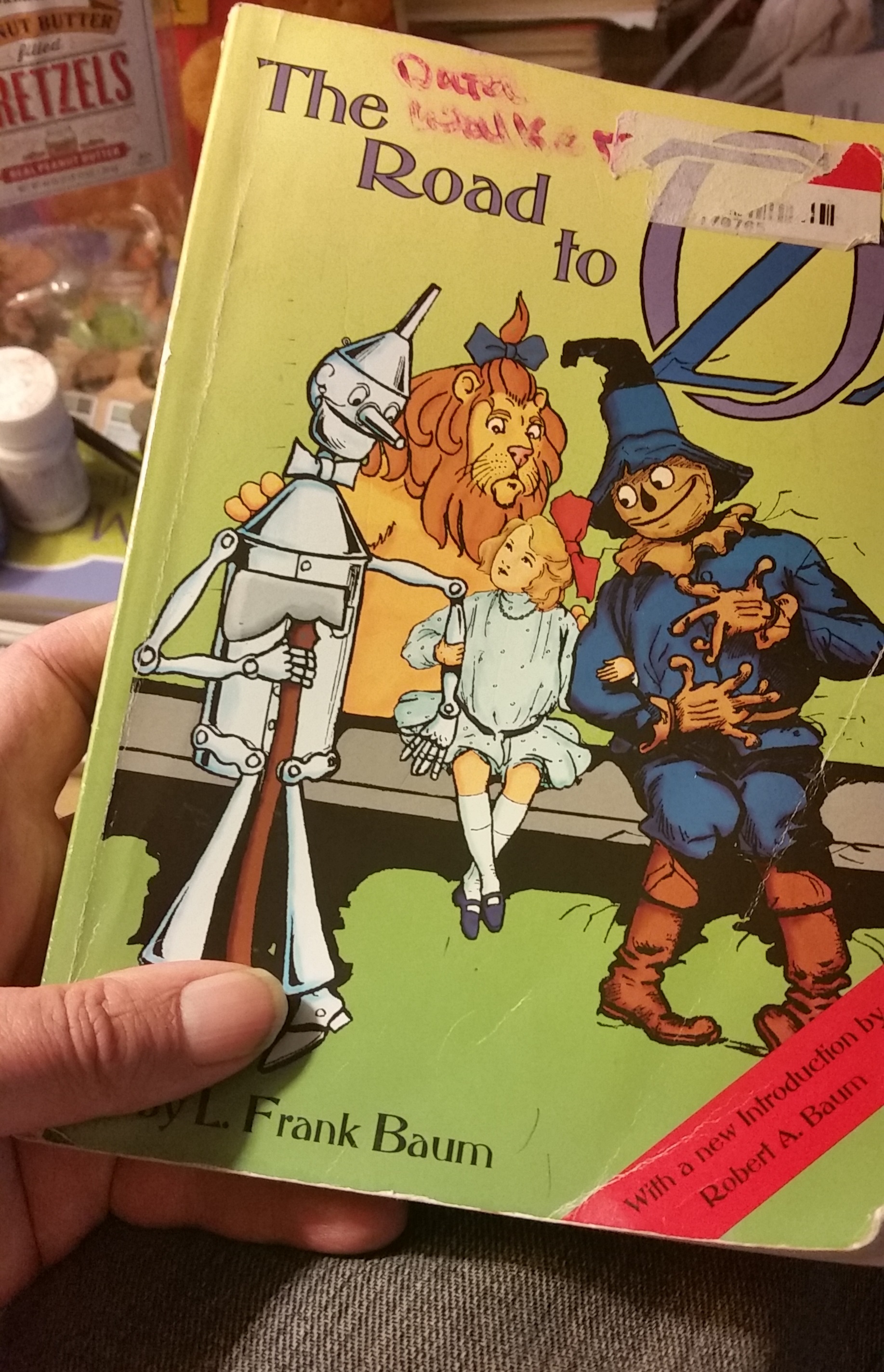
Here’s my Goodreads review;
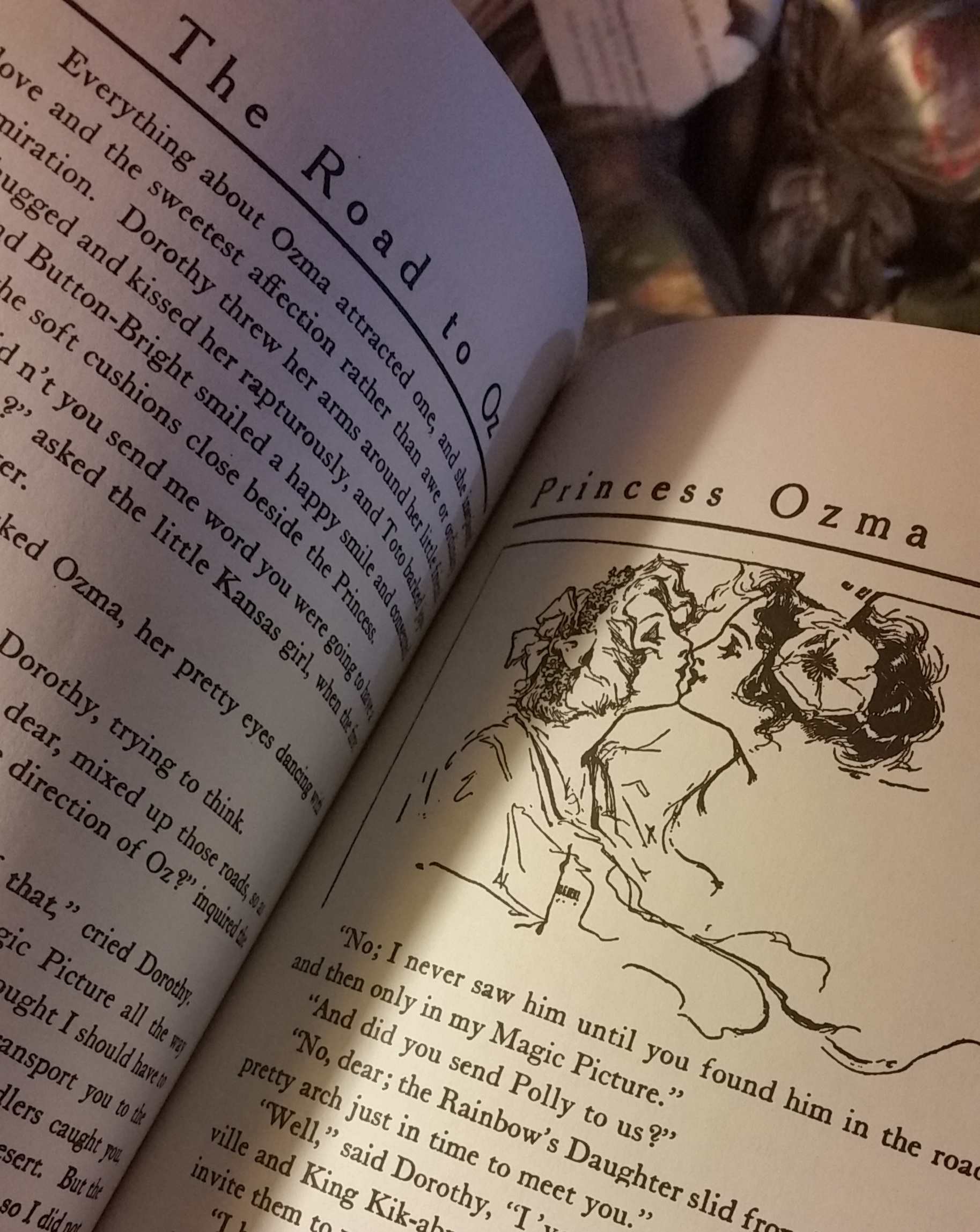
| This book is an ancient treasure in many ways, being now more than 100 years old. The illustrations by John O’Neill, too, have a very antique charm. The book is a little short on plot. Dorothy wanders off from the Kansas farm, meets the hobo Shaggy Man, and Button Bright, one of the stupidest little boys in literature. They meet old friends along the way; Jack Pumpkinhead, H.M. Wogglebug T.E., the Tin Man, the Scarecrow, the Cowardly Lion, the Hungry Tiger, Tik Tok the mechanical man, Billina the Talking Yellow Chicken, and the living Sawhorse. And they all end the story at Princess Ozma”s birthday party where Santa Claus is the favorite guest. This is a potboiler novel for Baum, obviously written only because the readers all begged for it, and it has a lot in it to be enjoyed by true fans of Oz, but not much in the way of suspense or excitement. It can easily be summed up in the words of Button Bright, “I don’t know,” which he says in answer to every question. |
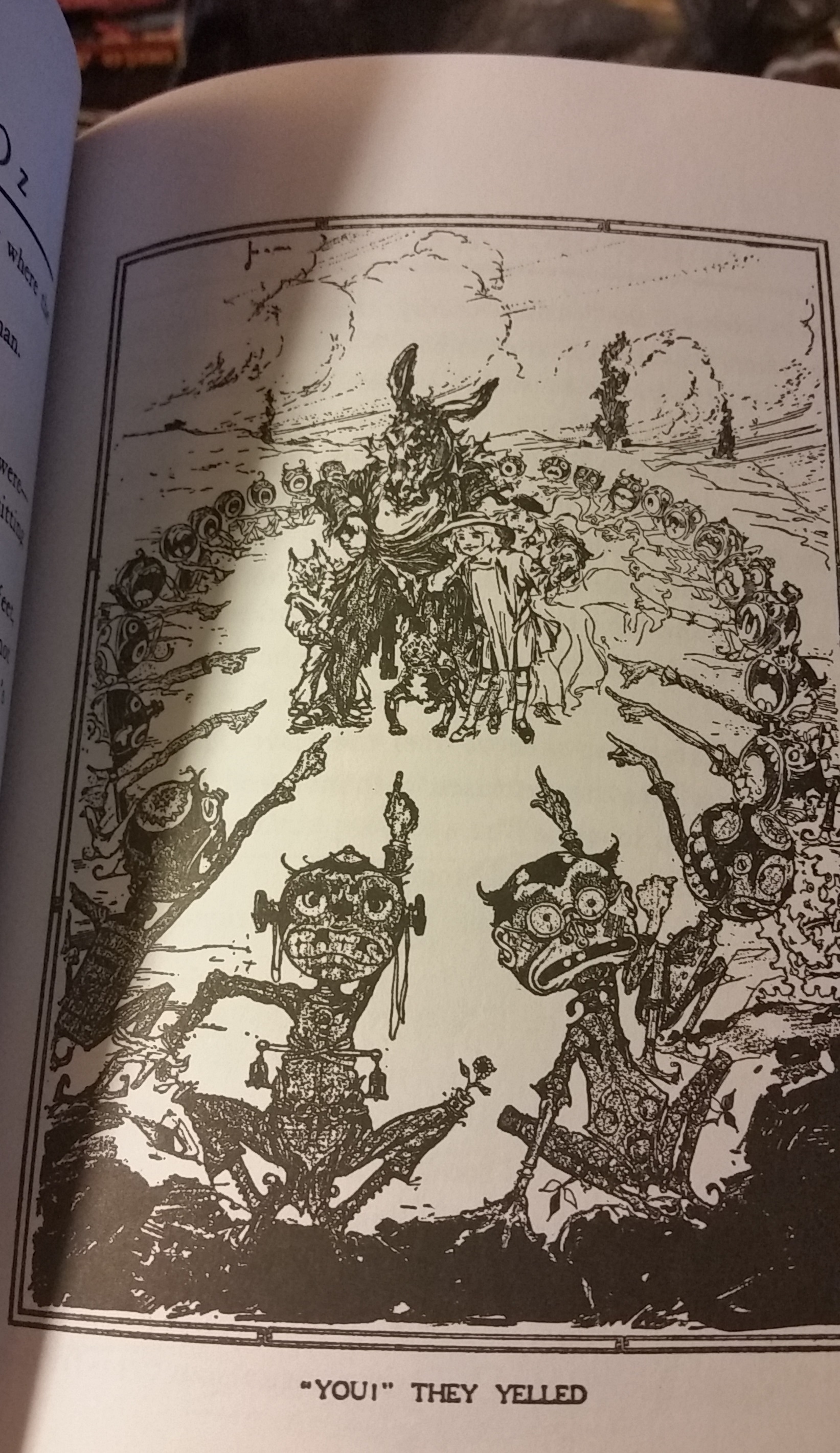
I find the illustrations more compelling than the story itself, but I have to admit that the story itself is incredibly visual.
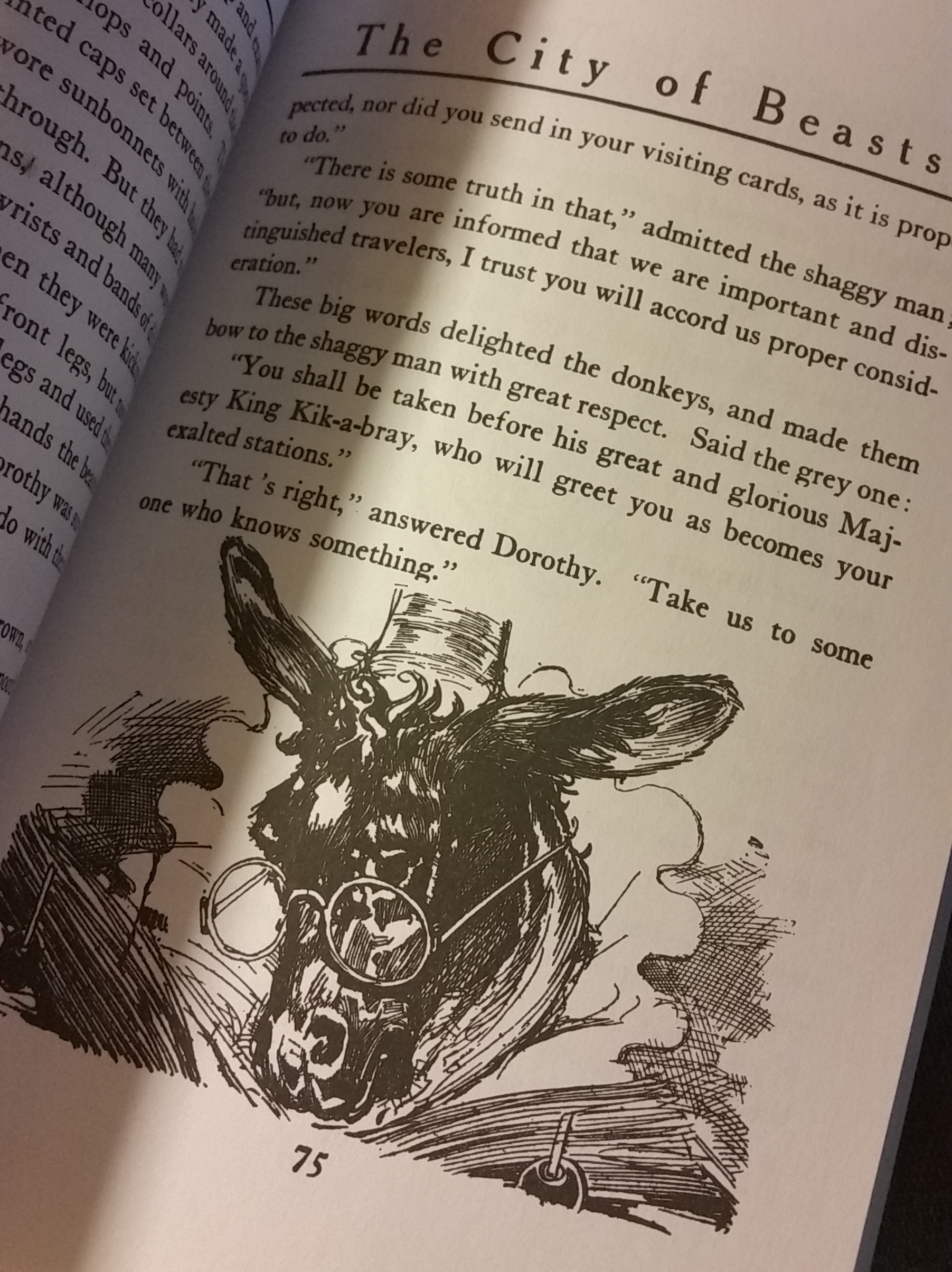
I love this book, even though I don’t respect it much as a storyteller myself. But it is the fourth Oz book I have read since childhood. And it isn’t because of the story. Frank L. Baum is a genius at creating loveable and memorable characters. And these illustrations are wonderful. The Shaggy Man with the head of a donkey? Absolutely fabulous! You can’t beat that. (Well, you can. But whether he’s a donkey or a man, it’s still a crime. )
















 Catch a Falling Star
Winsor McCay
One work of comic strip art stands alone as having earned the artist, Winsor McCay, a full-fledged exhibition at the Metropolitan Museum of Art in New York City. Little Nemo in Slumberland is a one-of-a-kind achievement in fantasy art.
Winsor McCay lived from his birth in Michigan in 1869 to his finale in Brooklyn in 1934. In that time he created volumes full of his fine-art pages of full-page color newspaper cartoons, most in the four-color process.
As a boy, he pursued art from very early on, before he was twenty creating paintings turned into advertising and circus posters. He spent his early manhood doing amazingly detailed half-page political cartoons built around the editorials of Arthur Brisbane, He then became a staff artist for the Cincinnati Times Star Newspaper, illustrating fires, accidents, meetings, and notable events. He worked in the newspaper business with American artists like Winslow Homer and Frederick Remington who also developed their art skills through newspaper illustration. He moved into newspaper comics with numerous series strips that included Dreams of the Rarebit Fiend and Little Nemo in Slumberland. And he followed that massive amount of work up by becoming the “Father of the Animated Cartoon” with Gertie the Dinosaur, with whom he toured the US giving public performances as illustrated in the silent film below;
The truly amazing thing about his great volume of work was the intricate detail of every single panel and page. It represents a fantastic amount of work hours poured into the creation of art with an intense love of drawing. You can see in the many pages of Little Nemo how great he was as a draftsman, doing architectural renderings that rivaled any gifted architect. His fantasy artwork rendered the totally unbelievable and the creatively absurd in ways that made them completely believable.
I bought my copy of Nostalgia Press’s Little Nemo collection in the middle 70’s and have studied it more than the Bible in the intervening years. Winsor McCay taught me many art tricks and design flourishes that I still copy and steal to this very day.
No amount of negative criticism could ever change my faith in the talents of McCay. But since I have never seen a harsh word written against him, I have to think that problem will never come up.
My only regret is that the wonders of Winsor McCay, being over a hundred years old, will not be appreciated by a more modern generation to whom these glorious cartoon artworks are not generally available.
2 Comments
Filed under art my Grandpa loved, artists I admire, artwork, book review, cartoon review, cartoons, comic strips, commentary
Tagged as Little Nemo in Slumberland, Winsor McCay