
The title is taken directly from the poet Dylan Thomas. He was thinking about the death of his father. But, even though my father cannot last much longer either, it is my own mortality that has been weighing heavily on my mind.
I have been thinking a lot about death of late. I am now three years farther along into my retirement than I believed I would be when I retired in 2014. I honestly believed I would not live beyond 2017 with my six incurable diseases. Especially when Banco Americo sued me over medical bills and won, forcing me into bankruptcy, and leaving me to be unable to pay for insulin for my diabetes or mental health services for family members who needed them as a matter of life or death.
So, I suppose I can be forgiven for reading a lot of life-or-death stories lately, especially the kind that don’t have a happy ending.
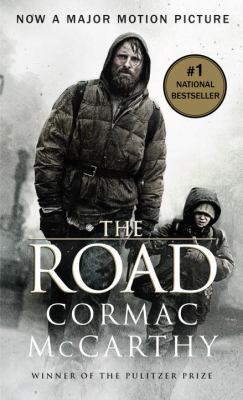
The Road, Cormac McCarthy’s 2006 post-apocalyptic novel, ripped a good half to three quarters of my soul out. It is about two characters making their way along a road after some unnamed disaster has blasted away most of life on Earth, and that which is left is dying. There is no miracle nor any life-saving solution at the end of the novel. The only grace the reader is allowed is that the character who dies at the end lived for as long as was possible motivated only by love, and by dying, allowed the beloved other character to live beyond him. It is a hard, terrible story to read. But it achieves its goal. It touches your hopeless heart in ways only an award-winning novel can.
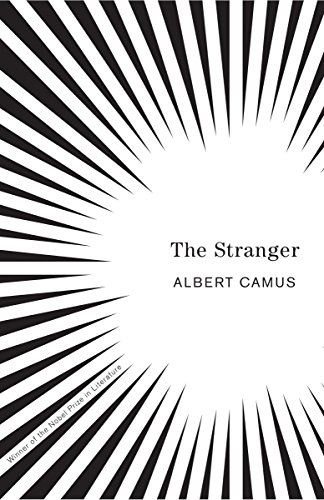
The book I just finished reading was a story I originally had to read for an Iowa State University class on Existentialism in Literature. The Nobel-Prize-winning author, Albert Camus’s book, The Stranger, is no easier to read than The Road. In fact, it may be even more depressing and dark than the first novel I mentioned. The main character lives as a stranger in a meaningless world and basically is sentenced to death by a jury because he didn’t cry at his mother’s funeral. The story devastates your compassionate heart and shakes your belief in a benevolent God. And I read it the first time long before I was an atheist who believes in a different form of god. The story is itself cruel. But in the long view, it grants you a certain melancholy sort of peace that can only be had by coming to terms with your place in all of existence.
So, I admit it. I have been obsessing about the end of life far too much. The current pandemic that has us all on the ropes in the boxing match of life has brought me to grips with the fact that, even though the end of life is far closer to now than its beginning, living life is what still matters. I have been spending my shut-in days writing novels about life and love and laughter. I have also been talking to relatives by phone and connecting with people through social media, all of which can be done without risk of viral infection. Well… maybe a computer virus.
But I am alive now. And I am living in every manner I can still manage. For now. Because I can. And because it is the right thing to do.














 Catch a Falling Star
The Alchemist by Paulo Coelho
Some books come along telling a story that has to be taken seriously in ways that don’t make sense in any normal way. The Alchemist is one of those books.
What is an alchemist, after all?
An alchemist uses the medieval forms of the art of chemistry to transmute things, one thing becoming another thing.
Coelho in this book is himself an alchemist of ideas. He uses this book to transmute one idea into another until he digs deep enough into the pile of ideas to finally transmute words into wisdom.
There is a great deal of wisdom in this book, and I can actually share some of it here without spoiling the story.
Here are a few gemstones of wisdom from the Alchemist’s treasure chest;
“It’s the possibility of having a dream come true that makes life interesting…” (p.13)
“It’s the simple things in life that are the most extraordinary; only wise men are able to understand them.” (p.17)
“All things are one. And, when you want something, all the universe conspires in helping you to achieve it.” (p.24)
“And when he had gone only a short distance, he realized that, while they were erecting the stall, one of them had spoken Arabic and the other Spanish. And they had understood each other perfectly well. There must be a language that doesn’t depend on words, the boy thought.” (p.45)
All of these quotes from the book, as you can see, come from the first third of the book. There are many more treasures to be found in this book. I should not share them with you here. Just as the main character of the story learns, you have to do the work for yourself. But this book is not only an enjoyable read, but a map for how you can execute your own journey towards your “Personal Legend”. In fact, you may find that the book tells you not only how to go about making a dream come true, but, if you are already on that journey successfully, it tells you what things you are already doing right.
9 Comments
Filed under book reports, book review, commentary, good books, magic, strange and wonderful ideas about life, wisdom, wizards
Tagged as book review, magical books, mystical books, the Alchemist by Paulo Coelho