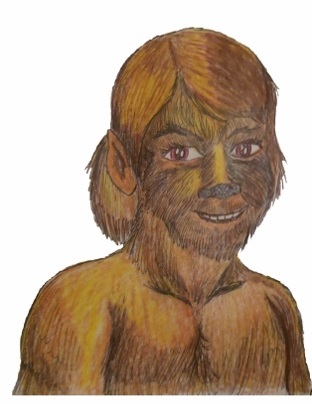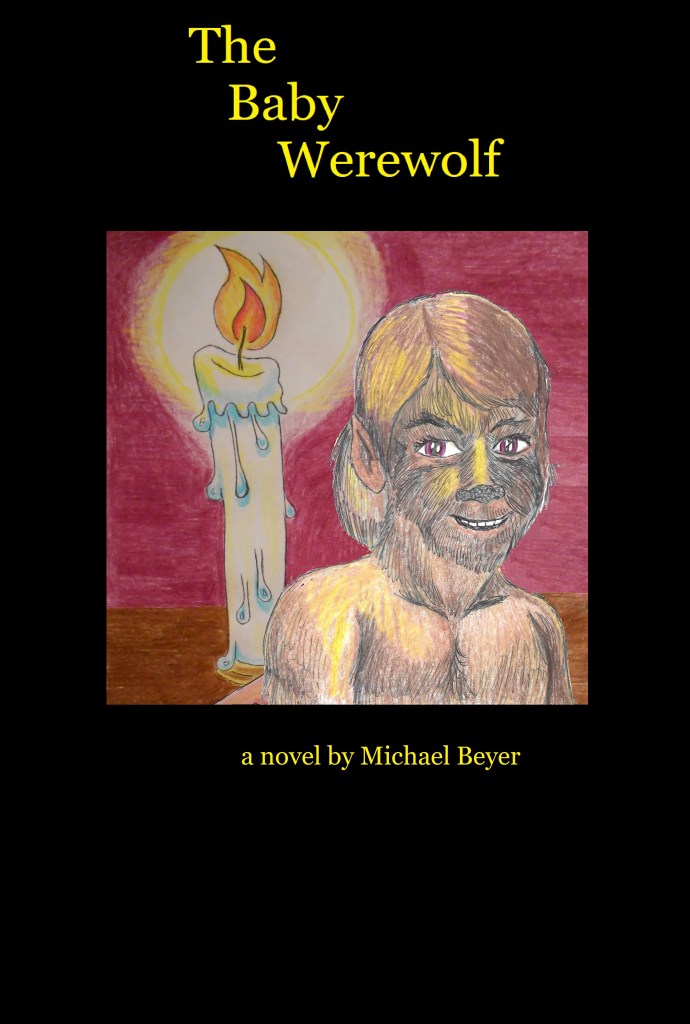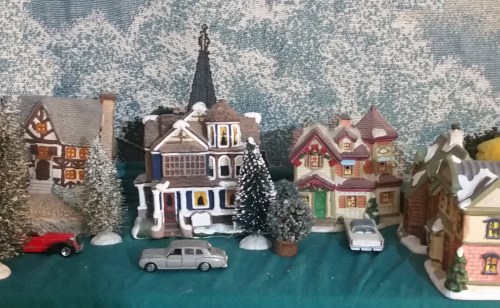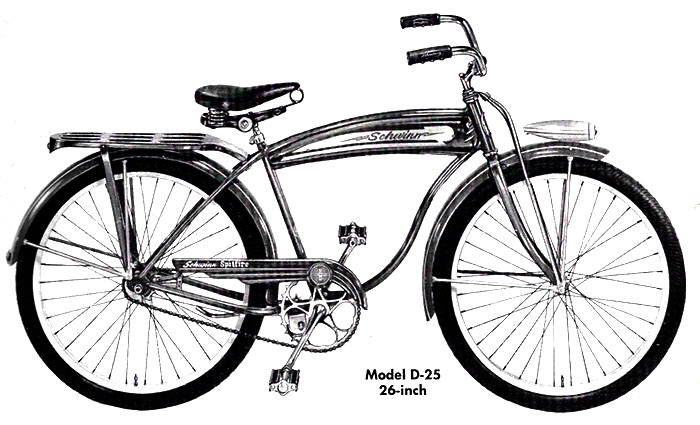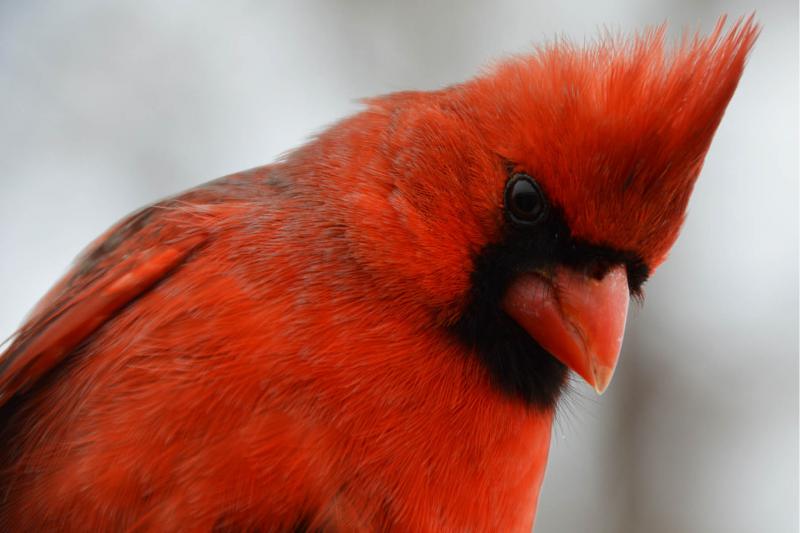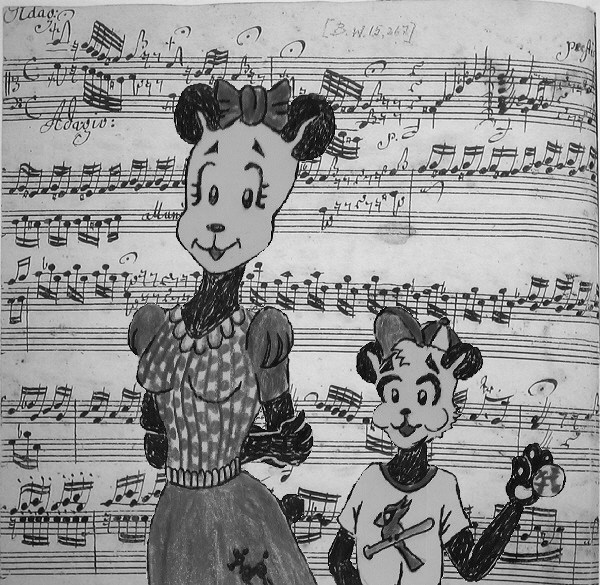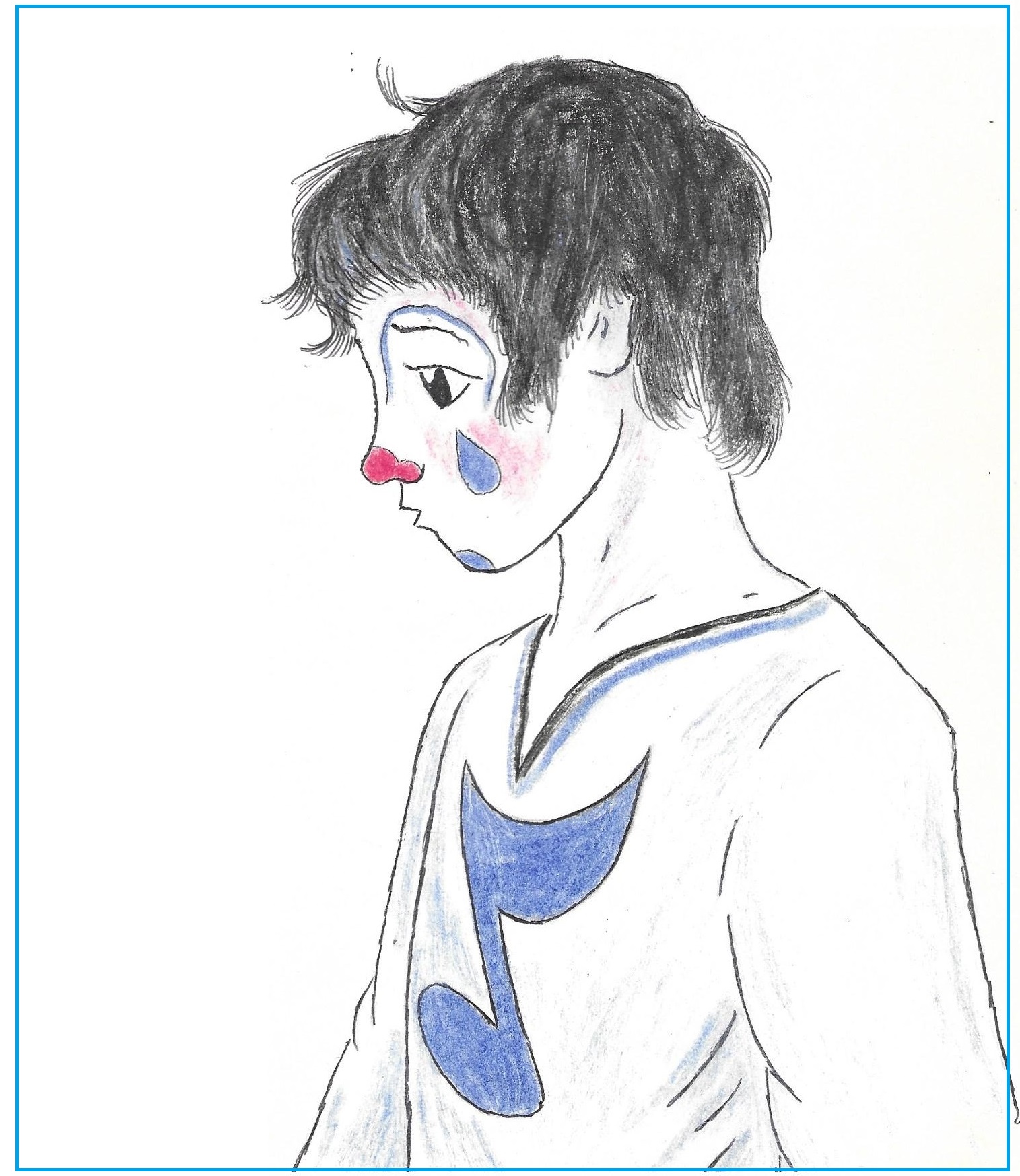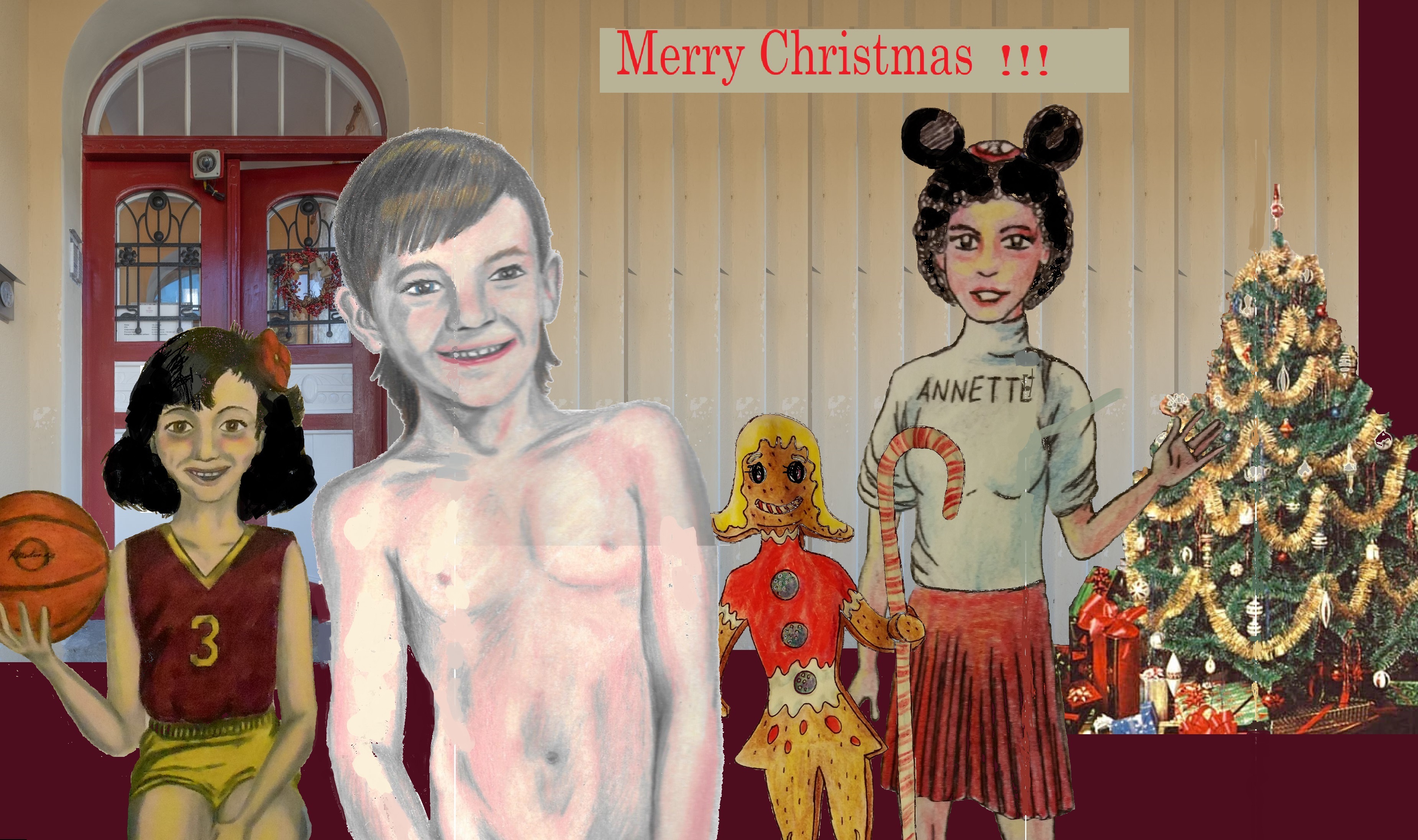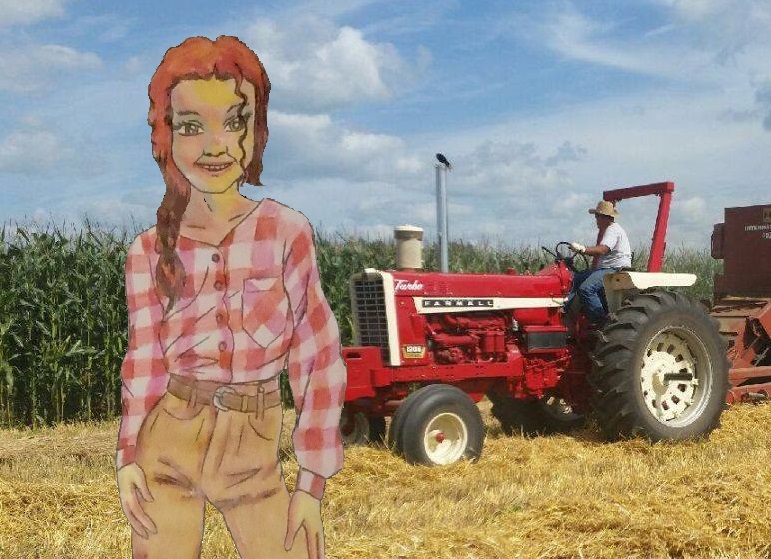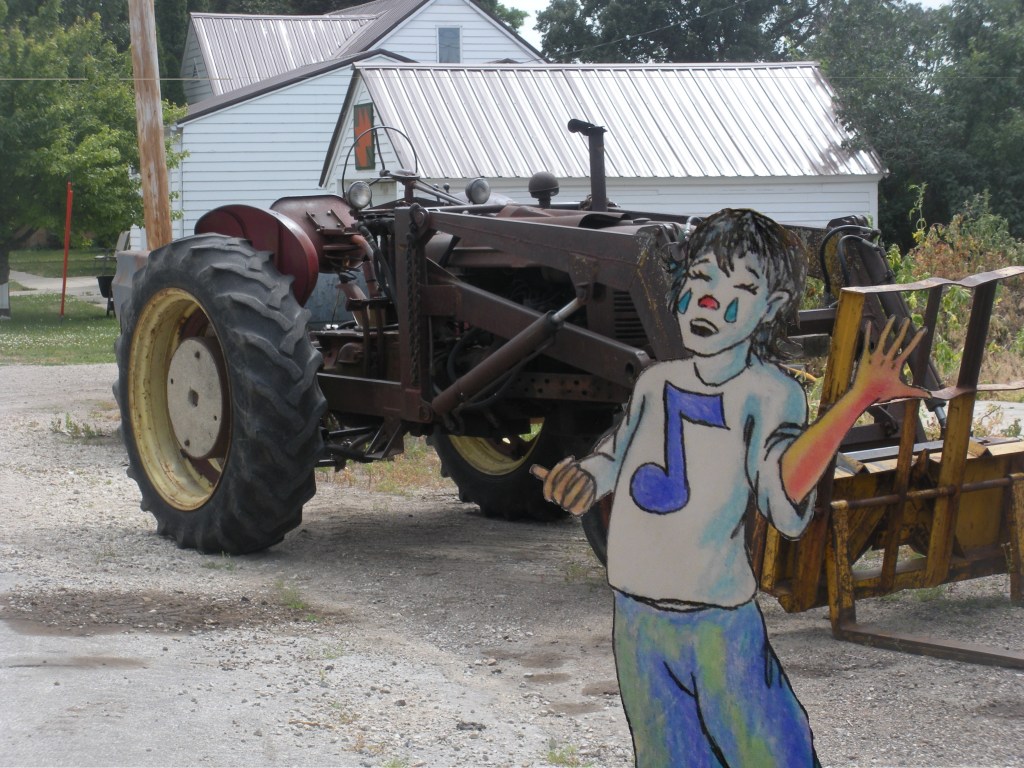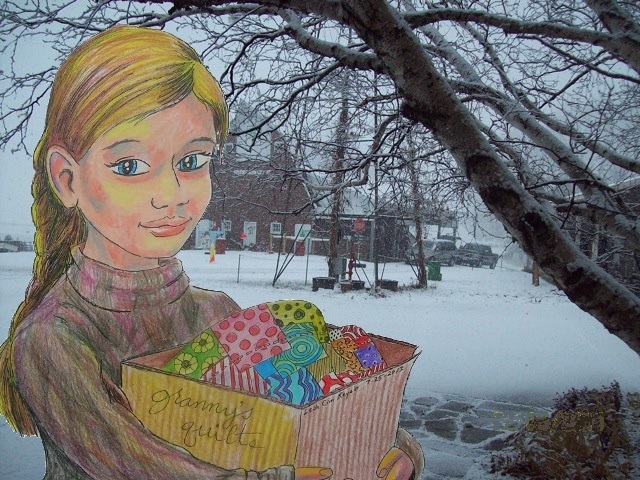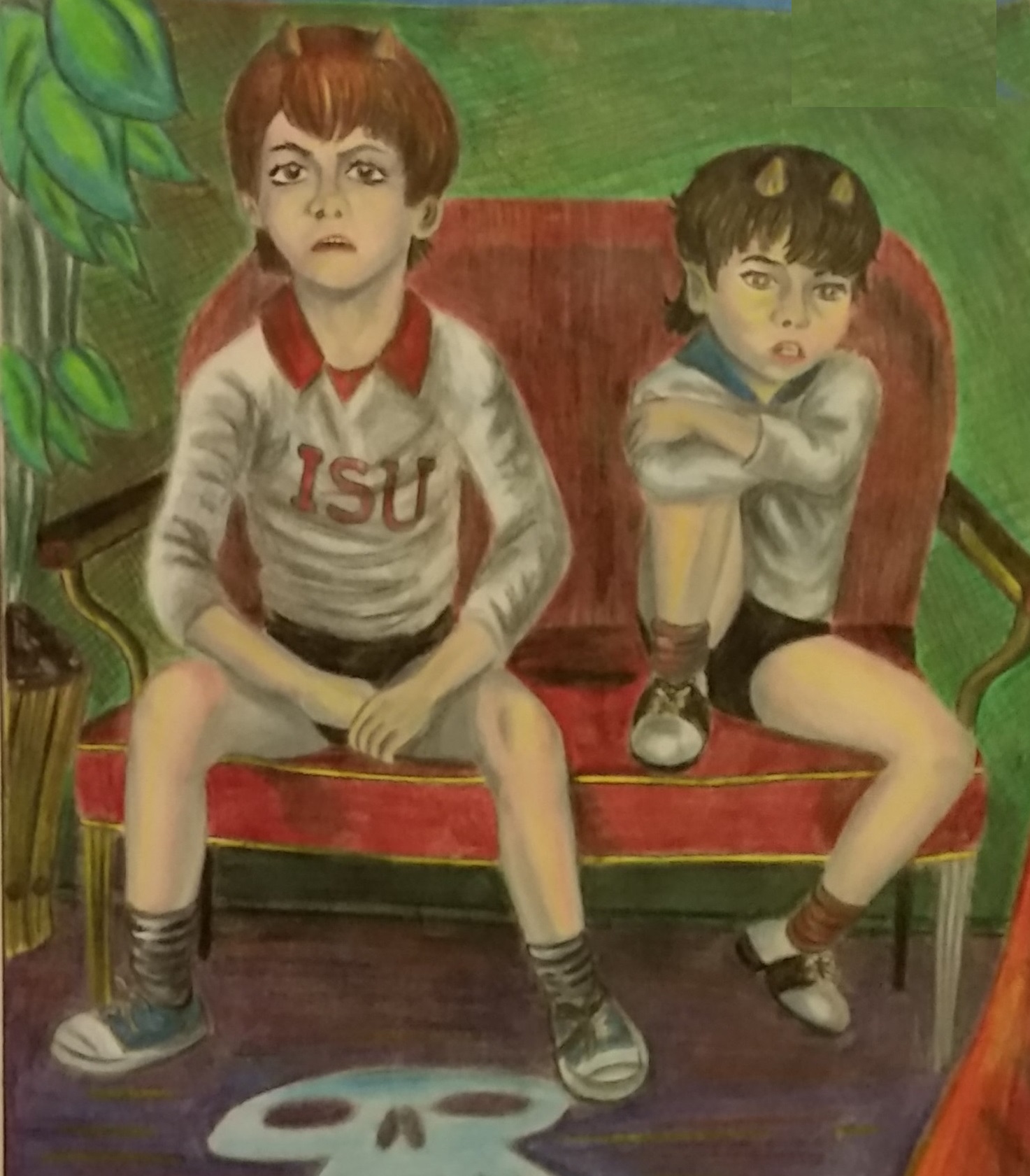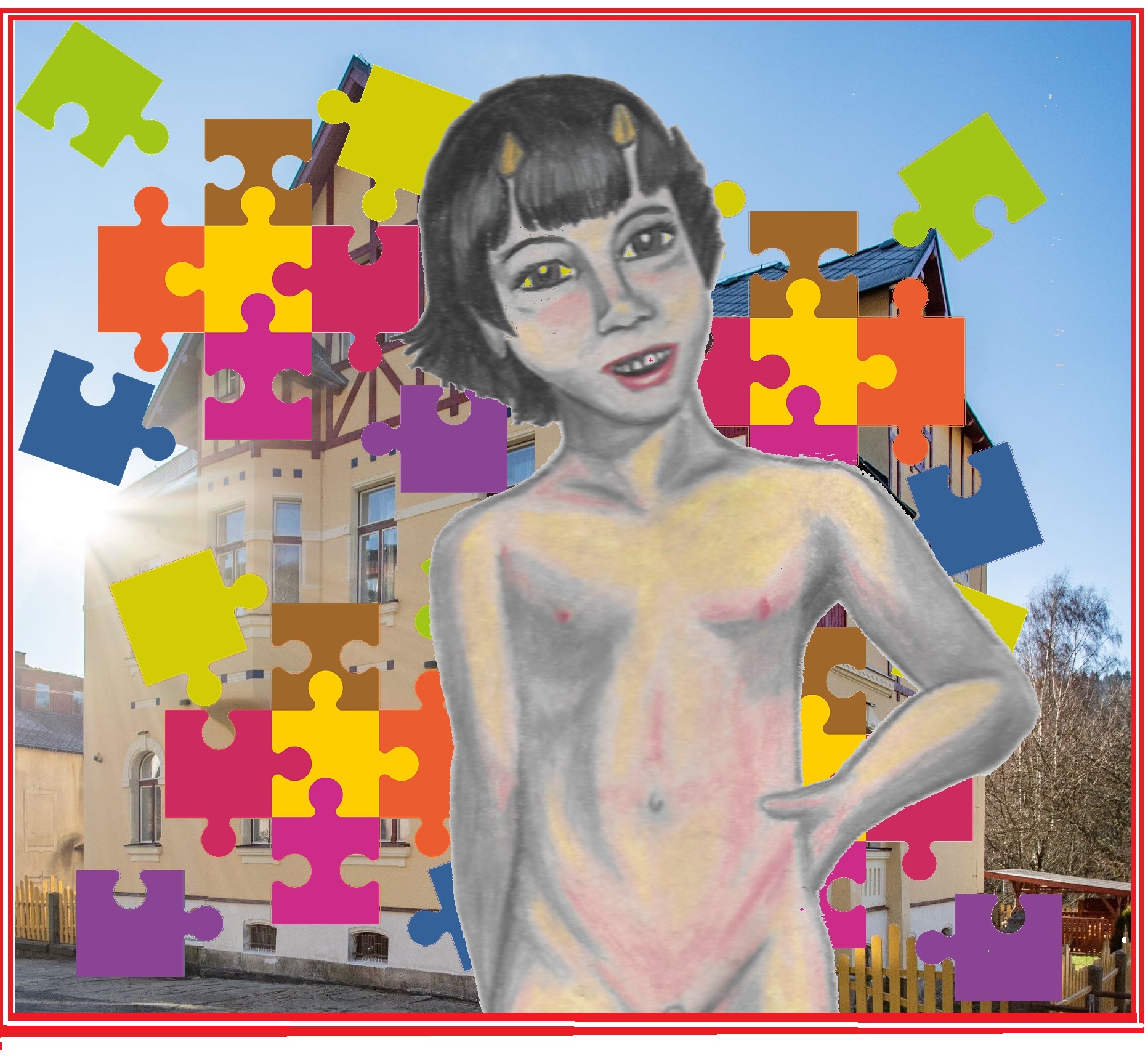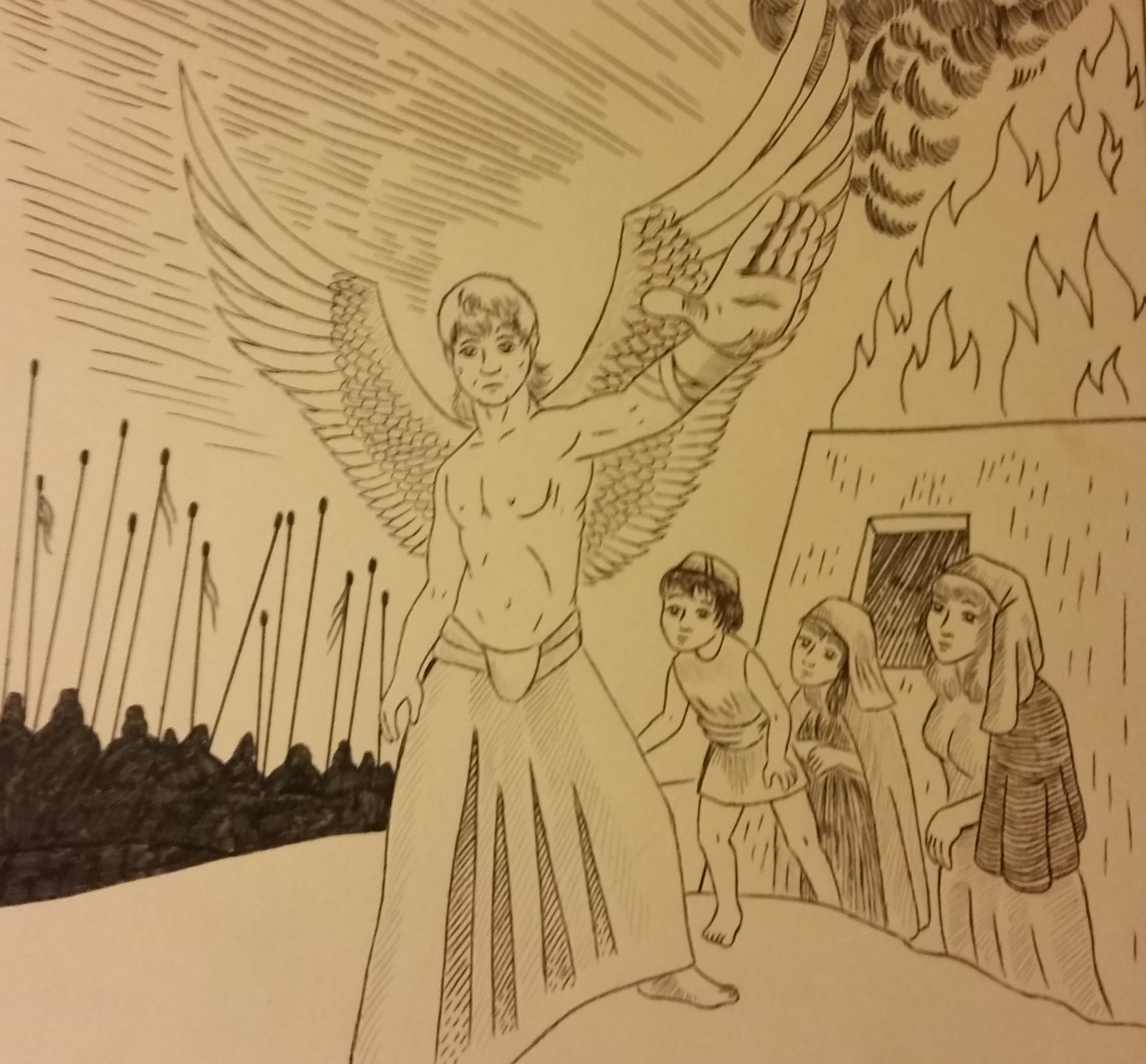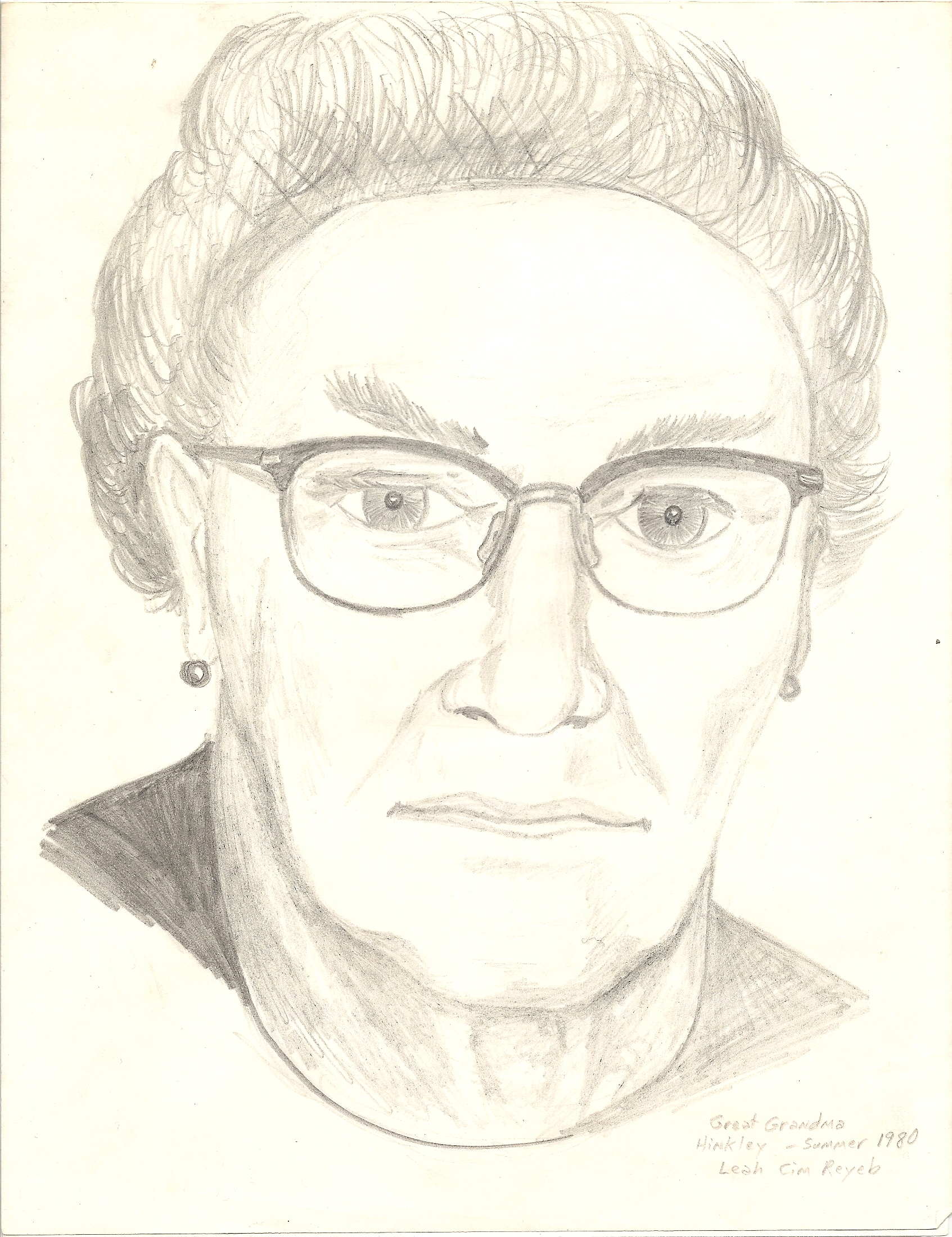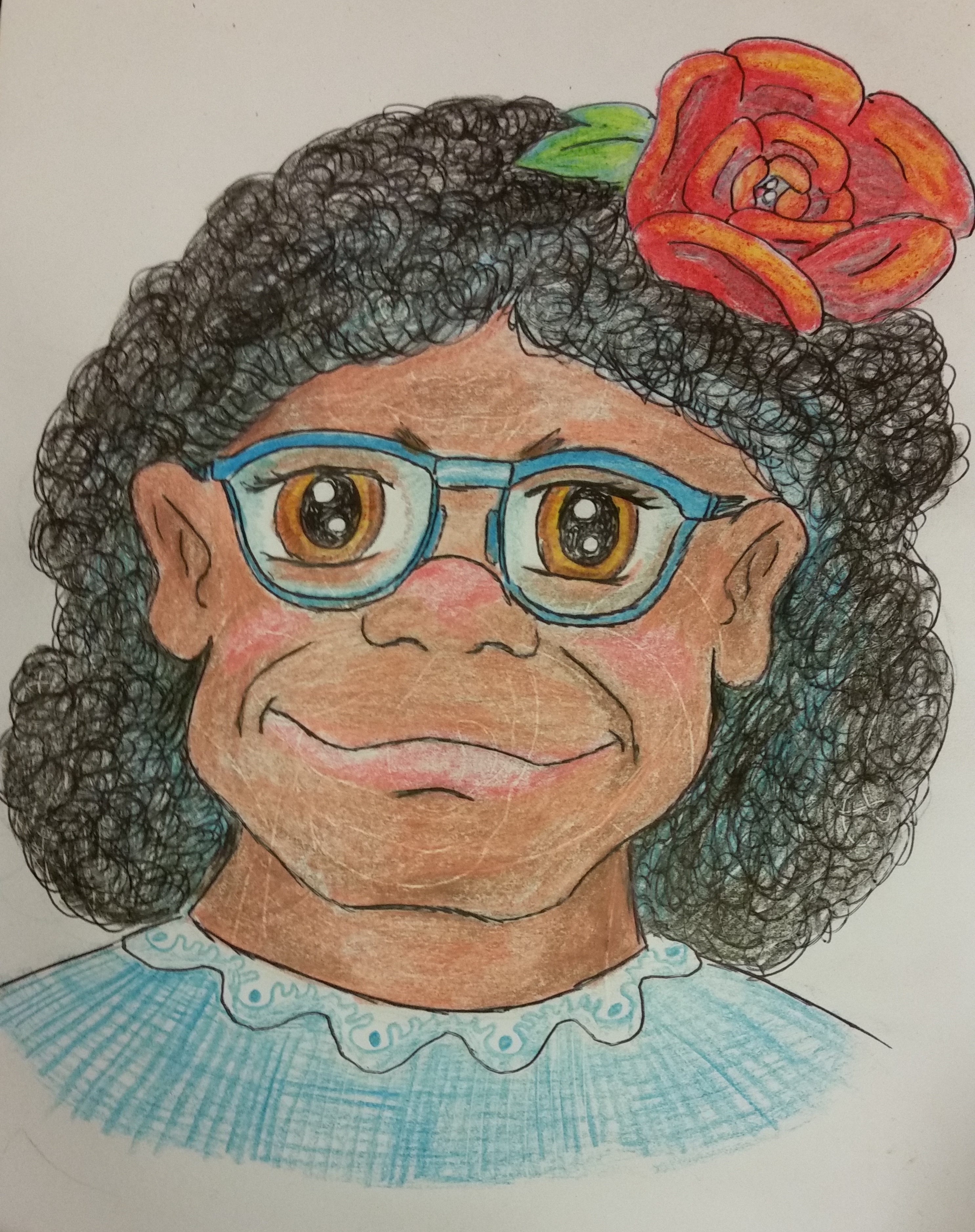
Brekka the female Telleron Tadpole is accidentally eaten by the flesh-eating flower from outer space known as Lester (both heads seen here are actually Lester,) But Brekka’s species of amphibianoid alien is poisonous to him/her/or it. so he vomits her out again, having juiced her just enough to grant her telepathy with the plant and all its buds. They become best of friends. This scene comes from the novel Stardusters and Space Lizards.
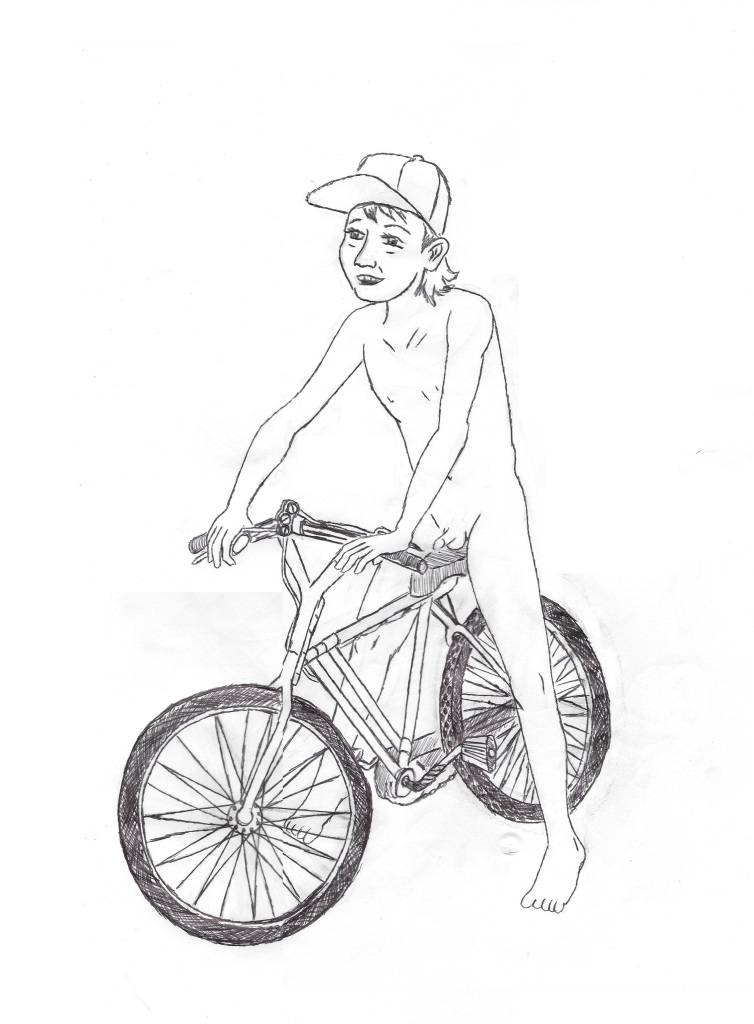
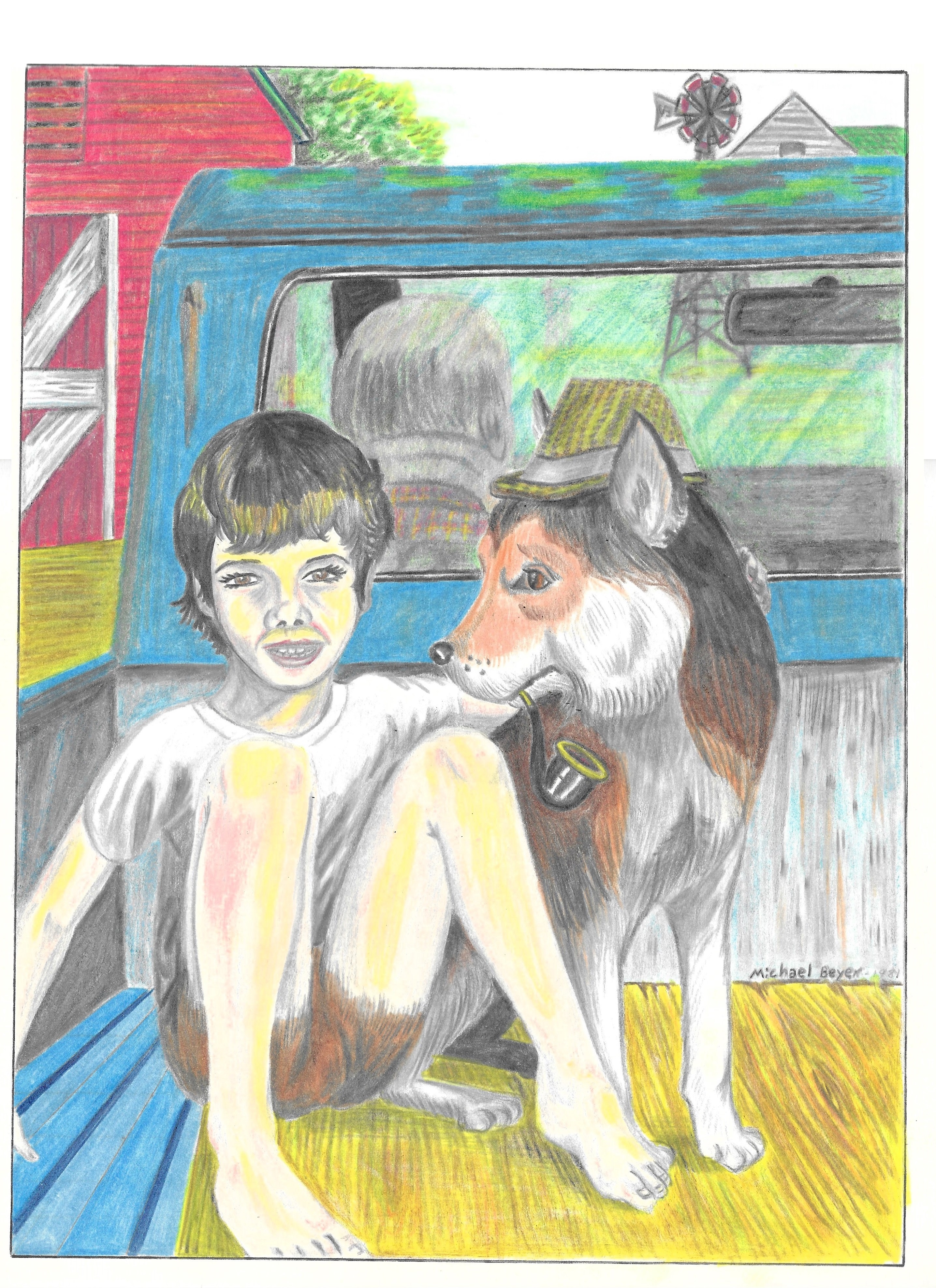
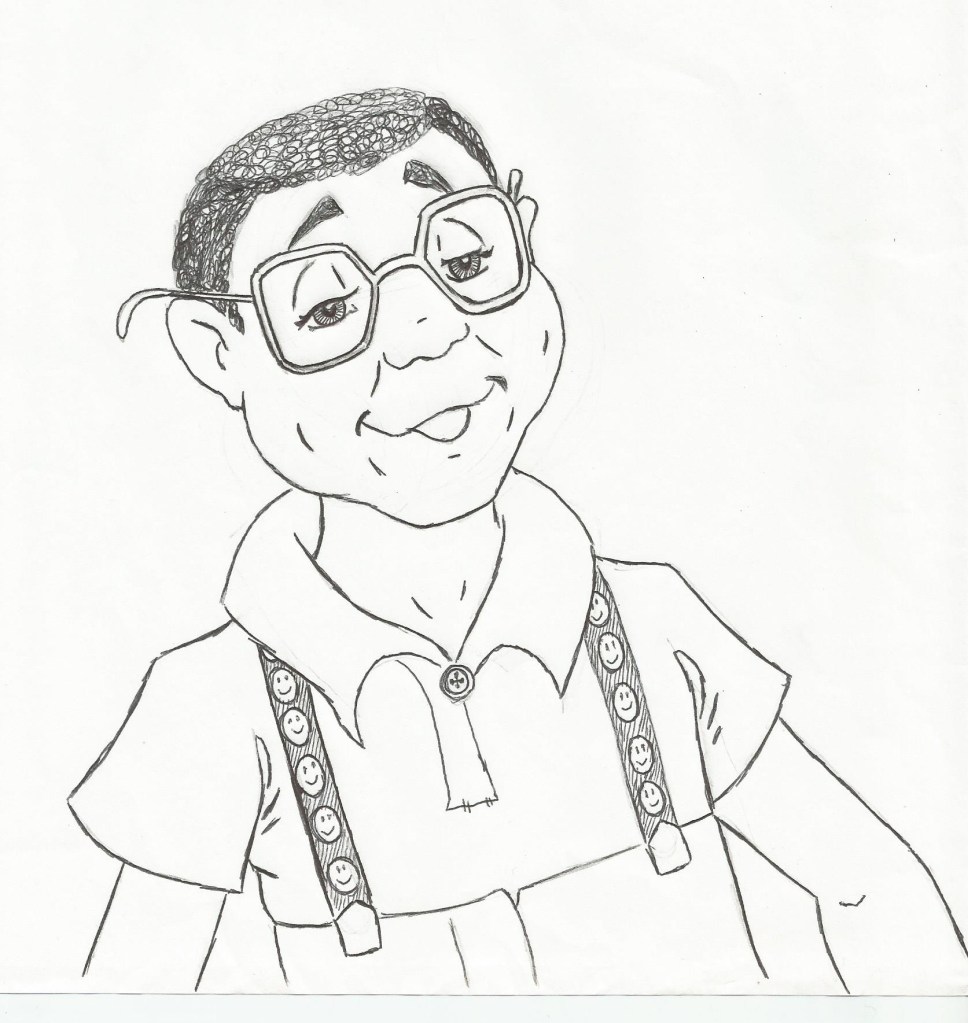
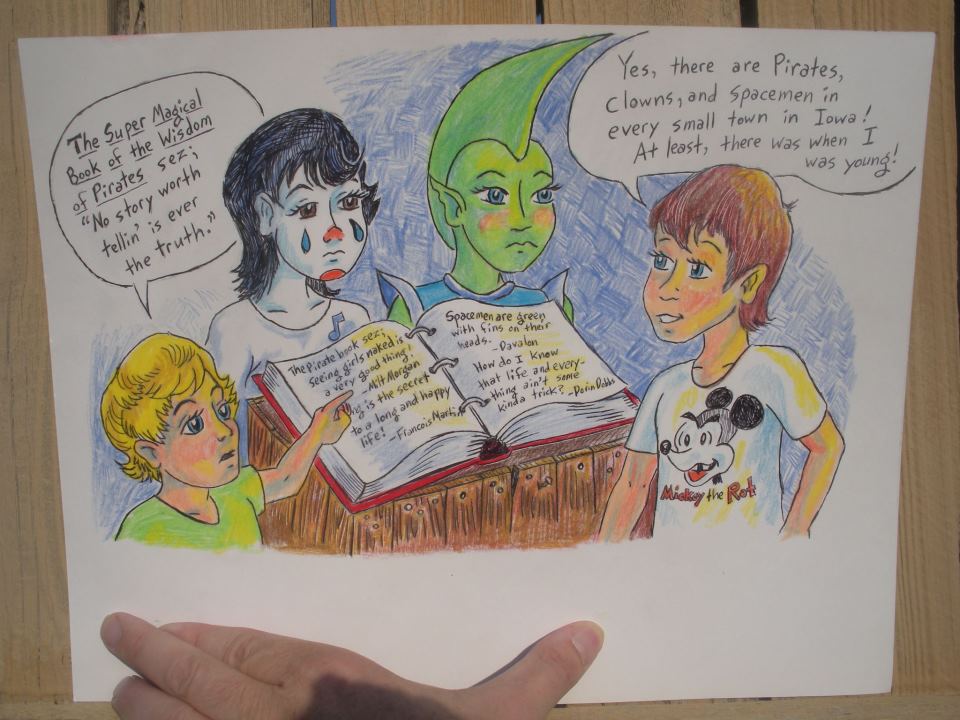
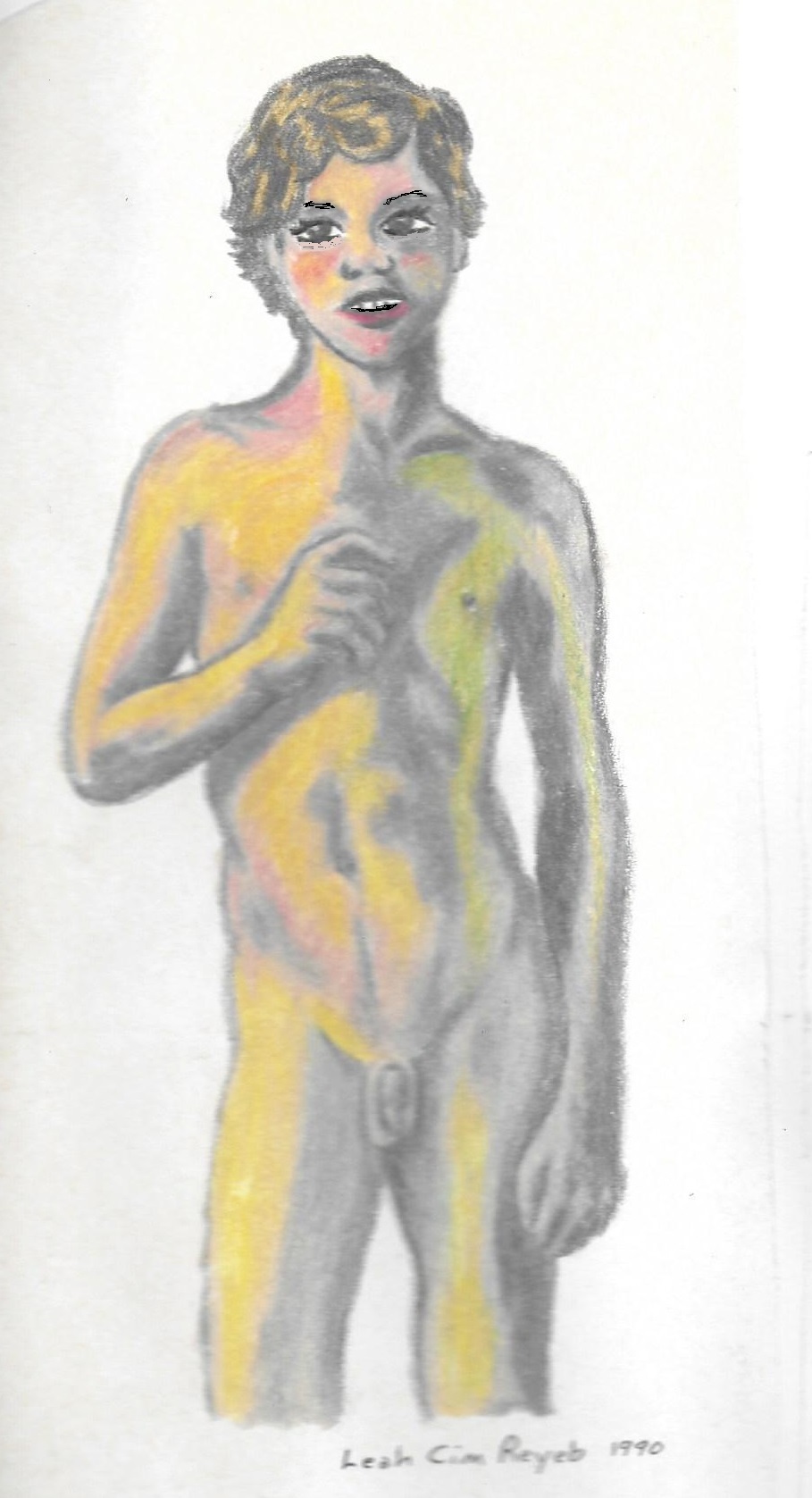
Filch is a Dungeons and Dragons character from the 1980’s. He is a Gypsy, pickpocket, thief, trap-master, and all around disgusting twelve-year-old boy. (A sixth-grader if he ever went to school.)
He was a D&D rogue used as a character by a 16-year-old band nerd who went on to attend undergraduate college at Notre Dame.
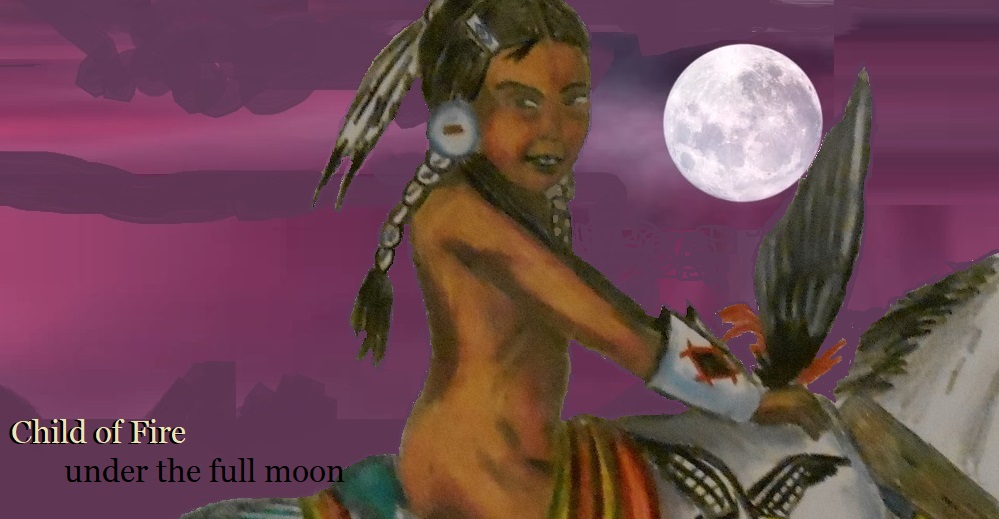
This was the title banner first used on my novel-writing Tuesday posts.
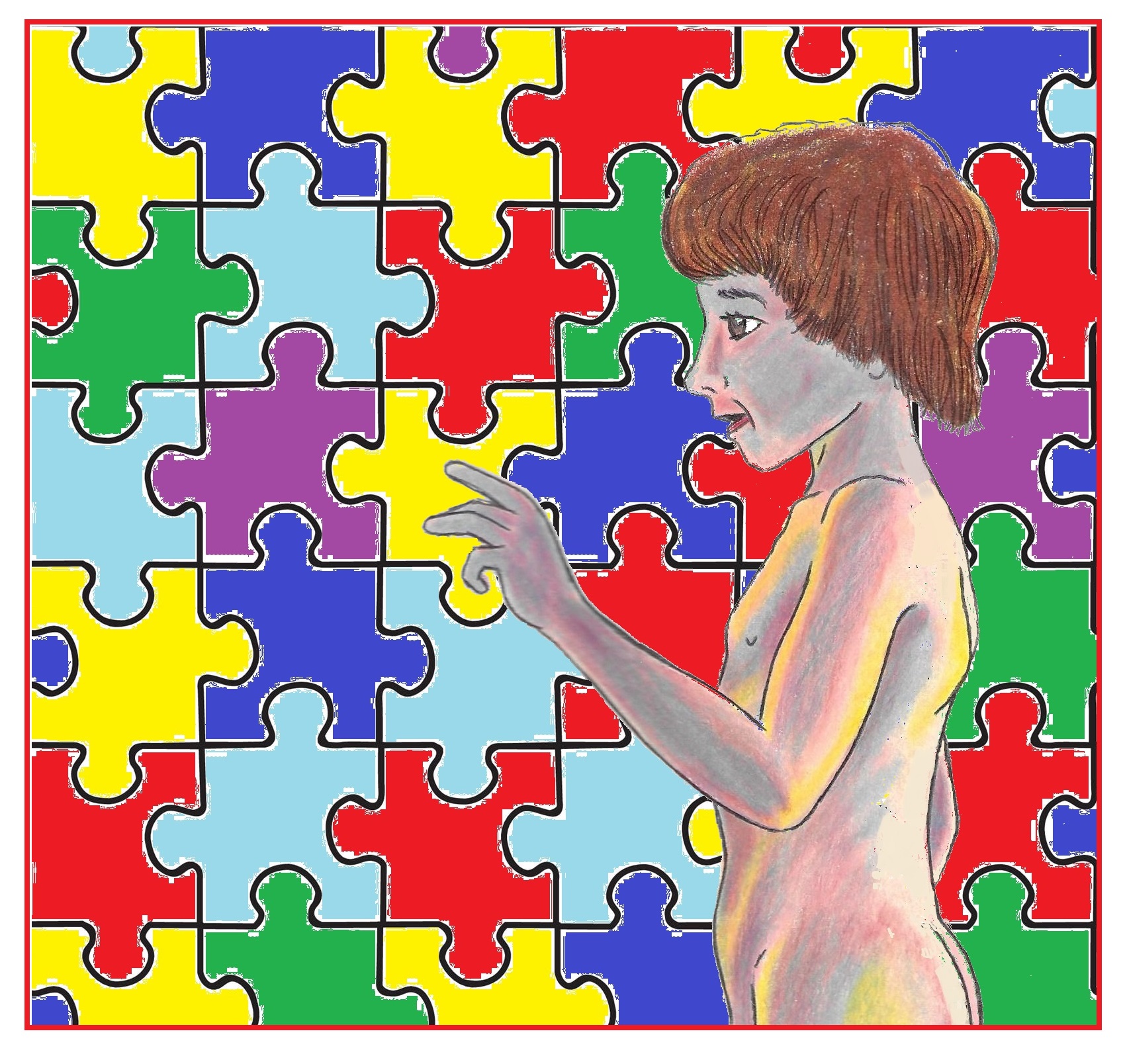
My illustration of psoriasis/arthritis/eczema suffering.
October 2016
I told teacher stories in the fall of 2016, the second start of a school year after I retired. Randy was a pain in the posterior, extremely smart, and my biggest classroom clown. He saw the fins on the back of my Ford Torino and decided he would call me “Batman” my second year of teaching, 1982. In October he wore a Batman Halloween Mask (a cheap plastic one,) and before he could call me Batman, I addressed him in front of everyone, “I’m so glad you could attend my class today, Battyman, but you will need to go by your secret identity during class.” After that, Battyman was what the other 8th graders called him for the rest of the year.
Me as a teacher, holding the big pencil in front of ESL beasties.
Today I have a low-grade fever. A slight cough. No sign of Covid yet, and I am fully vaccinated. But I have been to Walmart without a mask and get regular flu regularly. And it could also be a sinus infection again due to high pollen counts and neighborhood grass-cutting.
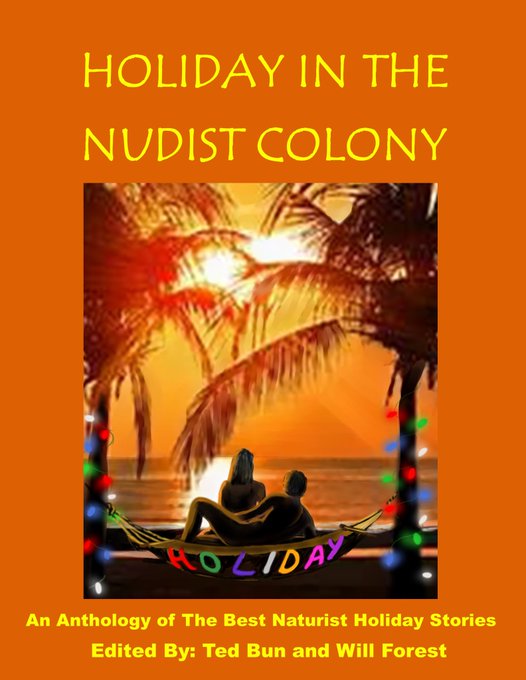
But the truly frustrating thing is that I had planned to go tomorrow to Bluebonnet Nudist Park, give them a copy of my nudist novel, and meet some of the members of that establishment that I didn’t meet in 2017.
The frustrating thing is that this marks the fifth time that I had planned to go back to Bluebonnet for a second visit. And now the plans are canceled yet again by illness.
As ever, I remain mostly a closet nudist. Me being a nudist now in the twilight years of my life is mostly a joke I tell, only loosely based on reality.
Part of the problem is the fact that I simply waited too long in my life to give in to the urge to be a nudist. I was one from childhood onward, but always too afraid of the unknown to try it openly. Especially after being assaulted at the ripe old age of ten.
My real opportunity came when I had a girlfriend in the 1980’s whose sister lived with her husband and children in a clothing-optional apartment complex in Austin. I met nudists there fully committed to the lifestyle and who encouraged me to join the movement, even after I broke up with that girlfriend. There were limited opportunities to become a nudist then. A park near Houston, a park near San Antonio, a nude beach on Lake Travis (Hippie Hollow,) and clubs in the Austin area that met in members’ homes. I only ever visited those places with clothes on. I never actually tried it. And now that I am old, I regret the opportunities missed.
Now I am old and ill and unable to express my love of nudism and naturism except through art and fiction. Of course, it has always been a very visual-only experience for me. No touching was ever involved. Whatever sexual feelings there were were always sublimated and deeply buried or strictly controlled.
And, as always, I didn’t absolutely need to share these normally private sort of details, but it seems my art and writing make me far more naked to the world than walking around a nudist park ever could.
The difference between who you want to be and who you are is humbling.
The recipe for humble pie requires good, clear eyesight.
And you need a reliable mirror that only shows the flaws in the reflected image, not in the mirror itself.
And you need to look at every detail in the whole of you. Even the secret things that you tend to conceal from everybody, especially yourself.
And writing a novel, if you do it right, is a form of baking humble pie.
The good and the not-so-good is reflected in reviews, which are often written with mirrors that have flaws.
But what you see, if you are honest with yourself, can show you that, even though you are far from perfect, you are exactly what you are supposed to be.
My childhood was shaped by television events like the annual showing of The Wizard of Oz and classic movies on Friday nights when I was allowed to stay up past my bedtime to watch the whole thing. I have told you before how much I loved the comedy of Red Skelton. Another comedian who shaped who I am through his wondrously manic movie performances was Danny Kaye.
One of those Friday movie classics that really struck home was the wonderful, kid-friendly movie Hans Christian Andersen.
1952 movie poster from Wikipedia
The movie was about a storyteller from a previous century and embroidered his biographical story with his famous children’s stories in the form of songs. And Danny Kaye could trip through multi-syllabic, fast-paced musical numbers like no other rubber-faced clown I have ever seen. I wanted to be such a story-teller from a very early age. I even wanted to write the kind of stories that could be made into songs. Let me show you a few of the bits that amazed me and killed me with laughter.
This song from the Inspector General was doubly engaging because the corrupt businessmen were trying to poison the character Danny played with the wine he was supposed to drink during the drinking song.
The movies Danny Kaye was in were mostly about the musical comedy. But sometimes they were just about the music. He appeared in musicals like White Christmas with Bing Crosby and stage musicals like Lady in the Dark which won him awards on Broadway. He made movies about music like The Five Pennies and A Song is Born. He always said he couldn’t read music, but he demonstrated perfect pitch and scored a number one hit with The Woody Woodpecker Song recorded for the animated cartoons of Walter Lantz. How cool is that?
And you already know that The Wizard of Oz is my favorite movie of all time. In 1964 Danny became the host for CBS’s annual showing of the film. He was able to do funny songs that made you snort your hot cocoa through your nose from laughing, and he could also do beautiful ballads like these.
I will always take the opportunity to watch a Danny Kaye movie one more time, whether it comes on YouTube or a Netflix oldie or a $5 DVD from the bin at the front of the Walmart Superstore. And I will always think of him in his role as Hans Christian Anderson.
Oh, and he was a very funny comedian too when he wasn’t singing, as in The Court Jester and The Secret Life of Walter Mitty.
When I was in Cow College at Iowa State University I spent most of my study time listening to KLYF Radio in Des Moines. They would eventually transform into an easy-listening music station, but the time I truly lived a K-LYFe was when they played classical music. And it was there that I first fell deeply in love with the Saturday Matinee stylings of Erich Wolfgang Korngold, the first incarnation of John Williams of Star Wars fame. Yes, movie music. Classical movie music. And it seemed, mostly movie music for Errol Flynn movies.
My sister was always a lover of Errol Flynn movies, and when KGLO TV Channel 3 would play one on the Saturday Movie Matinee in the early afternoon, we would have to watch it, the whole thing, no matter how many times we were repeating the same four movies. Nancy would memorize the lines from the Olivia deHavilland love scenes. I would memorize the sword fight scenes with Errol and Evil Basil Rathbone (Good Basil was Sherlock Holmes, and we had to watch those too.) Early evenings on those Saturdays were all about playing pirate and Captain Blood adventures. Or better yet, Robin Hood.
But the music of adventure was by the composer Erich Wolfgang Korngold. He did the sound tracks for Captain Blood, Robin Hood, and the Sea Hawk.
I sincerely love the corny old movie matinee music because it was not only genius-level mood music and story-telling in a classical music instrumental masterpiece, but because even now it takes me back to the boy I was at twelve years old, playing pirate on Grandpa Aldrich’s farm. Making Robin Hood bows out of thin tree branches and arrows out of dried ragweed stalks. Sword fighting to the death with sticks with my cousin Bob, who was always Basil Rathbone in my mind. while I’m sure I was Basil Rathbone in his mind.
To be honest, there is much more to Korngold than I have relentlessly gushed about here like a hopeless nerdling fan-boy in the throws of a geeky movie passion. He was a musical child prodigy like Mozart. He wrote a ballet called Der Schneemann (the Snow Man) when he was only eleven, and became the talk of the town in Vienna, Austria in 1908. He became the conductor of the Hamburg Opera by 1921. He wrote some very fine classical music in the 20’s that still rings through orchestra halls to this day before coming to America in the early 30’s with film director Max Reinhardt. He scored his first film in 1935, adding music to Reinhardt’s Midsummer Night’s Dream. He was fortunate to escape Europe just as the Nazis were coming to power in Germany, and also at the right time to team up with new movie star sensation, Errol Flynn. He won his first Oscar for the musical score of the movie Anthony Adverse in 1936 and he won his second for The Adventures of Robin Hoodin 1938. He died in 1957, a year after I was born. But I promise, I didn’t kill him. I was in college in the 1970’s when his music underwent a revival, complete with renewed popularity.
His music was pure gold to listen to in the fields of corn in Iowa in the 1970’s. It was just as good as that last pun was terrible. So, in other words, really, really, spectacularly good. It was the music that scored my childhood fantasy adventures.
When I was a kid old enough to begin to see and interact with the real world in the tragic and magical 1960s, the first comic books available to me, long before my parents would allow me to pick up and buy Spiderman and Batman and (shudder) comics with monsters in them, were the kid-friendly comics of the Harvey Brothers.
Now, you have to understand that Harvey Comics had been around since the 1940s and made their money on characters licensed first from the Brookwood Publications company that Alfred Harvey bought out in 1941 to provide the building, equipment, and publishing personnel to start producing comic books.
Robert B. Harvey and Leon Harvey joined the company to help produce titles they now owned the rights to like Black Cat, the Shield, Shock Gibson, and Captain Freedom.
…………………………………………Of course, most of those characters didn’t last very long. Black Cat was the only title still being published by Harvey in the 1950s.
They would go on to license characters from Famous Studios, the animated cartoon works of Max Fleischer and his brother Dave. That’s when the kid- friendly, parent-approved comic books of Fleischer creations like Casper the Friendly Ghost opened up the world of comic books to seven-year-old Mickey circa 1963.
In spite of this cover art, Casper rarely wore clothing.
Now, it is probably obvious that there are many ways that Harvey Comics influenced me as a storyteller later in life. It goes without saying that my dedication to childish humor in stories derives from this comic-book source. The cuteness of characters is another necessity of comic storytelling gleaned from these ripe fields of baby faces. And stories advanced by magical means and absurd sidetracks also come from here. But did you ever notice that Casper and the other ghosts all perform in the nude? Yes, I think my childhood longing to be a nudist began with Casper’s naked adventures. But unlike Casper, my urges along those lines were suppressed and repressed by parents and society as a whole. So watching Casper and Spooky and Pearl (Spooky’s goilfriend) romp naked through comic book hijinks were a sublimated substitution for that childhood desire. (Sure, none of them had genitals, but it wasn’t about that.)
…………………………………………….Of course, there were many other Harvey characters to enjoy that actually did wear clothes. I was particularly fond of Hot Stuff because he made such an art out of burning things and being a bad kid and roasting the backsides of fools and hypocrites with his trident. And he only ever wore a fireproof diaper, so he was almost a nudist too.
There were many other characters licensed by Harvey as well, including Felix the Cat, Little Audrey, Baby Huey, and the characters from Walter Lance Studios like Woody Woodpecker, Andy Panda, and Chilly Willy.
Dell would later take over the comic book rights to Walter Lantz Studios creations.
So, now you know the true story of how my innocent childhood was warped and woven and corrupted by the characters of Harvey Comics.
It is normal for the world we live in to inspire us to draw pictures of it. But architects do the opposite. They imagine a world we could live in, and then build it.
David and Me in Cotulla
Sometimes, like in the picture above, I draw real people in imaginary places. Other times I draw imaginary people and put them in real places.
Gyro and Billy on the planet Pan Galactica A
Sometimes I put imaginary people in imaginary places. (I photo-shopped this planet myself.)
Superchicken and Sherry before school
In fiction, I am re-casting my real past as something fictional, so the places I draw with words in descriptions need to be as real as my amber-colored memory can manage.
Valerie and her skateboard in front of the Congregational Church
When I use photos, though, I have to deal with the fact that over time, places change. The church does not look exactly like it did in the 1980s when this drawing is set.
Drawing things I once saw, and by “drawing” I mean “making pictures,” is how I recreate myself to give my own life meaning.
In 1964 I was 7 years old until November. I became a baseball fan that year. I had listened to baseball games on the radio with Great Grandpa Raymond before that year, but that had always been Twins’ games in the American League. But that was the year I discovered the St. Louis Cardinals. I followed them in the newspaper, the Mason City Globe Gazette. They had lost the greatest hitter in their history to that point, Stan Musial having retired when the 1963 season ended. But he was replaced in left field by Lou Brock, the hit-making base-stealing boy wonder of 1964. They went from near the bottom of the National League to edging out the Philadelphia Phillies and the Cincinnati Reds by one game each (they were tied for second) at the very end of the season.
The World Series pitted the Cardinals against the mighty New York Yankees. Mickey Mantle and Whitey Ford were the stars of that team and had won five World Series in a row a decade before. It was a fantastic battle that the Cardinals finally won 7 to 5 in the seventh and final game in St. Louis. Bob Gibson was a deciding factor and won Series MVP. I would become a life-long Cardinals fan.
And I lost my Grandpa Beyer. He went to work one day, driving a road grader and his heart simply stopped working. It was the first time I lost a major somebody in my life.
In 1962 I had spotted the bright pinprick in the sky that was John Glenn orbiting the earth in the Friendship 7 Mercury spacecraft. My mother and father helped me spot it from our back yard in Rowan, Iowa.
In 1964, therefore, I began to take a serious interest in outer space as the Mercury program transformed into the Gemini program that was testing procedures in space for eventual Apollo moon missions.
I was in the Second Grade in 1964. Miss Madison was my teacher. She was as old as my Grandpa and Grandma Aldrich. She got mad at me at least three times that I can remember. I mean, I know that there were more than that, but there were three times I made her so mad with a joke that she memorably made me feel the wrath that teachers reserve for classroom clowns.
Steve Kaufman “The Beatles Debut on Ed Sullivan 1964”
The Beatles were on Ed Sullivan in February. My Grandpa and Grandma Aldrich told me that the Beatles must’ve been confused about whether they were boys or girls to have haircuts like that. And those were the bowl-cuts they had before the wild-hair days of the later Sixties. All the boys in my class had either a butch cut or a flat-top. Hair styles for boys back then meant not really having any hair.
Lyndon Baines Johnson was president. He had been since the Kennedy assassination in 1963.
In July LBJ signed the Civil Rights Act of 1964 into law, abolishing segregation.
In August, the Gulf of Tonkin Incident (since revealed to be a proven false-flag operation) leads to the Vietnam War.
The “Daisy” campaign ad for LBJ, showing a little girl picking flowers and then being blown up by an atom bomb, convinces my dad that Barry Goldwater is a dangerous radical, and he votes for LBJ even though he is not a conservative or a Republican.
LBJ is elected President of the United States in 1964.
Later that November, I turned eight years old.
1964 was a notable year for me. Even if it wasn’t for Barry Goldwater.
In the picture that starts this post, I am 8. Nancy is 6, holding on to little brother David at 2. Mary is 4. We are all in our Sunday best on Easter Sunday morning.
Why am I writing about 1964 today?
My mother is in hospice at 87 years old. She is dying of heart failure. And today, I and my two younger children got to talk to her by phone. The light and hope we have today is colored by the hope and light we had in the past. Such is the nature of having a family over time.
It began in childhood with the Red Skelton Show. Every Wednesday night it a was a refuge for me. And refuge was a critical idea for me. I was a child hiding a terrible secret from the entire world. At times I hated myself. Twice as a teen I came very close to choosing suicide over life. The person I most needed to hide from was myself. And humor helped. Red Skelton’s gentle humor helped me to not only escape from myself for a while, it taught me to laugh at my own foibles and not take things quite so seriously.
media.npr.org
In my college years I discovered humor in written form. Mark Twain swiftly earned my utter devotion as I read not only Huckleberry Finn and Tom Sawyer, but Roughing It, A Connecticut Yankee in King Arthur’s Court, Pudd’nhead Wilson, The Mysterious Stranger, and The Autobiography of Mark Twain. You know, there are a large number of things in Mark Twain’s humorous books that make you cry, that make you angry, and make you think deep thoughts. I basically discovered that humor is a way that smart people choose to think of things which helps to keep you sane and basically un-suicided.
A beautiful portrait by artist Emily Stepp
It is obvious that some people become very skilled at humor because they have used it all their lives to fight the darkness . Robin Williams is only few years older than I am. In many ways his life has paralleled my own (obviously minus the wealth and fame in my case… but what would’ve happened if Robin had become a school teacher?) I have depended on Robin Williams’ movies to keep me going, giving me insights in how to talk to kids, how to be a parent, and how to empathize with others. Of course, I haven’t yet taken some of his movie advice. I never put on a mask and a dress to deceive my own children. But only time will tell.
I obsess about humor and how you create it. I gorge on things like the works of Dave Barry. Do you know who he is? Florida newspaper columnist who writes books about everyday life and the fools who live it? I have to do a post on Dave Barry, because he makes me laugh so hard that milk shoots out of my nose, sometimes when I am not even drinking milk… believe me, I don’t know how that works either.
A bust of Herman Munster
Doofy Fuddbugg here is an example of what a “Nolt” is.
I love to laugh. It makes the world right again. I have laughed an awful lot for almost an entire lifetime now. I treasure all the funny people I have known. And I need to continue to try to make people laugh up until the very end. Because the world is too often not a funny place. It can be full of badness and sadness and suffering. And as Mark Twain so aptly pointed out, “Against the assault of laughter… nothing can stand.”
Humble Pie
The difference between who you want to be and who you are is humbling.
The recipe for humble pie requires good, clear eyesight.
And you need a reliable mirror that only shows the flaws in the reflected image, not in the mirror itself.
And you need to look at every detail in the whole of you. Even the secret things that you tend to conceal from everybody, especially yourself.
And writing a novel, if you do it right, is a form of baking humble pie.
The good and the not-so-good is reflected in reviews, which are often written with mirrors that have flaws.
But what you see, if you are honest with yourself, can show you that, even though you are far from perfect, you are exactly what you are supposed to be.
2 Comments
Filed under artwork, autobiography, commentary, empathy, feeling sorry for myself, irony, Paffooney, self portrait, strange and wonderful ideas about life