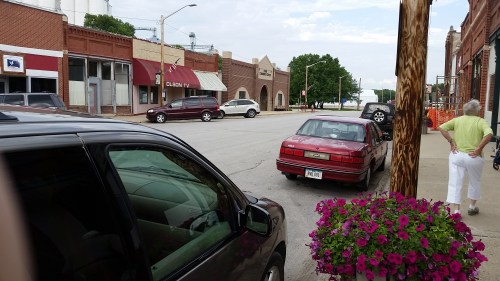
Bustling downtown Dows with the grain elevator in the background
There are many simple truths to be gleaned from a simple visit to the scene of your childhood. You need every so often to get in touch with where you came from and the roots of who you are. Dows is not the town where I grew up. But we played them in 4-H softball, and we won almost as much as we lost to them. It is a town near enough to my little home town to be a place that impacts who I am.
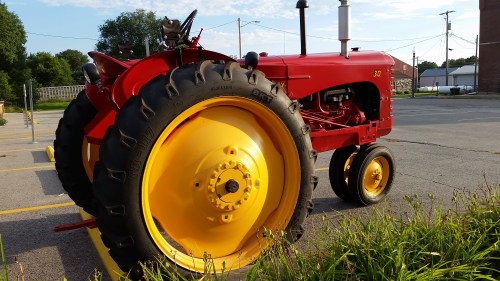
You have no idea what this is, right?
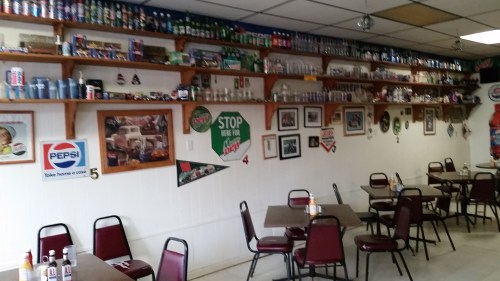
Day before yesterday we went to Dows for a dinner with relatives. My cousin and her second husband were there. Her parents, my uncle who still lives on Uncle I.C.’s farm place that has been in the family for more than a hundred years, and my aunt who is going bald a bit, were also there. We ate in a totally Pepsi-Cola-themed restaurant and had a Rueben pizza with roast beef and sauerkraut on it (talk about your total cultural potpourri!) The experience taught me a simple lesson. We come from a bizarre mixture of themes and things cooked together in a recipe for life that can never be repeated and cooked again for our children.
You don’t order Coke here.
We avoided talking about politics because Iowa is very conservative and none of us enjoy yelling at each other about Donald Trump and Hillary Clinton using fact-free Fox News talking points and cow poop about how building a wall that Mexico pays for will cure all our economic problems because we all think we know how Hispanics moving into Iowa are ruining our lives. So, instead, we talked about how Eaton’s machine tool manufacturing plant in Belmond is facing more lay-offs.
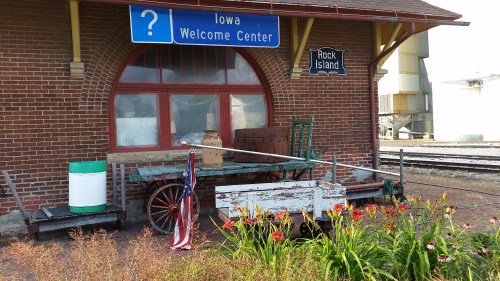
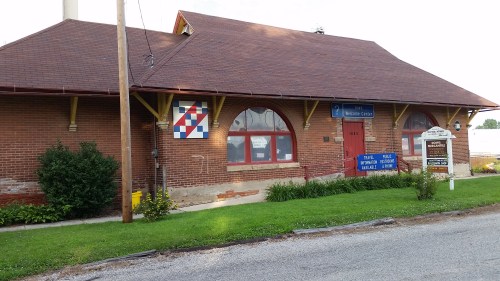
The restored and re-purposed Dows’ Rock Island train station.
We talked about businesses that have gone out and not been replaced in the little Iowa towns around us. We talked about how no one walks beans any more, walking the rows of soy beans to pull button weeds and cockle-burrs by hand and chop rogue corn with hoe. We talked about how farming has gone to spraying weed-killing chemicals and factory-farming pigs instead. It is a simple lesson in how ways of life come to an end and are not necessarily replaced with something better.
There is an artist working on a patriotic project to put one of these in every county in Iowa.
We constantly remake ourselves as the world changes and ages around us. Nothing lasts forever. Life is a process of growing and withering and regrowing. A simple word for that is “farming”. Who we were impacts who we have become and will affect what comes after. But we learn simple lessons from going to the places we love best and doing our dead-level best to get from there to here and move eventually to someplace beyond. And Dows, Iowa is just one of those places… I guess.
I have had a practically life-long fascination with trains. Where did that come from? It came from a Methodist minister who once upon a time saved my life.
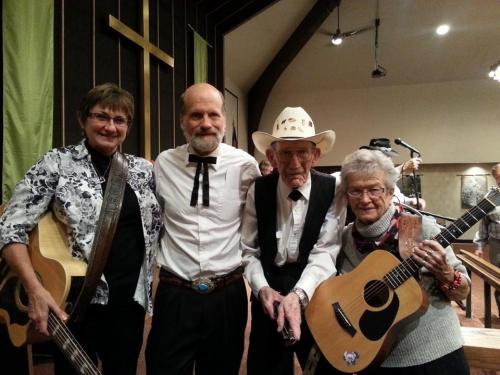
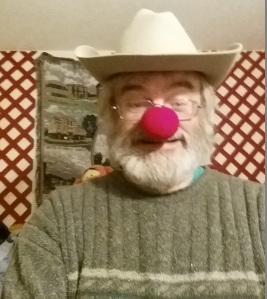
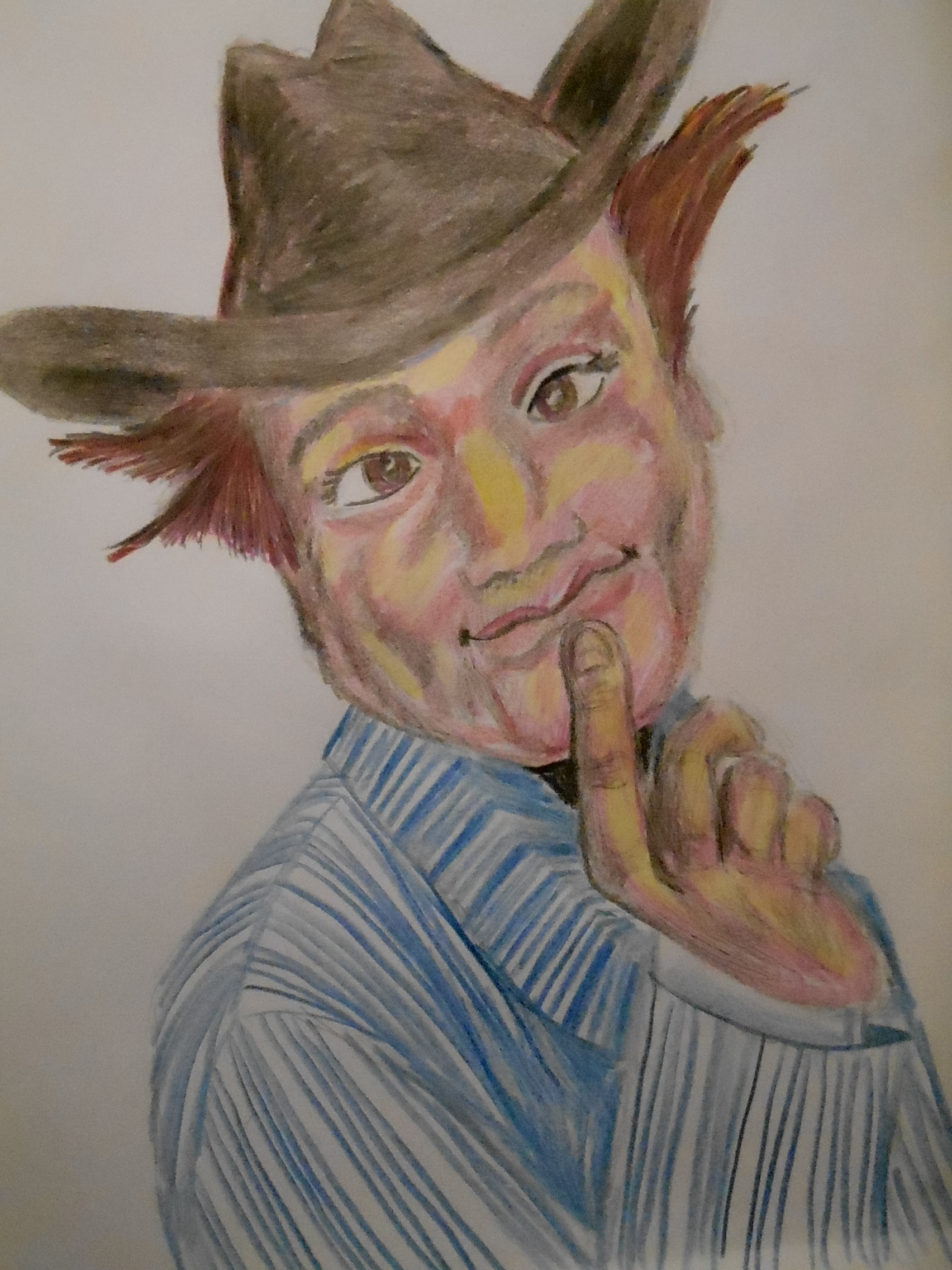
Reverend Louis Aiken (in the cowboy hat) was a lover of HO model trains, as well as country music… and, of course, God.
My best friend growing up was a PK, a preacher’s kid. And as we hung out and played games and got into imaginatively horrible trouble, we invariably wound up in the basement of the parsonage where his father kept his HO train layout. I learned lessons of life in that basement in more than one way. I have to explain all of that somewhere down line. But for now, I have to limit the topic to what I learned about trains. They are a link to our past. They are everywhere. And they do far more for us than merely make us cuss while sitting and endlessly waiting at the railroad crossing.
When visiting Dows, we absolutely had to stop and take pictures at the train station.
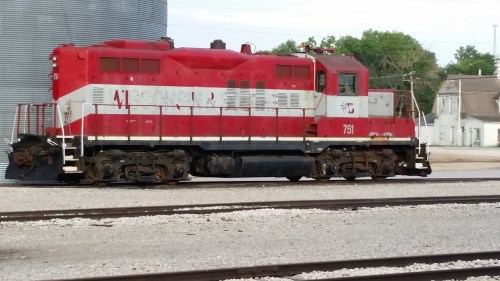
This is, by my best guess, an SD40 locomotive parked at the restored train station in Dows, Iowa.
Spotting trains to take pictures of, gawk at, and totally make cow-eyes over has become a way of life to me. When visiting Iowa, especially Mason City, Iowa, we always have to stop at the engine on display in East Park.
When I was a kid, this old iron horse was not fenced in to protect it from kids, weather, and other destructive forces. Now, however, it is fully restored and given its own roof. This is a 2-8-2 steam engine with two little wheels in front, eight big wheels in the middle, and two little wheels at the back (not counting wheels on the coal tender). I have ridden on trains pulled by such a behemoth. I love to watch the monkey gears grind on the sides of the wheels forcing steam power into the surge down the tracks. And I can’t help being a total train nut. Of course I don’t deny being more than one kind of nut. But being a mixed nut is another post for another day.
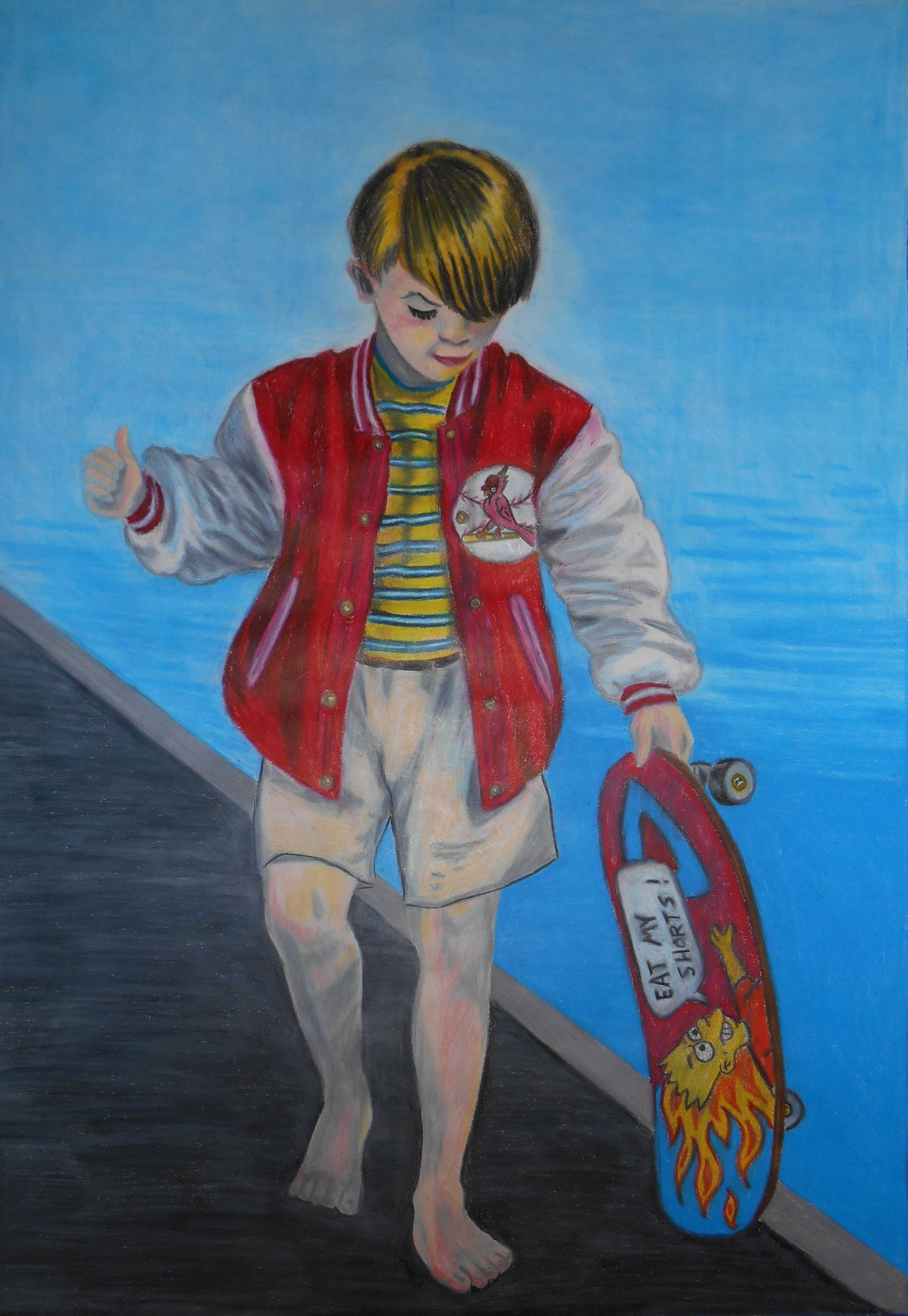
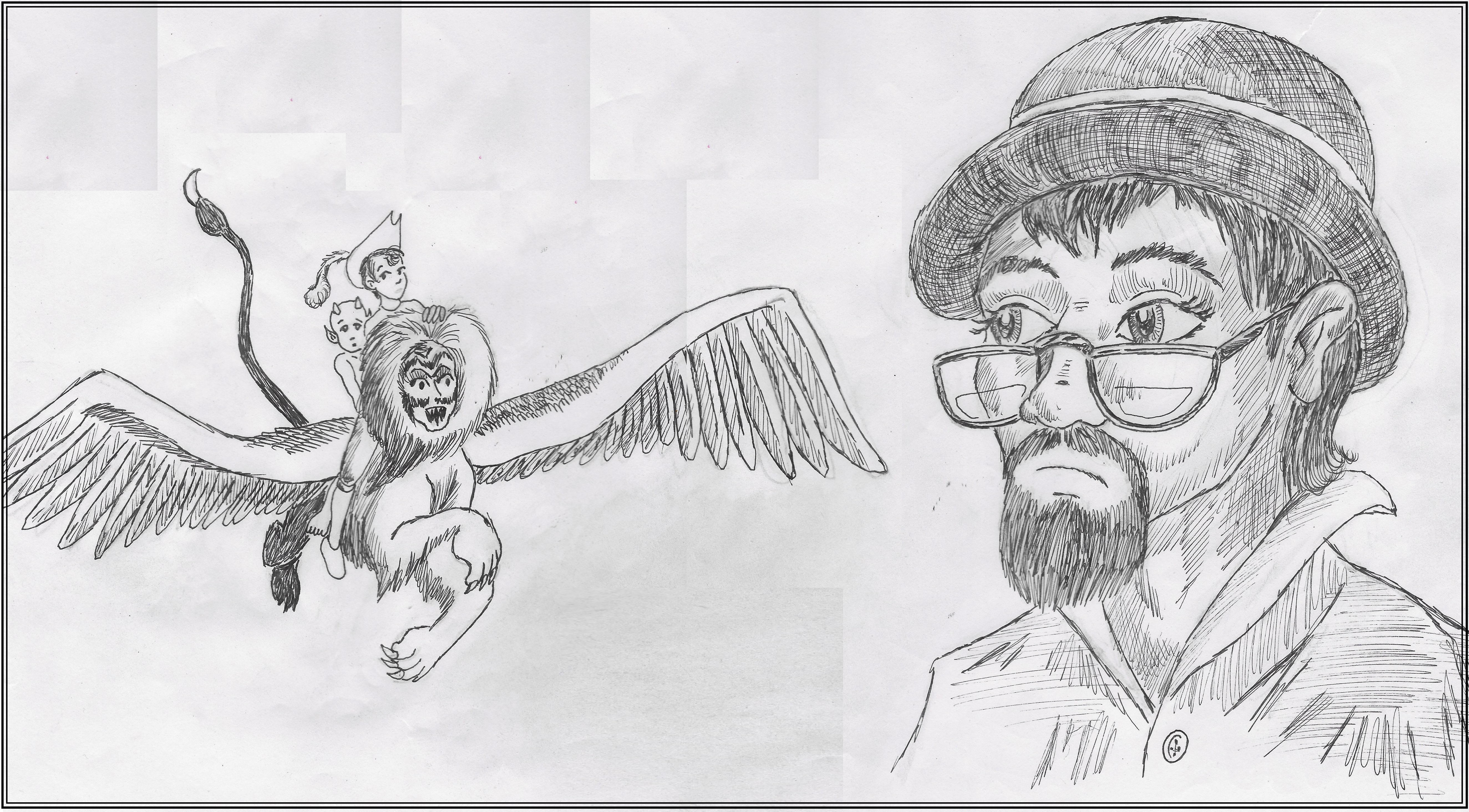
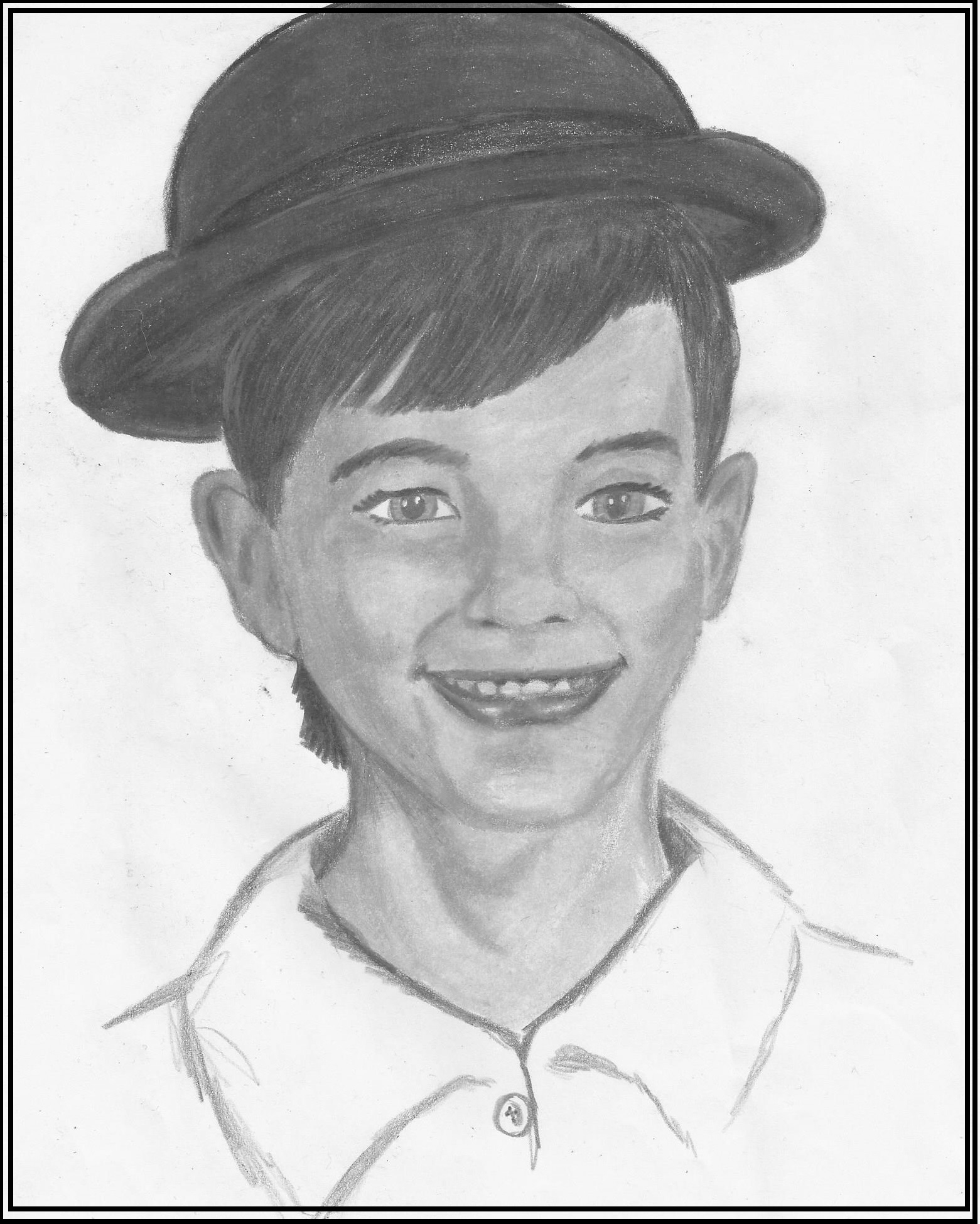
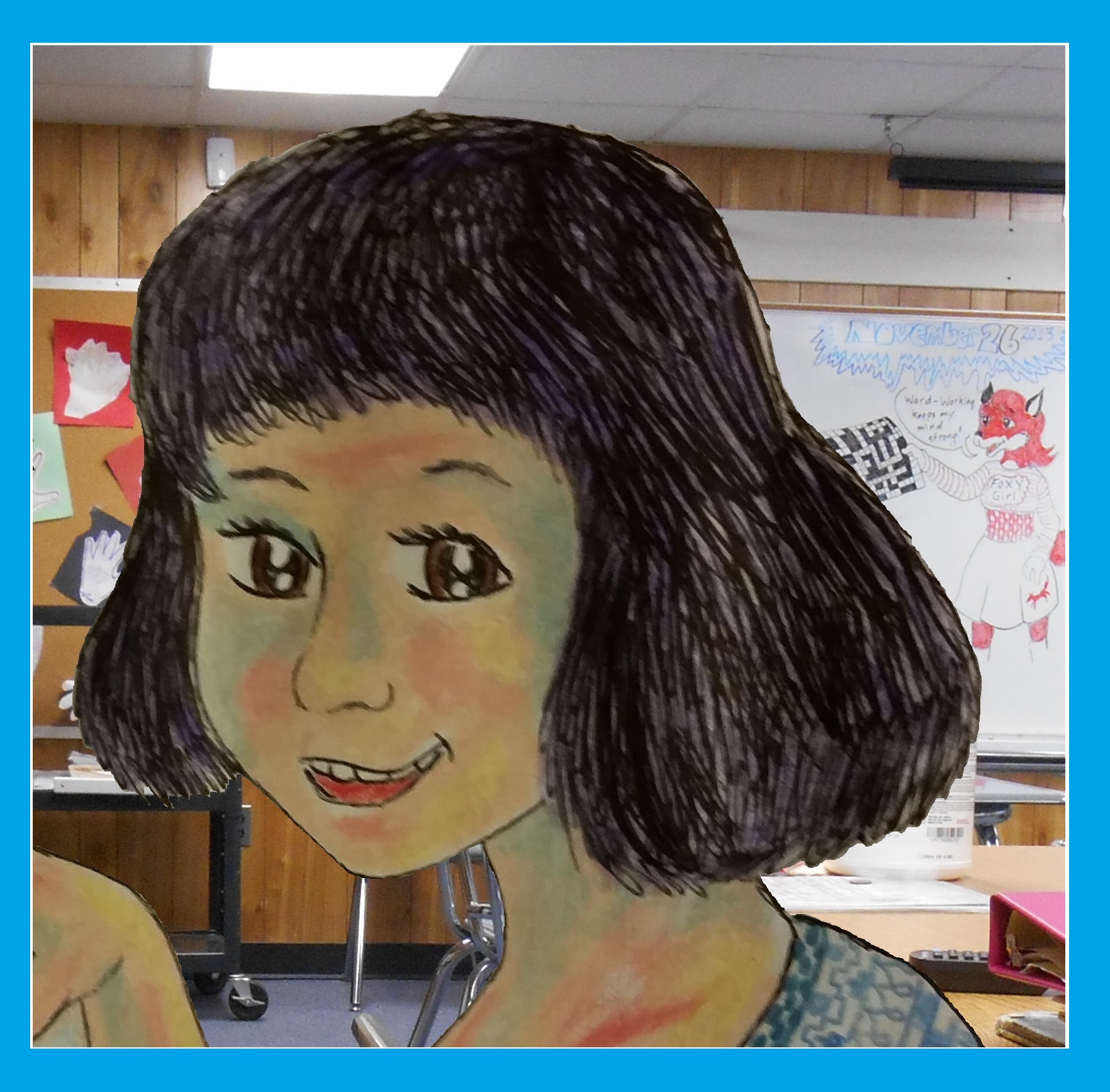
This picture was intended to look like it could’ve been my son, so the face came from an old black-and-white photo of me when I was ten.This is me as a nudist child in my current home’s backyard flanked by two nude Butterfly Children.
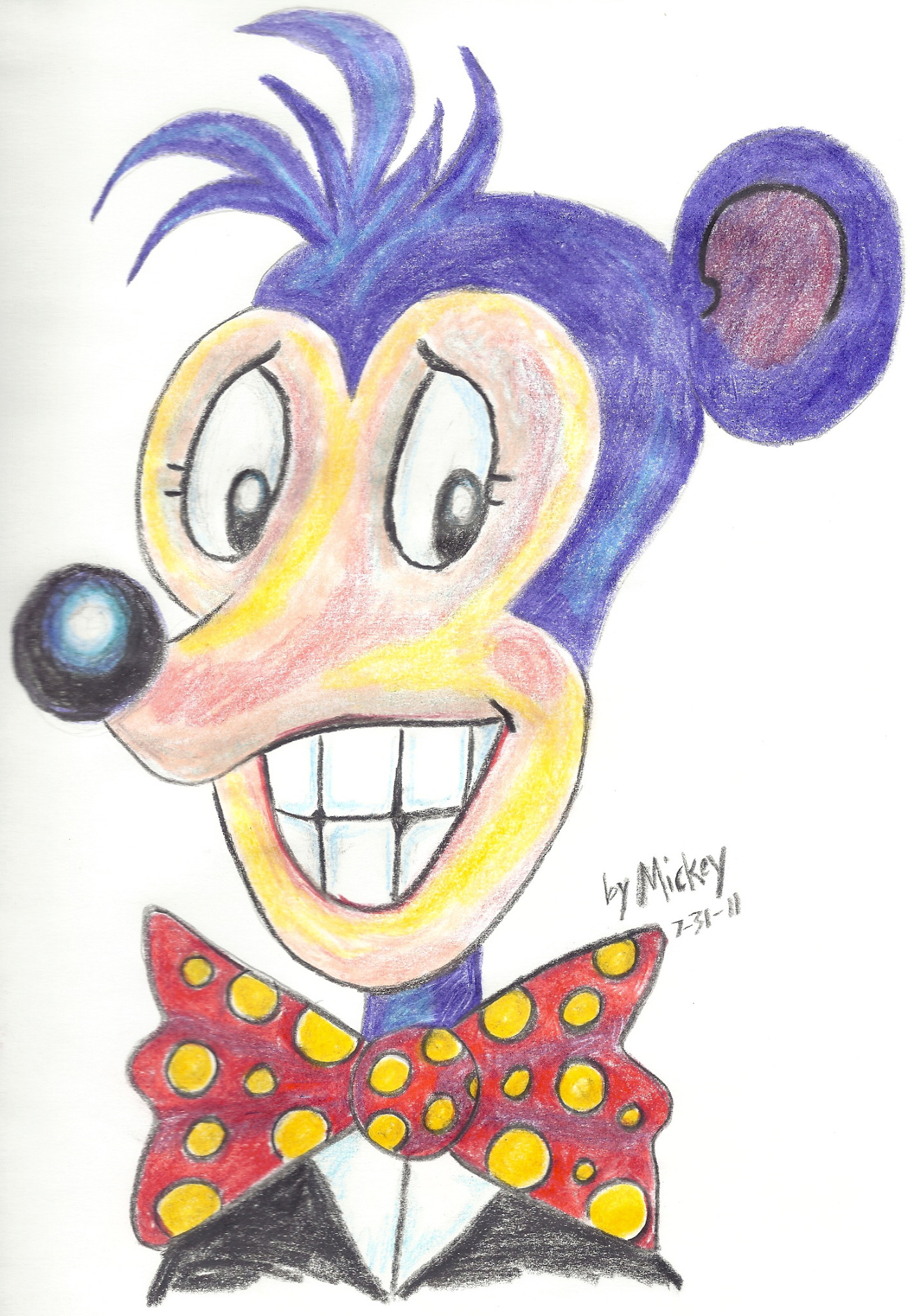
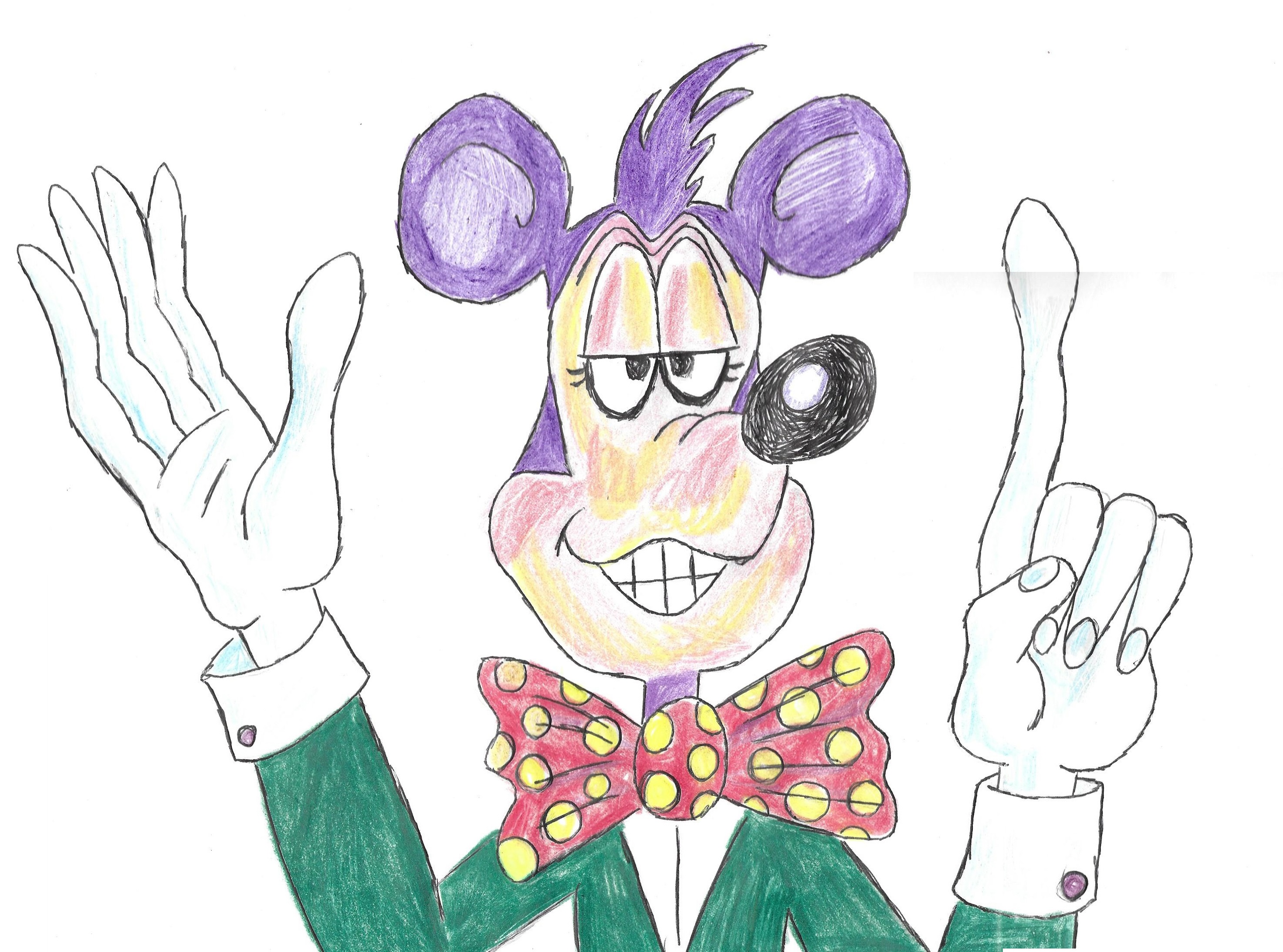
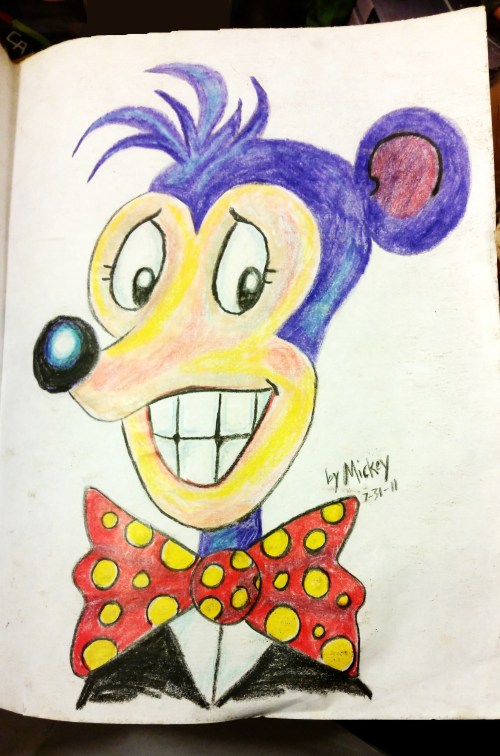
This is my purple-mouse avatar.
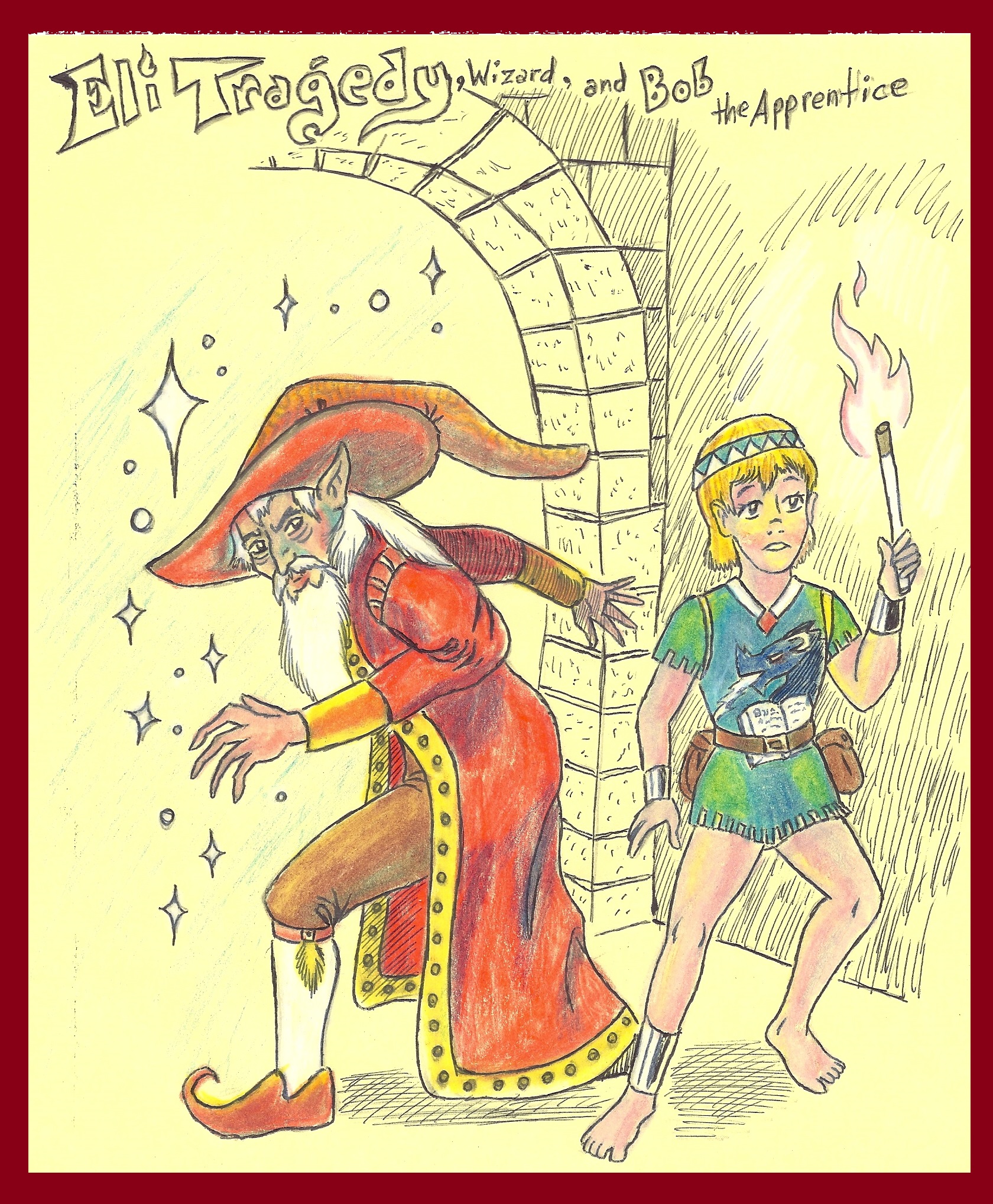
Eli Tragedy, my red-clad Sorcerer character from Dungeons and Dragons days is also really me.
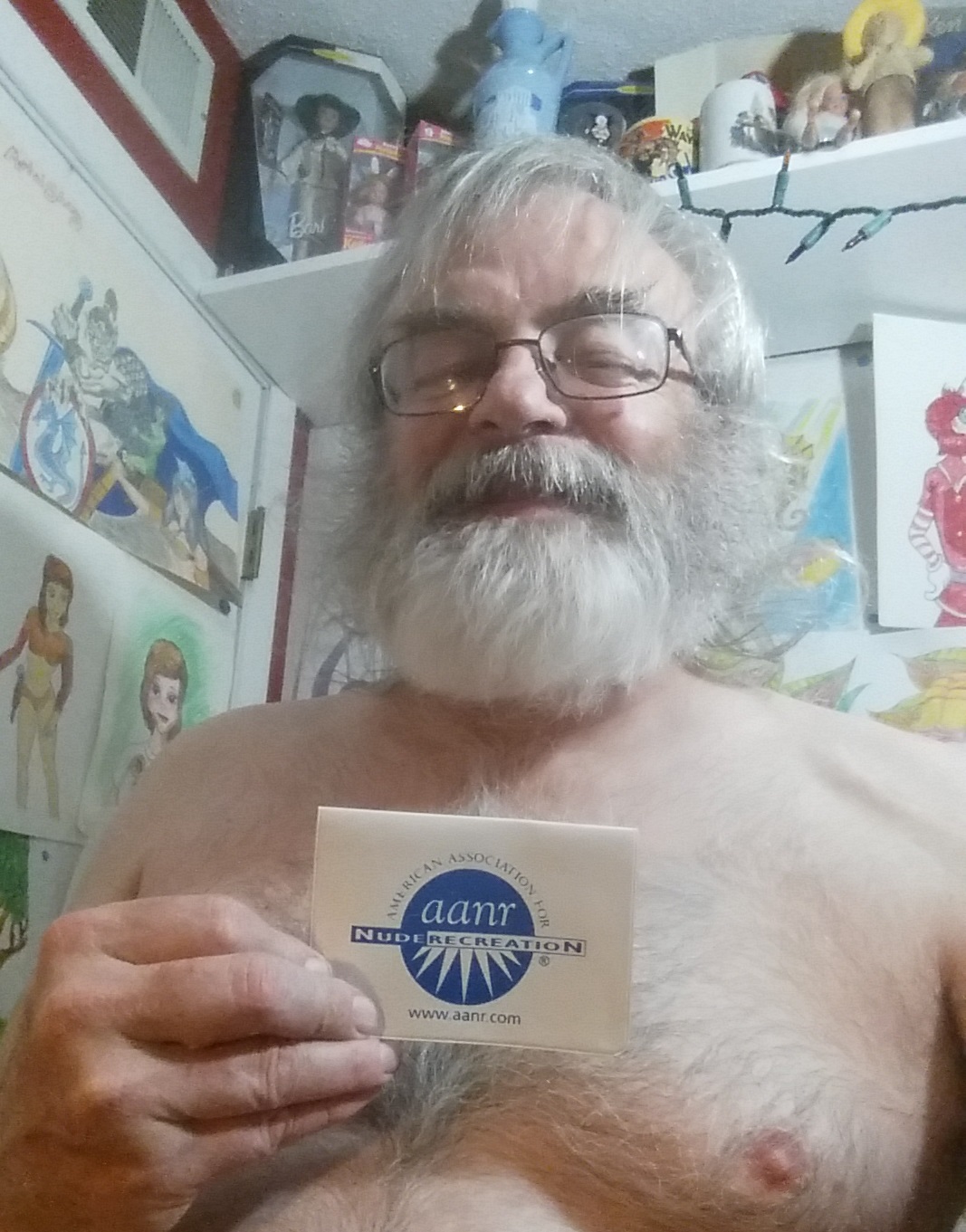
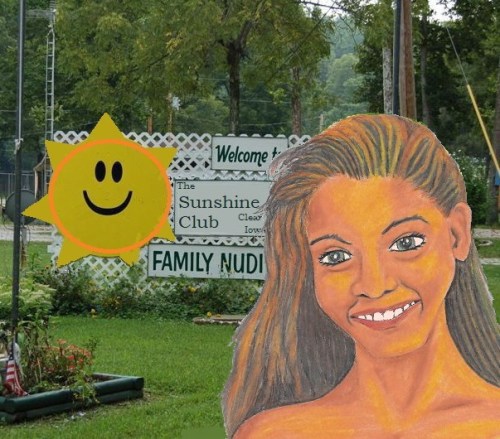
Me as a happy new nudist
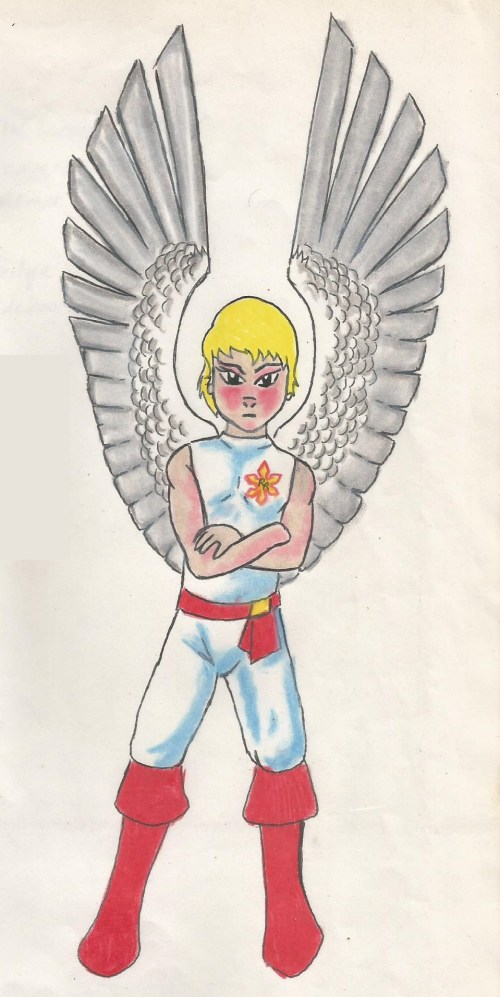
Milt Morgan is a wizard, and also a character who is half me and half the Other Mike from my childhood.Milt Morgan as a child. Also half me.Another purple Mickey.
Every writer, especially a fiction writer, has an opinion about what his or her work really means.
Of course, their readers have their own opinions of what it means. And the two different flavors of opinion, author sauce or reader ragu, rarely are the same flavor, and often work at cross purposes to spoil the whole stew. Look at how the sequel to To Kill a Mockingbird went over with readers for Harper Lee. Or how J. K. Rowling’s opinions about trans people have affected the most recent movie trilogy made from her works of fiction.
So, maybe I should clarify where I stand on certain issues before anybody threatens to make a movie from, or ban and burn any of my books.
(As if either of those things are ever going to happen.)
Trans People
In Texas now, it is generally agreed because of laws passed and pronouncements made by Fox-News-influenced Republican leaders, that trans people are 20-or-30-year-old male perverts putting on dresses and trying to get into middle school girls’ locker rooms, or worse, trying to play and win female sports with the advantages that come with testosterone and male aggressiveness.
My opinion on this issue is… you don’t get to have an opinion on this gol danged issue unless you yourself are a trans person. This is based on knowing two trans people in the entirety of my thirty-one-year teaching career. Not enough to make me qualified to open my stupid mouth about it, but more than any Texas Republican knows about it despite the large amount of foul-smelling opinion-gas they fill their speech balloons with in public.
One of these two people whose real names I will never utter was a confident and highly competent young lady whose sexual identity you could never doubt. I only knew about it because I was the teacher tasked with sitting in on her ARD meeting (a Special Education status update that she needed only because her situation qualified her as a Special Education student under the Emotionally Disturbed category.) She was at the meeting, so she knew that I knew. She would later warn me not to tell anybody, because it was no one else’s business what shape of genitals she was born with, and her hormone therapy and entire life experience made her a girl. Other teachers had leaked her secret in the past, and that was unfair to her. She was definitely a female in mind and personality. She was sweet, intelligent, witty, and capable of laughing at my classroom jokes… if they were funny. I suspect only a few if any of her classmates knew she was actually trans. She was all girl. I never told anyone. I never heard another student bad-mouth her. Although she did tell me that bad things had happened to her previously in elementary school. Nothing she was forced to endure was in any way deserved. And I am confident she is doing fine now.
The other trans student I was aware of, didn’t have it so good. I will call him a “he” because he never transitioned. But he was actually a girl. He had a penis, but it was only on the outside. His interior plumbing included a uterus, fallopian tubes, and ovaries. His hormones were, judging by what puberty did to his body and behavior, mostly feminine. But he didn’t have the other girl’s advantages of being from a wealthier, big-city family with relevant health services available to him. He was a member of a poor, Hispanic family that lived in a small rural Texas town. He was not treated as a trans person. He was considered a homosexual. And Hispanic culture in South Texas is not kind to homosexuals. He had serious mental problems. He tried to talk to me about his problems late one Saturday night. But the conversation ended when he tried to proposition me, and I rejected his advances. I was not a homosexual either. Months later I found him crying in the hallway and bashing his forehead against a metal doorpost. I got help from the Reading teacher to get him to the nurse. He wasn’t in class very often after that. He did not pass any of his classes that year. And he didn’t come to school at all the next year. I heard rumors that he went to Laredo and became a drug dealer and a prostitute. I also heard from one of his relatives that he had attempted suicide more than once. At this point, I feel sadly certain that he never got the help he needed and is probably now dead.
I have now told you everything I actually know about the subject of trans people. And I can safely say I had no measureable effect on either one. I still cry about one of them. I still feel a small bit of pride about the other one. As a teacher I loved both of them, but not the kind of love he asked me for on that late Saturday night when I probably should not have opened the door to him. But I am not entitled to have an opinion. It is not my business no matter how much I care.
One of my favorite characters that I have used in multiple stories, Blueberry Bates, is a trans girl. How realistic she is as a character is probably still up in the air. I have revealed what I know about trans people that she is based on. But I love her, just as I loved the two of them. I think people like that are worthy of love and whatever you have to invest in them to be of help to them. I do not think they need to be legislated against. Their lives are hard enough as it is.
My glitchy computer published this before I got to write the conclusion. But having opinions is a matter of glitchiness anyway. And if you find you need to cancel me for my terrible opinions, you don’t need my permission to do it. I doubt you would even think about asking anyway. I hope I have made what I think clear. These are my writer’s opinions. And it is obvious from this essay that this is probably not the last one I will inflict on you.
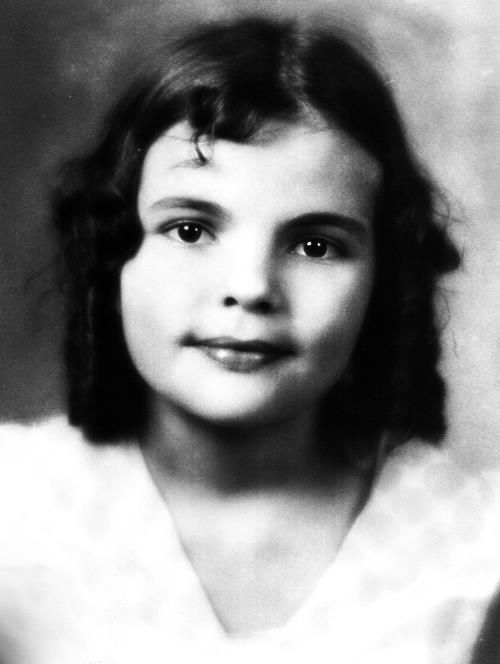
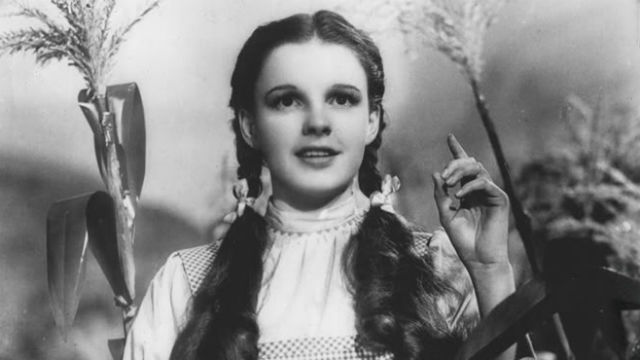
She is older than both my mother and my father. In fact, if she were alive today, if she hadn’t died young when I was thirteen, she would be 101, passing the century mark. She was born in Grand Rapids, Minnesota in 1922.
And even though that’s right next door to where I was born in Mason City, Iowa, we were never really neighbors. Our families never met in person, and didn’t know diddly-boo about each other.
But she had a profound impact on our lives. And, boy! Could she ever sing and dance!
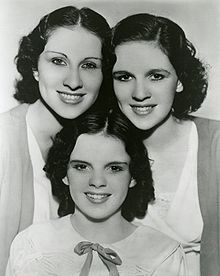
The Singing Gumm Sisters.
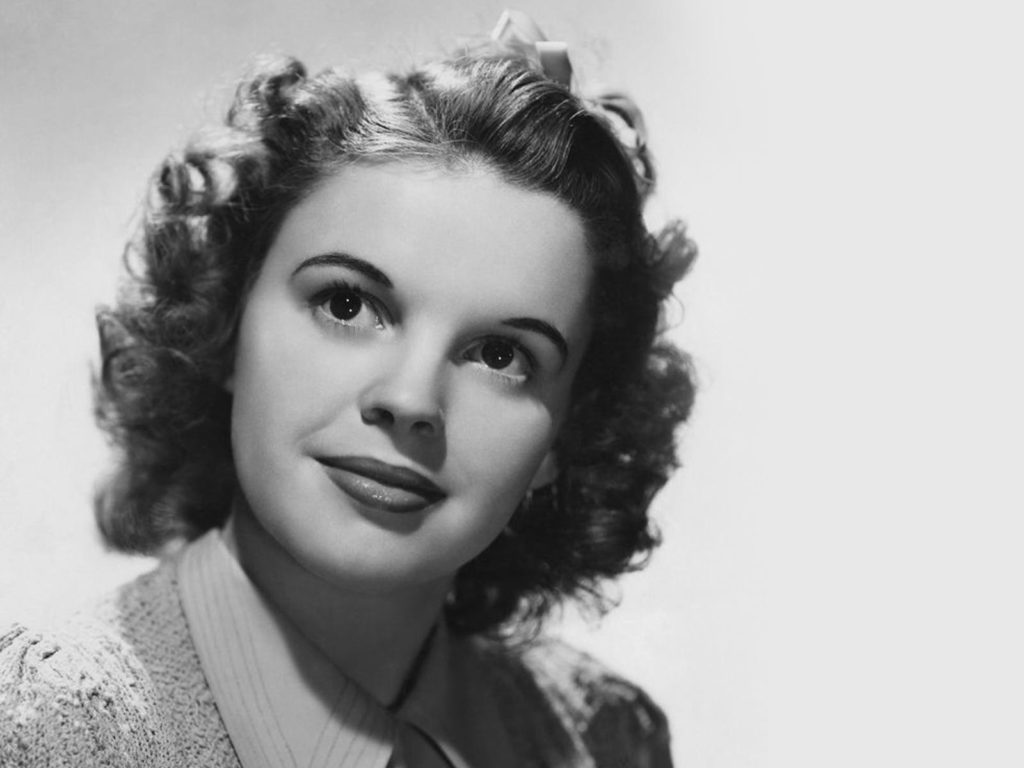
A little bit older Frances Gumm
I don’t know why she ever felt that way, but Frances from childhood onward was always desperate to not be seen as fat.
She took pills to keep the weight off. She eventually had to take pills to sleep at night. Pills would make her suffer through most of her life. In fact, pills would eventually take her life.
But Frances Gumm would have an impact on my life. Frances would have an impact on my parents’ generation through the movie theater, back when you paid a dime to watch a movie projected on a white sheet tacked up on the Rowan firehouse wall. And she had an impact on my generation when we watched her on TV, mostly in black and white like we saw Meet Me in St. Louis. But also around Thanksgiving time. That movie they played every year.
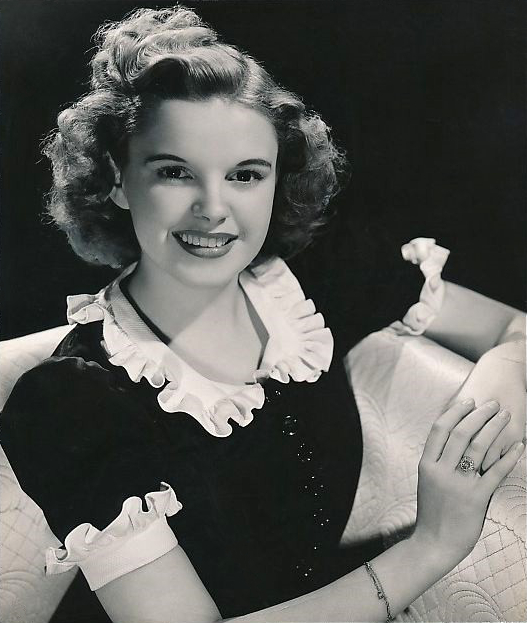
Yes, Frances was a movie star.
But she didn’t go by the name she was born with in the movies.
And, boy! Could she ever sing!
And now that I am old and fragile, that song can make me cry. Like it did just now. And why?
Because Frances Gumm taught me something important when I was a little boy. Something that stuck with me for a lifetime.
While it’s true that there is no place like home, we are allowed to think about what is over the rainbow… and even to go there… and back again.
And I owe Frances for that memory. Especially because she had to struggle so hard to give me that. Frances, I will always love you for it.
Yes, this post is a shameless promotion. But this is a good book that not enough people are reading to truly appreciate that fact. When I was a boy in the 1960’s, there really was an old German lady who lived in a small tar-papered house, all ginger-brown in color, which we all called the Gingerbread House. She really did love to give out sweets and cookies and popcorn balls to the kids in our town. And she really did love to talk to people and tell them little stories.
Grandma Gretel Stein
Her name, in real life, was Marie Jacobson. She was, in fact, a survivor of the holocaust. She had a tattoo on her right forearm that I saw only one time. Our parents told us what the tattoo meant. But there were no details ever added to the story. Mrs. Jacobson doted on the local children. She regularly gave me chocolate bars just because I held the door for her after church. But she was apparently unwilling to ever talk about World War II and Germany. We were told never to press for answers. There was, however, a rumor that she lost her family in one of the camps. And I have always been the kind that fills in the details with fiction when the truth is out of reach.
I based the character of Grandma Gretel on Mrs. Jacobson. But the facts about her secret life are, of course, from my imagination, not from the truth about Mrs. Jacobson’s real life.
Marie Jacobson cooked gingerbread cookies. I know because I ate some. But she didn’t talk to fairies or use magic spells in cooking. I know because the fairies from the Hidden Kingdom in Rowan disavowed ever talking to any slow one but me. She wasn’t Jewish, since she went to our Methodist Church. She wasn’t a nudist, either. But neither were my twin cousins who the Cobble Sisters, the nude girls in the story, are fifty percent based on. A lot of details about the kids in my book come from the lives of my students in Texas. The blond nudist twins were in my class in the early eighties. And they were only part-time nudists who talked about it more than lived it.
Miss Sherry Cobble, a happy nudist.
But the story itself is not about nudists, or Nazis, or gingerbread children coming to life through magic. The story is about how telling stories can help us to allay our fears. Telling stories can help us cope with and make meaning out of the most terrible things that have happened to us in life. And it is also a way to connect with the hearts of other people and help them to see us for who we really are. And that was the whole reason for writing this book.
WordPress has put in a new feature for finding old photos from Posts Past.
This allows me to pull from past years much more easily than the scroll-down feature I have been using. Thus, art from 2017.
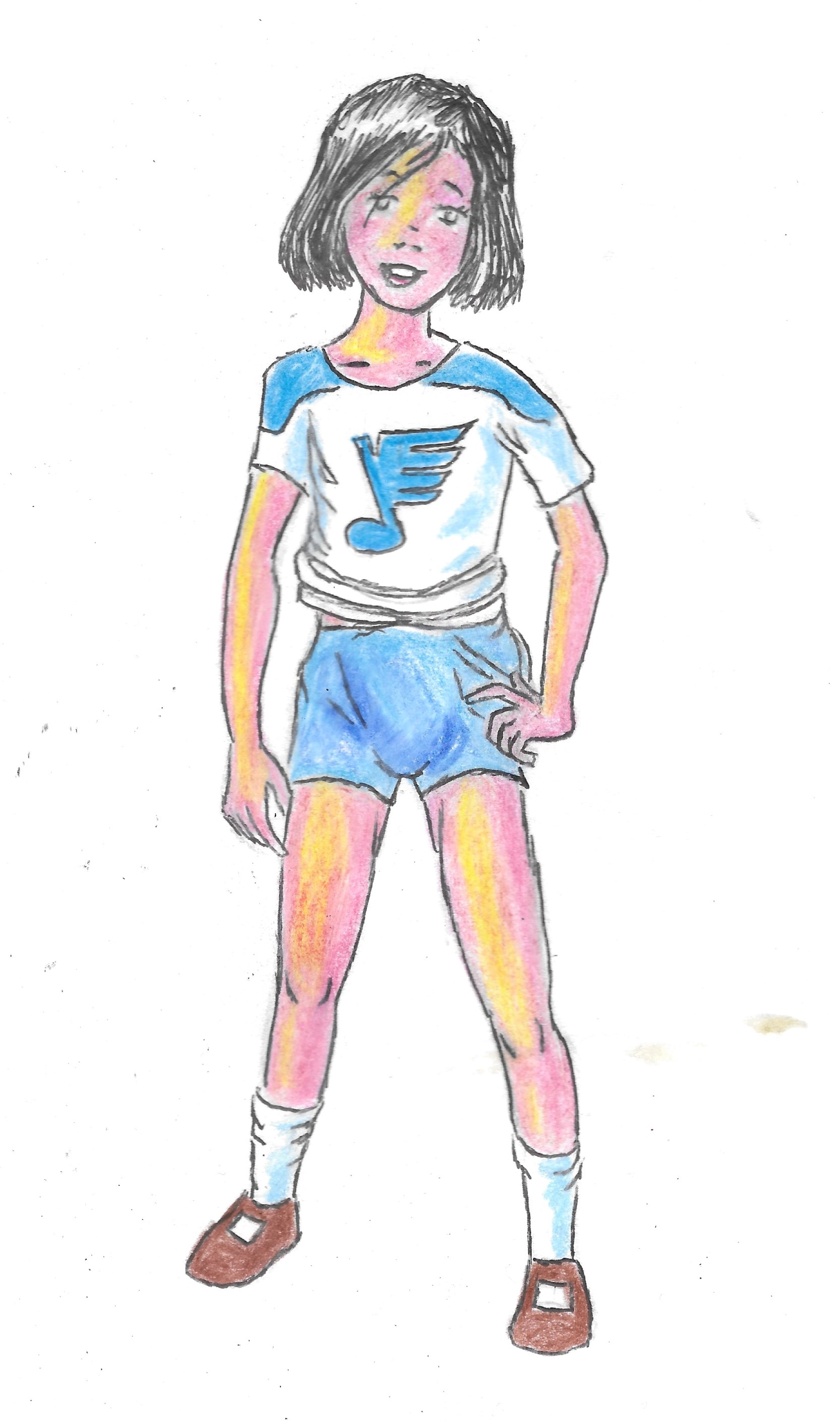
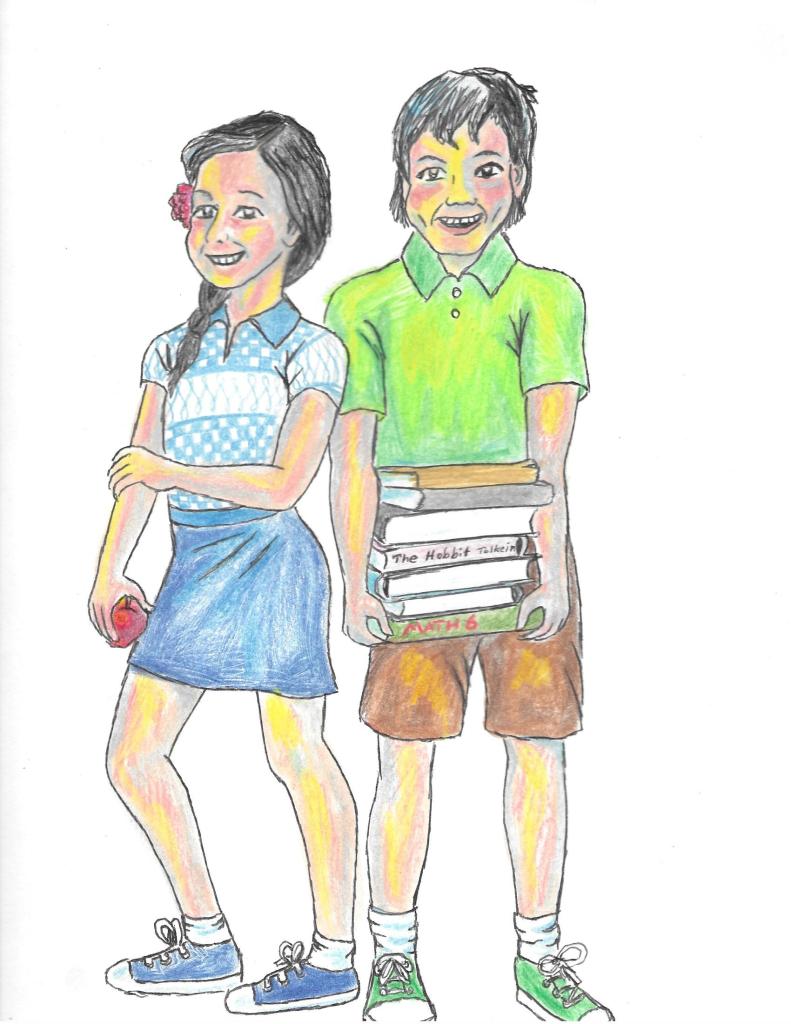
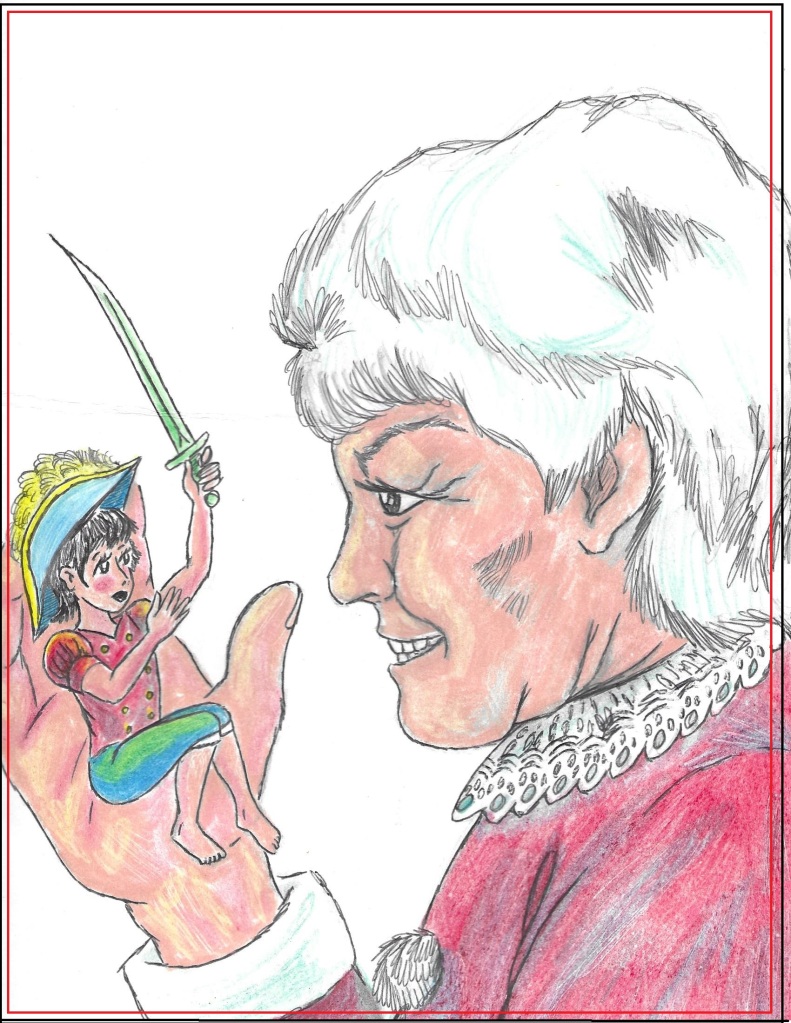
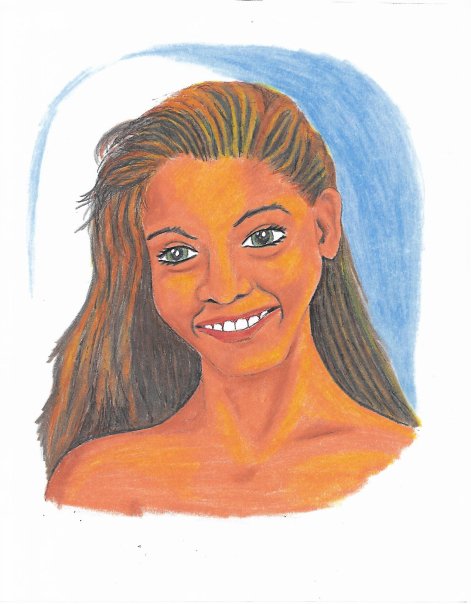
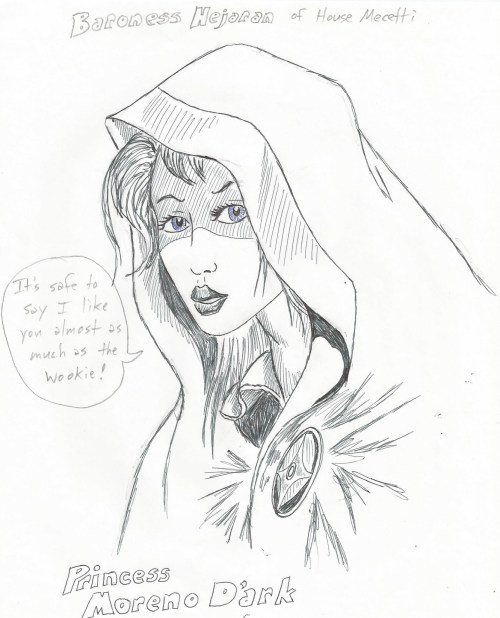
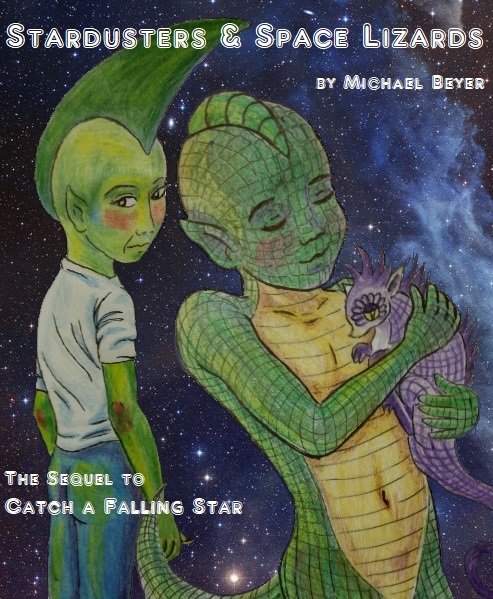
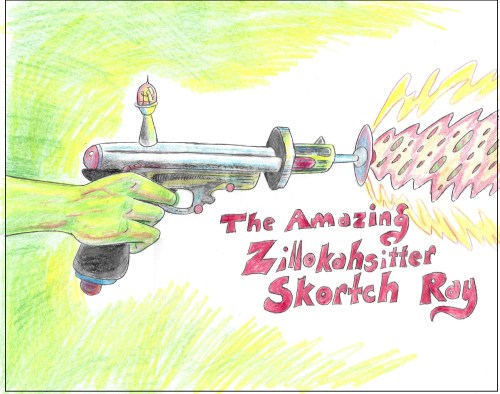
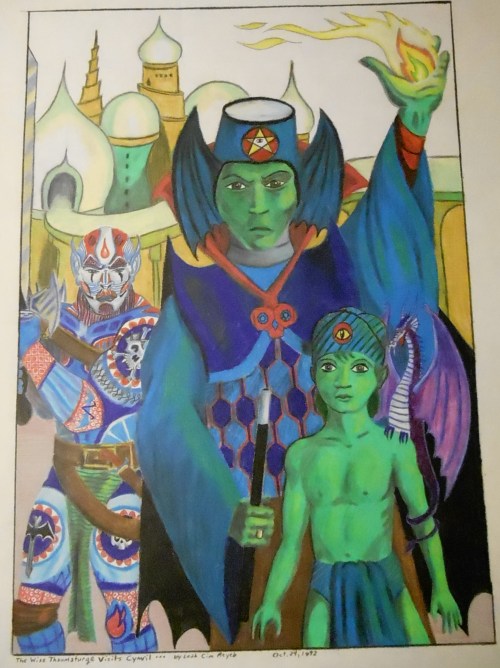
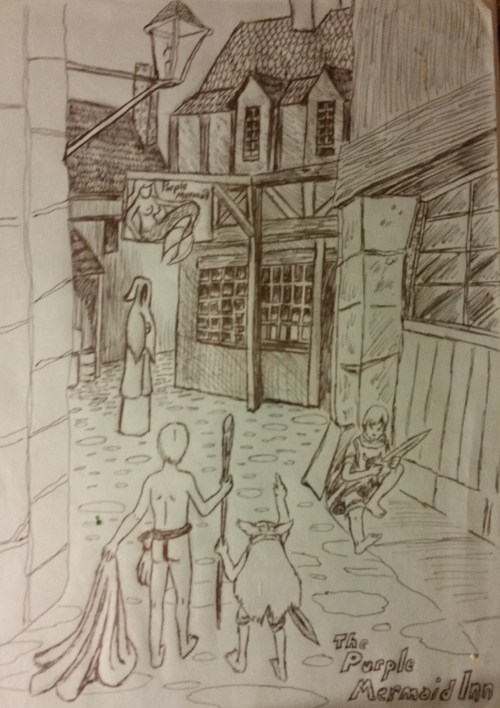
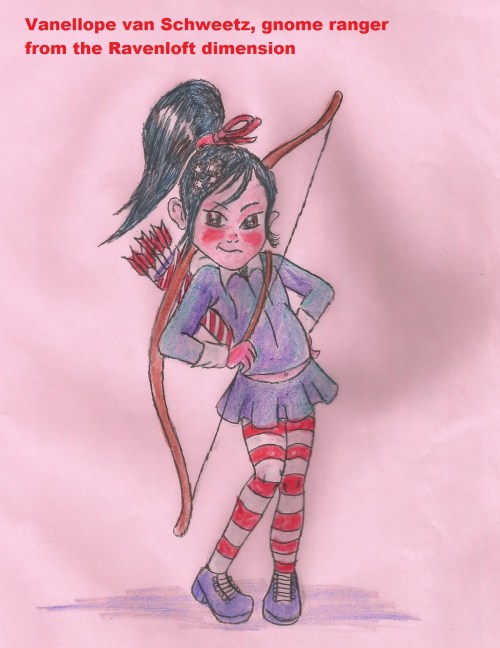
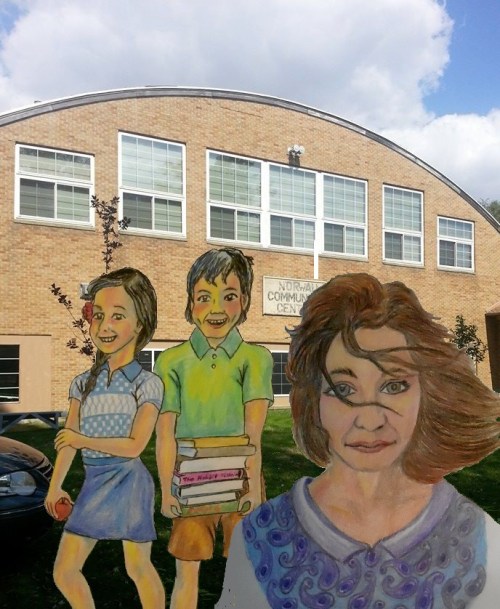
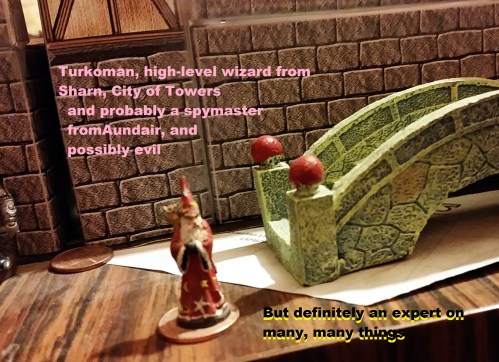
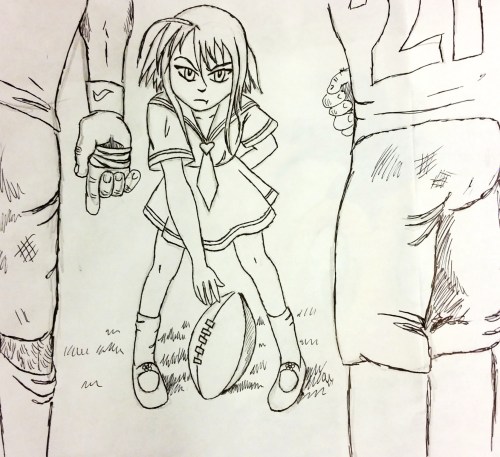
This is from the Star Wars Role-playing game that we stopped playing in 2008.the Murphy family (well, three of them anyway)The disintegrator pistol from Catch a Falling Star“The Wise Thaumaturge Visits Cymril”Eventual cover art for Magical Miss MorganI painted this miniature lead wizard, as well as made the castle from cardboard and paper.I also painted the buildings in the background, acrylic on plaster.“Their Most Feared Offensive Player Could Beat Them By Herself”All of these works of art are done by me, whether they are drawn, painted, or photographed.
This has been a look back at pictures posted in 2017, starting in December, and going back in time to January. There is at least one picture from every month.
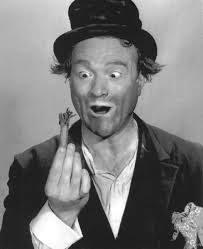
It began in childhood with the Red Skelton Show. Every Wednesday night it was a refuge for me. And refuge was a critical idea for me. I was a child hiding a terrible secret from the entire world. At times I hated myself. Twice as a teen I came very close to choosing suicide over life. The person I most needed to hide from was myself. And humor helped. Red Skelton’s gentle humor helped me to not only escape from myself for a while, it taught me to laugh at my own foibles and not take things quite so seriously.
media.npr.org
In my college years I discovered humor in written form. Mark Twain swiftly earned my utter devotion as I read not only Huckleberry Finn and Tom Sawyer, but Roughing It, A Connecticut Yankee in King Arthur’s Court, Pudd’nhead Wilson, The Mysterious Stranger, and The Autobiography of Mark Twain. You know, there are a large number of things in Mark Twain’s humorous books that make you cry, that make you angry, and make you think deep thoughts. I basically discovered that humor is a way that smart people choose to think of things which helps to keep you sane and basically un-suicided.
A beautiful portrait by artist Emily Stepp
It is obvious that some people become very skilled at humor because they have used it all their lives to fight the darkness . Robin Williams is only few years older than I am. In many ways his life has paralleled my own (obviously minus the wealth and fame in my case… but what would’ve happened if Robin had become a school teacher?) I have depended on Robin Williams’ movies to keep me going, giving me insights in how to talk to kids, how to be a parent, and how to empathize with others. Of course, I haven’t yet taken some of his movie advice. I never put on a mask and a dress to deceive my own children. But only time will tell.
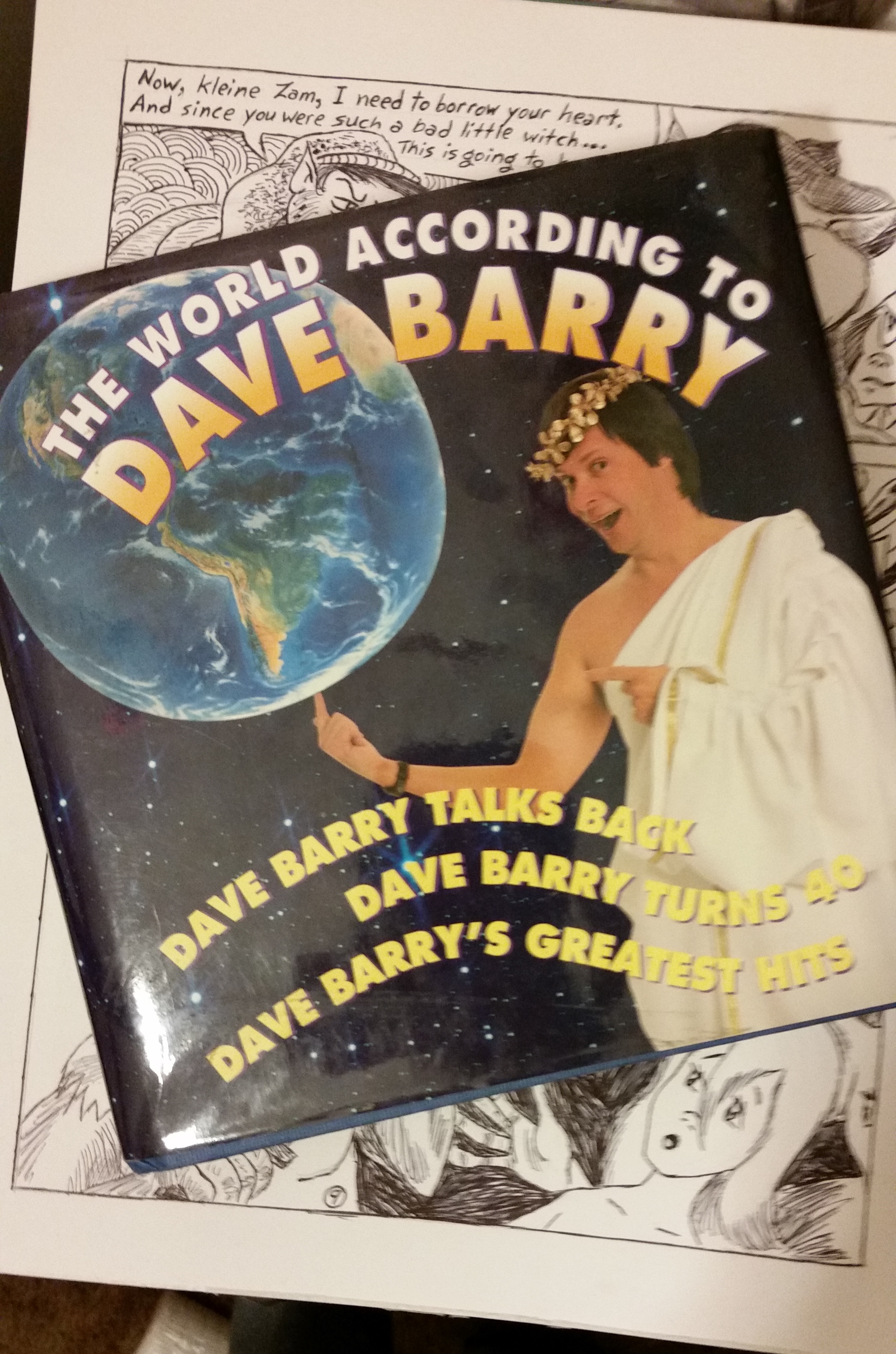
I obsess about humor and how you create it. I gorge on things like the works of Dave Barry. Do you know who he is? Florida newspaper columnist who writes books about everyday life and the fools who live it? I have to do a post on Dave Barry, because he makes me laugh so hard that milk shoots out of my nose, sometimes when I am not even drinking milk… believe me, I don’t know how that works either.
A bust of Herman Munster
Doofy Fuddbugg here is an example of what a “Nolt” is.
I love to laugh. It makes the world right again. I have laughed an awful lot for almost an entire lifetime now. I treasure all the funny people I have known. And I need to continue to try to make people laugh up until the very end. Because the world is too often not a funny place. It can be full of badness and sadness and suffering. And as Mark Twain so aptly pointed out, “Against the assault of laughter… nothing can stand.”
Wizards do magical spells. It kinda goes without saying. But to do magical spells, you have to know how the magic works… and why.
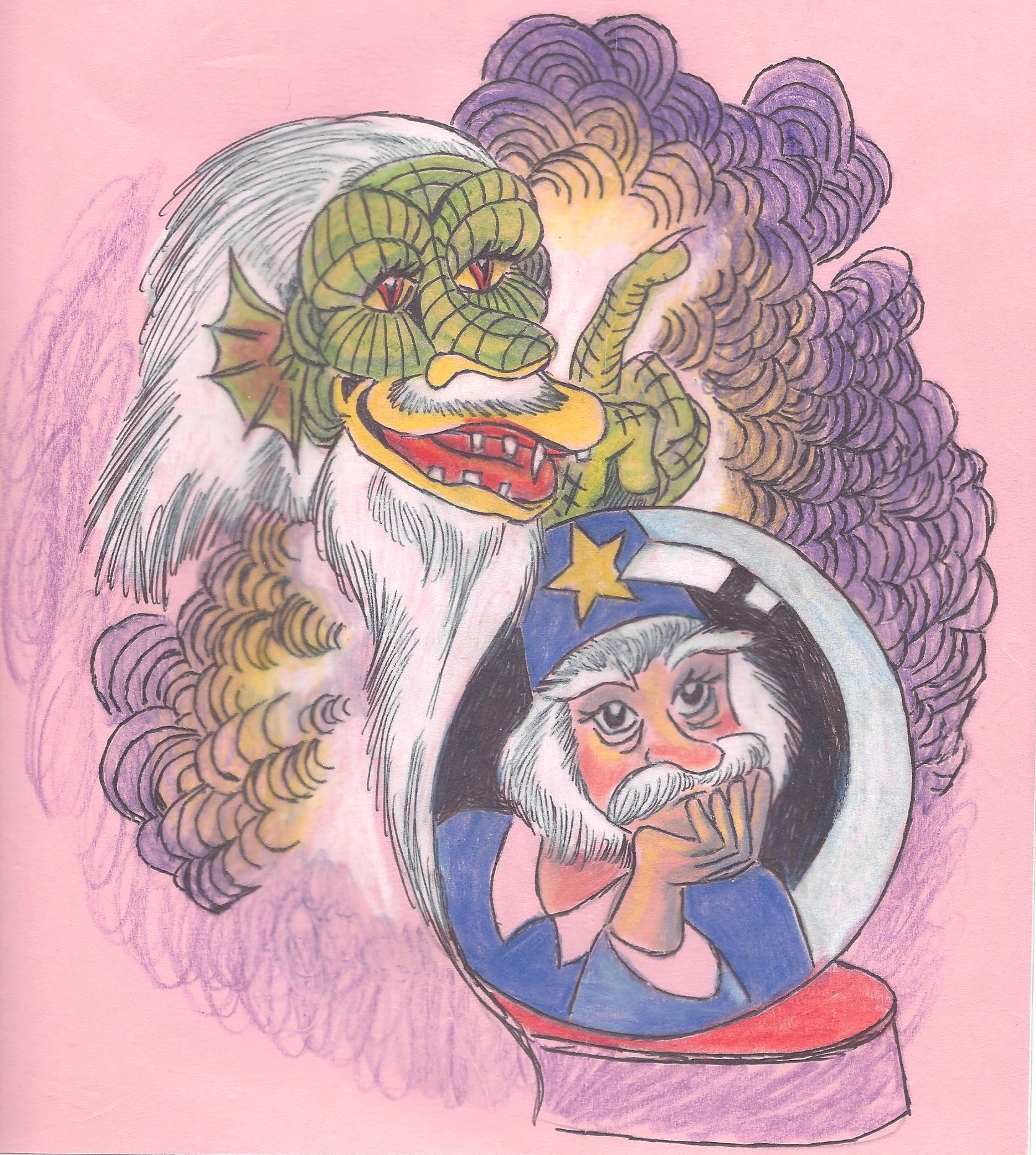
Me, imprisoned in my own crystal ball by my naughty familiar.
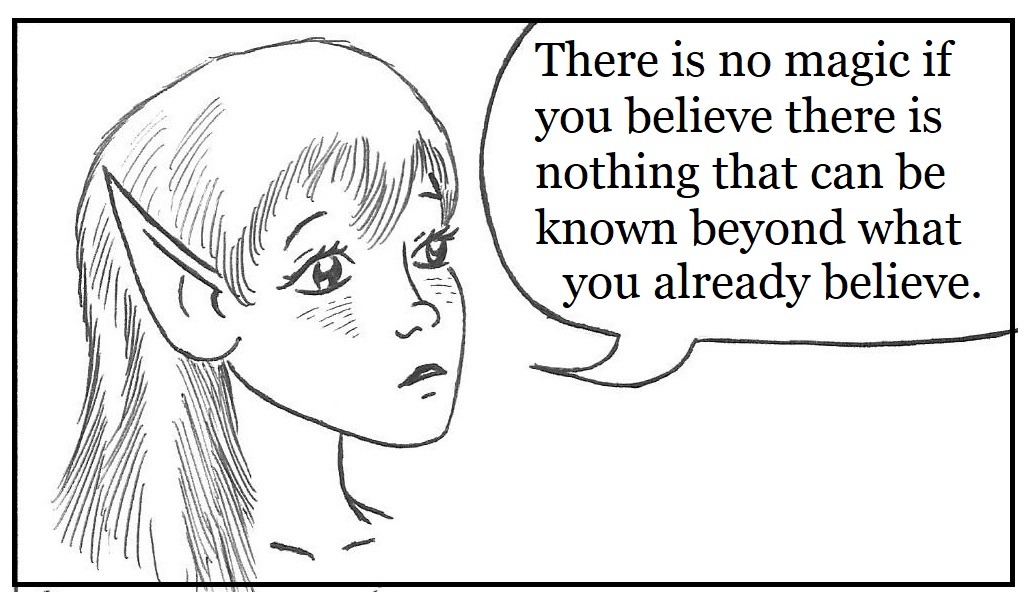
The secret is in knowing what the word “magic” actually means. It is not supernatural power, nor the creation of something out of nothing. It is entirely the act of uncovering and understanding the underlying truth, the actual science that most people don’t yet comprehend that underpins the thing you are trying to accomplish. Jonas Salk was a wizard. His polio vaccine was a successful magical potion. But magic can be evil too. Albert Einstein and Robert Oppenheimer were wizards. And the atom bomb was an act of necromantic evil.
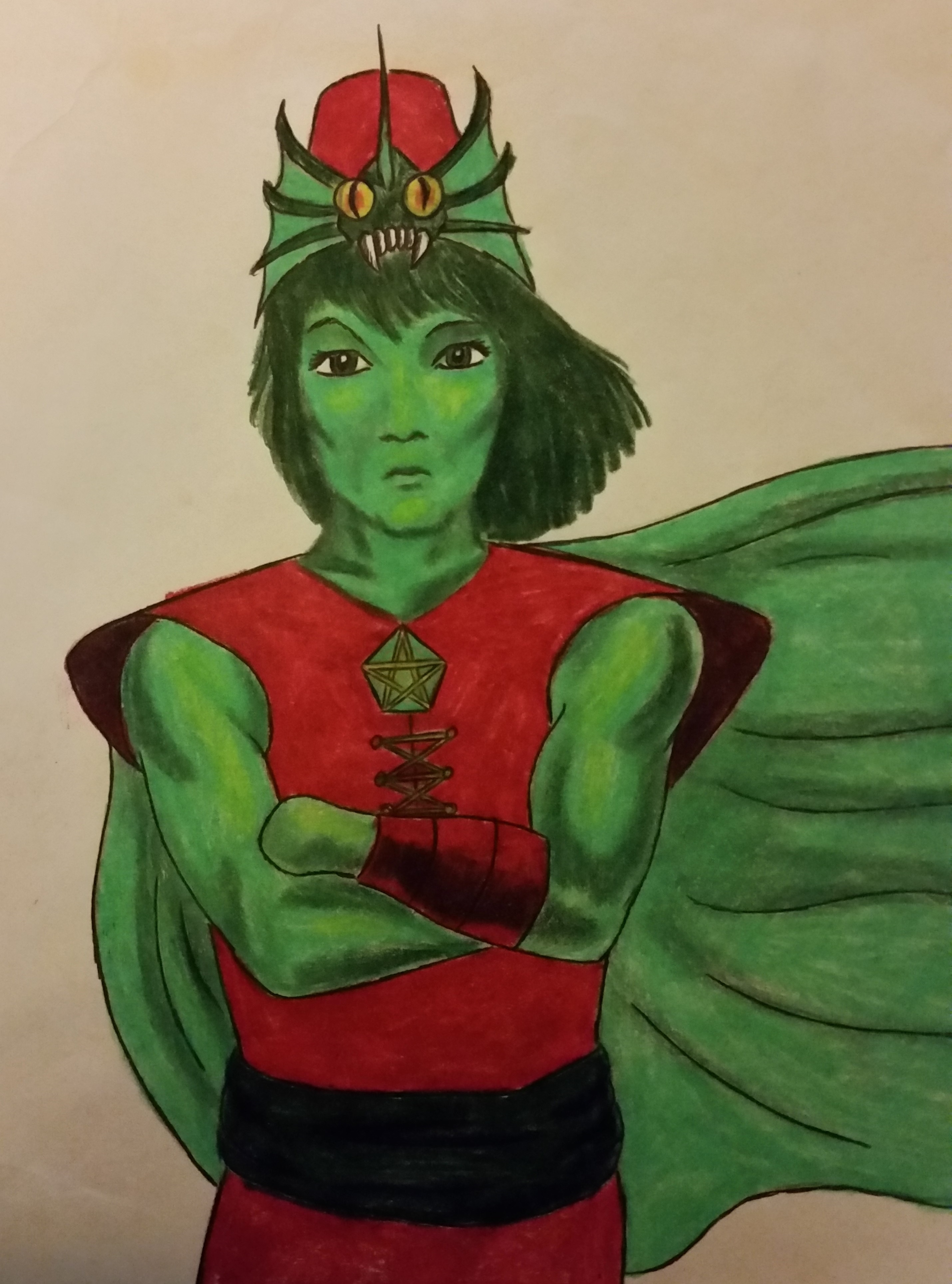
Me, in my early green wizard phase.
So, being a wizard, I have learned lessons over a lifetime that uncovered for me the secrets of practical interpersonal magic. Being a teacher has taught me far more than I taught to others.
So let me share with you some of my hard-won practical magic.
In a room full of rowdy children, most of whom are not minding any of the teacher’s directions, you can get their attention easily by shouting, “What the poop is going on here?” with the biggest evil grin on your face that you can manage. They will immediately quiet down like magic and look at you. Some will be wondering if their teacher is having a fatal stroke. Some will be wondering what punishments their behavior has earned as indicated by your evil grin (and here it should be noted, their little imaginations will cook up something much worse and much scarier than anything you could’ve thought of to unwisely threaten them with. A few will begin recording you with their cell phone cameras in hopes of future behavior they can post online and get you fired with. And the rest will laugh at the word “poop” and forget why they were acting out. At that point, with their full attention, you can ask them to sit down and look at page 32, and, not knowing what else to do, they will probably do it.
Here are some other rules of practical magic that apply to the wizarding arts of being a public school teacher;
Violence is never the answer. Change their actions and reactions by making them laugh, making them cry, or making them think about something else entirely. The last thing you would ever want to do is hit them, even if they hit you first.
Anything they can be forced to repeat eight times in eight different ways is something that will be fixed in their memory for more than just the duration of a class period. It moves things into their long-term memory, and that is itself a very magical thing.
Students laugh when you surprise them or present them with the absurd. Tell them they should imagine themselves as pigeons who have to act out Shakespeare’s play Romeo and Juliet. What costumes will they wear, and why? What stage directions are necessary to add to the play that are unique to pigeons, and how will they word them? How does pigeon Mercutio go about his death soliloquy when stabbed by pigeon Tibault? Will he have to say, “Look for me tomorrow and you will find me a very grave pigeon?” By the end of the lesson they will have learned more about this play they are supposed to learn about as ninth graders than they ever would have otherwise.
Being able to do any of those things is actually a manifestation of magical power, and only producible by a wizard. The simple fact is, every good teacher is a wizard.
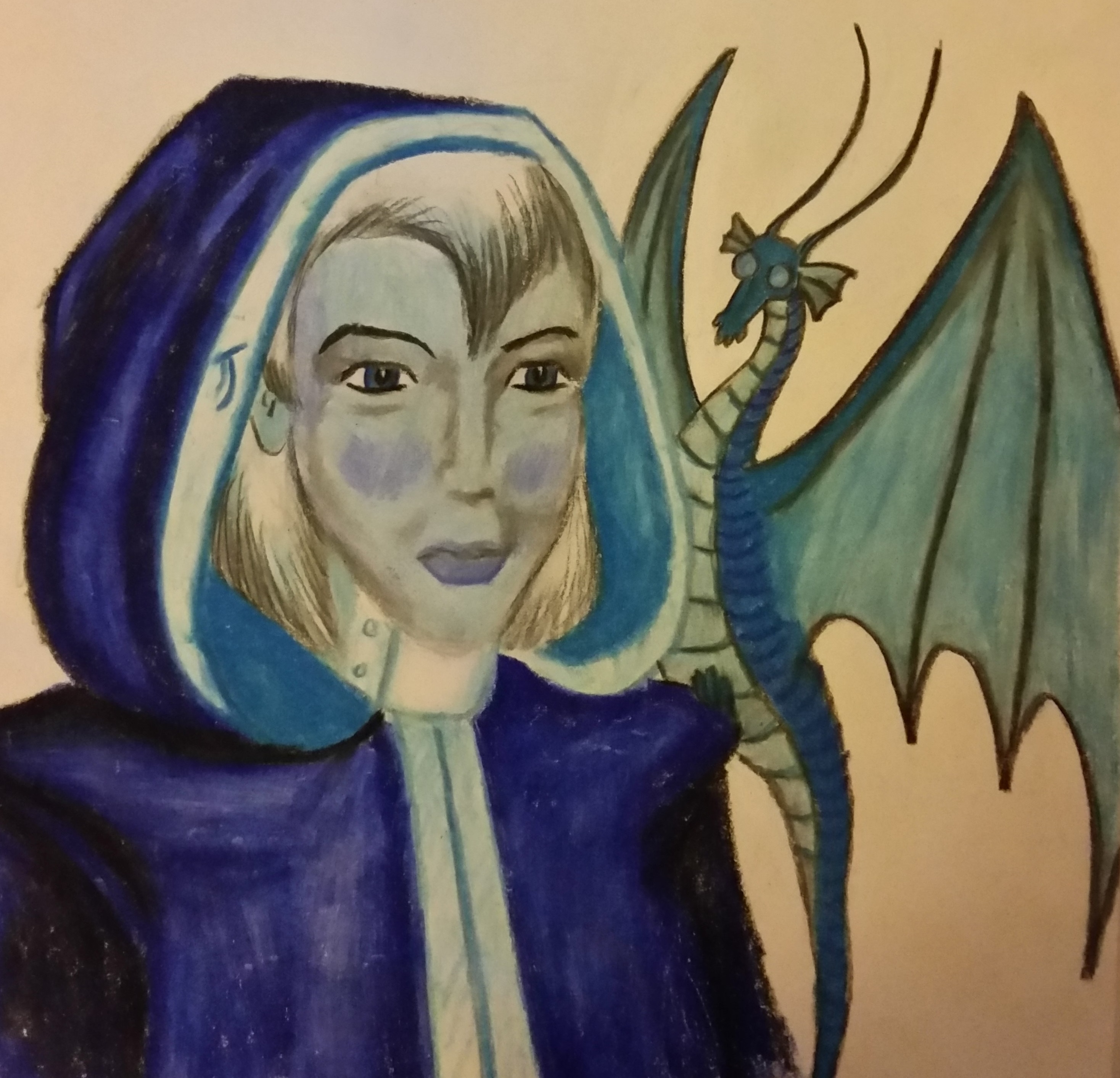
Me, as a wizard in my blue period. The period at the end of this essay.
Communicating with a wife is complicated. In fact, I couldn’t do the whole writer-think thing about that topic without writing a book. But I can successfully ruminate for about 500 words on the that awkward first encounter, the first time I ever was embarrassed in front of a non-sister girl.
In grade school I met my first crush in kindergarten. Alicia Stewart was a honey-sweet little brown-haired girl with a bow in her hair. I was a boy. I was not allowed to like girls. Hating them was the only thing that made sense to my friends and I. But, secretly, I didn’t hate Alicia. In fact, if I was ever to be doomed to be married when I grew up, I would’ve only accepted that horrible fate if it was with her. And in my small town school I saw her practically every school day. In fact, in Miss Malkin’s music class on Tuesdays and Thursdays I sat right next to her in Miss Malkin’s seating chart for six years.
In Miss Malkin’s music class we always did musical stuff like listening to classical records, singing songs for the yearly musical review concert (we did the songs from the musical The Music Man one year… you don’t get more musicky than that), and we did square dancing. Yeah, you heard that right. Square dancing. You had to have a girl for a partner. And one year, Miss Malkin decided it would be cute to have the boys ask the girls to be their partners. Now, as boys… in top secret boy-conversations, we had generally agreed that if such a problem would ever occur, Alicia Stewart was the only acceptable choice. We all hated girls. But we all were secretly in love with Alicia. She was girl-hating-boy approved. When I was twelve, there was another girl that was making me uncomfortable too. Marla Carter was nine when I was twelve. She had big brown eyes and dimples. Her face was somehow heart-shaped, and only Alicia could make my palms sweat any worse than she did. But in top secret boy-conversations it was ruled that she was a booger-eating little girl and totally toxic. Well, I didn’t totally agree, but I was still subject to all girl-hating directives.
“Okay,” Miss Malkin said, “the boys will now pick their partners… one at a time in alphabetical order.”
My last name began with the letter “B”, but my best friend Mark had a last name starting with “A”.
“I pick Alicia,” Mark said.
My heart sank. I had my pick of any girl besides Alicia. Marla was standing about four feet away from me, her hands folded together behind her back, looking at me with those puppy-dog eyes. My throat was too dry to speak.
“Um, ah… I can’t pick anyone…” I croaked. “You pick it, I will dance with it.”
“Now, don’t be like that, Michael. Get on with it!” Miss Malkin commanded. Everyone loved the music teacher, and so everyone obeyed her. I had to submit.
I looked at Marla, dug my toe into the floorboards, and said, “I choose my cousin Diane.”
Talking to girls has always been a matter of embarrassment. The words are always awkward and shaped not by my brain, but by my bowels. This fact has always been a hindrance to my dealings with the female species, but it has been an unending source of potential for writing humor.