
Journey back with me to the 1980’s, and hear once again the music of escape.
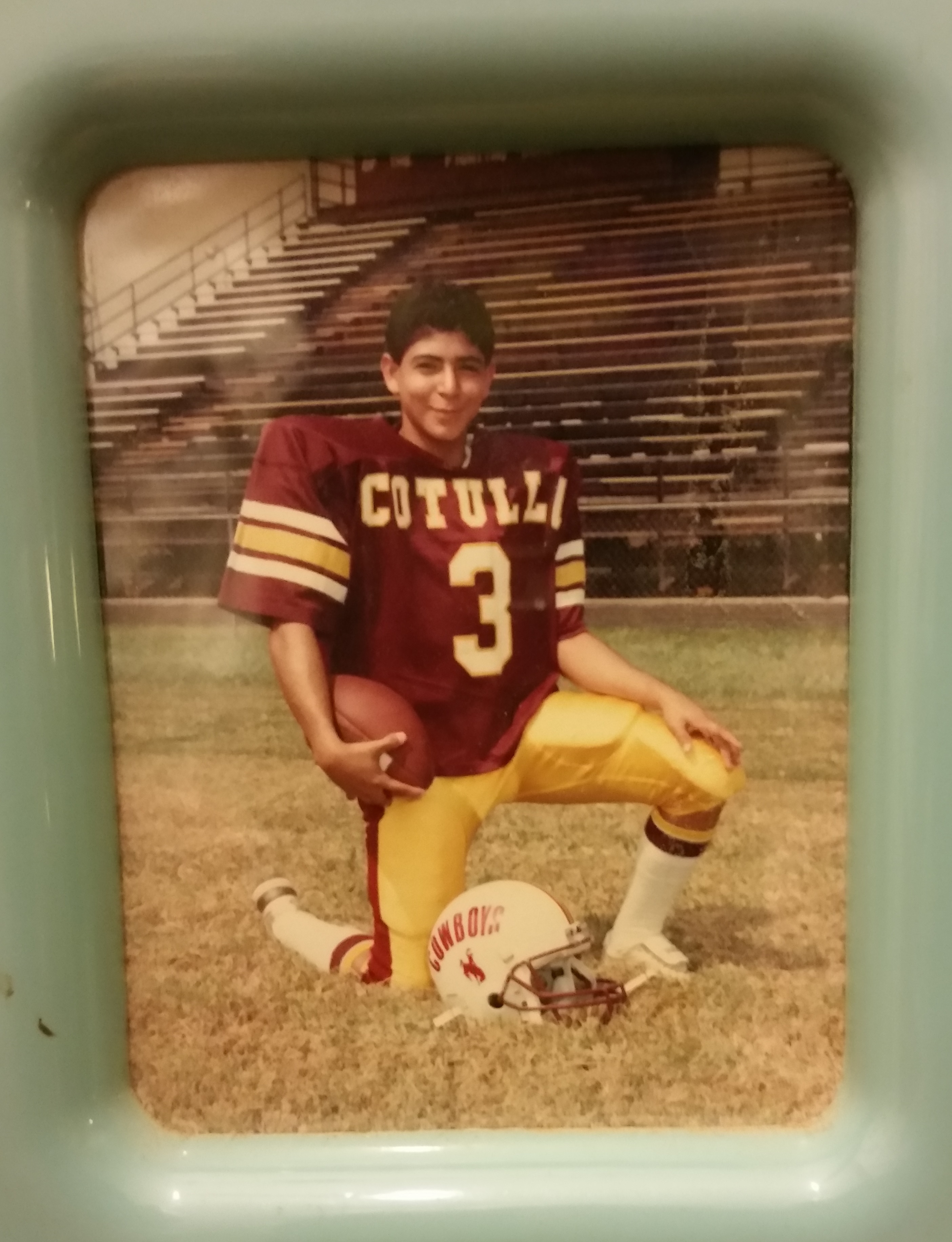
There was a time when I was young when I did not know where I would be when the next new dawn came. Yes, I once took the midnight train (except it was a bus) and I arrived in a teaching career in deep South Texas. I crossed borders into another culture, another way of life, another journey made of words and pictures that hasn’t reached the final station yet.
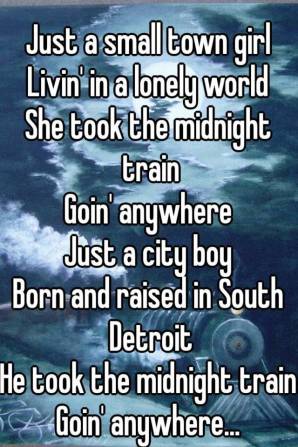
At the outset, we all take a risk. Born and raised in South Detroit (although it was really North Central Iowa) I passed through established procedures, rules, and regulations to do things that desperately needed doing for people who could only help themselves in very limited ways.
Some spoke mostly Spanish. Some lived in broken homes. One boy lived for a while under the bridge of the Nueces River, but attended school every day because he was hungry to learn, and because free school lunch was the majority of the food he got to eat. He got on a midnight train, and I never saw him or heard from him again. His sister, though, lived with a tia who treated her like a daughter, and grew up to be a school teacher. I let her teach the lesson for me during one class period, as part of an educational experiment, and it put her on her own midnight train.
It was a train going on the same track I followed. Not because of me and what I did for her. But because she came to realize it was the right journey to take for her. It was the perfect anywhere for her.
But there is danger inherent in getting on a midnight train going anywhere. You don’t know who is waiting for you down the line, or what your circumstances will be at the next station along the way. There may be strangers waiting up and down the boulevard, their shadows searching in the night. I befriended other teachers, mentored some, learned from many, even married one. I had a run in or two with people who sell drugs to kids. I had all four of my car tires slashed one night. I had a car window broken out. I had a boy once tell me he would kill me with a knife. I later had that boy tell me he had a good job and a girlfriend and he was grateful that I talked him out of it and never turned him in to the police.
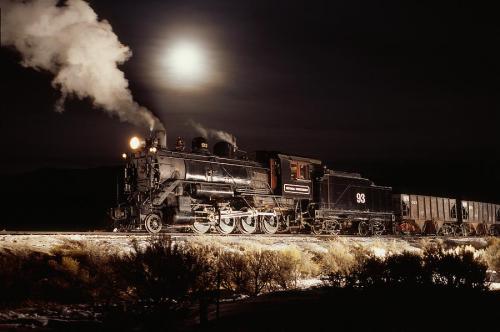
And we end up paying anything to roll the dice just one more time… At one time or another we have all been there, aboard that midnight train to anywhere. There is a moment in everyone’s life when… well, some will win, and some will lose. Some were born to sing the blues. I have been there. I have done that. And it occurs to me, that song plays on in my head still. I am still on that journey. And I won’t stop believing. Because it goes on and on and on and on…









 .
.
 Catch a Falling Star
Why We Doo
I remember when Scooby Doo, Where Are You? premiered on Saturday Morning Cartoons in 1969. I was thirteen and in the 7th grade. I had been six during the Cuban Missile Crisis of 1962, seven when Kennedy was assassinated in 1963, ten when I was sexually assaulted in 1966, and still twelve when Neil Armstrong walked on the Moon in the Summer of 1969. I was obsessed with monsters, horror comics, 20,000 Leagues Under the Sea, and the Pirates threatening Jim Hawkins in Treasure Island. I knew what fear was. And I was mad to find ways to combat the monsters I feared.
Don’t get me wrong. I was under no illusions that Fred, Daphne, Velma, Norville “Shaggy” Rogers and Scooby Doo were the answer to all my fears as viable heroes and heroines. They were goofballs, all of them, based on the characters I vaguely remembered from The Many Loves of Dobie Gillis. I was aware that Shaggy was just Maynard Krebs in cartoon form (the hippie character portrayed by Gilligan’s Island actor Bob Denver.)
One of the critical things about the show for me was the fact that there was a rational explanation for the monsters. They were men in masks, special effects and projector tricks, or remote-controlled mechanical things.
And the way you overcame them and saved the day was by having Shaggy and Scooby act as bait, cause the traps to get sprung at the wrong time, and then fall on the villains, trapping them under the butt of the talking dog.
Villains and horror could be overcome by laughing at them. They were more likely to be clowns than carnivores. And even if they were carnivores, the teeth were not real.
There was a universal truth in that. Danger and horror and fear were easier to handle when you could laugh in spite of those things.
And to top it all off, those meddling kids and their stupid talking dog were with me my whole life. Those cartoons got remade and spun off so many times that my kids learned to love them as much as I did. And those four meddling kids and that talking dog are still making new stories even now.
And that is why we do the Doo!
Leave a comment
Filed under autobiography, cartoon review, cartoons, commentary, humor, monsters, Uncategorized
Tagged as Scooby Doo