Yesterday an inconvenient internet outage interrupted my fountain of character gushing. So let me splash a couple more on here.
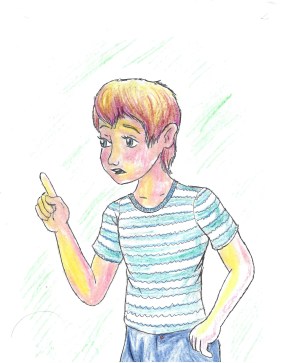
Tim Kellogg
Tim is a school teacher’s son who is sorta, kinda, based on my own oldest son… and maybe a little bit on me. He’s clever, creative, a natural leader, and only slightly evil part of the time.
Tim is a main character in;
Catch a Falling Star
The Bicycle-Wheel Genius
Magical Miss Morgan
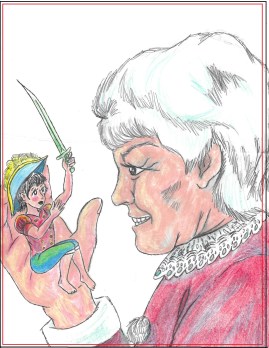
Grandma Gretel Stein
Gretel is a German survivor of the concentration camps who sees and talks to fairies on a regular basis. She also bakes magically delicious gingerbread cookies. And loves to tell stories to those who eat her cookies.
She is a main character in;
Recipes for Gingerbread Children
She is an important character in;
Superchicken
The Baby Werewolf
The Necromancer’s Apprentice
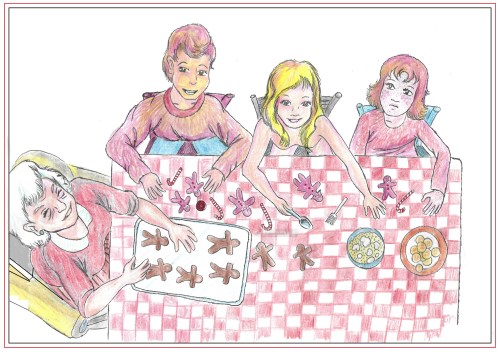
The Primary Cast of Recipes for Gingerbread Children (left to right) Grandma Gretel, the cookie baker, Todd Niland, handsome young farm boy and cookie-eater, Sherry Cobble, nudist and junior high cheerleader, and Sandy Wickham, cookie-eater and Todd Niland’s crush.
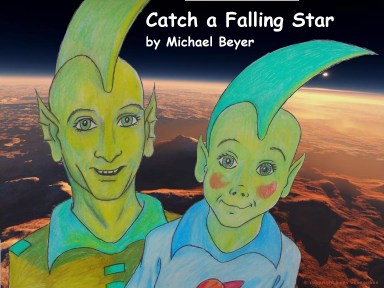
Farbick
He’s the alien Telleron pilot and good guy aboard Xiar’s space ship who gets shot during the failed invasion of Iowa and helps save the planet in the near future. He’s a main character in;
Catch a Falling Star
Stardusters and Space Lizards
Davalon (re-named David by the couple who adopts him)
Dav is the alien boy accidentally lost on earth in Catch a Falling Star, and leader of the young explorers in Stardusters and Space Lizards.
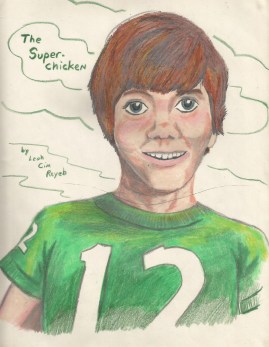
Edward-Andrew Campbell, the Superchicken
It is possible E-A is really me. He bears my high school nickname. He is a boy trying to cope with being the new kid in a tightly knit little Iowa farm town.
He is the main character in;
Superchicken
I fear I am still a long way from done with referring to characters in my books. But more waits for another day.
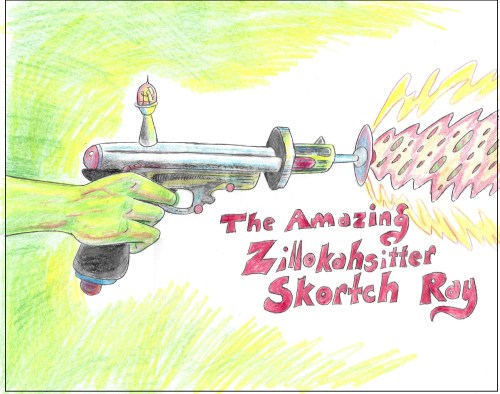
You are probably not going to believe this, but there are certain things you simply cannot safely sell on E-Bay. My first good novel, Catch a Falling Star, took years to write. The research, interviews with survivors, fighting off remaining alien invaders left behind when the Telleron invasion failed, and clean-up of sites and inconvenient witnesses took at least from 1990 to 2012. And then, as part of my marketing-by-blogging strategy for the book, I took a box of leftover skortch pistols and listed them for sale on E-Bay. They turned out to be a very popular item. It took the first skortch ray almost a year to sell for a measly five dollars. It was bought by a woman with a very annoying husband. She apparently bought the item as a joke, thinking it would not actually work as a molecular disintegration weapon. But after she surprised her husband with it and then posted the surprising results on Facebook, I quickly sold out the rest of the 26 pistols in the box and made almost $800. I am told by concerned investigative reporters that crotchety old men, ugly wives, and particularly Dennis-the-Menace-like kids were disappearing all across the Midwest. I also learned that one skortch ray pistol came into the hands of a Republican political operative before the election in 2016. That fact may have accounted for the disappearances of large numbers of registered Democrats in both Michigan and Pennsylvania in the weeks before the election.
I wanted to inform you that I may have done something stupid on E-Bay. Therefore I am re-posting the drawing I did of Studpopper the Telleron demonstrating the firing of an example skortch pistol created by Zillokahsitter Industries on Telleri Prime with Sylvani technology. If you should see one of these in the hands of a spouse that thinks you are grumpy too much of the time, I would suggest an almost instantaneous program of self-improvement. And if you see one in the hands of someone in a red MAGA baseball cap, immediately put on your own red hat and say something inordinately stupid so they will assume you are one of them, and hope they skortch themselves by accident before they get around to skortching you.
Sorry about that. I should’ve thought this whole thing through more carefully beforehand.
Tiki Astro, the robot boy, sat at the control console of the Ancient Red Dragon Space Craft. As a synthetic, computerized being, he was really the only one who could take over the monitoring of the Dragon’s travels when Junior Aero slept. Tiki didn’t have the Psionic ability to read mechanized minds that Junior had, but his computing powers in his psychotronic brain were almost the equal of Junior’s Psion ability to read computer minds via telepathy.
The panel in front of Tiki was a complex sea of buttons, lights, levers and a myriad of labels and warnings written in an indecipherable Ancient script that nobody alive in the present universe could read. Tiki was trying to decipher it in the back of his computerized brain, as he had for a month now. While doing so, he could also look out through the Dragon’s eyes, the bridge of the space craft actually being inside the head of the Dragon, and see the passing stars as the Dragon leaped through jump space into the interior of the Imperium.
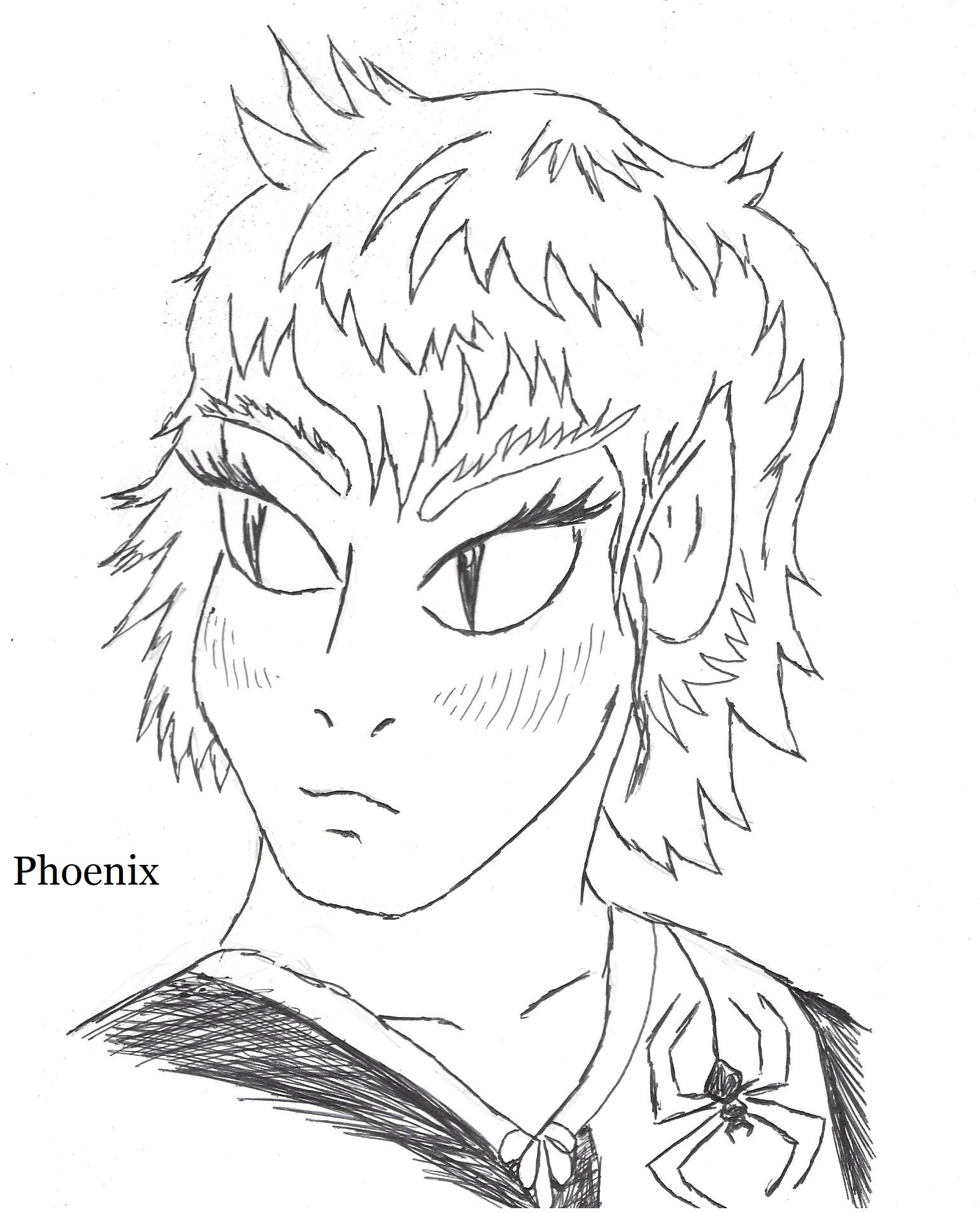
“So, Metal Head, how’s it going?” asked Phoenix as he walked onto the bridge.
“My head is not made mostly of metal. Synthetic flesh is composed of elements like…”
“Save the lecture, Tiki. I know what you are. You are the robot trying to be a real boy.”
“Unlike the other boys on this ship, I am only a little over two years old. Three if you count the day my head was activated as my original birthday.”
“Yeah. We are all very different on this flight crew. It makes it all the harder to figure things out.”
“What things?” Tiki asked the flame-haired boy.
“Well, a lot of things are on my mind. I mean, who among us Disciples of the White Spider should be the leader after Sensei Ged Aero?”
“I always assumed it was between Junior Aero and Sara Smith. They are the first two students of the Dojo.” Tiki looked at Phoenix with expressionless eyes.
“Don’t look at me like that. I know it is wrong to be jealous of anyone. But…”
“But you were a leader rather than a follower when you were a student of the Black Spider.”
“Well, yeah… I mean, I was trained by them to be a tactical leader and the commander during combat.”
“And you don’t want to turn over leadership to telepaths and healers?”
“It isn’t just Junior and Sara. I acknowledge that they are my equals in many ways. But there is also the Gaijinese boy, Shu Kwai. He knows how to lead from the front. And his telekinesis is almost as powerful as my pyrokinesis. And when it comes to telepathy, no one among us can keep Hassan Parker out of our heads if he wants to take over our minds. How am I supposed to handle that?”
“What kind of answer are you asking me for?”
“If it came to a fight over who’s in command, would you, as a rational robot, be on my side?”
“Sensei Ged Aero is in charge of this mission.”
“But if something were to happen to him…”
“If it did, we would be in serious trouble already. I would follow the leader with the best plan for whatever the situation is. Maybe you. But also, maybe not you.”
“That’s the kind of answer I expected, Metal Head. But if it came down to it, and the mission was on the line, I would certainly pay attention to who you choose to follow. I know you calculate the odds better than anyone else can.”
“That’s what happens when you make a pocket computer like me into an almost-real boy.”
The conversation ended there, but Phoenix continued studying the stars ahead as he continued to stand behind Tiki and look out the Dragon’s eyes at what was coming into view.
Smoky Hardretter was adding the final touches to the image on the 3-D display of a Mechanoid-control device. It was essential that they get things right. If they were going to establish control over the planet Mingo, Smoky and his ally Raylond King, two thirds of the ruling triumvirate of the local star cluster, would have to develop a stronger Mechanoid army than the one already controlled by the third triumvir, Evil Emperor Mong the Maniacal.
“Ray, what are we going to do if we can’t overcome Mong’s superior control mechanisms?”
The handsome young Raylond and his beautiful young wife, Tara Salongi, stepped in from the nursery.
“We just got little Amanda to sleep, Smoky. You have to discuss quietly.” Tara’s stern look gave him no room to raise his voice in protest.
“Mong is such a weak-willed ruler. There has to be a way to overcome his advantage.” Ray’s jaw was set in a grim line.
“You haven’t really taken him on directly, Ray. He’s tougher in conflict than he seems when he’s drinking coffee or participating in the mechanical-dance ritual. And he was the one out of the three of us responsible for the defenses of the entire star cluster.”
“Oh, I am aware of that. And it only got worse when we tried to force him to join the New Star League with us. He went directly to Sir Saurol to report us and get Admiral Tang to replace and recall us.”
“Um, guys…” Tara indicated the man-shaped thing listening to their conversation while leaning against the door post.
“Interesting… I seem to be here at just the right time to hear exactly what I needed to hear.”
“Who are you? And what do you want?” Smoky asked.
“He’s the synthezoid robot known as Sorcerer. He’s a bad guy, and you need to shoot him in the head before he can do his robot thing.” Tara was glaring commandingly again.
“Wait! I’m not the early model. I’m Sorcerer 27. New and improved. And I’m the solution to the problem you were just talking about.”
“You want to help us revolt against the Imperium?” asked Raylond.
“I’m tired of being shot in the head before I can perform my miraculous functions. I need to be on the winning side for a change.”
“What can you do for us?” asked Tara suspiciously.
“I possess access to Syn Corporation AI control systems. I can turn your Rot Warrior Zombie Soldiers into reanimated beings who can think creatively and independently, even as well as they did when they were living beings.”
“Why would you help us?” asked Smoky.
“You will reward me with sole control of the planet Zadukar that orbits the Lonely Star in the far corner of the cluster.”
“That miserable hot rock with methane for an atmosphere?” asked Raylond.
“You have a deal!” declared Smoky.
“Yes, but the prince is probably long dead. And, besides, Slythinus himself was probably killed on Stanley,” said Sorcerer.
“Why do you want it?” asked Raylond.
“I just want to be a ruler among the good guys for once,” he said with an evil robotic smile.
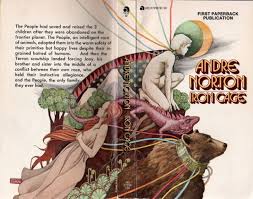
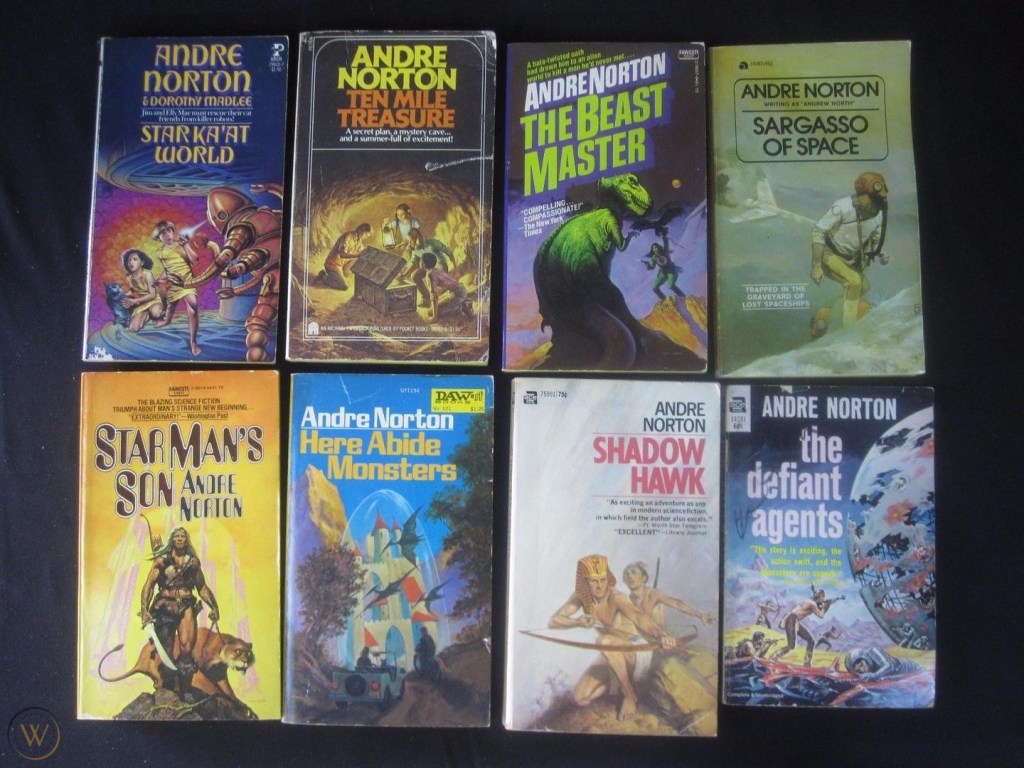
It began for me in 1977 with this wrap-around cover illustration. I knew there were a lot of this guy’s books on the shelves of the college bookstore along with works by Robert E. Howard, Roger Zelazney, and Theodore Sturgeon. And I knew this guy had also written paperback books under the name “Andrew North”, a name I had seen on the twenty-five cent novels in the drugstore where you could buy the really good pulp fiction novels only slightly used.
I had never before bought one of his books. And the book money I had for the fall quarter at Iowa State was supposed to all go towards the book-list given to me as a Junior-level English major. But the naked kid on the cover had a wired-up collar around his neck. And I had only recently recovered long-suppressed memories of being a victim of a sexual assault. I had to have it. I had to know what that illustration had to do with the story inside.
So, I bought a book that I judged by its cover.
And it was not the wrong thing to do.
The main character was a boy named Jony, the naked boy on the cover of the book. He is taken by alien beings as a study specimen along with his mother, the pregnant woman on the back of the wrap-around illustration. The story starts with Jony in a cage, treated like an animal. His mother, also a study specimen has been mated to a Neanderthal-like humanoid specimen who cannot speak, and she has given birth to twins, a boy, and a girl. They are kept in separate cages by their inhuman captors.
Jony manages a mass escape, taking his mother and his younger siblings with him, and releasing as many of the other study specimens as he can. Luckily they escape onto a very earth-like planet. But unluckily, the mother is in very poor health and dies soon after escaping. Jony is then responsible for his little brother and sister in a wilderness that is not empty of others. Luckily, the others they first run afoul of are the bear-like ursine aliens who share their need to not be recaptured by the zoo-keeper aliens.
It was a perfect novel for me. I identified strongly with the main character, who had been violated in a very personal way by monsters. And then had to build a new life in a world full of potential other-monsters. Andre Norton shared my pain and helped me overcome it.
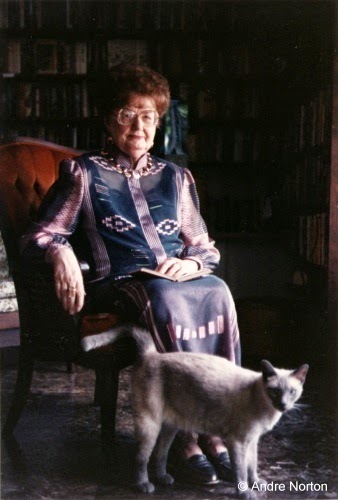
But she also fooled me big-time. She was not a he.
She was a librarian and editor of pulp fiction who wrote enough sci-fi and fantasy in the 50’s, 60’s, and 70’s to finally become a full-time author.
She was already on book number 29 when she retired from being a librarian to write full time.
And I would go on to own and read several of her other books, which were good, but never quite lived up to that first one I read. Of course, that may have been because of the timing and circumstance that led me to a book that I actually needed to read. That book set me on the road to recovery from my personal darkness. And it may have sparked in me the need to eventually become a nudist. And more important than that, it may have led me to a lifelong need to teach reading.
Andre Norton was a real writer. And she made me one too. Though I never knew who she really was until after I bought that book because of the picture on the cover. And I never got around to properly thanking her for all of that… Until this very moment.
The biggest debate in the arguing about forming the New Star League had been about which planet was the best place to host the capitol of the newly formed multi-star government. The idea had formed around the planet Don’t Go Here, which was entirely too provincial and had never had a space-faring tech level before. In spite of its sentient orbiting space port, the Ancient construct known as Frieda, retrieved from the device made by the Ancients called the Crown of Stars, it was determined that the planetary system was simply not equipped to be an interstellar capitol.
Tron Blastarr, leader of the pirate space forces establishing the new union of solar systems, wanted his home base of Outpost to be the new capitol, but the main inhabited planet, Outpost itself, was an airless rock with no room for much beyond Nebulon colonies and military installations.
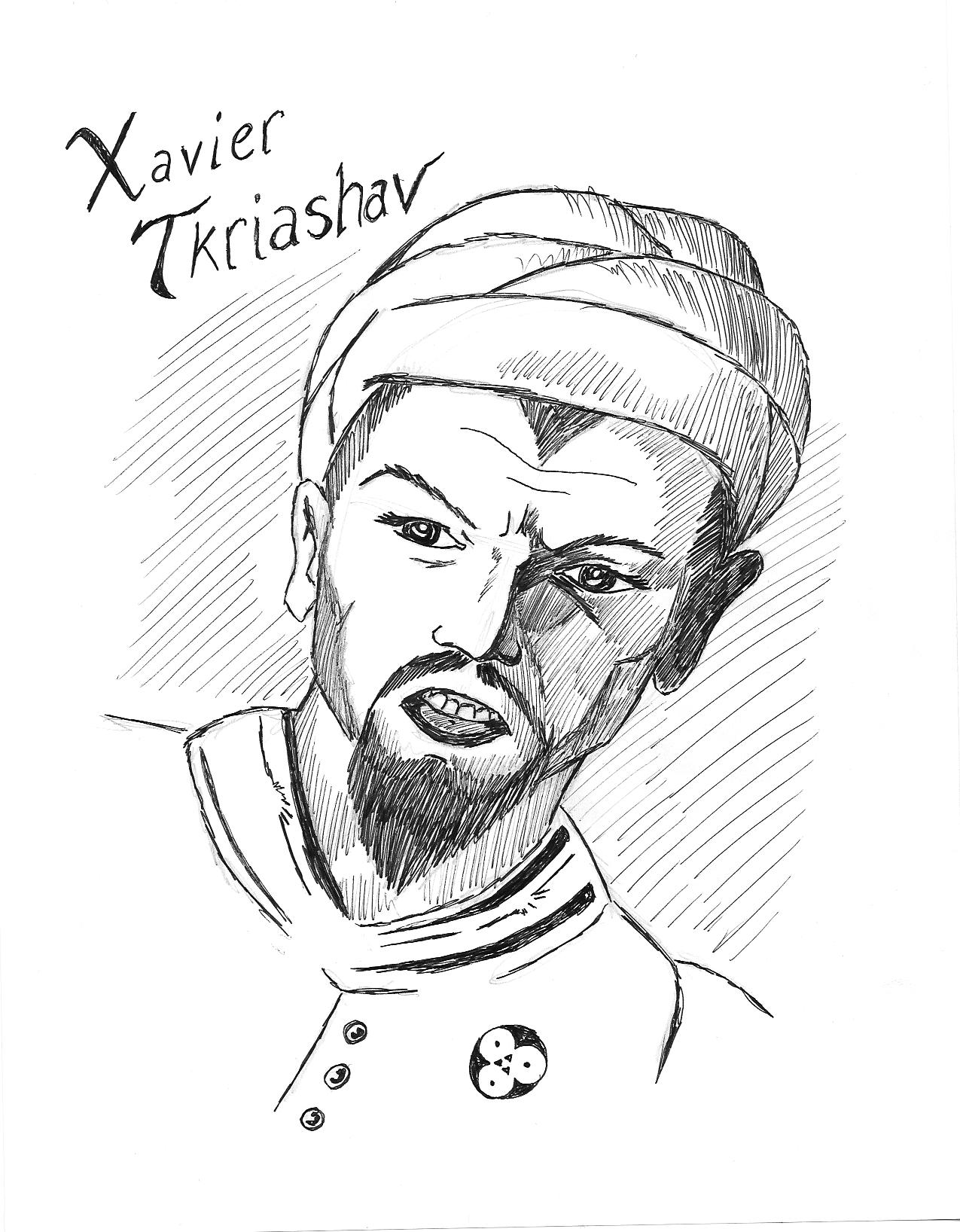
Xavier Tkriashav, the political leader who had brought all the worlds of the Psion exiles and the Lupin pirate hordes into the union wanted his home world of Zarane to be the capitol. But that world did not really have a central enough location to work well.
So, the leaders, meeting on the centralized world of Gaijin with its hybrid Gaijinese people and relatively high tech level, decided to build the new capitol in the city of Kiro on the planet Gaijin.
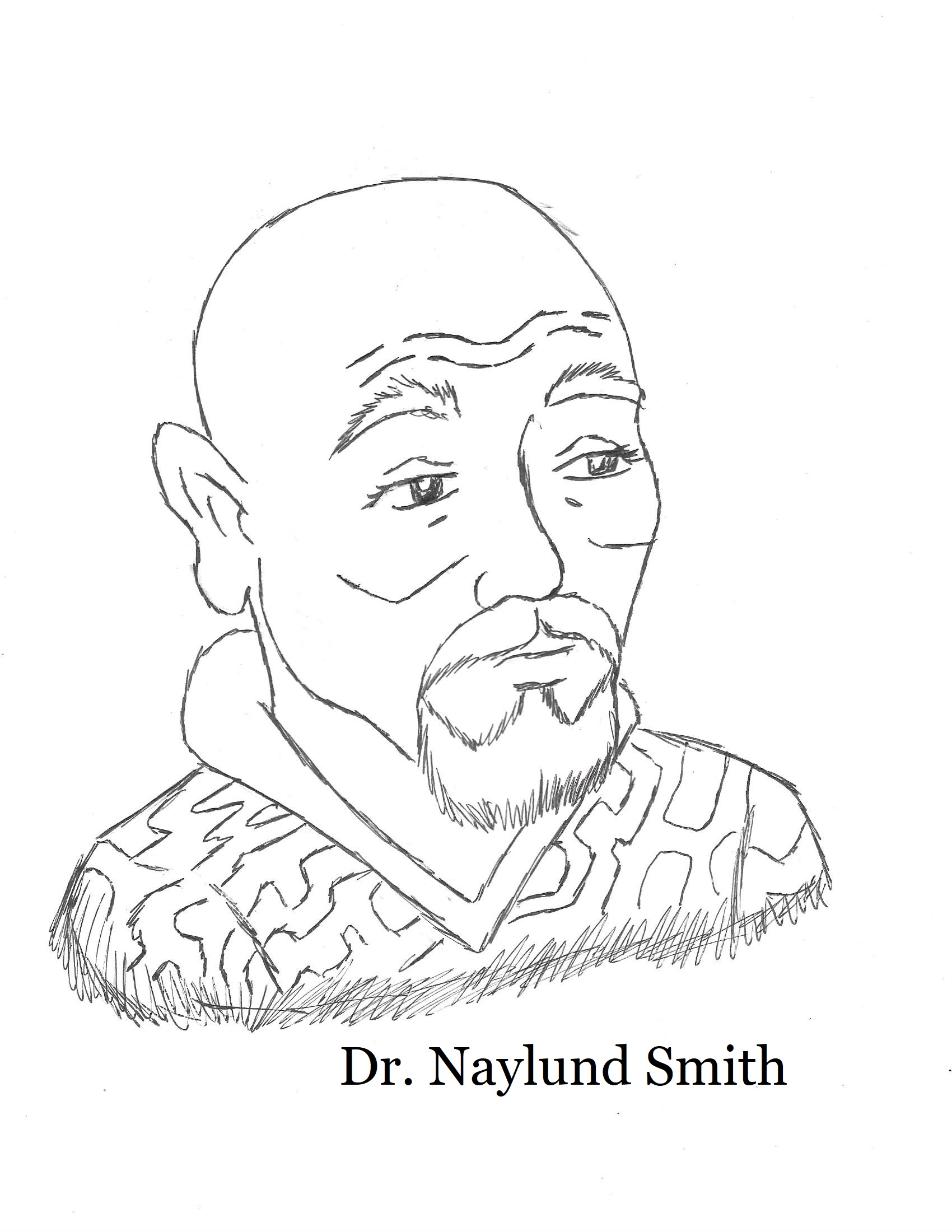
Tkriashav and the bald immortal Dr. Naylund Smith both retired to the Gaijinese tea garden behind Dr. Smith’s house with their cups of steaming white-stork tea.
“Well, Dr. Smith, it seems that everybody got what they wanted in the meeting. The constitution is practically written already.”
“Yes, you, it seems, got the choicest position, making yourself Senator Prime.”
The turbaned Zaranian smiled. “You will be my Number Two, so you will succeed me if anything happens.”
“Yes, but it was not a looked-for opportunity. I have other matters that urgently demand my time.” Dr. Smith stared into his cup of tea.
“But you are an immortal. Surely if anyone has all the time they will ever need to do anything, it is you.”
“I go on living practically no matter what happens to my body, it is true. But my precious daughter is not immortal. Even now, Sara is with Ged Aero on a mission she may not return alive from.”
“But she’s only one of how many children you have sired over your three-thousand-year-plus lifetime?”
“She may be only one of many, but they are all gone now in the well of time, and I vowed that her mother would be the very last woman I ever loved and then outlived. That kind of loss is taxing to the soul.”
“Yes, the sentiment is certainly understandable. But it is a great thing we are undertaking. Never before have so many different sentient species come together to form an interstellar planetary alliance. We have always been ruled in the past by the members of the Earther Human Race and the Human-Galtorrian Fusion Race. But now there are the Molluscan M’uduai Race, the Japanese/Sylvani Race we are now calling the Gaijinese, the Psion Race of Zarane and her sister worlds of the Old Psion Empire, the Pale Humans of the Geonee Race, the deep-space Nebulon Race, the Lupins, and the Dion Saurian People, as well as all the Genetically Altered Races of the Faulkner Genetics Worlds.”
“An impressive list to be sure. But can they hold together as one people with common interests in this new government?”
“I don’t see why you would doubt it?”
“Maybe because of the endless warring and race-hatred of the many human races. You know how the Imperium is. Zombie like Mechanoids, dead bodies brought back to life artificially are the backbone of their armies, space marines, space navy, and special forces. The ruling elite see all alien races as expendable and exploitable. They don’t even treat Dions and M’uduai as worthy of being called people. And they enslave and exterminate Nebulons and Lupins.”
“Yes, and we are not them. We are not Imperials. We will hold ourselves to a higher standard.”
“You have no idea how often I have heard that same sort of pronouncement come out of the mouths of well-meaning world rulers and empire builders. It almost never goes the way they see it in their glorious visions.”
“It will be different this time. The Prophecy of Xhan says it will be so.”
“I too have studied the prophecy, Xavier. I have also studied much too much history firsthand to have your confidence.”
The younger man smiled and softly slapped the old immortal on the back. “Fear not. There is much in the Prophecy of the White Spider yet to be realized. We are making history. But it is history that is foretold and will certainly come true.”
“It will if Ged Aero succeeds in his quest. And it will if the space forces on our side can get it all together to fight off evil old Admiral Tang, and the darker forces behind him. You would be wise to prepare for at least some parts of your prophecy not to come true in the way you are expecting.”
There was no doubting that Dr. Smith had a point. And even Xavier’s clairvoyant Psion abilities couldn’t remove the darker clouds from among all the cumulus constructs of the possibilities that lay ahead.
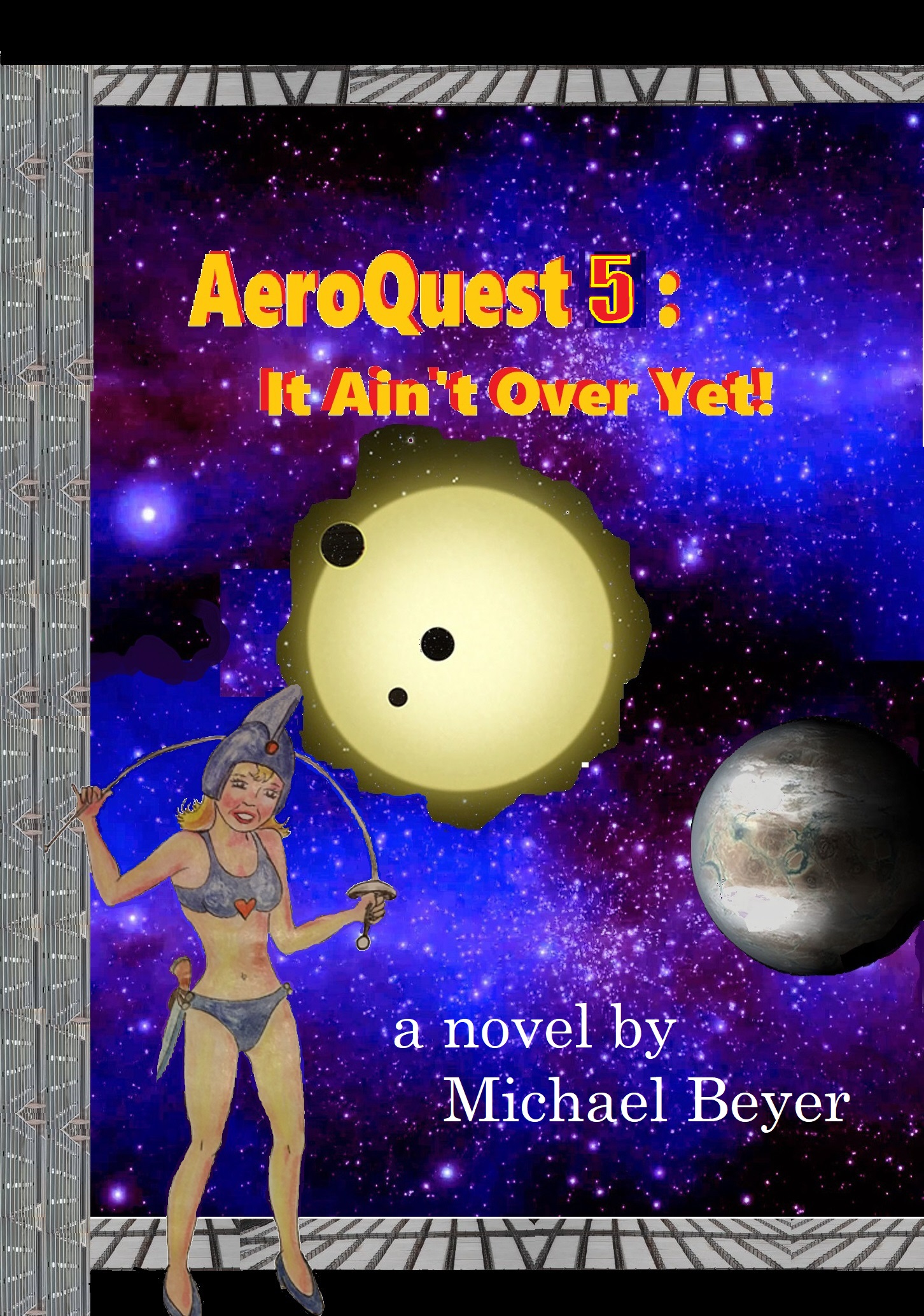
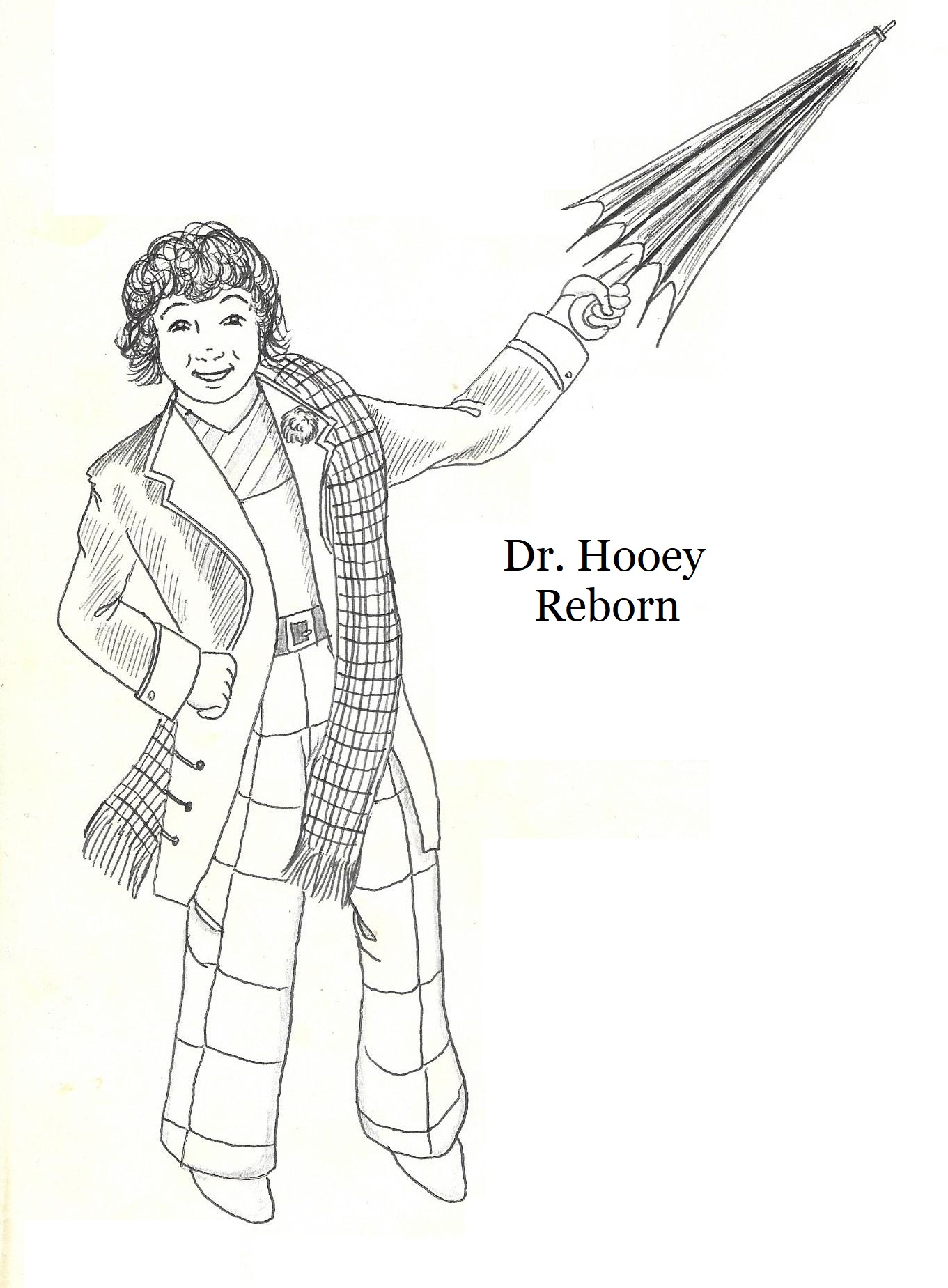
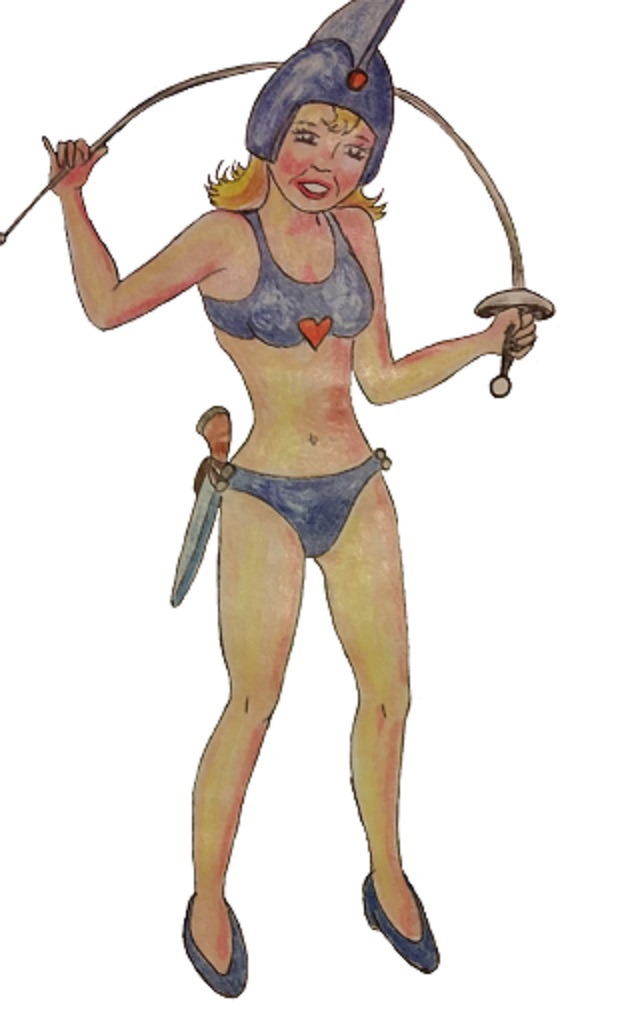
She was the size and shape of a blond-haired human girl of about fourteen years of age. She wore one of those tech-level 25 armored space bikinis, and Dr. Hooey had to admit she looked pretty appealing in it.
“So, they issued you that armored bikini instead of the usual Time Knight’s eccentric, colorful costume?”
“Oh, yes, by my special request,” said the girl. “It’s fully functional as a space suit, putting atmosphere around me inside an electromagnetic bubble that will also shield me from radiation, lasers, micro-meteors, blades, microwaves, nuclear blasts, and even slug-thrower bullets.”
“Ahem, yes…” Hooey wasn’t sure whether he should be harsh with his evaluation, or just charmed with her natural enthusiasm. Her enthusiasm alone was of a kind that could defeat space criminals, evade alien attacks, and charm world leaders. And that happy grin could certainly kill a grizzly bear at thirty paces. “Prepared for practically anything, aren’t we?”
“Well, being prepared is the key to everything you have accomplished Dr. Hooey. I studied you carefully while I was in the academy. You more than any other Time Knight we discussed. I prayed to the Seven Goddesses of the Pleiades that I would be chosen to be your companion on this next journey through time.”
“Ahem… your name is Spaceheart, I believe?”
“Yes. That is definitely my preferred moniker of the moment.”
“I suppose I can’t just call you Becky or Alice or something?”
“No, please. I like Spaceheart. It is a cool pulp-fiction sort of science-fictiony name.”
Hooey almost said, “Ahem” again, but he was running out, so he decided to save the last few for later.
“So, one of the main jobs of the time-travel companion is the keeping of order inside the time-ship.”
Spaceheart looked around at the mess inside the Star Wars. She shuddered. Wires were hanging from the dark space where the ceiling allegedly was supposed to be. Burnt panels covered the control console with melted buttons, charred thing-a-majiggs, and a grossly detached doodle-ma-whoop. You couldn’t make the chronometric time jumps without a re-attached doodle-ma-whoop. And you would need to replace every single thing-a-majigg in order to prevent the Time Knights inside the ship from prematurely aging or turning back into babies. A glitch in either direction could pop you out of existence without warning.
“It got damaged a bit with that last mission, huh?”
“Oh, yes. It actually killed me, so that I had to reboot myself with an entirely new and better-looking reincarnation.”
“But, the Lizard Lady was successful before she died?”
“Well, technically… Um, she’s not actually dead yet at this time… er, the relative dimension in time and space she currently inhabits.”
“Oh, that’s interesting…”
“Yes, um… she’s in position to help us win the battle at Outpost. So, our job is mainly to correct whatever goes wrong with the ancient device that Ged Aero is trying to send to another universe.”-
“I guess I better get started on the clean-up and repair procedures.”
“Ahem… yes, I didn’t mean to use up that one, but if you don’t mind… I would like to pull up a lawn chair and watch you work. Um, you are going to wear that armored bikini, right?”
“Um, yes…?”
“Can I take pictures too?”
Spaceheart smiled at the dirty old man who turned younger again.
Outpost was abuzz with activity. The airless world had only limited defense from attack. The primary protection had always been the secret of its location. As an airless world, the surface could easily be lasered or bombarded with no atmosphere to interfere with the destructive force. Tron had ordered the mirror fields raised, hoping that some laser fire could be reflected into the surrounding darkness. He knew, however, that the only hope he had was in his fleet. If they could somehow use the dinosaur-shaped starships made with Ancient technology to destroy enough of Admiral Tang’s fleet to make him feel the losses were no longer worthwhile, then maybe the ground-side installations could survive intact.
There were still very talented corsairs able to fly fighting ships. Elvis the Cruel and Apache Scout were both peerless star warriors. But Tron had to believe that Admiral Tang had a few potent killers left to his name too. There was every chance that the situation was hopeless and would end in a massacre.
Still, there were a few unknowns on Tron Blastarr’s side. The crazy alien starship known as the Megadeath was the most agile killing machine that Tron had ever seen. The goofball rock-and-roll crew that flew it for Trav Dalgoda was now very adept at handling the alien thing, and Tron had kept them to help in his mad last stand. They were not smart enough to be scared of the upcoming battle. He was able to send his son onward to Don’t Go Here, the planet where the newly formed New Star League gathered its forces. So, hopefully, Artran would be safe and carry on the Blastarr name long after Tron and Maggie’s bones littered the airless sands of Outpost.
“Boss,” said Hassan the Elf, breaking Tron’s train of thought, “I have made something that I think might be of help.”
Tron looked at the child-like Peri and the invention he was now holding up. “A suit of armor?”
“Yes, boss. A special kind of suit of armor. It is made up of nanites.”
“What? Nanites?”
“Yes, microscopic robots that share a command pulse and can reform themselves into any sort of armor that might be needed.”
Tron looked quizzically at the bluish suit of nanite armor. “How do you make it work?”
“Well… for instance, if you want it to form an anti-grav pack on the back, you just say, “FLIGHTPACK.” The suit rearranged itself at Hassan’s command and an anti-gravity flight pack instantly took shape on the back side of the armor’s breastplate.
“Does it have weapons?”
“FUSIONGUN!” said the elf with a grin. A man-portable fusion generator and discharge barrel formed on the pauldron.
“That’s really good, Elf. That will help. But one isn’t going to be enough to save us.” He grinned sadly at the small Peri Space Elf originally from the planet Djinnistan.
“Oh, that’s the best part,” said the Peri. “Nanites can replicate themselves from raw metal ore. Since the planet is mostly metal and crystal, we can set them to making a million copies of themselves in an hour. You have to specify the number, though. We wouldn’t want the little buggers transforming the entire planet.”
“Amazing,” sighed Tron. “If only I had a million commandos to fill them with.”
At that moment Maggie came trotting up to him with a handheld communicator. “The call is for you,” she said, looking grim. “Arkin Cloudstalker has finally found his way back to this system. And that Lazerstone rock-guy is with him. Admiral Tang is sure to follow.”
“Yes. Sure to follow,” said Tron automatically, still gazing at the grinning elf and his newest invention.
Canto 143 – Morning Aboard the Starship Aboard the Starship
I couldn’t help but fixate on the things Admiral Tang had bragged about knowing from the future during his villain speech in a previous episode. Apparently, he had outwitted and killed a Time Knight at some point, and he had specifically told us that I was going to survive this adventure while poor Ham Aero was doomed to die in the upcoming battle for the planet Outpost.
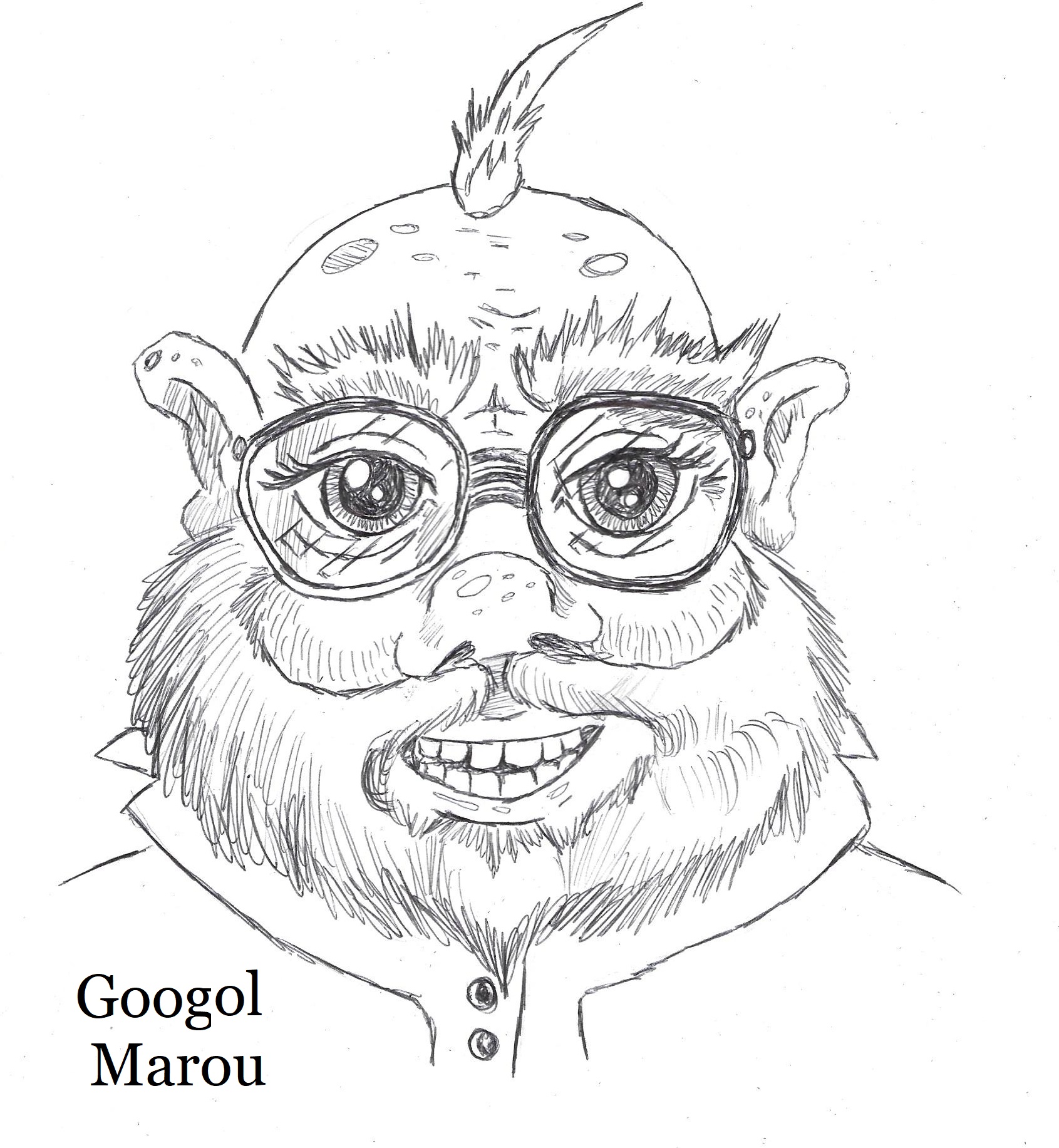
I was sipping on my cup of designer coffee, my own special concoction called Isaac Newton’s Favorite Cup of Joe. And I was staring out of the front viewport of the Leaping Shadowcat at the guards in the cavernous docking bay of Admiral Tang’s flagship, Bregohelma. The Lupin child who served as cabin boy came out of the crews’ quarters completely naked and rubbing at his doglike eyes. Of course, the boy’s shameless nudity didn’t bother me since Lupins are covered in wolf-fur and don’t really need clothing to cover up relentlessly white, pock-marked skin and rolls of fat the way I do.
“Professor Marou, do you think the Imperials will just execute me or toss me out into space?” Sahleck asked.
“Well, if they are frugal, they will toss you out into space. It costs less.”
“Oh.”
The destroyed look on his puppylike face reminded me that maybe a strictly logical answer to the question wasn’t the kind of answer he needed to hear.
“But don’t go planning on dying yet. Time is a relative dimension in space and, as such is totally malleable.”
He looked at me as if he wanted to ask another question, but didn’t really understand what I had just told him.
“You know that there are Time Knights constantly meddling with what they think happened in the past to correct the outcome to some sort of plan created in the distant future…”
“Oh, yes…” Sahleck stammered.
“And since Tang says he killed one of those Time Knights, we know for certain that somebody is out there working on solutions to the problems we are now facing.”
“So, maybe they won’t kill everybody but you?”
“Oh, you all are probably going to die. Tang seems to know what will happen with information gleaned from the Time Knights themselves. But nothing is ever certain. Maybe I get killed too.”
That didn’t seem to help much.
Ham Aero wandered in drinking his own morning beverage, probably potent liquor of some sort.
“Sahleck? You are out of uniform, boy. You know that the job of steward aboard a starship is critical to staying alive in space.”
“Yes, Ham. I know I am supposed to scrub floors, maintain the air quality, and do whatever the cook asks me to do, but we are almost all going to die. So, what’s the point?”
“We are not giving up, my boy. What we are blessed with is lots of time, and the freedom to plan without worrying about being overheard. Tang doesn’t know it, but this ship is shielded from telepaths. Ged had me do that back when he was first dealing with becoming a Psion. So, we don’t have to just sit back and wait for death. We can plan and carry out our own rescue and escape. And I am not ready to die myself, knowing now that I am going to be a father for the first time.”
That made Sahleck smile.
“So, you have an idea about how to do it?” I asked.
“Not yet. But we have more collective smarts than they do. How many of their crew are rot warriors? Skeletons with robotic life? Nearly mindless undead things?”
“Mechanoids and reanimated dead folks make up at least 75 percent of all Imperial Navy personnel. You know this well, Ham.”
“Sure, but my point is… We have you. You are one of the smartest living humans in the entire Orion Spur of the Milky Way.”
Now, I know, of course, when I am being flattered in order to manipulate me. But he was not wrong. Duke Ferrari was on board, and he carried considerable political significance, and potentially leadership ability. And Ham’s young Nebulon wife knew a lot of secrets only formerly enslaved aliens really knew about. Ham himself was a canny strategist and ship-board leader. He knew how to solve the problems of living mostly in space aboard a starship. And he was not wrong about me being smarter than practically everyone else in the universe. (Not bragging, just an irrefutable fact.)
“Yes, you are right, Ham. We are not helpless. We do have an intelligence advantage over our enemies. And we will think of some way out of this situation.”
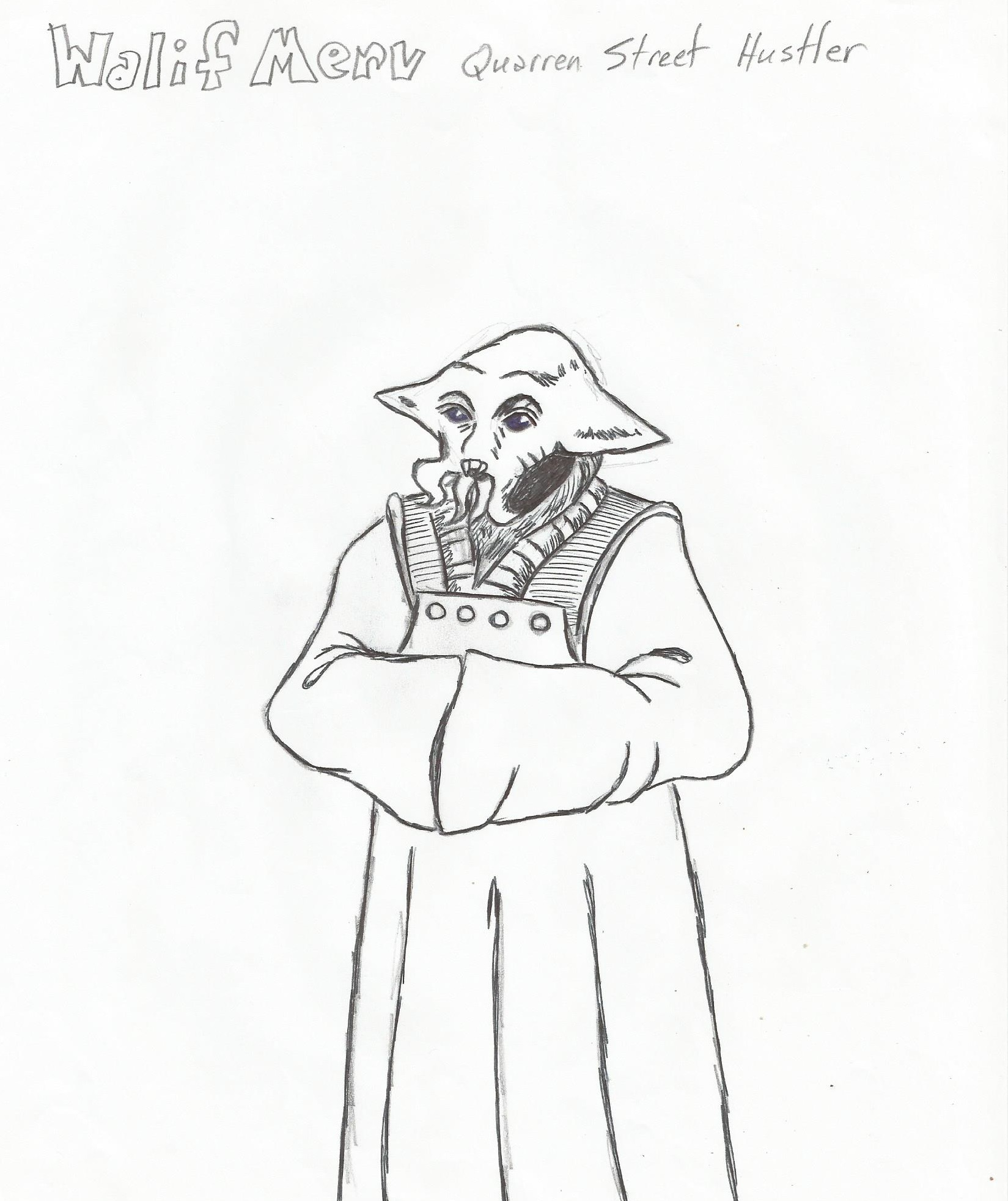
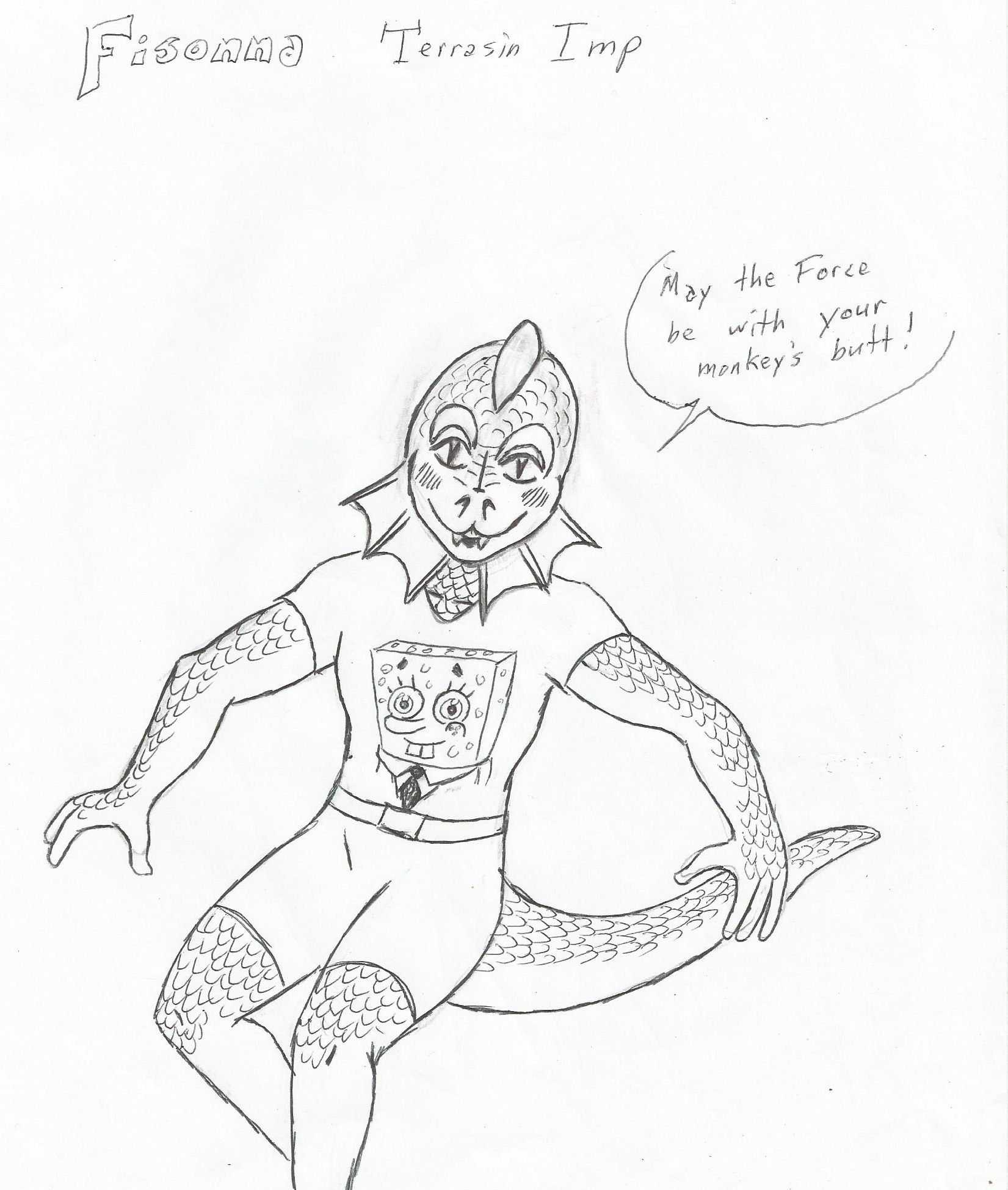
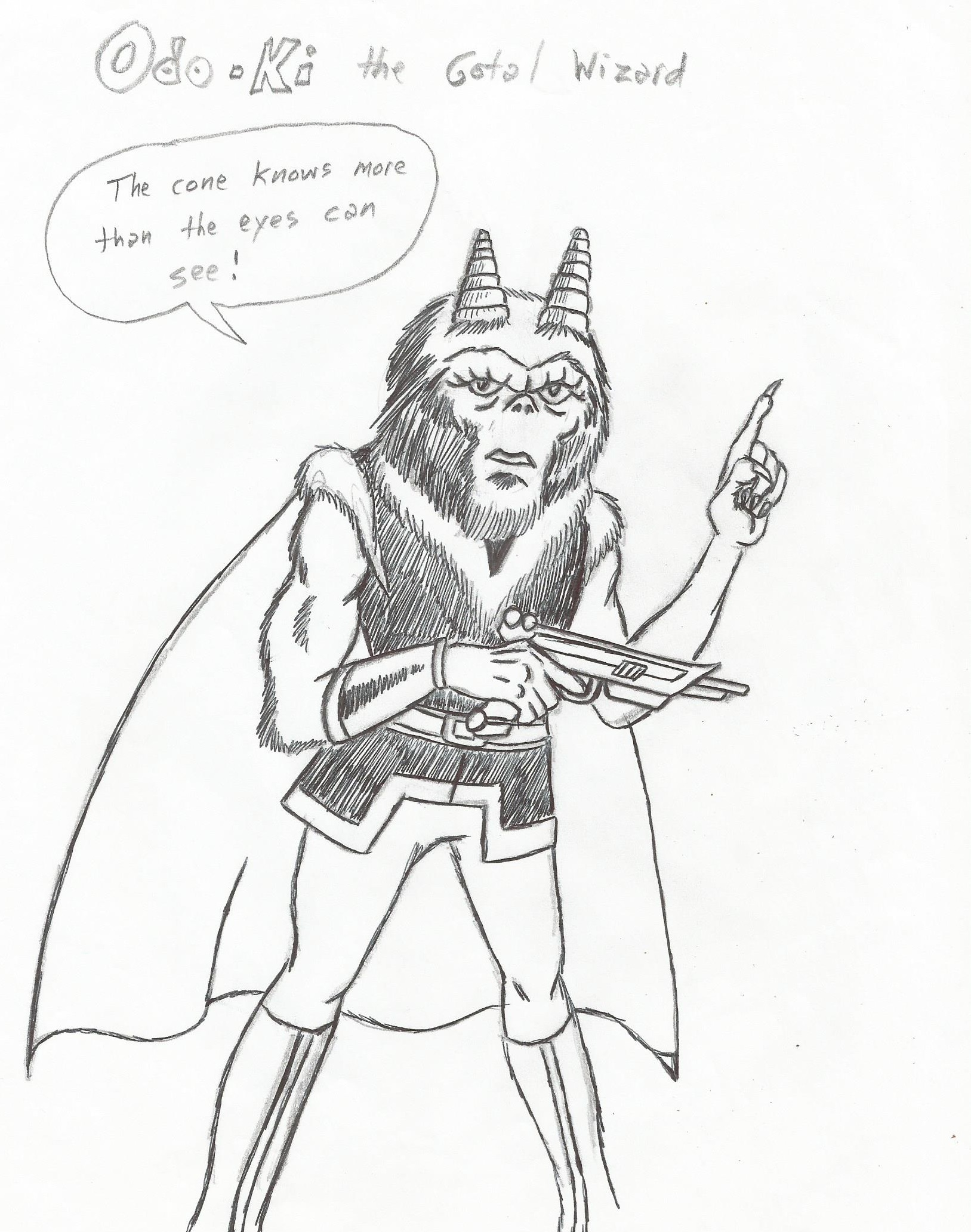
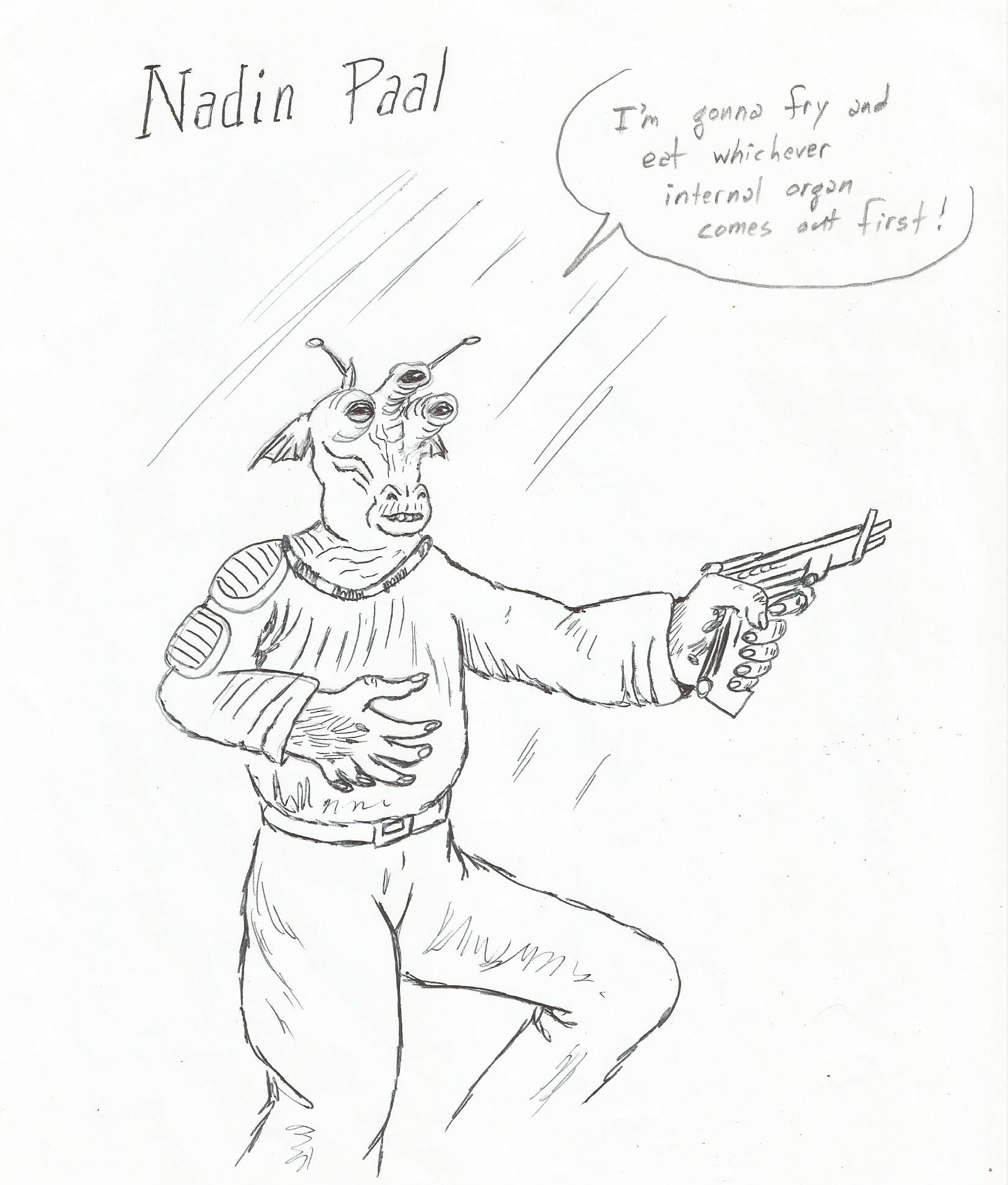
I spent a good deal of my time as a game master for the Star Wars role-playing game in creating alien characters that fit the movies, the books I read in the Star Wars series, and the game materials. In this post, I will give you a mini-gallery of the aliens I drew for the game.
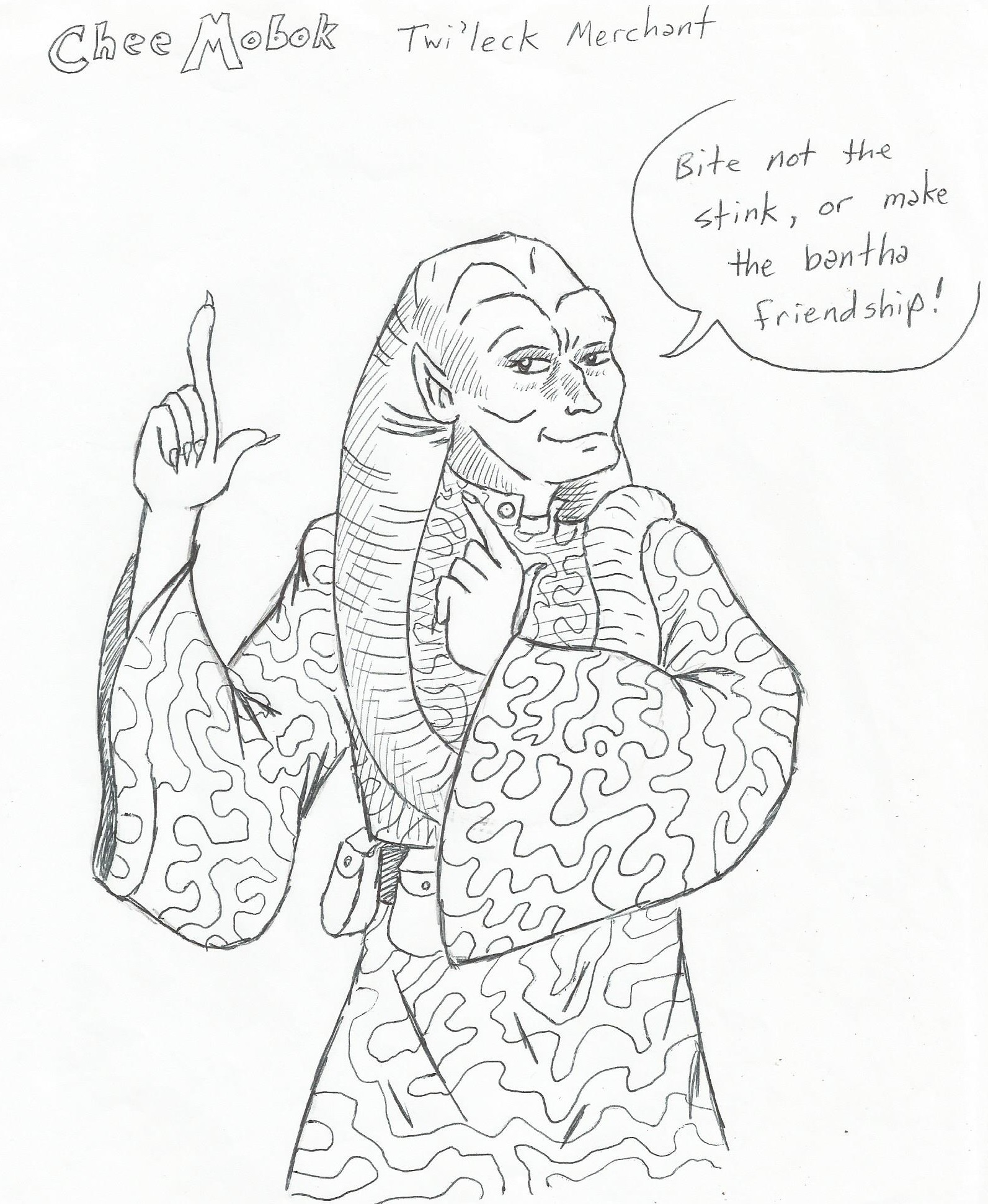
Chee Mobok was a space trader who had a problem with his own ego. He believed that he was a genius at language and could speak any language he had heard a handful of words from.
The Galactic Common speakers were always laughing at the things he said.
Huttese speakers like Jabba the Hutt were always trying to kill him for say precisely the wrong thing.
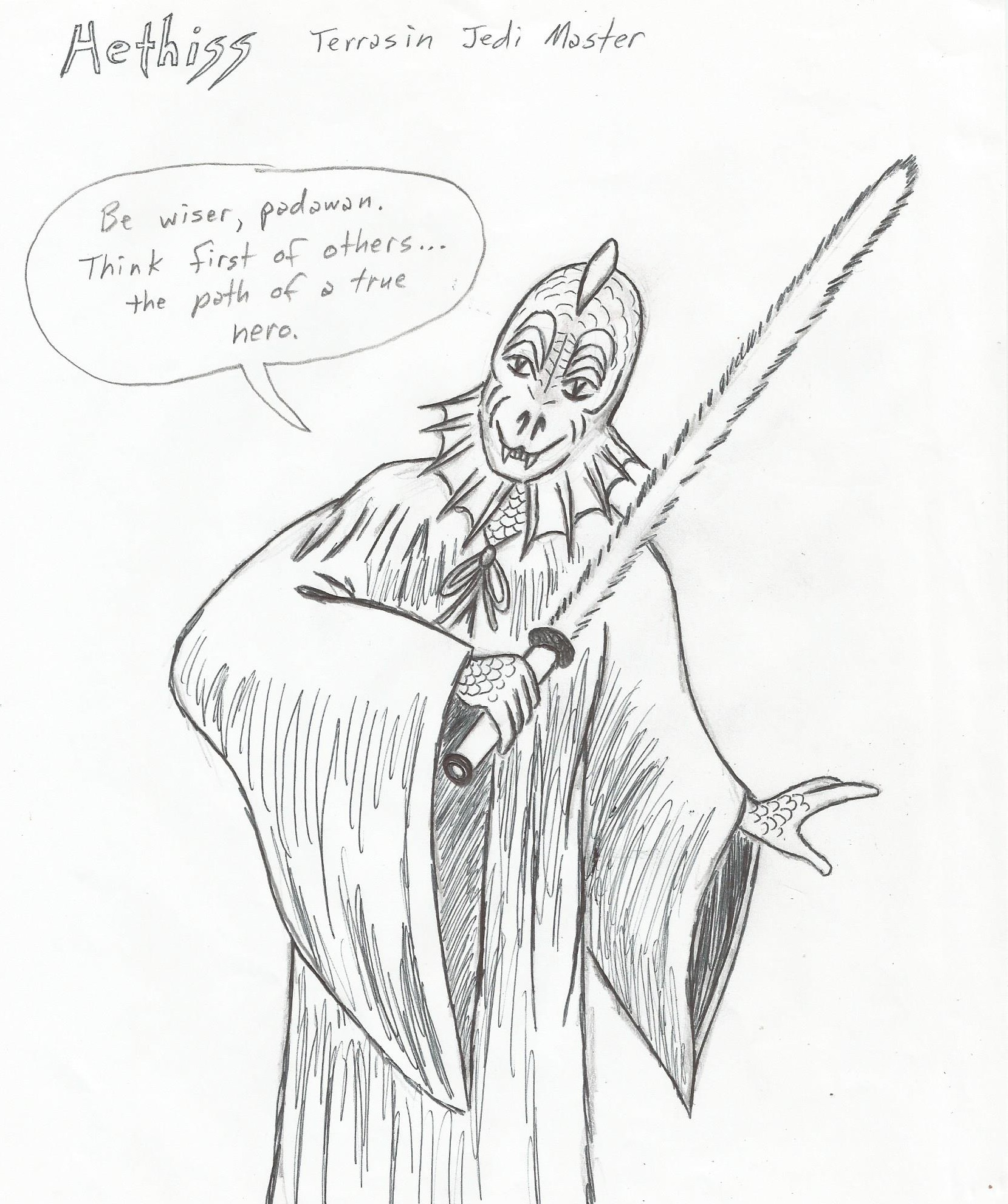
Hethiss was the Jedi Master when my son’s Jedi character was still a padawan learner.
He was wise, but unable to keep his student from doing things in violent ways when a diplomatic solution was called for.
Merv was a potential terrorist and a suspect in a series of murders on a water planet. He was, however, the good badguy character. You know, the villain who has a heart of gold and whose actions redeem him in the end… As opposed to a bad goodguy who seems to be a hero and ends up betraying everyone.
Fisonna was a street kid from the same planet and same race as Hethiss the Jedi master. He had the potential to become a padawan learner. But he also used his Force skills to pull pranks on serious adults.
Odo-Ki was a Gotal with the ultra-sensitive cones on his head. He had a limited ability to see behind walls and predict the near future.
Nadin Paal was an actual pirate and terrorist with no redeeming qualities at all. The best thing about him was, that when the time came, he blew up really nicely. A colorful fireball.
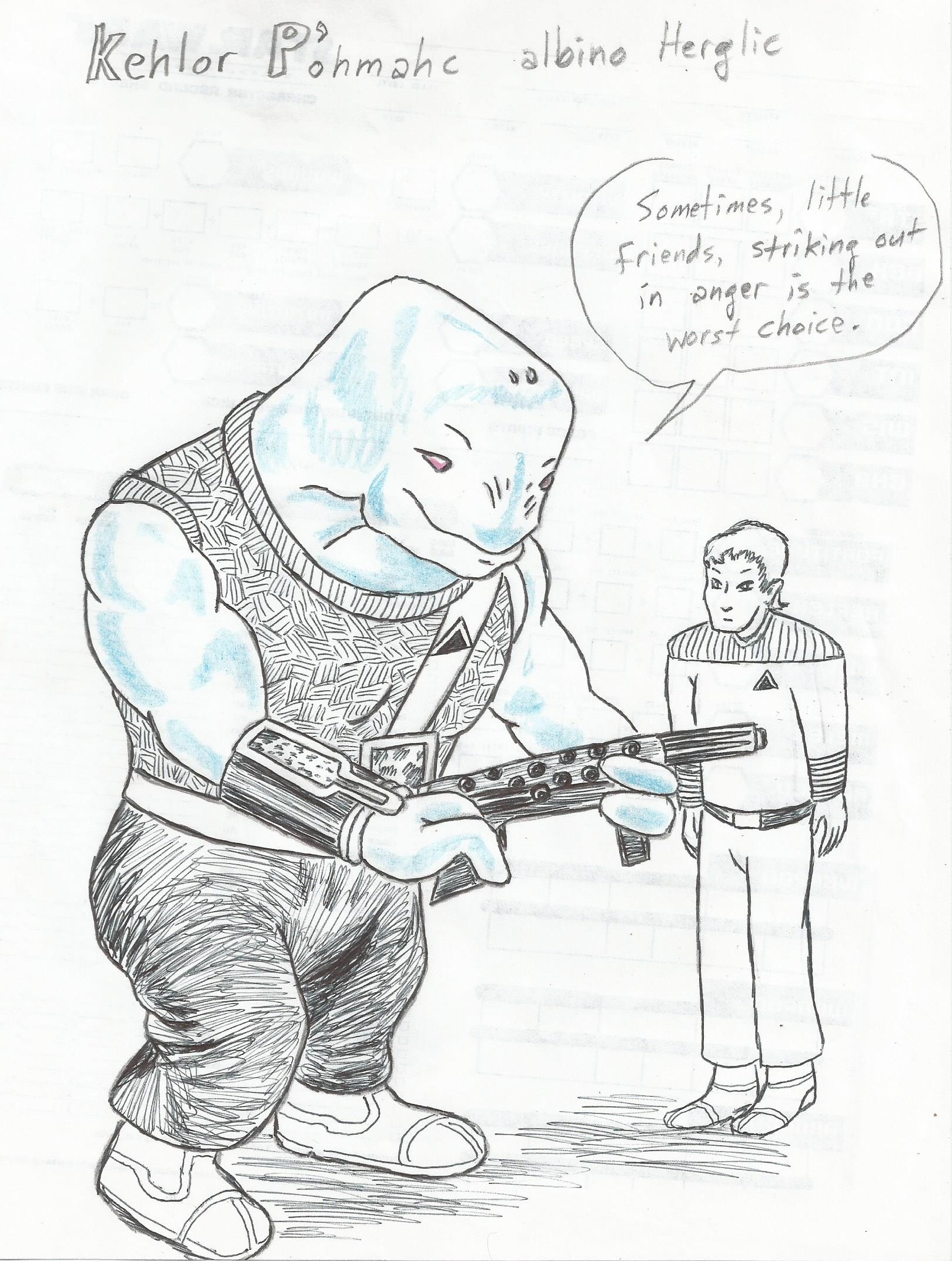
Kehlor was a Herglic, one of the whale people who required specially built extra-large space ships and accommodations. He was also a gifted pilot. You can see that he wears the uniform of the Trade Authority.
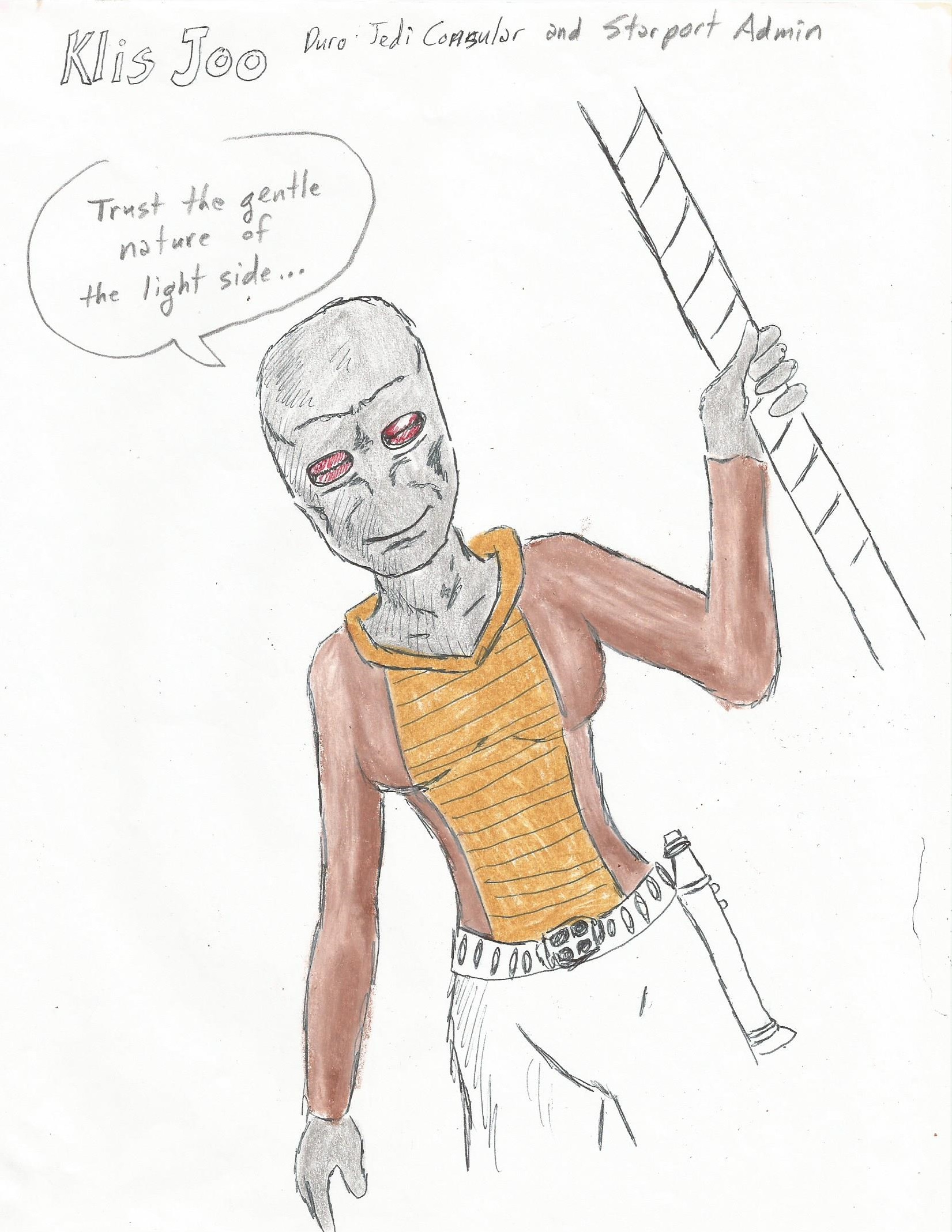
And finally, Klis Joo was a Duro and a Jedi, a gray alien with considerable Force powers.
There were many more drawings like this as well. But these are some of the best ones.