It began with the day back in 2000 when Deke Moreno was credited with saving my life. I was in the classroom, in the middle of a vocabulary lesson. I hadn’t felt particularly well that morning. In fact, I felt like I must be coming down with another virus. It reached a point where my temples were pounding, my chest hurt, and I couldn’t move. I sat in my chair in the front, completely motionless, something I rarely did before that day. Eighteen seventh graders were suddenly looking at me with large, round eyes. I was the favorite teacher of a few, hated by many, and the object of some indifference to the rest. Still, they were suddenly silent and unified in their concern.
“Is something wrong?” asked Deke.
“Come here…” I waggled my hand at him.
Deke came up to me. “Push the intercom button… call for help.” That was, of course, his moment of heroism, his life-saving act.
The assistant principal, whose son was in my GT Class, came in and checked me out. The head principal and the secretary who really ran the school were close behind him. The AP didn’t waste a moment. They got the wheel chair from the nurse’s office and wheeled me to his car. He drove me himself to the local clinic. My blood pressure was through the roof. I would’ve died easily had my heart not received some medicine to reduce the strain. It was a mystery ailment then. Before the year was out, I found out that I had diabetes. My diet would change. My lifestyle would change. I missed work more often. I began to get in trouble with the administration for not being able to find the perfect balance between order and chaos (where good lessons lie) any longer. The work got harder and harder. I developed a disorder that led to frequently passing out. I began to collect things like stamps and action figures as a way to put the universe back into some kind of sensible order. I had a young family. My two youngest children both came along during the time I was first learning to cope with the disease. When we moved to the Dallas Metroplex to be nearer to my wife’s family, I managed to get stressed out at my new job, and the one-year probationary period I got with the Lewisville School District undid all the years of building skills and community confidence. I lost my teaching position. It took two long years of substitute teaching to get it back. Sometime in the future I will have to write the ultimate horror story of being a “good sub”.
Now, I know you are going to find me a total fool for saying this, but Type Two Diabetes is the best thing that could’ve happened to me. Yes, I know how crazy that sounds in view of what the disease did to my life, but I have gained benefits that I would not have otherwise gained. Dealing with the disease and having to make a comeback has made me an infinitely better teacher. I see students with fresh eyes and a renewed sense of urgency.
The most important thing is that now I have to live each day for the value it has, rather than for what the future may bring. When Wordsworth spoke of those “spots of time” where the eyes are suddenly opened and everything is seen in a new way, he was talking about what was destined to happen to me on a daily basis. There are things that you put off for the sake of a career like teaching. All of us are a Mr. Holland in some way. We all have our Opus that we must somehow get around to completing. I have been working on mine steadily for thirty years, but I never really put it into words before as I have done since I lost my teaching job. My Opus comes from some of those two thousand children whose lives I touched, whose lives touched, grabbed, jerked, mangled, caressed, or twitched mine. The story I have to tell is a story about the loves and longings of teens like poor Deke, who played football, fought with his mother over grades, got into trouble with the law, had many high school sweethearts, and saved my life one fateful day. Some of my former students are now dead. Some are in prison. But some are successful business men and successful parents. Some thanked me for being their teacher. And, though most of them rarely actually listened and heard me say it, or read my comments in their class journals, I constantly thanked them for being my students, too. Each and every one of them.
I have a good chance to live for many years yet. With more attention from doctors and more careful planning and good conduct I have a good chance to finish my teaching career on a strong note. I have thirty-one years of service in the books. But I must write now, too, because the dark wind of mortality is blowing out of the near future and signaling approaching storms.
Tag Archives: wisdom
Diabetes…Me?
Filed under Uncategorized
Thanks for the Memories, Mr. Disney
This post is going to sound an awful lot like stuff and nonsense, because that is what it primarily is, but it had to be said anyway. Last night my family took me to see the movie Saving Mr. Banks, a deeply moving biographical story of P.L. Travers, the creator of Mary Poppins, and how she had to be convinced to surrender her beloved character to the movie industry which she so thoroughly detested and distrusted. It is also about one of my most important literary heroes, Walt Disney, and how he eventually convinced the very eccentric and complicated authoress to allow him to make her beloved character into a memorable movie icon.
“We create our stories to rewrite our own past,” says Disney, trying to tell Mrs. Travers how he understood the way that her Mary Poppins character completed and powerfully regenerated the tragedy of her own father’s dissolution and death. This is the singular wisdom of Disney. He took works of literature that I loved and changed them, making them musical, making them happy, and making them into the cartoonish versions of themselves that so many of us have come to cherish from our childhoods. He transforms history, and he transforms memory, and by doing so, he transforms truth.
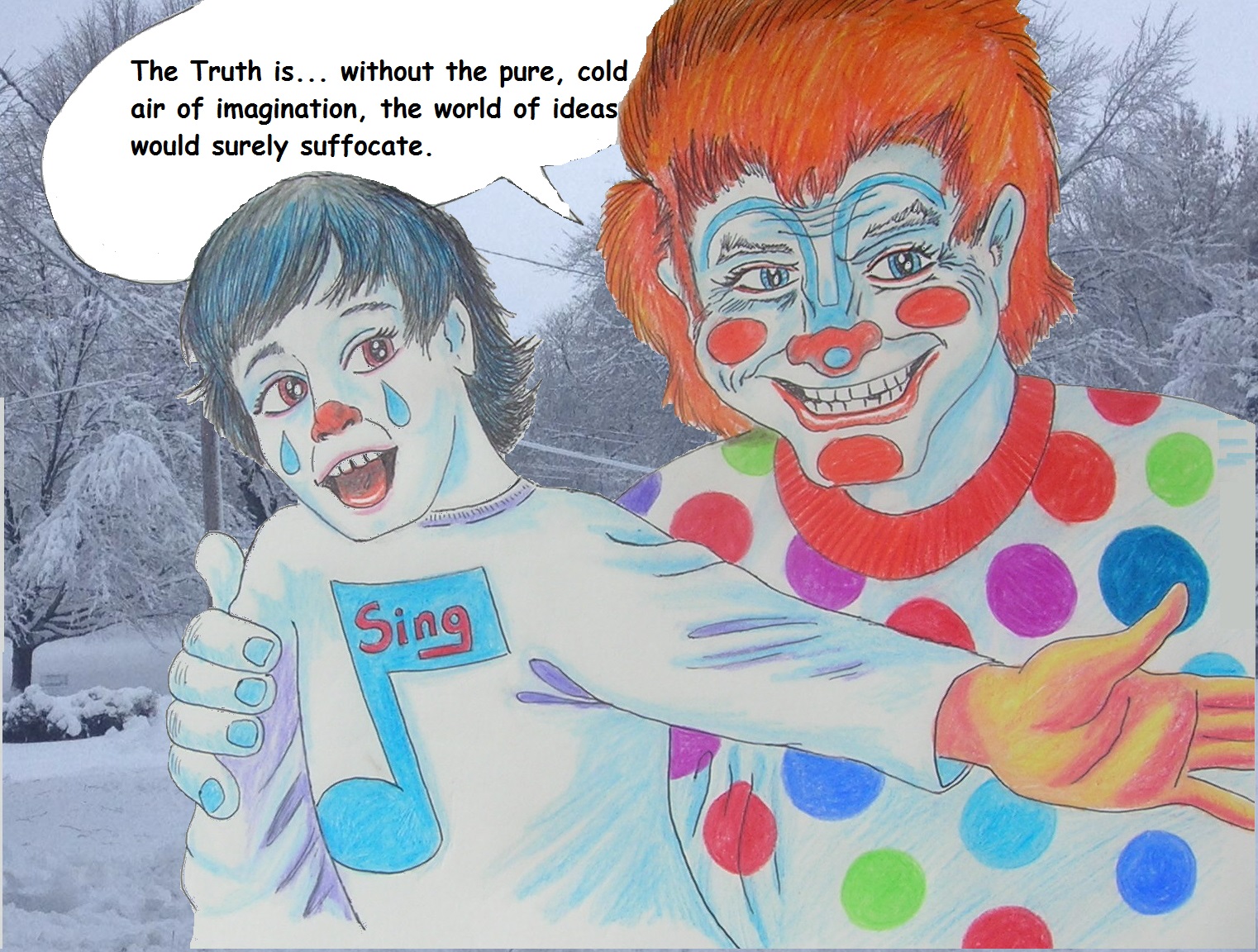
Okay, and as silly as those insights are, here’s a sillier one. In H.P. Lovecraft’s dreamlands, on the shores of the Cerenarian Sea, north of the Mountains of Madness, there roam three clowns. They are known as the Boz, the Diz, and the Bard, nicknames for Charles Dickens, Walt Disney, and William Shakespeare. These three clowns, like the three fates of myth, measure and cut the strings of who we are, where we are going, and how we will get there. They come to Midgard, the Middle Earth to help us know wisdom and folly, the wisdom of fools.
Why have I told you these silly, silly things? Do I expect you to believe them? Do I even expect you to read all the way to paragraph four? Ah, sadly, no… but I am thinking and recording these thoughts because I believe they are important somehow. I may yet use them as the basis of a book of my own. I enjoy a good story because it helps me to do precisely as Mr. Disney has said, I can rewrite my own goofy, silly, pointless past.
Filed under Uncategorized
Old Oil
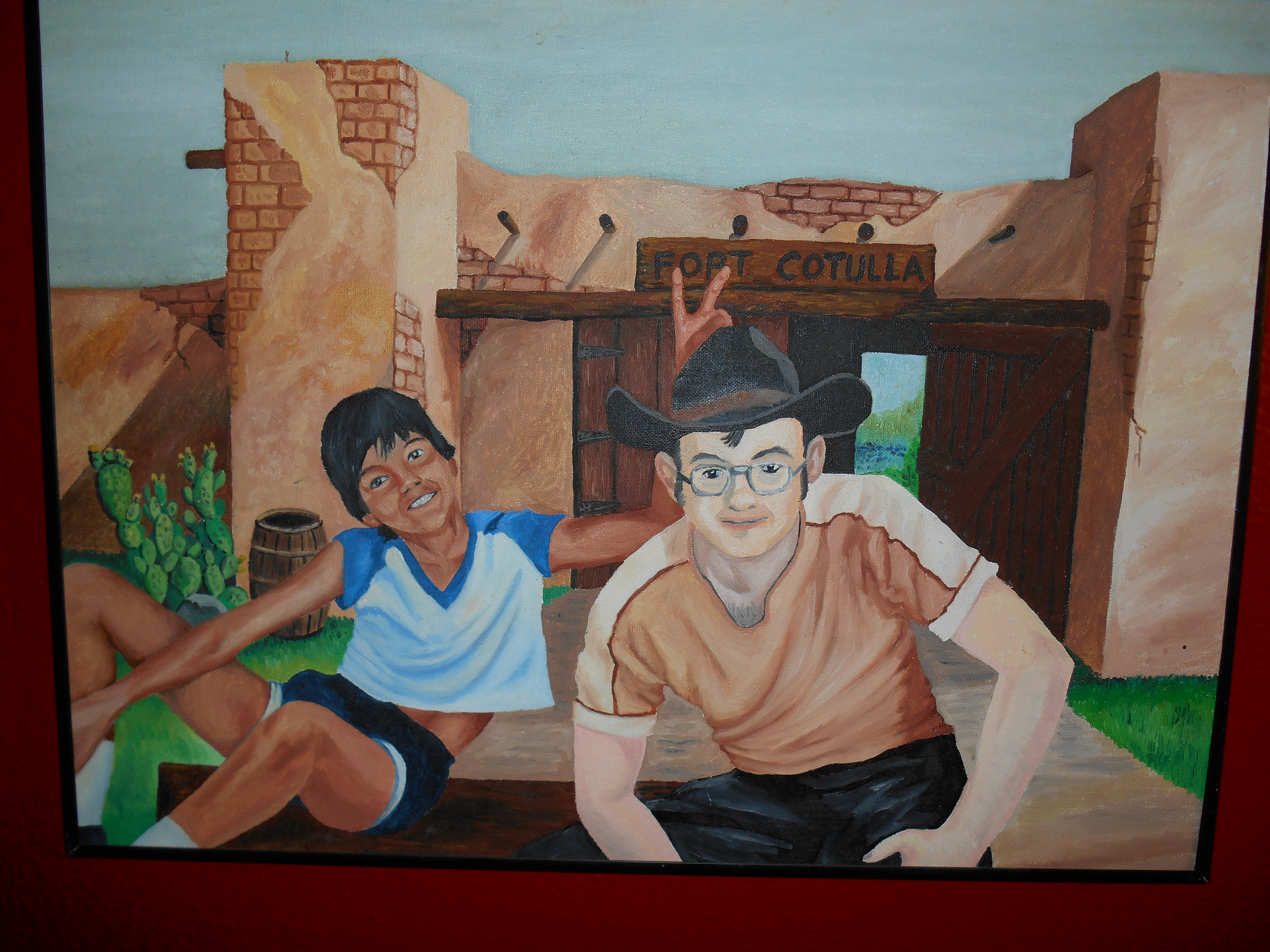
Today’s Paffooney is an oil painting I did in the 1980’s. It is an attempt to prove to myself that I could paint realistically enough to call myself a surrealist. I know you may think that last sentence is a mix of oxymoron and just plain moron, but it is necessary to have the REAL in place in the middle of the surrealism. I chose to make it from photographs. I used a picture of myself and David (a child who was my student, but taught me more than I taught him) with another photo of a building that my grandparents had taken a vacation picture in front of from Tombstone, Arizona. It was important to get the light right. I wanted to establish a dramatic light source in the upper right of the picture and bathe the scene in sunlight.
As a self portrait this works because it shows a lot of what I am as a teacher. I willingly wear the black hat. I am a cowboy. I shoot from the hip, in the sense that I actually teach stuff that’s in the literature book instead of doing test-preparation worksheets. I teach because I actually care about kids, not because I’m greedy for the fantastic salary they offer to Texas teachers, especially one that is willing to teach in a poor rural community where most of the kids are Hispanic, under-fed, and under-loved by the people who run this lovely business-friendly State.
The boy in the picture is one who didn’t have a father living at home, whose mother was always working, and who never got a break from the social workers, police, and other school personnel. I had a very progressive and wonderful principal at the time who knew I’d studied to be a foster parent in case of need and knew that other boys had been successfully mentored by me. He suggested I keep an eye on David and help him out when no one else could. It was David who taught me that if you feed a child like him (I was a lousy cook but I could make hamburgers and mashed potatoes) they will continually show up at your door like a stray cat. I was single at the time. It was a bit risky to let a child into my home where people might think I was some kind of child-molester. But I kept the apartment windows open, hid nothing from anybody, helped him with homework (if I could get him to do any), and played computer games and role-playing games with him. I took him to the doctor a couple of times. I listened when he needed to talk about things, and he was my friend until he graduated high school. Now he is married with children of his own. I haven’t seen him in over sixteen years, but I know that skinny little mosquito-sized boy has grown into a big healthy, well-fed man. It is important in life, and in oil paintings, to make a difference for someone else. He made a difference for me. Notice how he uses his rabbit-ear fingers to keep me humble in my self-portrait.
As a composition, even though this is a realistic picture, it works because of numerous rectangles that stack and pile and lead the eye into the depths of the background while the strong diagonals made by shadows, arms, and edges not only draw you to the center of the picture, but bring the figure of the boy and I closer together than we are in the actual image. Layers of reality, carefully composed, to capture and portray… That last sentence is a three line poem to explain what an oil painting really is… or maybe what it SURreally is.
Filed under Uncategorized
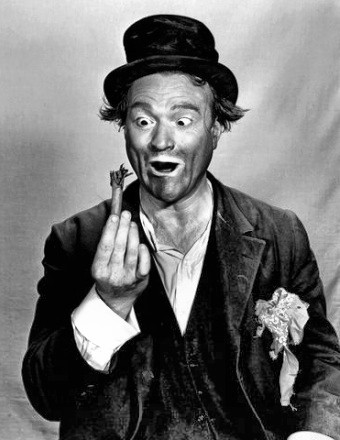
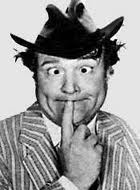
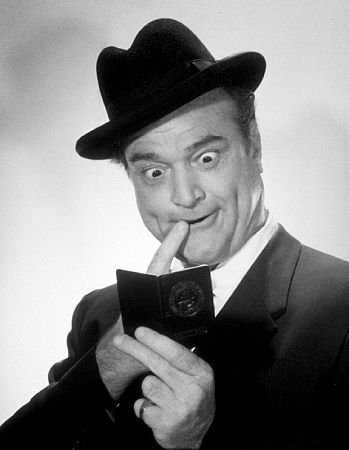
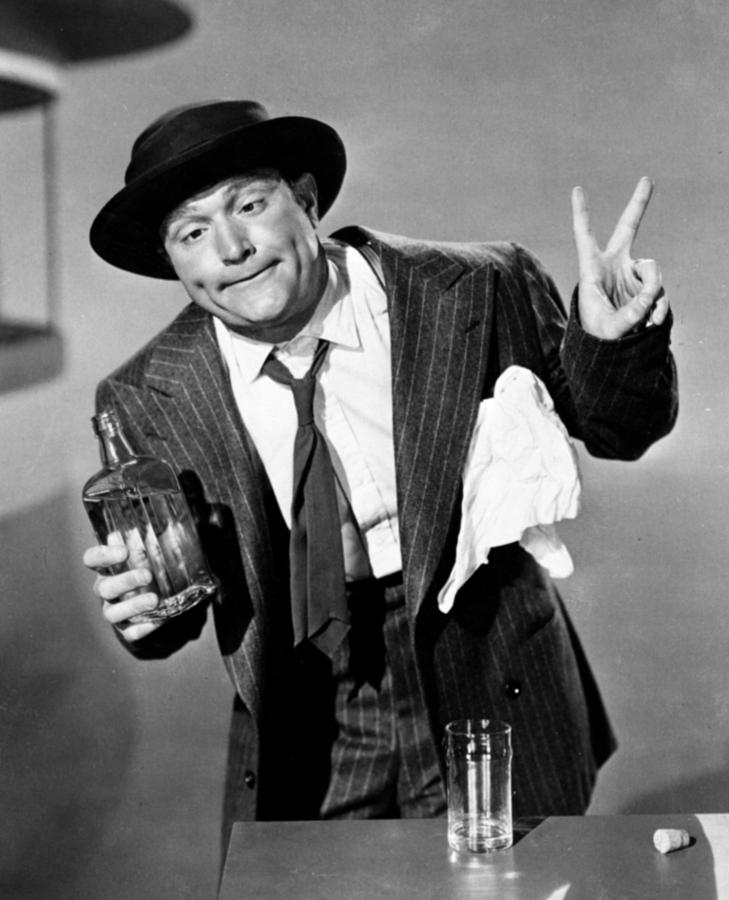
Now, That’s Entertainment! (reposted for the love of laughter)
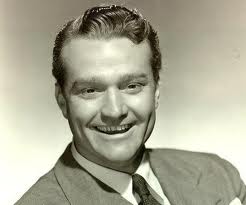
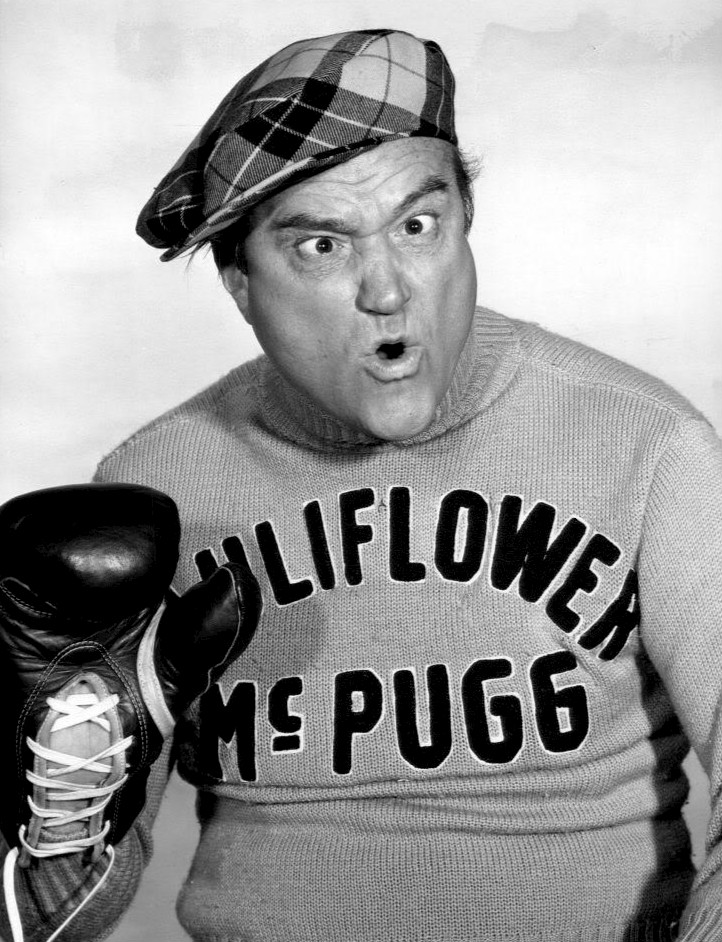
(pictures borrowed from; http://www.whenmoviesweremovies.com/RedSkeltonimages.html, http://godcelebs.com/22413-red-skelton.html, http://vint-rad.blogspot.com/2013_03_01_archive.html)
How do you spell comedy? R-E-D-S-K-E-L-T-O-N! For real, that’s how I spelled it during a third grade spelling bee in 1965. Pretty dang dumb, wasn’t I? But it got a laugh from the prettiest girl in class. I truly couldn’t get enough of Red Skelton on Wednesday nights. It was on past my bedtime, but Dad always let me watch, because… well, I think it was his favorite show too. George Appleby always trying to get something past his wife who would always catch him and punish him soundly for something that truthfully wasn’t his fault. That con man tricked him into drinking that stuff that made him act like an insane lady’s man. San Fernando Red pulling a gag on the man with the silver six-gun and hoofing it out of town before the townsfolk caught on to him with the tar and feathers. He never truly got what he had coming, or what he wanted, either. Someone else got it instead. Freddy the Freeloader making even poverty and homelessness funny. He never passed up a cigar butt in the street and found a dime on every sidewalk.
I always thought that if it was going to be funny, it had to be done Red’s way. Let’s face it, there were two kinds of humor back then and only one my parents truly approved of. They were Eisenhower Republicans living in Iowa, the heart of the Midwest. Red’s gentle humor, with its hidden ribald parts, could profoundly make you laugh, and once in a while bring a tear into your eye. It was never mean-spirited or cruel. It never made a political or religious point. It always assumed that all people were good deep down, and even the bad guys could be reformed with the right joke or prank to make them see the error of their ways. That was comedy.
The other kind, the scary kind was Lenny Bruce and George Carlin. They would say bad words, even though you couldn’t say Carlin’s famous seven words on TV back then. They made jokes about dark and desperate things. Democratic political conventions in Chicago, the Viet Nam War, racial tension, the Black Panthers, these were all fair game for satire and black humor. Their jokes assumed that all people were basically bad and greedy and ignorant… full of malice towards all. Not even the comedian himself was assumed to be the exception to the rule.
And seriously un-funny things were happening. Kennedy was shot in 1963. Another Kennedy and Martin Luther King Jr. were both killed in 1968. Patty Hearst was first kidnapped by and then somehow forced to be a part of the Symbionese Liberation Army. Chaos took the world we knew and turned it upside down. You had to learn to laugh at dark things, because laughing was somehow better than crying and hurting inside. The pictures of the My Lai Massacre in Life Magazine made me sick to my stomach for weeks. I did everything I could in class to make that pretty girl laugh, and when I couldn’t… I had to shut up for a while. I had to think.
I decided early on that I needed humor to live. I had to have the funny parts in my life in order to ward off the darkness. I whistled walking home from choir practice at the Methodist church on dark November nights. I told jokes to the rustling leaves and invisible hoot owls. I got by.
So, what is the lesson learned? If you read this far without gagging, then you know I mix a little funny with a little sad… and try to make a serious point in my writing. Maybe I’m a fool to do it, but I truly believe that Red had it right. People are basically good. You can reform a bad guy with a good joke. You can get by in the dark times.
If dark times are truly here again, then maybe that is why I have to tell my stories, make a few jokes, and make people think. I know I may be killing you with boredom by now, but that’s what I do. I’m a professional English teacher. I bore people to death. And if you read this far, and you’re still alive, maybe I can make you a little bit smarter too.
Filed under Uncategorized
Wise Guy
At school today the principal asked us to come up with one word that we wanted to apply to our own lives as teachers. You know how the teaching game is. You start a new semester; you have to be subjected to eight hours of blah-blah-blah. It is required blah-blah-blah mandated by Texas education laws. My magic word was wisdom.
So, what does wisdom imply? Well, I am old. I should have some of that thing in one pocket or another. So I search my pockets. As a kid I vowed to become a wizard. What is a wizard if not a wise man? A wise guy. How, then, do you acquire wisdom?
In the movie Mystery Men, Ben Stiller tells us that mystical wisdom from the wise guy mystical sage is only saying a thing is its opposite. Thus true wisdom comes from learning how foolish you really are. It’s a good joke, but it’s also true. You can’t be wise unless you realize how little you actually know out of all the things that there are.
Why would I want to be wise? Well, I have the fool thing down pretty well already. As fools go, I’m a humble fool who trades in foolishness and calls it humor and young adult novels. So it follows, by logic, an advanced form of foolishness, that I must be wise.
Okay, wise guy, time to say something wise in the conclusion… Doh!
Filed under Uncategorized
Paffooney Wisdom
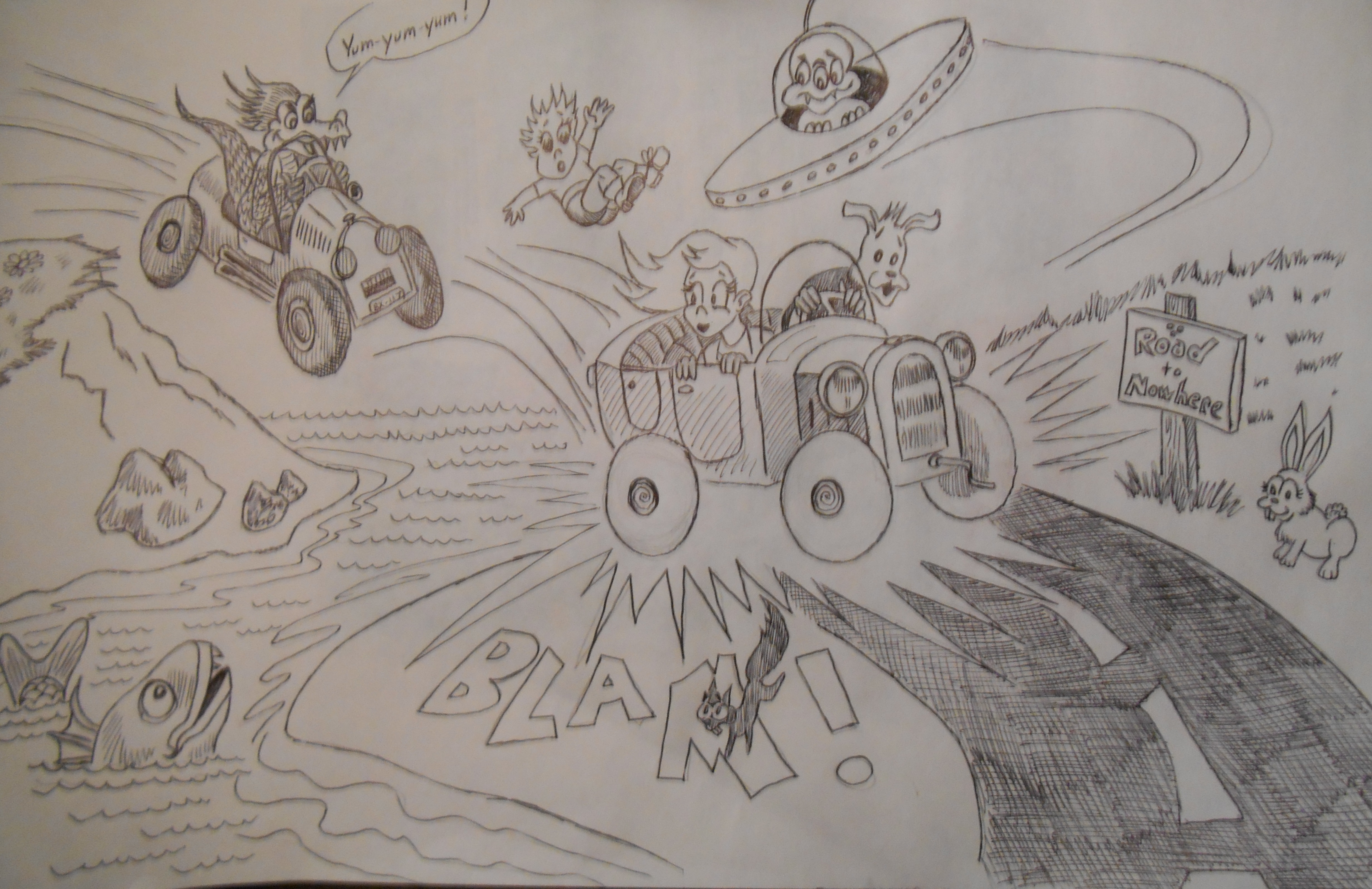
Life is like a cartoon car chase in one of Floyd Gottfredson’s 1930’s Mickey Mouse comic strips. No, really, it is! You never know what is going to happen in the next frame. Will the alien space craft scoop up Junior as he flies out of the rumble seat? Fifty-fifty chance, don’t you think? Will Crocko Diddly-Dial catch up and eat everybody in the car? Probably not if it was a G-rated comic strip… and it was.
The only control we have over life are the reactions we can manage as we go and bad things continue to happen to us. We are trapped by the cliff and the river, so we jump the car successfully across. If we are successful, we bounce onto the road on the other side, and Crocko falls into the river. Of course it is the road to nowhere and the chase only ends when the cartoon of life reaches the last panel.
Okay, so that all sounds very scary, and we must hope that Mickey is merely crazy, and not on to something real in this metaphorical thesis of mayhem. Yet, there is a way to effectively deal with the car chase. We need to treat it all as a cartoon, a comic book story, and simply laugh.
Filed under Uncategorized