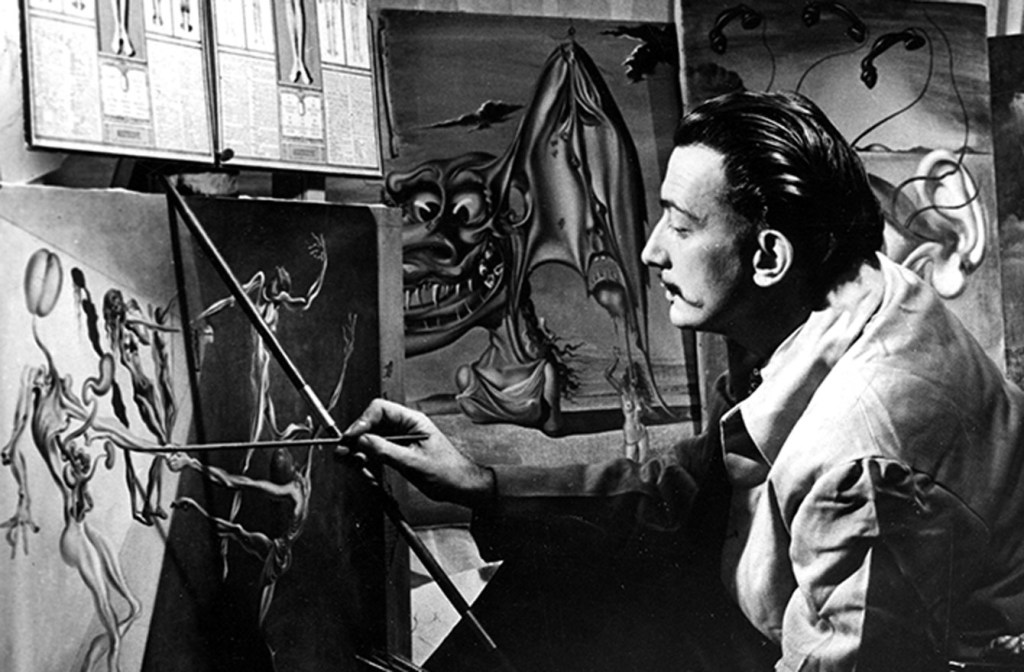
Today I am waxing on about the wonderful, mad, mad, mad genius of surrealist art, Salvador Dali. He was born in 1904 and died in 1989. And that’s really about all that I want to tell you about the physical parameters of his boundlessly creative life. He was alive in this world until I was already thirty-three. So, I got to see him on television and watch video biographies of him and his incredible artwork. Ones that included interviews. And if I get into his public persona, that will eat up the rest of his essay. Instead, I need to talk about his art, and how it modifies and magnifies what I am meant to be.
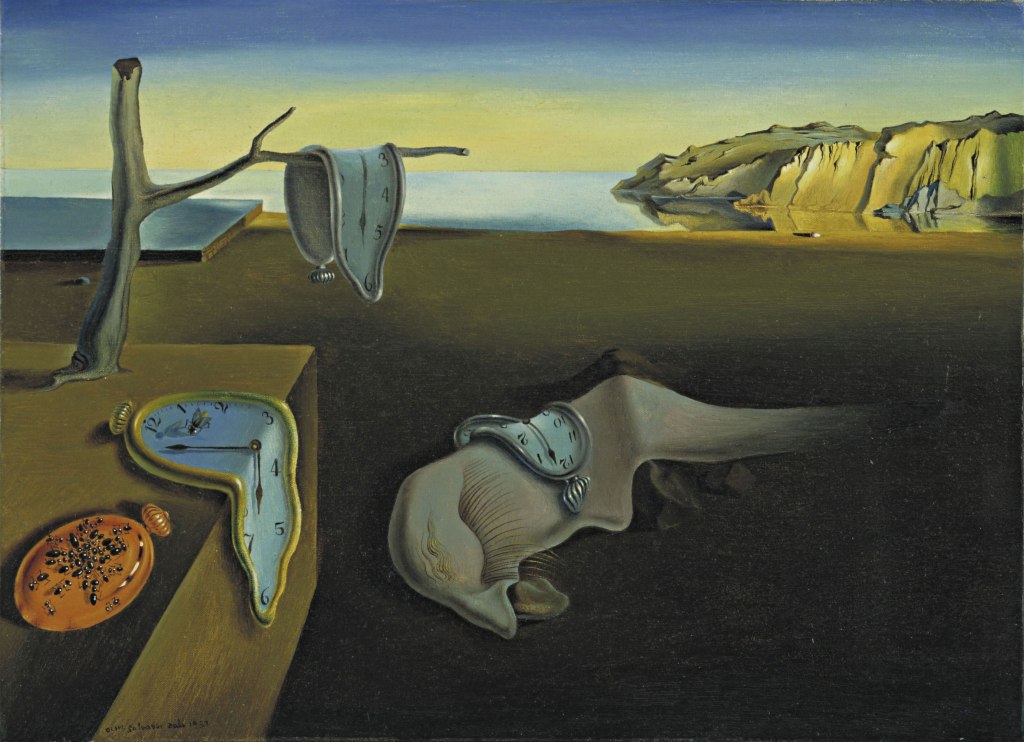
The Persistence of Memory
His most famous painting is the one that most clearly burned the image of melting clocks into our collective memory. He claimed, and others pretend to see it too, that it is a reaction to Einstein’s Theory of Relativity. But when I look at it with the melting mask of Dali himself in the center, I see the artist’s perception of time in the spaces within which creativity moves. Time melts and has no meaning when you are painting and writing from an endless roiling flow of new ideas and notions. Time becomes as irrelevant in that context as the ants on the pocket-watch or the dead tree from which one deflated clock-skin hangs, There is no past or future, only the creative now.
And in that creative now, the artist sees himself. But if you look too closely, the self vanishes into the picture, the currently considered, fascinating work of art.
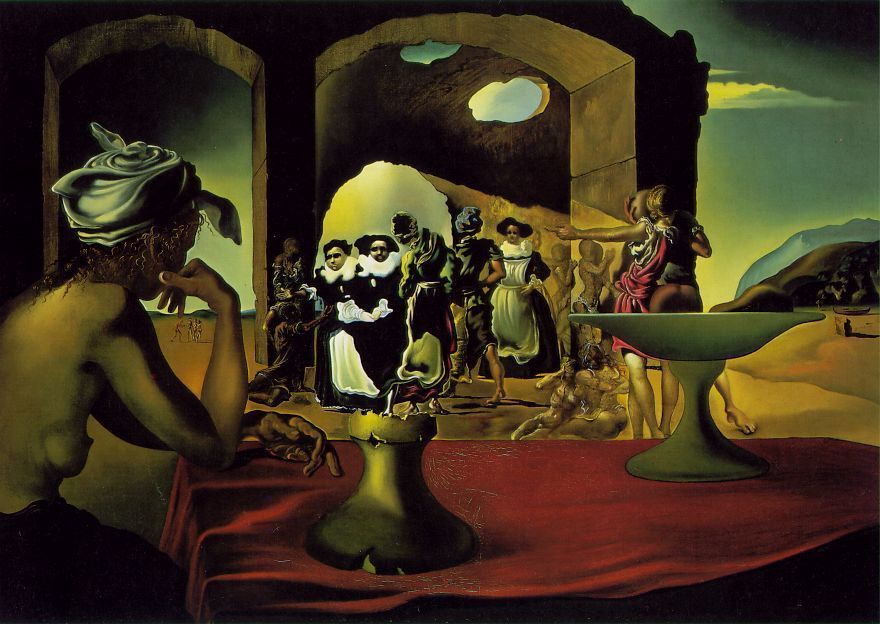
You see the boy with the hoop and wearing a sailor suit? That symbol, he always claimed, was his lost brother, the one who died before he was born. The one whose death made his parents decide to have another child. Without that brother, Salvador would probably never have existed at all.
And do you see the disappearing bust of Voltaire? Or when you look closely at the slave market in the background, is it simply no longer there? Things that disappear… things that become other things… tricks of perception, the fooling of the viewer’s eye… These are what the artist actually wants you to see. Not the well-portrayed physical reality, but the ghost of the shadow of an idea that’s hard to define.
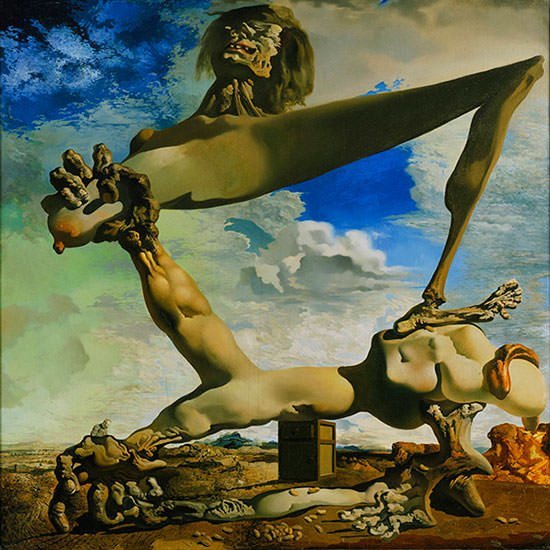
And then there is the idea of war. Two world wars that took place in the prime of his painterly life.
Soft Construction with Boiled Beans
Life does crazy things to the sensitive, suffering artist, and it shows in his work if not in his public personality.
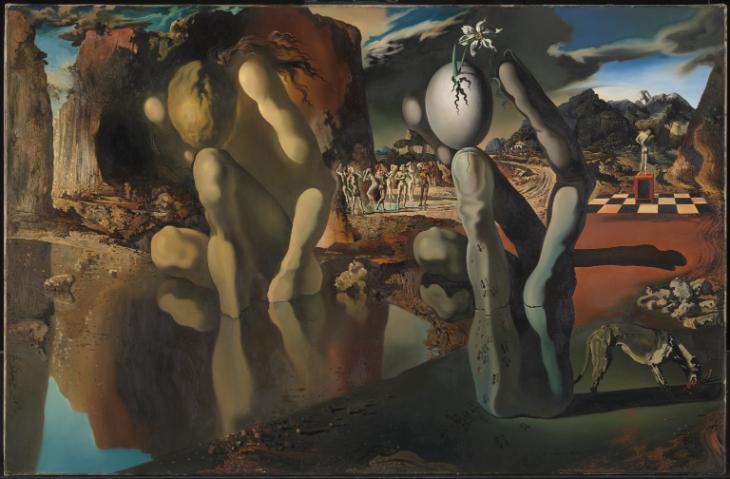
And consider the artist’s notion of birth and life and death. Narcissus suffers for the sin of love of himself. He becomes petrified with age, a narcissus flower growing from his head, now an egg, the symbol of birth and rebirth.
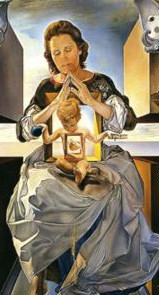
Detail from “the Madonna of Port Lligat”
And here is an exploded portrait of his beloved wife Gala.
All the elements float eternally in the air.
And you can see inside each thing.
Inside the home is the wife and mother.
Inside the mother is the child.
Inside the child is the loaf of bread that keeps him alive.
Does the bread, then, stand in for God himself?
Dali and his work is not simple. It is deeply, incongruously complex. But that is surrealism. That is how it works. Without getting into other complex symbols and such Dali-esque puzzles like burning giraffes, eggs, and Venus De Milo with bureau drawers in her torso, that is how Salvador spends his Sunday with me. An artist beyond time and space, long dead, but still speaking to me. And teaching me beautiful, untold things and stories of things.
Yes, I admit it. I am a Surrealist. I also hope that it is not too terrible a thing to be. Because I truly think that everyone who was raised by television, and lived through the revolution where computers took over human life, is one too.
a 20th-century art form in which an artist or writer combines unrelated images or events in a very strange and dreamlike way
Full Definition of surrealism;
the principles, ideals, or practice of producing fantastic or incongruous imagery or effects in art, literature, film, or theater by means of unnatural or irrational juxtapositions and combinations
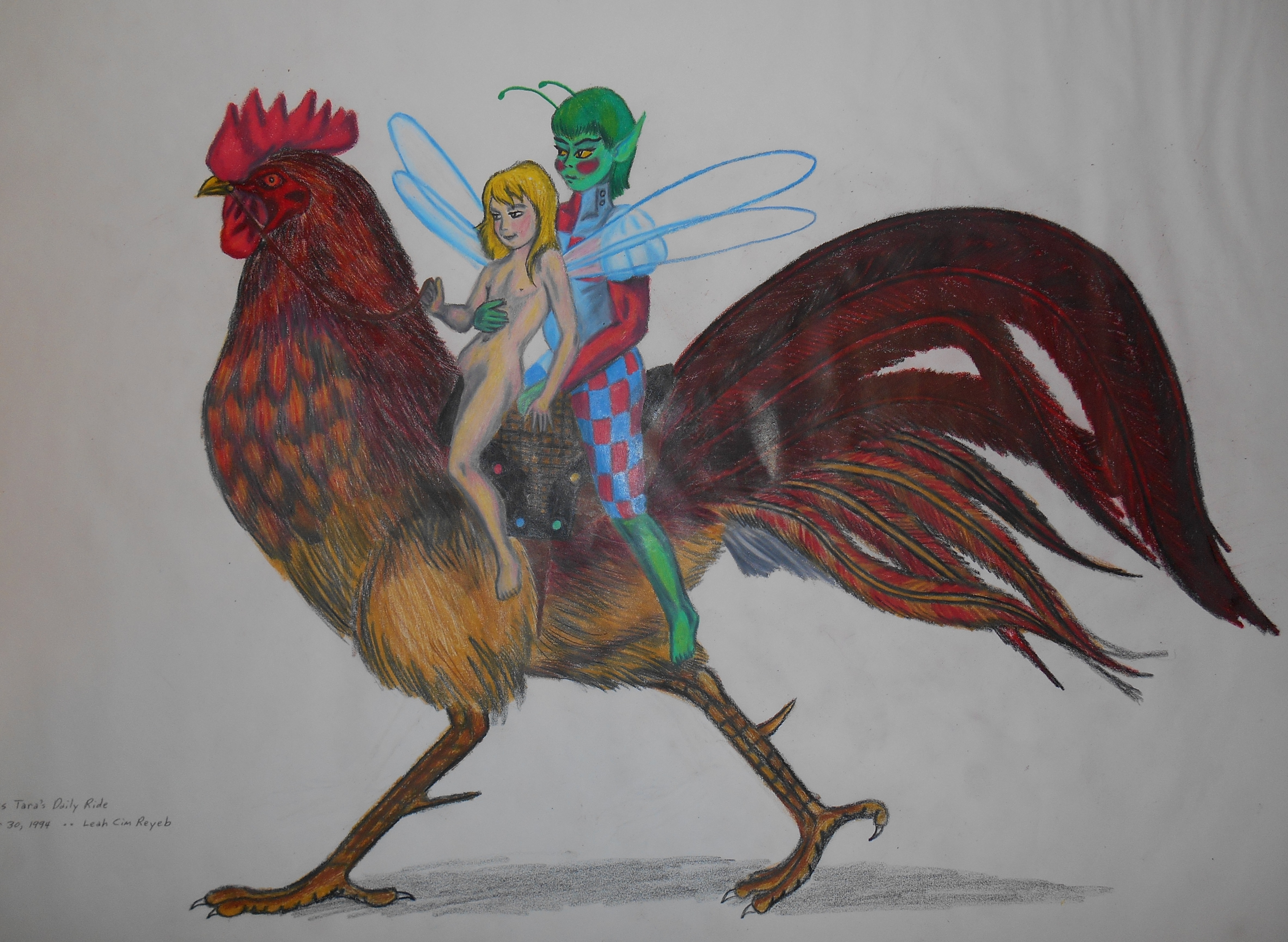
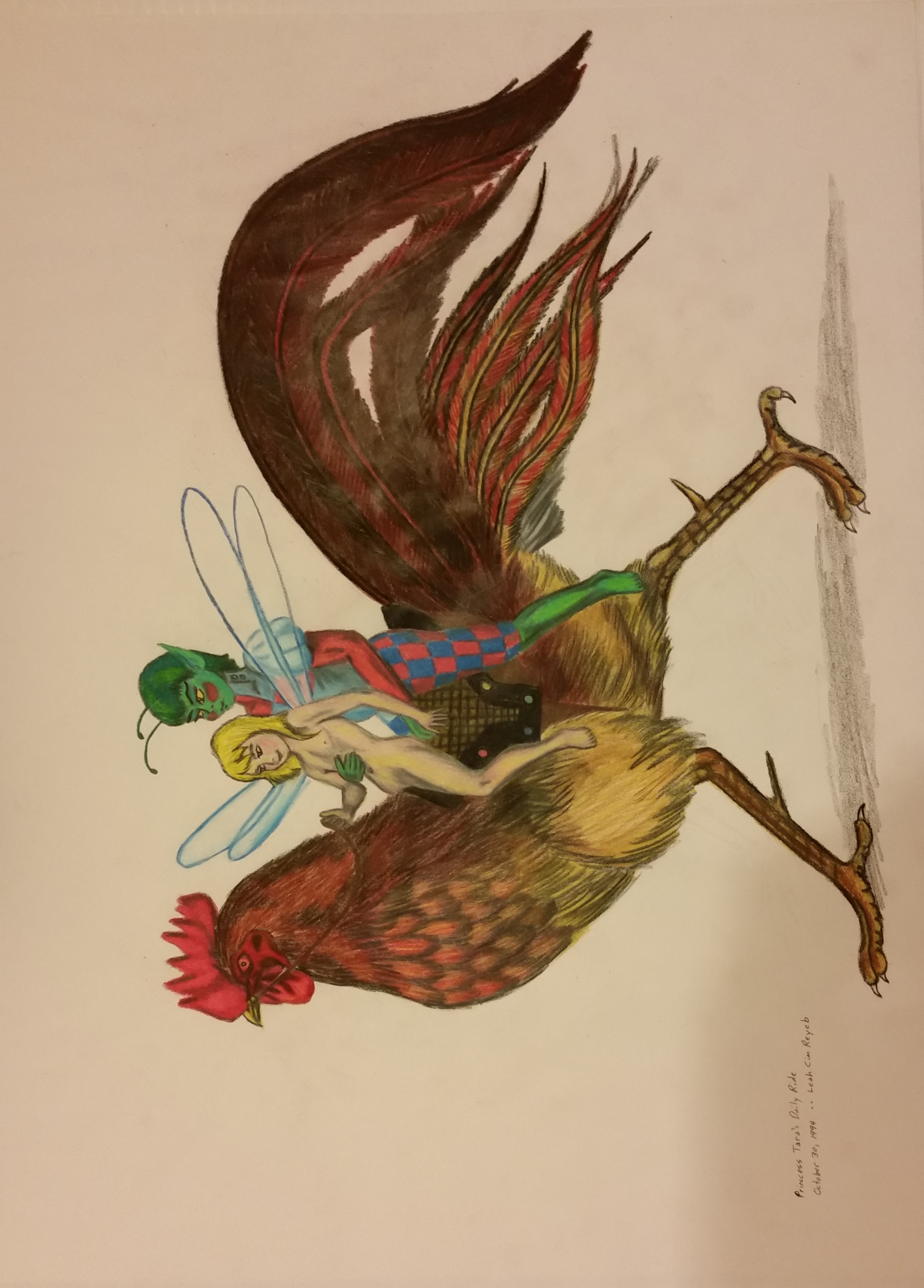
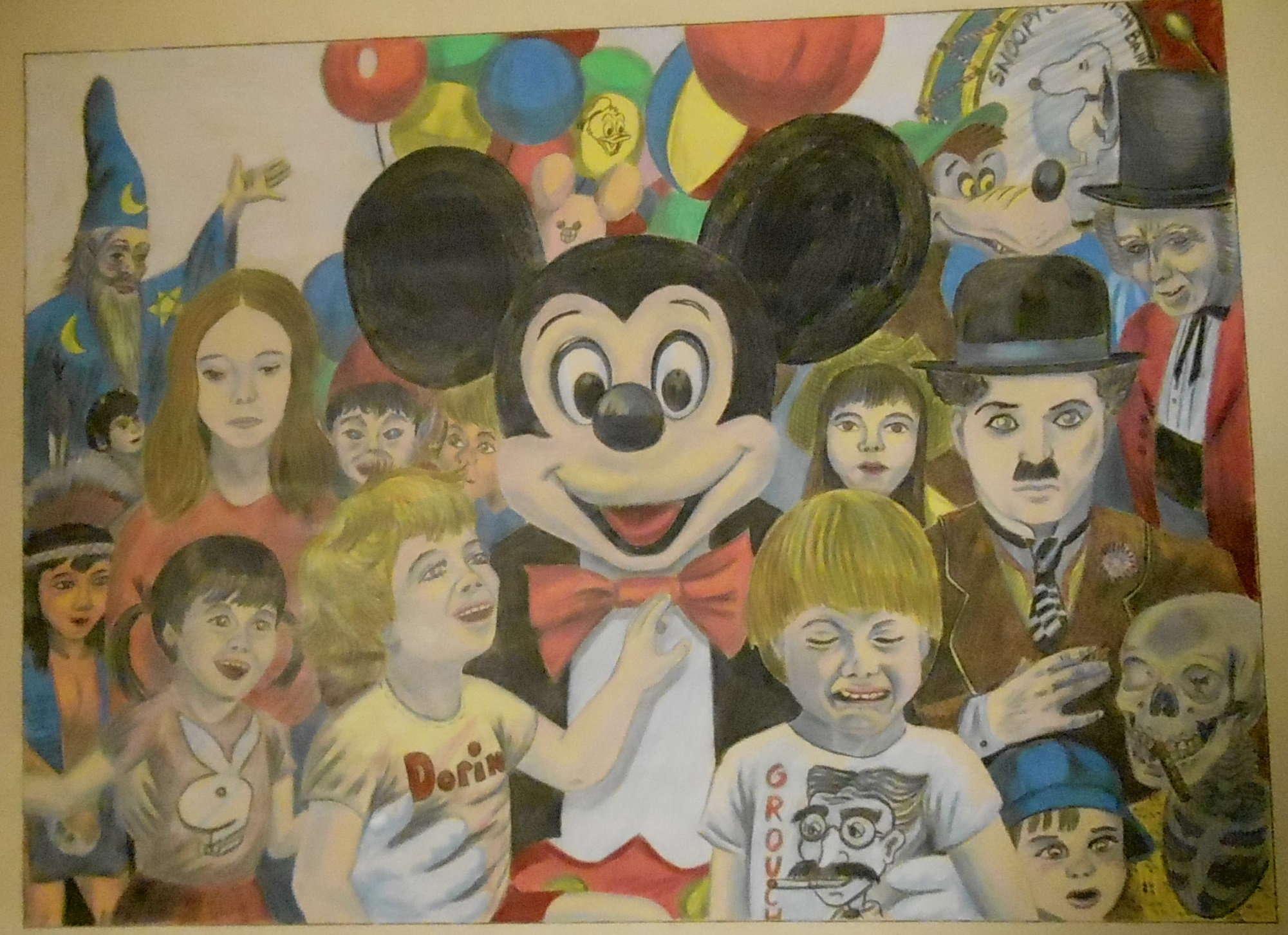
There is a certain satisfaction to be had in knowing for certain how to define oneself. I learned about Surrealism in high school art class back in the early 70’s. I saw and admired the works of Salvador Dali, Rene Magritte, and Max Ernst. And I realized that everything I wanted to do in the Realm of Art, whether it was weird paintings, cartoons, comic book art, or bizarre puppet shows… fantasy, science fiction, or humor… it was ALL Surrealism. Surrealism saturates out culture and our very thinking. We are drawn to watch baseball by the antics of a giant pantomime chicken. Our food choices are influenced by a happy red, yellow, and white clown who battles a blobby purple monster and a hamburglar over shakes and French fries. It is only natural then, that I would want to draw bug-sized fairies who would saddle and ride a red rooster. I have embraced surrealism as a way of life.
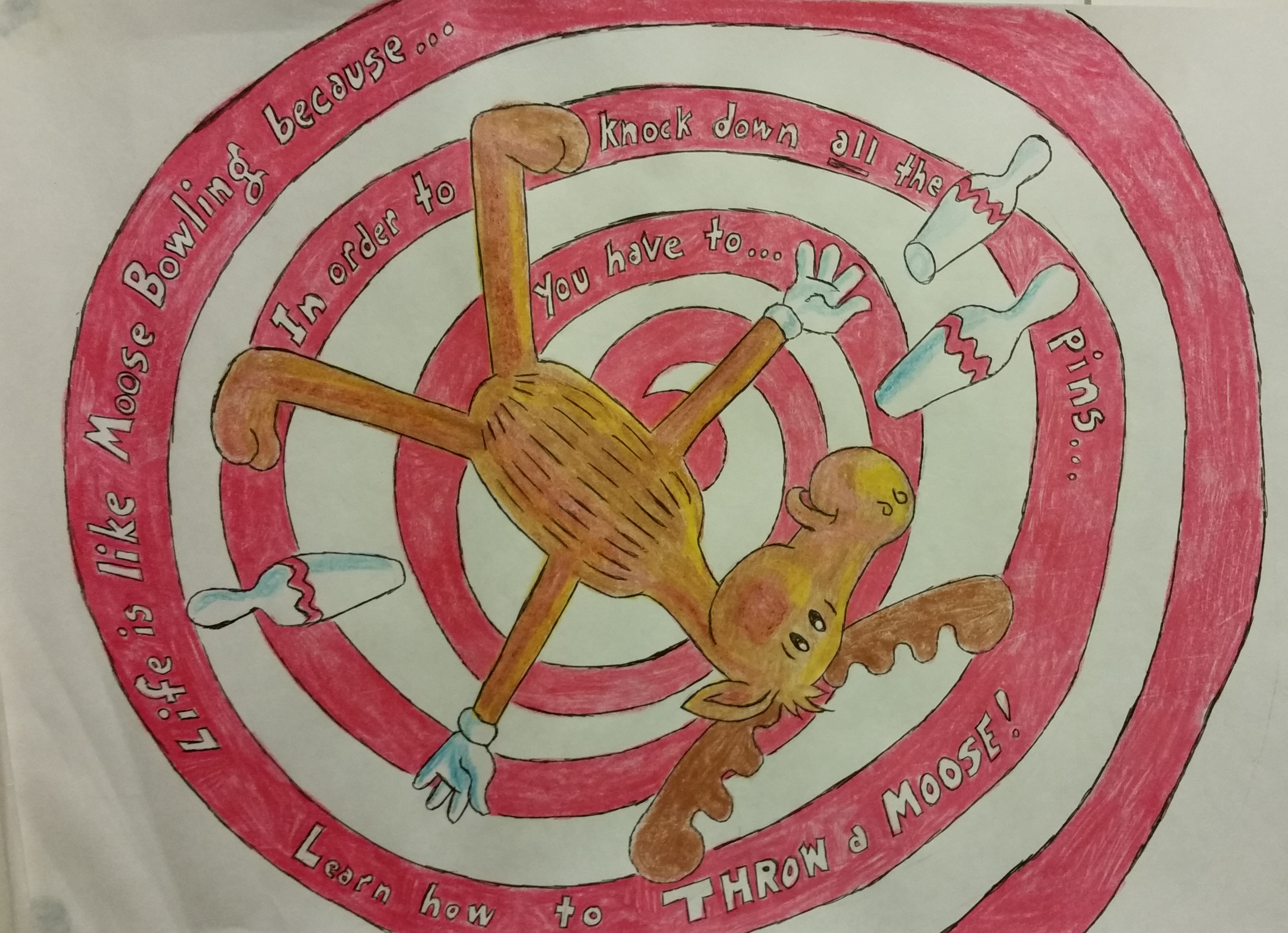
I have no trouble writing a poem about the difficulties of life by writing about a game of bowling where you have to roll a moose down the alley into the pins.
Surrealism is all about creating things by lumping all kinds of disparate goodies into the same pot and cooking it up as a stew. It is important that the stew tastes good in the end, so the mixture has to have large doses of reality and realism in it. Dali painted melting watches and boneless soft-sculpture people with almost photographic realism. I am compelled to do that too.
And what is humor, after all, if not lumping strange things together into a reality sandwich that makes you laugh because it takes you by surprise? I don’t shy away from weirdness. I embrace it. It makes life all the funnier.
And why did I put bullet points on everything in this post? Because it allows me to mash bits of wit and wisdom together in a weird way that only seems to have no connection, one to the other, and only seems to make no sense.
Sometimes we just have to look at things sideways.
I was recently accused of being eclectic in my posting topics by one regular commentator. I could wear that word like a badge of honor.
This describes a combination of many different individual elements of styles, themes, mediums or inspirations pooled from many sources. It can refer to musical tastes, dress sense, interior design…many things.
She has an ecletic sense of style, today she wears biker boots, pink fishnet stockings, a pencil skirt, a military jacket, a baseball hat, a my little pony t-shirt and a dunlop bag covered in badges from all her favourite bands from ABBA to Kooks
Today I am waxing on about the wonderful, mad, mad, mad genius of surrealist art, Salvador Dali. He was born in 1904 and died in 1989. And that’s really about all that I want to tell you about the physical parameters of his boundlessly creative life. He was alive in this world until I was already thirty-three. So, I got to see him on television and watch video biographies of him and his incredible artwork. Ones that included interviews. And if I get into his public persona, that will eat up the rest of his essay. Instead, I need to talk about his art, and how it modifies and magnifies what I am meant to be.
The Persistence of Memory
His most famous painting is the one that most clearly burned the image of melting clocks into our collective memory. He claimed, and others pretend to see it too, that it is a reaction to Einstein’s Theory of Relativity. But when I look at it with the melting mask of Dali himself in the center, I see the artist’s perception of time in the spaces within which creativity moves. Time melts and has no meaning when you are painting and writing from an endless roiling flow of new ideas and notions. Time becomes as irrelevant in that context as the ants on the pocket-watch or the dead tree from which one deflated clock-skin hangs, There is no past or future, only the creative now.
And in that creative now, the artist sees himself. But if you look too closely, the self vanishes into the picture, the currently considered, fascinating work of art.
You see the boy with the hoop and wearing a sailor suit? That symbol, he always claimed, was his lost brother, the one who died before he was born. The one whose death made his parents decide to have another child. Without that brother, Salvador would probably never have been existing at all.
And do you see the disappearing bust of Voltaire? Or when you look closely at the slave market in the background, is it simply no longer there? Things that disappear… things that become other things… tricks of perception, the fooling of the viewer’s eye… These are what the artist actually wants you to see. Not the well-portrayed physical reality, but the ghost of the shadow of an idea that’s hard to define.
And then there is the idea of war. Two world wars that took place in the prime-time of his painterly life.
Soft Construction with Boiled Beans
Life does crazy things to the sensitive, suffering artist, and it shows in his work if not in his public personality.
And consider the artist’s notion of birth and life and death. Narcissus suffers for the sin of love of himself. He becomes petrified with age, a narcissus flower growing from his head, now an egg, the symbol of birth and rebirth.
Detail from “the Madonna of Port Lligat”
And here is an exploded portrait of his beloved wife Gala.
All the elements float eternally in the air.
And you can see inside each thing.
Inside the home is the wife and mother.
Inside the mother is the child.
Inside the child is the loaf of bread that keeps him alive.
Does the bread, then, stand in for God himself?
Dali and his work is not simple. It is deeply, incongruously complex. But that is surrealism. That is how it works. Without getting into other complex symbols and such Dali-esque puzzles like burning giraffes, eggs, and Venus De Milo with bureau drawers in her torso, that is how Salvador spends his Sunday with me. An artist beyond time and space, long dead, but still speaking to me. And teaching me beautiful, untold things and stories of things.

 Catch a Falling Star
Sunday with Salvador
Today I am waxing on about the wonderful, mad, mad, mad genius of surrealist art, Salvador Dali. He was born in 1904 and died in 1989. And that’s really about all that I want to tell you about the physical parameters of his boundlessly creative life. He was alive in this world until I was already thirty-three. So, I got to see him on television and watch video biographies of him and his incredible artwork. Ones that included interviews. And if I get into his public persona, that will eat up the rest of his essay. Instead, I need to talk about his art, and how it modifies and magnifies what I am meant to be.
His most famous painting is the one that most clearly burned the image of melting clocks into our collective memory. He claimed, and others pretend to see it too, that it is a reaction to Einstein’s Theory of Relativity. But when I look at it with the melting mask of Dali himself in the center, I see the artist’s perception of time in the spaces within which creativity moves. Time melts and has no meaning when you are painting and writing from an endless roiling flow of new ideas and notions. Time becomes as irrelevant in that context as the ants on the pocket-watch or the dead tree from which one deflated clock-skin hangs, There is no past or future, only the creative now.
And in that creative now, the artist sees himself. But if you look too closely, the self vanishes into the picture, the currently considered, fascinating work of art.
You see the boy with the hoop and wearing a sailor suit? That symbol, he always claimed, was his lost brother, the one who died before he was born. The one whose death made his parents decide to have another child. Without that brother, Salvador would probably never have existed at all.
And do you see the disappearing bust of Voltaire? Or when you look closely at the slave market in the background, is it simply no longer there? Things that disappear… things that become other things… tricks of perception, the fooling of the viewer’s eye… These are what the artist actually wants you to see. Not the well-portrayed physical reality, but the ghost of the shadow of an idea that’s hard to define.
And then there is the idea of war. Two world wars that took place in the prime of his painterly life.
Life does crazy things to the sensitive, suffering artist, and it shows in his work if not in his public personality.
And consider the artist’s notion of birth and life and death. Narcissus suffers for the sin of love of himself. He becomes petrified with age, a narcissus flower growing from his head, now an egg, the symbol of birth and rebirth.
And here is an exploded portrait of his beloved wife Gala.
All the elements float eternally in the air.
And you can see inside each thing.
Inside the home is the wife and mother.
Inside the mother is the child.
Inside the child is the loaf of bread that keeps him alive.
Does the bread, then, stand in for God himself?
Dali and his work is not simple. It is deeply, incongruously complex. But that is surrealism. That is how it works. Without getting into other complex symbols and such Dali-esque puzzles like burning giraffes, eggs, and Venus De Milo with bureau drawers in her torso, that is how Salvador spends his Sunday with me. An artist beyond time and space, long dead, but still speaking to me. And teaching me beautiful, untold things and stories of things.
Leave a comment
Filed under art criticism, artists I admire, artwork, autobiography, commentary, surrealism
Tagged as art, dali, painting, Salvador Dali, surrealism