Tag Archives: humor

The Oxford Obfuscation

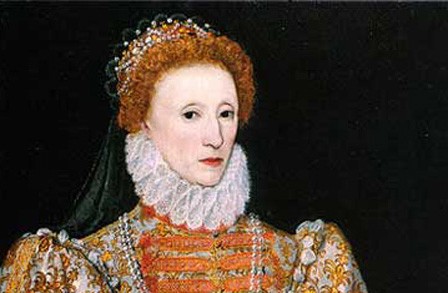
queen-elizabeth-iIf you are going to entertain a completely absurd notion like, “Shakespeare wasn’t really written by Shakespeare”, then you have to have some knowledge of the times and the context within which such a profoundly counter-intuitive thing could possibly be true.  And it also helps to understand more precisely what the “writing of Shakespeare” actually means.  Now, I know it is not particularly fair to confuse you, dear reader, right before I try to dazzle you with my complicated and over-thunk lackwit conspiracy theory, but that is, after all, what obfuscation actually means.

The plays, sonnets, and other poetry of William Shakespeare reveal the mind of a genius.  Whoever wrote the works has to be a complicated man living a complicated life.  He has to be a sensitive, empathetic, highly intelligent, observant, and troubled man.  You don’t write the dark and deeply troubled suicidal tragedy of Hamlet without ever having thought of taking your own life.  You cannot portray the madness of King Lear without ever having experienced the turmoil of the mind that threatens to tear your soul apart.  And you don’t write about the complexities of love found in As You Like It or Romeo and Juliet without ever having experienced the massive thunderstorms of the mind that go along with falling in love.  And we are talking true love, not necessarily the domestic love you have for the wife you are stuck with.   You see what I did just there?  I put you into the head of the writer, and started you thinking like you yourself are Shakespeare.  As goofy a mental gymnastic exercise as that is, bear with me and keep thinking it.

At the time of Shakespeare’s ascendancy as the Bard Laureate of English Literature, England was not a safe place to be either a noble or a playwright.  Queen Elizabeth’s mother had her head cut off for bad politics even though she was married to the King of England at the time.  Lady Jane Gray, one of Elizabeth’s predecessors, lost her head when she was no more than a sixteen-year-old girl.  During Elizabeth’s reign, one of her court favorites, Robert Devereaux, Earl of Essex, attempted to seize the queen herself after a riot fomented by a performance of Shakespeare’s play, Richard II, at which eleven of Essex’s noble supporters were said to be present stirring up the emotions of the crowd.  It was a near thing for the writer of the play (about the life of a king whose reign ended in controversy about succession and which led eventually to the War of the Roses) to escape without also being caught up in the rebellion’s failure and round of executions that separated Essex from his head.  Elizabeth banned numbers of plays with religious or political content, bans that never seemed to touch the writer of Shakespeare’s plays, even when they touched on political themes.  You didn’t have to rebel against the Queen to lose your head either.  Elizabeth was trying to reinstate Anglican Protestantism against the critical tides of Catholic Europe.  You could be banished, put to death, or impressed  by force into the English Navy for being suspected of ideas that were too Catholic.  And witchcraft, or consulting with witches, as Macbeth depicts, earned you a nice warm fire in the public square to cleanse your immortal soul.
edwarddevereattribmarcusgheeraerts

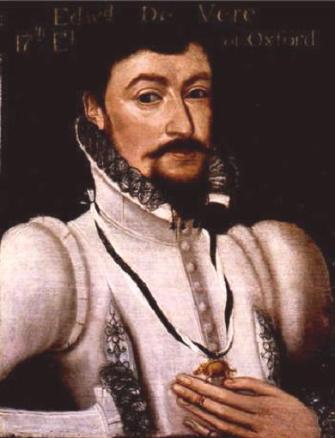
Edward de Vere, 17th Earl of Oxford

So, if one were to be both a playwright and a nobleman, known to and beloved by Queen Elizabeth, might there not be good reason to write under a pseudonym?  And numerous people who write about Edward de Vere mention the fact that he wrote poetry and plays, and the plays were very popular.  Some scraps of poetry by the Earl of Oxford still exist, but whatever happened to the manuscripts of his plays?  It is a conspiracy theory so delicious, that I have to take at least one more bite.  (You understand, I try to stick to a 500-word target for these posts, and even this 600+ is really too long.  So that means there has to be an Earl of Oxford Part II at least.)
Leave a comment

Filed under conspiracy theory, foolishness, humor, politics, William Shakespeare

The Heart of Shakespeare

3a8307f6bb01311fc90478857d32e891

Despite my skepticism about the accepted wisdom in regard to the historical William Shakespeare, I do deeply love the body of work that is Shakespeare.  My most favorite play is The Tempest, the final play in the canon.  I also have read and loved As You Like It, Romeo and Juliet, Hamlet, A Midsummer Night’s Dream, The Merchant of Venice, Henry V, Richard III, Julius Caesar, Macbeth, Othello,  and King Lear.  I know that is not all of the plays, but that is probably more than most people have read.  And of course, as an English major in college, and later as a teacher, I have actually analyzed, compared, studied, and taught some of these plays.  So, the Shakespeare I know is the Shakespeare of the writer’s own mind, his communicated wit and wisdom, imagination and intellect.

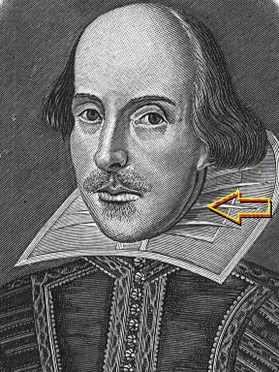
shakespeare

And I do not have any disdain or disrespect to give the Stratford guy.  To say that, in the Elizabethan world, the actor son of a tradesman with only a grammar school education could not have been the mind behind the literary masterworks is foolish.  The Stratford guy owned and operated the Globe theater at a time when “the play was the thing”.  All of London society, rich and poor, gloried in the theater, and Shakespeare did for Elizabethan plays what Babe Ruth did for baseball.  He was a good enough business man to make himself a decent fortune.  Although, apparently, this world-shaking author didn’t spend any of his money on owning books, which in my experience is extremely rare among writers.  His life, bound up in an urban existence that never traveled outside of the country also somehow produced great works that were set in places in Europe, especially Italy, that described those settings in accurate detail.  As a working actor, he also apparently had the time to study law and somehow learn the inner workings of the royal courts of more than one country.  And the plots were not original.  He took existing stories that already were a part of European literature and lore and wove them into rich tapestries of human striving, laughable foibles, and a deep understanding of basic human character.  But I do have doubts that the businessman and actor from Stratford was the real writer of the plays.

I have already told you that I don’t believe Sir Francis Bacon was secretly Shakespeare.  Christopher Marlowe wasn’t either.  And I have unsuccessfully made a case against Shakspere, the Stratford guy.  So who could possibly be the real William Shakespeare?  Well, I am not going to be able to make a decent case for him in the 100 words that I have left to end this essay with.  So there has to be more to come.  (And stop screaming obscenities at the computer screen.  I am going to reveal the name before the end of this essay.  And I promise not to make my case for him in coming days too boring and horrible.)  I have to show why I believe that the true heart of Shakespeare could only have beaten within the body of Edward deVere, the Earl of Oxford.

Leave a comment

Filed under conspiracy theory, goofy thoughts, humor, strange and wonderful ideas about life, William Shakespeare

Kit Marlowe, Secret Agent

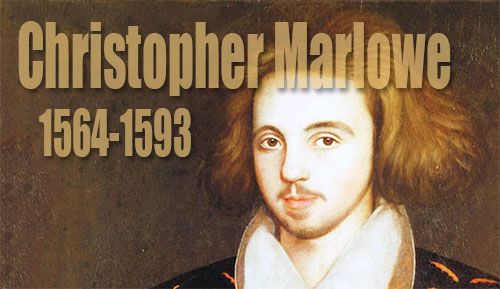
christopher_marlowe

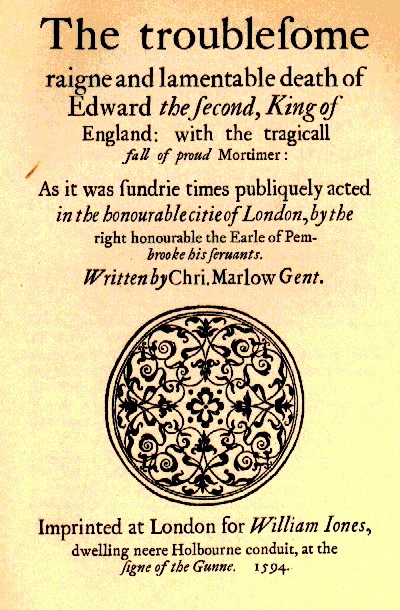
Christopher Marlowe is often sited as the real Shakespeare, a problematic assertion given that he would’ve been forced to write a number of plays after he was dead, giving new meaning to the term “ghost writer”.  But I would like to add to the assertion that “Marlowe is NOT Shakespeare!” that I also believe he did not die as they claim that he did.  Marlowe is a fascinating character of debauchery and misbehavior, intrigue and mystery, and undeniable genius.  As a writer, he was a maverick and risk-taker, having begun the ascendance of the theatrical play as one of the heights of Elizabethan literature with his play Tamburlaine the Great, about the historical figure who rose from shepherd boy to monarch.  This play, and its sequel, Tamburlaine the Great Part II, were among the very first English plays to be written in blank verse, meaning there is a very definite connection between the style of writing established by Marlowe and the later work of Shakespeare.  It is probable that for a few years, Kit Marlowe was a member of the Gray’s Inn group along with Sir Francis Bacon and several other suspicious literary luminaries like Sir Walter Raleigh and possibly Ben Jonson.  (I have to admit at this point that if I am wrong about the Stratford guy and he did write the plays, then he was a member of this group as well, because it was not closed to commoners, only to stupid people.  The Stratford guy was in no way stupid or a villain, no matter what you may believe about the authorship question.)  But here is where the link to Shakespeare’s plays and poetry both begins and ends.  Yes, Kit Marlowe was a capable enough author to have written such sublime plays.  He has all the individual skills to make up the whole.  But if you read his masterwork, The Tragicall History of the Life and Death of Doctor Faustus, you will see that the voice, the unique literary style of the work is simply not by the same author.  Although Shakespeare revisits some of the same themes that Marlowe used in his plays, his manner of development, handling of character, style of humor, and underlying conviction in the existence of God are all different and opposed to Marlowe’s.  Marlowe is NOT Shakespeare.  Shakespeare’s works have more in common with Bacon’s than Marlowe’s.  And I have already said that, “Shakespeare is NOT Bacon… or eggs either.”  And if I said it, it must be so.  (Don’t throw eggs and tomatoes at your computer screen when you read this.  Just call me stupid and vain in the comments like everybody else does.)

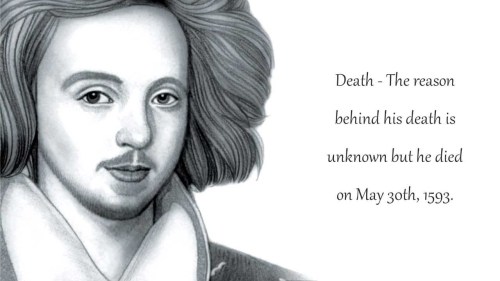
maxresdefault

And an even more compelling reason to those of you who don’t obsess over reading Shakespeare and Marlowe and Ben Jonson is that, at the time Shakespeare’s plays were probably written, Kit Marlowe was busy either being stone cold dead, or, having faked his death, was busy being a secret agent for Queen Elizabeth.

And why would a goofball like me think that Christopher Marlowe cunningly faked his own death and went into his own thrilling quest to be like James Bond more than 300 years before Ian Fleming?  Well, because I know how to read and am not generally bright enough not to believe what others have written about him and his connections to the world of spying in Elizabethan times.

These authors have brought out the fact that Marlowe’s frequent absences from college and later public obligations coincide with things like the mysterious tutor called “Morley” who tutored Arbella, niece of Mary Queen of Scots, and a potential successor to Queen Elizabeth, in 1589.  He was also arrested in the Netherlands for allegedly counterfeiting coins related to the activities of seditious Catholics.  He was brought back to England to be dealt with by Lord Treasurer Burghley, the closest adviser to Queen Elizabeth, and was then not so much punished as let off the hook and even rewarded monetarily.  Still think he was not a spy?  Well, his demise probably came about through his relationship with Lord Francis Walsingham and his friendship with Walsingham’s son.  You see, Walsingham was Elizabeth’s “M”, leader of her spies and intelligence units.  After Walsingham died, there was deep concern that no one was still able to protect Marlowe from possible consequences of being both a homosexual and an atheist.  (Being gay was obviously not as serious a sin as atheism for which torture and death penalties lay in wait.)  It was possible that rival spies and nefarious forces could kidnap Marlowe and get information out of him that the Queen needed to be kept secret.

So, when Lord Burghley tortured Marlowe’s friend and sometime roommate, Thomas Kyd, into naming Marlowe a heretic and sending men out with a warrant to arrest Marlowe, Kit’s other friend, Thomas Walsingham probably warned Marlowe.  The bar fight that supposedly ended Marlowe’s life was witnessed by two friends of his, Nicholas Skeres and Robert Poley, both provably con men and professional liars.  The knife that stabbed him in the forehead above his right eye was wielded by Ingram Fizer, another of Marlowe’s disreputable friends, allegedly over an unpaid debt.  Fizer, of course, though he freely admitted killing Marlowe, was acquitted of the murder.  And the coroner’s report is suspect.  Rules of investigation were not followed, and the body was never independently identified by someone other than the three friends at the scene of the crime.  And the body was hastily buried before anyone else could get a close look at it.

edward2a

I am not only telling you that I believe Christopher “Kit” Marlowe was NOT Shakespeare… or eggs either (though that joke doesn’t really work here), but I believe he didn’t die the way it has been reported to us by history.  And why do I believe these things?  Because I think the story of Christopher Marlowe is a really great story, and it exists as a story whether it is historically true or not.

5 Comments

Filed under angry rant, artists I admire, conspiracy theory, goofy thoughts, humor, poetry, satire, telling lies, William Shakespeare

Shakespeare is NOT Bacon

3475b987-6c5d-4699-ba5d-e6008559028f

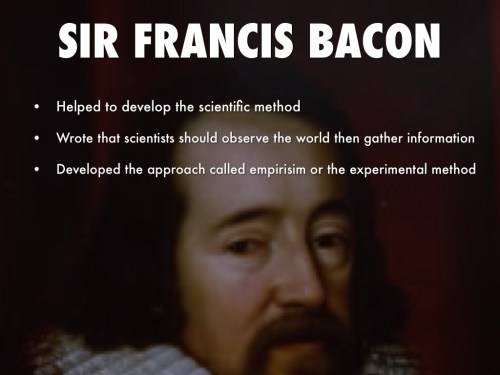
(The graphic above should say “Empiricism,” not “Empirism.”  Ir is a typo.

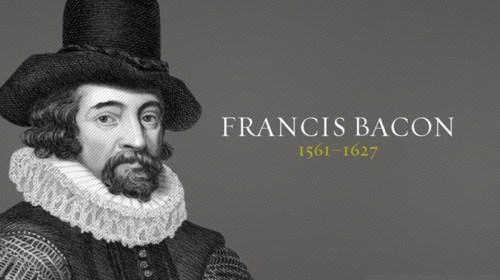
Yes, Sir Francis Bacon is at least as interesting and obscure as William Shakespeare.  But let me assure you, I can confidently state, “Shakespeare is NOT Bacon!”  He is not eggs either… or any other breakfast food.  Sir Francis Bacon was the breakfast, the first meal in the great Elizabethan banquet of literature, poetry, and culture.  And William Shakespeare is a more important main course, the royal dinner, as it were.  But it has to be acknowledged that Bacon was essential to the very existence of William Shakespeare.  Breakfast always comes before dinner.

t2ec16dhjgoffvtvhuebslhohksvg-60_35

In 1845 a female author by the name of Delia Bacon (nothing suspicious about that coincidence, by the way) put forward an idea that William Shakespeare’s plays were actually written by a group of men under the leadership of Sir Francis Bacon.  She thought the group intended to inculcate into English culture an advanced system of politics and philosophy which they themselves could not take credit for publicly.  She would later write a book in 1857 called The Philosophy of the Plays of Shakspere Unfolded which advanced the notion that the plays were written for Baconian purposes beyond mere theatrical entertainment.  Numerous people, including the American poet Ralph Waldo Emerson supported her in her quest to find proof, sending her to England to research the crazy conspiracy theories she founded by noting ciphers in the plays, and in the essays of Bacon, that led her to believe all she had to do was dig up the gravestone of Shaksper in the chapel at Stratford to find written proof in Bacon’s own hand that he was, in fact, the author or primary motivator of the plays of William Shakespeare.  She spent one cold and creepy night in the chapel, just her and her spade and her crow bar, along with the bones of the Stratford guy, trying to work up the courage to do a bit of grave-robbing… and failing.    It is a good story, but very poor archaeology.  She was denounced by the literary historians and establishment figures who supported the Stratford guy.  They said her scholarship was sloppy, her cipher analysis goofy and unfounded, and her conclusions more questionable than a pig in theatrical make-up.  (My words, not theirs.  English critic George Henry Townsend was entirely too stuffy and boring to simply be quoted here.)

francis-bacon-quotes-francis-bacon-quotes

Now, I, of course, strongly disagree with the Bacon lady.  As I said in the very title, “Shakespeare is NOT Bacon.”  But I do think there was merit in sniffing out old Frankie’s scent and fingerprints on the whole Shakespeare/Shaksper thing.  The Stratford guy was not Shakespeare either.  When he died in 1616 there was no public outcry at the loss of England’s most popular poet and playwright.  Even King James who was Shakespeare’s number one fan and constant audience member, didn’t mourn the passing of the actor/theater-owner/businessman from Stratford.

Francis Bacon, on the other hand, was a powerful intellect, educated in the ways of science, the law, and government in the Elizabethan age.  Bacon gathered other men of powerful intellect and accomplishment at Gray’s Inn to hold debates about things philosophical and things scientifical.  It is not unreasonable to imagine that the man who really wrote the plays attributed to Shakespeare sat at that table and participated in those debates.  And Sir Frankie had good reason to keep lots of this business a secret.  There exists evidence that though he was apparently happily married to a fourteen-year-old girl, he did a little bit of swaying toward the other gender too, a thing not too popular with the average Anglican Englishman.  He also dabbled a bit in the occult (think witches in Macbeth sort of thing).   And his essays indicate a strong correlation to the philosophies and ideals of the German Rosicrucian Movement.  In 1593 during a Roman Catholic plot against Queen Elizabeth, Frankie managed to take a position on the investigation that totally offended the old virgin queen.  He was on the outs with Liz for the rest of her difficult and anger-management-challenged life.  He did rise to prominence under her successor, James I, but never-the-less managed to die amidst total ruin and scandal.  There is a lot in Frankie’s life to indicate that he had a direct influence on the content of Shakespeare’s plays.  Some of the characters in the plays may actually be, at least in part, based on Frankie himself.  But  this guy never hung out with the Stratford guy that anyone knows of.

So, if Shakespeare is NOT Bacon, or eggs either… and the Stratford guy isn’t Shakespeare, then who is?  Come on!  You knew I had a lot more to say about this crazy conspiracy thing, right?

67489

Leave a comment

Filed under conspiracy theory, education, foolishness, goofy thoughts, humor, philosophy, strange and wonderful ideas about life, William Shakespeare

Picture Tricks

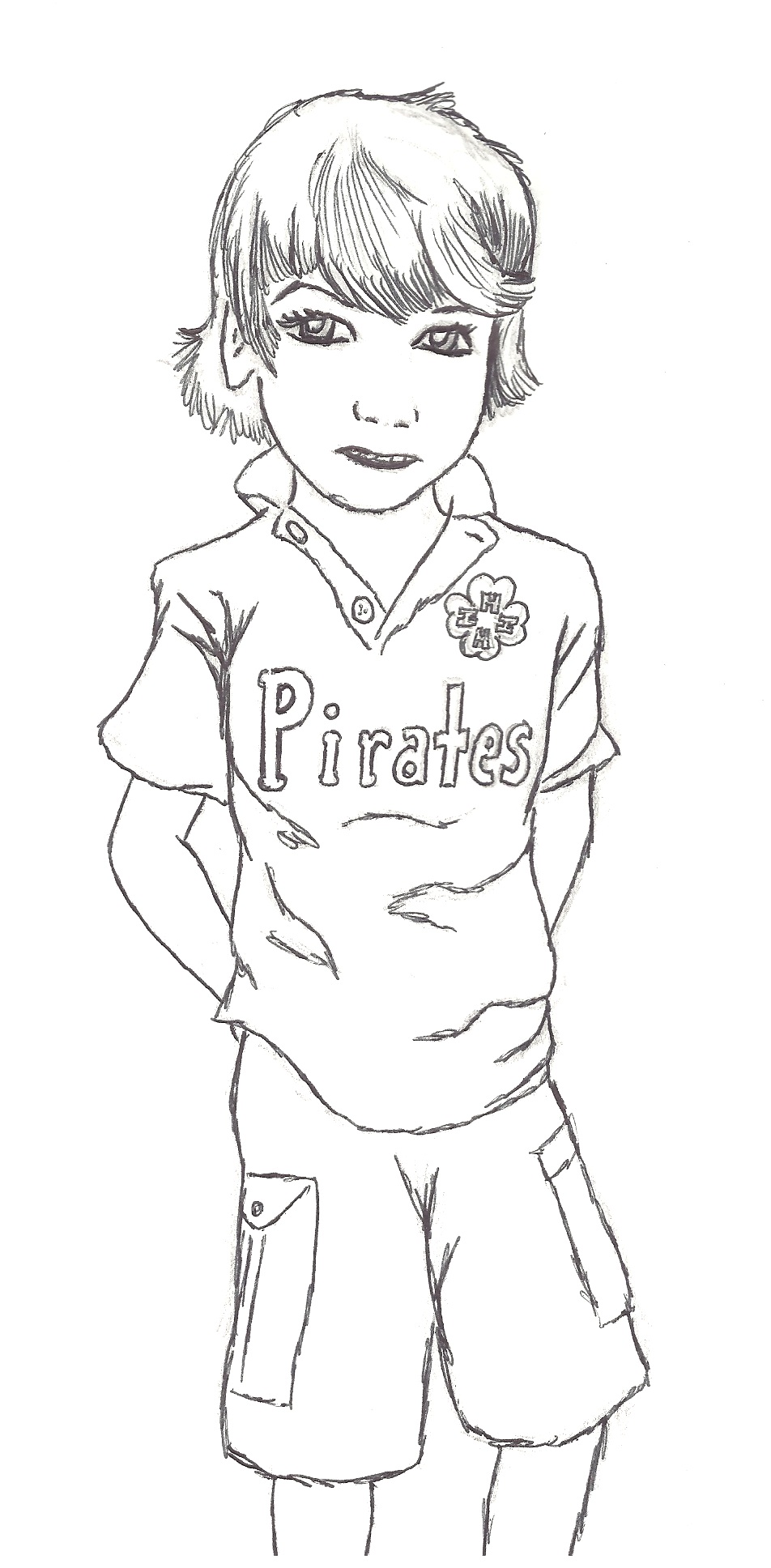
dorin 001 dorin 002 dorin 003

I have discovered things about being an artist by blogging.  I have discovered things by learning from other artists.  I have also discovered things by trial and error.  I have also discovered things by random acts of God.  So let me share some of the ill-gotten picture secrets that I have added to my vast bag of useless incunabula-juice squeezed out with my arcane-secret juicer and internet blogger good luck.

#1.  Save everything arty… as you see above, I have three different pictures of my Catch a Falling Star character Dorin Dobbs, all made from the same pen and ink line drawing.  All the color is digital paint from my computer’s own paint program.  Simple and cheap to do.  Save functions multiply the pretty.

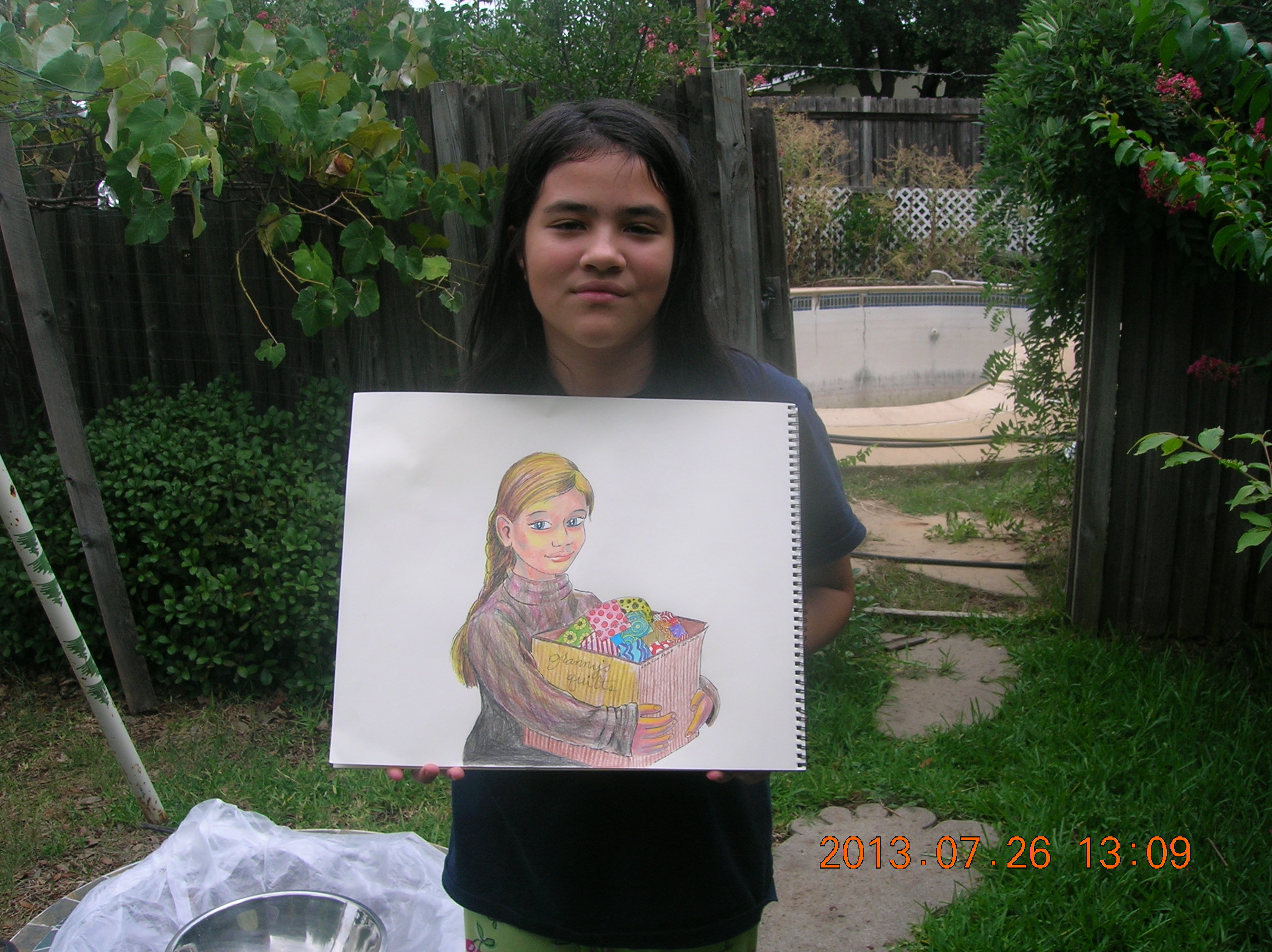
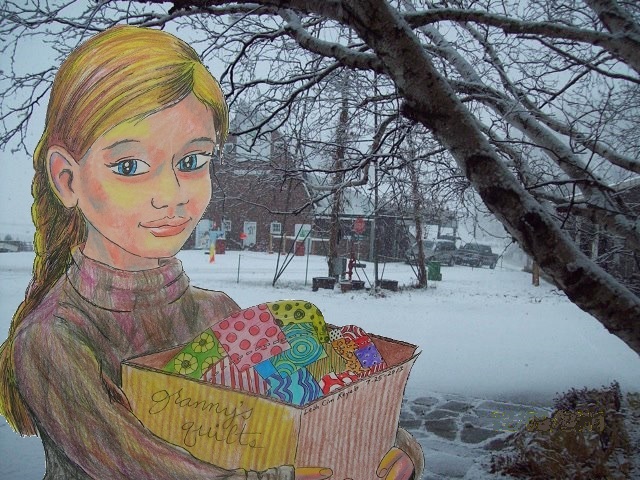
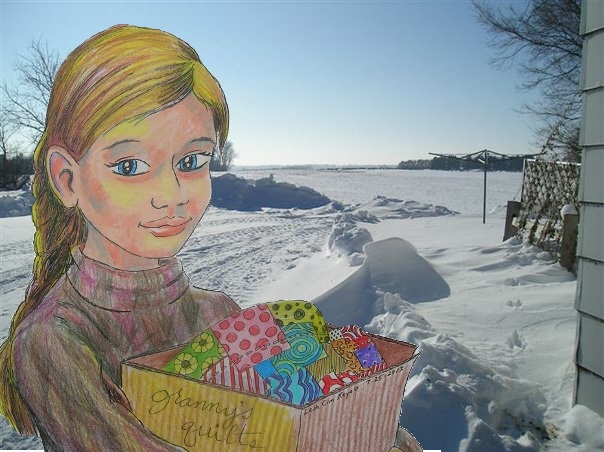
#2.  Splice stuff together and make new stuff…  I have the cheapest possible photo-shop program, but using its entire $7 value every time I paste with it, I am able to create new art out of old.

DSCN4422

New art out of old;

Val at the barn Val B2 tree time banner

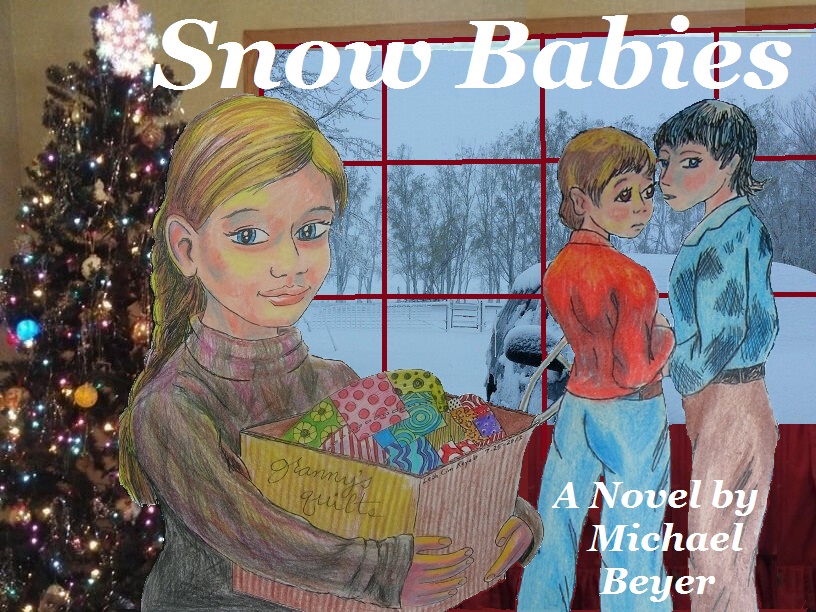
#3.  Weave things together to create unity…  My art is not for its own sake.  I am not Picasso or Van Gogh.  My art is very much tied to the stories I tell as a writer of Young Adult novels.  (Snow Babies is awaiting its turn with the editors of PDMI LLC Publishers.)

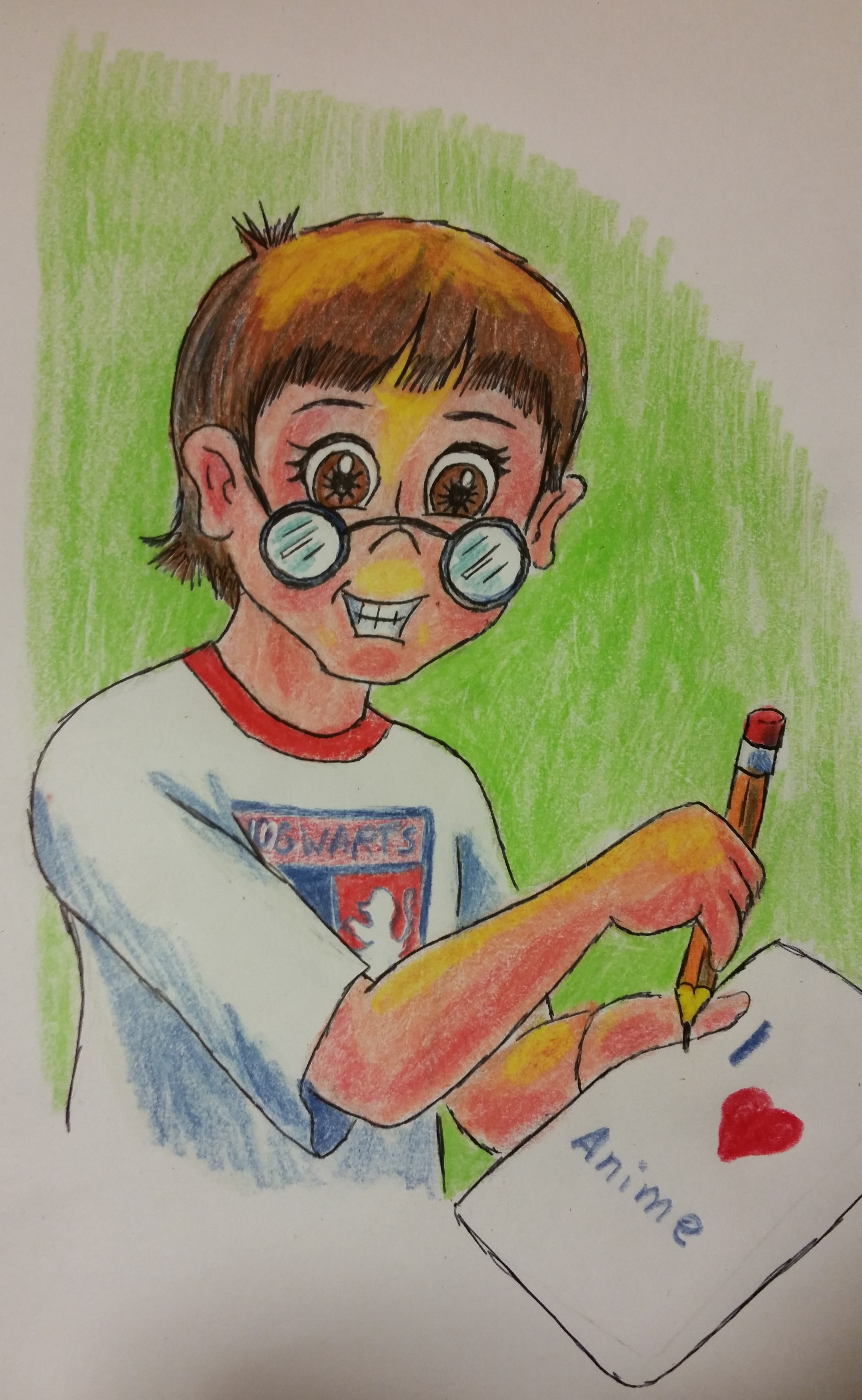
#4.  Promote the art and writing of others…  I have spent a ridiculous amount of internet time stalking artists like Loish and sharing their work on my blog.  Writers too.  I do my little book reports in order to connect the reading and the literary influences I have completed (or stolen from) and show where much of my own style and je nais se quois comes from.  If the artist or writer is still living and notices what I have done, they will often return the favor (hopefully, if they don’t find my work to be an offense against the gods of art).  If they can’t return the favor (because they are quite dead or thoroughly disgusted by me), I have at least associated my work with theirs in the minds of my readers,

c18296b715d6f4bb5326967c0aee012c-d7a6fao

#5.  It’s all about digital photography…  In order to share my colored-pencil menagerie of live Paffoonies on the internet, I have to get better at photography.  I have taken far more photos of drawings in the last two years than I have drawn drawings.  That has not been a life-long way of things.  I love color, and poor photography skills turn out various shades of gray.  Sunlight?  Incandescent?  Fluorescent?   I haven’t discovered that secret yet, but it will never be uncovered if I don;t keep trying.

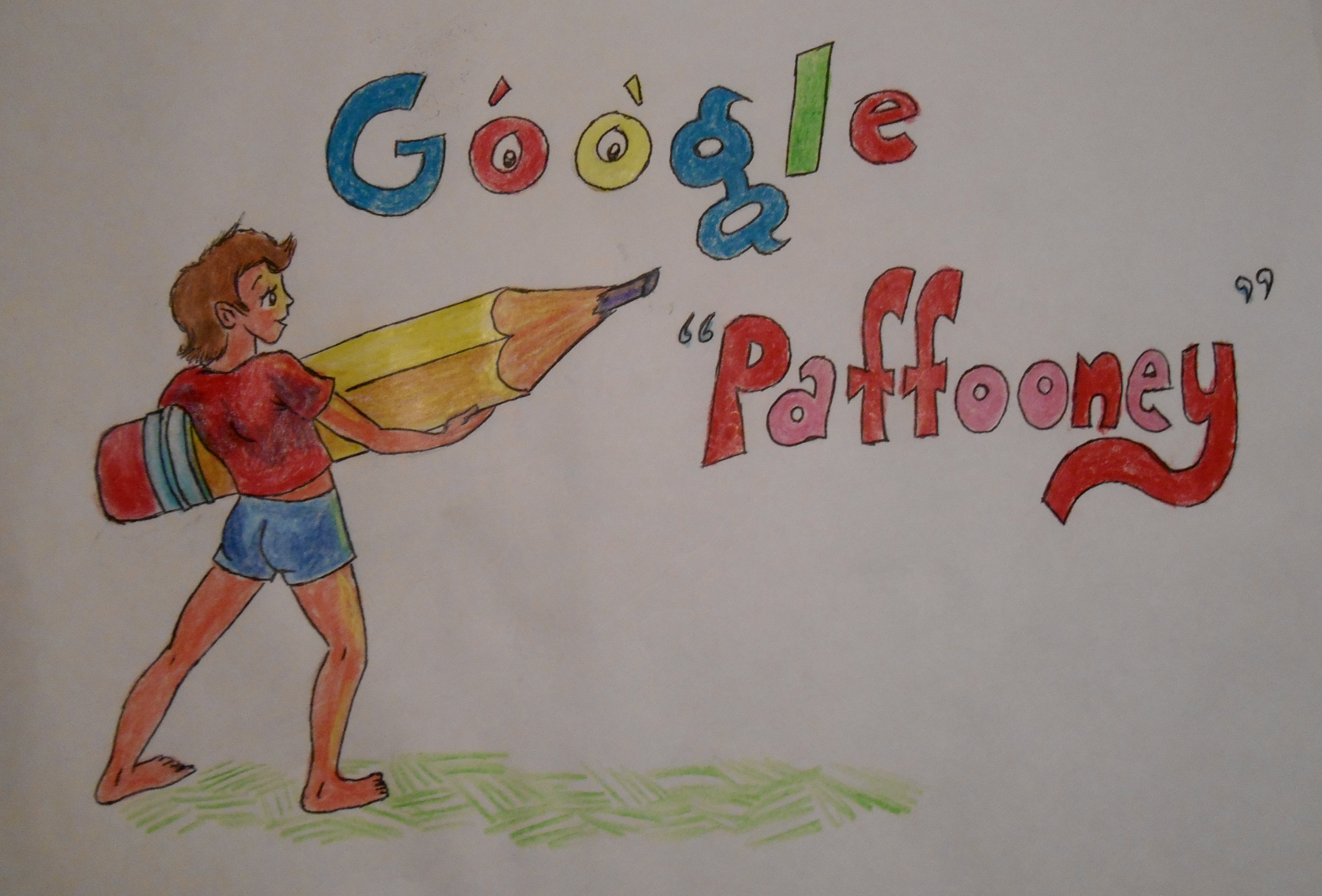
#5. Find connections that help pull your work together in one big, messy bundle…  Facebook, WordPress, and Deviant-Art are all better forums if you can connect them.  I did this by labeling everything Mickey with a meaningless made-up word that no one else in their right mind would use.   The word is Paffooney.

goopafoo

A picture search on Google using the words “Beyer Paffooney” gives you an almost complete gallery of my artwork and nonsense.  Googling the word itself yields a link to a plethora of my old blogs.  Do you not know what plethora means?  Try it and you will learn that very good word.

Leave a comment

Filed under artwork, humor, Paffooney

The Cowboy Code

When I was a boy playing cowboys and Indians with cap pistols and rubber tomahawks, we all knew that cowboys had a code.  The guy in the white hat always shoots straight.  He knows right from wrong.  He only shoots the bad guy.  He even shoots the gun out of the bad guy’s hand if he can.  Westerns are about right and wrong, good and bad, and the unyieldingly good knights of the plains.

And boys believe what they see on TV and in the movie theaters.  People who make television shows never lie, do they?  In fact, Wyatt Earp was based on a real guy who really lived and really shot the bad guys at the gosh-darn real OK Corral.

Daniel Boone was a real guy too.  He faced the opening up of new lands full of deadly dangers.  And when Fess Parker played him in 1964, wearing Davy Crockett’s coonskin hat, he walked the earth like a guardian angel, making everyone safe by the end of the episode.  He even knew which Indians were good and which were bad.  Mingo was always on Daniel’s side.  And when they spoke to each other about the dangers they faced, it was never about killing the people they feared.  It was about doing what is was right, about helping the community at Boonesboro to survive.  Being encouraging… looking forward to a more settled future created by following the cowboy frontier code.

So, I am left wondering what ever happened to the cowboy code?  I listen to Republican presidential candidates talking about dipping bullets in pig’s blood to kill Muslims, and building walls against Mexican immigrants, and why our right to carry assault rifles is sacred, and I wonder what happened.  Didn’t they experience the same education from the television versions of the Great American Mythology?  Didn’t they learn the code too?

218_Kristyn2013Neets

I am old enough now to know that cap guns are not real guns and you cannot solve problems by shooting somebody.  But that was never the point of the cowboy code.  We need straight-shooters again in our lives, not to shoot people, but to tell the unvarnished truth.  We need wise people who can tell who are the good Indians and who are the bad   We need them to shoot the weapons out of the bad guys’ hands.  And I know that’s asking for leaders to be larger than life and be more perfect than a man can actually be.  But Daniel Boone was a real man.  Myths and legends start with a fundamental truth.

4 Comments

Filed under autobiography, commentary, cowboys, humor, insight, philosophy, politics, Uncategorized

Monkey Mathematics

Image

(colored pencil, pen, & ink – entitled “Math Monkey” – by Leah Cim Reyeb (my name backwards))

It has been said that if you have an infinite number of monkeys with an infinite number of typewriters, and unlimited time, they will reproduce all the works of William Shakespeare.  Not only that, they will produce every other work of literature in every language on Earth that has ever been written… and that ever will be written, for all time.  Not only that, but every version of Hamlet that has one misspelled word, two misspelled words, three misspelled words… and so on to infinity.

I was having an argument recently with a boy from Brazil who insisted there was no God and Creator.  He claims to be an agnostic, but argues like an atheist.  He was trying to “save” me from my erroneous belief that there is an underlying intelligence and purpose to all of creation.  His intentions were good, but he failed to convince me before sailing off back to Sao Paulo.  Alas, I am unrelentingly still convinced that I am not wrong, as he apparently believed all school teachers are by definition.  Yes, it is written that way in the teenager’s guide to life, the universe, and everything.  “Teachers are clueless and only teach you the wrong stuff” – page two hundred and three, in Chapter Twelve, Adults are Always Wrong.  And, of course, I’m blaming it on the monkeys.  It’s always those danged monkeys and their typewriters.

I tried to explain that the whole infinite-monkeys thing is based on flawed math.  After all, math was invented by enraged Greeks who danced around naked in caves worshiping circles, squares, and right triangles.  Pythagoras must’ve really hated school kids.  He gave them all this froo-frah to learn about whole numbers, integers, algebra, and geometry and stuff, and then threw in theorems and equations to give them something to mind-numbingly practice at their desks in Math classes until they were no different from infinite-monkey typists. 

If you take a pile of bricks up to the top of a mountain and then throw them off, even if you throw them an infinite number of times, how often will they actually land in the configuration of the Parthenon?  …And the Parthenon with one brick out of place, and then two bricks, and …wasn’t the gol-danged Parthenon carved out of marble, not bricks?  If you believe all of reality is based on random chance, then you obviously are figuring that out with infinite-monkey math.  I’m not saying the Theory of Evolution is wrong.  That is ordered and principled in ways that fit Occam’s Razor and is probably just as correct as the Theory of Gravity (which we don’t fully understand, either, yet we don’t go flying off into space with each rotation of the Earth).

“Wait a minute!” screams the head monkey.  “Are you saying you believe in Evolution, or in Creation?”   (I am constantly hearing nearly-infinite monkeys screaming that nowadays.)

Shoot, I think both things are true.  You can’t deny what science offers proof for, fact or theory.  Yet, God speaks to me and comforts me, even though he doesn’t actually answer prayers.  The evidence of God is in all that he created, including the process of evolution, the monkeys, the typewriters (well… man-made is made by God too if he created man with inventive capabilities, right?), and even the voices in my silly head that I interpret as God talking.  Am I guilty of Infinite-monkey math?  I try not to be.  But I also try not to argue with Brazilian teenage agnostics about the existence of God.  Oh, well… can’t win ‘em all.

Leave a comment

Filed under Uncategorized

Autorumination (the reprise)

Image

(This is a black-and-white cartoon in pen and ink that I have shamelessly colorized with colored pencil.)

    I have to tell you, driving in Texas, especially the “Big D” is taking your life in your hands, gripping that old steering wheel in a grip of death, and trying like heck not to hit any of the myriad things flying in front of you.  I have had in my lifetime three accidents and too many near misses to count.  Drivers that don’t have their number of kills painted on the driver-side door are rare indeed.
    One of the scariest encounters on the road has to be the legendary Texas Killer Grandma.  They have a private club where they get together over knitting and compare the goriest kills they have managed with their oversized automobiles.  These old lady drivers are invariably white-skinned and have hair either of strange shades of blue and periwinkle, or silver, almost chrome.  They have Killer Grandma nicknames like Suicide Sadie and End-It-All Emma.  They drive big black Cadillacs, Buicks, and Mercedes.  They have mostly no-fault insurance that will guarantee they can mash your children in the back end of your family car without jail time, and usually without paying for a penny of your damages.  They cruise around Dallas watching for unwary drivers so they can leap in front without signaling, getting bashed from behind by the victim, and sending the victim swirling off the overpass to a fiery death and dismemberment.  Then they cackle all the way to the next club meeting.
    Killer Grandmas drive a class of vehicle I call the American Wasp Rocket.  These are large, unwieldy vehicles from Ford and GM that wreak havoc with smaller, slower cars, especially foreign-made cars like Toyotas, Subarus, and Volkswagens.  In the northern precincts of Dallas, Austin, and Houston, where these vehicles truly dominate, you will often see BMW, Volvo, or Italian Wasp Rockets, which are almost an oxymoron by their very nature.  (“I only buy them gol’ dang furrin cars iffen they’re status symbols, cause I only buy American, but I figgur high-dollar wagons like them thar Lambourginis count as American too!”)  These cars are all large enough to crush an SUV under their wheels, and, of course, they are only driven at hyper-speeds while winding their way through heavy traffic so the occupants can arrive anywhere they are going FIRST.  Besides Texas Killer Grandmas, there are few other drivers of these vehicles who aren’t over-weight, middle-aged white males who have high-paying white-collar jobs.
    The most common vehicles on Texas highways are, of course, the typical Bubba.  Bubba cars are always pick-up trucks, and almost always Chevys.  In fact, they almost have to be white, red, or brown, or they don’t count as a proper Bubba.  Bubbas drive like Foster Brooks on speed, always weaving, wobbling, wagging, and wrecking.  The highway is their own personal demolition derby, and if they don’t get you with a straight-on hood-smash, they’ll ding you with whatever falls out of the back of their pick-up (beer bottles, kids, used tires, tools, parts of the vehicle that have already fallen off once before, and sometimes ugly wives).
    A more-or-less brain-damaged sub-species of Bubba is the Billy Bob.  They drive Ford pickups, white, red, brown, and sometimes gold.  They will kill you no less quickly than a Bubba, but they do tend to have better insurance.
    Of course, I can’t even talk about Beaner cars.  It is not politically correct, as a young Hispanic student was pointing out to me just two weeks ago.  “I can say I’m a Beaner,” he said, “But you can’t say it because you’re a Gringo Loco.  Only Beaners are allowed to call a Beaner a Beaner.  You could be killed for saying that in the Barrio!  Even for thinking that!”  So, I won’t talk about those cars on the road in the fast lane doing a mere twenty-five miles per hour.  I won’t mention how they have eighteen kids and a Tia Carmen in the back seat and can’t see out with the rear view mirror.  I won’t even talk about the rosary beads, fuzzy dice, and numerous brightly colored stuffed animals that hang from the rear view mirror blocking the windshield also.  It just wouldn’t be nice to talk about that.
    So, I guess I have to sum up with a concluding statement that makes sense out of all of this Texas road-rage and bumper-car nonsense.  It would have to be something like this:  If you ever plan to drive in Texas, be prepared.  Have your burial plot purchased, your insurance paid up, and “Drive Friendly!”

Leave a comment

Filed under Uncategorized

Chuck Dickens and the Origins of Writing

Image

Don’t make the mistake of thinking I have any earthly idea where writing comes from or how it began.  I am only talking personal history here, nothing grander or more meaningful.  This post is only self-referential hoo-haw, which is a fancy way of interpreting “conceited crap”.

So, the truth is, I am writing about Charles Dickens because he is the author I most want to become.  True, I rant on and on about Twain and his humor.  And a good deal of my artwork owes everything to Disney, but everything I am good at in writing is based on Dickens.

The first actual Dickens novel that I read was accomplished during my extended illness as a high school sophomore.  I read in bed, both at home and in the hospital, from my library copy of The Old Curiosity Shop.  I was enthralled by the journey and subsequent tragedy of Little Nell.  I thoroughly loathed the villain Daniel Quilp and was roundly thrilled by his well-deserved fatal comeuppance.  It was my first encounter with the master of characters.  I followed that reading with a biography of Dickens that revealed to me for the first time that his characters were based on real people.  Mr. Micawber in David Copperfield was actually Dickens’ own father.  Little Nell was the cousin he dearly loved who died in his arms.    The crafty Fagin was a caricature of a well-known fence named Soloman, a Jew of infamous reputation, but not without his redeeming quality of caring for the orphaned poor.  So it is that I have chosen to make my silly stories about real people in much the same way Dickens did.  If you are now worried that since you know me, you may end up in my books, never fear.  I change names and splice characters together.  You will have to make an effort to recognize yourself.  And, besides, nobody reads my books anyway.

I also like the way Dickens uses young characters and follows them over time as they grow and change.  Oliver Twist was the first child protagonist in English literature.  David Copperfield, Nicholas Nickleby, and Pip in Great Expectations are also like that.  David Copperfield, in fact, is Chuck’s own fictionalized self.  I fully intend to do the same.  It is the reason my books fall into the Young Adult category.  I also intend to employ the same kind of gentle, innocent humor that Dickens used.  I mean to portray things that are funny in a disarming, absurdist way rather than resorting to attack humor and bad words.

There it is, then, my tribute to Charles Dickens, a writer who makes me be who I am and write what I write.  I am not supposed to do Christmas posts because of my avowed religion, but you can consider this to be as close as I can come.  The author of A Christmas Carol… it doesn’t get much more Christmassy than that.

1 Comment

Filed under Uncategorized

Really Bad Jokes

bozo

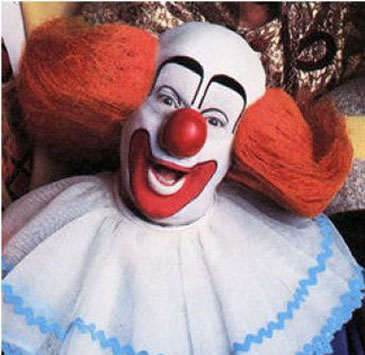
If you have the bad habit of reading this particular blog more than once, then you are probably aware that I used to be a public school teacher.  Even worse, I used to be a middle school English teacher.  Aagh!  Seventh graders!  It explains a lot about how life has warped my intelligence, personality, and world view.  It also explains somewhat where I found such a fountain-like source for some of the worst jokes you ever heard.

Now, as to the question of why I have chosen in my retirement early-onset senility to become a humor-blogger… well, that is simply not something I can answer in one post… or even a thousand.  But kids are the source of my goofball clown-brain joking around.

wally

Kid-humor, you see, is stunted and warped in weird ways by the time period you are talking about.  The eighties, nineties, two thousands, and the tens are all very different.  And those are the various sets of students that I attempted to learn moose bowling from by teaching them English.

Still, there are certain universal constants.

Potty humor really kills.  If you want to make a thirteen-year-old crack up with laughter, roll around on the floor, and maybe wet his or her pants, then you only need to work the “poop” word, or the “nickname for Richard” word, or the “Biblical word for donkey” word into the conversation.  Of course the actual words, even though we all know what they actually are, are magical words.  If you actually say them to kids in school as their teacher, those words can actually make you magically and permanently disappear from the front of the classroom.  All kids are big fans of George Carlin and his seven words, even though most of them have never heard of him.

And violent humor is popular with kids from all decades.  The most common punch line in the boys’ bathroom is, “… and then he kicked him in the Biblical word for donkey!” followed closely in second place by, “… and then she kicked him in the Biblical word for donkey!”  I am told (for I don’t actually go in such scary places myself) that in the girls’ bathroom the most popular punch line is, “…so I kicked him right in the soccer balls, and he deserved it!”   Why girls are apparently obsessed with soccer, I don’t know… or particularly care.sweet-thing

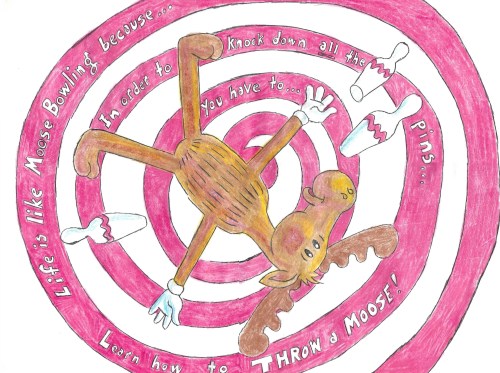
So my education in humor began with bad-word jokes, slapstick humor, put-downs, and rude noises coming from unfortunate places.  Humor in the classroom is actually a metaphorical mine field laced with tiger traps, dead-falls that end with an anvil hitting you on the head, or being challenged to a life-or-death game of moose bowling.  (Don’t know what moose bowling is?  Moose bowling is a very difficult game that, in order to knock down all the pins and win, you have to learn to roll a moose down the alley.)  Sounds like I spend too much time watching cartoons and playing video games, doesn’t it?  Well, there’s more.  And it gets worse from here.  But I will spare you that until the next time I am foolish enough to try making excuses for my really bad jokes.

3 Comments

Filed under autobiography, humor, irony, kids, satire, strange and wonderful ideas about life, teaching, word games, wordplay, writing humor