
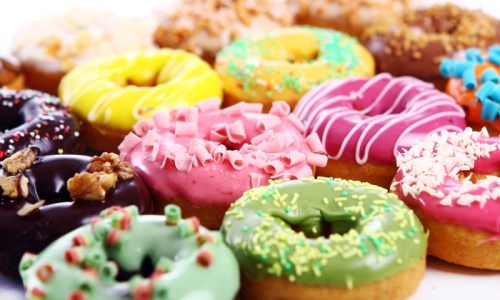
I am diabetic. I am not supposed to have donuts for breakfast any more. Hence the obsession with donuts. I am only guessing here, but I think it may have something to do with the fact that the very name of donuts tells you what to do.
“What?!” you say. “What goofiness are you talking about now, Mickey?”
Well, I’ll tell you. I had a donut for breakfast this morning… with nuts.
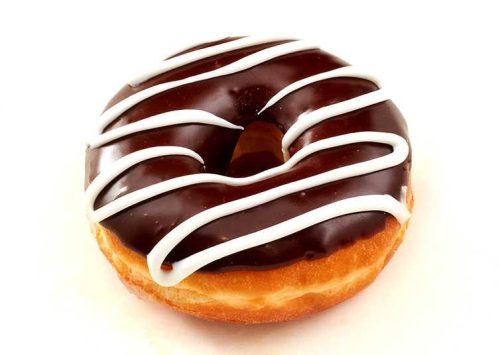
The name “donuts” is literally a command. It tells you to “Do nuts”. So I had nuts with my donut this morning. Peanuts to be precise. Of course that’s what is wrong with the whole scenario. It doesn’t mean “peanuts”. It is commanding you to do something nutty. Maybe more like eating a donut when you have diabetes. No matter how good that particular donut tastes when you eat it, an hour later you are going to suffer.
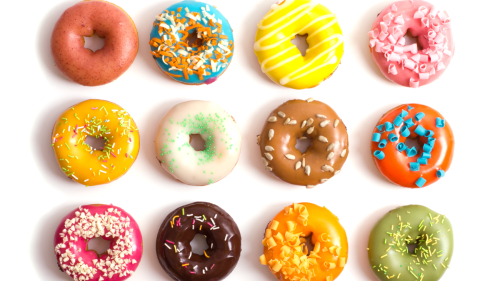
So here’s the result of my being nuts this morning. I have come to the conclusion that the root of all evils in the modern world is “donuts”. Especially when it is pronounced “doo nutz”. Yes, eating a donut subjects you to the command, “Do nuts!”
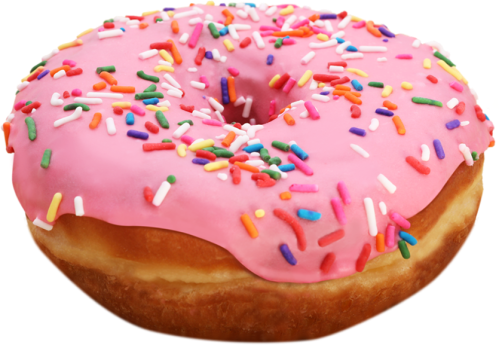
And we all know how bad Trump’s diet is. Could he be imbibing donuts? Horrors! That explains Twitter, cabinet firings, tariffs for the fun of it, random protestations of “No collusion!”, and even “Covfefe”. Although Betsy DeVos as Education Secretary is an evil beyond even the power of donuts.
And how did Trump even get elected? Do people in Pennsylvania, Wisconsin, and Michigan glory in eating donuts before voting? How about disgruntled Bernie Bros? And one also suspects that middle-aged white women can’t resist a good donut… or an evil one either.
Could it be that I am down on donuts because I ate one and now I am writing this with a pounding high-blood-sugar headache? Well, yes. Eating one inspired this post. It was a chocolate donut with green, mint-flavored frosting. And it was evil. It is taking out its evil revenge on the blood vessels in my brain.
So, I implore you if you are reading this… no, I’m not going to tell you not to “Do nuts”… I am going to tell you, “Please, for the love of God, keep donuts away from me! Eat them yourself if you have to. But be warned! They have a secret meaning.”













 Catch a Falling Star
Twenty-Six Years a Diabetic
My bloodwork first revealed my diabetes in the Summer of 2000. So, the first of my two grateful notations is my diabetes. Surprise you, does it? There are very good reasons why this bad thing that happened to me has helped me more in life than some of the things most people identify as the best things in life.
Diabetes is a chemical nightmare that you fall into by a compounding of your worst daily habits. Your body turns food into a form that your blood carries to every cell in your body to provide the energy that every living cell runs on. But that form of chemical is glucose, a sugar. And sugar is not only the fuel for cellular life and activity, it is a poison.
Blood sugar is like highly combustible gasoline in an internal combustion engine. If you have too much gas causing too large of an explosion with every spark from the sparkplug, the longer you run it with your foot on the gas, the more likely you are to blow the engine up. This is the reason diabetes causes heart attacks, strokes, and can damage or destroy so many of your body’s essential organs.
The regulatory liquid that controls the sugar’s poison power is insulin. It is produced in the pancreas as a peptide hormone, a chemical that cooks and flavors the blood sugar to make it delicious enough to be more easily eaten up by the cells of the body. But sometimes the pancreas gets lazy or overworked enough to become rebellious and it stops producing enough insulin to cook the sugar. And sometimes, as in my case, the pancreas begins producing insulin who simply aren’t very good cooks. I have way too much insulin in my bloodstream, but it is wimpy and weak and couldn’t win a sugar cook-off if my life depended upon it. And my life does depend on it.
The reason I am grateful for diabetes is the plethora of fundamental life lessons that I had to learn in order to keep living a good life.
How well you can think and feel and move around depends on how well you manage what you eat.
Candy is out. If you like sweetness in your meals, natural fruit sugars like fructose, especially when combined with helpful, cancer-suppressing antioxidants like you find in strawberries, are a much better choice. Niacin is the name of a chemical you need to know when choosing what to eat. Niacin helps balance your blood sugar level, making your insulin gain levels in cooking skill chemically. You find niacin in foods like peanut butter, pork sausage, chicken wings, and mushrooms, as well as many other foods. For nearly twenty-one years, I have regulated my blood sugar successfully by making adjustments to my dietary habits.
And that leads to the other thing that I am grateful for. I am grateful for my ability to change my daily habits when necessary. I have learned that even deeply entrenched habits can be altered over time by small changes I make, noting them and constantly examining my progress. It has not only helped me navigate numerous health problems, but it has also aided me in completing my 5-year Chapter 13 bankruptcy. So, I am grateful for diabetes and changeable habits.
Leave a comment
Filed under commentary, healing, health, humor
Tagged as diabetes, diet, health, nutrition, wellness