
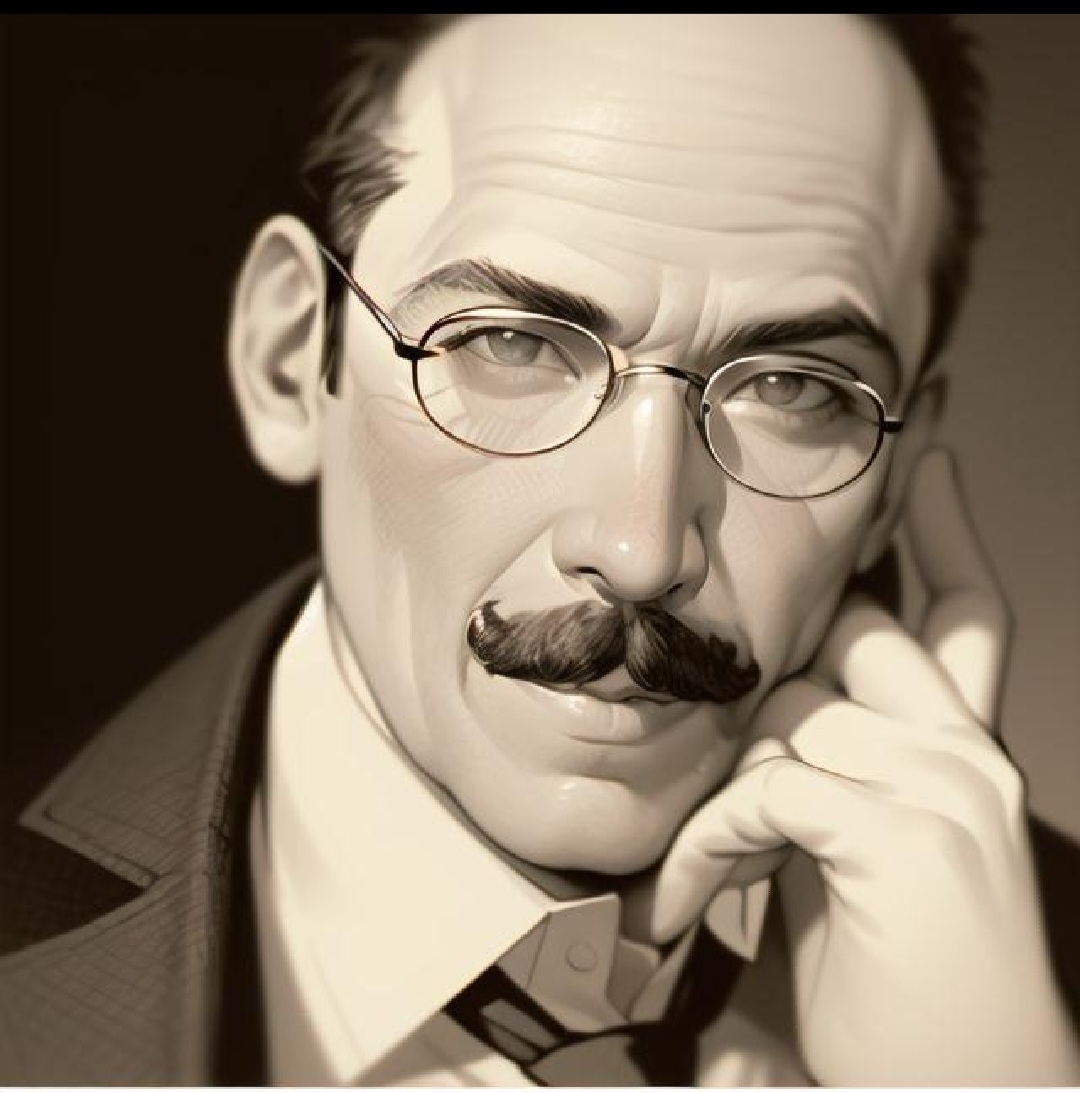
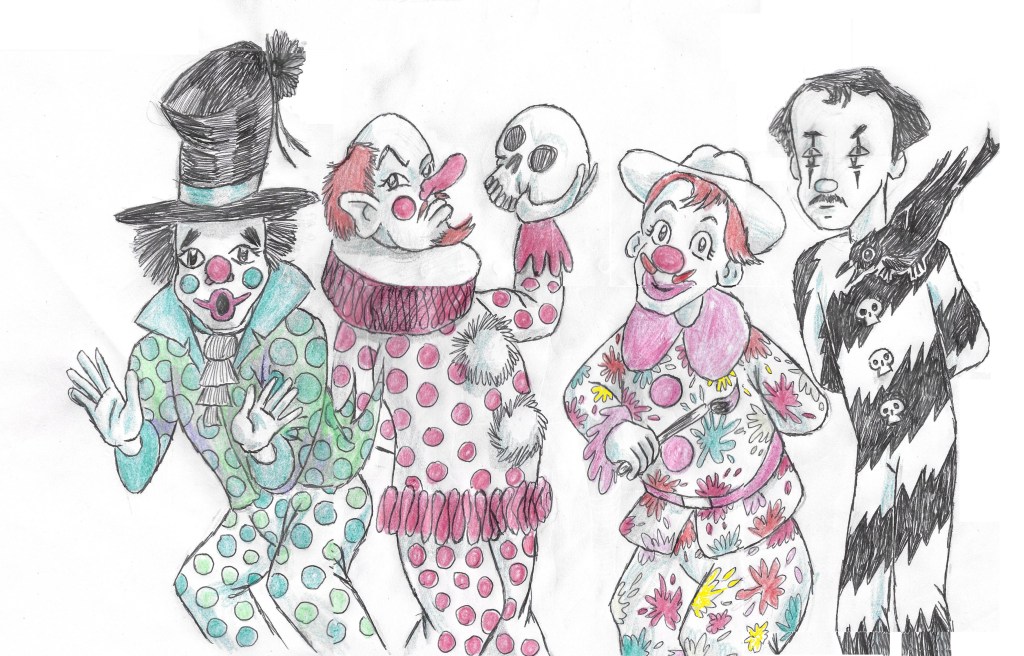
Born in Maine a boy, when his parents wanted a girl,
They took a full six months before they gave his name a whirl,
And they drew Edwin from a hat drawn by a man from Arlington Maine
And the remainder of his life, “Edwin Arlington Robinson,” gave the poor boy a pain.
And as he grew into a man of letters, he wrote some fine poems at school,
But the woman he most loved in life married his brother, a fool.
And so, he showed a pessimist, in poetry ever mocking and darkly cruel.
And Pulitzers he won three times, the man could write a jewel.
To write such poems as Robinson’s, you must learn what “sardonic” means,
And suffer a lot in crisply-writ verse that tastes mostly like baked beans.
……………………………..
Okay, I know this evil Mickey poem does not do E.A. Robinson justice. He was a fine master of verse-craft. It has been said (by an Iowa State American Literature professor, so I know it must be true) that Robinson, when asked what he did one day, said, “I studied my poem all day, and then added a comma.”
Surprised by the answer, the questioner then asked what he did the next day. ”I studied the poem all day again, and took the comma out.”
Recently I read his book of poetry called The Children of the Night. It is a fine book of sardonic poems (here meaning; poems that are mocking, pessimistic, and cynical… in case you didn’t look up “sardonic.”) He often writes in this book poems about Thomas Hardy and the poems written by Matthew Arnold and other dusty old writers of the late and early 20th centuries. So, I have given old E.A. the same honor in Mickey’s book of poems as he gave them.

















 Ah, irony again! It ends up being anything but simple. You can write in simple, adjective-and-adverb-free sentences as Hemingway did, and still manage to convey deeply complicated and thoughtful ideas. One might even suggest that you can create poetic ideas in mere prose, dripping with layers of emotion, conflict, theme, and deeper implied meaning. You can also write prose in the intensely descriptive and convoluted style of a Charles Dickens with many complex sentences and pages-long paragraphs of detail, using comic juxtapositions of things, artfully revealing character development, and idiosyncratic dialogue all for comedic effect. Prose is a powerful and infinitely variable tool for creating meaning in words. Even when it is in the form of Mickian purple paisley prose that employs extra-wiggly sentence structure, pretzel-twisted ideas, and hyperbolically big words.




 Catch a Falling Star
Ugly Christmas Sweaters and the Criticizing of Them
In the Midwest
where I spent my childhood and early youth, there is a great tradition of making fun of the exceptionally eye-bonking ski sweaters and Norwegian-middle-layer clothing that dads and grandads are given as presents less often than only neckties.
Yes, they are functional in the land of 100-degree-below-zero wind-chill. And they also work as defenders of your male virginity when you are in college in Iowa. But we make fun of them not out of derision, but of love. These are gifts, after all, that are given on winter birthdays and Christmas because the giver loves you. And the creative criticism of them is given only as a sign of appreciation for what they are truly for.
And if you tried to click on the X’s on this sweater of mine, and it did not immediately close on your screen, that’s because this one has special meaning. I didn’t get this as a Christmas gift. I inherited it from my father who died in November 2020. And it will keep my heart warm now until it falls apart, or until the time comes to pass it on to my own eldest son.
What…
this essay is actually about is the nature of good criticism.
The fact that this one is a red Christmas tree decorated with lawn flamingos is not the actual point. One has to look past the flaws and try to judge the effectiveness of how it achieves… or fails to achieve… its intended purpose… apparently to keep rats and small birds out of your yard… or from within a hundred yards of the thing.
And…
if I were to be offended by the revelation of Santa’s sexy black thong, then the thing to do as a proper critic is not to use my power to condemn it, but not to take up the critique of it at all. I mean, if you are actually offended by the thing, you would not want to offer an opinion that some would take as a challenge.
“What? You are telling me that I can’t like Santa’s sexy black thong? I will not only like it, I will love it! And I will buy one for myself.”
Following…
the philosophy of the uncritical critic, I would only review this green nightmare sweater of a Christmas mutant demon-dog if I really liked it. Of course, since you are seeing a review of it here, it means I am actually quite charmed by the sweater itself, and amused by whatever seventy-plus-year-old grandmama that has the kitsch-defiant attitude that allows her to proudly wear it… even if it was given to her as a gift by a relative she probably doesn’t really like but, never tells them so.
Doing book reviews one after another (as I have been doing for Pubby in order to get reviews on my own books in return) I have done a lot of the uncritical critic bit. Some of the people I have been reviewing the books of should never have tried to write a book in the first place. But do I tell them that? Of course not. If I have taken the trouble to read the whole book, even though it may be horrible, I am not going to pour cold water on their flame. I have done reviews with innumerable editorial suggestions of what would make it a better story, or a better non-fiction book, or children’s book, or poetry book, or self-help book… I have read terrible books of all of these kinds. And I know the authors did not rewrite the books as I suggested. But in my many years as a writing teacher, I have learned well that you must always point out the fledgling writers’ strengths and ask them to build on those. And some will. Besides the points I earn to spend on reviews of Mickian books, that is reward enough.
Ugly Christmas sweaters and the criticizing of them is how American culture works. Being good at negotiating that fact is a critical skill, especially in the Midwest. But nothing compared to having talent in the wearing of them.
Leave a comment
Filed under book reports, book review, commentary, writing, writing teacher
Tagged as book review, book reviews, books, Christmas, romance