I admit it. I am prosaic. I think in sentences. I speak in paragraphs. I write in 5-paragraph essays. I should stop with the repetition of forms and the parallel structures, because that could easily be seen as poetic and defeat my argument in this post. I write prose. Simple. Direct. Declarative. But those last three are sentence fragments. Does that fit the model of prose? How about asking a question in the middle of a paragraph full of statements? Is that all simple enough to be truly prosaic?
Prose is focused on the everyday tasks of writing. It seems like the world thinks that the mechanical delivery of information in words and sentences should be boring, should be functional, should be simple and easy to understand.
I don’t mean to be pulling your reader’s mind in two directions at once, however. I need to stop confusing you with my onslaught of sentences full of contradictory and complex ideas. I should be more clear, more direct, and more to the point.
So here is my thesis, finally clearly stated; The magic of writing prose, it turns out, makes you the opposite of prosaic.
Ah, irony again! It ends up being anything but simple. You can write in simple, adjective-and-adverb-free sentences as Hemingway did, and still manage to convey deeply complicated and thoughtful ideas. One might even suggest that you can create poetic ideas in mere prose, dripping with layers of emotion, conflict, theme, and deeper implied meaning. You can also write prose in the intensely descriptive and convoluted style of a Charles Dickens with many complex sentences and pages-long paragraphs of detail, using comic juxtapositions of things, artfully revealing character development, and idiosyncratic dialogue all for comedic effect. Prose is a powerful and infinitely variable tool for creating meaning in words. Even when it is in the form of Mickian purple paisley prose that employs extra-wiggly sentence structure, pretzel-twisted ideas, and hyperbolically big words.
Simply stated; I am a writer of prose. I am too dumb about what makes something poetry to really write anything but prose. But I do know how to make a word-pile like this one that might just accidentally make you think a little more deeply about your writing… that is, if you didn’t give up on reading this three paragraphs ago. I find it useful to examine in writing how I go about writing and what I can do with it. I try to push the boundaries in directions they haven’t been pushed before. And hopefully, I learn something from every new essay I write. What I learned here is that I am prosaic. And that is not always a bad thing.
I think the most important thing to know about being a writer… I mean, really being an honest-to-god hard-thinking if not also hard-drinking author… is that you don’t have a choice. If you are a writer, you have to write. Words on a paper. Ideas communicated by putting squiggly little alphabet marks in some language and form that you know and can effectively express yourself in.
You write because you have to.
You have to because you love it. All of it… everything.
Life, love, laughter, learning, and longing… All of it.
You make yourself naked by putting your innermost truth out there for all to see.
Not clothed in lies or distracting details. But the innermost truth… the words that are written on your heart.
And it’s not about positive or negative. All writers have both stewing together within them. I am a pessimist by my practical, logical nature… always expecting the worst to happen. But when the plan comes together, the story gets written, the thing you love is revealed… I can also glory in it. Your truth or mine. No matter. The truth is simply the truth. And once you are weaned of mother’s milk, and your infant mind is filled with words, you need it daily to live.
And you find it in great gobs in larders and cupboards where it has been stored in writing for you to consume with gusto by reading.
Or you find it under stones you have turned, barely enough to keep you alive… and you praise God for it, for even this tiny little bit is a miracle to sustain you.
And sometimes they will ask you, “What’s it like to be a writer?”
And I will say, “I can’t really tell you. No mere words can explain it. If you already are one, you already know what it means. And if you don’t know what it means, I weep for you.”
To be a wizard is to be wise. Look at the word origin if you don’t believe me.
wizard (n.) early 15c., “philosopher, sage,” from Middle English wys “wise” (see wise (adj.)) + -ard . Compare Lithuanian žynystė “magic,” žynys “sorcerer,” žynė “witch,” all from žinoti “to know.” (Wisely plagiarized from http://www.etymonline.com/word/wizard)
Mickey, the old fool that he is, thinks of himself as a wizard
Mickey is a wizard. He writes down foolish things like that because he knows that the beginning of wisdom is to recognize that you are no more than a fool. You can laugh, but it’s true. Some wise guy that I am paraphrasing here said so. (Probably Socrates.) So, that makes it true
Don’t believe me? Want to debate me?
Have you taken the step yet of recognizing your own foolishness?
How can you be wise if you never take the first step down the path to wisdom?
And what defines a wizard, is that a wizard writes. He must write his wisdom down. Otherwise, there are no fruits of his wisdom. I tend to write mostly strawberry wisdom. That kind of fruit is tart and sweet in season, but sours easily and spoils in hot weather and dry kitchens. Blueberry fruits are probably better. They become tarter and sweeter with dryness, kinda like good humor and subtle jokes. But enough of the fruit-metaphor nonsense. The best fruit of wisdom is the Bradbury fruit. I confess to having eaten often of Bradbury Pie. Dandelion Wine and The Illustrated Man leap to mind, but there are far more Bradbury Pies than that.
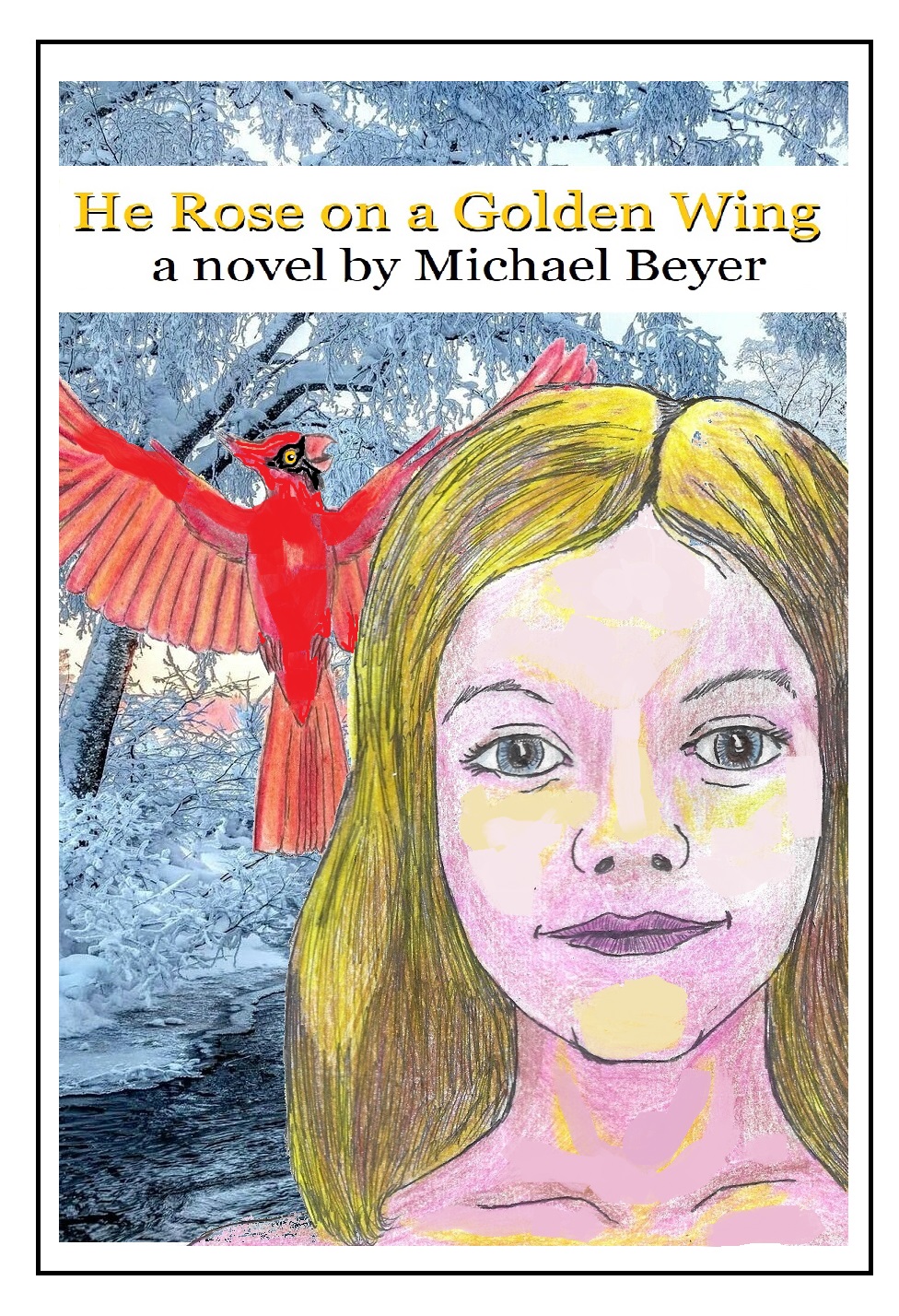
My latest published Beyer-berry Pie. (but only if you go back in time to 2020)
So, if Mickey is a wizard, and wise wizards write wisdom, then where do we get Beyer-berry Pie?
The strawberry-flavored pies are found in the My Books page of this blog, though the author’s page on Amazon is a more up-to-date list.
Recently the fool of a wizard, Mickey, planned to set up a free-promotion weekend for A Field Guide to Fauns. But because he cast a time-warp spell and leaped from 2020 to 2022, he now is offering a free copy of Sing Sad Songs until the end of May 2022. Honestly, as Mickey Books go, Sing Sad Songs is one of his very best.
The foolishness begins below..
Of course, I probably can’t sell a single copy of A Field Guide to Fauns. Potential readers will see that there are naked people in this book about nudists and automatically think that Mickey is too weird and crazy to be a good writer. But good writers like Ray Bradbury and Kurt Vonnegut can be bizarre in their writing too. (I wonder what Vonnegut-berry Pie would taste like? I must read Cat’s Cradle again, for the third time.) Probably at least blueberry-flavored, if not gooseberry.
But even failed wizards can write wizardly writing if they write with wit and, possibly, with real wisdom,
If I have any wisdom at all to share in this post about wisdom, it can be summed up like this;
Writing helps you with knowing, and knowing leads to wisdom. So take some time to write about what you know.
Writing every day makes you more coherent and easier to understand. Stringing pearls of wisdom into a necklace comes with practice.
Writing is worth doing. Everyone should do it. Even if you don’t think you can do it well.
You should read and understand other people’s wisdom too, as often as possible. You are not the only person in the world who knows stuff. And some of their stuff is better than your stuff.
The stuff you write can outlive you. So make the ghost of you that you leave behind as pretty as you can. Someone may love you for it. And you can never be sure who that someone will be.
So, there you have it. The full measure of the wacky wizard’s wisdom was written down by the wise-fool-wizard Mickey.
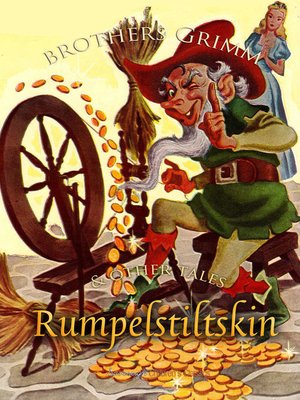
I start today with nothing in my head to write about. I guess I can say that with regularity most days of the writing week. Sundays in particular are filled with no useful ideas of any kind. But I have a certain talent for spinning. As Rumpelstiltskin had a talent for spinning straw into gold, I take the simple threads of ideas leaking out of my ears and spin them into yarns that become whole stories-full of something to say. And it is not something out of mere nothing. There is magic in spinning wheels. They take something ordinary and incomplete, and turn it into substantial threads useful for further weaving.
Of course the spinning wheel is just a metaphor here for the craft of writing. And it is a craft, requiring definable skills that go well beyond merely knowing some words and how to spell them.
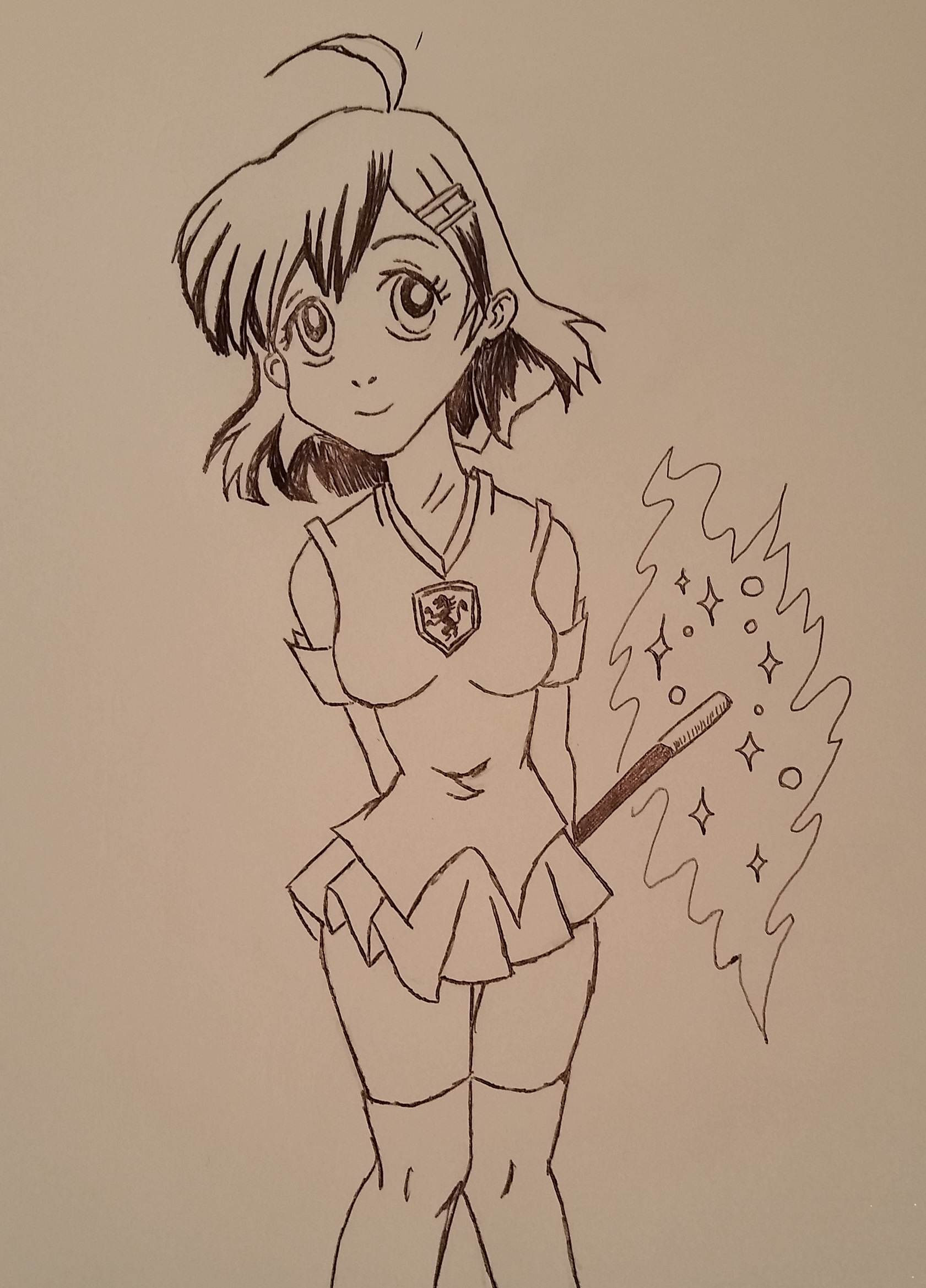
My own original illustration.
The first skill is, of course, idea generation. You have to come up with the central notion to concoct the potion. In this case today, that is, of course, the metaphor of using the writing process as a spinning wheel for turning straw into gold. But once that is wound onto the spindle, you begin to spin yarn only if you follow the correct procedure. Structuring the essay or story is the next critical skill.
Since this is a didactic essay about the writing process I opened it with a strong lead that defined the purpose of the essay and explained the central metaphor. Then I proceeded to break down the basic skills for writing an essay with orderly explanations of them, laced with distracting images to keep you from dying of boredom while reading this, a very real danger that may actually have killed a large number of the students in my writing classes over the years (although they still appeared to be alive on the outside).
My mother’s spinning wheel, used to make threads for use in porcelain doll-making, and as a prop for displaying dolls.
As I proceed through the essay, I am stopping constantly to revise and edit, makeing sure to correct errors and grammar, as well as spending fifteen minutes searching for the picture of my mother’s spinning wheel used directly above. Notice, too, I deliberately left the spelling-error typo of “making” to emphasize the idea that revising and proof-reading are two different things that often occur at the same time, though they are very different skills.
And as I reach the conclusion, it may be obvious that my spinning wheel of thought today spun out some pure gold. Or, more likely, it may have spun out useless and boring drehk. Or boring average stuff. But I used the spinning wheel correctly regardless of your opinion of the sparkle of my gold.
I admit it. I am prosaic. I think in sentences. I speak in paragraphs. I write in 5-paragraph essays. I should stop with the repetition of forms and the parallel structures, because that could easily be seen as poetic and defeat my argument in this post. I write prose. Simple. Direct. Declarative. But those last three are sentence fragments. Does that fit the model of prose? How about asking a question in the middle of a paragraph full of statements? Is that all simple enough to be truly prosaic?
Prose is focused on the everyday tasks of writing. It seems like the world thinks that the mechanical delivery of information in words and sentences should be boring, should be functional, should be simple and easy to understand.
I don’t mean to be pulling your reader’s mind in two directions at once, however. I need to stop confusing you with my onslaught of sentences full of contradictory and complex ideas. I should be more clear, more direct, and more to the point.
So here is my thesis, finally clearly stated; The magic of writing prose, it turns out, makes you the opposite of prosaic.
Ah, irony again! It ends up being anything but simple. You can write in simple, adjective-and-adverb-free sentences as Hemingway did, and still manage to convey deeply complicated and thoughtful ideas. One might even suggest that you can create poetic ideas in mere prose, dripping with layers of emotion, conflict, theme, and deeper implied meaning. You can also write prose in the intensely descriptive and convoluted style of a Charles Dickens with many complex sentences and pages-long paragraphs of detail, using comic juxtapositions of things, artfully revealing character development, and idiosyncratic dialogue all for comedic effect. Prose is a powerful and infinitely variable tool for creating meaning in words. Even when it is in the form of Mickian purple paisley prose that employs extra-wiggly sentence structure, pretzel-twisted ideas, and hyperbolically big words.
Simply stated; I am a writer of prose. I am too dumb about what makes something poetry to really write anything but prose. But I do know how to make a word-pile like this one that might just accidentally make you think a little more deeply about your writing… that is, if you didn’t give up on reading this three paragraphs ago. I find it useful to examine in writing how I go about writing and what I can do with it. I try to push the boundaries in directions they haven’t been pushed before. And hopefully, I learn something from every new essay I write. What I learned here is that I am prosaic. And that is not always a bad thing.
Because of weather, depression, and dealing with a wounded automobile, I have been having trouble getting writing done lately. I mean, me, the goof who writes every day and claims to never have writer’s block, is having trouble with being motivated enough the write things.
It is entirely possible that it is due to an improper diet. I mean, I haven’t been eating well this week. Having to squeeze the food budget to be able to pay all the bills this month is a part of the problem. The effect intermittent rain and heat have on my appetite could also be at least partly to blame. I stress eat, and am not always smart enough to depend on peanuts and peanut butter to get me through the problem.
I realize I need to eat protein to aid my brain, and fruits and vegetables so that my diabetes will slow itself down in the process of eating my brain. That process can make you a bit stupid.
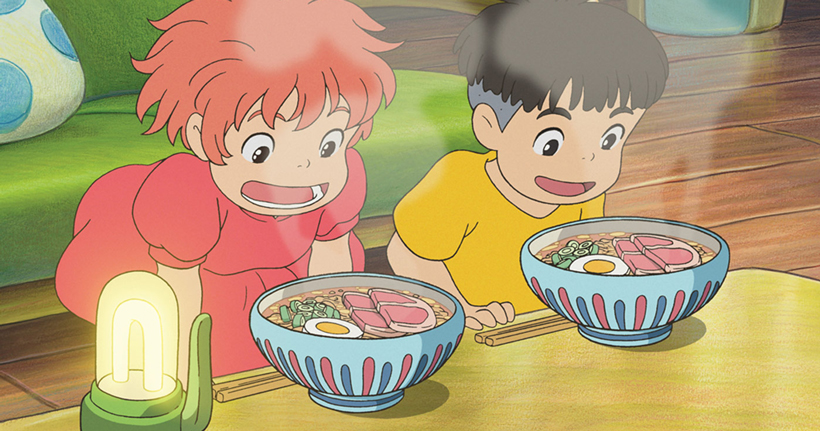
I am also quite aware that eating food that has eyeballs and mouths and occasionally cat ears is also a bad idea for dietary propriety. Especially if it can also talk to me. Do non-cartoonists also have this problem?
Eating right with Ramen noodles as seen in the movie Ponyo.
All right, I admit it. My writing problems probably don’t stem from eating cartoon food. Or eating food in a cartoon for that matter, a thing I haven’t tried in real life. But the whole cartoon food allusion has gotten me halfway to 500 words today. So it is worth something. And the real solution to the problem has been to just sit down and clack away at the keyboard, even if the only thing it yields is foofy nonsense. (And I know “foofy” isn’t even a real word, but WordPress counted it anyway.) I managed to write today simply by doing it.
When learning to write, you have to learn the rules. And then you start writing, and you learn that you have to break all the rules to do it well. But what do I know? You have to be pretty desperate to get your writing advice from a Mickey. After all, it’s not like Mickey was a writing teacher for over thirty years… oh, wait a minute… yes, he was.
Okay, so I decided to write today about the K.I.S.S. rule of writing. That’s right, Keep It Simple, Stupid. Other writing teachers tell me it should be, Keep It Simple, Sweetie, because you can’t say “stupid” to a kid. Okay, that’s mostly true. But I use “stupid” when I use the rule myself. I’m talking to Mickey after all.
So, I better stop “bird-walking” in the middle of this essay, because “bird-walking”, drifting off topic for no purpose, is the opposite of keeping it simple.
I try to write posts of no more than 500 words. I write an introduction that says something stupid or inane that speaks to the theme I want to talk about. Then I pile in a few sentences that talk more about the theme and do a good job of irritating the reader to the point that they can’t wait to get to the conclusion. Finally I finish up with a really pithy and wonderful bit of wisdom to tie a knot in the bow of my essay. I save that bit for the end as a sort of revenge for all the readers who don’t read all the way to the end, even on a short post like this one. Of course, I could be wrong about how wonderful and pithy it is. What does “pithy” even mean? It can be like the soup in the bottom of the chili pot, thicker and spicier than what came before… or possibly overcooked with burned beans.
That was another bit of “bird-walking”, wasn’t it? See, you have to break the rules to make it work better.
So, in order to keep it simple, I guess I need to end here for today. Simple can be the same thing as short, but more often you are trying to achieve “simple and elegant” and pack a lot of meaning and resonance into a few lines. And I, of course, am totally incapable of doing that with my purple paisley prose. And there’s the knot in that bow.
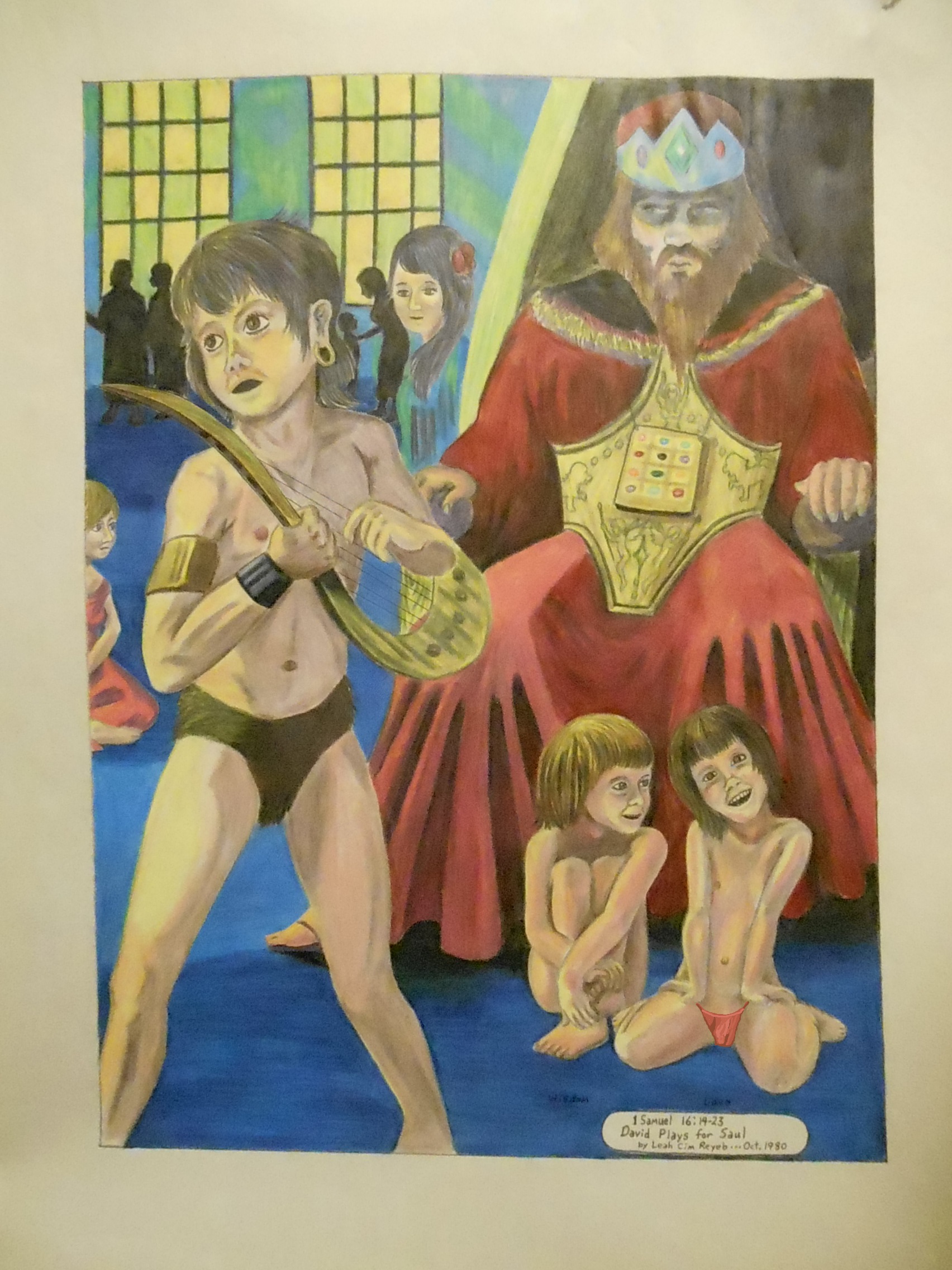
Troubled hearts can be soothed with words. In 1Samuel 16:23 David plays the harp and his singing was a relief for Saul and the bad spirit departed from upon him. In the same way, the written word can touch the soul of the reader and, like Saul, free the reader from the demons besetting him. That is power. That is responsibility.
Of course, I am the last person to claim that I can teach you to write with power… I can’t even claim that I can write with power myself. But I know how to write well enough to make myself laugh, cry, and feel through my writing. And occasionally someone else reads my writing and agrees. Through years worth of being a writing teacher, I do have some thoughts about how it may be done.
First of all, I am not wrong to choose David’s harp playing, inspired by Jehovah as it was, as a metaphor for writing power. It is in the very sounds of the words that a great deal of emotion and meaning is embedded. One can evoke a very bitter and angry feeling by describing a cruel woman not as a “mean girl” but as one whose laughter is “like the crass cackling of devious old witch”. Mean girl has too soft a labial sound, even with the hard g, to be as ugly and staccato as the repeated k sounds added to the tch and the fact that “devious” comes so close to “devil”… a related word. A happy feeling can be created by describing a smile as “a sudden sunburst of white teeth and happiness”. That almost makes me laugh…unless you add “shark’s” between “white” and “teeth”… and then I am convinced I am about to be eaten. The s sounds in the description are like a sizzling burn that leads into the firework display at the end of the word “sunburst”. To write with the music inherent in words, at some point you have to hear it out loud. I always hear the words in my head when I write, spoken in a wide variety of voices. But to truly get it right, I have to read aloud to hear with my ears… which I have already done three times to this paragraph alone.
In order to have power, writing must manipulate feelings. I don’t mean by using the word “manipulate” that it is some sort of Machiavellian bad thing. Simply put, a writer must control the feelings of the reader, not by sound alone, but by the depth of meaning of the words. You must be able to weave a paragraph together not only with the simple meanings of the words themselves, but all the connotations and denotations in those words. You must use metaphor and simile, comparison, allusion, and sensory details. Ernest Hemingway had a working style almost completely devoid of metaphor and the writer’s own personal commentary… but that only worked because all his themes were about dispirited people suffering tragedy and loss and a pervasive sense of disconnectedness. Hemingway is a powerful writer… but his books never make me laugh. Purple prosey over-describers like Charles Dickens can make me laugh with a simple list of things. “The boy’s desk had a nearly dry ink bottle, several pens that needed new nibs and were chewed about the grip, and a small stack of papers crammed full of ink drawings of skulls and skeletons.” It is that last startling detail in the list that makes the mundane suddenly funny.
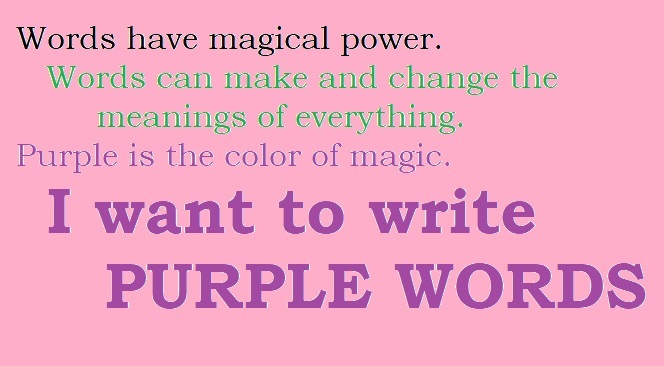
I suppose to do today’s topic true justice, I should write about it in book length. There is so much more to say. But I have bored you long enough for one post with writing nuts and bolts. It is enough to say that I believe in the magic of words, and I think that if, like any good Dungeons and Dragons wizard, you study your books of magic long enough, you can soon be casting fireballs around the room made up of nothing but words.
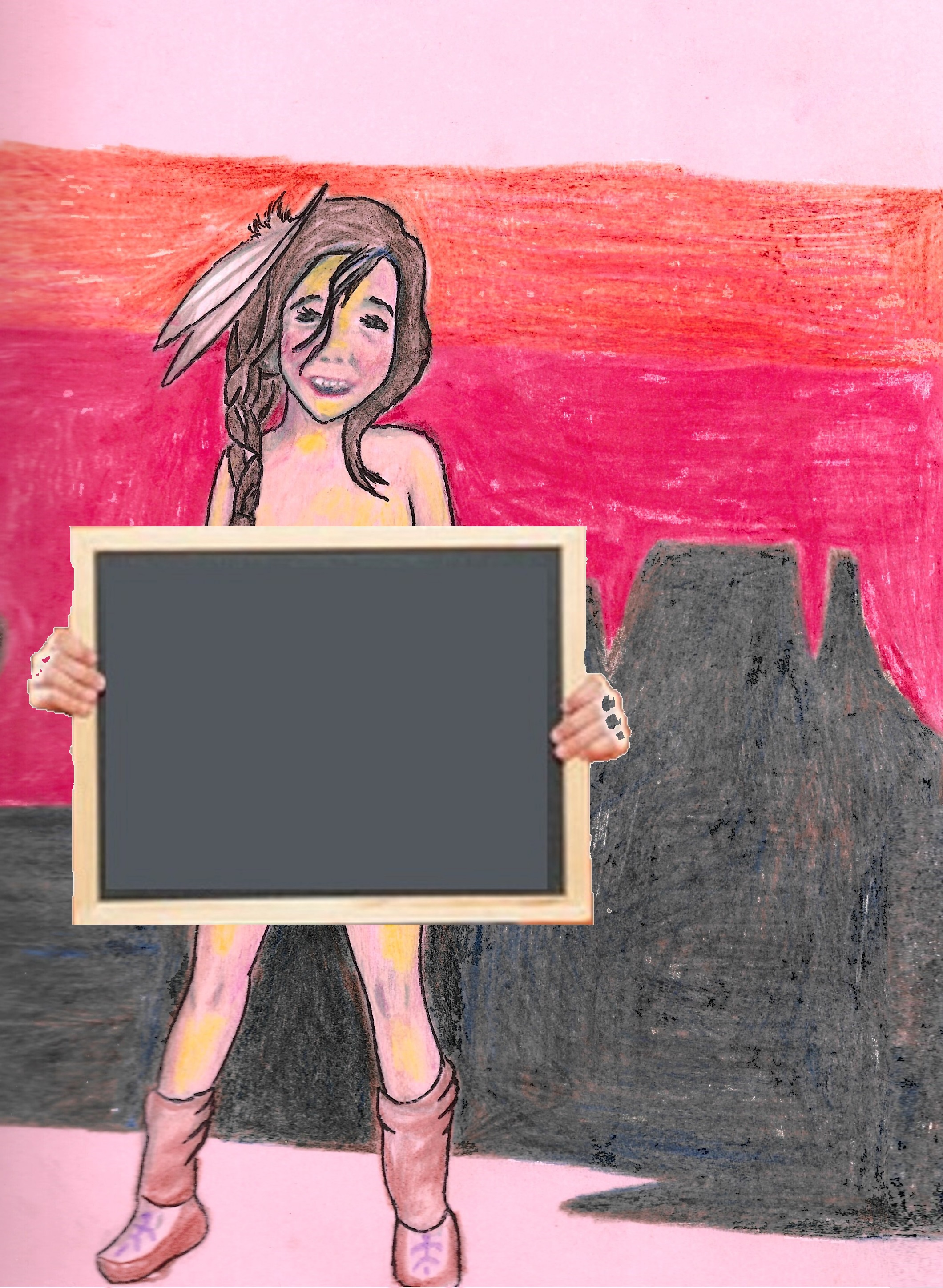
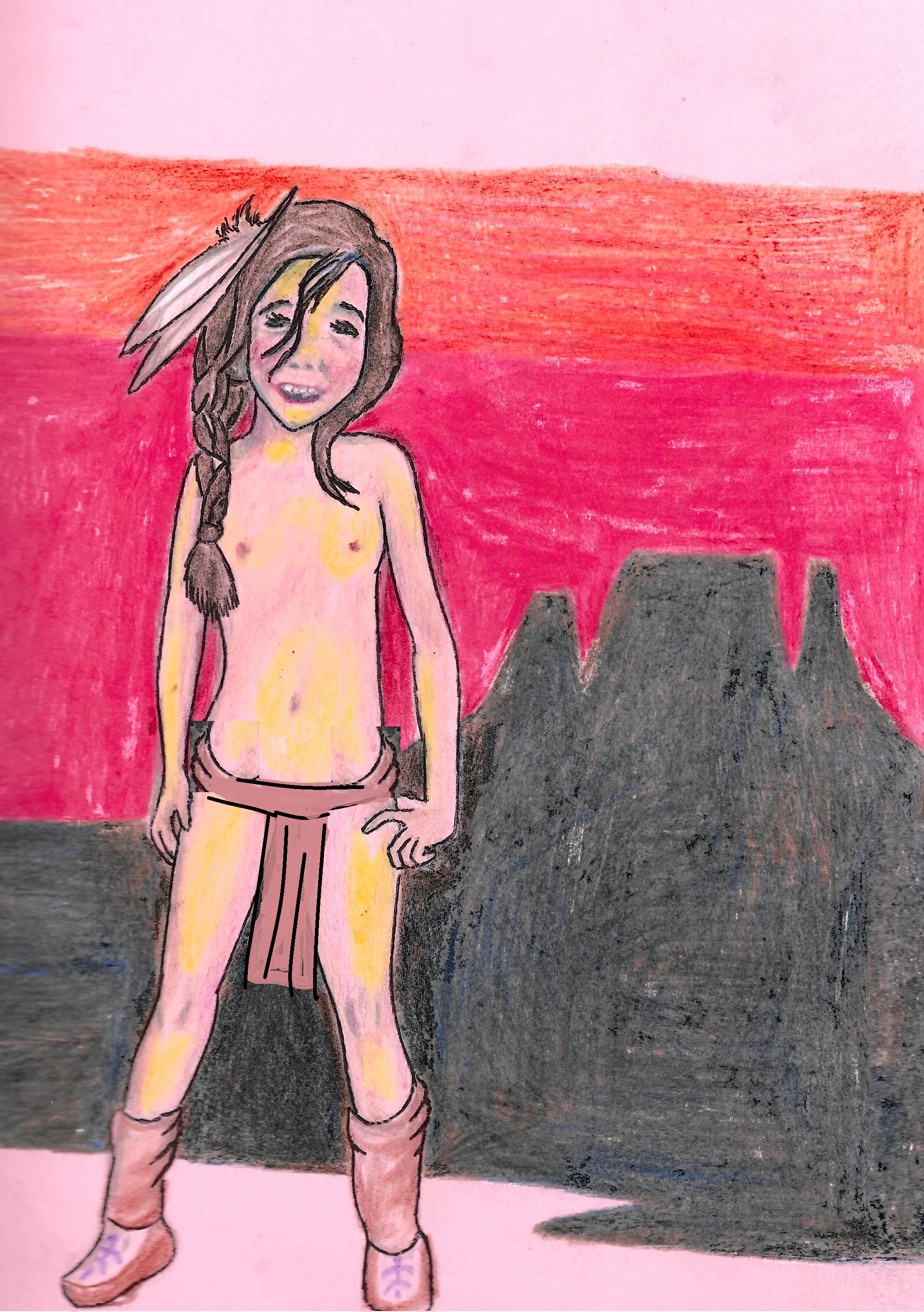
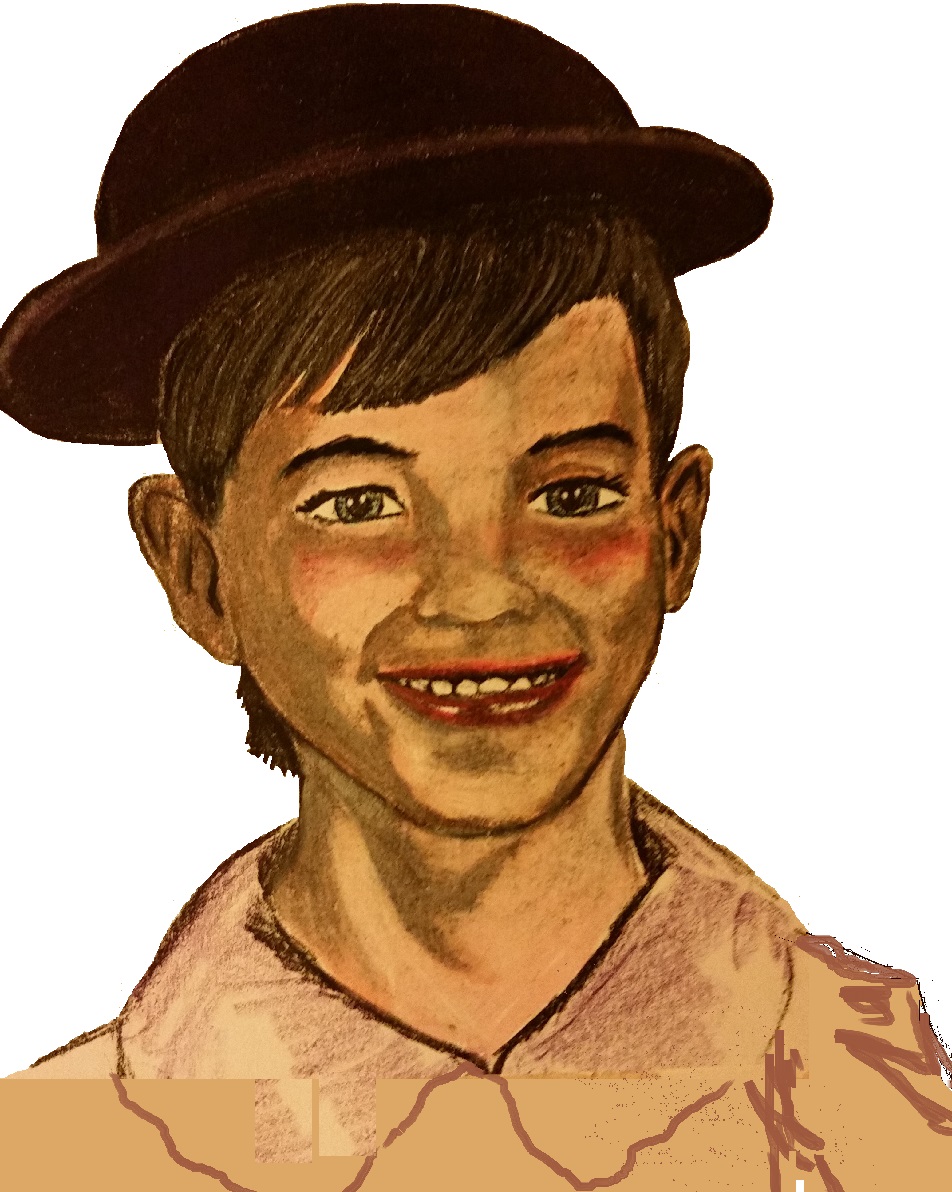
Yes, Singing Bare has no message on his chalkboard. He is clearly nonplussed by the dozens of strange small things that have been happening for which he can find no cause… rhyme or reason.
One of the reasons he is nonplussed (here meaning confused and disoriented, not the new, controversial definition of nonchalance) is that Mickey is having trouble actually getting writing done. And yet, Mickey is definitely not suffering from writer’s block. The ideas still come in a flood that, if anything, drowns out older ideas that didn’t get written down before the brainstorms increased. There are currently three complete novels in my head waiting to get written down, and I added to none of them yesterday.
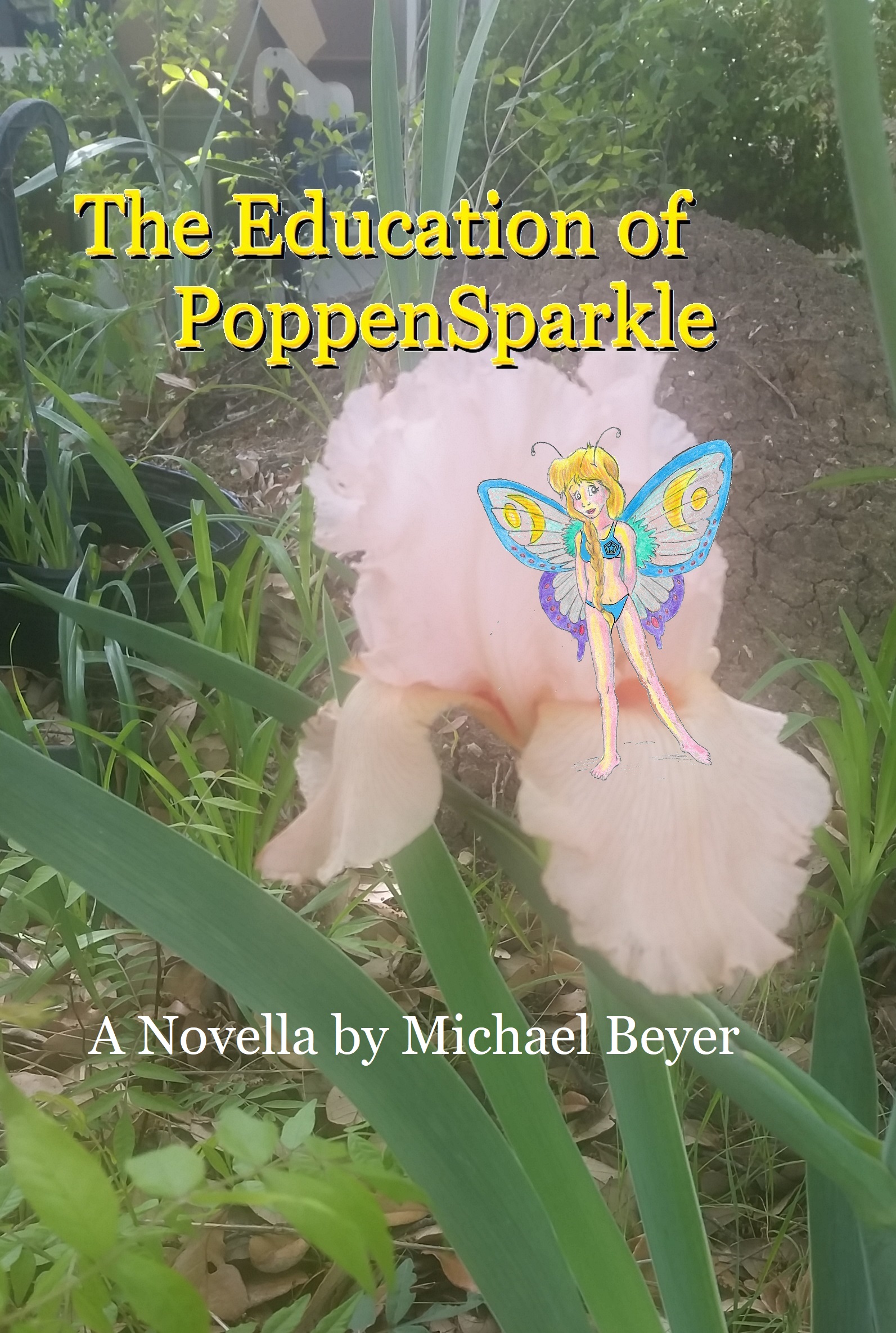
Poppensparkle is threatening to do to her novella what her sister, Derfentwinkle, did to her novella, turning it into the novel The Necromancer’s Apprentice.
The barrier is, of course, 30,000 words. More than that is a novel. Less than that is a novella. So, how do you do necessary world-building with a world of three-inch-tall fairies and keep it spare enough to fit into the shorter novella length? One can’t let such conundrums paralyze your writing. And yet, one can’t rely on the details in the previous book not needing to be repeated in this one to build a consistent fantasy world.
The problem with the primary WIP (Work in Progress for non-writers) is completely different. I left off in the middle of a Canto, as I often do to keep the flow going from one writing session to the next. And that normally is something I can just pick up and write the next time I sit down to it. Three weeks later I still haven’t finished the scene where Valerie is in the hospital and has to explain why her cousin Tim did something stupid to land him in the hospital in a coma… to Tim’s father, Uncle Rance. It is already written in my head. Just not in the perfect words. And I know it is stupid to wait for perfect words to magically appear. But I did… and they haven’t.
But the strange little thing that has Singing Bare nonplussed is actually a nudist thing. Both he and I share the problem of wanting to be a nudist, but not quite being able to cross that barrier. For him, as an imaginary turn-of-the-century Native American boy it is the inability to cast aside the loincloth, not because he’s shy, but because that sort of nakedness can get your ads canceled on WordPress. (Not that Mickey has ads.) For Mickey it is a matter of not being able to join a local nudist club because, although they allow single men to join, and married men with supporting wives can also join, but men with objecting wives are barred from applying. My wife is okay with me being a nudist as long as she doesn’t have to get naked herself. But she is unwilling to give any kind of written or verbal consent that will be observed by anyone besides Mickey himself. She would be embarrassed for anyone else in her religion to know that it was true that she was okay with her husband spending time naked socially.
So, I am not ashamed that I like the naturist-nudist way of life. I am sad that it took me so long to embrace it as a fact in life. And my wife has known about my belief in nudism since before we got married. She has only ever been opposed to nudism because she believes her religion tells her it is a sinful act. Yer, the Jehovah’s Witnesses believe that Adam and Eve were perfect when they were in the Garden of Eden. and the Bible says they were naked when they were perfect. So, since Witnesses believe they will all become perfect after Armageddon, they must also believe they will be naked after Armageddon. Right? Ah, well, that’s just one of those little dings life puts in the enamel of my being. One of those Stranger Dings.
I have to because somebody has to control the words.
People are made of words. Their identity, their inner self, their reason for existence… all made of words. The very thoughts in their heads are… words.
If I want to control the words I am made of, then I must be the writer who writes his own story.
I don’t want anyone else to write the words that essentially become me. Do you?
Of course, authors create characters. Even autobiographers create characters. Carl Sandburg could no more make his words into Lincoln than a bird can make its tweets into a cat. Sandburg can, however, help us to understand Lincoln as Carl Sandburg understands the words that are Lincoln.
Lincoln probably did not have the words for “bikini girls” in his head when he wrote those words in the second quote. But somebody thought that the picture would help us understand the words. By all accounts, Lincoln was not a particularly happy man leading a particularly happy life. But he showed us the meaning of his words when he stood firm against the strong winds of harsh words and bad ideas in a terrible time. And he was as happy about it as he made up his mind to be.
I, too, have not lived a particularly happy life. But I was always the “teacher with a sense of humor” in the classroom, and students loved me for it. Funny people are often not happy people. But they make themselves out of funny words because laughter heals pain, and jokes are effective medicine. And so I choose to write comedy novels. Novels that are funny even though they are about hard things like freezing to death, losing loved ones, being humiliated, being molested, and fear of death. Magical purple words can bring light to any darkness. I am the words I choose to write in my own story. The words not only reveal me, they make me who I am. And it is up to me to write those words. Other people might wish to do it for me. But they really can’t. The words are for me alone to write.
And so it is imperative that I write my words in the form of my novels, my essays, and this goofy blog post. I am writing myself to life, even if no one ever reads my writing.





 Ah, irony again! It ends up being anything but simple. You can write in simple, adjective-and-adverb-free sentences as Hemingway did, and still manage to convey deeply complicated and thoughtful ideas. One might even suggest that you can create poetic ideas in mere prose, dripping with layers of emotion, conflict, theme, and deeper implied meaning. You can also write prose in the intensely descriptive and convoluted style of a Charles Dickens with many complex sentences and pages-long paragraphs of detail, using comic juxtapositions of things, artfully revealing character development, and idiosyncratic dialogue all for comedic effect. Prose is a powerful and infinitely variable tool for creating meaning in words. Even when it is in the form of Mickian purple paisley prose that employs extra-wiggly sentence structure, pretzel-twisted ideas, and hyperbolically big words.









Being Prosaic
I admit it. I am prosaic. I think in sentences. I speak in paragraphs. I write in 5-paragraph essays. I should stop with the repetition of forms and the parallel structures, because that could easily be seen as poetic and defeat my argument in this post. I write prose. Simple. Direct. Declarative. But those last three are sentence fragments. Does that fit the model of prose? How about asking a question in the middle of a paragraph full of statements? Is that all simple enough to be truly prosaic?
Prose is focused on the everyday tasks of writing. It seems like the world thinks that the mechanical delivery of information in words and sentences should be boring, should be functional, should be simple and easy to understand.
I don’t mean to be pulling your reader’s mind in two directions at once, however. I need to stop confusing you with my onslaught of sentences full of contradictory and complex ideas. I should be more clear, more direct, and more to the point.
So here is my thesis, finally clearly stated; The magic of writing prose, it turns out, makes you the opposite of prosaic.
Simply stated; I am a writer of prose. I am too dumb about what makes something poetry to really write anything but prose. But I do know how to make a word-pile like this one that might just accidentally make you think a little more deeply about your writing… that is, if you didn’t give up on reading this three paragraphs ago. I find it useful to examine in writing how I go about writing and what I can do with it. I try to push the boundaries in directions they haven’t been pushed before. And hopefully, I learn something from every new essay I write. What I learned here is that I am prosaic. And that is not always a bad thing.
1 Comment
Filed under commentary, goofy thoughts, humor, irony, Paffooney, strange and wonderful ideas about life, writing, writing humor
Tagged as prose writing