In the early 90’s, a fellow teacher became acutely aware of the effect the role-playing games I was playing at home after school had on the cognitive abilities of the fatherless boys I was constantly entertaining. She suggested that maybe, if it was working at home with a few students and former students, it could also work in the classroom with all students.
This, of course, was a daunting classroom activity to carry out, but enough of a creative challenge to my story telling abilities that I simply had to try.
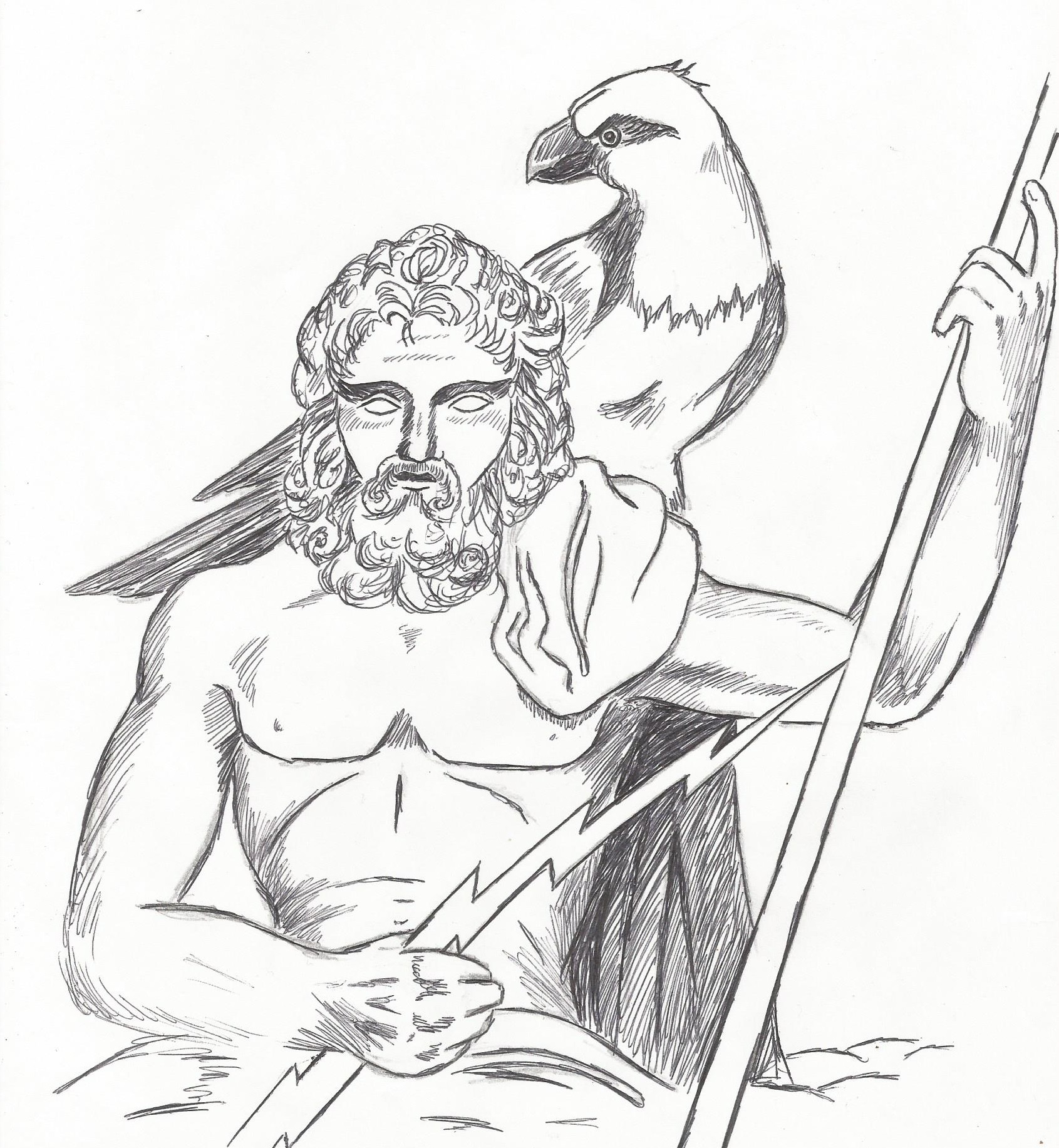
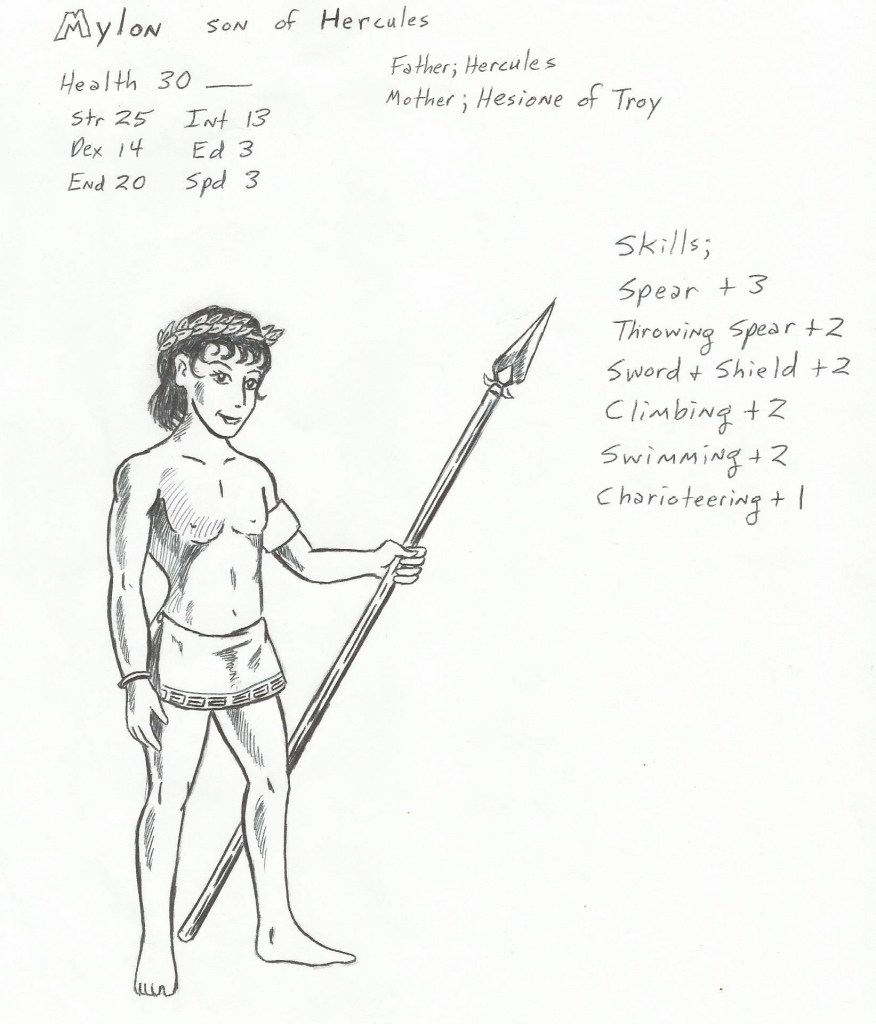
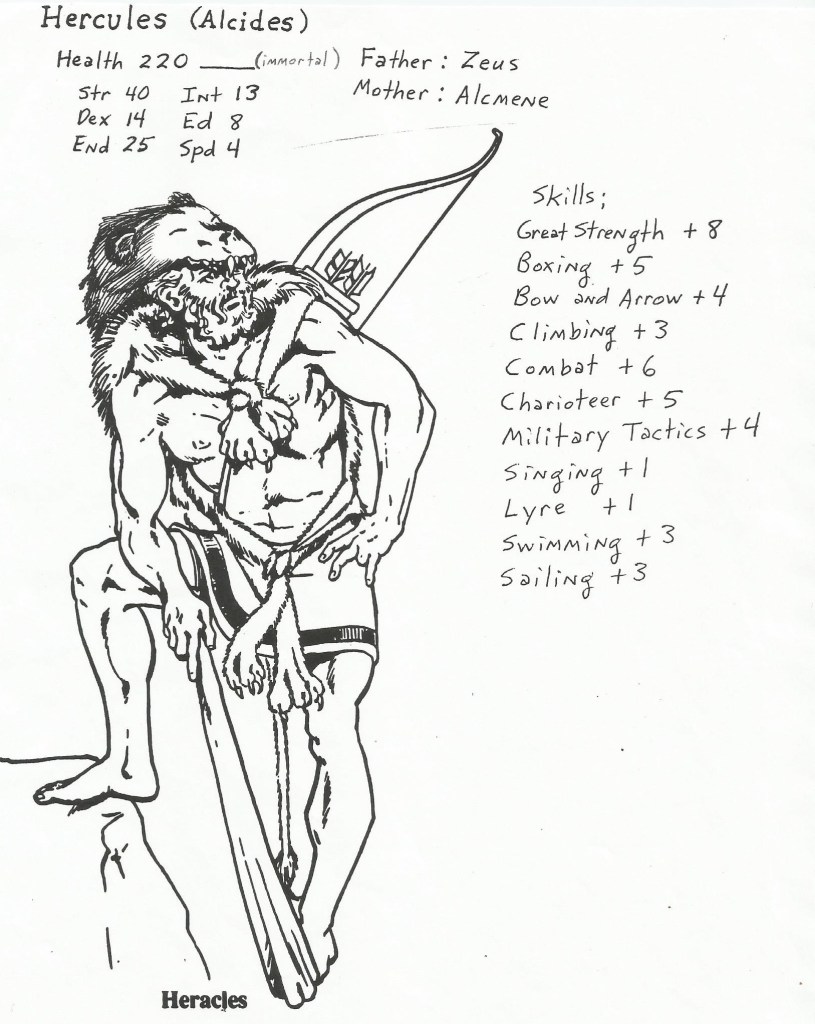
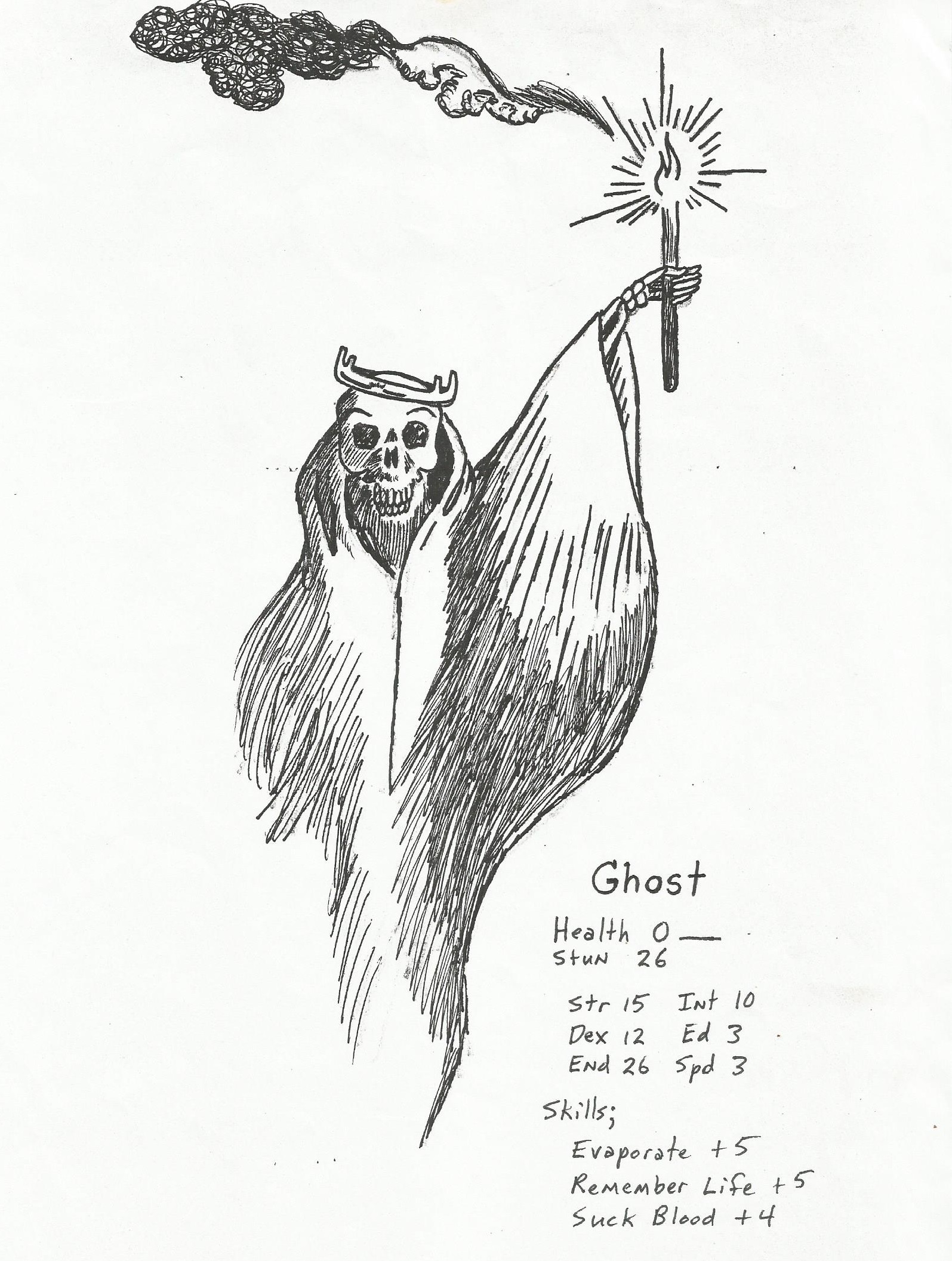
I began with a cheap RPG book about adventuring D&D style with characters from Greek Myth. This was an opportunity not only to play adventure games, but to teach a little bit about history and a lot about mythology.
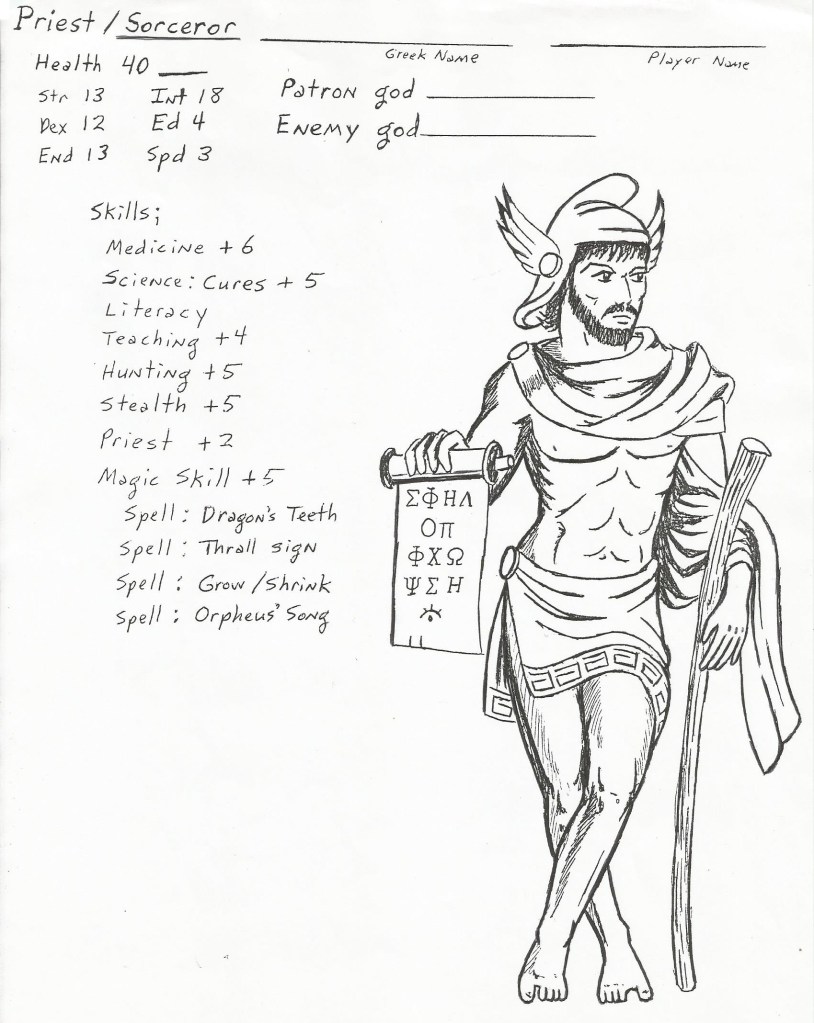
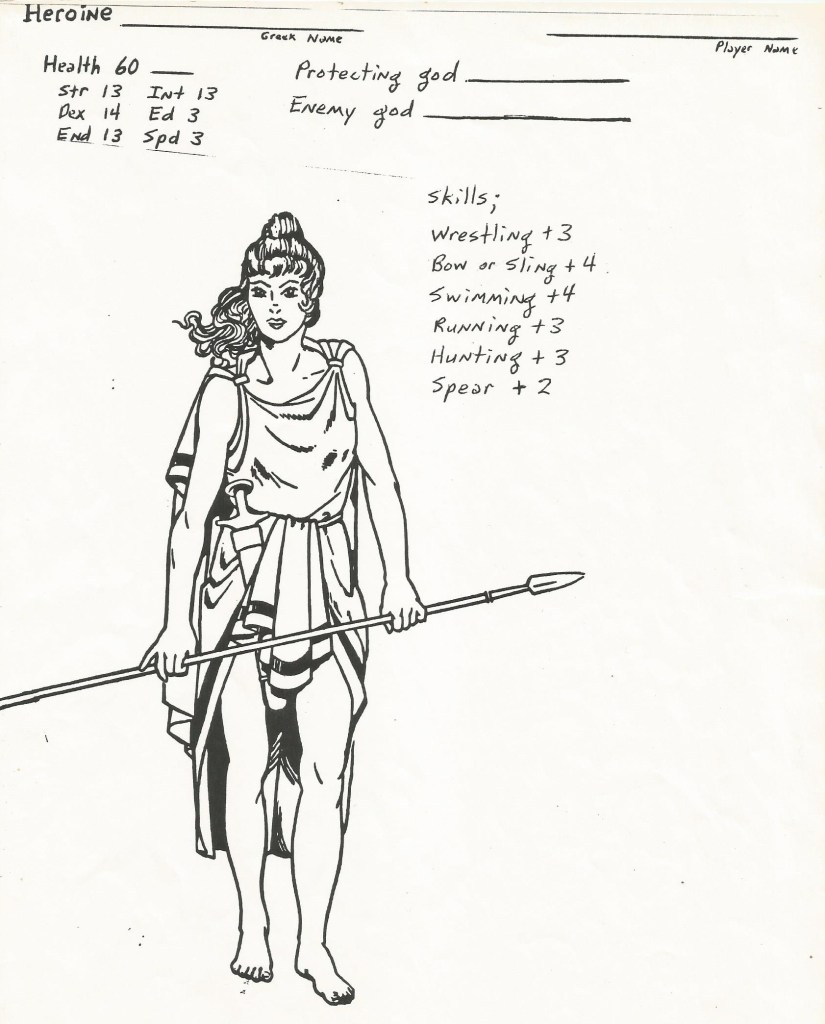
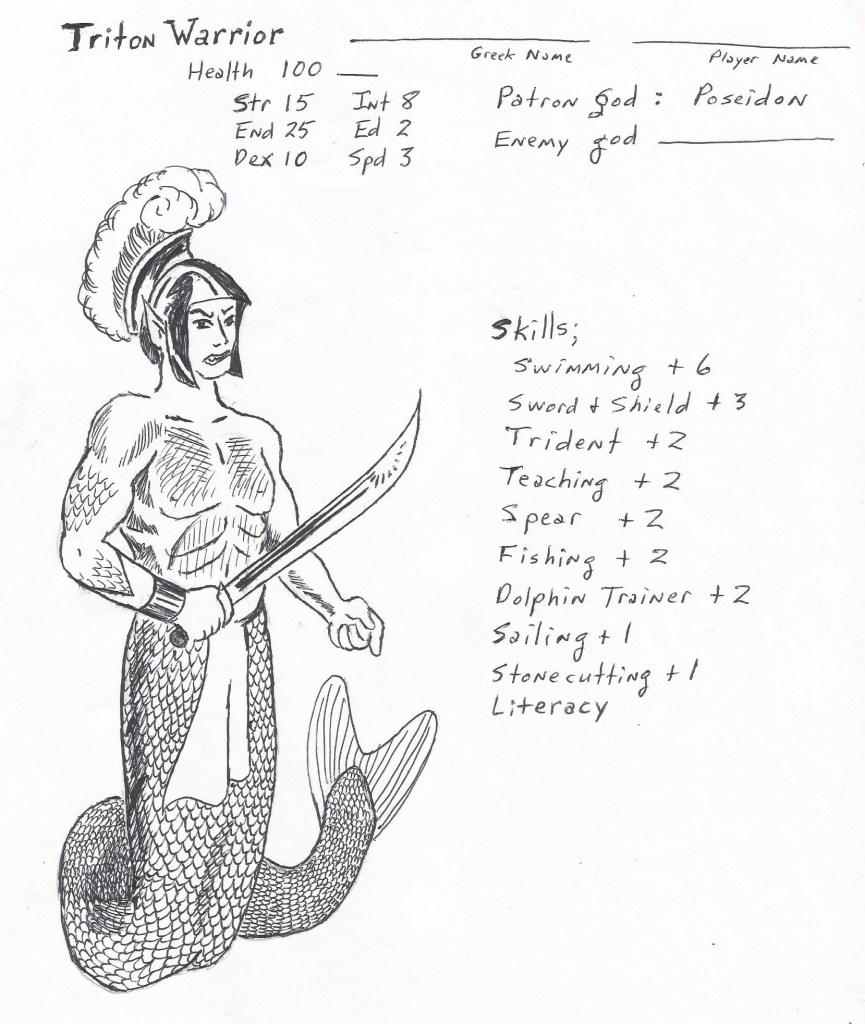
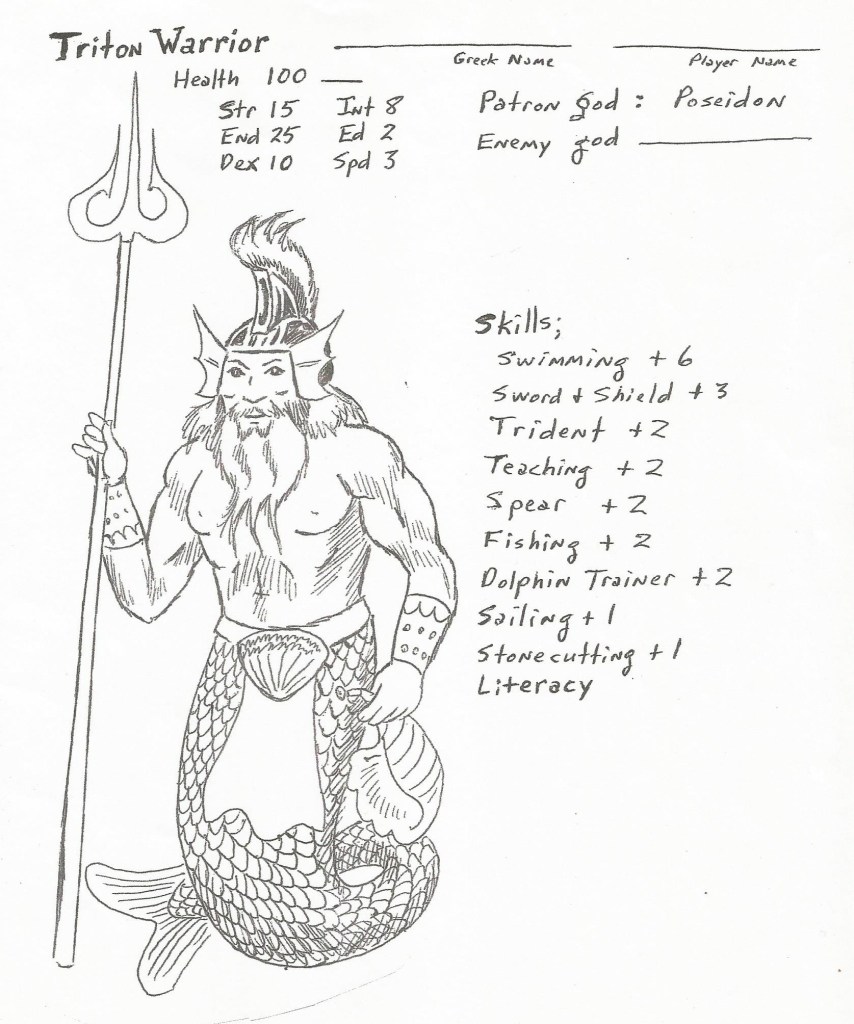
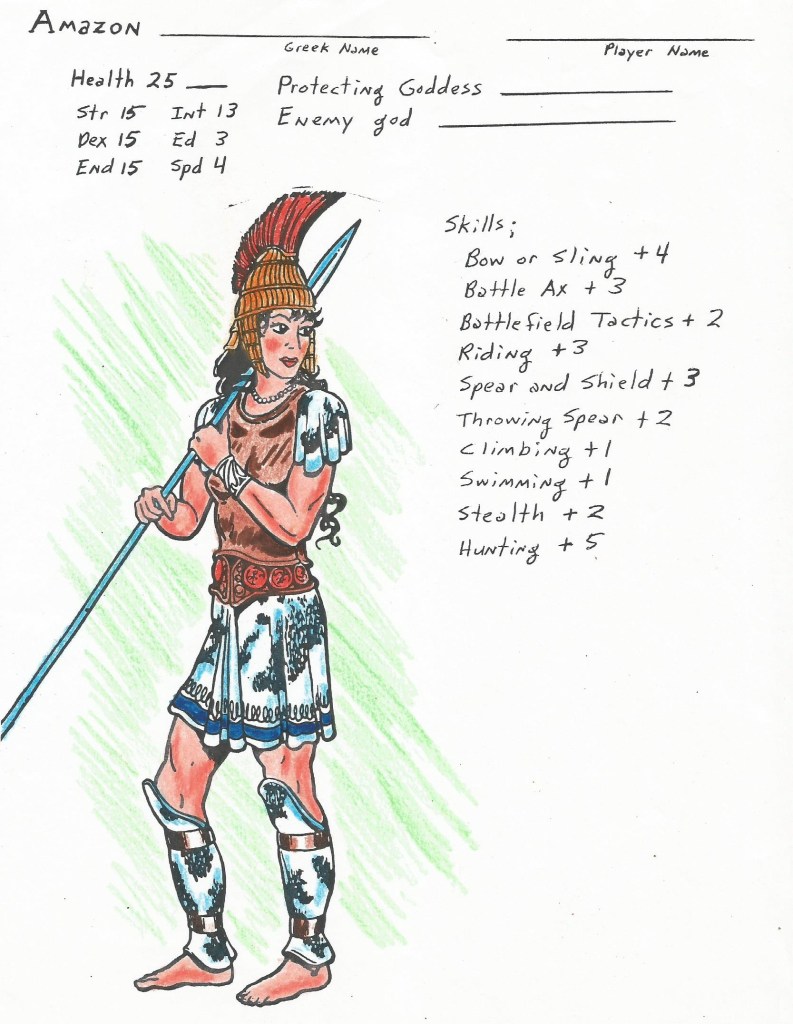
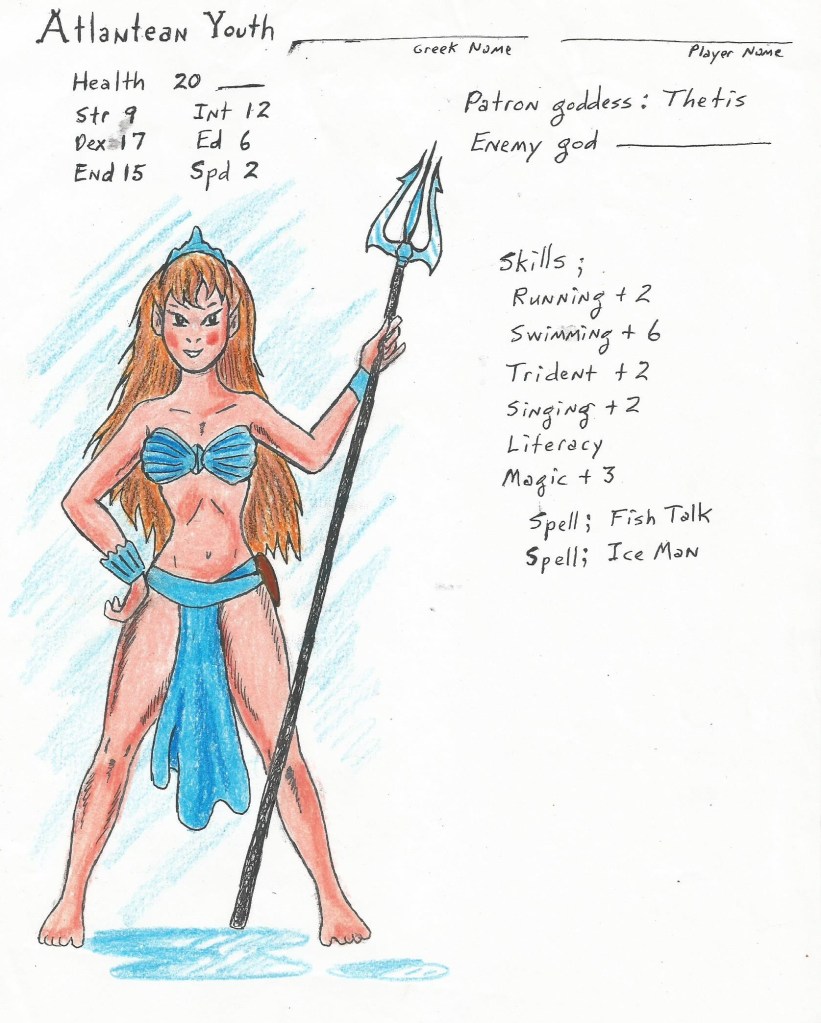
So I created generic character sheets using my own personal copier, my own copy paper, and my own overhead projector plastic overlays.
I created adventures that could be conducted on the overhead with dice, and each kid had their own set of skills and useful items. We conducted Olympic games and included mythological creatures like Tritons and Centaurs as player characters. We learned about the city of Olympia, the city of Argos, the city of Corinth, Athens, Sparta, and even Atlantis.
I let students draw their character from a hat on strips of paper that contained a boy option and a girl option. I even let students trade for the character they wanted, and we learned negotiating skills along with problem-solving skills.
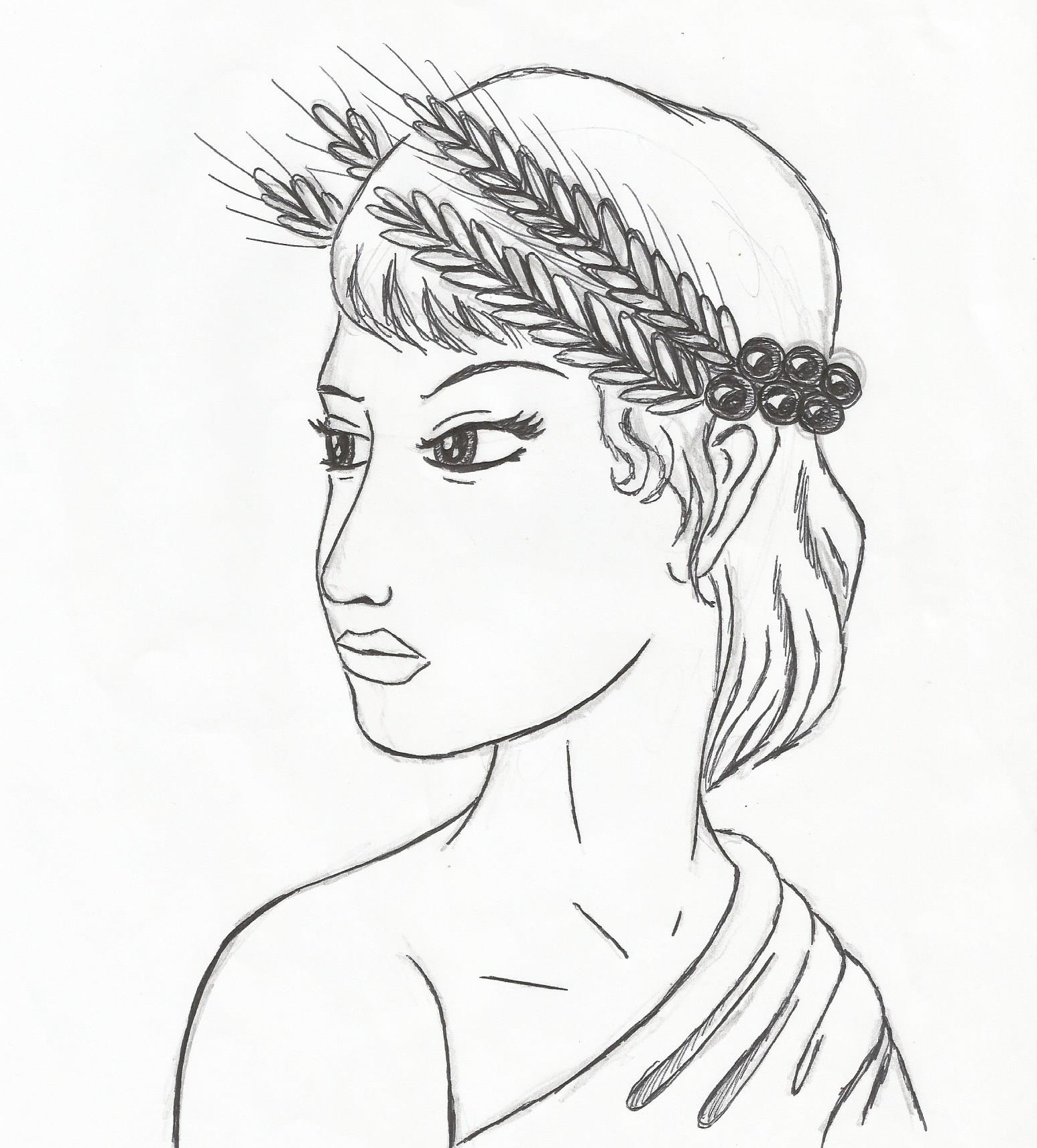
Demeter, goddess of fertility (which you can’t say in a junior high classroom, so goddess of crops and farming)
Most of the stories were driven by a kidnapping where the beautiful daughter of one of the players was kidnapped immediately after the Olympic medals were awarded. The villain would take her to his evil island base, and the players would have to work together to buy or steal a boat. Gods and goddesses could be called on to intervene, and sometimes they actually did. Another storyline began with the sack of Troy, during which the players either murder or witness the death of a young Trojan boy who just happens to be Heracles’ son.
That story took the players on a quest of penance to visit the underworld and retrieve the boy in the same way that Orpheus tried to rescue his lady love, Eurydice. Potentially, Heracles would even join the quest himself if none of the player characters were the actual killer. And, of course, all sorts of encounters with monsters would ensue.
I ended up using about as many of my personal resources as a storyteller and a cartoonist to create those adventures as I had available. But I had students tell me that the week of classroom time spent playing that problem-solving myth game was one of the most memorable learning experiences they ever had. I never tried it with a high school class, only middle school, and then mostly with 7th graders. But I think the experiment was very successful from about 1992 to 2004, and it taught me even more about teaching than it ever taught them about mythology.
I miss being a teacher. But even if I was suddenly healthy enough again to return to the classroom, I would have to think twice… or three times… or twelve times about it. I know excellent teachers who are being driven out of the education field by the demands of the job in the current educational whirlpool of death and depression. My own children are very bright and capable, but they face State of Texas mandated tests this next couple of weeks because that’s what we do in Texas, test kids and test kids and test them some more. If we don’t stress them out and make them fail on the first round of testing, there will be at least two more to get the job done. And believe me, the real reason for all the testing is to make kids fail. It sounds harsh, and like one of my loony conspiracy theories, but the Republican legislature of this State has discussed in earnest how test results prove our schools are failing, and how we must certainly need to fund more private schools and schools for profit, and stop teaching kids on the taxpayer’s dime (although they don’t really care about my dimes, only the dimes of millionaires and billionaires which we have more of in Texas than we have ever had before). Of course, these private schools they speak of will be for the children of well-to-do families, particularly white Anglo-Saxon protestant families. Public schools will be okay for everyone else, preferably built next to for-profit prisons where the public-school kids will move after graduation.
Arts and humanities-type class offerings are becoming increasingly rare. We don’t teach them to be creative any more. We have to focus on core subjects, Reading, Writing, History, Science, and Math. And not the high-level stuff in any of those areas, either. We test them on the minimum competency stuff. But we make it harder every year. Back in the 80’s it started when Governor Mark White let H. Ross Perot spearhead a school-reform drive that began with idiot-tests for teachers. The Mad Dwarf of Dallas was convinced that the biggest problem with Texas Education was incompetent teachers. But we didn’t test them on classroom management skills, or skill at motivating young learners. We took basic English tests where the teachers weeded out were mostly black and Hispanic. I helped one very gifted Science teacher pass the test which she nearly failed three times (the limit before contract non-renewal) since she was taking her teacher test in her second language, not her first. When they finally got it through their heads they were only weeding out the good teachers with test anxiety, they changed the tests to make them harder. They stopped giving life-time teaching certificates and made you prove that you were not an idiot every five years.
It was Governor George W. Bush (a Forest Gump clone with DNA mixed in from Bullwinkle the Moose and Elmer Fudd) who decided that teachers needed to be weeded by demanding that their students perform to a certain level on standardized State tests. If you watched the John Oliver video, you have a clear idea already of the value of that. We worked hard for a number of years to do better on the alphabet tests. The TAAS test became passable by most of the State, including the poorer districts, and so they replaced it with the TAKS test, a criterion-referenced test that they could provide all new and harder questions for every single year. I sat on a test review board for two years as the representative of the Cotulla District in South Texas. I got to see some of the horrendously difficult question before they were asked. There were very real cultural discriminations among those questions. Why should a Hispanic child in South Texas be required to know what “galoshes” are? And when teachers began teaching to the tests well enough to get a majority of students passing, Emperor Rick Perry, the permanent Governor of Texas after Bush, decreed we needed STAAR Tests that students had to pass in order to graduate to the next grade level. And, of course, we had to make them harder.
When I started teaching exclusively ESL kids in high school (English as a Second Language) that special population was mostly exempt from taking the alphabet tests. After all, it takes at least five years to gain proficiency in a second language even for the brightest among us, and all of those students had less than five years of practice speaking English or they weren’t qualified for the program. But scores on the TAKS and then STAAR tests were generally too high. So ESL and Special Education Students were required to take them too. And, although the passing standards were lower for ESL students than they were for regular students, the passing standards were ratcheted up every single year. And we eventually did worse than the expectation. Our ESL Department got a lot of the blame for Naaman Forest High School in Garland, Texas losing its perennial recognized school status. (We got the blame even though our scores were high enough to be rated exemplary on the sliding scale… it was actually the low socio-economic students in Math that lost us our yearly recognition… just so you know.) The paperwork nightmares I had to fill out for our ESL Department were one of the reasons my health got so bad I had to retire. Healthy teachers can’t take it any more either. We are looking at a crisis in Education in Texas. Teacher shortages in Math and Science are already apocalyptic. We are intentionally doing away with Art, Band, Chorus, and other artsy-craftsy things… things that are good for the brain and the self-esteem and the creative problem-solving abilities of students. Teaching has become a nightmare.
I hope you will take me seriously over my conspiracy-theories and lunatic teacher complaints. I have been told too often that you can’t solve education’s problems by throwing money at it (though I do not remember the time they speak of when money was actually flying through the air). I have been told too often that teaching isn’t a real job. You just sit around all day and talk to kids and you have the summers off. How hard can that be? And I have been told too many times that Johnny can’t read, and it is apparently my fault as a Reading teacher… it can’t be anything politicians have done, right? It certainly isn’t anything that politicians have done right!
God help me, in spite of all that, I really miss being a teacher.
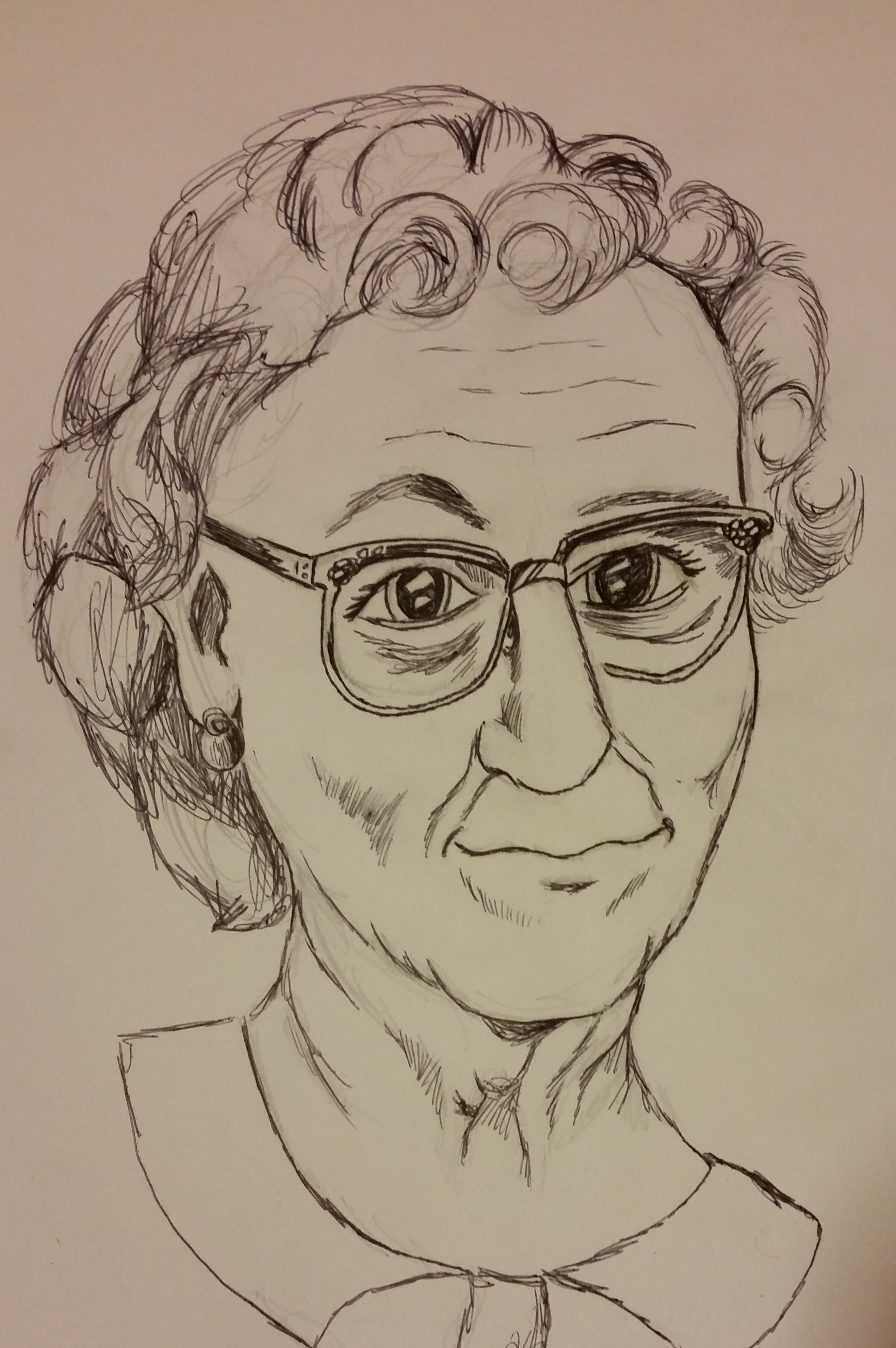
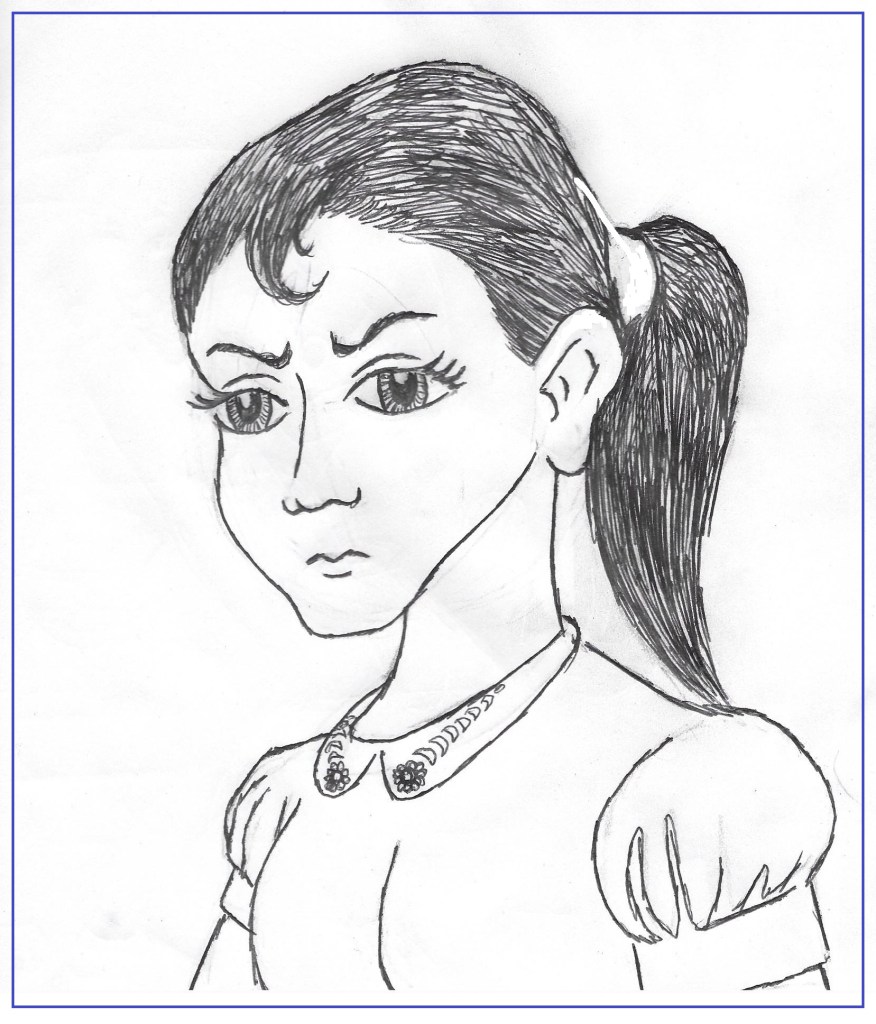
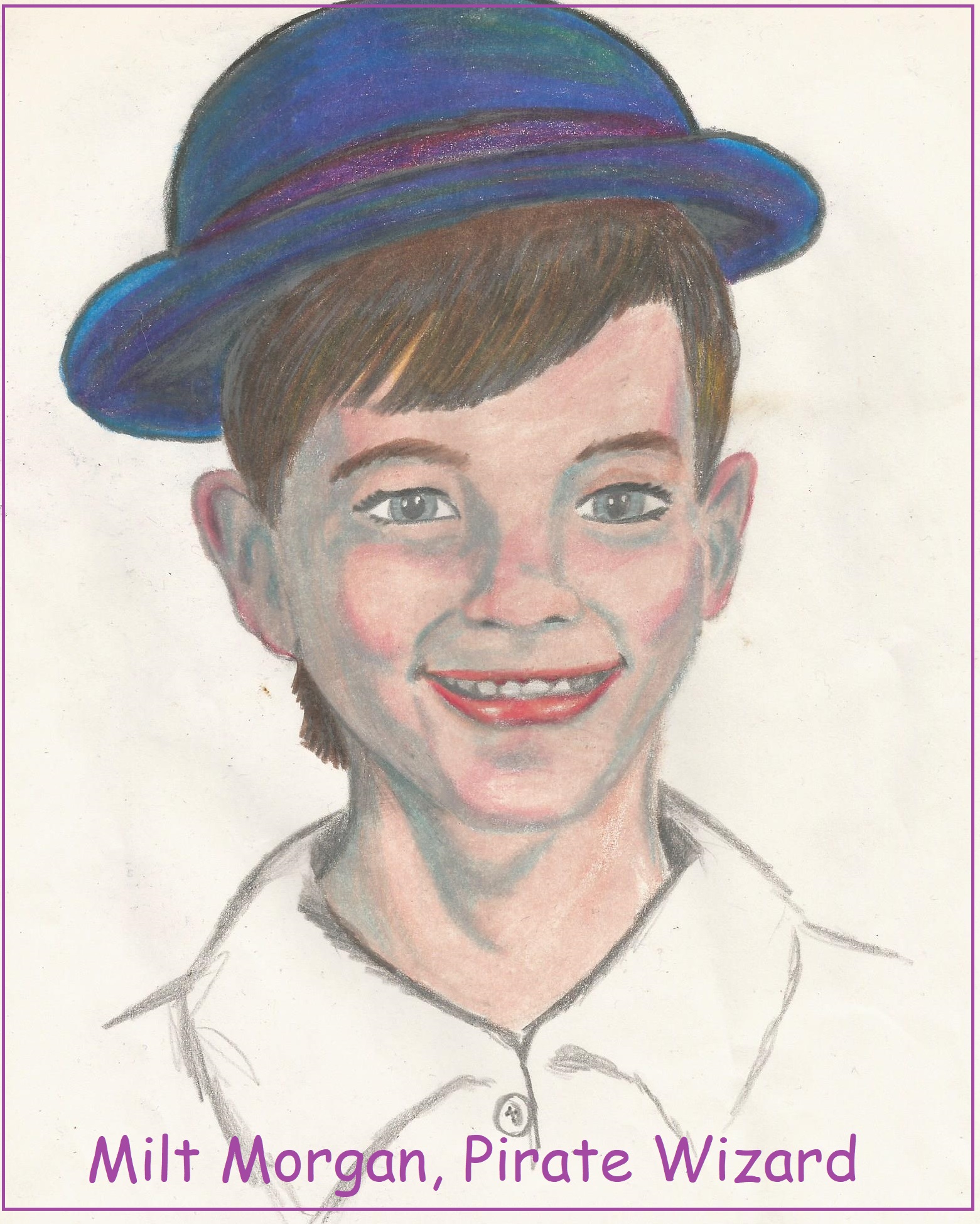
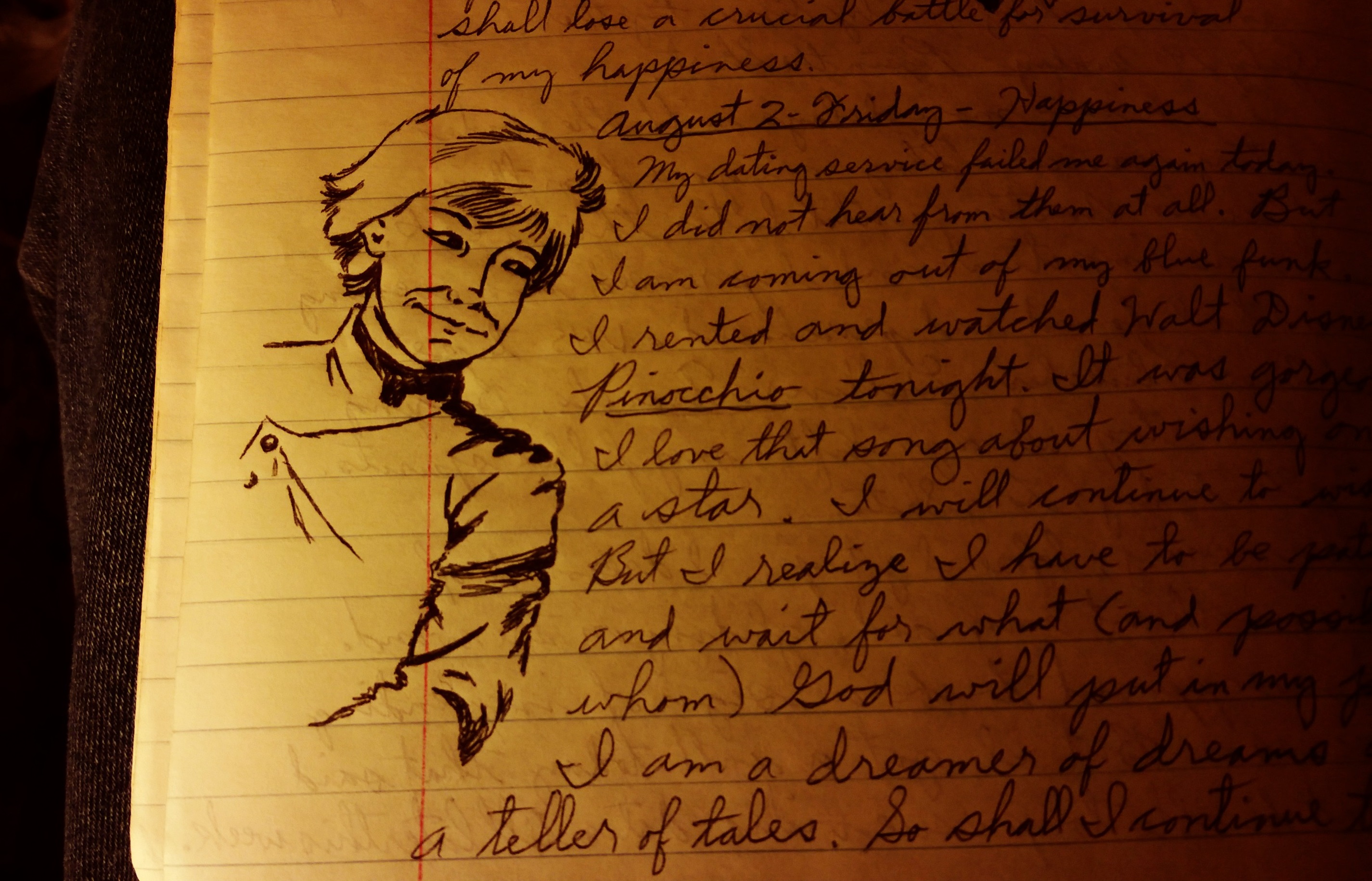
In order to understand this story, you have to have a little bit of background first… a solid sense of context, in order to avoid anyone feeling that I might be ridiculing someone in an unfair or unloving way. So here’s a bit of context. I was a teacher for 31 years. I was considered a good teacher, in fact, a master teacher by something like 28 different principals and assistant principals, while only 3 felt like I was an incompetent mess, and two of those were eventually fired themselves. I only got fired once. So it can be safely assumed I know what incompetence in teaching is and can reliably identify it in others. Further, incompetence in teaching does not make you a bad person. Far too many people who believe they could be a good teacher have traits that would torpedo their own boat if they actually set sail on the sea of education. So, even though Grandma Frozenfield was a horrible teacher, she was actually a very nice and caring person, and makes a wonderful character for stories that lovingly make fun of bad teaching. And I should remind you, I don’t use real names when talking about people from my past so that their privacy is not violated by whatever my artist’s eye might reveal about them. The portrait I added to this post does not even look like her.
Grandma Frozenfield was a mid-year emergency hire who filled the position of 8th grade math teacher during my first year of teaching. She was already sixty-eight years old when she came to Cotulla, Texas, and she had five years of previous teaching experience in schools up north. How she survived five years in schools more competently run than Texas schools in the 80’s, I will never be able to figure out. She was able to hang on in our school for several years only because we were desperately strapped for warm bodies to teach Math classes in Texas junior high schools. Only idiots and coaches ever took on the job willingly.
Grandma Frozenfield had seventeen dogs and ninety-nine cats at home. That right there tells you something about which stereotype she easily fits into. But she was also a woman of great mystery. Her father had been a famous college professor in Minnesota. She had inherited a number of very valuable books from him, and kept them in random boxes stacked in dusty corners of the old run-down house she bought in town. She was actually quite bright, and though she would have spells of foggy thinking and confusion, she could capably discuss mathematics and physics and other sciences with me. She had a daughter who showed up during her third year of teaching at our school, and the daughter had a cute little son of about seven years old. Neither she nor her daughter had ever been married. In fact, rumor had it the daughter was telling people she was adopted. And her daughter and grandson disappeared from her life about four years after they started living with Grandma.
But the old lady was a spectacularly bad teacher. As bright as she was, she could never talk to kids or relate to kids in ways that kids could understand. She seemed to sincerely hate kids, calling them bad names in the classroom and telling them in detail how they would one day die in prison (a prediction that unfortunately came true for a couple of them). She would come into the teacher’s workroom after class plastered with spitballs on her back and in her hair.
A couple of the sweeter and more pro-active girls in her classes tried to protect her a bit from vandals and explained lessons to others in class to mitigate the chaos a bit.
She did not engage with students. Other than a few of the sweeter girls, she did not talk to them about anything but math. They didn’t understand her, and so they didn’t like her. She did not know how to monitor a classroom, so the infidels were on a rampage all the time in her room. It would definitely have felt like being in Hell to be her, teaching in that classroom. Why she ever wanted to be a teacher, she never said. I know it was in her family history. I know she was a caring, lovely individual. But when she died of throat cancer at 77 it was a lonely and sad thing. She had been forced to teach until two years before the end because of medical bills. She was never happy as a teacher that I observed. But she never missed a day without good reason, either. Good people don’t necessarily make good teachers. But she taught me things far beyond the 8th grade math she tried and failed to teach to students. I don’t think of her often. But I do think of her. She and her 17 dogs and 99 cats are all gone now. But not forgotten.
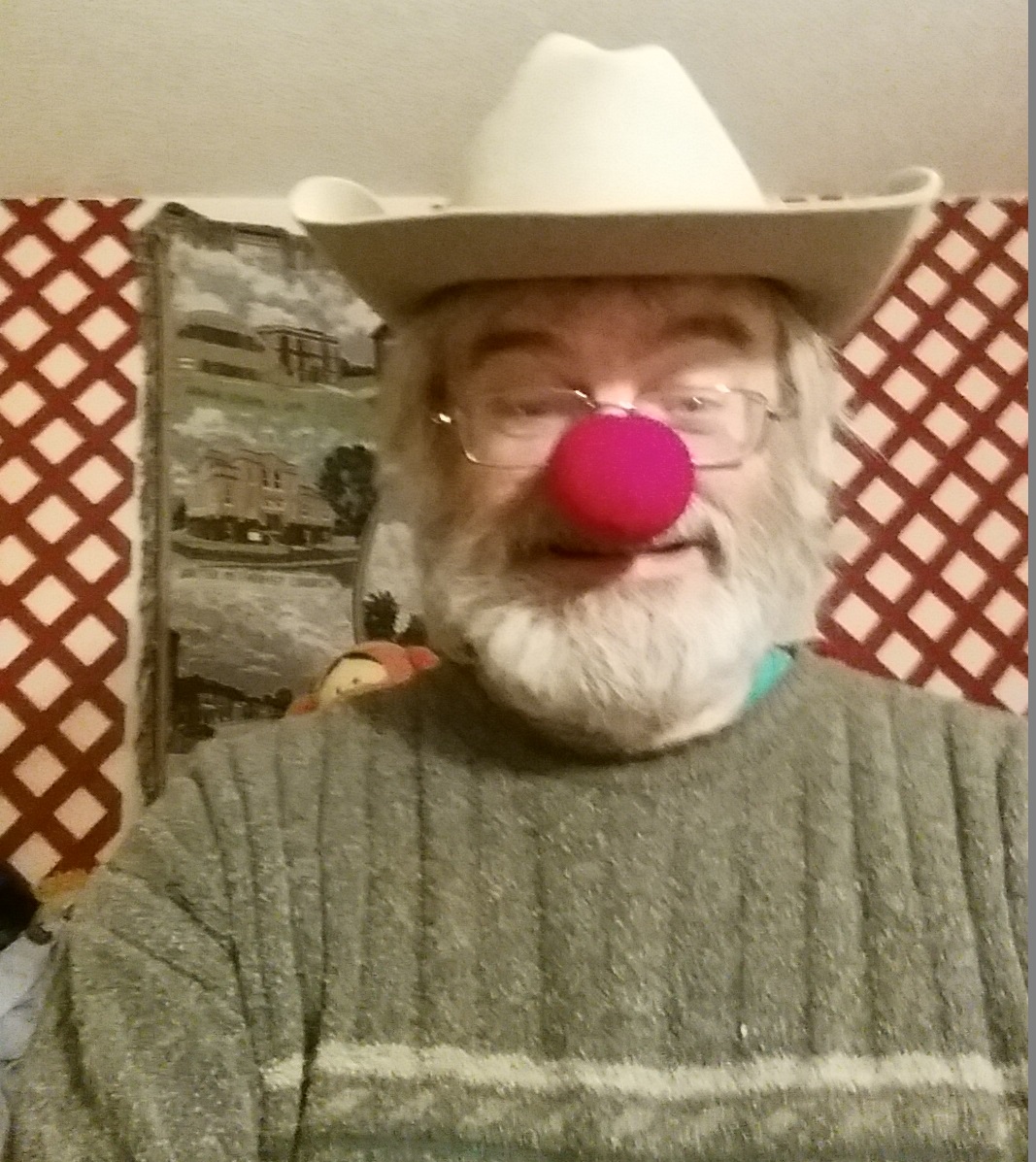
Yes, I am a coot. I became a coot in 2014 when I retired. I have the hair in the ears to prove it. I sometimes forget to wear pants. The dog is learning to hide from me on days when my arthritis makes me cranky.
So I am a practicer of the ancient art of being a cranky old coot. I have opinions. I share them with others foolishly. And I am summarily told to, “Shut up, you danged old coot!” And, of course, I don’t shut up because that would be a violation of number five in the by-laws of cootism. Obnoxiousness is our only reason for still being alive.
Lately, my group of coots on Facebook (who call themselves a “pack” like wolves, but, in truth, a group of coots is called an “idiocy”) are talking about politics… very loudly salted with firmly held opinions, beliefs, and bad words in several languages. I mean, it’s texting each other on memes we disagree about, but we do it LOUDLY, like that, in all caps. We also do it in such an infuriating manner because, if no one ever bothers to tell us to “Shut the hell up!” we will begin to suspect we have actually died and gone to purgatory where we are still being obnoxious, but nobody knows we are doing it. That is rubbing coot fur in the wrong direction.
The radical right (otherwise known as coot paradise) have been cooting up a storm about school shootings and gun control of late. They have more or less turned their ire on me because, knowing I was a school teacher, they have seized on the Coot in Chief’s notion of arming teachers to protect schools. Obviously, a majority of old coots agree that requiring a few “volunteer” teachers to conceal carry and learn how to handle a school shooter crisis situation with a gun instead of the way teachers are actually trained and practiced on handling such a situation, is the only economical way to defend schools from crazed lunatics with assault weapons. Of course, it is definitely more economical than hiring full-time police officers to handle security because “volunteer” teachers does not mean that they are necessarily willing to do it, but rather that they are doing it without pay. And of course, they shout at me things like, “Why don’t you just admit that you are too scared and unpatriotic to carry a gun as a teacher, and cowardly allow some female teacher with a big pistol to step in and do the job for you?” That is a very coot thing to say, and is hard to adequately counter, because if you try to argue using logic other than coot-logic, like the notion that since a majority of teachers in this country are female, you are asking women who are fierce enough to do the job (and I have known more than a few who would take it on no matter how hopeless their prospects) to take a handgun that the principal bought at Walmart with money from the Coke machine in the hall and face down a suicidal maniac with an assault rifle, you will not even be heard over the cacophony of coot braying and chest-thumping, let alone be understood.
And, for some reason, coots love Trump. Maybe because they feel he is truly one of them. He is older than dirt. He has an epically bad comb-over to hide his bald spot. He says bad words very loudly in front of women, children, and everybody. He says, “Believe me,” especially when telling lies. And he’s not afraid to fart in public and blame it on the dog. I admit to insulting Trump in front of them only because I like to see coot faces fold up in extra wrinkles, and coot heads turn various shades of angry red and apoplectic purple.
So, yes. I am a coot. Not proud to be one… that I can remember, but a coot nonetheless.
Yesterday I posted another maudlin doomsday post. I probably gave you the opinion that all I do with my time is mope around and think about death. And maybe write a little creepy black Gothic poetry. But that’s not me. I am a lover of the humor in stories by Mark Twain, Charles Dickens, and Kurt Vonnegut. I am a former teacher that managed to teach the entire zoological range of possible middle school and high school students in Texas and did it without being convinced to hate them rather than love them. Yes, my heart is full of mirth and love and memories of weird kids and troubled kids and kids that could melt the meanest of hearts.
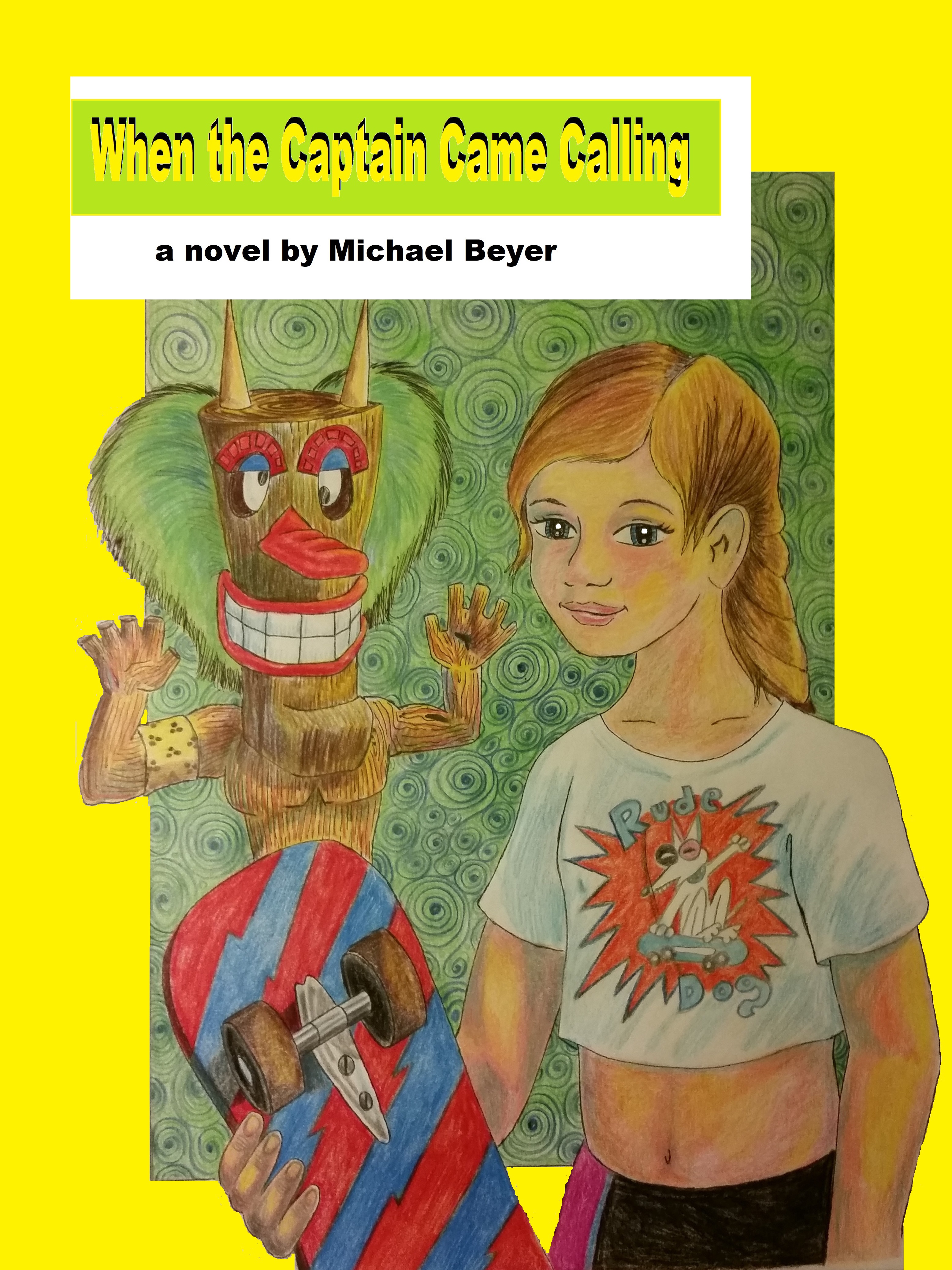
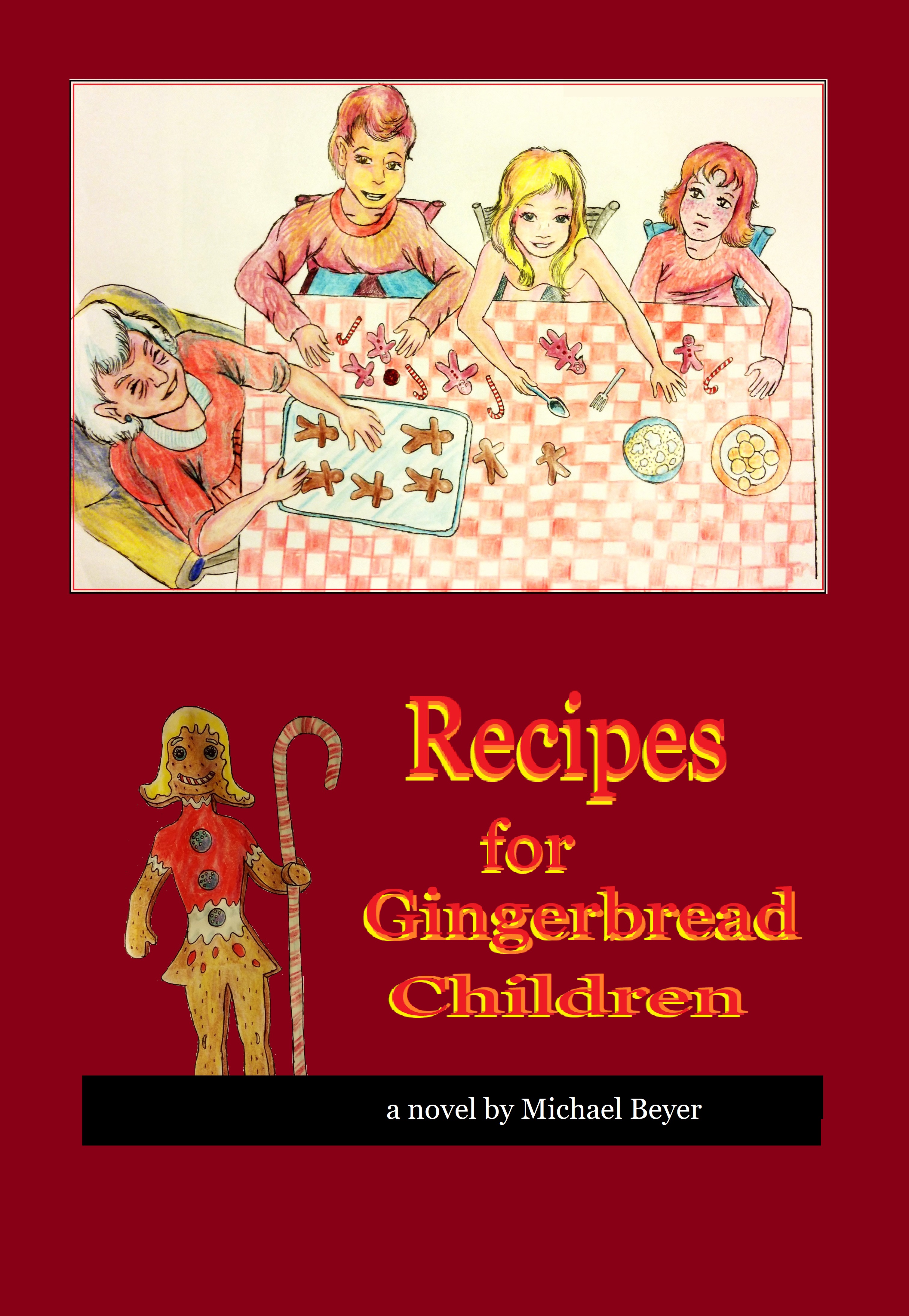
My passion is writing fictional stories about the kids I have taught, including my own three, and setting it in a fictionalized version of my little town, the place in Iowa where I grew up. And I put them in plots of impossible fantasy and science fiction in a way that can only be explained as surrealism.
Nobody reads my books. So far, at any rate.
But that isn’t the important thing. The important thing is that, despite my illness and deteriorating quality of life, my books now actually exist. I put off being a full-time writer for 33 years as I finished my teaching career. A writer has to have something to write about. So, teaching came first.
Writing novels was always the ultimate goal, however. I am a story-teller. The story itself is in the very center of my heart.
I know the last thing you would ever consider doing is to take up writing essays like these. What kind of a moronic bingo-boingo clown wants to take everything he or she knows, put it in a high-speed blender and turn it all into idea milkshakes?
But I was a writing teacher for many years. And now, being retired and having no students to yell at when my blood pressure gets high, the urge to teach it again is overwhelming.
So, here goes…
Once you have picked the silly, pointless, or semi-obnoxious idea you want to shape the essay around, you have to write a lead. A lead is the attention-grabbing device or booby-trap for readers that will draw them into your essay. In a Mickian essay, whose purpose is to entertain, or possibly bore you in a mildly amusing manner, or cause you enough brain damage to make you want to send me money (this last possibility never seems to work, but I thought I’d throw it in there just in case), the lead is usually a “surpriser”, something so amazingly dumb or off-the-wall crazy that you just have to read, at least a little bit, to find out if this writer is really that insane or what. The rest of the intro paragraph that is not part of the lead may be used to draw things together to suggest the essay is not simply a chaotic mass of silly words in random order. It can point the reader down the jungle path that he or she can take to come out of the other end of the essay alive.
Once started on this insane quest to build an essay that will strangle the senses and mix up the mind of the reader, you have to carry out the plan in three or four body paragraphs. This is where you have to use those bricks of brainiac bull-puckie that you have saved up to be the concrete details in the framework of the main rooms of the little idea-house you are constructing. If you were to number or label these main rooms, this one you are reading now would, for example, be Room #2, or B, or “the second body paragraph”. And as you read this paragraph, you should be thinking in the voice of your favorite English teacher of all time. The three main rooms in this example idea house are beginning, middle, and end. You could also call them introduction, body, and conclusion. These are the rooms of your idea house that the reader will live in during his or her brief stay (assuming they don’t run out of the house screaming after seeing the clutter in the entryway).
The last thing you have to do is the concluding paragraph. (Of course, you have to realize that we are not actually there yet in this essay. This is Room C in the smelly chickenhouse of this essay, the third body paragraph.) The escape hatch on the essay that may potentially explode into fireworks of thoughts, daydreams, or plans for something better to do with your life than a read an essay written by an insane former middle school English teacher at any moment, is a necessary part of the whole process. This is where you have to remind them of what the essay is basically about, and leave them with the thought that you want to haunt them in their nightmares later. The last thing that you say in the essay is the thing they are the most likely to remember. So you need to save the best for last.
So, here, finally, is the exit door to this masterfully mixed-up Mickian Essay. It is a simple, and straightforward structure. The introduction containing the lead is followed by three or four body paragraphs that develop the idea and end in a conclusion that summarizes or simply restates the overall main idea. And now you know why all of my former students either know how to construct an essay, or have several years left in therapy sessions with a psychiatrist.
When I was still alive and still teaching, maximizing and managing time was an incredibly important part of the day. You had to activate learners with an attention step, a lesson focus that grabbed them. Usually that had to follow a warm-up, something you got them to do as soon as you had smiled at them at the doorway, offered to shake their hand, and then pulled them into the classroom to do some work for you. fifteen minutes at the start of the class to rev up mental engines and get the gears turning… shake out the rust and the cobwebs that accumulate the instant the final bell rang in the previous class. I timed that part of class down to the second with my pocket watch… or phone in later years. Then, once the engines started, the focus is in place, you introduce the learning objective. Never more than ten minutes… timed to the second… you give the explanation, the road map of the day ahead, the instruction. Then for the next ten to fifteen minutes you let them discover stuff. In groups, with a partner, teacher to class, student to class, or (rarely) individually, they must apply what you pointed out and figure something out. It could be complicated, but probably it was simple. All answers are welcome and accepted… because all answers will be evaluated and you learn more from wrong answers than you do from correct guesses. Evaluation comes in the five to ten minutes at the end when you evaluate. “What have I learned today?” You try your hardest to pin something new to the mental note-board hanging on the brain walls of each and every student. Depending on how much or how few minutes you are given before the final bell kills the lesson for the day, you have to put the big pink ribbon on it. That tightly-wound lesson cycle goes on all day, repeated as many times as you have classes. In that time you have to be teacher, policeman, friend, devil’s advocate, entertainer, counselor, psychotherapist, chief explainer, and sometimes God. And you time it to the second by your pocket watch.
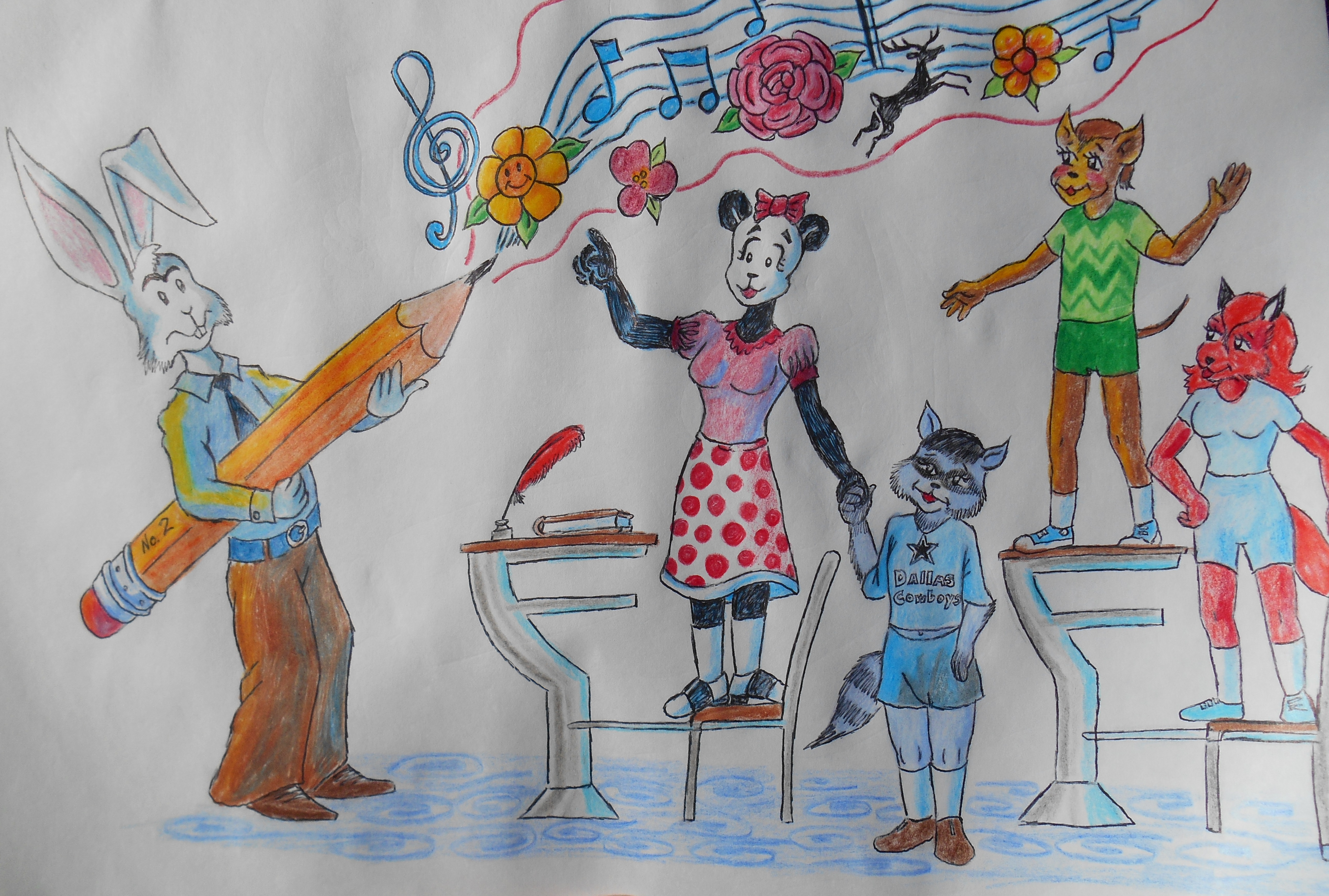
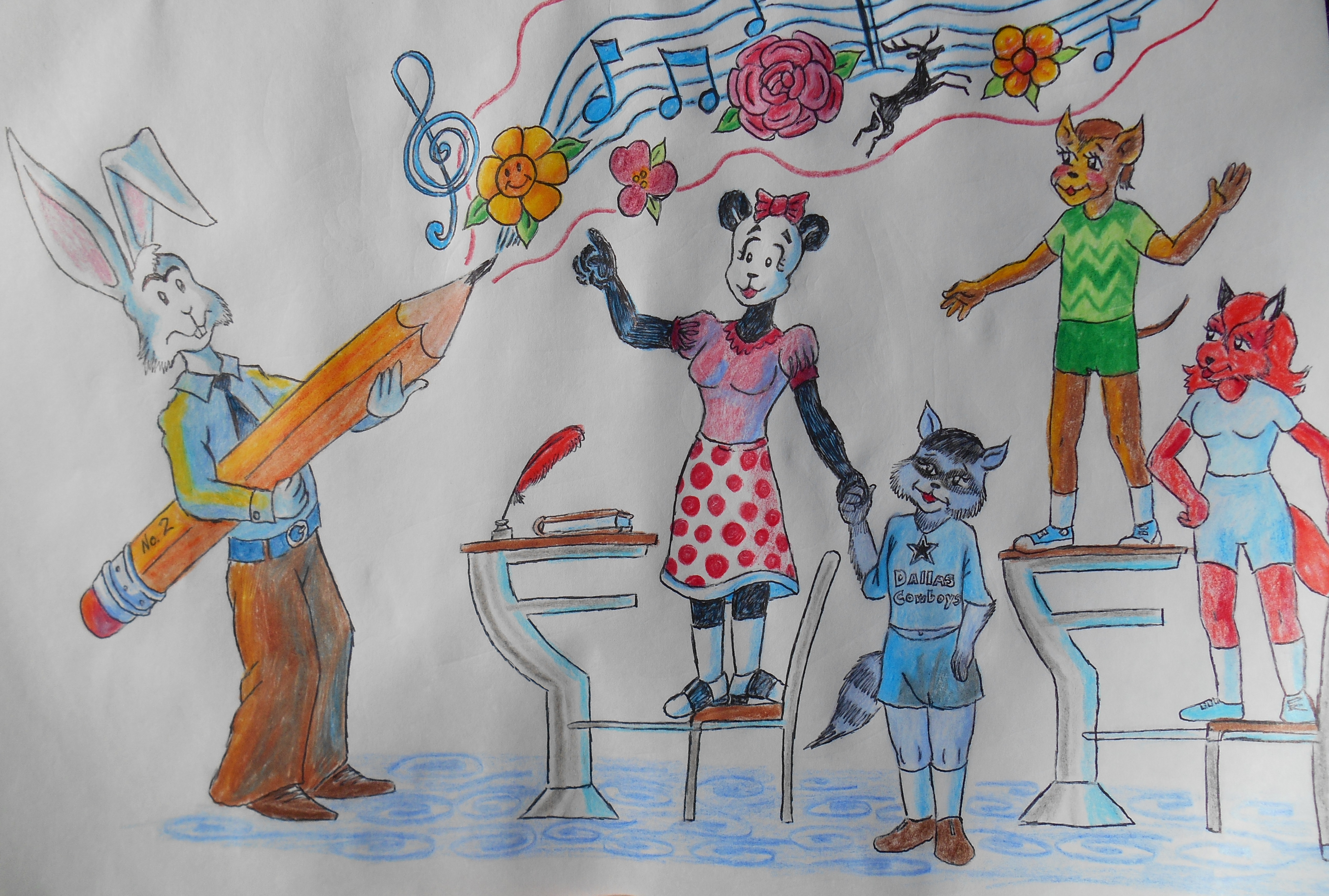
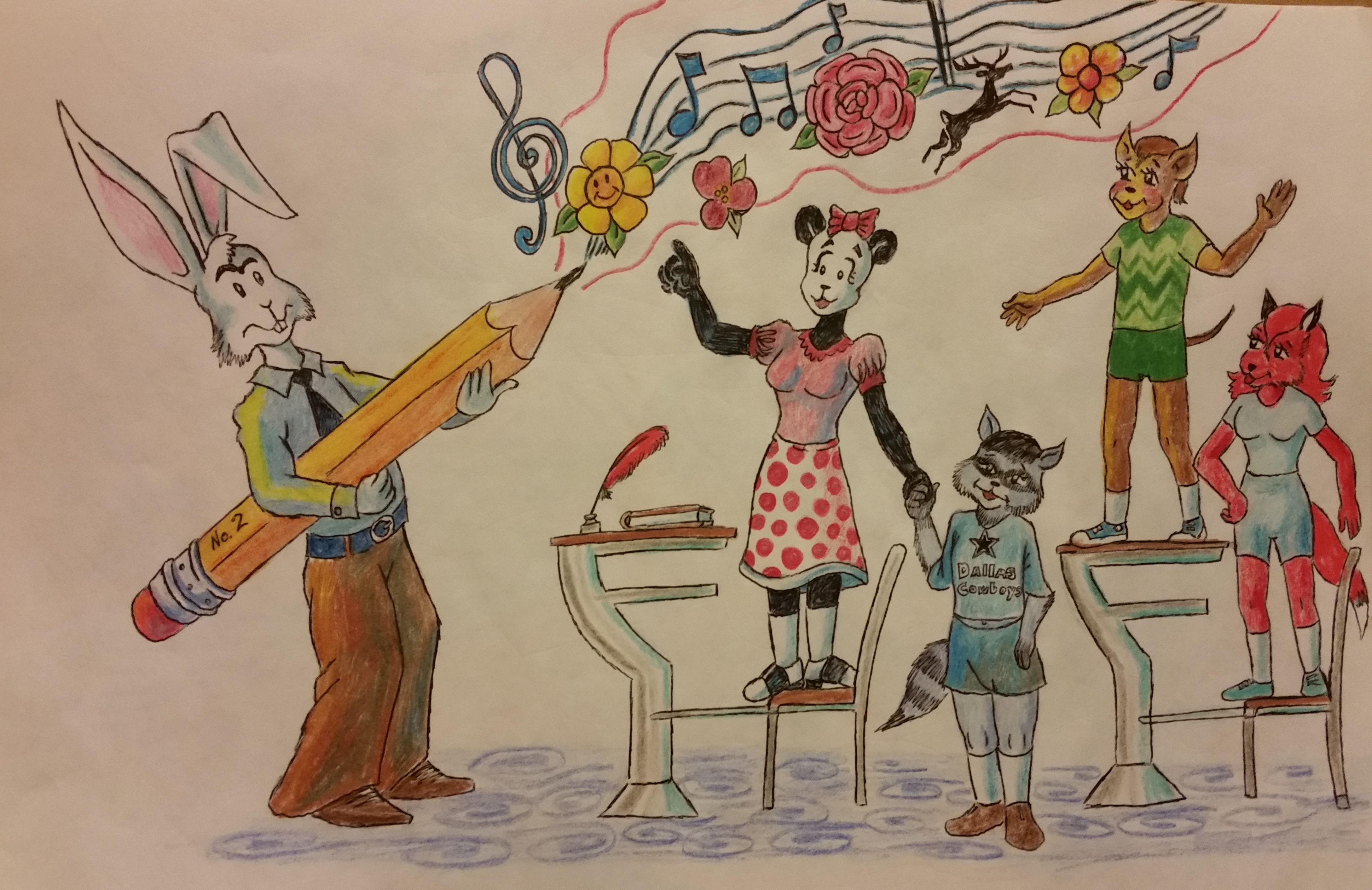
I miss being the rabbit holding the BIG PENCIL. Now that I am retired, I am no longer on the clock… no longer subject to careful time management. My pocket watch is broken and lying in a box somewhere in my library. I live now in non-consecutive time periods of sleep and illness and writing and playing with dolls. I have entered a second childhood now. Not really a simple one because of diabetes and arthritis and COPD and psoriasis and all the other wonderful things that old age makes possible. But a childhood free of school politics and mandates from the school board and from the State. A childhood where I can once again dream and imagine and create and play. That’s what this post is if you haven’t already figured it out. I am playing with words and ideas. They are my toys. Toys like this one;
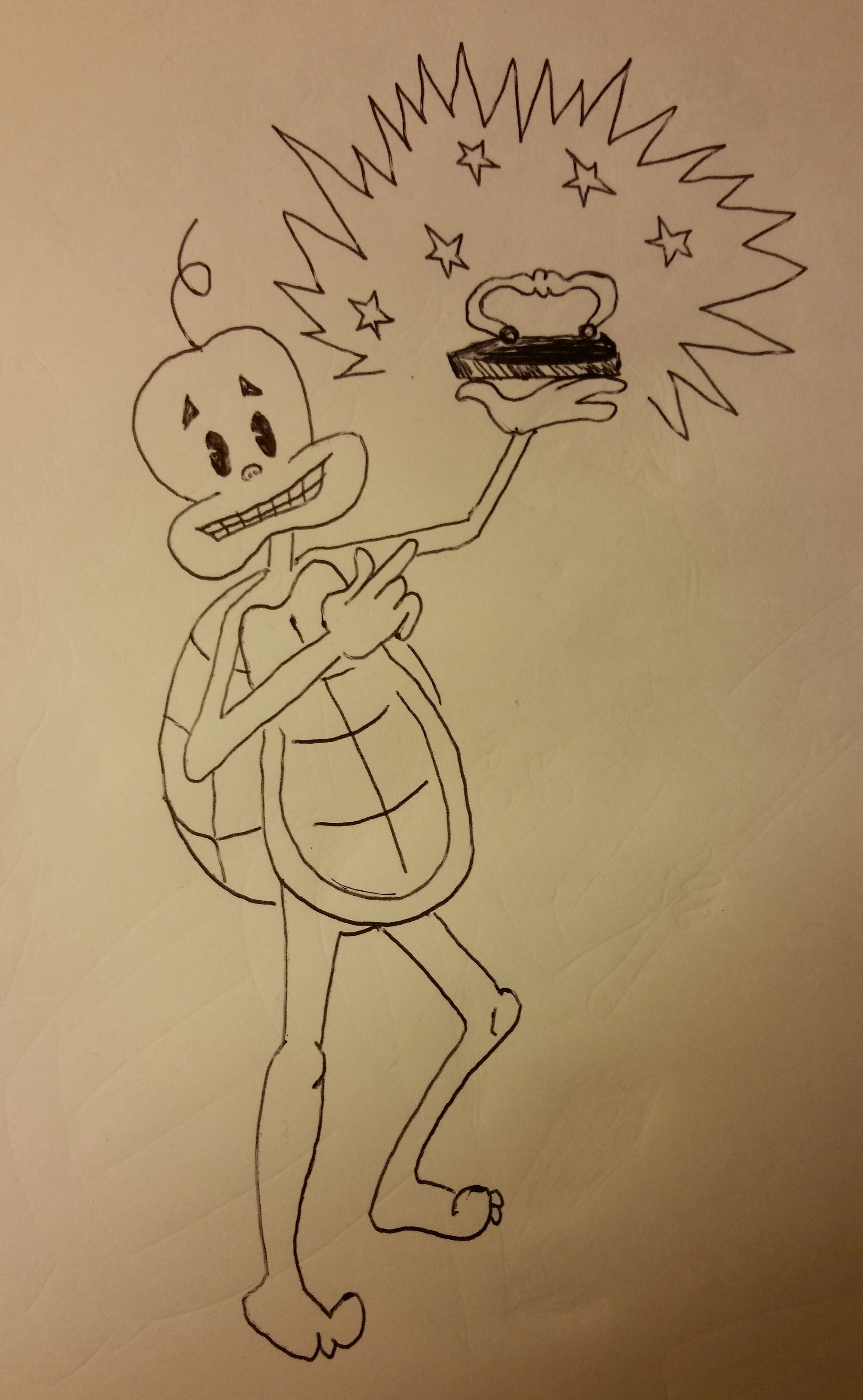
This, of course, is Tim, the turtleboy of irony, holding his magic flatiron that he uses for ironing out irony. He is flattening it out now with a cartoony Paffooney and wickedly waggled words. Ironically, I have often taught students to write just like this, making connections between words and pictures and ideas through free association and fast-writing. Have you learned anything from today’s retired-teacher post? If you did, it is ironic, because you were never meant to from the start.
When you walk to the front of the classroom and take up the big pencil in front of a group of young teens and twelve-year-olds, there is a strong pressure to learn how to sing and dance. That, of course, is a metaphor. I was always too arthritic and clunky in my movements to literally dance. But I looked out over a sea of bored and malevolence-filled eyes, slack and sometimes drooling mouths attached to hormone-fueled and creatively evil minds. And I was being paid to put ideas in their heads. Specifically boring and difficult ideas that none of them really wanted in their own personal heads. So I felt the need to learn to dance, to teach in ways that were engaging like good dance tunes, and entertaining in ways that made them want to take action, to metaphorically get up and dance along with me.
I wanted them to enjoy learning the way I did.
But the music of the teacher is not always compatible with the dance style of the individual learner. The secret behind that is, there is absolutely no way to prompt them to dance along with you until you learn about the music already playing in their stupid little heads. (And you can’t, of course ever use the word “stupid” out loud, no matter how funny or true the word is,) You have to get to know a kid before you can teach them anything.
The discordant melodies and bizarre tunes you encounter when you talk to them is like dancing in a minefield blindfolded. Some don’t have enough to eat at home and have to survive off of the nutrition-less food they get in the school cafeteria’s free-and-reduced lunch program. Some of them have never heard a single positive thing from the adults at home, enduring only endless criticism, insults, and sometimes fists. Some of them fall in love you. Some due to hormones. Some due to the fact that you treat them like a real human being. Some because they just stupidly assume that everyone dances to the same tunes they hear in their own personal head.
Some of them automatically hate you because they know that if you hear their own secret music in their own self-loathing heads, you will never accept it. They hate you because you are a teacher and teachers always hate them. Some of them, deep down, are as loathsome as they think they are.
But, if you find the right music, you can get any of them, even all of them, to dance. It might be hard to find. It might be a nearly impossible task to learn to play that music once you find it. But it can be done.
And if you get them to dance to your music, to dance along with you, I can’t think of anything more rewarding, anything more life-fulfilling. Have you ever tried it for yourself? If you are not a teacher, how about with your own children or the children related to you? Everybody should learn to dance this dance I am talking about in metaphors. At least once in your life. It is addictive. You will want to dance more. So the next time the music starts and you get the chance… I hope you’ll dance!
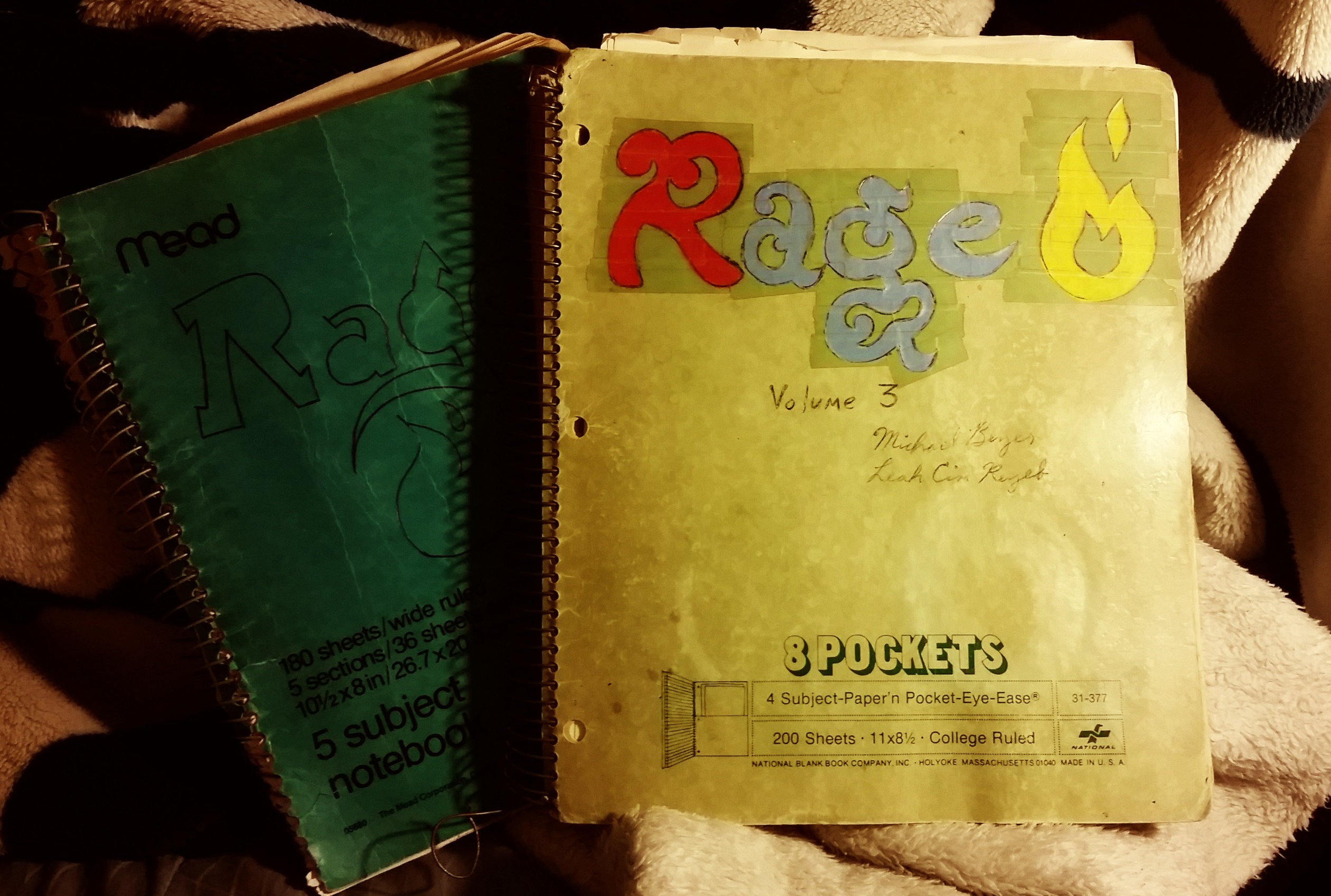
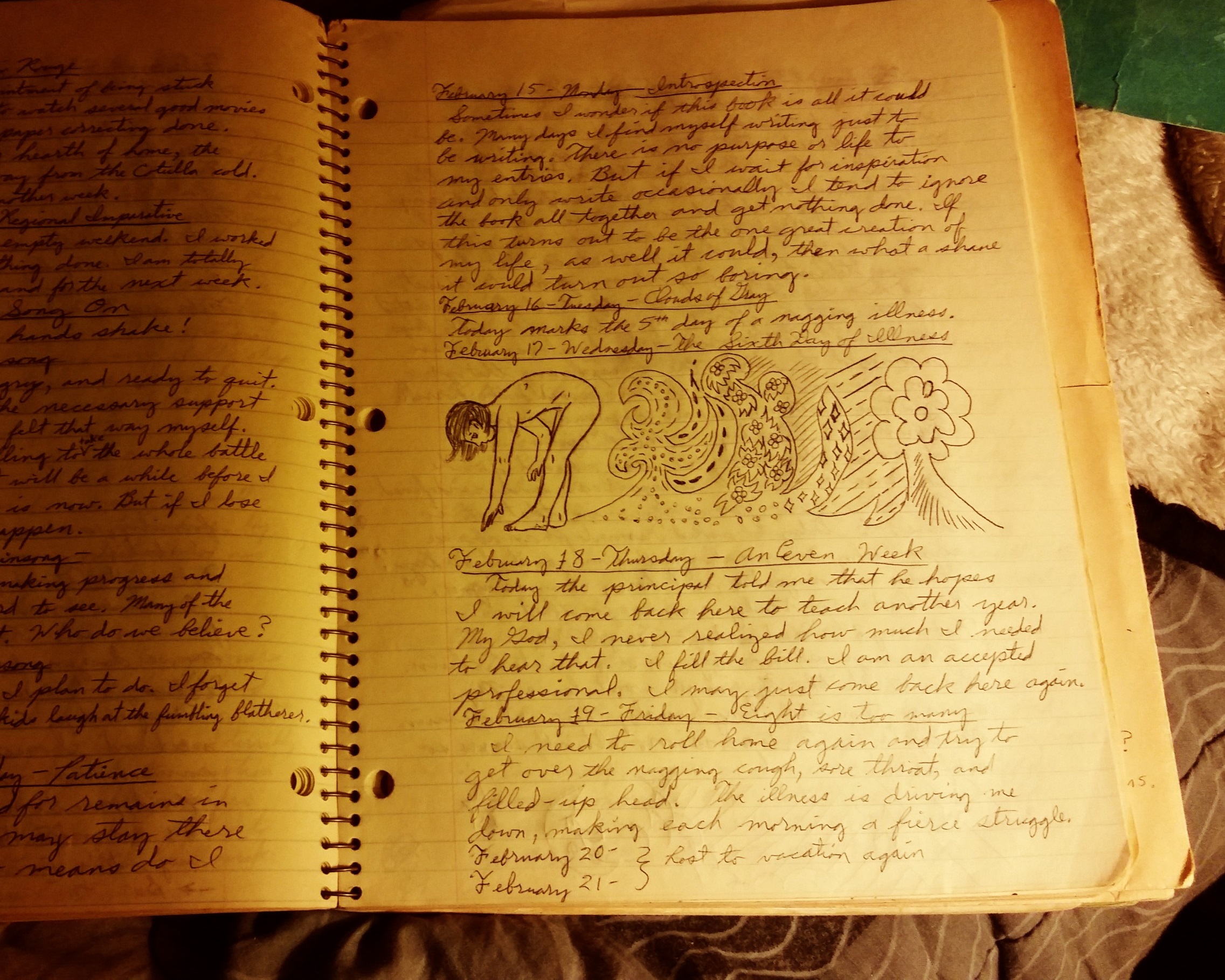
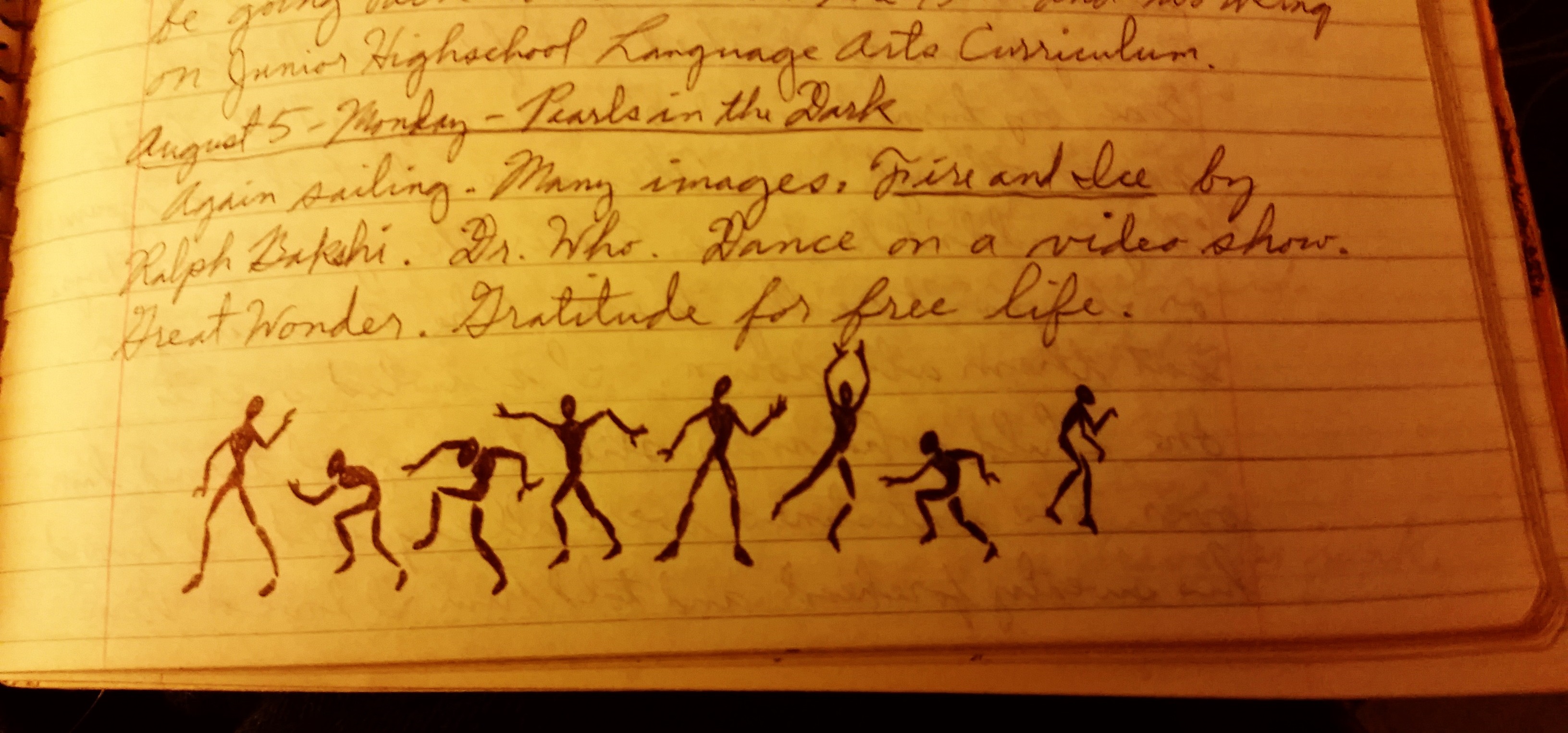
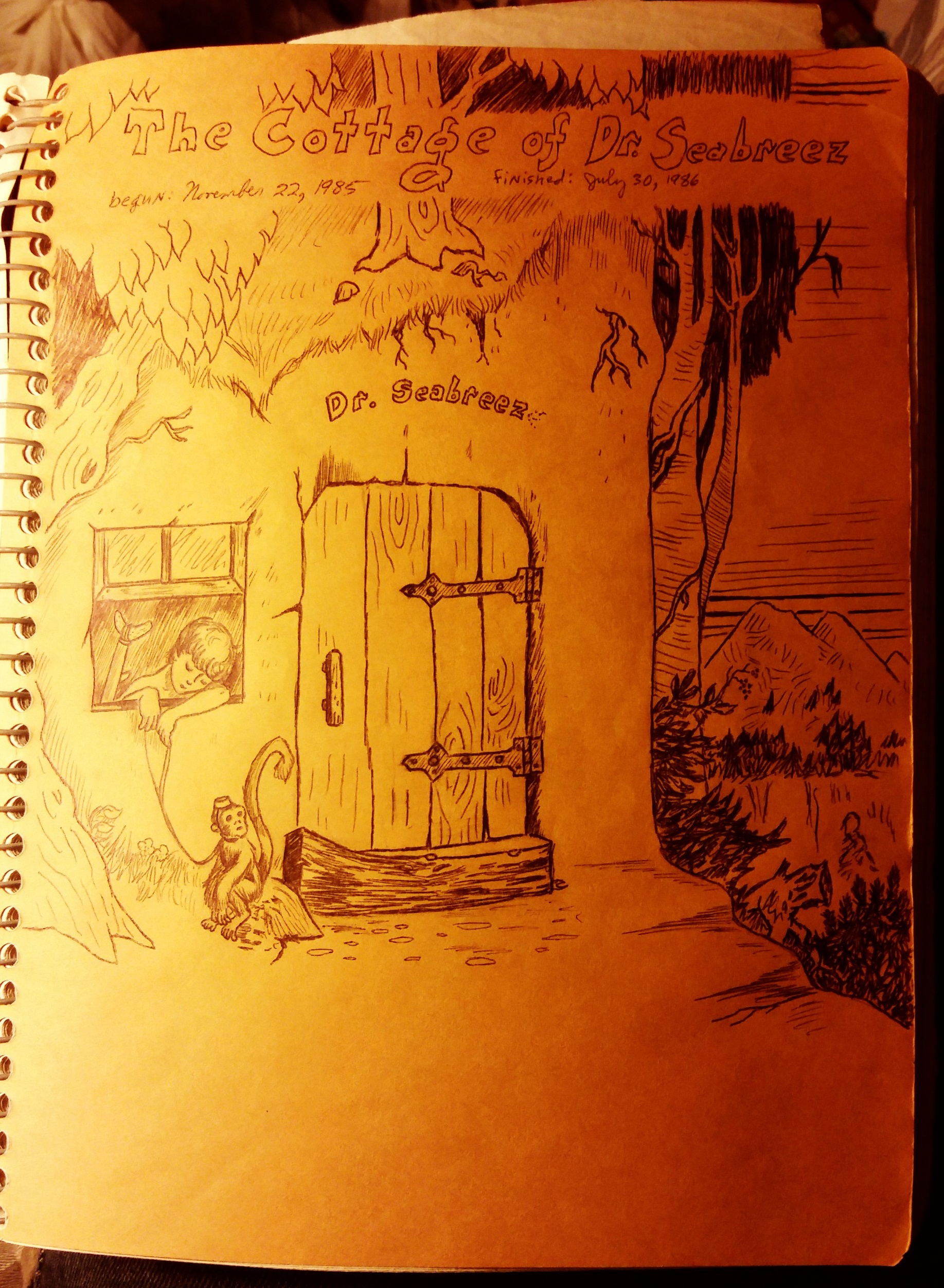
These are volumes 3 & 4 of my daily journal that I have kept since the 1980s.
Writing every single day is something I have been doing since 1975, my senior year in high school. It is why I claim to be a writer, even though I have never made enough money at it to even begin to think of myself as a professional writer. I kept a journal/diary/series of notebooks that I filled with junk I wrote and doodles in the margins up until the mid-90s when I began to put all my noodling into computer files instead of notebooks. I have millions of words piled in piles of notebooks and filling my hard drive to the point of “insufficient memory” errors on my laptop. I am now 69 years old and have been writing every day for 51 years.
There are days in the past where I only wrote a word, or a sentence or two. But there were a lot of words besides the words in my journal. I started my first novel in college. I completed it the summer before my first teaching job in 1981. I put it the closet, never to be thought of again, except when I needed a good cringe and cry at how terrible a writer I once was. I have been starting, stopping, percolating, piecing together, and eventually completing novel projects ever since… each one goofier and more wit-wacky than the last. So I have a closet full of those too.
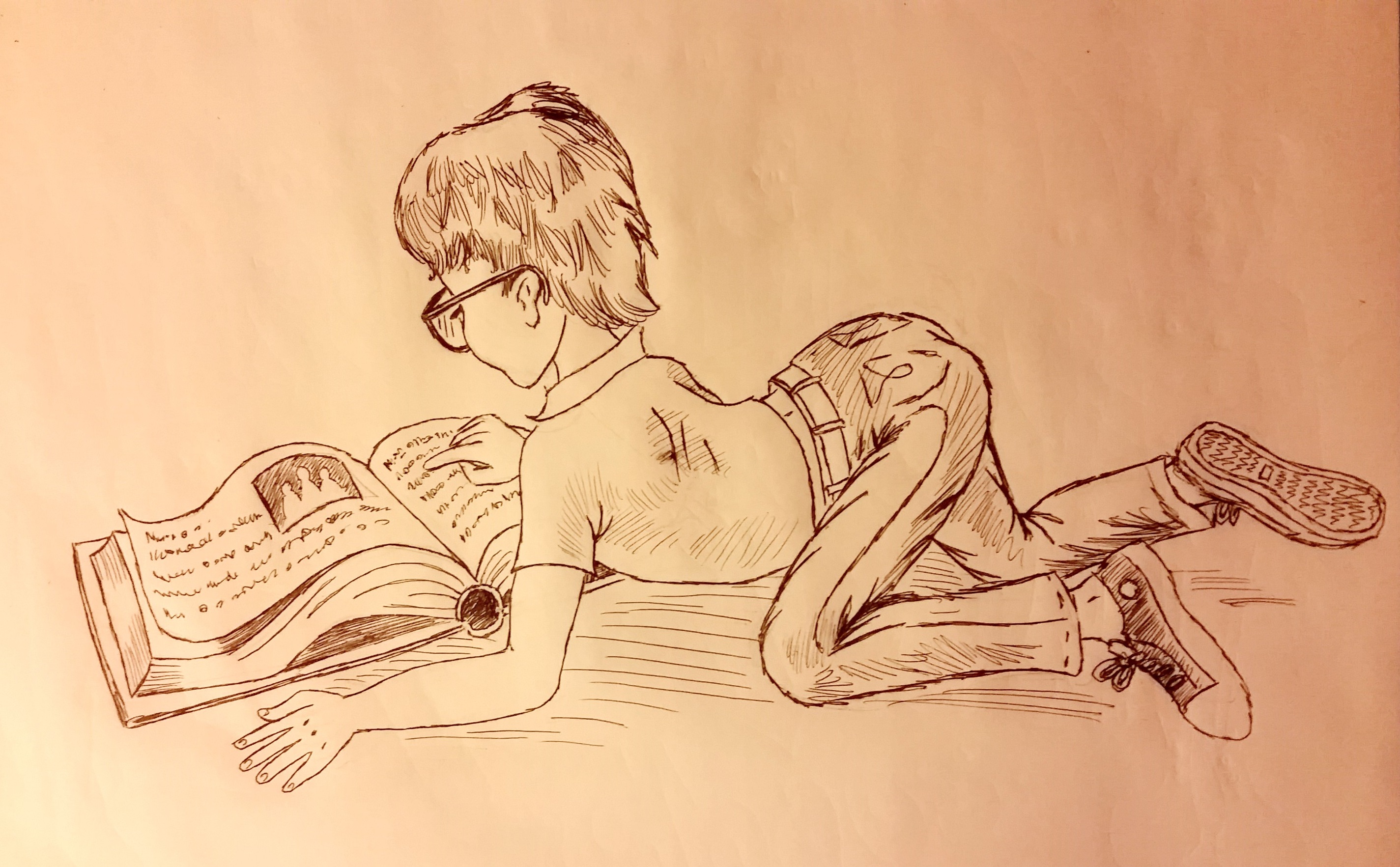
It would be wrong of me to suggest that my journals are only for words. As a cartoon-boy-wannabee I doodle everywhere in margins and corners and parts of pages. Sometimes the doodle is an afterthought. Sometimes it precedes the paragraph. Sometimes it is directly connected to the words and their meaning.
Sometimes the work of art is the main thing itself.
But always, the habit of writing down words and ideas every single day takes precedence over every other part of my day. That’s the main reason I am stupid enough to think of myself as a writer even though I don’t make a living by writing.
But I did put my words into my profession too. As a teacher of writing, I wrote with and to my students. I did that for 31 years as a classroom teacher, and two years as a substitute. I required them each to keep a daily journal (though they only got graded for the ones they wrote in class, and then only for reaching the amount of words assigned). We shared the writing aloud in class, making only positive comments. I wrote every assignment I gave them, including the journal entries. They got to see and hear what I could write, and it often inspired them or gave them a structure to hang their own ideas upon. And often they liked what I wrote and were surprised by it almost as much as I liked and was surprised by theirs. Being a writer was never a total waste of time and effort.
So am I telling you that if you want to be writer you have to write every day too? If I have to tell you that… you have totally missed the point.
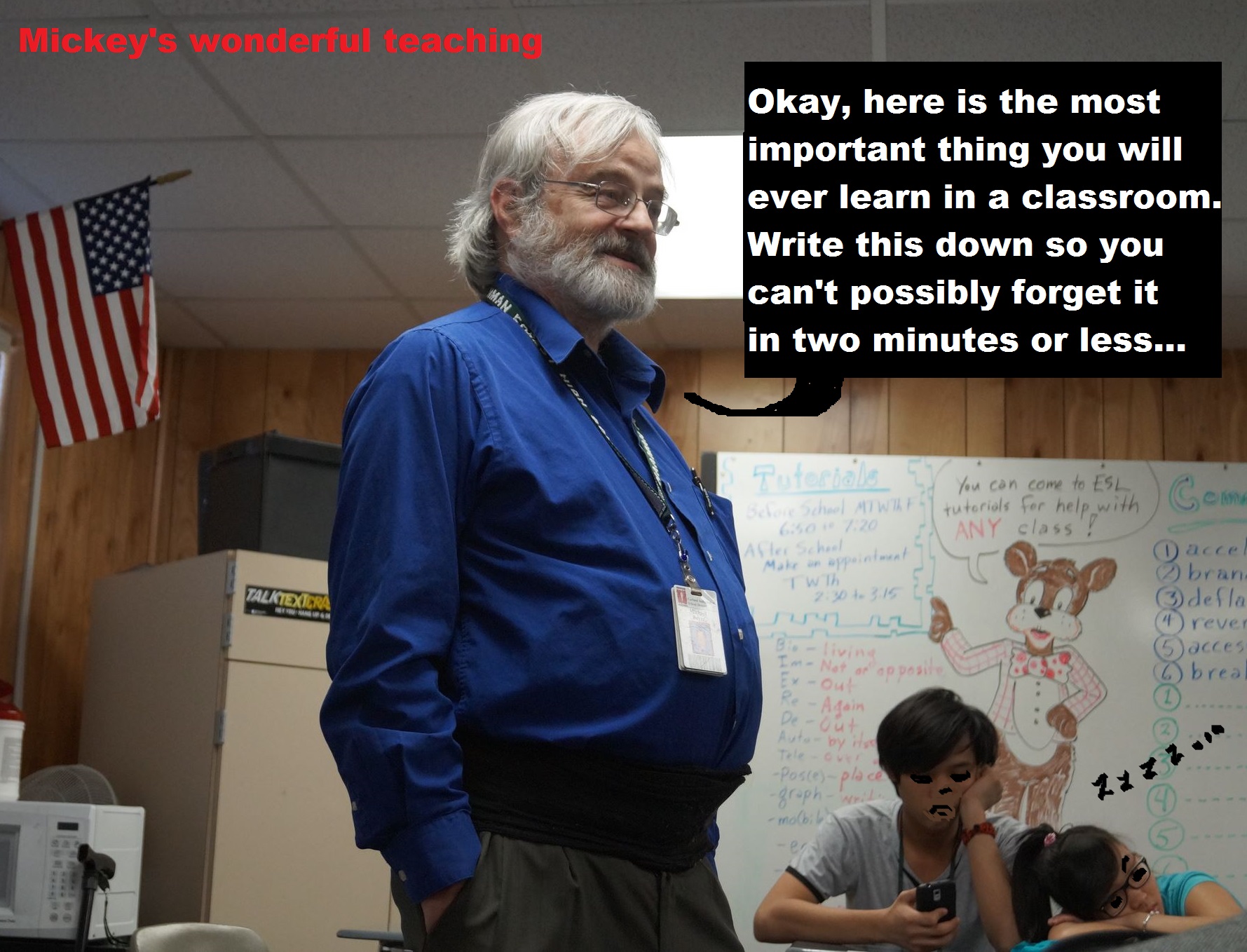
The guy holding the big pencil used to be me. I know you are thinking, “But, Mickey, you are not a rabbit!” Well, that’s true, but it is also true that the whole thing is a metaphor, and metaphorically I was always Reluctant Rabbit, pedagogue… teacher… the holder of the big pencil. It is a writing teacher thing. The best way to teach kids to write is to have them write. And the best way to show them what you mean when you tell them to write is to write yourself. You learn to read better by reading a lot. You learn to write better by writing a lot, reading what you wrote, and reading what other people wrote, especially if those other people were holding the big pencil in front of the class.
I was recently reminded by people who know me that once I held the big pencil in front of the class. They both asked me, “Really? You were a teacher?”
I suppose it ishard to believe when once you’ve gotten to know me, at least a little bit. I don’t strike people as the sour-faced, anal-retentive English-teacher type. I smile and laugh too much for that. They can’t believe that someone like me could ever teach.
But over the years, I got rather good at holding the big pencil. I learned, first of all, that anyone can be a good teacher. You only have to be competent in the subject area you are trying to teach, and open to learning something new about teaching every single day for the rest of your life.
Here’s something you have to learn about teaching to be any good at it: Discipline is not about making kids behave. You can shout, stamp your feet, and hit them with a ruler and you will never get them to do what you want to them do. It has to be about limiting the choices they have for what they will do. Yes, one of those choices is to be removed from the classroom to go have fun sitting in the uncomfortable chair next to the assistant principal in charge of discipline’s desk, but the good teacher knows you should emphasize that they can either sit like a lump and imitate a rock, or they can participate in the activities presented. And in my classroom, activities led to jokes and laughing and trying new stuff… some of it hard, but most of it easy. Kids don’t end up having a hard time making the right choice.
Here’s something else you absolutely have to learn to be any good at it; You have to like kids. Not just the well-behaved teacher-pleasers, but also the class clown who’s too smart to sit still for stuff he already knows, the shrinking violet who is a wonderfully complex well of deep thoughts who is only a little bit too scared to actually speak in class and share her thoughts, and the dark snarky demon who is quietly plotting the next outburst that will make your life a living hell so he or she can spend time with their old and dear friend, the chair in the assistant principal’s office. If you don’t like them, you can’t teach them, and driving dynamite trucks in war zones is an easier job. It pays better too.
I often try to picture Donald Trump teaching English to seventh graders. What a slapstick comedy that would be. The man doesn’t know anything. He is always angry. And he hates everybody except his daughter Ivanka. My fourth period class wouldn’t merely eat him alive, they would skeletonize him faster than a school of piranhas could ever hope to match. And it might be entertaining to watch (assuming it was metaphorical, not literal).
And I sincerely wish I could hold the big pencil in front of class again. It was the act that defined who I was and what purpose I had in life. But it isn’t gone since I was forced by ill health to retire. I held the big pencil for over two thousand students in the course of thirty-one years. And I will always hold the big pencil in their memories of it. It is a sort of immortality for teachers.




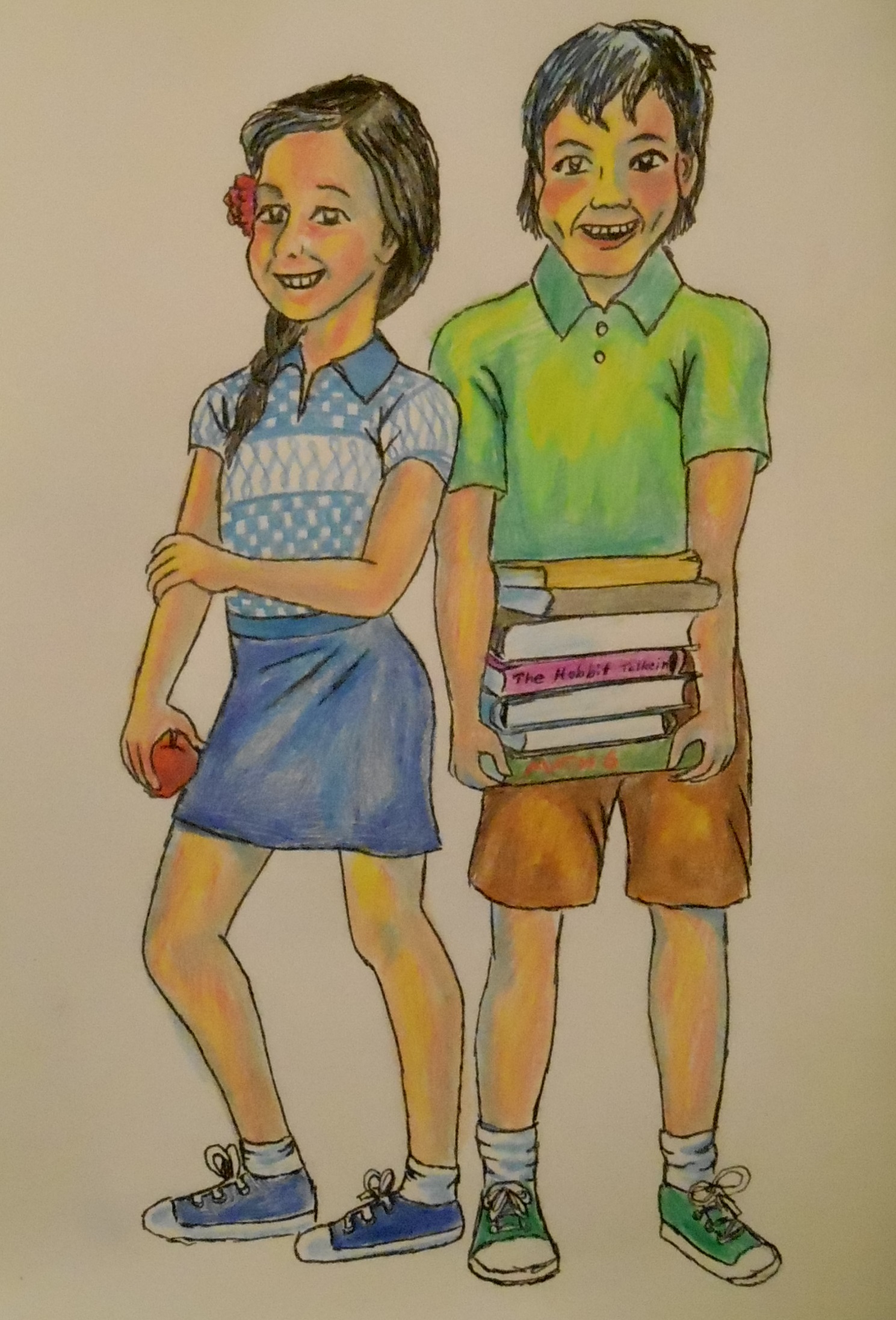
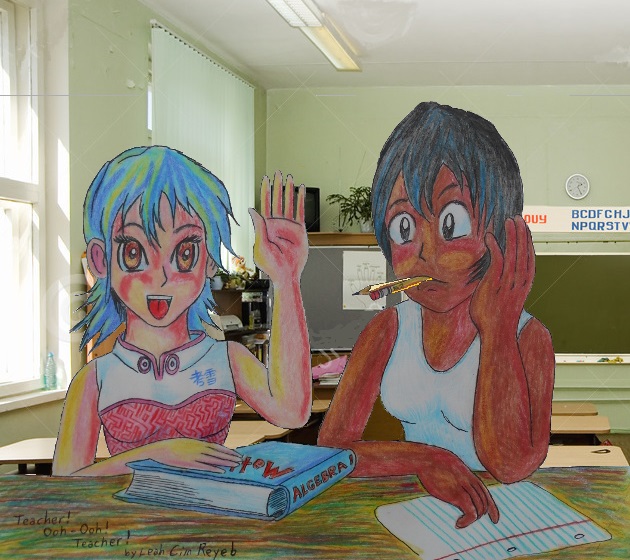
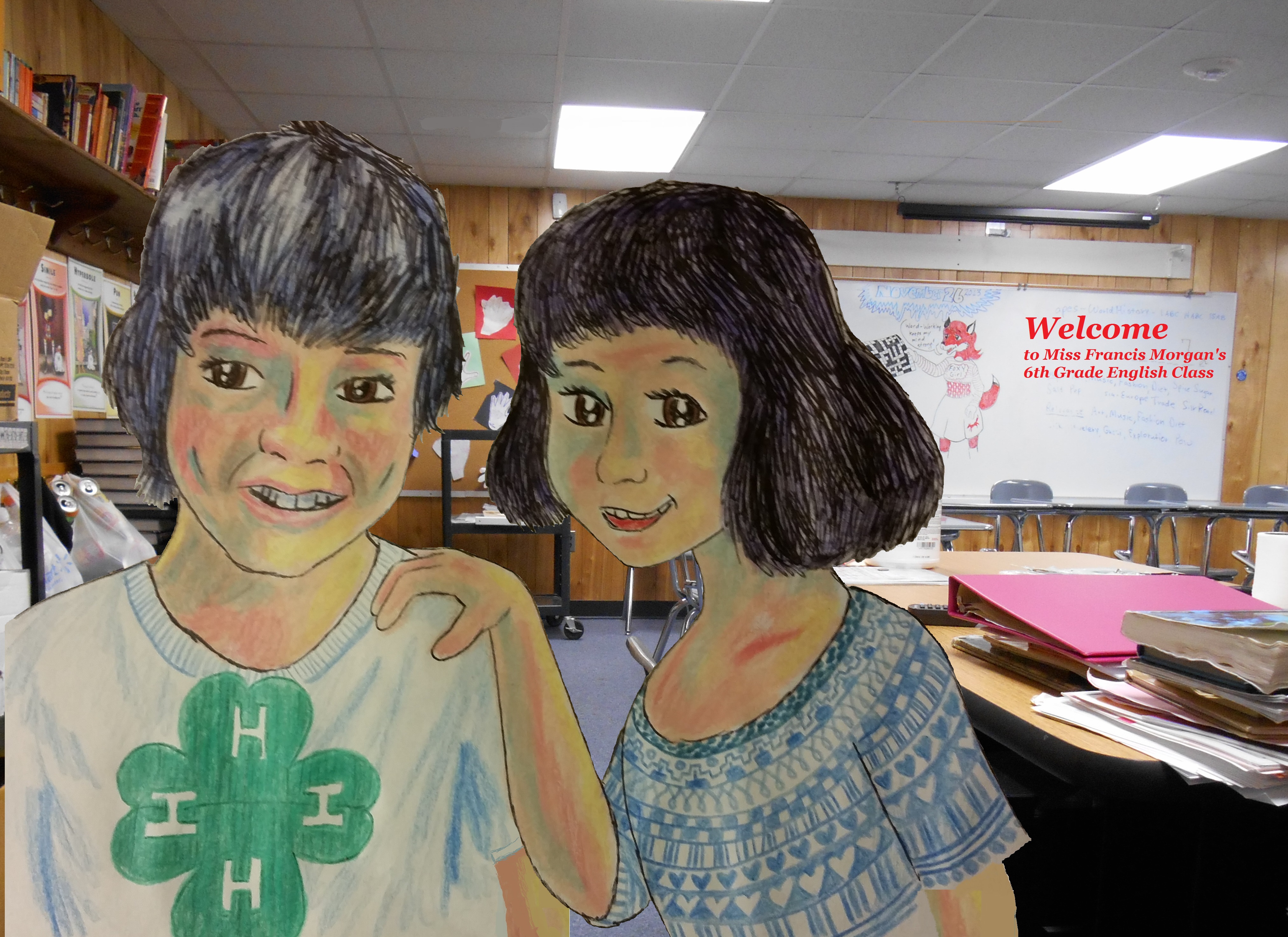
 Catch a Falling Star
Cranky Old Coots Complain and Don’t Care
Yes, I am a coot. I became a coot in 2014 when I retired. I have the hair in the ears to prove it. I sometimes forget to wear pants. The dog is learning to hide from me on days when my arthritis makes me cranky.
So I am a practicer of the ancient art of being a cranky old coot. I have opinions. I share them with others foolishly. And I am summarily told to, “Shut up, you danged old coot!” And, of course, I don’t shut up because that would be a violation of number five in the by-laws of cootism. Obnoxiousness is our only reason for still being alive.
Lately, my group of coots on Facebook (who call themselves a “pack” like wolves, but, in truth, a group of coots is called an “idiocy”) are talking about politics… very loudly salted with firmly held opinions, beliefs, and bad words in several languages. I mean, it’s texting each other on memes we disagree about, but we do it LOUDLY, like that, in all caps. We also do it in such an infuriating manner because, if no one ever bothers to tell us to “Shut the hell up!” we will begin to suspect we have actually died and gone to purgatory where we are still being obnoxious, but nobody knows we are doing it. That is rubbing coot fur in the wrong direction.
The radical right (otherwise known as coot paradise) have been cooting up a storm about school shootings and gun control of late. They have more or less turned their ire on me because, knowing I was a school teacher, they have seized on the Coot in Chief’s notion of arming teachers to protect schools. Obviously, a majority of old coots agree that requiring a few “volunteer” teachers to conceal carry and learn how to handle a school shooter crisis situation with a gun instead of the way teachers are actually trained and practiced on handling such a situation, is the only economical way to defend schools from crazed lunatics with assault weapons. Of course, it is definitely more economical than hiring full-time police officers to handle security because “volunteer” teachers does not mean that they are necessarily willing to do it, but rather that they are doing it without pay. And of course, they shout at me things like, “Why don’t you just admit that you are too scared and unpatriotic to carry a gun as a teacher, and cowardly allow some female teacher with a big pistol to step in and do the job for you?” That is a very coot thing to say, and is hard to adequately counter, because if you try to argue using logic other than coot-logic, like the notion that since a majority of teachers in this country are female, you are asking women who are fierce enough to do the job (and I have known more than a few who would take it on no matter how hopeless their prospects) to take a handgun that the principal bought at Walmart with money from the Coke machine in the hall and face down a suicidal maniac with an assault rifle, you will not even be heard over the cacophony of coot braying and chest-thumping, let alone be understood.
And, for some reason, coots love Trump. Maybe because they feel he is truly one of them. He is older than dirt. He has an epically bad comb-over to hide his bald spot. He says bad words very loudly in front of women, children, and everybody. He says, “Believe me,” especially when telling lies. And he’s not afraid to fart in public and blame it on the dog. I admit to insulting Trump in front of them only because I like to see coot faces fold up in extra wrinkles, and coot heads turn various shades of angry red and apoplectic purple.
So, yes. I am a coot. Not proud to be one… that I can remember, but a coot nonetheless.
Leave a comment
Filed under angry rant, commentary, feeling sorry for myself, foolishness, goofy thoughts, grumpiness, gun control, humor, Liberal ideas, oldies, Paffooney, teaching
Tagged as coots, gun control and coots, obnoxious coots, old coots