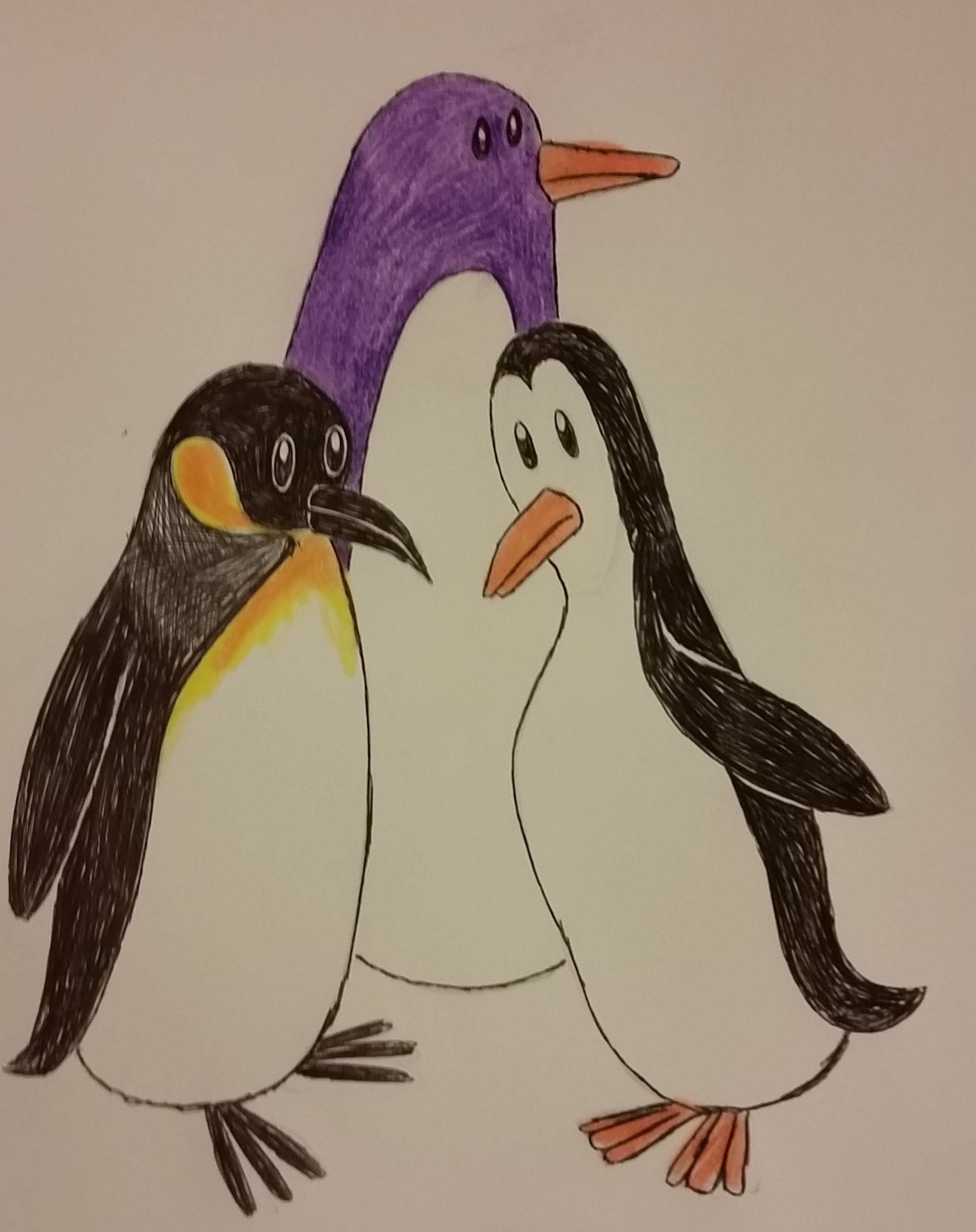
You know how creepy penguins in cartoons can be, right? The Penguins of Madagascar are like a Mission-Impossible Team gone horribly wrong and transformed into penguins. The penguin in Wallace and Gromit’s The Wrong Trousers disguised himself as a chicken to perform acts of pure evil. Cartoonists all know that penguins are inherently creepy and evil.
I recently learned a hard lesson about penguins. You know the joke, “What’s black and white and red all over? A penguin with a sunburn.” I told that joke one too many times. Who knew the Dallas metroplex had so many loose penguins lurking around? They are literally everywhere. One of them overheard me. And apparently they have vowed a sacred penguin vow that no penguin joke goes unpunished.
As I walked the dog this morning, I spotted creepy penguin eyes, about three pairs, looking at me from behind the bank of the creek bed in the park. When I went to retrieve the empty recycle bins from the driveway, there they were again, looking at me over the top of the neighbor’s privacy fence.
“Penguins see the world in black and white,” said one of the Penguins.
“Except for purple ones,” added the purple one.
“Penguins can talk?” I tried unsuccessfully to ask.
“Penguins only talk in proverbs,” said one of the penguins.
“But the purple one gives the counterpoint,” said the purple one.
“The wisdom of penguins is always cold and harsh,” said one of the penguins.
“Except on days like this when it’s hot,” said the purple one.
“You should always listen to penguins,” said one of the penguins.
“Of course, people will think you are crazy if you do,” said the purple one.
“People who talk to penguins are headed for a nervous breakdown,” said one of the penguins.
“Unless you are a cartoonist. Then it is probably normal behavior,” said the purple one.
“Is this all real?” I tried unsuccessfully to ask.
“Everyone knows that penguins are real,” said one of the penguins.
“But there are no purple penguins in nature,” said the purple one.
So, I sat down to write this post about penguins and their proverbs with a very disturbing thought in my little cartoonist’s head… Why am I really writing about penguins today? I really have nothing profound to say about penguin proverbs. Especially profound penguin proverbs with a counterpoint by a purple penguin. Maybe it is all merely a load of goofy silliness and a waste of my time.
“Writing about penguins is never a waste of time,” said one of the penguins.
“And if you believe that, I have some choice real estate in the Okefenokee Swamp I need to talk to you about,” added the purple one.



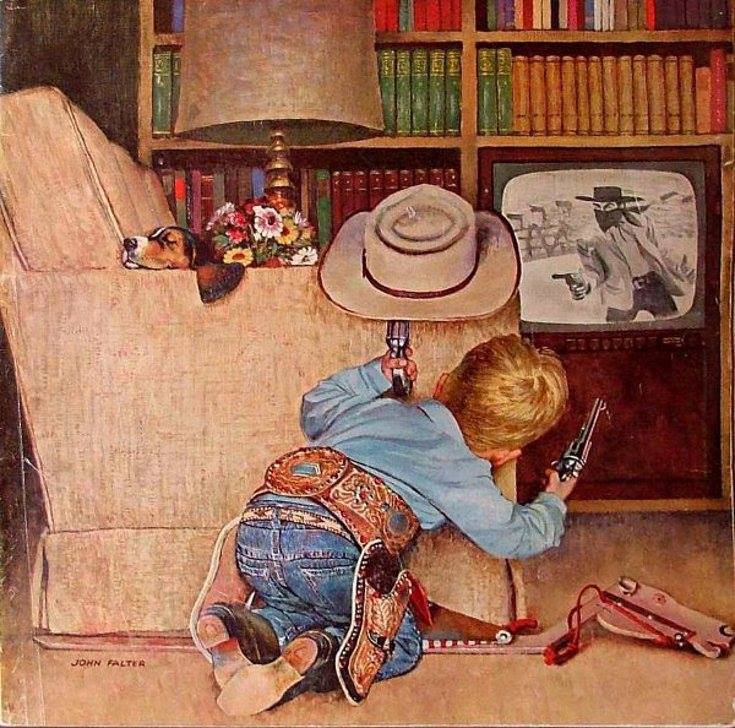
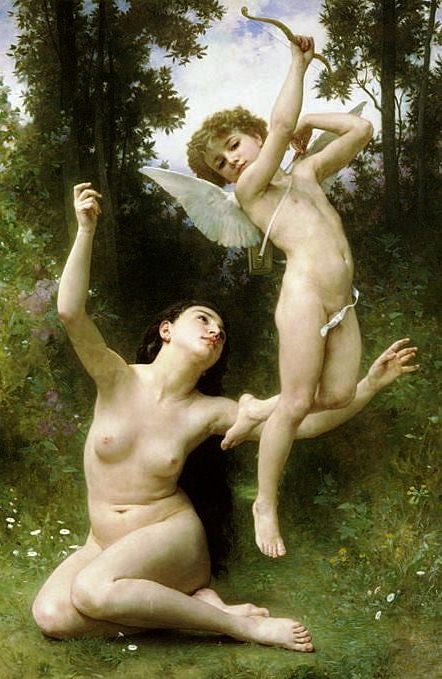


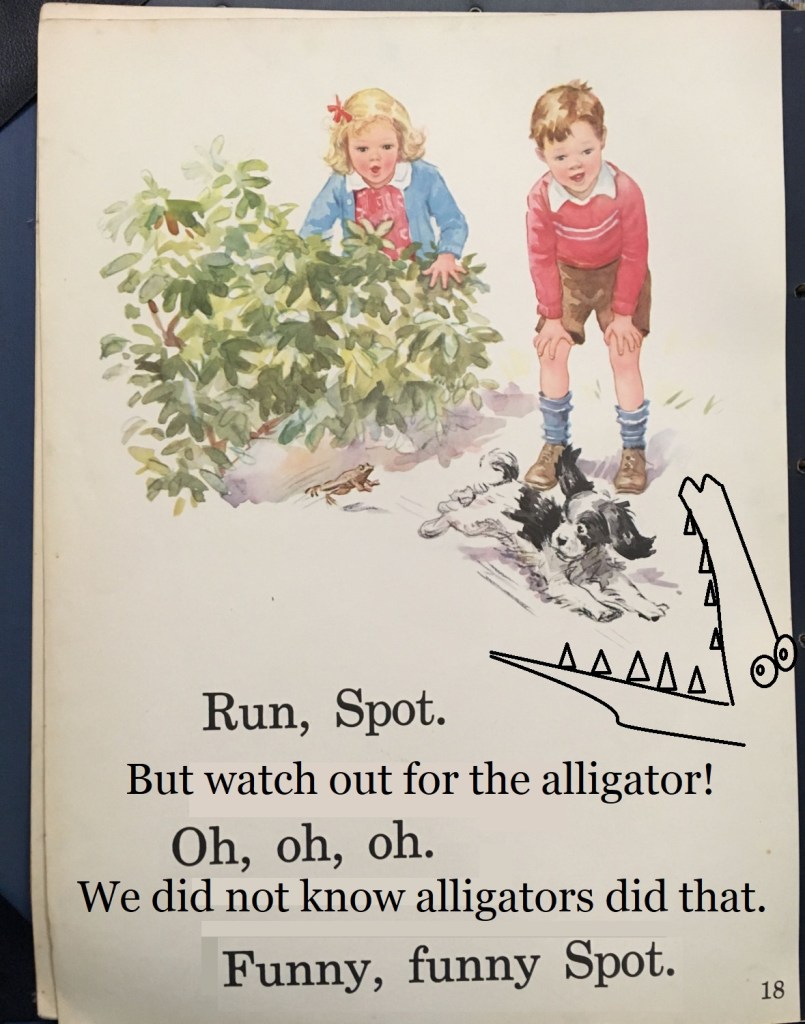




Strawberry Fields
This foolish essay about berries that mean love to me is only partly inspired by the Beatles song, “Strawberry Fields Forever.” That’s because, of course, their song was only about meditating. In the lyrics they take you to the “Strawberry Fields where nothing is real… but it’s nothing to get hung up about…” They are talking about a blissful place of no worries where we all need to go. And then staying there forever.
This, of course, I could never do. Worrying about the future is tattooed on my behavioral imperatives in the dark part of my stupid old brain. And while I often found that place of no worries, and lingered there for a bit, I found you could never really get anything done if you stayed in that state of strawberry fields forever.
But don’t get me wrong, strawberries are a critical part of every healthy mental diet.
You see, my meditations on strawberries when I was a child of eight, nine, and ten centered on the strawberry patch at Great Grandma Hinckley’s place.
She was, as I incorrectly recall, slightly older than Jesus when I was that age. By that I mean, though she seemed museum-quality ancient to me, I had derived wisdom about life, love, and laughter from her before Sunday School taught me any of those things said in Jesus’s words.
And I was given the task of mowing her lawn in the little plot of land surrounding her little, tiny house in the Northern part of Rowan where I also lived and grew and celebrated Christmas and Halloween and Easter and the 4th of July. And though I was doing it because she was so old, I never even once thought she was too old and frail to do it herself. Grandma Hinckley’s willpower was a force of nature that could even quell tornados… well, I thought so anyway when I was eight. And she gave me a dollar every time I did the lawnmowing.
But there were other things she wanted done, and other things she wanted to teach me. There was the garden out back with the strawberry patch next to it. She wanted me to help with keeping the weeds and the saw grass and the creeping Charlie from overrunning the strawberries and choking them to death. (Creeping Charlie wasn’t an evil neighbor, by the way. He was a little round-leafed weed that grew so profusely that it prevented other plants from getting any sunlight on their own leaves, causing a withering, yellowing death by sunlight deprivation. I took my trowel to them and treated them like murderers. I showed them no mercy.)
And Grandma always reminded me not to be selfish and eat the very berries I was tending in the garden. She taught me that eating green strawberries (which are actually more yellow than green, but you know what I mean) was bad because they could give you a belly ache, a fact that that I proved to myself more than once (because eight-year-olds are stupid and learn slowly.) She also taught me that it is better to wait until you have enough strawberries to make a pie, or better yet, strawberry shortcake with whipped cream. She taught me that delayed gratification was more rewarding in the long run than being greedy in the short run and spoiling everything for everybody.
She always gave me a few of the ripe strawberries every time I helped her with them, even if I had eaten a few in the garden without permission. Strawberries were the fruit of true love. I know this because it says so in the strawberry picture. Even though I probably never figured out what true love really means.
My Great Grandma Nellie Hinckley was the foundation stone that my mother’s side of the family was built on. She was the rock that held us steadily in place during the thunderstorms, and the matriarch of the entire clan of Hinckleys and Aldriches and Beyers and other cousins by the dozens and grandchildren and great grandchildren and even great great grandchildren. I painted the picture of her in 1980 when she passed away. I gave it to my Grandma Aldrich, her second-eldest daughter. It spent three decades in Grandma’s upstairs closet because looking at it made Grandma too sad to be so long without her. The great grandchild in the picture with her is now a grandmother herself (though no one who has seen this picture knows who it is supposed to be because I painted her solely from memory and got it all wrong.) But Grandma Hinckley taught me what true love means. And true love has everything to do with how you go about taking care of the strawberry patch.
4 Comments
Filed under artwork, autobiography, commentary, family, health, humor, mental health, Paffooney, philosophy, strange and wonderful ideas about life